How and Why to Assemble an Anthology of Your Favorite Science Fiction Short Stories

I’ve decided to assemble an anthology of my favorite science fiction short stories. I’m not going to publish it. This book will be just for me to read. Before personal computers I would have created such an anthology by xeroxing all my favorite stories and putting them into a big folder, binder, or box. Now, with computers I can create a digital file that I can read with my iPad. I’ve discovered I can convert digital magazines, e-book pages, web pages, or even scan physical books to .pdf files that are easy to read on my iPad.

This project is only practical if you’re savvy with computers.

You can read .pdf files with almost any device, but for fiction reading, it’s best to read on a tablet. My method doesn’t work well with Kindles, other e-ink readers, or smartphones because the .pdf files are a collection of .jpg images. This system works great with both iOS and Android tablets.

The next step for this project to be practical is to have a convenient way to load files onto your tablet. I save .pdf versions of stories to a folder on Dropbox and read them with the Dropbox application on my tablets. Dropbox has a built-in reader for common file formats like .pdf files.

I create the .pdf files using Abbyy Finereader 15, but you can use any program that will convert a collection of images to a .pdf file. The free PDFgear works great on Windows. However, the Mac version doesn’t allow for no margins and centers all images on a white background. That works but annoys me.

There are other cloud storage providers that work with tablets if you don’t use Dropbox. Dropbox has a free basic account with 2GB’s of space that will hold hundreds of stories. If you’re a tablet user, you probably already know which cloud drive works well with it.

If you have these technical solutions solved, the next step is to find stories to read on your computer. They can be from an ebook, web pages, or a page you scan yourself. If you look around, many old science fiction magazines have been digitized in the CBR/CBZ format. I use a CBR reader call YACreader. YACreader allows me to right-click on any page and save it to a .jpg. I name each page by the title of the story – author – page number of the original publication.

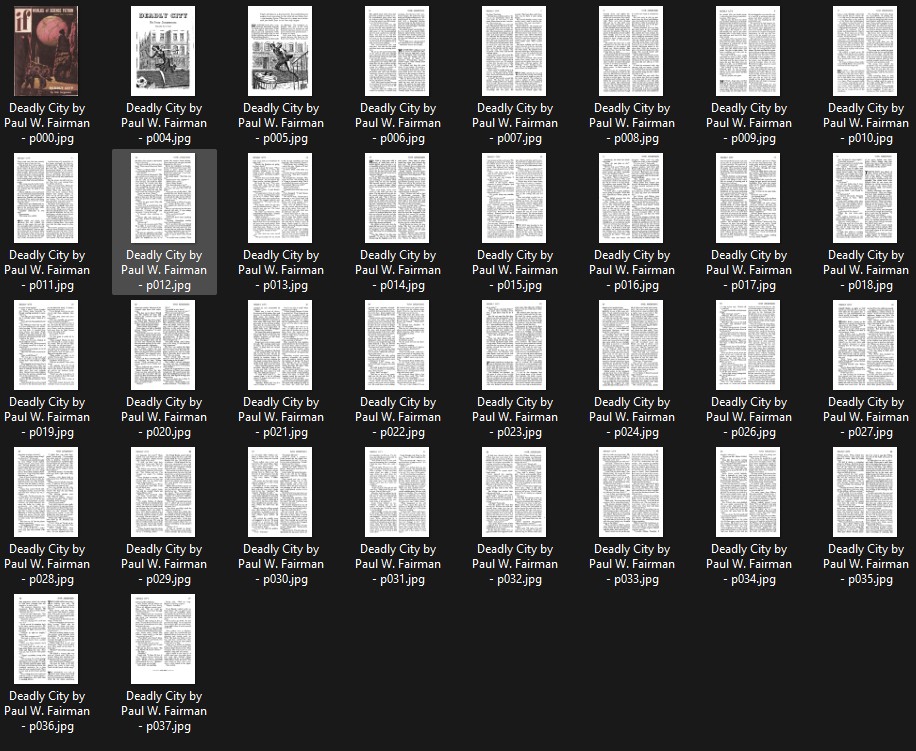
You can also use your screenshot utility to capture what you see on screen from a web page, ebook, or any program that displays stories to save as a .jpg file. I put all the .jpg pages in a folder that I name after the story. Here’s my folder for “Deadly City” by Paul W. Fairman from the March 1953 issue of If Magazine.

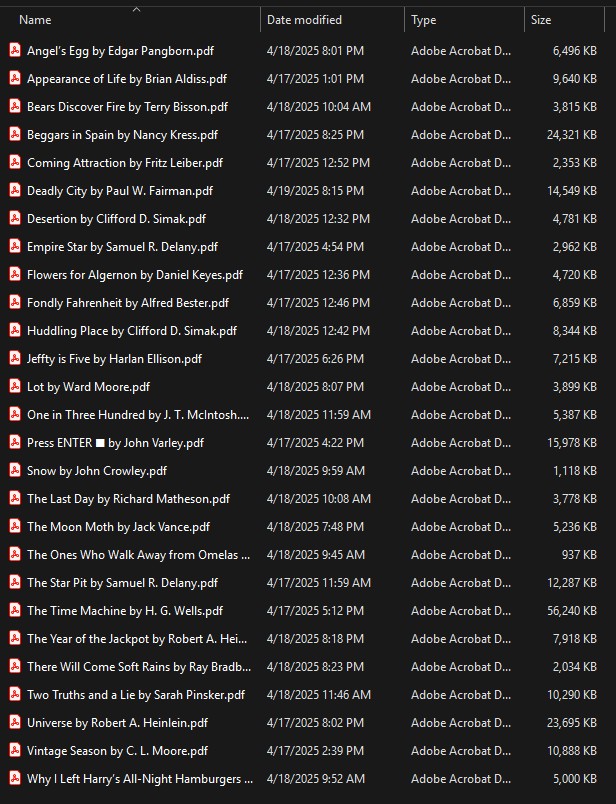
I then launch Abbyy Finereader (or PDFgear) and tell it to covert those pages to .pdf. I save the resulted file to a folder called “My Favorite SF Short Stories” and name the file by the title and author. Here are my first 27 stories. I just convert stories as I reread them and determine they are a favorite. Here’s my current folder on Windows:

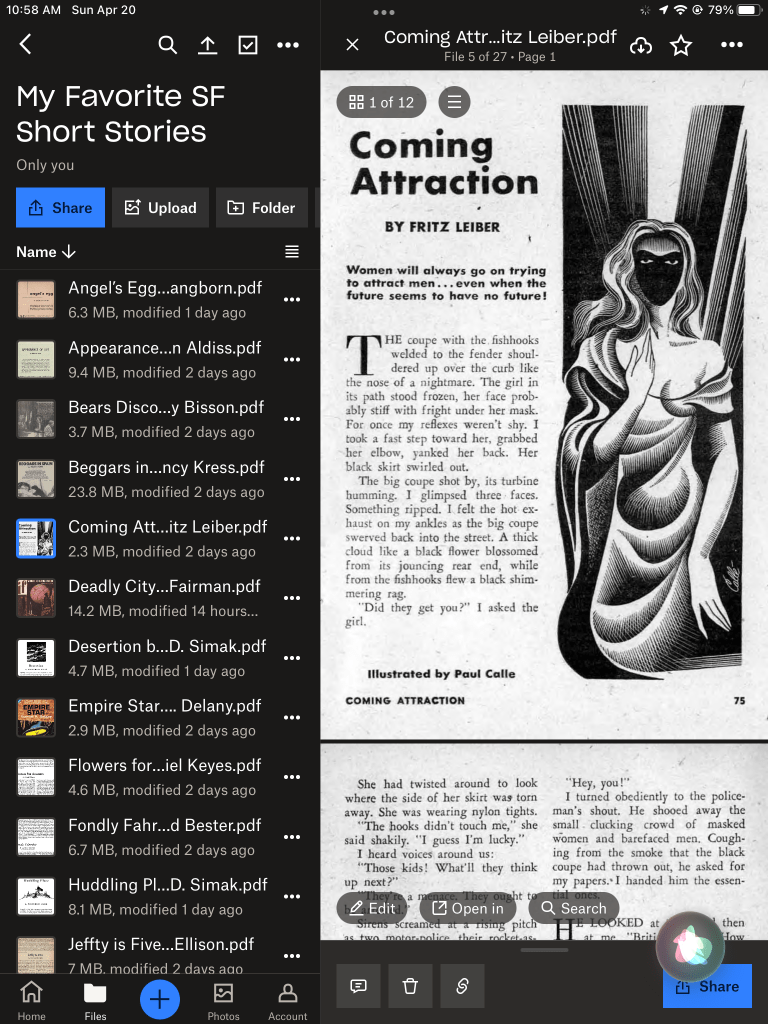
Here’s what my directory of favorite stories looks like in Dropbox on my iPad mini. The directory is on the left, and the preview is on the right. It’s very nice.

And here’s what the story looks like in the reader view of Dropbox:

As you can see, I’ve copied the story from a scan of the original magazine. You can find scans of old magazines all over the web, such as archive.org. However, sellers on eBay and Facebook are now selling complete collections of digitized old magazines fairly cheap. I bought DVDs years ago with complete runs of my favorite SF magazines.

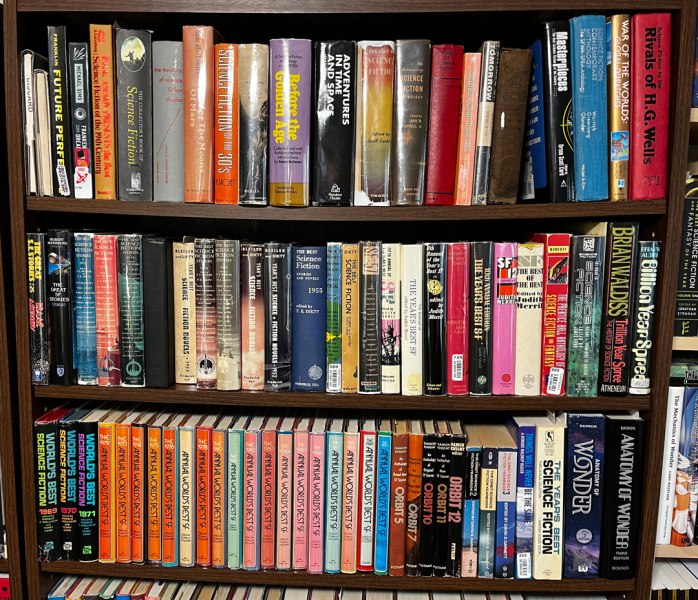
I do own several hundred of hardback, paperback, ebook, and audiobook science fiction anthologies. I also own several hundred physical issues of science fiction magazines from the 20th century. And I can call up nearly every issue of any science fiction magazine published in the 20th century on my iPad. So, why would I want to take the trouble to make my own anthology of favorite SF stories?

I’ve read thousands of science fiction short stories over the last sixty-three years. Some I’ve read several times. Since I’ve gotten older, I’ve discovered that there’s a depth to fiction that’s only revealed through rereading and study. I’m working to get beyond just reading and pursue understanding. Creating this anthology is my way of narrowing down the list of stories I want to study. I will add and delete to “My Favorite SF Stories” folder for the rest of my life. It’s becoming a project.

I’m focusing on the science fiction short story because I’ve always believed the science fiction magazine was the true heart of science fiction. And besides, novels are too long.

Think of fiction as a symbolic message from another person. How often in day-to-day interaction with your friends would you let one of them talk to you for hours without stopping? Usually, it’s no more than a few seconds. If your friend went on for minutes, you’d get annoyed. But we listen to what the author of fiction says for hours on end because they tell entertaining stories.

When you read a story one time it feels like you got the message and you’re done. But if you reread that story, you’ll often discover that you missed many parts of the message. Sometimes the author is saying something that requires reading the story several times before it’s understandable. You’ll discover there was a lot more to the story than you imagined. Great fiction has great depths to explore. Authors of great fiction often have many things to say but don’t say it directly. Words have severe limitations, so writers must communicate with imagery, symbolism, poetry, psychology, philosophy, and in ways that have no label.

I had a friend who died a long time ago, his name was Williamson. Before Williamson died, he started rejecting everything he loved in life until he had only two interests that kept his interest. I didn’t talk to him just before he died, but I’ve always wondered if he chose his final favorite before leaving this existence.

I’ve notice this process in others who have died. Now that I’m getting old, I understand that process. Our psychic energy dwindles away, and we can’t hang onto everything we once loved, so we start triaging out passions. I call this The Williamson Effect.

I’m in the process of identifying the science fiction stories I still care about and want to remember. My ability to remember is fading. I forget new fiction as fast as I consume it, but some older fiction has lasting power. Like Williamson, I realize I’m letting things go to focus on what I loved best. However, I’m not down to two things yet. I can still hold onto to about a hundred stories. I know the number of stories in my anthology will dwindle over time as I let some stories go.

I have several goals in mind for assembling this anthology:

  1. To decide on my all-time favorite science fiction short stories
  2. To reread short remembered stories to see if they still hold up
  3. To read recommended stories I haven’t read
  4. To collect stories I will regularly reread and study
  5. To collect stories that exhibit the best qualities of science fiction
  6. To collect stories that convey a sense of genre history and evolution
  7. To collect stories that were the most groundbreaking
  8. To collect stories that cover all the essential themes
  9. Hopefully find audio editions of all these stories
  10. To collect stories to psychoanalyze as to why I liked them
  11. To collect stories I feel had special messages in them by the authors

Currently, I’m contemplating how to organize this anthology. My first inclination is by date, like The Science Fiction Hall of Fame Volume One. It also occurs to me I should organize the stories by science fictional themes. Groff Conklin did that in The Best of Science Fiction.

Then, I’ve also had some ambitious ideas. Could I find a program where I could write a memoir of reading science fiction and provide links to all the stories where I could read the full text? Could a wiki or Obsidian handle that? What about feeding all my memories and texts into an AI? I once fed Google’s Notebook LM “The Star Pit” by Samuel R. Delany and it produced a podcast of two people talking insightfully about the story. That was damn neat.

One reason I’m inventing this project is because my memory is becoming unreliable. I’m hoping that working on the project will stenghten my mind. But I’m also running out of energy, so I need to keep things simple enough to get things done. Putting all my favorite stories in one anthology will be the easiest and quickest solution. Right now I remember too many favorite stories. I’ll need to create multiple volumes of this anthology at first, probably by decade.

Ultimately, my anthology of favorite stories will start to shrink as I distill the table of contents to my absolute favorites. I’m hoping, even assuming, that I will discover new insights about myself and my life-long addiction to fiction.

James Wallace Harris, 4/20/25

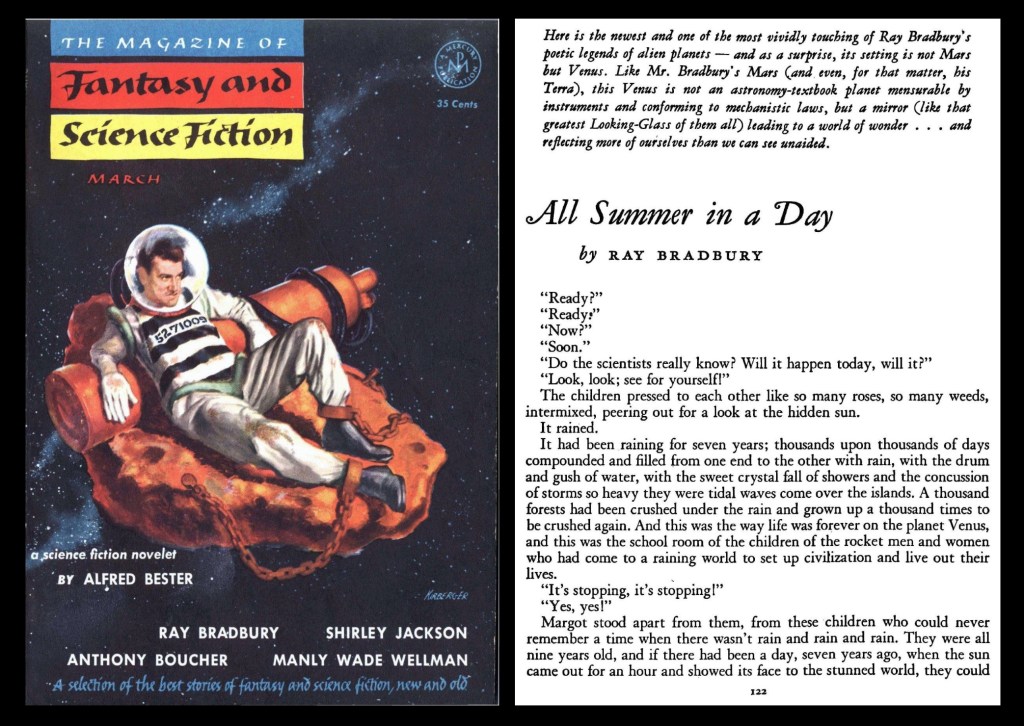
“All Summer in a Day” by Ray Bradbury

Screenshot

I’ve been rereading Ray Bradbury short stories, and I’m amazed at how well they hold up even when the science is beyond dated. Ray Bradbury is quite cruel to us readers in “All Summer in a Day.” In fact, I had to stop reading when I knew where the story was going, I just didn’t want to go there. I waited a couple of days to finish this fifteen-minute story on audio.

At first the kids in “All Summer in a Day” reminded me of Charles Schultz’s Peanuts characters, but then it was obvious they associated with bad kids from stories by Charles Beaumont or Shirley Jackson.

Remember when Lou Grant told Mary Richards she had spunk? And then Lou said, “I hate spunk.” Well, “All Summer in a Day” has a punch in the gut, and I should say “I hate a punch in the gut,” but when it comes to short stories, a punch in the gut is a good thing. Isn’t that weird. Why do we admire a great punch in the gut from a short story? Why is it so satisfying?

“All Summer in a Day” is set on Venus where it rains continuously except for a two-hour window of clear weather and sunshine every seven years. In a classroom the kids are talking about the impending summer. One girl, Margot, was born on Earth and didn’t come to Venus until she was four. She could remember sunshine and tried to describe it to her classmates who didn’t remember the sun because they were born on Venus. They were just two the previous summer day. They didn’t believe Margot. They resented that she knew something special. So, just before the sun was to come out, they locked Margot in a closet. All the other kids got to see the sun, and it was everything and more that Margot had tried to describe to them.

The children completely forgot about Margot while they cavorted through their brief summer day. When the rain and clouds returned, they remembered Margot and let her out.

This is a simple story about how children are cruel to each other. It’s about being the nail that sticks up. It’s about knowing the undescribable. Does the setting on Venus really matter? It makes the story science fiction so Ray Bradbury can sell it to a science fiction magazine, but does it really matter to the story? Charles Schultz could have done such a story about how the Peanuts gang mistreated Charlie Brown, and may have many times, I just can’t cite a specific panel.

I’m in the process of rereading my favorite science fiction stories and trying to understand why they are my favorites. Writing ability accounts for some of the reasons, but triggered emotions count for many too. I wish I could say I understood every cog in this story, but I don’t. What I do recognize is Ray Bradbury has a set of skills to tell a story in a way that makes it stand out. Not only that, but his stories also endure.

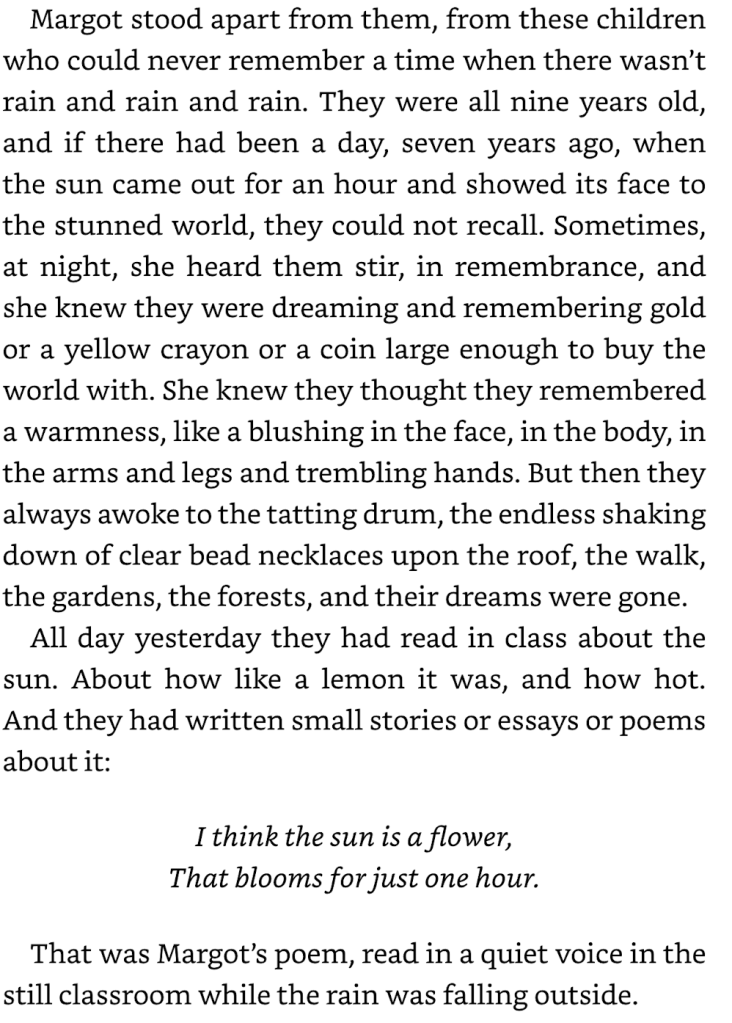
As I reread this story I didn’t remember the details, but either I guessed or remembered what was going to happen to Margot. That’s why I stopped listening to it. But when I returned to the story, I kept thinking to myself: “How is Margot going to react?” I was surprised that Bradbury didn’t give us Margot’s reaction. He left that up to us. That’s another tool in his writing toolbox. Writers don’t have to tell us everything. Bradbury does tell us this about Margot:

Because I just finished reading a biography of Ray Bradbury I know he was an odd child that stood out to his classmates. He also like to write poetry. Bradbury doesn’t have to tell us that this story is for us loners and oddballs, the ones other kids considered weird. When I was growing up, I didn’t know anyone else who read science fiction. Science fiction was like the sun appearing on Venus to me. I tried to explain its appeal to other kids, but they just thought I was a zero. I didn’t make a science fiction reading friend until the tenth grade when I met James Joseph Andrew Connell, III. The experience of meeting another science fiction fan is why Among Others by Jo Walton won the Hugo, Nebula, and British Fantasy Award. Zenna Henderson made a whole writing career out of telling stories about oddballs.

Even in the 1940s Ray Bradbury knew that being labeled a science fiction writer would hurt his career. Bradbury authored stories for all kinds of markets and genres, but when he wrote science fiction, he knew he had to be different. Back in the 1950s he might have been the best-known science fiction writer in America, but many science fiction readers didn’t consider his work science fiction. Bradbury wanted to be a writer like Sherwood Anderson, Ernest Hemingway, or Thomas Wolfe, someone who was just called a writer.

The reason “All Summer in a Day” is good is because of the parts that aren’t science fiction. The reasons why some science fiction fans dismissed him was for the science fiction parts. The obvious lesson here for would-be science fiction writers, is don’t worry about the science fictional aspects but focus on the universal human appeal.

James Wallace Harris, 4/11/25


How to Judge Hack Writing?

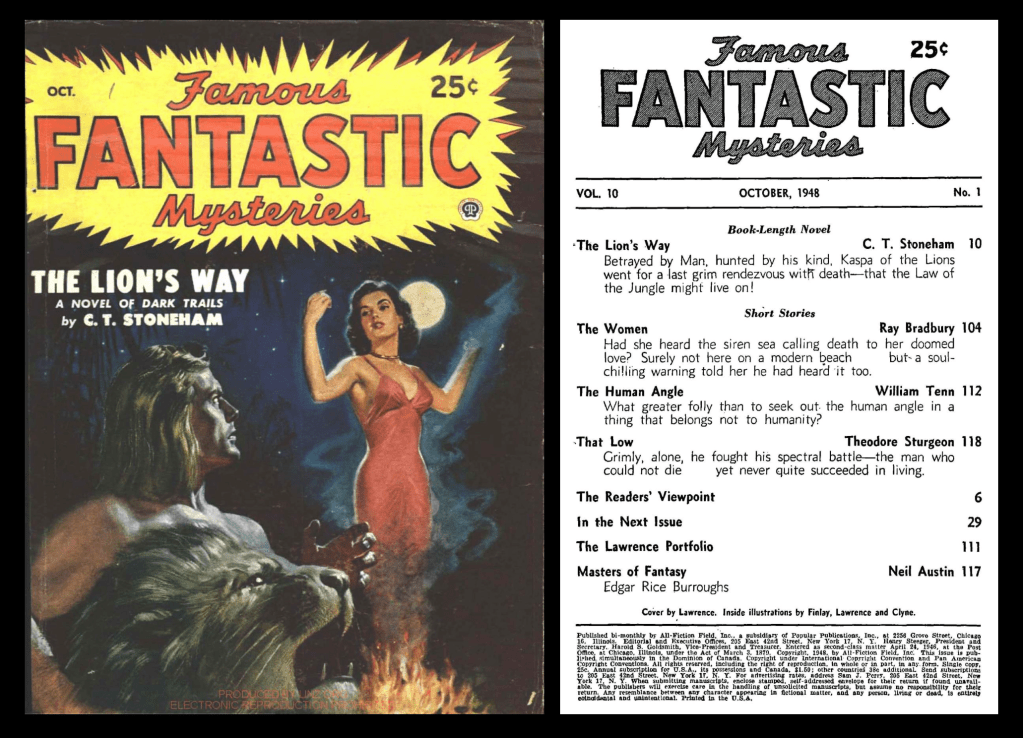
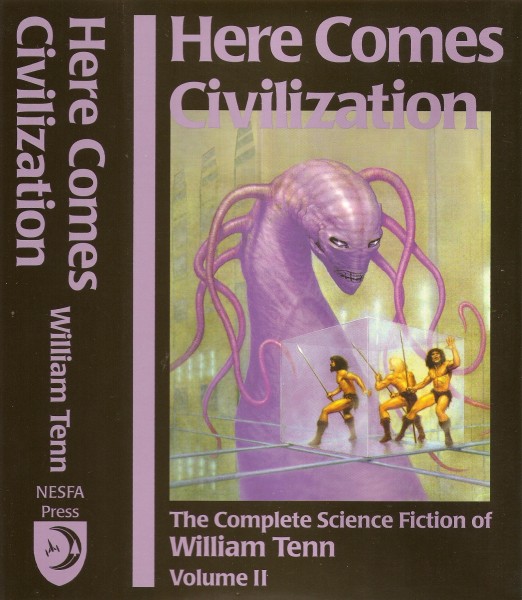
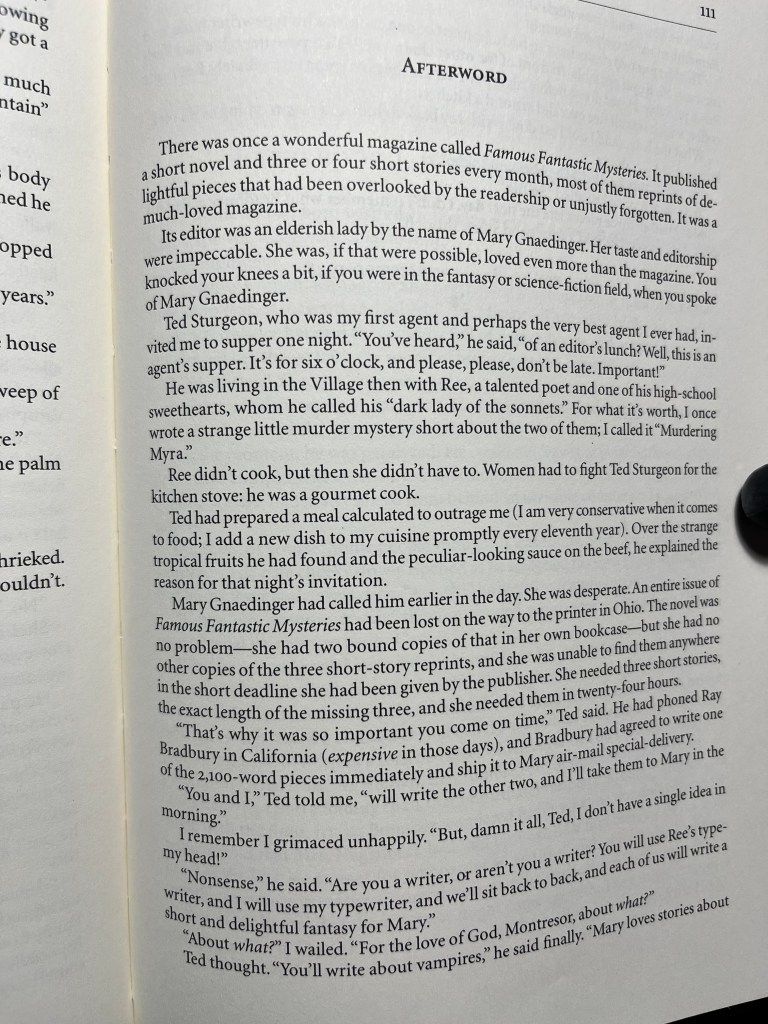
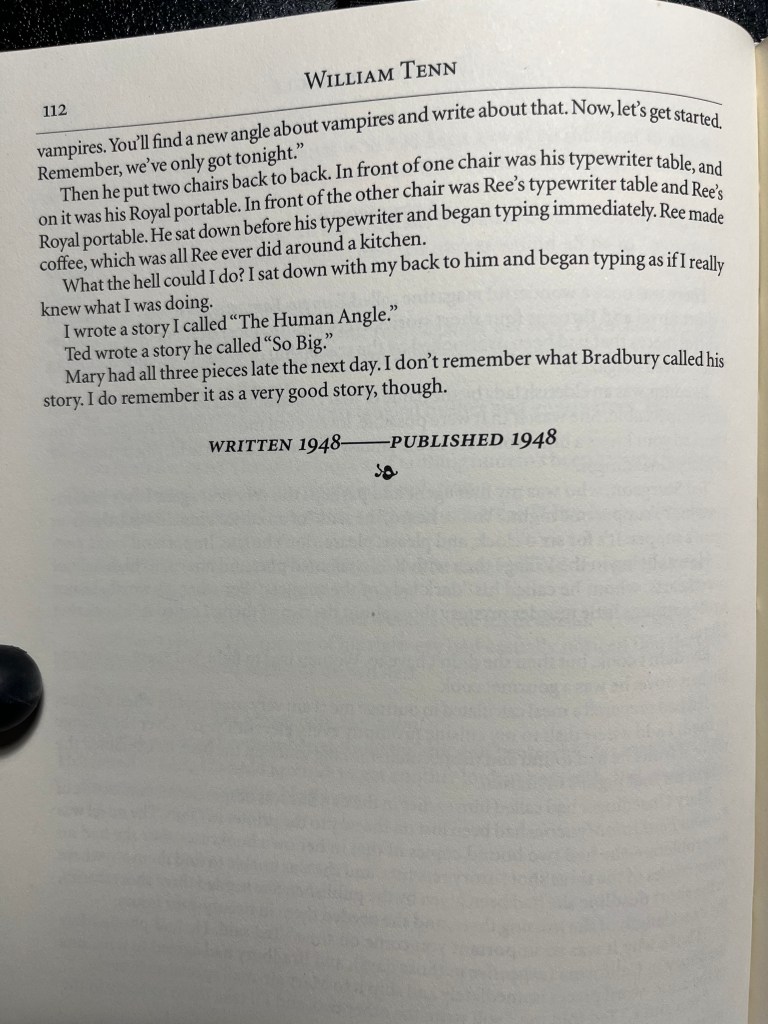
My friend Mike recently told me an anecdote from Here Comes Civilization: The Complete Science Fiction of William Tenn Volume 2. It was in the afterward to the story “The Human Angle.” It seems Ted Sturgeon invited William Tenn over for dinner with a hidden agenda. When Tennn arrived, Sturgeon told him that Mary Gnaedinger, the editor of Famous Fantastic Mysteries needed three short stories by tomorrow and they would write two of them that night. Ray Bradbury was going to write the third and air mail it special delivery to Mary from California. (See the “Afterward” below for the full tale.)

Tenn, Sturgeon, and Bradbury did come through in twenty-four hours and their stories were printed in the October 1948 issue of Famous Fantastic Mysteries. You can read that issue at Archive.org.

There were many legendary science fiction writers (and pulp writers) who bragged they could crank out a short story in a day, or a novel in a weekend. But is this hack writing any good? That’s hard to say. What is good? All three stories, “The Women,” “The Human Angle,” and “That Low” were readable stories and even entertaining. However, they are also quite forgettable. But not completely forgettable. Follow the links to view their reprint histories.

Men and women who wanted to make a living writing science fiction back in the 1930s, 1940s, and 1950s had to produce a lot of content. Many science fiction writers made a half-ass living churning out short stories for magazines. But are these speedy productions worth your time to read today? That depends.

Short stories can achieve several levels of quality and recognition. Getting published in a magazine is the first rung up in a ladder of publishing success. The next step up in recognition of quality is being nominated for an award or getting reprinted in an anthology, especially an annual best-of-the-year anthology. Winning an award is another step up. After that, recognition comes slowly. Having an author include a story in one of their short story collections at least says the author is proud of that story. But having a story reprinted in a retrospective or theme anthology means the story stands out over the other stories that came out in the year it was first published. Even greater recognition is when a short story is used in a textbook and taught in school or optioned for a film or television show.

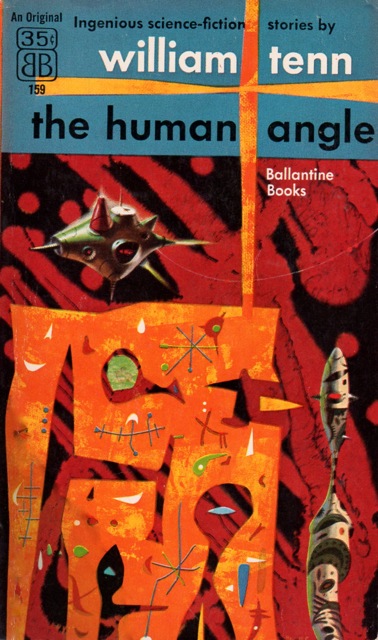
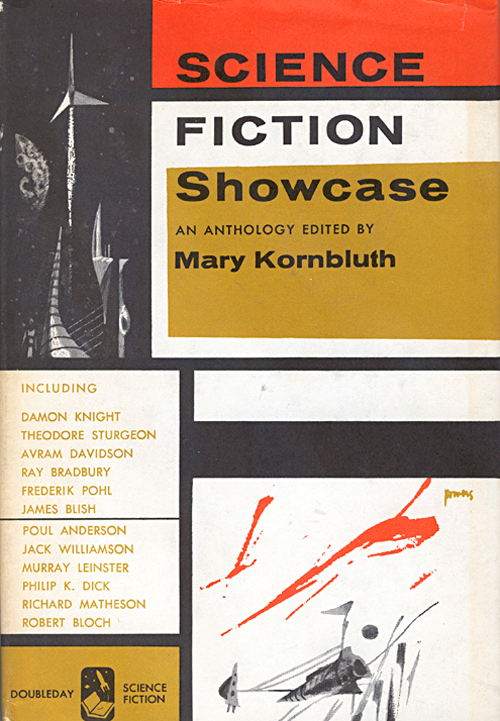
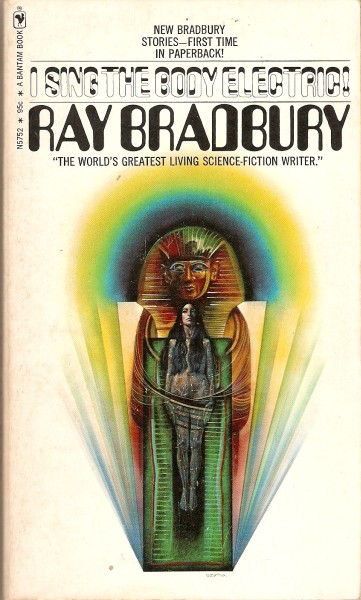
The Bradbury and Tenn were anthologized in a few minor theme anthologies as well as a few author collections. Bradbury included “The Women” in his famous I Sing the Body Electric collection. Tenn used “The Human Angle” for the title of a collection. Sturgeon’s story was reprinted in Mary Kornbluth’s Science Fiction Showcase, which was a special anthology probaby to help the widow of C. M. Kornbluth. “That Low” was only reprinted in Sturgeon’s complete stories series, suggesting that Sturgeon never liked it much. They were not major stories. However, these stories were sold several times, and they are in print today.

But back to my title question: How to judge hack writing. First, we must consider what kind of reader you are. Are you an indiscriminate reader, like someone who comes home from work and turns on the television and quickly finds something to watch by flipping through the channels? Or, are you the kind of person who Googles to find the critically admired shows that just came out this month? Maybe, you’re the person who looks at lists of the best TV series of all-time hoping to find something amazing to watch.

The Bradbury, Tenn, and Sturgeon stories are perfectly good stories if you’re capable of being entertained by an average episode of an average TV series. And that might be good enough for most people. But if you’re the kind of person who thinks in terms of the “Ten Best Episodes of The Twilight Zone,” these stories don’t even come close. And, if you compare them to “Fondly Fahrenheit” by Alfred Bester, or “The Story of Your Life” by Ted Chiang, or “The Ones Who Walked Away from Omelas” by Ursula K. Le Guin, then they aren’t even in the same galaxy.

I’ve developed a rating system I sometimes use in group discussions about short stories. One star is an amateur effort, and two stars is a story that still needs work and shouldn’t have been published. I seldom even mention these stories. Three stars to me is a professional story acceptable for magazine publishing. Four stars is a story that is good enough for me to look forward to rereading. Five stars is a story I’ve read many times and consider a classic.

Hack writers can routinely crank out three-star stories. The stories by Bradbury, Tenn, and Sturgeon are all three-star stories. I didn’t mind reading them, but at my age, they are a waste of my precious reading time – a commodity that’s dwindling. They were fun to look up and read because of Tenn’s anecdote about how and why they got written, but that’s about all.

When I’m restless, I still enjoy reading old science fiction anthologies. I have trouble watching TV, but I can still read for fun. I enjoy looking for gems. The trouble is I seldom find stories like “The Star Pit” by Samuel R. Delany or “Flowers for Algernon” by Daniel Keyes. But that’s what I’m really hoping to find, stories that work at that level.

I also want to know why and how stories work at the highest level of short story writing. I assume there must be definable qualities I can list, but I can’t list those qualities now. I plan to study my favorite 5-star stories and make a list in the future.

I will say the Bradbury story had the most writing qualities of the three stories. It had the most emotional tension. It had the most vivid details. It had the most poetic imagery. I cared for the wife in the black bathing suit. And it was the least predictable of the three stories.

The Tenn story was a vampire story. It has an unusual setting for a vampire story, which was a plus, and it had a different kind of vampire, another plus. But it was the most predictable of the three stories, and the least developed. Bradbury just had way more tension and conflict in his story. Sturgeon’s ending was the most surprising, but it wasn’t a very insightful surprise.

The obvious thing I can say about hack writing is it needs more drafts. Many hack stories could have been far better if they had baked longer in the oven. Writers who are proud of their first-draft writing might regularly sell their work, but it will never be considered great. A good example is Barry Malzberg. Some of his stories and novels are quite appealing, but none of them are books I want to reread. The absolute measure of great fiction is how often readers reread such work.

Robert Silverberg at the beginning of his career cranked out science fiction. Some of it was readable, but neither memorable nor something I’d want to reread. Then at the end of the sixties he changed. I assume he spent more time rewriting, although in some of those same years he cranked out four novels. But Downward to the Earth was different. I’ve read it twice and look forward to rereading it again.

I’m currently reading book 20 of The Great SF Stories 1-26 (1939-1964) edited by Isaac Asimov and Martin H. Greenberg with Robert Silverberg doing #26 with Greenberg after Asimov died. I’ve been reading them in order, along with the other best of the year anthologies that covered the same year. For any given year, I’d say there were less than five stories that I’d rate 5-stars. On average I’d say it’s two 5-star stories in each year. Most of the other stories are 3-stars and 4-stars.

I’m not sure if there are even three hundred 5-star stories in all the years of science fiction. Most would-be science fiction writers who achieve some success publish a handful of stories before starting on novels. I’m not sure if hack writers still exist. There are bestselling writers who crank out one or two novels a year who might be considered hack writers because of their productivity, but I don’t know if they are hack writers like Philip K. Dick, Ray Bradbury, Clifford Simak, Harlan Ellison, Robert Silverberg, and Theordore Sturgeon were early in their career when they could publish a dozen short stories and a couple of novels in a year. Ray Bradbury was quite proud of selling one short story a week pace, and he published in both the pulps and slicks.

Just because a story was written fast, doesn’t mean it’s bad. But the odds of it being great are low. I’m in a handful of online groups whose members love short fiction. There are many readers out there who appreciate good hack writing, especially those old readers who love pulp fiction. I don’t want to criticize such stories and their fans. I have often enjoyed a fun average story, but I’ve forgotten thousands of them.

James Wallace Harris, 4/9/25

“The Rocket Man” by Ray Bradbury

Did science fiction brainwash us into wanting to go to space? I can remember being a little kid in the 1950s and thinking the most exciting thing I could do in life was to go Mars. Before that I wanted to be a cowboy. If you’re old enough to remember television in the 1950s, most of the shows were westerns. That’s why most little boys back then had Santa bring them a six-gun and cowboy outfit for Christmas. But then we discovered science fiction and Project Mercury, and we traded in our cowboy hat for a space helmet.

My most common daydreams in adolescence after the XXX kind, were about going to Mars. Fantasies about becoming a rockstar came in a distant third. Looking back, I realize how unrealistic my teenage hopes for the future were. I was completely clueless as to what girls wanted, couldn’t carry a tune, and I most definitely didn’t have the right stuff. At seventy-three I see the absurdity of my childhood fantasies, so why didn’t I see them then?

Ray Bradbury is often accused of not being a true science fiction writer. Even as he started selling short stories to science fiction magazines in the 1940s, he knew he didn’t want to be labeled a science fiction writer. Yet, somehow, his very unscientific science fiction from back then has the heart and soul of science fiction, especially his stories collected in The Martian Chronicles and The Illustrated Man.

The Rocket Man” first appeared in The Illustrated Man and Maclean’s in early 1951. It’s about a 14-year-old boy who cherishes the few days his father is home from space. The father is always going off for three-month tours of duty as a rocket man. He tells the boy and his mother that when he’s in space he can’t wait to get home, but when he’s home, he can’t wait to get back to space. “The Rocket Man” deglamarizes space travel. In fact, the dad eventually asks his son to promise to never go into space.

The main reason Bradbury’s science fiction stories are great is because he sees both the fantasy and reality of science fiction. Bradbury is obviously obsessed with remembering childhood, but somehow, he was wise when young too.

You can read “The Rocket Man” online here.

By the way, the essence of the story is captured wonderfully in Elton John’s song “Rocket Man.” My favorite version of that song is this bluegrass cover:

But the question I want to explore is why did we all want to go into space? What’s so hot about outer space, the Moon, Mars, etc.? Why did we buy into those dreams that science fiction was selling?

My fantasy was always Mars. But Mars is only a planet that a geologist could love. There ain’t nothing there but rocks and cold. Why did reading The Red Planet by Robert A. Heinlein make me think the best place in existence was Mars? Why does rereading The Martian Chronicles elicit so much intense nostalgia? And why do I think “A Rose for Ecclesiastes” is the epitomy of Martian fantasies?

Over the decades I’ve come to realize that the fantasies we embrace as young children are ones we seldom give up. That’s why kids who embrace religion when little seldom give up God and Heaven no matter how convincing science and logic are at invaliding their faith. Some people never let go of their Christian fantasies, and I never gave up science fiction fantasies. We’re all delusional.

Brian Collins at Science Fiction & Fantasy Remembrance seemed depressed in his current post. His solution is to read old science fiction and fantasy. That’s been my solution too when I think about the state of the world and U.S. politics. Even as a kid, I never really believed I would go into space, but thinking about it was a wonderful way to soothe the stresses of growing up. And now reading science fiction is the balm for growing old.

James Wallace Harris, 4/1/25

If We Can’t Imagine Human Superintelligence Can We Describe It in Fiction?

In Ted Chiang’s impressive overview of human superintelligence in science fiction, he mentions that John W. Campbell Jr. rejected a story by Vernor Vinge about a character with human superintelligence because no one can write such a story. (Vinge had proposed a sequel to “Bookworm, Run!“) The implication: since none of us know what being superintelligent is like subjectively, we can’t describe it. That’s silly. Campbell had been publishing a magazine describing space travel decades before NASA, or atomic bombs before 1945, or robots long before Roombas.

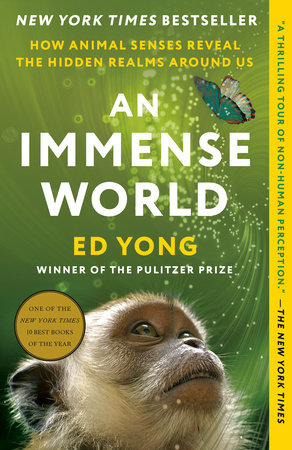
British journalist Ed Yong describes the umwelt of many species in his book An Immense World. How each organism views reality from its collection of sense organs is called umwelt. We might not be able to imagine being a dog, but we can analyze a dog’s senses and speculate what they can perceive.

Shouldn’t we assume science fiction can speculate on a human being with superintelligence by what it’s capable of perceiving and what it does with those perceptions? I’m guessing John W. Campbell assumed that a dog couldn’t imagine what it’s like to be a human. But is that really true? A dog might not comprehend humans reading a book, but I’m sure they understand much about us in their own special way. In fact, they might observe qualities about us that we’re unaware of.

Astounding Science Fiction in the 1950s was full of stories about ESP and other psychic abilities. Campbell called such abilities psionics. Throughout the history of science fiction, writers have speculated that superhumans would have god-like powers. I’ve written about science fiction and human superintelligence before and described many of the most famous of these stories. See: “Science Fiction and Human Evolution” and “The Origins of Higher Intelligence in Science Fiction.” The genre has a long history of attempting what Campbell supposedly told Vinge he couldn’t.

Strangely, hard science fiction writer Arthur C. Clarke wrote two classic novels about superhumans: Childhood’s End and 2001: A Space Odyssey. Clarke gave no scientific explanation of how people might transform into next-stage humans. Clarke’s new humans were almost impossible to imagine. They are god-like to us. This is fun but gives us little to speculate about realistically.

Greg Bear imagines a new strain of virus affecting pregnant women causing a mutation in Darwin’s Radio. Children born of these women are more intelligent, have greater disease resistance, and can communicate non-verbally. This isn’t hard to imagine. Current humans show a tremendously wide spectrum of intelligence and physical health. And some humans are far better at communicating than others, especially via body language and empathy.

Nancy Kress imagines genetic engineering creating a new species of humanity in Beggars in Spain. Their key feature was needing less sleep. This gave them more time to learn, work, and compete. It’s easy to imagine this adaptation and how these new humans would do better than ordinary humans.

The movie Gattaca imagined a future society where normal humans competed with humans with carefully selected genes. The improved humans had the same human frailties, but out-competed normal humans for the better jobs. They were better-looking, smarter, more athletic, and had greater discipline. That’s not hard to imagine.

In Flowers for Algernon by Daniel Keyes, Charlie Gordon undergoes an operation that advances his IQ. At the beginning, Clarlie works as a janitor and is cognitively challenged. The operation allows him to learn new things, and eventually become a super-genius. His new attributes are not beyond belief. Charlie learns new languages, achieves great academic success, and becomes tremendously productive. Charlie doesn’t develop ESP or godlike powers, but achieves the maximum levels of current human skills and traits. This is believable and easy to imagine.

Homo sapiens are only slightly improved over Neanderthals, but those improvements let us do so much more. For us to describe Homo superior we only need to imagine slight enhancements to our species and speculate about what impact they would have.

Some humans have tetrachromacy, which means they can detect four primary colors rather than three. Other people have eidetic memory. Stephen Wiltshire, an autistic savant, can draw detailed images of cities from memory after just a helicopter ride. All the traits that Human 2.0 might have are already showing up in us now. Conversely, all the traits that won’t emerge are those we lack precursors for now.

That’s why I think it’s silly to imagine humans evolving to have telepathy or be able to teleport at will. Those are comic book ideas. Campbell was both too hopeful and too naive about human evolution. He expected “The Man Who Evolved” by Edmond Hamilton. At best, I think we’ll get Gattaca.

One problem with evolving our current abilities is that we often see cognitive issues associated with people with extreme examples of those abilities. Can a perfect memory be imperfect? Can we be too smart? I’ve known many people far ahead of me in many skills. I can’t fathom general and special relativity. Does that mean Albert Einstein was a 2.0 human?

Until recently, I thought the human race was evolving slowly on average. But current events make me think we’re regressing. Some people already have superintelligence compared to others. It could be the evolution of our species won’t be by quantum leaps, but slow adaptation of biological trial and error. Much of science fiction is just fun bullshit speculation. We need to distinguish between fantasy and scientific possibilities.

Personally, I feel our role in evolution was to evolve machine intelligence. I don’t believe humans will ever become giant brains with tiny bodies, nonphysical beings, or something like Q from Star Trek: The Next Generation. It’s interesting that Greg Bear and Nancy Kress in their novels, had normal humans wanting to wipe out the new humans before they got established.

Lester del Rey summed us up nicely in “For I Am a Jealous People!” Our creator and descendants need to watch out.

I don’t see why Campbell rejected Vernor Vinge’s idea of writing a sequel to “Bookworm, Run!” Campbell had already published Slan by A. E. van Vogt and many other stories featuring human superintelligence.

James Wallace Harris, 3/9/25

A Unique History of Science Fiction (1945-1975)

From 1945 to 1975, P. Schuyler Miller reviewed science fiction books for Astounding Science Fiction and Analog Science Fiction. He died in October of 1974. I stumbled upon an online PDF collection of those reviews from 1945-1967. You can download that file here. (Warning – it’s 235MB.)

Unfortunately, the individual reviews aren’t dated and the run is far from complete. However, the PDF is searchable, and you can use ISFDB.org to date an individual review. Just look up the book title, then scroll down to the Reviews section, and find the one for Miller. Someday I’d like to create a file of all of Miller’s reviews from 1945-1975.

I put this PDF on my iPad and read it like a book. It’s wonderful. The reviews start before science fiction was regularly published in book form. Whoever collected these reviews evidently picked those they thought interesting to modern readers. Collectively, they have a history of science fiction published before 1968. For example, the early reviews cover books published before science fiction was a genre. Then we started seeing books from Gnome and Fantasy Press, essentially fan publishers. After that, we slowly see big name New York publishers take chances on the genre along with the rise of mass market paperback publishers.

We get to read the original reviews of books now remembered as genre classics and books that have since been forgotten. Often I read reviews of forgotten books that sound interesting enough to track down.

The first two reviews are books by Vardis Fisher: Darkness and the Deep and The Golden Rooms (April 1945). These books imagine life when Neanderthals and Cro-Magnon coexisted. Popular writers like H. G. Wells, Jack London, and Stephen Vincent Benet, also wrote on this theme. It wasn’t considered science fiction then, but our genre has claimed that theme since.

Here’s that first review:

Most book reviews in science fiction magazines are short blurbs. Miller writes comprehensive essays. As the years progress, Miller’s reviews become more elaborate, longer, often beginning with some science fiction history. The next review is of The Time Stream by John Taine (March 1947). Miller does more than describe and react to the novel, giving the background of how that story fits in the genre, and biographical information on the author. He compares Taine’s work to A. Merritt’s, and points out how Taine’s work originally appeared in hardback, while Merritt’s stories were serialized in magazines first. I’ve not read Taine or Merritt, but I’ve often read about both in histories of science fiction. This review makes me want to try The Time Stream. These reviews also give me information about collecting original editions. (Amazon has a Kindle edition of The Time Stream for $2.99.) Here’s Miller’s review.

I decided to jump to June 1954 and read the review for The Lights in the Sky are Stars by Fredric Brown, the science fiction novel I’m currently reading. By now Miller’s columns are longer. He reviews more books each month, so each review is shorter. That’s because far more SF books are being published every month. Since October 1951, they come under the title “The Reference Library.” (That’s where I steal the image above for this post.) Miller often begins his columns with a digression exploring topics related to current publishing.

I thought I’d test Miller on something hard. This is his review for Stranger in a Strange Land by Robert A. Heinlein from the January 1962 issue of Analog. I’m including his essay in the introduction as a sample of how he composed his columns.

That should give you enough examples to decide on downloading the entire collection of Miller’s reviews. If you’re reading on a computer with a large monitor, I have a page I’m working on that links to Miller’s reviews in issues of Astounding and Analog at Archive.org. You can read each column one at a time on screen.

P. Schuyler Miller also wrote some science fiction. I own this first edition of The Titan with a beautiful Hannes Bok cover.

James Wallace Harris, 3/5/25

Gimme That Old Time Science Fiction

Whitney at the Secret Sauce of Storycraft YouTube channel recently reviewed several science fiction books she called Just D@mn Good Vintage Science Fiction Reads. She intentionally avoided books considered classic science fiction and defined the kind of books she was looking for in used bookstores as vintage science fiction. She defined vintage science fiction as books published before barcodes appeared on their covers. That would be the mid-1980s. This would be science fiction her parents and grandparents would have read.

She reviewed these books (Links will bring up the video at YouTube):

I have read most of these books with Empire Star and Downward to the Earth being two of my Top 25 science fiction novels. Whitney’s reviews made me think about all the old books I found in used bookstores that weren’t famous but were fun reads. Maybe not outstanding examples of the genre, but the fun kind of science fiction that made you forget about your worries.

Her video makes me want to make my own list of Vintage SF Gems. Books to look for at library book sales that maybe no one is buying. Books you don’t see reprinted in new editions at new bookstores. If you don’t want to hunt used editions, these vintage SF titles are often reprinted as Kindle books at Amazon, sometimes for just $1.99. Kindle and Audible editions are the best sources for finding vintage science fiction today after the demise of the mass-market paperback.

My favorite science fiction books back in the 1960s were Heinlein’s Juveniles. Robert A. Heinlein’s reputation is fading, and I think that’s partly due to online reviewers reviewing the wrong books. Heinlein wanted to be remembered for Starship Troopers, Stranger in a Strange Land, and The Moon is a Harsh Mistress. And those are generally the titles found on new bookshelves and often reviewed. But they are also Heinlein’s novels that many people dislike including myself. And the novels written after that are even worse.

I wish modern reviewers would review Heinlein’s work from the 1950s. If you see old copies of these books give them a try. These science fiction books have given me the most fun over my entire lifetime. I’ve reread them many times. They are how I epitomize science fiction. All by Robert A. Heinlein.

  • Have Space Suit-Will Travel
  • Tunnel in the Sky
  • Time for the Stars
  • The Rolling Stones
  • Farmer in the Sky
  • Citizen of the Galaxy
  • Starman Jones
  • The Star Beast
  • Double Star
  • The Door Into Summer

After this plug for Heinlein, I want to remember those vintage science fiction titles I believe deserve more readers. I’m just going to post images of the covers I fondly remember. Hopefully, you might spot these books at used bookstores, charity shops, and friends-of-the-library sales in their funky old editions. For me, old covers are essential to the vintage science fiction experience.

These are just a handful of books I could recall from memory this morning.

James Wallace Harris, 2/23/25

HEROVIT’S WORLD by Barry N. Malzberg

Back in the 1960s when other teens fantasized about becoming rock stars, playing for the NFL, or being seen on the silver screen, I dreamed about becoming a science fiction writer. After reading the 1973 satire on science fiction writers, Herovit’s World by Barry N. Malzberg, I see that I was much better off working with computers at a university for thirty-five years and retiring with a pension. You can currently buy the Kindle edition for $1.99. But read my review carefully before you risk even that little money. It’s a good read for only certain kinds of science fiction fans.

Barry N. Malzberg died on December 19, 2024, at 85. Although prolific, he was never a famous science fiction writer. Malzberg’s most successful books were written in the 1970s, and Barry is mostly forgotten today. He is getting some attention on YouTube as a few reviewers rediscovering him. Malzberg has a reputation as being the curmudgeon of science fiction. Malzberg often relies on satire, but his stories were never fun like the satires of Kurt Vonnegut. Malzberg wrote dark, edgy, and psychological fiction like Philip K. Dick, but he never developed a cult following.

Recently, Bookpilled on YouTube declared that Malazberg was his new favorite science fiction writer. Bookpilled skews towards literary and dark SF, often from the 1970s. But to be honest, Malzberg is very hit-and-miss. Joachim Boaz, a true connoisseur of seventies science fiction, found little to love in The Many Worlds of Barry Malzberg. Boaz considered most stories good but rated “Death to the Keeper” brilliant. Boaz also called Malzberg’s most notable novel Beyond Apollo brilliant, giving it a 5 out of 5 rating.

Be sure to read MPorcius’ extensive review who believes Herovit’s World was overpromoted by Robert Silverberg and Harlan Ellison, but he did like it a lot.

And if you pay attention, Malzberg is mentioned occasionally on YouTube, print reviews, blogs, and podcasts. Three years ago, the biographer Alec Nevala-Lee interviewed Malzberg for two hours.

Herovit’s World is a short novel, 160 pages in paperback, and just under six hours on audio. Jonathan Herovit, our protagonist, has written 92 science fiction novels in the past but struggles to finish his latest book. It’s overdue. He only has thirty pages and his editor is hounding him. His wife is hounding him. He’s stuck in a small apartment with a new baby who cries endlessly. Herovit is approaching forty, well on the road to being an alcoholic, depressed, delusional, and coming apart mentally.

Herovit wants to be like Mack Miller, the fictional action hero of his endless Survey Team novels. Herovit wants to be like the decisive Kirk Poland, his alter-ego and pen name for his books. Jonathan Herovit has turned Kirk Polan into an imaginary friend, one that’s become an abusive second personality.

Malzberg uses this novel to satirize editors, publishers, authors, readers, fans, conventions, writer conferences, writer associations, and the science fiction genre. We never know if Herovit’s World is autobiographical. Herovit is self-loathing. Is this Malzberg confessing his own feelings, or just creating a character. But if you read Malzberg’s three books of essays, The Engines of the Night: Science Fiction in the Eighties (1982), Breakfast in the Ruins (2007), or The Bend at the End of the Road (2019) you’ll get the feeling that he did use his own life for inspiration.

Malzberg is confusing. He has stated that he loves science fiction and the genre. Listen to the podcast above. But science fiction also depressed him, even tormented the poor guy. Herovit’s World is recursive science fiction. That is science fiction about science fiction. Often recursive science fiction is fun, even zany, like What Mad Universe by Fredric Brown or God Bless You, Mr. Rosewater by Kurt Vonnegut. Herovit’s World is full of creative ideas and psychological observations, but they’re not fun. Malzberg feels more like Kafka.

Malzberg and Herovit are hack writers. They pride themselves on cranking out any style or type of fiction and getting paid for first drafts. However, Herovit’s World reads quite well. It has its literary aspects and is full of fun experimentation. I’m glad I read it even though it’s about an unhappy man going down the tubes. And it does make you think about science fiction.

Malzberg was several years younger than Herovit. Herovit’s writing career began in the 1950s, while Malzberg started publishing in the 1960s. Herovit remembers the science fiction magazine boom of 1953. Herovit was a disciple of John Steele, who I assume is based on John W. Campbell. So is Malzberg really making fun of 1950s science fiction? At one point in an argument with his wife Janice, she gives a bit of a speech which might be the key to the whole story:

I also remember when there were very few females at science fiction clubs and conventions. Boy have things changed. We must acknowledge that Malzberg skewers SF of the 1950s or 1960s in Herovit’s World. But we should also ask: “How would a disgruntled SF writer skewer the genre today?”

There is a dream sequence late in the novel where Herovit is having tremendous sex with a college coed. He had been invited to a conference and the coed approached him telling Herovit that Kirk Poland was her favorite writer. It turns out she was paid by the university to seduce Herovit so he could be studied for academia. Science fiction was getting noticed by the academic world in the early 1970s. Many writers and fans felt vindicated. However, other writers claimed science fiction was better left in the gutter. Malzberg uses this scene to give his opinion:

Herovit and Malzberg regretted giving so much of their creative effort to a genre that gets so little respect. They know they are writing escapism for adolescents. I think the genre has changed a lot since the 1970s. It does get more respect and it’s taken more seriously, probably because it deserves it. However, some of Malzberg’s criticisms might still be true, especially once you analyze why certain stories and themes are so popular with science fiction fans.

A good deal of Herovit’s World is about marriage. Herovit routinely cheats on his wife at science fiction conventions and neglects her at home. I’ve heard plenty of gossip about science fiction writers at conventions and conferences. But there is a non-SF connection here. There are many literary novels about blocked writers and failed marriages. I can’t tell if Malzberg is satirizing them too, or padding his SF novel. Both Herovit and Malzberg have bragged about being able to pad their fiction. My favorite novel on this theme is Wonder Boys by Michael Chabon, who writes in literary and SF genres.

Herovit’s World also contains a lot of sex. Malzberg got his start as a writer cranking out soft-core porn paperbacks. I don’t know if he’s saying that science fiction writers are sex obsessed, or sexually frustrated, or if he was merely padding his story because he didn’t have enough to say about science fiction to fill out the novel length. I do know that Portnoy’s Complaint by Philip Roth had come out a few years earlier and had become a bestseller dealing with sex honestly. As they say, “sex sells,” and Malzberg was hoping to break out of the science fiction ghetto.

Overall, Herovit’s World is mildly amusing. Most readers at Goodreads give it three stars, but a few love it giving it five stars. My rating would be ***+. I thought it was written well enough (***) and I liked it (+), but I wouldn’t ever reread it. That’s my main problem with Barry N. Malzberg. His books are interesting, but they never reach my next rating level. I give **** to books I know I’ll want to reread.

If Herovit’s World was less padded with sex scenes and had more satire about science fiction, it could have been a **** novel with me. If Malzberg had tried harder, gone beyond a first draft maybe, and really thought about the purpose of this novel, it could have been far better.

Malzberg focused on the pathetic without ever showing what we love about science fiction. His novel could have been elevated by showing Malzberg/Herovit’s passion for the genre. Far Beyond the Stars by Steven Barnes is a recursive science fiction novel that does just that. The story is a novelization of a Star Trek: Deep Space Nine episode where the DS9 crew are shown working at a 1950s science fiction magazine much like Galaxy Science Fiction. The story criticizes the racism in the genre back then yet still shows a love for science fiction.

No matter how much I criticize science fiction, I can never forget how much Heinlein’s juveniles meant to me as a kid. I could write a satire on the genre, but I hope I wouldn’t do what Malzberg did in Herovit’s World, by making it all feel slimy and depressing. One reason why my favorite Philip K. Dick novel is Confessions of a Crap Artist is even though it criticizes science fiction fans, it does it with love. It’s a superior recursive science fiction novel.

James Wallace Harris, 2/11/25

“Starfog” by Poul Anderson

If I was pitching “Starfog” by Poul Anderson to a movie producer, I say “Two women are in love with Daven Laure, one is a spaceship computer and the other a mutant human who claims to be from another universe.” I also mention it’s a hard science fiction space opera dealing with a rare astronomical phenomenon reminiscence some episodes of Star Trek: The Next Generation on one hand with the scope and speculation of the Culture Novels of Iain M. Banks on the other.

“Starfog” is the last story in the seventh and final volume of the Technic Civilization Saga, the one called Flandry’s Legacy. (Available in paper, ebook, and audiobook at Amazon.) See the ISFDB.org listing of all the Technic Civilization stories here.

Theoretically, “Starfog” might make a good science fiction adventure movie if they could drastically reduce Anderson’s talky dialog and somehow make the characters endearing. I confess that I’ve never felt any emotional attachment to any of Poul Anderson’s characters. His science ideas are often epic, but his political philosophizing gets crusty.

The setup for the story is a compelling mystery. A spaceship is discovered with a crew that appears human, and despite their strange language, seem to have cultural hints of Earth’s past. But they claim they come from a different universe where space is radically different.

“Starfog” is set five thousand years after Earth achieves space travel according to Sandra Miesel’s chronology of the Technics Civilization stories in Against Time’s Arrow: The High Crusade of Poul Anderson. (You can check it out at Archive.org.) Paul Shackley writes about Miesel’s timeline here and updates it. Baen includes the timeline in the books of the series.

Daven Loure, and his intelligent spaceship Jaccavrie are explorers in a new galactic civilization of humanity called the Commonality. The other stories are about Van Rijn, David Falkayn, and Dominic Flandry written over four decades. I’m afraid the current covers of the books (see above) imply a different feel than the actual stories. However, older covers are just as cheesy.

“Starfog” doesn’t come across like these covers. It’s just a little less dignfied than the Analog cover from when it was first published in August 1967.

Although I haven’t read the series but from reading about the various stories, I’m guessing the quality of storytelling is somewhat like Larry Niven’s Known Space stories. I might read more of Flandry’s Legacy, which includes three novels, two novellas, and one novelette in the series.

However, Anderson’s stories don’t fit my current craving for science fiction. Everyday life in 2025 is wilder than fiction, wilder than science fiction. Sadly, “Starfog” just seemed dull in comparison. Events of recent years is making me rethink about science fictional futures. Most science fiction just doesn’t have the cutting edge of our ever sharpening reality.

Most science fiction is perfect for escaping from reality. But I’m craving the kind of science fiction that plays off of reality. Nothing I’ve found lately says anything about our present and near future. We need the kind of vicious writers who can extrapolate and speculate about our exploding society. Sharp tongue writers like Mark Twain, Gore Vidal, Kurt Vonnegut, Barry Malzberg, Oscar Wilde, Aldous Huxley, Jerzy Kosinksi, Dorothy Parker, George Orwell, Joseph Heller, and Philip K. Dick.

We don’t need science fiction that gives us grownup fairytales about the far future. We need writers that cane us about our head and shoulders like a great Zen Master. We need to read books that pistol whip us until we accept reality and reject our delusions.

James Wallace Harris, 1/28/25

Off My Feed

I haven’t been reading science fiction lately. After years of gorging on the genre, I’ve suddenly had enough. I still have the urge to read SF, but I’m having trouble finding science fiction I want to read. I have quite a large TBR pile but none of its titles interest me. I’m in the mood for something different, but after reading thousands of science fiction novels and short stories, finding something different isn’t easy.

Has anyone read the Technic Civilization books by Poul Anderson? Yesterday, I was testing out a program to view old pulp magazines on my Mac and I randomly picked the August 1967 issue of Analog. It had a cover story for “Starfog” by Poul Anderson. I started reading it. I’ve only read a handful of Anderson’s novels and short stories and always avoided his book series. I avoid series books in general. I started reading “Starfog” and decided it was exactly something I’ve always avoided, so maybe it will be different.

But I wanted to hear the story. After some research on ISFDB.org, I discovered “Starfog” was included in Flandry’s Legacy, Book 7, the last volume of the Technic Civilization series. I only had three Audible credits left, but what the heck, I decided to give it a try. “Starfog” is a novella, but Book 7 includes three novels, three novellas, and one novelette of stories in the series. This could be a tremendous bargain if I like the series.

I’ll let you know what I think — hopefully soon. The other inspiration I had to find something different came from a YouTube video. Bookpilled had a moving account of discovering the books of Barry Malzberg just before he died. I have read a couple of Malzberg books and they were so-so. But he was very prolific and Bookpilled has convinced me I should give Malzberg another try. So I’m reading about his novels. I did have a few emails from Barry, and he recommended his horse racing novels and a couple science fiction novels. I’ve always found Barry’s books about science fiction more interesting. He was a sharp-tongue critic.

File 770 has a nice tribute to Barry, “Curmudgeonly Breakfast: A Farewells-And-Learn-More-About Barry Malzberg (Last) Round-Up” that links to tons of resources about him. I’m hoping out of all that I will find a SF novel by him to read, hopefully, one that’s available on Audible.

Maybe between Anderson and Malzberg, I’ll get back into science fiction. But things might be slow around here for a while. To be honest, I think the real world has gotten more science fictional than science fiction.

If you’ve read a science fiction story you feel is radically different from any science fiction you’ve read before, leave a comment below.

James Wallace Harris, 1/27/25