by James Wallace Harris, 5/2/26
Why did so many Baby Boomers embrace science fiction back in the 1950s and 1960s? We were all playing Cowboys and Indians, wearing cowboy hats and shooting our cap pistols at each other, and watching westerns all the time on TV. Then we switched to space helmets and ray guns, and changed the channel to watch old 50s Sci-Fi flicks, The Jetsons, My Favorite Martian, and Lost in Space.
I can’t remember a time when I didn’t know about space and space travel. Nor can I remember my first exposure to rockets. My guess is it was from television. I remember my 4th-grade class listening to Alan Shepard’s 15-minute Mercury flight on Freedom 7 over the classroom’s PA system. That was May 5, 1961 (65 years ago). I assume I had seen movies or television shows with spaceships before that, but I have no memory. I watched The Twilight Zone before then, so it might have been on that show.
It seems like dinosaurs, spaceships, and robots have always been part of my conscious mind. Maybe Carl Jung was right about the collective unconscious. I knew about space travel before I learned about astronomy. And that doesn’t make sense, does it? How could I know about traveling in space before I knew what space was?
I do know that by 1962, I was reading Tom Swift, Jr. books. But I was also reading nonfiction books about NASA. We lived on base at Homestead Air Force Base, and I used the base library. The Moon and Mars were frequently mentioned in NASA’s goals, but this was before I started reading astronomy books. My young mind must have been told about the solar system in elementary school.
Concurrent with my discovery of science fiction in the mid-sixties were the flights of Project Mercury and Project Gemini. I slowly came to believe that science fiction was preparing me for the future. That was my rationale for reading science fiction. In reality, science fiction was my coping mechanism for a stressful childhood. By the time I learned what the term “science fiction” meant in 1964, I had attended at least seven different schools in four different states. The constant moving, as well as my parents’ marital problems and alcoholism, should have made my life miserable. But I loved those years because I loved science fiction.
During childhood and teen years, even into college, I really believed reading science fiction prepared readers for the future. Then, around 1975, I realized the futures I expected weren’t going to unfold, and reading science fiction was only entertainment. I gave up science fiction, got a real job, got married, and finished college. Then, in 1985, I returned to science fiction. I then treated it like an English major studying literary history. It was no longer about the future, but storytelling.
Any well-told story about any time or place, real or imaginary, can capture a reader’s attention. So the question becomes: Why do we read science fiction? It gets weird when you think about it. Why did we want to leave Earth? No sane person would want to live on the Moon or Mars, and you have to be tripping if you think Titan is a wonderful destination. Anything further is no more realistic than Oz or Narnia.
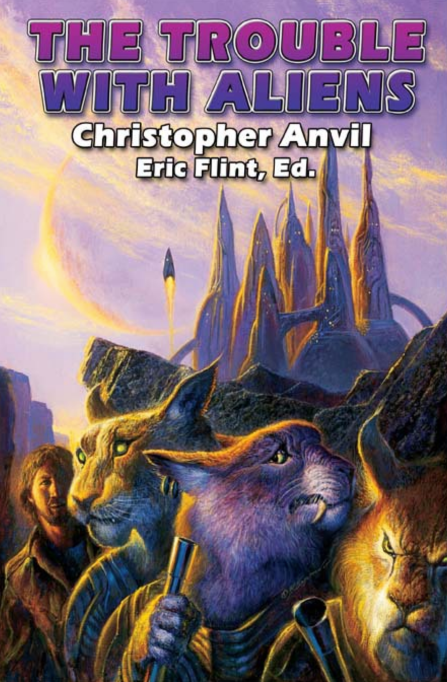
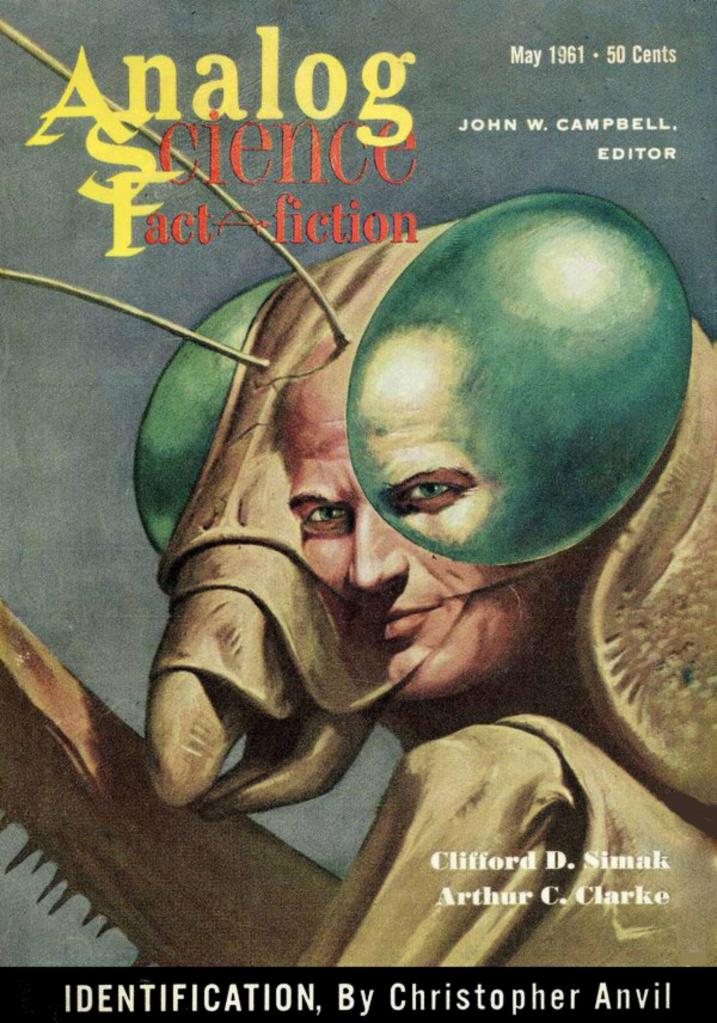
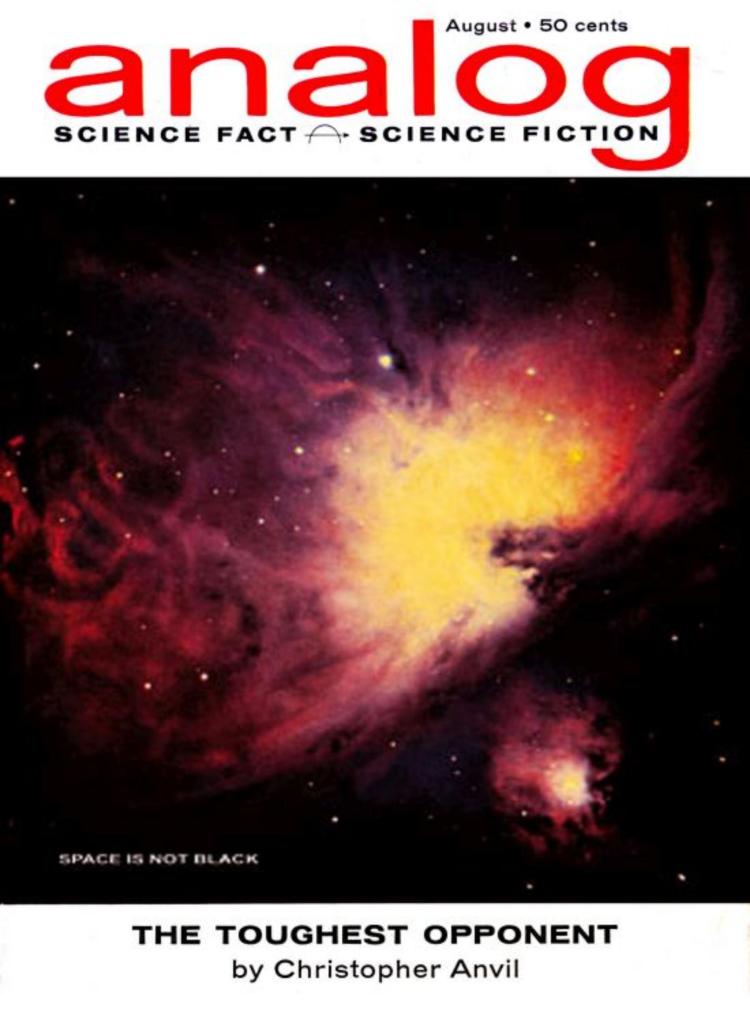
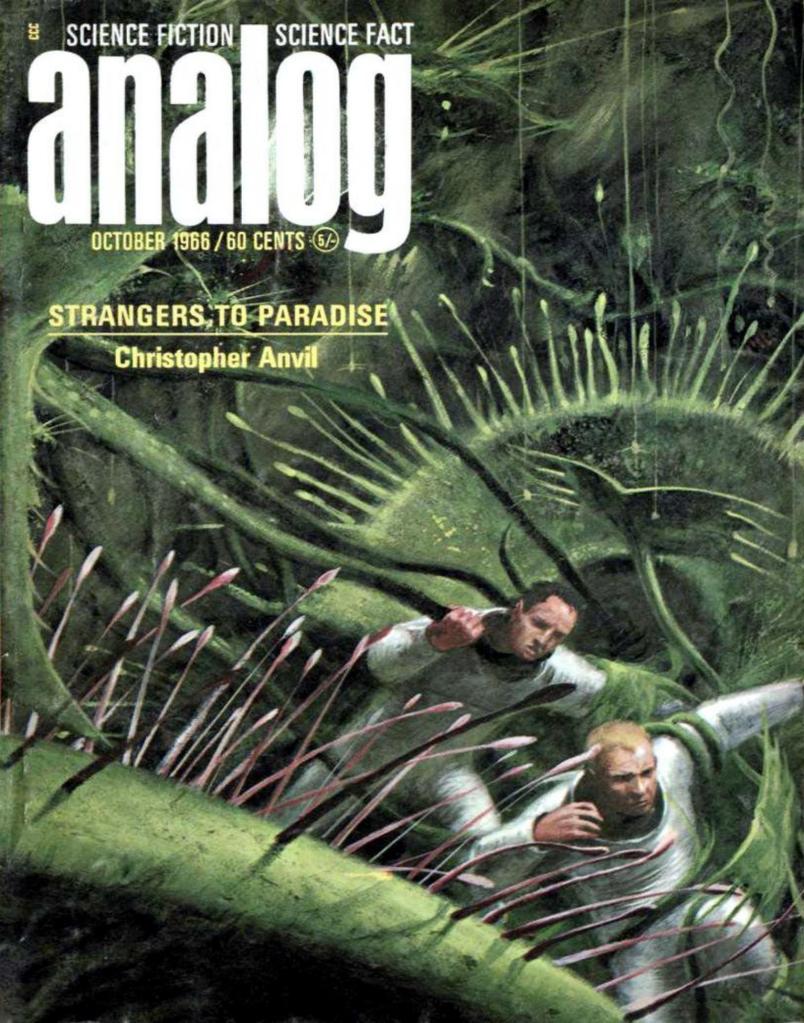
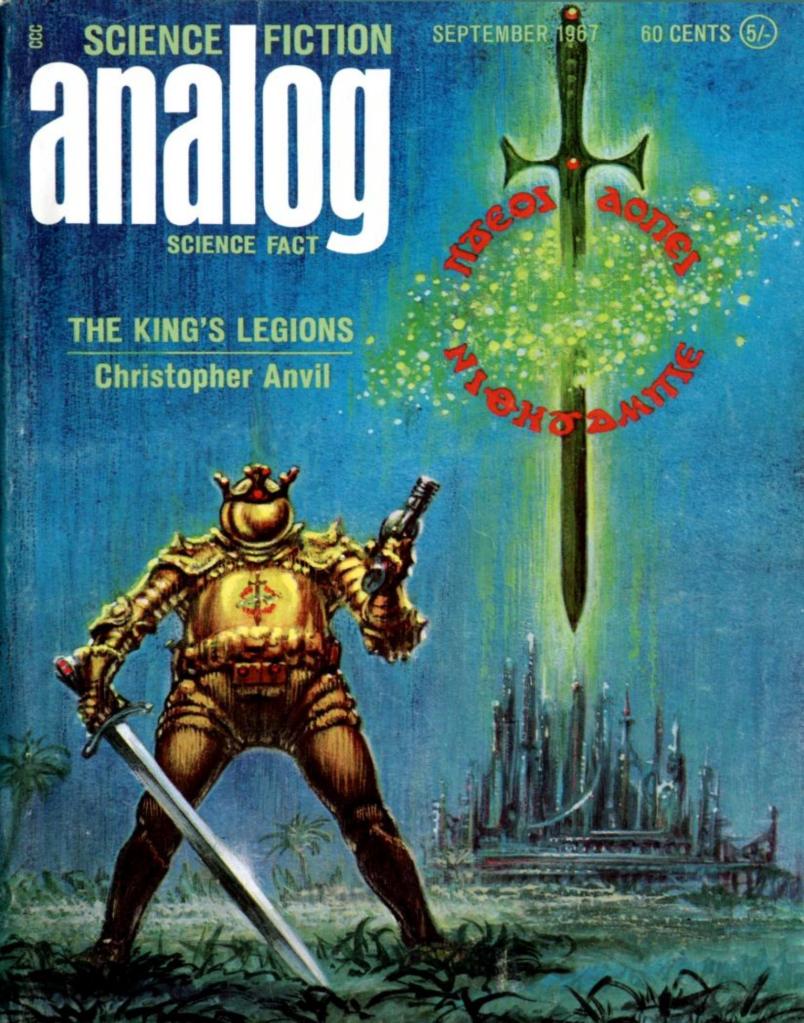
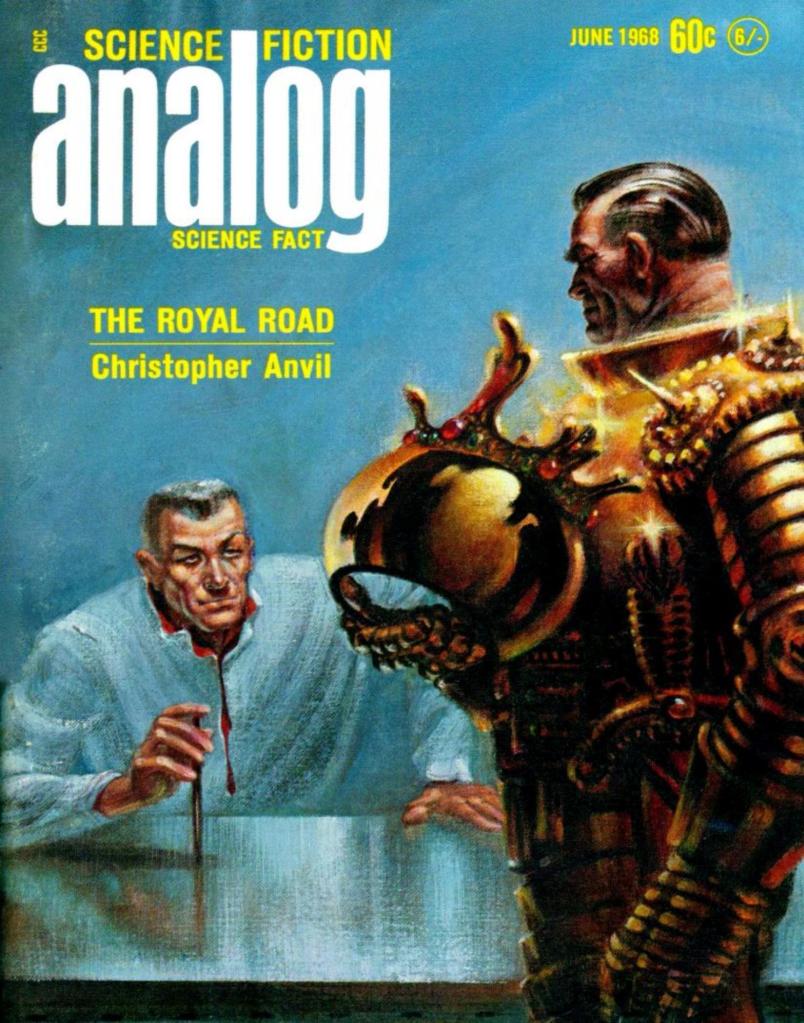
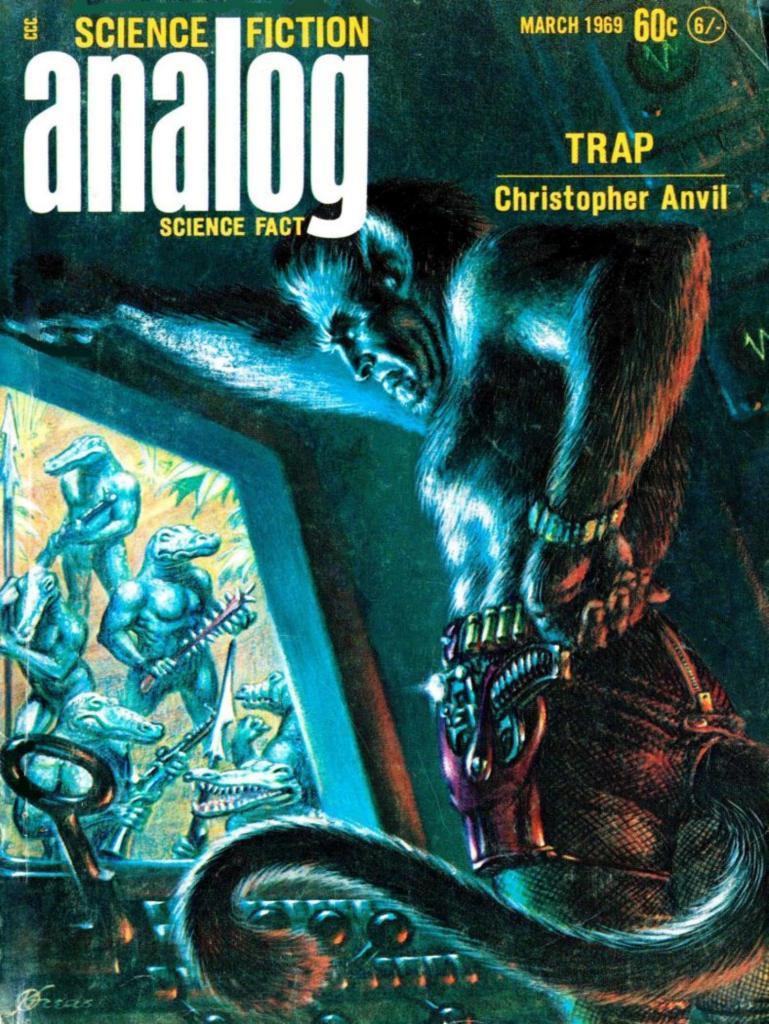
The question “Why am I reading science fiction?” struck me particularly hard recently, while reading stories by Christopher Anvil in The Trouble With Aliens. Christopher Anvil is a mostly forgotten science fiction writer who regularly sold short science fiction to John W. Campbell, Jr. for Astounding and Analog.
I’m enjoying the stories, but just barely. They just pass muster. I do enjoy them, but I’m enjoying them at the level of watching anything on television when you’re bored, and the show is just good enough not to change the channel. Anvil’s stories feel like I’m resonating with the archetypes of science fiction in my unconscious mind.
I keep asking myself: why don’t I read something better, something more rewarding, something that is cutting-edge? The stories are military science fiction, a sub-genre that I normally find boring. Reviewers don’t have much positive to say about Anvil, but they often praise him for his satire. Satire implies a target. Is the military Anvil’s target, or military science fiction? Anvil’s stories remind me a bit of Eric Frank Russell and Harry Harrison.
But are these stories really satire? Satire is usually driven by absurdity, and I don’t think Anvil believes his science fiction situations are absurd. I get the feeling Anvil is just trying to keep up with the other Astounding/Analog writers churning out what Campbell wants to buy and readers want to read.
Anvil’s stories epitomize how I once saw science fiction.
Anvil’s stories are entertaining enough that I look forward to returning to my audiobook. His stories aren’t great, but they are pleasant. I wonder if I’m using them to cope with getting old, like how I used science fiction to cope with adolescence?
I feel his stories touch what’s very basic about science fiction. If I could understand that, maybe I could understand why I started reading science fiction as a kid.
Anvil’s stories also remind me of Project Hail Mary, the bestselling novel by Andy Weir, which is also currently a hit movie. Weir’s appeal is that his stories are about solving problems, and that’s what Anvil focuses on too. However, Anvil’s prose is functional, but far from Weir’s level of entertaining.
I have to wonder if such escapist science fiction doesn’t function like dreaming at night. They might be a diversion for our consciousness when we want to turn off reality, and maybe symbolically play out some kind of existential purpose.
Baen Books has collected Anvil’s stories in several volumes, which they sometimes label the Complete Christopher Anvil. They are available in audiobook, which is my preferred format for consuming old science fiction.
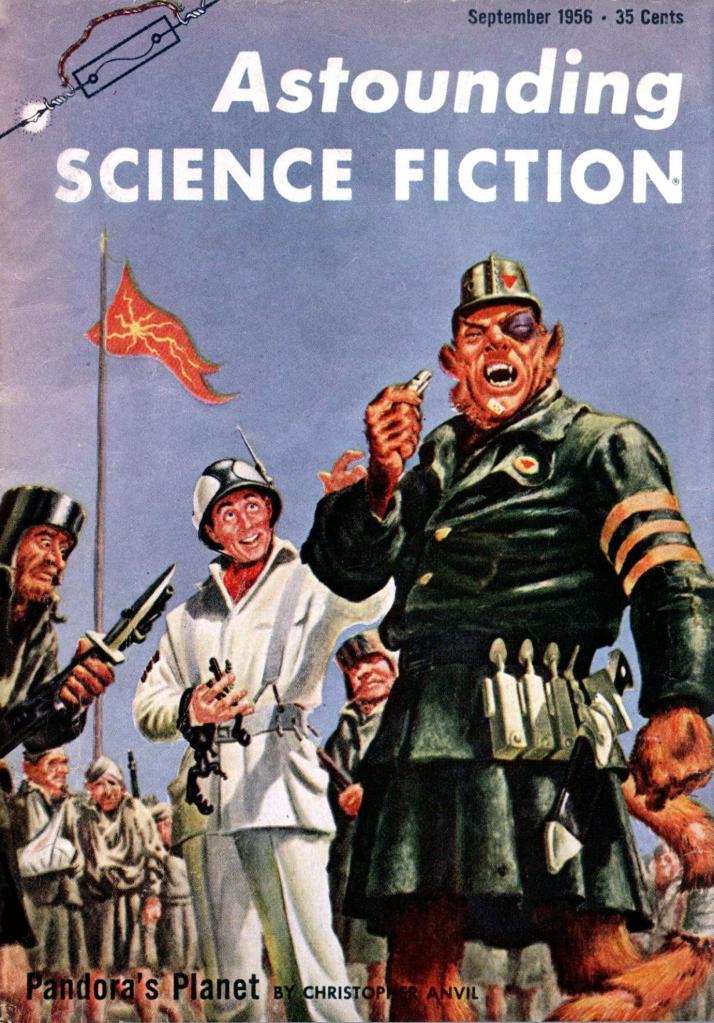
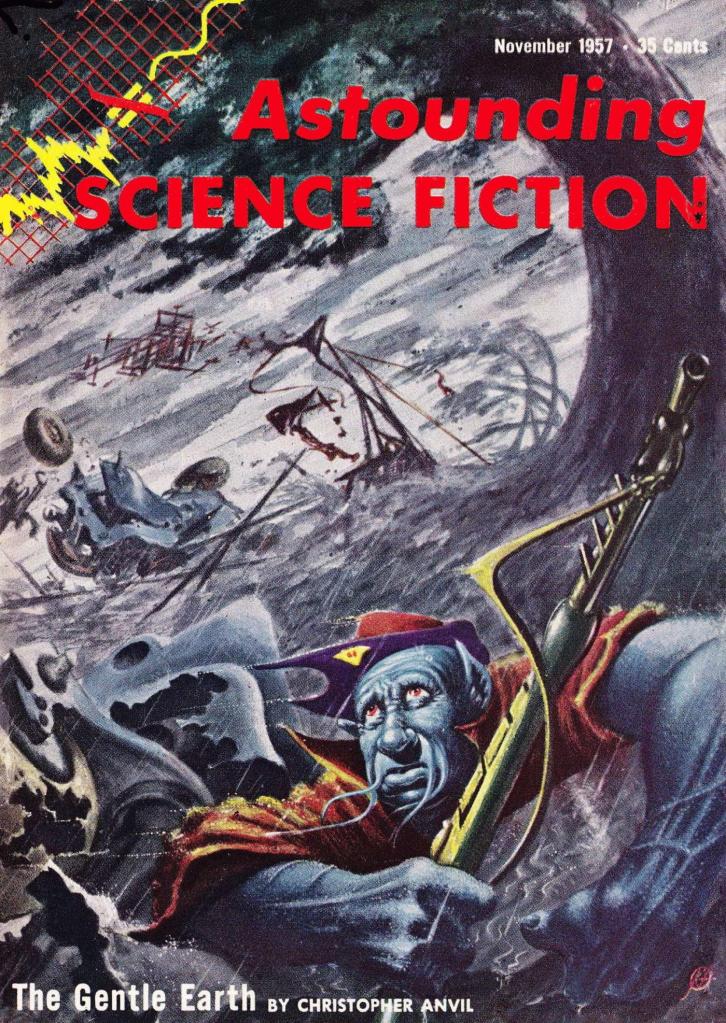
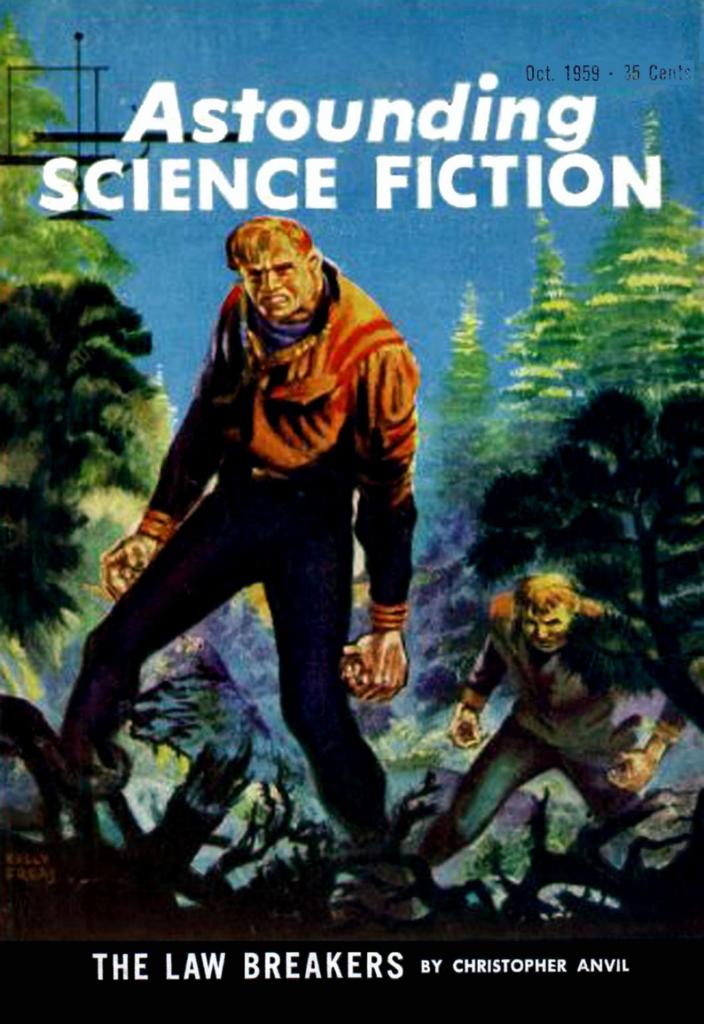
John W. Campbell, Jr. frequently published Anvil stories, but he seldom made them the cover story. Anvil published two novels, according to ISFDB.org, although many of his short stories were republished as a few fix-up paperback novels. Overall, Anvil appears to have published over a hundred stories, and much of that work has been collected in eight volumes by Baen Books.
Back in the 1950s, science fiction imprinted on my mind, and I’ve been following it around like a little duckling ever since.
JWH


Now, I don’t know that I’ve ever read a Christopher Anvil story — nor that I haven’t; the name is familiar, and in the ’70s (I figure I’m about eight years younger than you: born 1958), I went through a number of older (meaning the ’60s) SFF magazines. But I certainly don’t remember a single one of ’em.
But I think that SF, or at least good SF, is about more than “storytelling,” and about more than that good ol’ sensawunda. It’s about commenting on, or inquiring into, the world that is the case through the lens of a world that is not the case, or at least is not yet the case (and probably never will be). A good SF story distorts some aspect, or aspects, of the world like a lens, prism, or mirror, so that we can see things that are, but see them differently.
I guess the classic and most obvious example of “commenting on” some aspect of the world that is the case goes all the way back to the ’50s: Pohl’s and Kornbluth’s The Space Merchants, which exaggerates the effect of advertising on society and on individuals, in a way that clarifies what the effect of advertising on society (and on individuals) really is.
For inquiring into some aspect of the world that is the case, I’ll take a more recent example: Peter Watts’s Blindsight inquires rather deeply into (****SPOILER WARNING****) not only what consciousness really is, but whether or not it really provides an evolutionary advantage, by presenting its (somewhat) human characters with aliens which literally have no consciousness as we do — no sense of “I” as an individual being. Not a group consciousness or a hive mind, just no “I” at all, creatures with very advanced intelligence but no self-awareness.
None of this is to denigrate storytelling. I can (and do) reread and enjoy the works of Edgar Rice Burroughs, Lester Dent, and E.E. Smith, much the way you, apparently, enjoyed the collection of Anvil stories. (Heck, back in the day I read nearly a hundred of those verdammte Perry Rhodan novels.) But it’s like food: I enjoy a good cheeseburger, but most of the time, a good steak is better.
LikeLiked by 2 people
The mood I intended for this essay is: why am I eating burgers when my shelves are stacked with juicy steaks?
I need to read Blindsight. That sounds right up my alley. The books I want to be reading instead of Anvil all are nonfiction books about the nature of consciousness.
LikeLiked by 1 person
Thanks for getting me to read Blindsight. Here’s my review.
LikeLike
Yesterday and today science fiction let’s us explore ideas in ways “realistic” writing never can. Sci fi that took different political ideas to their logical extremes clarified abstract discussions far more than political and social writers ever could.
And the best sci fi did it and let me borrow dreams at the same time.
LikeLiked by 2 people