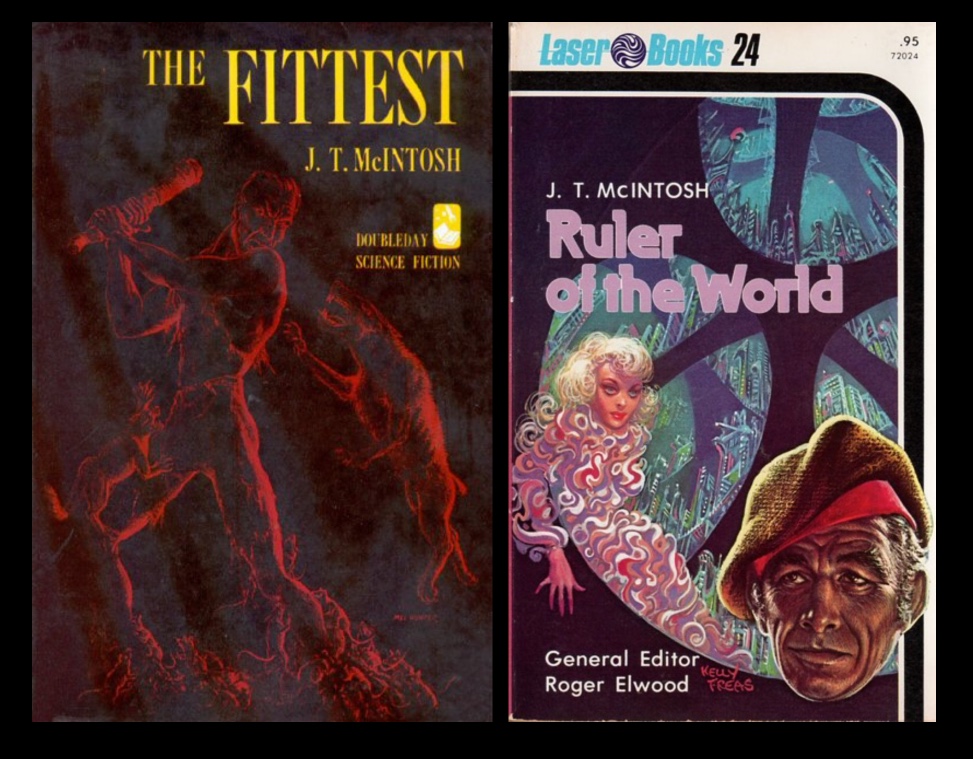
I thought it would be fun to look at old book reviews of the two books I just read and reviewed. I’ll start with The Fittest, which I liked, and then go to Ruler of the World, which I didn’t. Follow the links if you want to read my reviews.
The Fittest
Astounding Science Fiction (December 1955)
by P. Schuyler Miller
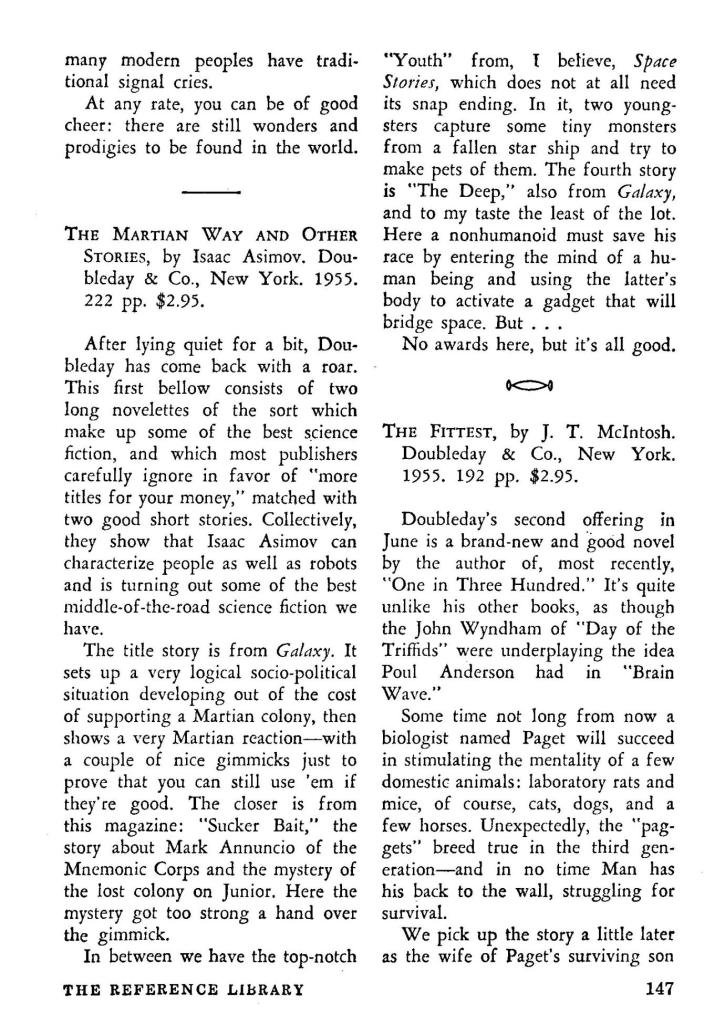
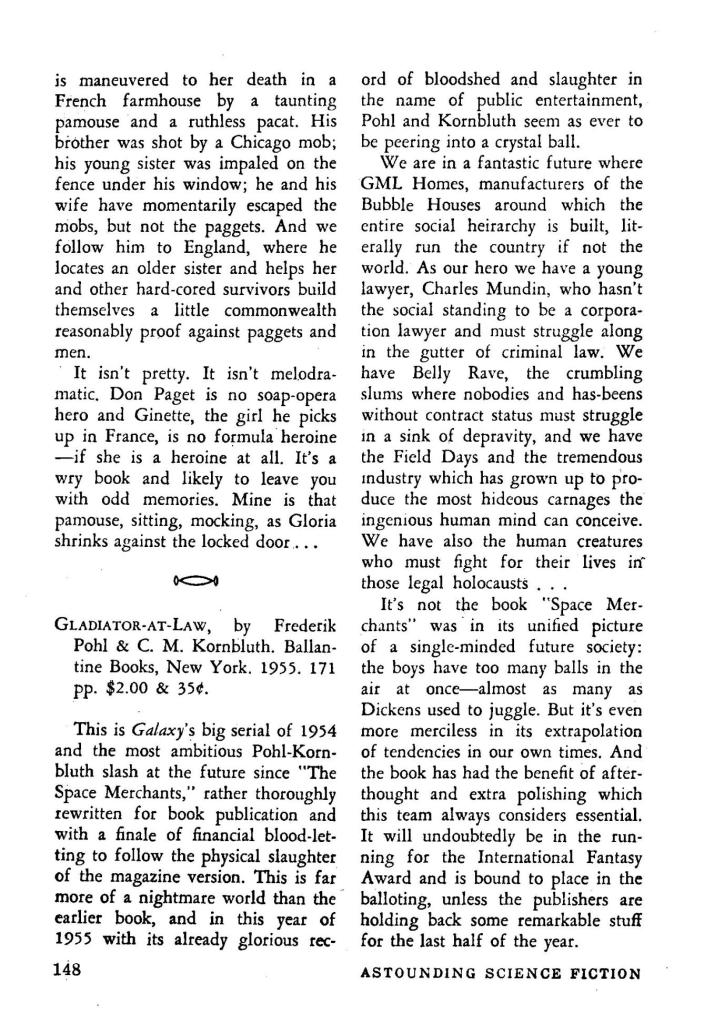
Miller made the same connections I did to The Day of the Triffids and Brain Wave. However, Miller tells too much of what happens. The scenes of when Don’s brother and sister are killed are quite shocking, and they come late in the novel. Plus, a good portion of the story is Don trying to get to his older sister’s place in England, and Don doesn’t even know if she’s still alive. This destroys a lot of the mystery in the middle of the book. The book does leave you with odd memories, and the scene where the mice are terrorizing Gloria stayed with me, too. However, it’s at the very beginning of the story.
Miller likes the book, but he’s not very specific about how much. He merely says it’s a good book. If I were reading this review in 1955, I probably would have ignored this book. In the same review, Miller covers an Ace paperback reprint of McIntosh’s One in 300. He’s more telling about this book, saying, “It’s a very good book and I’m beginning to wish I had rated it higher in the International Award poll.” That kind of tidbit makes me take notice.
How much of the story should a reviewer reveal to get a potential book buyer to buy? Miller doesn’t really explain the core threat. Animals with increased intelligence are killing humans and destroying civilization.
Authentic Science Fiction (August 1955)
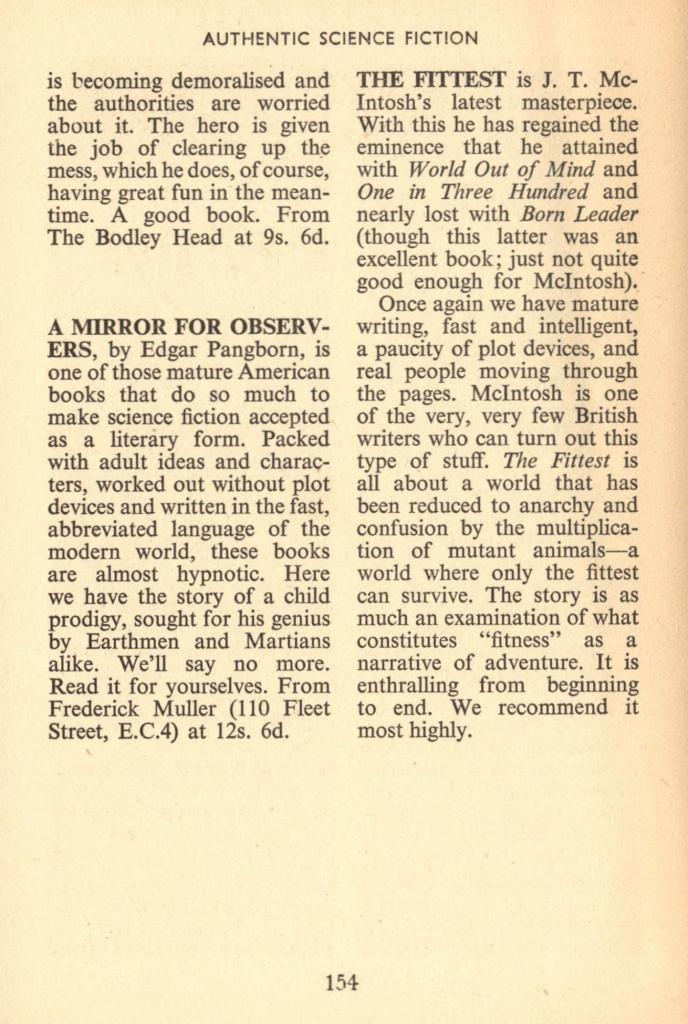
This unnamed review calls The Fittest a masterpiece and recommends it most highly. Authentic was a British publication, and McIntosh was Scottish. This reviewer doesn’t give many details about the story, but does cite the core conflict.
Fantastic Universe (October 1955)
by Hans Stefan Santesson
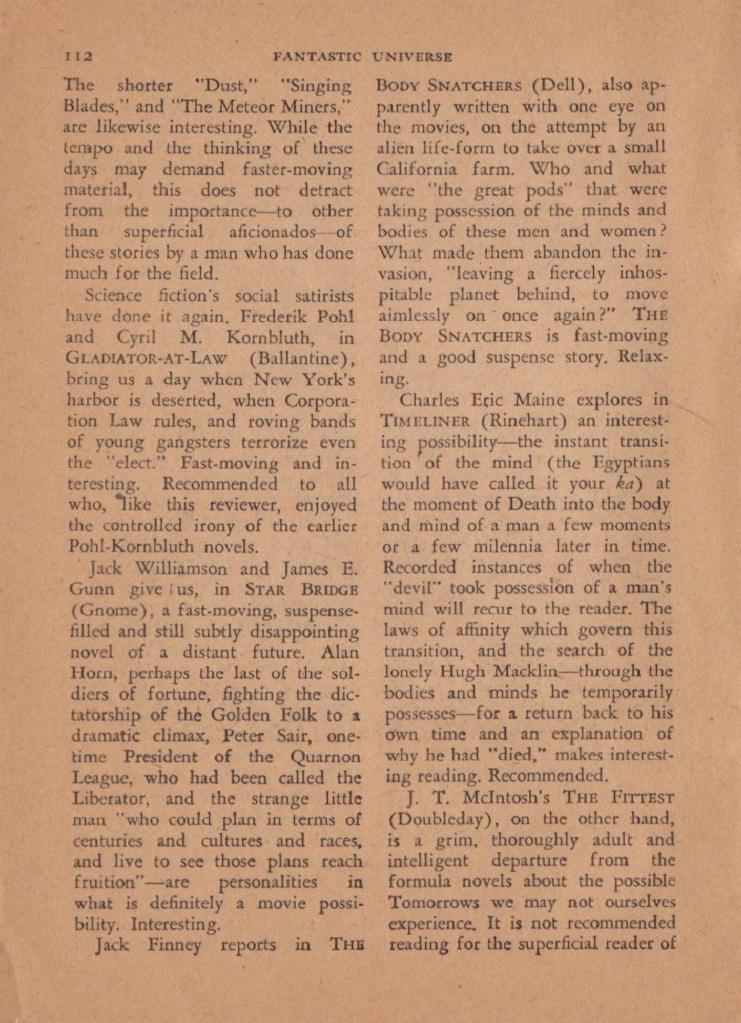
Santesson is rather emphatic in warning readers that this is an adult novel, that it’s serious, and not like most gosh-wow science fiction. I would agree with that, especially for 1955. British science fiction from the 1950s and 1960s seemed more like literary novels than American science fiction.
However, Santesson gives no details about the story. Do book review readers need them? Or does just saying: “This is a sober portrait of men and women, stripped of the veneer of the last generations, fighting for their survival as a race.” is good enough of a recommendation?
Galaxy (November 1955)
by Floyd C. Gale
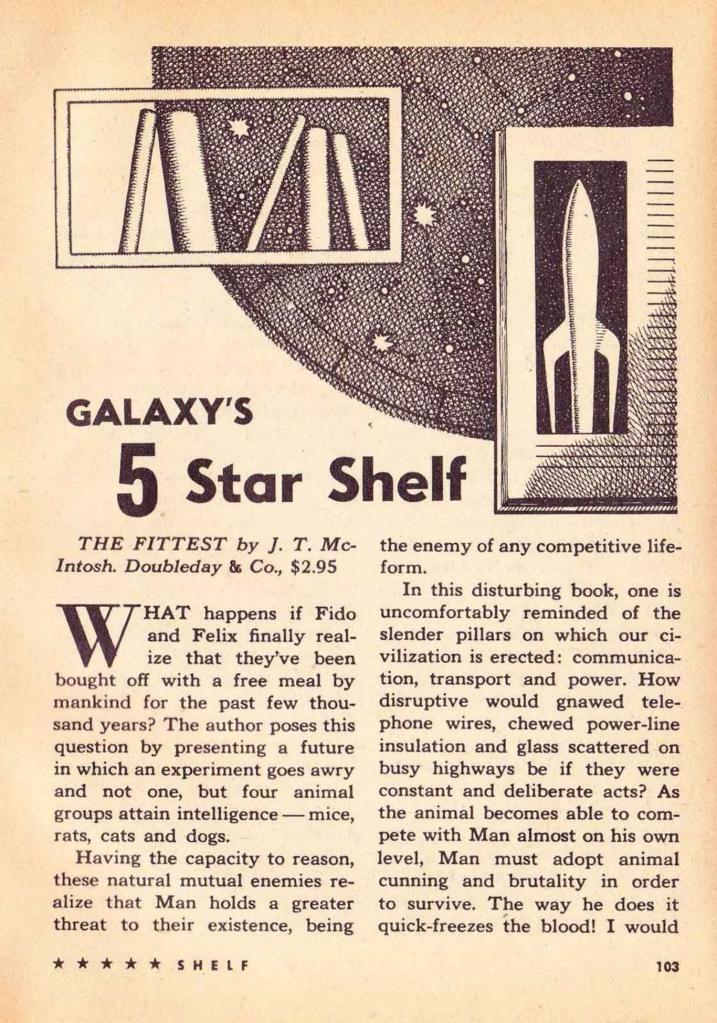
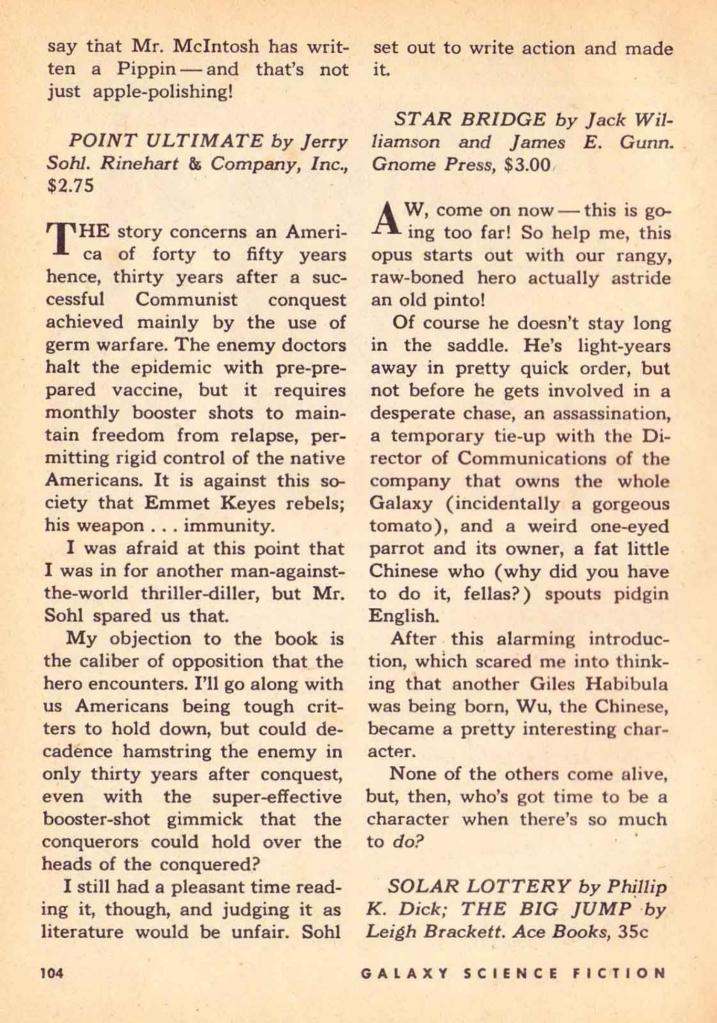
So far, Gale has written the most concise and enticing summary of the core conflict that we’ve read yet. Gale is selling the book right up front. For a review, the size of a long cover blurb, Gale does a great job. He reviews eight books in six pages; we can’t expect too many details.
Science Fiction Stories (January 1956)
by Damon Knight
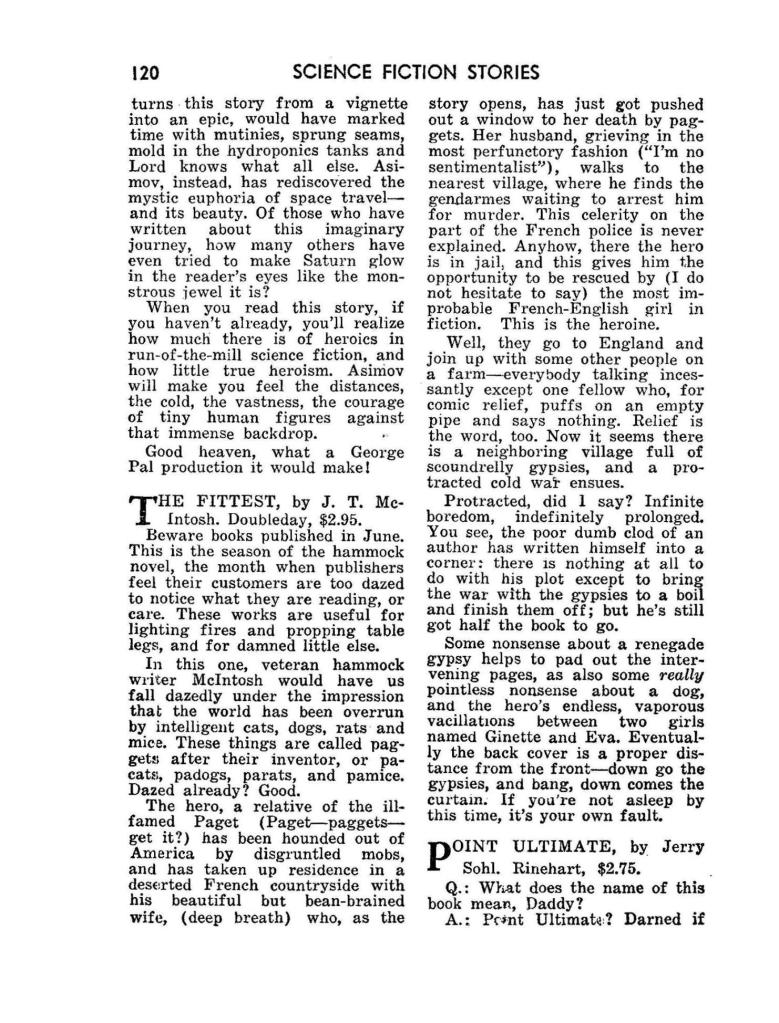
Damon Knight, in both fanzines, genzines, and books, was notorious for slicing and dicing books in his reviews. Knight is particularly nasty here. If I had read only this review, I would not have read the book. Luckily, I didn’t, because I liked this novel. I think Knight is completely unfair. I wonder if he hated it because it wasn’t like the kind of science fiction published in Galaxy. Knight is out of step with the other reviewers.
The Magazine of Fantasy & Science Fiction (January 1956)
by Anthony Boucher
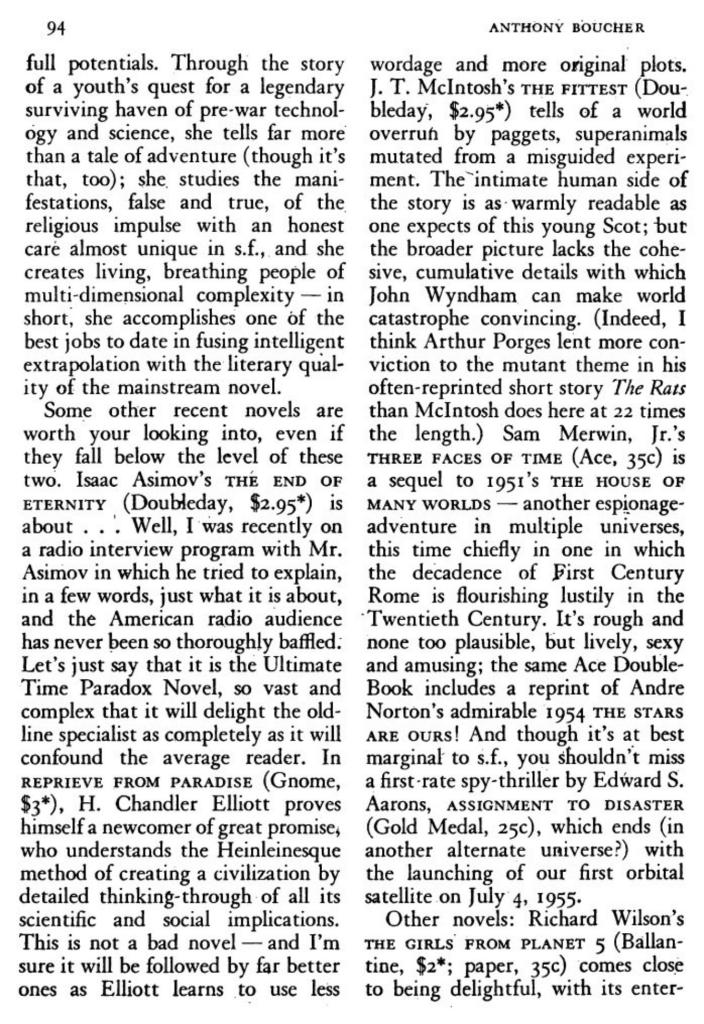
Boucher’s review is quite succinct, and one I agree with. The story is warmly readable and intimate, but it’s not as good as The Day of the Triffids. Triffids is still in print, still widely read and recommended, and The Fittest and J. T. McIntosh are forgotten.
Imagination (June 1956)
by Henry Bott
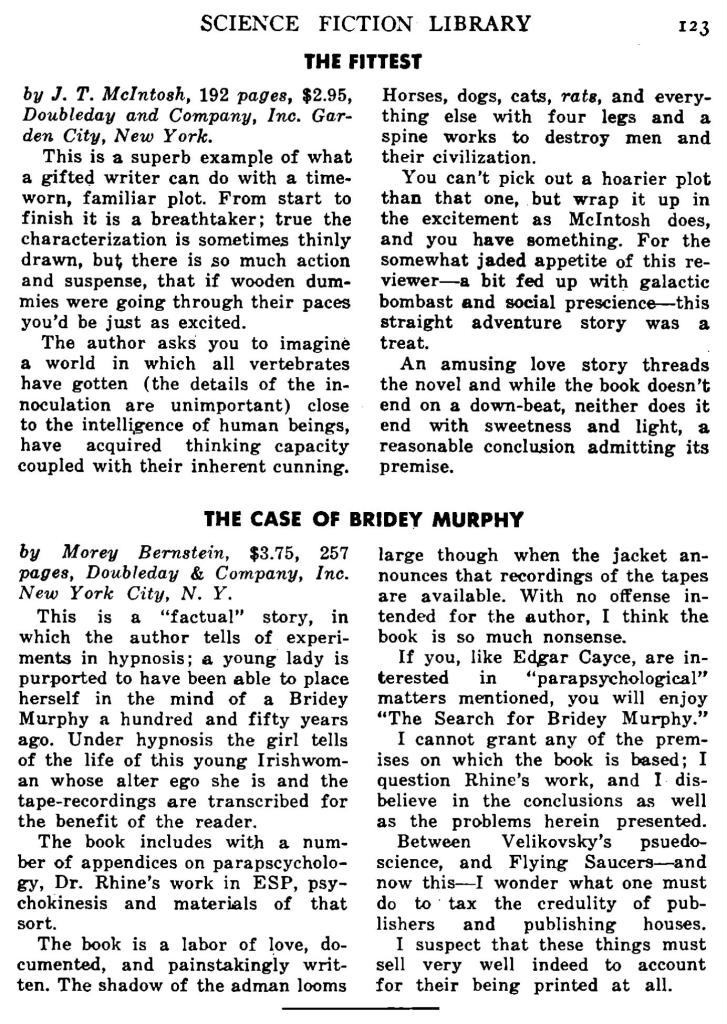
Bott is quite positive about The Fittest, but he gets the core conflict wrong. Not all animals are uplifted, just mice, rats, cats, dogs, and horses.
None of these reviewers comment on the details of civilization’s collapse and what the characters do to survive. The Fittest isn’t as thought-out as Earth Abides, but it covers many of the issues that post-apocalyptic novels need to cover. The core conflict is with the animals. However, a good deal of the novel is about dealing with death and grief, and forming new relationships. Don Paget’s wife dies at the very beginning of the novel, and for the rest of the story, Don is concerned with picking a new mate. Because life is now different, making relationships is different. That’s a strong thread of the novel, and one that reviewers missed.
Ruler of the World
The next book is the one I found disappointing. I should have stopped reading it.
It’s telling that I could find no prozine reviews of Ruler of the World. ISFDB.org lists reviews in three fanzines. I could only track down one.
Paperback Parlour #3
by Philip Stephensen-Payne
This review uses the English title for Ruler of the World, published by Corgi.
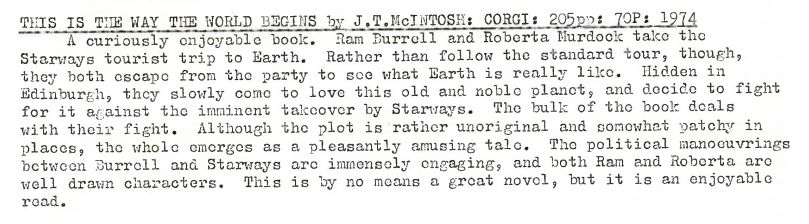
Stephensen-Payne liked it way more than I did, using phrases like “pleasantly amusing tale” and “immensely engaging.” And the few details he gives about the story are misleading.
Just because I didn’t like the story doesn’t mean that other people will dislike it too. We now have two opinions. I guess there’s a chance that more people could have liked it. But without other reviews I won’t know.
James Wallace Harris, 7/3/26


Jim, my thanks for writing about what you found for reviews of this book. I love taking a look at past reviews, in prozines, fanzines, and also the newspapers. For this book, I took a look at Newspapers.com, and I found nothing under either title. I have read more than a bit of J. T. McIntosh in Astounding, but I am not planning on reading this novel.
LikeLiked by 1 person