Untying a Knotted Plot

Yali on the Bosporus

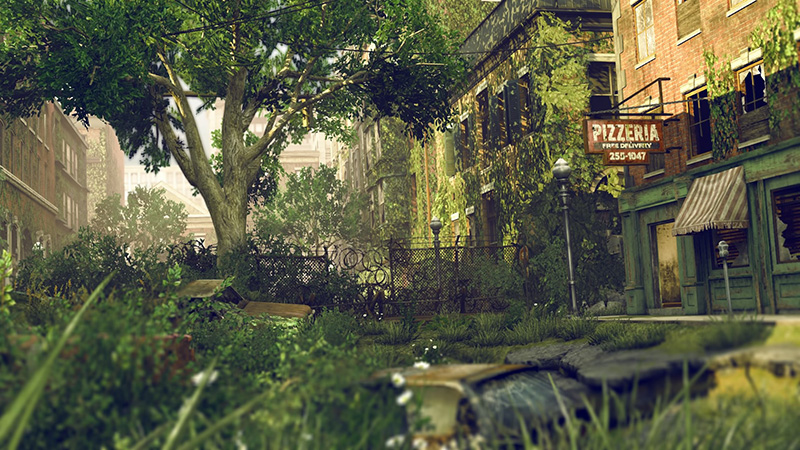
I hope you have read “The Ocean Between the Leaves” by Ray Nayler from the July-August issue of Asimov’s Science Fiction. I’ve read this story four times trying to follow all the plot twists so I’ll be giving away spoilers describing my thoughts from each reading. If you’ve read the story, it will be more fun to follow my bumbling efforts to figure things out. “The Ocean Between the Leaves” is not free to read online, but it was made into a free podcast read by the author. The story is about a young woman who works at a yali on the Bosphorus, maybe like the one pictured above. Ray Nayler has lived all over the world, so this tale is full of exotic details.

I hope Nayler doesn’t mind that I dissect his story. I’m doing it for several reasons. First, my friend Piet asked me to read the story to see what I thought about the plot. He was confused but got some help from Greg Hullender’s review at Rocket Stack Rank. Piet wondered if I would get the story in one reading. I didn’t. I also looked at Greg’s review, and then read it again. After two readings, I thought I got it. But there were many lingering plot questions that kept popping into my head. I then found the audio version and listened to it. Okay, I thought when I finished it this time, I’d gotten everything for sure now and laid down to take a nap. I woke up with more questions. (That pesky subconscious.) That’s when I thought about writing down my convoluted journey through this story.

I’m going to explain all my reading reactions to the story while I still remember them. I hope I don’t hurt Ray Nayler’s feelings. I’m trying not to criticize his story because I don’t know if the problems are with me the reader or with him the writer. The plot of the story is both simple and complicated. It’s simple in that not a whole lot happens, but it’s complicated by how the story is told. It’s intended as a mystery, one meant to make the reader keep guessing. By the way, the story is full of colorful details that make the story enjoyable on other levels, but ones I won’t comment on.

First Reading

Read it the first time on my iPhone 6s Plus while lying on a couch. To be honest, I read it somewhat fast and I just missed the whole issue of mindswapping. That’s a huge plot point to pass over. In my defense though, it wasn’t ever explicit. It was hidden to create a mystery.

I liked how “The Ocean Between the Leaves” started out about a young woman gardener, Feride, on a rich person’s estate. She pricks her finger and it gets infected. Three months later she’s still in intensive care. Nayler describes the infection in gruesome detail.

We’re now introduced to the doctor Melek and Feride’s brother Fahri. Fahri visits his sister every day and flirts with the doctor each time with a 5-minute date. On this day Fahri has a cut that the doctor fixes. Then he goes out to work. We learn that he isn’t rich and his sister’s bills are high. We learn that he makes money tagging skips. I assume this is attaching some kind of signaling device to people who are skipping out on something. His boss Tarik is shady and wears VR glasses. We also learn that Tarik is shaking Fahri down for a lot of money.

Fahri tries to catch three slips in one day to get ahead on the bills but is knocked out by the third slip.

Then the story jumps back in time. Feride is told she is going to die, but the state is going to transfer her mind to another body so she can wrap up her life and say goodbyes. I thought that was rather odd. She/we are told she will be an experiment. At the time, I thought it was an uncommon procedure.

Feride goes back to the yali where she worked but tells people she is her brother. The first time I read this I didn’t realize we had jumped back in time and didn’t realize this Fahri was the same as the Fahri we had already met. Feride/Fahri hears a story from the old head gardener Suat about fighting the system. The first time I read this, I didn’t understand how the story changed Feride into Fahri. I was confused by the pronouns of describing her in his body. I focused on Fahri’s effort to make money and the action surrounding him. I wondered if Feride had died and had been transferred to another becoming Fahri. I was totally confused by the plot. The two similar names Feride and Fahri kept tripping me up, and I didn’t understand why they were the same person. At first, they seemed to be two separate people, and then they were the same person. Probably all of this confusion was due to me reading too fast. But I think some of the confusion was due to information behind withheld from the reader. But I also considered I’m getting old and I’m not sure if I can keep enough of the story in my head to make all the puzzle pieces reveal the overall picture.

Second Reading

This time I read the story on my iPad mini while in my reading chair. I was more determined to read slowly, understand the story, and concentrate on the details. This time around I noticed several references to Fahri being a prince. I also admired the rich background details more in the story.

On my second reading, I paid more attention to the first line, “It began just like a fairy tale; an orphaned young woman pricked her finger on the thorn of a rose, and fell asleep.” With this reading, I only figured this line linked Feride pricking her finger and getting infected. I didn’t try to imagine what it might mean for the whole story.

I also noticed this time we’re told Feride means “the only one.” Now that’s an obvious clue, but only in hindsight. But we’re also told Feride believes it means “the lonely one.”

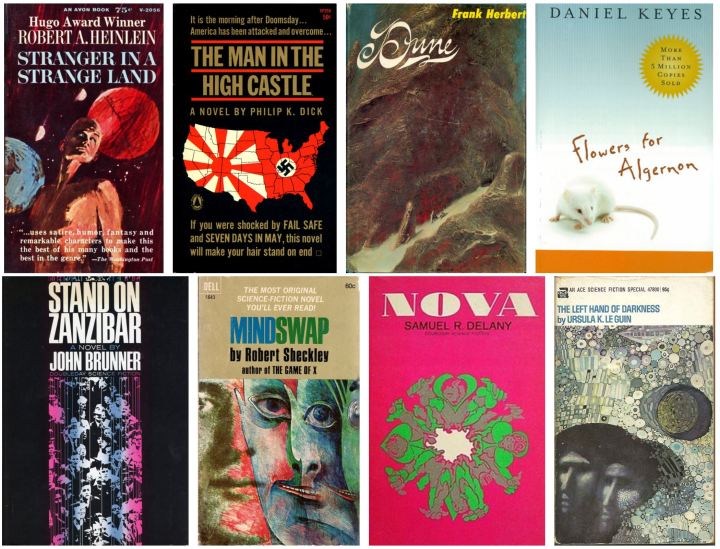
I had read Greg Hullender’s review with spoilers. The keyword he gave was androids. I remembered from the first reading there had been androids, but I assumed they looked artificial and were just slave workers on the docks. I didn’t realize that androids could look just like people. I realized I was reading a story much like Mindswap by Robert Sheckley where technology allowed people to easily swap minds between bodies. In the first reading, I thought Feride was being put into a clone body. Nor did I realize that the skippers Fahri chased were minds in rented bodies trying to run away with them.

In the second reading, I realized that Feride was given a three-day rental body to wrap up her life, and she decided to keep it and work to pay her medical bills to save herself. I still didn’t understand some things. Did she skip out with the three-day body, or got a third body on the black market.

However, the story simplified into one of a person saving themselves. That’s a pretty neat idea of paying for your own medical bills by working in another body while your sick body remained in a coma. Pretty cool. Happy ending.

However, more questions kept popping into my mind.

Third Reading

This time I listened to the podcast version. I love listening to science fiction stories. I would have made my second reading a listen if I had known about the podcast. This time I just “read” the story to enjoy it. I thought I had all the plot twists down. However, after the podcast was over, I put the story out of my mind. But once again new questions started bubbling up.

When we see Dr. Melek talking to Fahri in a man’s body the first time we don’t know that Feride is inside, but she would — wouldn’t she? The reader thinks the brother and doctor are flirting with each other. Doesn’t the doctor know that it’s her patient? But did she talk to Fahri like Feride was inside? Was this the same three-day body the Institute bought for Feride? If Fahri had been working for Tarik for a third of a year as a skip chaser, was Feride in a different rented body, or had she skipped out with the three-day body, or had she merely taken up the payments on the three-day body?

Why was Feride given a male body to close out her life? That seemed rather insensitive. And why didn’t Feride tell Suat that it was her? Why did she make up the story about her brother? Obviously, swapping bodies was common in this time period, so Suat shouldn’t have been shocked. Feride was given a chance to say goodbye to the only people she knew and loved. But she didn’t, why? Obviously, Nayler liked the idea of a sister and brother because it diverts the reader’s attention so they will think they are two different people in the story. But that confused me and almost ruined the story.

What happened to Fahri, or his body?

We are told it’s three months later when Melek and Fahri agree to go on daily 5-minute dates. But we also know Fahri has been using the body for a while as a skip tracer. We are told later he’s been doing it for months. Is it the same three months? When did Feride almost die and Melek buy her three days to wrap up her affairs? At the beginning of the three months. Why would a doctor spend so much money on a patient she didn’t know? Or had she gotten to know Feride well enough to fall in love with her? And like Greg Hullender asked, how did the hospital keep a nearly dead woman without her mind in stasis for months?

Fourth Reading

This time I read my physical copy of Asimov’s Science Fiction. I’m currently buying both the Kindle and paper copies. I’m trying to decide which I prefer. I still don’t know, each has their pluses and minuses. However, I’m annoyed as hell that the Kindle version doesn’t display on my Kindle for the PC. That sure would make reviewing stories so much easier. There are times when I’m tempted to buy an OCR program so I can grab quotes without retyping.

With this fourth reading, I’m starting to feel like Phil Conners from Groundhog Day. Opening line: “It began just like a fairy tale; an orphaned young woman pricked her finger on the thorn of a rose, and fell asleep.” This time around I remember the fairy tales Sleeping Beauty and Snow White and read about them at Wikipedia. But both involved pricked fingers and women who sleep in a spell. However, in Snow White, it’s the evil witch that pricks her finger, so I guess we’re talking Sleeping Beauty here. That means Fahri is going to be her own Prince or is it, Dr. Melek? Melek saves her from permanent sleep but only intending it to be for three days. Feride saves her own life, so is Feride her own Prince Charming? If Melek is in love with Feride and not Fahri, is she the rescuing Prince of this story?

Here’s the thing, Ray Nayler knew what he wanted to do with this story and then contrived to make it happen. Readers don’t know that intention, so they read the story guessing as they go what might be happening. I now wonder at the sequence of inspirations Nayler got for this story. Did he first intend for it to be about a woman who gets a three-day chance to close out her life with a mindswap and then gets the idea of Feride saving herself? Or was that the plan all along? Was the love story an afterthought, and the three-day mindswap added in to make a better ending?

Ah-ha! When we’re first told about Fahri and Dr. Melek, Melek asks, “How is your sister?” The POV is following closely to Fahri and it says, “They had met the first night Fahri came in to see his sister. Melek had sat across from him the same way, nearly three months ago now, when they first met.” This is all very definite, and probably why I was so confused in the first reading. At the beginning of the story, we were told that Feride had a brother she never had met. It’s three months after she falls ill. But Fahri has been visiting her for three months. This leads the reader to believe that Fahri is a real person, found out right away about Feride’s illness and came to see his sister.

In the first scene with Fahri and Melek, there is no foreshadowing of things to come. And there’s an indication that Fahri has been a skip chaser for some time because he’s worn out. Knowing what we know from previous readings for this story to work Feride nearly died immediately after entering the hospital and Dr. Melek bought her a three-day rental on a body right after she arrived. We are told that the Institute did this as an experiment, but the very ending of the story suggests that Melek spent her own money. Why?

This also suggests that Melek never saw the rental body, or Feride got a third body. But this now brings up another interesting question. Did Melek ever know that Fahri was really Feride? The last two paragraphs are:

     "But the expense. It must have been ... I remember struggling to pay ... it's thousands of lire a day ... you can't possibly afford ..."

     "Hush." Melek presses a finger to Feride's lips. "It's my choice to make, Fahri. And where else would I find such a hero? And who would I go on my five-minute dates with? Are you trying to make me drink my coffee alone?"

Notice Melek touches Feride but addresses her as Fahri. I assume, and that’s dangerous with this story, that Feride survives and Feride/Fahri is back in her original body. But when did Melek realize that Fahri was Feride? If Feride had stolen the three-day body, didn’t Melek know? When Feride is visiting Suat she’s already thinking of the body as Fahri. Wouldn’t Melek have seen this rental body? Feride in her new body awakes with Dr. Solmaz Haznader explaining things. But there’s another clue on page 105. Feride/Fahri asks Tarik about the Institute who rented the three-day body when Tarik offered him a job chasing skips. (I don’t know why it says Tahir in this paragraph and not Tarik. Is it another person, or a name change not corrected?)

"I'll deal with the institute," Tahir said, "That's what you'll be paying me for. That' and your nice new body not full of poisonous bacteria. And your other body, drifting on the edge of death. And the price for all three together is going to be very, very high."

He’s paying off the Institute, the rental on the new body, and the medical care of the original body. But we don’t know if he keeps the three-day rental or gets a new body.

Because of Tarik/Tahir conversation with Dr. Haznader I think the Institute story is real, and wonder about Melek’s involvement. Then why does Feride think at the end of the story that Melek paid for everything? But the lengthy discussion of the Institute’s research suggests that they planned all along for Feride to use the rental body for an extended period. So Feride/Fahri stayed in the same body.

But now I have a whole new theory. Feride thanks Melek for the three additional days. Maybe Melek didn’t pay for mindswap, but just three more days of healthcare. And that all the story about mindswapping was in Feride’s feverous mind. Oh no, do I need to read this story again? But wait, Melek thinks about Fahri and mentions their 5-minute dates, so that can’t be right either.

This could go on forever, but it stops here.

(I hope.)

Asimovs Science Fiction July-August 2019

James Wallace Harris, 9/1/19

p.s. – To further explain how hard it was to read this story and write this essay I wrote: “Quantifying My Cognitive Decline.” I believe aging is affecting my reading ability.


What Were the Other Best SF Novels of 2018?

2018 SF books

After winning the Nebula, Locus, and Hugo awards, we know that The Calculating Stars by Mary Robinette Kowal was the standout SF novel of 2018. But which 2018 SF novels were nipping at Kowal’s heels? Keep an eye out for these read-worthy 2018 SF novels, they are showing up in ebook and audiobook sales.

2018 is long gone, but throughout 2019 awards are given to the best novel of last year. Novels must compete for readers like animals in nature to survive. At first, they just want an editor to accept them, then they compete for reviewers, and then for readers to buy them. In their second year of life, they compete for awards. By that second year, most of the books from the previous year have lost the fight to survive, disappearing from the bookshelves and readers memories. Winning an award is huge advantage for long-term survival.
There is a period towards the end of the year where readers are thinking about the best books of that year and novels from the previous year are forgotten — unless they win a Hugo or go on sale at Bookbub. Once a novel reaches a certain age, about the only way it finds new readers is if its author becomes popular and readers of their new novels decide to go back and read their old ones. In pre-digital days, books would often go out of print. But with ebooks and audiobooks, they hang around longer, often showing up in $1.99 sales.

Ask yourself, how many of these novels did you read, or remember reading a review, or had someone recommend it to you, or is already on your TBR pile? Also, how many titles are completely unknown to you? Hundreds of science fiction novels were published in 2018, but how many got popular attention?

The nice thing about the Locus Awards is they break out the science fiction, fantasy, and horror novels to win their own awards. Here are their other SF finalists:

  • Record of a Spaceborn Few by Becky Chambers (Harper Voyager U.S.; Hodder & Stoughton)
  • If Tomorrow Comes by Nancy Kress (Tor)
  • Revenant Gun by Yoon Ha Lee (Solaris US; Solaris UK)
  • Blackfish City by Sam J. Miller (Ecco; Orbit UK)
  • Embers of War by Gareth L. Powell (Titan US; Titan UK)
  • Elysium Fire by Alastair Reynolds (Gollancz; Orbit US)
  • Red Moon by Kim Stanley Robinson (Orbit US; Orbit UK)
  • Unholy Land by Lavie Tidhar (Tachyon)
  • Space Opera by Catherynne M. Valente (Saga)

I wished that the Nebula and Hugo awards gave separate awards to the various genres. It would help us readers who focus only on specific genres and give more recognition and awards to writers. (While I’m wishing, I wish they had separate awards for print/paid short fiction, and free-to-read online short fiction.) There were three other SF novels up for the Hugo in 2019, and all were finalists at Locus:

  • Record of a Spaceborn Few by Becky Chambers (Hodder & Stoughton / Harper Voyager)
  • Revenant Gun by Yoon Ha Lee (Solaris)
  • Space Opera by Catherynne M. Valente (Saga)

Of the Nebula finalists, only one book was science fiction:

  • Blackfish City by Sam J. Miller (Ecco; Orbit UK)

To widen the scope, I’m going to add the starred reviewed SF from Kirkus Reviews. I’m not including young adult novels.

Strangely, The Calculating Stars was not a starred review at Kirkus Reviews. Except for one title (Blackfish City) Kirkus picked books that weren’t award-winners or finalists.

Goodreads voted 20 SF novels for the best of 2018, several of which have already been mentioned above. Their winner was Vengeful by V. E. Schwab that was also picked as a starred review at Kirkus Reviews. However I don’t really consider it science fiction, but a superhero fantasy, which should be a new genre. The Calculating Stars came in #14 with the Goodreads voters. I loved that book, and after it won all the awards, I figured everyone else did too. Obviously, fans and reviewers don’t always align themselves with award winners. Some of the books below I wouldn’t count as science fiction and others that aren’t novels but novellas. Remember Goodreads represents books people bought, tracked, and saved in a books database. Here’s the twenty in ranked order.

  1. Vengeful by V. E. Schwab
  2. Iron Gold by Pierce Brown
  3. Vox by Christina Dalcher
  4. Only Human by Sylvain Neuvel
  5. Red Clocks by Leni Zumas
  6. Binti: The Night Masquerade by Nnedi Okorafor
  7. Perspolis Rising James S. A. Corey
  8. Artificial Conditions by Martha Wells
  9. The Oracle Year by Charles Soule
  10. Head On by John Scalzi
  11. Record of a Spaceborn Few by Becky Chambers
  12. Star Wars: Thrawn Alliances by Timothy Zahn
  13. Severance by Ling Ma
  14. The Calculating Stars by Mary Robinette Kowal
  15. Rosewater by Tade Thompson
  16. Ball Lightning by Cixin Liu
  17. Space Opera by Catherynne M. Valente
  18. The Gone World by Tom Sweterlitsch
  19. Relevant Gun by Yoon Ha Lee
  20. The Consuming Fire by John Scalzi

The Chicago Review of Books picked 10 SF novels as the best of 2018. What we’re starting to see if both confirmations of award-nominated books and other titles being repeatedly recognized by reviews and fans.

  • Mem by Bethany C. Morrow (Unnamed Press)
  • The Book of M by Peng Shepard (William Morrow)
  • Semiosis by Sue Burke (Tor)
  • Severance by Ling Ma (FSG)
  • Rosewater by Tade Thompson (Orbit)
  • The Calculating Stars by Mary Robinette Kowal (Tor)
  • Black Star Renegades by Michael Moreci (St. Martins Press)
  • Blackfish City by Sam J. Miller (Ecco)
  • State Tectonics by Malka Older (Tor)
  • The Strange Bird by Jeff Vandermeer (MCD Books)

Best Science Fiction Books picked their 25 favorite SF books of 2018, and many of the now usual suspects are at hand again. Here they are in their ranked order (and some are novellas and one anthology):

  1. The Freeze-Frame Revolution by Peter Watts
  2. The Tea Master and the Detective by Aliette de Bodard
  3. The Only Harmless Great Thing by Brooke Bolander
  4. Medusa Uploaded by Emily Devenport
  5. The Reincarnated Giant edited by Mingwei Song and Theodore Huters
  6. The Sky is Yours by Chandler Klang Smith
  7. Iron Gold by Pierce Brown
  8. Semiosis by Sue Burke
  9. Revenant Gun by Yoon Ha Lee
  10. Blackfish City by Sam J. Miller
  11. The Rig by Roger Levy
  12. Head On by John Scalzi
  13. Elysium Fire by Alastair Reynolds
  14. Gods, Monsters, and the Lucky Peach by Kelly Robson
  15. The Book of M by Pen Shepherd
  16. The Calculating Stars by Mary Robinette Kowal
  17. Zero Sum Game by S. L. Huang
  18. Empire of Silence by Christopher Ruocchio
  19. Embers of War by Gareth L. Powell
  20. The Oracle Year by Charles Soule
  21. Space Opera by Catherynne M. Valente
  22. Big Ship at the Edge of the Universe by Alex White
  23. State Tectonics by Malka Older
  24. Tell the Machine Goodnight by Katie Williams
  25. Binti: The Night Masquerade by Nnedi Okorafor

Reading about these books makes me wish I could read all of them. The trouble is I only read a handful of new books each year. I’ve already bought many thinking I would read them, but I’ve already been diverted by 2019 books. I’m very lucky if I read three new SF novels during the year they come out, and then three more when they get noticed for awards in the following year. That means I miss a shelf of great science fiction every year.

Maybe we need awards for the best novels and stories that are 5, 10, 15, and 25 years old, to help some stories survive just a little bit longer. Some books deserve more time to find readers. Most writers hope when they create their novel it will outlive their own mortality. Most stories are forgotten in their first year of publication. That’s a shame because we overlook many brilliant works of art. Most writers give up because they don’t find readers. I urge you don’t always read books from your same three favorite writers, or from endless book series. Try something new.

I know writers love having a hit trilogy or successful series, but I find extended stories kind of selfish because reading sequels means sticking with the familiar until it jumps the shark and not taking a chance on new writers and new stories.

James Wallace Harris


The Best Science Fiction of the Year Anthologies


Best Science Fiction of the Year

Just how many great science fiction short stories are published every year? So far there are eight best-of-the-year volumes you can buy or order right now at Amazon, with the possibility of four more that had volumes last year.

At Amazon (some due soon):

  1. The Best Science Fiction of the Year: Volume 4 – Neil Clarke
  2. The Best Science Fiction and Fantasy of the Year, Volume Thirteen – Jonathan Strahan
  3. The Year’s Best Science Fiction & Fantasy 2019 – Rich Horton
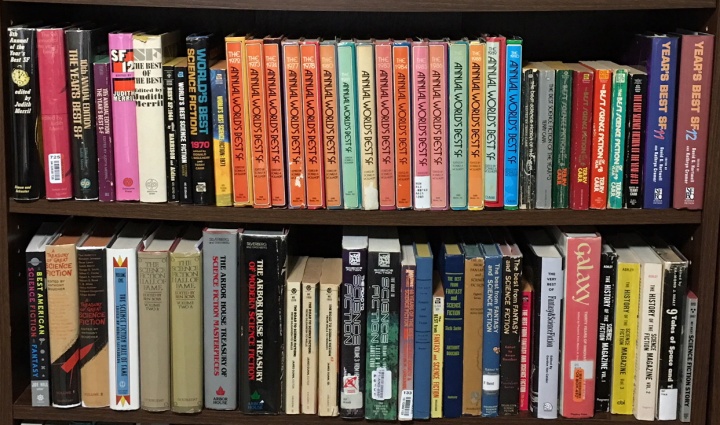
  4. The Best American Science Fiction and Fantasy 2019 – John Joseph Adams
  5. The Year’s Top AI and Robot Stories – Allan Kaster
  6. Year’s Best Military & Adventure SF 5 – David Afsharirad
  7. Nebula Awards Showcase 2019 – Silvia Moreno-Garcia
  8. Best of British Science Fiction 2018 – Donna Scott

Had volumes last year that might show up:

  1. The Long List Anthology: Volume 4 – David Steffen
  2. The Year’s Top Ten Tales of Science Fiction 10 – Allan Kaster
  3. The Year’s Top Short SF Novels 8 – Allan Kaster
  4. Wilde Stories 2018: The Year’s Best Gay Speculative Fiction – Steve Berman

Every year I hope all the best-of-the-year volumes will show up on audio. So far this year, only the Jonathan Strahan anthology is available as an audiobook. I love listening to short fiction read by a professional reader, so this is a disappointing year. In the years past the Allan Kaster anthologies were available at Audible.com, but not so far this year. I hope that changes. I was most anxious to hear The Year’s Top AI & Robot Stories.

Eight, and maybe twelve anthologies provide a lot of stories to read, but there is overlap in these anthologies which I’m tracking in a spreadsheet. My list isn’t completely up-to-date but currently has 92 stories.

James Wallace Harris


2019 Hugo Award Reports and Statistics

For those who like to analyze the numbers, here are two reports from the 2019 WorldCon.

There’s actually a lot of rules, regulations, bylaws, and statistics that go into the nominations and voting. Here is the Hugo Awards FAQ and Voting System description.

3,097 ballots were cast for the regular Hugo, and 834 for the Retro Hugo. Not all members vote. I think those two figures gives me an interesting clue. I’ve always wanted to know how many young fans read old science fiction. Less than 1/3rd of the Worldcon membership was interested in the Retro Hugo awards. I’d sure love to know the age distribution of those 834 voters.

Analyzing both of these results reports lets us see just how popular each story was. Although in the fiction categories there were some very clear winners, it’s obvious from the voting that we should go out and read more than just the winners. The only winner I haven’t read is the novella “Artificial Condition” by Martha Wells and I hear it’s wonderful.

JWH

What Do You Do When You Become the Dead Old White Guy?

destination_moon

When I was young I read new science fiction. It was cutting edge and hated by the old fans. Now that I’m old, I read that same science fiction, but it’s now old. It’s quaint and tired – to the young, but not to me.

Once upon a time, the foundation of higher education was based on the great books of the past. These classics were part of the Western Canon, or the Literary Canon, or just The Canon. Then young people started yelling, “Wait a minute! All these books are by dead old white guys.” The new people decided we should also have great books by women, writers of color, and non-Europeans. Being the old white guy meant being a cultural imperialist, a pariah. Now on the internet we see lists of classic books they are by authors who aren’t all white, male, or from Western civilization. Science fiction has never been part of the literary canon, but it’s classics have followed the same path.

However, in the future when the next generation of young writers and readers evaluate these revised lists of classic books, they are going to find their own version of the old white guy to rebel against. And it won’t always be a guy. For years younger feminists were nipping at the heals of Ursula K. Le Guin.

In the subculture of science fiction some people, usually old white guys, complain that women are winning all the Hugo awards. And I think that’s just great that they are. However, I don’t think the trend is about gender, but age. That younger SF readers are just tired of the old SF guard, and they’re just more women writers in the advancing guard. This generation wants their own time, and it’s here.

I’m getting old myself, and I don’t see the young rejecting old classics as ageism. One interesting aspect about getting old is we become invisible to the young. This bugs my friends. But I consider it natural. I remember as a kid in the 1960s seeing older dudes at parties in hippie attire, wearing long hair, smoking dope, pretending to be young. I thought they were invading of our territory — youth. These old guys would come to parties tell us about all the great stuff they’d done, expound on their mountains of knowledge, describe all the zillions of exotic places they’d visited, and it would make us high schoolers and college kids feel inexperienced and ignorant. Sure, it was old gray backs competing with the young males for women. I guess back then they were our version of the old white guy.

When I read Rebecca Solnit’s essay that inspired the term “mansplaining” I thought she was just talking about some old dude who needed to pontificate, hitting on her and her friend just like these old dudes who came to our parties in the sixties. Ultimately, I expect mansplaining will be less about gender, and more about lonely old folks cornering the young to lecture about what they love. I get my need to pontificate out in this blog. I don’t expect the young to even read it.

I know many people my age who see replacing the old for the new as a form of prejudice, but I don’t think it is. The weight of past creativity can crush current creativity. E. E. “Doc” Smith or Robert A. Heinlein or Samuel Delany can’t always be the greatest SF writers. The abundance of experience can take the oxygen out of new ideas. The young need vast open spaces to create. There are many ways to think about this. The weight of old art can discourage the young from trying. New art needs a fresh canvas to explore. And sometimes you remove the pictures on your fridge from your second grader to make room for your kindergartener.

But here’s the thing, sooner or later somebody gets to be the new old white guy. It’s part of life. Annalee Newitz and Charlie Jane Anders just won a Hugo for their savvy hip podcast Our Opinions Are Correct. I see them as youthful experts on what’s current in science fiction even though they’re well into middle age. Newitz and Anders report on current SF while I’m obsessed with the past. I greatly admire what they do, because I can’t. I even envy the hell out of them. But I can’t be that young again.

Although Newitz and Anders aren’t as young as the up-and-coming people they profile, they’re still in touch – for a while. They’re part of the first generation who rebelled against the old white guys of science fiction. I expect that one day a younger generation will rebel against their generation and they will become the new old white guys. By the way, I’m not singling them out for any reason other than they are the hippest of the new I know. I’m sure there will be even younger fans out there that will laugh at that. But part of getting old is learning to live with losing touch with whatever is currently hip. The reason why I don’t complain about the Hugos is I accept being unhip. I accept my state of exploring being old.

These days feels like a renaissance to the young. Their version of the Copernican revolution feels like it’s new, obviously right and perfect, and will always exist. Yet someday the political correctness of today will be the political incorrectness of tomorrow. Thus, the avant-garde becomes the old guard. That the books revered as classics today will fade with memory and go out-of-print. Some cherished works will even be sneered at as unsophisticated writing lacking in modern ethical understanding.

That’s just how things are. The more interesting aspect of getting old is finding our own territory. We don’t need to try to keep up with the young, or lord our “great classics” over them, but find our own creative spaces. We also can’t let our failure to keep up with the young to crush our own spirit and creativity.

At my age it’s a challenge to create anything at all, to be productive when the body and mind are in decline. I tell myself it’s okay to retreat into the past and enjoy the old SF canon, but I think it might also be interesting to create another canon, one for the last third of life that does include the new stories winning the Hugos. This week I read Brian Aldiss and Roger Zelazny, last week I read two novels by Mary Robinette Kowal, the week before that read an Isaac Asimov novel from the year I was born – 1951.

I don’t care who the Hugos are given to as long as they find me something good to read. I quite accept that my generation is being passed by. Here’s the odd thing, all those old dead white dudes in the Western Canon were truly great, however, you have to be old to really appreciate them. If by any chance a young person got this far in this essay, you’ll see what I mean if you live long enough.

James Wallace Harris


The Calculating Stars by Mary Robinette Kowal

The Calculating Stars and The Fated Sky by Mary Robinette Kowal

The Calculating Stars by Mary Robinette Kowal just won the 2019 Hugo award for best novel. Congratulations! It also won the Nebula and Locus awards. I read both The Calculating Stars and its sequel The Fated Sky this month and loved them. I fully understand why The Calculating Stars is winning all those awards.

I’m not going to try and review The Calculating Stars because it’s gotten plenty of press. What I want to explore is why it’s so likable and readable. Anyone daydreaming about writing a wildly successful science fiction novel should study it. It’s definitely a page-turner. I generally avoid sequels but I also raced through The Fated Sky too.

Why is The Calculating Stars so popular? To me, the appeal of Elma York’s character is primary. This novel was atypical for science fiction because it was extremely character-driven. It almost felt like I was reading a memoir of a real person — and one written by a literary major.

But there was much more to why this book is exceptional. The story was a do-over, an alternate history where Americans were first into space in the 1950s, and women and minorities became astronauts much sooner than actual history. The story felt like it made amends for Katherine Johnson, Dorothy Vaughan, and Mary Jackson — the women in Hidden Figures by Margot Lee Shetterly; for the women pilots called the Mercury 13; for the women profiled in the book Rise of the Rocket Girls by Nathalia Holt; for the black aviators in the book Black Wings by Von Hardesty; and for Ed Dwight who should have been America’s first black astronaut as part of the second cohort of astronauts after the Mercury 7.

The Lady Astronaut series is also another kind of do-over, one where we went to Mars. Why did we abandon our Martian destiny in 1972? I grew up with Project Mercury, Gemini, and Apollo in the 1960s. Everyone expected us to go on to Mars in the 1970s — everyone except Congress and Richard Nixon. So we’ve boldly explored low Earth orbit for nearly fifty years now. I doubt humans will make it to the Red planet, except in science fiction stories like this one.

Finally, I believe there’s one more defining emotion that made The Calculating Stars great. Maybe it’s wistful sadness, maybe it’s bitter regret. There’s a famous scene in the 1954 film On the Waterfront. It’s the scene where Terry Malloy (Marlon Brando) is telling his brother Charlie (Rod Steiger) that he could have been a contender. Terry was an up-and-coming fighter, but Charlie worked for the mob, and Terry was made to take a dive, ruining his future forever.

I think many readers of The Calculating Stars wish they could have been astronauts and gone into space. Kowal knows that women, minorities, and all us science fiction fans lacking the right stuff wanted our chances too. We wish we could have been contenders and The Calculating Stars resonates with that desire. I feel the book looks back in regret, saying that America should have been better, more just, more equal, more open, and more egalitarian. That maybe we’re doing better now than we did in the real 1950s, but we aren’t there yet, just like we never made it to Mars.


It should have been different. In our timeline, it wasn’t our night, but in Elma York’s timeline, it was.

James Wallace Harris

(By the way, The Calculating Stars is currently on sale at Amazon for $2.99 for the Kindle edition, but I don’t know for how much longer.)

“The Saliva Tree” by Brian W. Aldiss

F&SF 1968-09

I wished F&SF had interior illustrations. This September 1965 cover for “The Saliva Tree” does not convey the story at all, other than abstract eeriness. Yet, it deserves a bunch of distinctive black-and-white illustrations Of course, the monster in this story is invisible, and thus hard to illustrate. “The Saliva Tree” should have inspired a cover painting of Victorians set against the background of a bucolic English farm expressing fear over bizarre changes in plants and farm animals.

“The Saliva Tree” is Aldiss paying homage to H. G. Wells, but the story would have been a delight to readers of Weird Tales in the 1920s. It’s about a horror from space. Aldiss won a Nebula award for “The Saliva Tree” and he deserved it. Sadly, finding this story will be difficult. It’s been reprinted often, but not in any famous anthologies you might have on your bookshelf. A good reason to order a used copy of the rare volume three of The Science Fiction Hall of Fame. There’s a Kindle edition of The Saliva Tree; and Other Strange Growths. And it’s also available in audio at Audible.com as The Best SF Stories of Brian W. Aldiss. I listened to it two days ago, but I’m already enjoying rereading it in print. For stories I really love, I want to read with both my eyes and ears.

Gregory Rolles, a young man in his early twenties belongs to a class where he doesn’t work. He busies himself by writing letters to famous people and journals. He wants to author a book, The Socialist Naturalist. Gregory is a modern 19th-century man of science, a dreamer of utopias, one who hopes to join the ranks of the experienced advocates of free love. His hero is H. G. Wells. Gregory admires a local farmer Joseph Grendon for installing an electric generator on his farm. Gregory regularly visits the farm to learn about electricity with the father but falls in love with the farmer’s daughter, Nancy.

The story begins when Gregory and his friend Bruce Fox see a meteor streak across the sky looking like it might have landed somewhere out of town (Cottersall, East Anglia), maybe on Grendon’s farm. The next day Gregory goes to visit.

The Saliva Tree ebook coverFrom there the story leisurely unfolds. What makes Aldiss’ tale so delightful is he knows the Victorians didn’t comprehend the concepts of science fiction we do. Spaceships, UFOs, and alien invaders weren’t part of their consciousness, and they didn’t have the language to either describe their fantastic experiences or even the concepts to analyze. It takes the characters in this story a very long time to theorize why unnatural events are happening in their dull as dirt lives. They keep wanting to explain the unknown in terms they do know, thus unseeing what should be seen.

Another reason this story is so much fun to read is Aldiss uses a lot of ideas from early H. G. Wells stories and novels. “The Saliva Tree” is logical, realistic, mundane, yet twisted by a Victorian kind of fantastic. The story is set after The Time Machine but before The War of the Worlds. Aldiss alludes to The Food of the Gods, The Island of Dr. Moreau, and The Invisible Man — among other works of Wells. “The Salvia Tree” was written in honor of the 100th anniversary of Wells’ birth.

To me, the reason “The Saliva Tree” is such a pleasant diversion is that Aldiss focuses on his characters and not science fiction. Pay attention when you read science fiction. What percentage of the wordage goes into the science fiction world-building and what percentage describes ordinary human experiences? Stories, where most of the words are about people, tend to be more engaging. There’s enough going on in this story that it could have left out the monster from space and still had plenty of plot to be a page-turner. Gregory slowly realizes he wants Nancy but encounters stiff resistance from a farmhand rival. And he’s baffled by the Grendon family considering him useless. They can’t comprehend how Gregory could become a good husband or son-in-law since he doesn’t work. Nancy sees him as a rich lay-about and isn’t even attracted to his wealth. Gregory’s scientific ideas about progress only annoys Mr. Grendon’s practicality and independence.

The alien menace reminds me more of H. P. Lovecraft than H. G. Wells. Aldiss takes his time to fully reveal the monster which slowly alters the whole natural foundation of the Grendon farm. I don’t want to say too much, because this is a story you should let unfold without too much preconception.

Yet, I must wonder what makes this retro-SF story so entertaining? This 1965 tale anticipates the charm of steampunk. When I was growing up, we reviled the Victorians for being narrow-minded, but over the decades more people have become Anglophiles because of Masterpiece Theater. We now see Victorians as trailblazers for the 20th-century. Besides, most of us only understand science in a mechanical pre-Einsteinian way. “The Saliva Tree” has a gross-out monster that’s different, which is what made the film Tremors so much fun. Plus, the story is self-referential to science fiction. Most science fiction fans love a good recursive SF story, I know I do. Like I said, I’m already rereading this story.

James Wallace Harris

Who Were the Korlevalulaw?

Brian W. Aldiss

A funny thing happened on the way to writing this essay. I sat down to review the short story “Appearance of Life” by Brian W. Aldiss. I thought I’d check Google before I started to see if I could find any history about the story. The first item returned was ‘“Appearance of Life” by Brian W. Aldiss‘ – a review of the story I had written back in 2009. I know my memory is deteriorating, but I found it hilarious that I had completely forgotten something I had written and I was about to write the very same thing then years later. I wish I had finished writing this new review before discovering my old review so I could have compared the two. I know I should be depressed over the existential holes in my memory, but nowadays, I just laugh at myself. I’m going to worry when I stop laughing.

Reading that forgotten review from a decade ago shows I damned the story with faint praise and use it for a jumping-off point to discuss the nature of science fiction. I will quote parts of it in this review. I liked “Appearance of Life” much better this time around. Most stories do get better with rereading. I’ve also learned since 2009, that the more I read works by a single author, the more I can map their range of abilities and interests. Back in the 1960s, Aldiss was among the Big Three of British SF writers: Aldiss, Ballard, and Clarke. His legacy has been fading in recent decades — but then so has most of the science fiction writers I grew up reading. I know I’ve pretty much forgotten about Aldiss since the end of the 1970s.

For the last couple of years, I’ve been gorging myself on science fiction short stories. I haven’t completely logged my 10,000 hours yet, but I’ve acquired a decent sense of the art form. Every SF short story must stand on its own, but it also competes with all other science fiction short stories. Science fiction by its nature is in conversation with itself. Science fiction is about ideas. The challenge to a creative SF writer is to come up with fresh insights to old ideas, and if they want to be cutting-edge, add a new idea to the genre’s repertoire.

Science fiction wants to be infinite in novelty but is often repetitious in routine, improvising on old melodies. Long term readers who have consumed a critical mass of science fiction will understand the genre recycles all the great concepts for each generation of young readers. Neophyte fans often feel they are experiencing a mind-blowing concept for the first time when reading current SF. They believe those ideas are new to them and original with the author they are reading. They can’t tell if the presentation is a brilliant revision or a tired retread. Nor do new SF readers understand that science fiction has evolved over time and gone through many revolutions in writing styles. It isn’t easy to spot the changing prose styles in science fiction as it is flipping through art history textbooks.

I’ve only read four novels by Aldiss, but only vaguely remember two, Hothouse and Non-Stop which I’ve read twice each. (Called The Long Afternoon of Earth and Starship when I read them in their first American editions back in the 1960s.) Over the decades I’ve only read a scattering of his short stories. I’m currently listening to The Best SF Stories by Brian W. Aldiss from Audible.com.

What got me interested in Aldiss again was Joachim Boaz’s review of The 1977 Annual World’s Best Science edited by Donald Wollheim. It contains “Appearance of Life” which Boaz rated 5/5 (Near Masterpiece). How could I resist that? Boaz said of the story, “It is powerful and mysterious. Aldiss at the height of his powers.”

Here is my original description of the story:

“Appearance of Life” can be found in these anthologies, but it’s not a very famous story.  I’m reading it because it’s the opening story from The 1977 Annual World’s Best SF edited by Donald A. Wollheim, a collection we’re reading in the Classic SciFi reading group.

The story opens with two sentences that sum up the story, “Something very large, something very small: a galactic museum, a dead love affair.  They came together under my gaze.”  The story immediately evokes the awe associated with tales about mysterious missing aliens who leave galactic ghost worlds behind, like the Krell that once lived on Altair IV in the film Forbidden Planet, or the strange civilization that once existed on Bronson Beta, from the novel After Worlds Collide. These were my first encounters with the sense of wonder brought on by discovering long dead alien cultures back in the 1960s, but it’s a very common cliché in science fiction that I see over and over again.  It’s odd what Aldiss does with this common idea.  His aliens are called the Korlevalulaw, a tongue-twisting name to say or think.

One cool idea in the story is the Korlevalulaw abandoned written writing, which is something our culture is doing now because of the Internet.  What will aliens discovering our civilization ever make of keyboards and LCD monitors?  Reading this short story also makes me wonder what if anything could be made of my life from the possessions I’ll leave behind.  Think about it.  Photographs tell more than anything else.  How long will this blog endure?

On the planet Norma, humans find a vast building that girdles the planet for sixteen thousand kilometers.  Humans have decided to use this alien construct that is impervious to the electro-magnetic spectrum as a museum to house the history of mankind.  Androids tirelessly store humanity’s artifacts, supervised by twenty human female staff members.  The narrator is a “Seeker” who gets to prowl the collection and develop theories.  The entire structure was left empty by the Korlevalulaw, and after ten centuries humans have filled several thousand hectares of space.

Seekers are specially trained people to intuit understanding from scant evidence, perfect for studying the junk left in this vast Smithsonian like attic a thousand light years away from Earth.  At the current rate it will take 15,500 years to fill the alien structure.  To the Seeker, the human artifacts are almost as alien to him as the Korlevalulaw is to us, because humans have been around for so long that they no longer look like 20th century people.  That’s a nice science fiction speculative concept to come up with, to be a far future anthropologist, and it’s not an uncommon idea.  H. G. Wells’ Time Traveler spent time in a far future human museum trying to figure out that changes that people experienced over 802 millennia.  So far, Aldiss hasn’t presented us with anything new in this story, yet.

The Seeker explores a spaceship from the time when humans were split 50-50 by gender and discovers a wedding ring.  In the Seeker’s time, gender population is 10 to 1 in favor of females.  We readers don’t know why, but it’s an interesting thing for Aldiss to throw out.  Eventually the Seeker discovers two cubes, from different spaceships, that were holographic recording devices.  By unbelievable luck, they are from a married couple that recorded messages to each other fifteen years apart, and were design to only respond to the face of their beloved, so the Seeker sets them together and lets the holograms chat out a long dead love affair in an out of sequence conversation of regret and love that is sixty-five thousand years old.

Jean and Chris’ love story takes a couple of pages to play out, but ultimately it seems completely mundane to me, even though they were separated by interstellar war.  I’m surprise Aldiss didn’t invent something new to add to marriage and love.

Now we come to the intent of the story, called the “secret of the universe” by the Seeker in his epiphany, “Like the images I had observed, the galactic human race was merely a projection.  The Korlevalulaw had created us – not as a genuine creation with free will, but as some sort of a reproduction.”  Then the Seeker decides his flash of intuition is nonsense, but we know that isn’t true by his final actions.

In the end the Seeker flees the world Norma to desperately seek out an isolated world to hide away from humanity, fearing that if he communicated his secret it would doom mankind.  And this is why I’m writing this review.  What is Aldiss really implying?  I think he’s saying something philosophical that’s more than making up a spooky SciFi story ending.  I feel Aldiss wants his story to be disturbing like those Mark Twain stories written in his collection Letters from the Earth, which featured Philip K. Dick paranoia about existence.

Experience SF readers will have read many stories about our species exploring the galaxy. Galactic empires are an over-explored territory. When considering intelligent life in the galaxy stories tend to fall into three camps: humans are the only intelligent beings (Foundation series by Asimov), intelligent beings show up infrequently (“Appearance of Life”) and the galaxy is teaming with life (Star Wars, Star Trek). One of the common assumptions of the infrequent model is intelligent beings evolve, spread through the galaxy, and then die out or evolve into a higher nonmaterial existence leaving the galaxy unoccupied again. Childhood’s End and 2001: A Space Odyssey both take the evolution to a higher plane of existence route.

The stories of alien archaeology where humans only find the material remains of a vast civilization of disappeared inhabitants is one of my favorite themes. Often in these stories, the mystery is to solve why the ancient aliens disappeared. Characters usually feel that will lead to either of three outcomes. First, such as the works of Olaf Stapledon, show humans an evolutionary/spiritual purpose to follow. Second, they feel it’s some kind of test, a rite of passage, to joining the league of advanced beings. Third, there is a drive to acquire the knowledge and technology of these senior beings. I believe Aldiss was trying to come up with something different in “Appearance of Life.”

The famous science fiction editor John W. Campbell didn’t like the idea of humans being inferior to aliens, so we often see Homo sapiens as the top dog in the galaxy. I’d say most science fiction writers assume the galaxy is full of intelligent life, but humans will play a significant role, and no species will truly dominate. Most galactic empire stories are about the high tech potential of humans but fall short of becoming non-physical energy beings.

In “Appearance of Life” Aldiss opens with:

Something very large, something very small: a galactic museum, a dead love affair. They came together under my gaze.

The museum is very large. Less than a thousand light years from Earth, countless worlds bear constructions which are formidably ancient and inscrutable in purpose. The museum on Norma is such a construction.

We suppose that the museum was created by a species which once lorded it over the galaxy, the Korlevalulaw. The spectre of the Korlevalulaw has become part of the consciousness of the human race as it spreads from star-system to star-system. Sometimes the Korlevalulaw are pictured as demons, hiding somewhere in a dark nebula, awaiting the moment when they swoop down on mankind and wipe every last one of us out, in reprisal for having dared to invade their territory. Sometimes the Korlevalulaw are pictured as gods, riding with the awfulness and loneliness of gods through the deserts of space, potent and wise beyond our imagining.

The two opposed images of the Korlevalulaw are of course images emerging from the deepest pools of the human mind. The demon and the god remain with us still.


I believe that opening captures the routine reactions of most science fictions stories about missing ancient aliens. Humanity has spent thousands of years speculating what God and Satan, or gods and demons, are like. How is that any different than speculating about possible superior alien beings? There is an ineffable quality to that problem that we never tire of putting into words.

Most SF stories predict we will be able to communicate with any alien species we encounter. Aldiss has major doubts. In “The Failed Men” also from The Best SF Stories by Brian W. Aldiss Aldiss casts more doubts on our ability to communicate between vastly different cultures. In “Appearance of Life” Aldiss uses a clever analogy with the talking holographic heads of Jean and Chris to explain why humans will never understand the Korlevalulaw. Aldiss’ insight is we can’t talk to each other, so there will be no communication possible between humans and gods, or humans and advanced aliens, or even humans and average aliens.

The Seeker who narrates this story is trained to synthesize ideas and experiences. In the end, he claims to have an insight into the secrets of the universe. However, like his insight at the beginning of the story, it parallels ancient theology, that the Korlevalulaw created us as their art. How is that different from the Biblical idea that we’re created in God’s image?

In my original essay I concluded:

Aldiss doesn’t sell his idea to me.  Having humanity be the art of an alien culture is no more real to me than believing man was made in God’s image, although I find it fascinating that billions of humans desperately refashion their lives to fit three thousand year old writings that shaped the long lost twelve tribes of Israel.

The trouble with science fiction writers is they don’t believe their own ideas, they just like to churn out weird concepts to mess with our heads.  The best science fiction concepts are the ones we want to accept, like space travel and life extension, so I’m surprised this story has even gotten the attention it has.   I’m betting most people liked it for the setup, for the sense of wonder buildup, even though it wasn’t original, and the weird ending didn’t mean much to most readers, but I could be wrong.

Now for the second thoughts a decade later. 

With each science fiction story I read I ask myself a number of question:

  1. Do I want to read this story again?
  2. Is this story worth writing about?
  3. Should I recommend it?
  4. Is it on the Classics of Science Fiction Short Stories list?
  5. Is it a story that contemporary readers will like?
  6. Is it a story that is essential in the history of science fiction?
  7. Would I put it on my all-time favorite SF short story list?

For this review, I read the story, then bought the audiobook collection so I could listen to it, and I’m even reading it again for writing this review because I find it pleasantly compelling. And I’m pretty sure I’ll come back to it again in the future, maybe many times.

Since I’m writing about it, that answers question #2. I do recommend it, but the chance of readers finding a copy is damn small unless they own one of these old anthologies, or is willing to buy it on audio. I can’t find any print or ebook editions for sale.

“Appearance of Life” did not make it to the final Classics of Science Fiction Short Stories list. It only got 2 citations, one for the Wollheim anthology, and one for the Gunn anthology, The Road to Science Fiction Volume 5: The British Way. Currently, the minimum number of citations to get on the list is 8, and that grows over time. It’s extremely doubtful “Appearance of Life” will become a classic, either for our list or with science fiction fans.

Would young new readers of science fiction like the story today? My one data point is Joachim Boaz who is in his early thirties. But Boaz isn’t like most fans, he’s a historian, and also loves the history of science fiction.

Compared to other classic SF short stories, it’s doubtful many will consider “Appearance of Life” significant in the history of science fiction. Part of the problem is it came out in an obscure original anthology, and then it’s never been reprinted in an enduring retrospective anthology. Another factor in hiding its light under a bushel is the Aldiss star is fading.

Two of the definitive retrospective anthologies from recent years  The Big Book of Science Fiction (2016) edited by Jeff and Ann VanderMeer and Sense of Wonder (2011) by Leigh Grossman had a large percentage of stories from the Classics of Science Fiction Short Stories list. Huge anthologies like these come out every few years and help keep SF short stories alive in the minds of new readers. Between them and fan polls, it’s about the only way older stories are remembered. But who knows, maybe between Joachim Boaz and myself we can get more people to read “Appearance of Life.”

Finally, I am considering putting “Appearance of Life” on my all-time favorite SF short story list I’m constructing. However, that list is limited. If I was creating 1,000 Science Fiction Short Stories to Read Before You Die it would be on it. Even if I was creating something like Billboard’s Top 100 All-Time Great SF Stories I might include it. However, I’m not sure if it will fit on my Jim Harris’ Top 40 playlist.

My Top 40 playlist is the science fiction stories I want to keep rereading as I get old and approach checking out. The ones I want to remember as my mind fades away. But what makes a story worth cherishing in your fading memory tontine? Before my friend John Williamson died, he got down to loving only two things: the music of Duane Allman and Benny Goodman. My favorites list is growing now, still below 50 titles, and it might eventually reach 100 before my mind pushes me to start thinning it out.

What ultimately matters with a short story or even a novel, is what lingers in the mind. With “Appearance of Life” the images of a giant museum, two memory cubes of lovers in an endless loop of conversation, and the Seeker running away to find absolute solitude. That ending keeps reminding me of the ending to ” Press Enter ▮” by John Varley.

Isn’t getting old and approaching death also a withdrawal into solitude? Do we keep the stories we understand best, and throw out the rest? Or do we keep the stories we don’t understand, and winnow out those that become obvious? I don’t know what my last novel will be, the one I’ll keep reading to the end. But I do know the short story that will win the tontine, “The Star Pit” by Samuel R. Delany. “Appearance of Life” is still in the rotation for now.

I do believe Brian W. Aldiss had a personal epiphany writing “Appearance of Life.” I’m not sure how well he expressed it, or how well I’m perceiving it. Like the story suggests, communication is not possible. But don’t we always keep trying? This is my second attempt to communicate my reaction to “Appearance of Life.” I don’t know if I’ve done a better job or not.

James Wallace Harris

Science Fiction Art

Wally Wood, Creative Artist

Science fiction fans often discuss their favorite science fiction books and movies, but we forget there is another category of creative people who envision the future – artists. I’ve started a page to collect the art that visually illustrates the history of science fiction. I’m using a page rather than a blog post because it’s part of the permanent menu under Essays – see The Classics of SF Art.

There’s no way I can make a statistical case for which works of art are classic, so I’m just going by my own tastes. Right now it has 28 images. I’m going to keep adding to it until the page loading times breaks down. I have many coffee table books for SF art, so this page will be my personal gallery that competes with them. Be sure an leave comments here and there about your own favorite works of science fiction art. I may include them in my gallery.

I’ve tried to size the images so look good on a computer screen, phone, and tablet. Let me know if you have any trouble viewing them.

The above illustration is by Wally Wood, but I can’t locate its original publication. I think it’s from Galaxy Science Fiction. If anyone knows, let me know.

James Wallace Harris

The Stars, Like Dust by Isaac Asimov

The Stars Like Dust by Isaac Asimov

For August, my book club is reading The Stars, Like Dust by Isaac Asimov. It was serialized under the title Tyrann in the first three months of 1951 in Galaxy Science Fiction and later published in hardback from Doubleday that same year. I was born in 1951, so I was delighted to examine a work of science fiction from back then.

I listened to The Stars, Like Dust on an audiobook from Audible.com played on an iPhone. Now that would have been a great prediction to add to a science fiction story for 1951. It’s fun to read old science fiction and think about all the science and technology it missed in hindsight. I always assume the future would be everything we failed to imagine.

The story was mildly compelling, but the finale hokey. The ending struck me funny because I kept wondering the whole story why galactic empires are governed by aristocracies. And why empires? The U.S., E.U., and U.S.S.R. have trouble keeping states and nations together in a cooperative union, how can we expect thousands of planets separated by countless light-years to form a unified government? We can’t scale up to a planetary government here on Earth, so is there any reason to think humans could form a pan-galactic political structure? In the story Nebula Kingdoms are imagined. That name has a nice ring to it, but wasn’t it rather unimaginative of Asimov? Nebula Kingdoms is colorful sounding for a fairy tale, but isn’t it boring to think every planet will be a kingdom thousands of years in the future? Reading this book I got the feeling that George Lucas was a big fan of Isaac Asimov.

The plot of The Stars, Like Dust, is rather simple. Biron Farrill is graduating college on Earth when an attempt is made on his life. He spends the rest of the novel escaping from one planet to the next to find out why. Along the way, he falls in love with the beautiful princess Artimesia of Rhodia, and under the guidance of her cousin, Gillbreth oth Hinriad convinces Biron to seek out the secret rebel planet. Everything is based on foiling the political intrigue of the Tyranni, who are trying to take over the entire galaxy.

I’ve been watching a lot of old pirate movies from the 1940s and they feel very similar to this story and Star Wars. I wondered if Asimov was swayed by the romance of Lords and Ladies because of the swashbuckler flicks he was seeing at the theater? Asimov does come up with a number of different aristocratic titles from various Earth eras that have been used in SF stories ever since. Why do pulp fiction and historical romances love characters with titles so much? Isn’t plain old first names not sense-of-wonder enough for people hyper-jumping across the galaxy?

Also, why would the far future have methods of rule that have fallen out of favor long before Asimov’s own time? Did Asimov and George Lucas feel that thousands of inhabitable planets in a galaxy organized by constitutions would lack grandeur so they spice up their stories with archaic human hierarchies?  Is democracy or socialism just too dishwater gray for 3582 ACE?

What I liked about the story was Asimov’s descriptions of space travel. There is one scene on an interstellar liner where passengers observe going into hyperspace via a large glass wall. That reminded me of the first Star Wars movie when the audience was shown Luke’s first jump through hyperspace.

Asimov spent a fair amount of time trying to describe space navigation, but I doubt his three coordinate systems could work. Although I got the feeling Asimov spent time thinking about it. He tried, that’s more than most SF novelists do. At one point he said it was more complicated than just the three coordinates because they’d have to calculate the motion of the stars. Even if all the stars in the galaxy had the same relationship to each other for an X, Y, Z location, the galaxy would have to have an exact time and date system, and even that assumes the orbits of the stars around the galaxy were perfect and each had a single orbital motion.

The Stars, Like Dust, was a mildly fun escape into the science fiction of 1951, but its science is closer to flying to the moon powered by bottles of dew than real science. (A SF story from a couple centuries ago used that method of escaping Earth.)

It was a fun part of the book when Biron has to fly up to orbit and then make a hyperjump. He’s had a bit of training in college. This gives Asimov a chance to explain how it’s done for the reader. Just how hard could it be for one person with practically no training to pilot a spaceship on the run? Asimov tries, and for me its the highlight of the story, but really it was too simple. I assume Asimov figured readers would only sit still for the tiniest of science lessons. Of course, it shoots down the idea fans learned science from science fiction.

It sure would have been fun in 1966 when Captain Kirk tells Sulu to plot a course to Vulcan if Mr. Spock would have stopped the plot to explain how it was done. I’d like to claim the SF I grew up with 15 years later was more realistic, but I can’t.

        “Set a course to Vulcan Mr. Sulu”

        “Aye, captain.” Sulu turns around. “Which way is that?”

        “Ask Spock, he should know.”

        Sulu turns to Spock

        “When and where are we now? What are our orbital motions?”

        “I don’t know,” Sulu looks annoyed.

        Spock raises one eyebrow. “Just ask the computer, it knows everything and we can keep this script simple.”

NASA has been able to hit asteroids, moons, and planets with precise accuracy, but have you ever wondered how it’s done?

Thus The Stars, Like Dust leaves me thinking about two things. How will interstellar astrogation work, and what kind of governments will develop across star systems. I think Asimov who was a very smart guy but went for gobbledegook political intrigue and romance inspired by Errol Flynn and Oliva De Havilland movies instead of writing about the hard science he was studying at the university.

I’m not sure who to recommend this book to. Asimov fans should enjoy reading one of his early novels. Star Wars fans might get a kick out of it. But readers of modern space opera will find it simplistic compared to current works like The Culture series by Iain M. Banks.

I collected some old reviews of The Stars, Like Dust and put them in a pdf file. It shows that Asimov’s book didn’t impress many even when it came out. But every reviewer saw something different. One long review by Ted White in 1970 gives his perspective of remembering reading it when he was 13 in 1951, and then rereading it years later as an adult.

Nowadays I often find reading about science fiction more interesting than reading science fiction. The Stars, Like Dust, fits on an evolutionary branch of science fiction where movies like Star Wars and books of Lois McMaster Bujold appear later on in its evolution.

Tryann by Isaac Asimov

James Wallace Harris