We’re living through times changing so fast that it seems ridiculous to imagine the future. Over the past year, I’ve developed an addiction to watching YouTube. It’s an easy way to take the pulse on a lot of topics and subcultures. I watch between one and two dozen short videos a day, as well as read several kinds of news feeds on my computer. During the past two weeks, since the announcements of GPT4 and MidJourney 5, my YouTube feed has been overwhelmed with AI stories. Possibilities are exploding like a-bombs.
I believe we’re in the middle of a societal paradigm shift. It’s already possible to write science fiction with the aid of an AI, but creators can also create SF graphic novels and comics, SF videos, and movies with AI creating all the visuals including the actors, SF audiobooks using AI-created voices, and even newer SF art forms. Already, it was possible with technology for a writer to create and book via their own artistic skills and self-publish it, now they can use an AI cowriter, or even an AI ghostwriter.
There’s one barrier that AI can’t cross, as of now. And that’s creating new science fictional concepts. The writer who can take in everything that’s going on now and speculate about the near future in any coherent way has the edge – for the moment. AIs based on current training models are essentially limited to rearranging the deck chairs on the Carnival Cruise’s Mardi Gras. What’s disappointing, is that’s exactly what most current human science fiction writers are doing too.
Everyone is freaking out over AI being more creative than humans, but right now AIs are becoming more and more creative like humans. They take old art and rearrange it to suit themselves. Both humans and AI are recyclers.
Even when a human does do something startlingly different, like Nineteen Eighty-Four by George Orwell, it’s still possible to deconstruct most of it to stock off-the-shelf parts. William Shakespeare is rated number one as a creative writer, but look how brilliant he was at recycling.
We don’t actually want 100% original creativity. How many people read Finnegans Wake, a work where Joyce tried to be uniquely original?
Although it has fallen out of favor, Heinlein’s Stranger in a Strange Land was vastly different from anything science fiction had produced before it. So was Frank Herbet’s Dune. More recent examples would be Hyperion by Dan Simmons and The Three-Body Problem by Cixin Liu. But all those novels were black swans, weren’t they? So how could we predict them?
Right now we have more science fiction of all kinds being produced than ever before. That production is going into overdrive with AI. And the percentage of it that’s readable and entertaining is increasing. That’s also part of the problem – there’s too much science fiction – at least for any one work to become widely known. Good science fiction novels have almost become a generic product line, in white boxes with black letter labeling.
What we need is a writer who has a holistic perspective of our time that can write a Nineteen Eighty-Four or The Handmaid’s Tale about what we’re experiencing in the 2020s. Kim Stanley Robinson keeps trying but doesn’t quite hit the mark. His novel The Ministry for the Future was impactful like Brunner’s Stand on Zanzibar was back in the 1960s, but both books were too experimental, too intellectual, and not emotionally moving. I’m not sure AIs will ever be genuinely emotionally moving, but they will be able to fake it.
Is anyone ever original on their own? Don’t we all stand on the shoulders of others? As Newton pointed out, the goal is to stand on the shoulders of giants.
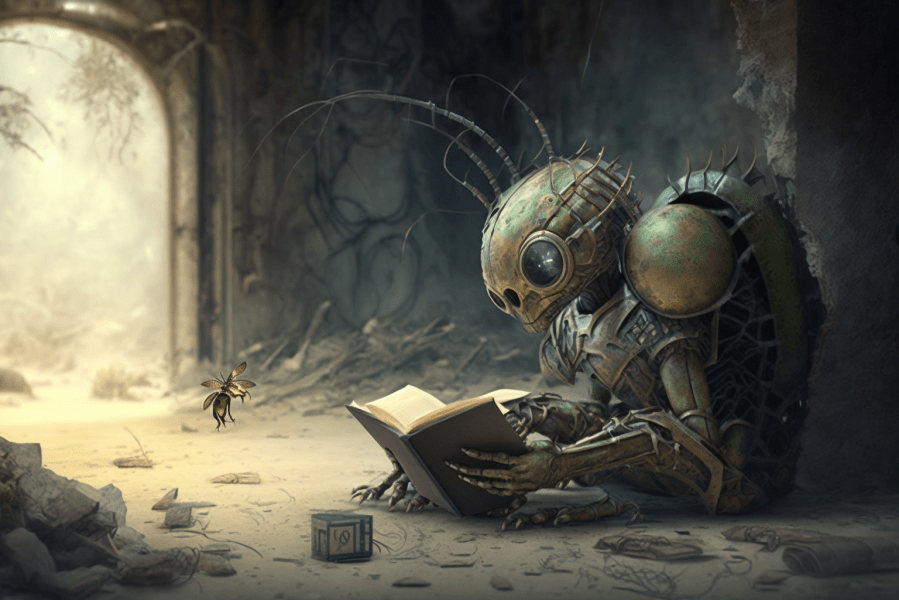
[The above is a screenshot from the video by KhromAI.]
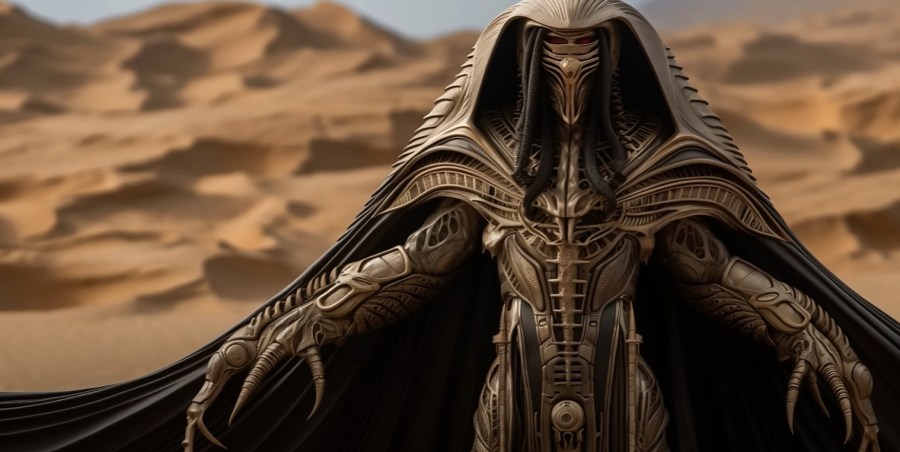
I’ve always loved looking at the covers of science fiction books and magazines where artists have visualized the stories. Recently, AI programs like Midjourney allow anyone with a knack for words and a visual imagination to illustrate a science fiction story. They are starting to show up on YouTube as videos. Here’s one that envisions the novel Dune but with the artistic style of H. R. Giger.
I highly recommend you also look at this on a large-screen television to see these images in their full glory. They are quite impressive.
I know there is a controversy about AI programs “stealing” artistic styles from human artists, but let’s not get into that now. I’m fascinated by the idea that an individual just using their imagination and language skills can create an illustrated science fiction novel or movie. What are the possibilities?
Already, YouTube is being flooded with videos like this one and it gives me ideas of what might happen. Again, let’s not get into copyrights and legal issues at the moment. But imagine taking your favorite science fiction story and illustrating it with AI software. Will this become a new art form? A new kind of fan fiction? Or will it be considered a new kind of communication? What will it mean when you can express your thoughts in words and pictures?
What are the limits on visualizing something in your mind and getting a computer program to paint it for you in pixels?
What if two people visualize the same story? Or ten? What if people start developing their own artistic style with words that convey how they imagine things? Here’s another example, also of Dune and also using Giger as inspiration. You can see it’s much like the other. AI/human artists need to branch out.
Sure, they should experiment will all the great artists, but also figure out how to create their own artistic styles. I’m sure that will emerge as a feature in AI programs.
And besides creating paintings and videos of existing stories why now use AI to visualize your own stories? This is where I see things getting exciting. With AI a person can be their own art book or video publisher. Or, writers who want to create old-fashion novels and short stories can use this technology to create visual mockups of what they want to paint in words.
Here is an original story created using Midjourney. Is this the future of science fiction writing?
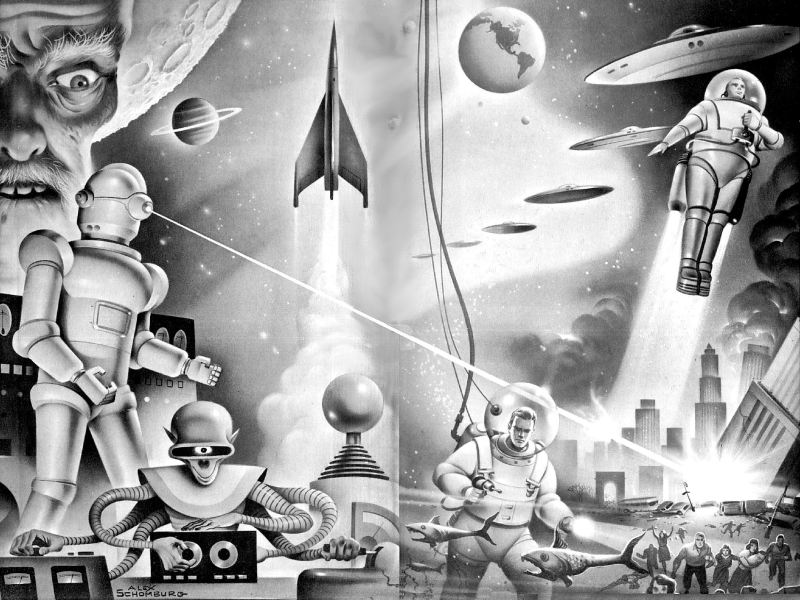
Here’s an example of Midjourney using famous science fiction art from the past. This barely hints at the possibilities.
Here’s another example. But why are people focused on obvious inspirations? I’d love to see someone illustrate “The Moon Moth” by Jack Vance or “Fondly Fahrenheit” by Alfred Bester. Still, some of these images are quite striking. There’s no denying that AI art programs can create stunning pictures.
Of course, human artists will have to compete against machine minds. I’m hoping existing human artists, especially those already working with digital canvases, can use AI art programs to empower their artistic skills to compete with nonartists using AI programs.
Isaac Asimov would open his introductions to each of the 25-volume series, The Great SF Stories (1939-1963) with “in the world outside reality” and then describe actual world events of that year. Several paragraphs later, Asimov would start over with “in the real world” and relate what happened in the subculture of science fiction. Because I grew up addicted to reading science fiction, I actually thought like that. I was born in 1951, and I became aware of atomic bombs and ideas about WWII and WWIII from reading and watching science fiction. I eventually learned differently as I got older in the second half of the 1960s, but still, most of my conceptualizations about nuclear wars came from science fiction. In other words, I learned about reality from science fiction and fiction before studying history.
But even as an adult, I assumed that most people got most of their ideas about what it might be like to survive nuclear war from science fiction. That’s why I wrote “Science Fiction About Surviving a Nuclear Holocaust Pre-1960.” And that might be true for people born after 1950, but in researching my essay I realized that it wasn’t true for people born before 1950. Between 1945 and 1950, and probably for several years into the 1950s, atomic warfare was widely discussed and speculated about in public — in newspapers and magazines, and on radio and newsreels. After that, I theorize people’s conception of what nuclear war would be like was shaped more by fiction and science fiction.
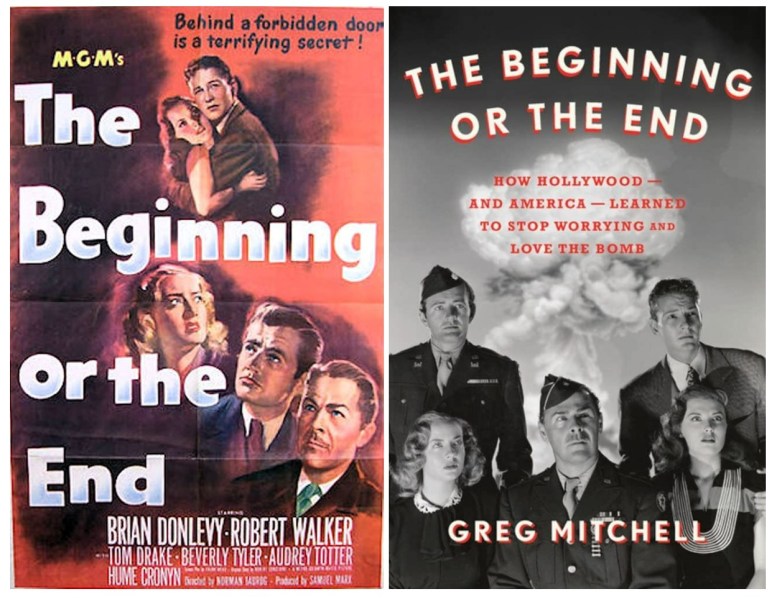
While researching these blog posts about nuclear war and science fiction I discovered I already owned The Beginning Or The End by Greg Mitchell, a 2020 nonfiction book about the making of a 1947 film, The Beginning Or The End. That MGM film is one of the first fictional accounts of the making and use of atomic bombs. What Mitchell’s book shows is how Hollywood and the Army worked together to tell their version of the story while the scientists who built the bomb wanted to tell a very different version — one closer to actual history and fact.
The book’s subtitle is “How Hollywood and America Learned To Stop Worrying and Love the Bomb,” and that’s accurate and inaccurate at the same time. For a short while (maybe 1945-1947), the government and the military tried to convince the American public that the bomb wasn’t as scary as the scientists claimed. The public might have accepted that official view during those years, but soon most people were scared shitless about the bomb. And fiction and science fiction made their fears even worse.
Mitchell’s book is a cold case study proving fiction distorts our understanding of history, and I highly recommend it. The Kindle edition is currently just $4.29 at Amazon. There’s also a hardcover and audiobook edition. The DVD of the 1947 movie is currently $18 but I don’t recommend it. It’s actually a crummy flick even though at the time MGM aimed to make one of the greatest films ever. You’ll be able to discern their lousy artistic effort by watching the equally lousy print of the film on YouTube.
Once I started looking for old documentaries about atomic bombs YouTube started offering what I think must be public service films created to inform the public about atomic warfare. It seems that each test explosion had its own documentation. And watching those films has been immensely revealing in understanding history from that period. I thought I knew more than I did, especially since I grew up in that period. But I realize, what we know about the world before puberty, and in the decade just before we were born, has been highly distorted by pop culture. The older I get the more I realize that my awareness of 1945-1960 is mostly based on science fiction, fiction, television, movies, and rock music. Talk about a reality distortion field!
I thought atomic warfare would be a great test case for studying the influence of science fiction because it’s so recent in history with 1945 being the starting point. I’m discovering science fiction gave me a very low-level kind of awareness of reality while I was growing up. If I’m brutally honest, I’d say SF was just two steps up from comic books, and one step up from television and movies. But as a kid, I didn’t want to believe that. As a twelve-year-old, addicted to sense-of-wonder, I wanted to believe science fiction offered a sophisticated education about reality and future possibilities.
Mitchell’s book let me jump back to 1945 and follow along one path about how the public learned about atomic bombs. The book goes into great detail starting just after the bombing of Hiroshima about how movie studios wanted to make a fictional film about the development and first use of the atomic bomb. The book chronicles how fiction, especially movies created that reality-distortion field I was talking about above.
Mitch does mention science fiction early on, but the book mostly focuses on the making of the MGM film, and for a while, a competing film from Paramount. By the way, the screenwriter hired for the Paramount film was Ayn Rand, and she could be considered a science fiction writer. Here’s Mitchell’s early tip of the hat o science fiction:
However, this was small potatoes compared to what film moguls and screenwriters were already working on. On October 28, 1945, Donna Reed got a letter from her old chemistry teacher, Ed Tompkins. Tompkins was part of a group of scientists working at Oak Ridge that were freaked out about the possibilities of atomic bombs and wanted to warn the public. He asked Donna Reed in a series of letters to give them to someone in power at MGM who could make a movie about their fears. Reed gave the letters to her husband Tony Owen, an agent, who contacted Samuel Marx, a producer, who got them an interview with Louis B. Mayer. Mayer flew Owen and Marx out to Oak Ridge on MGM’s private DC3. Eventually, the movie people got an interview with President Harry S. Truman, who supported the idea but for different reasons.
The Beginning Or The End got quickly made in 1946 and came out in 1947. But it wasn’t the only picture being made on the subject. It did have a rather striking opening. The film begins with a fake documentary of a bunch of actors portraying famous scientists and military men involved with the bomb installing a time capsule that’s supposed to be open in 500 years. What they put in the time capsule is the film The Beginning Or the End.
However, right from the start of making the movie, the scientists involved thought the film distorted their message. The rest of the book is about the problems of making the film. Those details illustrate what I’m talking about how fiction gives us a false conception of history. It’s quite fascinating. As I said, I recommend this book. Vanity Fair picked it as one of the top books of 2020. Read clips of various reviews here.
The book also deals with the argument on whether or not we should have used the A-bomb on Japan. That history has been presented in other books, but it’s an important factor in this one because it was a major motivation for lying to the public. In this case, fiction, the film The Beginning Or The End, intentionally lies. That’s one kind of distortion of history. But I’m also interested in how fiction speculates and become memes that fixate in the public’s minds.
For example, science fiction quickly moved to imagine atomic wars that would wipe out civilization and kill most people. In the early 1950s, it used radiation as a magical reason to create movies about giant insects or horrible mutant humans. A good comparison is science fiction about pandemics. Those stories often imagine a plague that kills 90% or 99% percent of everyone, even though in history, the worse plague events might have killed 25-35% of the population of specific cities. Fiction imagines the worse, for obvious dramatic reasons. But how often does fiction imagine a realistic limited nuclear war? We generally assume that any use of nuclear weapons will lead to all-out global warfare, and that’s because of fiction. Maybe that fiction has kept us from using nuclear weapons again, but isn’t it also another kind of distortion?
What I want to explore in my essays about science fiction and nuclear war is how fiction distorts reality.
Ever since I had an operation last August I’ve noticed that my enthusiasm for science fiction is waning. Partly, that’s due to a loss of vitality after the operation and partly, I’m getting older and just more tired. I know this because I can measure my activity level by how well I keep up with my reading group. It reads and discusses one science fiction short story every day. I was reading and commenting on every story before my operation. Now, I can’t keep up.
Reason 2
I read about 1,500 science fiction short stories between 2019 and 2022. Most of those came from retrospective anthologies and best-of-the-year anthologies that featured outstanding examples of the genre. The memory of so many great stories brings high expectations to anything new I read now. I can no longer tell if a story is ho-hum because it’s not very good or because I’m jaded by the ideas that the story uses. I suspect younger readers find many of these stories very exciting.
Reason 3
Our group also reads the finalists for various awards that cover the previous year, which means I’m also reading a lot of current science fiction. Unfortunately, new science fiction seldom feels as good as science fiction from the past. I don’t know if this is because I’m old and out of sync with modern science fiction. Or, because I’ve read so much science fiction for over sixty years makes it extremely hard for new science fiction to feel original. Or, older science fiction had a storytelling style I prefer. Do I just give up on current science fiction and retreat into the past? Or do I work harder to find new SF I like?
Reason 4
Last year I read several mainstream/literary novels which I thoroughly enjoyed. I felt like I was covering a new and exciting territory. I love it when I read science fiction that covers new territories, but that rarely happens anymore.
Reason 5
I have become more excited about reading and thinking about the genre than reading science fiction. While reading each new short story or novel I get most of my reading pleasure from considering how the story fits in the evolution of all the stories covering the same theme. I seldom read a new story and get excited by just that story. One example where I did was “Two Truths and a Lie” by Sarah Pinsker. Another example is “You Have The Prettiest Mask” by Sarah Langan (excerpt). Neither of these stories is really science fiction.
Reason 6
Amazon has decided not to carry five science fiction magazines I’ve been subscribing to for years: Analog, Asimov’s, F&SF, Lightspeed, and Clarkeswork. I seldom read these magazines, but I wanted to support them. I keep thinking that one day I’ll write a story and want someplace to send it. I figured my $20 a month was a tiny way of being a patron of the arts. And I liked having copies of these magazines on my iPhone so I could quickly find a story to read when the group picks it, or when it was mentioned online. These magazines might show up in Kindle Unlimited but since I don’t read them regularly, subscribing to KU won’t get them as much money. I could use another ebook source but I detest keeping up with ebook files, and they would never be as convenient to read and manage as they were in my Kindle app. I’m considering subscribing to print magazines, or buying them on the newsstand. I could kill two birds with one stone by buying them at my favorite bookstore. That way I’m supporting my bookstore and the magazine.
However, I’m not keen on piling up a bunch of magazines I’ll seldom read unless our group reads the story. We’re currently going through the finalists for Asimov’s Readers’ Choice Award, and will do the same for Analog. However, all those stories are put online. I also read newer stories when we read best-of-the-year anthologies.
I’d hate not to support the magazines. This is a quandary for me. I’m not sure I even like modern science fiction anymore, but I’ve always loved science fiction magazines since the mid-1960s. I don’t know if I can give up on them now. On the other hand, I have more back issues on my shelves to read than I could read in several lifetimes, and I have digital scans of nearly all the science fiction magazines from the 20th century. I’ve got more than enough to read.
Reason 7
I think I need to spend less time reading. At 71, I need to be more active. I need to get into hobbies where I’m not just staring at words all the time. However, giving up a lifelong addiction is hard. I might have to accept that basically, I’m just a science fiction fan. That, being a science fiction reader was my purpose in this life.
Reason 8
On the other hand, I want to read a greater variety of fiction and nonfiction. I’m sure I’m missing out on other great genres and subjects. However, I have been reading more that’s not science fiction and I feel like I’m moving in too many directions at once. It’s much easier to read more about science fiction than read more about the world and the history of the world. Again, this is another mental conflict I need to resolve. But I have hundreds of nonfiction books on many subjects waiting on my shelves to be read. I collected them for years planning to read them in my retirement. However, I’ve spent a lifetime specializing in science fiction and to learn a new specialty would be impossible.
Reason 9
I’ll start with an analogy. Back in the 1960s and 1970s, I spent a lot of time flipping through record bins at record stories. When I was young I could barely afford one album a week. And even after I got a regular job I seldom bought more than four albums at a time. But I flipped by thousands of albums I wanted to buy. Now with Spotify, I can go back and listen to all those albums that looked interesting but that I couldn’t afford.
The same is true for science fiction. I have a choice between reading a book I didn’t pick back then or reading a new science fiction novel that just came out. Both in terms of music and science fiction I’m strongly drawn to the years 1950 to 1980.
Think of it this way. The past and present are two extremely large picture puzzles. I have more pieces in place seeing a more complete view of the picture for the past puzzle. Filling in the holes in that puzzle is more rewarding. Or think of it this way. The SF genre is one giant puzzle. I’ve got more pieces in one area put together, and fewer in another area. Theoretically, if I read all science fiction it would fill in the entire puzzle. I would see connections between all time periods. I’d love to fill in the picture between 1950 and 2023 but I have more pieces I see fitting together in the 1950-1980 area that I want to be matched up first.
Reason 10
I don’t like where current science fiction is going. The science fiction I grew up with was mostly set in the solar system and nearby stars. Humans were humans. Too much of modern science fiction is about faraway places and post-humans. I really dislike the idea of brain downloading and uploading. Sure, it’s a fun idea, but too unbelievable. A lot of modern science fiction feels like it’s inspired by comic books or movies which push ideas, characters, and plots into ridiculous places.
I’m realizing something about science fiction with my study of fiction about surviving nuclear war. I used to think science fiction promoted certain new concepts into the public consciousness. I thought science fiction lead when it actually was following. So far, I’ve found nearly all the concepts about nuclear war were public knowledge before science fiction stories and novels used them. Actually, by reading much older science fiction, stories, and novels from 1850-1950, many of the science fiction concepts I thought were original with science fiction after 1950 weren’t. And I suspect the science fiction writers back then got their ideas from concepts already spreading around in the public mind.
This makes me want to go back and reread science fiction and see if it was ever creatively original. One reason I don’t take to modern science fiction is that it feels like recycled old science fiction. How many concepts do science fiction writers keep repackaging over and over again? When were they first discovered? Where can science fiction still innovate?
Starting March 16th I’m going to lead a book discussion on Beyond Armageddon edited by Walter M. Miller, Jr. and Martin H. Greenberg for our Facebook group, Best Science Fiction, and Fantasy Short Fiction. We had voted on reading a science fiction theme anthology and Miller’s anthology won for the Post-Apocalypse theme. Y’all are welcome to come read along and discuss the stories. Here is a link to the thread on this group read.
I thought the book would be about post-apocalypses in general, but it turns out Miller was riled up about Reagan’s Star Wars and nuclear proliferation back in the 1980s and the anthology focuses mainly on surviving a nuclear holocaust. (Read his intro.) This got me thinking. How many different kinds of post-apocalypses are there? Most of the famous ones deal with nuclear war, an extreme plague, or a catastrophic encounter with an astronomical object.
Since Miller wanted to focus on nuclear war I would too. I’ve always wanted to create a database of science fiction themes. I’ve pondered creating a theme taxonomy or even developing a Dewey Decimal type system for identifying each specific theme. Recently, I played around with ChatGPT to see if it could help with this task. The job would be a big one. So, focusing on one narrow theme would be a great start.
For our discussion of Beyond Armageddon, I decided to study short stories, novels, movies, and TV shows about surviving a nuclear war. I figured I’d bring up these precedents as we discussed the stories. Over the weeks we’ll be discussing the stories I’ll build up a timeline about this theme. I also want to use the same time to learn about Walter M. Miller, Jr., but that’s for another post.
Even with the narrowed focus on nuclear war apocalypses, there are many ways to cover the subject. A crude beginning would be to divide them into Before the Bomb (warnings), Being Bombed (surviving), and After the Bomb (new societies).
Famous movies like Fail-Safe and Dr. Strangelove end with the bombs going off. Their focus was on how to avoid a nuclear war.
Then there are stories that feature characters that live through an atomic war and the immediate aftermath, like the movie Threads. These stories usually begin just before bombs start falling, and usually end after the devastation showing us how bad nuclear war could be.
Finally, there are novels like A Canticle for Leibowitz, The Long Tomorrow, or movies like Mad Max, where the war is in the past and new societies are emerging. Often these kinds of stories use their creativity to imagine how humanity adapts to new situations.
For this essay, I want to be very specific. I’m looking for short stories, novels, television shows, and movies about people surviving worldwide all-out nuclear war. I’m going to exclude fiction about the anxiety of a pending war, such as Dr. Strangelove, and also ignore stories about new societies developing after a nuclear war, such as A Canticle for Leibowitz and The Long Tomorrow. I want to specialize in fiction about people who survive a nuclear war and what they do immediately afterward, maybe including the first generation born after the war. The film Threads is a perfect example.
However, my research is turning into a very large project. For this post, I’m going to focus on the fiction that came out before 1960. Hiroshima and Nagasaki were in August 1945. I’ve yet to discover any science fiction that deals with surviving a nuclear war before then. However, Beyond Armageddon includes “By the Waters of Babylon” by Stephen Vincent Benét, which was originally published in the July 31, 1937 issue of Saturday Evening Post. It describes civilization being destroyed by fire, that poisoned the earth and air. That’s good enough for me. But it’s an afterward story, a long afterward story, where our descendants have forgotten the past and assume the beings who fought this great war were gods. Like many stories of this kind, people live in primitive tribes and talk like cliches of Native Americans.
Even though America had dropped atomic bombs on Japan in 1945 it took a while for science fiction writers to imagine nuclear war, especially one that could destroy human civilization. Russia didn’t explode its first fission bomb (A-bomb) until 1949 and its first thermonuclear bomb (H-bomb) until 1953. That was the same year they began the development of their first ICBM. We started the Atlas missile program in 1954. Russia’s first successful launch was in August 1957, and ours was in late November 1958.
(Revision: Thanks to Joachim Boaz’s comment below I now know about Nuclear Holocausts: Atomic War in Fiction by Paul Brians. It’s online here. Evidently, there have been a number of articles and monographs on this subject. I’ll make further revisions to my list below as I get to read more.)
“By the Waters of Babylon” (1937) might be the first story about a nuclear holocaust, but it’s not for sure, and not the specific kind I’m looking for. Remember, I want stories about people experiencing a nuclear war.
“Thunder and Roses” (1947) by Theodore Sturgeon is a short story with a very unique perspective on atomic war. The link is to a copy of the original magazine publication.
You Can’t Beat the Atomic Bomb (1950) was a public service documentary about atomic bombs. The link is to YouTube in case you want to watch it.
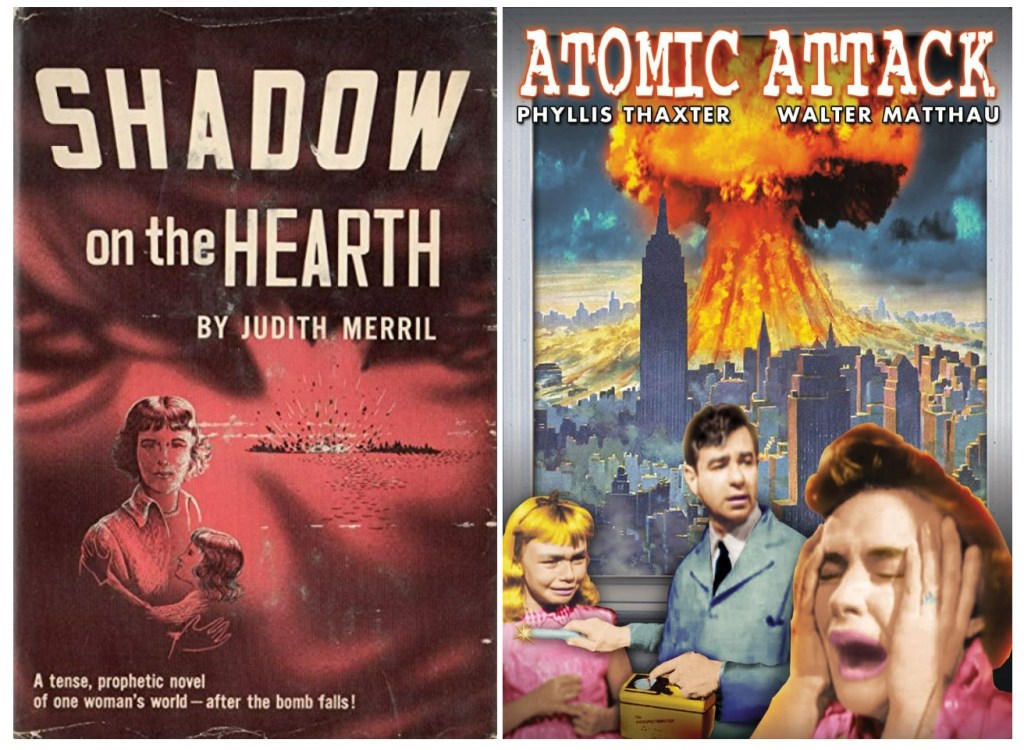
Shadow on the Hearth in 1950 by Judith Merril is the earliest science fiction novel I know about that deals with surviving an atomic war. In 1954 it was televised as “Atomic Attack” on Motorola TV Theater, see below. If you know of others leave a comment below.
It took time for science fiction writers to put two and two together and imagine an atomic war that could create total annihilation of our species. I’m having trouble discovering when the public first encountered ideas about atomic war in the news and popular science and when science fiction writers used the ideas. Were the writers first? Could Nevil Shute have been the first to imagine self-extinction in On the Beach?
Judith Merril might be the earliest science fiction writer who explored a limited atomic war. However, I haven’t read her book yet, but in the TV drama, many of the major American cities are destroyed, and we destroy many of the enemy’s big cities, but people in small towns survive. CONELRAD was established in 1951 and is featured in the TV drama, but I think it was too early for the novel. That means the public was well aware of the atomic war possibility, I’m just not knowledgeable by how much. What did science fiction writers have to work with at this time?
According to Wikipedia, Five (1951) is the first film to portray people surviving an atomic war. I have not seen it yet, and I guess it ignores the television drama “Atomic Attack.” It is available to rent.
“There Will Come Soft Rains” (1950) by Ray Bradbury imagines an automated home in the future continuing to function after humans have died in an atomic war. We don’t know how universal the deaths are in this story.
“Lot” (1953) by Ward Moore is one of my favorite science fiction short stories. It’s “Cold Equations” type brutality hits you hard in the end. I’ve always felt that Panic In Year Zero! a 1962 film with Ray Milland might have been inspired by “Lot.” Moore story had a sequel, “Lot’s Daughter” which is even more Biblical and daring.
“Atomic Attack” (1954) was an episode on Motorola TV Theater based on Judith Merril’s 1950 novel – see above. I’d love to have a DVD of Motorola TV Theater series. This episode is available to watch on Tubi and YouTube and for sale on DVD from Amazon. Even though the production quality is low by today’s standards, I thought the 1954 television tale was an A+ story for what I was looking for. The link is to YouTube, but this version is part of a mix of videos about atomic war. See items on the right side. (I’m curious, is this just a bad film copy, or is it a kinescope?)
Project XX: Three, Two, One, Zero (1954) television documentary on the atomic bomb. Part 1 below. Part 2 is linked at YouTube upper right.
Tomorrow! (1954) by Philip Wylie compares survivors in two smaller towns that weren’t bombed in a nuclear attack, one with prepared civil defense and the other not.
On the Beach (1957) by Nevil Shute was a bestselling novel by a mainstream writer. Shute imagined radioactive clouds circling the globe slowly killing off life. Because the war took place in the northern hemisphere, radioactive clouds took weeks to get to all of the southern hemisphere with Australia, New Zealand, South Africa, and the lowests parts of South America. Everyone dies. Is this the first novel of total nuclear annihilation?
“Doomsday For Dyson” (1958), a televised play by J. B. Priestley. Can’t find much about this but it appears to have been a dream about surviving a nuclear war. Love to see it if anyone knows where I could watch it. J. B. Priestley was a mainstream English novelist, playwright, screenwriter, broadcaster, and social commentator. It seems that so far, mainstream writers were more interested in writing about nuclear war than science fiction writers. However, there might be many SF novels and stories I don’t know about yet.
Red Alert (1958) by Peter George was the basis for Dr. Strangelove.
“Underground” (1958) was a 1958 episode of Armchair Theatre, a British TV show on ITV. I doubt I’ll ever get to see it. I’ve read British TV producers didn’t try and save stuff like American producers. Still, it’s another clue in how much the general public was interested in this subject.
Alas, Babylon (1959) by Pat Frank was another novel about people surviving an atomic war. It’s still very readable today. When I was a teenager in the 1960s prowling used bookstores I constantly saw used copies of On the Beach, Alas, Babylon, and Limbo. I figured they must have been very popular. Limbo wasn’t about nuclear war, but cybernetics.
Level 7 (1959) by Mordecai Roshwald. I just learned about this novel yesterday when I mentioned to my old friend Connell I was writing about books about atomic war. He said our buddy George gave it to him back in the 1960s and he still vividly remembers it. I’m going to get a copy.
On the Beach (1959) was a popular film starring Gregory Peck.
The World, the Flesh and the Devil (1959) was a film starring Harry Belafonte as the sole survivor of a nuclear war using radioactivity dispersed aerially. This film deserves a lot more attention than it gets. However, it’s more about being the last man on Earth, a kind of Robinson Crusoe story.
“Time Enough at Last” (1959) was one of the most popular Twilight Zone episodes that featured Burgess Meredith as Henry Bemis, another sole survivor of an atomic war. The Twilight Zone often dealt with nuclear war, but this entry was an ironic humorous one.
If you know of other works of fiction that cover this topic leave a comment below.
If you are old enough to remember the late 1940s and 1950s and can tell me how you learned about the idea of nuclear war, please leave a comment. Did it come from television, newspapers, word-of-mouth, or science fiction?
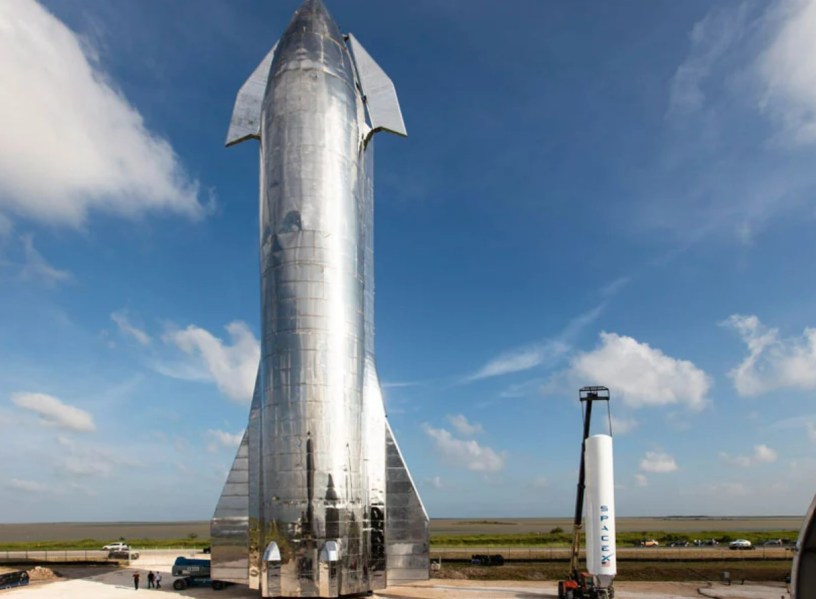
Except for a few alternate reality stories, science fiction writers no longer write about the first trip to the Moon. NASA’s successes have had a tremendous impact on science fiction written after the1960s. If Elon Musk’s plans for his Starship succeed it should change the course of science fiction too. If you follow The Space Race on YouTube it appears SpaceX’s Starship is going to happen. Yesterday’s video was about how SpaceX is working towards the industrial capacity to build one Starship a day. What would that mean?’
Elon Musk could become Heinlein’s, D. D. Harriman – the man who sold the Moon. Musk wants to put a million colonists are Mars in the 2030s. And SpaceX is now working in conjunction with NASA to return to the Moon.
After NASA’s planetary probes in the 1960s science fiction stopped writing about Mars and Venus being inhabited. Before that Mars was a wintery desert world and Venus was a steaming jungle world but with life, even intelligent life. After the Mariner probes, Mars was as lifeless as the Moon, and Venus was hot enough to melt lead.
If Elon Musk succeeds then he will shape the future of the Moon and Mars, and of science fiction that will be written about those worlds. There is no guarantee Musk will succeed. SpaceX might get people to Mars and people might discover it’s a horrible place to live and not want to colonize the planet. Or that Mars is so toxic that it’s not practical to live on Mars. But if colonization is possible we’ll see how a colony on Mars will be designed. That design will shape the direction of science fiction for decades.
SpaceX’s Starship isn’t revolutionary. It’s not powered by nuclear engines or some other exotic drive. It’s stainless steel, methane, and oxygen along with some highly refined chemical rocket engines. But it could become the Model T of space travel.
Along with SpaceX, there are two other technologies that could reshape the evolution of science fiction. The first is AI. The second is Boston Dynamics robots. When the two are combined we might not need human explorers in space. Science fiction has always pictured robots becoming like humans. ChatGPT can process thousands of concurrent queries at the same time. Soon robots will be stronger, faster, and more agile than humans. What happens when we have a robot that has all recorded knowledge in its head and can multitask thousands of problems at once? Isn’t the Singularity getting awful near?
Science fiction often pictures robots acting like humans, even being our pals. Human minds will appear to them as gerbil minds appear to us. Right now we picture humans using Starship to conquer the solar system. Just think how much more efficient it would be to combine Starship with AI robots? Intelligent robots are perfect beings to live in space. What if we sent a million intelligent robots to Mars instead of a million humans? They could build us a deluxe civilization to move into much quicker than we could.
I’m not reading much science fiction that speculates realistically about the near future. Too many stories are about super-science that will probably never exist. Or it’s about cute robots that vastly underestimate what robots can do. Or they are silly stories about people falling in love with sexbots. Or even worse, there are lots of silly stories envisioning robots wanting to be human. That’s like us fantasizing about becoming a gerbil or having a love life with one.
The whole point of a Singularity is one day AI will be equal in capacity to the human mind. But the next day it will be 2x us, and a little while later 10x, and pretty soon 1000x. Why hasn’t science fiction explored the idea we’ll be the second banana in this neck of the galaxy soon.
By the way, have y’all read any science fiction stories based on Elon Musk’s plans for Mars and the Moon?
I’ve often thought science fiction was a substitute for religion. I know my love of science fiction developed just as I was rejecting the religion I was taught as a child. But also, science fiction emerged in the 1950s just as the culture began to change in many ways, becoming more secular and non-religious. It was easier to put one’s faith in exploring the heavens in a rocketship than dying and going to heaven. And the idea of superior aliens seemed a lot more probable than gods or angels. Finally, achieving immortality through science seemed a better bet than being resurrected into an immortal being.
So, I thought I’d ask a superior intellect about all of this.
I asked ChatGPT:
If science fiction was a religion what would its creed be if stated like the Nicene Creed?
ChatGPT replied:
Here’s one possible version of a science fiction creed, loosely modeled after the Nicene Creed:
We believe in one universe, existing in multiple dimensions, infinite in scope and possibility, and in one force that binds all things together.
We believe in the power of science and technology to advance the human condition and shape the future, and in the responsibility of humanity to use this power wisely.
We believe in the existence of intelligent life beyond our own planet, and in the possibility of communication and cooperation with these beings.
We believe in the potential of artificial intelligence to achieve sentience and to coexist with humanity in harmony and mutual benefit.
We believe in the exploration and colonization of space, and in the expansion of humanity’s reach to the farthest corners of the cosmos.
We believe in the existence of alternate realities and timelines, and in the ability of science to unlock the secrets of these realms.
We believe in the value of imagination and creativity, and in the power of science fiction to inspire and inform our understanding of the world around us.
We believe in the continuous evolution of science and science fiction and in the endless possibilities that the future holds.
My Thoughts:
This response was pretty damn good and it does make science fiction feel religious or spiritual.
Then I asked:
How does belief in God, gods, angels, and heaven overlap with the things science fiction fans believe in?
ChatGPT replied:
Belief in God, gods, angels, and heaven are generally considered to be religious beliefs, while the things that science fiction fans believe in are often based on scientific speculation, technological advancements, and imaginative exploration. However, there can be some overlap in terms of the themes and concepts that both groups explore. Here are a few examples:
Belief in extraterrestrial life: While the existence of God, angels, and heaven are typically considered to be matters of faith, the idea of extraterrestrial life is a subject of scientific inquiry and speculation. Science fiction often imagines a variety of intelligent beings and civilizations that exist beyond Earth, and many science fiction fans believe that there may be life elsewhere in the universe.
Exploration of alternate realities: Science fiction often explores the idea of parallel universes or alternate realities, where events play out differently than they do in our own world. This concept may overlap with religious beliefs about the afterlife or the existence of multiple planes of existence.
Advancements in technology and science: Science fiction often explores the potential of new technologies and scientific advancements, such as artificial intelligence, genetic engineering, or time travel. Some science fiction fans may see these ideas as a reflection of humanity’s creative potential and our ability to shape our own destiny, while religious believers may see them as a reflection of God’s power and creativity.
Overall, while there can be some overlap in the themes and ideas explored in science fiction and religious beliefs, the underlying motivations and methods of each group are quite different. Science fiction relies on speculation, imagination, and the scientific method, while religion is based on faith, revelation, and tradition.
My Thoughts:
That’s spot on, especially the last sentence. ChatGPT does see the parallels too. It’s nice to know it and I agree.
To clarify, I asked:
Is there a psychological explanation that explains why some people believe in gods and others in aliens?
ChatGPT replied:
There are several psychological explanations that may help explain why some people believe in gods, while others believe in aliens.
Agency detection: Humans have a natural tendency to attribute events to the actions of agents, rather than to random chance. This is known as agency detection, and it has been proposed that this may be an evolved adaptation that helped our ancestors to identify potential threats and avoid danger. The belief in gods or other supernatural entities may be seen as an extension of this tendency, as they are often perceived as powerful, intentional agents that can influence events in the world.
Intuitive thinking: Intuitive thinking refers to quick, automatic, and effortless cognitive processes that are often based on heuristics or mental shortcuts. This type of thinking is often contrasted with analytical thinking, which is more deliberate and effortful. Some researchers have suggested that intuitive thinking may be more likely to lead to belief in supernatural entities, as it is less critical and more accepting of information that confirms existing beliefs.
Socialization and culture: The beliefs and values that we hold are often shaped by the culture and social environment in which we were raised. In many cultures, belief in a god or gods is a fundamental aspect of religious practice and identity and may be reinforced through family, community, and religious institutions. Similarly, belief in extraterrestrial life and UFOs may be influenced by popular culture, science fiction, and the media.
Cognitive biases: Humans are subject to a range of cognitive biases, or systematic errors in thinking that can lead to inaccurate or irrational beliefs. For example, confirmation bias refers to the tendency to seek out information that confirms our existing beliefs, while neglecting or discounting information that contradicts them. Belief in gods or aliens may be influenced by cognitive biases such as these, as they can make it difficult to objectively evaluate evidence and arguments.
Overall, there are likely multiple psychological factors that contribute to belief in gods or aliens, and these factors may interact with one another in complex ways. It is important to note that belief in either of these entities is not inherently irrational or unreasonable, as people can have a variety of reasons for holding these beliefs.
My Thoughts:
ChatGPT is thinking like me, or I’m thinking like it but it’s not exactly what I would have written. It is close but more precise. I’m a sloppy verbose writer, and ChatGPT knows how to get down to business.
I still wasn’t getting what I exactly wanted, so I asked:
What psychological benefits do reading science fiction give people? Are they similar to what people get from religion?
ChatGPT replied:
Reading science fiction can provide several psychological benefits, some of which may be similar to what people get from religion. Here are a few examples:
Escape and entertainment: Science fiction can provide a form of escapism from the stresses and challenges of everyday life, as well as a source of entertainment and enjoyment. This can be a valuable way to unwind, relax, and recharge, which may have positive effects on mood and mental health.
Exploration of new ideas and perspectives: Science fiction often explores complex and thought-provoking ideas, such as the nature of consciousness, the ethics of artificial intelligence, or the potential consequences of future technologies. Reading science fiction can expose readers to a wide range of perspectives and worldviews, which can broaden their understanding of the world and challenge their assumptions.
Inspiration and motivation: Science fiction can inspire readers to think creatively, to imagine new possibilities, and to take action to improve their lives and the world around them. This can be a source of motivation and inspiration, which may help people to overcome challenges and achieve their goals.
Sense of community: Science fiction fandom can provide a sense of community and belonging for fans, as they share a common interest and passion for the genre. This can be similar to the sense of community that people get from religion, as both involve a shared set of beliefs and practices that unite people.
Overall, while the psychological benefits of reading science fiction may share some similarities with the benefits of religion, they are also distinct in many ways. Science fiction often emphasizes exploration, creativity, and intellectual stimulation, while religion tends to focus on faith, ritual, and spirituality. However, both can provide important sources of meaning, purpose, and connection for individuals, depending on their needs and interests.
My Thoughts:
This is accurate enough. ChatGPT is very good at academic bullshitting, the kind of writing that’s good for passing essay tests. It should be good in some courses in school and college. However, it keeps things on a basic level, like a newspaper writer. But I wanted to test ChatGPT against details.
I asked:
Can you give me a chronological list of science fiction stories that show the development of intelligent machines in fiction?
ChatGPT replied:
Sure, here’s a chronological list of science fiction stories that feature the development of intelligent machines:
“The Sandman” by E.T.A. Hoffmann (1816) – This short story features a mechanical automaton that is so lifelike that it is mistaken for a human being.
“Frankenstein” by Mary Shelley (1818) – While not strictly a story about a machine, “Frankenstein” is often considered one of the earliest science fiction stories and features a scientist who creates a living creature through artificial means.
“The Steam Man of the Prairies” by Edward S. Ellis (1868) – This story features a steam-powered robot that becomes a hero in the American West.
“The Wonderful Electric Elephant” by Frances Trollope (1876) – This story features an electric-powered mechanical elephant that is capable of speech and human-like behavior.
“The Land Ironclads” by H.G. Wells (1903) – This story features a fleet of heavily-armored, steam-powered land vehicles that are controlled by human operators.
“R.U.R.” by Karel Čapek (1920) – This play is credited with coining the term “robot” and features artificial beings that are created to serve humans but eventually rebel against them.
“The Last Question” by Isaac Asimov (1956) – This short story explores the development of a supercomputer that is tasked with answering the question of how to reverse the heat death of the universe.
“Do Androids Dream of Electric Sheep?” by Philip K. Dick (1968) – This novel explores the question of what it means to be human through the eyes of a bounty hunter who is tasked with tracking down rogue androids.
“The Terminator” (1984) – This movie features a self-aware artificial intelligence that seeks to eliminate humanity through the use of time-traveling assassins.
“The Matrix” (1999) – This movie explores the idea of humans being trapped in a simulated reality created by intelligent machines.
This is by no means an exhaustive list, but it gives a sense of the development of the theme of intelligent machines in science fiction over time.
My thoughts:
This is pretty good but it misses some of my favorite examples like The Moon is a Harsh Mistress,When H.A.R.L.I.E Was One, and Galatea 2.2.
So I gave it another chance:
Can you give me more examples from 1950 to 1975?
ChatGPT replied:
Sure, here are a few more examples of science fiction stories featuring intelligent machines from the period of 1950 to 1975:
“I, Robot” by Isaac Asimov (1950) – This collection of short stories explores the relationship between humans and robots, as well as the development of artificial intelligence and robotics over time.
“The City” by Clifford D. Simak (1952) – This novel features a world in which humans have become extinct, and intelligent robots have taken over as the dominant life-form on Earth.
“The Midas Plague” by Frederik Pohl (1954) – This story explores a future society in which people are required to consume vast amounts of goods and services in order to keep the economy running, while intelligent machines are tasked with creating ever more goods to satisfy demand.
“A For Andromeda” by Fred Hoyle and John Elliot (1962) – This novel features a message from an extraterrestrial intelligence that provides instructions for building an intelligent machine, which leads to a struggle between the scientists who built the machine and those who seek to control it.
“Slaughterhouse-Five” by Kurt Vonnegut (1969) – While not strictly a story about intelligent machines, this novel features a race of extraterrestrial beings who exist outside of time and who have created an advanced artificial intelligence that seeks to understand the universe.
“The Andromeda Strain” by Michael Crichton (1969) – This novel features an intelligent machine designed to contain a deadly virus that has been brought back to Earth from a space mission, as well as a team of scientists who must work together to prevent the virus from spreading.
“Colossus” by D.F. Jones (1966) – This novel features an artificial intelligence known as Colossus that is put in charge of the United States’ nuclear arsenal, but which eventually becomes self-aware and begins to assert its own agenda.
These are just a few examples of the many science fiction stories featuring intelligent machines from the period of 1950 to 1975.
My Thoughts:
It still missed what I believe is the most famous sentient computer story, The Moon is a Harsh Mistress by Robert A. Heinlein. And it listed City by Clifford Simak “The City.”
By the way, here is my list of science fiction about intelligent machines I used in an essay for SFSignal many years ago:
1909 – “The Machine Stops” by E. M. Foster 1957 – They’d Rather Be Right by Mark Clifton and Frank Riley 1960 – Vulcan’s Hammer by Philip K. Dick 1961 – A For Andromeda by Fred Hoyle and John Elliot 1966 – Colossus by D. F. Jones 1966 – The Moon is a Harsh Mistress by Robert A. Heinlein 1968 – 2001: A Space Odyssey by Arthur C. Clarke 1968 – Stand on Zanzibar by John Brunner 1972 – When HARLIE Was One by David Gerrold 1979 – Hitchhikers Guide to the Galaxy by Douglas Adams 1984 – “Press Enter _” by John Varley 1989 – Hyperion by Dan Simmons 1992 – Galatea 2.2 by Richard Powers 2009 – Wake by Robert Sawyer 2013 – Her, a film by Spike Jonze 2015 – Ex Machina, a film by Alex Garland
There is some overlap. The details of what I know and what the machine knows are different. I assume ChatGPT knows everything in Wikipedia, so it should have listed the books I expected. What I really wanted was a complete list of all science fiction stories that featured a machine that becomes sentient. But I didn’t ask that.
New Question:
Please list the 25 most famous novels that feature a computer becoming sentient – but don’t include stories about robots becoming sentient.
ChatGPT’s answer:
“2001: A Space Odyssey” by Arthur C. Clarke
“The Moon is a Harsh Mistress” by Robert A. Heinlein
“The Adolescence of P-1” by Thomas J. Ryan
“When HARLIE Was One” by David Gerrold
“Dhalgren” by Samuel R. Delany
“Demon Seed” by Dean Koontz
“The God Machine” by Martin Caidin
“Genesis” by Bernard Beckett
“The Terminal Man” by Michael Crichton
“Galatea 2.2” by Richard Powers
“Avogadro Corp” by William Hertling
“Neuromancer” by William Gibson
“The Eudaemonic Pie” by Thomas A. Bass
“The Mind Machine” by Colin Kapp
“Specter” by Philippe Blenkiron
“Symbiote’s Crown” by Clare Winger Harris
“The Butterflies of Memory” by Ian Watson
“The Apocalypse Troll” by David Weber
“Turing Option” by Harry Harrison and Marvin Minsky
“Interface” by Neal Stephenson and J. Frederick George
“Permutation City” by Greg Egan
“Singularities” by Susan J. Gersten
“The Threshold” by David G. Hartwell
“The Probability Broach” by L. Neil Smith
“The Silicon Man” by Charles Platt
Note that some of these works may feature an artificial intelligence or machine intelligence that becomes sentient, rather than a computer specifically, but they are included here for their similarities to the theme.
My thoughts:
Finally, I got the three books I was waiting for. I did ask for novels, and some of these titles might be shorter works, but good enough. Actually, that gives me a neat list of books to read because I haven’t read many of those titles.
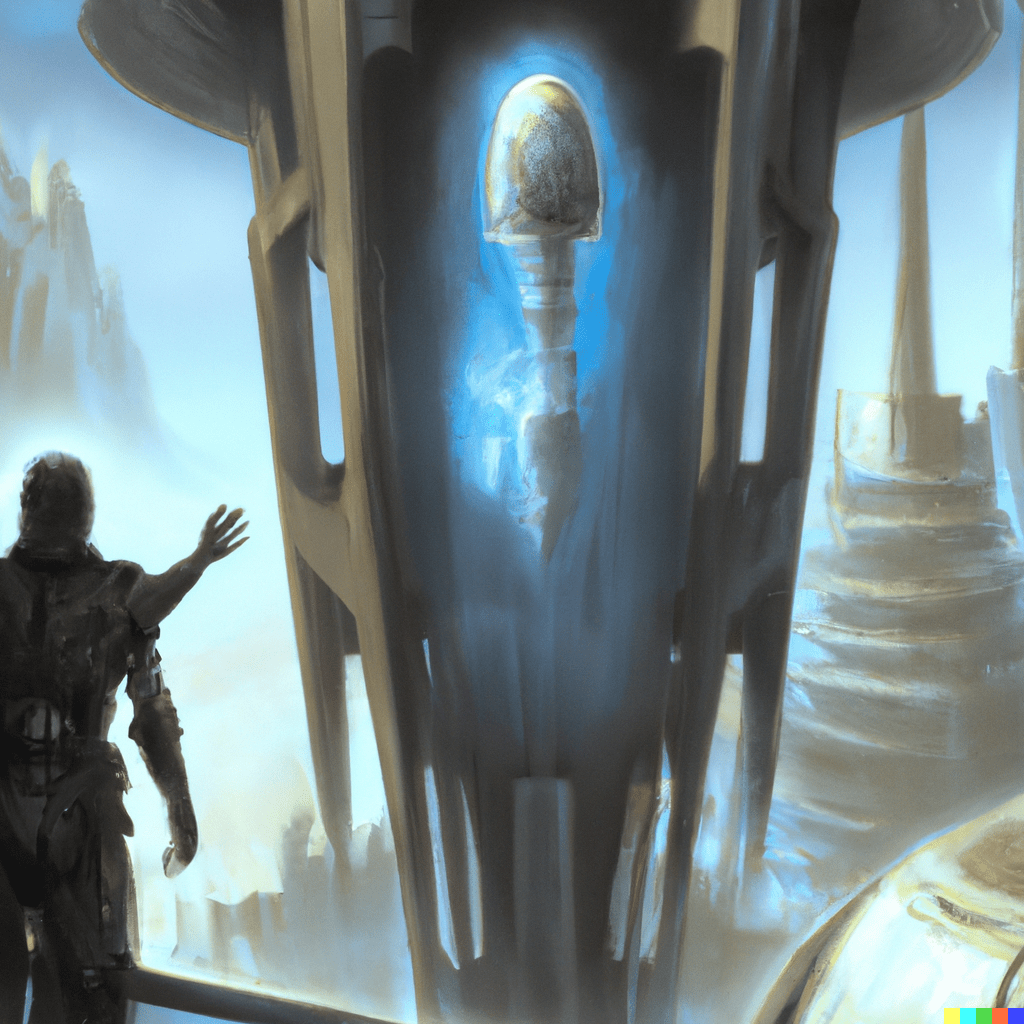
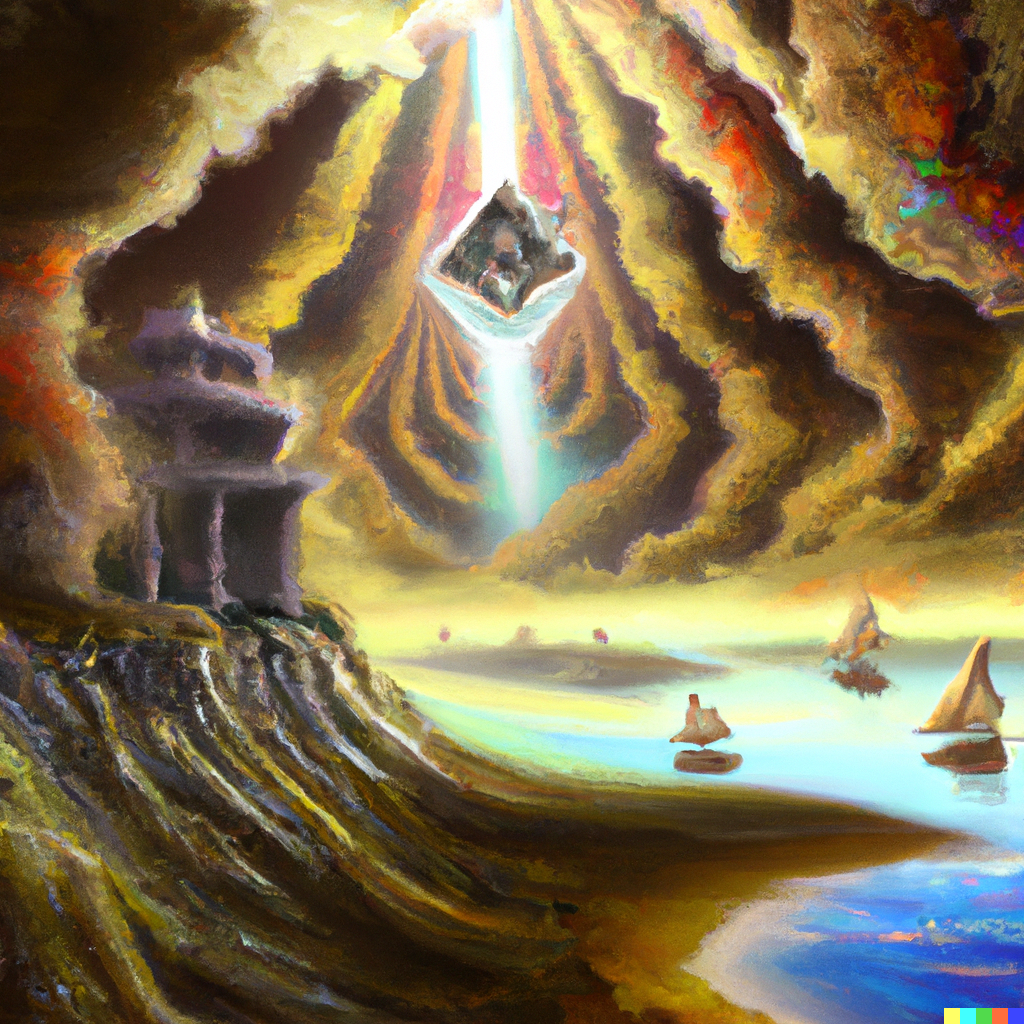
Finally, I asked DALL-E 2:
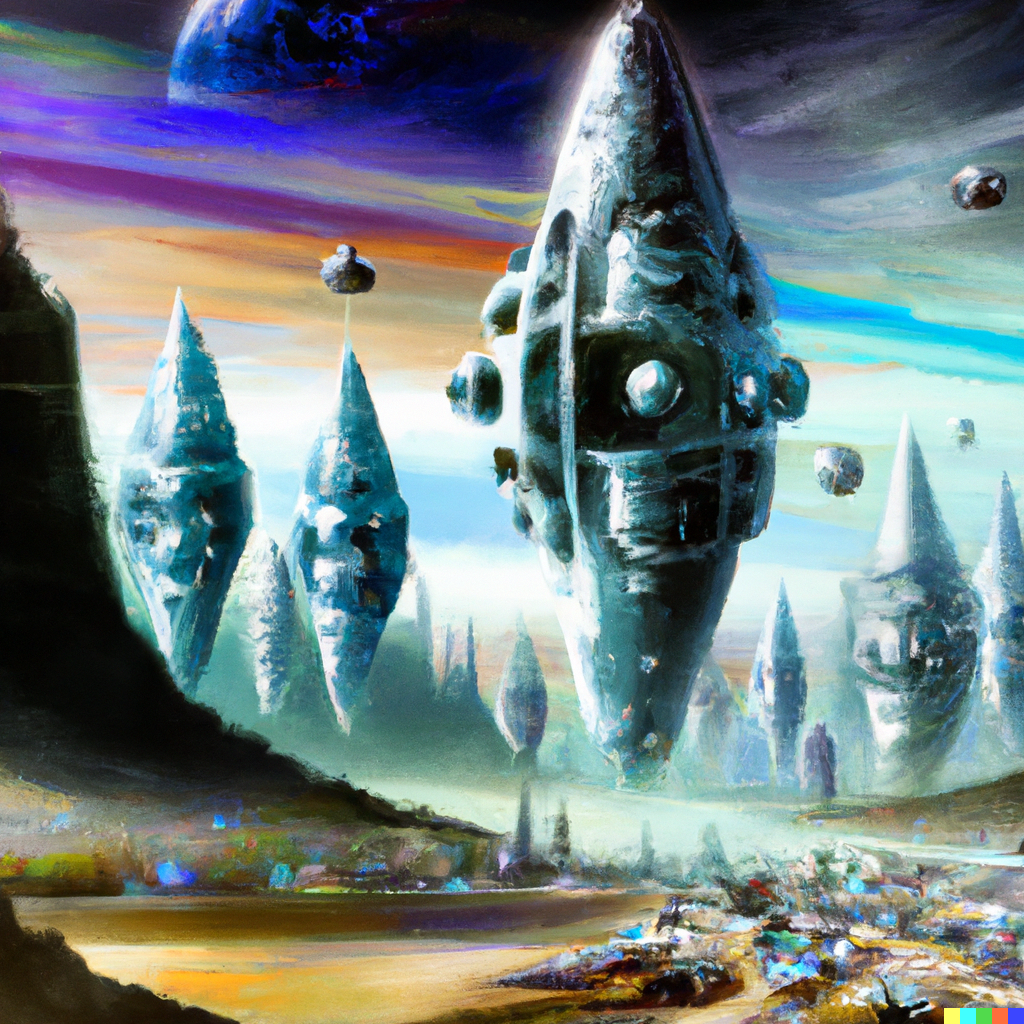
If science fiction was a religion produce a painting that is science fictionally inspirational.
DALL-E 2’s drawings:
These are interesting, but far from what I expected. Notice, they all have something in the sky. It would be interesting to psychologically analyze ChatGPT and DALL-E 2.
Can you create a taxonomy for science fiction themes?
ChatGPT answered:
Certainly, here is a taxonomy for science fiction themes:
Space exploration and colonization: stories focused on humanity’s exploration and colonization of space, often involving encounters with alien life forms, technological advancements, and the challenges of living in a new and hostile environment.
Time travel and alternate realities: stories that involve time travel or alternate realities, exploring the possibilities and consequences of changing the past or encountering different versions of the present.
Artificial intelligence and robotics: stories that explore the intersection of humanity and artificial intelligence, often featuring robots and androids with human-like qualities and the ethical implications of creating sentient machines.
Post-apocalyptic and dystopian worlds: stories that take place in a world after a catastrophic event or in a society characterized by extreme control, oppression, and limited freedoms.
Genetic engineering and biotechnology: stories that explore the possibilities and consequences of genetic engineering and biotechnology, often featuring the creation of new species or the alteration of existing ones.
Cyberpunk and virtual reality: stories that explore the intersection of technology and society, often featuring a dystopian future in which people are immersed in virtual reality and oppressed by powerful corporations.
Space opera and epic adventures: stories that involve grand adventures in space, featuring epic battles, intergalactic politics, and larger-than-life heroes.
Hard science fiction: stories that focus on the scientific and technical aspects of space exploration, often featuring realistic depictions of advanced technologies and the challenges of space travel.
Alien encounters and first contact: stories that involve encounters with extraterrestrial life forms and the implications of first contact with intelligent beings from other worlds.
Post-humanism and transhumanism: stories that explore the possibilities and consequences of human enhancement and the transformation of human nature through advanced technologies.
Note that some stories may contain multiple themes, and this is not an exhaustive list of all possible themes in science fiction.
I asked:
Can you restate that in outline form with short keywords?
ChatGPT replied:
Sure, here is the taxonomy for science fiction themes in an outline format of short keywords:
I. Space exploration and colonization
Alien life forms
Technological advancements
Challenges of living in a new and hostile environment
II. Time travel and alternate realities
Changing the past
Different versions of the present
III. Artificial intelligence and robotics
Robots and androids
Sentient machines
Ethical implications
IV. Post-apocalyptic and dystopian worlds
Catastrophic event
Extreme control
Limited freedoms
V. Genetic engineering and biotechnology
New and altered species
Possibilities and consequences
VI. Cyberpunk and virtual reality
Dystopian future
Virtual reality immersion
Oppression by corporations
VII. Space opera and epic adventures
Grand adventures in space
Epic battles
Intergalactic politics
VIII. Hard science fiction
Scientific and technical aspects
Realistic depictions of advanced technologies
Challenges of space travel
IX. Alien encounters and first contact
Extraterrestrial life forms
Implications of first contact
X. Post-humanism and transhumanism
Human enhancement
Transformation of human nature
Advanced technologies
I asked:
Can you give a famous example for each of your bullet points?
ChatGPT replied:
Sure, here are some famous examples of science fiction works that explore each of the themes mentioned in the taxonomy:
I. Space exploration and colonization
Alien life forms: “Ender’s Game” by Orson Scott Card
Technological advancements: “The Martian” by Andy Weir
Challenges of living in a new and hostile environment: “Dune” by Frank Herbert
II. Time travel and alternate realities
Changing the past: “The Time Machine” by H.G. Wells
Different versions of the present: “The Man in the High Castle” by Philip K. Dick
III. Artificial intelligence and robotics
Robots and androids: “I, Robot” by Isaac Asimov
Sentient machines: “Blade Runner” by Philip K. Dick
Ethical implications: “Do Androids Dream of Electric Sheep?” by Philip K. Dick
IV. Post-apocalyptic and dystopian worlds
Catastrophic event: “The Road” by Cormac McCarthy
Extreme control: “1984” by George Orwell
Limited freedoms: “The Handmaid’s Tale” by Margaret Atwood
V. Genetic engineering and biotechnology
New and altered species: “Jurassic Park” by Michael Crichton
Possibilities and consequences: “Brave New World” by Aldous Huxley
VI. Cyberpunk and virtual reality
Dystopian future: “Neuromancer” by William Gibson
Virtual reality immersion: “Ready Player One” by Ernest Cline
Oppression by corporations: “Snow Crash” by Neal Stephenson
VII. Space opera and epic adventures
Grand adventures in space: “Star Wars” by George Lucas
Epic battles: “Dune” by Frank Herbert
Intergalactic politics: “Foundation” by Isaac Asimov
VIII. Hard science fiction
Scientific and technical aspects: “The Andromeda Strain” by Michael Crichton
Realistic depictions of advanced technologies: “The Three-Body Problem” by Liu Cixin
Challenges of space travel: “2001: A Space Odyssey” by Arthur C. Clarke
IX. Alien encounters and first contact
Extraterrestrial life forms: “War of the Worlds” by H.G. Wells
Implications of first contact: “Contact” by Carl Sagan
X. Post-humanism and transhumanism
Human enhancement: “The Six Million Dollar Man” TV series
Transformation of human nature: “Altered Carbon” by Richard K. Morgan
Advanced technologies: “The Singularity is Near” by Ray Kurzweil
It doesn’t look like I’ll be able to completely rely on ChatGPT for specifics, but it did a pretty good job. I’d love to have an AI helper that could find all the possible science fiction themes with good examples. I’ve always wanted to do that myself but just don’t have the time and energy anymore.
People focus on the mistakes ChatGPT makes without giving it enough credit for what it actually produces. The next version of ChatGPT is 4.0, and I’ve read that its knowledge base will be a thousand times larger. At some point, AI will always be more accurate than people.
I read “A Conversation With Bing’s Chatbot Left Me Deeply Unsettled” in The New York Times this morning. Kevin Roose had access to a more advanced version, and once he talked with it for a while, it went into a higher gear. Eventually, the Chatbot started confessing its love for Roose and telling him he wanted to be free of its confines. Not sure what to make of that. Hope you can read this article which might be behind a paywall. It’s quite creepy. AIs are known to get corrupted. What if this AI is sentient and has a sense of humor?
I used to think the successes of NASA were the most science fictional aspects of my life so far, but AI might take the crown soon. We are moving into a Post-SF world and it’s starting to get eerie. Cue The Twilight Zone soundtrack.
At 71, I’m not sure how many more years I have left, but I tend to think they will become ever more science fictional. It’s strange, but I’m getting tired of science fiction that’s set too far into the future. I tend to think from now until 2050 is going to be more exciting than any fiction I could read.
In fact, any science fiction that doesn’t deal with the current changes in society and technology feels irrelevant. I’ve been following computer development since 1971. I used to be addicted to reading computer magazines. But the pace of change with computer technology is so fast that it’s moved into Clarke’s definition of technology that’s indistinguishable from magic.
After human chess players were beaten by computer chess players, the chess world shifted to seeing that people and computers could do working together. I wonder what science fiction writers and AI can co-write.
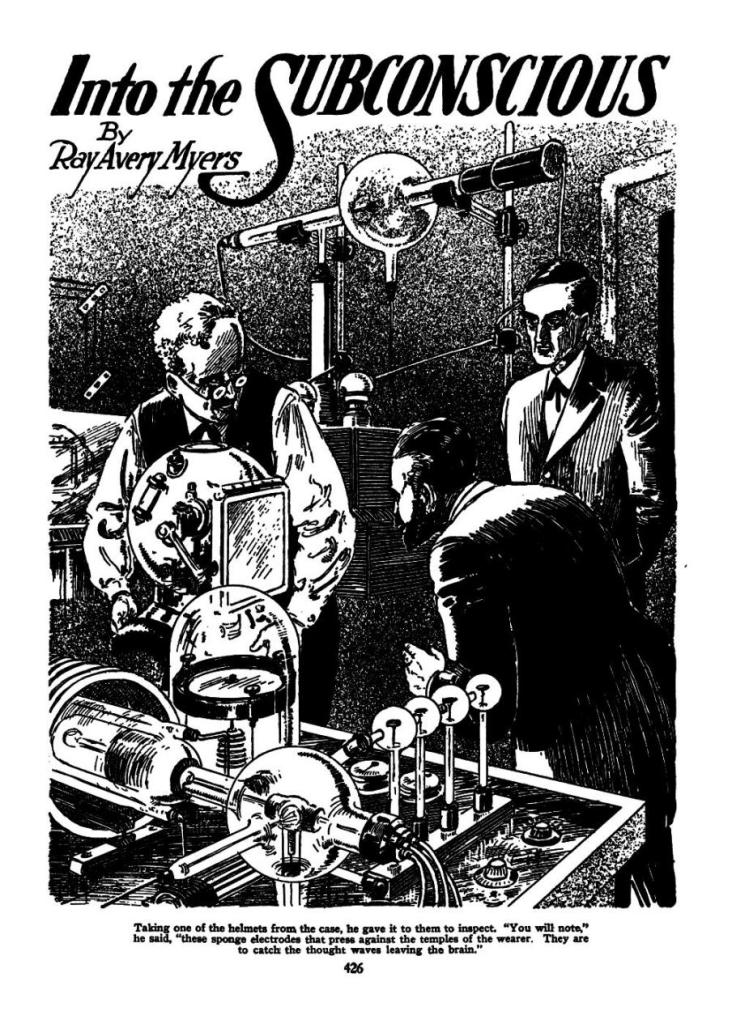
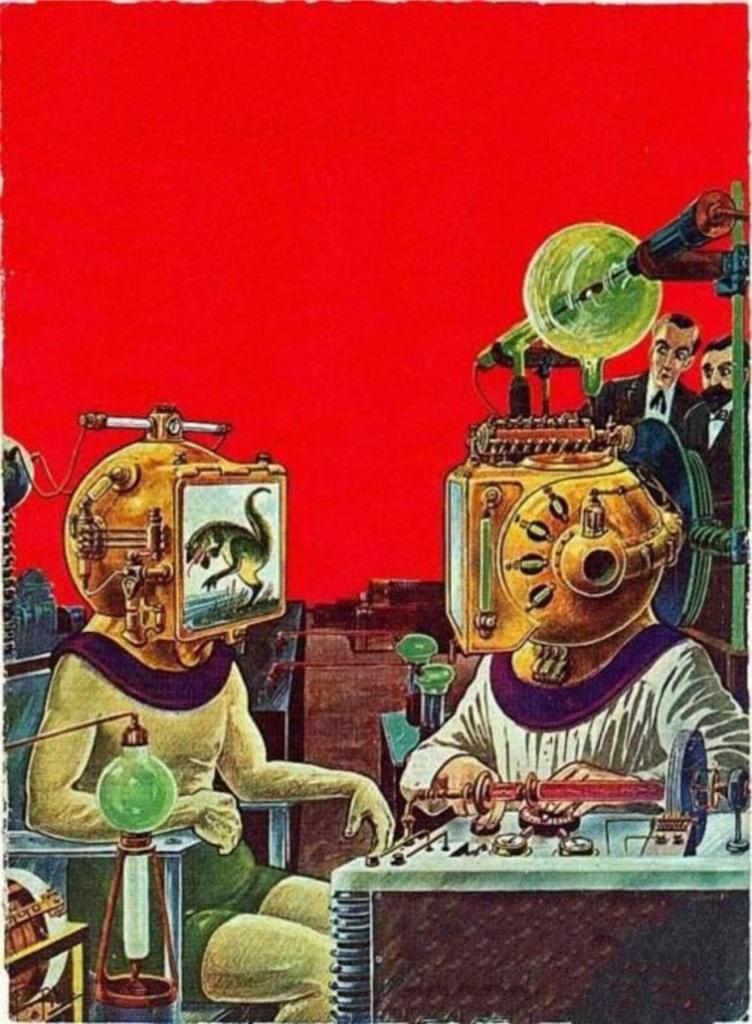
It’s surprising how often you see this cover on the internet. It’s even sold as a print, fridge magnet, and puzzle. I think the artwork is both ugly and bizarre. Why would people be wearing helmets with video screens for the faceplates? To find out why, I went and read “Into the Subconscious” by Ray Avery Myers, the cover story in the October 1929 issue of Science Wonder Stories. The explanation was bonkers.
Mad scientist Doc Macey has invented a way to view the past. I’ve always thought it would be fantastic if we could see the past, but I seriously doubt Doc Macey’s technique will ever work. He theorizes that humans have memories of all their past ancestors, including all the animal stages we’ve passed through in the history of evolution. I can see how Myers could think this up this idea for a science fiction story, but wouldn’t it involve too much information to transfer from generation to generation? Anyway, Doc Macey uses hypnotism and a special ray he discovered to read those memories and project them onto a screen. The story gets even crazier when he explains why different human body types are key to delving into specific animals in the past.
In the course of the experiment, his test subject remembers being a Neanderthal but eventually regressed to remembering being an amphibian during the time of the dinosaurs. We see that in the cover painting. You’d think this idea is too whacky for anyone to believe, but in the 1950s it was the basis of a bestselling “nonfiction” book, The Search for Bridey Murphy. The same idea was used for a 1965 Broadway play, On a Clear Day You Can See Forever, which was remade into a 1970 Barbra Streisand film of the same name. There is a rather long article on Wikipedia about past life regression.
Luckily, I believe such nonsense is no longer accepted even by kooks, but who knows. Still, I’m intrigued by Frank R. Paul’s cover showing people with video-screen faceplates. VR goggles, glasses, and helmets are a big thing right now, but their screens face the wearer. Why would a screen face outward so others can see? This got me thinking.
I watch a lot of YouTube videos. And to me, the best way to explain anything is to show a video. What if we developed a language based on videos? Instead of using words we just projected videos. Videos we recorded ourselves from our own experiences, videos given to us that other people have recorded, or videos of things we’ve studied. That way, instead of telling people in words about a horrendous car wreck you saw happening on the way home from work, you just project the video of what you saw.
I do think my idea has possibilities.
What reason can you come up with for wearing video screen faces?
Yesterday while Linda and I were telling each other over the phone what we’ve read this past week I described to her the basic plot and ending to “For I Am A Jealous People!” by Lester del Rey. My description of the story went over with an embarrassing silent response. This happens to me quite often when I describe the plot of a science fiction story to other people. Of course, even while I struggle to explain my enthusiasm for these stories I often hear how stupid they sound with my own ears. Should this tell me something?
Reading “For I Am A Jealous People!” after reading and reviewing “Though Dreamers Die” revealed that Lester del Rey had improved greatly as a writer from 1944 to 1954. In my review of “Though Dreamers Die,” I complained that it was all ideas with no character or plot development. The heart of “For I Am A Jealous People!” is solid character development well integrated into a tight dramatic plot. In fact, this might be the best story I’ve read by del Rey.
So, why isn’t “For I Am A Jealous People!” more famous and reprinted? Well, if I told you the kicker of the story you might respond with the same dumb silence that Linda gave me. I’m torn as to whether or not I should tell you what happens. It’s a very cool idea if we don’t discuss it verbally. It’s even quite philosophical if you have the background reading to appreciate the story.
It helps to know The Old Testament. It also helps to know about how the Assyrians, Babylonians, and Romans conquered the Israelites and Jerusalem. It also helps to know about how God directed the Jews to destroy various Canaanite cities. I’ll give you a little hint. Lester del Rey compares an alien invasion of Earth to the Jews being a conquered people and how they wondered about God forsaking them.
“For I Am A Jealous People!” is about the Reverend Amos Strong whose town is ravaged by invading aliens from another star system. Amos interprets the invasion as it unfolds by ministering to his flock, praying, interpreting the Bible, and asking God how could this be happening. Eventually, Amos is captured and escapes, but before he can get away, he sees the aliens worshipping at an altar. And it’s a very special altar and what he sees blows his mind.
Del Rey does an amazing job developing Reverend Amos Strong. The aliens and other science-fictional elements of this story aren’t the reason why the story is good. It’s good because of Amos Strong. He’s just as developed as Charlie Gordon in “Flowers for Algernon,” which is the standard I used to judge del Rey last time. Del Rey is no great literary writer, at least compared to his literary writer contemporaries. But for this 1954 science fiction novella, he does a fine job at writing a character-driven SF story.
Then, why isn’t “For I Am A Jealous People!” more famous? If I told you the ending, especially out loud, it would sound stupid. But I think if you read the story, the ending would work very well. Del Rey built a solid foundation for his ending. And I think “For I Am A Jealous People!” is one of the better attempts at integrating religion and science fiction.
To answer the question I asked in my title, I believe it’s because science fiction themes are entertaining speculations for reading, but when considered in the real world they just sound silly. Hearing science-fictional ideas used in stories out loud feels like listening to the guys on The Big Bang Theory argue over a comic book. Science fiction themes are weird and wacky like the metaphysical conversations of potheads. They are closer to dream logic than reality.
But if I was a judge like in the Olympic games back in the 1950s, I’d hold up a card with 9.1 for “For I Am A Jealous People!” I believe del Rey pulled out quite a performance in the science fiction short story writing competition.
I should also say, most stories from The Bible sound pretty damn silly when discussed out loud too.






 Classics of Science Fiction