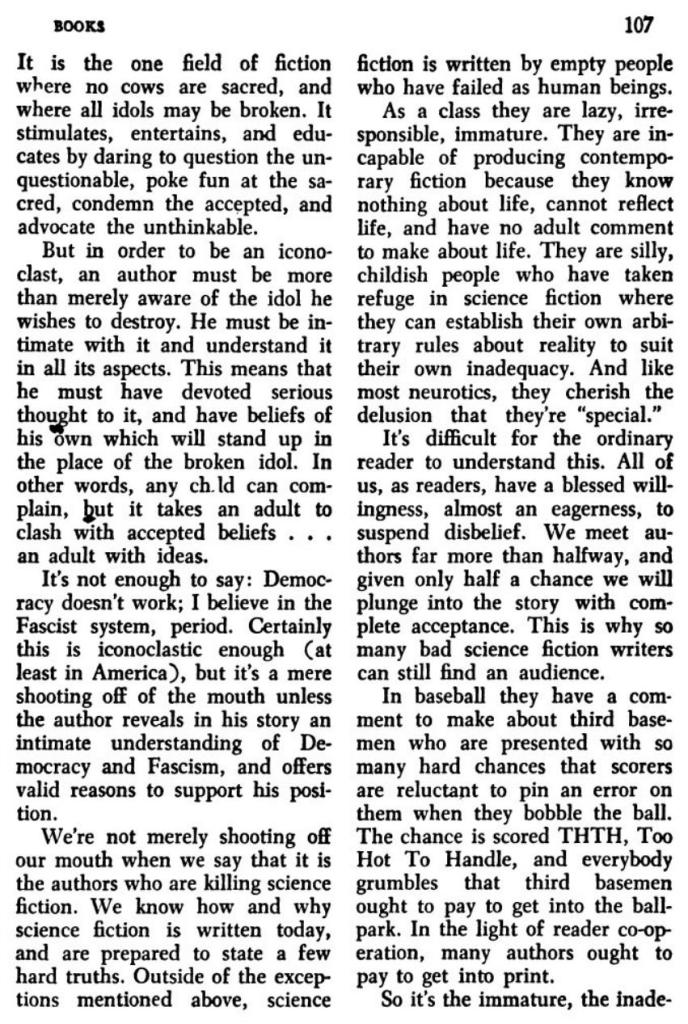
The writer I feel the most philosophically in tune with at the moment is Barry N. Malzberg, especially while reading his 2018 collection of columns from Baen’s Universe (2007-2010) and Galaxy’s Edge (2010-2017) titled The Bend at the End of the Road. I woke up this morning thinking I would write an essay titled “The Skeptics of Science Fiction” about science fiction writers who have come to doubt their genre, or “Why I Read Science Fiction in My Seventies” about how I no longer read science fiction to enjoy the story but to study each story as part of a science fiction history.
Malzberg’s essays do both, and I might still write those essays even though I feel Malzberg has already blazed those trails thoroughly. I have not finished the over forty essays in the collection, but I’ve read enough to sense a common feeling that I think Malzberg and I share about science fiction. I’m going to try and describe that feeling. Malzberg is 12 years older than I am, far more knowledgeable about science fiction, and further down the road of experience.
What I say won’t be what Malzberg says, but I think we’re in the same club. There’s enough resonance that I must wonder if we aren’t in essential agreement. I am not paraphrasing his book, but I’m going to describe how I feel which I believe is how he might feel using different words. Which may be how you feel and convince you to buy his book.
Our reality does not come with a prescribed meaning or purpose. We are all existentialists who must create our own meaning in life. When I was twelve I rejected the religion that was being forced on me and embraced science fiction instead. It wasn’t conscious on my part, and only understandable in hindsight but it’s understandable for the times, 1963. Science fiction, if you understand how I read it makes a good substitution for religion. I thought science fiction was a roadmap to reality and it became my mentor and guidance counselor.
Over the decades I realized this was silly, but I never could shed my love of science fiction. It was my chosen compass and I couldn’t stop using it to guide me even though I eventually became an atheist of my chosen religion. Science fiction promised transcendence and I never forgot that hope. I am like the characters in Hermann Hesse’s Journey to the East who have fallen off the path of enlightenment but achingly and vaguely remember it, and who keep searching to find it again.
Now that I’m older and rereading the science fiction from the 1940s, 1950s, 1960s, and 1970s, the works that shaped my soul, I’ve discovered how I was programmed and have been deprogramming myself. However, I just can’t let my love of those works go. I no longer admire them for what they meant to me when I was young but find meaning in understanding them as a subject of literary scholarship.
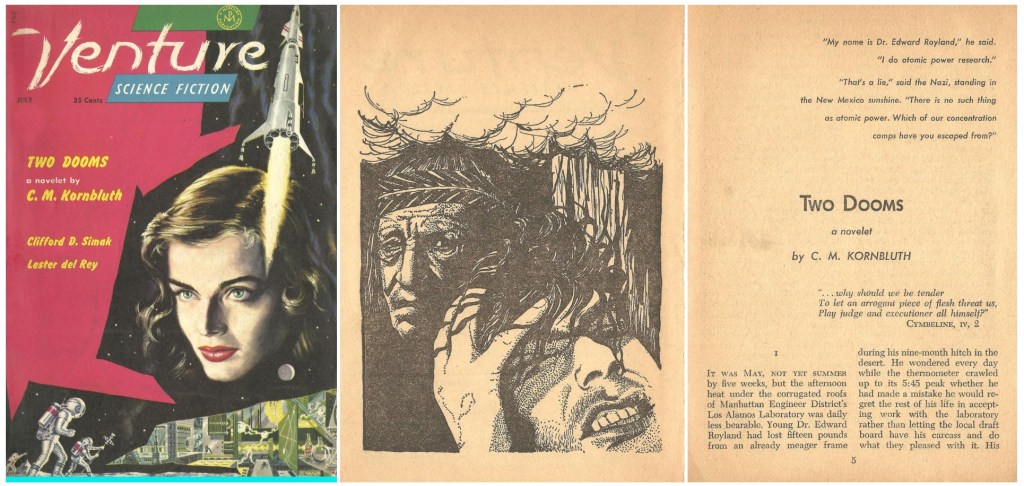
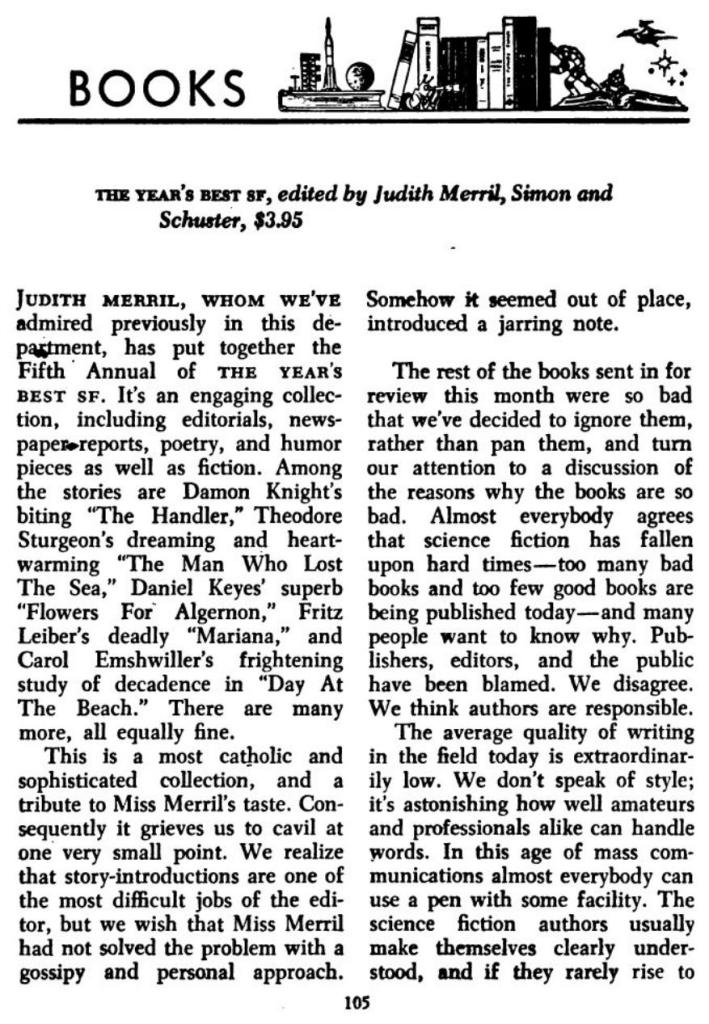
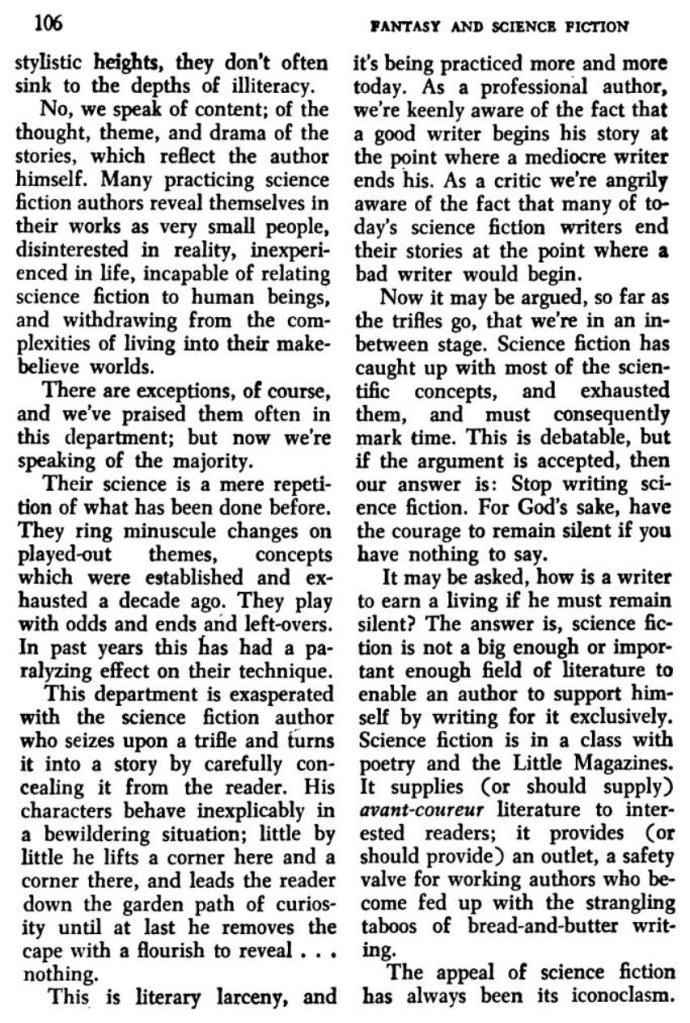
Malzberg goes back again and again to examine old science fiction stories that we both read, admired, or disliked. He keeps finding new personal revelations in that effort, and that’s where I’m at too. I often share his insights in stories I’ve reread and am intrigued by the insights in the stories I haven’t, but now plan to.
An important part of the equation is aging. Malzberg and I revere old science fiction and feel modern science fiction has lost its way. But young readers have become the new faithful and reject old science fiction, the old faith. I grew up at a time when science fiction was the bible stories preaching the gospel of the final frontier. The reality of space travel and science fiction parted from each other decades ago. And what science fiction has become is something I can’t believe in.
So Malzberg, and I, and I imagine many others from our generations, have become scholars of science fiction. We’re non-believers like Bart D. Ehrman who specializes in Biblical studies. On one hand, we enjoy the storytelling techniques of a bygone era and we like to understand the stories in their historical context. On the other hand, we are self-psychoanalyzing our own youth and development.
We used to believe we were part of an important movement, but now realize it was very tiny. And that our movement was taken over by the entertainment industry and made into a new opium of the masses.
We all want to believe what we love to read. We all want to believe we have something in common with authors whose fiction and nonfiction we think we agree with. We can never know what something meant in their writing, but human nature makes us want to find people like ourselves. For a while, science fiction gave some of its fans hope of transcendence and a shared belief system. Like most beliefs in this reality, it was mostly illusions, if not all.
I don’t think I could ever write a proper review of The Bend at the End of the Road because Malzberg covers too many topics that I’d want to discuss in detail. I could probably write at least one essay, if not several from reading each of his essays.
James Wallace Harris, 6/24/23