My library constantly discards science fiction from its holdings. I know that because I see those books in the Friends of the Library book sale stamped DISCARD. Often, they are books I would consider SF blasts from the past. Evidently, if they aren’t checked out for a certain period, they get discarded. I used to believe libraries were supposed to preserve the past, but I don’t think that’s true anymore.
But that’s not my only clue that science fiction has a shelf life. At the used bookstore I visit every week I see the same old books week after week – no one is buying them. It’s the newer books that come and go so quickly.
For years now, I’ve been watching people review science fiction books on YouTube. I can sense that many authors and their books are falling out favor over time. A major example is Robert A. Heinlein. When I was growing up, he was considered the #1 science fiction author. He was my favorite SF writer. I still love his books published before 1960, but the ones after that haven’t aged well with me. Reviewers generally pan Heinlein nowadays. I often see critical comments about Heinlein on Facebook. He’s just not popular anymore. I see many of his books at the used bookstore, but only a couple at the new bookstore.
Whitney at the YouTube channel Secret Sauce of Storycraft has been reviewing old Hugo winning novels by decades. She didn’t like over half of the winners. Five of the ten (The Wanderer, Stranger in a Strange Land, The Moon is a Harsh Mistress, This Immortal, and Lord of Light) have stopped working for me too.
If I gave the Hugo Award now for the 1960s, my list would be:
- 1960 – STARSHIP TROOPERS by Robert A. Heinlein
- 1961 – ROGUE MOON by Algis Budrys ( for A CANTICLE FOR LEIBOWITZ)
- 1962 – STRANGER IN A STRANGE LAND by Robert A. Heinlein
- 1963 – THE MAN IN THE HIGH CASTLE by Philip K. Dick
- 1964 – THE MAN WHO FELL TO EARTH by Walter Tevis (for WAY STATION)
- 1965 – THE MARTIAN TIME-SLIP by Philip K. Dick (for THE WANDERER)
- 1966 – DUNE by Frank Herbert
- 1967 – FLOWERS FOR ALGERNON by Daniel Keyes (THE MOON IS A HARSH MISTRESS)
- 1968 – no award
- 1969 – STAND ON ZANZIBAR by John Brunner
I thought there would be hundreds of science fiction books that would be Hugo worthy from the 1960s, but there weren’t. I used CSFquery.com and ISFDB.org to look at each year 1960-1969 and there just was’t that many older books that’s being read today that people still admire.
I love A Canticle for Leibowitz still, but it’s a fixup novel, and I mostly love it for the first story. And reviewers aren’t as wowed as they used to be for it. I kept Stranger on the list even though I no longer like it, because it’s so ambitious for the times, and historically, it is the standout novel of the year. I love Way Station, but I don’t think people still read it much. The Man Who Fell to Earth has grown in popularity since 1963. The Martian Time-Slip is way better than The Wanderer, and people still read it. I definitely think Flowers for Algernon has aged better than Mistress. I’d give No Award over Lord of Light, or any other novel I remember from 1967.
All the books on my list are in print, and all are available as audiobooks. That’s a good indicator that they are still being read.
I was shocked by how few science fiction books from the 1960s I still admire. Twelve years ago I wrote a series about the best SF books from each decade. Looking at my essay for the 1960s shows damn few books that people still read.
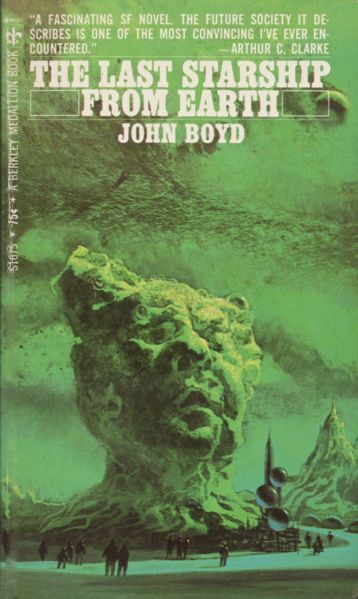
I remember back in the 1960s when old guys would gush about E. E. “Doc” Smith books from the 1920s and 1930s. I tried them, and they were horrible. I guess today’s young readers would feel the same about most of the books I loved back in the 1960s. Is anyone still reading Keith Laumer, John Boyd, Mack Reynolds, A. Bertram Chandler, etc.
Here is a list of 242 popular SF books from 1920-1990. How many do you think are still being read?
What are the best science fiction books from the 1960s that you still read and think young people should try?
You might like to read An Information History of the Hugo Awards by Jo Walton. This was first published at Tor.com and many of the comments from readers are included.
James Wallace Harris, 5/5/25


I can’t speak for your library service, but the in the one I worked in there has to be a bit of churn as new books are constantly published and space is at a premium.
We’d put battered but still readable stock in the friends sale. If it was our last copy of a particular title, we’d send it to collections who’d likely put it in the reserve section in the stacks.
I’d love to hit up the sale at your library! There’s hardly ever SF in ours.
LikeLiked by 1 person
Our Friends of the Library bookstore called Second Editions 18 shelves of science fiction. It’s open 10-4 Tuesday through Saturday. If you are ever in Memphis. That’s not counting a wooden cart with six shelves of paperbacks.
However, most of the titles were never that popular.
LikeLiked by 2 people
I wasn’t planning on being in Memphis but I might have to be ❤
LikeLike
Part of it is that the culture changes, so a story about the ruin of civilization like Canticle doesn’t reverberate as strongly as it might. And there’s the technology-marches-on angle…
LikeLiked by 1 person
I suspect most objections to Heinlein are political. Given the leftward/progressive lurch of the field over the last few decades, it’s hardly surprising he has fallen out of favour.
LikeLiked by 1 person
I still read Laumer and Chandler. Much of Laumer is bad, anything after his stroke is unreadable. But I still find early Retief amusing and early Bolo good. Almost all of Chandler still holds up for me, but it’s probably mostly nostalgia. I can’t imagine newer readers getting into it.
For quite a while I had quit reading almost any fiction. But this year I made a resolution to get back into it. I had read my favorites so many times over the decades I felt I had them memorized. But as I re-read them, I found that wasn’t true, and I was enjoying them again.
I still like Lord of Light. What changed that made you dislike it so?
LikeLiked by 1 person
I never liked LORD OF LIGHT much to begin with. The concept was neat but the way Zelazny told and structured the story was muddled and confusing. Over the years I’ve liked Zelazny’s novels less and less. But I still like his earlier shorter work. I’m just not that keen anymore on adventure action oriented stories. That’s why I’m not keen on Laumer either.
LikeLiked by 1 person
I still rate Ursula K. Le Guin – fantastic, artful prose, great world-building, and she didn’t seem to fall into the same formulaic tropes that seem more obvious to readers the further we get from the publication date.
I think a large part of why we read sci-fi is to understand the path we are on and where it may or may not take us. When first published, viewed within the culture it has been produced, we see the shiny ideas in a sci-fi novel but not the faults that are a product of the era it was written. But as the decades pass, we begin to see how blind authors can be to recognizing how things will change.
Sexism, racism and sexuality are just a few areas where we can tell, within a few pages, whether an author has recognized these as potential ways culture may shift. Still using paper, analogue devices and antiquated computers can take us out of the story.
But the inability to see how vastly the world can change with technology that’s already here, is a common problem too. For instance, computers were around well before the internet. The internet was around well before blogs. Blogs were around well before social media. And (semi-)smartphones were around well before they became the universal device they are now. Each of these developments shift society in massive ways, but if an author cannot foresee such events, then their vision of the future seems to diverge drastically with our present–and most importantly, with the things we value most as a result.
LikeLike
Like you, I was (and still am) a great fan of Heinlein.
Paul Fraser mentions above that a reason for his current status is political. I also think there is (and this is prevalent in many elements of society) that people jump on the band wagon and trot out the same views; almost afraid to be out of step. Someone paints Heinlein in a bad way – criticising his politics and treatment of certain characters, oh – we all must do.
I see it a lot with Asimov too: “oh, he’s not very good at characterisation”. Or “he can’t write for women”.
The thing is, with both, the pick up their books, and soon are absorbed in the worlds of fiction, and you forget where the time has gone. They are perhaps greater than the sum of their parts. They are great authors because the weren’t trying to be en vogue.
Side note: what do we feel about worlds that we know can no longer exist? Between Planets for instance? Suspension of disbelief comes easy as I fall into the world.
LikeLike
Science fiction has changed over the decades. In the early days, imagination trumped science as there wasn’t as much knowledge of outer space. As astronomical knowledge increased, the believability of those stories decreased and authors had to turn to more scientific writing, which for some readers can be difficult.
When you read early sci-fi today you have to put yourself into the era that it was written in order to enjoy it to the fullest. The Time Machine, The Martian Chronicles, and Ringworld are a few of my favorites.
LikeLike
I agree, you have to read them knowing what it was like when they were written. I often prefer what I call pre-NASA science fiction.
LikeLiked by 1 person