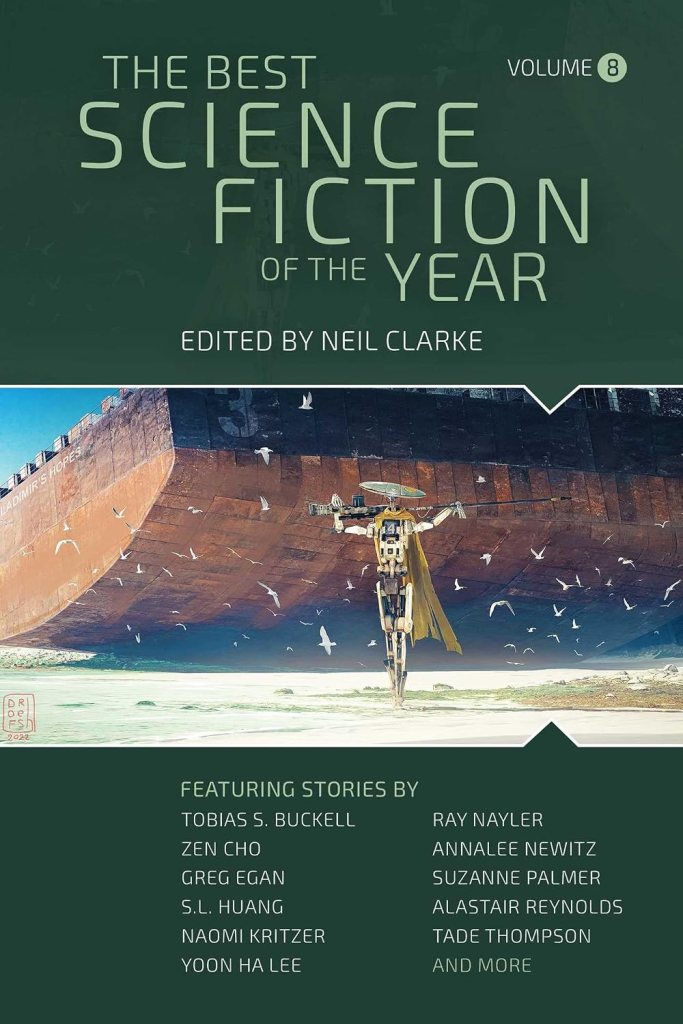
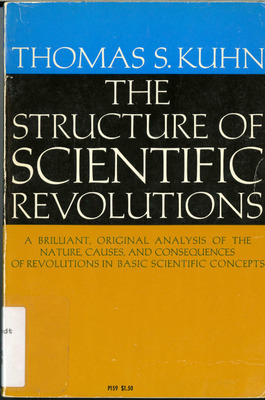
Starting on September 28th, our short story reading group will read The Best Science Fiction of the Year: Volume 8, edited by Neil Clarke. We’ll discuss a story every Monday and Friday. I haven’t been participating in the group for about a year because I got burned out on reading SF short stories. But I’m hoping to participate again. I miss reading science fiction.
I’ve read the first three stories to get back into the swing of things. My reaction was the same to all three. I felt these science fiction stories were written for young people. Have I gotten too old to read science fiction? I’m 74.
I’m not saying the stories are childish, but they do have a childlike quality. This is partly because of a “make-believe” feel, but also because of a kind of optimism. I can’t tell if it’s optimism for the future or optimism for science fiction. Unfortunately, I’ve lost all hope for humanity and concluded that science fiction’s hopes and fears for the future are wild speculations.
Such pessimism makes it hard to enjoy science fiction. I’m reminded of biographies I’ve read about Mark Twain and how gloomy his thoughts got in old age. Do we wear rose colored glasses in youth that we take off in old age, or do we put on dark glasses when we get old?
But I do have other theories. Every new science fiction story I read competes with the best science fiction stories I remember. And with over sixty years of discovering great science fiction stories, it’s very hard for any new story to measure up. Have I reached an age where the odds are against me finding new science fiction short stories that I love?
Another theory, based on years of reading, has suggested that only a handful of stories published each year are exceptional. If you look at The Classics of Short Science Fiction v. 2 sorted by year, the number of stories ranges from 0 (1957) to 5 (1966). A story needed at least 8 recommendations to get on that list. Some had as many as 18. That statistical system implies that, of the 31 stories in The Best Science Fiction of the Year: Volume 8, I’ll find five or fewer stories that I really admire.
Of course, different stories appeal to different readers, so if Neil Clarke collects 31 stories from 2022, the odds are most readers will find a handful they would recommend. I won’t know how many I’ll love until I finish the group read. If I do find a few, I’ll consider myself not too old to read science fiction. If I don’t, maybe I am too jaded for the genre. I do think being in my seventies has made me less tolerant of the average story.
Readers who are well-read in science fiction might look at my list of favorite short stories and notice some common elements. Many of the stories are dark and edgy. Many of them are innovative. Most of them are unique in some way. Young writers in the 21st century probably have a hard time coming up with any new science fiction concepts, themes, or plots.
One reason I think modern science fiction feels childlike is that it comes across as what Disney, Pixar, HBO, DC, or Marvel would produce. Have movies and comics completely reshaped how people think about science fiction? I grew up reading science fiction written by pulp writers, or inspired by pulp fiction.
I just don’t see edgy stories like “Fondly Fahrenheit” by Alfred Bester or “Coming Attraction” by Fritz Leiber today, much less innovative stories like “The Light of Other Days” by Bob Shaw, “Appearance of Life” by Brian W. Aldiss, or “The Star Pit” by Samuel R. Delany. Of course, even back in the 1960s and 1970s, science fiction writers struggled to come up with anything original in the genre.
But then I remember Ted Chiang and Sarah Pinsker.
The odds are that if I pick any random issue from my collection of science fiction magazines, I won’t find an outstanding story. Just read reviews of several magazine issues at Galactic Journey. Two- and three-star reviews are painfully common; five-star reviews are especially rare.
When I was young, a three-star story could still delight me. A Robert F. Young or Raymond Jones story could make an issue a satisfying purchase.
Hopefully, I’ve psyched myself up to finish The Best Science Fiction of the Year: Volume 8. I don’t want to give up on science fiction. But it’s getting hard to find anything I like. Let’s hope it’s not aging, but a matter of statistics.
If I could travel back to 11/25/64, the day I turned 13, to talk with myself, I’d warn him about the dangers of reading science fiction. In the Fall of 1964, I became addicted to science fiction after discovering Robert A. Heinlein. I wouldn’t try to convince my younger self not to read science fiction, because I’m quite sure he wouldn’t listen.
This morning I listened to “What Is It Like to Be a Cucumber?” on AppleNews+. It’s a profile of scientist Michael Levin in the Intelligencer section of New York Magazine. Levin read science fiction when he was young, but he mostly read science books. Over the years, I’ve realized that was my mistake too.
Future historians might claim Levin is the kind of maverick scientist whose radical insights were as paradigm-shifting as the Copernican Revolution. Just go watch a few of these YouTube videos to see what I mean, or read Michael Pollan’s new book A World Appears.
When I was a kid, I wanted to grow up and become a scientist because of reading science fiction. But instead of studying science, I just kept reading more science fiction. Throughout my life, whenever I’ve read a biographical piece on a scientist who mentions they read science fiction, I’ve identified with them. But I’ve also wondered why I didn’t become a scientist like them. It’s my biggest regret.
Looking back, I remember I had plenty of opportunities. Teachers often encouraged me and tried to help. But I ignored them. All I wanted to do was to get back to reading science fiction. This morning I also listened to “The Cities That Said Yes to Drugs” about dealing with the problem of drug addiction (from The Atlantic). Many cities have enacted laws to protect the rights of drug users, but they only created problems for other citizens. There is so little that can be done to help a determined addict.
But is it fair to compare my love of science fiction to drug addiction? Wasn’t it more like a religion? Science fiction gave my younger self something to believe in. Could I have gotten young Jimmy to read the 1951 book The True Believer by Eric Hoffer?
Hoffer concluded the only way to get someone to give up a belief system was to replace it with another. Could I tell Jimmy about enough science books to divert his interest?
I did read some popular science books, but for every science book I read, I read ten science fiction novels. If I could go back in time, I’d try to convince young Jimmy to reverse that ratio. If I could convince him that I was he, but at the other end of life, and I wanted to give him some good advice. Would he accept it? People don’t normally accept advice. If I had a time machine, my current theory to alter my personal evolution would be to convince 13-year-old me to read 10 science books before reading 1 science fiction book.
But what science books? Have I thought this through?
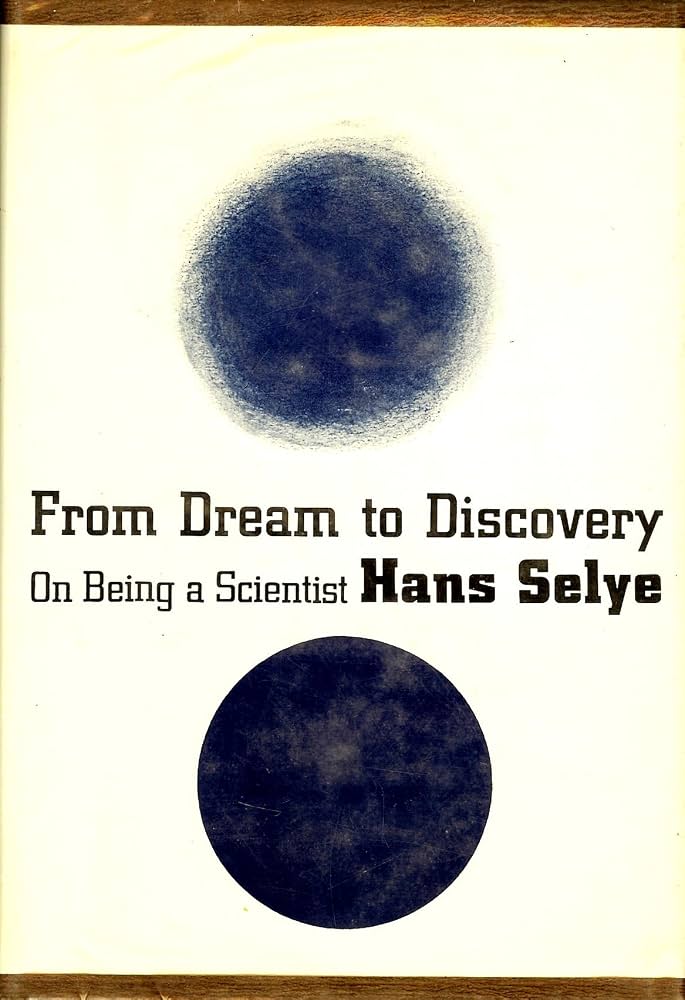
If I told Jimmy to go to the library and get From Dream to Discovery: On Being a Scientist by Hans Selye, which was published in 1964, could he have read it and understood it? In 1964, I was reading all the Heinlein juveniles. I could point out to young Jimmy that in every one of the Heinlein juveniles, Heinlein advocated studying science and mathematics.
Were there science books at Homestead Junior High library that could have changed the direction of my life if I had read them? I don’t think I’m smart enough to have discovered or invented anything great. But I could have had a more inspiring life if I had worked as a scientist. I do remember thinking back in the 8th grade that I wanted to be an astronaut, or astronomer, or marine biologist. But I also know computers were the subject that fascinated me most once I got older.
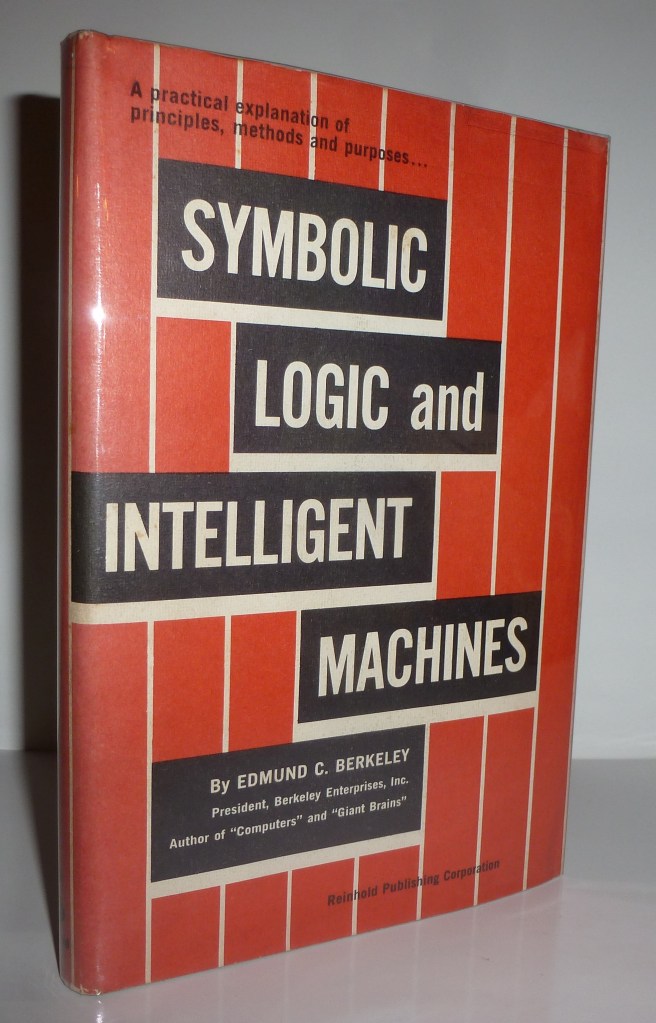
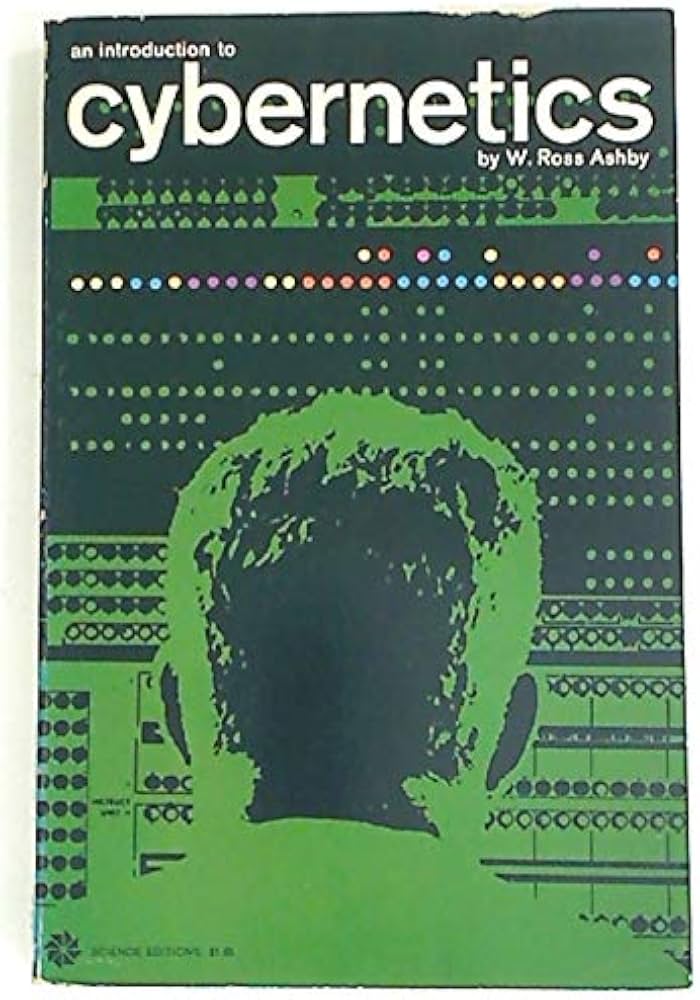
I started studying computers in 1971. But the focus was business, not science. I think things would have been much different if I had studied computers for science. I wonder if any of these books had been in my school library. Realistically, they might be too advanced for a 13-year-old.
Maybe asking my younger self to read 10 science books for every science fiction book is too ambitious. Looking at those titles makes me rethink this fantasy. Maybe I’d plead with him to read one science book for every science fiction novel. Or even simplify it to promise to faithfully read Scientific American every month.
I did read some nonfiction books at that time, but nearly all of them were about astronomy, space travel, or rockets. I really did have space on the brain. This is long before Tom Wolfe coined the term “The Right Stuff.” I was a four-eyed, geeky kid who did not have the right stuff. Even if I did have a time machine, I couldn’t make a silk purse out of a sow’s ear.
Ever since I turned 50, I’ve had this fantasy about going back in time and warning my younger self about our future. In nearly all versions of this fantasy, it ends when I conclude my younger self wouldn’t have listened to me. I know that I couldn’t change much. People don’t. But could I have been a little bit different?
Over the years, I’ve seen many successful people brag on television that they wouldn’t have changed one thing in their life. I always thought that was weird, because I would have changed countless things. But little things.
The most consistent thing I wished I had done differently was to read less science fiction. I loved the stuff. I still do. However, I overindulged. I keep thinking of all the other kinds of books I could have read, and how reading them might have made me a wiser or more creative person. That’s fascinating to fantasize about.
By the way, whenever I indulge in this fantasy, I also realize that I could change how I read right now. I have veered away from science fiction some, but I’m like a gyroscope that always returns to its original position.
James Wallace Harris, 8/4/26 (Happy Birthday, Janis)
I’m ashamed to admit that I wasted my time reading this book. Let’s hope I can find something insightful to say about the experience. I confess I have a lifelong addiction to fiction. Even though years of studying consciousness, philosophy, and spirituality have shown me wiser pursuits for my time on Earth, I still prefer to escape into fiction. I should at least read the highest quality fiction, books I could justify in some way, but I seldom do. Why?
When I say I’m addicted to fiction, I mainly mean novels, movies, and television. At 74, I regret spending so much time mass-consuming fiction. Sometimes I wish I could give up fiction completely. Other times, I dream of becoming disciplined and only reading and watching the very best fiction. Despite my best efforts, my reading habits are like a pinball machine, where I careen around the board, bouncing off great books and bad books with little control.
Unfortunately, I’m fascinated by all aspects of literary science fiction. Oddly, I’m somewhat indifferent to movie and TV science fiction. I justify reading crappy science fiction by rationalizing that I’m researching the genre’s history. I have a theory about that. Everyone specializes. I’ve got 65 years of experience reading science fiction, and I can’t walk away from that. I’m too old to become a newbie in another area.
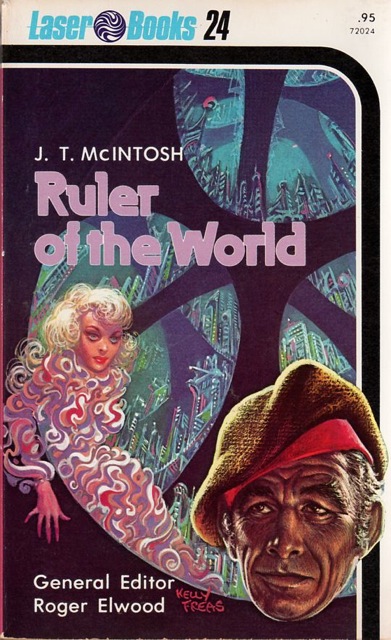
Laser Books was Harlequin Books’ foray into publishing science fiction from 1975 to 1977. Harlequin used its famous formula for publishing crappy romance novels to sell science fiction. They churned out 57 titles, all with similarly styled Kelly Freas covers. The books were short, and they published mostly first or second novels by new authors, and in the case of J. T. McIntosh, a work from his decline years. A bunch of these Laser Books showed up at my Friends of the Library bookstore. I bought Ruler of the World by J. T. McIntosh to try one out. I picked it because I had read McIntosh’s One in Three Hundred, and liked it.
I’m going to write a lot of words about a book I don’t recommend you read, and it’s doubtful you’ll ever see it at a used bookstore. Although if you’re willing to waste $9, you can pick up a used copy online. Many of his novels are available for the Kindle, and many of those you can read for free if you’re a Kindle Unlimited subscriber. However, Ruler of the World isn’t one of them.
I must admit, I’m intrigued by Scottish writer J. T. McIntosh. He had three hardback SF novels published in the early 1950s by Doubleday. Personally, I consider the 1950s to be the true Golden Age of Science Fiction. Wikipedia lists 24 novels by McIntosh, many from the 1950s, but it also says his later work is mediocre and was published by third-rate paperback publishers.
I have several ways to rationalize reading mediocre books, but are they valid? Of course, we’re living in a time when people lament that young people don’t read books, as if reading books were a virtue, but I worry that I read so much that I’ve made it a vice.
Just before I read Ruler of the World, I read Whistler by Ann Patchett. That novel is excellent. It’s quite compelling and beautiful. As soon as I started the McIntosh novel, I knew it was crap. So, why did I keep reading? I can give you two conscious reasons. One, I’ve been having fun looking for good science fiction among forgotten books. Since I had tremendous success with Dark World by Daniel F. Galouye, I was trying another.
And second, McIntosh offered a mystery. In his story, humans have colonized the galaxy, and Earth is a mostly forgotten planet. Ram Burrell, a thief and rogue, hears about Earth and decides to go there. Even more intriguing is that Earth limits galactic visitors to 500 at a time. And those visitors are restricted to seven tourist destinations: Malta, Cuba, Shetland, Hawaii, the Sahara, Russia, and Tibet. Weirdly, when tourists arrive at the Sahara, they are given the choice to visit Bagdad, Babylon, Lake Chad, and Timbuktu, all within easy driving distance. We know that’s impossible. Tourists are also told that they are forbidden to interact with normal Earth people. That’s a mildly intriguing setup.
Ram Burrell is a repellent protagonist. He punches innocent people, throws waiters out of windows, and expects every woman he desires to have sex with him. McIntosh implies that Burrell is so alluring to women that they comply even when they really don’t want to. He partners with the one woman able to refuse his advances, Roberta Murdock. Ram is 44, and Roberta is 22. That’s kind of skeezy too. At one point, Ram and Roberta are on the run, Roberta has been knocked unconscious, and two married women offer to help. When Ram gets one of the women alone, he makes a pass at her; she initially refuses, but then gives in. Later, when her husband goes to get the police, Roberta asks Ram why he risked their escape to have sex with a woman who was sheltering them. Ram says he hadn’t had sex in a while and needed it.
To give McIntosh another chance, I’m reading The Fittest from 1953. The novel parallels Ruler of the World, where the protagonist is an alpha male who partners with a 22-year-old girl. This time the guy is under 30. I think McIntosh was 28 when the novel was published, and 50 when Ruler was published. Is his protagonist a stand-in for himself? And the girl character, his idealized woman?
I wondered what McIntosh was intending for his character. Did he want Ram Burrell to be like James Bond? Later, when I read that Laser Books was owned by Harlequin, I wondered if they demanded a certain amount of sex. I’ve read that some forms of romance novels feature sex where women are “taken.” But then I read Harlequin’s rules for science fiction, which included a ban on explicit sex. Whenever Burrell stops to have sex, we’re told, not shown. And what’s the point of having so many scenes where Roberta avoids Ram’s advances? Is that another romance trope?
I bring all this up to explain possible justifications for reading old, forgotten books. What is this one saying about the gender roles of 1975? Or the fantasy expectations of men? Even though McIntosh portrays future men and women as unfettered by 1975 morality, his heroine, Roberta, seems to be holding out for marriage. Isn’t that weird? I assume modern female readers will despise this novel.
Wikipedia’s report on Laser Books isn’t flattering. Evidently, they were written to specification, and the editors often rewrote them or hired other writers to rewrite them. Piers Anthony even had a co-writer forced on him who got shared credit. Also, readers and reviewers disliked these books. So why am I reading one? I sort of feel like one of those women Burrell seduces – I really didn’t want to read this book, but I read it, anyway.
I’m also reminded of another book, A World Appears by Michael Pollan. I finished it just before Whistler. In the last chapter, Pollan describes meditating for days while living in a kind of cave. The whole point of this exercise is to experience quiet, abandon the mental chatter, and reach a state of pure existence where he sweeps the floor and chops wood. To a Zen Buddhist, our thoughts keep us from honestly interacting with reality. I’m afraid I feed my internal chatter books like shoveling coal into an old steam engine.
Ever since ChatGPT came out, I’ve realized that part of my brain works like a large language model (LLM). I continuously consume text to train my inner LLM. But as we’ve seen with AI, many produce poor output because they were trained on unreliable text.
If a subset of our minds is like LLMs, unconsciously generating thoughts, then we should do everything we can to control what it trains on. Or, if we allow it to train on bad content, we should annotate and explain it, so it won’t spew out later.
Consuming fiction, whether great or crappy, only adds to our mental chatter. Most of us are addicted to fiction. Now we can come up with reasons, even good reasons, why we substitute reality with fiction. Can we ever justify consuming bad fiction? After Whistler, which was extremely high-quality fiction, consuming Ruler of the World provided a revealing contrast. Like Burrell needing sex, I believe our minds crave fiction because we don’t want to face reality.
Many advocates of reading want young people to read books to become more empathetic. As we’ve learned from AI training on the internet, they become racist, mean-spirited, and hateful. Young men reading Ruler of the World are not going to develop any empathy for women. I know Republicans are hell-bent on removing DEI initiatives from society. How are readers training their internal LLMs going to know what is good and bad about characters if society doesn’t give them guidelines? I’m not sure just reading modern woke novels will do the trick.
There is no indication within Ruler of the World that Ram Burrell is a complete asshole. Ram is a grab them by the pussy kind of guy, who believes making money any way you can get away with is the goal. I think this is a terrible novel, but I’m not sure it wouldn’t be popular with today’s young men on the radical right.
This morning I watched an interesting YouTube video. It’s titled “The Book That Predicted the Destruction of Society – Analyzing The Catcher in the Rye.”
Hilary Layne, the channel’s host, divides her discussion into “observing books” and “dystopian books.” I like that distinction.
Observing books differ from dystopian stories. Books like 1984 and Brave New World are offering warnings about what current society could become if left uncorrected. Observing books offer no warnings; they are the bare-faced truth about what was happening in their times, and to a like-minded reader, they come across like keenly prescient insights into the specific ills plaguing their times and future times. A lot of the time, a very well-written observing book will accidentally stumble upon precisely the issues that could go on to create the broken society of the future that its writer could not have foreseen.
As an aside, this is why observation is the most powerful tool of any writer. The way I look at it, observing books are kind of the first wave. Society begins to fall ill, and then these sharp-eyed souls, these keenly observant creative types, can’t help but write stories in which their characters are also observing these hairline fractures in the weight-bearing beams of civilization and culture. Later, and sometimes even concurrently, other novelists who have made similar observations—sometimes even bolstered by those of the observing books—will write their dystopian warnings.
Of course, there are always the other books, and then there are even the escapist books like fantasy or romance. But certain points in history produce the right circumstances to give us exactly the right authors to write that era’s observing books. Observing books and the dystopian books of a given era work together to help a society both observe its own ills and also metabolize and adjust to the new normal, for good or ill. For this reason, the very best of these types of books become a source of profound comfort, contrary to what might seem logical, largely because they allow an isolated reader to feel that he or she isn’t insane or alone. Moments in history when massive changes occur in society are often met with very quiet waves of profound pain by people who can see what the world is becoming. These books become lifelines to these types of people.
Ruler of the World neither observes nor warns. It does speculate, one of the virtues of science fiction, but it does so poorly. Harlequin intended these books for male readers. Anyone under forty will not remember how many books and magazines were specifically aimed at men. Here’s another YouTube video I watched yesterday, “Did Men Stop Reading Fiction or Did Fiction Change Too Much for Men?”
This is a fascinating video. The host makes his case by comparing bestsellers from 1986 to 2026. He says anecdotal evidence suggests men have stopped reading fiction. Of course, I hear that young people have stopped reading. The host suggests several reasons why men have stopped reading, but I don’t think he covered all the possibilities. And I think people, both men and women, began giving up on reading much earlier than 1986.
Before the 1950s, hundreds of fiction-only magazines were sold on newsstands. Nearly every general-purpose magazine, either aimed at women or men, ran a couple of short stories. Television was the beginning of the shift. The internet, video games, social media, and all the rest came later. Every grocery store, drug store, and even convenience store had one or two twirling racks of paperbacks.
We can think of all of that reading as merely entertainment or training for the reader’s internal LLMs.
Where I go to mine for forgotten classics is this era. Laser Books came in at the tail end. Americans used to have an insatiable habit for reading. And a lot of it was gender specific. I don’t see the kinds of books and magazines I used to see aimed at men. And sure, a lot of that reading was bad fiction. Not just poorly written, but sexist, unwoke, and politically incorrect by today’s standards. Popular fiction today is different. And it’s mostly suitable for women. But does that mean men shouldn’t read it?
I have to wonder if I read a lot of old bad science fiction because it was designed for the males of my generation. However, I don’t crave old science fiction for its sexist outlook. Old science fiction had a different attitude about the future than what current science fiction writers have now.
Another Bibliophile Reads seems to suggest that we should bring back books for men. But what if those books men liked in the past were too much like Ruler of the World? Is that what conservatives want? If reading trains our internal LLMs, is that what we want young readers to consume?
To properly criticize a book, don’t we need to consider the book’s impact on the reader’s LLM? Isn’t that why conservatives want to ban books? Isn’t wokeness the liberals’ approach to banning books? And aren’t literary criticism and book-banning methods efforts to control human LLM training? Once you accept our thoughts come from the content our minds are trained on, then literary criticism takes on a new dimension.
I know I’ve brought up too many topics for one essay, but I’ve given myself several insights to think about. I believe I made reading a bad book worthwhile.
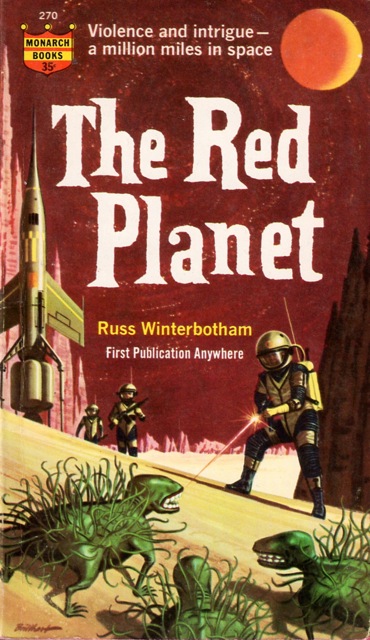
Recently, on the YouTube channel Pulpmortem, I viewed Jake’s video “9 So Bad, they’re Good Science Fiction Books you’ve probably never heard of.” Jake, evidently, is a connoisseur of bad science fiction, and the nine novels he reviewed indeed sound dreadful. Since Jake claims that bad books still can be fun to read, I gave The Red Planet by Russ Winterbotham a try. It was a quick, fun read that wasn’t badly written, but was essentially a minor, forgotten work.
I picked The Red Planet because it was free to Kindle Unlimited subscribers. It’s only $1.99 if you’re not a subscriber. This novel is also available for free on Project Gutenberg.
There are hundreds of better science fiction novels for $1.99 on Amazon, so why should anyone read it? Shouldn’t we always seek out the best possible novel to read? Why read a crappy book when you could be reading something great?
Well, readers don’t think that way. Even though we’re warned never to judge a book by its cover, how often have you bought one just because the cover was so cool looking? How many people have a secret fondness for watching old episodes of Perry Mason instead of streaming the trendiest show on Apple TV? People tend to develop a fondness for a particular type of story and storytelling. They don’t prejudge its quality.
But the question is: Should we seek out books (and movies and TV shows) that popular culture has forgotten? Regarding science fiction, I can think of a few reasons.
We’re searching for forgotten gems.
We like the author.
We like the period.
We like studying the evolution of the genre.
We enjoy playing genre historian.
The Red Planet is about the first manned mission to Mars. The crew consists of five men and one woman. The driving conflict of the plot is that all five men want the woman sexually, and the woman, Gail Loring, wants to be left alone and treated as an equal, an astronaut, not a woman. This is quite progressive for 1962, since The Feminine Mystique wasn’t published until 1963.
Concurrent with the plot conflict is mutiny and murder. Dr. Sparten, the crew commander and rocket scientist, wants all the fame for being the first man on Mars. He also plans to be the man who ends up with Gail Loring. Sparten is Machiavellian and psychopathic. The other four men are dedicated astronauts, but they can’t stop thinking about Gail. After reading The Red Planet, I couldn’t help but wonder about the Artemis 2 mission and the sexual tensions on the International and Chinese space stations.
Even though The Red Planet was probably written in 1961 and published in August 1962, it’s not completely dated. Although it is dated regarding Mars, because the third conflict in the story regards Martians.
Russell Robert Winterbotham (August 1, 1904 – June 9, 1971) published books in several genres, comics, comic strips, and big little books, all the while working at a newspaper. Sixteen of his stories are reprinted at Project Gutenberg. Winterbotham was reasonably prolific and mostly forgotten.
Whenever I stumble upon an old science fiction story by a forgotten writer, I get curious about them. I snoop the internet for any clues about what they were like. I found this short biographical piece written by Russ in 1956, for the apazine Pooka #2. He ended the piece with:
I have no idea now much I’ve written. I expect I hold rights on about 50 to 100 short stories, but there were many many more that I sold outright and reserved nothing and I have no record of these. During my peak, I remember one year in thich I produced two million words. Usually I wrote about a million words a year, counting my newspaper and comic strip work, Now I write less than a quarter of a million and very little of it, except comics, is fiction, I’m pecking away at a novel which should be finished before 1960. Then I hope to die with my boots on. Later, if I can help it, than 1960.
I authored some historical strips last fall, dealing with frontier characters, “Daniel Boone,” “Kit Carson,” and “Wild Bill Hickok,” These brought more fan mail, including letters from descendants of Boone and Carson, than anything I ever wrote.
My family never reads my stories because they share the opinion of a vast number of others, that they are not literature. But I like my work, I’m my greatest fan. And I’ll keep writing them, by God, as long as I live,
Fanencylopedia 3 quotes Winterbotham just before he died: “The science fiction market doesn’t seem to demand my talents, whatever they are, and I need the rest.”
The old cliche is that writers write for immortality. Sadly, most are quickly forgotten. One reason I like reading old forgotten novels is to wonder about why and how they were written. For a guy born in 1904, The Red Planet is an interesting read.
Winterbotham was around 58 when he was writing that novel. He’s obviously keeping up with science and science fiction. His story features NASA. His astronauts use a Saturn rocket to get to orbit, where the Mars rocket waits. Unfortunately, he has his astronauts get onto the Saturn with a cherry picker. A cherry picker was on hand for Alan Shepard in case of an emergency exit. The Saturn 1 rocket made its maiden flight in October 1961, and it was unmanned, so Winterbotham probably didn’t know the Saturn was too big for that method.
I have a thing for Pre-NASA science fiction, and have written about it several times. The Red Planet is on the cusp of this era. Winterbotham uses NASA in his story, but imagines Mars inhabited by intelligent beings. Even though we know this isn’t true, I’m still fond of stories that feature Martians.
Science fiction changed after the Space Race began. Robert A. Heinlein, who was the leading science fiction writer of the 1950s, made an abrupt change in direction in 1961 with Stranger in a Strange Land. Before that, Heinlein was a head cheerleader for space exploration. Once NASA got going, Heinlein began thinking about new territory for the genre. I don’t know why science fiction historians don’t consider Stranger in a Strange Land as early New Wave. Cause it’s certainly not Old Wave. Heinlein was Old Wave politically, but Stranger was definitely an experiment in fiction on many levels. There are many reasons why Stranger has lost popularity, and one of them is that fans quickly turned against New Wave SF.
Frank Herbert took science fiction on a new wave, too, with Dune, around the same time. Herbert anticipated the long SF novel, with many sequels that explored complex world development, characters, and plotlines. The kind that is popular today.
Winterbotham was trying to be new, too, with feminism. Gail Loring is an interesting character in 1962 science fiction. But then, so were Heinlein’s female characters. Just because Heinlein wasn’t enlightened by 21st-century attitudes didn’t mean he wasn’t changing, too.
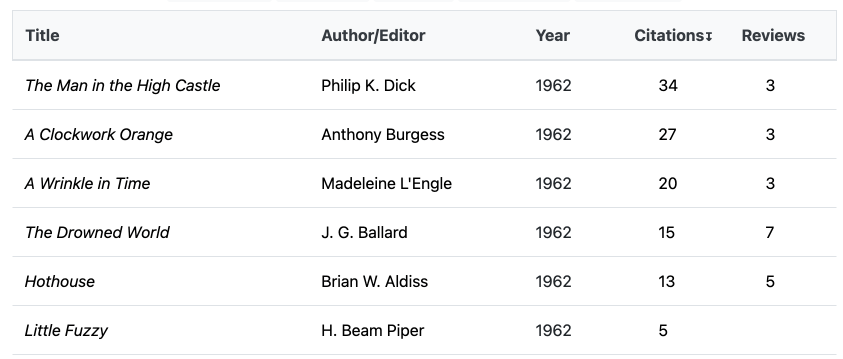
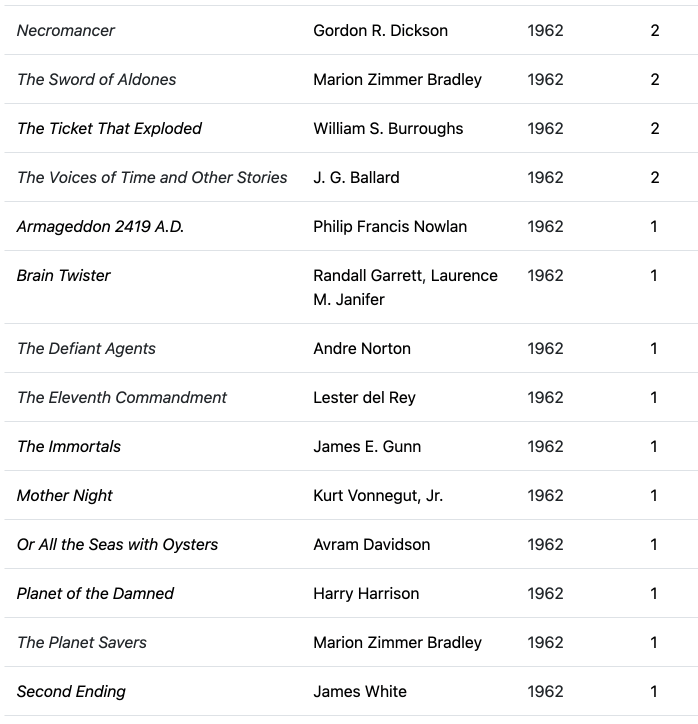
Look at the other top novels from 1962. I’d certainly recommend reading these better SF novels before The Red Planet.
But I’m not sure if The Red Planet is a significantly lesser read than these other SF novels from 1962.
I haven’t read Jake’s other eight SF books that he reviews. They are much harder to find. I’d probably have to spend $5-20 to acquire copies used, and I’m not going to do that right now. It’s a shame all old science fiction isn’t available as cheap ebooks or put into the public domain.
Why did so many Baby Boomers embrace science fiction back in the 1950s and 1960s? We were all playing Cowboys and Indians, wearing cowboy hats and shooting our cap pistols at each other, and watching westerns all the time on TV. Then we switched to space helmets and ray guns, and changed the channel to watch old 50s Sci-Fi flicks, The Jetsons, My Favorite Martian, and Lost in Space.
I can’t remember a time when I didn’t know about space and space travel. Nor can I remember my first exposure to rockets. My guess is it was from television. I remember my 4th-grade class listening to Alan Shepard’s 15-minute Mercury flight on Freedom 7 over the classroom’s PA system. That was May 5, 1961 (65 years ago). I assume I had seen movies or television shows with spaceships before that, but I have no memory. I watched The Twilight Zone before then, so it might have been on that show.
It seems like dinosaurs, spaceships, and robots have always been part of my conscious mind. Maybe Carl Jung was right about the collective unconscious. I knew about space travel before I learned about astronomy. And that doesn’t make sense, does it? How could I know about traveling in space before I knew what space was?
I do know that by 1962, I was reading Tom Swift, Jr. books. But I was also reading nonfiction books about NASA. We lived on base at Homestead Air Force Base, and I used the base library. The Moon and Mars were frequently mentioned in NASA’s goals, but this was before I started reading astronomy books. My young mind must have been told about the solar system in elementary school.
Concurrent with my discovery of science fiction in the mid-sixties were the flights of Project Mercury and Project Gemini. I slowly came to believe that science fiction was preparing me for the future. That was my rationale for reading science fiction. In reality, science fiction was my coping mechanism for a stressful childhood. By the time I learned what the term “science fiction” meant in 1964, I had attended at least seven different schools in four different states. The constant moving, as well as my parents’ marital problems and alcoholism, should have made my life miserable. But I loved those years because I loved science fiction.
During childhood and teen years, even into college, I really believed reading science fiction prepared readers for the future. Then, around 1975, I realized the futures I expected weren’t going to unfold, and reading science fiction was only entertainment. I gave up science fiction, got a real job, got married, and finished college. Then, in 1985, I returned to science fiction. I then treated it like an English major studying literary history. It was no longer about the future, but storytelling.
Any well-told story about any time or place, real or imaginary, can capture a reader’s attention. So the question becomes: Why do we read science fiction? It gets weird when you think about it. Why did we want to leave Earth? No sane person would want to live on the Moon or Mars, and you have to be tripping if you think Titan is a wonderful destination. Anything further is no more realistic than Oz or Narnia.
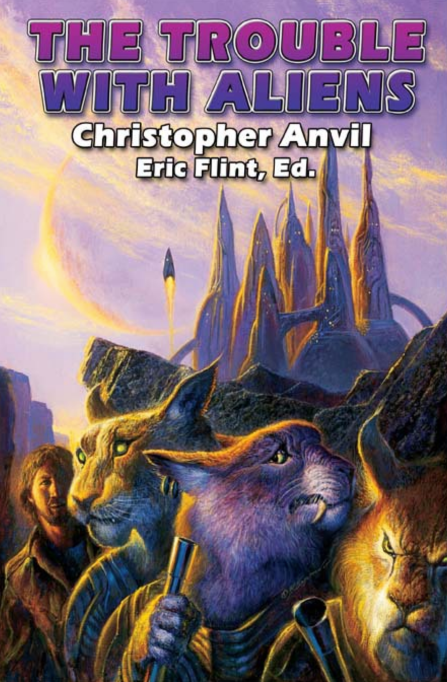
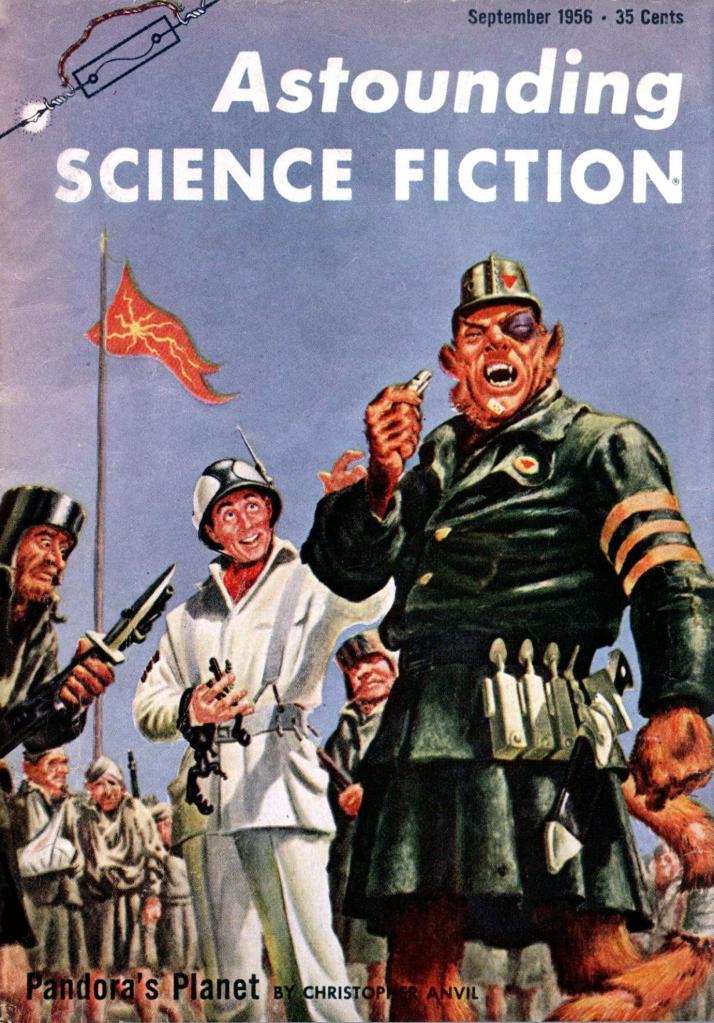
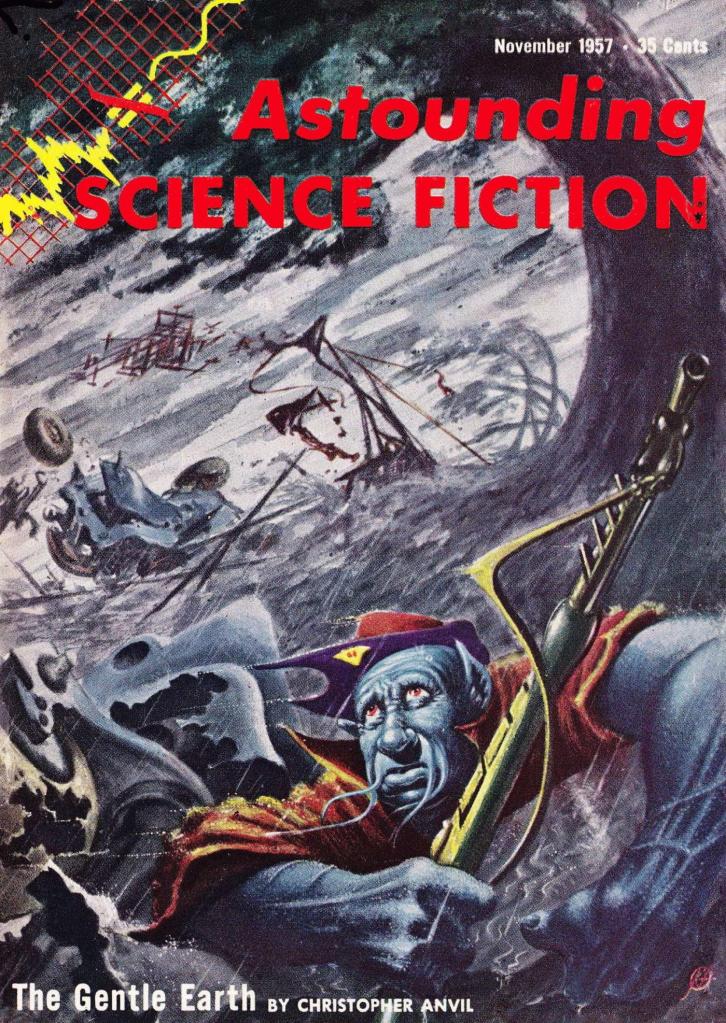
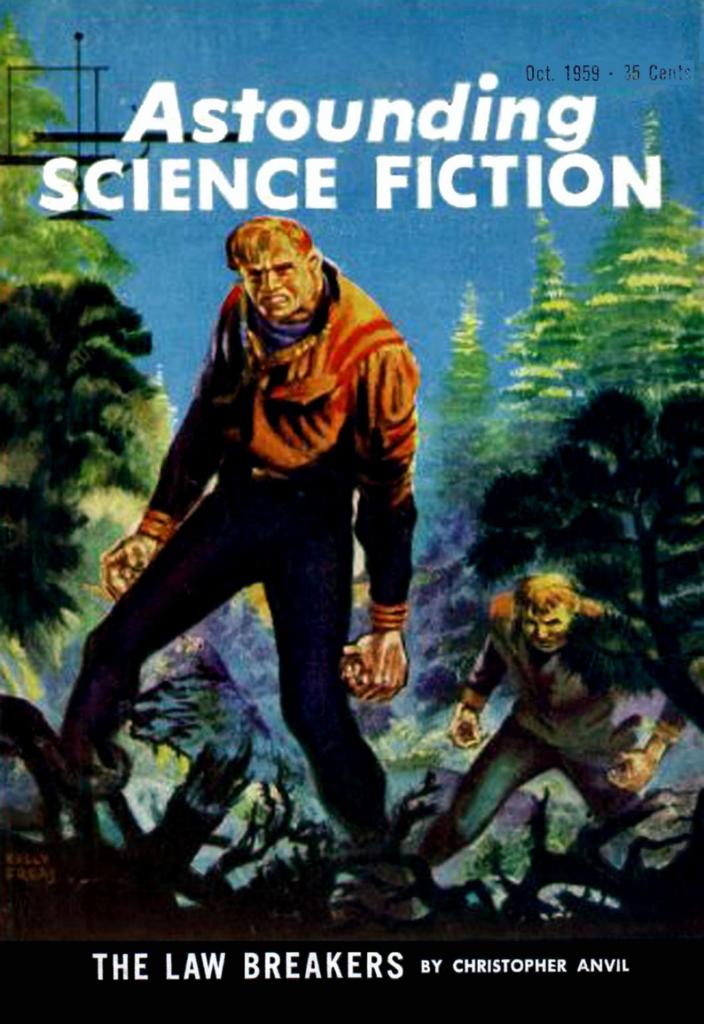
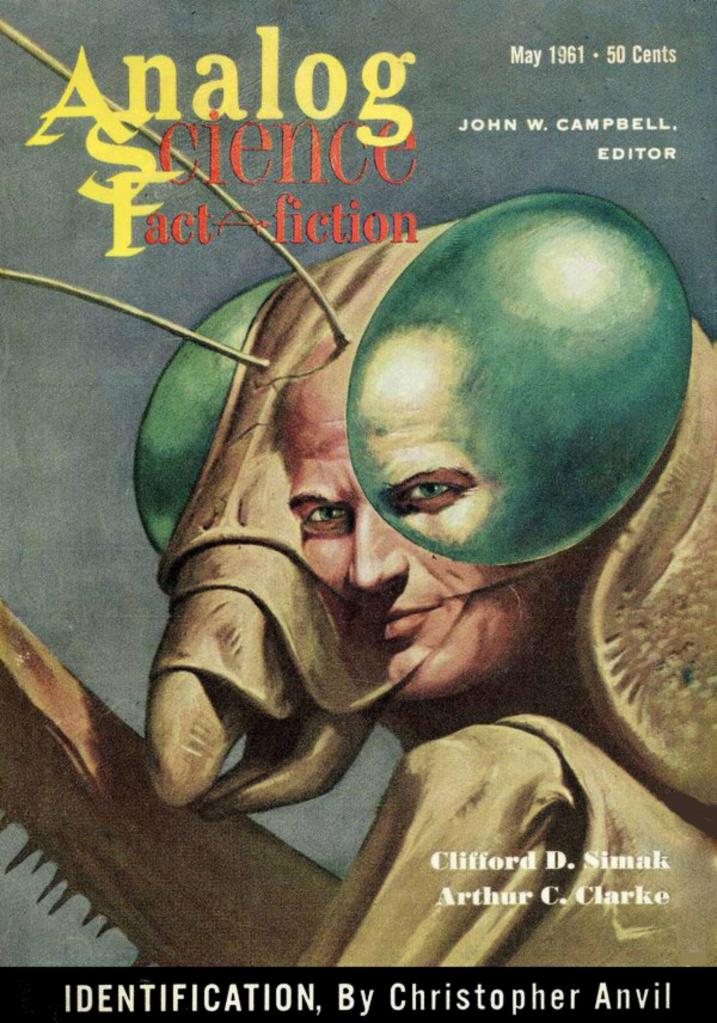
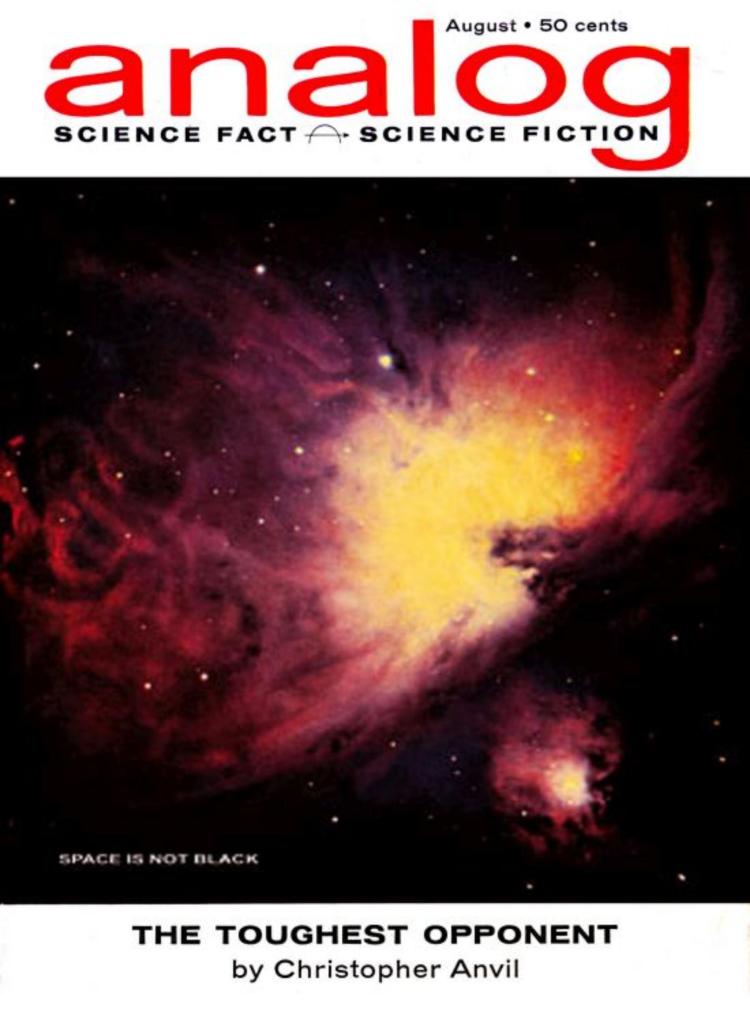
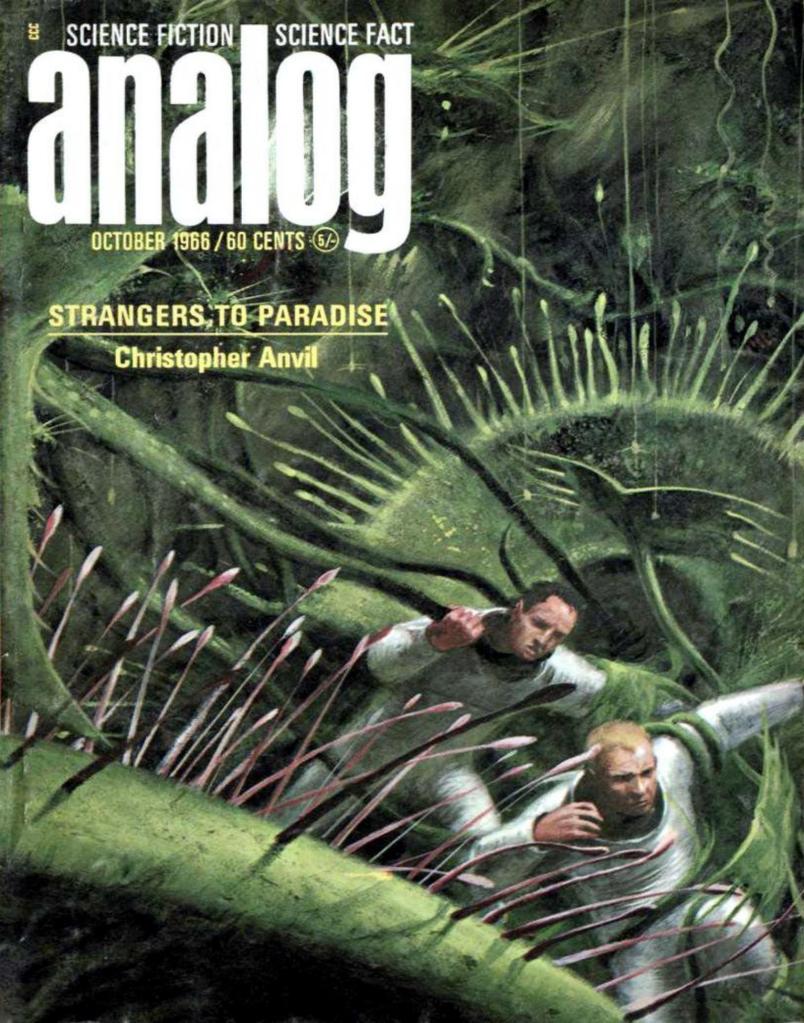
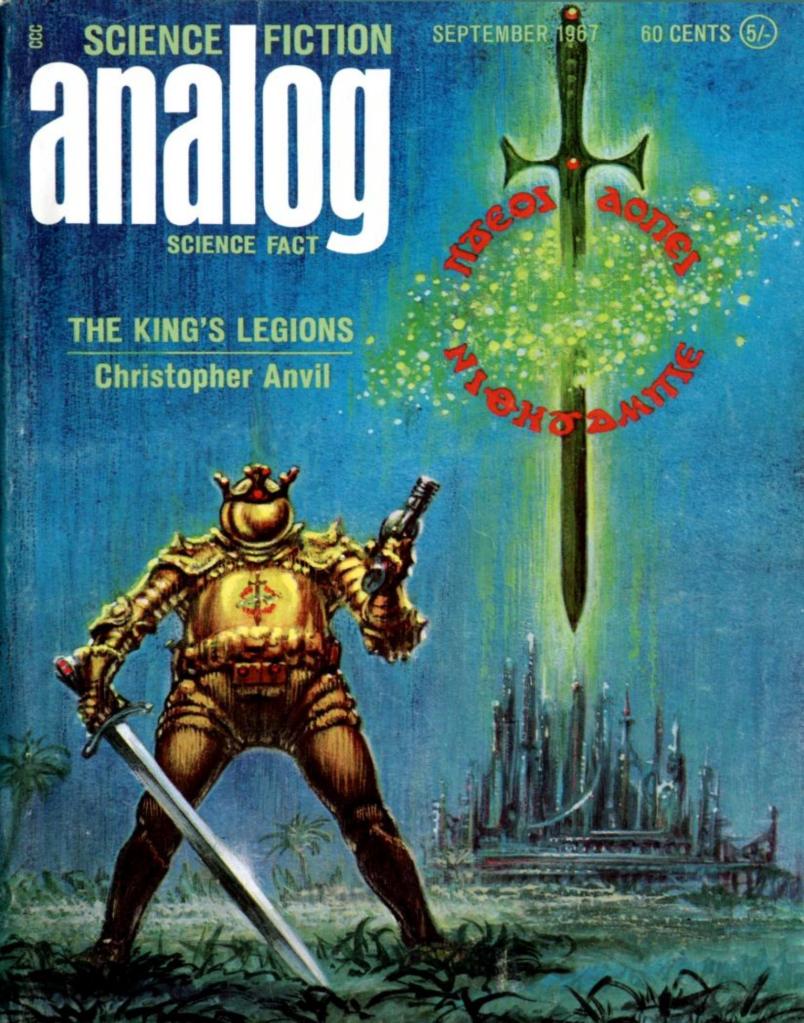
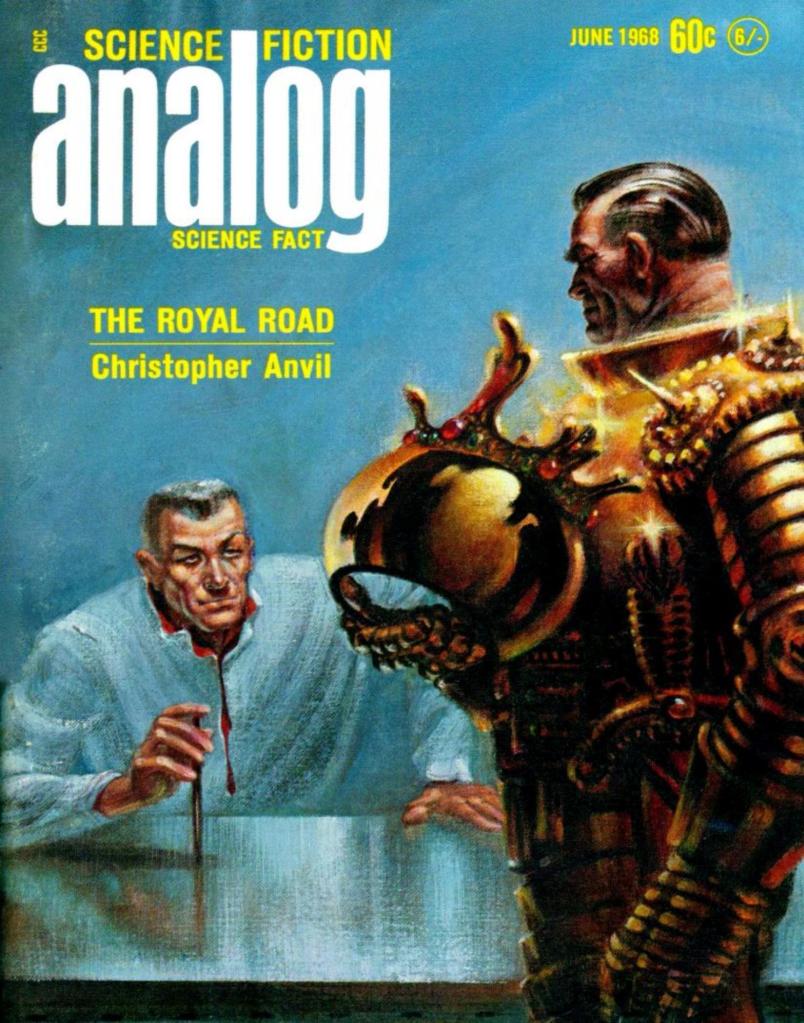
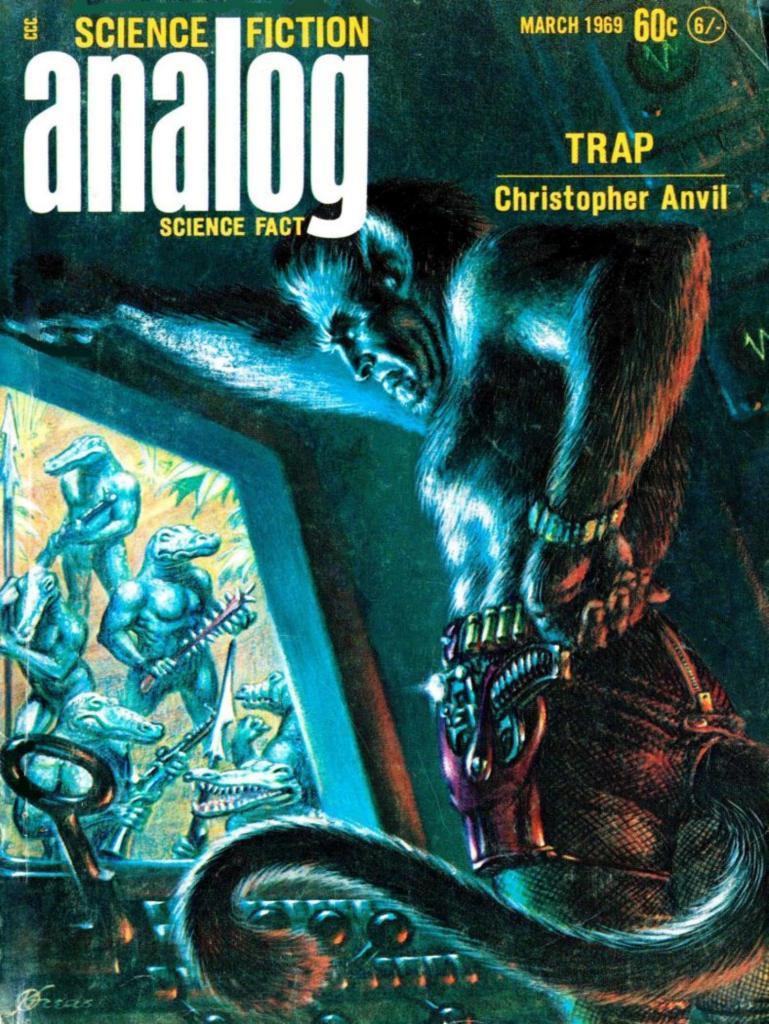
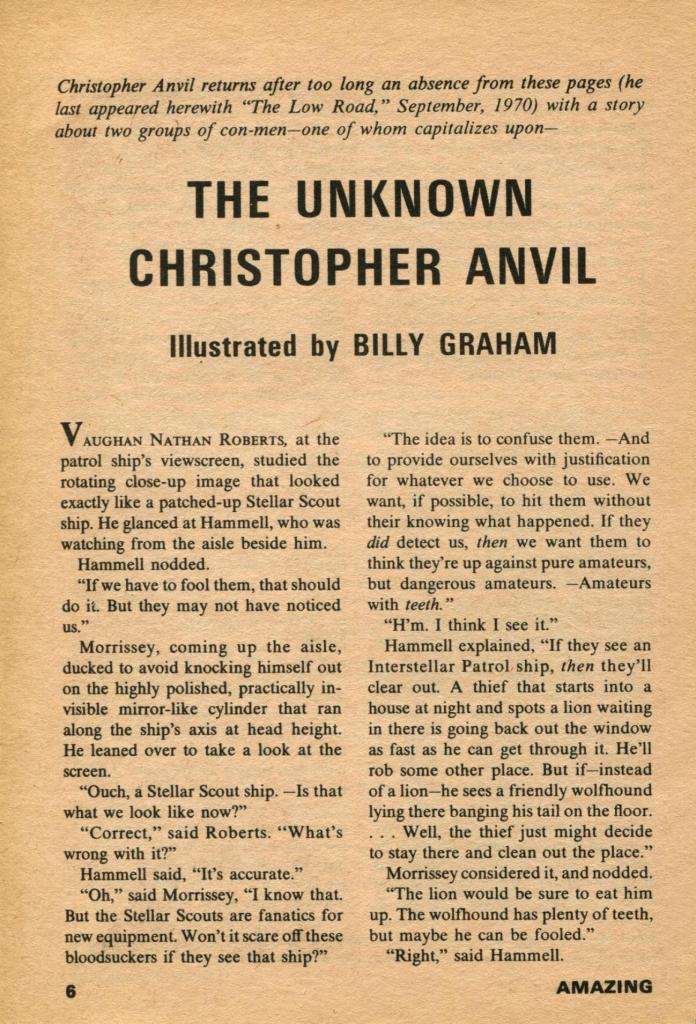
The question “Why am I reading science fiction?” struck me particularly hard recently, while reading stories by Christopher Anvil in The Trouble With Aliens. Christopher Anvil is a mostly forgotten science fiction writer who regularly sold short science fiction to John W. Campbell, Jr. for Astounding and Analog.
I’m enjoying the stories, but just barely. They just pass muster. I do enjoy them, but I’m enjoying them at the level of watching anything on television when you’re bored, and the show is just good enough not to change the channel. Anvil’s stories feel like I’m resonating with the archetypes of science fiction in my unconscious mind.
I keep asking myself: why don’t I read something better, something more rewarding, something that is cutting-edge? The stories are military science fiction, a sub-genre that I normally find boring. Reviewers don’t have much positive to say about Anvil, but they often praise him for his satire. Satire implies a target. Is the military Anvil’s target, or military science fiction? Anvil’s stories remind me a bit of Eric Frank Russell and Harry Harrison.
But are these stories really satire? Satire is usually driven by absurdity, and I don’t think Anvil believes his science fiction situations are absurd. I get the feeling Anvil is just trying to keep up with the other Astounding/Analog writers churning out what Campbell wants to buy and readers want to read.
Anvil’s stories epitomize how I once saw science fiction.
Anvil’s stories are entertaining enough that I look forward to returning to my audiobook. His stories aren’t great, but they are pleasant. I wonder if I’m using them to cope with getting old, like how I used science fiction to cope with adolescence?
I feel his stories touch what’s very basic about science fiction. If I could understand that, maybe I could understand why I started reading science fiction as a kid.
Anvil’s stories also remind me of Project Hail Mary, the bestselling novel by Andy Weir, which is also currently a hit movie. Weir’s appeal is that his stories are about solving problems, and that’s what Anvil focuses on too. However, Anvil’s prose is functional, but far from Weir’s level of entertaining.
I have to wonder if such escapist science fiction doesn’t function like dreaming at night. They might be a diversion for our consciousness when we want to turn off reality, and maybe symbolically play out some kind of existential purpose.
Baen Books has collected Anvil’s stories in several volumes, which they sometimes label the Complete Christopher Anvil. They are available in audiobook, which is my preferred format for consuming old science fiction.
John W. Campbell, Jr. frequently published Anvil stories, but he seldom made them the cover story. Anvil published two novels, according to ISFDB.org, although many of his short stories were republished as a few fix-up paperback novels. Overall, Anvil appears to have published over a hundred stories, and much of that work has been collected in eight volumes by Baen Books.
Back in the 1950s, science fiction imprinted on my mind, and I’ve been following it around like a little duckling ever since.
After gorging on science fiction short stories for several years, I’ve finally got my fill of science fiction. At 74, aging is catching up with me. I was reading 52 books a year, and regularly posting on two blogs: Auxiliary Memory and this one, Classics of Science Fiction. My reading has slowed to about a fourth of what it was, and so has my blogging.
I’ve decided to post all my essays to Auxiliary Memory and put Classics of Science Fiction on hold. If I happen to write about science fiction, I’ll post it there. I’d rather look somewhat productive on one blog, rather than unproductive on two.
Also, I hunger for different kinds of reading. We’re now living science fiction. Reading about what’s going on now seems further out than speculation about the future. With AI, robots, space travel, climate change, astronomy, renewable energy, and so many other fields, it feels like we’re approaching a perfect storm of change.
One video I recently watched suggested that the amount of change humanity experienced in the 250-year history of the United States is enough to kill a person from future shock. If George Washington time-traveled to 2026, they speculated he would die of future shock. The guy also speculated that to generate that much future shock by bringing someone from before 1776 to 1776 would require going back 13,000 years. I have no idea how they calculated that, but it sounds right from all my history book reading. I believe society is breaking down now because the amount of future shock one person experiences in a lifetime is approaching what Washington would have felt.
I’m switching from science fiction to nonfiction to comprehend that future shock. Here are the books I’ve bought and plan to review at Auxiliary Memory. It will take me some time. Like I said, I’m slowing down.
I Am A Strange Loop by Douglas Hofstadter
Abundance by Ezra Klein and Derek Thompson
Worldviews: An Introduction to the History of Philosophy of Science by Richard DeWitt
Why the World Doesn’t Make Sense by Steven Hagen
Self Comes to Mind: Constructing the Conscious Brain by Antonio Damasio
A World Appears: A Journey Into Consciousness by Michael Pollan
Improbable Destinies: Fate, Chance, and the Future of Evolution by Jonathan B. Losos
Emergence: The Connected Lives of Ants, Brains, Cities, and Software by Steven Johnson
Being You: A New Science of Consciousness by Anil Seth
Maps of Meaning: The Architecture of Belief by Jordan B. Peterson
The Molecule of More: How a Single Chemical in Your Brain Drives Love, Sex, and Creativity–And Will Determine the Fate of the Human Race by Daniel Z. Lieberman and Michael E. Long
Sensation: The New Science of Physical Intelligence by Thalma Lobel
An Immense World by Ed Yong (reread)
Incognito: The Secret Lives of the Brain by David Eagleman
Ways of Seeing by John Berger
Think Again: The Power of Knowing What You Don’t Know by Adam Grant
The Adapted Mind: Evolutionary Psychology and the Generation of Culture by Jerome H. Barlow, Leda Cosmides, and John Tooby
Thinking, Fast and Slow by Daniel Kahneman (reread)
Zen and the Art of Motorcycle Maintenance by Robert M. Pirsig (3rd reading)
The Gang of Three: Socrates, Plato, and Aristotle by Neel Burton
The Idea Machine by Joel J. Miller
Thinking in Systems: A Primer by Donella H. Meadows
Your Brain Is a Time Machine: The Neuroscience and Physics of Time by Dean Buonomano
This is far more ambitious than I’m capable of right now, but I’m going to try.
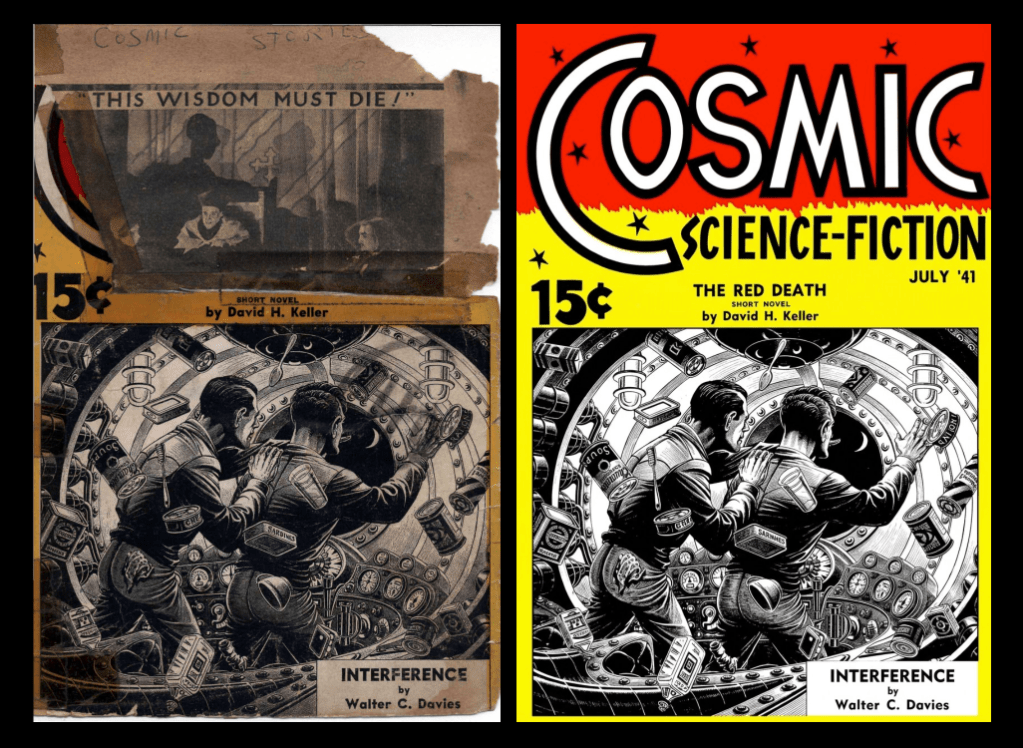
I’ve always loved the cover drawing on the July 1941 issue of Cosmic Science Fiction. Mainly, because it seems like an early image of what weightlessness might be like. However, the scan of that magazine has a torn, marked-up cover that’s discolored with age. I wanted to see what a mint condition copy would look like. So, I asked an AI, Gemini, to fix it for me. The results are above.
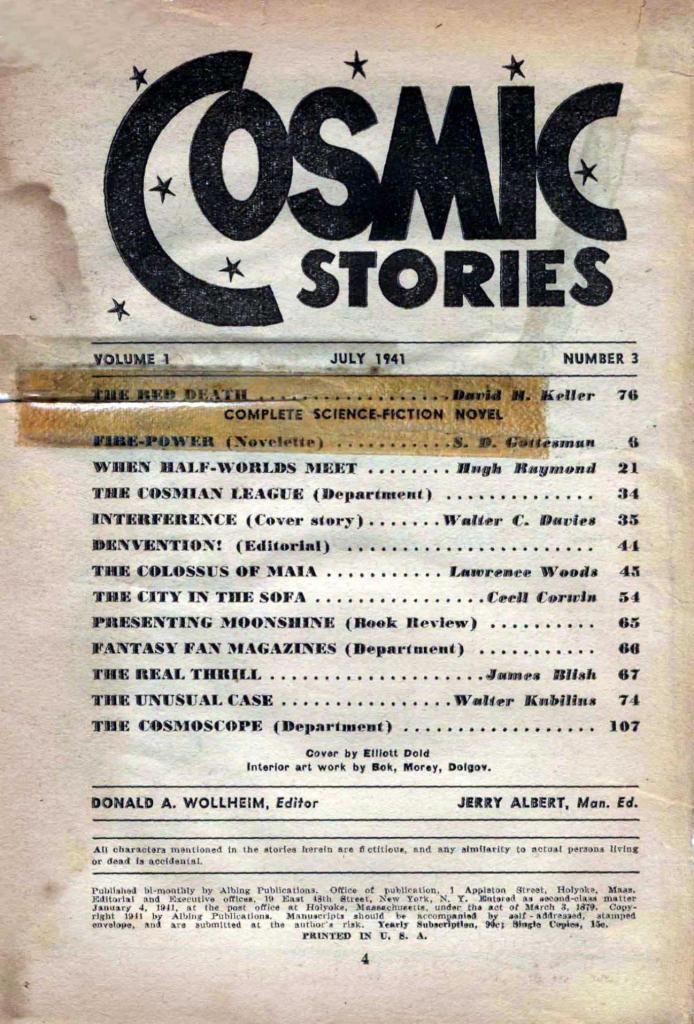
I then swapped out the new cover for the old in the .cbr file I had of the magazine. When I open that magazine in YACReader, I see the new cover, and it feels like I have a mint copy of the magazine – until I turn the page and see:
That brings me back to reality. I could get Gemini to fix that page, too.
However, is that what I really want? With the original scan of the torn copy, I felt like I was reading a beat-up old magazine. One that looked 85 years old. That was a certain kind of experience. But if I reprocessed the magazine, the reading experience would be different. I would like to think it would feel like I was reading a new copy just off the newsstand. It wouldn’t be true, though.
A perfectly cleaned-up copy would be too clean. It makes reading nicer, but it doesn’t give the sense that I’m holding a copy of a real magazine. The beat-up copy is still a scan, artificial, but it gives the illusion of reading a real magazine.
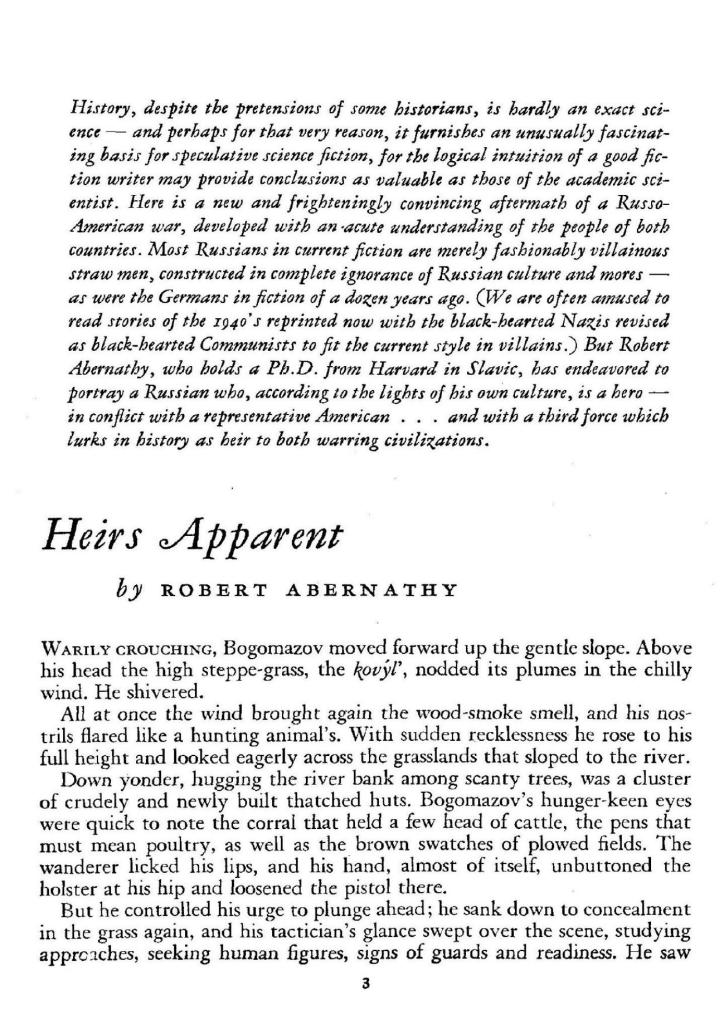
Some magazine scanners produce something in between an AI copy and a straight scan. Using Photoshop, they process each scanned page, lifting the content off and placing it back on top of a pseudo-paper image that gives the illusion of clean, new paper. They also use Photoshop to fix tears, erase markings, and zest up the colors on the covers. Making these magazine scans very nice to read, the artificial paper gives the illusion of fresh pulp paper and makes reading easier on the eyes. It turns out that a pure white background or a muddy grayscale is hard to read. But I find color scans of old browned pages easy to read, too.
Here are samples of various scanning types:
Black and White scan – producing pure white paper.
Color scan:
Sample with artificial paper:
I wonder what people in the future would like? Do they want a photo image from an old magazine, or would they prefer something easier to read? Recently, I read a story by H. G. Wells in scans of old issues of Pall Mall Magazine from 1898. The reading experience wasn’t great. I wanted to see the real thing, and I bought those issues in a bound volume. (I did this because I got it cheap.) My copy was in pretty good shape, but it did look old. However, the reading experience was far superior to reading the scans. But if I’m honest, if the scan I read had been cleaned up and easy to read, I might never have felt the desire to see the original magazine.
People can buy a replica of the July 1941 issue of Cosmic Science Fiction on Amazon. I see it’s not a perfect copy in the reading sample. I’m tempted to buy one to see what the reading experience is like. I think holding a physical copy, even a replica, would give a much different reading experience.
That makes me think that readers in the future might want a cleaned-up copy suitable for printing. Wouldn’t it be neat to have a machine that printed and bound replicas of books and magazines?
Right now, scanners scan old magazines for the aging population who still love them and want to keep reading them. Most of the world has forgotten these titles. But the scanners are also archiving these magazines for future libraries and researchers. And that makes me wonder what they want.
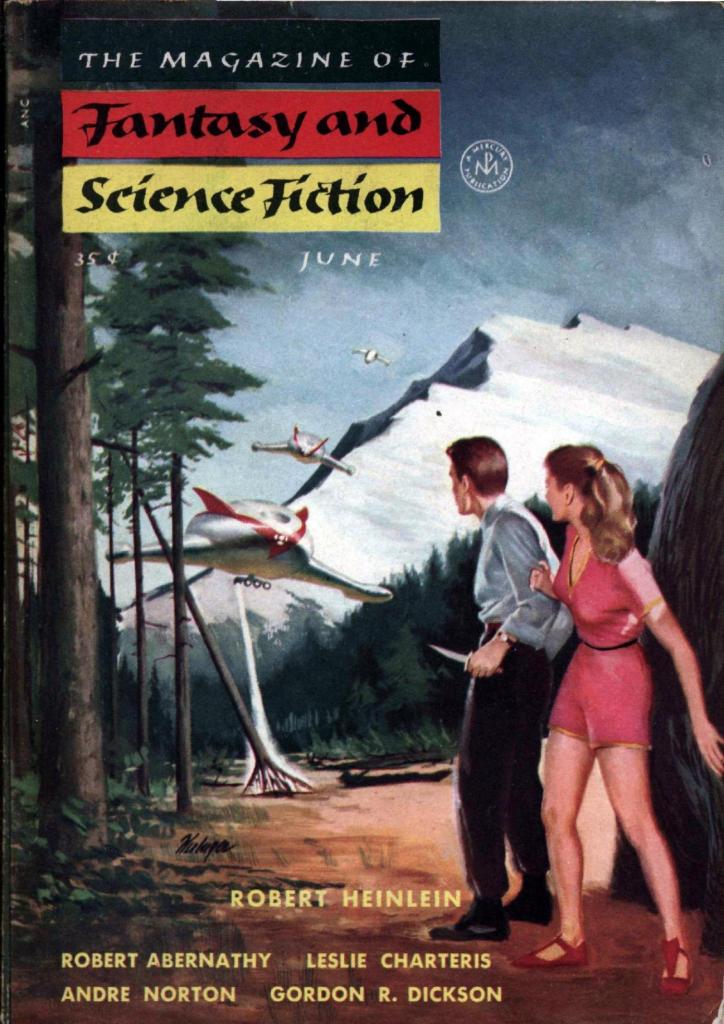
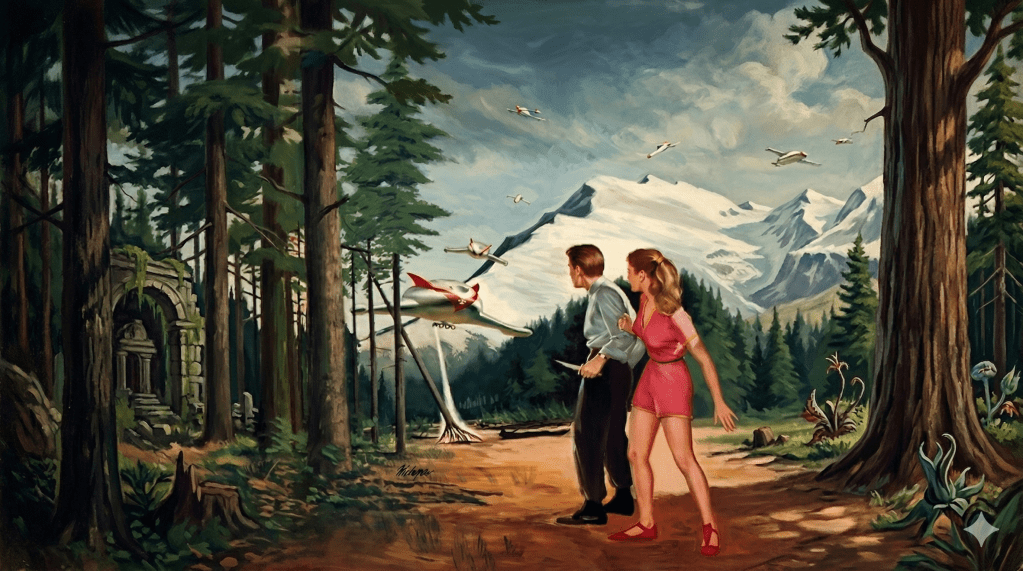
I’ve also been playing around with AI, having it make me 4K wallpapers for my computer from old science fiction magazine covers. The problem is that the paintings on the magazine covers are not usually the same aspect ratio as a 16:9 computer screen. I asked Gemini to create a new 4K image and fill out the painting using the same intent and style as the original artist.
Here’s an example:
I think Gemini did a good job, and it makes an impressive wallpaper, but is this fair to Fred Kirberger, the artist? Playing around with AI brings up a lot of issues.
I also used Gemini to sharpen the resolution of this painting by Hannes Bok. It makes a fantastic 4K wallpaper. Maybe I could have done the same thing myself if I had Photoshop skills. Sure, I’d love to own the original painting, but that will never happen. AI is letting me enjoy it every time I see my desktop.
I’m torn about using AI. I’m not sure we should support artificial intelligence. Using AI might make us mentally weaker. I could have reprocessed that cover myself using Photoshop. It would have forced me to learn new skills. Using Gemini is a kind of cheat, don’t you think? Of course, some people think using Photoshop is a cheat.
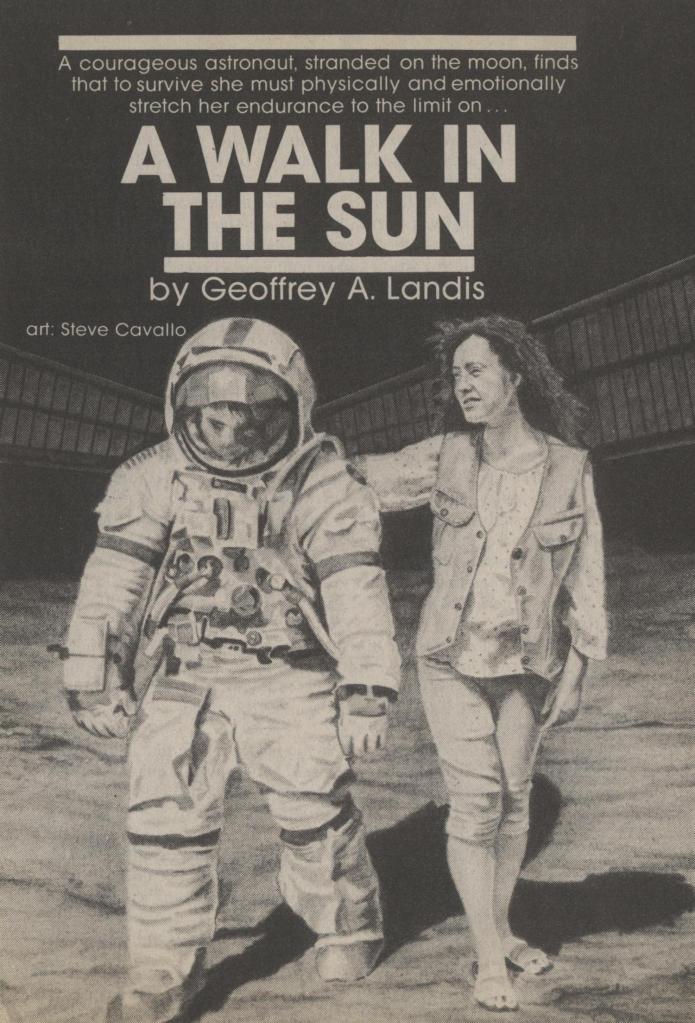
The Facebook group, Best Science Fiction and Fantasy Short Fiction, was discussing “A Walk in the Sun” by Geoffrey A. Landis. The group had read the story before, and my previous comment was: “Good sole survivor story that reminded me of Kip’s journey across the Moon in Have Spacesuit-Will Travel. Unfortunately, it’s way too unrealistic. I did catch the magnificent desolation reference.”
This time, when I read “A Walk in the Sun,” I found it harder to get into the story. Landis asks us to believe that an astronaut stranded on the Moon, waiting 30 days for a rescue mission, could walk entirely around the Moon. It’s certainly a sense-of-wonder idea, but on this reading, I spent too much time thinking about the realistic problems Patricia Jay Mulligan faced. The story is moving because of Patricia’s will to live, and her imagined conversation with her sister, Karen. Patricia only has a spacesuit and enough extra equipment to keep it going for 30 days. Landis tries to address all our objections to realism, but this time the story was just too unbelievable.
“A Walk in the Sun” is well-liked. The story first appeared in Asimov’s Science Fiction (October, 1991). It won a Hugo and came in first in a Locus annual Readers’ poll. It’s often reprinted. I don’t mean to pick on it, but it does serve as a useful example of when science fiction goes too far.
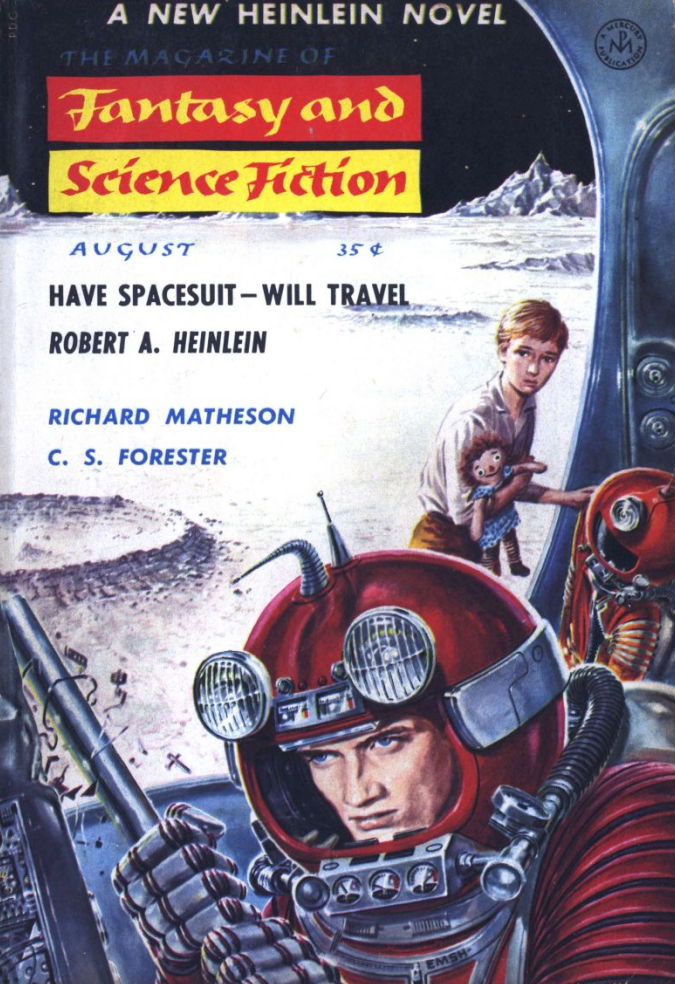
Now, going too far is relative. Science fiction explores a limited number of themes, and new writers often take an old theme and push it a bit further. While reading “A Walk in the Sun,” I thought of Have Spacesuit-Will Travel, where Kip and Peewee make a dash across the Moon’s surface only in spacesuits. It’s quite dramatic and realistic. At least, it’s always been realistic to me. Heinlein worked with a team designing pressure suits during WWII, and he wrote two books in which spacesuits were a significant part of the story. The other being Starship Troopers.
Have Spacesuit-Will Travel was first serialized in the August 1958 issue of The Magazine of Fantasy & Science Fiction. By 1958, real spacesuits were being designed and tested. I feel the science fiction from the 1950s tried much harder to stick to realistic speculation because writers knew manned rocket travel was just a few years off, and travel to the Moon wasn’t much farther.
However, Heinlein took science fiction too far in Have Spacesuit-Will Travel. By the end of the story, Kip and Peewee traveled to the Lesser Magellanic Clouds. Even though I dearly love Have Spacesuit-Will Travel and have reread it more than any other book, I do know that Heinlein was satirizing science fiction in it.
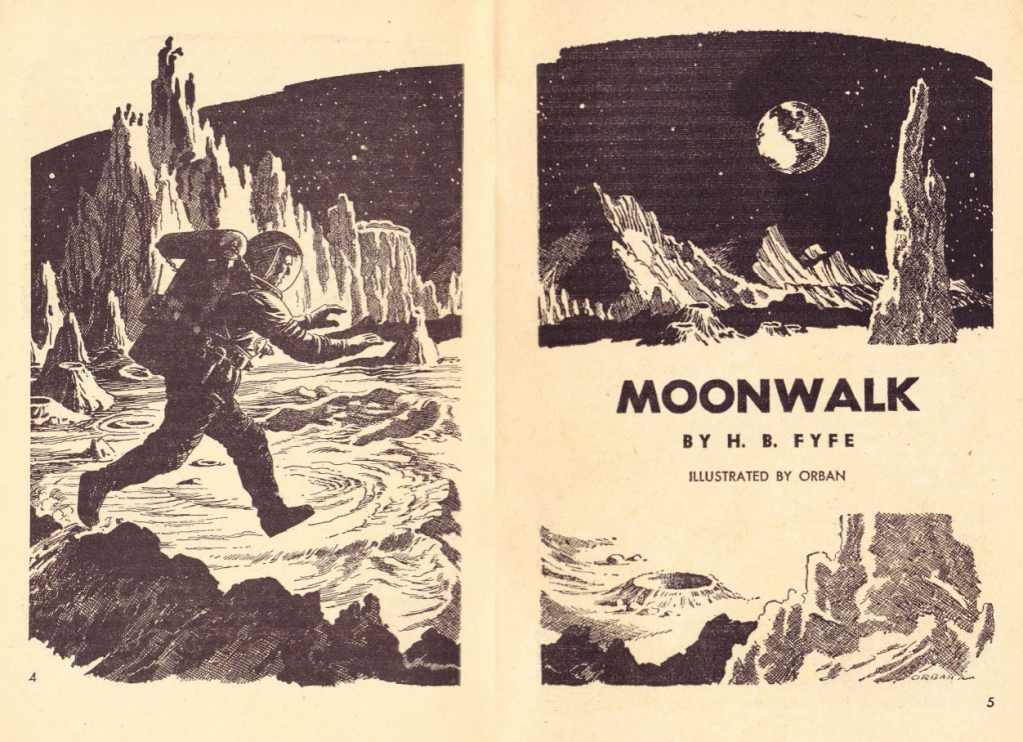
In one of the comments on this discussion of “A Walk in the Sun,” Frank Policastro mentioned H. B. Fyfe’s “Moonwalk” as a more realistic story. (Space Science Fiction, November 1952.)
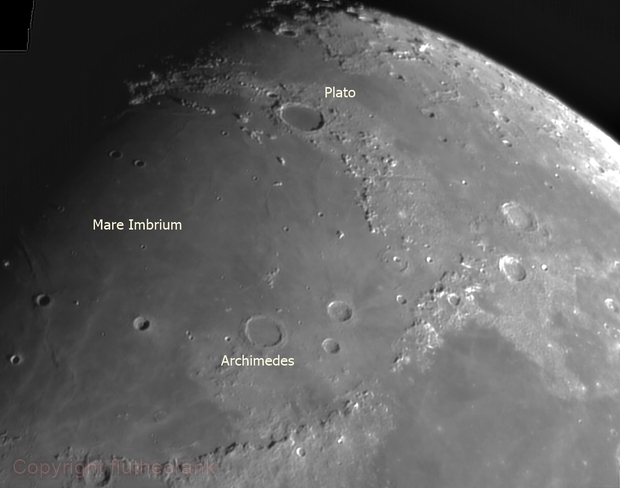
I loaded that issue on my iPad and read it. “Moonwalk” was indeed a much more realistic story about an astronaut walking across the lunar surface. I wondered if Heinlein had read it. Here was a case of science fiction not going too far. The story is about the first major scientific base on the Moon near the crater Archimedes. The base houses fifty people. It has two tractors that explore the surrounding area. They lose contact with Tractor Two, which was heading towards the crater Plato, and aren’t sure what to do. Radio is limited to line-of-sight. They figured something bad could have happened, or the tractor had gone behind the wall of a crater. They decide to wait.
However, Tractor Two has been destroyed in a landslide, but one astronaut, Hansen, has been thrown free. He has the air tanks of his suit, and one large oxygen tank from the tractor. Hansen decides to start walking back towards base, hundreds of miles away, figuring base will eventually assume something is wrong and send out Tractor One to rescue him.
It’s interesting to compare the descriptions of walking across the Moon by Fyfe, Heinlein, and Landis. Two writers were speculating, and one had the accounts of twelve American astronauts who walked on the Moon.
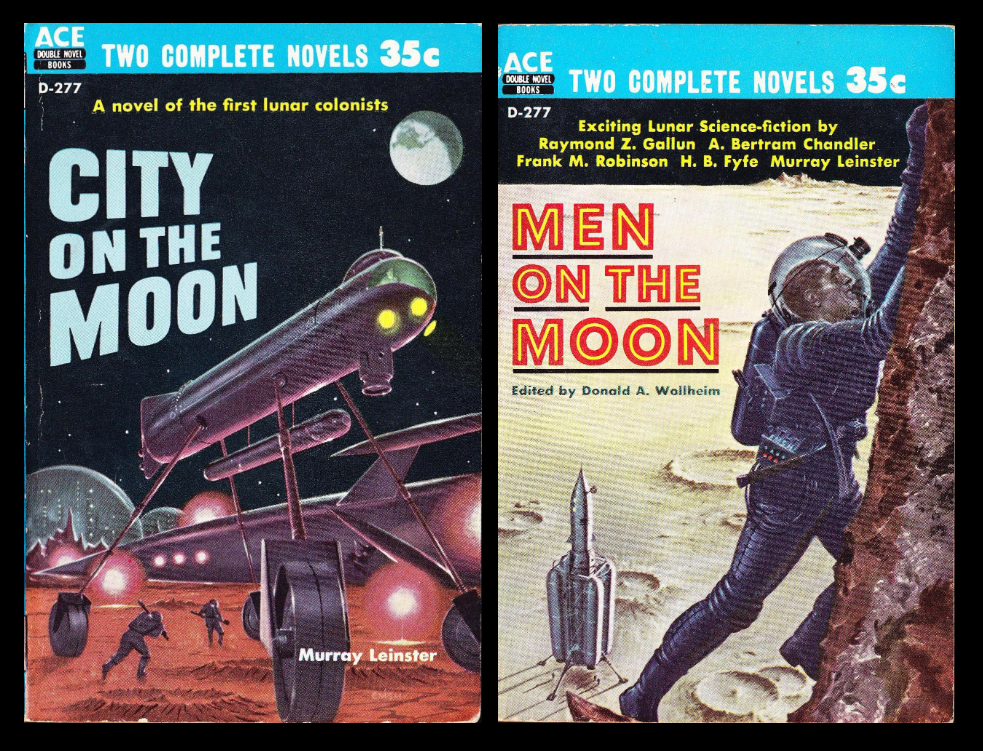
When I was younger, I enjoyed science fiction stories that went too far. In fact, the further out the better. Now that I’m older, I prefer science fiction that stays close to what might be real. This time around, I preferred “Moonwalk.” It was a basic adventure story, but I enjoyed how Fyfe imagined what it would be like working on the Moon. While researching “Moonwalk” on ISFDB.org, I came across an Ace Double.
“Moonwalk” was anthologized in Men on the Moon. I’m looking forward to reading it, but I started reading City on the Moon by Murray Leinster first. I haven’t been in the mood to read science fiction for months. I just got burned out. However, I’m enjoying all these 1950s stories about early explorers of the Moon. I’m enjoying them because they don’t go too far.
Except for odd alternative-history stories, we don’t get science fiction about early exploration of the Moon. We get a fair amount of science fiction about established lunar colonies, but for the most part, I think they gone too far. I believe establishing bases on the Moon will be extremely difficult, so there’s plenty of room for speculative fiction. Establishing self-sufficient lunar colonies will be next to impossible. Science fiction has seldom explored that territory. Most science fiction today about the Moon leaps too far ahead. I want to read the nitty-gritty of building the first bases and what it would take to make permanent colonies.
I think I’ll dig into the past and see how science fiction writers handled the subject who stayed close to reality. If you know of any, please let me know.
I accomplished a task last night that I’ve been hoping to finish for months. It made me exceedingly happy. My goal was to create a digital library of all my scanned pulp and digest science fiction magazines so they could be accessed from any of my computer devices. I have three computers (Windows, Mac, Linux), four tablets (two iOS, two Android), and an iPhone.
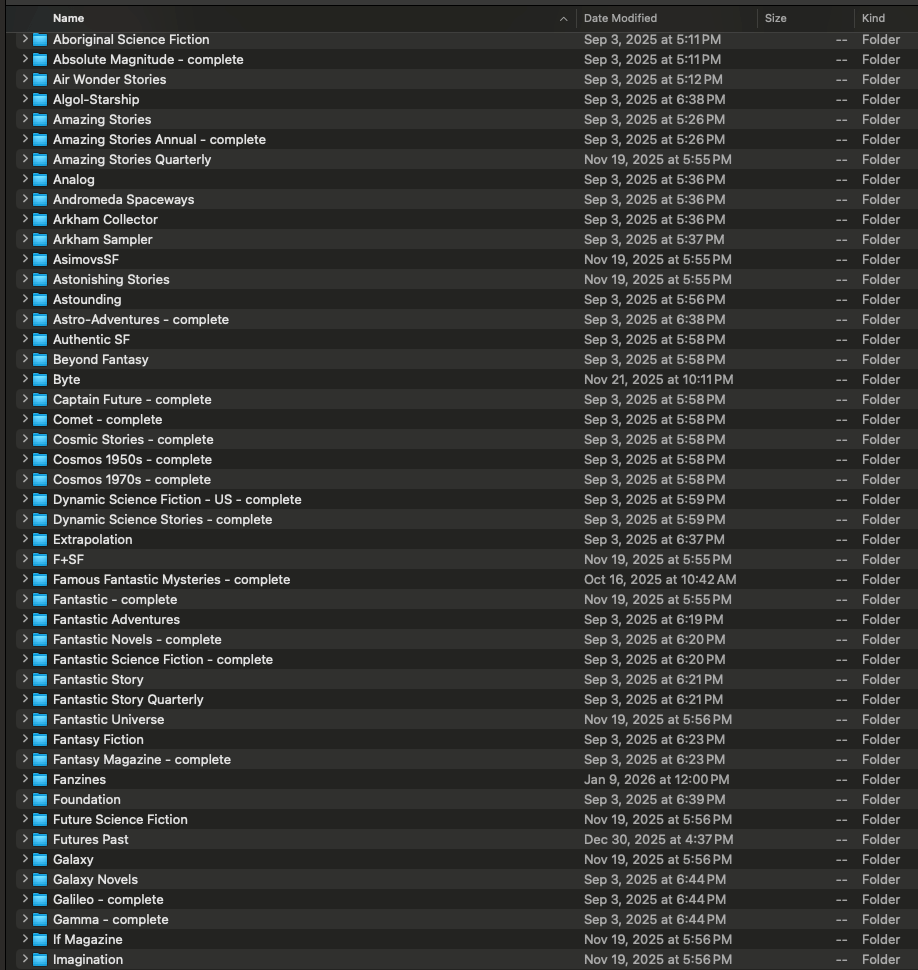
Last year, I bought a UGreen DXP2800 NAS. NAS stands for network-attached storage. Think of it as a big hard drive that all your computers can access. Over the years, I’ve collected scanned copies of nearly every science fiction magazine published in the 20th century. The Pulp Magazine Archive at the Internet Archive is a great place to search for them, but there are many others on the net. When I was young, I wanted to collect pulp magazines, but it’s not very practical unless you want to fill every room of your house with old magazines. I’ve known people who have. Even collecting digital copies is a pain because collecting them eventually overwhelms the latest big disk you’ve bought.
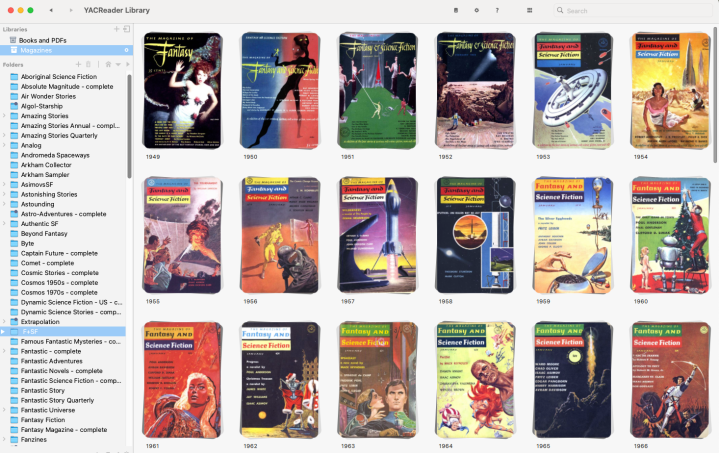
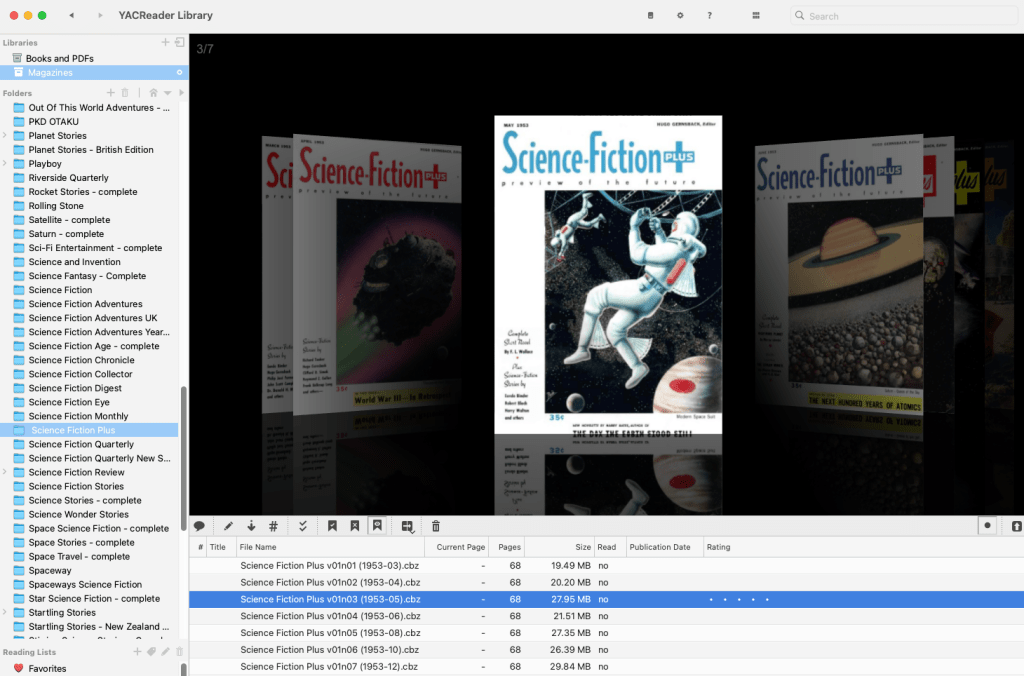
I have a librarian gene. I worked for six years in the periodicals department of a university library in my twenties. Pictured above is just the top portion of my magazine directory on the NAS. Here’s how I see the same directory with the YACReader Library:
Here’s what it looks like when I select a year.
YACReader is by far the best CBR/CBZ/PDF reader I’ve found. And combining it with the YACReader Library is by far the easiest way to get pulp magazines on my tablets.
I can sit at any of my computers and, within seconds, look up any magazine. My previous ease-of-use success was putting all my magazines on a microSD card and loading it onto my Android tablet.
This new method is great when I’m researching an essay for this blog. I often use ISFDB.org or Wikipedia to look up a detail about an old story, and it will mention a magazine. Or I can be in my La-Z-Boy using a tablet and find a story to read. I can even be on my phone and look up a detail. YACReader runs on all my devices. YACReader users can access files via several networking methods or from several major cloud providers. However, there is also the YACReader Library. On a single-user machine, it’s just a nice graphical interface for looking at magazine covers. However, it offers a port for remote clients.
I wanted to put the YACReaderLibrary Server on my UGreen NAS, but after weeks of agonizing over how to set it up with Docker, I gave up. (I don’t know Docker or Linux well enough.) YACReader and the YACReader Library were a breeze to install on a Mac. Since I leave my Mac on all the time, I decided it was just simpler to install YACReaderLibrary on my Mac. Everything worked perfectly. I quickly went through all my devices, making sure they could access my magazine library — and I could.
You know that old saying, “Be careful what you wish for?” I woke up this morning anxious to play with my new system, and a revelation came to me. I had created the perfect system for reading, researching, and writing about 20th-century science fiction, but at 74, do I still need all that science fiction?
I could just pig out on sci-fi. The best analogy I can think of is to picture yourself in a beautiful bakery, looking at all the cases of cookies, cakes, and pies. You’d want to eat everything. And you might be willing to spend every bill in your wallet. But how many sweets should you actually take home? How many should you eat each day? I know my younger self could have spent 24/7 inside my new library.
This morning, I feel like Henry Bemis, when he was organizing piles of books he planned to read for each month of the rest of his life. I have enough science fiction for every minute I have left to live.
However, if we labeled reading science fiction on a pyramid diagram of healthy reading, where would it sit? Would it be an essential life-affirming activity shown as a large solid base, ot would it be an occasional sweet, illustrated as a tiny tip at the top of the pyramid?
When I watch the news, it makes me feel like withdrawing from the world to read science fiction and watch the old TV shows I’ve collected on my Jellyfin server. I confess, I’ve spent most of my life escaping into fiction — either by reading or watching. That troubles me. In old age, I wish I had been more active in my youth, when I had the energy. I wish I had created things, rather than consuming them. It’s too late to change my spots now.
Science fiction was my artificial reality.
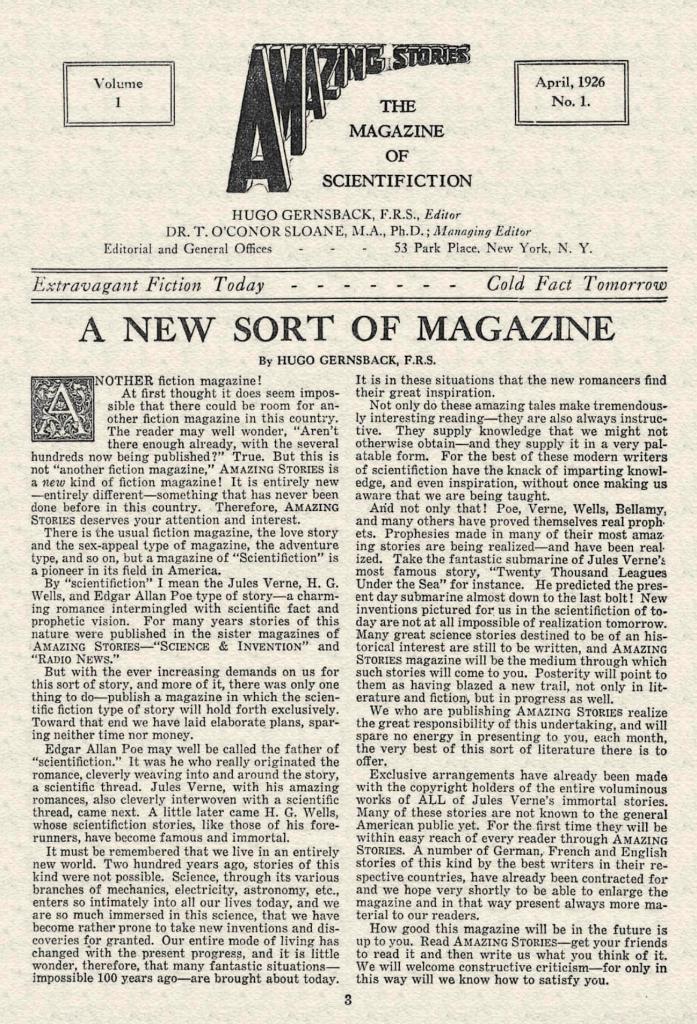
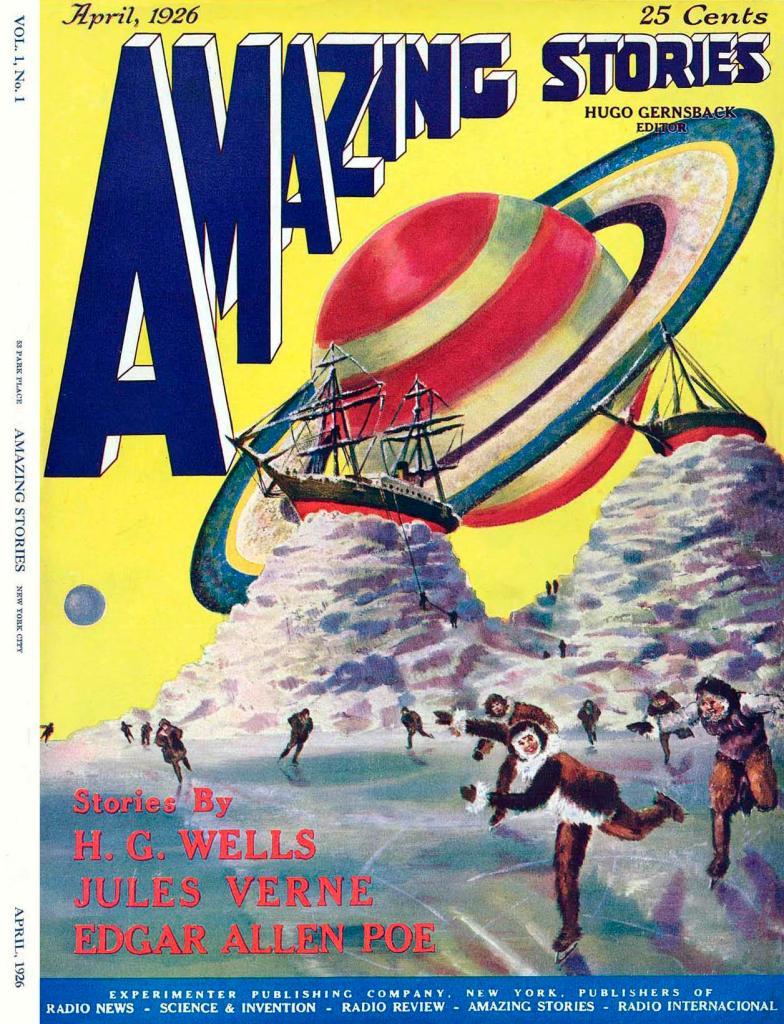
Science fiction, as a genre, began one hundred years ago when Hugo Gernsback published the April 1926 issue of Amazing Stories. There is an alternate reality in these magazines that I prefer over actual reality. I get a big kick out of having this reality at my fingertips. My computers are like a time machine; I can jump to any location in its space and time.
I’ve collected enough. Now that I’m old, and real reality presses in, I mostly read about here and now. My fiction addiction is wearing off. But I can’t give it up completely. It’s strange, but there are moments during the day when I just dip into an old science fiction magazine for a few minutes, and my science fiction craving is satiated.
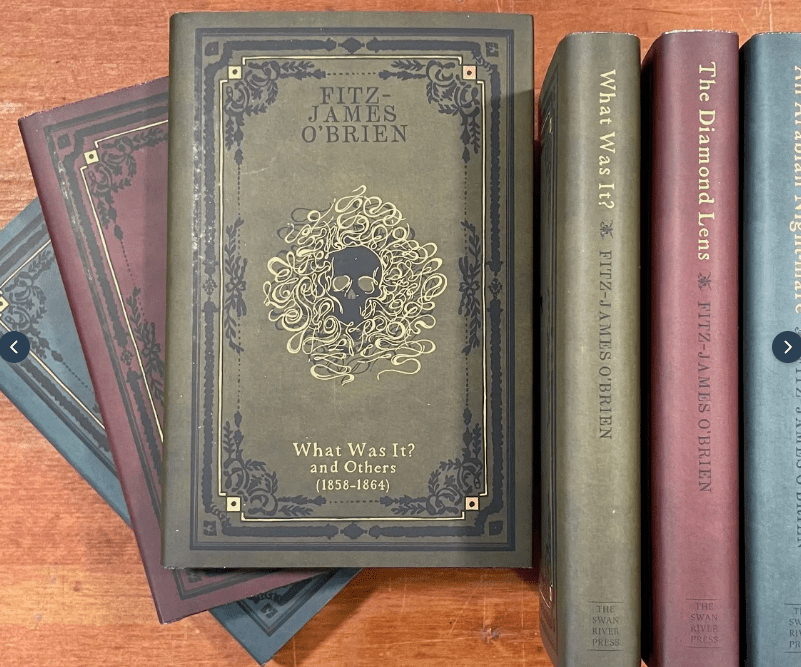
This morning, I read an email from a discussion group that mentioned Fitz-James O’Brien (1826-1862). You can sample his fiction at Project Gutenberg.
One member posted a link to a review of a new three-volume collection of his stories at The New York Review of Books. The review implied that O’Brien is little known, but several folks in the group quickly claimed they knew who he was. But that’s logical, our group is devoted to fiction in old magazines. I’ve even read some of O’Brien’s stories because they show up in science fiction anthologies, and I collect those. (See my post on 19th Century Science Fiction Short Stories.)
But this got me to thinking. How many people would know who Fitz-James O’Brien and read any of his stories? Then I asked myself, how many people read short stories? And of those, how many read old short stories? It’s one thing to read the short story in the latest issue of The New Yorker, and it’s another thing to read short stories originally published in the 19th century. Yes, some people still read Edgar Allan Poe, but how many outside of school?
I’ve always been a fan of science fiction magazines. When I was young, some of the top titles had over 100,000 subscribers. Over my lifetime, I’ve watched their subscriber base dwindle to well below 10,000.
It appears the three-volume Collective Speculative Works by Fitz-James O’Brien will be limited to 300 copies. Does that mean the publisher thinks fewer than 300 people in the world are interested in reading O’Brien’s stories? Or that some kind of marketable ploy? I don’t know. 300 is 0.0000036% of the world’s population. That’s one tiny subculture!
Almost half of the respondents haven’t read any books in over a year: 48.5%
Print books were the most read books: 35.4%
The 65+ age group recorded the highest population of print book readers: 45.1%
The 45-54 age group contains the highest population of non-readers: 60.9%
Males recorded a slightly higher population of non-readers compared to females: 51.4%
The article reported that the Pew Research Center found that 64% of Americans read at least one book in the previous year. That’s a lot more than I expected, and it disagrees with their own poll.
This suggests there are many kinds of readers, and that made me speculate about possible names to give different types of readers. I’m not very good at creating fun labels, but here’s my lame attempt.
Non-readers (0 books per year)
Casual readers (1-11 books per year)
Steady readers (read a book a month)
Bookworms (read a book a week)
Super Bookworms (read two or more books a week)
This doesn’t say anything about the kinds of books they read. Someone who reads over a hundred books a year might never encounter the name Fitz-James O’Brien. In one of my older essays, I speculated that the average reader could not list more than one hundred titles from novels from the 19th century. And I listed the hundred I thought would be the most common. I doubt most people would come even close to recalling one hundred titles from the 19th century.
Outside of people I know in my discussion groups that specialize in old fiction, I doubt I have ever met anyone in my life who has read a story by Fitz-James O’Brien.
What possible name could we give to people who do? Bookworm is the tag that most people give to obsessive readers. But for every 1,000 bookworms, is there even one who reads old short stories from the 19th century? I know a fair number of people like me who love science fiction short stories from the 20th century, and I also know a smaller group who love short stories published in pulp magazines (mainly from 1900 to 1950). But how many people are we talking about? I asked CoPilot, and it estimates that the number is below 20,000 for people who read and collect old pulp fiction. That’s .0059% of the current U.S. population.
Would the word aficionado apply here? Here are some other words that CoPilot helped me find. Maybe we could use each for a different type of reader.
Aficionado
Enthusiast
Devotee
Connoisseur
Curator
Archivist
Bibliophile
Esotericist
Antiquarian
Obscurist
Archaeologist
We could use all these words to describe someone who would buy Collective Speculative Works by Fitz-James O’Brien.
At one time, I would have ordered this set. However, I’ve now reached an age where I’m trying to get rid of books rather than collect. But that set does call to me. Actually, what I would really like is digital scans of the periodicals where his stories were first published. I’ve collected scans of most science fiction magazines from the 20th century, but have next to nothing from the 19th century on my hard drive.
How many people are like me who love reading old magazines?
I’m sure it’s less than .006% of the population. What nickname would you give to such people? My wife would probably say, “A nut.”