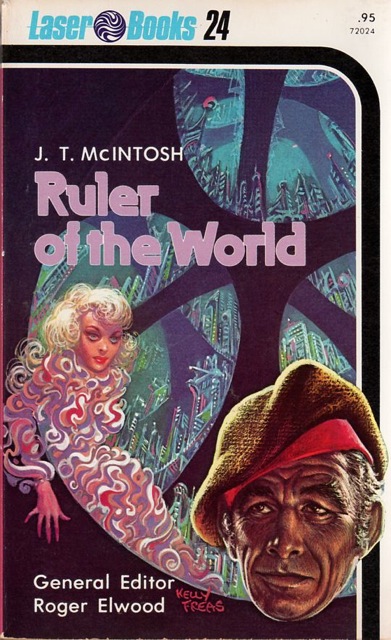
I’m ashamed to admit that I wasted my time reading this book. Let’s hope I can find something insightful to say about the experience. I confess I have a lifelong addiction to fiction. Even though years of studying consciousness, philosophy, and spirituality have shown me wiser pursuits for my time on Earth, I still prefer to escape into fiction. I should at least read the highest quality fiction, books I could justify in some way, but I seldom do. Why?
When I say I’m addicted to fiction, I mainly mean novels, movies, and television. At 74, I regret spending so much time mass-consuming fiction. Sometimes I wish I could give up fiction completely. Other times, I dream of becoming disciplined and only reading and watching the very best fiction. Despite my best efforts, my reading habits are like a pinball machine, where I careen around the board, bouncing off great books and bad books with little control.
Unfortunately, I’m fascinated by all aspects of literary science fiction. Oddly, I’m somewhat indifferent to movie and TV science fiction. I justify reading crappy science fiction by rationalizing that I’m researching the genre’s history. I have a theory about that. Everyone specializes. I’ve got 65 years of experience reading science fiction, and I can’t walk away from that. I’m too old to become a newbie in another area.
Laser Books was Harlequin Books’ foray into publishing science fiction from 1975 to 1977. Harlequin used its famous formula for publishing crappy romance novels to sell science fiction. They churned out 57 titles, all with similarly styled Kelly Freas covers. The books were short, and they published mostly first or second novels by new authors, and in the case of J. T. McIntosh, a work from his decline years. A bunch of these Laser Books showed up at my Friends of the Library bookstore. I bought Ruler of the World by J. T. McIntosh to try one out. I picked it because I had read McIntosh’s One in Three Hundred, and liked it.
I’m going to write a lot of words about a book I don’t recommend you read, and it’s doubtful you’ll ever see it at a used bookstore. Although if you’re willing to waste $9, you can pick up a used copy online. Many of his novels are available for the Kindle, and many of those you can read for free if you’re a Kindle Unlimited subscriber. However, Ruler of the World isn’t one of them.
I must admit, I’m intrigued by Scottish writer J. T. McIntosh. He had three hardback SF novels published in the early 1950s by Doubleday. Personally, I consider the 1950s to be the true Golden Age of Science Fiction. Wikipedia lists 24 novels by McIntosh, many from the 1950s, but it also says his later work is mediocre and was published by third-rate paperback publishers.
I have several ways to rationalize reading mediocre books, but are they valid? Of course, we’re living in a time when people lament that young people don’t read books, as if reading books were a virtue, but I worry that I read so much that I’ve made it a vice.
Just before I read Ruler of the World, I read Whistler by Ann Patchett. That novel is excellent. It’s quite compelling and beautiful. As soon as I started the McIntosh novel, I knew it was crap. So, why did I keep reading? I can give you two conscious reasons. One, I’ve been having fun looking for good science fiction among forgotten books. Since I had tremendous success with Dark World by Daniel F. Galouye, I was trying another.
And second, McIntosh offered a mystery. In his story, humans have colonized the galaxy, and Earth is a mostly forgotten planet. Ram Burrell, a thief and rogue, hears about Earth and decides to go there. Even more intriguing is that Earth limits galactic visitors to 500 at a time. And those visitors are restricted to seven tourist destinations: Malta, Cuba, Shetland, Hawaii, the Sahara, Russia, and Tibet. Weirdly, when tourists arrive at the Sahara, they are given the choice to visit Bagdad, Babylon, Lake Chad, and Timbuktu, all within easy driving distance. We know that’s impossible. Tourists are also told that they are forbidden to interact with normal Earth people. That’s a mildly intriguing setup.
Ram Burrell is a repellent protagonist. He punches innocent people, throws waiters out of windows, and expects every woman he desires to have sex with him. McIntosh implies that Burrell is so alluring to women that they comply even when they really don’t want to. He partners with the one woman able to refuse his advances, Roberta Murdock. Ram is 44, and Roberta is 22. That’s kind of skeezy too. At one point, Ram and Roberta are on the run, Roberta has been knocked unconscious, and two married women offer to help. When Ram gets one of the women alone, he makes a pass at her; she initially refuses, but then gives in. Later, when her husband goes to get the police, Roberta asks Ram why he risked their escape to have sex with a woman who was sheltering them. Ram says he hadn’t had sex in a while and needed it.
To give McIntosh another chance, I’m reading The Fittest from 1953. The novel parallels Ruler of the World, where the protagonist is an alpha male who partners with a 22-year-old girl. This time the guy is under 30. I think McIntosh was 28 when the novel was published, and 50 when Ruler was published. Is his protagonist a stand-in for himself? And the girl character, his idealized woman?
I wondered what McIntosh was intending for his character. Did he want Ram Burrell to be like James Bond? Later, when I read that Laser Books was owned by Harlequin, I wondered if they demanded a certain amount of sex. I’ve read that some forms of romance novels feature sex where women are “taken.” But then I read Harlequin’s rules for science fiction, which included a ban on explicit sex. Whenever Burrell stops to have sex, we’re told, not shown. And what’s the point of having so many scenes where Roberta avoids Ram’s advances? Is that another romance trope?
I bring all this up to explain possible justifications for reading old, forgotten books. What is this one saying about the gender roles of 1975? Or the fantasy expectations of men? Even though McIntosh portrays future men and women as unfettered by 1975 morality, his heroine, Roberta, seems to be holding out for marriage. Isn’t that weird? I assume modern female readers will despise this novel.
Wikipedia’s report on Laser Books isn’t flattering. Evidently, they were written to specification, and the editors often rewrote them or hired other writers to rewrite them. Piers Anthony even had a co-writer forced on him who got shared credit. Also, readers and reviewers disliked these books. So why am I reading one? I sort of feel like one of those women Burrell seduces – I really didn’t want to read this book, but I read it, anyway.
I’m also reminded of another book, A World Appears by Michael Pollan. I finished it just before Whistler. In the last chapter, Pollan describes meditating for days while living in a kind of cave. The whole point of this exercise is to experience quiet, abandon the mental chatter, and reach a state of pure existence where he sweeps the floor and chops wood. To a Zen Buddhist, our thoughts keep us from honestly interacting with reality. I’m afraid I feed my internal chatter books like shoveling coal into an old steam engine.
Ever since ChatGPT came out, I’ve realized that part of my brain works like a large language model (LLM). I continuously consume text to train my inner LLM. But as we’ve seen with AI, many produce poor output because they were trained on unreliable text.
If a subset of our minds is like LLMs, unconsciously generating thoughts, then we should do everything we can to control what it trains on. Or, if we allow it to train on bad content, we should annotate and explain it, so it won’t spew out later.
Consuming fiction, whether great or crappy, only adds to our mental chatter. Most of us are addicted to fiction. Now we can come up with reasons, even good reasons, why we substitute reality with fiction. Can we ever justify consuming bad fiction? After Whistler, which was extremely high-quality fiction, consuming Ruler of the World provided a revealing contrast. Like Burrell needing sex, I believe our minds crave fiction because we don’t want to face reality.
Many advocates of reading want young people to read books to become more empathetic. As we’ve learned from AI training on the internet, they become racist, mean-spirited, and hateful. Young men reading Ruler of the World are not going to develop any empathy for women. I know Republicans are hell-bent on removing DEI initiatives from society. How are readers training their internal LLMs going to know what is good and bad about characters if society doesn’t give them guidelines? I’m not sure just reading modern woke novels will do the trick.
There is no indication within Ruler of the World that Ram Burrell is a complete asshole. Ram is a grab them by the pussy kind of guy, who believes making money any way you can get away with is the goal. I think this is a terrible novel, but I’m not sure it wouldn’t be popular with today’s young men on the radical right.
This morning I watched an interesting YouTube video. It’s titled “The Book That Predicted the Destruction of Society – Analyzing The Catcher in the Rye.”
Hilary Layne, the channel’s host, divides her discussion into “observing books” and “dystopian books.” I like that distinction.
Observing books differ from dystopian stories. Books like 1984 and Brave New World are offering warnings about what current society could become if left uncorrected. Observing books offer no warnings; they are the bare-faced truth about what was happening in their times, and to a like-minded reader, they come across like keenly prescient insights into the specific ills plaguing their times and future times. A lot of the time, a very well-written observing book will accidentally stumble upon precisely the issues that could go on to create the broken society of the future that its writer could not have foreseen.
As an aside, this is why observation is the most powerful tool of any writer. The way I look at it, observing books are kind of the first wave. Society begins to fall ill, and then these sharp-eyed souls, these keenly observant creative types, can’t help but write stories in which their characters are also observing these hairline fractures in the weight-bearing beams of civilization and culture. Later, and sometimes even concurrently, other novelists who have made similar observations—sometimes even bolstered by those of the observing books—will write their dystopian warnings.
Of course, there are always the other books, and then there are even the escapist books like fantasy or romance. But certain points in history produce the right circumstances to give us exactly the right authors to write that era’s observing books. Observing books and the dystopian books of a given era work together to help a society both observe its own ills and also metabolize and adjust to the new normal, for good or ill. For this reason, the very best of these types of books become a source of profound comfort, contrary to what might seem logical, largely because they allow an isolated reader to feel that he or she isn’t insane or alone. Moments in history when massive changes occur in society are often met with very quiet waves of profound pain by people who can see what the world is becoming. These books become lifelines to these types of people.
Ruler of the World neither observes nor warns. It does speculate, one of the virtues of science fiction, but it does so poorly. Harlequin intended these books for male readers. Anyone under forty will not remember how many books and magazines were specifically aimed at men. Here’s another YouTube video I watched yesterday, “Did Men Stop Reading Fiction or Did Fiction Change Too Much for Men?”
This is a fascinating video. The host makes his case by comparing bestsellers from 1986 to 2026. He says anecdotal evidence suggests men have stopped reading fiction. Of course, I hear that young people have stopped reading. The host suggests several reasons why men have stopped reading, but I don’t think he covered all the possibilities. And I think people, both men and women, began giving up on reading much earlier than 1986.
Before the 1950s, hundreds of fiction-only magazines were sold on newsstands. Nearly every general-purpose magazine, either aimed at women or men, ran a couple of short stories. Television was the beginning of the shift. The internet, video games, social media, and all the rest came later. Every grocery store, drug store, and even convenience store had one or two twirling racks of paperbacks.
We can think of all of that reading as merely entertainment or training for the reader’s internal LLMs.
Where I go to mine for forgotten classics is this era. Laser Books came in at the tail end. Americans used to have an insatiable habit for reading. And a lot of it was gender specific. I don’t see the kinds of books and magazines I used to see aimed at men. And sure, a lot of that reading was bad fiction. Not just poorly written, but sexist, unwoke, and politically incorrect by today’s standards. Popular fiction today is different. And it’s mostly suitable for women. But does that mean men shouldn’t read it?
I have to wonder if I read a lot of old bad science fiction because it was designed for the males of my generation. However, I don’t crave old science fiction for its sexist outlook. Old science fiction had a different attitude about the future than what current science fiction writers have now.
Another Bibliophile Reads seems to suggest that we should bring back books for men. But what if those books men liked in the past were too much like Ruler of the World? Is that what conservatives want? If reading trains our internal LLMs, is that what we want young readers to consume?
To properly criticize a book, don’t we need to consider the book’s impact on the reader’s LLM? Isn’t that why conservatives want to ban books? Isn’t wokeness the liberals’ approach to banning books? And aren’t literary criticism and book-banning methods efforts to control human LLM training? Once you accept our thoughts come from the content our minds are trained on, then literary criticism takes on a new dimension.
I know I’ve brought up too many topics for one essay, but I’ve given myself several insights to think about. I believe I made reading a bad book worthwhile.
JWH
 Classics of Science Fiction
Laser Books had a pretty bad rep (one of Roger Elwood’s projects) and I never read one. McIntosh comes from my home town, Aberdeen, iirc, and appeared quite a bit
LikeLiked by 1 person
Where do you live now, Paul?
I’m giving McIntosh another chance with his book The Fittest, his third novel, which came out in 1955. It’s about lab animals that were given increased intelligence. Not enough to talk or think, but enough to make them more savvy in the wild. They got out into the wild, spread across the world, and began killing humans whenever they could. It’s a much better story.
LikeLike
Got to ask, what were the answer sto why Earth limited visitors to 500; restricted to seven tourist destination, but able to choose from Bagdad, Babylon, Lake Chad, and Timbuktu, all within easy driving distance; and why are they forbidden to interact with Earth people.
LikeLiked by 1 person
First, Earth allowed all the creative and ambitious people to immigrate across the galaxy. Then, it started exiling criminals and violent people to other worlds. The people left on Earth were too lazy or timid to keep civilization going. The galactic corporation Spaceways discovered Earth had become backward and in decline. They decided to buy it up as a future tourist site. They plan to keep Earth a secret for a long time, and only allowed a limited number of tourists to visit to create a demand for visiting it. However, Burrell got wind of this and decided he wanted to make his killing. He went to Earth and discovered they wanted people to move back and help rebuild. So he started making deals, and contacted a competitor to Spaceways.
It’s an okay science fictional idea, but I don’t think McIntosh developed it very well. Quite a few science fictional novels had Earth become a backwater planet after creating a galactic civilization. Roger Zelazny did something like this with This Immortal aka, Call Me, Conrad, but he had alien races as tourists.
.
LikeLiked by 1 person
Cheers for taking the time to reply. Much appreciated.
LikeLiked by 1 person