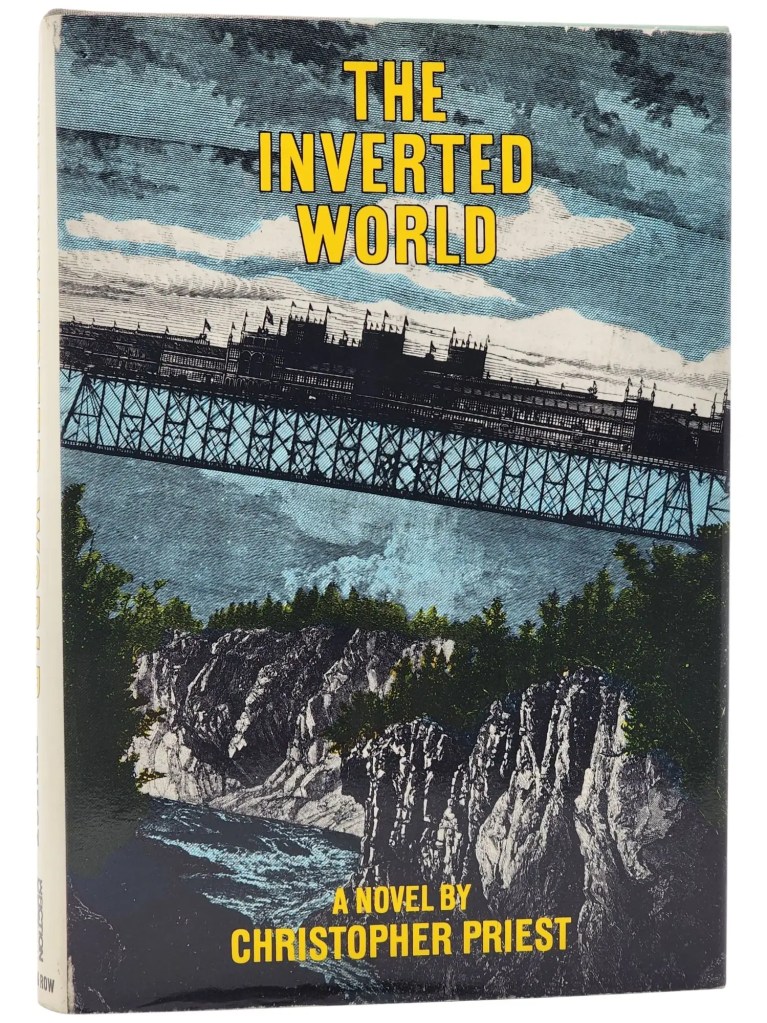
Read The Inverted World by Christopher Priest is my first recommendation. My second recommendation is not to read anything about this novel before you read it. This well-designed novel is a science fiction mystery. It unwraps like the layers of an onion. To get the maximum joy out of reading The Inverted World, you should do all the problem-solving yourself. Don’t even read the blurbs to the book.
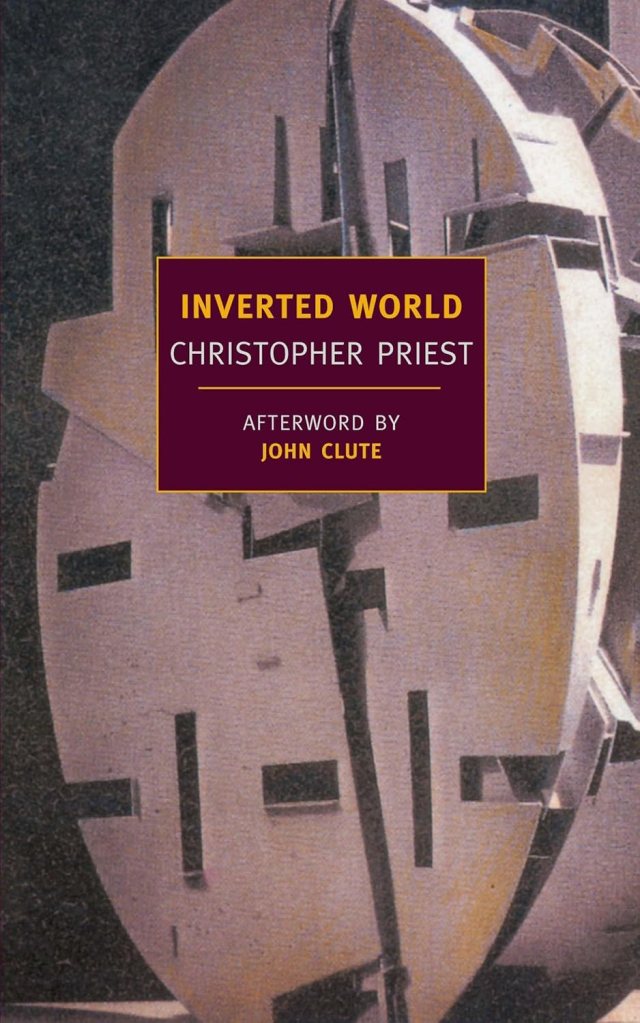
The Inverted World is recommended in Science Fiction: The Best 100 Novels by David Pringle, which is currently $1.99 for the Kindle edition at Amazon. I’m using Pringle’s recommendations for a buddy read with my friend Mike. The novel also won the British Science Fiction Award and was nominated for the Hugo Award. It’s currently available in print from New York Review Books Classics, a highly respected publisher of forgotten literary classics. You can purchase a Kindle or a paperback edition, but unfortunately, there is no audiobook edition.
I read The Inverted World on my iPhone, using the Kindle app with the text-to-speech feature turned on. No matter how hard I try, I read too fast. And even though the computer voice is not very good, it kept me reading slowly and deliberately. And that was very important in The Inverted World.
You know this story is different when the protagonist gives his age in miles. That’s about the only thing I will tell you about this story specifically. There are many mysteries in this novel. And I found them delicious to contemplate. If you need straightforward adventure stories, you should probably skip this one.
Priest creates a very different science-fictional reality. The story is tightly plotted. Priest obviously rewrote his draft many times to get his plot to work so well and to unfold so smoothly.
The Inverted World sometimes feels metaphoric or symbolic, and it is. But it’s also a unique kind of hard science fiction. The NYRB Classic edition includes an afterward by John Clute that explains the social and political climate of England in 1974 when the book was first published. That might make you think the book is about that. But the novel fits so perfectly with 2025 that you’ll realize it’s not really. It’s more universal.
The Inverted World is a philosophical novel. To get the most out of it, you need to think about this story, and if you can, you need to talk about this story with a friend. Mike and I had quite a conversation. Our society is undergoing paradigm shifts that disappoint and depress me. I’m amazed by this novel, which came out fifty-one years ago, speaks so directly to today.
I’m surprised this novel isn’t more famous among science fiction fans. This is the reason I’m reading my way through Pringle’s book. So far, he’s gotten me to read two outstanding forgotten classics that I haven’t read before. You can see his list of recommended novels on Wikipedia. (I recommend buying Pringle’s book. It’s only $1.99.) Before I started my project to read all the books recommended in Science Fiction: The 100 Best Novels 1949-1984, I had read 62 of the 100. I already knew it was a solid list of great science fiction books. Reading The Inheritors by William Golden and The Inverted World by Christopher Priest suggested I still had 38 great SF novels to blow my mind.
James Wallace Harris, 7/21/25
 Classics of Science Fiction
There was a shorter and tonally different version, “The Inverted World”, which was published in New Writings in SF #22. The novel version was serialised* in Galaxy and was a Hugo finalist so was quite well known at the time, in the UK at least.
* Heavily edited, much to the author’s irritation.
LikeLike
Is it still talked about in the UK today?
What did you think about it?
LikeLike
I read Inverted before I found James Wallace Harris. After discovering JWH, I read Canticle for Leibowitz, Earth Abides, and The Hopkins Manuscript which I found similarly satisfying. I just wrote to my siblings about Inverted World and this review, but stopped short of comparing these with Anathem, and that’s the wind-up, lest that be Anathema. In my mind, Stephenson is in a league of his own.
I liked Priest so much I read his book on magicians along with Dr. Strange and Mr. Norrell by Clarke. I really like Piranesi. I was fascinated by Clarke’s Dr. Strange. When I was growing up, remember seeing in stores for which appeared to be a long time. I was too young to read it then, but I liked both Priest and Clarke’s stories of magicians.
LikeLike
I’ve read Dr. Strange and Mr. Norrell, and some books by Stephenson, but not Anathem or Piranesi. I’ve thought about both though.
LikeLiked by 1 person
“unfortunately, there is no audiobook edition.”
There’s an audible audiobook. it’s on youtube.
https://www. youtube. com/watch?v=XjccSGXsYZM
LikeLike
You can also just search google using: “Inverted World” under Video.
LikeLike
Thanks. I searched for it twice and couldn’t find it. I’m tempted to start over and read it again.
That link didn’t work, but I found it here:
LikeLiked by 1 person
Reminds me only slightly of “The Wall of Darkness” by ACC.
https://www.youtube.com/watch?v=XjccSGXsYZM
LikeLike
Nice share
LikeLike