Decoding Short Stories

the-misses-vickers-crop

I read mainly science fiction short stories, but my theories about decoding short stories apply to any genre. Lately, I have been reading science fiction from a number of time periods. I’m systematically reviewing the stories in The Very Best of the Best edited by Gardner Dozois which covers stories 2002-2017. I’m also reading The Great SF Stories 9 (1947) edited by Asimov and Greenberg. I’ve started reading Science Fiction Rivals of H. G. Wells edited by Alan K. Russell that covers SF in the 1890s. I just bought Best SF: 1968 edited by Harry Harrison and Brian W. Aldiss because I want to study the science fiction of 1967.

Concurrently to reading science fiction, I’ve started reading short stories by D. H. Lawrence from the early 20th-century and bought an audiobook anthology of classic literary short stories that cover a century in scope. Because of all this short story reading, I’m beginning to notice patterns. I imagine whenever someone sits down to write a short story they have a goal in telling their story. The subtle variations of each are endless, but I think I see a taxonomy of writing targets. Many short stories begin with vague goals and then fill in with increasing details. Some of the target outlines include:

  • Biography
  • Autobiography
  • Fictional realism
  • Retelling/Reporting
  • Travelogue
  • Humor
  • History
  • Mystery
  • Fantasy
  • Science Fiction

Literary writers are like realistic painters. They want to capture all the details of their subjects, whether they are writing about themselves or people they know. Marcel Proust and Jack Kerouac wrote thinly disguised stories based on their own experiences (autobiography). Hemingway and Fitzgerald liked to observe the people around them (biography). If you read any annual edition of The Best American Short Stories, the most intense stories often feel like they are based on real-life events (fictional realism) but aren’t. MFA programs teach their students the writing skills to pull this off. Finally, some literary writers love to find a great true story and turn it into fiction (retelling/reporting).

Inbetween literary writers and genre writers are humor and travel writers. Sometimes their stories are based on the truth, but often they stretch it. There’s a difference between nonfiction humor and travel writers and the fictionalized kind, although if you could read the minds of writers of the nonfiction kind you’d find they often fudged the truth with a bit of fictionalizing.

Genre writers nearly always open Microsoft Word and begin their story purely from their imaginations. For example, I just read “The Tale of the Three Beautiful Raptor Sisters, and the Prince Who Was Made of Meat” by Brooke Bolander, one of the stories nominated for a Hugo award this year. Nothing in her story has ever existed in reality, it all came from Bolander’s ability to make stuff up. Bolander begins:

Once upon a time, long, long, long, long, long, long, ago, there were three raptor sisters, hatched beneath a lucky star. They lived in a wood together, they stole sheep and cattle together, and all in all, there was no tighter-knit hunting pride of matriarchal dromaeosauridae between the mountains and the sea.

Fantasy writers are bound by their Guild to create fantastic beasts. Using raptors was fun and clever. Melding a medieval fairytale about a Prince and Princess with Jurassic Park nasties is one of the reasons Bolander is up for an award, but not the only reason. Recasting Prince Charming as a doofus, creating an anti-princess Princess, while poking fun at traditional little girl fantasies, are some of the others.

My point in referencing Bollander’s story is to show the challenge of writing a fantasy short story. There’s no need for biographical or autobiographical characters, and the use of history barely exists and what is used is completely distorted.

When John Singer Sargent painted “The Misses Vickers” above he was creating a visual biography of Florence, Mabel, and Clara Vickers. When we read Henry James or Edith Wharton, we feel they are painting with words to capture 19th-century people they knew. Genre writers can base their characters, settings, and times on real people, places, and events, but they usually don’t. However, they can create characters, settings and times that feel like they were real or could be real. The reason why Game of Thrones and Harry Potter stories are so popular is they feel real.

When I read Thomas Hardy or D. H. Lawrence I feel they’re accurately describing village life in England. I expect their characters could be based on real people, and the scenes they describe could be real places. I don’t expect that from genre writers.

But here’s the thing, great writing is the accumulation of significant details. Writers can crib those details from reality, or they can make them up. It’s my theory that the best science fiction has a feeling of realness, such as Timescape by Gregory Benford, or Earth Abides by George R. Stewart, or Station Eleven Emily St. John Mandel.

On the other hand, the best fantasy is realistically painted with imagined details, like Tolkien or Rowling. There is an uncanny valley effect in fantasy too, like in computer animation. A fantasy that feels somewhat real, but not quite, is disturbing. Think of all those cheap fantasy films that feel campy today. Then think about why you love Game of Thrones on HBO.

When you read a short story you’re decoding both the writer’s goal and their coding. To fairly judge a story requires decoding that goal while reading the story. Sadly, all too often it’s to crank out 7,500 words to sell at 10 cents a word. Too many writers use seat-of-their-pants plotting and grab details out of the air as fast as they type. The end product of a work of realism or imagination should still feel realistic even if the physics of the genre world is much different from ours.

I believe when a writer sits down to write a short story they have a goal in mind. As readers, we need to decipher that goal to properly appreciate the story. To judge a story we need to decide if the goal is both worthy and met. I have a problem with reading some genres, such as fantasy stories, because it’s just not my thing. However, I should not judge those genres by my tastes but by figuring out the target of the story and deciding if it was hit.

When I read fantasy stories I often feel like I went to a rock concert and classical music was played. Sometimes the classical music wins me over, and sometimes it doesn’t. I feel the world of science fiction is being replaced by fantasy, even the stories with spaceships and robots. It’s a challenge for me to read modern SF/F because of my personal interests, but I’m trying to judge these works by their own goals. I’m using this site to explore the art and nature of short stories. I was going to ignore all fantasy fiction, but that’s becoming very hard to do.

My goal is to get away from judging fiction by my personal tastes and instead work to understand how a story works by decoding its own goal.

lawrence alma-tadema

JWH


“A Witch’s Guide to Escape: A Practical Compendium of Portal Fantasies” by Alix E. Harrow

the-witches-ride-mary-evans-picture-library

There are only two ways to escape this reality – death or fantasy.

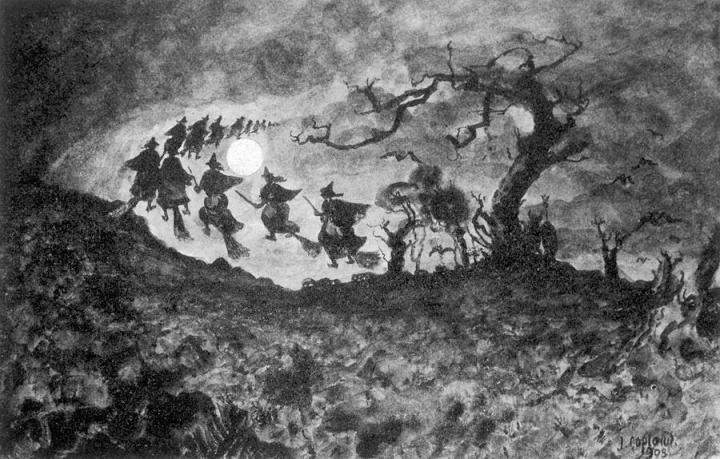
Back in the 1950s, some librarians tried to discourage the reading of Oz books claiming they gave unrealistic expectations about life. They were absolutely right. But by the end of the 1960s, it was obvious that fantasy books and witches had won. In 1969 the Ballantine Adult Fantasy series began appearing, which turned out to be a tsunami warning of the overwhelming wave of fantasy books to come.

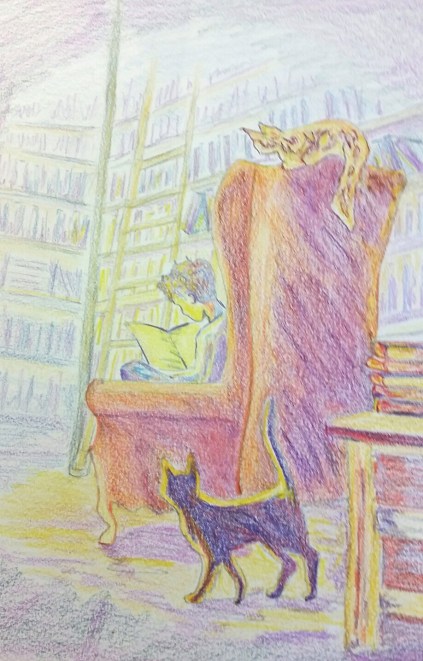
Alix Harrow’s “A Witch’s Guide to Escape: A Practical Compendium of Portal Fantasies” is a lovely story about the magic of libraries and books. It just won the Best Short Story category for the 2019 Hugo awards. I hadn’t read any of the fiction in the fiction categories this year until I read “A Witch’s Guide to Escape.” It made me cry. I think it should win awards. It’s a fantasy about fantasy stories, and I don’t even like fantasy stories, except when I love them. I’m a straight-ahead science fiction guy, but sometimes fantasies tales get to me, and this one did.

I’m not going to spoil this story by describing it, just follow the linked title above and read it. If you are like me, and shot up fiction as your drug of choice growing up, then this story will sting you in the eyes, clog up your sinuses and constrict your throat, but in a way that you’ll love.

I could go on and write 100,000 words about the siren calls of fantasy, but I don’t know if this is the proper time and place. But someday we should sit down and talk about our addiction. Go read the story and then leave a “My name is Bill” testimonial in the comments.

Harris-as-a-kid

JWH


“The Purple Death” by W. L. Alden

The Purple Death by W. L. Alden

“The Purple Death” by W. L. Auden first appeared in the January 1895 issue of Cassell’s Family Magazine. I read it in my copy of Science Fiction by the Rivals of H. G. Wells edited by Alan K. Russell, but I also own The Wordsworth Collection of Science Fiction edited by David Stuart Davies, the other anthology that ISFDB.org says contains the story. However, it is also available to read online.

In the last decade, I’ve come to admire science fiction from the 19th-century and collected a number of anthologies that mine that era for early tales of sense-of-wonder. I dip into these volumes now and then, often to discover ideas I thought original to the golden age of pulp SF magazines of the 1930s and 1940s. It makes me wonder if anthologists shouldn’t scout the 18th-century for even earlier examples of common science fiction themes.

“The Purple Death” is a quiet story about an Englishman vacationing in Italy who meets Professor Schwartz, a mad scientist from Germany living the cottage next door. Schwartz wants to help the poor and downtrodden by reducing their numbers. He believes overpopulation is the source of the planet’s problems. His has a solution, one we’d call terrorism today. In fact, the description of his bioweapons of mass destruction and how he would deploy them sounds exactly like possibilities we regularly hear on the nightly news.

Wikipedia has little to say about Alden, other than he was Consul General in Rome, Italy from 1885-1890, appointed by Grover Cleveland. He brought the sport of canoeing to the United States and was the founding member of the American Canoe Association. That I thought strange since I assumed native Americans invented the canoe.

The Encyclopedia of Science Fiction is a bit more revealing, with a concise rundown of his other SF/F tales. Their themes support my idea that many of the famous science fictional ideas of the 20th-century had earlier versions in the 19th. To quote SFE:

Alden's sf and fantasy seems to date only from around 1890 or so, his first title of genuine genre interest seeming to be A Lost Soul: Being the Confession and Defence of Charles Lindsay (1892), narrated by a physician who re-animates the frozen body of an Italian countess (see Sleeper Awakes), only to find that she has retained the amoral ways (see Sex) that caused her husband to immolate her in the first place. Most of the stories in Among the Freaks (coll of linked stories 1896) are tall tales, narrated by the owner of a freak show (but see Monsters); The Mystery of Elias G Roebuck and Other Stories (coll 1896) includes several fantasies and sf tales, including an interesting Apes as Human tale, "A Darwinian Schooner" (August 1893 Pall Mall Magazine) and several tales involving Inventions, a topic more intensely (and humorously) deployed in the stories assembled as Van Wagener's Ways (coll of linked stories 1898), in which the eponymous professor's inventions, all of which go wrong but which are not hoaxes, end with his death in something like a nuclear explosion. Drewitt's Dream (1902) is partially set on an Island Utopia. Alden was prolific and fluent, and further exploration of his works may uncover more material of interest.

I think I’d like to give A Lost Soul (1892) a try. In his bibliography, SFE also mentions A New Robinson Crusoe (1888), which also intrigues me.

By the way, I highly recommend Science Fiction Rivals of H. G. Wells if you can find a copy. They are getting expensive on the used market. I only snagged a copy of one without its dust jacket, so in some ways, I hate to make this recommendation, because I’d still like to find a cheap copy in its wrapper. However, it’s a cool volume, reprinting Victorian era SF from the magazines and including their original illustrations. It’s a shame there is no ebook or audiobook edition.

James Wallace Harris, April 2, 2019


“Utriusque Cosmi” by Robert Charles Wilson

Utriusque-Cosmi

“Utriusque Cosmi” by Robert Charles Wilson was first published in The New Space Opera 2 edited by Gardner Dozois and Jonathan Strahan in 2009. It’s been reprinted a number of times, including Clarkesworld where you can read and listened to it online. It is the 12th story I’ve reviewed from The Very Best of the Best edited by Gardner Dozois.

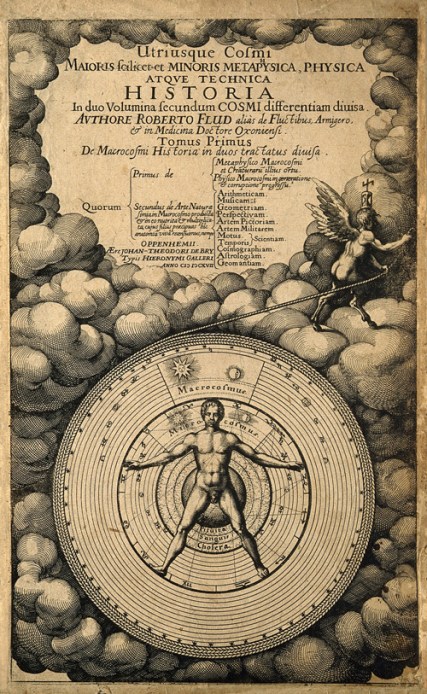
Utriusque Cosmi was a two-volume work by Robert Fludd published in 1617 and 1621. You can see a facsimile copy of this book at Archive.org. It is a work of occult philosophy.

“Utriusque Cosmi” by Robert Charles Wilson is a teleological science fiction story, or maybe a fantasy claiming a different intelligent designer other than God. Robert Charles Wilson thinks big when he writes science fiction, like his story Spin, a 2005 novel which won the Hugo award.

To say “Utriusque Cosmi” is epic in scope is an epic understatement. The story starts out simple, with a woman named Carlotta going back in time to haunt her sixteen-year-old self. I won’t tell you where it ends up. Let’s just say this is one of the most unique ghost stories ever written with a science fictional explanation that would impress Olaf Stapledon.

My goal of slowly reviewing the 38 stories in The Very Best of the Best is not to critique the stories, but to use them to contemplate the nature of science fiction. “Utriusque Cosmi” is a mixture of literary and science fictional writing. Young Carlotta’s narrative if separated from the science fiction feels like something I’d read in the annual Best American Short Stories. In fact, it could have been written as a traditional ghost story inside any other theological view of reality.

What Wilson has done is come up with a teleological argument using a science fictional intelligent design. That’s both clever and somewhat psychoanalytically revealing of our genre. Both theists and Sci-Fi fans want reality to be different from what it actually is. That’s why I often consider science fiction to be a substitute for religion. Science fiction keeps dreaming of ways to give humans everlasting life in heaven. Science fiction writers have just come up with far more complex explanations of how this might happen. Religion is really a belief in magical incantations. God creates with the power of the Word – but then so do science fiction writers. SF readers just believe that science and technology will one day make their words come true.

“Utriusque Cosmi” is a lovely story of faith.

JWH

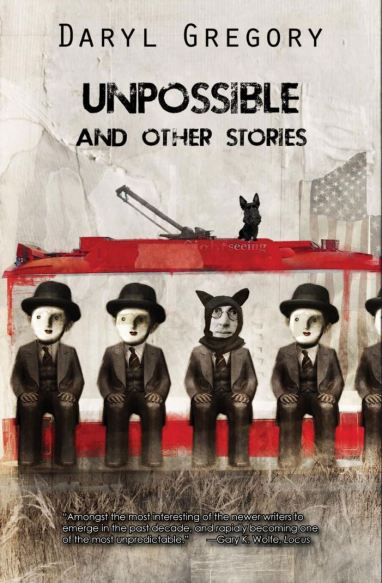
“The Illustrated Biography of Lord Grimm” by Daryl Gregory

Unpossible and Other Stories by Daryl Gregory

“The Illustrated Biography of Lord Grimm” by Daryl Gregory is the 11th story in The Very Best of the Best edited by Gardner Dozois. It originally appeared in Eclipse 2 but has been reprinted a number of times. You can read or listen to it online at Clarkesworld. Daryl Gregory has published seven novels, numerous short stories, and a handful of comic books/graphic novels. I believe this is the first story I’ve read by Gregory.

The setup of “The Illustrated Biography of Lord Grimm” is quite simple – a small country is attacked by a much larger country. Gregory said he was inspired by the U.S. attacking Iraq. Now picture the United States invading a small country not with stealth fighters but with superheroes. The story opens:

The 22nd Invasion of Trovenia began with a streak of scarlet against a gray sky fast as the flick of a paintbrush. The red blur zipped across the length of the island, moving west to east, and shot out to sea. The sonic boom a moment later scattered the birds that wheeled above the fish processing plant and sent them squealing and plummeting.

Elena said, “Was that—it was, wasn’t it?”

“You’ve never seen a U-Man, Elena?” Jürgo said.

“Not in person.” At nineteen, Elena Pendareva was the youngest of the crew by at least two decades, and the only female. She and the other five members of the heavy plate welding unit were perched 110 meters in the air, taking their lunch upon the great steel shoulder of the Slaybot Prime. The giant robot, latest in a long series of ultimate weapons, was unfinished, its unpainted skin speckled with bird shit, its chest turrets empty, the open dome of its head covered only by a tarp.

Elena is our point-of-view character from which we see her city destroyed and watch citizens struggles to survive the aftermath. It’s a clever anti-war story that makes me feel for these imaginary foreign people. Trovenia is characterized like a cold war era eastern bloc country. Its citizens parrot the standard propaganda against America yet distrust their own leaders. America uses its superhero power advantage to bully smaller nations, while Trovenia’s leader, Lord Grimm, brags of having equal superpowers to fight back.

This story is not my kind of story because I’m bored to blazes with superheroes and their superpowers, but I imagine fans who love the DC/Marvel universes will be entertained.

Science fiction and fantasy writers face a constant challenge of competing with the successes of movie franchises that make billions dominating the pop culture landscape. Our society has reached the science fiction saturation point decades ago, so it’s hard to come up with anything new that will dissolve into our Pop Culture Kool-Aid.

I feel sorry for struggling young writers. I’d like to think this story is also Gregory’s way of responding to superhero oppression. Even though “The Illustrated Biography of Lord Grimm” isn’t my kind of story, I still found it enjoyable, and maybe I did so because the superheroes are portrayed like V-1 and V-2 bombs rocketing over London during WWII – powerful caped menaces streaking across the skies terrifying ordinary people.

There are whole armies of talented writers out there hoping to get noticed. Their only weapon is typing out words, but those black pixels on white backlights must compete with 3D Imax blockbusters. Even though I have some problems with the stories in Love, Death + Robots, I’m still excited to see science fiction writers getting their short stories produced for the HDTV screen. “The Illustrated Biography of Lord Grimm” could make a visually stylish short film.

And that might be another reason why Gregory features superheroes in his story – he imagined it being filmed as he wrote it.

James Wallace Harris, March 26, 2019 (Happy Anniversary Susan)


“Glory” by Greg Egan

exoplanet

Glory” by Greg Egan first appeared in The New Space Opera (2007) edited by Gardner Dozois. This is the 9th story discussed from The Very Best of the Best (2019) also edited by Gardner Dozois.

I first encountered Greg Egan when I read his novel Quarantine (1992). It impressed me greatly, yet, I have not followed his career closely. There is just a tremendous amount of good science fiction to read. I have read the reviews of his following novels and read a few of his shorter stories in the best-of-the-year annuals. Egan writes hard science fiction of the super-science variety, projecting humanity into the far future. Egan is far more hopeful for the potential of our species than I am.

“Glory” is about Joan and Anne, galactic citizens of the Amalgam, visiting a world that has not yet developed interstellar travel. Their adventure begins with two ingots of metallic hydrogen, one made of matter and the other anti-matter. These ingots are sculpted with neutrons and antineutrons until they are compressed into a needle one micron wide. I’ll quote Egan to give you a sample of his imagination:

The needle was structured like a meticulously crafted firework, and its outer layers ignited first. No external casing could have channeled this blast, but the pattern of tensions woven into the needle’s construction favored one direction for the debris to be expelled. Particles streamed backward; the needle moved forward. The shock of acceleration could not have been borne by anything built from atomic-scale matter, but the pressure bearing down on the core of the needle prolonged its life, delaying the inevitable. 

Layer after layer burned itself away, blasting the dwindling remnant forward ever faster. By the time the needle had shrunk to a tenth of its original size, it was moving at ninety-eight percent of light speed; to a bystander, this could scarcely have been improved upon, but from the needle’s perspective, there was still room to slash its journey’s duration by orders of magnitude. 

When just one thousandth of the needle remained, its time, compared to the neighboring stars, was passing five hundred times more slowly. Still the layers kept burning, the protective clusters unraveling as the pressure on them was released. The needle could only reach close enough to light speed to slow down time as much as it required if it could sacrifice a large enough proportion of its remaining mass. The core of the needle could only survive for a few trillionths of a second, while its journey would take two hundred million seconds as judged by the stars. The proportions had been carefully matched, though: out of the two kilograms of matter and antimatter that had been woven together at the launch, only a few million neutrons were needed as the final payload. 

By one measure, seven years passed. For the needle, its last trillionths of a second unwound, its final layers of fuel blew away, and at the moment its core was ready to explode, it reached its destination, plunging from the near-vacuum of space straight into the heart of a star. 

Even here, the density of matter was insufficient to stabilize the core, yet far too high to allow it to pass unhindered. The core was torn apart. But it did not go quietly, and the shock waves it carved through the fusing plasma endured for a million kilometers: all the way through to the cooler outer layers on the opposite side of the star. These shock waves were shaped by the payload that had formed them, and though the initial pattern imprinted on them by the disintegrating cluster of neutrons was enlarged and blurred by its journey, on an atomic scale it remained sharply defined. Like a mold stamped into the seething plasma, it encouraged ionized molecular fragments to slip into the troughs and furrows that matched their shape, and then brought them together to react in ways that the plasma’s random collisions would never have allowed. In effect, the shock waves formed a web of catalysts, carefully laid out in both time and space, briefly transforming a small corner of the star into a chemical factory operating on a nanometer scale. 

The products of this factory sprayed out of the star, riding the last traces of the shock wave’s momentum: a few nanograms of elaborate, carbon-rich molecules, sheathed in a protective fullerene weave. Traveling at seven hundred kilometers per second, a fraction below the velocity needed to escape from the star completely, they climbed out of its gravity well, slowing as they ascended. 

Four years passed, but the molecules were stable against the ravages of space. By the time they’d traveled a billion kilometers, they had almost come to a halt, and they would have fallen back to die in the fires of the star that had forged them if their journey had not been timed so that the star’s third planet, a gas giant, was waiting to urge them forward. As they fell toward it, the giant’s third moon moved across their path. Eleven years after the needle’s launch, its molecular offspring rained down on to the methane snow.

This is not the science fiction I grew up reading. I want to quote the whole opening that explains how Joan and Anne get to their destination, but that would involve quoting too much. I strongly recommend reading the story online just to experience the dazzling science fictional thinking of Greg Egan. I have no idea if any of his razzle-dazzling sleight of hand is scientifically possible, but Egan is a convincing preacher of the faith, of the faith that humanity has no limits in this universe.

However, once Egan gets Joan and Anne to the planet of Tira and Ghahar, two rival nations of beings call Noudah, the story slows down and becomes almost mundane in its plot. Joan and Anne are evidently what humans become in the far future, and they can download their essence (mind, soul?) into any machine or being. They appear to the Tiran and Ghahari in Noudah bodies. Joan and Anne each arrange to be intercepted by the two warring nations. Their stated and honest goal is to study the Niah, a race of sentient beings that had existed prior to the Noudah on this planet, and who were premiere mathematicians of the galaxy. The Niah existed for three million years but had disappeared over a million years earlier, leaving only tablets with their mathematical insights carved into them. Joan and Anne somehow know that the Noudah are building dams on Niah sites and want to excavate them before they are lost.

The real purpose of the story I believe is for Egan to present the idea of Seekers and Spreaders. The Niah are a race of seekers of knowledge. The Noudah are spreaders, wanting to conquer and colonize the galaxy. They are paranoid, fearing Joan and Anne are from another race of spreaders. Joan and Anne are really seekers though, just wanting to understand Niah math, so they have to do everything possible not to appear as spreaders.

Obviously, Homo sapiens will be spreaders. Our species is a cancerous growth spreading to every nook and cranny of Earth, and if we travel to other stellar systems, we’ll spread across those worlds too. (Hint to the title of Egan’s novel, Quarantine.)

I don’t know why Egan thinks we’ll become seekers in the future. Are Joan and Anne still Homo sapiens? Their minds can be copied and backed up, but are their minds like ours? I believe as long as our minds are tied to our biology we’ll be spreaders. But if we’re digitized maybe we could become seekers.

Here’s the thing about me and contemporary science fiction. I just don’t buy the concept of brain downloading. It’s as believable as everlasting life. We like to think we’re the Crown of Creation, but what happens when we discover we’re no more important to the universe than naked mole rats? The urge to spread is just a way to existentially define meaning to ourselves by the amount of territory we can cover. We might be sentient, but we’re no more significant than nitrogen to reality.

Science fiction writers are often philosophers. Science fiction often promotes the manifest destiny of the final frontier. Greg Egan obviously knows that spreading is pointless. But isn’t seeking equally pointless? The universe doesn’t care what we do. So does it matter if we or any other sentient beings spread or seek? And are those really the only choices for how to keep busy while existing in reality? What about art or hedonism? Sports and games? What about the Zen of just being?

“Glory” is a fun story. Most readers will just accept it as a story. I think of it as a kind of religious fantasy, showing faith in a different kind of heaven. As I read the 38 stories in this anthology, I experience them as stories, but also experience them as fears and hopes for the future.

James Wallace Harris, March 20, 2019
 

“Time and Time Again” by H. Beam Piper

Time-and-Time-Again-by-H.-Beam-Piper

Have you ever thought of an idea for a science fiction story, but before you could use it discovered the idea has already been used in another story? Last night I read “Time and Time Again” by H. Beam Piper and it uses an idea I’ve already tried in several story attempts. The idea is not really science fiction, but a fantasy version of “if I knew then what I know now,” but Piper throws in some pseudo-science gobbledygook and tries to pass it off as science fiction. Of course, in 1947, science fiction writers were ramping up for the 1950s, the SF Decade of Psi-Powers.

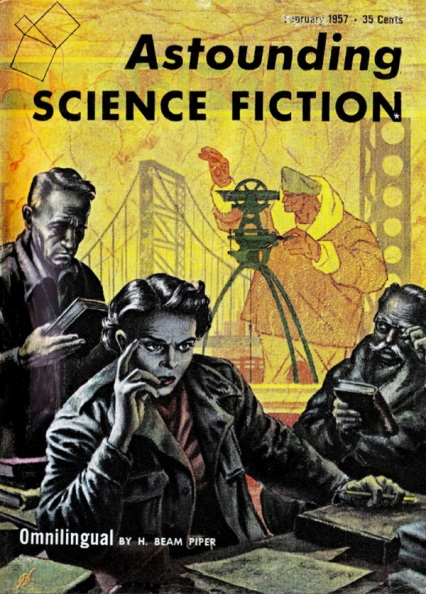
“Time and Time Again” originally appeared in the April 1947 issue of Astounding Science Fiction. It was reprinted in the classic retrospective anthology, A Treasury of Science Fiction edited by Groff Conklin in 1948. In 1956 it was made into an episode of X-Minus One radio show. I read just it in The Great SF Stories 9 (1947) edited by Isaac Asimov and Martin H. Greenberg. The story is also available at Project Gutenberg. This was H. Beam Piper’s first published story.

I’m taking a short break from reading 21st-century SF to jump back to 1940s science fiction. I’ve discovered yet another way of classifying science fiction short stories. Sometimes I read SF magazines. Sometimes I read best-of-the-year annuals. Sometimes I read retrospective anthologies that claim to culled the very best short stories of the genre. They can be new or old magazines, annuals, or anthologies. This gives me three levels of quality and from past and current perspectives.

Reading science fiction magazines reveals that most stories aren’t that good. They’re good enough to get published, but most won’t make it into the best-of-last-year anthologies the following year. I’m reading a best-of-1947 volume, which contains these stories:

  • “Little Lost Robot” by Isaac Asimov
  • “Tomorrow’s Children” by Poul Anderson
  • “Child’s Play” by William Tenn
  • “Time and Time Again” by H. Beam Piper
  • “Tiny and the Monster” by Theodore Sturgeon
  • “E for Effort” by T. L. Sherred
  • “Letter to Ellen” by Chan Davis
  • “The Figure” by Edward Grendon
  • “With Folded Hands…” by Jack Williamson
  • “The Fires Within” by Arthur C. Clarke
  • “Zero Hour” by Ray Bradbury
  • “Hobbyist” by Eric Frank Russell
  • “Exit the Professor” by Lewis Padgett
  • “Thunder and Roses” by Theodore Sturgeon

Time has not been kind of science fiction. Only the very well-read in science fiction will know any of these titles. “E for Effort” and “With Folded Hands…” made it into volume 2 of The Science Fiction Hall of Fame. “Little Lost Robot” became part of I, Robot. And “Thunder and Roses” is one of Theodore Sturgeon’s most famous tales. I doubt many science fiction fans born after 1990 will know these stories.

“Time and Time Again” uses an idea that’s a daydreaming fantasy of mine and one that I’ve tried to work into a story several times. (I did use a variation of it for my blog, “I Wish I Had A Time Machine To Save My Dad.”) Allan Hartley, age 43, dies and wakes back up in his 13-year-old body, but remembers everything that will happen to him for the next thirty years. Replay (1986) by Ken Grimwood was the first work I read that used this idea of reincarnating into one’s own life.

Is “Time and Time Again” a good story? In the July 1947 issue of Astounding Science Fiction, “Time and Time Again” came in 1st in The Analytical Laboratory with a score of 3.11 out of 5 stories. Readers rank stories so a score of 1.0 would have meant every reader would have placed it first on their list. A score of 3.11 means it wasn’t a standout. “Time and Time Again” was good enough to get into Conklin’s big anthology, get produced as a radio show, and to be picked as one of the best SF stories of 1947 by Asimov and Greenberg. But on the whole, it’s not that good. Well, yes and no. If you have a fondness for 1940s science fiction, it has its charms, but if you read with a critical eye, the story is not that polished.

“Time and Time Again” did excite me, but only because it uses my pet idea. Have you ever fantasized about reincarnating into your younger self so you could relive your life knowing what you know now? Sometimes a far-out idea is all a story needs to make it likable. However, Piper really didn’t use the idea effectively, essentially throwing it away on a clunky plot. That’s one of the big faults of science fiction. Writers come up with a cool concept, but often cobble together any old plot to showcase their spiffy insight.

“Time and Time Again” is the earliest version of this theme that I know, and H. Beam Piper does come up with many of the same consequences that later writers have:

  1. Am I crazy?
  2. Can I pull off acting like a kid?
  3. Do I have to repeat what I’ve done before?
  4. Can I tell anyone?
  5. How can I make my own money?

Ken Grimwood covers all of this in the first replay of Jeff Winston’s life. Strangely, Winston dies at 43 too. Could that have been a homage to Piper? Actually, Piper’s ending does have other parallels to Replay. Where Grimwood gets brilliant is when he has Winston relive his life over and over again, each time feeling the need to do something different. Knowing the other possibilities that Grimwood explores made me feel less impressed with Piper’s story. And I guess that’s not fair – it might be the first to use this idea.

I wish someone would create an anthology of stories using this theme. I don’t know of any short stories that use this specific idea, but I bet they’re out there. If you know of any, please leave a comment.

Piper starts the story off by showing what happens to Allan, but eventually, he just has Allan lecturing and speculating. It’s a shame he couldn’t have come up with a fully dramatized plot.

Within “Time and Time Again” Allan mentions a 1923 fantasy novel, The High Place, by James Branch Campbell, and says the idea was also in Jurgen by the same author. But I don’t know what the specific idea he’s referring to. Allan also says Dunne’s Experiment With Time explores precognition. So I don’t know if Piper is more concerned with precognition and less with reincarnation into one’s own life. Piper could have used Allan Hartley wake up in his 13-year-old body just to give us a reason for his precognition, and not as a life do-over tale.

This story was written just after Hiroshima, and already science fiction is attributing magical events to atomic explosions. In the years to come, A-bombs would produce countless mutants with superpowers and portals to other dimensions.

Hartley wants to change history. That seems egotistical to me. It also seems comic bookish and juvenile too. Why would the universe give us a chance to relive our life? At a spiritual level, taking it beyond science and science fiction, wouldn’t such an opportunity be telling us to do a better job this time around and change ourselves, not the world? One common trend in science fiction from this era is the power fantasy, where one hero can save the world, solar, system, galaxy or universe. I think H. Beam Piper matured as a writer by the time he wrote his masterpiece, Little Fuzzy.

James Wallace Harris, March 13, 2019


“The Sledge-Maker’s Daughter” by Alastair Reynolds

Winged Woman

8th in a series: The Very Best of the Best edited by Gardner Dozois

Although science fiction writers can write about anything, if you read enough science fiction you’ll discover a limited number of themes repeated in endless variations. The challenge to the writer is to tell an old story in a new way. In “The Sledge-Maker’s Daughter” Alastair Reynolds uses the theme of a primitive society that barely remembers its former technological glory. There is a great sense of wonder to that idea. One of the earliest examples I can remember reading is A Canticle for Leibowitz by Walter M. Miller, Jr. In that story, our current world civilization had collapsed and a rather medieval one had taken its place. Characters marveled and wondered about artifacts from our time creating endless speculation about us with wrong assumptions.

In “The Sledge-Maker’s Daughter” we’re again thrown back in time, or so we think. It feels like a 17th-century English town, but I’m not even sure we’re on Earth. Reynolds is famous for telling stories of the very far future. We do learn that their past had space travel and intelligent robots, but the people of this time have no understanding of that history, just shadowy myths. The story is about a 16-year-old girl, Kathrin Lynch, who is the daughter of the sledge maker trying to walk home without being sexually assaulted. She has in the past and knows it will happen again.

In the world of this story, whether far future Earth or a planet we settled that has forgotten that, knowledge is mostly based on superstition. This is a common aspect of our forgotten past theme. For example, the robots of their past are now the “jangling men” – a supernatural threat to scare children from straying too far.

Understanding the building blocks of this theme is not really important for enjoying this story. You can read or listen to it online. “The Sledge-Maker’s Daughter” is a wonderful tale because of how it’s told. Since I listened to it on the audiobook edition of The Very Best of the Best, the professional narration showcases Reynolds’ skills at conveying drama and emotion. By the way, I consider audio narration to be a magnifier, one that makes good and bad writing stand out. This might be true because audio converts printed words to something like watching a movie, allowing our ears to better judge the dialog.

I’m reading and reviewing these stories as writing lessons. From “The Sledge-Maker’s Daughter” I’m learning how Reynolds took an old theme and made it fresh. It involves a number of challenges. First, the setting of the story is old – even if it’s in our far future. Think about watching Game of Thrones on HBO. Is it set on Earth? Is it in the past or the future? How to capture those details without anachronisms?  Reynolds sets “The Sledge-Maker’s Daughter” in a time that feels like old England to me, where people still believed in witches, and towns are ruled by sheriffs. He overlays this with myths that feel even older, yet we learn were founded on our future.

The basic plot of this story could be set in any time. In fact, it could have been written in the 17th-century or today. What makes it good is the storytelling. The writing is simple. Reynolds explains little. But much happens in the one hour it takes to narrate the audio version. It’s rich in vivid details.

I do have one quibble with this tale, but I’m not sure if I can bring it up without spoiling it for some readers. But I will since these essays are about story construction. The solution to Kathrin’s problem is a powerful weapon. This works in fantasy or science fiction, but would it be politically correct in a contemporary literary story? If we read a New Yorker story about a young girl telling an older woman about how’s she’s being sexually preyed upon and the older woman gave her a 9mm to keep in her purse as a solution, would we accept that story?

I know many Americans would answer yes. But that’s not what I want to get into. This is about writing, and the question it poses is: Should stories offer plot solutions with dangerous implications? I’m a lifelong fan of westerns. One of the major themes of westerns is violence is the solution. Do we accept this only for fiction and video games, or psychologically too?

When I think about writing fiction I seldom think of stories that involve violence. But pay attention to how often violence is integrated all the forms of fiction we consume. If I had written this story I definitely wouldn’t have wanted to create a rape scene. Nor would I have wanted the past technology to be symbolized by a weapon. I’m trying to imagine using this theme in a new way of my own making. What myths might our civilization give people thousands of years from now? What if in two hundred years climate change has totally wiped out our technological civilization? How will future people imagine our love of social media and computers? See, got a story idea already. But ideas are a penny a million. It’s the storytelling that counts, and “The Sledge-Maker’s Daughter” is a good lesson in that.

James Wallace Harris, March 11, 2019

“Where the Golden Apples Grow” by Kage Baker

Where the Golden Apples Grow by Kage Baker

“Where the Golden Apples Grow” by Kage Baker is the 7th story in The Very Best of the Best edited by Gardner Dozois. I’m reviewing its stories one-at-a-time not to judge them but to explore the current state of science fiction. Baker’s story is about colonizing Mars, which is my favorite theme in science fiction. Every story about a Mars colony is one writer’s idea of how humanity might build a civilization on the Red Planet. None have ever pictured it the way I imagined it, but that’s not a ding on their stories. The Very Best of the Best is 38 SF stories first published between 2002-2017.

“Where the Golden Apples Grow” is part of the late Kage Baker’s Mars Series. Like I said when reviewing the Robert Reed story, this anthology is getting me to read “newer” science fiction authors, taking me out of my mid-20th-century SF rut. I’ve read a few stories by Kage Baker before. Reading about these writers before writing the reviews shows me a much larger science fiction universe. That’s why I’m providing hyperlinks, in case you want to know more too.

Mars is the El Dorado of science fiction. It takes a furious amount of mouse-wheel scrolling to get through the lists of stories about Mars at Wikipedia. Colonizing Mars will be the fulfillment of one of science fiction’s oldest ambitions. Aren’t the efforts of every national space program driven by scientists who are stealth SF fans hoping to get to Mars?

When I started this project of reviewing these stories one-by-one, I said most of the stories in the anthology aren’t my kind of science fiction. This Kage Baker story is exactly my kind of SF. I was born in 1951. I started 1st grade just before Sputnik was launched, and graduate 12th grade just before Apollo 11. Science fiction has always been my Bible for space exploration religion. I thought for sure Mars would be colonized in my lifetime. I have a few years left, and I’m still hoping.

Science fiction can be about almost anything, and the stories in this anthology testify to that. But for me, science fiction has always been about what could happen from 1970-2100 in our solar system. Science fiction is a cognitive tool for speculation and extrapolation. Sure I love stories about interstellar exploration, time travel, utopias, dystopias, and the far future, but all those fictionalized speculations are too far out for me to believe might happen. I’ve always loved down-to-Mars science fiction.

I read science fiction because I wanted to know what might be the big possibilities in my lifetime, or what could happen in the decades after my death. I figured within the 1970-2100 timeframe, colonizing the Moon and Mars were about the limits of what I could realistically hope. I also assumed intelligent robots would evolve in that time period, and as a longshot, we might get lucky and make SETI contact. Exploring those themes are my kind of science fiction.

That being said, Kage Baker’s Mars is not my Mars. Every science fiction writer pictures Mars differently. Imagining how humans will settle on Mars is a kind of intellectual game. I figure Kim Stanley Robinson’s Red Mars/Green Mars/Blue Mars trilogy is the current champ to beat. Some writers ignore science and reality. Edgar Rice Burroughs and Ray Bradbury’s Martian landscapes are like Oz for adults. Some writers try to guess what it might be like to start a colony, sort of like SimCity on another planet. Other writers like to begin their fiction after the colonies have been established. Baker imagines her Mars with truckers and farmers, capitalism and collectives, rich and poor, idealists and scientists, sort of like 1940s Americans with hi-tech on another planet.

Baker’s Mars seems to have evolved from science fiction ancestors she and I have in common, especially Robert A. Heinlein’s Red Planet, The Rolling Stones, and Farmer in the Sky. Kage Baker’s idea of how a Mars colony will develop might be closer to how Heinlein imagined it than Clarke, Bova, or Robinson.

Baker sets up her story by telling about the 2nd and 3rd boys born on Mars. Bill, is the son of a trucker, and he and his father haul ice back from the poles to a settlement at Mons Olympus. Ford, is the son of a farmer who works in a collective called Long Acres. Baker’s Mars is working class, settled by people from Earth who want freedom and opportunity, and who might be just a little bit crazy.

I’ve always wanted to write a story like “Where the Golden Apples Grow” because I’ve always wondered: What if the children of Mars and Moon colonists don’t see the High Frontier dream in the same way as their parents do? Would children growing up on Mars or the Moon fantasize about living on Earth like I fantasized about Mars? Can any child raised in 1/6th or 1/3rd gravity ever return to 1G? Bill and Ford don’t like their destinies, but what can they do?

I was quite moved by Baker’s story, and I have no quibbles with it as it stands as a story. However, she imagines three outcomes for a Mars colony that I don’t. First, she expects colonists to live and work on the surface. I’ve always figured there’s too much hard radiation raining down on Mars for that. I assumed colonists would have to live underground. Second, Baker imagines hordes of immigrants from Earth coming to Mars, with most of them doing hard-labor work. I imagined a few hundred highly-trained scientists seeding a Mars civilization with hordes of robot helpers. I don’t think it will ever be economically/environmentally practical to send too many rockets towards Mars. Third, Baker imagines capitalism will work on Mars. I think it will take centuries before Mars has a manufacturing or service economy. There will be no profit for Earth in colonizing Mars. Every dollar Earth spends on Mars will be a donation towards creating a space civilization, but that civilization will have to create a new kind of economy, and it will take centuries.

Now, these aren’t criticisms of this story. Most readers will read it, be entertained, and go on to their next read. But for some readers, a story like this is a proposed blueprint that begs to be discussed. Science fiction writers make a series of speculations as they tell their stories. When I was growing up my SF reading buddies and I would argue over those speculations. We stopped when we grew up, but I miss that. That’s what I want to bring back in these reviews.

For example, in “Where the Golden Apples Grow” the farmer buys a pair of boots for his son that has to be shipped from Earth. They would be very expensive. Mars has nothing to pay for those boots, nor does the farmer. See, this is where the fun of imagining how a colony on Mars would evolve. What is the best kind of boots to have on Mars? Plastic, leather, cloth, etc? Where does that material come from? Can it be made on Mars? How is the economy created to get everything made that people need to use? When you read “Where the Golden Apples Grow” think about that. What kind of engines and power sources do the long-haul truckers use on Mars? Where does the fuel come from? Mars or Earth? What are the roads made out of, and who built them? Can transparent panels be made to make walkways on Mars that shield residents from radiation? That’s what Baker implies. Where’s the factory that makes them? Where does all the machinery in it come from? Where do the raw materials come from? Can the Martian regolith be turned into fertile soil? Is there uranium on Mars?

Such questions are endless. And any good story about a Mars colony should try to answer some of them. But not in a lecturing way that would slow down the storytelling. Baker does this quite effectively. Her story is a moving dramatic tale, both in pace and emotion. I’ve often seen criticism for Robinson’s Mars trilogy because his speculation bogs down the story.

I consider Kage Baker’s “Where the Golden Apples Grow” to be as fun as one of Heinlein’s juveniles from the 1950s. That’s high praise from me.

James Wallace Harris, March 8, 2019


“Good Mountain” by Robert Reed

Floating islands

Writers of fantastic fiction face a unique challenge when they sit down to write. They can imagine anything happening anywhere anytime. Their only limitation is making their story readable. One difference between science fiction and fantasy is science fiction implies its stories are not pure fantasy but something reality could have generated. Robert Reed’s story, “Good Mountain” I believe was intended for the realm of the believable, but it feels somewhat like The Bible, not meant to be the literal truth but nonetheless, a message we should interpret.

Robert Reed is a prolific author whose superpower is imagination. I’m not sure “Good Mountain” gets the admiration it deserves. The reason I’m writing about this story is  “Good Mountain” is included in The Very Best of the Best edited by Gardner Dozois, which I’m reviewing one story at a time. This story struck many 2006 reviewers as among the best in One Million A.D., an original anthology edited by Gardner Dozois. But some of those reviewers have gotten distracted by the giant worms that the characters ride and ignored the story’s other more fantastic elements.

Don’t let my enthusiasm for this story suggest it’s a masterpiece, it’s not, but it’s very good. I keep trying to ascertain what would put it over the top but that’s hard to put into words. The story is a third person account of Jopale, a refuge, who meets two significant characters on his fleeing journey, Brace the worm conductor, and Do-ane, a secretive woman with a large book. None of these figures have any literary depth to them, but they each stand for something like characters in a parable. “Good Mountain” is like an oracle, you can read anything into its message. I read it as a metaphor for climate change and the end of our civilization, but I think it will work with any end-of-the-something scenario.

I want to use the word “recapitulate” to describe “Good Mountain” in the same way I used it to review “The Potter of Bones” by Eleanor Arnason. Reed and Arnason use their stories of alien worlds to recapitulate what goes on in our world. They feel like fables or allegories. In “Good Mountain” the characters call themselves human, but we don’t know if they’re Homo sapiens. They do not know about space travel or Earth. In some ways, this story reminds me of Asimov’s “Nightfall.” Jopale’s planet is a strange one, comprised of floating islands that occasionally coalesce into continents long enough for civilizations to arise, but eventually come apart in cycles of natural catastrophes. Reed creates a beautiful biosystem of islands made of wood, with their roots dangling into the ocean, floating on a planetary sea that always faces its star, with a civilization built without metal. Fire and methane are what these people fear.

Arnason and Reed are plowing the same pasture in the science fiction landscape. They accept the challenge of writing the fantastic by creating whole worlds, but they aren’t the kind of worlds that true believers of the final frontier expect humans to colonize. Reed and Arnason aren’t science fiction writers working to scientifically imagine life on exoplanets. Their worlds are metaphorical. Their worlds aren’t NASA discoverable, but Impressionistic worlds of their imagination. Their stories remind me of N. K. Jemison’s recent work, the kind of science fiction that evolved out of Ursula K. Le Guin’s tales in the 1960s.

I get the feeling Robert Reed has much to say about our reality, but he speaks his mind in the language of science fiction. I’m not sure I can properly translate his communique because of its metaphorical nature. I can’t tell if he’s just telling us about a screwy dream, or if he wishes to be like an Old Testament prophet, preaching “The End is Near.” The story’s final twist would have given Philip K. Dick a Cheshire Cat smile.

“Good Mountain” is about Jopale fleeing fires racing across the continent. He rides a giant worm to a distant port, traveling with others hoping to escape to their collective doom. The escapees bring mockmen, their servant/slaves, who may or may not be human, but which give the story an extra twist that I can’t decipher. Along the way, this worm of fools hears a whispered tale, one that offers an enchanted sliver of hope, causing each to selfishly seek their own salvation at the expense of the others. Throughout this story, the citizens of this exotic land always act on self-interest without guilt, except for Brace, the worm handler. That’s why this story feels like a morality play.

One of the benefits of reading a science fiction anthology is learning about new authors and new types of science fiction. I’ve read a few stories by Robert Reed over the years but never researched into his background. For instance, I did not know about his Greatship series, of which “Good Mountain” somehow fits late in its cycle, so I’m now intrigued to find out more. Also, this story could be meta-fiction about science fiction, another avenue to pursue.

“A favorite science fiction writer of mine is William Faulkner!” Reed told Locus in an interview in 1998. That might be a clue to why I liked this story. It’s not my normal kind of science fiction. Both “Good Mountain” and “The Potter of Bones” are novellas and are my favorite stories of the six I’ve read so far in The Very Best of the Best. I’m just beginning my journey through this vast anthology. Reading and writing about it has become a course in science fiction. You can jump back to the beginning of my journey here and follow the links of the stories I’ve reviewed so far.

Read other reviews of “Good Mountain” at:

James Wallace Harris, March 6, 2019