What Were the Other Best SF Novels of 2018?

2018 SF books

After winning the Nebula, Locus, and Hugo awards, we know that The Calculating Stars by Mary Robinette Kowal was the standout SF novel of 2018. But which 2018 SF novels were nipping at Kowal’s heels? Keep an eye out for these read-worthy 2018 SF novels, they are showing up in ebook and audiobook sales.

2018 is long gone, but throughout 2019 awards are given to the best novel of last year. Novels must compete for readers like animals in nature to survive. At first, they just want an editor to accept them, then they compete for reviewers, and then for readers to buy them. In their second year of life, they compete for awards. By that second year, most of the books from the previous year have lost the fight to survive, disappearing from the bookshelves and readers memories. Winning an award is huge advantage for long-term survival.

There is a period towards the end of the year where readers are thinking about the best books of that year and novels from the previous year are forgotten — unless they win a Hugo or go on sale at Bookbub. Once a novel reaches a certain age, about the only way it finds new readers is if its author becomes popular and readers of their new novels decide to go back and read their old ones. In pre-digital days, books would often go out of print. But with ebooks and audiobooks, they hang around longer, often showing up in $1.99 sales.

Ask yourself, how many of these novels did you read, or remember reading a review, or had someone recommend it to you, or is already on your TBR pile? Also, how many titles are completely unknown to you? Hundreds of science fiction novels were published in 2018, but how many got popular attention?

The nice thing about the Locus Awards is they break out the science fiction, fantasy, and horror novels to win their own awards. Here are their other SF finalists:

  • Record of a Spaceborn Few by Becky Chambers (Harper Voyager U.S.; Hodder & Stoughton)
  • If Tomorrow Comes by Nancy Kress (Tor)
  • Revenant Gun by Yoon Ha Lee (Solaris US; Solaris UK)
  • Blackfish City by Sam J. Miller (Ecco; Orbit UK)
  • Embers of War by Gareth L. Powell (Titan US; Titan UK)
  • Elysium Fire by Alastair Reynolds (Gollancz; Orbit US)
  • Red Moon by Kim Stanley Robinson (Orbit US; Orbit UK)
  • Unholy Land by Lavie Tidhar (Tachyon)
  • Space Opera by Catherynne M. Valente (Saga)

I wished that the Nebula and Hugo awards gave separate awards to the various genres. It would help us readers who focus only on specific genres and give more recognition and awards to writers. (While I’m wishing, I wish they had separate awards for print/paid short fiction, and free-to-read online short fiction.) There were three other SF novels up for the Hugo in 2019, and all were finalists at Locus:

  • Record of a Spaceborn Few by Becky Chambers (Hodder & Stoughton / Harper Voyager)
  • Revenant Gun by Yoon Ha Lee (Solaris)
  • Space Opera by Catherynne M. Valente (Saga)

Of the Nebula finalists, only one book was science fiction:

  • Blackfish City by Sam J. Miller (Ecco; Orbit UK)

To widen the scope, I’m going to add the starred reviewed SF from Kirkus Reviews. I’m not including young adult novels.

Strangely, The Calculating Stars was not a starred review at Kirkus Reviews. Except for one title (Blackfish City) Kirkus picked books that weren’t award-winners or finalists.

Goodreads voted 20 SF novels for the best of 2018, several of which have already been mentioned above. Their winner was Vengeful by V. E. Schwab that was also picked as a starred review at Kirkus Reviews. However I don’t really consider it science fiction, but a superhero fantasy, which should be a new genre. The Calculating Stars came in #14 with the Goodreads voters. I loved that book, and after it won all the awards, I figured everyone else did too. Obviously, fans and reviewers don’t always align themselves with award winners. Some of the books below I wouldn’t count as science fiction and others that aren’t novels but novellas. Remember Goodreads represents books people bought, tracked, and saved in a books database. Here’s the twenty in ranked order.

  1. Vengeful by V. E. Schwab
  2. Iron Gold by Pierce Brown
  3. Vox by Christina Dalcher
  4. Only Human by Sylvain Neuvel
  5. Red Clocks by Leni Zumas
  6. Binti: The Night Masquerade by Nnedi Okorafor
  7. Perspolis Rising James S. A. Corey
  8. Artificial Conditions by Martha Wells
  9. The Oracle Year by Charles Soule
  10. Head On by John Scalzi
  11. Record of a Spaceborn Few by Becky Chambers
  12. Star Wars: Thrawn Alliances by Timothy Zahn
  13. Severance by Ling Ma
  14. The Calculating Stars by Mary Robinette Kowal
  15. Rosewater by Tade Thompson
  16. Ball Lightning by Cixin Liu
  17. Space Opera by Catherynne M. Valente
  18. The Gone World by Tom Sweterlitsch
  19. Relevant Gun by Yoon Ha Lee
  20. The Consuming Fire by John Scalzi

The Chicago Review of Books picked 10 SF novels as the best of 2018. What we’re starting to see if both confirmations of award-nominated books and other titles being repeatedly recognized by reviews and fans.

  • Mem by Bethany C. Morrow (Unnamed Press)
  • The Book of M by Peng Shepard (William Morrow)
  • Semiosis by Sue Burke (Tor)
  • Severance by Ling Ma (FSG)
  • Rosewater by Tade Thompson (Orbit)
  • The Calculating Stars by Mary Robinette Kowal (Tor)
  • Black Star Renegades by Michael Moreci (St. Martins Press)
  • Blackfish City by Sam J. Miller (Ecco)
  • State Tectonics by Malka Older (Tor)
  • The Strange Bird by Jeff Vandermeer (MCD Books)

Best Science Fiction Books picked their 25 favorite SF books of 2018, and many of the now usual suspects are at hand again. Here they are in their ranked order (and some are novellas and one anthology):

  1. The Freeze-Frame Revolution by Peter Watts
  2. The Tea Master and the Detective by Aliette de Bodard
  3. The Only Harmless Great Thing by Brooke Bolander
  4. Medusa Uploaded by Emily Devenport
  5. The Reincarnated Giant edited by Mingwei Song and Theodore Huters
  6. The Sky is Yours by Chandler Klang Smith
  7. Iron Gold by Pierce Brown
  8. Semiosis by Sue Burke
  9. Revenant Gun by Yoon Ha Lee
  10. Blackfish City by Sam J. Miller
  11. The Rig by Roger Levy
  12. Head On by John Scalzi
  13. Elysium Fire by Alastair Reynolds
  14. Gods, Monsters, and the Lucky Peach by Kelly Robson
  15. The Book of M by Pen Shepherd
  16. The Calculating Stars by Mary Robinette Kowal
  17. Zero Sum Game by S. L. Huang
  18. Empire of Silence by Christopher Ruocchio
  19. Embers of War by Gareth L. Powell
  20. The Oracle Year by Charles Soule
  21. Space Opera by Catherynne M. Valente
  22. Big Ship at the Edge of the Universe by Alex White
  23. State Tectonics by Malka Older
  24. Tell the Machine Goodnight by Katie Williams
  25. Binti: The Night Masquerade by Nnedi Okorafor

Reading about these books makes me wish I could read all of them. The trouble is I only read a handful of new books each year. I’ve already bought many thinking I would read them, but I’ve already been diverted by 2019 books. I’m very lucky if I read three new SF novels during the year they come out, and then three more when they get noticed for awards in the following year. That means I miss a shelf of great science fiction every year.

Maybe we need awards for the best novels and stories that are 5, 10, 15, and 25 years old, to help some stories survive just a little bit longer. Some books deserve more time to find readers. Most writers hope when they create their novel it will outlive their own mortality. Most stories are forgotten in their first year of publication. That’s a shame because we overlook many brilliant works of art. Most writers give up because they don’t find readers. I urge you don’t always read books from your same three favorite writers, or from endless book series. Try something new.

I know writers love having a hit trilogy or successful series, but I find extended stories kind of selfish because reading sequels means sticking with the familiar until it jumps the shark and not taking a chance on new writers and new stories.

James Wallace Harris


The Calculating Stars by Mary Robinette Kowal

The Calculating Stars and The Fated Sky by Mary Robinette Kowal

The Calculating Stars by Mary Robinette Kowal just won the 2019 Hugo award for best novel. Congratulations! It also won the Nebula and Locus awards. I read both The Calculating Stars and its sequel The Fated Sky this month and loved them. I fully understand why The Calculating Stars is winning all those awards.

I’m not going to try and review The Calculating Stars because it’s gotten plenty of press. What I want to explore is why it’s so likable and readable. Anyone daydreaming about writing a wildly successful science fiction novel should study it. It’s definitely a page-turner. I generally avoid sequels but I also raced through The Fated Sky too.

Why is The Calculating Stars so popular? To me, the appeal of Elma York’s character is primary. This novel was atypical for science fiction because it was extremely character-driven. It almost felt like I was reading a memoir of a real person — and one written by a literary major.

But there was much more to why this book is exceptional. The story was a do-over, an alternate history where Americans were first into space in the 1950s, and women and minorities became astronauts much sooner than actual history. The story felt like it made amends for Katherine Johnson, Dorothy Vaughan, and Mary Jackson — the women in Hidden Figures by Margot Lee Shetterly; for the women pilots called the Mercury 13; for the women profiled in the book Rise of the Rocket Girls by Nathalia Holt; for the black aviators in the book Black Wings by Von Hardesty; and for Ed Dwight who should have been America’s first black astronaut as part of the second cohort of astronauts after the Mercury 7.

The Lady Astronaut series is also another kind of do-over, one where we went to Mars. Why did we abandon our Martian destiny in 1972? I grew up with Project Mercury, Gemini, and Apollo in the 1960s. Everyone expected us to go on to Mars in the 1970s — everyone except Congress and Richard Nixon. So we’ve boldly explored low Earth orbit for nearly fifty years now. I doubt humans will make it to the Red planet, except in science fiction stories like this one.

Finally, I believe there’s one more defining emotion that made The Calculating Stars great. Maybe it’s wistful sadness, maybe it’s bitter regret. There’s a famous scene in the 1954 film On the Waterfront. It’s the scene where Terry Malloy (Marlon Brando) is telling his brother Charlie (Rod Steiger) that he could have been a contender. Terry was an up-and-coming fighter, but Charlie worked for the mob, and Terry was made to take a dive, ruining his future forever.

I think many readers of The Calculating Stars wish they could have been astronauts and gone into space. Kowal knows that women, minorities, and all us science fiction fans lacking the right stuff wanted our chances too. We wish we could have been contenders and The Calculating Stars resonates with that desire. I feel the book looks back in regret, saying that America should have been better, more just, more equal, more open, and more egalitarian. That maybe we’re doing better now than we did in the real 1950s, but we aren’t there yet, just like we never made it to Mars.


It should have been different. In our timeline, it wasn’t our night, but in Elma York’s timeline, it was.

James Wallace Harris

(By the way, The Calculating Stars is currently on sale at Amazon for $2.99 for the Kindle edition, but I don’t know for how much longer.)

The Stars, Like Dust by Isaac Asimov

The Stars Like Dust by Isaac Asimov

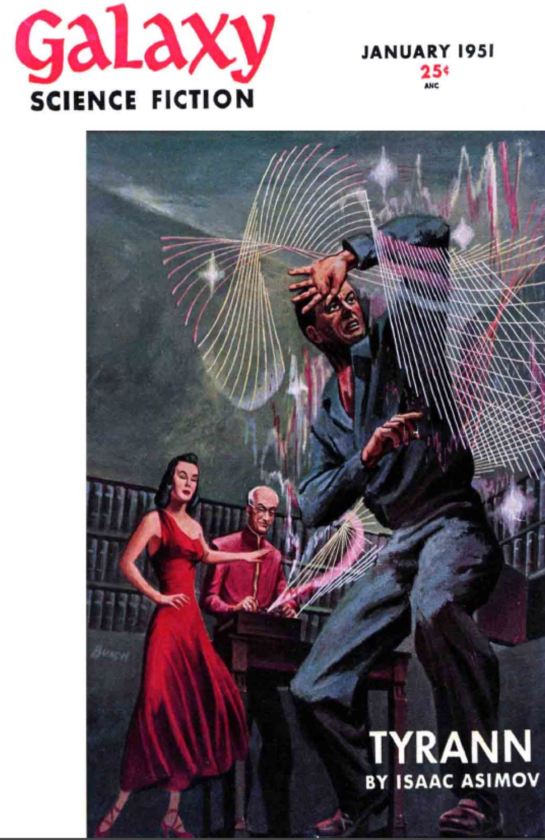
For August, my book club is reading The Stars, Like Dust by Isaac Asimov. It was serialized under the title Tyrann in the first three months of 1951 in Galaxy Science Fiction and later published in hardback from Doubleday that same year. I was born in 1951, so I was delighted to examine a work of science fiction from back then.

I listened to The Stars, Like Dust on an audiobook from Audible.com played on an iPhone. Now that would have been a great prediction to add to a science fiction story for 1951. It’s fun to read old science fiction and think about all the science and technology it missed in hindsight. I always assume the future would be everything we failed to imagine.

The story was mildly compelling, but the finale hokey. The ending struck me funny because I kept wondering the whole story why galactic empires are governed by aristocracies. And why empires? The U.S., E.U., and U.S.S.R. have trouble keeping states and nations together in a cooperative union, how can we expect thousands of planets separated by countless light-years to form a unified government? We can’t scale up to a planetary government here on Earth, so is there any reason to think humans could form a pan-galactic political structure? In the story Nebula Kingdoms are imagined. That name has a nice ring to it, but wasn’t it rather unimaginative of Asimov? Nebula Kingdoms is colorful sounding for a fairy tale, but isn’t it boring to think every planet will be a kingdom thousands of years in the future? Reading this book I got the feeling that George Lucas was a big fan of Isaac Asimov.

The plot of The Stars, Like Dust, is rather simple. Biron Farrill is graduating college on Earth when an attempt is made on his life. He spends the rest of the novel escaping from one planet to the next to find out why. Along the way, he falls in love with the beautiful princess Artimesia of Rhodia, and under the guidance of her cousin, Gillbreth oth Hinriad convinces Biron to seek out the secret rebel planet. Everything is based on foiling the political intrigue of the Tyranni, who are trying to take over the entire galaxy.

I’ve been watching a lot of old pirate movies from the 1940s and they feel very similar to this story and Star Wars. I wondered if Asimov was swayed by the romance of Lords and Ladies because of the swashbuckler flicks he was seeing at the theater? Asimov does come up with a number of different aristocratic titles from various Earth eras that have been used in SF stories ever since. Why do pulp fiction and historical romances love characters with titles so much? Isn’t plain old first names not sense-of-wonder enough for people hyper-jumping across the galaxy?

Also, why would the far future have methods of rule that have fallen out of favor long before Asimov’s own time? Did Asimov and George Lucas feel that thousands of inhabitable planets in a galaxy organized by constitutions would lack grandeur so they spice up their stories with archaic human hierarchies?  Is democracy or socialism just too dishwater gray for 3582 ACE?

What I liked about the story was Asimov’s descriptions of space travel. There is one scene on an interstellar liner where passengers observe going into hyperspace via a large glass wall. That reminded me of the first Star Wars movie when the audience was shown Luke’s first jump through hyperspace.

Asimov spent a fair amount of time trying to describe space navigation, but I doubt his three coordinate systems could work. Although I got the feeling Asimov spent time thinking about it. He tried, that’s more than most SF novelists do. At one point he said it was more complicated than just the three coordinates because they’d have to calculate the motion of the stars. Even if all the stars in the galaxy had the same relationship to each other for an X, Y, Z location, the galaxy would have to have an exact time and date system, and even that assumes the orbits of the stars around the galaxy were perfect and each had a single orbital motion.

The Stars, Like Dust, was a mildly fun escape into the science fiction of 1951, but its science is closer to flying to the moon powered by bottles of dew than real science. (A SF story from a couple centuries ago used that method of escaping Earth.)

It was a fun part of the book when Biron has to fly up to orbit and then make a hyperjump. He’s had a bit of training in college. This gives Asimov a chance to explain how it’s done for the reader. Just how hard could it be for one person with practically no training to pilot a spaceship on the run? Asimov tries, and for me its the highlight of the story, but really it was too simple. I assume Asimov figured readers would only sit still for the tiniest of science lessons. Of course, it shoots down the idea fans learned science from science fiction.

It sure would have been fun in 1966 when Captain Kirk tells Sulu to plot a course to Vulcan if Mr. Spock would have stopped the plot to explain how it was done. I’d like to claim the SF I grew up with 15 years later was more realistic, but I can’t.

        “Set a course to Vulcan Mr. Sulu”

        “Aye, captain.” Sulu turns around. “Which way is that?”

        “Ask Spock, he should know.”

        Sulu turns to Spock

        “When and where are we now? What are our orbital motions?”

        “I don’t know,” Sulu looks annoyed.

        Spock raises one eyebrow. “Just ask the computer, it knows everything and we can keep this script simple.”

NASA has been able to hit asteroids, moons, and planets with precise accuracy, but have you ever wondered how it’s done?

Thus The Stars, Like Dust leaves me thinking about two things. How will interstellar astrogation work, and what kind of governments will develop across star systems. I think Asimov who was a very smart guy but went for gobbledegook political intrigue and romance inspired by Errol Flynn and Oliva De Havilland movies instead of writing about the hard science he was studying at the university.

I’m not sure who to recommend this book to. Asimov fans should enjoy reading one of his early novels. Star Wars fans might get a kick out of it. But readers of modern space opera will find it simplistic compared to current works like The Culture series by Iain M. Banks.

I collected some old reviews of The Stars, Like Dust and put them in a pdf file. It shows that Asimov’s book didn’t impress many even when it came out. But every reviewer saw something different. One long review by Ted White in 1970 gives his perspective of remembering reading it when he was 13 in 1951, and then rereading it years later as an adult.

Nowadays I often find reading about science fiction more interesting than reading science fiction. The Stars, Like Dust, fits on an evolutionary branch of science fiction where movies like Star Wars and books of Lois McMaster Bujold appear later on in its evolution.

Tryann by Isaac Asimov

James Wallace Harris

The Year’s Best Short Science Fiction: 1950

The Years Best Short Science Fiction - 1950

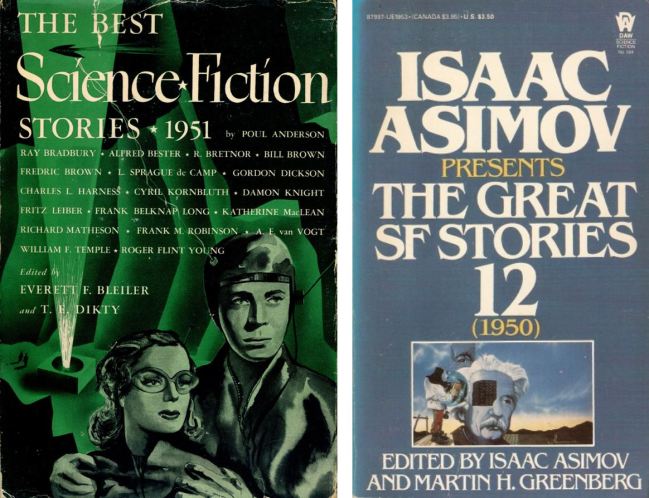
1950 was a great year for SF short stories. Along with 1966 and 1982, they tie for having the most stories in one year on the updated Classics of Science Fiction Short Stories. Four memorable stories in one year is outstanding since many years have none, and only 1-2 is common. Also, before I read the two anthologies pictured above I was already familiar with 7 of the stories. That’s the most since I started this reading project of systematically reading through the best-SF-of-the-year anthologies starting with 1939.

1950 represents an evolution in mature science fiction writing. It also reflects the influence of magazines besides Astounding Science Fiction. The old timers in my youth considered the 1940s the Golden Age of Science Fiction, but for my generation, the 1950s is our Golden Age. I’m very excited to finally arrive in 1950 and look forward to reading through the decade.

In 1951 Everett F. Bleiler and T. E. Dikty selected the following 1950 science fiction short stories for The Best Science Fiction Stories 1951:

  • “The Santa Claus Planet” by Frank M. Robinson (original)
  • “The Gnurrs Come from the Voodvork Out” by Reginald Bretnor (F&SF)
  • The Mindworm” by C. M. Kornbluth (Worlds Beyond)
  • “The Star Ducks” by Bill Brown (F&SF)
  • “Not to Be Opened” by Peter Grainger (as Roger Flint Young) (Astounding)
  • Process” by A. E. van Vogt (F&SF)
  • “Forget-Me-Not” by William F. Temple (Other Worlds)
  • “Contagion” by Katherine MacLean (Galaxy)
  • “Trespass!” by Poul Anderson and Gordon R. Dickson (Fantastic Story Quarterly)
  • Oddy and Id” by Alfred Bester (Astounding)
  • To Serve Man” by Damon Knight (Galaxy)
  • “Summer Wear” by L. Sprague de Camp (Startling Stories)
  • “Born of Man and Woman” by Richard Matheson (F&SF)
  • “The Fox and the Forest” by Ray Bradbury (The Illustrated Man)
  • “The Last Martian” by Fredric Brown (Galaxy)
  • The New Reality” by Charles L. Harness (Thrilling Wonder)
  • “Two Face” by Frank Belknap Long (Weird Tales)
  • Coming Attraction” by Fritz Leiber (Galaxy)

In 1984 Isaac Asimov and Martin H. Greenberg picked these stories for The Great SF Stories 12 (1950):

  • “Not with a Bang” by Damon Knight (F&SF)
  • “Spectator Sport” by John D. MacDonald (Thrilling Wonder)
  • “There Will Come Soft Rains” by Ray Bradbury (Collier’s)
  • “Dear Devil” by Eric Frank Russell (Other Worlds)
  • “Scanners Live in Vain” by Cordwainer Smith (Fantasy Book)
  • “The Little Black Bag” by C. M. Kornbluth (Astounding)
  • “Enchanted Village” by A. E. van Vogt (Other Worlds)
  • Oddly and Id” by Alfred Bester (Astounding)
  • “The Sack” by William Morrison (Astounding)
  • “The Silly Season” by C. M. Kornbluth (F&SF)
  • “Misbegotten Missionary” by Isaac Asimov (Galaxy)
  • To Serve Man” by Damon Knight (Galaxy)
  • Coming Attraction” by Fritz Leiber (Galaxy)
  • “A Subway Named Mobius” by A. J. Deutsch (Astounding)
  • Process” by A. E. van Vogt (F&SF)
  • The Mindworm” by C. M. Kornbluth (Worlds Beyond)
  • The New Reality” by Charles L. Harness (Thrilling Wonder)

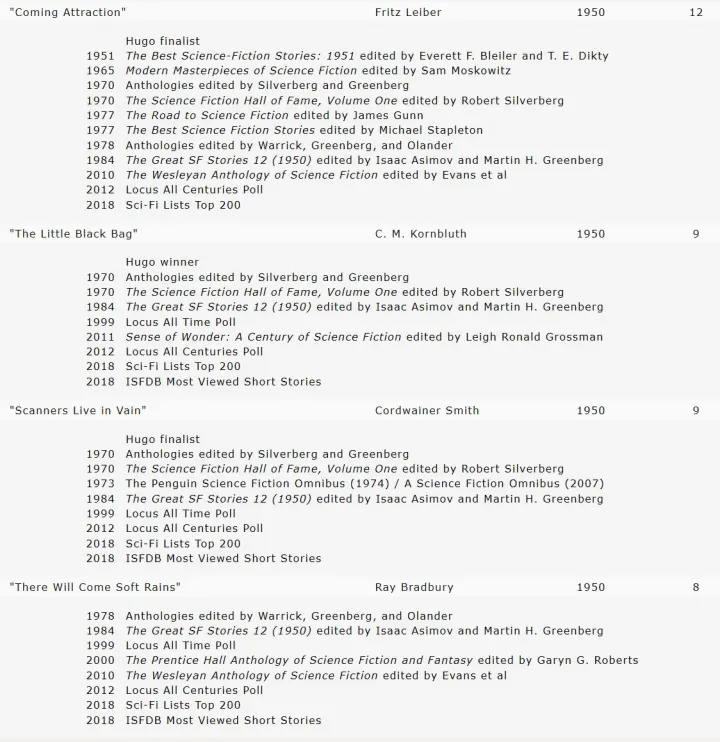
I’ve bolded the overlap. I’ve often wondered when Asimov and Greenberg made up their anthology did they consider what Bleiler and Dikty had done in the past? The Bleiler/Dikty books would have been rare even back in 1984, so I assume they didn’t. Or did they imagine that one day readers would judge the two books together for what they collectively say about the short science fiction of 1950?

And why did Bleiler and Dikty miss “There Will Come Soft Rains,” “Scanners Live in Vain,” “The Little Black Bag,” and  “The Silly Season” which all have become classics since then? Or do later readers discover value in stories that readers back in 1950 missed? “There Will Come Soft Rains” was included in The Martian Chronicles so it was being widely read as Bleiler and Dikty were assembling the volume. “The Little Black Bag” and “Scanners Live in Vain” were included in the first volume of The Science Fiction Hall of Fame in 1970, selected by the popular vote of science fiction writers, so it seems odd they weren’t recognized as instant classics. I think “The Silly Season” is an important miss, but they did include Kornbluth’s “The Mindworm.” Maybe Bleiler/Dikty didn’t want to use two of his stories?

If you look at the 60 short stories from 1950 that’s in our database order by total citations you’ll see both anthologies got most of the most remembered stories. But each anthology also recognized a few classics the other missed. I think the story they both missed which stands out the most is Ray Bradbury’s “The Veldt.” It’s always remembered on fan polls but that’s probably because schools teach it.

Here are the stories that made it to the Classics of Science Fiction Short Stories list:

CSF-SF-1950

Notice that the top three stories won Retro Hugo Award for 1951. The only short stories/novelettes the fans voting for the retro Hugo that the two anthologies missed were “The Helping Hand” by Poul Anderson and “Okie” by James Blish. Neither anthology included any of the novella nominations. If you study the citation sources for the above stories you’ll see how each has remained popular in fan polls.

For these four stories, this was at least my fourth reading for each of them since the 1960s. Each time they get better and I notice more details. These stories should be read by any would-be writers wanting models to study. They are rich in ideas, dense with details, yet very told dramatically. These four stories are so obvious and famous that there’s little reason to discuss them. And I think the voters for the 1951 Retro Hugo Award also picked the obvious novella choice: “The Man Who Sold the Moon” by Robert A. Heinlein.

The fun question to ask now: What is the best of the forgotten stories? I’m partial to “Contagion” by Katherine MacLean which I’ve already reviewed separately. I thought it a standout story for the time because MacLean was poking fun at male SF fans and gender issues.

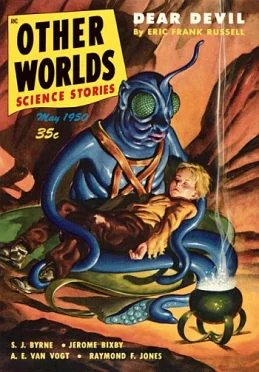
Dear Devil by Eric Frank Russell - cover storyDear Devil” is my favorite Eric Frank Russell story so far in this reading project. It’s about another Martian invasion, but this time a very positive one. Don’t you miss Martians? Sure the story is sentimental and unrealistic, but if you loved the movie E.T. you’ll probably love “Dear Devel.”

“The New Reality” by Charles L. Harness reminds me somewhat of Greg Egan’s novel Quarantine because it’s about how our ideas of reality shape reality. The story is a gnarly philosophical fantasy about ontology. The story itself is a kind of a mess, lacking in structure and realistic dramatic action, but it’s filled with the kind of ideas that mess with your head, the kind that pot smokers and science fiction fans love.

The Sack” by William Morrison is not a great story, but it is a fun read. Explorers find an intelligent creature on an asteroid. It is the last of its kind, and it looks like a sack of potatoes. However, the Sack is so smart and willing to answer questions, that humans sell time with it like we do scheduling a supercomputer. The Sack is so effective at answering questions that nations and criminals want to kidnap it. The Sack claims it is always honest, but warns the human questioners that its knowledge might not always be beneficial.

“Misbegotten Missionary” by Isaac Asimov was later renamed “Green Patches” but I like the original name better. Asimov later realized that this story is similar to “Who Goes There?” by John W. Campbell, his mentor. Space explorers visit a planet where all life is part of a single unified consciousness and this lifeform thinks humans are tragically incomplete since they are isolated individuals. The gestalt organism has a way of possessing humans to make them part of their whole. When the Captain of the first space ship lands on this planet and discovers his crew has been infected he blows his ship up. The story is about the second ship returning from the planet with a very clever hitchhiker. Because this tale has more story and less lecture, it’s one of Asimov’s more entertaining tales.

That’s one of the big problems of older science fiction, authors are inspired by far out ideas, but they don’t know how to present them dramatically. Many of these stories in these two anthologies are often interrupted by mini-lectures. That’s why “Scanners Live in Vain” and “Coming Attractions” were such standouts. Each is dense with ideas, but throw off their dazzling concepts as part of the action. They are dramatic and emotional.

Most of the stories in these two anthologies are still entertaining, but I believe most modern readers will find most of the second-string stories slight, clunky, outdated, or primitive. Aficionados of old SF will probably get a kick out of them.

Galaxy Oct Nov 1950

The first two issues of Galaxy, October and November 1950 contains
“Contagion,” “The Last Martian,” “Misbegotten Missionary,” “Coming Attraction,” and “To Serve Man” –  four stories for Bleiler/Dikty and three for Asimov/Greenberg. That’s a pretty impressive debut.

The impact of the new magazines F&SF and Galaxy is particularly impressive when you realize they were competing with Astounding’s 12 issues with just 4 and 3 issues respectively.

Off to read 1951 – the year I was born.

James Wallace Harris


Serious Science Fiction

Galatea 2.2 by Richard Powers (1995)

I first read Galatea 2.2 by Richard Powers back when it came out in 1995. I still have the first edition hardback (I wonder if it’s worth more now because Powers just won the Pulitzer Prize for his latest novel, The Overstory). I’ve been wishing for decades to hear an audiobook production of Galatea 2.2 and one finally came out in April (4/10/19), probably due to Richard Powers’ recent recognition. Galatea 2.2 is a literary science fiction novel of the highest order, although I doubt Powers or his publishers would want that said about it. And it’s doubtful that most science fiction fans will find it fun reading.

Galatea 2.2 is about a character named Richard Powers who is a writer spending a year in residence at a university named U working with computer scientists. Richard Powers the man attended and taught at the University of Illinois at Urbana-Champaign, and for a time he was an adjunct member in the Beckman Institute for Advanced Science and Technology. Within the story, the character Richard Powers talks about writing books with titles that were the same as the real-life Richard Powers wrote. In fact, it’s very hard not to think of Galatea 2.2 as an autobiographical novel. The only trouble is readers don’t know where the line between fiction and fact lies.

Where Galatea 2.2 becomes serious science fiction is when Richard Powers the character is challenged by computer scientists to help them create a computer program that could pass the Master’s comp in literature, the same one Richard Powers the character and the human passed for their MA.

Is Richard Powers the character an AI version of Richard Powers the writer?

Most science fiction novels just tell us computers and robots are intelligent and sentient. They might do some sleight-of-hand waving and give us a few presto-chango words expecting us readers to believe what they say will be possible in the future. Galatea 2.2 is full of then-current scientific details about human cognition, language, and computer science. Powers the real writer builds up his story slowly while using an allegorical tale of his own life as an analogy to explain the complexity of human intelligence. Galatea 2.2 was written during the heyday of neural nets just as machine learning was taking its first baby steps. Why it’s science fiction is because Powers goes well beyond what science is capable of doing even today.

Galatea 2.2 by Richard Powers audiobook cover 2019

In many ways, Galatea 2.2 is closer to the film Her than Ex Machina because it’s so quiet and dry. The story is far more realistic and serious than most popular science fiction books and movies about sentient machines. This novel is about educating its readers of the real challenges of teaching a machine to understand fiction, but also revealing that humans aren’t the miracles our faiths claim. Often what we call brilliant intellect is a trick of the brain. Time and again Galatea 2.2 points out our own delusions and faults. At one point within the novel, several characters criticize the fictional Richard Powers for writing grim novels, advising him he’d sell more books by being upbeat. Powers the character has to explain that his writing goal is not to entertain them but to see a sense of truth in personal revelations. I assume that’s also true for the flesh and blood Powers writing this book. Galatea 2.2 is also meta-fiction.

Galatea 2.2 has a lot to say in the same way The Handmaid’s Tale and Nineteen Eighty-Four have to say. It uses science fiction techniques for serious speculation. Science fiction fans often feel their genre is a serious matter, but all too often science fiction stories aren’t that serious. Science fiction fans are often insulted when literary writers claim they don’t write science fiction when their novels clearly use science fictional techniques. There is a reason why writers like Margaret Atwood or Ian McEwan avoid the label of science fiction – science fiction isn’t taken seriously by serious readers. The label science fiction is slapped on all kinds of books and is often a marketing sorting category for anything far out and not serious. Sorry fellow SF fans, but we’re seen as kooky.

Now writers within the genre have written books they wanted to be taken seriously. Dune by Frank Herbert and The Left Hand of Darkness by Ursula K. Le Guin are two. Robert A. Heinlein tried to leave the genre when he wrote Strangers in a Strange Land but never achieved escape velocity. Ray Bradbury and Kurt Vonnegut were able to make their escape, but the man who bellowed the loudest against the label, Harlan Ellison never did.

There are countless novels written by authors who shun the label “science fiction” writer that write perfectly wonderful science fiction novels. For example, The Evolution of Bruno Littlemore by Benjamin Hale. I doubt many people have ever asserted it was science fiction even though the science fiction genre has been writing about uplifted apes for decades.

Few people will call Galatea 2.2 a science fiction novel even though it’s about an AI that becomes self-aware, clearly the territory of science fiction. What’s the difference between a literary science fiction novel and a genre science fiction novel?

Science fiction fans are especially insulted when people claim it’s the quality of writing. And that’s not my answer, but often it’s true. No, my answer is the difference is often due to the level of characterization. My guess is most science fiction fans will feel most of Galatea 2.2 is boring. Genre science fiction tends to be action-oriented. Literary science fiction tends to contain biographical character detail that overwhelms the science fiction elements.

I often tell friends they can spot literary works because they feel like an autobiography when in the first person, and biography when in the third. Probably most science fiction fans will complain that too much of Galatea 2.2 is about Richard Powers and not enough is about Helen, the AI. And that will also be true of Ian McEwan’s new novel, Machines Like Me, where the story is more about Charlie the human and not about Adam the machine. The reason why The Handmaid’s Tale is literary science fiction is that the story is more about Offred than Gilead. Genre science fiction writers would have focused more on the robots or the details of the theocracy using dramatic action and adventure. For contrast, compare with the characterization of Katniss Everdeen and the society of Panem in The Hunger Games.

Modern science fiction writers have moved more towards the literary by building up their characters, while literary writers are experimenting more with science fictional techniques in their stories. Two examples of meeting in the middle are The Time Traveler’s Wife by Audrey Niffenegger or The Doomsday Book by Connie Willis. I think both literary and science fiction fans could love each of these stories.

I tend to doubt that most science fiction fans will enjoy Galatea 2.2 but I think they should give it a chance, especially the new audiobook edition, which is wonderfully narrated by David Aaron Baker. It was worth the wait for me.

James Wallace Harris


Vultures of the Void by Philip Harbottle

Vultures-of-the-Void

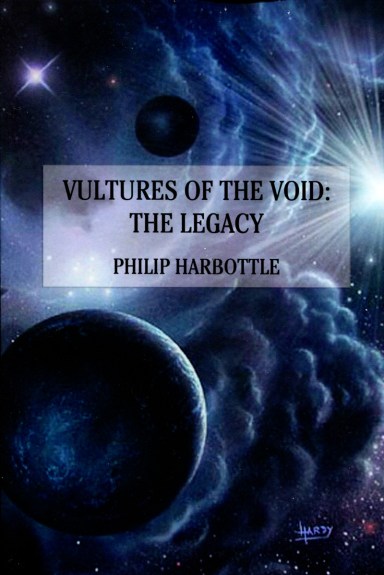
I came across Vultures of the Void: The Legacy by Philip Harbottle by accident. Paul Fraser chided me in an earlier post being too American-centric when talking about science fiction history, so I went looking for more information on British science fiction history. I found a mention of an earlier edition of Vultures of the Void in Mike Ashley’s Transformations: The Story of Science Fiction Magazines From 1950 to 1970 (itself out-of-print.)

Vultures of the Void is a print-on-demand (POD) book, which can be ordered from a number of sources. Here’s how Amazon describes it:

An earlier, very much shorter version of this book was published as VULTURES OF THE VOID in 1992 by Borgo Press, along with a companion bibliographic volume, BRITISH SCIENCE FICTION PAPERBACKS AND MAGAZINES 1949-1956. Now the compiler and editor of those books, Philip Harbottle, here presents the result of his further and ongoing researches into British science fiction publishing history. This greatly expanded version includes entirely new coverage of the generic hardcover titles that briefly and paradoxically flourished alongside the indigenous British paperbacks of the early 1950's, spearheaded by an influx of outstanding American science fiction by such authors as Isaac Asimov, Fredric Brown, Edmond Hamilton, Robert Heinlein, Jack Williamson, and A. E. van Vogt. VULTURES OF THE VOID: THE LEGACY also deals in fascinating detail with related shaping events both before and after the notorious postwar 'mushroom' decade. In particular, it describes how many of the original founders of the pre-war British Interplanetary Society - including fledgling young science fiction writers such as Arthur C. Clarke and Eric Frank Russell - were to become giants and shapers of their field after the war. And how pioneer editors such as Walter Gillings and John Carnell struggled against overwhelming odds to establish British science fiction magazines both before and after the Second World War. In this new book, Harbottle also reveals the astonishing latter-day legacy of the turbulent postwar decade for himself and some of the most prolific authors such as John Russell Fearn, E. C. Tubb, and others, whose work he has been instrumental in returning to print.

The book is almost four hundred pages of fairly small print spiced with black-and-white photos of covers from old British science fiction books, paperbacks, and magazines. While flipping through it I realized Paul was right, I do have an American-centric view of science fiction. Vultures of the Void shows an alternate history of science fiction that I know little about.

This is an obscure book, not because it’s unavailable, but because so little is written about it. There are only three reviews at Goodreads. I was able to find one review by science fiction writer  David Redd.

If you collect old science fiction magazines and books, you might want to buy this one.

James Wallace Harris

Before there was Instagram, Twitter, and Facebook, before there was Blogs, Forums, and Listserv, there was the Fanzine!

The Science Fiction Fanzine Reader

I’m not sure people who grew up after the internet can comprehend living before the computer era. They are used to instant communication with anyone around the world. They are used to finding their peeps in a Facebook group just by typing in a search phrase or battling tempests in a teacup with digital acquaintances they’ve never met on Twitter. The internet lets everyone easily locate like-minded members of their subculture or the foes of their philosophy. Anyone can have a world-wide distribution of their writing. But in the days before networked computers, most people only knew other people from meeting face-to-face. Writing letters were about the extent of distant communication, and generally, they were to Mom and Dad when you were at camp.

However, Amazing Stories in the 1920s inspired science fiction fans to communicate with other unmet fans through the letter columns, which led them to invent their own magazines, the fanzine. That allowed SF fans to express themselves and find other fans to share and argue over the mighty topic of science fiction. Instead of HTML, they used letterpresses, ditto machines, and the mighty Gestetner mimeograph to publish text and graphics.

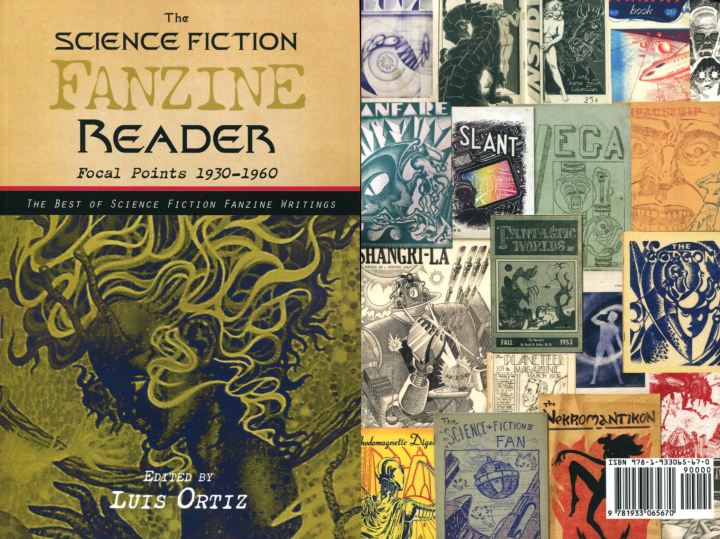
Luis Ortiz has just come out with a new anthology of fanzine essays and artwork called The Science Fiction Fanzine Reader: Focal Points 1930-1960. He ties 400 pages of reprints with commentary and history. Sure this is a big book about a tiny subculture. Only 200 people attended the first Worldcon in New York City in 1939. Most science fiction fans lived in isolation, hungry for contact with their fellow fen.

In my recent essay about Hugo award-winning fanzines, I provided links to sites where you can read these classic zines. What Ortiz has done is give those archives a coherent overview and history. I don’t think many people will be buying this $30 book. The old science fiction fandom is dying out. It’s been completely overshadowed by social media. But I want to let those who remember to know that it exists. And maybe let those who don’t remember a chance to see how the ideology of science fiction was spread before the world knew the term science fiction.

I joined Spectator Amateur Press Society (SAPS) in 1971 and my cousin-in-law let me use his church’s Gestetner to run off my first zine called The Blue Bomber (named after my car). SAPS was an amateur press association (APA) where I shared my zine with 36 other people around the world. In 1974, Greg Bridges and Dennis McHaney and I purchased a Gestetner together. I helped Greg publish a genzine called Diversity for our local science fiction club, but we traded it for other zines in other states, and I think England, Canada, and Australia. Dennis published a zine devoted to Robert E. Howard. I used our mimeograph for publishing my SAPS and SFPA zines.

Communicating with distant people I’ve never met in the 1970s via zines prepared me for the BBS boom in the 1980s. I joined Prodigy, AOL, Genie. I had a 2-line BBS system to discuss science fiction. When I got access to the internet in 1987 I contacted other SF fans via email, forums, mailing lists, and USENET. I created the first version of The Classics of Science Fiction for a fanzine Lan’s Lantern. I reprinted it on a gopher server in the early 1990s, and right after the web was created I set up the first web version. This site is version 4.

I feel all of this communicating across the planet was a natural progression from publishing my first fanzine.

James Wallace Harris, March 27, 2019


The Very Best of the Best: 35 Years of the Year’s Best Science Fiction edited by Gardner Dozois

The-Very-Best-of-the-Best-edited-by-Gardner-Dozois

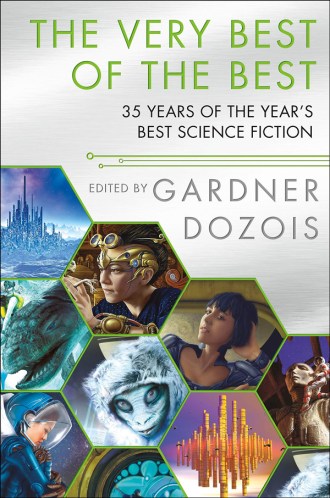
Yesterday Santa Claus came to visit me in February. Since 2002 when I joined Audible.com, I’ve wished for an audiobook edition of one of Gardner Dozois giant Year’s Best Science Fiction annuals. Sadly, Dozois died last May and none of the 35 volumes were ever produced on audio. But before he died, he created The Very Best of the Best: 35 Years of the Year’s Best Science Fiction and it’s out in hardcover, ebook and audiobook editions.

Unfortunately, the subtitle to this volume is flat out wrong. It only collects the best stories from 2002-2017, but that’s because Dozois had already published The Best of the Best: 20 Years of the Year’s Best Science Fiction back in 2005 and The Best of the Best Volume 2: 20 Years of the Best Short Science Fiction Novels in 2007. I had hoped this new volume would have been Dozois legacy collection reflecting the full 35 years. But be that as it may, it’s still a giant collection of great science fiction and over 39 hours of science fiction short stories on audio, which is something I love. Vivienne Leheny and Will Damron do a fantastic job of narrating these stories, and my new wish is for someone to hire them to create audiobook editions of the earlier volumes.

Last year the three volumes of The Science Fiction Hall of Fame came out on audio. That means I can listen to some of the most remembered science fiction short stories from 1926-1964. This is why I had hoped this new audiobook would have given me the best short science fiction from 1984-2017 to listen to, but that hasn’t happened. I’m not complaining. This new book is great in both quality and quantity, and I’m quite appreciative of all the wonderful stories I’m getting to hear for the first time. I’m just greedy and want more. I want audiobook publishers to produce more anthologies of great short science fiction, and I’m now particularly anxious to hear the best short fiction from 1965-2001.

And, there’s even another problem for me, other readers, editors, and publishers. No one reader, no matter how experienced, can identify all the best stories for all readers. Tastes just vary too much. If you look at our Classics of Science Fiction Short Stories by Year list, which has the citations listed for each story, you can see which stories Gardner picked as his favorite, and which ones he didn’t. Or if you use our CSF Query program to look at stories for 2002-2017 you’ll see only one story Gardner picked for The Very Best of the Best on our list.

The 38 stories from The Very Best of the Best covering 2002-2017 with links to my reviews are:

  • The Potter of Bones by Eleanor Arnason
  • Rogue Farm by Charles Stross
  • The Little Goddess by Ian McDonald
  • Dead Men Walking by Paul McAuley
  • Tin Marsh by Michael Swanwick
  • Good Mountain by Robert Reed
  • Where the Golden Apples Grow by Kage Baker
  • The Sledge-Maker’s Daughter by Alastair Reynolds
  • Glory by Greg Egan
  • Finisterra by David Moles
  • The Illustrated Biography of Lord Grimm by Daryl Gregory
  • Utrinsque Cosmi by Robert Charles Wilson
  • Events Preceding the Helvetican Renaissance by John Kessel
  • Useless Things by Maureen McHugh
  • Mongoose by Elizabeth Bear and Sarah Monette
  • Hair by Adam Roberts
  • The Things by Peter Watts
  • The Emperor of Mars by Allen M. Steele
  • Flower, Mercy, Needle, Chain by Yoon Ha Lee
  • Martian Heart by John Barnes
  • The Invasion of Venus by Stephen Baxter
  • Weep For Day by Indrapramit Das
  • The Girl-Thing Who Went Out For Sushi by Pat Cadigan
  • The Memcordist by Lavie Tidhar
  • The Best We Can by Carrie Vaughn
  • The Discovered Country by Ian R. MacLeod
  • Pathways by Nancy Kress
  • The Hand Is Quicker… by Elizabeth Bear
  • Someday by James Patrick Kelly
  • The Long Haul, From the Annals of Transportation, The Pacific Monthly, May 2009 by Ken Liu
  • Three Cups of Grief, By Starlight by Aliette De Bodard
  • Calved by Sam J. Miller
  • Emergence by Gwyneth Jones
  • Rates of Change by James S.A. Corey
  • Jonas and the Fox by Rich Larson
  • KIT: Some Assembly Required by Kathe Koja and Carter Scholz
  • Winter Timeshare by Ray Nayler
  • My English Name by R.S. Benedict

Our meta-list system recognized 37 stories from the same period:

  • Breathmoss by Ian R. MacLeod
  • The Cookie Monster by Vernor Vinge
  • The Empire of Ice Cream by Jeffrey Ford
  • The Empress of Mars by Kage Baker
  • Singing My Sister Down by Margo Lanagan
  • The People of Sand and Slag by Paolo Bacigalupi
  • The Voluntary State by Christopher Rowe
  • Little Faces by Vonda N. McIntyre
  • Magic for Beginners by Kelly Link
  • The Calorie Man by Paolo Bacigalupi
  • The Little Goddess by Ian McDonald
  • The House Beyond Your Sky by Benjamin Rosenbaum
  • Yellow Card Man by Paolo Bacigalupi
  • The Merchant and the Alchemist’s Gate by Ted Chiang
  • 26 Monkeys, Also the Abyss by Kij Johnson
  • Exhalation by Ted Chiang
  • The Gambler by Paolo Bacigalupi
  • The Ray-Gun: A Love Story by James Alan Gardner
  • Eros, Philia, Agape by Rachel Swirsky
  • Spar by Kij Johnson
  • The Island by Peter Watts
  • The Lady Who Plucked Red Flowers Beneath the Queen’s Window by Rachel Swirsky
  • The Sultan of the Clouds by Geoffrey A. Landis
  • The Things by Peter Watts
  • Under the Moons of Venus by Damien Broderick
  • The Man Who Bridged the Mist by Kij Johnson
  • The Paper Menagerie by Ken Liu
  • Close Encounters by Andy Duncan
  • Botanica Veneris: Thirteen Papercuts by Ida Countess Rathangan by Ian McDonald
  • The Game of Smash and Recovery by Kelly Link
  • Seasons of Glass and Iron by Amal El-Mohtar
  • The Visitor from Taured by Ian R. MacLeod
  • Things with Beards by Sam J. Miller
  • Touring with the Alien by Carolyn Ives Gilman
  • A Series of Steaks by Vina Jie-Min Prasad
  • The Martian Obelisk by Linda Nagata
  • The Secret Life of Bots by Suzanne Palmer

Practically no overlap. Why? If The Very Best of the Best is actually what it says it is, why don’t we see more overlap with the stories our system identified by means of tracking popularity? An easy answer is there’s a lot of great SF short stories, more than enough for every editor to pick different favorites. But what if there are other motives besides claimed quality that go into selecting a story for a best-of anthology?

For example, the first story in The Very Best of the Best is “The Potter of Bones” by Eleanor Arnason. It’s a beautiful tale that was nominated for a Nebula but has only been reprinted in anthologies edited by Gardner Dozois or Arnason’s own collection. I don’t know if Gardner intentionally selected stories that hadn’t been reprinted often, or if Gardner has a very unique taste in science fiction. My guess, it’s a little of both. An honest title for this collection might be Gardner Dozois’ Favorite Science Fiction from 2002-2017 That He Believes Deserves More Attention.

On the other hand, the second story “Rogue Farm” by Charles Stross, has been included in at least seven anthologies. That seems to disqualify my theory, but I’m not sure.

A troublesome paradigm shift is going on in publishing short science fiction right now. The short stories that get the most attention, especially for awards, are those that are published online where people can read them for free. And it’s becoming more common for online publishers to include both a text and an audio edition. Free online stories compete for readers with stories that are published in magazines or original anthologies behind another kind of paywall. The old print magazines, Analog, Asimov’s and F&SF have dwindling readerships. The prestige of getting published used to be seeing your work in print. But I wonder if short story writers now prefer online publications because they get more readers.

I could speculate endlessly about what are the best SF short stories or how they are identified by editors and discovered by readers, but the bottom line is I’m very happy with The Very Best of the Best. I hope thousands of SF fans buy and listen to it because that should encourage audiobook publishers to produce more SF anthologies on audio. But if you don’t like audiobooks, there are print and ebook editions.

Finally, there are two tributes to Gardner by Robert Silverberg and James Patrick Kelly that I want to recommend. They just appeared in the new issues of Asimov’s Science Fiction but are available to read online. I got to study with Gardner when he spent a week as our resident instructor for the Clarion West workshop I took in 2002. He was a man I will remember and I’ll always be grateful for his encouragement and writing lessons.

James Wallace Harris, February 27, 2019

The Winston Science Fiction Series

Winston-Science-Fiction-series

There are pleasures of the past you can buy — if you’re willing to pay the price. For some bookworms who got hooked on science fiction in the 1950s and 1960s, the Winston Science Fiction series aimed at children trigger an intense sense of nostalgia. However, I don’t believe it was the words in those 37 volumes that are burned into our memories, but the cover and endpaper art. Finding one of these stories reprinted without the art doesn’t set off those same intense emotions about the past, at least for me. I often wonder if nostalgia isn’t predominantly a visual thing. I’m in a number of Facebook groups where people are crazy about posting images of the past.

I never owned any of the Winston books as a kid, but got them from my school library, the Miami-Dade County Public Library, or from the Homestead Air Force Base library in the mid-1960s. There were three kinds of science fiction novels aimed at children that I remember from back then. The twelve Heinlein juveniles from Scribners, books by Andre Norton, and the Winston Science Fiction series. When I got my first job I ordered all the Heinlein books in hardback from the publisher. I wish I had ordered the Winston books at the time too. Those Winston books today in VG to Fine condition run hundreds of dollars each if they have the original dust jackets.

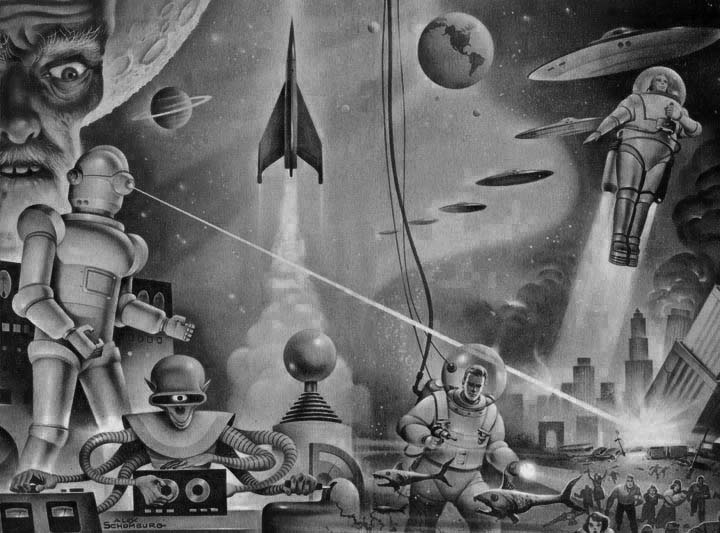
Mists of Dawn by Chad Oliver Another important visual bond with these books was the endpaper art that was part of most of the first editions by Alex Schomburg. In fact, this artwork can set off a flurry of comments on the Facebook groups Space Opera Pulp and Science Fiction Book Club. It seems to capture the essence of 1950s science fiction. And it’s a shame that all hardback books don’t all have endpaper art. The Heinlein juveniles did have beautiful endpapers, but just a star pattern, not like the sense-of-wonder artwork below.
Winston_Endpaper For many years I’d keep an eye out for the Winston Science Fiction books when I shopped at used bookstores. I never saw any. I eventually assume they were all owned by collectors. A few years ago my friend Mike found The Ant Men by Eric North at a library book sale in good condition but without a dust jacket. I was envious of him for his luck. We then found WinstonSciFi that sells reproductions of the dust jackets at very reasonable prices. Now his copy of The Ant Men looks like this one:

The Ant Men by Eric North

The other day Mike and I were shopping at a used bookstore and found a Dover reprint of The Ant Men by Eric North. It had a stylised version of the cover that was okay, but what really shouted at me to buy the book was the original Schomburg endpaper art. I didn’t buy it because the book’s cover looked wrong. I’m still tempted to go back to get it because of the endpaper art.

Last year I discovered that many titles in the Winston Science Fiction series were being sold on Amazon as ebook and trade paperback reprints and they used the original cover art (but not the endpaper art). I ordered one just to check it out, Rockets to Nowhere by Lester del Rey. The publisher of these reprints is Dan Thompson of Thunderchild Publishing from Huntsville, Alabama. He also offers a reprint of The Ant Men with the original cover. You can read about how Dan got into reprinting vintage science fiction here. Like me, Dan also read the Heinlein and Andre Norton books growing up. He discovered that most of the Winston books were out-of-print and thought that was a shame, so he got into the publishing business. A few were in the public domain, but for most, he had to track down the copyright holders to arrange contracts for reprinting. He’s been able to reprint many but not all of the series in both ebook and trade paper editions.

Even though I’d love to own a mint condition original copy of Rockets to Nowhere, having Dan’s trade paperback reprint visually fulfills my nostalgic needs.

Rockets-to-Nowhere---both-editions

Of course, I would prefer to own the 1st-edition, but I don’t want to spend $200. $7.99 is a great compromise between my eyes and my bank account.

If you’d like to see what the other covers look like for the entire series, check out Worlds Without End. Publication history and other details can be found at ISFDB.org.

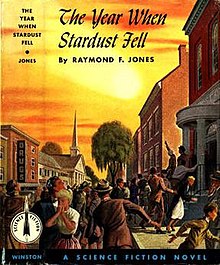
The-Year-When-Stardust-FellSome of these books have never been reprinted, and for some, Thunderchild is the first publisher since Winston to publish them. Which makes me wonder just how good are these stories? I decided to give one a read, but the one I picked wasn’t from Thunderchild. I’ve been wanting to read some Raymond F. Jones, but I now prefer to listen to books. The Year When Stardust Fell was the first one I could find on audio. I got it for $2.99 at Audible.com because I bought the 99 cent ebook edition at Amazon. Thunderchild also sells an ebook and trade paper of this title, and I might get it too because of the cover.

These stories were aimed at children, sometimes even targeted to elementary school kids, but mostly to junior and senior high. I found this story far more adult than I remembered. I don’t think I read The Year When Stardust Fell as a kid, but I had a couple of Deja vu experiences while listening to it. The story is about when Earth passes through a comet’s tail and its dust affects metals, so eventually, all machinery breaks down. Civilization slowly collapses. The story is told from the point of view of Ken Maddox who lives in Mayfield in an unspecified state. Ken’s father is a chemistry professor at a local university. Because of Mayfield being isolated, it’s citizens are able to survive with rationing while in larger cities millions die. As the story progresses the people of Mayfield must learn to live with less and less, and even deal with the moral problem of lifeboat ethics.

Ken and his science club buddies run a ham radio rig that stays in touch with other research sites who are trying to solve the problem of the dust affecting metals. Ken and his buddies also help his father in the lab. This allows the story to emphasize the workings of science. I found the tale thoroughly engaging. It’s not great, but it’s not bad either. To me, it holds up well with other 1950s science fiction stories. In fact, I was always anxious to get back to the story. But then, after-the-collapse stories are among my favorite kind of science fiction story.

Winston-Science-Fiction-at-eBay

To be honest, I can’t remember any of the details from the books I think I read. Of course, I read these stories 55 years ago. I’ll have to read several more to see if I think the series deserves to be remembered for its fiction. What I’m discovering is I want these books because of their physical artistic appeal that trigger my nostalgia. I saw a group of 8 of them on sale at eBay today for $300. The idea of holding those old books again is very tempting, even though $300 could probably get me “reading copies” of the entire series if I shopped carefully. A reading copy in used book terminology meaning its beat to hell but you can still read it. I could get most of them as ebooks for less than $100, and all of Thunderchild trade paper editions for under $300.

Dan says these books aren’t big sellers. It’s probably hard to market books for kids in the 1950s to kids or nostalgic adults in the 2010s. I wonder what will happen to these stories when the baby boomers all die off. I doubt any of them will ever be considered classics of the genre. It’s a shame that Thunderchild doesn’t have the right to publish the entire series again as one uniform set so they might have collector appeal.

Here the complete list of titles with cover artists. My favorites tend to be the ones with Alex Schomburg cover paintings. Links are to Thunderbird trade editions at Amazon.

  1. EarthboundMilton Lesser, cover by Peter Poulton (1952)
  2. Find the Feathered Serpent, Evan Hunter, cover Henry Sharp (1952)
  3. Five Against Venus, Philip Latham (Robert S. Richardson), cover Virgil Finlay (1952)
  4. Islands in the Sky, Arthur C. Clarke, cover Alex Schomburg (1952)
  5. Marooned on Mars, Lester del Rey, cover Paul Orban (1952)
  6. Mists of Dawn, Chad Oliver, cover Alex Schomburg (1952)
  7. Rocket Jockey, Philip St. John (Lester del Rey), cover Alex Schomburg (1952)
  8. Son of the Stars, Raymond F. Jones, cover Alex Schomburg (1952)
  9. Sons of the Ocean Deeps, Bryce Walton, cover Paul Orban (1952)
  10. Vault of the Ages, Poul Anderson, cover Paul Orban (1952)
  11. Attack from Atlantis, Lester del Rey, cover Kenneth S. Fagg (1953)
  12. Battle on Mercury, Erik Van Lhin (Lester del Rey), cover Kenneth S. Fagg (1953)
  13. Danger: Dinosaurs!, Richard Marsten (Evan Hunter), cover Alex Schomburg (1953)
  14. Missing Men of Saturn, Philip Latham, cover Alex Schomburg (1953)
  15. The Mysterious Planet, Kenneth Wright (Lester del Rey), cover Alex Schomburg (1953)
  16. Mystery of the Third Mine, Robert W. Lowndes, cover Kenneth S. Fagg (1953)
  17. Planet of Light, Raymond F. Jones, cover Alex Schomburg (1953)
  18. Rocket to Luna, Richard Marsten (Evan Hunter), cover by Alex Schomburg (1953)
  19. The Star Seekers, Milton Lesser, cover Paul Calle (1953)
  20. Vandals of the Void, Jack Vance, cover Alex Schomburg (1953)
  21. Rockets to Nowhere, Philip St. John (Lester Del Rey), cover Alex Schomburg (1954)
  22. The Secret of Saturn’s Rings, Donald A. Wollheim, cover Alex Schomburg (1954)
  23. Step to the Stars, Lester del Rey, cover Alex Schomburg (1954)
  24. Trouble on Titan, Alan E. Nourse, cover Alex Schomburg (1954)
  25. The World at Bay, Paul Capon, cover Alex Schomburg (1954)
  26. The Year After Tomorrow, eds. Lester del Rey, Cecile Matschat, and Carl Carmer cover and interior illus. Mel Hunter (1954) – an anthology of nine short stories
  27. The Ant Men, Eric North, cover Paul Blaisdell (1955)
  28. The Secret of the Martian Moons, Donald A. Wollheim, cover Alex Schomburg (1955)
  29. The Lost Planet, Paul Dallas, cover Alex Schomburg (1956)
  30. Mission to the Moon, Lester del Rey, cover Alex Schomburg (1956)
  31. Rockets Through Space, Lester del Rey, cover and interior illus. James Heugh (1957) – Special Companion Book (nonfiction)
  32. The Year When Stardust Fell, Raymond F. Jones, cover James Heugh (1958)
  33. The Secret of the Ninth Planet, Donald A. Wollheim, cover James Heugh (1959)
  34. The Star Conquerors, Ben Bova, cover Mel Hunter (1959)
  35. Stadium Beyond the Stars, Milton Lesser, cover Mel Hunter (1960)
  36. Moon of Mutiny, Lester del Rey, cover Ed Emshwiller (1961)
  37. Spacemen, Go Home, Milton Lesser, cover Ed Emshwiller (1961)

JWH

Best of the Best Science Fiction 2018


Best 3 SF novels 2018

Wonder what great science fiction book you might have missed reading this year? Want to get ready to nominate books for the Hugo Awards next year?

I’m going to aggregate several Best-of-the-Year-2018 lists covering science fiction to see which books were mentioned the most often. Here are the lists I’m using:

Here are the results ordered by the number of lists they were on.

5 – Blackfish City by Sam J. Miller (B&N, BestSF, Chicago, Vulture, WP) *
4 – Severance by Ling Ma (B&N, Chicago, Goodreads, Vulture) *
4 – The Calculating Stars by Mary Robinette Kowal (B&N,  BestSF, Chicago, Goodreads)
3 – Rosewater by Tade Thompson (B&N, Chicago, Goodreads) *
3 – Semiosis by Sue Burke (BestSF, Chicago, Vulture) *
3 – Space Opera by Catherynne M. Valente (B&N, BestSF, Goodreads) *
3 – The Book of M by Peng Shepherd (B&N, BestSF, Chicago) *
3 – The Poppy War by R. F. Kuang (B&N, Vulture, WP) *
2 – Binti: The Night Masquerade by Nnedi Okorafor (BestSF, Goodreads) *
2 – Embers of War by Gareth L. Powell (B&N, BestSF)
2 – Empire of Silence by Christopher Ruocchio (B&N, BestSF)
2 – Foundryside by Robert Jackson Bennett (B&N, Vulture)
2 – Head On by John Scalzi (BestSF, Goodreads)
2 – Iron Gold by Pierce Brown (BestSF, Goodreads) *
2 – Medusa Uploaded by Emily Devenport (BestSF, Vulture) *
2 – Revenant Gun by Yoon Ha Lee (BestSF, Goodreads) *
2 – Senlin Ascends by Josiah Bancroft (B&N, WP) *
2 – Spinning Silver by Naomi Novik (B&N, Vulture) *
2 – State Tectonics by Malka Older (Chicago, BestSF) *
2 – Temper by Nicky Drayden (B&N, Vulture) *
2 – The Only Harmless Great Thing by Brooke Bolander (B&N, BestSF)
2 – The Oracle Year by Charles Soule (BestSF, Goodreads) *
2 – Vengeful by V. E. Schwab (B&N, Goodreads) *

* – Titles at Scribd.com

I’ve only read one title off this list, Semiosis by Sue Burke – it was quite impressive. That experience inspires me to try more of these titles.

James Wallace Harris, December 15, 2018