What Do We Talk About When We Talk About Science Fiction?


by James Wallace Harris – 6/27/18

Reprinted from Book Riot.

To encourage discourse at the online science fiction book club I moderate, I began thinking about what we talk about when we talk about science fiction. At the broadest level, we talk about storytelling and writing, which is part of all fiction. At the next level, we discuss how we felt about experiencing a book. Essentially, this level is about entertainment value and doesn’t directly deal with science fiction either. At the third level, we compare the science fictional elements in the story to science fiction we’ve read in the past. Most science fictional concepts are unoriginal, recursive, and depend on previous science fiction. At the final level, the level where we actually talk about science fiction is where we examine the original science fictional speculation in a story.

It’s rather hard to write original science fiction after H. G. Wells and Olaf Stapledon, even though I’m quite sure they cribbed their inspiration from others, too. If you read enough science fiction, you’ll discover most science fictional concepts have been around for a long time. Many go back at least a hundred years, some for hundreds of years, and few for thousands. If you compare science fiction, fantasy, and religion you’ll find many overlapping core questions about reality. Eventually, you’ll see how science fiction evolved out of myths, religion, and fantasy. Science fiction’s current claim to distinction is it explores far-out concepts that might be possible with the aid of science and technology.

What we talk about when we talk about science fiction is the possibility of making changes to reality. Science fiction is a sliding window of speculation. Once upon a time, science fiction theorized how humans could build flying machines. Now that we have American Airlines it’s no longer science fiction. It’s hard to write a new story about the first humans to land on the Moon after Armstrong and Aldrin left their footprints there.

Once I began thinking about what we talk about when we talk about science fiction, I realized it involved a very limited number of topics explored in infinite variations. What differentiates our science fictional hopes from the desires reflected in religion and fantasy is the belief that we can make our dreams come true using brain power rather than depending on the miracles of God or the magic of the paranormal. Science fiction is all about hubris.

When we talk about science fiction we’re mainly talking about these subjects:

  • The possibility of other worlds
  • Life on those worlds
  • Travel between worlds
  • Other intelligent beings like us
  • Are some aliens superior to us
  • Making ourselves immortal
  • How humans can evolve to be different
  • How we can reprogram ourselves (genetics, cyborgs)
  • Creating intelligent life (robots, AI, artificial life)
  • Creating a utopian society (or failing at one)
  • New inventions and their impact
  • Travel in time
  • Alternate histories

Astronomers are discovering new extrasolar worlds every day. So that’s becoming less science fictional. It’s still within the realm of science fiction to speculate what those worlds might contain. Mathematically, we assume life is possible on many of them. We’ve been theorizing about other worlds and other life forms at least since the ancient Greeks and probably earlier. Aren’t stories about gods, angels, and other metaphysical beings of religions and myths just historical residue of speculations about intelligent life from off-Earth worlds from the far past?

Isn’t any discussion about God or gods really a discussion about intelligent aliens? All science fiction has done is to relocate theories of Heaven to more realistic sites in the galaxy. Religion has been speculating how it might be possible for our lives to go on existing after we die. Aren’t all the ideas about scientific immortality in science fiction just a continuation of those speculations?

When we talk about becoming immortal using science fiction and we dream of copying our brains to robot or clone bodies, aren’t we just participating in the latest speculation of how life-after-death could happen? Hasn’t that speculation been going on since our species began to think and talk? Could it have been science fiction when the authors of the Old Testament theorized that a powerful alien being would reanimate our bodies after the end of time? Aren’t myths and religious beliefs really science fiction that’s gone stale from learning too much about how reality really works?

Once you realize that what we talk about when we talk about science fiction is a discussion of our hopes and fears about the future and how we might change reality for better or worse? Hasn’t such speculation always existed? Why is old speculation called myths and new speculation called science fiction? Will 20th-century science fiction one day be remembered as myths?

Most science fiction stories we talk about today are really adventure stories set in older science fictional speculations. For example, Star Wars, probably the most famous of all science fiction stories, has no original speculation about reality. Star Wars uses science fictional speculations from the 1940s and 1950s to create a sprawling setting for conventional tales of adventure, romance, empire, rebellion, war, and aristocracy.
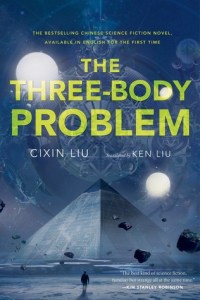
The Three-Body Problem by Cixin LiuAurora by Kim Stanley Robinson and The Three-Body Problem by Liu Cixin are examples of current science fictional speculation about the possibilities of humans traveling to other stellar systems or aliens from other stellar systems coming to visit us. Infomocracy by Malka Older is science fictional speculation about creating a new kind of democracy.

What we talk about when we talk about science fiction is whether or not the author has imagined something that could be made possible that doesn’t currently exist. Either good or bad. To be original the author must come up with something new or a new twist on an old idea. I thought Charlie Jane Anders had something new to say about the nature of science fiction and fantasy in All the Birds in the Sky (which just won the Nebula Award and is up for the Hugo this summer). Isn’t fantasy v. science fiction really magic v. science, and isn’t that deeply psychological? How much of our polarized society is due to a split between believers in magic and science?

Isn’t what we talk about when we talk about science fiction really a psychological reflection of our own desires and fears for the future? Most bookworms read to escape. They want to immerse their minds in an old-fashion form of virtual reality. I believe the hardcore science fiction fan is a reader seeking new ideas about what might be possible in reality. They expect writers to imagine possible futures that no one has imagined before.

As readers and book club members we want to talk about those possibilities.

JWH

Women Who Imagined the Future


by James Wallace Harris – 6/20/18

Reprinted from Book Riot.

The Future is Female edited by Lisa YaszekScience fiction has a reputation for excluding women writers, but recent science fiction anthologies suggest that wasn’t always true. Library of America (LOA) is taking pre-orders for The Future Is Female!: 25 Classic Science Fiction Stories by Women, from Pulp Pioneers to Ursula K. Le Guin edited by Lisa Yaszek. Being published by LOA is literary recognition, see “Library of America Recognizes Ursula K. Le Guin (and Science Fiction)” to understand why.

But if you don’t want to wait until September 25, 2018, there’s are several retrospective science fiction anthologies that focus on women writers you can read now, including another co-edited by Lisa Yaszek.

OUT-OF-PRINT SCIENCE FICTION ANTHOLOGIES

Sadly, science fiction anthologies go out of print quickly – I assume because editors only buy limited rights. Since the following books are out-of-print I’m going to list them with links to the Internet Science Fiction Database (ISFDB.org) so you can read their table of contents. If you click on the story title link, you’ll be taken to the story’s publication history. That will show you when and where the story was first published, and how often it was collected in other anthologies.

Women of Wonder - The Classic Years edited by Pamela SargentThis is very useful for discovering the popularity of a story. For example, just look at all the places “That Only a Mother” by Judith Merril has been reprinted. If you study these listings, you’ll also see how often some stories are repeatedly used, or even if the story has never been reprinted before.

Pamela Sargent edited a series of groundbreaking anthologies on women science fiction writers starting with Women of Wonderback in 1974 and updated them in 1995 to the two-volume Women of Wonder: The Classic Years and Women of Wonder: The Contemporary Years. These are well worth searching for on the used market. It’s a shame they haven’t stayed in print, and I’d love to hear them on audio. (Hint, hint, Audible.)

What Does Classic Science Fiction Offer Young Women?


by James Wallace Harris – 6/16/18

Reprinted from Auxiliary Memory.

Does classic science fiction have anything to offer to young readers, especially young women? In recent years I’ve read reviewers providing trigger warnings about older SF having no women writers, almost no female characters, claiming stories were rife with sexism and misogyny. How true are those charges?

I just finished listening to the new audiobook editions of The Science Fiction Hall of Fame Volume One edited by Robert Silverberg and The Science Fiction Hall of Fame Volume 2A and The Science Fiction Hall of Fame Volume 2B edited by Ben Bova. When the Science Fiction Writers of America (SFWA) formed in 1965 they began giving out annual awards called Nebulas. Members decided to vote for their favorite stories to create a series of anthologies that recognize the classic works of older science fiction published before the award era.

Out of 48 stories in the first three volumes, only three women writers—C.L. Moore, Judith Merril, and Wilmar H. Shiras—were included. C.L. Moore’s stories were as a coauthor with her husband Henry Kuttner, so only two stories were just by women. Until recently, I thought only one, but then I learned that Shiras was a woman. Is this evidence that women were excluded from science fiction?

Partners-in-Wonder-Women-and-the-Birth-of-Science-Fiction-1926-1965-by-Eric-Leif-DavinEric Leif Davin in his 2006 book, Partners in Wonder: Women and the Birth of Science Fiction 1926–1965, makes a well-documented case that women were not excluded as writers, editors, artists, in fandom, or as readers, and in most cases were welcomed. Davin carefully examined science fiction magazines from 1926–1965, finding 203 women writers who had published almost a thousand stories. It’s far from equality but showed more women participating than anyone previously thought. He also studied editorials, letters to the editors, book reviews, biographies, fanzines, con programs, histories, looking for clues to how women were accepted. Davin says there were a few men who personally opposed women coming into the genre, but for the most part, they were shouted down by other males. He also found women writers that couldn’t break into writing until they tried science fiction. Overall, Davin was convinced the genre was open to women professionally and as fans, and that women slowly entered the field well before the 1960s, a time many readers felt was the opening decade for women writers.

Decade Women Writers Stories
1920s 6 17
1930s 25 62
1940s 47 209
1950s 154 634

Partners in Wonder is a fascinating history. Unfortunately, it’s a shame it’s so damn expensive: almost $50 for the paperback, and just a few dollars cheaper for the Kindle edition. Evidently, it’s meant for the academic market, so it should be available at most university libraries. I wish that the Kindle edition was priced like a novel because it’s a readable history that corrects many myths and misconceptions about women in the genre. (A significant portion of this book can be read at Google Books.)

Children-of-the-Atom-by-Wilmar-H.-ShirasWhile reading Davin’s history I also read “In Hiding” by Wilmar H. Shiras, which first appeared in the November 1948 issue of Astounding Science-Fiction. John W. Campbell, the conservative editor of Astounding, said this when “In Hiding” was voted 1st Place in the readers poll, “Wilmar H. Shiras sent in her first science fiction story, ‘In Hiding.’ I liked it and bought it at once. Evidently, I was not alone in liking it: it has made an exceptional showing in the Lab here—the sort of showing, in fact, that Bob Heinlein, A. E. van Vogt and Lewis Padgett made with their first yarns. I have reason to believe we’ve found a new front-rank author.” Shiras wrote four more stories in the series to create a fix-up novel, Children of the Atom (1953 Gnome Press). Many older fans fondly remember that novel, even if they didn’t know Shiras was a woman. (I thought Wilmar was the male version of Wilma.) Shiras only wrote a handful of stories after that, and then disappeared. Why?

In Hiding” is about a school psychologist discovering a brilliant boy named Tim who hid behind his B-average grades. Thirteen-year-old Tim eventually reveals in confidence to the psychologist he has several secret identities, even making money publishing stories and essays, as well as completing several college correspondence degrees. Tim hid his intelligence because at three he learned that other people, young and old, resented people smarter than themselves. I wondered while reading this story if Wilmar Shiras was using her story as a metaphor for how women hid their intelligence from men. The second story, “Opening Doors,” features a young girl. She had to hide her intelligence by pretending to be insane.

Partners in Wonder convinced me that women writers were welcomed by the science fiction community. Most women were not interested in science fiction. But back then, most people weren’t interested in science fiction. It was not socially acceptable to read science fiction before Star Trek (1966) and Star Wars (1977). It was a shunned subculture, considered geeky,  nerdy, uncool, and only pursued by social zeroes.

Which brings me back to my original question: What does classic science fiction have to offer young readers today, especially young women? Most bookworms prefer new stories and books. Classic science fiction is no more popular than classic literature with young readers. But classics have always appealed to some readers? Why?

In a popular Facebook group devoted to science fiction, I’ve read several accounts by young women listing their favorite books, and sometimes they are classic science fiction, even titles by authors who get trigger warnings about being sexist or misogynistic. I’ve asked them if they don’t have gender concerns, and some of them have told me not everything is about gender. And it is true, much of classic science fiction is about ideas, ignoring gender, sex, and romance. Modern science fiction stories by men and women writers can deal with gender and readily present female characters, but then gender is a popular subtext to all kinds of fiction today. Is it fair to single out SF’s past when other genres were just as sexist in their past? We’ve all changed, and we will all continue to change.

Astounding-Science-Fiction-March-1950-with-Shiras-getting-the-coverI believe one reason young people read old science fiction is to study those changes, and study how people in the past looked at their future, our present. It’s quite revealing to learn what doesn’t change and what does, and why. Another reason to read classic SF is to search for all those pioneer women writers who were hiding in plain sight. In a recent Book Riot essay, “Women Who Imagined the Future: Science Fiction Anthologies by Women” I listed six new and seven out-of-print books that collected stories by women writing science fiction. I don’t believe any of those anthologists discovered Wilmar H. Shiras, and I wonder just how many of Davin’s 203 women writers are yet to be rediscovered? Reading their stories will tell us how women of wonder imagined us, their future. Have we failed them, or lived up to their hopes?

Listening to all three volumes of The Science Fiction Hall of Fame showed me not all science fiction stories considered classic by science fiction writers in the 1960s are still classic today. I wonder if the SFWA voted today would they pick an entirely different lineup of the best SF stories of 1926–1964, and maybe include far more women writers. “In Hiding” was my favorite story from volume 2B, and I wrote about why at Worlds Without End. I hope it gets included in some future feminist SF anthology, and I hope Children of the Atom gets reprinted.

We should not ignore the past, even if it’s offensive, but study older pop culture to see how we’ve grown. We should continually search the past for the pioneers whose anticipated who we’d become, the one that resonates with our best humanistic beliefs. A great example of this is “The Machine Stops” by E.M. Forster. Not by a woman writer, or even a science fiction writer. But this 1909 story, featuring a woman protagonist who lives a life much like ours, living alone, but participating in a worldwide social network. She is essentially a blogger. Science fiction has never been about predicting the future, but about speculating about the fears we want to avoid, and the dreams we want to create in reality.

I wonder if the members of SFWA held a vote on classic stories in 2018 would any of the stories from the first three volumes of The Science Fiction Hall of Fame be selected? Time changes our view of what’s great about the past. What has fifty years taught us? Surely, we must see different classics today.

What we need are Hindsight Hugo and Nebula awards, where we give awards to stories that have stood the test of time. We could even have 100, 75, 50, 25-year trails, so in 2018 we’d reevaluate stories for 1918, 1943, 1968, 1993. If we had a 200-year trail, we could award a Hugo to Mary Shelley for Frankenstein.

Then every 25 years, the years would be reevaluated and we’d see what stories last, or which are rediscovered.

The Fading Pulp Magazine Subculture


by James Wallace Harris

Reprinted from Book Riot – 6/14/18

My sixth-grade teacher, Mrs. Saunders, read us A Wrinkle in Time by Madeleine L’Engle the year it was first published. I didn’t know it then, but that story set me on a path towards pulp magazines. It was 1962, I was eleven. L’Engle’s story infected me with the science fiction bug by passing on memes that first emerged in Amazing Stories and Astounding Science Fiction in the 1920s and 1930s. As a sixth-grader, I did not know about genres, but I’d walk up and down the shelves at Air Base Elementary or the base library at Homestead Air Force Base looking for books about space travel.

By the eighth grade, I was a dedicated bookworm. I could now distinguish genres by cover art or the blurbs on dust jackets, but I was yet to know how genres emerged from the pulp magazine era. Fiction hasn’t always been pigeonholed into convenient categories allowing bookworms to binge-read their favorite kinds of stories.

About a year later I stumbled onto two old books in the dusty stacks of the Miami Public Library, worn down and rebound, that were early hardbacks of science fiction. One was Adventures in Time and Space(1946) edited by Raymond J. Healy and J. Francis McComas and the other was A Treasury of Science Fiction (1948) edited by Groff Conklin. These two pioneering works collected the best science fiction short stories from the pulp magazines of the 1930s and 1940s. I was getting very close to the source of the river we call science fiction.

Magazine-newsstand-1939

Then I found science fiction historian Sam Moskowitz and his books, Explorers of the Infinite (1963) and Seekers of Tomorrow (1965), that gave the history of both science fiction and pulp magazines, roughly 1900–1950. By this time, I was in ninth grade, making my own money with a paper route and mowing lawns and starting to buy books. I found a used bookstore that sold old digest size magazines that were the descendants of pulp magazines, including GalaxyIfAnalogAmazing StoriesFantastic, and F&SF. Only two of them still publish today, but you can find scans of some of the old pulps at the Internet Archive.

Before Star Trek premiered in September 1966 I knew no one else who read science fiction. These magazines proved there were others like me, but where were they? At the time I thought I had discovered a secret subculture.

In the science fiction digests, I’d read essays by science fiction writers about when they were growing up reading the pulps and how they had to hide their copy of Astounding Science Fiction in respectable books because reading pulp fiction was considered very low class and reading science fiction meant you believed in that crazy Buck Rogers stuff. In 1967 I finally found a friend who read science fiction, and we’ve been arguing ever since because we didn’t agree which stories and authors were best.

I still didn’t know about the real pulp magazine then, but when I moved to Memphis in the early 1970s I saw a letter to the editor in Amazing Stories from a guy who lived in town. I found his name in the phone book and called him up. He told me about the local science fiction club. That’s where I met two older men who had large collections of pulp magazines. They were Darrell Richardson and Claude Saxon. The first club meeting I attended was at Richardson’s house, and he gave us a tour of his extensive collection. I learned later he had one of the largest collection of pulps in America—and he was a Baptist preacher. I became friends with Saxon, who had a large, but not famous, collection. Claude inspired me to start buying old pulps and to get into silent movies. That’s the thing about the pulp fans, they also loved all kinds of old pop culture.

It was the early 1970s and I found fandom, fanzines, and conventions. I remember going to my first convention in Kansas City and thinking I had finally found my people. There were many buyers and sellers of pulps at the con. This is how I learn about older generations growing up reading the pulp magazines. Claude was a generation older than most of us in the science fiction club. His favorite pulp magazines were from the 1900s through the 1920s like All-StoryArgosyAdventureBlue Book, before the pulps broke into genre magazines.

We owe or can blame the pulp magazine publishers for dividing fiction into marketing categories. Pulp magazines were television before television, providing Americans with fictional escapism. Short stories were like half-hour TV shows, novelettes were like hour shows, and novellas and serialized novels were like mini-series. Before television became popular in the 1950s, pulp magazine was the main source of popular fiction. The pulps offered way more genres than television ever did. In the 1950s the book, television, and movie industries consolidated the genres into westerns, mysteries, thrillers, fantasy, science fiction, horror, romance, and a few others; before that, fans could subscribe to dedicate magazines devoted to single topic stories like airplane combat or spicy ranch romances.

If I had born earlier, I might not have spent a lifetime of reading mostly science fiction. Claude read all kinds of pulp magazines. He loved detective pulps, western pulps, railroad pulps, aviation pulps, and so on. Claude seemed much older than his actual years, living in the past that existed before he was born. He was a big guy and reminded me of Sidney Greenstreet. He read more books than any other person than I’ve ever met, then and since. He handed down a love of pulp magazines to countless folks.

Then in 1977, I had to grow up. I stopped going to the science fiction club, quit going to conventions, and sold my science fiction books and pulp magazine collection. I got married and started a job I stuck with for 36 years. Now that I’m retired I’ve returned to reading pulps. I’ve bought a few pulps again but decided they are too old, too expensive, and too fragile to collect any more. But I have discovered a subculture on the internet that shares digital scans of the old pulp magazines. If you’re curious, try these sites:

The Art of the Pulps edited by Ellis-Hulse-Weinberg

Over the years, beautiful coffee table books about the pulps appear, but quickly go out-of-print. The Art of the Pulps: An Illustrated History is the most recent history.

Even back in the early 1970s, the pulp magazine subculture was dying. Television killed off pulp magazines in the 1950s, though a handful of digest-sized magazines continue to publish. At one time, hundreds of pulp titles filled the newsstands. Half-a-century later, a tiny subculture collects, cherishes, and preserves them. They still hold pulp magazine conventions, but the fans are old, and the cons are smaller. Old pulp fans lament they can’t get their kids and grandkids interested. They worry about what will happen to their collections.

Once again, the internet is changing things. Some old pulp fans are scanning their pulps and putting them online. It’s not legal, but no one cares. No one cares because so damn few people read the pulp magazines anymore, even when they are free. Yet, these pulp scanners are doing a kind of volunteer librarian work, creating special collections for researchers and possibly future readers. At first, pulp scanners quickly scanned issues and uploaded them. Then a few scanners started taking more pride in their work. They bought better scanners, they learned Photoshop, they started removing stains, rust marks, fixing smudges, tears, staple holes, creases, and even whiting the acid browned paper. I recently saw a scan of an old 1927 Saturday Evening Post that looked pristine with bright new pages.

Pulp magazines were printed on cheap wood pulp paper that’s not archival or acid-free. Their pages turn darker brown every year, becoming brittle. If you try to bend a corner to bookmark a page, the corner will snap off. It’s almost impossible to safely read a pulp magazine today without harming it. The pulp scanners use CBR/CBZ comic book file formats or the universal PDF formats that will preserve pulps as long as we keep our digital civilization going.

Pulp scanning is a labor of love. Mostly old bookworms are preserving the pop culture of their youth. Will lovers of today’s fan fiction work as hard to preserve their pop culture when they get to their social security years? Will fans of Harry Potter and Hermione Granger preserve all the extensive pop culture artifacts they generate when they reach Dumbledore’s age?

Now that I’m retired I’ve returned to reading old pulp magazines. I am among the few of the baby boomer generation that still loves the pulps. I got that love from an older generation. I’d like to see younger generations take up that love, but I doubt it will happen. I remember being in my twenties and meeting very old men, and they were always men, who remembered and collected dime novels. In the 1960s, Sam Moskowitz wrote about the dying generation of dime novel collectors, like I’m writing about the dying pulp fans now.

Most people embrace the pop culture of their formative years. A small percentage of every generation try to keep up with succeeding waves of newer pop culture. And a small percentage of us work backward in time embracing older generations of pop culture. I was born in 1951 and I have moved both forward and backward in time. I’ve stretched my pop culture embrace from the 1920s through the 1980s, and know a bit of the pop culture three decades on either end of that range.

The pulp magazine subculture is fading away. Its fans are dying, and I tend to feel genre distinctions are beginning to fade too. Writers now must top each other by writing multi-genre novels. Maybe it’s time to stop segregating fiction by theme. But then, if bookworms keep reading by genre they’re at least carrying on a tradition that started with the pulp magazines.

The Pulps by Jess Nevins is an overview of pulp history that is quick to read and full of fascinating facts and figures.

The Pulps by Jess Nevins

Frankenstein Dreams


by James Wallace Harris

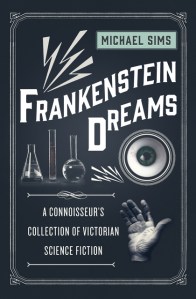
Frankenstein Dreams edited by Michael SimsMichael Sims has a new volume in his series Connoisseur’s Collection called Frankenstein Dreams. These anthologies are aimed at bookworms who love short stories from the 1800s, and this volume features science fiction that Charlotte Brontë or Charles Dickens might have read. Sims has now produced four of these Connoisseur’s Collections of Victorian fiction. The earlier ones were The Dead Witness for detective fiction, Dracula’s Guest for vampire stories, and The Phantom Coach for ghost stories. Michael Sims is probably most known for his 2011 book, The Story of Charlotte’s Web. Sims writes nonfiction on a variety of subjects, and the stories in Frankenstein Dreams are annotated by his scholarly insight that reveals a close psychic connection with the 19th century.

I listened to Frankenstein Dreams, narrated marvelously by Tim Campbell. I find hearing 19th-century literature far more rewarding when read by a professional because my inner reading voice always sounds too modern. The real value of this book is time traveling back to the nineteenth century to learn how science fictional ideas we believe originated in the twentieth century are older than we thought. That’s enlightening on many levels.

Take for instance the 1895 story, “A Wife Manufactured to Order” by Alice W. Fuller, about a man who buys a mechanical bride because he fears a real wife will crimp his routine. How many stories, movies, and television shows have dealt with this idea since? Was Alice Fuller’s story the first? Or is the idea even older, and we don’t know it because of collective forgetfulness?

Have you seen Blade Runner 2049? What exactly are replicants? Aren’t they closer to Frankenstein’s monster than robots? Mary Shelley came up with that idea in 1818. Two other stories in the collection also deal with creating artificial people with biology rather than mechanics.

One of my favorite stories in the collection is “Man-Bats on the Moon” by Richard Adams Locke excerpted from a series of six fake news articles published in 1835. Today this is known as the Great Moon Hoax, and it was as much of a sensation in its day as Orson Welles fooling people with H. G. Wells. Of course, if you are young enough you might not know about the famous 1938 radio broadcast.  Frankenstein Dreams constantly reveals how most pop culture is lost in time.

Sims collects fifteen short stories and five excerpts from classic novels to illustrate a broad selection of science fictional ideas imagined long before the term science fiction was coined. Most of the short story authors are unknown today, which is a shame because their stories reveal what wonderful imaginations they had.

However, Edward Page Mitchell might merit literary rediscovery, because he was a prolific writer who wrote about many ideas that Verne and Wells are currently remembered for. You can find five of his stories here, two of which were used in Frankenstein Dreams. My favorite was “The Senator’s Daughter” which was first published in 1879 and must have been mindblowing to readers of its day. Mitchell imagined a future 1935 America conquered by the Chinese. It includes a political party based on vegetarianism, with radicals in the party who worry about plant consciousness and eat only artificially produced pills. Citizens of Mitchell’s imaginary future travel by what sounds like a hyperloop train, and he describes a prison system that uses suspended animation instead of jail. “The Senator’s Daughter” also deals with race and gender issues very advanced for its era.

I was thoroughly delighted by Frankenstein Dream, listening to it every morning while exercising, or in the afternoons on my bike ride. My knowledge of the 19th century is mostly shaped by a couple dozen classic novels, many of which were written by just two authors, Jane Austen and Charles Dickens. Listening to the stories by these forgotten women and men broaden my perspective on that century.

I realized folks in the past thought about fantastic possibilities and imaginary futures just as much as we do today. It makes me wonder if our science fiction will be forgotten by future generations and we will only be remembered for our realistic fiction. I wonder if the readers of tomorrow will believe their science fictional speculations original because their pop culture will have forgotten ours?

Reprinted from Book Riot – 6/14/18