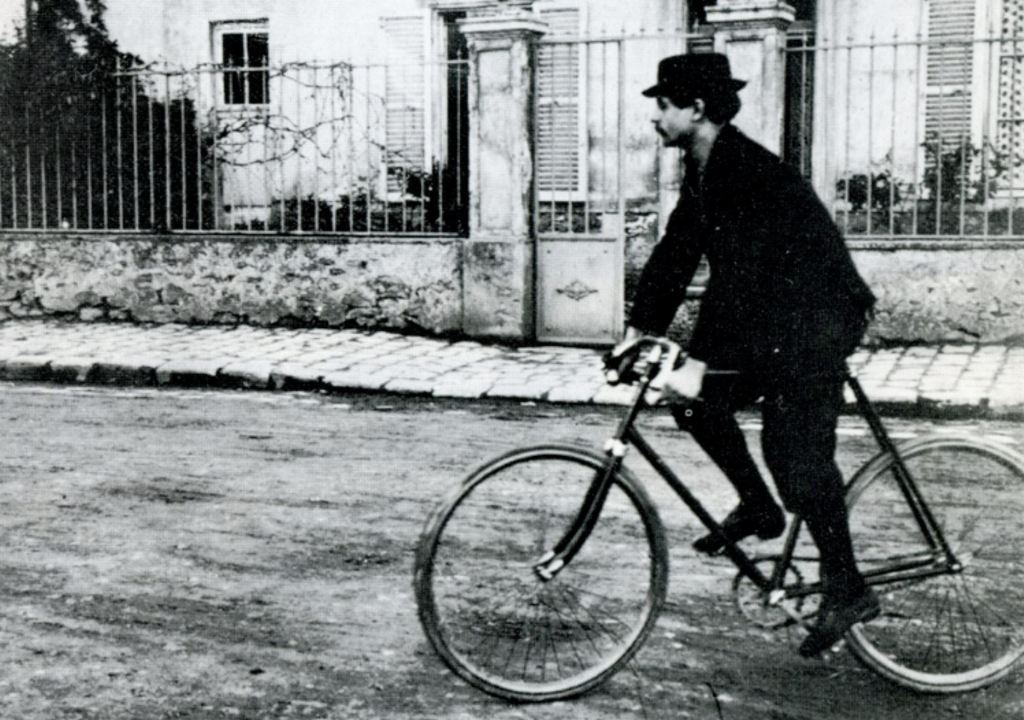
“Elements of Pataphysics” by Alfred Jarry

If fiction could be classified like a biological taxonomy then labels like science fiction could have a fairly exact use in categorizing literature. We could point to an infographic of a circle on a page, and say everything inside the circle is science fiction, and everything outside of it is not.

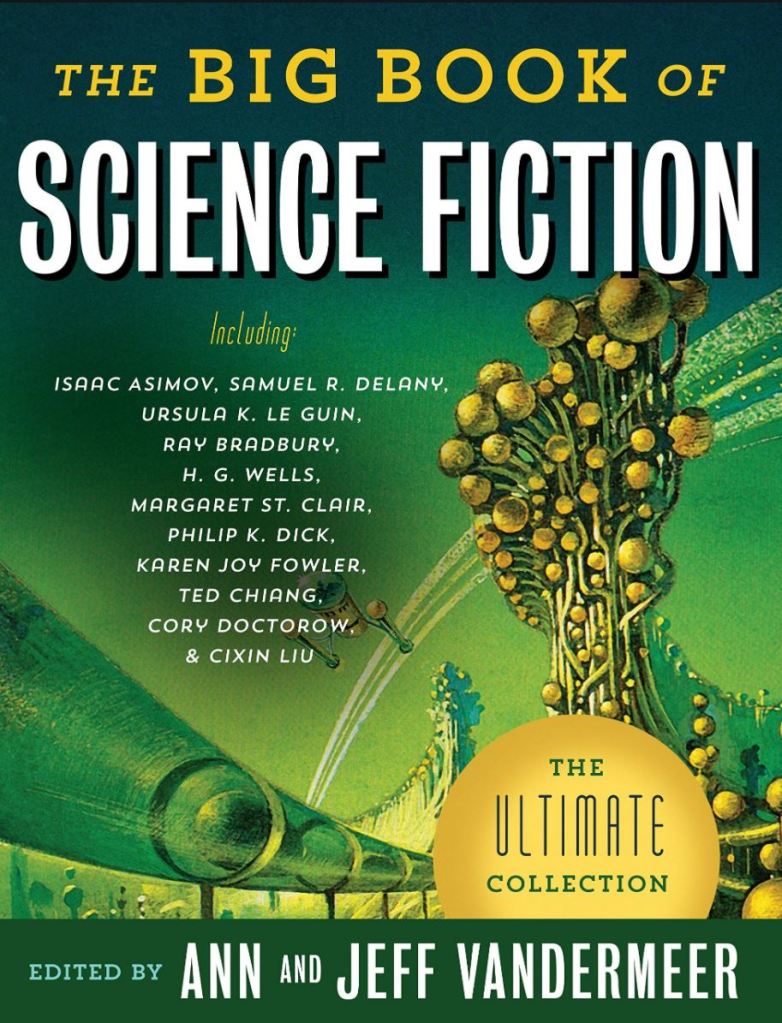
The VanderMeers want to call “Elements of Pataphysics” by Alfred Jarry science fiction. I don’t. Ann and Jeff VanderMeer, the editors of The Big Book of Science Fiction, the anthology our short story club is reading, are disciples of Judith Merril. Merril wrote science fiction, but is mostly remembered for her annual anthologies from 1956-1968 that collected what she considered the best science fiction of the year. Merril was notorious for including stories that she called science fiction but which her readers disagreed. Nor would I think the world-at-large would call “Elements of Pataphysics” science fiction. See this Wikipedia entry, which considers it a spoof or satire on science. I’d call it experimental fiction that plays with language, logic, rhetoric, mathematics, and communication.

As a collector and reader of best-of-the-year science fiction anthologies I have a hard time reading Merril’s annual anthologies because I felt some stories just aren’t science fiction – and I wanted them all to be science fiction. I keep reading similar complaints about The Big Book of Science Fiction. I’m trying very hard to be open minded and stretch my sense of science fiction to meet the VanderMeers half-way, but I’m afraid “Elements of Pataphysics” is outside of that circle I call science fiction.

As much as I admired Merril, I also believe by trying to expand the genre she neglected some solid middle-of-the-road SF stories that deserved to be remembered. Instead of claiming the experimental and avant-garde for the genre, she could have used the anthology space to boost a few mid-level SF writer’s careers, but that’s parsecs in the past.

Not that “Elements of Pataphysics” isn’t a wonderful story. Not that it isn’t brilliant. Not that it doesn’t deal with science and fiction. And this was also true for the stories Merril wanted to call science fiction but her readers didn’t. Merril wanted to expand the domain of science fiction and often claimed the hard-to-define experimental work as sci-fi. But in many cases, and with Jarry’s story here, I believe its literary poaching. Just because you Shanghai a story and call it science fiction doesn’t mean its is.

And just because science fiction is hard to classify doesn’t mean we should stop trying. We just can’t cull anything we like with our SF branding iron. I know I’m trying to bail the ocean with a sieve when I argue to define science fiction, but when I eat a dessert I expect it to be sweet, and when I read science fiction I expect it to be science fictional.

The trouble is the reading public and publishers have often classified anything weirdly like science fiction as science fiction. It’s a classification kitchen sink. To begin with, I don’t believe all books need a classification label other than fiction. If a story doesn’t fit a clear classification, just call it a story or novel. We need to only use the label science fiction when a story has the exact traits of science fiction.

If we copy the structure used to classify life forms then fiction could be a very high level domain, and genre could be one level down. Science fiction could be in a domain below that. Any domain or order within it should be clearly definable. We should be able to list characteristics that readers universally respect as belonging to science fiction. And if you think about them, there really isn’t that many that science fiction has a right to claim. Science fiction has homesteaded certain lands for decades and I believe has a legitimate right to claim them now. Some of the obvious ones include:

  • Stories set in the future
  • Stories set in space
  • Stories about time travel
  • Stories about aliens from space
  • Stories about robots and any human created intelligence
  • Stories about new inventions and new technology that hasn’t been invented or discovered
  • Stories about humans that aren’t Homo sapiens sapiens.
  • Stories about artificial life possible within our physical reality
  • Stories about artificial realities, but possible within this physical reality
  • Stories about other dimensions, but part of this physical reality
  • Stories about metafiction related to science fiction
  • Utopias and dystopias if set in the future or in space
  • Alternate history (this could be contested and established as its own domain)

“Elements of Pataphysics” defined pataphysics as territory outside the circle of metaphysics, and metaphysics as the territory that surrounds the physical. I believe that puts pataphysics into the realm of the abstract theoretical. It intentionally defined its territory as not existing. I could use the definitions of pataphysics to classify Flatland and Alice in Wonderland, and maybe works of fantasy in general. Especially if we reserve the metaphysical as territory that could exist even if it’s outside our physical reality. (The hopes and ambitions of religion and spiritualism’s dwell there.)

Science fiction belongs in that circle defining physical reality because science is confined to that territory. Science fiction does not extended into metaphysical territory, so it can’t extend into the pataphysical. Fantasy belongs to the pataphysical, and maybe the metaphysical, but not the physical. Jarry’s fiction creates pataphysics by alluding to the science, mathematics, linguistics, logic, and rhetoric of the physical. In other words, he describes the impossible and ineffable by analogy to the tools we use to understand the physical. For me, its essential that science fiction stay out of the metaphysical, and thus the pataphysical. The metaphysical belongs to the woo-woo and things that go bump in the night. Reality’s only portal to the metaphysical is through leaving our bodies and imagination is our only portal to the pataphysical. Science fiction holds out hope that we can get there from here.

“Elements of Pataphysics” is a 5-star story that belongs in The Big Book of Experimental Fiction. It’s a marvelous piece of writing, and the translation feels very well done. What Jarry describes as pataphysics could apply to metafiction, and other experimental forms of fiction. I’ve always thought that Merril and the Harrison/Aldiss anthologies tried to latch onto works of experimental fiction and relabel them science fiction to give prestige to our genre. We need to accept who we are without such pretensions.

I suppose some will claim I’m limiting science fiction. If the word “science” is part of the label, then that label must limit itself to the territory of theoretically scientific. But more importantly, I believe we should recognize what science fiction is and embrace those aspects. The literary world has always criticized science fiction as appealing to adolescents. I agree with them. We shouldn’t take offense. There is a certain excitement during that stage of life from ages 12 to 22 that science fiction targets. Certain kinds of music, movies, and television shows resonate with that stage too. Most of us look back on what we fell in love with in adolescence for the rest of our lives. It’s a peak time of life. Sure, we might have been stupid, but we were passionate.

I believe religion originates in the pre-adolescent mind, and embracing science fiction is a rejection of religion. Instead of heaven, we claims the heavens, instead of gods, we look for aliens, instead of everlasting life, we seek immortality. In our teen years we are told about reality, and we ask, “Isn’t there more?” The difference between science fiction and fantasy, is the difference between accepting pipe dreams and holding out hope.

“Elements of Pataphysics” targets the next stage in life, our twenties, one that inspires people to be artists. Although there are exceptions, science fiction has never been particularly arty, or even seriously intellectual. At its best its visionary, can even be a bit literary, but it stands between the fairytales that appealed to us in the previous stage of life, and the hard reality of adulthood. It has the sense of wonder of discovering reality, but the childlike desire to reshape reality into exciting possibilities of what if. Science fiction considers all the possibilities of growing up, all the portals of what might be possible. Those possibilities are a comfort to the stress of metamorphizing from child to adult. The odds are long, but in adolescence we have tremendous hope.

Many of us keep consuming science fiction for the rest of our lives because of that Zoloft-like quality it confers. It helps us to remember what we wanted to be. I think it’s existentially vital we recognize science fiction for exactly what it is. In classifying science fiction, there is an essential trait to be observe. It’s a unique strain of hubris that says, “We can create anything that’s possible in this reality.” Anything not possible need not apply.

Main Page of Group Read

James Wallace Harris, 8/28/21
“The New Overworld” by Paul Scheerbart

These early stories in The Big Book of Science Fiction represent fiction on the road to science fiction. I already know where we’re heading because I’m well versed in 1930s and 1940s science fiction. What I classify as science fiction is down the road a piece further, into the 1950s and 1960s. Science fiction evolved and mutated in every decade of the 20th century. 21st century science fiction is already rejecting this past, those stories and authors I love. The ones I use to define my sense of the genre. It’s becoming something else again. But the road goes on, and I don’t.

I believe as we read the stories in the VanderMeers’ anthology, we’ll learn to sense the essence of science fiction, which is to use certain techniques of storytelling to speculate about the edges of science. In “The New Overworld” Paul Scheerbart creates a fairytale about two lifeforms on Venus that I mentally pictured as illustrations from Dr. Seuss books. We can call this story science fiction because its set on Venus and it speculates about alien lifeforms, but it’s closer in tone to a children’s picture book. It’s all too obvious that the story is about solving social problems with cooperation and technology. But we never believe Scheerbart believes he is speculating about Venus or alien lifeforms. It’s all allegorical in intent. The story obviously has a philosophical lesson.

On the road to science fiction, our destination is fiction that convinces us we are there, in the future, out in space, on other planets. Wells was there in “The Star” because we could picture the worldwide catastrophes. In “Sultana’s Dream” we were almost there but then had it snatched away from us when we learned it was all a dream. In “The Triumph of Mechanics” we got there again because we were meant to believe mechanical rabbits were possible. However, the story was a tall tale and we knew Strobl didn’t mean it.

Science fiction writers know they can’t predict the future, but real science fiction feels like they have. It has to be convincing. It doesn’t matter if their future can’t possibly become real, it’s got to feel real when we read it. We’ve got to believe while we read. It has to be a fully realized fictional reality.

Back in 1911 when “The New Overworld” came out, what we think of as science fiction was an oddity. The following year, in 1912, A Princess of Mars by Edgar Rice Burroughs will be serialized in All-Story Magazine as “Under the Moons of Mars” by Norman Bean. Probably most readers wouldn’t buy astral projection, but they wanted to believe in Barsoom. Burroughs triggers a certain kind of desire in readers, and that’s the heart of science fiction. Readers still want to believe in Barsoom, long after NASA put a stake in that dream.

I have not read Paul Scheerbart’s other works, or novels, which this article in Science Fiction Studies describe. The VanderMeers regrets Scheerbart isn’t remembered, but from the description of his stories I can see why he is. But Erik Morse in The Paris Review has read some of the recent English translations of Scheerbart and he found them interesting, even captivating, but strange.

Authors and their books are forgotten over time for many reasons. Usually, it’s because the work just doesn’t hold up. Sure, academic publishers will come out with expensive editions that are historical curiosities, but they just aren’t readable by the public at large. Wells was not forgotten because his SF novels are still page-turners.

I will give one other reason why Paul Scheerbart is forgotten, he was German. I wouldn’t have considered this reason until I read The Invention of Nature: Alexander von Humboldt’s New World by Andrea Wulf. Alexander von Humboldt was probably one of the most amazing men to ever live. In the 19th century, he was probably the most famous of the century, maybe even more famous than Napoleon or Lincoln in their times. I had no idea who he was before I read the book, and neither do most English speaking people, even though in the 1800s most Americans loved him very much.

At the end of the biography, Wulf gives an interesting reason why von Humboldt was forgotten in America and Great Britain. During WWI Americans actually burned German books, and anti-German sentiment became ever greater during WWII. So if we can collective erase Alexander von Humboldt who inspired Thomas Jefferson, Edgar Allan Poe, Ralph Waldo Emerson, Henry David Thoreau, John Muir, and many other influential Americans, then it’s easy to imagine not remembering Paul Scheerbart.

The 19th century was full of brilliant eccentric writers who wrote far out books with wild ideas, many of which could be considered science fiction. And we’ve forgotten most of them. Actually, we’ve forgotten probably 99.99% of them. If we don’t remember Konstantin Eduardovich Tsiolkovsky for his great science fictional predictions, why should we remember Paul Scheerbart?

It’s a shame that pop culture has such a short attention span. Books like The Big Book of Science Fiction try to correct that. Sure, our group argues over what the VanderMeers collect for us to read, but shouldn’t we judge them not by whether or not we enjoy the stories, but by what they are helping us to recall from a pop culture ancestry? There was a great deal of proto-SF published before Amazing Stories came out in 1926, but we remember damn little of it today. What I want to remember is what popular literature was like from 1900-1925, in all its forms. Their anthology helps. The VanderMeers’ introductions hint at so much more I want to know.

I do have one quibble. Why did they leave out “The Machine Stops” by E. M. Forster? Was it already too famous? Or too long? That 1909 story was the best single science fiction story from 1900-1925.

Main Page of Group Read

James Wallace Harris, 8/26/21

“The Triumph of Mechanics” by Karl Hans Strobl

Because “The Triumph of Mechanics” by Karl Hans Strobl is included in The Big Book of Science Fiction, we have to assume Ann and Jeff VanderMeer had a good reason other than it just being a fun story. It is the first English appearance of this 1907 Austrian story translated by Gio Clairval, so they must have had it translated for a special reason. Wouldn’t they? However, I am at a loss to see its historical significance to science fiction. Although, in retrospect, we’d call it science fiction today for several reasons. “Sultana’s Dream” also came out in 1907. England, India, and Austria. It’s still a long way to April, 1926 America.

My reaction to an American inventor, Hopkins, coercing a town to give him a building permit by producing a billion mechanical rabbits was to instantly recall Flat Cats, those quickly reproducing Martian animals in Heinlein’s novel The Rolling Stones. The idea of overproducing pets was also used in the classic Star Trek episode “The Trouble With Tribbles.” When I saw tribbles in 1967 I instantly thought flat cats too. However, Heinlein admits getting the idea from the 1905 story “Pigs is Pigs” by Ellis Parker Butler, about Guinea pigs that reproduce at an exponential rate at a train station. Full text of the story is here. There have been several animated films based on that story, starting in the silent era, but here’s Walt Disney’s version from 1954. Any chance that Strobl reading “Pigs is Pigs” before writing his story? And could Ellis Parker Butler have snagged the idea from an earlier tale, maybe an old German fairytale?

The main reason “The Triumph of Mechanics” is science fiction is the little toy robotic rabbits can reproduce – self replicating machines. But I have a question. Why would Hopkins need a factory to manufacture toy rabbits when he can quickly produce a billion of them without a factory?

I wish I knew more about the original publication of “The Triumph of Mechanics.” Did it first appear in a magazine or newspaper? Did it have illustrations? 1907 was years before the word robot came into vogue. However, mechanical or clockwork creatures have been around in fiction for a long time. The story also mentions some other far out ideas for creating wonderful toys, including making a glass like material out of solidifying air. They marveled at how such an artificial substance could take over the toy industry. I thought of plastics. I imagined whispering into Benjamin Braddock’s ear, “Two words – solidified air!”

I wonder if there was any significance that the go-getting inventor was American? Had Europeans stereotyped us as marvelous inventors because of Thomas Edison? The overall tone of this story was amusing, just a tall tale, like something Mark Twain would have written. Since it was also written well before the term science fiction existed, I wondered if its readers thought it was some special kind of fiction, something out of the ordinary? As we read each story in The Big Book of Science Fiction, we need to remember we won’t reach stories published in a genre magazine until the 9th story, and even then, the term science fiction wasn’t coined right away by Hugo Gernsback. He tried to pass off scientifiction on us. The tag science fiction began to emerge in the 1930s but didn’t catch on with the public at large until the 1950s.

Main Page of Group Read

James Wallace Harris, 8/24/21

“Sultana’s Dream” by Rokheya Shekhawat Hossein

The second story in The Big Book of Science Fiction is “Sultana’s Dream” by Rokheya Shekhawat Hossein. First published in The Indian Ladies’ Magazine in 1905. By today’s standards, “Sultana’s Dream” is a rather simple narrative that imagines Ladyland, where gender roles are reversed. It doesn’t feel like a traditional short story in structure, and the VanderMeers called it a conte philosophique, which means philosophical fiction. In this case Hossain is writing utopian fiction, which is often science fictional. I assume the story was intended to be satirical, or even humorous, with it’s topsy-turvy gender role reversals. Now, it just feels quaintly sci-fi, but visionary feminist.

I wonder if Hossain was a proto-SF fiction fan, or had read utopian or science fiction fiction? Only when we use our imagination to put “Sultana’s Dream” into the context of when and where it was written does it become impressive. Hossain lived in British controlled India, and was Bengali, well educated and well-to-do. Wikipedia spells her name slightly different, Rokeya Sakhawat Hossain, and said she published under the byline Mrs. R. S. Hossain, but was commonly known as Begum Rokeya.

It’s in retrospect that we admire this story. For example, Chitra Ganesh created a graphic novel “Sultana’s Dream” in woodcuts, and the University of Michigan created an exhibit at their Museum of Art. Their website has a copy of the story to read online, and four different narrators reading an audio version of the story. They pick women of different ages to narrate the story. The same exhibit was at the University of Rochester’s Memorial Art Gallery with a different set of presentations and videos.

I assume the VanderMeers were inspired by the recent republication of the story in Sultana’s Dream: A Feminist Utopia and Selections from the Secluded Ones by Rokeya Sakhawat Hossain, edited and translated by Roushan Jahan. That volume appears to have come out in 2015, the year before The Big Book of Science Fiction. However, there was from 2005 Sultana’s Dream; and Padmarag: Two Feminist Utopias by Rokeya Sakhawat Hossain; translated with an introduction by Barnita Bagchi. I’m curious, are feminists finding these stories first, or science fiction historians? How was my favorite early feminist utopia, Herland by Charlotte Perkins Gilman, discovered? I find these old SF stories through SF researchers, but did they find them first? And could Gilman have possibly read “Sultana’s Dream” from 1905 before she serialized her novel in 1915? Wikipedia says there was a novella version of Sultana’s Dream published as a book in 1908. Was it expanded from the 1905 story? Could a copy have gotten to America?

Although “Sultana’s Dream” is a simple story, its feminist ideas, as well as its speculation about futuristic technology and science, are as mind blowing for 1905 as time travel, space alien invasion, and space travel was in the 1890s when Wells was blowing minds. Especially, when we consider what India was like in 1905. Please read “Feminist Visions of Science and Utopia in Rokeya Sakhawat Hossain’s ‘Sultana’s Dream’” to learn more about Hossain and why her story really is more than what it seems. I also recommend, “Sultana’s Dream And Its Conception Of A Feminist Utopia” by Deeksha Sharma, especially for its link to “6 Indian Muslim Feminists In History” by Amna Nasir, that also profiles Hossain.

Do we rate the story by today’s standards of storytelling, or 1905’s standard of thinking? If you read “Sultana’s Dream” as just another science fiction story you might dismiss it. If you read it as the VanderMeers intend, to understand the evolution of science fiction, then its quite impressive.

The VanderMeer’s anthology is dedicated to Judith Merril who was famous for looking far and wide for stories to expand the reputation of science fiction in her anthologies. I think we have to accept the VanderMeer’s goal here. Although “Sultana’s Dream” is a quaint read, not famous in its time like “The Star” by H. G. Wells, their second story shows that science fictional thinking was happening all over the world.

But I have to wonder where Hossain got her ideas for solar power, and the other Jules Verne inventions? I wish I had more access to popular magazines of the time, because I believe they reveal popular thinking and culture better than history books. Far out gadgets and futurism was all the rage by some readers. Was it just a few geeks of the day, or were those ideas popular with everyone? Did the science fiction books that excited people in England get read in India as well?

Of course, I assume, science fictional speculation has always existed. My commonly used example is the Noah’s Ark, a catastrophe story that could have been the inspiration for “The Star.” This makes me ask, are there older, even much older, visions of feminist utopias? Could Hossain have been inspired by the ancient Greeks stories about the Amazons. Or are there feminist utopias in Hindu and Bengali literature? I don’t mean to suggest Hossain wasn’t creative, but my pet theory is all concepts have been around since pre-history, even science fictional ones.

When I discover old science fiction stories that I want to believe are the earliest examples of a science fictional idea, eventually if I keep reading, I find older examples. The Big Book of Science Fiction captures the examples from the 20th century. But if we had The Big Book of 19th Century Science Fiction, would we find earlier examples of all the ideas we thought first appeared in the 20th century? I believe there’s a kind of generational myopia that feels like everything cool was created for by some slightly older dudes and dudettes. For example, The Beatles and Bob Dylan are about ten years older than me. Us Baby Boomers thought they were revolutionary geniuses of our times. But actually, they were inspired by some slightly older musicians and songwriters, who The Beatles and Dylan were convinced were the revolutionary geniuses of their times.

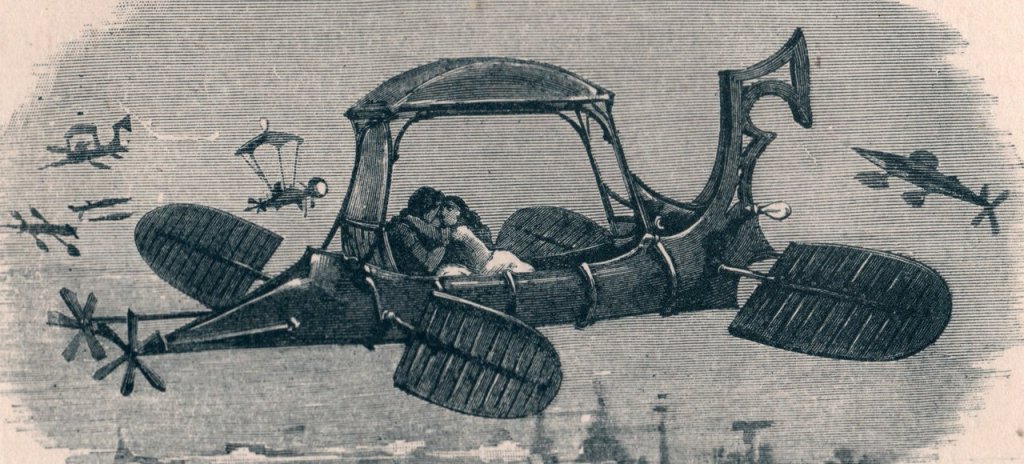
I wish I had some kind of software where I could plot science-fiction ideas on a timeline that also positioned them on a map of the world. That way we could plot the progress of a concept as it evolved over time and space. When were flying cars first proposed? Hossain’s flying car was rather unique, but hardly the first. How far back do flying cars go as an idea, aren’t they really just a descendant of flying carpets and flying chariots?

Main Page of Group Read

James Wallace Harris, 8/22/21

“The Star” by H. G. Wells

This my second review of “The Star” by H. G. Wells, because I attempted to read The Big Book of Science Fiction earlier this year. I didn’t get far. I’m hoping the group read will get me to the end this time. But we will see. Since this is a second review I’ll need to find new things to say.

One thing I noticed this time while poking around on Google to see how “The Star” is used in a number study sites for classroom discussion. Being taught in school is one indicator that a work of fiction has become a classic. Three cheers for science fiction then. The story came out in 1897, between the publication of The Time Machine and The War of the Worlds. Hugo Gernsback liked it so much he reprinted it twice, in 1923 and 1926.

“The Star” had already been repackaged in several collections by Wells, including an edition put out by Charles Scribner’s Sons in 1925, the prestigious publisher of Ernest Hemingway and F. Scott Fitzgerald in the 1920s. I’ve read that before pop culture used Albert Einstein’s name to imply the smartest man in the world, people used Mr. Wells. One of the more popular books in the early days of fandom was The Short Stories of H. G. Wells that ran over a thousand pages. Another giant collection of short stories by Wells was put out the The Literary Guild, for the high-brow crowd. This listing of reprints at ISFDB is one of the longest I know about, and I’m sure that database hasn’t indexed all the places “The Star” has been reprinted.

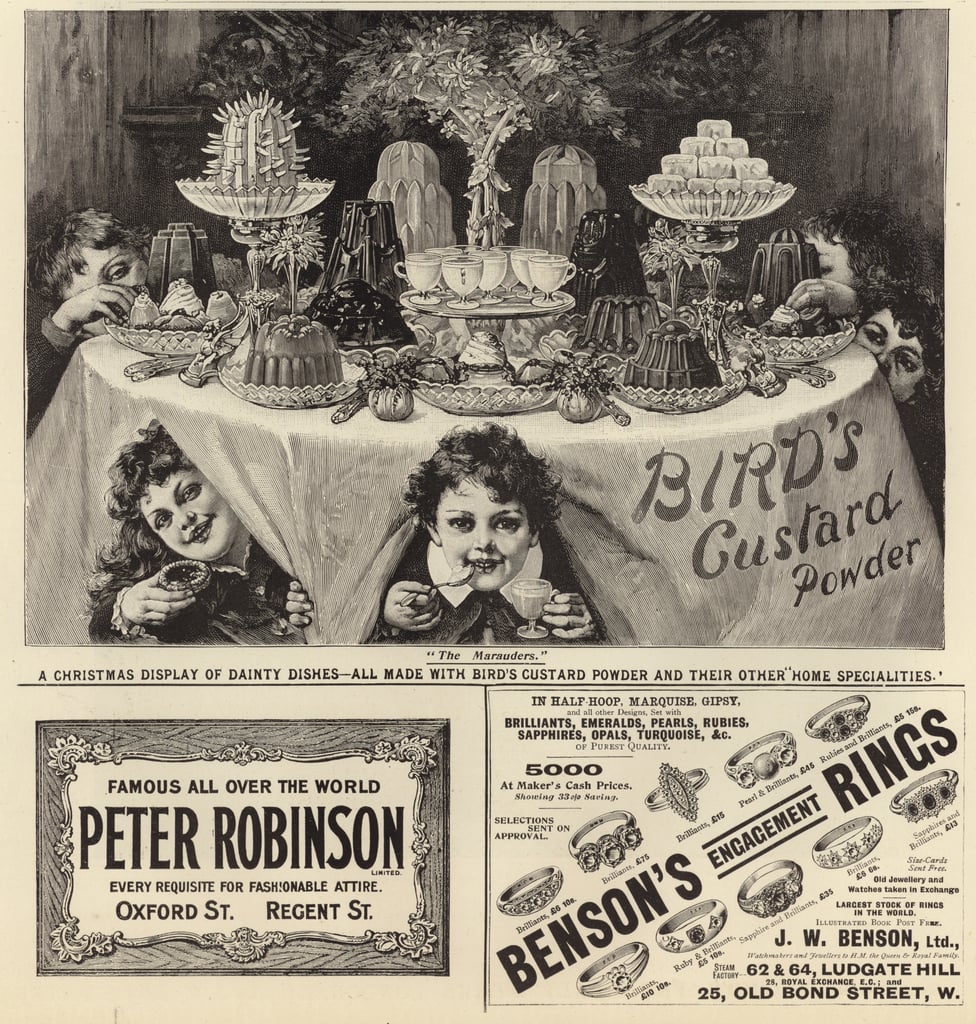
In other words, “The Star” was widely read outside of science fiction, especially in the 1920s and 1930s before the genre had established itself in the public’s consciousness. I can’t help but wonder what the average person thought of the story? Did Charlie Chaplin talk about it at Hollywood parties while he was working on The Gold Rush? What did the average British citizen think of the story when they read it in The Graphic, the Christmas Number for 1897? Here’s an ad from that issue to give you an idea of the times.

Why would they run an end-of-the-world story in their Christmas issue? I have to assume they really thought the story something special. So what did people say about it then? I wish I could find references to how average readers reacted to early science fiction. So far my best indication of what people read back then that we’d call science fiction is the anthology Science Fiction by The Rivals of H. G. Wells which presents thirty stories that came out around the same time as “The Star.” I wish I had a book of letters to the editors about those stories, or extracts from diaries and personal letters where people wrote about them.

In the introduction to The Big Book of Science Fiction the VanderMeers say this about science fiction:

This kind of eclectic stance also suggests a simple yet effective definition for science fiction: it depicts the future, whether in a stylized or realistic manner. There is no other definitional barrier to identifying science fiction unless you are intent on defending some particular territory. Science fiction lives in the future, whether that future exists ten seconds from the Now or whether in a story someone builds a time machine a century hence in order to travel back into the past. It is science fiction whether the future is phantasmagorical and surreal or nailed down using the rivets and technical jargon of “hard science fiction.” A story is also science fiction whether the story in question is, in fact, extrapolation about the future or using the future to comment on the past or present.

But “The Star” isn’t about the future, and neither are most of the stories in that rivals anthology. Back then, the fantastic happened in the present. When Wells was writing, science fiction hadn’t evolved into its future oriented self. The VanderMeers wants their anthology to show the evolution of science fiction and I think this is an important distinction about “The Star.” I believe as we read along in the volume, we’ll observe how science fiction moved into the future.

There is one weak area in “The Star.” I was never sure what kind of astronomical object the intruder was. At different times in the story it’s implied that the intruder is a comet, planet, or star. Wells was big on science, so why was he so sloppy here? If the visitor was another planet, wouldn’t it and Neptune have shattered when they collided? If it was a comet, Neptune would have absorbed it. I’m guessing it was some kind of dark or dwarf star that absorbed Neptune in the collision. We know Wells knew about stellar evolution because he has the Earth being destroyed when the sun expanded into a red giant in “The Time Machine.”

Rating: *****

Main Page of Group Read

James Wallace Harris, 8/20/21

The Short Story Club

Most people have heard of book clubs, but we have a short story club devoted to science fiction. It’s a Facebook group. Anyone can join even though it’s a private group. Just answer the two questions. However, many people don’t like Facebook, and that’s cool. Because we’re about to read and discuss The Big Book of Science Fiction edited by Ann and Jeff VanderMeer, I thought I’d post my thoughts on each story here so those people who don’t use Facebook can participate via the comment section.

The Big Book of Science Fiction has over one-hundred short stories. We’ll read and discuss a story every other day. This is a huge book and a major commitment to read. I’ve owned it for years and have been too intimidated by its size to try reading it. What I hope is the discipline of the short story club will push me to climb this Mt. Everest of anthologies. Because it’s a recent retrospective anthology it aims to give a contemporary overview of the history of science fiction by including more women writers and foreign stories, I expect reading its stories will be a graduate course in science fiction literature.

If you don’t already own this book and are tempted to join the group or buy it to read along with the discussion here, I should warn you about its size – it’s a monster. Like the size of a large city phone book back in the day, and also printed on thin paper. Reading the Kindle edition is the practical way to go. If you want the paper edition, you might check it out at Barnes & Noble first. I’d hate to recommend people to buy this dingus and not be able to read it because they don’t have weight-lifter arms.

Many of the stories will be in old anthologies, so you don’t have to buy the book if you want to read along from you own library. However, about two dozen stories are foreign translations commissioned for this anthology and won’t be available elsewhere.

I should also warn anyone who is thinking about buying this book that if you prefer the traditional classics of science fiction this book skips over many of them. No Heinlein, no Bester, etc. Some older fans have complained they didn’t like a lot of the stories. I’m reading it because I want to see a new view of old science fiction. I have read about a quarter of the stories before, and some of them are among my favorites.

We start discussion August 20th, beginning with “The Star” by H. G. Wells. The group will discuss a story every other day until March 20, 2022. The links below are to my reviews. Here are other group member’s online reviews:

Here is the table of contents:

The Star – H. G. Wells
Sultana’s Dream – Rokheya Shekhawat Hossein
The New Overworld – Paul Scheerbart
The Triumph of Mechanics – Karl Hans Strobl
Elements of Pataphysics – Alfred Jarry
Mechanopolis – Miguel de Unamuno
The Doom of Principal City – Yefim Zozulya
The Comet – W. E. B. Du Bois
The Fate of the Poseidonia – Clare Winger Harris
The Star Stealers – Edmond Hamilton
The Conquest of Gola – Leslie F. Stone
A Martian Odyssey – Stanley G. Weinbaum
The Last Poet and the Robots – A. Merritt
The Microscopic Giants – Paul Ernst
Tlön, Uqbar, Orbis Tertius – Jorge Luis Borges
Desertion – Clifford D. Simak
September 2005: The Martian – Ray Bradbury
Baby HP – Juan José Arreola
Surface Tension – James Blish
Beyond Lies the Wub – Philip K. Dick
The Snowball Effect – Katherine MacLean
Prott – Margaret St. Clair
The Liberation of Earth – William Tenn
Let Me Live in a House – Chad Oliver
The Star – Arthur C. Clarke
Grandpa – James H. Schmitz
The Game of Rat and Dragon – Cordwainer Smith
The Last Question – Isaac Asimov
Stranger Station – Damon Knight
Sector General – James White
The Visitors – Arkady and Boris Strugatsky
Pelt – Carol Emshwiller
The Monster – Gérard Klein
The Man Who Lost the Sea – Theodore Sturgeon
The Waves – Silvina Ocampo
Plenitude – Will Worthington
The Voices of Time – J. G. Ballard
The Astronaut – Valentina Zhuravlyova
The Squid Chooses Its Own Ink – Adolfo Bioy Casares
2 B R 0 2 B – Kurt Vonnegut Jr.
A Modest Genius – Vadim Shefner
Day of Wrath – Sever Gansovsky
The Hands – John Baxter
Darkness – André Carneiro
“Repent, Harlequin!” Said the Ticktockman – Harlan Ellison
Nine Hundred Grandmothers – R. A. Lafferty
Day Million – Frederik Pohl
Student Body – F. L. Wallace
Aye, and Gomorrah – Samuel R. Delany
The Hall of Machines – Langdon Jones
Soft Clocks – Yoshio Aramaki
Three from Moderan – David R. Bunch
Let Us Save the Universe – Stanisław Lem
Vaster Than Empires and More Slow – Ursula K. Le Guin
Good News from the Vatican – Robert Silverberg
When It Changed – Joanna Russ
And I Awoke and Found Me Here on the Cold Hill’s Side – James Tiptree Jr.
Where Two Paths Cross – Dmitri Bilenkin
Standing Woman – Yasutaka Tsutsui
The IWM 1000 – Alicia Yánez Cossío
The House of Compassionate Sharers – Michael Bishop
Sporting with the Chid – Barrington J. Bayley
Sandkings – George R. R. Martin
Wives – Lisa Tuttle
The Snake That Read Chomsky – Josephine Saxton
Reiko’s Universe Box – Kajio Shinji
Swarm – Bruce Sterling
Mondocane – Jacques Barbéri
Blood Music – Greg Bear
Bloodchild – Octavia E. Butler
Variation on a Man – Pat Cadigan
Passing as a Flower in the City of the Dead – S. N. Dyer
New Rose Hotel – William Gibson
Pots – C. J. Cherryh
Snow – John Crowley
The Lake Was Full of Artificial Things – Karen Joy Fowler
The Unmistakable Smell of Wood Violets – Angélica Gorodischer
The Owl of Bear Island – Jon Bing
Readers of the Lost Art – Élisabeth Vonarburg
A Gift from the Culture – Iain M. Banks
Paranamanco – Jean-Claude Dunyach
Crying in the Rain – Tanith Lee
The Frozen Cardinal – Michael Moorcock
Rachel in Love – Pat Murphy
Sharing Air – Manjula Padmanabhan
Schwarzschild Radius – Connie Willis
All the Hues of Hell – Gene Wolfe
Vacuum States – Geoffrey A. Landis
Two Small Birds – Han Song
Burning Sky – Rachel Pollack
Before I Wake – Kim Stanley Robinson
Death Is Static Death Is Movement – Misha Nogha
The Brains of Rats – Michael Blumlein
Gorgonoids – Leena Krohn
Vacancy for the Post of Jesus Christ – Kojo Laing
The Universe of Things – Gwyneth Jones
The Remoras – Robert Reed
The Ghost Standard – William Tenn
Remnants of the Virago Crypto-System – Geoffrey Maloney
How Alex Became a Machine – Stepan Chapman
The Poetry Cloud – Cixin Liu
Story of Your Life – Ted Chiang
Craphound – Cory Doctorow
The Slynx – Tatyana Tolstaya
Baby Doll – Johanna Sinisalo

James Wallace Harris, 8/19/21

“The Star” by H. G. Wells

When I was young, reading science fiction thrilled me by giving me new ideas to ponder, ones I wasn’t getting from school. For example, when I was twelve, I read the When Worlds Collide/After Worlds Collide double decker by Edwin Balmer and Philip Wylie. It provided three new wonders to inflame my mind. First, planets from outside the solar system could fly through our interplanetary space and even collide with the Earth. Imagining the end of the world provides no end of chilling speculation. People have been entertaining that vision since the Great Flood. Second, I was introduced to the idea that people could escape the end of the world. Wow, what a concept! And third, what if we found a dead city that was once occupied by aliens? What would it be like to walk among their ruins and imagine their lives from the clues they left?

What’s remarkable about “The Star” by H. G. Wells, published in 1897, is its science fictional setup would work just as well today in 2021. The story describes people’s reactions from from around the world at that time, but the astronomical events and effects upon the Earth would be the same today. And I’m not sure people now would react much differently than they did then. What has changed is how the news is spread.

Nowadays I am fascinated by how science fiction short stories gain popularity and then fade from pop culture memory. They are usually remembered by anthologies. An editor of a good retrospective anthology knows the genre and tries to keep older stories alive. Every few years a new large retrospective anthology of short science fiction appears. Over time, the weakest older stories are left out of the latest anthology, and the best newer stories are added, revealing a kind of evolution.

Readers who buy genre retrospective anthologies are shown a kind of photograph of the history of short science fiction, with each new anthology trying capture the genre in a pose by how the editors want their readers to see its history. I’ve been dipping into The Big Book of Science Fiction edited by Jeff and Ann VanderMeer since it came out in 2016. Its oldest story is “The Star.” The Big Book of Science Fiction has nearly a hundred stories and I’ve read maybe a quarter of them. The VanderMeers worked to diversify the history of the genre by including more stories by women writers and translated stories by non-English speaking writers.

Their family portrait of science fiction looks somewhat different than Leigh Ronald Grossman’s group photo, Sense of Wonder, taken in 2011. Grossman’s oldest pick was “Mellonta Tauta” by Edgar Allan Poe from 1849. Grossman’s anthology is even larger than the VanderMeers’, but it includes a novel, novel extracts, and introductory essays. It’s meant to be a textbook for teaching the history of science fiction, but Grossman’s photo of the genre revealed a more traditional pose for the genre.

Right now, I’m less concerned the overall image of the genre’s legacy than I am with understanding the evolution of science fictional ideas. I’d love to create a taxonomy of science fictional ideas and themes. When Groff Conklin assembled his first retrospective anthology back in 1946, The Best of Science Fiction, he divided the stories into six theme sections. Over the decades many anthologists have created theme anthologies. But it’s impossible to grasp all the far-out ideas of science fiction in just one anthology, or even a shelf of them. So, I’m going to work my way through several large retrospective anthologies, take notes, and plot my findings. Maybe I can come up with some way of showing an evolutionary tree of science fictional ideas.

I’ve decided “The Star” was inspired by astronomy, so the first theme I’m going to work on is Astronomical Science Fiction. However, did H. G. Wells think up his idea? Had Wells read Omega: The Last Days of the World by French astronomer Camille Flammarion which came out in 1894? When did the English edition first appear? Wells could also have read Olga Romanoff or, The Syren of the Skies by George Griffith serialized in Pearson’s Weekly (12/30/1893 – 8/4/1894). Both these stories are impact event stories. And then we must ask where did Flammarion get his idea? Jules Verne wrote Off on a Comet in 1877 about a comet that gives the Earth a glancing blow. Wells was savvy enough to know his planet didn’t need to impact the Earth, but it’s gravitation influence coming near us could wreak havoc on our planet.

I want to develop a classification scheme, a taxonomy, or even a mind map of how science fiction ideas evolve. Earlier writers imagined a comet hitting the Earth. Wells imagined a planet from outside the solar system, which is a much newer idea if you think about it. People were aware of comets, but how many Earthlings imagined a planet visiting the solar system? Then in the 1930s Balmer and Wylie imagined two visiting planets. By the way, Wells interstellar visitor is called a star in the title, but referred to as a planet in the story. People see it as a star in the sky.

Once you start considering the theme, thinking about astronomy can inspire all kinds of science fictional ideas. Wells used astronomy again at the end of The Time Machine when he used the Sun expanding into a red giant, and the Earth slowing its rotation.

I wish I had a better memory than I do so I could recall all the science fiction stories that used astronomy as the inspiration of its science fiction. Fred Hoyle used it for The Black Cloud a story about a dust cloud blocking the sun. But sometimes its fanciful astronomy. Poul Anderson imagined the solar system orbiting the Milky Way in Brain Wave and wondered what if the solar system passes through different kinds of radiation fields. Now this is unbelievable but fun, but what if the solar system had been in a radiation field that retarded intelligence and it moved out of that field? In Brain Wave humans and all living things become a bit smarter. Even more fanciful is Robert Charles Wilson’s Spin, where he imagines the Earth encased in a spin membrane that slows time down. Of course, this moves outside the realm of Astronomical Science Fiction because the membrane was artificially created.

Getting back to real astronomy, consider the short story “Inconstant Moon” by Larry Niven from 1971. People notice the Moon is glowing strangely one night. Our narrator theorizes the Sun has gone nova and the world is about to be destroyed, but then figures a massive solar flare has occurred, which might be survivable. Notice how these Astronomical Science Fiction stories usually involve the destruction of the Earth.

Larry Niven and Jerry Pournelle returned to the comet impact in 1977 with Lucifer’s Hammer. Comet and asteroid strikes seem to be the most common inspiration on Astronomical Science Fiction. But here is a list created by Andrew Fraknoi in 2019 that lists more recent science fiction based on astronomy and physics. Wells or “The Star” wasn’t mentioned. That’s the problem with creating a SF theme taxonomy, it’s like the biological world there are millions of examples to be classified.

One interesting aspect of “The Star” (and When Worlds Collide) is it depends on astronomers to let the people of Earth know that something is about to happen. How often are astronomers the heroes of science fiction stories?

It was on the first day of the New Year that the announcement was made, almost simultaneously from three observatories, that the motion of the planet Neptune, the outermost of all the planets that wheel about the sun, had become very erratic. Ogilvy had already called attention to a suspected retardation in its velocity in December. Such a piece of news was scarcely calculated to interest a world the greater portion of whose inhabitants were unaware of the existence of the planet Neptune, nor outside the astronomical profession did the subsequent discovery of a faint remote speck of light in the region of the perturbed planet cause any very great excitement. Scientific people, however, found the intelligence remarkable enough, even before it became known that the new body was rapidly growing larger and brighter, that its motion was quite different from the orderly progress of the planets, and that the deflection of Neptune and its satellite was becoming now of an unprecedented kind.

Few people without a training in science can realise the huge isolation of the solar system. The sun with its specks of planets, its dust of planetoids, and its impalpable comets, swims in a vacant immensity that almost defeats the imagination. Beyond the orbit of Neptune there is space, vacant so far as human observation has penetrated, without warmth or light or sound, blank emptiness, for twenty million times a million miles. That is the smallest estimate of the distance to be traversed before the very nearest of the stars is attained. And, saving a few comets more unsubstantial than the thinnest flame, no matter had ever to human knowledge crossed this gulf of space, until early in the twentieth century this strange wanderer appeared. A vast mass of matter it was, bulky, heavy, rushing without warning out of the black mystery of the sky into the radiance of the sun. By the second day it was clearly visible to any decent instrument, as a speck with a barely sensible diameter, in the constellation Leo near Regulus. In a little while an opera glass could attain it.

At the end of the 19th century the common person did not have access to television or the internet. This news would have been spread by telegraph and newspapers. Also, I doubt many citizens of the world understood much about astronomy back then. Since we know so much about astronomy now, and science fictional concepts, so I would think a science fiction writer would have a hard time coming up with a good new concept to set off people’s sense of wonder.

H. G. Wells worked imagine in his story the discovery of the event on different minds around the world. I think that’s why new writers get to retell old stories. Many science fictional concepts are quite old, so it’s the current culture that changes in new stories, not the science fiction.

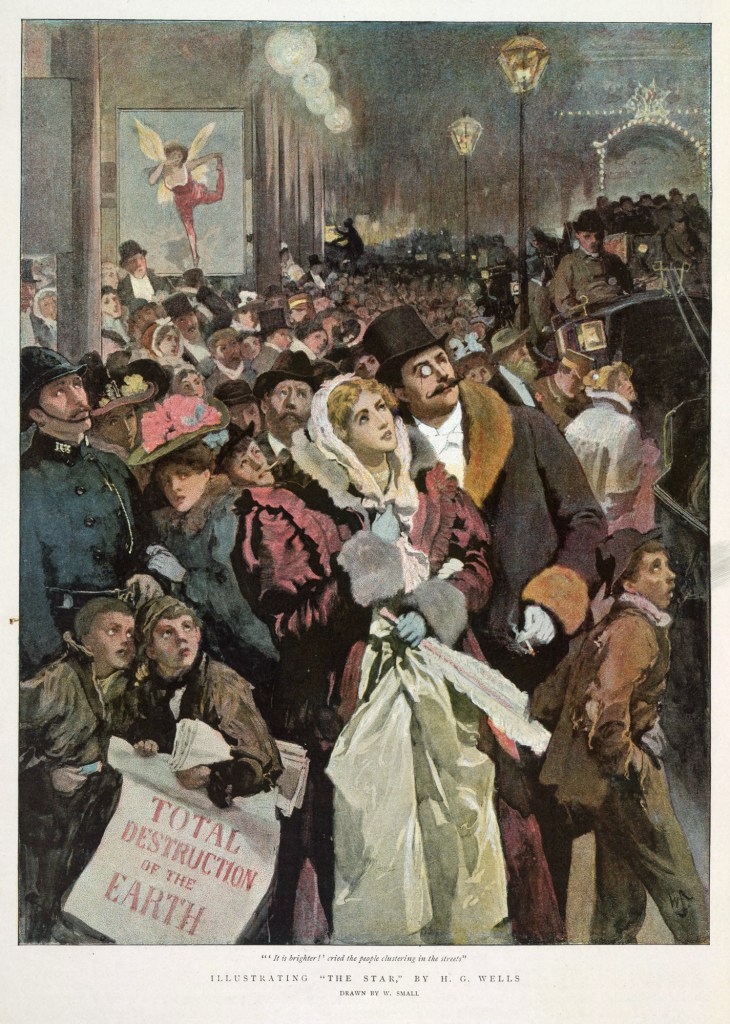
And when next it rose over Europe everywhere were crowds of watchers on hilly slopes, on house-roofs, in open spaces, staring eastward for the rising of the great new star. It rose with a white glow in front of it, like the glare of a white fire, and those who had seen it come into existence the night before cried out at the sight of it. "It is larger," they cried. "It is brighter!" And, indeed the moon a quarter full and sinking in the west was in its apparent size beyond comparison, but scarcely in all its breadth had it as much brightness now as the little circle of the strange new star.

"It is brighter!" cried the people clustering in the streets. But in the dim observatories the watchers held their breath and peered at one another it is nearer," they said. "Nearer!"

And voice after voice repeated, "It is nearer," and the clicking telegraph took that up, and it trembled along telephone wires, and in a thousand cities grimy compositors fingered the type. "It is nearer." Men writing in offices, struck with a strange realisation, flung down their pens, men talking in a thousand places suddenly came upon a grotesque possibility in those words, "It is nearer." It hurried along wakening streets, it was shouted down the frost-stilled ways of quiet villages; men who had read these things from the throbbing tape stood in yellow-lit doorways shouting the news to the passersby. "It is nearer." Pretty women, flushed and glittering, heard the news told jestingly between the dances, and feigned an intelligent interest they did not feel. "Nearer! Indeed. How curious! How very, very clever people must be to find out things like that!"

Lonely tramps faring through the wintry night murmured those words to comfort themselves--looking skyward. "It has need to be nearer, for the night's as cold as charity. Don't seem much warmth from it if it is nearer, all the same."

"What is a new star to me?" cried the weeping woman kneeling beside her dead.

The schoolboy, rising early for his examination work, puzzled it out for himself--with the great white star shining broad and bright through the frost-flowers of his window. "Centrifugal, centripetal," he said, with his chin on his fist. "Stop a planet in its flight, rob it of its centrifugal force, what then? Centripetal has it, and down it falls into the sun! And this--!

"Do we come in the way? I wonder--"

The light of that day went the way of its brethren, and with the later watches of the frosty darkness rose the strange star again. And it was now so bright that the waxing moon seemed but a pale yellow ghost of itself, hanging huge in the sunset. In a South African City a great man had married, and the streets were alight to welcome his return with his bride. "Even the skies have illuminated," said the flatterer. Under Capricorn, two negro lovers, daring the wild beasts and evil spirits, for love of one another, crouched together in a cane brake where the fire-flies hovered. "That is our star," they whispered, and felt strangely comforted by the sweet brilliance of its light.

The master mathematician sat in his private room and pushed the papers from him. His calculations were already finished. In a small white phial there still remained a little of the drug that had kept him awake and active for four long nights. Each day, serene, explicit, patient as ever, he had given his lecture to his students, and then had come back at once to this momentous calculation. His face was grave, a little drawn and hectic from his drugged activity. For some time he seemed lost in thought. Then he went to the window, and the blind went up with a click. Half way up the sky, over the clustering roofs, chimneys and steeples of the city, hung the star.

I would think in my taxonomy of science fiction for this theme I’d have to also classify the state of the world that received the story. Yet, isn’t the possibility of a roving body visiting out system still possible? Isn’t that why new SF writers in every generation can retell the story? Just research all the speculation the first known real interstellar visitor named Oumuamua caused? It reminded me of Clarke’s Rendezvous with Rama.

James Wallace Harris, 3/19/21

“The Man Who Lost the Sea” by Theodore Sturgeon

My job is to get you to read stories if you haven't. I'll try to make it easy for you by linking to a copy on the web if the story is available. I'll also tell you about anthologies where you can find the story. Then I'll start talking about the story. At first I'll be vague so as not to spoil the story, but hopefully intriguing enough to get to you to go read the story before continuing. As I progress I'll give more and more away.

“The Man Who Lost the Sea” is a magnificent work of second person prose that is as confusing as a pile of jigsaw puzzle pieces without the box. As you read the story the picture is revealed with the placement of the last piece. “The Man Who Lost the Sea” was first published in October 1959 issue of The Magazine of Fantasy and Science Fiction. It was reprinted in Best American Short Stories 1960, The Best from Fantasy and Science Fiction (Ninth Series, 1960), and Judith Merril’s annual anthology,The Fifth Annual of the Year’s Best SF (1960) where I just read it. It was up for a Hugo in 1960 but lost to “Flowers for Algernon” by Daniel Keyes, but wouldn’t any story lose to that story? “The Man Who Lost the Sea” is currently available to read online at Strange Horizons. Or jump over to Escape Pod to listen to the story.

I’ll illustrate how admired this story is by showing you some of the retrospective anthologies it’s been reprinted in over the years:

  • 1968 – Towards Infinity edited by Damon Knight
  • 1969 – First Step Outward edited by Robert Hoskins
  • 1977 – Alpha 8 edited by Robert Silverberg
  • 1983 – The Arbor House Treasury of Science Fiction Masterpieces edited by Robert Silverberg and Martin H. Greenberg
  • 1989 – The World Treasury of Science Fiction edited by David G. Hartwell
  • 1990 – The Great SF Stories 21 (1959) edited by Isaac Asimov and Martin H. Greenberg
  • 1997 – A Century of Science Fiction (1950-1959) edited by Robert Silverberg
  • 2005 – My Favorite Science Fiction Story edited by Martin H. Greenberg
  • 2016 – The Big Book of Science Fiction edited by Ann and Jeff VanderMeer

I’m feeling guilty about not having read “The Men Who Lost the Sea” before now. How could I have missed it? To be honest, I’m not sure my younger self could have appreciated the story. The second person prose involving nonlinear events would have been difficult for my speed-reading younger self to comprehend. Just read the first paragraph:

Say you're a kid, and one dark night you're running along the cold sand with this helicopter in your hand, saying very fast witchy-witchy-witchy. You pass the sick man and he wants you to shove off with that thing. Maybe he thinks you're too old to play with toys. So you squat next to him in the sand and tell him it isn't a toy, it's a model. You tell him look here, here's something most people don't know about helicopters. You take a blade of the rotor in your fingers and show him how it can move in the hub, up and down a little, back and forth a little, and twist a little, to change pitch. You start to tell him how this flexibility does away with the gyroscopic effect, but he won't listen. He doesn't want to think about flying, about helicopters, or about you, and he most especially does not want explanations about anything by anybody. Not now. Now, he wants to think about the sea. So you go away.

What the hell is going on? Where are we? Who is the narrator? Sturgeon gives us the first clues in the second paragraph:

The sick man is buried in the cold sand with only his head and his left arm showing. He is dressed in a pressure suit and looks like a man from Mars. Built into his left sleeve is a combination time-piece and pressure gauge, the gauge with a luminous blue indicator which makes no sense, the clock hands luminous red. He can hear the pounding of surf and the soft swift pulse of his pumps. One time long ago when he was swimming he went too deep and stayed down too long and came up too fast, and when he came to it was like this: they said, "Don't move, boy. You've got the bends. Don't even try to move." He had tried anyway. It hurt. So now, this time, he lies in the sand without moving, without trying.

What can you say about this story so far? Later on when Sturgeon tries to give us more concrete clues can we really put them together yet?

Out and out the sick man forces his view, etching all he sees with a meticulous intensity, as if it might be his charge, one day, to duplicate all this. To his left is only starlit sea, windless. In front of him across the valley, rounded hills with dim white epaulettes of light. To his right, the jutting corner of the black wall against which his helmet rests. (He thinks the distant moundings of nausea becalmed, but he will not look yet.) So he scans the sky, black and bright, calling Sirius, calling Pleiades, Polaris, Ursa Minor, calling that . . . that . . . Why, it moves. Watch it: yes, it moves! It is a fleck of light, seeming to be wrinkled, fissured, rather like a chip of boiled cauliflower in the sky. (Of course, he knows better than to trust his own eyes just now.) But that movement . . .

Maybe it helps when Sturgeon lets us know the man is thinking about the past:

As a child he had stood on cold sand in a frosty Cape Cod evening, watching Sputnik's steady spark rise out of the haze (madly, dawning a little north of west); and after that he had sleeplessly wound special coils for his receiver, risked his life restringing high antennas, all for the brief capture of an unreadable tweetle-eep-tweetle in his earphones from Vanguard, Explorer, Lunik, Discoverer, Mercury. He knew them all (well, some people collect match-covers, stamps) and he knew especially that unmistakable steady sliding in the sky.

By now you should realize this story takes place in the guy’s head, but you still aren’t sure where the guy is or the identity of the annoying boy.

Have I gotten you interested? Have you gone back to the top of the page and followed the link to read the story? If not, let me give you a few more tantalizing clue. Have you read “An Occurrence at Owl Creek Bridge” by Ambrose Bierce – another often reprinted short story? “The Man Who Lost the Sea” belongs to very special tiny subgenre of fiction, one that has deeply personal significance to me, see my essay “Did The First Movie You Ever See Haunt You For The Rest Of Your Life?” about the novel High Barbaree by Charles Nordhoff and James Norman Hall. You probably don’t know these guys but they wrote The Mutiny on the Bounty. Or, have you ever seen the ending to the 1966 movie Seconds with Rock Hudson?

Jeez, if I haven’t hooked you by now I give up. I’ve always been fascinated about the nature of memory and consciousness. I love this Theodore Sturgeon because he explores those concepts in one impactful story.

James Wallace Harris, 3/16/21