“Schwarzschild Radius” by Connie Willis

Group Read 27The Big Book of Science Fiction

Story #88 of 107: “Schwarzschild Radius” by Connie Willis

Normally, everything I’ve read by Connie Willis is enchanting, but it was a bit of a slog for me to read “Schwarzschild Radius.” The story is quite clever. Modeling the physics of a black hole against events by Germans at the Russian front in WWI. Karl Schwarzschild was a German physicist who first mathematically worked out the ideas of black holes from Einstein’s equations. The title of the story, “Schwarzschild Radius” is the actual name given by scientists to the size of an event horizon in a rotating black hole.

Schwarzschild died at the front from an autoimmune skin disease. Willis took this fact and made it into a science fiction story. She has a first-person narrator, a soldier who had served at the front, being interviewed by a biographer of Schwarzschild. The story switches from the present to flashback memories. Willis makes the conflict of the story about the soldiers’ failure to communicate outside of the front as if they were trapped inside an event horizon of a black hole. This is a neat idea intellectually, but I found it contrived and strained in the storytelling. Using a series of frustrating incidents to show the parallels to physics was just too obvious.

The details of these episodes were on the surreal side, which might have been Willis’ intention, but I found that annoying. I prefer stories that feel like realistic paintings, and this story felt like modern art.

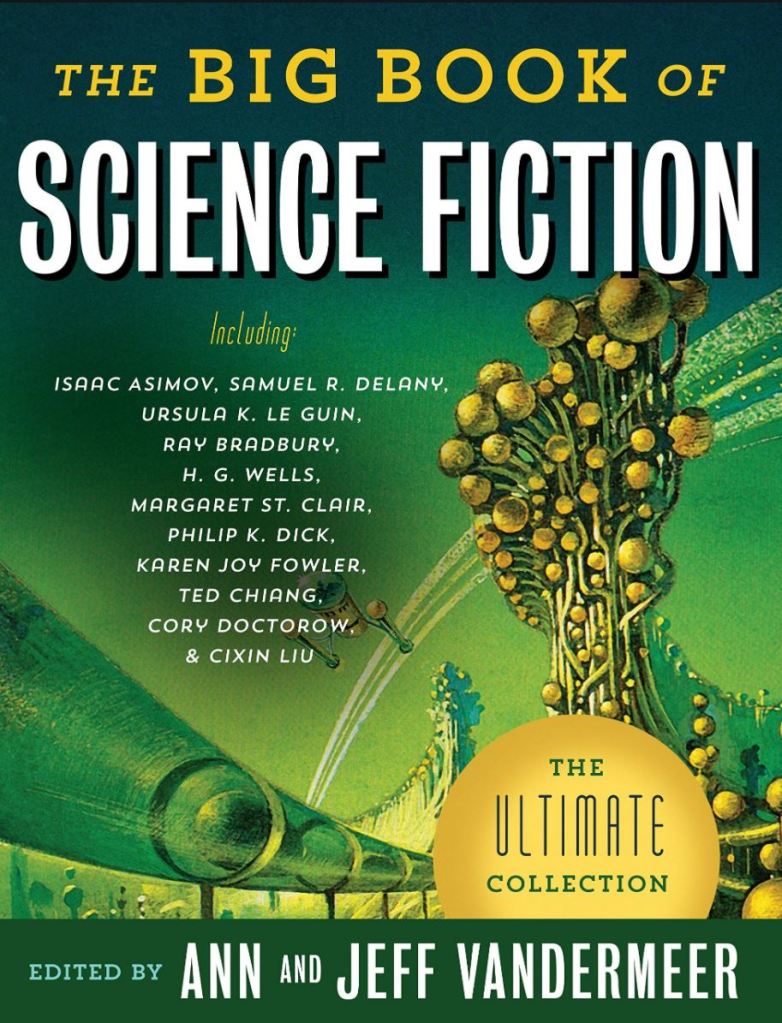
“Schwarzschild Radius” was anthologized in The Norton Book of Science Fiction and The Big Book of Science Fiction, as well as being included in Nebula Awards 23 for being a finalist. So this story is admired. But there are stories that are admired for the clever writing that I just don’t enjoy.

First off, “Schwarzschild Radius” is overly complicated with its framing. It is another layer of modeling the event horizon, but was it really needed? Being in the German trenches on the Russian front in WWI is a perfect metaphor for being inside the Schwarzschild radius. And the idea of waiting for a letter from Einstein and understanding Schwarzschild’s disease are great elements to include in the story. But I never felt for any of the characters.

Willis seems to pattern the mood of the story from the mood in Catch-22, but I never cared for her characters like I cared for Heller’s characters. The repeated requests to get a message out reminded me of Yossarian constantly asking about Snowden. And the soldier building the motorcycle reminded me of Orr. Of course, Heller had a whole novel to develop his characters, and Willis just has a short story.

There were some vivid moments, like when the narrator feels revulsion at Schwarzschild’s skin disease, or when the explosion buries him in the trenches. But most of the action went by too quickly. We never got to settle into any scene to get into it. Personally, I believe the story would have been much more effective without the framing. The framing words could have been used to expand the heart of the story.

I wonder why the VanderMeers picked “Schwarzschild Radius” when there are so many other Willis stories to choose from? Maybe her top stories are over anthologized. I never thought a story could be over anthologized until I read a letter by Philip K. Dick asking Lee Harding editing Beyond Tomorrow to substitute “The Commuter” for “We Can Remember It For You Wholesale.” He did. I wonder how often this happens, and I wonder which story Connie Willis would have liked in this volume? “Schwarzschild Radius” could be her favorite, and I’m a dunderhead not to see it. I know Rich Horton loves this story.

Main Page of Group Read

James Wallace Harris, 2/12/22

Improving the Internet for Researching Science Fiction

I wrote an long review of We Can Build You by Philip K. Dick for my personal blog. Normally, I would put my science fiction reviews here, but my goal is to review every book I read in 2022 at Auxiliary Memory. Go read the review if you’re interested in PKD, but what I want to do now is talk about how I researched that review. I found quite a few impressive sites devoted to Philip K. Dick, but I didn’t think Google was very good at helping me find them. I also assumed there are way more great sites out there that I’m not finding through Google.

Google is unfortunately geared at helping people sell stuff. It’s a shame it doesn’t offer us radio buttons or a pulldown menu near the search box where we could tell Google what kind of results we want. If the box “[ ] I’m Buying” isn’t checked, then don’t show us any site trying to sell us stuff. There is scholar.google.com to search, but its results come mainly from academic sites (often with content behind paywalls), and I want results from all sites. I believe search engines aren’t the solution.

Once upon a time I wanted to become a librarian, so I’m thinking of librarian type solutions. Remember the good old card catalog? I believe one way to separate the informational wheat from the chaff is to use a curated card catalog. And I believe one already exists – Wikipedia.

Here is Wikipedia’s entry for We Can Build You and the entry for Philip K. Dick. The first link in the Reference section is to the novel’s entry in ISFDB. Between those three web pages, most readers would learn about all they wanted about We Can Build You before reading it. Searching Wikipedia first was far more efficient than starting with Google.

What Do We Want From An Internet Search Tool?

  • Immediate access to the exact information we seek
  • Links to the most authoritative information
  • We want enduring sources that can be sited
  • We want accurate information
  • We want human curated information
  • We want cumulative history of the information
  • We want information organized into useful subcategories

Using my research for We Can Build You as an example, here’s what would be the ideal results, both in general, and specifically how I see Wikipedia providing it.

  1. A comprehensive history of the writing and publication of the book.
  2. A complete but concise summary of the plot with a listing of characters.
  3. A summary of the most common interpretations of the book
  4. A summary of how the book has been reviewed and judged.
  5. Links to the best online reviews/essays/academic papers
  6. Links to databases that contain information about the book
  7. Links to where I can buy/download the book
  8. Links to books/essays/academic articles about the book
  9. Bibliography of significant books/journal citations that aren’t online.

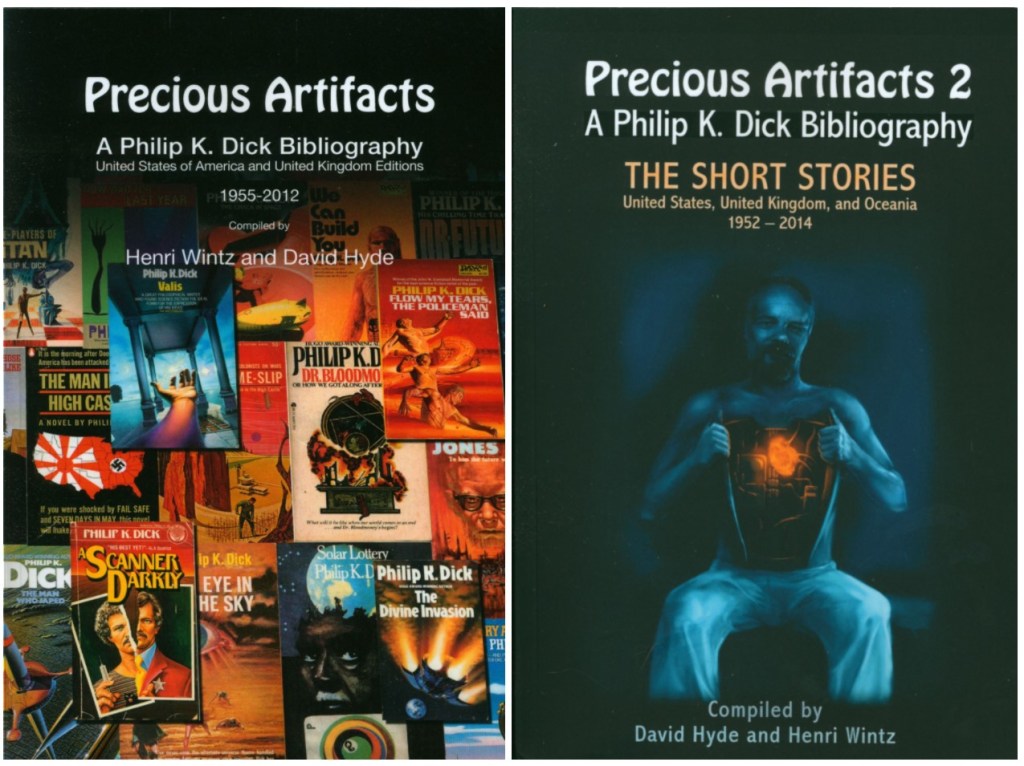
Wikipedia has already been moving in this direction. The entry for We Can Build You is a decent start. Dr. Bloodmoney has some improvements. But the entry for The Man in the High Castle gets much closer to what I’m wanting.

Google claims there are 53,800 pages with information about [“We Can Build You” by Philip K. Dick]. Just how many extensive reviews or scholarly papers on We Can Build You exist? Some might be on the 12th page of a Google results or the 153rd, or hidden behind a firewall protecting academic publications so they aren’t easily found. How many excellent articles on the book have been written? 8, 15, 172? What if human editors decided on the best 5-10 to list on the Wikipedia, especially if their full text was available online? At what point do we have enough information about any subject?

A Wikipedia entry doesn’t need to be a dissertation on the subject but it should be the start of one. It should provide all the links to start writing a dissertation.

ISFDB lists eight reviews, but not links to the actual reviews. Some of those reviews are on the internet, some are not. One of those reviews is also listed on Wikipedia but without a link, even though the full text of the magazine is available online. Read the Theodore Sturgeon’s review in the January 1973 issue of Galaxy, and it is summarized on the Wikipedia page. However, none of these links proved that useful to me, and I have to assume much better content has been written about We Can Build You in the last fifty years.

Wikipedia could link to all the academic contend behind paywalls. That would be a tremendous step forward. Better yet link to a service that would allow users to easily buy those articles with Paypal (and give Wikipedia a cut). Or if the publication was something for sale on Amazon, link to it and allow Wikipedia an affiliate cut. Here is the opening page to a book I found that has a chapter on We Can Build You that I discovered though scholar.google.com. It was on Amazon for $9.99 for the Kindle edition. The book is The Twisted Worlds of Philip K. Dick: A Reading of Twenty Ontologically Uncertain Novels by Umberto Rossi.

I found this first page of the introduction so exciting that I bought the book – and it has a chapter on We Can Build You. Because of my knowledge of Sheckley and PDK I know Rossi will have incredible insight. This book should have a link on Wikipedia.

All the scholarly opinions about We Can Build You would be too much for Wikipedia to summarize, but it should point to the best. That would certain be a better solution than Google. Google is finding information by machine indexing. Right now, Wikipedia is presenting information by human intelligence. I believe we need more human help in internet searches than brute force AI. Of course, AI will eventually be better than humans. Someday, an AI will write the perfect nonfiction book on any subject we request of it.

Scholar.google.com returned 47,700 results for the search [We Can Build You by Philip K. Dick]. Wikipedia could link to that search results, and it could list some of those citations that have been human verified by editors to be among the best. Wikipedia is written and edited by volunteers. New volunteers looking for something to contribute could curate the most important links.

While researching We Can Build You I found all kinds of web pages that offer useful information. At the site The World Dick Made they had user sortable listing of PKD’s novels with star ratings, giving the data written and date first published. Here are the books that get 5 and 4 star ratings. We Can Build You gets 4 stars from this site. This certainly would be a nice link for Wikipedia. The link for the novel takes us to a page with more good information, including a long list of characters within the story.

Our own citation listing shows We Can Build You wasn’t very popular on recommended lists and fan polls, but that Josh Glenn put it on the list “75 Best New Wave Sci-Fi (1964-1983) Novels.” That would be another worthy link to include at Wikipedia.

Ultimately, what we want from an internet search is knowledge. Most of us use Google to gather data so we can assemble that data into our own version of knowledge. That’s what my review ended up being. However, my take was highly idiosyncratic. Most people searching on We Can Build You would want facts. Wikipedia does a decent job now, and it’s getting better all the time. However, some researchers would want to know about or even want to read the most common idiosyncratic takes on the novel. Right now, we have to use Google to track those down but it’s very inefficient. Scholar.google is better, but still returns to many results. The right links added to Wikipedia would make it a far superior search tool.

In the future, I can picture the volunteer editors at Wikipedia adding more and more information to each entry, and it will get into helping its users find those idiosyncratic views. This will be much more efficient than Google.

Right now I have several shelves of books about science fiction and its history. If I started with the main entry for Science Fiction in Wikipedia and pulled out all the content that is linked to it, I’d have the best book ever written on the subject, with the best illustrations. All the famous SF authors and their novels have entries in Wikipedia, as well as most of their famous short stories. Wikipedia also covers the editors, book publishers, and magazines. Eventually, Wikipedia could describe every SF stories ever written, and link to where they could be bought or read online, as well as links to everything we know about them. That’s why I believe Wikipedia should become the card catalog of the internet.

Of course, the next problem is making this knowledge permanent.

James Wallace Harris, 2/11/22

Futures Past – Jim Emerson

There are millions of science fiction fans, but how many of those readers love to read about science fiction? Especially, about the history of science fiction way before they were born. I do, but maybe I’m an extreme outlier.

Back in the 1960s, I discovered Sam Moskowitz and loved reading his books about the history of science fiction. I also enjoyed his magazine columns profiling science fiction writers. Over the years I’ve read and collected several shelves of books about our genre. In the 1990s, I subscribed to a fanzine titled Futures Past. It was quarterly, and each issue covered one year in science fiction starting with 1926. It died after four issues and I was greatly disappointed.

Now the creator of that fanzine, Jim Emerson is back. He’s starting over again with 1926, but this time each issue has been expanded into a book (pdf, trade paper, and hardback). To keep costs down, Emerson doesn’t sell through Amazon or bookstores. He sells direct. I bought the first two volumes, 1926 and 1927 with Paypal, but there are other purchasing options. Order from this website. Emerson offers the first volume on pdf for free to give readers an idea of what the books will be like. However, the first volume is only 64 pages, and volume 2 is 144 pages, a much more impressive entry in the series. If you want to give the series a try after looking at the pdf of 1926, I’d buy the 1927 volume first. I plan to collect them all. The home page for Futures Past is here.

Emerson is still working full-time and figures he can only produce one volume a year. He writes all the content and does all the graphic layouts. Jim hopes when he retires to produce two or more volumes per year, and eventually cover 50 years of science fiction history (1926-1975). However, this time he plans to jump around and not go year by year after 1928. I’m glad to hear that. As much as I like reading about science fiction in the 1920s and 1930s, I really want to read about the 1940s, 1950s, and 1960s. I vote for 1941, 1953, and 1968.

I’m very curious how many science fiction fans will be interested in these books. Each volume covers the science fiction magazines, books, and movies that came out during that year. What makes these books so much better than the old fanzines is the use of color printing. I’ve always loved the art on magazine and book covers and still photos and posters from movies. (I’m showing images below from 1927 because you can download the pdf to 1926 and look at it for yourself.)

Each book is a visual history, but there is also a great deal of reading content. Emerson is quite the historian of science fiction’s history, reminding me of Sam Moskowitz, Brian Stableford, and Mike Ashley. Pages 58-93 of the 1927 volume is devoted to the silent film Metropolis which I’ve seen three times over my lifetime, and look forward to seeing it again. About 80 pages of the 1927 volume are devoted to science fiction in silent films.

Both volumes spend many of their pages on science fiction in silent films, a topic I knew little about. I’ve seen fewer than 40 silent films and assumed there was just a handful of science fiction titles. Of course, Emerson includes fantasy and horror, but the number is far greater than I imagined. In one article he lists six pages of lost films.

My favorite section is Science Fiction Books of 1927 (pp.116-133). And my second favorite section is Magazines of 1927 (pp. 94-115. I especially love all the photos of the covers, but there is quite a lot to read about these forgotten books and magazines.

Here’s the table of contents for the 1927 volume.

The original fanzine covering 1926 inspired my interest in Lady Dorothy Mills, a forgotten travel writer from the 1920s who also wrote novels, including one science fiction title. I read about her SF novel Phoenix in the 1926 issue and spent years tracking down a copy. The one mention of a book has inspired thirty years of chasing her books and creating a website devoted to Lady Dorothy Mills. So thanks, Jim Emerson.

Like I said, I love reading about the history of the genre, but I wonder how many science fiction fans are like me? If you like to read about science fiction, leave a comment. I’ve been thinking about profiling some of my other history books on the subject.

James Wallace Harris, 2/9/22

“Rachel in Love” by Pat Murphy

Group Read 27The Big Book of Science Fiction

Story #86 of 107: “Rachel in Love” by Pat Murphy

“Rachel in Love” by Pat Murphy is one of the great classics of science fiction. I’ve read it before, and it was a delight to read it again. Of course, I’m partial to science fiction stories about intelligent chimpanzees, and I’m not referring to The Planet of the Apes (but I enjoy those kinds of stories too).

One of the first intelligent chimp stories I can remember reading is “Jerry Was a Man” by Robert A. Heinlein. Then came “Rachel in Love.” Next was the novel, The Evolution of Bruno Littlemore by Benjamin Hale. There is another novel, but I shouldn’t mention the title because it might spoil the story. And there are other stories which I’ve forgotten at the moment. Nor I’m not talking about stories like Brin’s Uplift novels. I’m only talking about stories that are set in the present with an intelligent chimp, one that you can identify with. One that makes you think we’ve been evil to chimpanzees.

And if you want to know just how evil, watch the documentary Project Nim from 2011. Trigger warning: Project Nim is going to rip out your heart, stomped the crap out of it, and if you’re a good person, make you thankful it did. If it doesn’t make you cry in empathy and outrage you might want to see a psychiatrist.

“Rachel in Love” should also make you cry. I did. It should also make you hate what we’re doing to chimpanzees. It made me hate it again. I was thankful to read in the VanderMeer introduction there has been a law passed against using chimpanzees in research. “Rachel in Love” should also make you happy, because of its wonderful storytelling skills. The structure and narrative of this tale are perfect. Sure, it takes some kinky turns sexually, but then, so do our hormones.

Rachel is a chimpanzee who has been imprinted with personality scans of Dr. Aaron Jacob’s deceased daughter Rachel. She has two sets of memories. Her own chimpanzee childhood, and Rachel’s. Dr. Jacob named the chimp after his daughter.

By Murphy inventing the personality overlay for this story, it provides a kind of Rosetta Stone that lets humans see into the world of the chimpanzee. Rachel is neither human nor chimp, but a bridge between the two. Nim Chimpsky, a real chimpanzee raised in a human family is a tragic animal figure that we can only imagine how he thinks. We want to believe he is as intelligent as Rachel when we look into his eyes but we never know for sure. Jerry, Heinlein’s chimp has been uplifted enough for the law to consider giving him legal status. And Bruno Littlemore is really a fantasy creature created for satire, but one we side with.

I’m old enough to remember a time when people considered animals completely lacking in consciousness. Humans were God’s chosen, and the animals were just for our use. Even nature lovers like Teddy Roosevelt would shoot them all day long and never consider what the animals might perceive. Now, I think we realize that consciousness is a spectrum, and awareness, even self-awareness is not unique to us. Back in 1987 Pat Murphy knew this and wrote “Rachel in Love.” I wonder when everyone will know it.

[I’m sorry I’m behind in reviewing these stories. I had to skip #83-85. I hope to get back to them someday.]

Main Page of Group Read

James Wallace Harris, 2/7/22

“A Gift from the Culture” by Iain M. Banks

Group Read 27The Big Book of Science Fiction

Story #82 of 107: “A Gift from the Culture” by Iain M. Banks

I strongly disliked “A Gift from the Culture” by Iain M. Banks. Not because it’s badly written, but because the main character kills an untold number of people, and because he doesn’t have the courage to do the right thing. I also hate this story because its plot engine is so uninspiringly cliché that I picture Banks stealing it from an ancient film Noir B-movie.

Wrobik is coerced by mobsters into committing mass murder to pay off his gambling debts. The gambling debt plot motivation is as hoary as tying damsels in distress to the train tracks. But to make matters worse, this story is set within the Culture series, a fictional universe of the far future, where humans are now posthuman, and society is post-scarcity. I’ve read about Culture novels for years and thought it was a great theme. But when I tried one of the novels in the past, I was immediately put off because the plot was about assassins. I quit the novel in disgust. I hate stories about assassins.

If I read a novel about a utopia, I want to read about citizens of that utopia. I want a superior character to follow. In both tries at a Culture story, I get amoral characters. That’s why I hated this story. If you’re a science fiction writer creating a utopian future, I want stories that inspire hope, not make me think human failure is endless.

I assumed while reading “A Gift From the Culture” that Banks would find a clever way to allow Wrobik to escape his role as a mass murderer. But no, evidently Banks felt he promised his readers a spaceship shot down with a handgun and he had to deliver.

I also wondered why Wrobik just didn’t shoot the driver when Kaddus and Cruizell forced the gun on him, and then shoot Kaddus and Cruizell. If the gun can blow up a spaceship, it could blow up a mobster’s limo.

I don’t mind stories with amoral protagonists, but those stories have to justify our observations of evil in some way. There was nothing in Wrobik’s situation or personality to care about. He was weak and despicable. Nor was there anything interesting about the criminals in this story. They were so cardboard and cliché that they made the story cartoonish. Kaddus and Cruizell were no better than Snidely Whiplash. Wrobik is no Walter White.

I’ll have to keep trying to find a Culture novel I will like. I just hope they aren’t all about criminals at the edge of utopia.

Main Page of Group Read

James Wallace Harris, 2/1/22

“Readers of the Lost Art” by Élisabeth Vonarburg

Group Read 27The Big Book of Science Fiction

Story #81 of 107: “Readers of the Lost Art” by Élisabeth Vonarburg

On the surface, “Readers of the Lost Art” by Élisabeth Vonarburg feels like something written for the Marquis de Sade but he would have been bored by this pretty presentation of two people being flayed alive for art. Again, the VanderMeers have selected another science fiction horror tale. I have to assume there is more to the story than what we’re told in words.

The introduction claims it’s transgressive and transformative and about ritual and creativity. But I’m sure the Incas could have said the same thing about their human sacrifices. However, the story seemed straightforward to me, and I missed any symbolism or satire. I sensed each action in the story before it was revealed but evidently missed all the intended literary implications. My bad.

“Readers of the Lost Art” feels like the kind of story we read in Dangerous Visions so long ago. That anthology edited by Harlan Ellison from the 1960s was intended to shock. The trouble with stories written to shock is they often don’t. They just seem silly and absurd. They feel like kids playing a game of gross-out. I’m sure the VanderMeers and other readers do find intellectual insights in this story, but I didn’t.

Now, don’t get me wrong, I do enjoy a good story with shocking elements. The same night I read “Readers of the Lost Art” I also reread “Fondly Fahrenheit” by Alfred Bester. I’ve lost count of how many times I’ve read that story and it has grosser elements than the Élisabeth Vonarburg tale. And it’s even experimental fiction. The reason why “Fondly Fahrenheit” is a masterpiece is in its storytelling style. “Fondly Fahrenheit” sparkles, whereas “Readers of the Lost Art” was merely good writing. I wonder if it sparkled in the original French?

One major difference between the two stories is pacing. “Fondly Fahrenheit” relentlessly races, while “Readers of the Lost Art” trods at a casual nonchalant. That’s an arty way of being aristocratically indifferent, which I think the story intended, but I also think it hurt its presentation. The story is one long, evenly paced, description of a performance piece, with side glances to events in the audience. I was actually more intrigued by those glimpses at the watchers of the performance.

Notice the even paragraphs, the careful, but the plodding pace of the descriptions.

Now, look at a similar page from “Fondly Fahrenheit.” This is actually one of the slower sections of the story, yet murder and a change of planets happen on this Kindle page. But also, Bester tells more about the characters and moves the story along better with each sentence.

It’s not that “Readers of the Lost Art” is badly written, but it’s overly descriptive. It’s Henry James to Bester’s Ernest Hemingway. And that is an artistic choice. But was it the right choice for a story about humans being skinned alive? If you’re writing about shocking scenes, shouldn’t the sentence structure shock too?

Main Page of Group Read

James Wallace Harris, 1/29/22

“The Owl of Bear Island” by Jon Bing

Group Read 27The Big Book of Science Fiction

Story #80 of 107: “The Owl of Bear Island” by Jon Bing

This 1986 tale by Norwegian writer Jon Bing makes me wonder if he intended it to be cyberpunk. Computers play a significant role in “The Owl of Bear Island,” a story about alien possession. To be honest, I thought the VanderMeers’ introduction to the story more interesting than the story itself. And within the story, I got distracted by wondering what kind of computers they might have had in 1986. I assume the scientists were using minicomputers. I began wondering about DEC, Data General, HP, and others from that era, and thinking of one of my favorite books, The Soul of a New Machine by Tracy Kidder. Bing also brings up programming (FORTRAN and SIMULA), AI, and Expert Systems. In fact, the narrator’s escape plans involve computers.

This plain story about two scientists at a research station on an island in the Arctic being taken over by an alien presence could have been much better. The unnamed first-person narrator thinks of the alien as an owl. He assumes it killed his partner, and he knows enough to struggle to free his mind. “The Owl of Bear Island” has neither suspense, atmosphere, or dread, but is its matter-of-fact style due to the style being lost in the translation, or was the original writing just that straightforward? I don’t know.

Also, I began to think of the problem of remotely operating another being over the distances of light-years. Is telepathy instantaneous? Or was Bing suggesting the alien was on the island with them? Either way, we might call this story horror cyberpunk. It would have been a creepier story if we learned about the possession as it unfolded. Think of the drama of slowly realizing that your choices aren’t your own, especially while living alone far from civilization, during the dark days of the arctic.

Bing’s narrator just comes out and tells us what happened, and then later, just tells us his plans for escape. Good storytelling involves leading us along as events unfold. This story should have been a chess game between a human and an alien. Instead, it’s a quick journal report.

Main Page of Group Read

James Wallace Harris, 1/27/22

“The Unmistakable Smell of Wood Violets” by Angélica Gorodischer

Group Read 27The Big Book of Science Fiction

Story #79 of 107: “The Unmistakable Smell of Wood Violets” by Angélica Gorodischer

I’ve been getting behind in my reviews of the stories in The Big Book of Science Fiction. The discussion group is now on story 81. I don’t want to flame out on this project, now that I’m getting so close to the end. But I’ve also been worrying about publishing too much and not having enough worthy things to say about these stories. Once this project is over I’m not going to commit to reviewing large anthologies story by story. I think reporting on reading stories of quality will be more important than reporting on reading in quantity.

“The Unmistakable Smell of Wood Violets” by Angélica Gorodischer, which was first published in 1985, is a well-written, and quite charming story about a global civilization that has grown up after the fall of our global civilization. For example, the 79 Independent States of North America have only become recently reunited, under an aged bit-part video actor named Jack Jackson-Franklin. The U.S.A. is now a third-world country.

The story setup follows worldwide gossip about a transsexual woman astronaut living in Rosario, a former territory of Argentina, who will fly an ancient preserved spaceship to the edge of the universe.

We are told in this new civilization gun-powder no longer exists but magic does work. That Rosario is so poor that its citizens had to go in together to buy a clock, one of two in the country. The spaceship launched at 5:45am and returned at 6:11am the same day.

The person who is most interested in this news is Her Gracious and Most Illustrious Virgin Majesty Ekaterina V, Empress of Holy Russia. Most of the charm of this story comes from describing the new political orders around the world.

Gorodischer’s prose reminds me of a Bob Dylan song, “Desolation Row” and vaguely remembered hippie novels from the 1960s.

This story is told almost like a fable, a fantasy. I encounter that voice often in translated stories. I wonder if it’s a popular narrative style in South America? Here is the astronaut’s report of what the edge of the universe was like.

For some reason, time dilation worked backward in this story, and the astronaut aged on her 26-minute voyage, rather than the people on Earth. The unnamed astronaut marries and has a son, and when he’s born a green shoot grew out of the ground. I’m not sure what this signifies, other than it’s a sign of renewal in nature.

Angélica Gorodischer gives us another perspective on science fiction. I can see why the VanderMeers liked this story. However, I wonder if it’s not anti-SciFi? It feels like a naturalist or humanist take on the absurdity of the hubris of science fiction.

Main Page of Group Read

James Wallace Harris, 1/27/22

“The Lake Was Full of Artificial Things” by Karen Joy Fowler

Group Read 27The Big Book of Science Fiction

Story #78 of 107: “The Lake Was Full of Artificial Things” by Karen Joy Fowler

This is my third time reading “The Lake Was Full of Artificial Things” by Karen Joy Fowler, first published in the October 1985 issue of Asimov’s Science Fiction. It’s another science fiction story about memory, so it’s interesting to compare it with our last story, “Snow” by John Crowley. In that story, a man remembers his dead wife, in this story, a woman remembers her dead boyfriend. We should make a list of all the ways science fiction is used to play with memory.

In 1970, Miranda dumps Daniel a boyfriend she’s in love with because he’s being drafted. He dies in the Vietnam War two years later, and for thirty years Miranda has felt guilty. Especially, because she intentionally broke up with Daniel because she feared what the war could do to him.

The story takes place after Miranda is a grown woman, and her son is older than Daniel when he died. She goes to an experimental therapist, Dr. Anna Matsui, who uses induced lucid dreaming to get her patients to confront their inner demons.

I’ve been obsessed with memory my whole life, and even more so since I’ve become old my memory has begun to fail. When I was young I used to play around with lucid dreaming. So this story resonates with me strongly.

Miranda meets Daniel in her dreams twice under the control of Dr. Matsui. The first time is a satisfactory encounter according to Dr. Matsui, and she wants it to be the only dream session. Daniel had forgiven Miranda, and that was enough to work with Miranda in regular therapy. However, Miranda begs to go again, but things go badly. Dr. Matsui refuses to put Miranda under again. Up till now, the dreams are based on how Miranda remembers Daniel, from their time at college.

However, Miranda induces her own lucid dream at home, and she meets Daniel at Camp Pendleton, and they argue even more. This time Daniel tells her how he killed a young boy thinking the boy had a hand grenade but didn’t. These are experiences that Miranda could have never known. We have to wonder is she learning something real, or if this is her mind playing tricks on her?

Her final dream with Daniel happens in Vietnam, and Miranda tries to keep Daniel from killing the boy and getting killed himself. Everything is realistic, and Miranda is experiencing things beyond her imagination. This time she tries to stay with Daniel as she sees a bomb fall from the sky, but Daniel tells her to go. He tells her he never wanted that. While she pulls away from the scene she sees Daniel and other soldiers die.

I spotted something different this reading. At one point Daniel tells Miranda she could never know what it was like to have the draft hanging over her head, or getting a low number in the draft lottery because of her birthday. This time I wondered if Karen Joy Fowler is writing the story for all women who felt guilty about not going to war in Vietnam. The two times I read the story before, I saw it only as Miranda’s personal story. But now I wonder if Miranda is all of us who didn’t go to Vietnam. That makes it a much more powerful story.

Main Page of Group Read

James Wallace Harris, 1/25/22

“5,271,009” by Alfred Bester

Why did Alfred Bester write “5,271,009?” Is it merely a wild story, or does Bester have something to say? To rant? Sometimes, when I read old science fiction stories I wonder if science fiction writers weren’t satirizing science fiction and if that’s the case with “5,271,009.”

In the March 1954 issue of F&SF the editors give us a hint with their introduction:

Now, I’m not sure if Boucher and McComas aren’t misleading us, or misreading Bester’s story. I’ve never considered science fiction “pap for paranoids,” or that it’s read by people seeking stories that will free them from their responsibilities. “5,271,009” is one wild ride that begs to be explained.

The editors think the story is Bester’s reply to the critics of science fiction fans. I wonder if Bester isn’t criticizing science fiction too. That it’s a hyperkinetic parody of science fiction. I absolutely crave to hear this story read by a narrator that could do it justice, but the only readers I can imagine reading this story as Bester wrote it are dead. I picture either Robin Williams or Jonathan Winters reading it in their most manic moods.

Alfred Bester was only a part-time science fiction writer. He was also a magazine editor, scriptwriter for radio and television, and scripted comic books. In his introduction below, you can tell Bester has a real life. The over-the-top plot of “5,271,009” reminds me of comic books more than it does science fiction. In the 1950s science fiction was considered crapola-lit for geeky adolescent males, but comic books had even a worse reputation, fit only for the subliterate. Science fiction claimed to teach some science but it was damn little, but comics had no claim to redemption.

Actually, I wonder in “5,271,009” if Alfred Bester isn’t doing something like William Shanter did in the famous “Get a Life” skit on SNL. In the story, Mr. Solon Aquila is described as being two parts Beelzebub, two of Israfel, one of Monte Cristo, one of Cyrano, and mix violently. I believe Mr. Solon Aquila is Bester, Jeffrey Halsyon is either the science fiction genre, or the stand-in for all science fiction fans, or both. Just to give you a taste of Bester’s prose and the sound of Aquila:

Is Aquila just an over-the-top character, or is he a bit more?

This time when I read “5,271,009” I had an introduction by Bester to give me more clues. This copy is from Starlight: The Great Short Fiction of Alfred Bester which reprints a 2-volume collection from 1976.

We learn that “5,271,009” was written on assignment to fictionalize the cover artwork. Bester thought the art was obvious camp, and at first didn’t want to take on the project. He felt the story would have to be mad camp. I’ve been seeing that cover since the 1970s and I’ve never once considered it mad camp. Have you? I love the covers on F&SF, especially the ones from the 1950s. If I had to describe what was happening on the cover, I would say a convict was left to die out in space and given enough air to make it torture. But then, that might be exactly what Bester is making fun of.

Of course, we know what the writer imagines doesn’t have to be what the reader reimagines. The basic setup for “5,271,009” is Jeffrey Halsyon, an artist who has gone insane and has quit painting. Solon Aquila is a collector of Halsyon’s work wants him cured so he’ll return to painting. How that’s achieved is a story that feels like a collaboration by Robert Sheckley, Philip K. Dick, and Douglas Adams. But then, this is 1954, and well before those writers showed us just how far out science fiction could get.

It’s interesting that Solon Aquila takes on the job of curing Jeffrey Halsyon. And doesn’t the name Halsyon sound like halcyon? One definition of halcyon is “Often used to describe an idyllic time in the past that is remembered as better than today.” Another confession, that’s exactly how I look back on old science fiction.

Aquila drugs Halsyon and puts him through a series of hallucinations where Halsyon plays out adolescent fantasies often found in science fiction stories, and the number 5,271,009 shows up again and again in these fantasies. The first is a sex fantasy:

Of course, like stories about three wishes, this fantasy breaks apart when Halsyon is told all the women hate him and consider his duty rape. The next hallucination involves the space adventure pictured on the cover of F&SF. Bester is suggesting that science fiction fans imagine themselves as this kind of hero.

In each fantasy, Judith shows up. She is the fantasy girlfriend of all science fiction fans. After Jeffrey makes his escape he is the vile anti-hero that is blamed for the alien invasion by the Grssh. But at the last minute, Halsyon saves the planet. But that fantasy doesn’t work out either.

His next fantasy is my favorite, one I’ve often entertained in my daydreaming, and the plot of favorite stories. Jeffrey returns to being his 10-year old self but retains his 33-year-old mind.

But damn, this fantasy crashes and burns too. The next fantasy is most unpleasant, where Jeffery is in a time loop, like a bad Groundhog Day. Bester makes allusions to Shakespeare and Dante. Slowly, he’s bringing the story around to a meaningful message.

Next up, is another favorite science fiction fantasy I love to daydream about, being the last man on Earth. By the way, I just read Bester’s story, “They Don’t Make Life Like They Used To” which uses the same fantasy. In both cases, Bester or Mr. Aquila ruins the fantasy.

Finally, Jeffrey Halsyon escapes the fantasies, or so he thinks and confronts Mr. Aquila.

The answer to that question is 5,271,009. Halsyon is not out of the nightmare yet, he still has millions to go.

The ending is very much like the red pill-blue pill of The Matrix. But the choice isn’t between living in reality or living in fantasy. Instead, it’s much like Hindu or Buddhist philosophy. We evolve through many lives of reincarnation. We can grow faster if we live hard lives. Yeah, it’s that old what doesn’t kill us that makes us stronger.

Now, is this just a neat story that Alfred Bester wrote for Boucher and McComas? Or is it Bester telling science fiction, or science fiction fans, “Get a life!” To be more precise to the story, “Grow up!”

James Wallace Harris, 1/24/22