Should We Intentionally Read Bad SF?

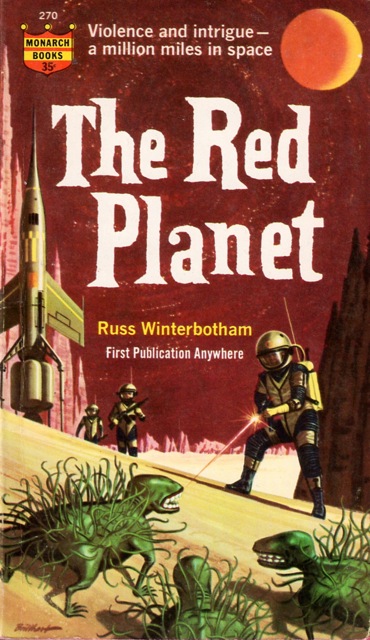
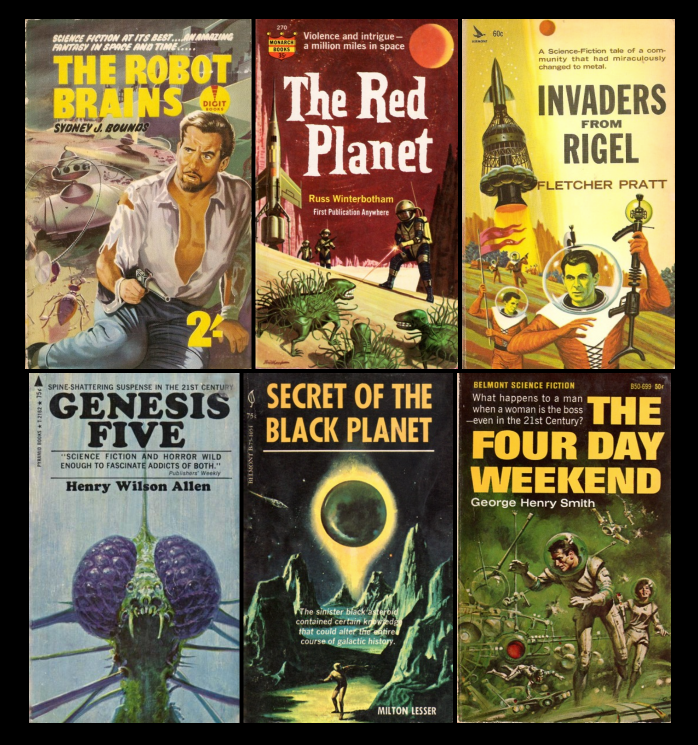
Recently, on the YouTube channel Pulpmortem, I viewed Jake’s video “9 So Bad, they’re Good Science Fiction Books you’ve probably never heard of.” Jake, evidently, is a connoisseur of bad science fiction, and the nine novels he reviewed indeed sound dreadful. Since Jake claims that bad books still can be fun to read, I gave The Red Planet by Russ Winterbotham a try. It was a quick, fun read that wasn’t badly written, but was essentially a minor, forgotten work.

I picked The Red Planet because it was free to Kindle Unlimited subscribers. It’s only $1.99 if you’re not a subscriber. This novel is also available for free on Project Gutenberg.

There are hundreds of better science fiction novels for $1.99 on Amazon, so why should anyone read it? Shouldn’t we always seek out the best possible novel to read? Why read a crappy book when you could be reading something great?

Well, readers don’t think that way. Even though we’re warned never to judge a book by its cover, how often have you bought one just because the cover was so cool looking? How many people have a secret fondness for watching old episodes of Perry Mason instead of streaming the trendiest show on Apple TV? People tend to develop a fondness for a particular type of story and storytelling. They don’t prejudge its quality.

But the question is: Should we seek out books (and movies and TV shows) that popular culture has forgotten? Regarding science fiction, I can think of a few reasons.

  1. We’re searching for forgotten gems.
  2. We like the author.
  3. We like the period.
  4. We like studying the evolution of the genre.
  5. We enjoy playing genre historian.

The Red Planet is about the first manned mission to Mars. The crew consists of five men and one woman. The driving conflict of the plot is that all five men want the woman sexually, and the woman, Gail Loring, wants to be left alone and treated as an equal, an astronaut, not a woman. This is quite progressive for 1962, since The Feminine Mystique wasn’t published until 1963.

Concurrent with the plot conflict is mutiny and murder. Dr. Sparten, the crew commander and rocket scientist, wants all the fame for being the first man on Mars. He also plans to be the man who ends up with Gail Loring. Sparten is Machiavellian and psychopathic. The other four men are dedicated astronauts, but they can’t stop thinking about Gail. After reading The Red Planet, I couldn’t help but wonder about the Artemis 2 mission and the sexual tensions on the International and Chinese space stations.

Even though The Red Planet was probably written in 1961 and published in August 1962, it’s not completely dated. Although it is dated regarding Mars, because the third conflict in the story regards Martians.

Russell Robert Winterbotham (August 1, 1904 – June 9, 1971) published books in several genres, comics, comic strips, and big little books, all the while working at a newspaper. Sixteen of his stories are reprinted at Project Gutenberg. Winterbotham was reasonably prolific and mostly forgotten.

Whenever I stumble upon an old science fiction story by a forgotten writer, I get curious about them. I snoop the internet for any clues about what they were like. I found this short biographical piece written by Russ in 1956, for the apazine Pooka #2. He ended the piece with:

I have no idea now much I’ve written. I expect I hold rights on about 50 to 100 short stories, but there were many many more that I sold outright and reserved nothing and I have no record of these. During my peak, I remember one year in thich I produced two million words. Usually I wrote about a million words a
year, counting my newspaper and comic strip work, Now I write less than a quarter of a million and very little of it, except comics, is fiction, I’m pecking away at a novel which should be finished before 1960. Then I hope to die with my boots on. Later, if I can help it, than 1960.


I authored some historical strips last fall, dealing with frontier characters, “Daniel Boone,” “Kit Carson,” and “Wild Bill Hickok,” These brought more fan mail, including letters from descendants of Boone and Carson, than anything I ever wrote.


My family never reads my stories because they share the opinion of a vast number of others, that they are not literature. But I like my work, I’m my greatest fan. And I’ll keep writing them, by God, as long as I live,

Fanencylopedia 3 quotes Winterbotham just before he died: “The science fiction market doesn’t seem to demand my talents, whatever they are, and I need the rest.”

The old cliche is that writers write for immortality. Sadly, most are quickly forgotten. One reason I like reading old forgotten novels is to wonder about why and how they were written. For a guy born in 1904, The Red Planet is an interesting read.

Winterbotham was around 58 when he was writing that novel. He’s obviously keeping up with science and science fiction. His story features NASA. His astronauts use a Saturn rocket to get to orbit, where the Mars rocket waits. Unfortunately, he has his astronauts get onto the Saturn with a cherry picker. A cherry picker was on hand for Alan Shepard in case of an emergency exit. The Saturn 1 rocket made its maiden flight in October 1961, and it was unmanned, so Winterbotham probably didn’t know the Saturn was too big for that method.

I have a thing for Pre-NASA science fiction, and have written about it several times. The Red Planet is on the cusp of this era. Winterbotham uses NASA in his story, but imagines Mars inhabited by intelligent beings. Even though we know this isn’t true, I’m still fond of stories that feature Martians.

Science fiction changed after the Space Race began. Robert A. Heinlein, who was the leading science fiction writer of the 1950s, made an abrupt change in direction in 1961 with Stranger in a Strange Land. Before that, Heinlein was a head cheerleader for space exploration. Once NASA got going, Heinlein began thinking about new territory for the genre. I don’t know why science fiction historians don’t consider Stranger in a Strange Land as early New Wave. Cause it’s certainly not Old Wave. Heinlein was Old Wave politically, but Stranger was definitely an experiment in fiction on many levels. There are many reasons why Stranger has lost popularity, and one of them is that fans quickly turned against New Wave SF.

Frank Herbert took science fiction on a new wave, too, with Dune, around the same time. Herbert anticipated the long SF novel, with many sequels that explored complex world development, characters, and plotlines. The kind that is popular today.

Winterbotham was trying to be new, too, with feminism. Gail Loring is an interesting character in 1962 science fiction. But then, so were Heinlein’s female characters. Just because Heinlein wasn’t enlightened by 21st-century attitudes didn’t mean he wasn’t changing, too.

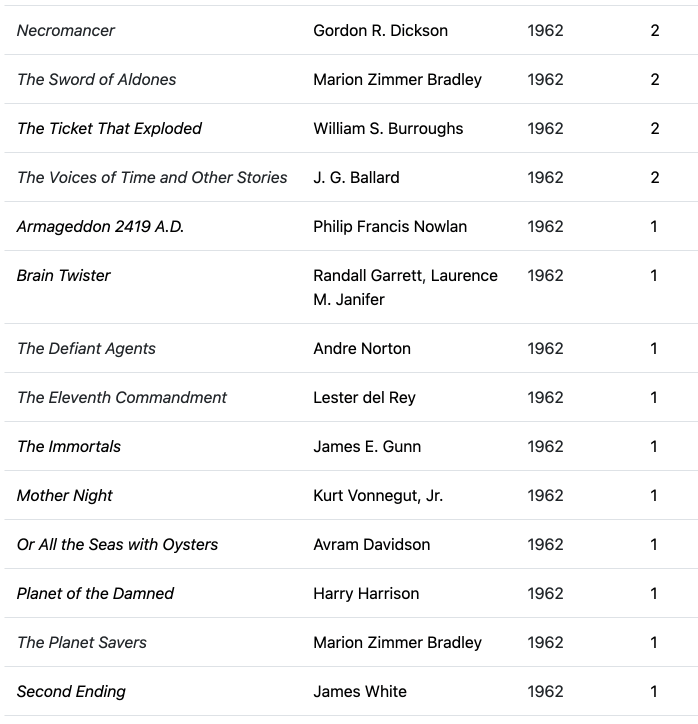
Look at the other top novels from 1962. I’d certainly recommend reading these better SF novels before The Red Planet.
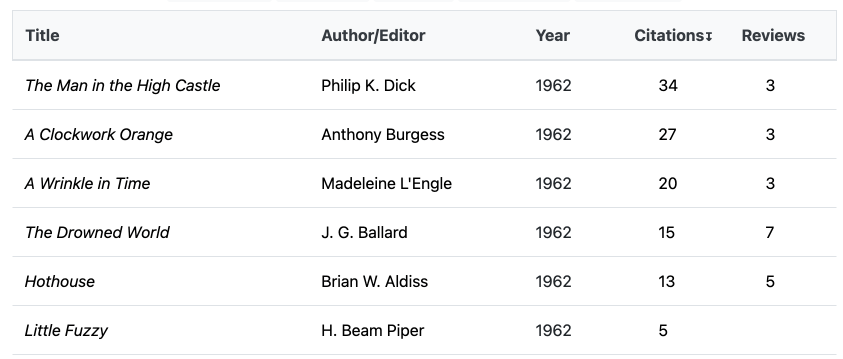
But I’m not sure if The Red Planet is a significantly lesser read than these other SF novels from 1962.
I haven’t read Jake’s other eight SF books that he reviews. They are much harder to find. I’d probably have to spend $5-20 to acquire copies used, and I’m not going to do that right now. It’s a shame all old science fiction isn’t available as cheap ebooks or put into the public domain.

James Wallace Harris, 5/22/26
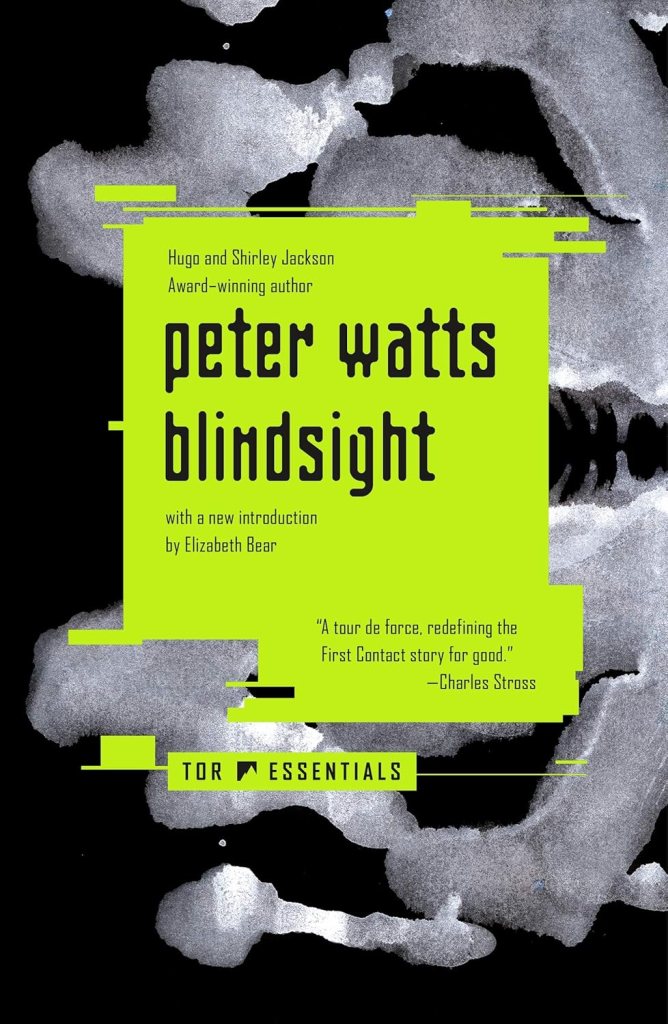
BLINDSIGHT by Peter Watts

On the surface, Peter Watts’ novel Blindsight is a space adventure about first contact, but it’s mostly a series of lectures on the nature of consciousness. Watts works to convince the reader that space-faring intelligent aliens can exist without conscious self-awareness. The aliens in Blindsight are far scarier than the xenomorph creatures in the Alien movie franchise. Blindsight is science fiction horror.

It’s much easier to accept Watts’ main premise in 2026 than in 2006 when Blindsight was first published. Billions of people now converse with intelligent chatbots that have no conscious self-awareness. At least we hope they don’t. Reading Blindsight in the 2020s should make us more paranoid about AI.

Peter Watts is known for writing hard science fiction. He received a Ph.D. from the University of British Columbia, from the Department of Zoology and Resource Ecology. Writers of hard science fiction have an opportunity to present a hypothesis and test it in a novel. How seriously we should take these hypotheses depends on many factors. It’s not real science, but in some cases, both the writer and readers want to accept the fictional hypothesis as being provable scientifically in the future.

Watts makes a case that self-aware consciousness is a fluke of evolution. That intelligence could evolve more efficiently without it. Watts presents a convincing case in Blindsight, but should we believe him? With all hard science fiction, we must ask ourselves: Is this plausible or just good storytelling? Most science fiction writers don’t try as hard as Peter Watts in Blindsight, so it’s easy to just say, “Wow, that’s cool,” and let their work go unexamined. Watts presents so much interesting evidence (infodumps) that I feel demands evaluation.

I’ve tried several times over the years to read Blindsight. I never could stick with it. Blindsight just didn’t grab me, and learning that it featured a vampire completely turned me off. Recently, a reader left a comment on my post “Why Do We Read Science Fiction?” recommending Blindsight because it featured “creatures with very advanced intelligence but no self-awareness.” I’ve been doing a lot of reading on consciousness, so this did grab me.

Again, I struggled to get into the story. Several times, I considered quitting. The novel often presented ideas that got me thinking, but Watt’s style just wasn’t working. It’s probably a case of that old breakup line, “It’s not you, it’s me.”

Since we’re going to talk about the nature of consciousness, I should admit that I’m 74, and I often struggle with 21st-century science fiction. The SF books my mind was trained on came from the 1950s. They were often fewer than 200 pages, told in a linear plot, and had likable characters whom I could identify with. Blindsight is 384 pages, told in a convoluted plot, and there isn’t a single likeable character in the whole story. Fantasizing about being on the crew of the Theseus would be like wanting to be on the crew of the Nostromo? The entire time I was reading Blindsight, I thought about Alien. There are many similarities and parallels between the two stories, and their endings have much in common.

More than that, 1950s science fiction portrayed an overall positive philosophy regarding space exploration. Blindsight is a horror novel about the possible dangers we might find in outer space. Back in the 1940s, John W. Campbell, Jr., allowed Robert A. Heinlein and a few other writers to present stories with aliens so overwhelmingly terrifying that they put humanity on the level of a cargo cult. Heinlein even had Lazarus Long and companions run home to Earth after encountering one alien species. In the 1950s, Campbell and Heinlein switched gears and promoted humans as the badasses of the galaxy. Reading Blindsight makes me think humans need to stay on Earth and hide.

I accept that Blindsight is a masterpiece of 21st-century science fiction, and I even admire the story. I’m already thinking I should reread it because I’m sure I missed quite a bit of what Watts was trying to accomplish. However, there are many ideas raised in this novel that I want to discuss and even argue over. So this isn’t a review. If you haven’t read it, you might want to go read it before continuing. Blindsight has inspired many positive reviews on YouTube.

I should also mention that I almost didn’t finish Blindsight this time either. I was about a third of the way into the story and found the characters and plot confusing. So I read its Wikipedia entry. Even though it gave away the entire plot, it helped me enjoy the rest of the novel. I believe my problems were due to another difference between 20th-century SF and 21st-century SF. Science fiction has become more baroque in its complexity and storytelling techniques.

This YouTube video by the Feral Historian gives away the entire story. It’s not a review, but a synopsis of the story’s philosophical speculation. It’s strikingly eloquent, and I’m envious of his writing and speaking style. (By the way, the Feral Historian uses video clips from a short film based on Blindsight.)

I believe Peter Watts wants his readers to take his science-fiction speculations seriously because of his infodumps and Socratic dialogues. The infodumps cover a wide range of studies and theories about consciousness. I often wondered why Watts just didn’t skip the story and present his ideas as a collection of popular science essays.

There are two hierarchies for disseminating scientific ideas.

Genuine Science

  • Science (peer reviewed)
  • Mentors
  • Popular Science Books
  • School Science
  • Science Documentaries
  • Popular Science Articles
  • Science Fiction?

Pretend to Plausible Science

  • Science Fiction
  • Pseudoscience
  • Social Media
  • Crackpots
  • Comic Books

Watts bases his main hypothesis on the Chinese Room thought experiment first proposed by John Searle in 1980. The link is to a Wikipedia entry that I highly recommend reading to fully understand Blindsight. Searle proposed the Chinese Room thought experiment to refute the idea that if a computer could do everything a human could, it would also be self-aware and conscious.

When the crew of Theseus finally tracks down the alien spaceship, they are surprised by this message:

RORSCHACH TO VESSEL APPROACHING 116°AZ–23°DEC REL. HELLO THESEUS. RORSCHACH TO VESSEL APPROACHING 116°AZ–23°DEC REL. HELLO THESEUS. RORSCHACH TO VESSEL APPROACHI …

She’d decoded the damn thing. Already. She was even answering it:

Theseus to Rorschach. Hello Rorschach.

HELLO THESEUS. WELCOME TO THE NEIGHBORHOOD.

After quite a bit of back-and-forth communication between the two ships, Szpindel suggests that the aliens don’t actually understand English, but are using the technique suggested in the Chinese room thought experiment. If Watts had written Blindsight in 2026, would he have suggested the aliens understood English because they were a large language model (LLM)? Anyone with much experience communicating with ChatGPT would make the assumption.

Many current AI researchers are hellbent on creating a conscious, self-aware AI. If humans are biological machines that evolved to have self-awareness, then AI researchers believe it’s possible to build self-aware machines. Searle proposed the Chinese room thought experiment as proof that it’s possible to create a machine that appears self-aware but isn’t. Philosophers and computer scientists eventually concluded that the Chinese room thought experiment wasn’t conclusive.

Anyone who meditates or studies the science of the mind knows that intelligence and awareness are two separate aspects of our being. Throughout his novel, Watts hammers home to his readers that humans are not what we think we are. Just consider the title of the novel, Blindsight. Read the Wikipedia entry. Throughout the novel, Watts chronicles conditions where our senses fool us. At times, I wonder if Watts had been reading too many Oliver Sacks essays.

Watts suggests that conscious self-awareness may be an illusion, and suggests that many humans are no more than zombies.

At some point in the story, I believe readers should be asking: Is Watts wrong? If we combine LLMs with robots and those mechanical beings learn to interact with reality, will conscious self-awareness spring up? Will robotic consciousness be just as soulful as human consciousness? The scientific study of minds doesn’t leave room for the soul, although many religious researchers would like to find it. Christians will have to decide if robots and aliens have souls. Watts suggests that nobody has souls, that immensely intelligent beings could exist without consciousness, and that even those who do claim to have conscious self-awareness might be delusional.

Blindsight is an incredibly bleak book. But then it’s a horror novel. Several factors in Blindsight make me distrust any idea Watts proposes. The main one is resurrecting vampires. In the fictional world of Blindsight, vampires did exist, but became extinct. They are resurrected to learn about their longevity and ability to hibernate. The crew of the Theseus is enhanced by these genetic discoveries, allowing them to survive the long voyage to the edge of the solar system. I’m sorry, but this is comic book-level science.

The crew is supposed to be transhuman, or posthumans. Science fiction often imagines posthumans with longevity, immortality, and psychic abilities. I find such speculation to be weak, boring, and trite. Those ideas seem to have been swiped from Greek mythology. I thought the film Gattaca did a good job of imagining posthumans being humans with genetic modifications. Many science fiction writers like to imagine posthumans with all kinds of body modifications. That also seems rather comic-booky to me.

Watts offers several possibilities, but none of them were developed with much conviction or detail. The main one is Jukka Sarasti, a vampire. Vampires are genetically resurrected from their extinction in the Pleistocene. Probably inspired by Jurassic Park, but much like how current-day Colossal Biosciences wants to bring back the Woolly Mammoth.

The whole time I was reading Blindsight, I thought of that old saw: if a gun is introduced in the first act, it must be used by the final act. In my mind, I kept thinking: if a vampire is introduced at the beginning of a story, it’s got to kill before the story is over. That anticipating messed up Blindsight for me. Watts, in the very end, does fire off his vampire. However, it undermines the seriousness of his original hypothesis. I must admit I have a great prejudice against vampires. I thought vampires were perfect in Dracula, Bram Stoker’s famous novel, and their continued use has been all downhill since then.

The Gang of Four is merely a body with multiple personalities. I saw no advantage to this. I’ve had enough of this idea after seeing The Three Faces of Eve and reading the book.

Siri Keeton is our protagonist. He had had half his brain removed in childhood, which created a unique perspective for studying consciousness. Watts portrays him as the ship’s “synthesist.” I never felt Siri had any significant insights. Watts seems to use Siri to think out ideas to help move the story along.

However, I’m not going to ding Watts for these criticisms. Many modern science fiction stories try to jam in as many ideas as possible. It makes for an epic science fiction impact. For an old fart like me, it’s just tiring, but I do understand that younger, more energetic minds feed on this kind of science fiction speed.

We still need to decide on the novel’s main hypothesis. Can advanced intelligence exist without self-aware consciousness? The internet is full of stories about the initiative that Openclaw agents are taking. Watts didn’t know about LLMs and agentic AI, but both are convincing evidence for his case.

We only know of one species in the universe that we consider conscious and self-aware. The concept of the soul has existed for thousands of years, complicating this discussion. We have to assume there might be an infinite number of kinds of consciousness. It’s almost impossible to imagine anything that’s not like us. But then Einstein imagined relativity, proving the human mind can conceive of something vastly different.

Humanity is now spending hundreds of billions of dollars developing AI. Far more than we spent on the space race of the 1960s. More than likely, we can create robots that can function independently in this reality and become far more intelligent than we are. But will we ever know if they have self-aware consciousness like ours? Throughout Blindsight, Watts asks if we’re as self-aware as we think we are.

I’m not sure if Peter Watts ever asks if vastly intelligent beings without conscious self-awareness feel they do have it? Maybe the creatures on Rorschach experience existence no different than us. Maybe both the concept of the soul and conscious self-awareness are illusions.

Personally, I think my sense of awareness is one thing, and my fast and slow thinking abilities are two other mechanisms in my brain. That my sense of umwelt comes from an integration of sensory inputs, a sensorium. And that my thoughts come from another biological mechanism that works much like an LLM. Why shouldn’t it? LLMs are based on neural networks.

Because of a TIA, I know my awareness can exist without my thoughts. I also know that my awareness can disappear, and my biological LLM can generate dreams with all kinds of weird logic and intelligence. Watts mentions in the novel that sleepwalkers can drive cars or pursue various other activities without waking up.

The reason Blindsight makes such an impact on readers is not because of scary aliens but because it makes us think about our own minds, and that can be very scary.

By the way, the part of my being that watched me write this can’t explain how the part of my being thought it up.

James Wallace Harris, 5/20/26

Could You Have Thought Up Time Travel On Your Own?

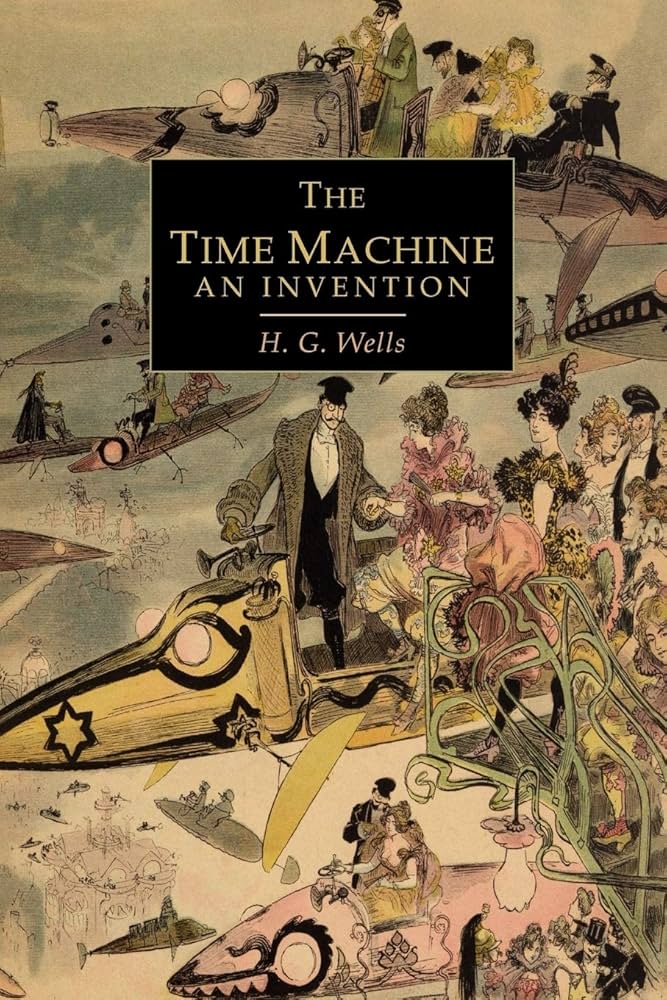
I didn’t discover the concept of time travel until September 25, 1965, when the 1960 film version of The Time Machine was shown on NBC Saturday Night at the Movies. That was two months before I turned 14. It blew my mind. The next day at Cutler Ridge Junior High, kids excitedly talked about the movie. Sometime after that, I read the H. G. Wells novella, but I’m not sure when.

I consider The Time Machine by H. G. Wells the most science fictional of all science fiction stories. Not only did it introduce me to the concept of a time machine, but it also introduced me to social evolution, Homo sapiens evolving into different species, the extinction of humankind, the end of the Earth, and the death of the Sun. That’s epic for a 13-year-old in 1965.

I’m pretty sure I’d never have imagined time travel on my own. I think if I had learned about astronomy before discovering science fiction, I could have thought, “Wouldn’t it be neat to go to the Moon or Mars?” on my own. But time travel was a much bigger conceptual breakthrough, one I don’t think I would have made.

Now, I had been a watcher of The Twilight Zone since 1959, when it premiered, and it often played with time. This video lists ten episodes involving some form of time travel.

The episode I remember best is from April 7, 1961, “A Hundred Yards Over the Rim,” where a man from a 19th-century wagon train walks over a hill into the 20th century. Most of the episodes were fantasies about people thrown through time. There was one episode where Buster Keaton had a helmet that let him time-travel, but I don’t remember seeing it as a kid. (Here’s another list that covers 13 episodes featuring some form of time travel.)

On January 13, 1964, I saw “Controlled Experiment” on The Outer Limits. It was the series sole comic episode about two Martians studying humans. They had a machine that could roll back time and replay it. That might be my first inkling of time travel. But I didn’t make the jump to using a machine to travel in time.

How often do we imagine original ideas? Readers and writers sometimes claim that one writer stole an idea from another, but is that fair? Don’t all writers use concepts built up from a long line of previous writers? Like Newton standing on the shoulders of giants. Was the time machine original with H. G. Wells? His ideas about evolution and cosmology came from the popular science of his day. There’s probably no way to document the evolution of the idea of time travel.

I believe that science fiction is a conceptual tool for generating ideas through literary evolution. For every far-out idea you encounter in science fiction, there’s a long history of previous stories that helped evolve that idea. I’d love to have a book, database, or website that creates taxonomic ranks of all science fiction concepts and shows how each evolved over time.

We like to think that science fiction has infinite possibilities, but I have a hunch that it’s finite. If we studied science fiction and developed a classification system for SF story ideas, we’d discover its limitations.

Take time travel. There’s only so much you can do with the concept. I’m currently rewatching the old TV series, The Time Tunnel, from the 1966/1967 television season. The same season that Star Trek premiered. The Time Tunnel, like Quantum Leap, allowed its protagonists to jump around in time. But in both treatments, you quickly realize how limiting time travel is as a plot device. Most time travel stories end up being about their destinations, not the concept itself. H. G. Wells milked the idea for most of its worth in The Time Machine.

Time travel stories generally produce historical or romance fiction.

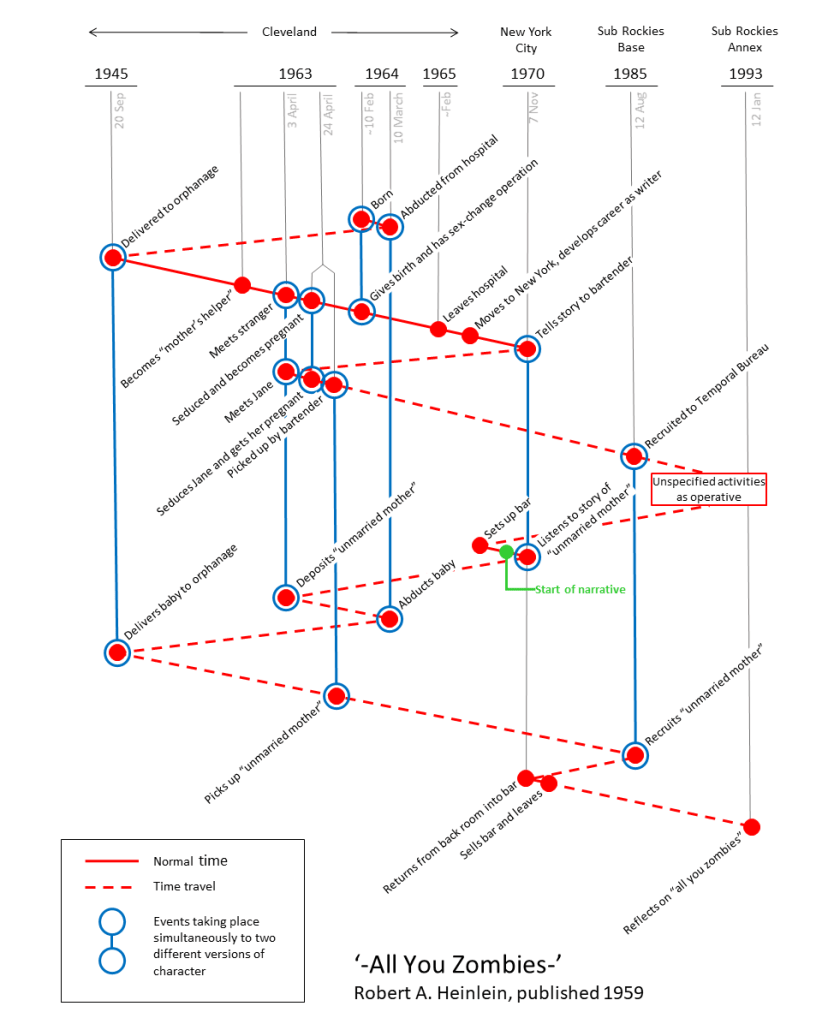
Robert A. Heinlein knew this, so he published “—All You Zombies—” in 1959, a fantastic satire on the concept. Heinlein pushed time travel to its limits. Just look at this plot diagram.

Another brilliant example of imagining the nature of time is “Story of Your Life” by Ted Chiang. Wikipedia quotes Chiang as having several sources of inspiration. I interpreted the story to mean that the heptapods perceive time all at once, and Louise’s learning their language affected her awareness of time. This reminded me of Heinlein’s first story, “Life Line,” where the protagonist invents a machine to see a person’s life as one long being, letting him know when it ends. Great science fiction about time has to constantly push the envelope, but like these two stories, is any idea a singular, isolated event in time?

Most science fiction is set in the future. That makes most science fiction essentially a time travel story. History is a well-established academic pursuit. That’s why time travel to the past, like stories by Connie Willis, is really a kind of historical fiction. And stories about going to the future allow writers to speculate and extrapolate. But most writers do that by just setting their stories in the future.

Today, science fiction that uses time travel often uses the concept to play with entertaining plot ideas. Most of what I really admired about The Time Machine, Olaf Stapledon explored in Last and First Men and Star Maker. Wells invented the time machine as a gimmick, a plot gimmick. And if you think about it, a time machine is always a plot gimmick. Just watch all those episodes of The Twilight Zone.

The mind-blowing parts of Wells’ story explore the evolution of humanity, the fate of the Earth, the solar system, and the galaxy. This is the real meat and potatoes of science fiction.

James Wallace Harris, 5/11/26

Why Do We Read Science Fiction?

by James Wallace Harris, 5/2/26

Why did so many Baby Boomers embrace science fiction back in the 1950s and 1960s? We were all playing Cowboys and Indians, wearing cowboy hats and shooting our cap pistols at each other, and watching westerns all the time on TV. Then we switched to space helmets and ray guns, and changed the channel to watch old 50s Sci-Fi flicks, The Jetsons, My Favorite Martian, and Lost in Space.

I can’t remember a time when I didn’t know about space and space travel. Nor can I remember my first exposure to rockets. My guess is it was from television. I remember my 4th-grade class listening to Alan Shepard’s 15-minute Mercury flight on Freedom 7 over the classroom’s PA system. That was May 5, 1961 (65 years ago). I assume I had seen movies or television shows with spaceships before that, but I have no memory. I watched The Twilight Zone before then, so it might have been on that show.

It seems like dinosaurs, spaceships, and robots have always been part of my conscious mind. Maybe Carl Jung was right about the collective unconscious. I knew about space travel before I learned about astronomy. And that doesn’t make sense, does it? How could I know about traveling in space before I knew what space was?

I do know that by 1962, I was reading Tom Swift, Jr. books. But I was also reading nonfiction books about NASA. We lived on base at Homestead Air Force Base, and I used the base library. The Moon and Mars were frequently mentioned in NASA’s goals, but this was before I started reading astronomy books. My young mind must have been told about the solar system in elementary school.

Concurrent with my discovery of science fiction in the mid-sixties were the flights of Project Mercury and Project Gemini. I slowly came to believe that science fiction was preparing me for the future. That was my rationale for reading science fiction. In reality, science fiction was my coping mechanism for a stressful childhood. By the time I learned what the term “science fiction” meant in 1964, I had attended at least seven different schools in four different states. The constant moving, as well as my parents’ marital problems and alcoholism, should have made my life miserable. But I loved those years because I loved science fiction.

During childhood and teen years, even into college, I really believed reading science fiction prepared readers for the future. Then, around 1975, I realized the futures I expected weren’t going to unfold, and reading science fiction was only entertainment. I gave up science fiction, got a real job, got married, and finished college. Then, in 1985, I returned to science fiction. I then treated it like an English major studying literary history. It was no longer about the future, but storytelling.

Any well-told story about any time or place, real or imaginary, can capture a reader’s attention. So the question becomes: Why do we read science fiction? It gets weird when you think about it. Why did we want to leave Earth? No sane person would want to live on the Moon or Mars, and you have to be tripping if you think Titan is a wonderful destination. Anything further is no more realistic than Oz or Narnia.

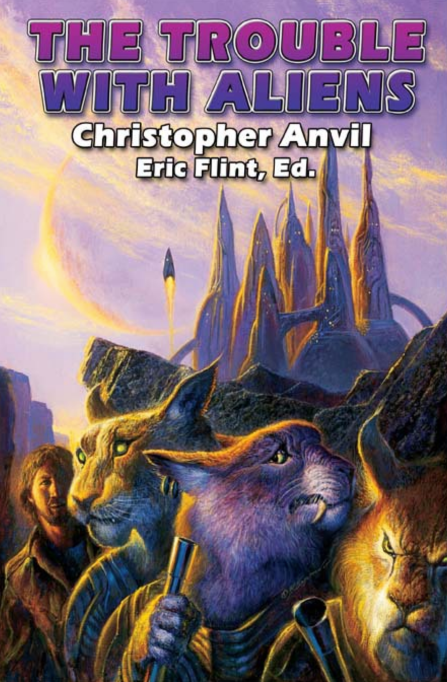
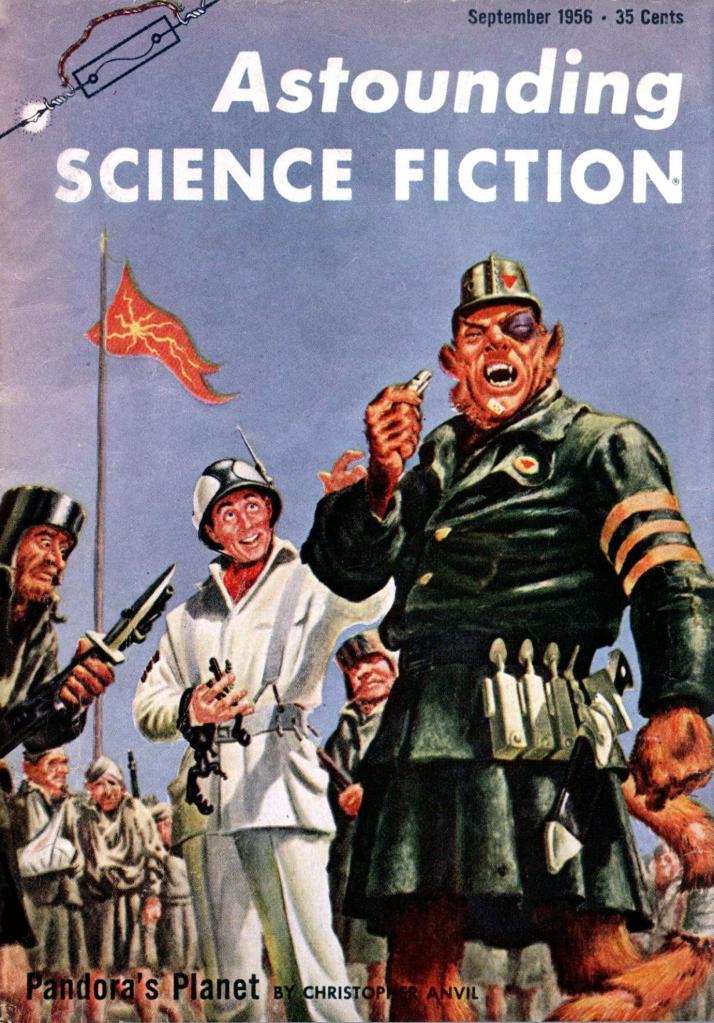
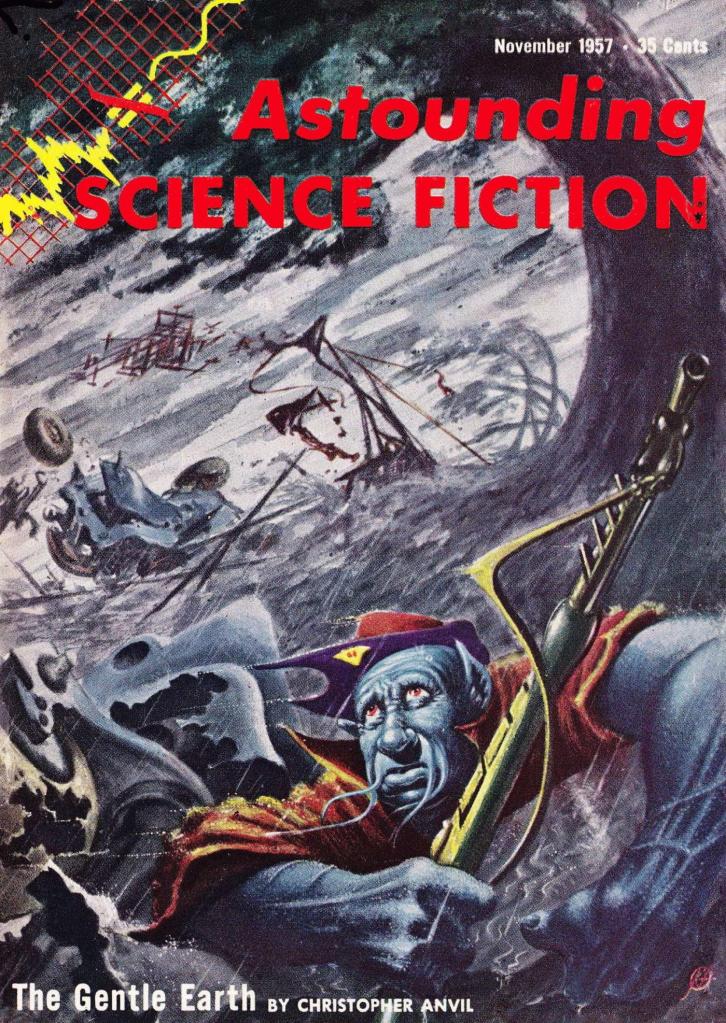
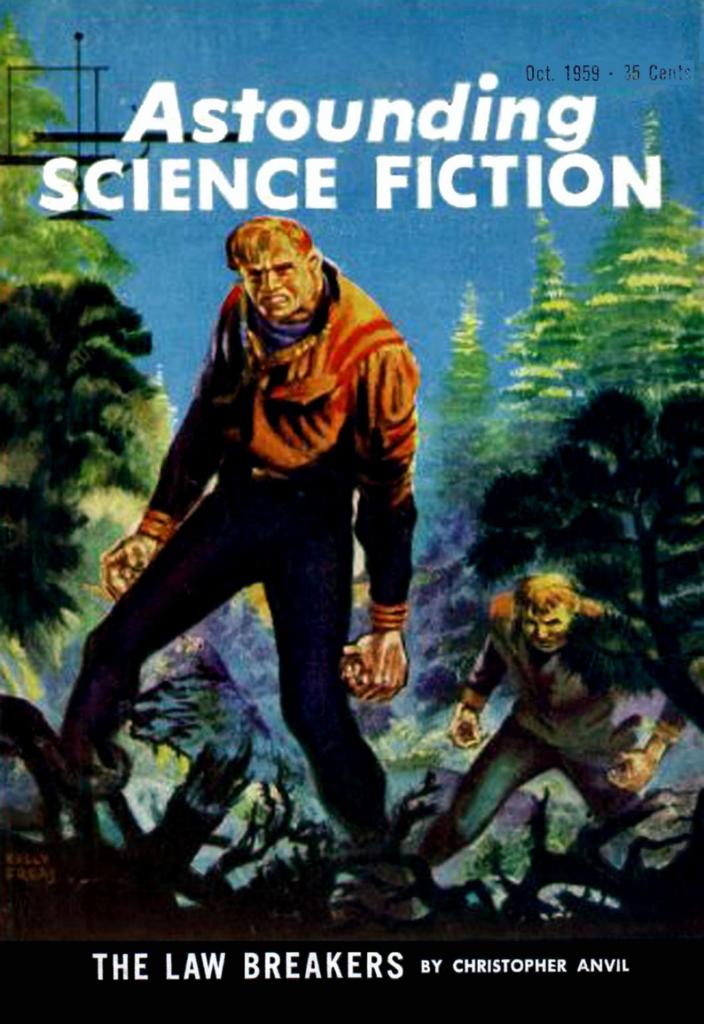
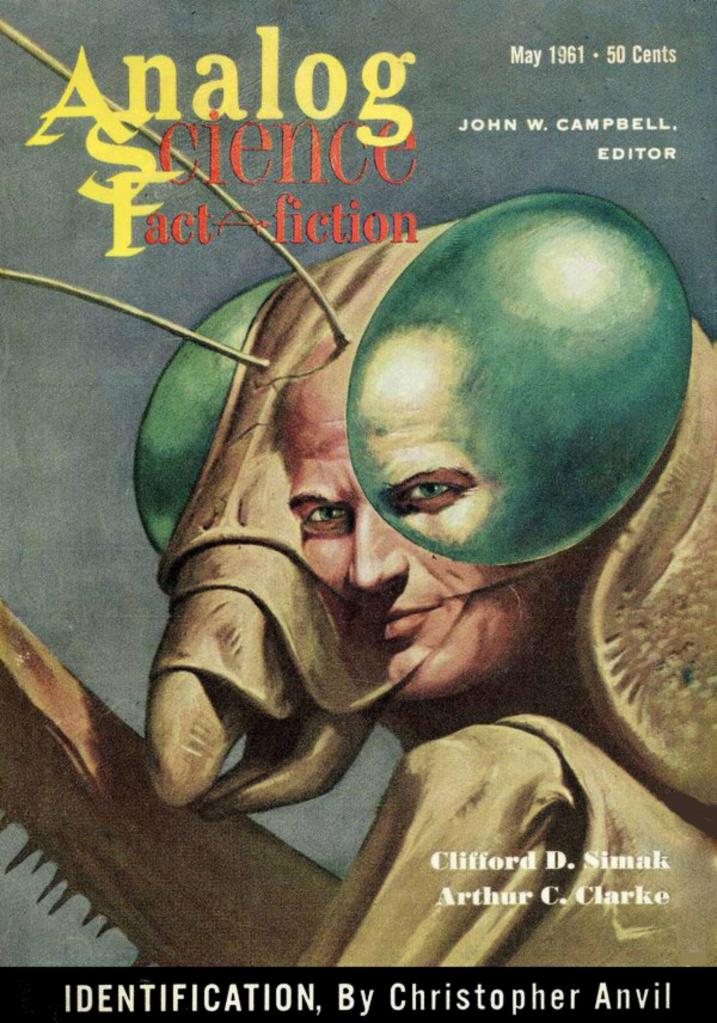
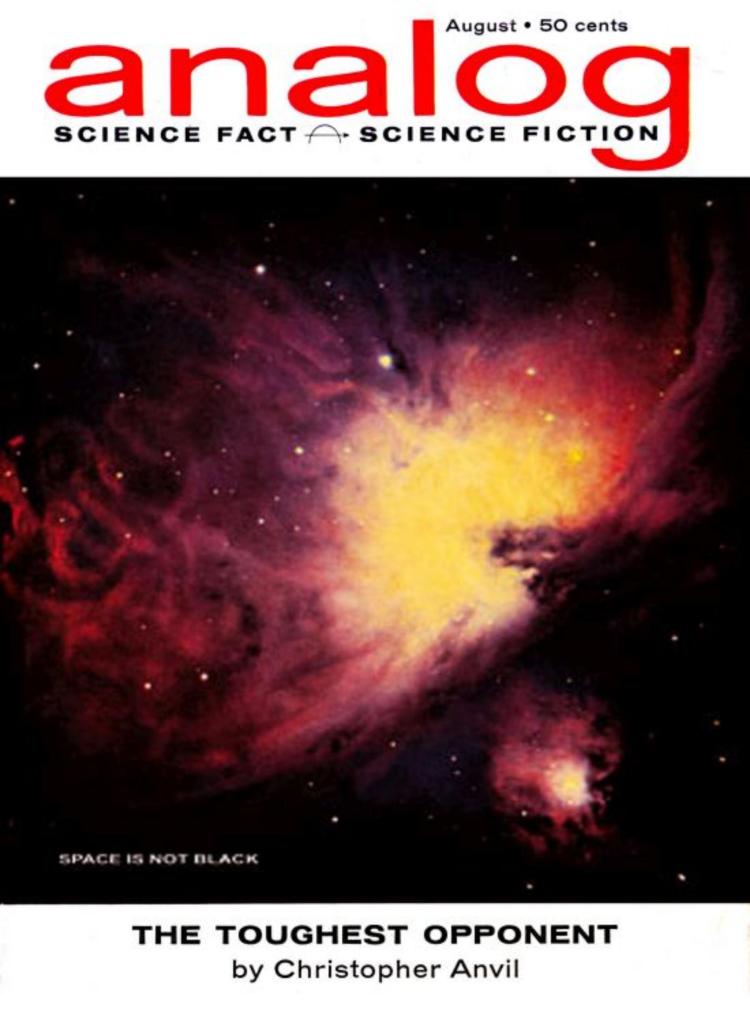
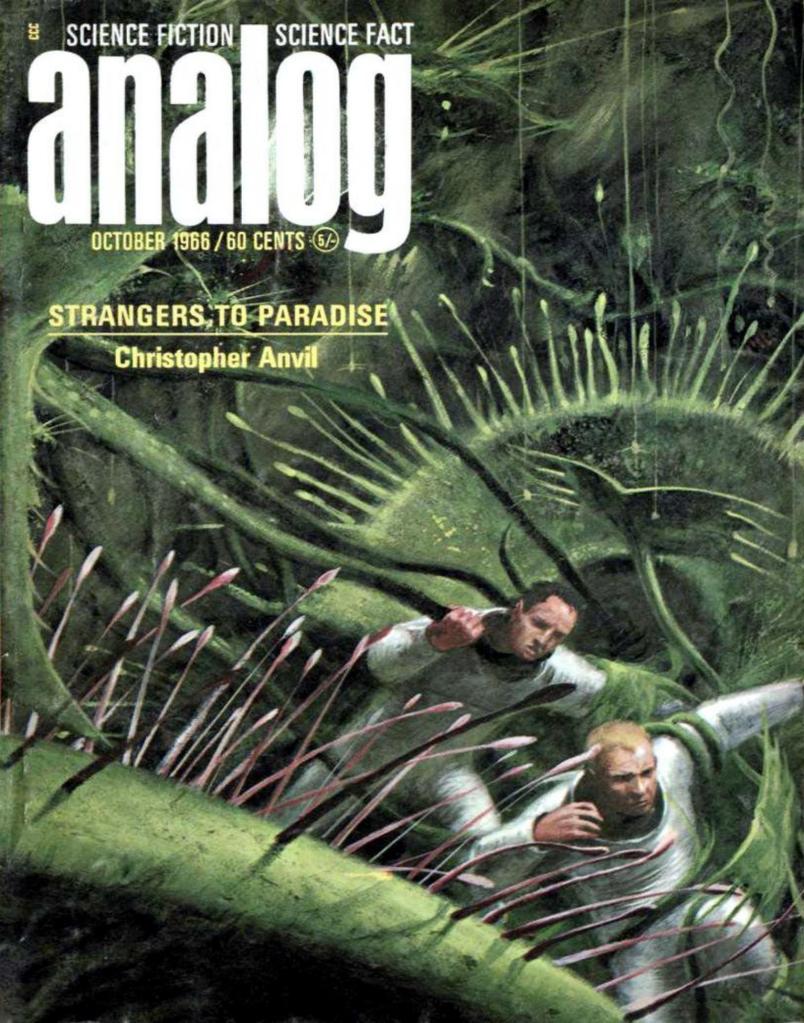
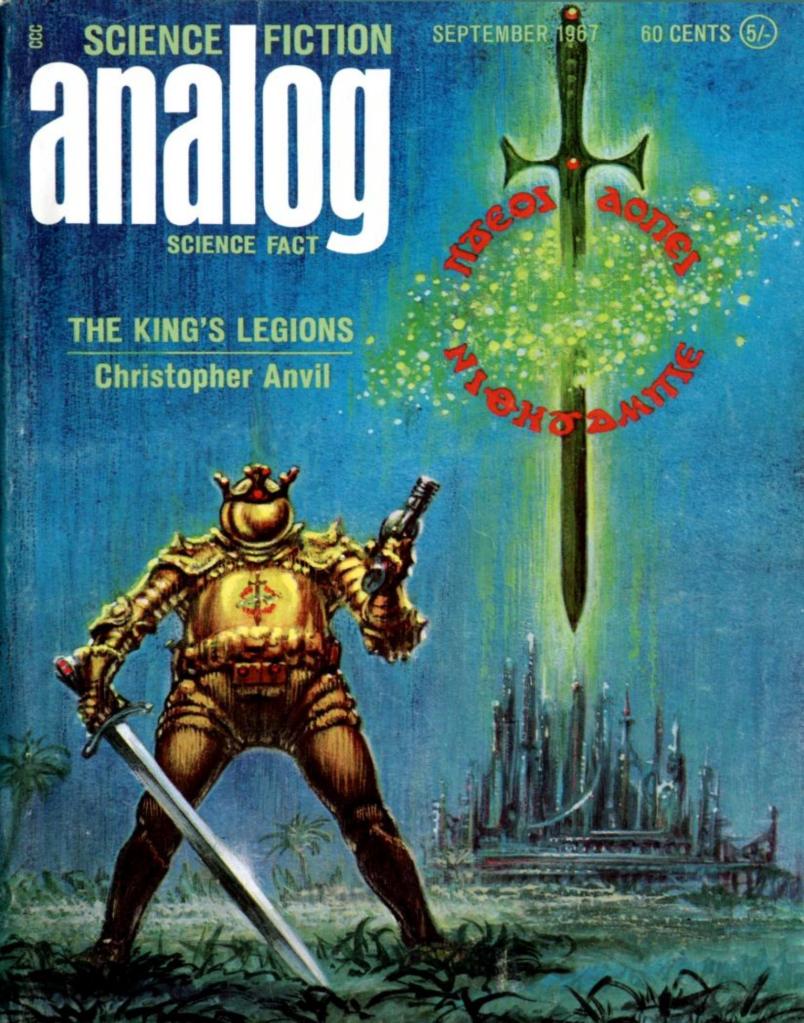
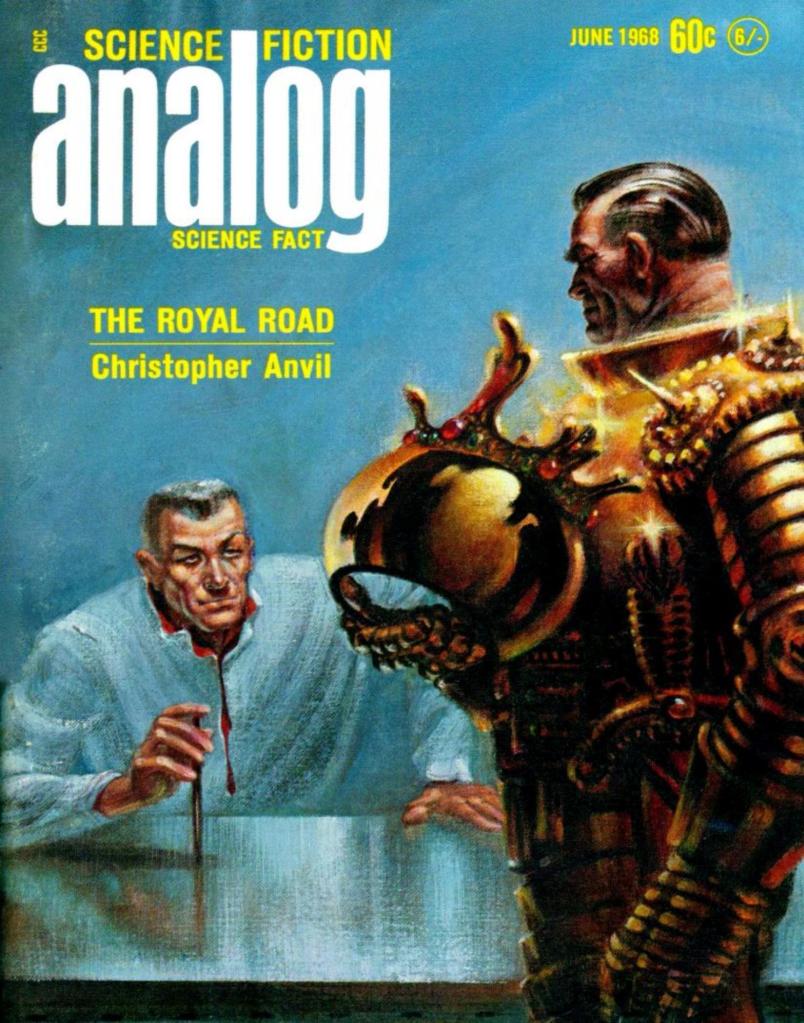
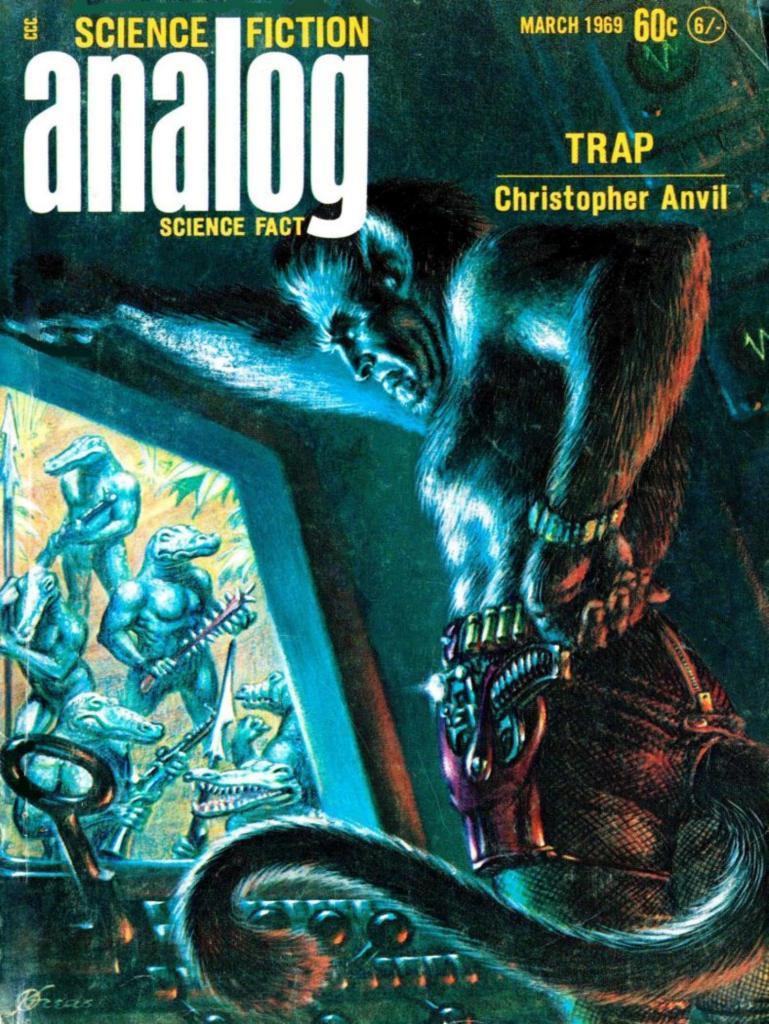
The question “Why am I reading science fiction?” struck me particularly hard recently, while reading stories by Christopher Anvil in The Trouble With Aliens. Christopher Anvil is a mostly forgotten science fiction writer who regularly sold short science fiction to John W. Campbell, Jr. for Astounding and Analog.

I’m enjoying the stories, but just barely. They just pass muster. I do enjoy them, but I’m enjoying them at the level of watching anything on television when you’re bored, and the show is just good enough not to change the channel. Anvil’s stories feel like I’m resonating with the archetypes of science fiction in my unconscious mind.

I keep asking myself: why don’t I read something better, something more rewarding, something that is cutting-edge? The stories are military science fiction, a sub-genre that I normally find boring. Reviewers don’t have much positive to say about Anvil, but they often praise him for his satire. Satire implies a target. Is the military Anvil’s target, or military science fiction? Anvil’s stories remind me a bit of Eric Frank Russell and Harry Harrison.

But are these stories really satire? Satire is usually driven by absurdity, and I don’t think Anvil believes his science fiction situations are absurd. I get the feeling Anvil is just trying to keep up with the other Astounding/Analog writers churning out what Campbell wants to buy and readers want to read.

Anvil’s stories epitomize how I once saw science fiction.

Anvil’s stories are entertaining enough that I look forward to returning to my audiobook. His stories aren’t great, but they are pleasant. I wonder if I’m using them to cope with getting old, like how I used science fiction to cope with adolescence?

I feel his stories touch what’s very basic about science fiction. If I could understand that, maybe I could understand why I started reading science fiction as a kid.

Anvil’s stories also remind me of Project Hail Mary, the bestselling novel by Andy Weir, which is also currently a hit movie. Weir’s appeal is that his stories are about solving problems, and that’s what Anvil focuses on too. However, Anvil’s prose is functional, but far from Weir’s level of entertaining.

I have to wonder if such escapist science fiction doesn’t function like dreaming at night. They might be a diversion for our consciousness when we want to turn off reality, and maybe symbolically play out some kind of existential purpose.

Baen Books has collected Anvil’s stories in several volumes, which they sometimes label the Complete Christopher Anvil. They are available in audiobook, which is my preferred format for consuming old science fiction.

John W. Campbell, Jr. frequently published Anvil stories, but he seldom made them the cover story. Anvil published two novels, according to ISFDB.org, although many of his short stories were republished as a few fix-up paperback novels. Overall, Anvil appears to have published over a hundred stories, and much of that work has been collected in eight volumes by Baen Books.

Back in the 1950s, science fiction imprinted on my mind, and I’ve been following it around like a little duckling ever since.

JWH