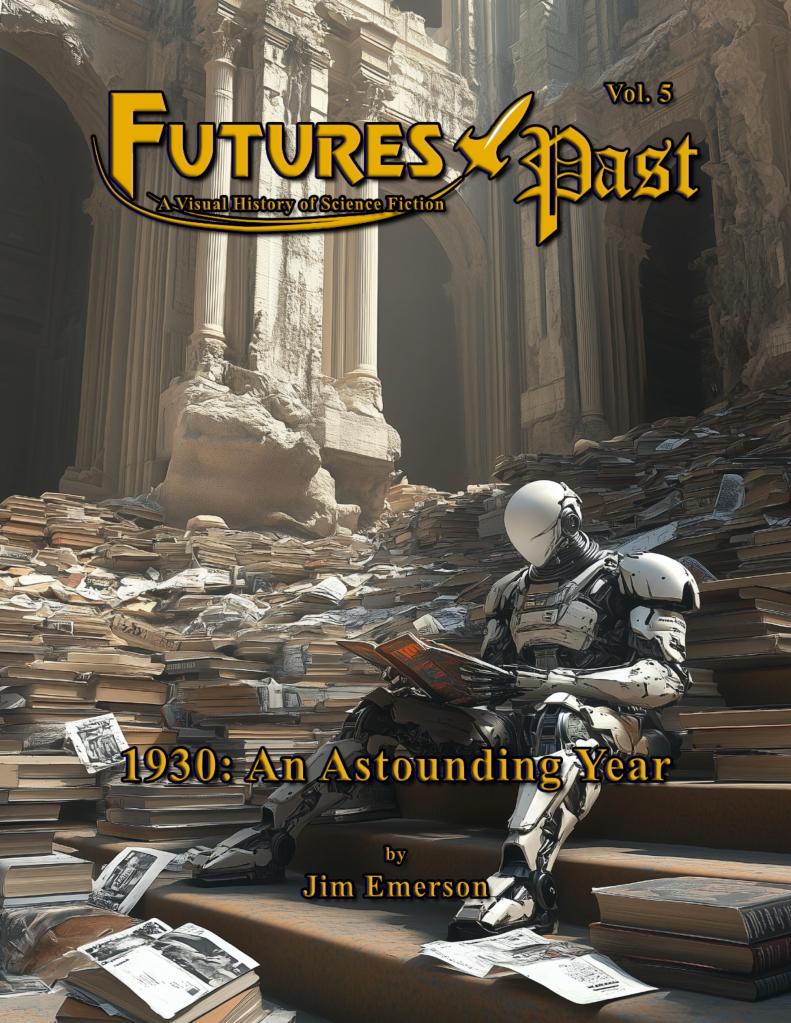
Jim Emerson has finally reached the nineteen thirties.
Futures Past 1930 is now available.
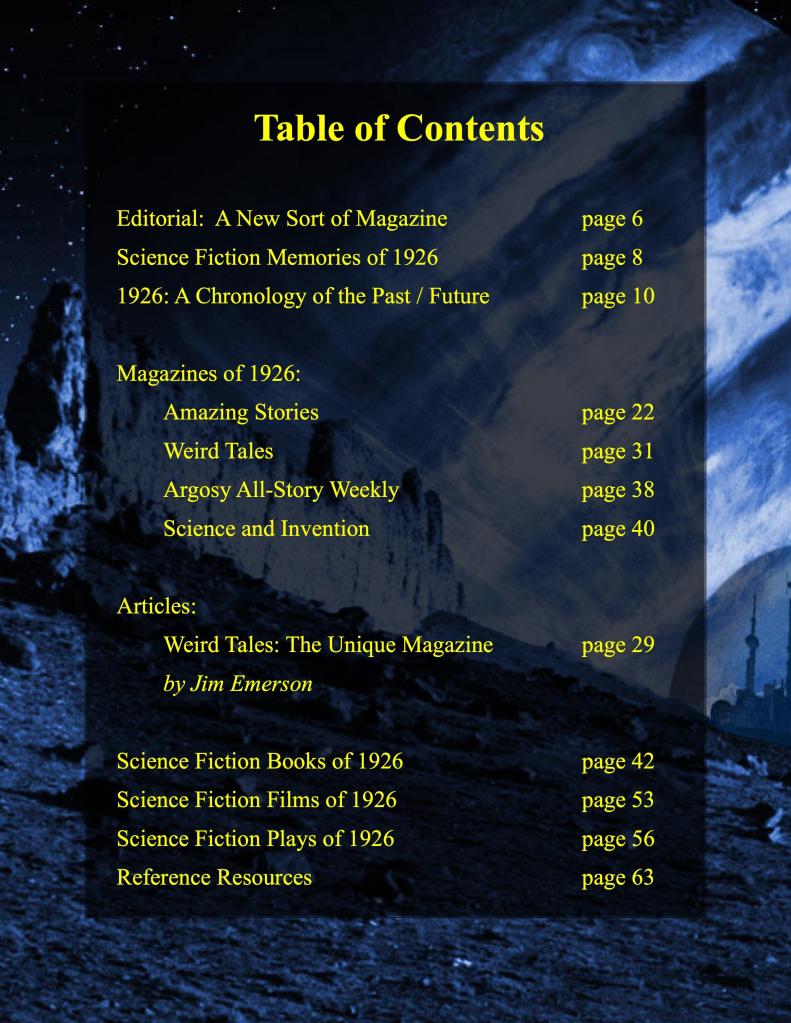
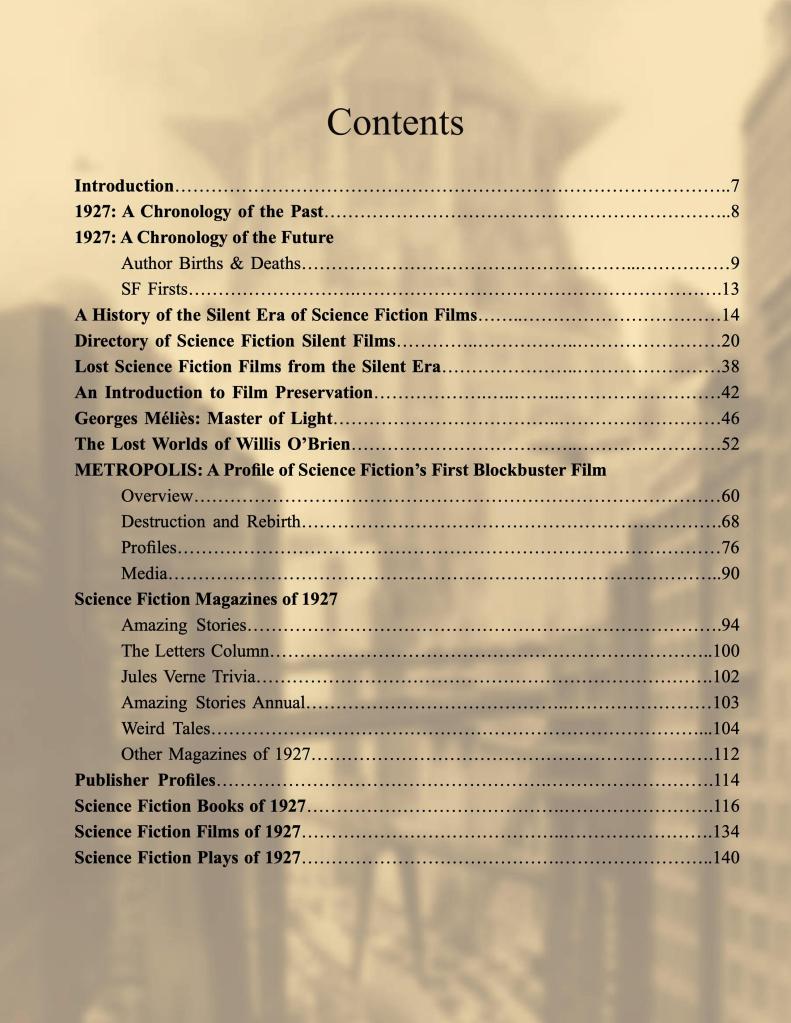
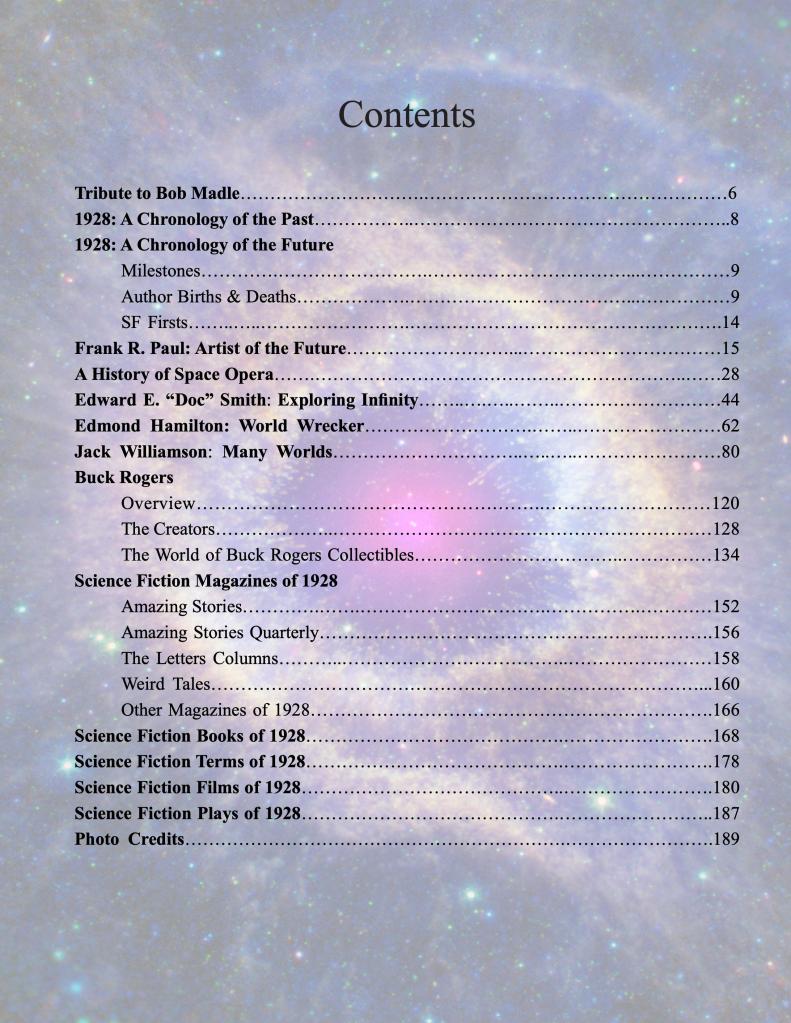
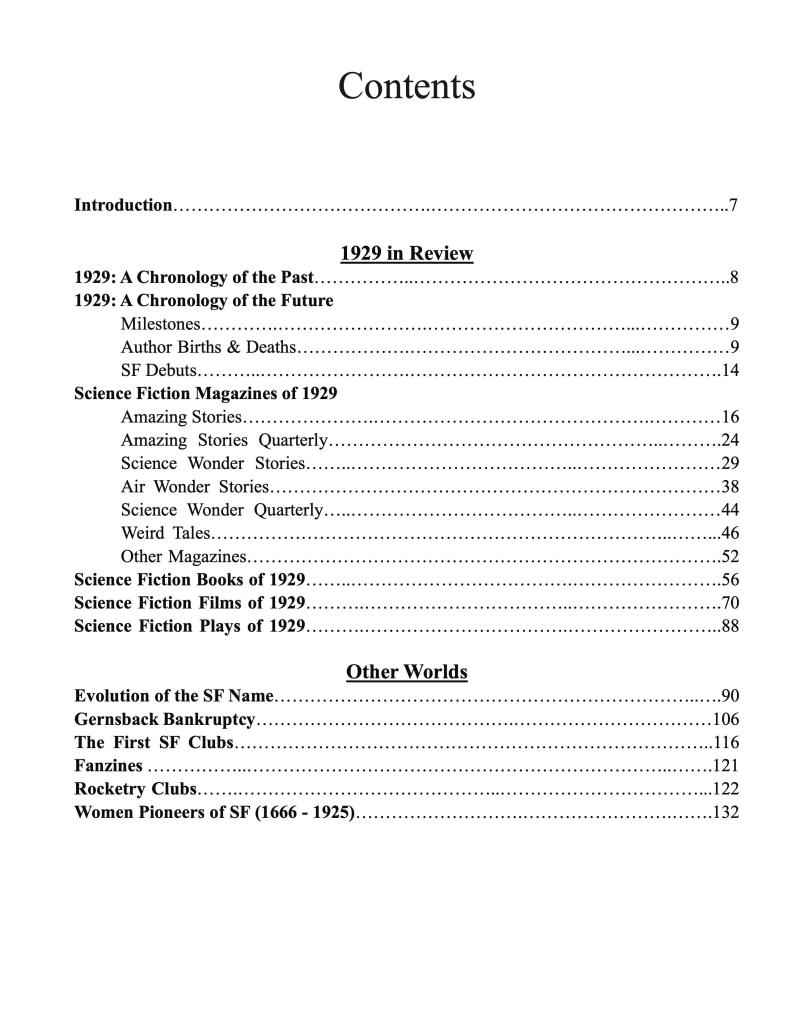
Back in the 1990s, I subscribed to a fanzine called Futures Past, written and published by Jim Emerson. Each issue covered one year of science fiction history, beginning with 1926. Unfortunately, the fanzine died after 1929. Then, a few years ago, as Emerson approached retirement, he decided to resurrect his project. Instead of publishing another issue of the fanzine covering 1930, he went back to 1926 and expanded it into a book (available in softbound, hardbound, and PDF formats). He has since expanded and republished 1927, 1928, and 1929 as books, too. See my reviews of 1926 & 1927, 1928, and 1929. (You can get 1926 as a free PDF as a sample of the series. However, it’s the shortest of the volumes, and doesn’t fully convey the potential of the series that we now see in volume 5, 1930. See the end of this essay for a comparison of all the table of contents.)
In other words, I’ve been waiting three decades for Jim Emerson to get to 1930.
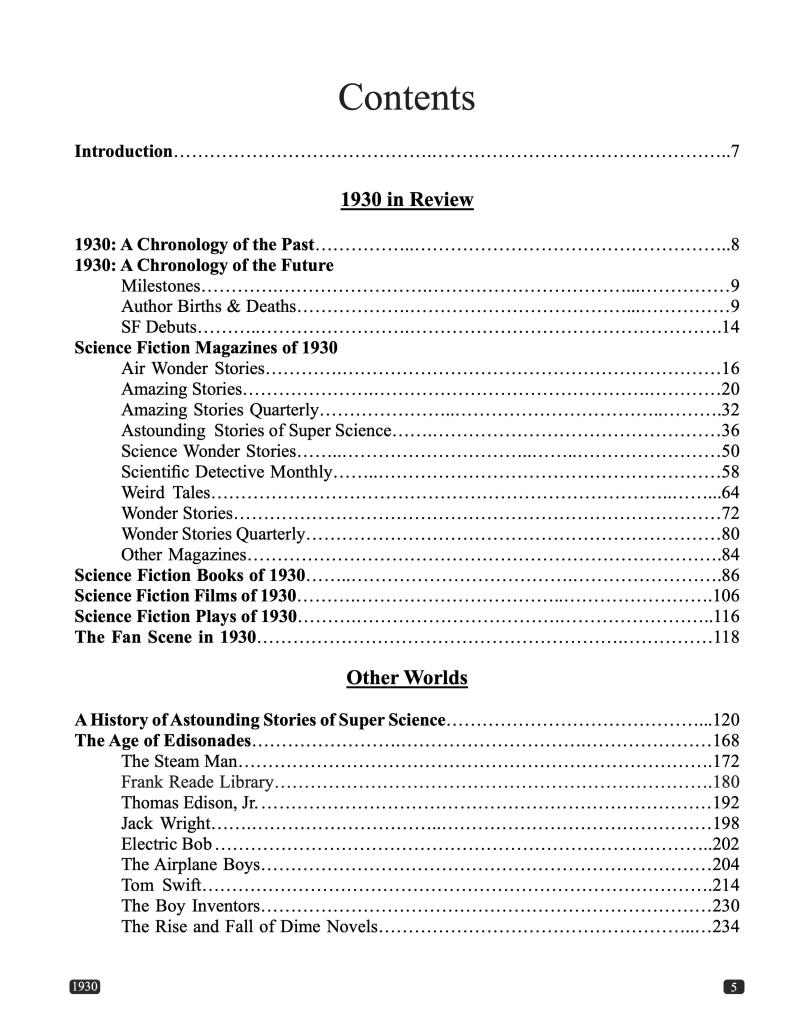
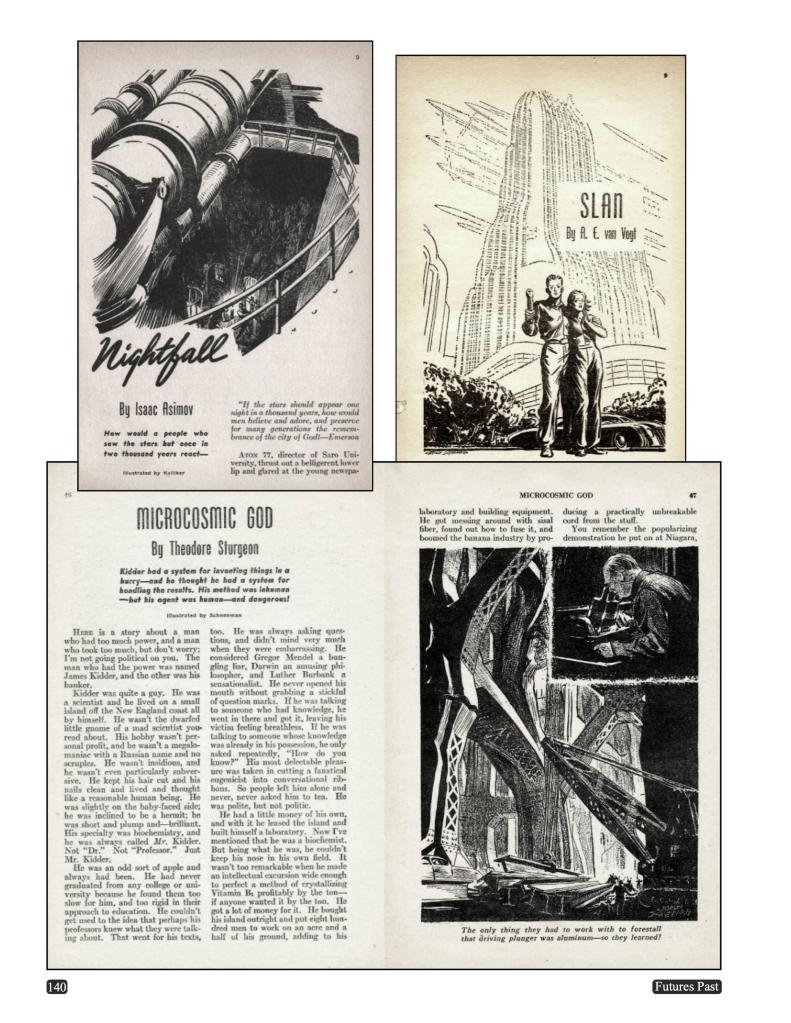
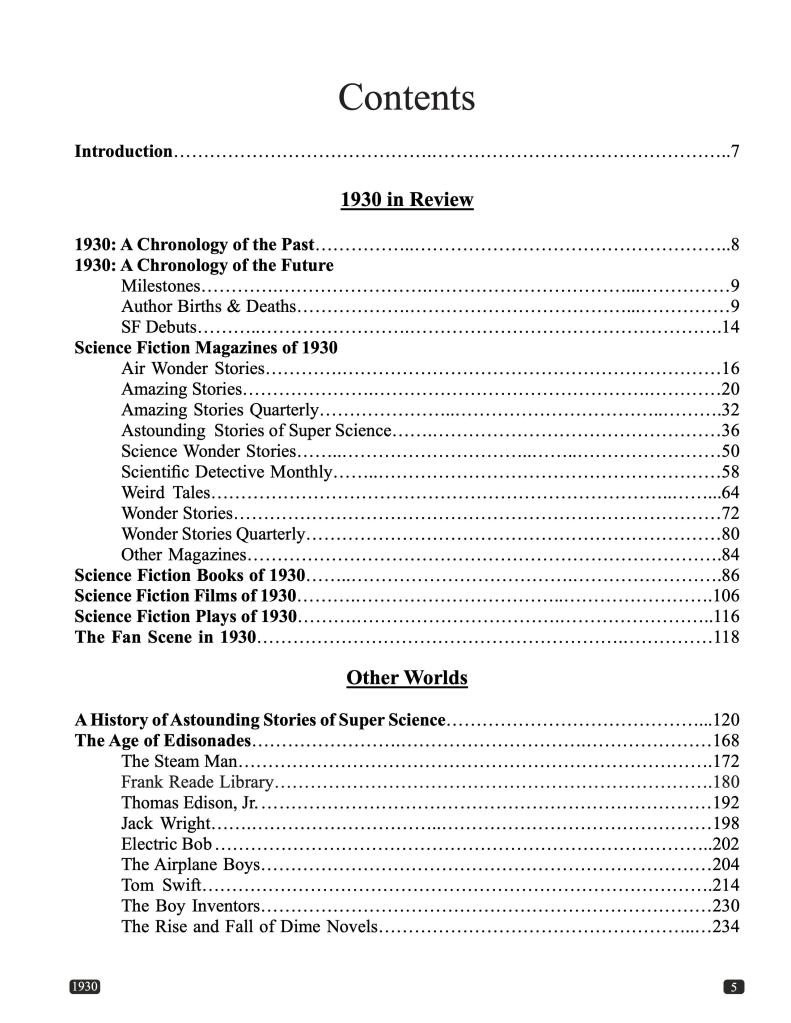
If you study the table of contents above, you’ll see how the first 119 pages are devoted to 1930. For each story published in those magazines listed, Jim gives a brief description of the plot. He does the same for the books published that year. I’ve got to say, I hope in a hundred years, the science fiction of our day won’t sound as ridiculous. Although it’s big fun to laugh at these plot synopses, they also reveal something more serious: the mindset of readers. This is how science fiction people thought in 1930.
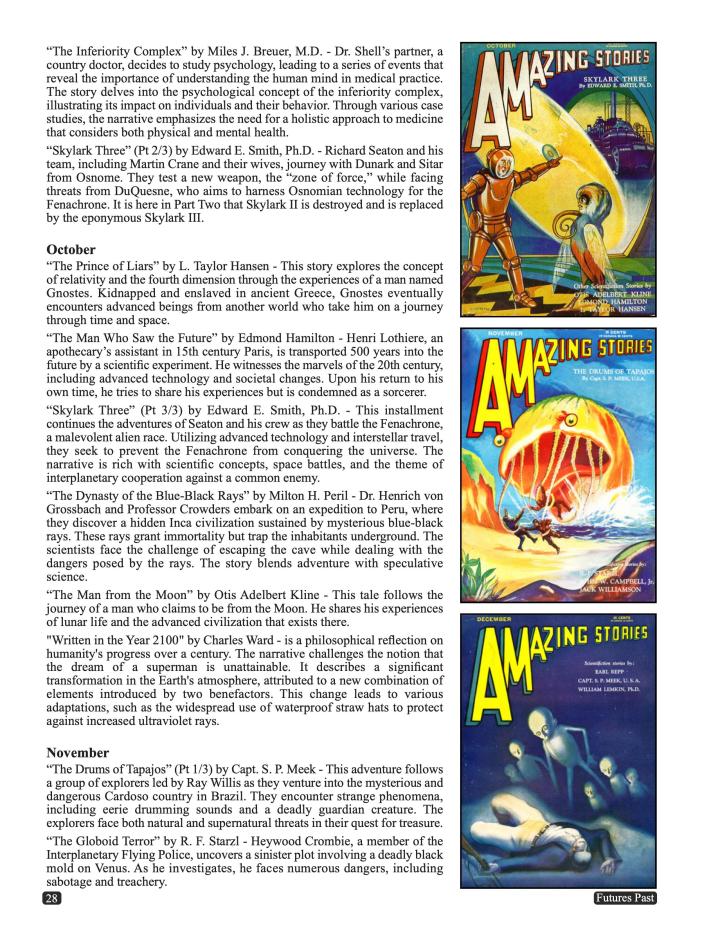
Reading these plot summaries is also a brilliant way to understand the evolution of science fiction. Here’s a sample covering stories from the October and November issues of Amazing Stories.
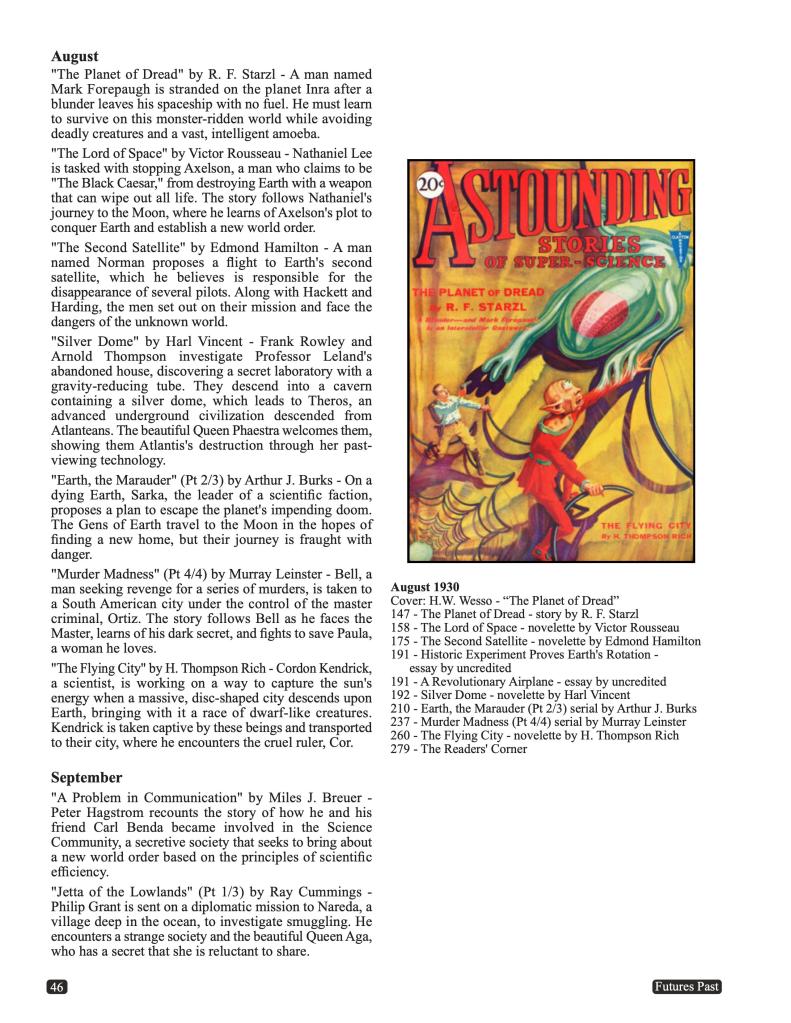
Since Astounding emerged as a competitor to Amazing, I thought I’d let you read a sample of what its stories were about.
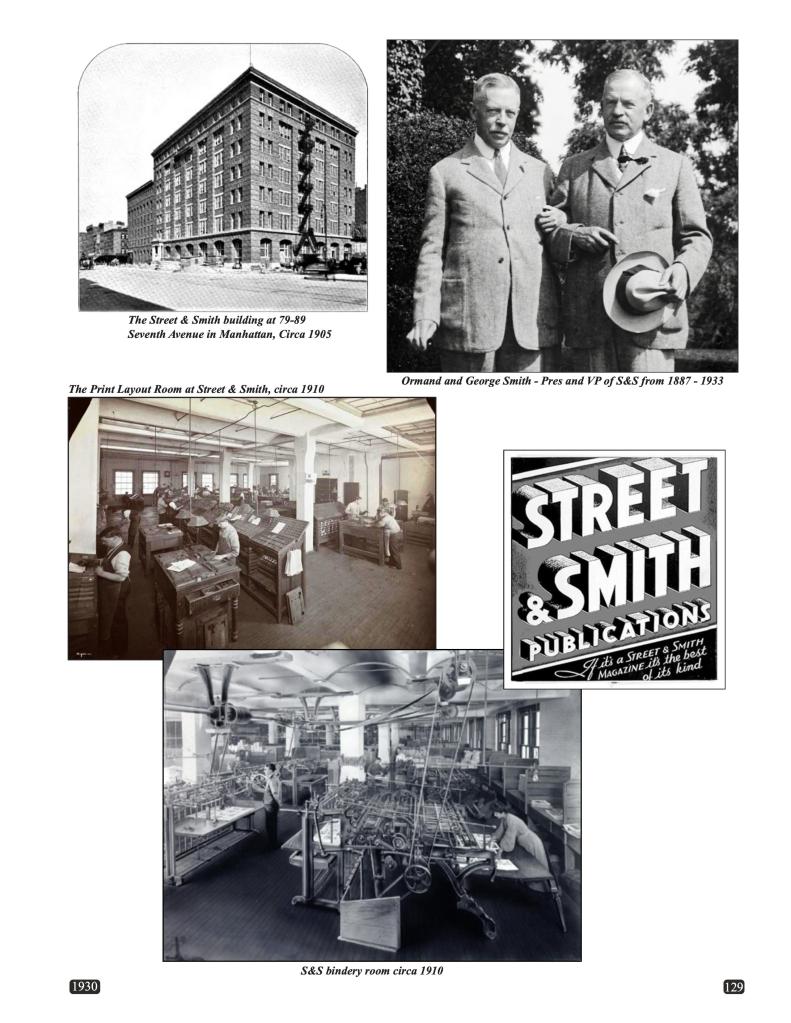
1930 is the largest volume of Futures Past yet, at 236 pages. That’s about a hundred pages more than he devoted to 1926. 1930 was a pivotal year in the history of science fiction. Astounding Stories of Super-Science began publication with the January 1930 issue. Jim devotes 47 pages to the legacy of Astounding/Analog.
Beginning in the “Other Worlds” section of the book, Emerson strays away from 1930, both before and after. Not only does he chronicle the backstory of pulp publications and publishers that lead up to Astounding, but Emerson tracks the magazine’s history into the Analog days. I assume this means each volume of Futures Past will provide us with the complete history of every new SF magazine as they emerge.
Jim Emerson follows the footsteps of Sam Moskowitz and Mike Ashley, becoming another historian of the genre. I hope he lives long enough to cover the 1940s, 1950s, and 1960s, my favorite decades of the genre. Now that Jim is retired, he has promised to produce new volumes more quickly.

The unexpected bonus of this issue is Emerson’s history of dime novels and boys’ books titled “The Edisonade: Dynamo of American Imagination.” It chronicles how technology inspired proto-science fiction in the 19th century, and follows it into the 20th and 21st centuries, covering the Tom Swift books. I have read brief histories of all the publications that Emerson covers before, but this is the most detailed account I’ve read. This section, at 134 pages, could be a book itself.
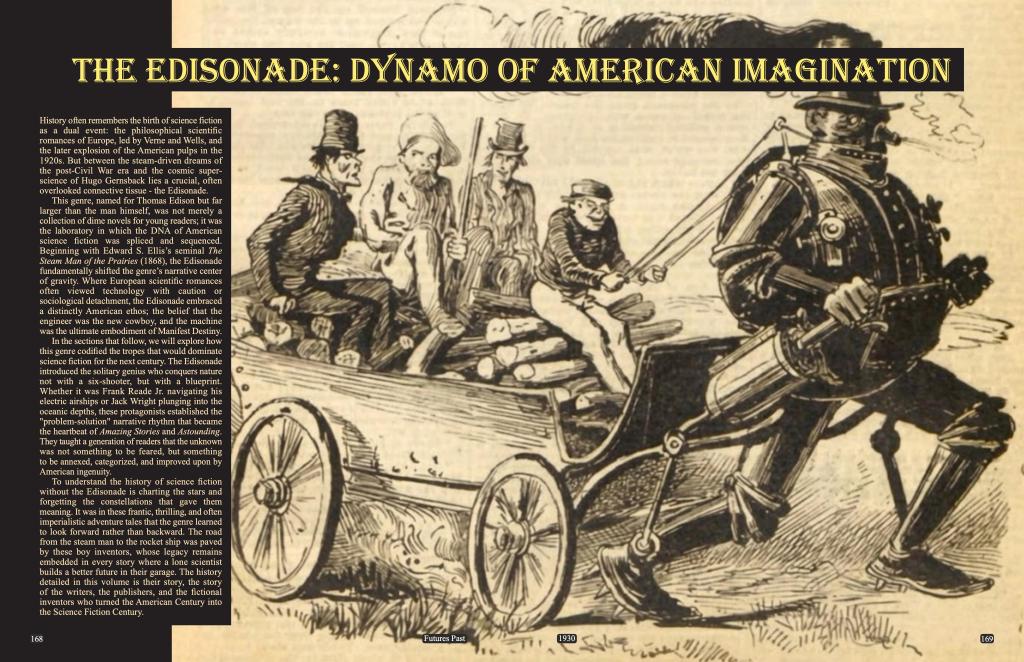
I’m sure I’ve seen the term Edisonade before, but I don’t recall it now. I assume it has the same implication as Robinsonade for Robinson Crusoe, but was inspired by Thomas Edison. The Science Fiction Encyclopedia has an extensive entry for Edisonade. Wikipedia has a much shorter entry. Google Scholar offers several tempting citations, but they aren’t available to read. As far as I can tell, Emerson’s essay is the most extensive on the subject.
There’s a tremendous amount of reading in this volume. I can’t imagine how Jim could be so organized to research and write it. I’m sure it wouldn’t be possible without the internet.
I’ve always wanted to know what kids in the 19th and early 20th century thought about reading these books and magazines. Jim does have a section on fanzines, but 1930 was their starting year. Reading this section on Edisonades helps me to imagine what growing up back then might have been like. I wonder if I could find copies of these publications to see if they had letters from readers.
Have you ever read a novel or biography from the 19th century that mentions dime novels or boys’ books?
If you love science fiction, there’s much to contemplate in Futures Past 1930. Nowadays, young science fiction readers find SF from the 1950s as weird and antiquated. When I discovered science fiction in the 1960s, I thought stories from the 1920s and 1930s were painfully dated. These Edisonade stories are decades older. The DNA of SF concepts is a strange genealogy to track. It’s very psychologically revealing to us lovers of the genre.
Jim, I can’t wait for your take on 1931.
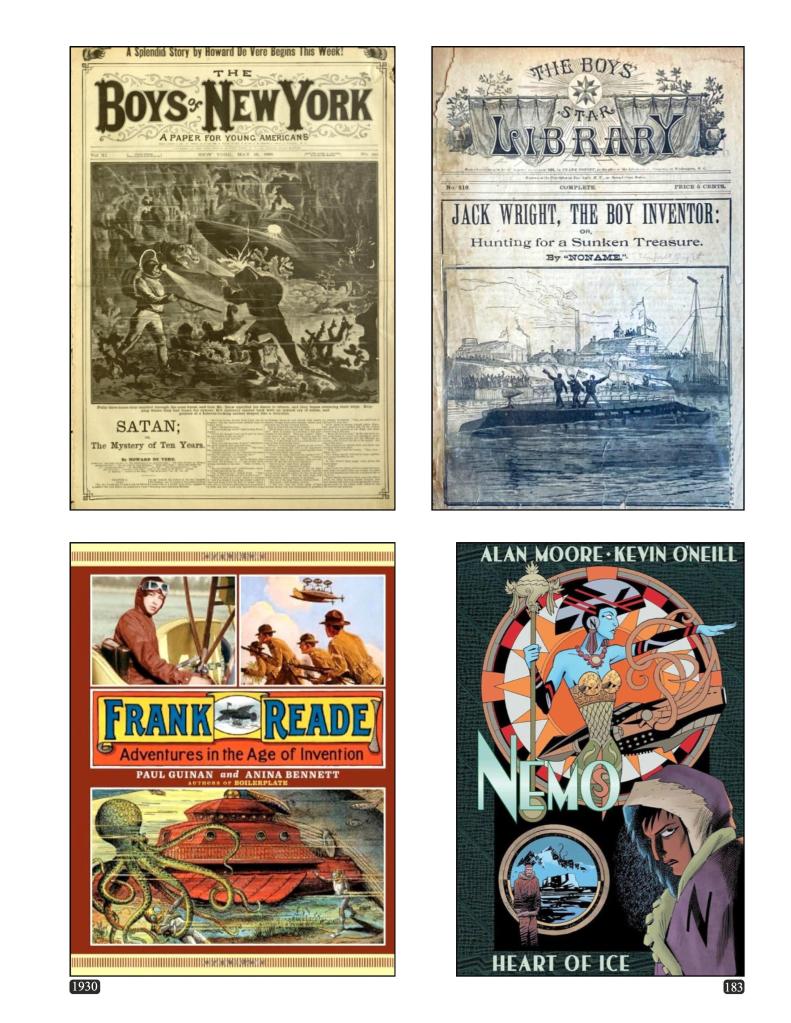
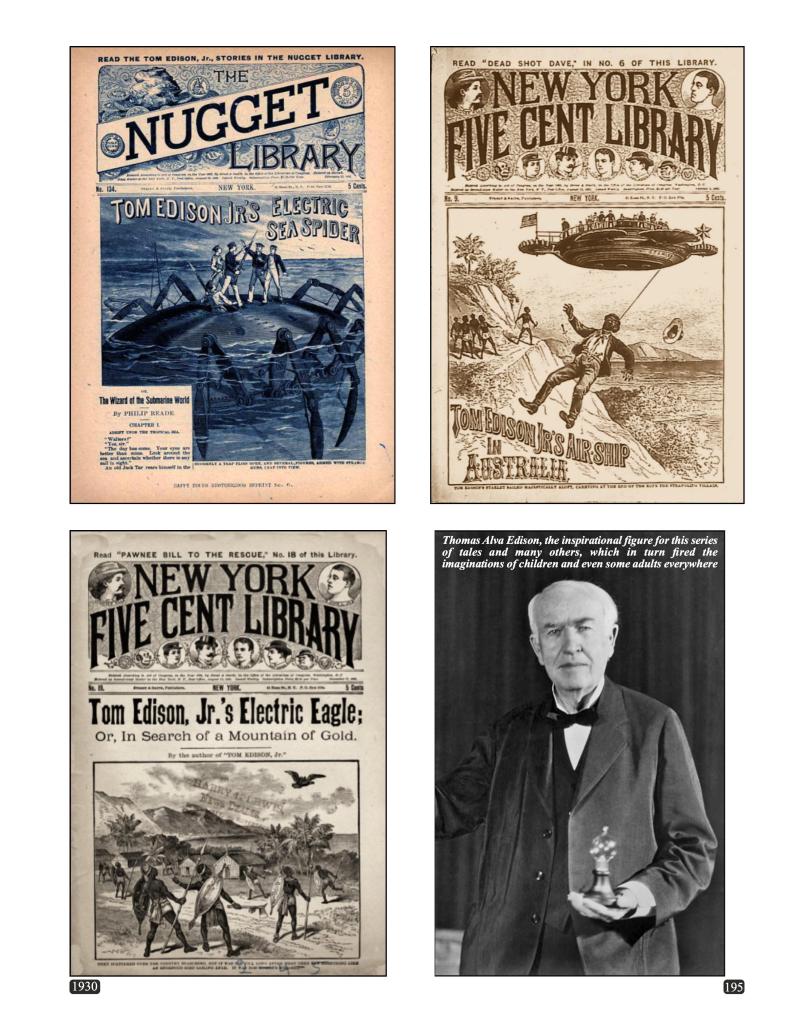
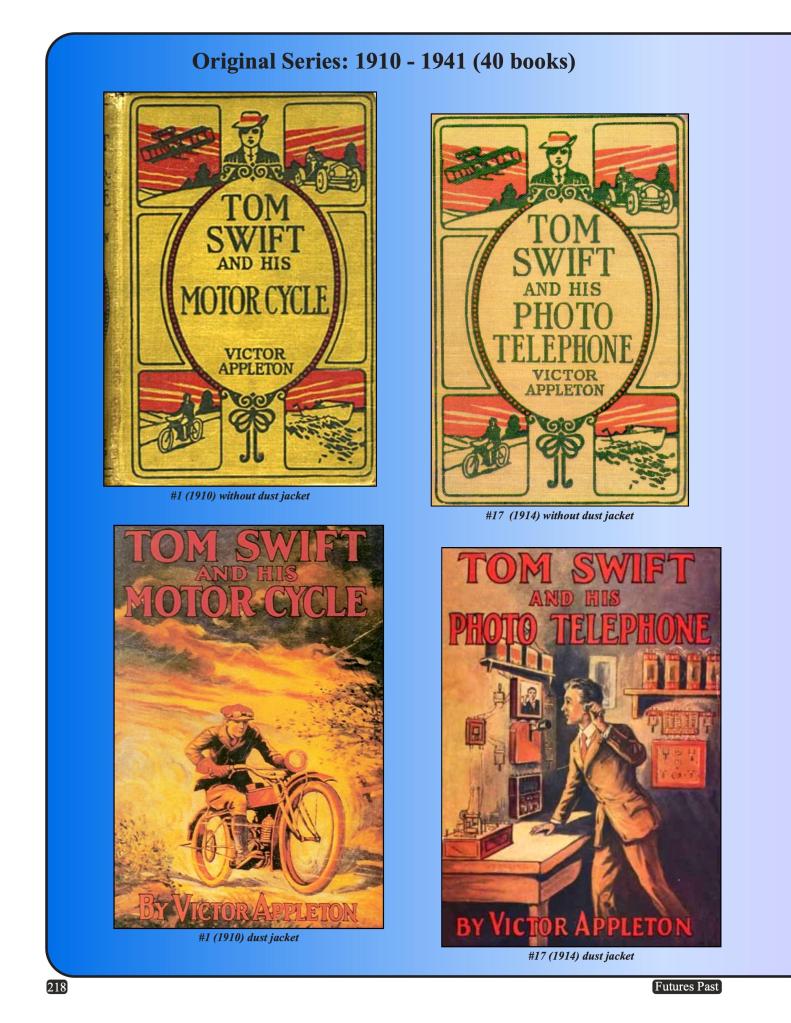
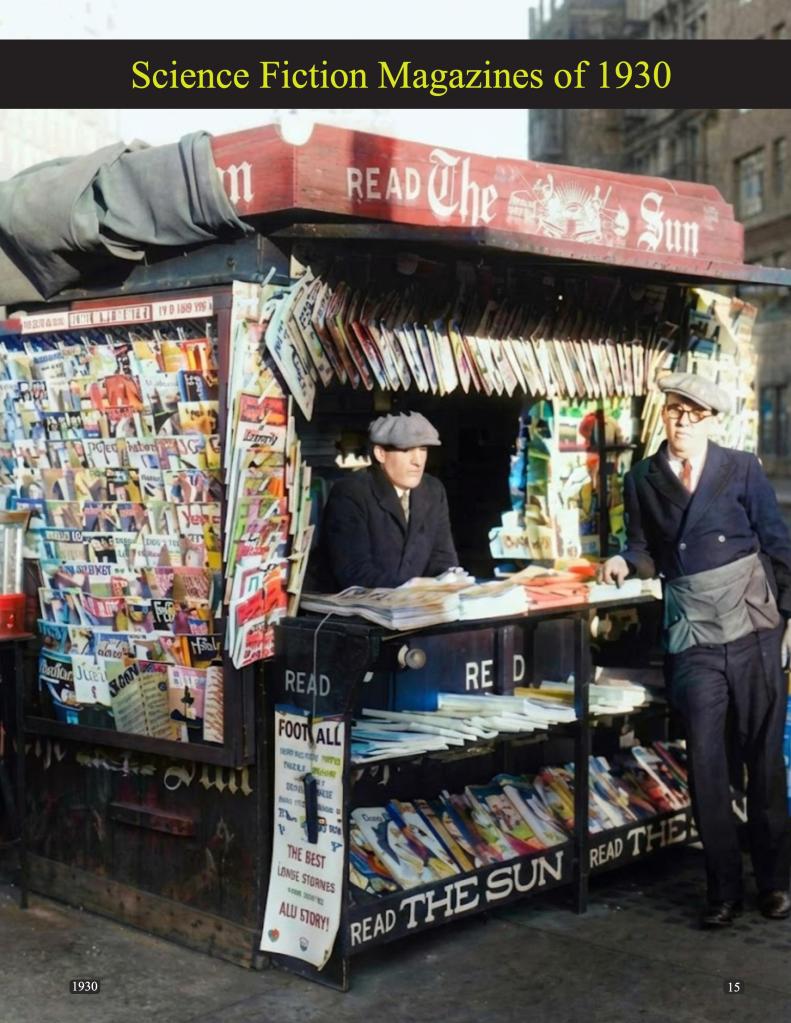
Table of Contents Comparison 1926-1930
James Wallace Harris, 1/17/26
 Classics of Science Fiction
You might find the book “Boys Will Be Boys” by British social historian E.S. Turner interesting – it is a history of “Boys’ Weekly” type magazines, aka “story papers”, “penny dreadfuls”, and “bloods”, mainly from the British point of view, but not entirely, as it does touch on the Aldine publications.
It is available to read on the Internet Archive, which I am finding a terrific resource for these old hard to find books.
https://archive.org/details/boyswillbeboysst0000estu/mode/2up
LikeLike