
“The Fifth Head of Cerberus” by Gene Wolfe is story #12 of 52 from The World Treasury of Science Fiction edited by David G. Hartwell (1989), an anthology my short story club is group reading. Stories are discussed on Tuesdays, Thursdays, and Saturdays. “The Fifth Head of Cerberus” was initially published in Orbit 10 and edited by Damon Knight in 1972. Wolfe published “The Fifth Head of Cerberus” in his collection by the same name, with two related novellas: “‘A Story,’ by John V. Marsch” and “V.R.T.” (Charles Scribner’s Sons, 1972). Later editions would treat the collection as a novel.
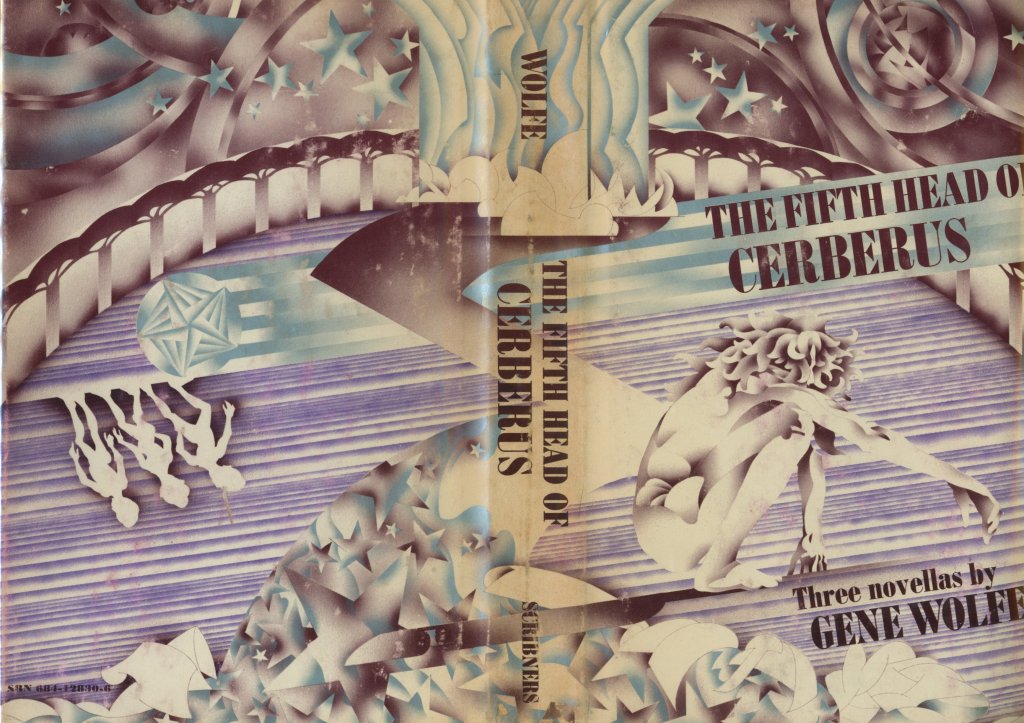
Gene Wolfe has an immense reputation as a significant writer in the science fiction genre. He was awarded the Damon Knight Memorial Grand Master Award by the Science Fiction and Fantasy Writers Association (SFWA) in 2013. He is best known for his novel series, The Book of the New Sun (4 vols. 1980-1983), and follow-up related series. Wolfe dedicated the book version of The Fifth Head of Cerberus to Damon Knight, who was his writing teacher, editor, and mentor. In The Best of Gene Wolfe, Wolfe wrote an afterward to “The Fifth Head of Cerberus,” where he explained the importance of this story and Damon Knight:
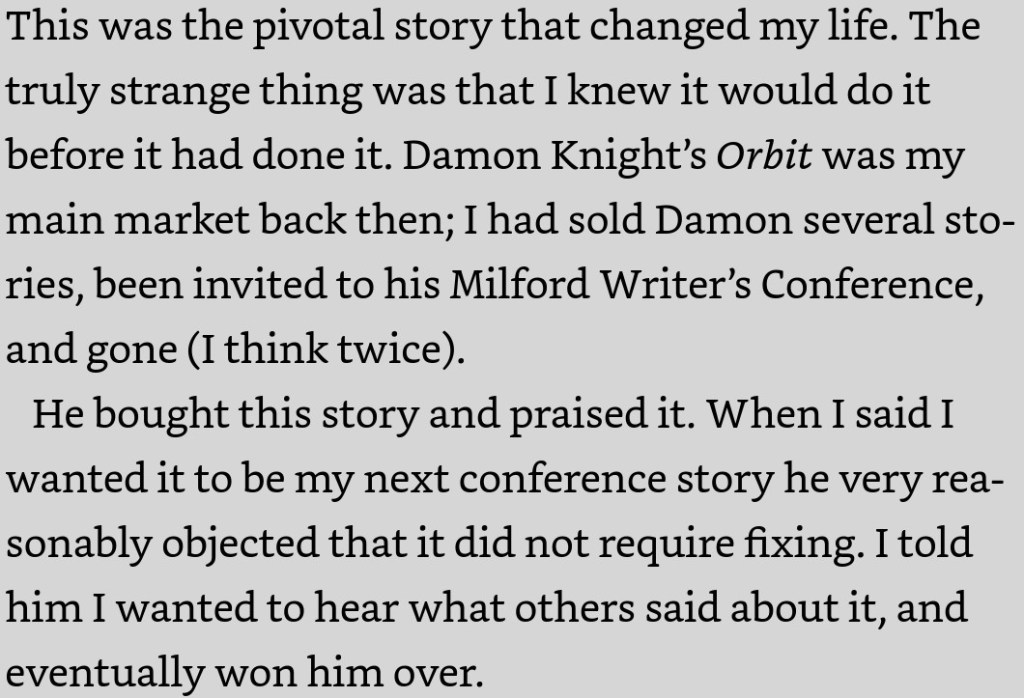
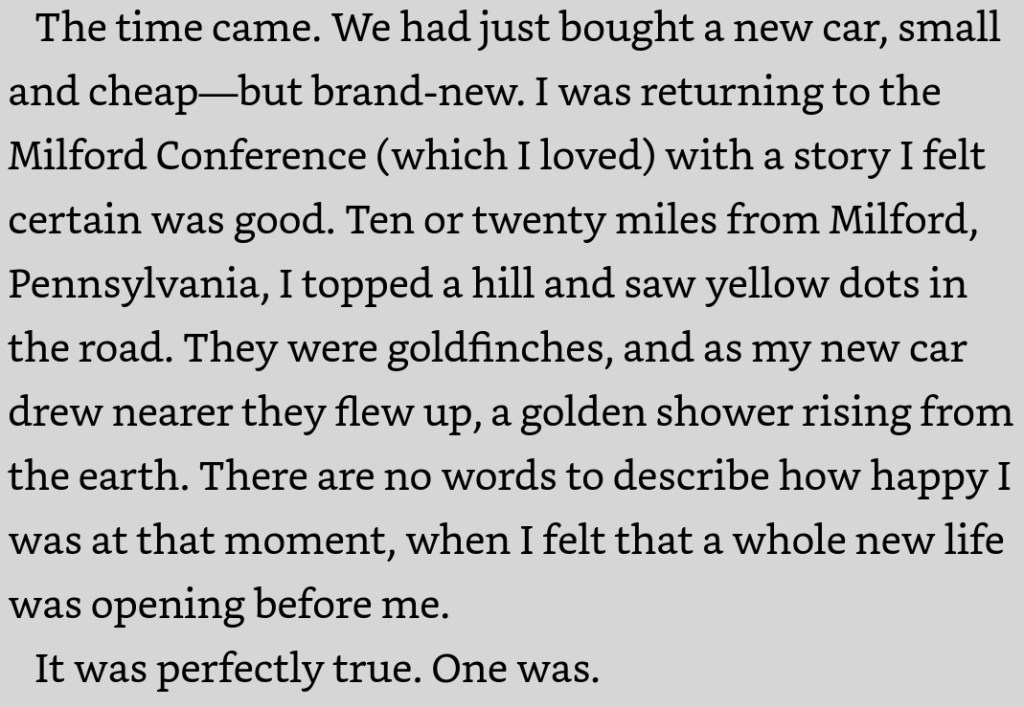
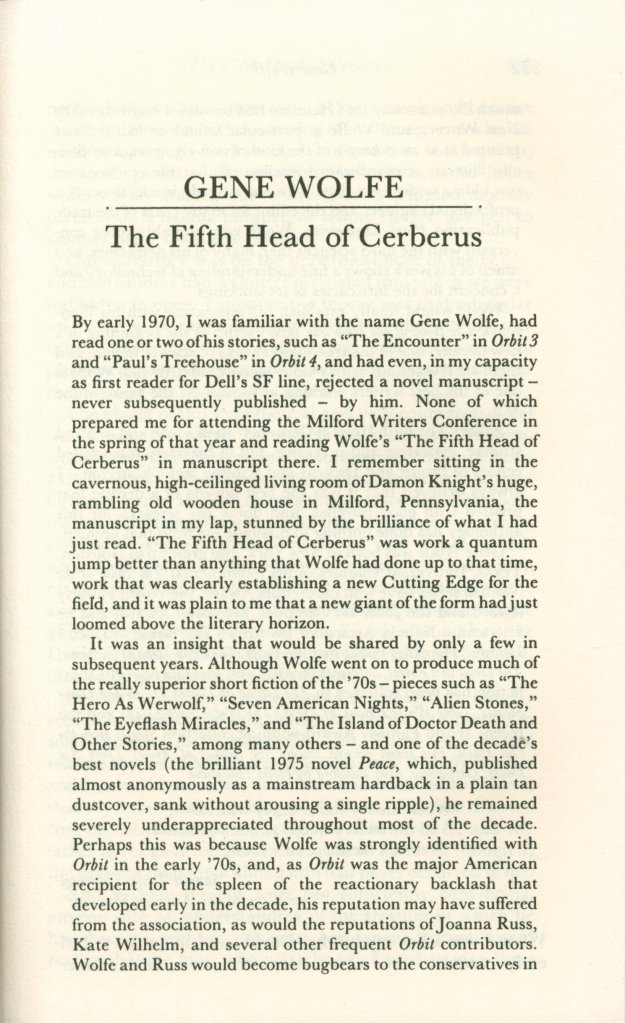
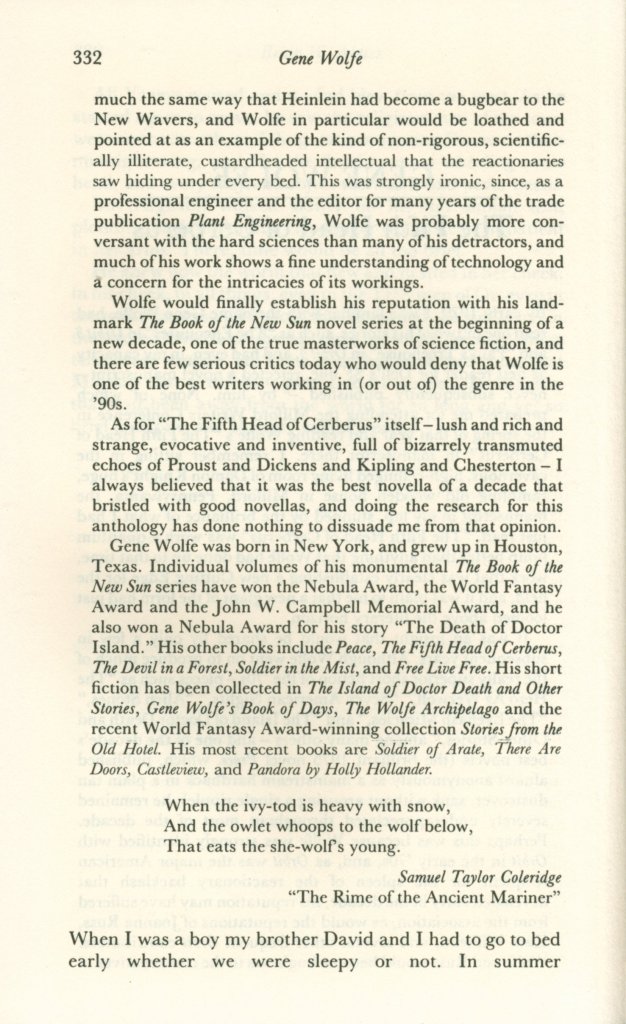
If the New Wave in science fiction had never been defined, Damon Knight’s original anthology series, Orbit (1966-1980) would have shown that the writing of science fiction was undergoing a significant revolution. Stories like “The Fifth Head of Cerberus” were just different, taking the genre to a whole new level. In his introduction to the story in Modern Classics of Science Fiction, Gardner Dozois wrote about when he first read “The Fifth Head of Cerberus” as a manuscript while attending the Mitford Writers Conference in 1970.
The last time I read “The Fifth Head of Cerberus,” I ordered the hardback of the collection because I was so impressed with how the story was written. I haven’t read many Gene Wolfe stories, they are dense and hard to digest, but I’ve been impressed with what I have read. I should read The Book of the New Sun since it’s so widely praised, but I don’t know if I can take such a large concentration of Wolfe’s prose. Many reviewers who gush about The Book of the New Sun say it takes multiple readings to get into the story.
“The Fifth Head of Cerberus” is a mysterious tale to comprehend. The story itself is about several mysteries. In some ways, I felt the setting was the French Quarter in antebellum New Orleans, but it’s actually twenty light years from Earth, on the planet Sainte Croix. Sainte Croix and Sainte Anne are part of a double-planet system that was originally settled by French-speaking people. The plot line takes a long time to develop, and along the way, Wolfe keeps dropping more bits to wonder about. It is hinted that Sainte Croix was originally inhabited by an intelligent species of shape shifters and the current inhabitants, including our narrator Number Five, might be human or aboriginal. I don’t want to tell you too much, if Wolfe wanted to string his readers along, why should I give things out ahead of time?
The story begins with the narrator describing his early years with his brother David in a rather exotic house of prostitution. Slavery exists on Sainte Croix. The boys are raised by a robot named Mister Million who hints at many strange past details during their upbringing. Their father is another source of curiosity. Who and what the narrator might be further clouds this tale. “The Fifth Head of Cerberus” feels like gothic horror rather than science fiction. And even when the story is completed, you never feel you know everything, even after multiple readings.
Ultimately, the story is one of atmosphere, even hallucinogenic and dreamy in many places. It was intentionally meant to be confusing. Whether you like that or not depends.
Like I said, I can only take Wolfe in small doses, but when I do read him I’m impressed.
James Wallace Harris, 6/1/23
 Classics of Science Fiction
It seems that you can take Wolfe in middle-sized doses too, in which case you should, if you haven’t, get his collection THE ISLAND OF DOCTOR DEATH AND OTHER STORIES, a generously-sized volume that includes several of his other excellent novellas, including the spectacular “Seven American Nights.” To my taste these are among his best work and certainly more approachable than his best-regarded novel sequences.
LikeLike