Group Read 27: The Big Book of Science Fiction
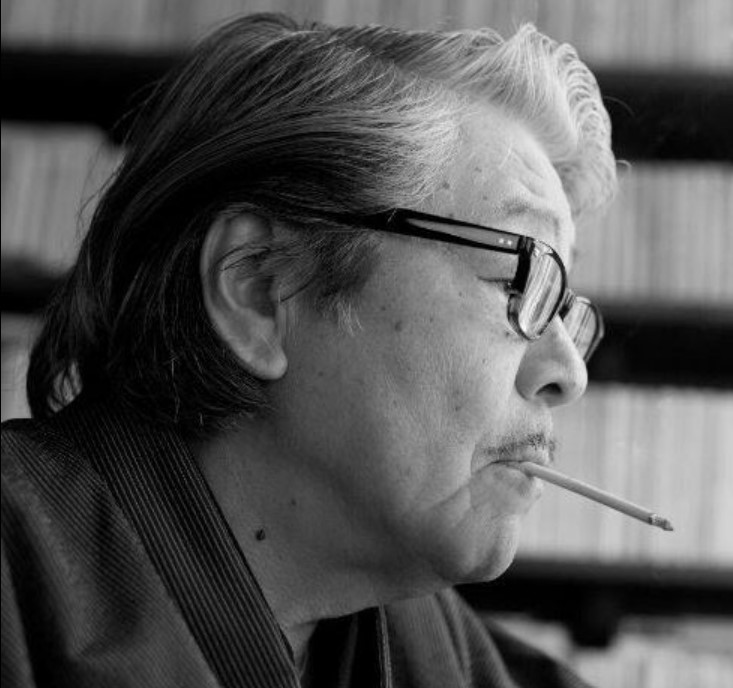
Story #61 of 107: “Standing Woman” by Yasutaka Tsutsui
“Standing Woman” by Yasutaka Tsutsui was first published in Japan in 1974. Since it’s a protest story about freedom of speech, I have to wonder what politics was like in Japan back then. The VanderMeers said in their introduction, that Tsutsui was Japan’s answer to the New Wave and compared his absurd stories to the writings of Sheckley, Spinrad, and Vonnegut. “Standing Woman” was more wistful than funny to me, although, a tale about people being converted into trees for complaining about the government might have been culturally amusing back in 1974 Japan. The tone of the translation reminded me more of Bradbury’s “The Pedestrian.”
This story still works as a gentle story about a sad man, a writer, who misses his wife after she’s been planted. He risks punishment himself by talking to the human trees. His wife warns him not to, but he can’t help himself.
However, the sting of Tsutsui’s protest is no longer there for me. Like the Bradbury story protesting not being able to stroll after supper in a world taken over by cars and highways, “Standing Woman” is no longer seems relevant. I imagine much of the satire of Saturday Night Live will be dissipated in fifty years too.
I’m beginning to have trouble with my rating system. Normally I’d rate “Standing Woman” with ***+, meaning an average story that I liked. But if I don’t keep explaining my code, people will interpret it in different ways. However, the code was mainly meant to help me remember. I’m torn between keeping it for myself, and wondering what confusion it might cause.
For an absurdist tale, “Standing Woman” was likable enough. But in terms of seeking stories from the past that I consider worthy of discovery, then no, this doesn’t work for me. I could say: Good, but unwanted. But that might sound harsh or unkind.
In the past, I’ve thought of only writing about stories I love. But then I started this project to review all the stories from The Big Book of Science Fiction for our Facebook group. I’ve decided that was a mistake. I’m going to finish what I’ve started, but my current belief is I shouldn’t mention a story I don’t love unless it inspires me to write about a specific issue it brings up.
For now, maybe I should just say: Good, but not loved. Or maybe: Liked, but not loved. And that might be closest to what I’ve been struggling to put into words for all these essays. I’m constantly searching for stories to love but seldom find them. Why waste time writing about stories I don’t love? Do readers of this blog really want to know that? When I read blogs and reviews I respond to ones that enthusiastically praise a story. That makes me go read them. Anything else said is quickly forgotten.
James Wallace Harris, 12/20/21


I found this story memorable years ago, when I first read it, but not loveable, just strange.
LikeLike
I thought the writer used the love tragedy between the narrator and the standing woman to make a subtle innuendo about the brutality of Japanese government in his era. I indeed resonated with that sentimentality of powerlessness in doing anything to save people you cherished including your wife from the cruelty of the autocracy.
I was impressed by the elderly writer that abandoned his beloved craft out of fear, the postman who fulfilled his duty even after the involuntary mutation, the overseer who silently withdrew from the lovers’ reunion, the students who couldn’t help talking about another tragedy in the public and the star-crossed couple topped the bill. Tsutsui succeeded in capturing the behaviors and mentality of individuals living under autocracy through an absurd yet compelling premise.
Though I understand why you didn’t love the story because maybe you didn’t experience the autocracy luckily and also the story had innate faults:
https://animae-magnae-prodigus.github.io/blog/2025/02/05/Yasutaka-Tsutsui-Standing-Woman.html
For me, I reviewed unfavorable stories in great detail because I enjoyed the state of retelling and analyzing. Sometimes this kind of deep reading even enabled me to find some subtle details undiscovered by my previous read and turned me to change my previous attitude. Sometimes even bad stories can give me a lesson because at least they are good to serve as bad examples of writing. Overall, it served me as a tranquil ritual to rationalize my emotions into tangible words and at the same time, expedite my comprehension and manipulation on learning new words and phrases.
I really admire your persistence and effort in doing this for it indeed stimulated me to follow your example and somehow made me feel accompanied. I really want to know your opinion even on bad stories since your dislike was also a part of you. But it’s also reasonable to avoid reviewing bad stories and pay more attention to favorable ones because life is short.
LikeLike
I need to be more like you and dig deeper. Obviously these stories impressed the Vandermeers so they have qualities I might not see.
But maybe every generation sees things that other generations can’t.
LikeLiked by 1 person