In his very first sentence in “Mechanoplis,” Miguel de Unamuno, lets us know his story was inspired by reading Erewhon by Samuel Butler. That 1872 novel is considered one of the first books to imagine artificial intelligence. Butler extended Charles Darwin’s recent ideas on natural selection to apply to the machines of the industrial revolution. Could machines develop consciousness and become self-replicating? This makes it hard not to consider Erewhon a major science fiction novel of the 19th century. However, I’m still on the fence about whether or not genre science fiction can claim utopian literature. My current thought is those old utopian novels inspired the birth of genre science fiction by getting people to think about the future. But along the way there was a fork in the road. Some science fiction has continued to worry about the future, like the recent novel The Ministry for the Future by Kim Stanley Robinson. But most genre SF has made the future into a Disneyland of thrills, adventures, and fun. The future becomes a place we want to visit.
It’s hard to trace the evolution of ideas in utopian novels and proto-SF stories of the 19th century to mid-20th century genre science fiction. Butler used the future to comment on Victorian society with satire closer to Jonathan Swift’s 18th century work than how Heinlein, Clarke, and Asimov used the future in the 20th century science fiction. But I do see stepping stones, from story to story.
Reading “Mechanopolis” by Miguel de Unamuno in The Big Book of Science Fiction edited by Ann and Jeff VanderMeer provided an immediate sense of déjà vu. I can’t remember if I read this 1913 story from the Spanish writer Unamuno in another anthology, or because it feels so much like other science fiction stories I’ve read, especially, “Twilight” by John W. Campbell, Jr. from 1934.
“Mechanopolis” begins with an unnamed narrator lost in a desert, nearly dead, who happens upon an oasis where he finds an automated railway system that takes him into a deserted city where machines maintain an automated society long after humanity has left. The forgotten cafeterias allow our narrator to eat. That was true in the Campbell story too. However, in this story the narrator goes mad as he realizes the machines have souls, and even write about his activities in their daily newspaper, spooking the hell out of him. The abandoned cities in “Twilight” still functioning by self-repairing machines, but they inspire a great sense of wonder, not fear.
In the end of “Mechanopolis,” the narrator escapes the city and returns to the desert. He encounters Bedouins who save him. When the narrator returns home he works to stay as far away from machinery as possible. Of course, this reminds me of the ending to the 1984 classic SF story “Press Enter ▮” by John Varley. I’ve written about it before. Victor Apfel, in the Varley story becomes so afraid of machines he rips the wiring out of his house.
“Mechanopolis” is a rather brief expression of a theme that shows up time and again in science fiction. We are definitely on the road to science fiction with this story. Unamuno completely ignores how his narrator finds his way to the mechanical city. In “Twilight,” Campbell has his story told to a man of our times by a wayward time traveler he picks up hitchhiking.
This reveals an interesting aspect to the evolution of science fiction. Writers of the 19th and early 20th centuries had a difficult time setting their story in the future. Often, those early tales about the future have people from the present stumble into some kind of suspended animation. In 1819 Washington Irving has his title character in “Rip van Wrinkle” fall asleep for twenty years. In 1888 Edward Bellamy has his character, Julian West, go under a hypnotic sleep for 113 years to get to the future described in Looking Backward. Of course, the most famous solution was by H. G. Wells in 1895, when he sent his character into the future via a time machine. But then in 1928 Buck Rogers returns to the old method getting to 2419 by being trapped in a cave in where radioactive gas puts him into suspended animation.
All these writers evidently felt there must be some connection between the present day and the future. Maybe they thought we needed a POV like ourselves to react to the future. However, Ray Bradbury did away with the human viewer altogether in “There Will Come Soft Rains” where he describes an automated house working after the humans are gone, and we assume extinct because of WWIII. It’s a beautiful story. However, the machines aren’t sentient, and we don’t fear them. We’re just wistful to see them working without us.
Unamuno has his character take a strange train ride. Does his narrator ever realize he’s in the future? Or is it possible that this mechanical city is somewhere on Earth like the land of Oz, in current time but having a quite divergent development from the rest of the world? Or is Mechanopolis in another dimension? I’m not sure we know. The train is a portal, but not much else is explained. I’m assuming Mechanopolis is in the future. Art the narrator sees in the machine’s museums he feels are the originals might imply the narrator was in the future. But he also wondered if our museums held perfect forgeries. That could imply Mechanoplis was not in the future.
One of the surprising aspects to the 1909 story, “The Machine Stops,” is E. M. Forster just puts his readers into the future. That approach eventually becomes the standard for science fiction. We read science fiction so we can jump into the future. Any comparison to the present is at an unconscious level.
“Mechanopolis” anticipates automated cities in future stories like The Dying Earth by Jack Vance or The City and the Stars by Arthur C. Clarke. In those two the humans aren’t quite gone but our species is fading away. I just remembered, The Night Land by William Hope Hodgson from 1912. He took his readers to the far future too, where the remaining humans survive in the remnants of a technological civilization. Hodgson got his readers there with a reincarnated character from our times. Some editions of that book lop off that introductory section, and jump immediately to the future. Evidently, those editors felts modern readers didn’t need the connection with the present day.
Another story where the humans are gone but the machines remain is the connecting filler to the fix-up novel City by Clifford Simak. We are told humans have left and only intelligent machines and uplifted dogs remain. The gimmick of the fix-up is the robots and dogs are telling tales about humans, which are just reprints of Simak short stories. With Simak, we love the machines.
“Moxon’s Master” the 1899 story by Ambrose Bierce features a chess playing machine killing a human. We have a long history of anthropomorphizing animals and objects, so when did the idea of sentient machines first develop in science fiction? Unamuno’s 1913 story is way before computers, or even the concept of robots were developed. That was even more true of Erewhon. Why does Butler or Unamuno imagine machines will become aware? It’s one thing to assume automated machinery will keep running, or could even be made self-servicing. It’s a whole other concept to imagine that machines could observe people, and in this story, feel concern for the narrator’s state of mind. Evolving machines was quite a leap for Butler, but Darwin inspired all kinds of fears about evolution. A great case could be made that Darwin is really the father of science fiction.
In this very short story, Unamuno comes up with automated cities, the extinction of humans, cities that keep functioning without humans, self-aware machines, and even machine inheriting the Earth. He also comes up with the fear or paranoia of intelligent machines. It’s doubtful many English writers and readers knew about Unamuno’s story. Could there have been any chance of Campbell reading it? I wonder what Spanish writers Unamuno influenced with science fictional ideas?
If fiction could be classified like a biological taxonomy then labels like science fiction could have a fairly exact use in categorizing literature. We could point to an infographic of a circle on a page, and say everything inside the circle is science fiction, and everything outside of it is not.
The VanderMeers want to call “Elements of Pataphysics” by Alfred Jarry science fiction. I don’t. Ann and Jeff VanderMeer, the editors of The Big Book of Science Fiction, the anthology our short story club is reading, are disciples of Judith Merril. Merril wrote science fiction, but is mostly remembered for her annual anthologies from 1956-1968 that collected what she considered the best science fiction of the year. Merril was notorious for including stories that she called science fiction but which her readers disagreed. Nor would I think the world-at-large would call “Elements of Pataphysics” science fiction. See this Wikipedia entry, which considers it a spoof or satire on science. I’d call it experimental fiction that plays with language, logic, rhetoric, mathematics, and communication.
As a collector and reader of best-of-the-year science fiction anthologies I have a hard time reading Merril’s annual anthologies because I felt some stories just aren’t science fiction – and I wanted them all to be science fiction. I keep reading similar complaints about The Big Book of Science Fiction. I’m trying very hard to be open minded and stretch my sense of science fiction to meet the VanderMeers half-way, but I’m afraid “Elements of Pataphysics” is outside of that circle I call science fiction.
As much as I admired Merril, I also believe by trying to expand the genre she neglected some solid middle-of-the-road SF stories that deserved to be remembered. Instead of claiming the experimental and avant-garde for the genre, she could have used the anthology space to boost a few mid-level SF writer’s careers, but that’s parsecs in the past.
Not that “Elements of Pataphysics” isn’t a wonderful story. Not that it isn’t brilliant. Not that it doesn’t deal with science and fiction. And this was also true for the stories Merril wanted to call science fiction but her readers didn’t. Merril wanted to expand the domain of science fiction and often claimed the hard-to-define experimental work as sci-fi. But in many cases, and with Jarry’s story here, I believe its literary poaching. Just because you Shanghai a story and call it science fiction doesn’t mean its is.
And just because science fiction is hard to classify doesn’t mean we should stop trying. We just can’t cull anything we like with our SF branding iron. I know I’m trying to bail the ocean with a sieve when I argue to define science fiction, but when I eat a dessert I expect it to be sweet, and when I read science fiction I expect it to be science fictional.
The trouble is the reading public and publishers have often classified anything weirdly like science fiction as science fiction. It’s a classification kitchen sink. To begin with, I don’t believe all books need a classification label other than fiction. If a story doesn’t fit a clear classification, just call it a story or novel. We need to only use the label science fiction when a story has the exact traits of science fiction.
If we copy the structure used to classify life forms then fiction could be a very high level domain, and genre could be one level down. Science fiction could be in a domain below that. Any domain or order within it should be clearly definable. We should be able to list characteristics that readers universally respect as belonging to science fiction. And if you think about them, there really isn’t that many that science fiction has a right to claim. Science fiction has homesteaded certain lands for decades and I believe has a legitimate right to claim them now. Some of the obvious ones include:
Stories set in the future
Stories set in space
Stories about time travel
Stories about aliens from space
Stories about robots and any human created intelligence
Stories about new inventions and new technology that hasn’t been invented or discovered
Stories about humans that aren’t Homo sapiens sapiens.
Stories about artificial life possible within our physical reality
Stories about artificial realities, but possible within this physical reality
Stories about other dimensions, but part of this physical reality
Stories about metafiction related to science fiction
Utopias and dystopias if set in the future or in space
Alternate history (this could be contested and established as its own domain)
“Elements of Pataphysics” defined pataphysics as territory outside the circle of metaphysics, and metaphysics as the territory that surrounds the physical. I believe that puts pataphysics into the realm of the abstract theoretical. It intentionally defined its territory as not existing. I could use the definitions of pataphysics to classify Flatland and Alice in Wonderland, and maybe works of fantasy in general. Especially if we reserve the metaphysical as territory that could exist even if it’s outside our physical reality. (The hopes and ambitions of religion and spiritualism’s dwell there.)
Science fiction belongs in that circle defining physical reality because science is confined to that territory. Science fiction does not extended into metaphysical territory, so it can’t extend into the pataphysical. Fantasy belongs to the pataphysical, and maybe the metaphysical, but not the physical. Jarry’s fiction creates pataphysics by alluding to the science, mathematics, linguistics, logic, and rhetoric of the physical. In other words, he describes the impossible and ineffable by analogy to the tools we use to understand the physical. For me, its essential that science fiction stay out of the metaphysical, and thus the pataphysical. The metaphysical belongs to the woo-woo and things that go bump in the night. Reality’s only portal to the metaphysical is through leaving our bodies and imagination is our only portal to the pataphysical. Science fiction holds out hope that we can get there from here.
“Elements of Pataphysics” is a 5-star story that belongs in The Big Book of Experimental Fiction. It’s a marvelous piece of writing, and the translation feels very well done. What Jarry describes as pataphysics could apply to metafiction, and other experimental forms of fiction. I’ve always thought that Merril and the Harrison/Aldiss anthologies tried to latch onto works of experimental fiction and relabel them science fiction to give prestige to our genre. We need to accept who we are without such pretensions.
I suppose some will claim I’m limiting science fiction. If the word “science” is part of the label, then that label must limit itself to the territory of theoretically scientific. But more importantly, I believe we should recognize what science fiction is and embrace those aspects. The literary world has always criticized science fiction as appealing to adolescents. I agree with them. We shouldn’t take offense. There is a certain excitement during that stage of life from ages 12 to 22 that science fiction targets. Certain kinds of music, movies, and television shows resonate with that stage too. Most of us look back on what we fell in love with in adolescence for the rest of our lives. It’s a peak time of life. Sure, we might have been stupid, but we were passionate.
I believe religion originates in the pre-adolescent mind, and embracing science fiction is a rejection of religion. Instead of heaven, we claims the heavens, instead of gods, we look for aliens, instead of everlasting life, we seek immortality. In our teen years we are told about reality, and we ask, “Isn’t there more?” The difference between science fiction and fantasy, is the difference between accepting pipe dreams and holding out hope.
“Elements of Pataphysics” targets the next stage in life, our twenties, one that inspires people to be artists. Although there are exceptions, science fiction has never been particularly arty, or even seriously intellectual. At its best its visionary, can even be a bit literary, but it stands between the fairytales that appealed to us in the previous stage of life, and the hard reality of adulthood. It has the sense of wonder of discovering reality, but the childlike desire to reshape reality into exciting possibilities of what if. Science fiction considers all the possibilities of growing up, all the portals of what might be possible. Those possibilities are a comfort to the stress of metamorphizing from child to adult. The odds are long, but in adolescence we have tremendous hope.
Many of us keep consuming science fiction for the rest of our lives because of that Zoloft-like quality it confers. It helps us to remember what we wanted to be. I think it’s existentially vital we recognize science fiction for exactly what it is. In classifying science fiction, there is an essential trait to be observe. It’s a unique strain of hubris that says, “We can create anything that’s possible in this reality.” Anything not possible need not apply.
These early stories in The Big Book of Science Fiction represent fiction on the road to science fiction. I already know where we’re heading because I’m well versed in 1930s and 1940s science fiction. What I classify as science fiction is down the road a piece further, into the 1950s and 1960s. Science fiction evolved and mutated in every decade of the 20th century. 21st century science fiction is already rejecting this past, those stories and authors I love. The ones I use to define my sense of the genre. It’s becoming something else again. But the road goes on, and I don’t.
I believe as we read the stories in the VanderMeers’ anthology, we’ll learn to sense the essence of science fiction, which is to use certain techniques of storytelling to speculate about the edges of science. In “The New Overworld” Paul Scheerbart creates a fairytale about two lifeforms on Venus that I mentally pictured as illustrations from Dr. Seuss books. We can call this story science fiction because its set on Venus and it speculates about alien lifeforms, but it’s closer in tone to a children’s picture book. It’s all too obvious that the story is about solving social problems with cooperation and technology. But we never believe Scheerbart believes he is speculating about Venus or alien lifeforms. It’s all allegorical in intent. The story obviously has a philosophical lesson.
On the road to science fiction, our destination is fiction that convinces us we are there, in the future, out in space, on other planets. Wells was there in “The Star” because we could picture the worldwide catastrophes. In “Sultana’s Dream” we were almost there but then had it snatched away from us when we learned it was all a dream. In “The Triumph of Mechanics” we got there again because we were meant to believe mechanical rabbits were possible. However, the story was a tall tale and we knew Strobl didn’t mean it.
Science fiction writers know they can’t predict the future, but real science fiction feels like they have. It has to be convincing. It doesn’t matter if their future can’t possibly become real, it’s got to feel real when we read it. We’ve got to believe while we read. It has to be a fully realized fictional reality.
Back in 1911 when “The New Overworld” came out, what we think of as science fiction was an oddity. The following year, in 1912, A Princess of Mars by Edgar Rice Burroughs will be serialized in All-Story Magazine as “Under the Moons of Mars” by Norman Bean. Probably most readers wouldn’t buy astral projection, but they wanted to believe in Barsoom. Burroughs triggers a certain kind of desire in readers, and that’s the heart of science fiction. Readers still want to believe in Barsoom, long after NASA put a stake in that dream.
I have not read Paul Scheerbart’s other works, or novels, which this article in Science Fiction Studies describe. The VanderMeers regrets Scheerbart isn’t remembered, but from the description of his stories I can see why he is. But Erik Morse in The Paris Review has read some of the recent English translations of Scheerbart and he found them interesting, even captivating, but strange.
Authors and their books are forgotten over time for many reasons. Usually, it’s because the work just doesn’t hold up. Sure, academic publishers will come out with expensive editions that are historical curiosities, but they just aren’t readable by the public at large. Wells was not forgotten because his SF novels are still page-turners.
I will give one other reason why Paul Scheerbart is forgotten, he was German. I wouldn’t have considered this reason until I read The Invention of Nature: Alexander von Humboldt’s New World by Andrea Wulf. Alexander von Humboldt was probably one of the most amazing men to ever live. In the 19th century, he was probably the most famous of the century, maybe even more famous than Napoleon or Lincoln in their times. I had no idea who he was before I read the book, and neither do most English speaking people, even though in the 1800s most Americans loved him very much.
At the end of the biography, Wulf gives an interesting reason why von Humboldt was forgotten in America and Great Britain. During WWI Americans actually burned German books, and anti-German sentiment became ever greater during WWII. So if we can collective erase Alexander von Humboldt who inspired Thomas Jefferson, Edgar Allan Poe, Ralph Waldo Emerson, Henry David Thoreau, John Muir, and many other influential Americans, then it’s easy to imagine not remembering Paul Scheerbart.
The 19th century was full of brilliant eccentric writers who wrote far out books with wild ideas, many of which could be considered science fiction. And we’ve forgotten most of them. Actually, we’ve forgotten probably 99.99% of them. If we don’t remember Konstantin Eduardovich Tsiolkovsky for his great science fictional predictions, why should we remember Paul Scheerbart?
It’s a shame that pop culture has such a short attention span. Books like The Big Book of Science Fiction try to correct that. Sure, our group argues over what the VanderMeers collect for us to read, but shouldn’t we judge them not by whether or not we enjoy the stories, but by what they are helping us to recall from a pop culture ancestry? There was a great deal of proto-SF published before Amazing Stories came out in 1926, but we remember damn little of it today. What I want to remember is what popular literature was like from 1900-1925, in all its forms. Their anthology helps. The VanderMeers’ introductions hint at so much more I want to know.
I do have one quibble. Why did they leave out “The Machine Stops” by E. M. Forster? Was it already too famous? Or too long? That 1909 story was the best single science fiction story from 1900-1925.
Because “The Triumph of Mechanics” by Karl Hans Strobl is included in The Big Book of Science Fiction, we have to assume Ann and Jeff VanderMeer had a good reason other than it just being a fun story. It is the first English appearance of this 1907 Austrian story translated by Gio Clairval, so they must have had it translated for a special reason. Wouldn’t they? However, I am at a loss to see its historical significance to science fiction. Although, in retrospect, we’d call it science fiction today for several reasons. “Sultana’s Dream” also came out in 1907. England, India, and Austria. It’s still a long way to April, 1926 America.
My reaction to an American inventor, Hopkins, coercing a town to give him a building permit by producing a billion mechanical rabbits was to instantly recall Flat Cats, those quickly reproducing Martian animals in Heinlein’s novel The Rolling Stones. The idea of overproducing pets was also used in the classic Star Trek episode “The Trouble With Tribbles.” When I saw tribbles in 1967 I instantly thought flat cats too. However, Heinlein admits getting the idea from the 1905 story “Pigs is Pigs” by Ellis Parker Butler, about Guinea pigs that reproduce at an exponential rate at a train station. Full text of the story is here. There have been several animated films based on that story, starting in the silent era, but here’s Walt Disney’s version from 1954. Any chance that Strobl reading “Pigs is Pigs” before writing his story? And could Ellis Parker Butler have snagged the idea from an earlier tale, maybe an old German fairytale?
The main reason “The Triumph of Mechanics” is science fiction is the little toy robotic rabbits can reproduce – self replicating machines. But I have a question. Why would Hopkins need a factory to manufacture toy rabbits when he can quickly produce a billion of them without a factory?
I wish I knew more about the original publication of “The Triumph of Mechanics.” Did it first appear in a magazine or newspaper? Did it have illustrations? 1907 was years before the word robot came into vogue. However, mechanical or clockwork creatures have been around in fiction for a long time. The story also mentions some other far out ideas for creating wonderful toys, including making a glass like material out of solidifying air. They marveled at how such an artificial substance could take over the toy industry. I thought of plastics. I imagined whispering into Benjamin Braddock’s ear, “Two words – solidified air!”
I wonder if there was any significance that the go-getting inventor was American? Had Europeans stereotyped us as marvelous inventors because of Thomas Edison? The overall tone of this story was amusing, just a tall tale, like something Mark Twain would have written. Since it was also written well before the term science fiction existed, I wondered if its readers thought it was some special kind of fiction, something out of the ordinary? As we read each story in The Big Book of Science Fiction, we need to remember we won’t reach stories published in a genre magazine until the 9th story, and even then, the term science fiction wasn’t coined right away by Hugo Gernsback. He tried to pass off scientifiction on us. The tag science fiction began to emerge in the 1930s but didn’t catch on with the public at large until the 1950s.
The second story in The Big Book of Science Fiction is “Sultana’s Dream” by Rokheya Shekhawat Hossein. First published in The Indian Ladies’ Magazine in 1905. By today’s standards, “Sultana’s Dream” is a rather simple narrative that imagines Ladyland, where gender roles are reversed. It doesn’t feel like a traditional short story in structure, and the VanderMeers called it a conte philosophique, which means philosophical fiction. In this case Hossain is writing utopian fiction, which is often science fictional. I assume the story was intended to be satirical, or even humorous, with it’s topsy-turvy gender role reversals. Now, it just feels quaintly sci-fi, but visionary feminist.
I wonder if Hossain was a proto-SF fiction fan, or had read utopian or science fiction fiction? Only when we use our imagination to put “Sultana’s Dream” into the context of when and where it was written does it become impressive. Hossain lived in British controlled India, and was Bengali, well educated and well-to-do. Wikipedia spells her name slightly different, Rokeya Sakhawat Hossain, and said she published under the byline Mrs. R. S. Hossain, but was commonly known as Begum Rokeya.
It’s in retrospect that we admire this story. For example, Chitra Ganesh created a graphic novel “Sultana’s Dream” in woodcuts, and the University of Michigan created an exhibit at their Museum of Art. Their website has a copy of the story to read online, and four different narrators reading an audio version of the story. They pick women of different ages to narrate the story. The same exhibit was at the University of Rochester’s Memorial Art Gallery with a different set of presentations and videos.
I assume the VanderMeers were inspired by the recent republication of the story in Sultana’s Dream: A Feminist Utopia and Selections from the Secluded Ones by Rokeya Sakhawat Hossain, edited and translated by Roushan Jahan. That volume appears to have come out in 2015, the year before The Big Book of Science Fiction. However, there was from 2005 Sultana’s Dream; and Padmarag: Two Feminist Utopias by Rokeya Sakhawat Hossain; translated with an introduction by Barnita Bagchi. I’m curious, are feminists finding these stories first, or science fiction historians? How was my favorite early feminist utopia, Herland by Charlotte Perkins Gilman, discovered? I find these old SF stories through SF researchers, but did they find them first? And could Gilman have possibly read “Sultana’s Dream” from 1905 before she serialized her novel in 1915? Wikipedia says there was a novella version of Sultana’s Dream published as a book in 1908. Was it expanded from the 1905 story? Could a copy have gotten to America?
Although “Sultana’s Dream” is a simple story, its feminist ideas, as well as its speculation about futuristic technology and science, are as mind blowing for 1905 as time travel, space alien invasion, and space travel was in the 1890s when Wells was blowing minds. Especially, when we consider what India was like in 1905. Please read “Feminist Visions of Science and Utopia in Rokeya Sakhawat Hossain’s ‘Sultana’s Dream’” to learn more about Hossain and why her story really is more than what it seems. I also recommend, “Sultana’s Dream And Its Conception Of A Feminist Utopia” by Deeksha Sharma, especially for its link to “6 Indian Muslim Feminists In History” by Amna Nasir, that also profiles Hossain.
Do we rate the story by today’s standards of storytelling, or 1905’s standard of thinking? If you read “Sultana’s Dream” as just another science fiction story you might dismiss it. If you read it as the VanderMeers intend, to understand the evolution of science fiction, then its quite impressive.
The VanderMeer’s anthology is dedicated to Judith Merril who was famous for looking far and wide for stories to expand the reputation of science fiction in her anthologies. I think we have to accept the VanderMeer’s goal here. Although “Sultana’s Dream” is a quaint read, not famous in its time like “The Star” by H. G. Wells, their second story shows that science fictional thinking was happening all over the world.
But I have to wonder where Hossain got her ideas for solar power, and the other Jules Verne inventions? I wish I had more access to popular magazines of the time, because I believe they reveal popular thinking and culture better than history books. Far out gadgets and futurism was all the rage by some readers. Was it just a few geeks of the day, or were those ideas popular with everyone? Did the science fiction books that excited people in England get read in India as well?
Of course, I assume, science fictional speculation has always existed. My commonly used example is the Noah’s Ark, a catastrophe story that could have been the inspiration for “The Star.” This makes me ask, are there older, even much older, visions of feminist utopias? Could Hossain have been inspired by the ancient Greeks stories about the Amazons. Or are there feminist utopias in Hindu and Bengali literature? I don’t mean to suggest Hossain wasn’t creative, but my pet theory is all concepts have been around since pre-history, even science fictional ones.
When I discover old science fiction stories that I want to believe are the earliest examples of a science fictional idea, eventually if I keep reading, I find older examples. The Big Book of Science Fiction captures the examples from the 20th century. But if we had The Big Book of 19th Century Science Fiction, would we find earlier examples of all the ideas we thought first appeared in the 20th century? I believe there’s a kind of generational myopia that feels like everything cool was created for by some slightly older dudes and dudettes. For example, The Beatles and Bob Dylan are about ten years older than me. Us Baby Boomers thought they were revolutionary geniuses of our times. But actually, they were inspired by some slightly older musicians and songwriters, who The Beatles and Dylan were convinced were the revolutionary geniuses of their times.
I wish I had some kind of software where I could plot science-fiction ideas on a timeline that also positioned them on a map of the world. That way we could plot the progress of a concept as it evolved over time and space. When were flying cars first proposed? Hossain’s flying car was rather unique, but hardly the first. How far back do flying cars go as an idea, aren’t they really just a descendant of flying carpets and flying chariots?
This my second review of “The Star” by H. G. Wells, because I attempted to read The Big Book of Science Fiction earlier this year. I didn’t get far. I’m hoping the group read will get me to the end this time. But we will see. Since this is a second review I’ll need to find new things to say.
One thing I noticed this time while poking around on Google to see how “The Star” is used in a number study sites for classroom discussion. Being taught in school is one indicator that a work of fiction has become a classic. Three cheers for science fiction then. The story came out in 1897, between the publication of The Time Machine and The War of the Worlds. Hugo Gernsback liked it so much he reprinted it twice, in 1923 and 1926.
“The Star” had already been repackaged in several collections by Wells, including an edition put out by Charles Scribner’s Sons in 1925, the prestigious publisher of Ernest Hemingway and F. Scott Fitzgerald in the 1920s. I’ve read that before pop culture used Albert Einstein’s name to imply the smartest man in the world, people used Mr. Wells. One of the more popular books in the early days of fandom was The Short Stories of H. G. Wells that ran over a thousand pages. Another giant collection of short stories by Wells was put out the The Literary Guild, for the high-brow crowd. This listing of reprints at ISFDB is one of the longest I know about, and I’m sure that database hasn’t indexed all the places “The Star” has been reprinted.
In other words, “The Star” was widely read outside of science fiction, especially in the 1920s and 1930s before the genre had established itself in the public’s consciousness. I can’t help but wonder what the average person thought of the story? Did Charlie Chaplin talk about it at Hollywood parties while he was working on The Gold Rush? What did the average British citizen think of the story when they read it in The Graphic, the Christmas Number for 1897? Here’s an ad from that issue to give you an idea of the times.
Why would they run an end-of-the-world story in their Christmas issue? I have to assume they really thought the story something special. So what did people say about it then? I wish I could find references to how average readers reacted to early science fiction. So far my best indication of what people read back then that we’d call science fiction is the anthology Science Fiction by The Rivals of H. G. Wells which presents thirty stories that came out around the same time as “The Star.” I wish I had a book of letters to the editors about those stories, or extracts from diaries and personal letters where people wrote about them.
In the introduction to The Big Book of Science Fiction the VanderMeers say this about science fiction:
This kind of eclectic stance also suggests a simple yet effective definition for science fiction: it depicts the future, whether in a stylized or realistic manner. There is no other definitional barrier to identifying science fiction unless you are intent on defending some particular territory. Science fiction lives in the future, whether that future exists ten seconds from the Now or whether in a story someone builds a time machine a century hence in order to travel back into the past. It is science fiction whether the future is phantasmagorical and surreal or nailed down using the rivets and technical jargon of “hard science fiction.” A story is also science fiction whether the story in question is, in fact, extrapolation about the future or using the future to comment on the past or present.
But “The Star” isn’t about the future, and neither are most of the stories in that rivals anthology. Back then, the fantastic happened in the present. When Wells was writing, science fiction hadn’t evolved into its future oriented self. The VanderMeers wants their anthology to show the evolution of science fiction and I think this is an important distinction about “The Star.” I believe as we read along in the volume, we’ll observe how science fiction moved into the future.
There is one weak area in “The Star.” I was never sure what kind of astronomical object the intruder was. At different times in the story it’s implied that the intruder is a comet, planet, or star. Wells was big on science, so why was he so sloppy here? If the visitor was another planet, wouldn’t it and Neptune have shattered when they collided? If it was a comet, Neptune would have absorbed it. I’m guessing it was some kind of dark or dwarf star that absorbed Neptune in the collision. We know Wells knew about stellar evolution because he has the Earth being destroyed when the sun expanded into a red giant in “The Time Machine.”
Most people have heard of book clubs, but we have a short story club devoted to science fiction. It’s a Facebook group. Anyone can join even though it’s a private group. Just answer the two questions. However, many people don’t like Facebook, and that’s cool. Because we’re about to read and discuss The Big Book of Science Fiction edited by Ann and Jeff VanderMeer, I thought I’d post my thoughts on each story here so those people who don’t use Facebook can participate via the comment section.
The Big Book of Science Fiction has over one-hundred short stories. We’ll read and discuss a story every other day. This is a huge book and a major commitment to read. I’ve owned it for years and have been too intimidated by its size to try reading it. What I hope is the discipline of the short story club will push me to climb this Mt. Everest of anthologies. Because it’s a recent retrospective anthology it aims to give a contemporary overview of the history of science fiction by including more women writers and foreign stories, I expect reading its stories will be a graduate course in science fiction literature.
If you don’t already own this book and are tempted to join the group or buy it to read along with the discussion here, I should warn you about its size – it’s a monster. Like the size of a large city phone book back in the day, and also printed on thin paper. Reading the Kindle edition is the practical way to go. If you want the paper edition, you might check it out at Barnes & Noble first. I’d hate to recommend people to buy this dingus and not be able to read it because they don’t have weight-lifter arms.
Many of the stories will be in old anthologies, so you don’t have to buy the book if you want to read along from you own library. However, about two dozen stories are foreign translations commissioned for this anthology and won’t be available elsewhere.
I should also warn anyone who is thinking about buying this book that if you prefer the traditional classics of science fiction this book skips over many of them. No Heinlein, no Bester, etc. Some older fans have complained they didn’t like a lot of the stories. I’m reading it because I want to see a new view of old science fiction. I have read about a quarter of the stories before, and some of them are among my favorites.
We start discussion August 20th, beginning with “The Star” by H. G. Wells. The group will discuss a story every other day until March 20, 2022. The links below are to my reviews. Here are other group member’s online reviews:
The Star – H. G. Wells Sultana’s Dream – Rokheya Shekhawat Hossein The New Overworld – Paul Scheerbart The Triumph of Mechanics – Karl Hans Strobl Elements of Pataphysics – Alfred Jarry Mechanopolis – Miguel de Unamuno The Doom of Principal City – Yefim Zozulya The Comet – W. E. B. Du Bois The Fate of the Poseidonia – Clare Winger Harris The Star Stealers – Edmond Hamilton The Conquest of Gola – Leslie F. Stone A Martian Odyssey – Stanley G. Weinbaum The Last Poet and the Robots – A. Merritt The Microscopic Giants – Paul Ernst Tlön, Uqbar, Orbis Tertius – Jorge Luis Borges Desertion – Clifford D. Simak September 2005: The Martian – Ray Bradbury Baby HP – Juan José Arreola Surface Tension – James Blish Beyond Lies the Wub – Philip K. Dick The Snowball Effect – Katherine MacLean Prott – Margaret St. Clair The Liberation of Earth – William Tenn Let Me Live in a House – Chad Oliver The Star – Arthur C. Clarke Grandpa – James H. Schmitz The Game of Rat and Dragon – Cordwainer Smith The Last Question – Isaac Asimov Stranger Station – Damon Knight Sector General – James White The Visitors – Arkady and Boris Strugatsky Pelt – Carol Emshwiller The Monster – Gérard Klein The Man Who Lost the Sea – Theodore Sturgeon The Waves – Silvina Ocampo Plenitude – Will Worthington The Voices of Time – J. G. Ballard The Astronaut – Valentina Zhuravlyova The Squid Chooses Its Own Ink – Adolfo Bioy Casares 2 B R 0 2 B – Kurt Vonnegut Jr. A Modest Genius – Vadim Shefner Day of Wrath – Sever Gansovsky The Hands – John Baxter Darkness – André Carneiro “Repent, Harlequin!” Said the Ticktockman – Harlan Ellison Nine Hundred Grandmothers – R. A. Lafferty Day Million – Frederik Pohl Student Body – F. L. Wallace Aye, and Gomorrah – Samuel R. Delany The Hall of Machines – Langdon Jones Soft Clocks – Yoshio Aramaki Three from Moderan – David R. Bunch Let Us Save the Universe – Stanisław Lem Vaster Than Empires and More Slow – Ursula K. Le Guin Good News from the Vatican – Robert Silverberg When It Changed – Joanna Russ And I Awoke and Found Me Here on the Cold Hill’s Side – James Tiptree Jr. Where Two Paths Cross – Dmitri Bilenkin Standing Woman – Yasutaka Tsutsui The IWM 1000 – Alicia Yánez Cossío The House of Compassionate Sharers – Michael Bishop Sporting with the Chid – Barrington J. Bayley Sandkings – George R. R. Martin Wives – Lisa Tuttle The Snake That Read Chomsky – Josephine Saxton Reiko’s Universe Box – Kajio Shinji Swarm – Bruce Sterling Mondocane – Jacques Barbéri Blood Music – Greg Bear Bloodchild – Octavia E. Butler Variation on a Man – Pat Cadigan Passing as a Flower in the City of the Dead – S. N. Dyer New Rose Hotel – William Gibson Pots – C. J. Cherryh Snow – John Crowley The Lake Was Full of Artificial Things – Karen Joy Fowler The Unmistakable Smell of Wood Violets – Angélica Gorodischer The Owl of Bear Island – Jon Bing Readers of the Lost Art – Élisabeth Vonarburg A Gift from the Culture – Iain M. Banks Paranamanco – Jean-Claude Dunyach Crying in the Rain – Tanith Lee The Frozen Cardinal – Michael Moorcock Rachel in Love – Pat Murphy Sharing Air – Manjula Padmanabhan Schwarzschild Radius – Connie Willis All the Hues of Hell – Gene Wolfe Vacuum States – Geoffrey A. Landis Two Small Birds – Han Song Burning Sky – Rachel Pollack Before I Wake – Kim Stanley Robinson Death Is Static Death Is Movement – Misha Nogha The Brains of Rats – Michael Blumlein Gorgonoids – Leena Krohn Vacancy for the Post of Jesus Christ – Kojo Laing The Universe of Things – Gwyneth Jones The Remoras – Robert Reed The Ghost Standard – William Tenn Remnants of the Virago Crypto-System – Geoffrey Maloney How Alex Became a Machine – Stepan Chapman The Poetry Cloud – Cixin Liu Story of Your Life – Ted Chiang Craphound – Cory Doctorow The Slynx – Tatyana Tolstaya Baby Doll – Johanna Sinisalo
What writers create with the tools of science fiction varies as tremendously what carpenters build with their tools. However, the consumers of science fiction, the editors and readers, tend to prefer specific products often by specific tools. In our short story club on Facebook, one reader noted that The Year’s Best Science Fiction: Third Annual Collected edited by Gardner Dozois which we just finished reading only had one story about spaceships. (I don’t know if it was just a curious observation or lament.)
If you expect science fiction writers to always use their tools to build spaceship stories you’ll be disappointed by how diverse science fiction stories have become. In the old days writers had fewer tools, mainly extrapolation (If this goes on…) and speculation (What if?), so they produced similar products.
Extrapolation was a great tool for creating stories about the near future that dealt with social and political change. George Orwell and Aldous Huxley used that tool to great success. Many SF writers cranked out stories based on the speculation tool: “What if we could travel to the planets?” “What if we could travel to the stars?” “What if we could travel in time?” “What if aliens invade the Earth?” and “What if we could build machines that act like humans?”
Over time, writers invented new tools to craft new kinds of science fiction stories. Take for instance alternate history or time looping or digital reality. If you look at the twenty-four stories collected in the Dozois anthology no two are really that much alike.
I discovered science fiction in the 1960s, so my concept of science fiction was shaped by the tools writers were using then. Even as a kid, I could tell that stories produced in the 1930s were different from those created in the 1940s or the 1950s. Writers in the 1960s were using new tools to create new kinds of science fiction that riled some older readers. Those oldsters claimed New Wave stories weren’t even science fiction, but I was young and loved that stuff. Now I’m old, and new waves are washing over me.
On social media I often see comments from science fiction readers bitterly bitching about contemporary science fiction. Does that mean what N. K. Jemisin produces isn’t science fiction? It’s true, what she’s building with the tools of science fiction in the 2010s doesn’t look like what Lois McMaster Bujold built in the 1990s, or Ursula K. Le Guin crafted in the 1970s, or Robert A. Heinlein hammered together in the 1950s. But isn’t all that work crafted with the same tools out of the SF toolbox?
The opening story in the Dozois anthology was “The Jaguar Hunter” by Lucius Shepard. It’s about a central American guy escaping into an Aztec reality. That doesn’t sound very science fictional. But is it any different from Harold Shea escaping into various western mythologies by L. Sprague de Camp and Fletcher Platt? Sure, we can claim both stories were built with fantasy writing tools, but isn’t that missing the point?
The next story was “Dogfight” by William Gibson and Michael Swanwick, a What If story. What if we had technology that allowed people to mentally projects images into the air and make games out of them? This was a product of adding cyberpunk tools to the science fiction toolbox. I’ll assume most of our short story club members felt it was science fiction. “Snow” by John Crowley uses a slight variation of this tool. What if we had a tiny machine that followed us around like a wasp and filmed our life?
“Dinner in Audoghast” by Bruce Sterling imagines a dinner party hundreds of years ago in the Arab world when Europe was in decline. This story feels like it was completely constructed by tools for writing historical fiction. It wasn’t the only such story that Dozois picked for his anthology of the best science fiction short fiction of 1985. Many in the group rebelled at his decision, claiming those stories weren’t science fiction. And to be honest, even though I liked these historical stories I thought it odd they were in an anthology labeled the best science fiction. In other words, even when I try to be broadminded there are walls of the box that I can’t think outside of.
The group is about to start reading The Big Book of Science Fiction edited by Ann and Jeff VanderMeer. There are already grumbles that their view of science fiction isn’t science fiction. Not only do readers prefer science fiction built with specific tools, so do editors, and unfortunately, there’s also generational preferences.
This has interesting implications for our group. We vote for the anthologies we read. We’ve learned that Judith Merril saw the genre much differently than Donald Wollheim or Gardner Dozois or Terry Carr. I’m expecting the VanderMeers to have a very unique view too. I still say the various stories are constructed with the same tools, but what writers make with them varies, and that’s reflected in editor choices, or fan’s personal preferences. I can easily see our group balkanize into Facebook groups devoted to Dozois SF or Carr SF or 1950s SF, or Military SF. John W. Campbell, Jr. really did define a certain kind of science fiction, and I think we’re learning anthology editors have distinct views too.
There is no requirement or pressure in our group for people to read the stories. We expect members to read whatever they want. But there is a certain pressure to find anthologies that people will like. It is somewhat disappointing to hear too many complaints about disappointing stories. Although I don’t want people to stop criticizing stories. I believe we all like learning about each other’s tastes, and some stories are actually better than others. Maybe what I want is for people who love collies to not judge pugs by collie standards.
One reason we only have about a dozen members who regular read most of the stories out of over five hundred members, is the lurkers probably choose to read only what they like. It’s probably why most SF fans prefer novels over short stories, and books over magazines. There are very few readers who have eclectic tastes suited for enjoying the diversity of short stories.
We’re a short story club, and like book clubs it’s very hard to find consensus, even more so because of the nature of anthologies. I’m looking forward to the VanderMeer anthology and I’m trying to be open to what they present, however I fear a backlash. Don’t get me wrong, I’ve complained myself about reading stories I didn’t like. On the other hand, I’m getting tired of younger generations complaining about older works and writers, and older generations complaining about newer works and writers. That’s driving me to expand my reading consciousness. It doesn’t mean I don’t prefer living in the past with 1950s and 1960s science fiction, but I’m trying not to be my dad who always screamed “Turn off that goddamn noise” when I played The Beatles.
I believe our Facebook group offers an interesting chance to try out a lot of different kinds of science fiction built with many different tools over many generations. It’s both rewarding and enlightening.
Even though I bought all 35 volumes of The Year’s Best Science Fiction edited by Gardner Dozois as they came out, I never read one from cover to cover until now. Their size was just too daunting. I finally overcame my fear of giant anthologies when I listened to The Very Best of the Best from beginning to end, and then again when the Facebook group Best Science Fiction and Fantasy Short Fiction voted it in as a group read. For summer 2021 we read The Year’s Best Science Fiction: Third Annual Collection. This is the first of the annuals I’ve finished. Reading and discussing a short story every other day is a great way to read an anthology, and I expect someday to read the other 34 volumes – with or without the group.
Since I’ve joined this Facebook group, I’ve been reading at least one short story a day. We keep two group reads going concurrently. Because I also read stories on my own I’ll read over four hundred short stories this year, maybe as many as five hundred. For the three years before joining the group, I read at least two to three hundred short stories each year. I’m slowly getting a feel for the form, since I’ve probably gotten my ten thousand hours in. However, it wasn’t dedicated study.
For this post I thought I’d reprint my Facebook comments on the twenty-four stories in this anthology. If I find time, I’ll write separate reviews of the stories I liked best. Here’s my rating system. One and two stars usually only show up in magazines.
*
Writing level of a fiction workshop or amateur publication
**
Writing level of semi-pro magazine, or lesser pro magazine story
***
Solid story from a professional magazine, should be minimum level for an annual anthology
***+
Solid story that I found particularly entertaining
****
An exceptional story I know I’ll want to reread someday, or have already read many times
****+
An exceptional story that’s almost a classic, something I’d anthologize
*****
A classic that’s well anthologized and remembered
My Rating System
01 of 24 – “The Jaguar Hunter” by Lucius Shepard F&SF (May 1985)
“The Jaguar Hunter” by Lucius Shepard is not science fiction, but magic realism that claims we can return to an past reality destroyed by modernity. The setting appears to be current day Honduras and the plot focuses on Esteban Caax, 44, a farmer, probably a descendent of the Azetecs. Esteban loves living in the country, and pursuing a simple life. However, his life is complicated when his wife Incarnación, 41, buys a battery powered TV on credit from Onofrio Esteves. Incarnación wants to move to town and take up modern ways.
Onofrio sold the TV to Incarnación to force Esteban into debt so he has to return to jaguar hunting. There is a rare black jaguar that’s keeping a tourist resort from being built, one that Onofrio and his son want to develop.
When Esteban goes hunting the jaguar he finds a beautiful woman, Miranda, in the jungle who suduces him. He eventually learns she is the black jaguar and she wants Esteban to return to an older, magical reality, part of his real heritage. At first Esteban refuses, but ultimately, he’s forced to follow Miranda into an ancient alternate existence.
Shepard’s writing is amazing and beautiful, and this story reminds me of “The Woman Who Rode Away” by D. H. Lawrence, another story about finding a way back to an older reality of the Aztecs, and one of my all-time favorite stories.
I’ve seen this theme enough times to wonder if people really do believe there are ancient ways to rediscover. I got to meet Shepard at Clarion West 2002. It’s a shame his work hasn’t stayed in print. The collection, THE BEST OF LUCIUS SHEPARD is available for the Kindle for $2.99. He has nothing on Audible. https://en.wikipedia.org/wiki/Lucius_Shepard
Rating: ****+
02 of 24 – “Dogfight” by William Gibson and Michael Swanwick Omni (July 1985)
You’ve heard of unreliable narrators, well, Deke is an unlikeable narrator. “Dogfight” by Michael Swanwick and William Gibson is now considered a Cyberpunk classic, and it brings back memories of all the excitement that literary movement generated in the 1980s. Many cyberpunk stories embraced a noirish quality of dark settings, involving criminal activities, and “Dogfight” fits the stereotype. Deke is a petty thief that finds his calling in a game of Spads & Fokkers. In a rundown bus stop, Tidewater Station, Deke discovers a crippled vet named Tiny playing out the role of Minnesota Fats with the game of Spads & Fokkers, and Deke decides to steal Tiny’s throne by becoming the Fast Eddie of the game.
Along the way Deke befriends a college girl with her own ambitions named Nance. Ultimately, Deke uses Nance, and brutually steals her dream and crushes Tiny’s purpose for being. Deke is elated to finally be good at something, ignoring the cost of his success the others paid.
The neat thing about “Dogfight” is the idea we’ll being able to jack into hardware and project 3D images that others can see. There is no explanation for how this works at all. We’re just told people can imagine tiny WWI planes and people will see them flying around the room fighting in aerial dogfights. That was the problem with most cyberpunk stories, they imagined computer technology doing things it will never do.
Rating: ****
03 of 24 – “Fermi and Frost” by Frederik Pohl Asimov’s (January 1985)
This is the third reread for me, so I’m wonder if I didn’t read part or all of this anthology back when it came out. “Fermi and Frost” is barely a short story. It’s more of a meditation by Pohl on nuclear winter.
The story begins in the chaos of people trying to fly out of JFK knowing that the missiles are coming to hit New York. Harry Malibert lucks out and gets a flight to Iceland and rescues a nine-year-old boy named Timmy. Iceland barely survives the nuclear winter, and Harry becomes Timmy’s father. Pohl tells us they could have a happy ending or a bad one. I’m sure most readers picture the happy ending, where humanity survives.
I liked this story because I always liked stories about the last humans on Earth, but this one is barely a sketch on the subject.
Rating: ***
04 of 24 – “Green Days in Brunei” by Bruce Sterling Asimov’s (October 1985)
“Green Days in Brunei” was a finalist for the novella Nebula, but it lost to the 800-pound gorilla “Sailing to Byzantium,” also in this anthology, as is “Green Mars” by KSM, another heavyweight.
The pacing of “Green Days in Brunei” felt like an condensed novel rather than a stretched short story. I believe it’s really hard to pull off a novella that feels perfect for its length. In this case, I was wanting more, not less. The plot of the story is rather sparse, a techie, Turner Choi, takes job in a country that’s fighting technology, Brunei, falls in love with a princess, and has to choose between East and West worlds. Sort of a reverse King and I.
Turner is an interesting creation set in the middle of a fascinating political/philosophical situation. Sterling has done a good job creating a computer geek trying to make it in a repressive society. Seria, the princess and love interest, is also interesting, but more contrived. I wished her character could have been fleshed out, and it would have been if this story had been a novel. Jimmy Brooke, the corrupt and aged rock star almost steals the story. He feels somewhat like a J. G. Ballard character. Moratuwa, the political prisoner, and Buddhist is another character needing more onpage time.
This 1985 near future cyberpunk story missed the internet but scored hits on the social changes. The reason this story is so interesting to read is all the details of the Brunai society, which tries to repress western technology but still wants to succeeed at finding work for its people. That’s a valid philosophical problem today.
Like most cyberpunk writers, Sterling vastly oversimplifies programming robots. In many ways, SF writers expected too much from computers, but often imagined too little.
Rating: ***+
05 of 24 – “Snow” by John Crowley Omni (November 1985)
John Crowley was one of our teachers for the week at Clarion West 2002. I had not read anything by him at the time. I wish I had read “Snow” before I met him. What a beautiful story – but then I resonated with “Snow” because of my lifelong obsession with memory. I wanted wasp technology starting back in the 1950s. But I wouldn’t use it for remembering dead people. I’d want it for remembering my own life. I especially loved the randomness of the memories. “Snow” reminds me of one of my all-time favorite stories, “Appearance of Life” by Brian Aldiss.
Rating: *****
06 of 24 – “The Fringe” by Orson Scott Card F&SF (October 1985)
Orson Scott Card continues the winning streak of great stories with “The Fringe.” Timothy Carpenter, is a wheelchair-bound teacher in a post-apocalyptic farming community who like Stephen Hawking speaks through a computer-generated voice. Because this 1985 story was probably before Hawking was famous I wonder if he was Card’s inspiration? And the use of the computer for speech synthesis and networks suggests Card could see into the future.
The plot of “The Fringe” is told in a straightforward narrative yet suggests complexity and layers. Carpenter, a hero of a rebuilding civilization because of his ideas on crop rotation, chooses to teach farm children on the fringe of that recovering civilization. The conflict of the story is between Carpenter and the students who hate him for turning in their fathers for their black market activities that undermine a community whose survival depends on interdependence. The story is surprisingly dramatic throughout, although Carpenter’s rescue is almost too good to believe possible.
Rating: ****+
07 of 24 – “The Lake Was Full of Artificial Things” by Karen Joy Fowler Asimov’s (October 1985) 2nd story from this issue
Miranda suffers from lifelong guilt for dumping Daniel who then volunteered for the army during the Vietnam War and was killed. Decades later she encounters him again several times during lucid dream psychotherapy. At first, Daniel is a realistic mental projection, the same age as Miranda as if he had continued to live, but as the sessions progress, he becomes younger, and eventually Miranda witnesses Daniel kill a child, one Daniel shot thinking he has a grenade. Miranda becomes obsessed she’s learning details about Daniel’s real life that she couldn’t possibly know.
At the beginning of the story, the idea of lucid dreaming therapy sounds practical, but as the story progresses the encounters in the lucid dream world suggest that Miranda is somehow communicating with an afterlife Daniel, making the story into a supernatural fantasy. However, we are restrained by the title. Is Miranda just looking at a lake of artificial things?
This is another story I read back then that I couldn’t tell you anything about before rereading it, but as I read it came back to me, with the scene with Daniel killing the kid triggering a memory of horror I felt reading it the first time. I thought this story was quite effective and wonder how Paul can consider it mediocre.
Rating: ****
08 of 24 – “Sailing to Byzantium” by Robert Silverberg Asimov’s SF (February 1985)
“Sailing to Byzantium” is not my all-time favorite SF story, but it should be. It’s an epic work of imagination that only a few science fiction stories surpass. I know it doesn’t quite reach the heights of “The Time Machine,” but it might equal the haunting mood of “The Vintage Season.” I still have a greater personal attachment to “The Star Pit.” Obviously, the Muse was with Silverberg when he wrote: “Sailing to Byzantium.”
Many science fiction writers have tried their hand at far-future stories, but “Sailing to Byzantium” comes closest at conveying what we can never know. What Silverberg works to do in this story is to explain to us what Phillips tries to convey to Willoughby.
Rating: *****
09 of 24 – “Solstice” by James Patrick Kelly Asimov’s SF (June 1985)
“Solstice” is a horrifying examination of the sexual abuse of a clone. Tony Cage, who is a wealthy superstar drug designer has himself cloned, but in the cloning process had the clone made female. Cage raised the clone as Wynne who everyone thinks of as his daughter, but Cage sees as a version of himself. There are two other stories I know about that explore sex with the self theme, “All You Zombies—” by Heinlein, and David Gerrold’s THE MAN WHO FOLDED HIMSELF. Both of these stories used time travel to hook up a person with themselves, but Kelly uses cloning, so it’s not quite the same, but I think it’s meant to be.
Tony Cage is an egomaniac of the first order who doesn’t see Wynne as herself, but the perfect companion he is creating over time. Cage is educating Wynne to be him and is troubled when Wynne goes in her own direction. Cage even uses cold sleep to even out the years between them as Heinlein did in THE DOOR INTO SUMMER for his unrelated characters. As the story unfolds we see Cage’s obsession with Wynne grow and only get hints of what’s happening to Wynne, but in the climax of the story, we learn that Wynne suffered from deep psychological damage because she saw herself as a daughter of Cage.
The common belief is clones will be duplicates of a person, but they won’t be, and I believe Kelly’s insight is right, they will be our children.
This story is actually two stories, the one described above, and the story of Stonehenge. I was fascinated by all the infodumping about Stonehenge Kelly presented, and I assume it’s true, but I believe it diluted and damaged the main story. The dramatic conclusion of Tony and Wynne’s tale happens at a solstice event at Stonehenge and evidently, Kelly wanted to make that more impactful. For me, the blending of the two stories was clunky, and I would give this story a lower rating, but the other part is too powerful.
Rating: ****
10 of 24 – “Duke Pasquale’s Ring” by Avram Davidson Amazing Stories (May 1985)
Cosimo Damiano, the King of the Single Sicily is aided by Dr. Engelbert Eszterhazy to ward off the attacks of Mr. Melanchthon Mudge who wants to steal Cosimo’s only possession of value, Duke Pasquale’s ring.
Avram Davidson’s charming prose is due to his creative use of names and nouns, and a lot of knowledge about old literature and history. However, why is this fantasy story in an anthology devoted to science fiction?
And “Duke Pasquale’s Ring” doesn’t even contain fantastical fantasy, it’s really a very gentle fantasy about what feels like medieval times when people believed in magic. This story reminds me of the Thomas Burnett Swann story we read. Both Swann and Davidson are enchanted by the past, by arcane mysteries and myths.
Not sure how to rate this story. It’s beautiful writing, but the story is all cotton candy, it expresses very little emotion or philosophy, other than the kindness of Eszterhazy for the poor deluded Cosimo. For now, I’ll say ***+ because I have no desire to read it again, although I can imagine fans of Davidson frequently returning to his kind of storytelling. It’s a very delicate form of escapism.
11 of 24 – “More Than the Sum of His Parts” by Joe Haldeman Playboy
Joe Haldeman seems to suggest in “More Than the Sum of His Parts” that becoming a cyborg will go to our heads and make us into monsters, like a variation of power corrupts and absolute power corrupts absolutely. Or maybe the moral was better bodies don’t make for better minds. I thought this was the weakest story in the collection so far, but it’s still pretty good. I did wonder if Playboy would have bought this story without the cyborg penis and description of its use?
Rating: ***+
12 of 24 – “Out of All Them Bright Stars” by Nancy Kress The Magazine of Fantasy and Science Fiction (March 1985)
Sally Gourley, a waitress, waits on a blue alien named John who her boss Charles demands she not serve. This story won the Nebula and was included in two textbooks devoted to science fiction, so it’s bound to be an important story, however it’s short and somewhat mysterious. Sally doesn’t feel the prejudice and hatred towards the alien, but then in the end she thinks: “And all at once I’m furious at John, furiously mad, as furious as I’ve ever been in my life.”
Why. I’ve read this story before, and I read it twice in a row tonight trying to figure out why Sally is furious at John. My guess is Sally doesn’t want to know there are better beings in the universe because she had to live with humans. In the last lines she’s responding to something John said:
“I make so little difference,” he says. Yeah. Sure.
Not only do humans look bad in comparison, Sally knows we aren’t going to change, even when we encounter Christ-like figures. I wonder if Kress was saying this to herself regarding her efforts to write enlightening stories?
Rating: ****
13 of 24 – “Side Effects” by Walter Jon Williams F&SF (June 1985)
“Side Effects” is something that could have run in THE NEW YORKER because it was so well-written, and whatever mild science fiction it contained was minimal and slipstream.
I was quite impressed with this story and tried to imagine all the intellectual work that Walter Jon Williams had to put into it. It’s also still very relevant. Even after 35 years, it works as a near-future tale. Since I’m old, I’m having to take a lot of drugs, some of which doctors give me as samples. I often wonder if I’m a guinea pig. And they frequently cause side effects.
Rating: ****+
14 of 24 – “The Only Neat Thing to Do” by James Tiptree, Jr. F&SF (October 1985) (2nd story from this issue)
I didn’t know Tiptree wrote space opera, although “The Only Neat Thing to Do” feels slightly familiar. As does most of the stories we’ve read from this anthology. It’s weird to think what my brain might retain after thirty-five years.
While reading this story I wondered about how Tiptree wrote it. Was she a fan of space opera beforehand? Had she read “The Cold Equations?” To write space opera requires thinking about interstellar travel and other space travel fiction. Tiptree’s sense of space travel feels like it came from Star Wars or Edmond Hamilton (in other words, not hard SF). And Coati Cass reminds me a lot of Heinlein’s title character in PODKAYNE OF MARS. Not only is Triptree writing space opera, but it’s also YA.
Overall, I loved this story, but it had some problems. The communication pipes don’t make sense. What’s their propulsion system? How do they navigate? How long do they take to get where they are going? Even with cold sleep, how long has Coati been gone?
Dozois sure could pick them this year. Four of the six finalists for the Nebula award for the novella are in this anthology. We have one more to read, “Green Mars.”
Rating: ****
15 of 24 – “Dinner in Audoghast” by Bruce Sterling Asimov’s Science Fiction (May 1985)
“Dinner in Audoghast” is an odd story to appear in a science fiction magazine. I try to imagine why Bruce Sterling wrote it. Picturing a long-forgotten African-Arab city is an interesting choice. I assume because William Gibson had made Japanese culture famous Sterling thought he might try it with Arab culture. George Alec Effinger also used Arab culture in a cyberpunk novel two years later in WHEN GRAVITY FAILS.
Audoghast was the western terminus of a trans-Saharan caravan system during a time when Arab culture was waxing and European culture was waning. It’s a fascinating time period to set a historical novel. Maybe Sterling wanted to write such a historical piece and added the leprous fortune-teller into the story to give it some reason for an SF magazine to publish it. Sterling certainly had to do the work of a historical fiction writer to write this story, and he found a wealth of details to paint a colorful setting.
Rating: ****
I don’t know if cyberpunk writers started this or not, but in the coming decades coopting foreign and historical cultures became big in science fiction. It’s led up to today’s World SF stories.
16 of 24 – “Under Siege” by George R. R. Martin Omni (October 1985)
On one hand, “Under Siege” is not the kind of story I enjoy. I’m not fond of alternate history. On the other hand, this is an impressive story. It showcases the kind of writing skills George R. R. Martin had before writing The Song of Ice and Fire books.
Again, we’re treated to another bit of history. Was this a fad back then for SF writers? I looked up the Siege of Sveaborg to see what Martin was working with. It seems like a rather esoteric point in time to pivot the future of the U.S.S.R.
I admired what Martin was doing in the 1808 scenes, but I felt nothing for those characters. However, the narrator, the killer geek mutant narrating the story did grab me. Was his name ever given? I felt for him.
Rating: ***+
17 of 24 – “Flying Saucer Rock & Roll” by Howard Waldrop Omni (January 1985)
Reading “Flying Saucer Rock & Roll” made me order THINGS WILL NEVER BE THE SAME: SELECT SHORT FICTION 1980-2005 by Howard Waldrop. I’ve read this story before, and a few other Waldrop stories and always loved him. Don’t know why I haven’t tried to read more from the guy. I’m amazed that Waldrop comes from Houston, Mississippi, because my mother’s folks are from that part of the country, and I’ve briefly lived in two small northern Mississippi towns and know what kind of upbringing Waldrop would have had. It’s not the kind that would produce these stories. Houston is not far from Oxford, the stomping grounds of William Faulkner.
“Flying Saucer Rock & Roll” is another nostalgia-driven story about a time I fondly remember. I started listening to the radio in the 1958-1963 era when many of the songs in the story first appeared. I even lived in Philadelphia in 1959 for a few months. I loved that glorious Doo-Wop music before it was shut out by the British Invasion in 1964-1965, it’s like imprinted on my soul. I also remember AM radio having Oldie-Goldie weekends. All the songs mentioned in the story push my nostalgia buttons like crazy. Even the UFO book Leroy was reading was probably one I read, because for a short while I gorged on UFO books, however, I mainly remember the crazy George Adamski.
The battle of the bands between Leroy and Kool-Tones and Bobby and the Bombers on November 9, 1965, that knocked out the lights of the northeast USA was one cool story.
Rating: *****
18 of 24 – “A Spanish Lesson” by Lucius Shepard F&SF (December 1985)
Lucius Shepard creates a fake Roman à clef about his 17-year-old self vagabonding in Europe in 1964 and meeting two escaped clones from an alternate reality spawned by the evil soul of Hitler. This story is rather schizoid, mixing an On The Road memory with Nazi occult horror, where Adolf is a Lovecraftian elder god. Fictionalizing Nazis is dangerous artistic territory because it generally makes any work trivial in comparison to reality. Shepard would have been better off stealing from Lovecraft. Yet, there is a lot to admire in “A Spanish Lesson.”
The trouble with being an SF/F writer is needing to add the fantastic to every story so it can be sold to an SF/F market. The start of this story and the ending is far better than its SF/F elements. It’s too bad Shepard didn’t stick with straight Kerouac, with maybe a dash of Ballard. I really liked the dynamics of Shepard being the youngest member of an ex-pat community trying to earn some respect from the older cats that he thought were cooler, but were just pretenders.
Rating: ***+
19 of 24 – “Roadside Rescue” by Pat Cadigan Omni (July 1985) – 2nd story from this issue
“Roadside Rescue” was a wham, bam, thank you ma’am kind of story, for us and the protagonist.
Rating: ****
20 of 24 – “Paper Dragons” by James P. Blaylock Imaginary Lands
“Paper Dragons” is a story about the intersection of reality, fantasy, and science fiction. The narrator exists sometimes in the real world of ordinariness, sometimes in a fantasyland, and sometimes in a steampunk-like continuum. There were glittering aspects to this story, but it was often murky to me. I did relate to it in a couple of weird ways though. When I lived in south Florida there would be invasions of crabs. Millions of them would suddenly travel through our neighborhood. And I once found a furry caterpillar and put it in a gallon jar with branches from the bush I found it on. It made a cacoon and eventually emerged as a moth. I was somewhat disappointed that it wasn’t a butterfly.
Sorry, but I thought this was another story not suited for this anthology because it wasn’t science fiction. A slight case could be made that since Filby could assemble a dragon from pieces of metal that it’s science fiction, but it never felt science-fictional. Its tone was always a lament that fantasy was fading from the world.
Rating: ***+
21 of 24 – “Magazine Section” by R. A. Lafferty Amazing Stories (July 1985)
I admired Lafferty’s writing and wild imagination in this tall tale but it’s another story that doesn’t belong in this collection. Lafferty does use the word “clone” but the cloning in this story is not the least bit science fiction.
What’s interesting about Lafferty is trying to categorize his writing. I wonder what he was like in person? Was he always pulling people’s legs and telling his tall tales to other people? He’s a kind of literary leprechaun, a class clown with print. He was capable of writing science fiction, PAST MASTER is an example, but for the most part, his stories aren’t science fiction in intent. Nor do they have the flavor of fantasy. His stories are fantastic, but not genre fantastical. It’s a shame the literary world didn’t embrace him because stories like his do appear in literary magazines.
Rating: ***+
22 of 24 – “The War at Home” by Lewis Shiner Asimov’s Science Fiction (May 1985) (2nd story from this issue)
“The War at Home” is a punch in the gut. The Vietnam war comes to haunt America’s reality like a bad dream we can’t escape. Although the Safeway bit made me think of our times. Shiner’s story suggests chickens do come home to roost. But I wonder why he wrote it in 1985? That was ten years after the war ended. If civilizations suffer Karmic retribution, then we’re in for some bad shit, much worse than what’s going on now.
My overactive bladder means I never sleep long, so I wake up dreaming many times a night. The intensity of the opening dream sequence resonated with me. Like I said, this very short story was a punch in the gut. Hope it doesn’t give me bad dreams tonight.
Rating: ****+
23 of 24 – “Rockabye Baby” by S. C. Sykes Analog Science Fiction (Mid-December 1985)
“Rockabye Baby” feels like another one of those literary stories with an embedded fantastic element so it’s salable to a genre market. I thought the first part was excellent. The van crash, the hospital, the group home, the pursuit of drawing, all felt very realistic. Even the part of Sharkey chasing after an experimental treatment. But memories don’t equal a personality, so I don’t buy the fantastic element of the story.
I believe if the real focus of the story was the experimental treatment, the story should have started with Cody trying to rebuild his personality with cassette tapes. Now that would have been a great story too. This could have been a novel, but ISFDB doesn’t show that. Sykes has one other story and one novel listed in their database.
24 of 24 – “Green Mars” by Kim Stanley Robinson Asimov’s Science Fiction (September 1985)
“Green Mars” is a hard story to describe and rate. 70% of this long novella is about rock climbing, something I’m not particularly interested in. 20% is about terraforming Mars and the conflict between Red Mars and Green Mars philosophy, something I’m very interested in. And finally, 10% of the story is about Roger and Eileen, and issues with living 300 years, another aspect of the story I loved.
Even though I’m not interested in rock climbing, Robinson did some impressive writing in presenting this part of the story. I have read memoirs of mountain climbers with the details of rock climbing, and I think KSM gives more blow-by-blow details of climbing than those memoirs. Is KSM a rock climber himself?
I admire KSM’s books for their ideas. However, he seldom produces an emotional story for me, but by the end of “Green Mars” I was feeling this story emotionally.
“The Jaguar Hunter” by Lucius Shepard The Magazine of Fantasy and Science Fiction (May 1985) The Year’s Best Science Fiction: Third Annual Collection edited by Gardner Dozois The Best of Lucius Shepard (2011)
In 1925 D. H. Lawrence wrote “The Woman Who Rode Away” while living in New Mexico. It was a story about a bored housewife who seeks to escape reality by riding into the mountains and offering herself to the shamans of the native people she found there. In 1968 Carlos Castaneda wrote The Teachings of Don Juan about revealing ancient knowledge from a modern day shaman of the Yaqui Indians. This book became a series that was embraced by the New Agers of the 1970s. In 1985 Lucius Shepard wrote from his experiences of living in Central America “The Jaguar Hunter” about a descendent of the Aztecs escaping the modern reality by similar shamanism.
Why does this theme keep showing up? What is the allure of the far past? The belief in ancient knowledge keeps showing up in both fiction and nonfiction. It’s the basis of religion, and a major tenet of fantasy fiction. Most modern works of fantasy are slowly moving towards make believe realities, but the classics of fantasy have always been built on aspects of the past. Haggard, Burroughs, Merritt, Lovecraft, Howard, Leiber, and other classic fantasy writers of the 19th and 20th centuries wanted their readers to believe magic and magical beings were once part of our reality. You might scoff at that, but don’t all the sacred books of religion claim it too? Is it so absurd to question fun fantasy when our society teaches our children ancient fantasies as facts? If you asked kids and teens where they’d really like to live, how many would say in fantasylands like they read about or see on TV?
“The Jaguar Hunter” by Lucius Shepard is not science fiction, but magic realism that suggests we can return to a past reality destroyed by modernity. The setting appears to be current day Honduras and the plot focuses on Esteban Caax, 44, a farmer. Esteban loves living in the country and pursuing a simple life. However, his life is complicated when his wife Incarnación, 41, buys a battery-powered TV on credit from Onofrio Esteves. Incarnación wants to move into town and take up modern ways.
Onofrio sold the TV to Incarnación to force Esteban into debt so he has to return to jaguar hunting. There is a rare black jaguar that’s keeping a tourist resort from being built, one that Onofrio and his son want to develop. When Esteban goes hunting the jaguar he finds a beautiful woman in the jungle who seduces him. He eventually learns she is the black jaguar and wants Esteban to return to an older, magical reality, part of his true heritage. At first, Esteban refuses, but ultimately, he’s forced to follow Miranda into an ancient reality that modern life and science was destroying.
Shepard’s writing is amazing and beautiful, yet I have to wonder about the intent of this story. The setup is realistic, probably inspired by experiences of living in Honduras. The conclusion of the story is fantasy, and like the intent of much fantasy, it’s a rejection of modern life.
I find it odd that Dozois included this and a few other fantasy stories in his anthology of the best science fiction of the year. But even back in 1985 science fiction was beginning to be overrun with fantasy. To readers who just enjoy a good story, making the distinction between the two genres isn’t important. But I find there’s a philosophical difference that matters. Fantasy longs for the past, while science fiction dreams about the future.
I enjoyed reading “The Jaguar Hunter” but I also find it offensive because it rejects both reality and science. When I was young I read most of the Oz books by L. Frank Baum. I loved them. When I was grown I read an article from the 1950s that said that some librarians stopped carrying the Oz books because it gave children unrealistic expectations toward life. I was horrified by the censorship, but I knew they were right. The Oz books had given me unrealistic expectations.
That Esteban can escape his petty mundane problems by running away into the past with a beautiful woman/jaguar is a fun conclusion to the story, but isn’t that an unhealthy message? You might think I’m being ridiculous laying such a heavy criticism on a slight bit of make-believe. But look at our world today. Half the population embraces a philosophy of denialism, rejecting science and reality. We live in a culture where people never grow up, and many never escape the brainwashing of religion or storytelling. Start paying attention to how off fantasy is embraced by the people around you.
I believe every good story, has a setup and an intent. I admire Shepard’s setup, but I don’t like his intent.

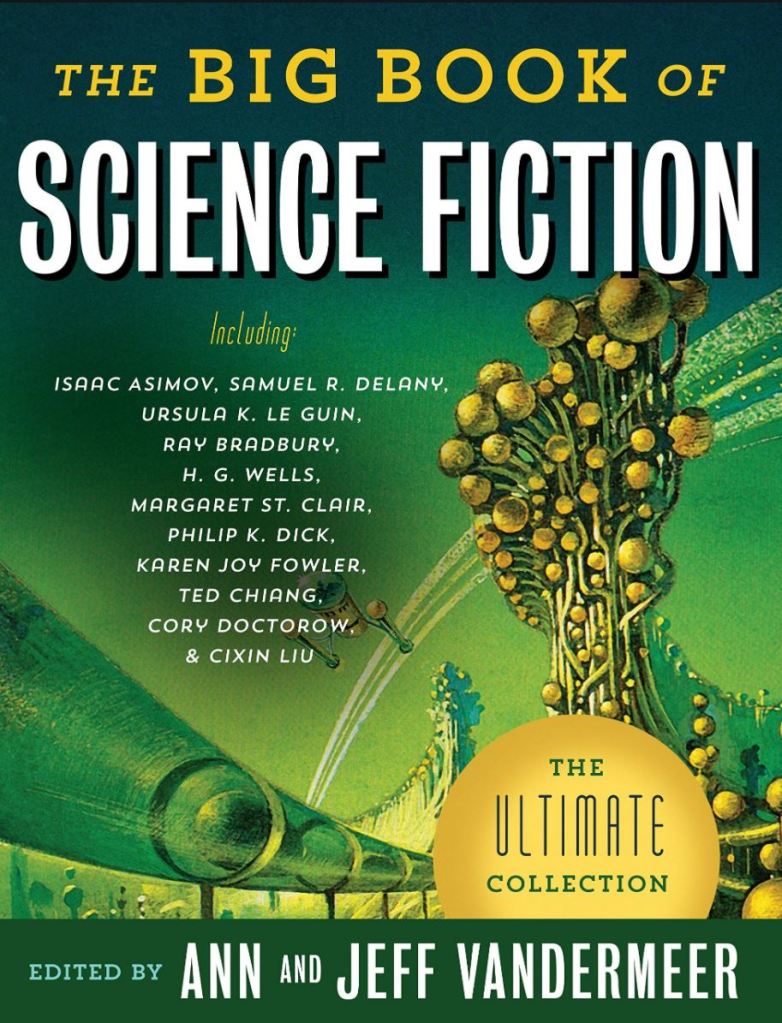


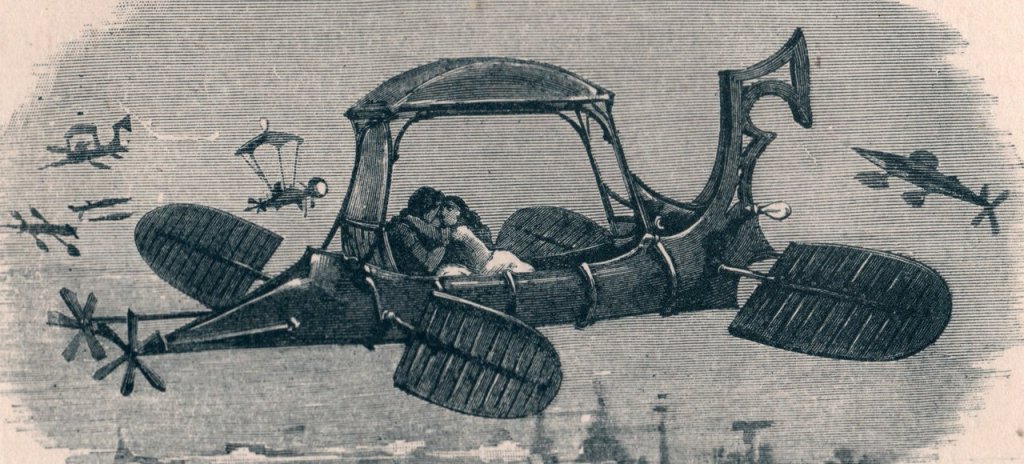


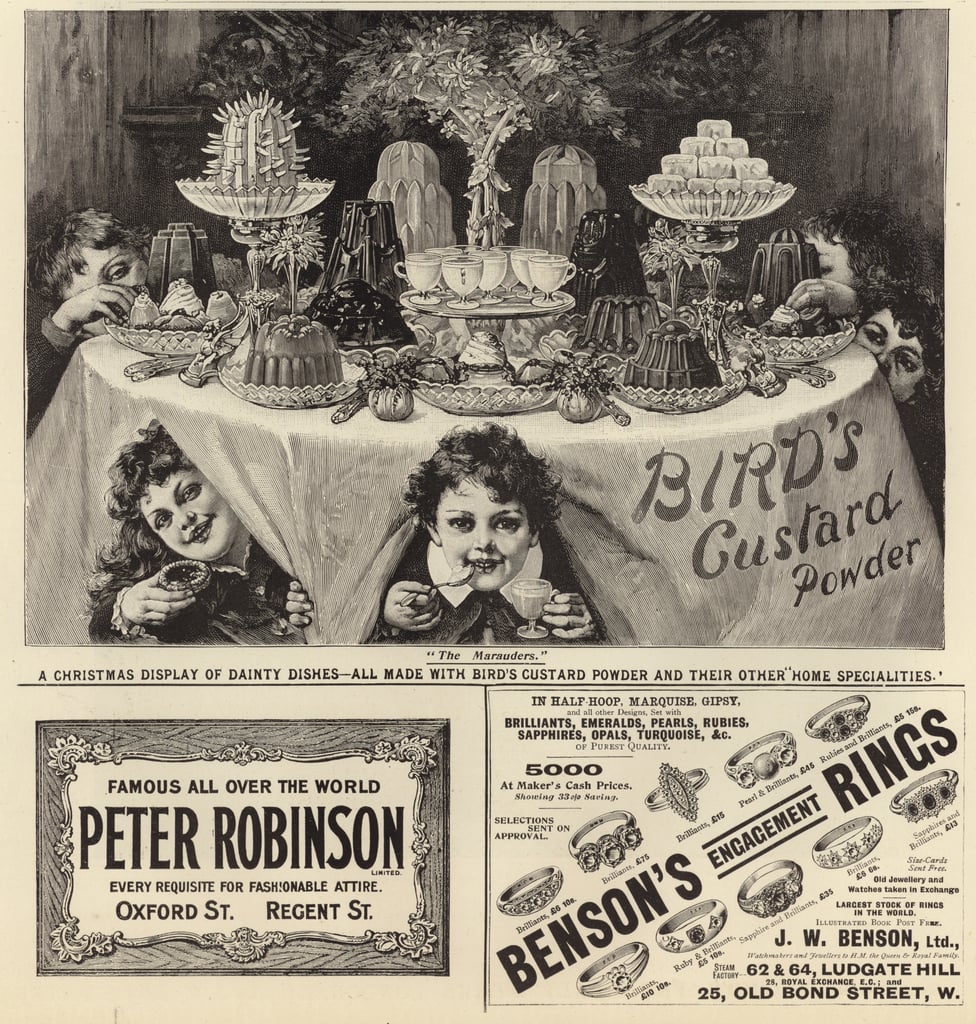




 Classics of Science Fiction