“What Have I Done?” by Mark Clifton

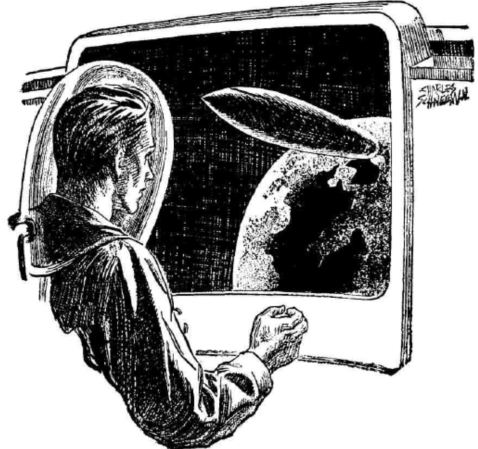
What Have I Done by Mark CliftonOne of the side-effects of reading through all the annual best-science-fiction-of-the-year anthologies is discovering new writers. Well, new to me. I believe all the writers I’ve encountered so far from 1939-1952 are now dead. Often this spurs me to research these forgotten SF authors, which tends to lead to learning more about the history of the genre.

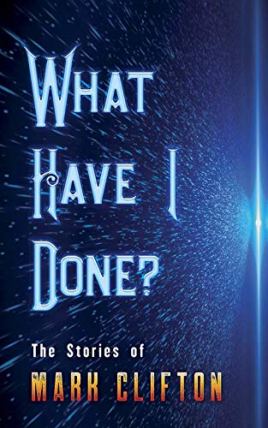
I keep stumbling over little forgotten classics of short science fiction. Today I read “What Have I Done?” by Mark Clifton in The Great SF Stories 14 (1952) edited by Isaac Asimov and Martin H. Greenberg. This oft reprinted story first appeared in the May 1952 issue of Astounding Science Fiction. It May of 2020, it will be reprinted in What Have I Done? – The Stories of Mark Clifton. You can read the title story by itself here.

Clifton died in 1963, so his career in science fiction was just over a decade. In 1955, he did win a Hugo for best novel that he co-wrote with Frank Riley, They’d Rather Be Right. It is probably the least known, often the most disliked of all the Hugo winning novels, and somewhat controversial – see Miles Schneiderman’s “They’d Rather Be Right: Getting it Wrong.” Evidently, some fans felt the novel won because of a pro-Scientologist vote.

“What Have I Done?” is the only story by Mark Clifton I remember reading, although I once bought a copy of Eight Keys to Eden but didn’t get into it. I now feel I need to try it again. Since it’s available at LibriVox I’ll give it a listen.

“What Have I Done?” is a fine little story that tickled my sense of science fiction, interesting enough to write about, and to make me want to read more Mark Clifton. For such an unknown writer Clifton did get eight works into our citation database. Clifton’s claim to fame was the psychological insight into characters he got from being a personnel manager. Clifton claimed to have interviewed over 200,000 people. (I find that hard to believe – let’s say a 20-year career, meaning 10,000 people per year, divided by a work-year containing 250 days, means 40 people a day. That’s too many to handle.)

I also have a problem writing about these old stories. To explain why I find them worthy of recommending means revealing spoilers. Odds are, most readers reading this essay won’t track a story down unless I make them sound uber-enticing, but to do that I have to give away details.

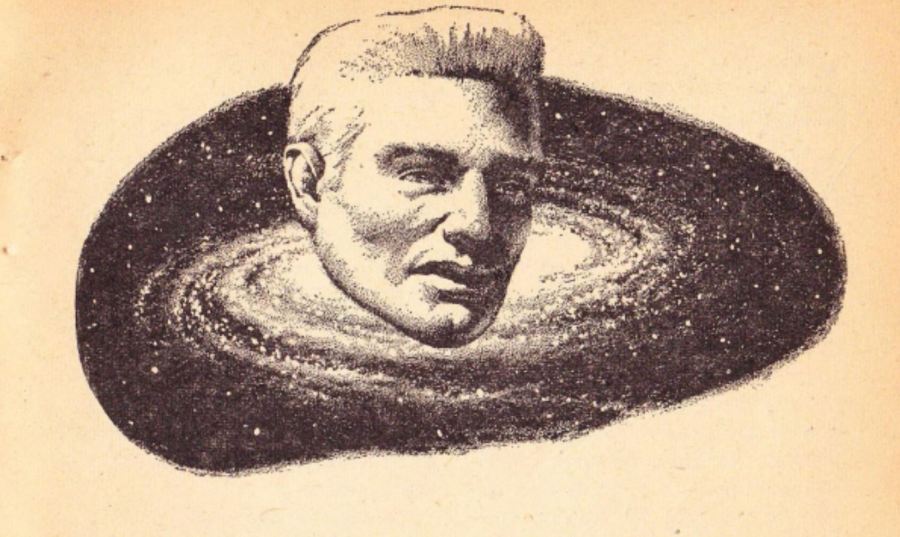
The basic setup in “What Have I Done?” involves an unnamed psychologist for an employment office interviewing a man whom he quickly decides is not human. Notice how Clifton’s biography works into the story. When his fictional alter-ego confronts the guy the alien asks:

"Where did I fail in my test?" he asked. His lips formed a smile which was not a smile—a carefully painted-on-canvas sort of smile.

Well, I'd had my answer. I'd explored something unique, all right. Sitting there before me, I had no way of determining whether he was benign or evil. No way of knowing his motive. No way of judging—anything. When it takes a lifetime of learning how to judge even our own kind, what standards have we for judging an entity from another star system?

At that moment I would like to have been one.. of those space-opera heroes who, in similar circumstances, laugh casually and say, "What ho! So you're from Arcturus. Well, well. It's a small universe after all, isn't it?" And then with linked arms they head for the nearest bar, bosom pals.

I had the almost hysterical thought, but carefully suppressed, that I didn't know if this fellow would like beer or not. I will not go through the intermuscular and visceral reactions I ex­perienced. I kept my seat and maintained a polite expression. Even with humans, I know when to walk carefully.

"I couldn't feel anything about you," I answered his ques­tion. "I couldn't feel anything but blankness."

He looked blank. His eyes were nice blue marble again. I liked them better that way.

There should be a million questions to be asked, but I must have been bothered by the feeling that I held a loaded bomb in my hands. And not knowing what might set it off, or how, or when. I could think of only the most trivial.

"How long have you been on Earth?" I asked. Sort of a when did you get back in town, Joe, kind of triviality.

"For several of your weeks," he was answering. "But this is my first time out among humans."

"Where have you been in the meantime?" I asked. "Training." His answers were getting short and his muscles began to fidget again.

"And where do you train?" I kept boring in.

As an answer he stood up and held out his hand, all quite correctly. "I must go now," he said. "Naturally you can cancel my application for employment. Obviously we have more to learn."

I raised an eyebrow. "And I'm supposed to just pass over the whole thing? A thing like this?"

He smiled again. The contrived smile which was a symbol to indicate courtesy. "I believe your custom on this planet is to turn your problems over to your police. You might try that." I could not tell whether it was ironic or logic.

At that moment I could think of nothing else to say. He walked out of my door while I stood beside my desk and watched him go.

Well, what was I supposed to do? Follow him?

I followed him.

This isn’t a major idea for a science fiction story, not in 1952, but it gets better. For one thing, the psychologist reads science fiction. That has a recursive feel that delights me. Second, it’s important to remember that 1952 was during the early days of the flying saucer craze. If people believe aliens were hot-rodding around the skies, why not wonder if they were applying for jobs. Plus, this is Clifton’s first science fiction story, and he sold it to the legendary John W. Campbell. Campbell loved to discover new writers, but he also wanted to shape them to follow his personal philosophy. Campbell was a species-ist. He believed his writers should not show aliens being superior to humans. And Clifton’s aliens were way superior to us. How can Clifton pull off an ending that pleased Campbell? He does, but the icing on the cake is how Clifton ultimately outwits Campbell too (I think). Explaining the ending will be up to you. Are humans really superior?

This might be far-fetched, but I wonder if “What Have I Done?” also applies to Clifton letting himself be coopted by Campbell. Or is that some bullshit I’m giving out to get you to read the story?

JWH


The Year’s Best Short Science Fiction: 1951

1951

It’s been almost six months since I covered the science fiction short stories for 1950. Bleiler and Dikty added a new annual for 1951, Year’s Best Science Fiction Novels — but by that, they mean novellas. It took me a while to track down all three volumes and read them. These annuals are getting expensive on the used market. The Bleiler/Dikty volumes are running $40-75 in the low range with a dust jacket, and the Asimov/Greenberg paperbacks $10-20. I get the feeling there are more old SF fans like me going back and rereading these old best-of-the-year anthologies.

Here are the stories Bleiler and Dikty picked in 1952 for the best of 1951:

  • “. . . And Then There Were None” – Eric Frank Russell
  • “Appointment in Tomorrow” – Fritz Leiber
  • “At No Extra Cost” – Peter Phillips
  • “Balance” – John Christopher
  • “Brightness Falls From The Air” – Idris Seabright
  • “Dark Interlude” Mack Reynolds & Fredric Brown
  • “Extending the Holdings” – David Grinnell
  • “Flight to Forever” – Poul Anderson
  • “Generation of Noah” – William Tenn
  • “The Hunting Season” – Frank M. Robinson
  • “Izzard and the Membrane” – Walter M. Miller, Jr.
  • “The Marching Morons” – C. M. Kornbluth
  • “Men of the Ten Books” – Jack Vance
  • “Nine Finger Jack” – Anthony Boucher
  • “Of Time and Third Avenue” – Alfred Bester
  • “The Other Side” – Walter Kubilius
  • “A Peculiar People” – Betsy Curtis
  • “The Pedestrian” – Ray Bradbury
  • “The Rats” – Arthur Porges
  • “Seeker of the Sphinx” – Arthur C. Clarke
  • “The Tourist Trade” – Wilson Tucker
  • “The Two Shadows” – William F. Temple
  • “Witch War” – Richard Matheson

Then in 1985 Isaac Asimov and Martin Greenberg picked these stories as the best of 1951:

  • “A Pail of Air” – Fritz Leiber
  • “Angel’s Egg” – Edgar Pangborn
  • “Breeds There a Man–” – Isaac Asimov
  • “Dune Roller” – Julian May
  • “The Fire Balloons” – Ray Bradbury
  • “I’m Scared” – Jack Finney
  • “The Marching Morons” – C. M. Kornbluth
  • “Null-P” – William Tenn
  • “Pictures Don’t Lie” – Katherine MacLean
  • “The Quest for St. Aquin” – Anthony Boucher
  • “The Sentinel” – Arthur C. Clarke
  • “Superiority” – Arthur C. Clarke
  • “Tiger by the Tail” – Alan E. Nourse
  • “The Weapon” – Fredric Brown
  • “With These Hands” – C. M. Kornbluth

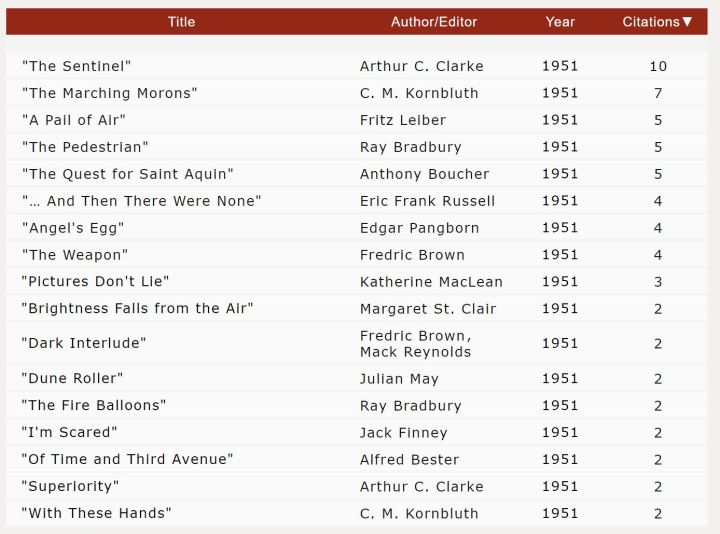
I’ve bolded the single overlap, “The Marching Morons.” Then the current 2020 version of The Classics of Science Fiction Short Stories list only has one story having a minimum of 8 citations to make the list: “The Sentinel” by Arthur C. Clarke. But here’s all the stories in our database with at least 2 citations:

Classics of Science Fiction Short Stories 1951

1951 didn’t produce a lot of famous science fiction short stories. Many are familiar to me, but I don’t know about modern, younger science fiction fans. “The Quest for St. Aquin” was voted into the first volume of The Science Fiction Hall of Fame. And “The Marching Morons” and “… And Then There Were None” were voted into The Science Fiction Hall of Fame Volume 2A that was for novellas. And “The Sentinel” is famous because it was the original seed for 2001: A Space Odessy.

Last year I listened to “… And Then There Was None” by Eric Frank Russell when the audiobook of Science Fiction Hall of Fame Volume 2A came out. I thought it okay. At the time it triggered a fond memory. I had two science fiction reading buddies in high school, Jim and George. I remember a day when George told us two Jims about this humorous science fiction story. He was very excited about it and wanted us to read it. Well, it took over fifty years for me to bump into “… And Then There Was None.” This year, when I reread it, it was a good deal funnier. I’m finally getting why George was so amused. It would make a great film because of how colorful Russell had his characters dress and act. And Eric Frank Russell is growing on me.

Each year, I’m becoming more and more impressed with Fritz Leiber. I liked rereading “The Pedestrian” by Ray Bradbury, but it wasn’t as good as I remembered it when I first read it in high school. I was so taken with Peter Phillips “At No Extra Cost” that I reviewed and reprinted it. I was also very impressed by “Angel Egg” by Edgar Pangborn and started collecting his books. And of course, “The Quest for St. Aquin” is a masterpiece that deserves to be remember as a classic. And I liked “Izzard and the Membrane” so much that I gave it its own review.

That’s the thing about all these stories, they are being forgotten, and that makes me sad.

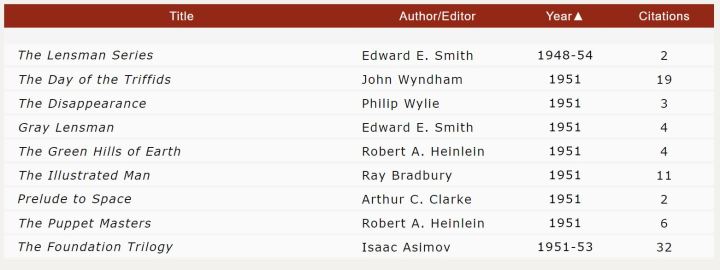
I started reading science fiction short stories systematically with 1939 and I had looked forward to getting to 1951 because that was the year I was born. I had hoped to discover it was a spectacular year for science fiction. It didn’t produce many notable novels either, except for The Day of the Triffids, The Illustrated Man, and Foundation.

The Classics of Science Fiction 1951

Here’s a list of all the short stories and novels in our database with at least one citation for 1951. Short stories are in double-quotes, and novels are in italics.

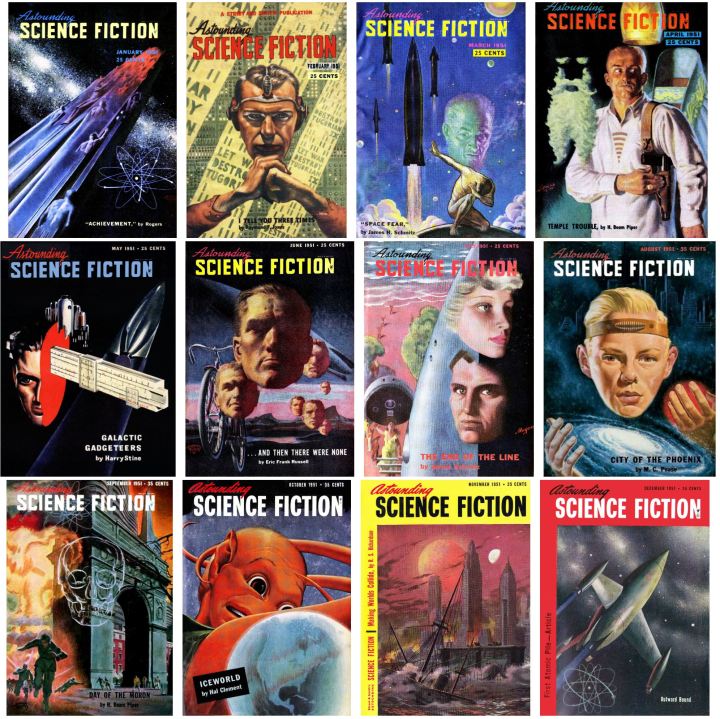
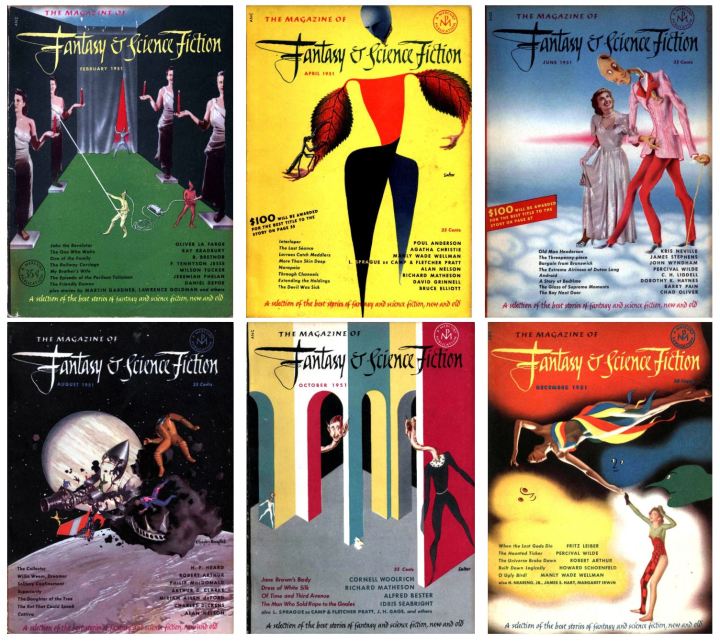
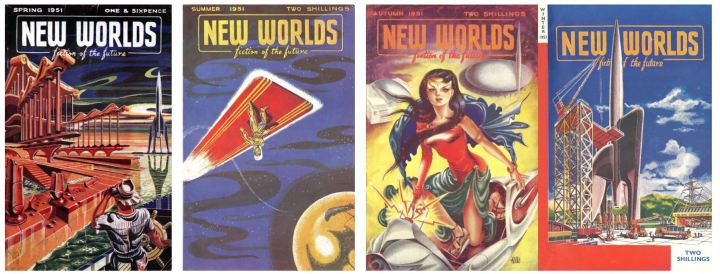
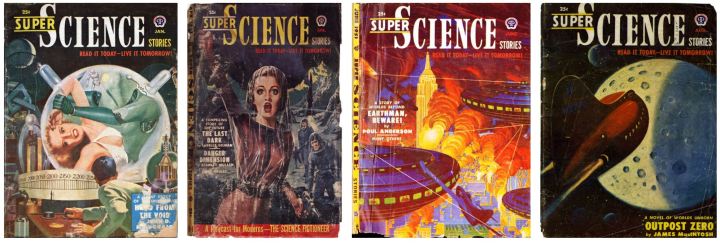
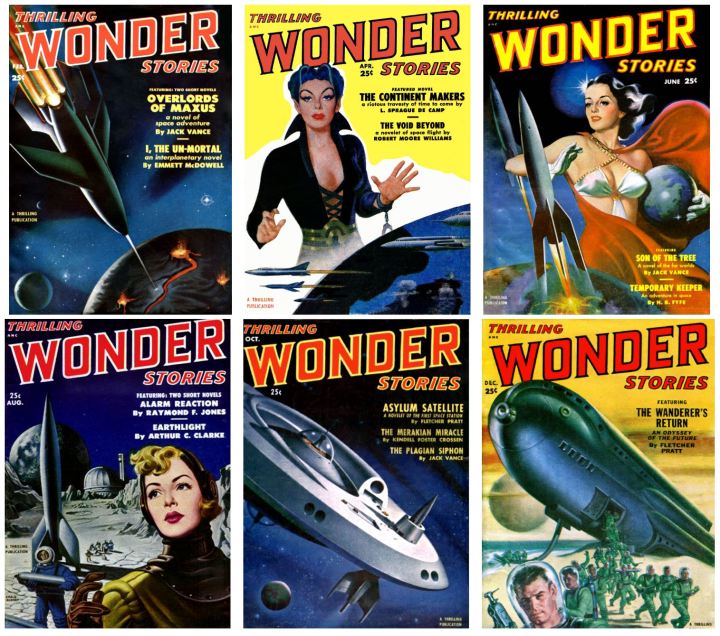
The early 1950s was a boom time for magazine science fiction. I believed the boom peaked in 1953 with some forty SF titles on the newsstands. Here are some of the covers to remember 1951 by:

Astounding 1951

F+SF 1951

Galaxy 1951

Startling Stories 1951

New Worlds 1951

Super Science Stories 1951

Thrilling Wonder Stories 1951

Imagination 1951

I was disappointed that my birth year 1951 wasn’t a giant year in science fiction, but I get the feeling times are improving and the 1950s are going to produce some great stories. The variety of writing styles and themes have been expanding since the late 1940s. I’m not sure why the 1940s are considered the Golden Age of Science Fiction and the 1950s the Silver Age. As I read through each year it feels like science fiction is getting better and better.

James Wallace Harris, 1/29/20


Can Science Fiction Predict the Future?

“Izzard and the Membrane” by Walter M. Miller, Jr. first appeared in the May 1951 issue of Astounding Science Fiction. Follow the link to read the story online because it’s unlikely you’ll have access to it in an anthology. What a shame. I read it in Year’s Best Science Fiction Novels: 1952 edited by Everett F. Bleiler and T. E. Dikty, but that anthology is rather hard to find. I can’t believe “Izzard and the Membrane” hasn’t been reprinted more often. In his review, Alec Nevala-Lee says it’s one of his ten favorite science fiction stories of all-time.

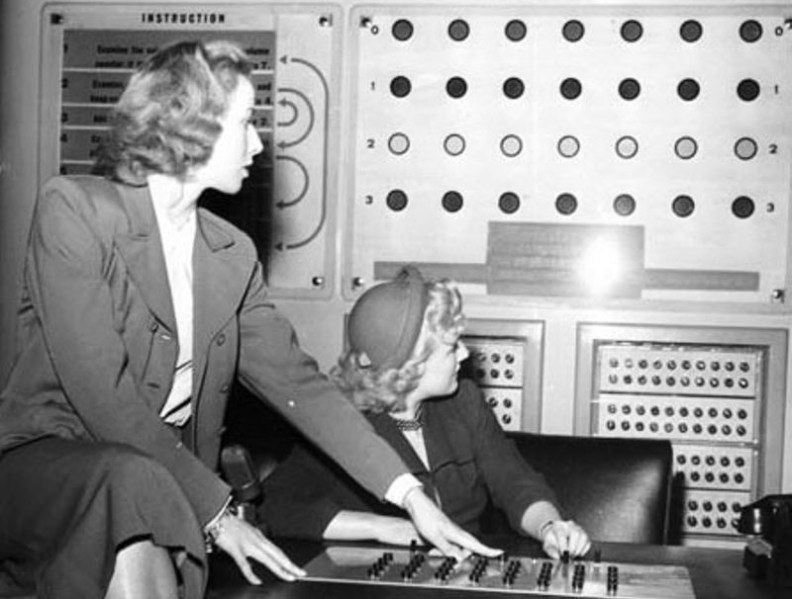
I thought “Izzard and the Membrane” a top story for 1951, but not necessarily a classic. I don’t want to describe any of its plot details because of spoilers. The reason why the story grabbed my attention is it’s an early tale of an emergent AI, downloading consciousness, and maybe even artificial reality. As Nevala-Lee points out, very few science fiction stories predicted the impact of computers or the internet. Izzard is an intelligent being inside a cold war military computer. I was born in 1951 and that was the first year that commercial computers were sold. It was also the year that Alan Turing imagined the Turing Test. Wikipedia says artificial intelligence was founded as an academic discipline in 1956, but I don’t know how early people were talking about the concept. 1951 was also the year Nimrod, an early computer game was shown to the public. (See photo at top.) (Computer games were imagined in SF even less than AI.)

I suppose Miller could have been a widely-read man who knew about computers. Evidently, Miller was trained as an engineer, and during WWII a radioman and a tail gunner. He got into writing and screenwriting in the 1950s. Is it that hard to imagine intelligence emerging out of computers? I don’t think so. I think its a much bigger jump to imagine our minds being recorded into computers, especially in 1951. There are two other far-out creations in “Izzard and the Membrane” that I don’t want to spoil the story. I found them less exciting because they were too far out for me, even though one of them has gotten very popular in science fiction in recent years.

Walter M. Miller, Jr. was never a prolific writer but wrote a number of SF stories in the 1950s, three of which were made into his famous fix-up novel A Canticle for Liebowitz. David N. Samuelson has a good overview of Miller and his work in Science Fiction Studies.

What I want to explore is Miller’s effort to imagine the future. We know science fiction writers can’t predict the future. That they aren’t seers with crystal balls. But some science fiction writers can close their eyes, take what they know, and extrapolate ideas into a story that years later feels like some kind of insight into the future. Most early science fiction was about space travel. I’d say the second most popular theme was either robots or utopias/dystopias. Computers have shown up regularly but mostly after they were invented, but not before. At least as far as I know — except for one surprising exception — “The Machine Stops” by E. M. Forster. This 1909 novelette imagined a world run by a machine, with people using it to communicate with each other. It essentially imagines blogging, networking, Wikipedia, among other aspects of our cyberworld. It’s very eerie to read today.

A Logic Named Joe” by Murray Leinster also feels like a prophecy. With “The Machine Stops” and “A Logic Named Joe” readers didn’t hear The Twilight Zone theme music until the internet was created. If I had read “Izzard and the Membrane” in the 1960s when I first started reading science fiction I wouldn’t have thought much about it. Of course, if I had read it after reading Heinlein’s 1966 novel, The Moon is a Harsh Mistress I would have thought Miller had beat Heinlein to the punch and been impressed. But Izzard was never the charming character as Mike.

“Izzard and the Membrane” only becomes really fascinating when it’s placed within the context of science fiction that explores the same theme. It makes me believe we’re asking the wrong question and should ask: “Can science fiction predict future science fiction?”

  • 1909 – “The Machine Stops” by E. M. Foster
  • 1946 – “A Logic Named Joe” by Murray Leinster
  • 1951 – “Izzard and the Membrane” by Walter M. Miller, Jr. 
  • 1957 – They’d Rather Be Right by Mark Clifton and Frank Riley
  • 1960 – Vulcan’s Hammer by Philip K. Dick
  • 1961 – A For Andromeda by Fred Hoyle and John Elliot
  • 1966 – Colossus by D. F. Jones
  • 1966 – The Moon is a Harsh Mistress by Robert A. Heinlein
  • 1968 – 2001: A Space Odyssey by Arthur C. Clarke
  • 1968 – Stand on Zanzibar by John Brunner
  • 1972 – When HARLIE Was One by David Gerrold
  • 1979 – Hitchhikers Guide to the Galaxy by Douglas Adams
  • 1981 – “True Name” by Vernor Vinge
  • 1984 – “Press Enter _” by John Varley
  • 1989 – Hyperion by Dan Simmons
  • 1992 – Galatea 2.2 by Richard Powers
  • 2009 – Wake by Robert Sawyer
  • 2013 – Her, a film by Spike Jonze
  • 2015 – Ex Machina, a film by Alex Garland
  • 2016 – We Are Legion (We Are Bob) by Dennis E. Taylor

These are the other science fiction stories I’ve read over my lifetime that dealt with computers that could think, or people downloaded into computers. I’m sure there are others I’ve read, but I can’t remember them for now, and even more, than I haven’t.

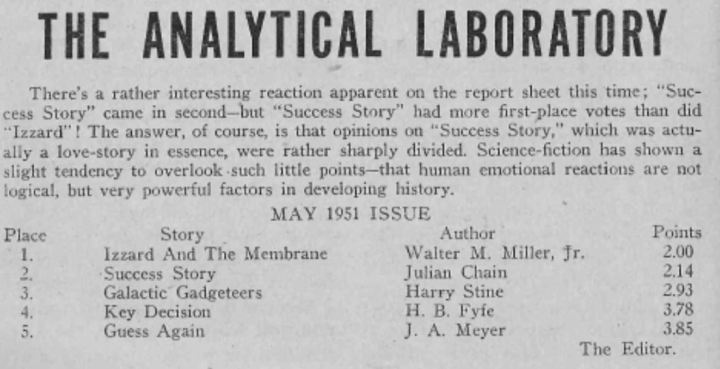
When you know all these stories, Miller’s story becomes more impressive. “Izzard and the Membrane” came in first in the August’s Analytical Laboratory, but Campbell reports the second-place story had more first-place votes. If it had been a major story with readers it would have had a score closer to 1.00.

Analytical Labortory

I couldn’t find any letters in Brass Tacks that praised the story, and there’s very little about it on the internet today. The story was never collected into one of Miller’s short story collections. It does appear to be Miller’s second published SF story, so maybe he didn’t think it very good.

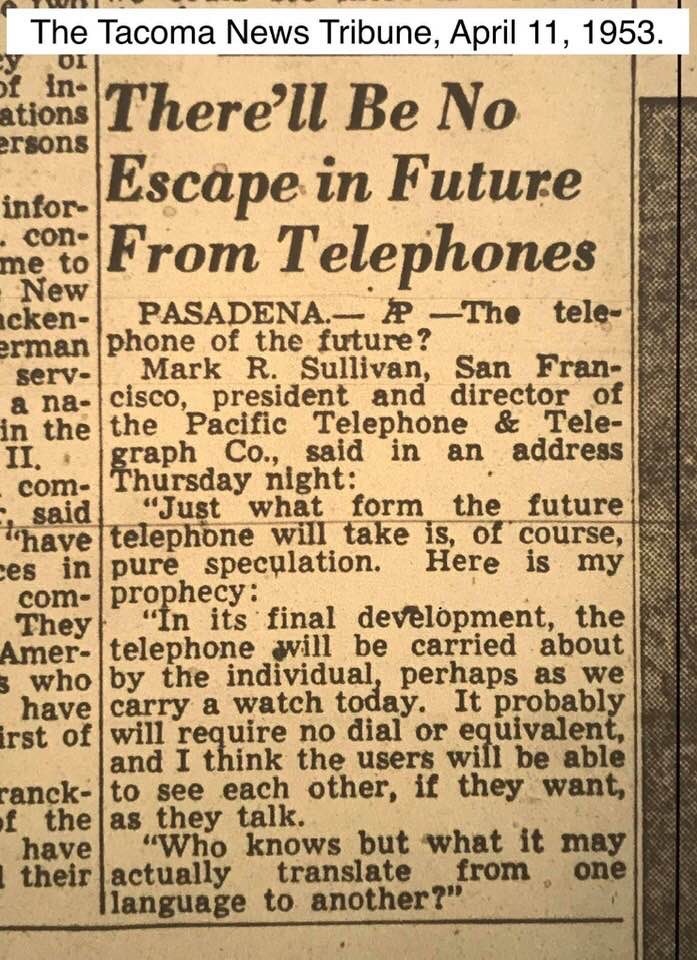
I don’t think science fiction ever comes close to predicting the future. Look at this news clipping. Sounds very prophetic, doesn’t it?

2020-01-21 07.35.55

Well, here’s a 1952 newsreel about Dick Tracy’s wrist radio. How much imagination does it take to imagine what Mark R. Sullivan imagines above?

Was the 1966 communicator in Star Trek really that far out? What science fiction stories had Walter M. Miller read that inspired “Izzard and the Membrane?” Where did Chester Gould get his idea for a wrist radio? The more I study the past, the most I see the present in it. If we read about a cellphone in Shakespeare we would think him a time traveler. Before Marconi, was anyone talking about radio communication? There are powerful seers in this world, but they don’t see into the future but into the nature of reality.

If I wrote a story about life in 2100 and readers found it to be much like their times, it would not be a prediction or a lucky accident. Whatever I wrote that resonates with the future would have to exist right now. If my story was about the collapse of the United States due to climate change and many of the story elements become similar to what will happen it could only be because I could see those elements happening now. Even if I imagined an alien coming to Earth and saving us from ourselves and that really happened, could I claim any more credit than Jesus or Klaatu?

If science fiction didn’t exist, we still would have gone to the Moon. If AI emerges out of complex computers it won’t be because of science fiction. I’m beginning to wonder just how much science fiction intersects with reality. I used to think science-fictional ideas were seeds that grew. Now I’m wondering if science fiction isn’t just weird holographic reflections of reality.

James Wallace Harris, 1/25/20

Brave New World by Aldous Huxley

Brave New World by Aldous Huxley

I first read Brave New World in high school back in the sixties. Rereading it again in 2020 reveals that it was entirely over my teenage head. I doubt I got even 5-10% of Aldous Huxley’s satire. Although I expect high school and college students of today have both the education and pop-culture savvy to understand it better than I did, it’s really a novel to read after acquiring a lifetime of experience. When I first read Brave New World I was already mass consuming science fiction so it was competing with shiny gosh-wow sense-of-wonder science fiction. I remember liking Brave New World in places, especially the free sex and Soma, but I thought the story somewhat boring and clunky.

This time I discovered why it’s a masterpiece. Listening to Michael York’s wonderful audiobook narration also revealed innovative prose that I would have missed with my tone-deaf inner voice. I can’t recommend the audiobook edition highly enough. York also revealed places where Huxley was experimenting with quick scene cuts, maybe influenced by the recent talkies when he was writing in 1931.

There’s no reason to summarize Brave New World because Wikipedia has done a superb job. What we need to explore is why this literary science fiction story is still worth reading after 88-years, when nearly every other science fiction novel from the 1930s is almost forgotten today. Looking at the Classics of Science Fiction list shows only five books from the 1930s making our list, and all five were from England:

  • 1930 – Last and First Men by Olaf Stapledon
  • 1932 – Brave New World by Aldous Huxley
  • 1935 – Odd John by Olaf Stapledon
  • 1937 – Star Maker by Olaf Stapledon
  • 1938 – Out of the Silent Planet by C. S. Lewis

Of course, damn few science fiction books had hardback editions in the 1930s. Brave New World had 30 citations we considered assembling the list:

  1. 1949 – The Seventeen Basic SF Titles – Arkham Sampler
  2. 1952 – Astounding Magazine, the Twenty-Eight All-Time Best SF Books
  3. 1956 – Astounding Magazine, The Twenty-Six All-Time Best SF Books
  4. 1974 – Modern Science Fiction edited by Norman Spinrad
  5. 1976 – The World of Science Fiction by Lester Del Rey
  6. 1976 – Anatomy of Wonder, 1st Edition by Neil Barron
  7. 1977 – “A Basic Science-Fiction Library” from The Road to Science Fiction by James Gunn
  8. 1984 – The Science Fiction Source Book edited by David Wingrove
  9. 1987 – Anatomy of Wonder: A Critical Guide to Science Fiction, 3rd Edition by Neil Barron
  10. 1994 – The Ultimate Guide to Science Fiction by David Pringle
  11. 1996 – “North American College Courses in Science Fiction, Utopian Literature, and Fantasy” edited by Arthur B. Evans
  12. 2002 – Strictly Science Fiction: A Guide to Reading Interests by Diana Tixier Herald and Bonnie Kunzel
  13. 2003 – The Cambridge Companion to Science Fiction edited by Edward James and Farah Mendlesohn
  14. 2004 – Anatomy of Wonder: A Critical Guide to Science Fiction, 5th Edition by Neil Barron
  15. 2009 – 1000 novels everyone must read (science fiction section)
  16. 2011 – NPR Top 100 Science-Fiction, Fantasy Books
  17. 2011 – Internet Top 100 SF/Fantasy List
  18. 2012 – Locus Poll Best 20th Century Science Fiction Novels
  19. 2012 – AbeBooks: 50 Essential Science Fiction Books
  20. 2016 – Radium Age Sci-Fi: 100 Best Novels of 1904-1933 by Josh Glenn
  21. 2016 – Goodreads Best Science Fiction 100
  22. 2016 – Ranker: The Greatest Science Fiction Novels of All Time
  23. 2016 – Amazon: 100 Sci-Fi & Fantasy Books to Read in a Lifetime
  24. 2016 – Gunn Center for the Study of Science Fiction: A Basic Science Fiction Library
  25. 2016 – Goodreads Best Science Fiction & Fantasy 200
  26. 2016 – Best-Sci-Fi-Books: 31 Best Literary Science Fiction Books
  27. 2016 – Sci-Fi Lists Top 200 – the novel
  28. 2019 – Worlds Without End: Most Read Books of All-Time
  29. 2019 – The Best Sci-Fi Books of All Time – Penguin Random House
  30. 2019 – 100 Best Sci-Fi Books of All Time – Reedsydiscovery

Brave New World is also considered among the top literary novels of the 20th-century. The Greatest Books site calculates it’s the 67th greatest book of all-time from using these lists:

  1. 5th on The Modern Library | 100 Best Novels (Modern Library)
  2. – 15th on Waterstone’s Books of the Century (LibraryThing)
  3. – 16th on Radcliffe’s 100 Best Novels (Radcliffe Publishing Course)
  4. – 21st on Le Monde’s 100 Books of the Century (Le Monde)
  5. – 24th on Koen Book Distributors Top 100 Books of the Past Century (themodernnovel.com)
  6. – 31st on 50 Books to Read Before You Die (Complex)
  7. – 32nd on 100 Essential Books (Bravo! Magazine)
  8. – 44th on 20th Century’s Greatest Hits: 100 English-Language Books of Fiction (Larry McCaffery)
  9. – 53rd on The 100 Greatest Novels of All Time: The List (The Observer)
  10. – The 100 Best Books in the World (AbeBooks.de (in German))
  11. – 100 Best Novels Written in English (The Guardian)
  12. – 50 Books to Read Before You Die (Barnes and Noble)
  13. – The College Board: 101 Great Books Recommended for College-Bound Readers (http://www.uhlibrary.net/pdf/college_board_recommended_books.pdf)
  14. – 1001 Books You Must Read Before You Die (The Book)
  15. – 100 Novels That Shaped Our World (BBC)
  16. – The New York Public Library’s Books of the Century (New York Public Library)
  17. – 110 Best Books: The Perfect Library (The Telegraph)
  18. – The New Lifetime Reading Plan (The New Lifetime Reading Plan)
  19. – The Book of Great Books: A Guide to 100 World Classics (Book)
  20. – From Zero to Well-Read in 100 Books (Jeff O’Neal at Bookriot.com)
  21. – The Graphic Canon (Book)
  22. – 50 Books That Changed the World (Open Education Database)
  23. – The 100 Greatest Books Ever Written (Easton Press)
  24. – Select 100 (University of Wisconsin-Milwaukee)

Okay, so it’s made it to a lot of best-books lists, why is it great? Brave New World is still very readable, very relevant, and a classic example of a dystopian (anti-utopian) novel. But it’s tricky. Where Nineteen Eighty-Four is about a world where people are cruelly treated by the government, in Huxley’s story the government tries to do everything possible to make people happy.

Brave New World is about three men who aren’t happy, Benard Marx, Helmholtz Watson, and John, also called “the Savage.” They should be happy because what they want is offered, they just won’t accept it. In the World State of 2540AD (632AF – after Ford) everyone is either given what they want or conditioned to want what they have. Huxley takes the free love movement of the early 20th-century and has people conditioned from birth to have lots of sex without feeling guilty or the need to be possessive. Every class is eugenically conditioned to like their job. Any kind of unhappiness, anxiety, or depression is quickly fixed. Regular participation in orgies and encounter groups is expected for normal mental health. And a recreational drug with no side-effects is socially acceptable and encouraged. Each class is rewarded with all kinds of stimulating activities and vacations. Work hours are short but long enough to give people purpose, and free time is generous.

In other words, it’s easy to be deceived while reading this book. It’s like in The Matrix when you have the choice between the blue and red pill. The steak tastes just as juicy and delicious in the delusional reality, so why not take the blue pill?

The ending of the novel is horrifyingly tragic but I’m guessing most readers will think that wouldn’t happen to them. But here’s the kicker, it should. Huxley felt we were all being seduced by the technological world and scientific success. In the late 1950s, he wrote Brave New World Revisited where he said the future he feared was arriving much quicker than he expected. I can only imagine his reaction to 2020.

Aldous Huxley and Brave New World are hard to decode. If Huxley was defending traditional values he certainly didn’t live them. Regarding sex and drugs, he lived like his characters in Brave New World. The World State in this story has solved all the political problems we face today, so it’s weird to read it as a dystopia. And Mustapha Mond sounds like a wise and compassionate leader. We have to worry that Brave New World is a Siren’s call.

I remember thinking when I first read this book as a teenager that it was too clinical and antiseptic. Babies were born in bottles, and everyone wore matching clothes to identify their class. And people learned pop jingles that taught them social values. It was scary to think everyone was brainwashed to be happy. But the actual story is much more subtle and sophisticated.

The $64,000 question is why is this old science fiction novel so successful, respected, and remembered when the 1930s science fiction of Edmond Hamilton, “Doc” Smith, John W. Campbell, Jack Williamson faded away? Their space operas spoke to a very tiny readership. Huxley’s book is about universal human problems, the same problems we face today. When I was young space fantasies were important to me, but they mean little today. Now I worry about climate change and Donald Trump and try to imagine a government that will save us from conservative selfishness. How we live, and how we’re governed will always be a universal interest to readers.

Reading Brave New World, or any of the books considered the Top 100 Books of All Time should be of special interest to would-be writers. What percentage of the population does your story speak to?

James Wallace Harris, 1/10/2020


“Centaurus II” by A. E. van Vogt

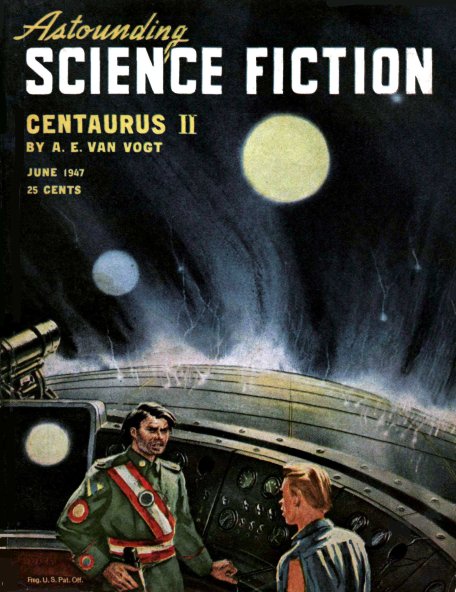
Centaurus II by A. E. van Vogt - cover Astounding June 1947

Let’s try to imagine what the average person thought about space travel in 1947 when “Centaurus II” first appeared in the June issue of Astounding Science Fiction. It’s author, A. E. van Vogt was one of the top science fiction writers of that day. The term science fiction wasn’t wildly known in the 1940s, and only a microscopic portion of the population read it. Science fiction had a small place in the funny papers, comics, radio, and movie serials, but the average American thought of space travel as that “Crazy Buck Rogers stuff.” And if you’ve ever seen a Buck Rogers or Flash Gordon serial you’d know most people would have thought it pretty damn silly. Science fiction was not taken seriously, and older fans talked about hiding their science fiction magazines so no one would see them.

By 1947, most people knew about the V-2 rockets launched against London during the war. A few might have known about the American rocket scientist Robert Goddard and the captured German rocket scientist Werner von Braun. It was still years before popular magazines in the 1950s would present plans to travel to the Moon and Mars for the general public to consider, and another decade before Sputnik and the creation of NASA.

For the most part, it was only the Astounding Science Fiction readers who really believed in the final frontier. The other science fiction magazines of the 1940s published mostly space fantasies for teenage males, on par with Buck Rogers and the comics. They were 100% fantasy and 0% scientific. John W. Campbell Jr. and some of his writers were true believers in space exploration. Campbell wanted his writers to imagine realistic possibilities, and in that sense, “Centaurus II” is a worthy consideration.

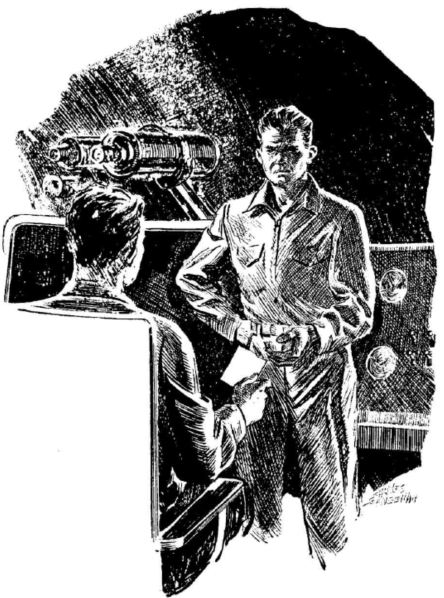
Centaurus II - p32-33

Van Vogt assumed faster-than-light travel was not possible for “Centaurus II,” so he used the idea of a generation ship to get to the stars. Nor did he consider suspended animation. Actually, he had already written the classic “Far Centaurus” in 1944 which imagined slower-than-light travel using suspended animation, with the kicker of faster-than-light spaceships being invented after the slower-than-light ship left for Centaurus so that when it arrived it met a colony of evolved humans.

“Centaurus II” is much more realistic and I wonder why? Did the atomic bombs and V-2s sober van Vogt up to consider interstellar travel without the fantastic super-science of older science fiction? Every story has to have conflict and most of the conflicts in the generation ship stories we’ve been discussing involve fantastic plot twists. “Centaurus II” stays down-to-Earth all the way to the stars.

Here’s our reading list with links to the stories we’ve read so far:

There have been seven decades and four generations since the 1940s, and science fiction seems to have changed in every decade, and the expectations of the future have changed with each new generation. Readers reading “Centaurus II” today will probably feel it as silly as an old Buck Rogers serial, but if you squint at this story just right, you’ll realize that van Vogt took his speculative fiction deadly seriously.

Centaurus II - p11

One of the benefits of focusing our reading on a single theme is discovering how a science-fictional theme evolves and changes. “Universe” from Robert A. Heinlein in 1941, which we haven’t read yet, is probably the most famous generation ship story. In it, the crew forgets the mission and believes the entire universe is the ship. Van Vogt has his crew always remember the mission, and the plot conflict is about how the captaincy is passed on.

Van Vogt does something else that’s very realistic. His ship arrives at star after star only to discover their planets are either uninhabitable or occupied. Each captain must ruthlessly push on against mutineers who want to return to Earth. In nearly all the generation ship stories we’ve read, those born in transit often rebel against their predefined role in life. They can’t understand why they weren’t born on Earth, an obvious place for humans, and they resent their crew assignments.

Generation ship stories written in the last decade would have crews knowing their planetary conditions because of our growing knowledge of exoplanets. Science fiction writers in the 2020s will probably imagine a future where all the nearby planets are well studied, maybe even by early robotic probes, before sending a generation ship to visit them. When I was growing up in the 1960s we never imagined we could detect exoplanets, so science fiction still pictured space explorers only learning about distant solar systems after they arrived.

In “Centaurus II” van Vogt has crew work positions handed down from father to son, this creates several of the story’s conflicts. Sadly, van Vogt wasn’t visionary enough to imagine women having significant roles in a starship. I didn’t understand why the jobs weren’t shared. Wouldn’t it be wise if everyone knew something about every shipboard task in case something happens to any of the crew? Plus, they had all the time in the world to learn stuff. By the 1950s John Brunner imagined a woman in command of the generation ship, and women crew members having equal opportunity. It’s a shame van Vogt couldn’t imagine generation ships with more enlightened gender roles and class structures.

What I really liked about “Centaurus II” are the first contacts. Van Vogt imagines alien aliens, with the human explorers barely comprehending their close encounters. In system after system, the crew finds exotic planetary environments unsuitable for human habitation, and sometimes those unearthly worlds produce weird aliens. But their captains don’t make first contacts like Kirk or Picard who open a channel and immediately converses with strange new life forms. Van Vogt has his humans meet up aliens only at a distance without using language. This made me imagine European explorers dealing with Native Americans for the first time.

Another interesting aspect of van Vogt’s story is it doesn’t involve a Prime Directive. But in all the cases the humans worried the aliens were the British and they were the Australian aborigines. In the 1940s van Vogt, Heinlein, and other science fiction writers often feared running into advanced aliens. In Heinlein’s first interstellar novel, Methuselah’s Children, he has his humans encountering aliens so advanced that meeting them in person drove men insane. His ship turned around to run back to Earth with its tail tuck between its fins. Editor John W. Campbell didn’t like the idea of superior aliens, so by the 1950s humans were running all over the galaxy and winning all their king-of-the-hill fights. Heinlein started claiming Homo sapiens were the toughest species in the galaxy, but just a decade earlier he wasn’t so cocky.

It’s interesting how for a while in the 1940s science fiction writers did consider we’d meet aliens that outclassed us intellectually. It’s also interesting that the UFO fad started in the late 1940s. The public, for the most part, wasn’t thinking about humans going to the stars, but a growing number of Earthlings feared being invaded from space. And quite often they thought the aliens would have godlike powers.

Science fiction has always been an inconsequential form of entertainment that sometimes took itself seriously. Would we have ever gone to the Moon if science fiction had not existed? That’s hard to say. The concept of generation spaceships was invented by scientists in the 1920s who read Jules Verne. So which came first, science fiction or science?

For most of my life, I believed we could build a generation ship if we tried. Obviously, van Vogt and all the later science fiction writers believed that too. With every science fiction story, a different consideration about generation ships was considered. However, in 2020 I’m having my doubts. Collectively, we lack the will to get to Mars. No one wants to pony up the money. Sure, Elon Musk claims he will, and I hope he succeeds, but I have my doubts. And I’m not sure going to Mars is the right next step.

How many rockets did it take to build the International Space Station? Certainly, a generation ship would have to be at least a 1,000 times more complex, maybe even a 1,000,000 times. Launching all those rockets from Earth won’t be practical. To me, the only practical solution for building a space-faring economy is to create a self-sustaining colony on the Moon. The Moon should become the shipyards for spaceships.

All the generation ship stories we read so far suggest that Earth built them. In 2020, I’m trying to think ahead like van Vogt did in 1947. I assume in the next 30 years we’ll have Earth and spaced based telescopes that will discover all the nearby planets, and we’ll be able to analyze their atmospheres. Any generation ship we send out will know a whole lot about its destination before it even launches. That solves half the fictional problems van Vogt imagines. I also assume we’ll send probes ahead of human crewed missions. It’s funny, but science fiction never spent much time speculating on unmanned probes and satellites.

In 2020 I assume future interplanetary and interstellar probes would contain AI minds or AI robots. Because of such speculation, the need for generation ships dwindles. We’re now seeing science fiction stories that imagine robotic probes that build humans from DNA printers when they reach a suitable destination. That would also invalidate the need for generation ships. However, I don’t know if such DNA printers are really possible. Science fiction has a habit of inventing super-science technology that turns out to be fantasy, like FTL spaceships.

Anyone writing science fiction in the 2020s should consider the fate of van Vogt’s story in light of seventy years of real science. Why didn’t science fiction writers in the 1940s imagine giant telescopes? Or women’s equality? Or the breakdown of social classes. In all the generation ship stories we’ve read so far, none of them stay in communication with Earth. Why?

“Centaurus II” has two sequels and all three were combined to create the fix-up novel, Rogue Ship.

I’m looking forward to reading generation ship stories from the 1970s, 1980s, 1990s, 2000s, and 2010s. I’m hoping for some real surprises. To read our past reviews see Generation Ships in Science Fiction.

Centaurus II - p18

James Wallace Harris, 1/9/2020


Ascension – Generation Ship TV

I am very late to this science fiction mini-series about a generation ship, but this isn’t a TV review. I’m one of several bloggers who are reviewing science fiction short stories about generation ships. Because Ascension falls into this subgenre, I thought I’d discuss it too, comparing it to what we’ve been reading. For links to our previous short story reviews, see:

Generation Ship in Science Fiction

Warning, I’m going to give spoilers. Ascension first appeared in the U.S. on SyFy in 2014 and only lasted six 43-minute episodes. I had to buy it on Amazon Prime for $7.99, where it’s sold/viewed in three double-episodes. The show is no longer being streamed anywhere I can find. I don’t recommend buying it unless you’re like me and want to see how the series handles the generation ship concept. It includes all the common issues of a generation ship story. It could have been a great series, but they spoil it with a bunch of crappy conflicts and pitiful plot twists. But I still enjoy watching it.

I sprang for Ascension because it promised to be about a spaceship built around 1963, so the original crew members were stuck in that pop-culture milieu. I figured it would be Mrs. Maisel in space. Unfortunately, except for very few tech items, such as a couple of 1950s TV sets showing old TV shows, the people dressed and acted like modern fantasy Americans. The plot starts out about the first murder after voyaging 50 years but quickly develops into standard soap-opera of powerplays and sex between beautiful Hollywood-humans. I will give Ascension credit, it does go through many of the basic ideas we’ve been reading about in generation ship short stories.

Of the stories we’ve read, some have the crew forgetting they are on a starship, and with other stories, they know, but they have been brainwashed for various reasons to adapt to the long voyage. In Ascension, everyone knows about the mission. And like several of the stories we’ve read, the ship born crew resent being forced into a role they didn’t select. In this miniseries, young people go through a psychological breakdown akin to a mid-life crisis in their teens when they realize what they missed from living on Earth, and learning they probably won’t live to see a new world. The murder is related to a terrorist resenting their lack of future.

Like several of the old pulp stories, Ascension breaks ship-board society into classes. Workers live on the lower decks, and the elites live on the upper decks in luxury. I thought this was totally bogus. The premise is in the Kennedy Whitehouse era scientists feared the total destruction of the Earth by atomic war so they built a spaceship base on Project Orion. This is a way-cool idea. All the crew should have been fighter pilot astronauts and the best and the brightest scientists. Unfortunately, in 1963 the women would have been wives and mothers. However, the creators of Ascension ruin this show with too much modern technology and anachronistic humans. Some of it is disguised, like really thick tablet computers, but much of what the characters do in the show wasn’t anything like 1963 people, their speech, their habits, their fashion, their make-up, their furniture, or their gadgets. People from 1963 would have been racist, sexist, and homophobic, and that’s not the case in the show. Girls are used as shipboard spies, where one woman controls power with their sexual favors, and that’s definitely 1963 sexist.

I wonder if Hollywood feels the need to make TV shows with standard chords like pop music creators feel compelled to always use the same four chords to get hit sounds. Ascension feels like too many other TV shows. Watch this video to see what I mean.

I have to wonder if the screenwriters of  Ascension had read “Thirteen to Centaurus” by J. G. Ballard because the first big plot twist is the generation ship has never left Earth. The crew believes they’ve been traveling for fifty years on what they believe is a one-hundred-year voyage to Alpha Centauri. Instead, they’re part of a giant psychological experiment. Unfortunately, Ascension doesn’t have a clever spy aboard the ship that leaves every night like Ballard had, and it’s child genius isn’t as good either. Well, it does have the spy but he isn’t that essential to the plot.

I wished that Ascension had been Mrs. Maisel/Mad Men in space, and the show was actually about fifty years into a real space mission using 1963 technology. That’s the one porcupine I was willing to swallow. The crew would not have had videos to watch, and maybe not even video cameras. They certainly wouldn’t have had MRI scans or tablet computers. Realistically, they would have been all WASPs, probably hung-up on Christianity, and the women would have had limited job roles in their society.

Actually, it would have been an interesting tale philosophically if Ascension had used the fake starship plot, but everyone in the ship acted like 1963 Americans, while their handlers were 21st-century Americans. It would have been a reverse Star Trek. Morality plays about how we differ from ourselves 55 years ago.

I’m still waiting for a generation ship story to really get it right. For some reason, they all have a gimmick, and Ascension was no different. They all hint at the problems crews would face living on such a long-term mission, but they never get into those problems, at least not with finesse and real characterization. I guess I wish Alice Munro or Margaret Atwood would write a human interest story about life on a generation ship with the realism of NASA space science.

James Wallace Harris, 1/1/20