Science Fiction Times They Are a-Changin’


Change 2

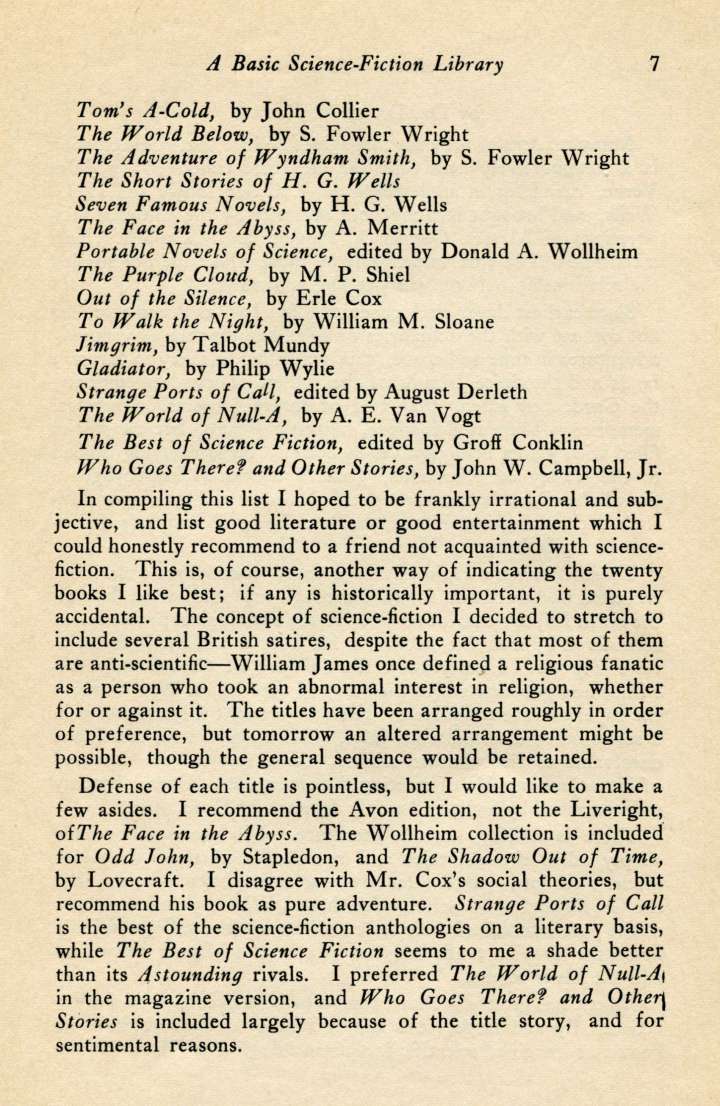
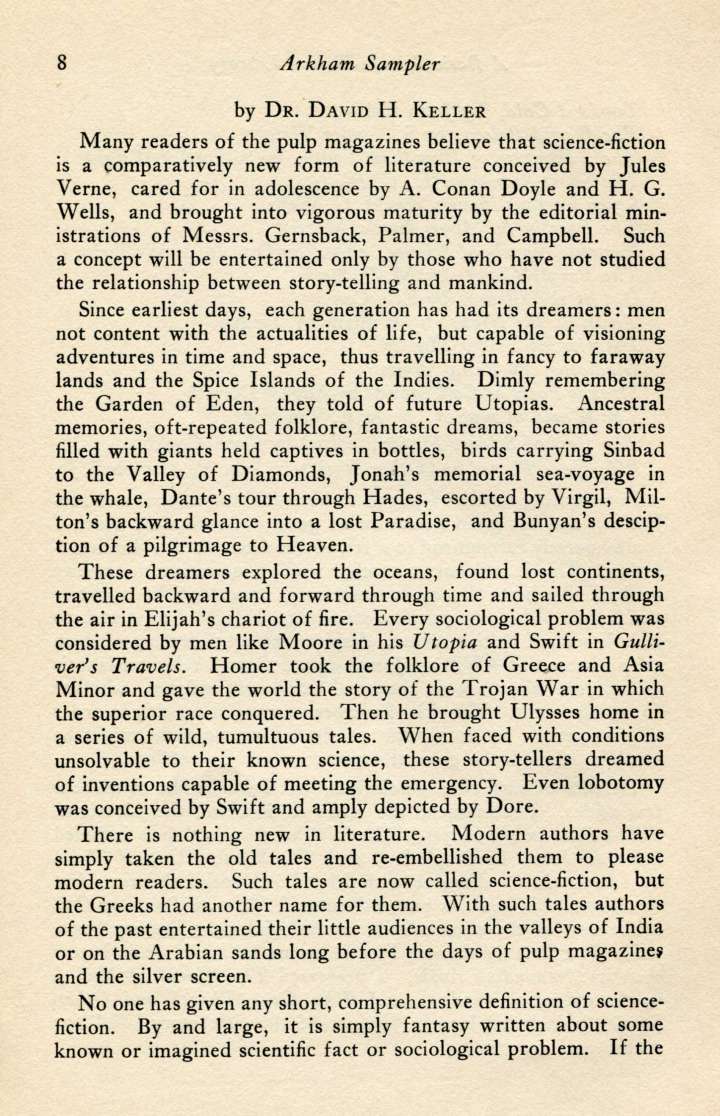
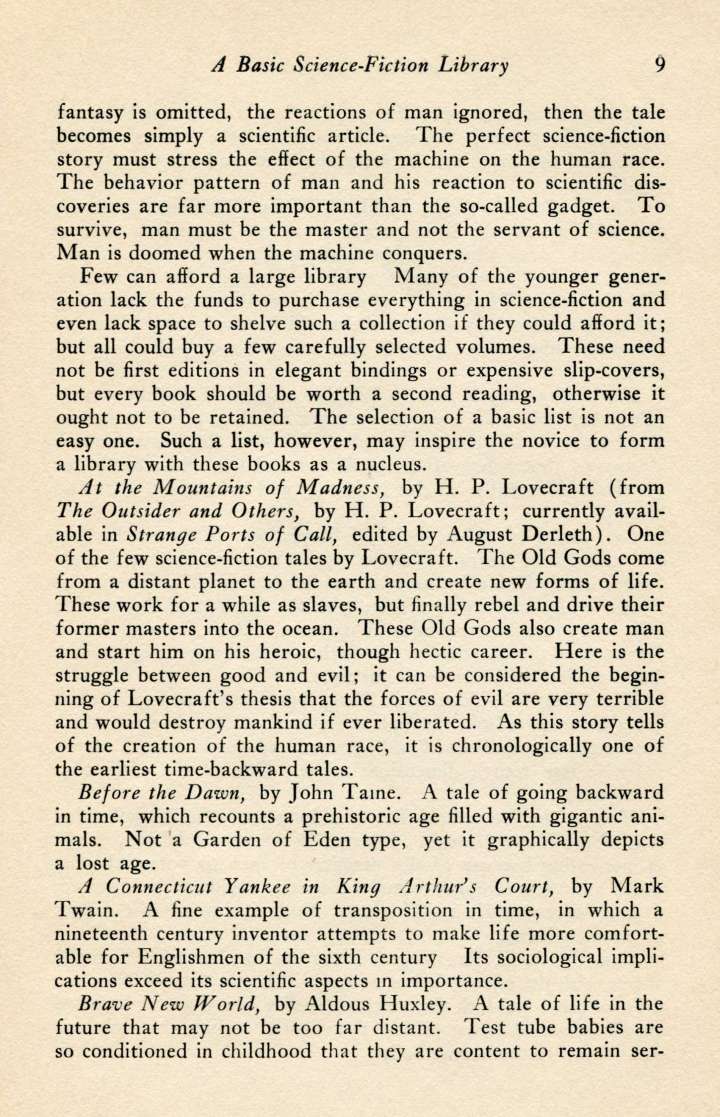
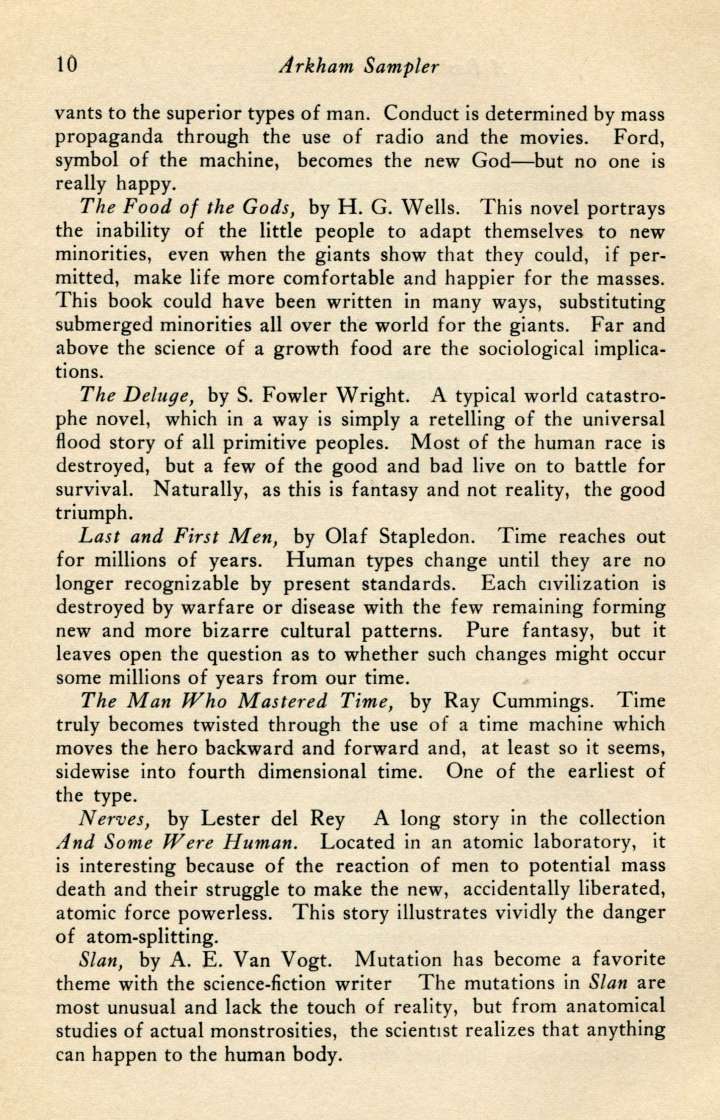
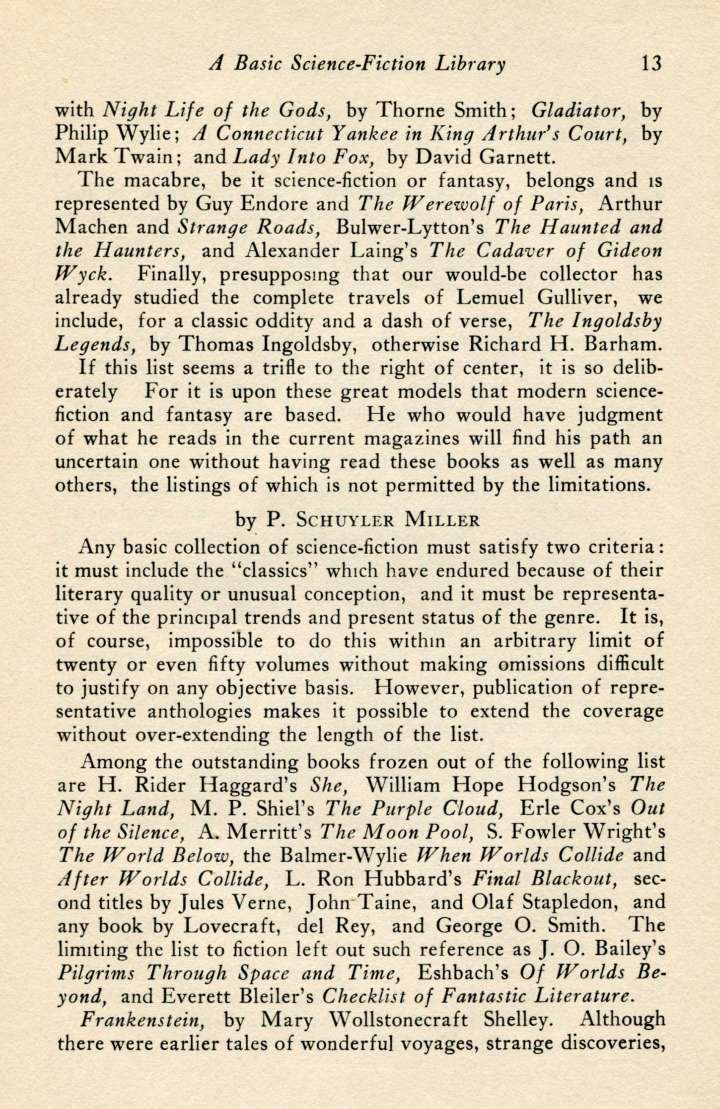
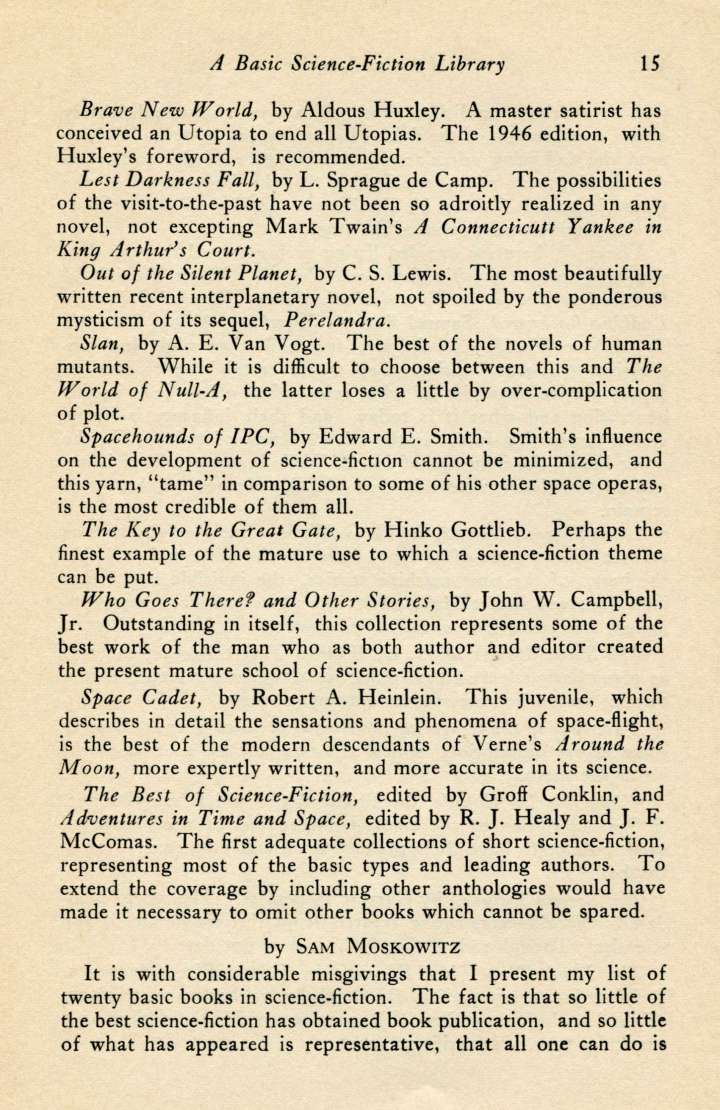
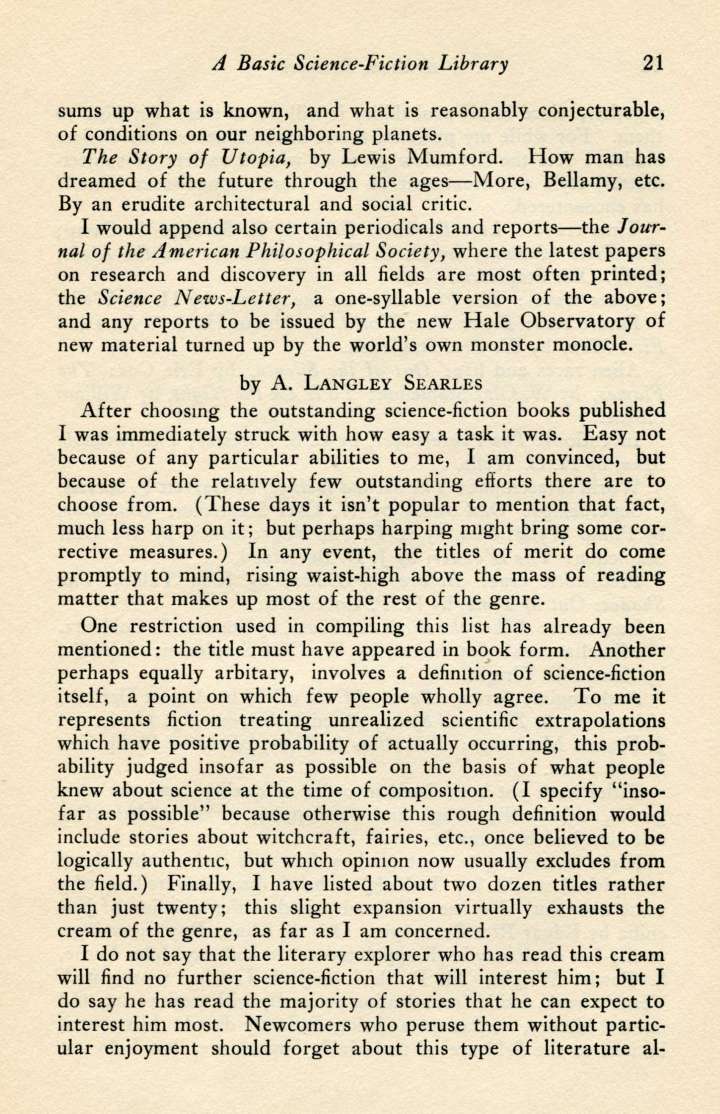
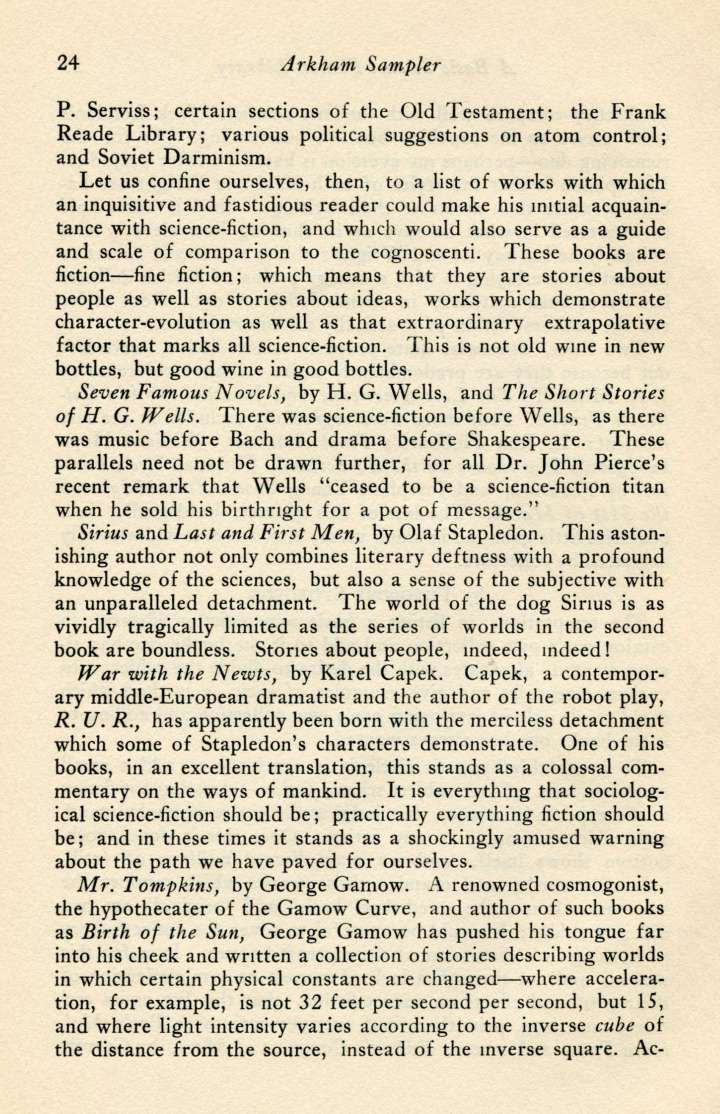
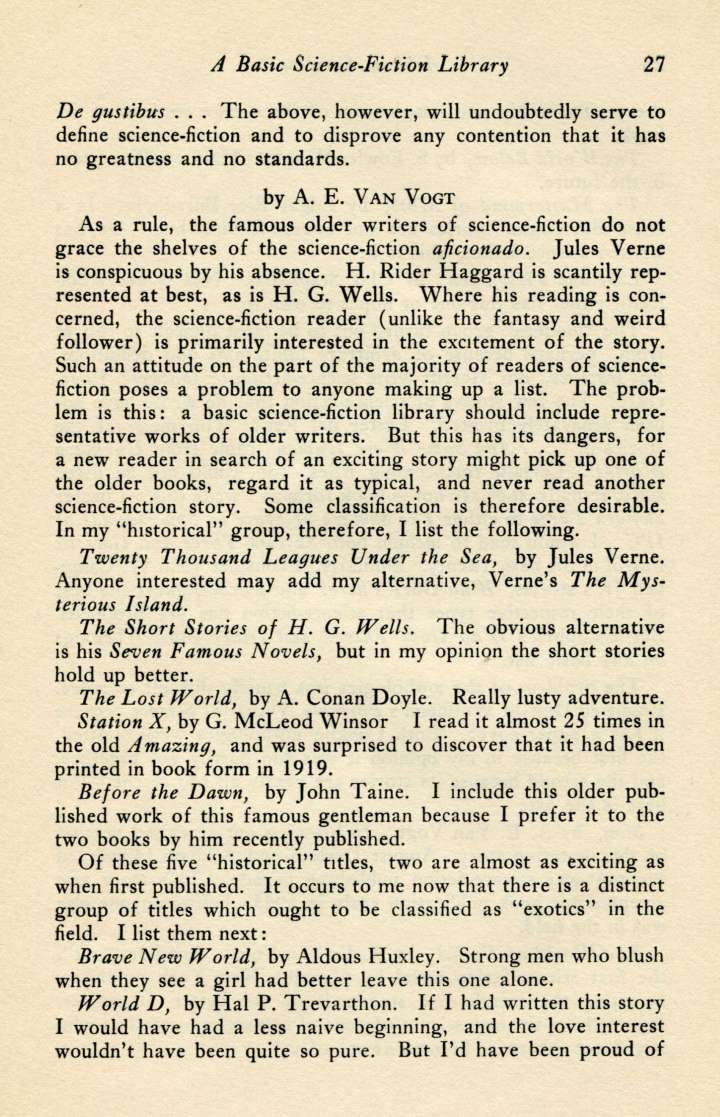
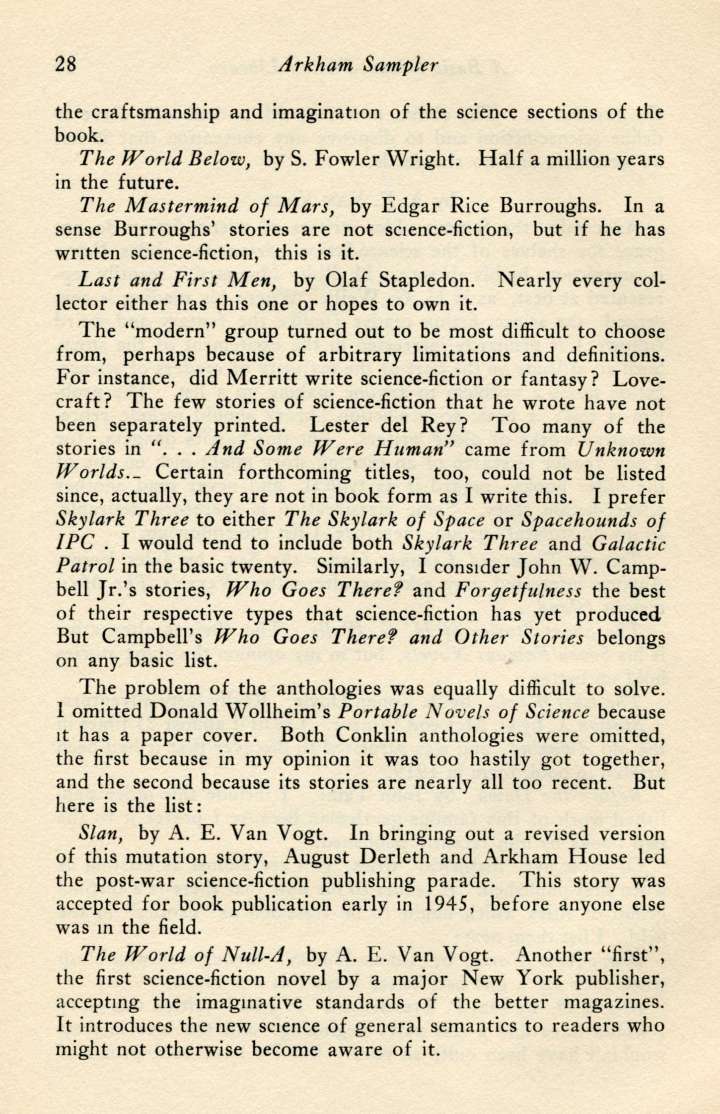
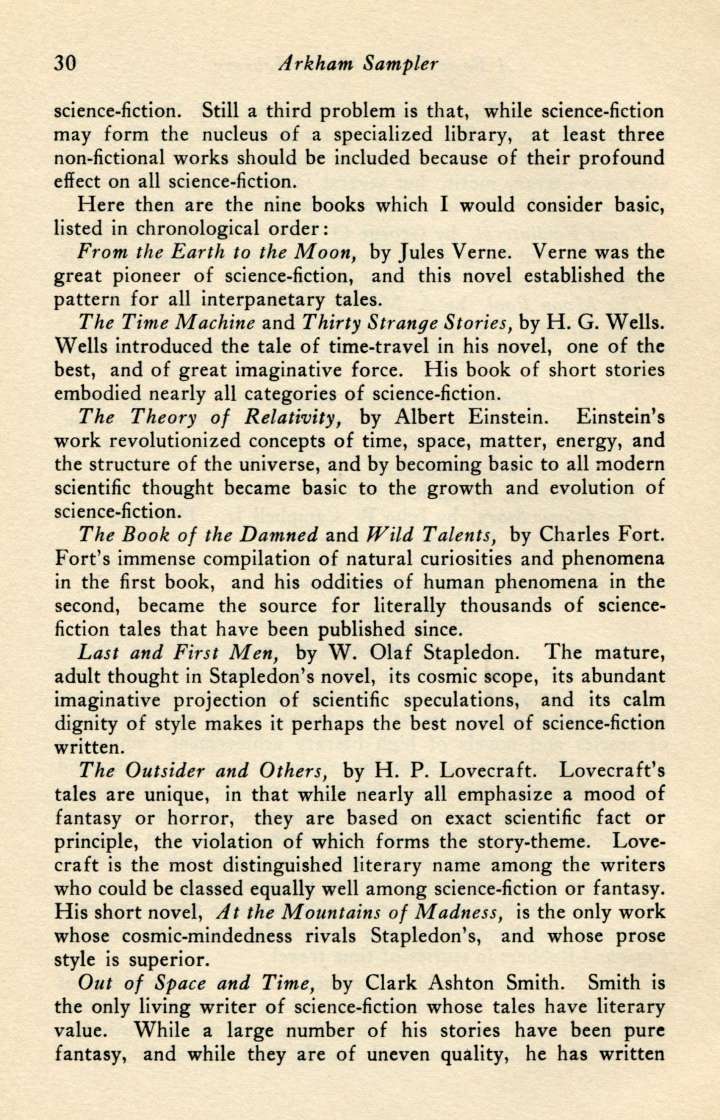
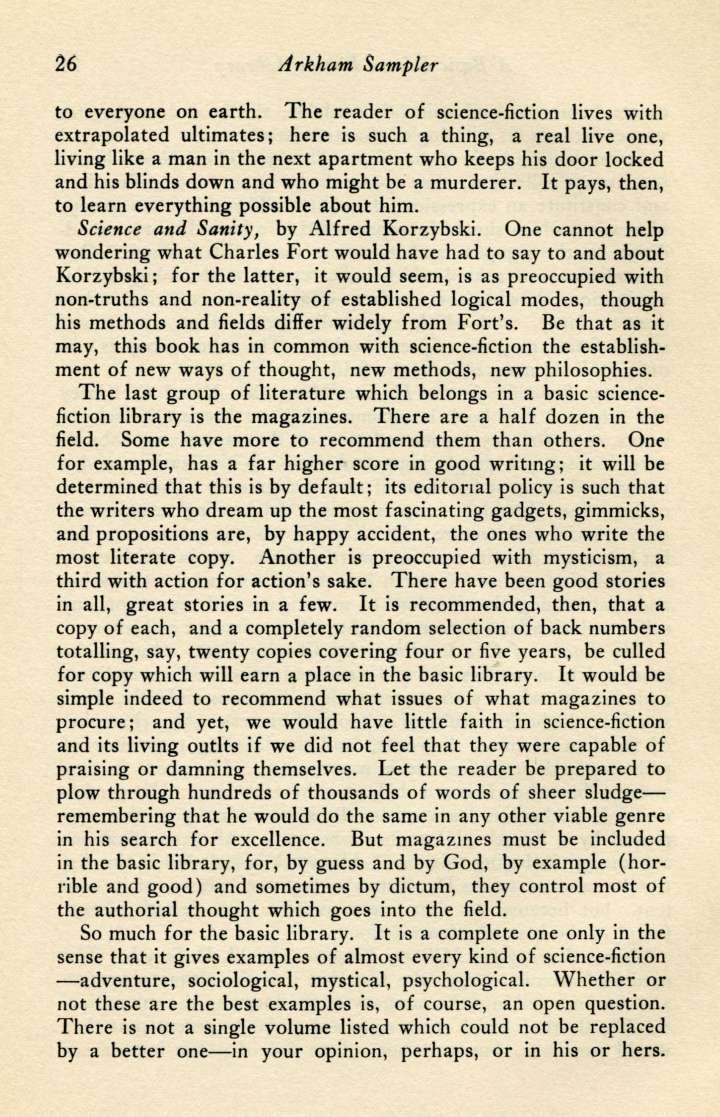
I’ve been looking at lists of people’s favorite science fiction stories since I started reading science fiction in the 1960s. Sometimes I agree with their choices, other times I don’t. The interesting thing about these lists is they change over the generations. Just study all the lists we use as our citation sources for the Classics of Science Fiction. The oldest list we use is from a 1949 issue of the Arkham Sampler. (Full article reprinted below or read the entire issue here.) One of the top titles was Out of the Silence (1925) by Earle Cox, a title I haven’t even heard of before, much less seen or read. Of course, people back in 1949 couldn’t have voted for The Fifth Season by N. K. Jemisin, but if you study the list, they also didn’t vote for very many books recent to 1949 either. Our favorite books tend to be slightly older books.

It’s my theory that each generation bonds with certain science fiction books in the same way people bond with the pop music they grow up with during their teens and early twenties. However, there is a slight time lag for books. We don’t discover books as timely as we do hit songs. We seem to find them by word-of-mouth, awards, film adaptions, etc. So new books can be from this year, this decade, or even a little before that.

It’s not that each new generation doesn’t discover the favorite reads from older generations or eventually read books from younger generations, but there’s a time-span lump of books we claim for our generation. The Catcher in the Rye is a good example.  Like Baby Boomers favoring Classic Rock, I favor Classic Science Fiction from the 1950s and 1960s. In my generation, Heinlein/Clarke/Asimov were The Beatles of science fiction, but they’re no longer the Big Three for Sci-Fi readers today.

As I’ve gotten older I’ve watched later generations grow up and imprint on different science fiction. Sure, some of their parents might have influenced them to read Classic Science Fiction, but for the most part, each new generation embraces its own books to represent the concept of science fiction. The current generation of science fiction fans seems particularly rebellious against my generation and earlier.

The other day I caught a video on YouTube that made me think it was a Gen-X list of science fiction classics. (If you don’t want to watch the video the list of books is in the comments.)

The creator of this video goes by the handle of Moid Moidelhoff and is 45, making him a Gen-Xer. I’ve read 52 of his Top 100 books, and many of those are my favorites too, and classics to my generation. Moid loves books I haven’t read by authors I haven’t tried – Banks, Reynolds, and Hamilton. I liked his list enough to add it to our citation sources. (By the way, it ended up being only 99 because we list The Foundation Trilogy as a single book and he selected two of the volumes.) His Top 100 list pushed two books onto the Classics of Science Fiction list – Consider Phlebas (1987) by Iain M. Banks and The Time Traveler’s Wife (2003) by Audrey Niffenegger.

It currently takes 12 citations to get on our final classics list, and these two titles only had 11 citations before I added his Top 100. Over time we up the minimum number of citations required to get on the final list, which pushes some books off the list. If you look at this table you’ll see how titles fall out of favor over time.

I can see from this YouTube list a generation shift. If I could find a list by millennials I believe I’d see an even greater shift away from the SF books my generation call classics. From watching this YouTube video I am inspired to catch up. 40 of his books came from the 21st century, and 60 since 1980, but his newest titles stop in 2013. Millennials would pick even newer titles, but I’m not sure they’ve had enough reading time to decide on their classics yet.

In that issue of Arkham Sampler I mentioned above, the feature article was “A Basic Science-Fiction Library.” I feel it was composed by The Greatest Generation SF readers (born before 1924) and maybe some of the older folks from the younger Silent Generation readers (1925-1945). Reading this article will capture a different science fiction generation. Note the stories we still read today as well as the stories that have become forgotten over time. Science fiction generations have changed several times since this 1949 article. In my old age, I love to study the previous generations, but I also marvel at the changes later generations are making. Even though I feel out of touch with the current generation of science fiction fans, I still find the science fiction they love fascinating for how different it is compared to the books I grew up loving.

I feel this article captures a past generation’s science fiction. It’s excellent evidence for my case that science fiction changes with the generations. And I don’t mean just the different book titles, but the focus, feel, and style of science fiction.

003

004

005

006

007

008

009

010

011

012

013

014

015

016

017

018

019

020

021

022

023

024

025

026

027

028

029

030

031

Of the books recommended in the 1949 Arkham Sampler article that I have not read but still sound compelling, I want to read:

  • The Food of the Gods by H. G. Wells
  • When the Sleeper Wakes by H. G. Wells
  • The Short Stories of H. G. Wells
  • The World Below by S. Fowler Wright
  • The Second Deluge by Garrett P. Service
  • To Walk the Night by William Sloane
  • Before the Dawn by John Taine
  • Gladiator by Philip Wylie
  • The New Adam by Stanley Weinbaum
  • The Moon Pool by A. Merritt
  • The Purple Cloud by M. P. Shiel
  • Darkness and Dawn by George Allan England
  • Out of Space and Time by Clark Ashton Smith

From the YouTube video, these are the books I haven’t read but now feel I should try to read soon.

  • Revelation Space by Alastair Reynolds
  • The Player of Games by Iain M. Banks
  • Pandora’s Star by Peter F. Hamilton
  • Wool by Hugh Howey
  • The Children of Men by P. D. James
  • Roadside Picnic by Arkady & Boris Strugatsky
  • World War Z by Max Brooks
  • Blindsight by Peter Watts

James Wallace Harris, 3/29/20


One in Three Hundred by J. T. McIntosh

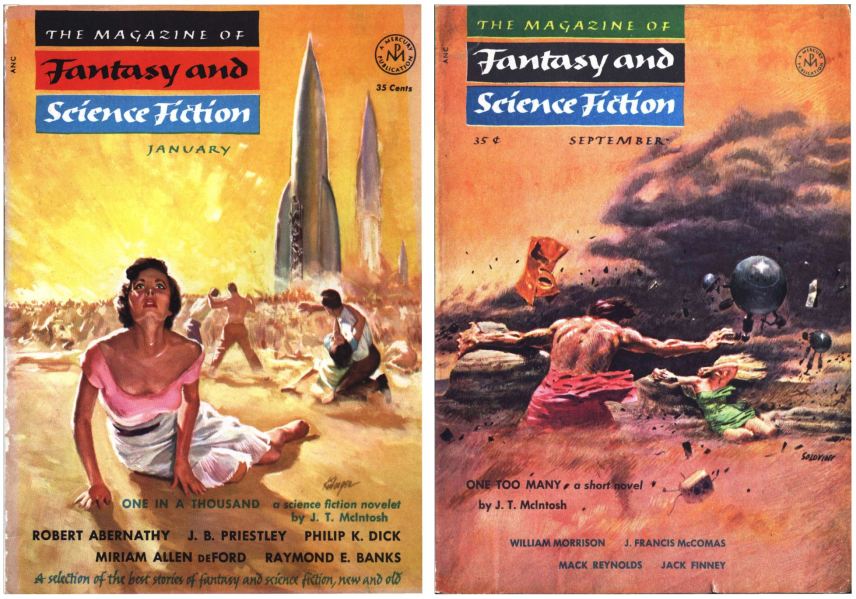
One in Three Hundred by J. T. McIntosh is a fix-up novel that was published in hardback in 1954 but was first serialized as three stories in The Magazine of Fantasy & Science Fiction (Feb 1953, Jan 1954, Sep 1954). That was quite common back in the 1950s, to assemble a novel from a series of shorter works written first for the magazines. For example, Foundation, More Than Human, A Case of Conscience, A Canticle for Leibowitz, etc. were all fix-up novels.

One in Three Hundred by J. T. McIntoshI had discovered the novelette “One in Three Hundred,” in The Best Science-Fiction Stories: 1954 edited by Everett F. Bleiler and T. E. Dikty. I thought it a ripping tale and immediately looked it up on ISFDB.org. That’s when I found out there was also a novel by the same title, and it was based on three stories:

My first inclination was to order a copy of the novel. I was anxious to keep reading to find out what happens. It is currently in print but sold as three separate ebooks for $3.99 each, reprinting the individual stories. I really wanted a copy of the original Doubleday edition because of its dust jacket. A first edition can run in the hundreds, but book club editions aren’t too expensive. However, I have the magazines and decided to just read the story in its original serial form.

1

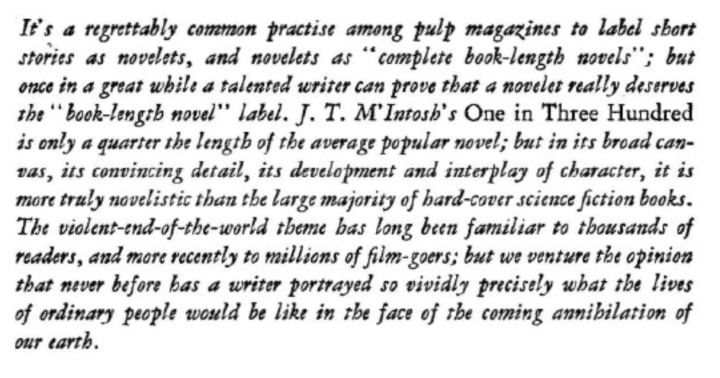
I’m not sure Anthony Boucher and J. Francis McComas knew what they had with the first story because it wasn’t given cover like parts two and three. “One in Three Hundred” was mentioned on the cover, but it was listed last. However, they introduced the story with:

Intro 1

The story begins with 28-year-old Bill Easson walking around the small town of Simsville, (population 3,261) oddly judging people in his thoughts. What slowly unfolds is the world will end soon and Bill will pilot one of 700,000 cheaply built rockets that can each take ten passengers to Mars. Only 1 in 300 Earthlings will get a chance to survive, and Bill’s job to pick the right people. This story reminds me of a movie I just reviewed, Abandon Ship where Alec Holmes (Tyrone Power) has to choose who lives and dies on a lifeboat.

Bill is very conscientious about his assignment. He doesn’t want the obvious morally best people, but people he thinks are up to the challenge and one who could make something out of their new life on Mars. Of course, most people in this town try to con, barter or force themselves onto his list. It’s a compelling story, and fairly adult for a genre targetted to youths. Most of the story is about Bill’s logic, and how he argues with different people who can’t see his way of thinking.

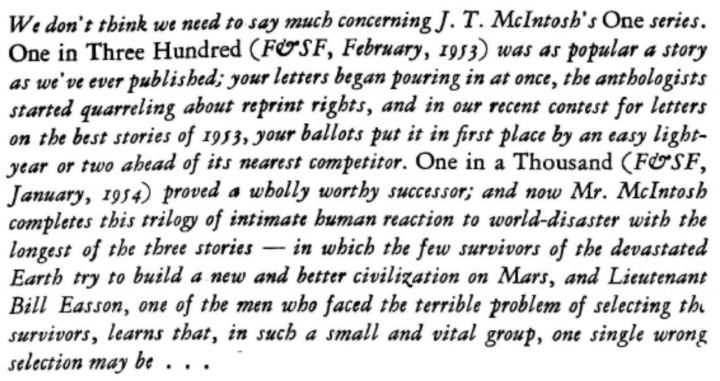
We eventually learn what the editors thought of the story in their introduction to the second part, “One in a Thousand.”

Intro 2

I hope it’s not too much of a spoiler to learn that Bill and the ten do make it off Earth because the second episode is about surviving the journey in space. And the editor’s lets you know about as much as you need to know. I like the second part, but it wasn’t as original as the first story. However, McIntosh does provide some very realistic problems for his characters so solve, much more real than most space adventures of the time. 1954 was pre-NASA and although McIntosh doesn’t lay a bunch of technical jargon on us, he does cover all the scientific basics for traveling to Mars. Most science fiction at the time, or even later, seldom bother with these kinds of details.

Again, this might be a spoiler, but it’s probably obvious that in the third installment, they do make it to Mars but face a whole host of new survival problems colonizing Mars. By now the editors know how big of a hit they have.

Intro 3

One in Three Hundred is a forgotten novel of science fiction. It appears to have made a minor splash at the time. Groff Conklin said it was “A distinguished tale” in his January 1955 review in Galaxy. But it was the last book he reviewed in that column and didn’t say much other than describing the three parts like I have above.

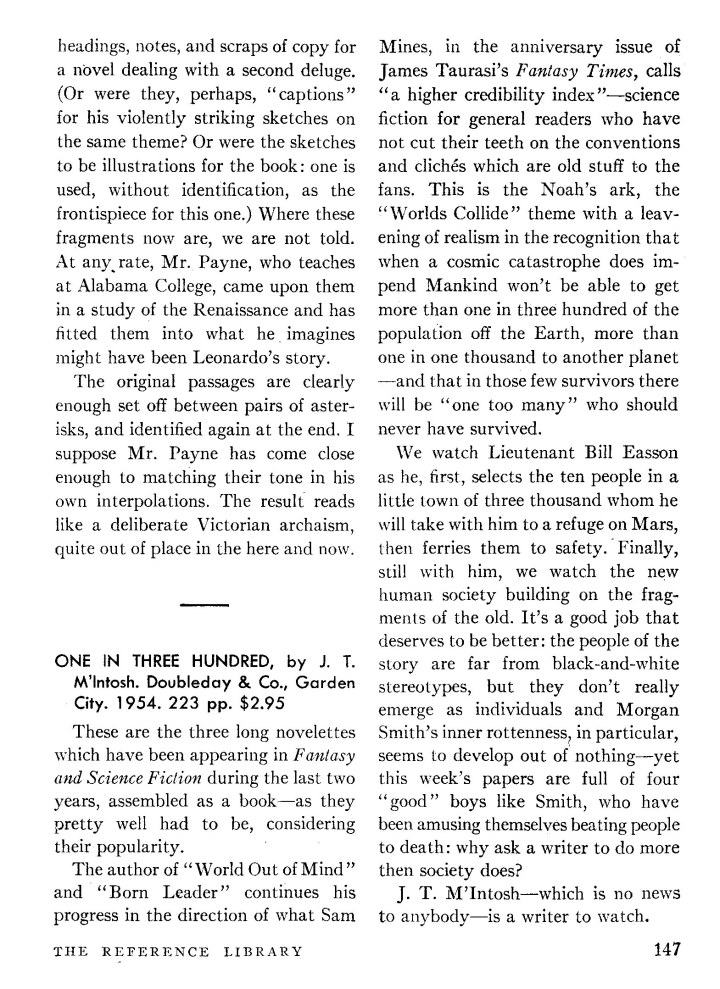
P. Schuyler Miller in the February 1955 “Reference Library” damns the story with faint praise.

147-asf195502147

On the other hand, Damon Knight savages the story in the February 1955 issue of Science Fiction Quarterly. Who is right, Boucher and McComas and the readers of F&SF, or Damon Knight, who became one of the first literary critics of the genre? Knight makes me feel stupid for liking the story.

Science Fiction Quarterly 1955-02-0075

Science Fiction Quarterly 1955-02-0076

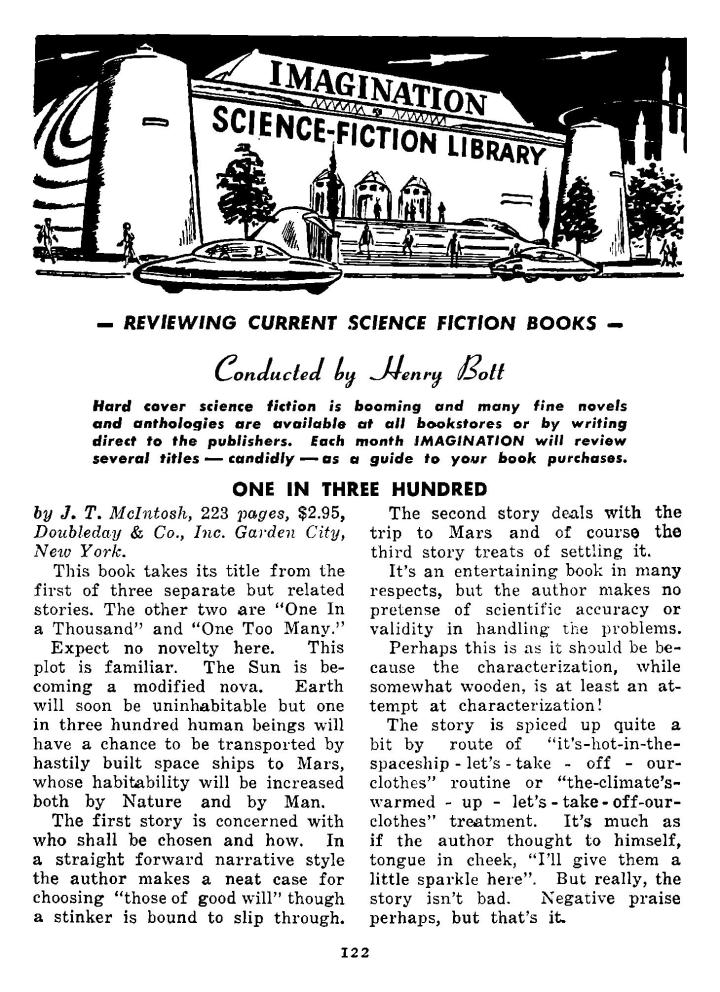
And Henry Hull in his review from Imagination April 1955 makes me wonder how could  have I liked the story at all:

Imag55-04 0063_1L

Galaxy reviews the One in a Hundred again when it was republished as an Ace Double. This time Floyd C. Gale calls it excellent and compares it to When Worlds Collide.

093-093-093-Galaxy v11n0 (1956-01) 093

Finally, we have Leslie Flood’s review from New Worlds #47. His 1956 take is closer to my 2020 opinion.

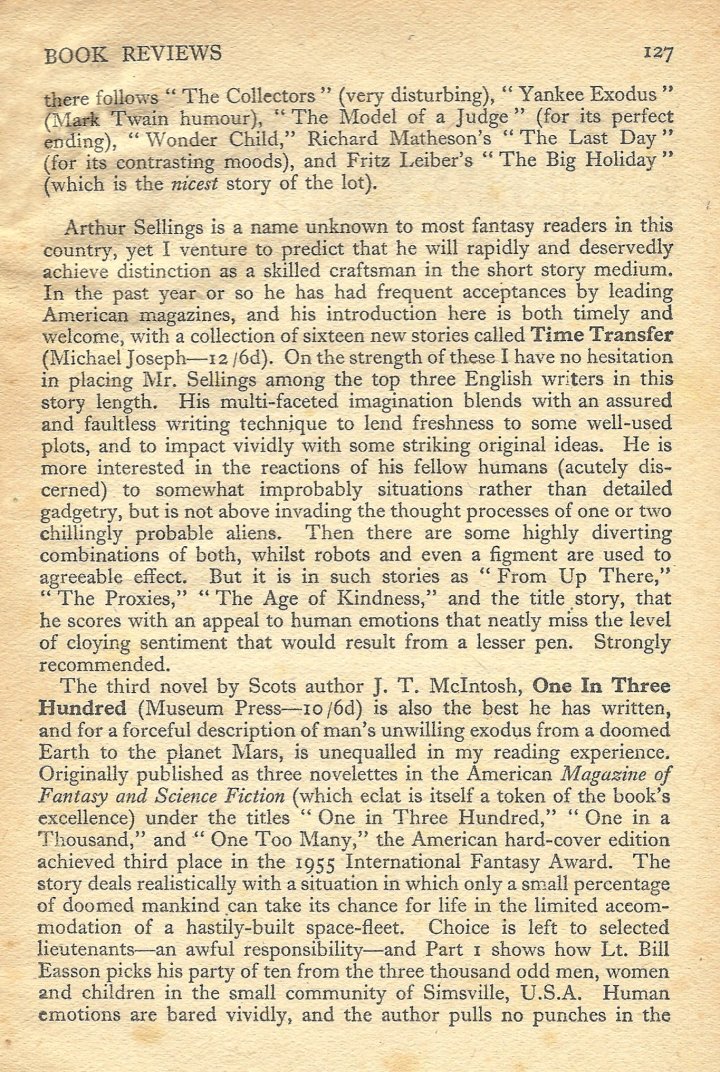
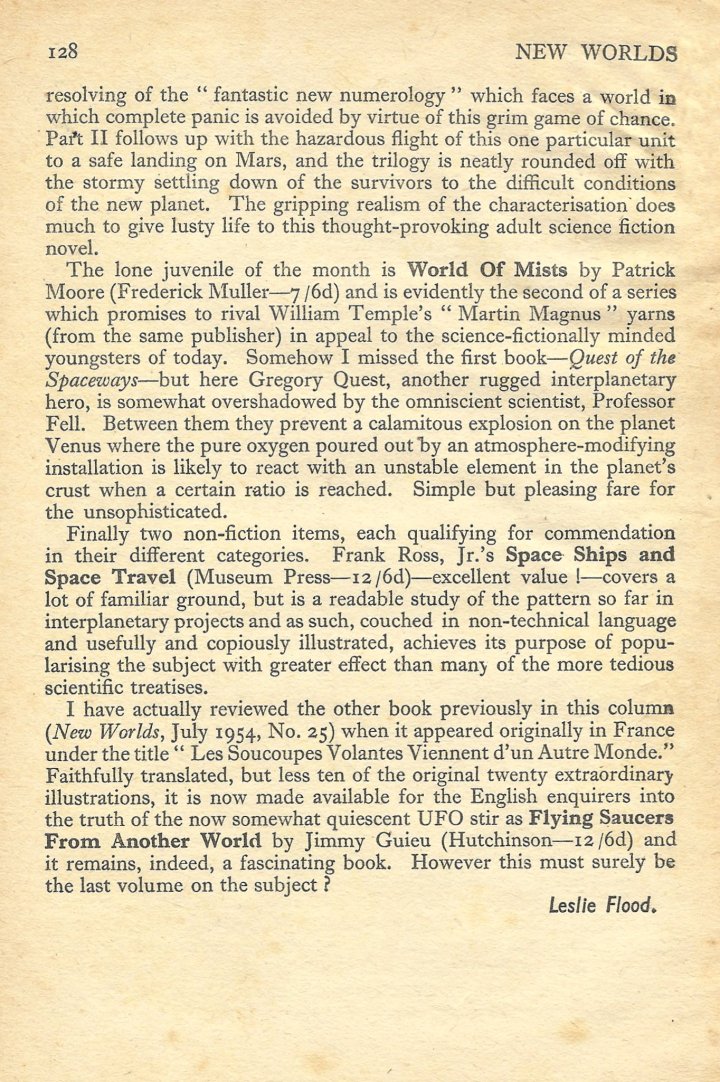
New Worlds No 047 0127

New Worlds No 047 0128

I have to admit that One in Three Hundred isn’t a great book, but I find it fun reading. But then, I love discovering old forgotten science fiction worth remembering. I’m mining the past for the kind of science fiction I enjoy — the ones I missed the first time around. Of course, that means anything I like and recommend must be taken with a grain of salt if you’re only used to reading modern science fiction.

I recently read The Death of Grass by John Christopher from the same time period and will say it is a classic, a true novel of artistic quality, one a modern reader should admire. McIntosh doesn’t come close to Christopher’s writing skills. However, does that mean I shouldn’t recommend One in Three Hundred? Damon Knight was famous for vivisecting SF novels, and he does make this novel seem silly — but I could do that to all my favorite books. Sure, it is unrealistic to believe that we’d ever build 700,000 cheap spaceships. I doubt McIntosh believed it either. McIntosh sat down to write about one man picking ten people to survive the apocalypse. That’s the primary hook. The second and third parts are about how well he chose.

Of course, McIntosh gets everything wrong about Mars, but then so does all the other science fiction writers of that time, including Heinlein, Clarke, and Asimov. I remember seeing the name J. T. McIntosh on books when I was growing up, but they never appealed enough to me to buy and read them. Now I wish I had. I assumed he was among the countless hack writers of genre and that might be what he eventually became. However, it appears his early books from the 1950s were more promising. Some of his books are in print today as ebooks, but I don’t know if they are his best work or hack work. If we have any J. T. McIntosh fans out there who can vouch for his better novels, leave a comment.

James Wallace Harris, 3/16/20

The Year’s Best Short Science Fiction: 1952

1953 - short science fiction

Here are the stories Bleiler and Dikty picked in 1953 for the best of 1952:

  • “Ararat” by Zenna Henderson *****
  • “Category Phoenix” by Boyd Ellanby ***
  • “Command Performance” by Walter M. Miller, Jr. ****
  • “Conditionally Human” by Walter M. Miller, Jr. *****
  • “The Conqueror” by Mark Clifton ***
  • “Counter Transference by William F. Temple ***
  • “The Dreamer” by Alfred Coppel **
  • “Fast Falls the Eventide” by Eric Frank Russell *****
  • “Firewater” by William Tenn ****
  • “The Fly” by Arthur Porges ***
  • “The Gadget Had a Ghost” by Murray Leinster ****
  • “Game for Blondes” by John D. MacDonald ***
  • “The Girls From Earth” by Frank M. Robinson ****
  • “I Am Nothing” by Eric Frank Russell ****
  • “Lover, When You’re Near Me” by Richard Matheson ****
  • “Machine” by John W. Jakes **
  • “The Middle of the Week After Next” by Murray Leinster ***
  • “The Moon is Green” by Fritz Leiber ****
  • “Surface Tension” by James Blish *****
  • “Survival” by John Wyndham ****

Then in 1986 Isaac Asimov and Martin Greenberg picked these stories as the best short SF of 1952 (overlapping stories are in bold):

  • “The Altair at Midnight” by C. M. Kornbluth ***
  • “The Business, As Usual” by Mack Reynolds **
  • “Command Performance” by Walter M. Miller, Jr. ****
  • “Cost of Living” by Robert Sheckley ***
  • “Delay in Transit” by F. L. Wallace *****
  • “Fast Falls the Eventide” by Eric Frank Russell *****
  • “Game for Blondes” by John D. MacDonald ***
  • “Hobson’s Choice” by Alfred Bester ***
  • “The Impacted Man” by Robert Sheckley ***
  • “Lost Memory” by Peter Phillips ***
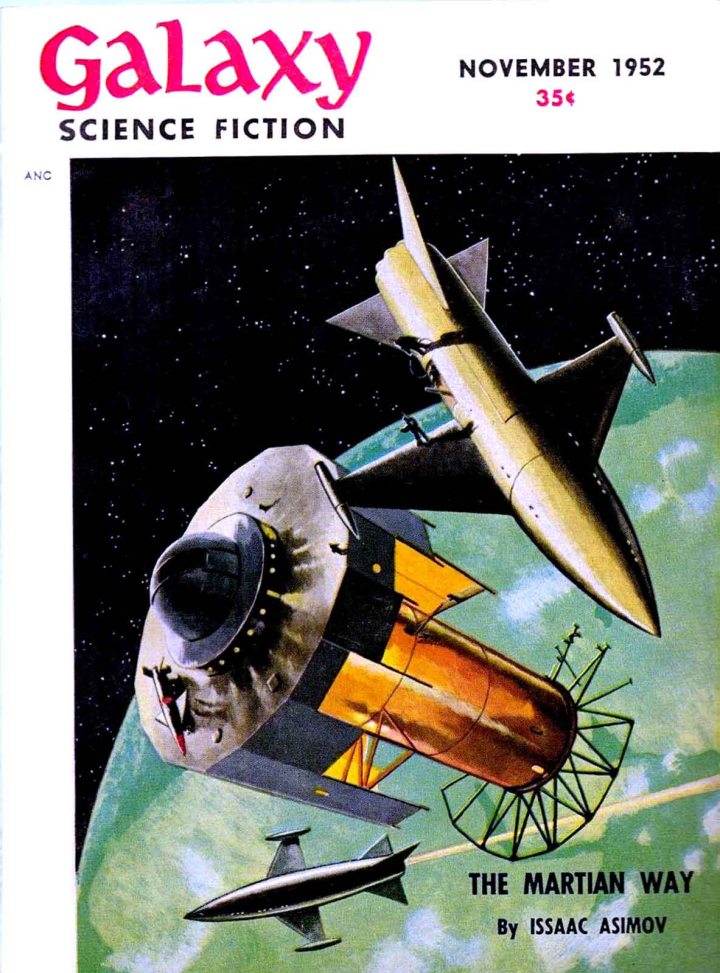
  • “The Martian Way” by Isaac Asimov ****
  • “The Moon is Green” by Fritz Leiber ****
  • “The Pedestrian” by Ray Bradbury ***
  • “Sail On! Sail On!” by Philip Jose Farmer ****
  • “The Snowball Effect” by Katherine MacLean **
  • “The Sound of Thunder” by Ray Bradbury ****
  • “What Have I Done?” by Mark Clifton ****
  • “What’s It Like Out There?” by Edmond Hamilton *****
  • “Yesterday’s House” by Fritz Leiber ****

I’m always amazed at the different lineups between Bleiler/Dikty and Asimov/Greenberg. For 1951 they only have one story in common, so having four in 1952 is rather interesting. Using our 2020 CSFquery tool here are the most cited stories in our database for 1952:

1953 best SF stories csfquery

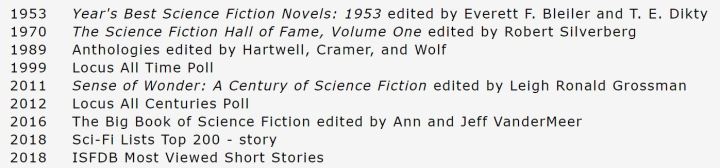
Remember, the Bleiler/Dikty and Asimov/Greenberg anthologies are three of the citations used in our database. For example, here are the citations for “Surface Tension,” the most cited SF short story of 1952. Why didn’t Asimov/Greenberg include it in their collection?

Surface Tension citations

I’m extremely fond of “Surface Tension” but my very favorite short read for 1952 was “Fast Falls the Eventide” by Eric Frank Russell, and it only received two citations. That implies citations are not the best way to recognize a good story. Who knows, there might be several stories from 1952 that never got any recognition after their first publication that I would enjoy reading today. There were dozens of magazines back in 1952 publishing science fiction.
“The Year of the Jackpot” is one of my top favorite Heinlein short stories, but it wasn’t picked for either anthology. “Baby is Three” by Theodore Sturgeon is a tremendous tale. I wonder why Bleiler/Dikty didn’t pick it for Year’s Best Short Novels 1953 (it was too long for the other two anthologies). I guess it was already being recognized as being part of More Than Human. I wished both Bleiler/Dikty and Asimov/Greenberg would list the stories they wanted to anthologize but couldn’t. For a while, they left a blank page for the Heinlein stories, but they soon stopped that.

The two Ray Bradbury stories, “Sound of Thunder” and “The Pedestrian” are often taught in schools, well, at least when I was going to school. However, they didn’t impress me as much as when I first read them over a half-century ago when I had to read them in school. Still good stories, but their fame has dimmed their brightness.

I thought “Delay in Transit” by F. L. Wallace was an exceptional story, but it seems to have been forgotten. Ditto for “Ararat” by Zenna Henderson. It’s a shame that her stories of The People are fading away from the genre’s memory.

I got a big kick out of reading these 1952 stories. When I started this project, beginning with the SF stories of 1939, I expected the famous Golden Age SF stories of the 1940s to be the outstanding stories of the past. But I was disappointed. Overall, the 1940s weren’t particularly golden for me. Things started picking up in the late 1940s, and the 1950s are now producing the kind of stories I’d call a Golden Age. I’m sure it’s a matter of generational perspective. There is also the possibility that each decade will be better than the one before it. In that case, I’m really looking forward to the 1960s.

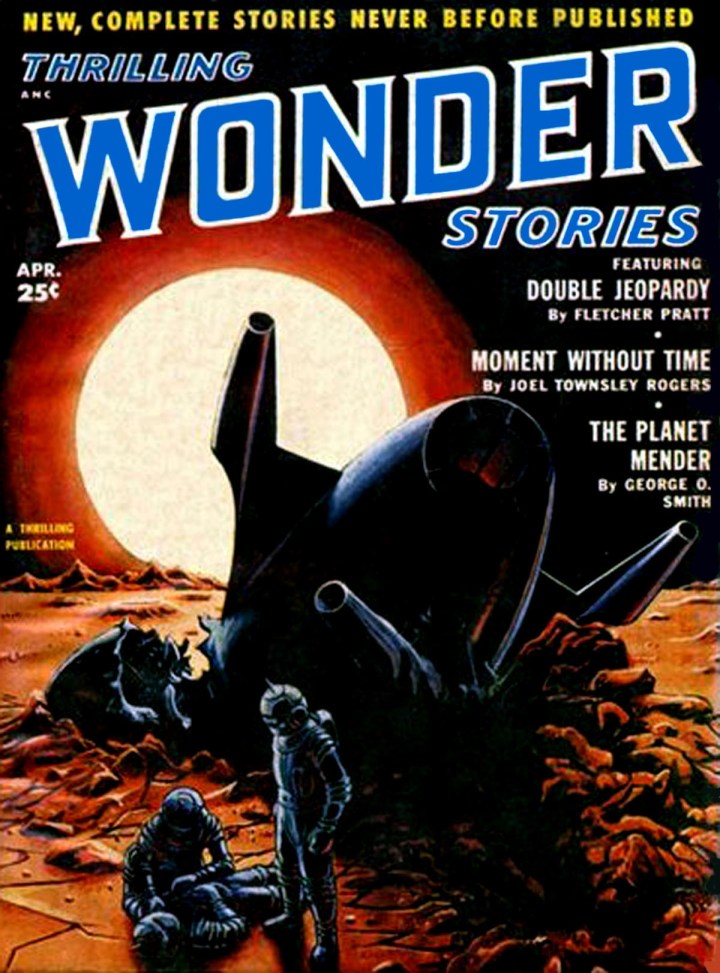
Thrilling Wonder

001-001-001-001-Galaxy v04n05 (1952-08) 001

001-001-001-Galaxy v03n06 (1952-03) 001

001-Astounding May 1952 page 001

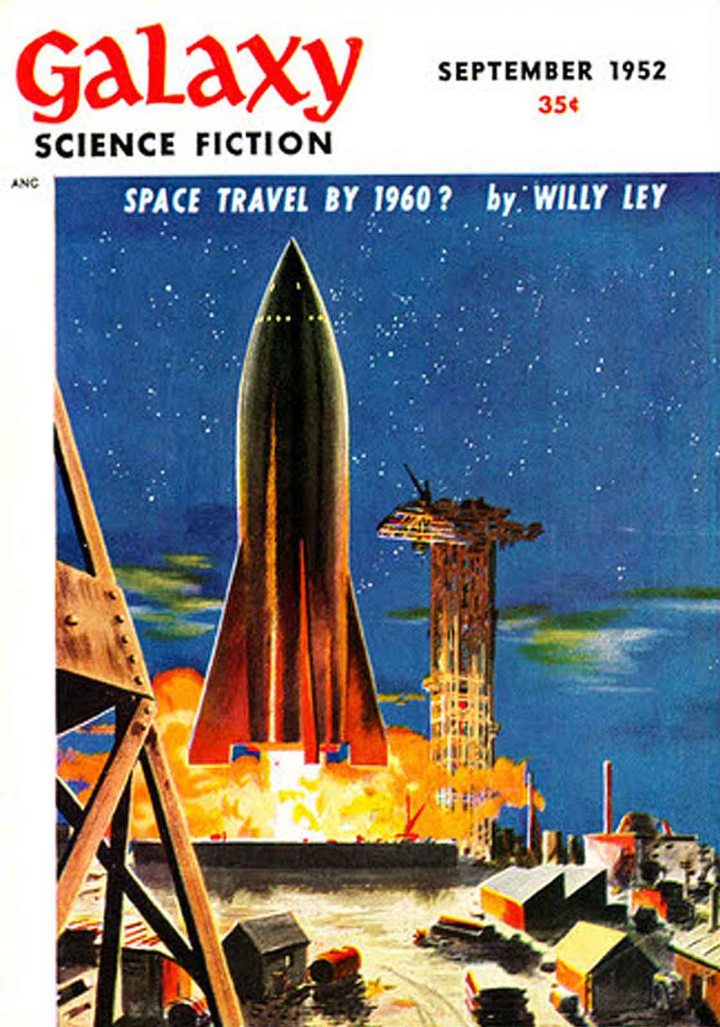
001-001-001-Galaxy v04n06 (1952-09) 001

001-TWS 0000

001-001-001-Galaxy v05n02 (1952-11) 001

001-TWS52-12 0001

JWH

Why Review A Book You Can’t Buy?

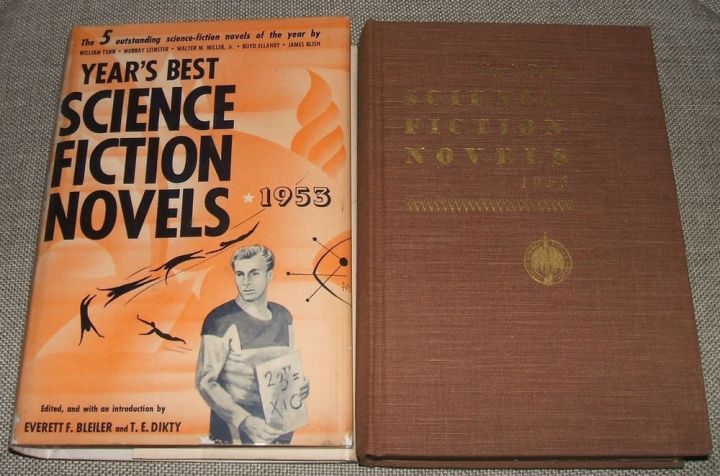
Years Best Science-Fiction Novels 1953

Not only is there little chance of finding a copy of Bleiler and Dikty’s Year’s Best Science-Fiction Novels 1953, but the title is completely deceptive. It contains five novelettes and novellas, not novels, and they were first published in 1952. So why review such a book? Well, the internet will allow fans of old science fiction to still read these stories if they want. The ISFDB link will tell you if you already own an anthology with the story. Or you can read it in the original magazine at the Internet Archive or from Project Gutenberg.

“Firewater” by William Tenn – 4 stars
Businessman, Algernon Hebster, barters for alien technology from humans driven insane by contact with strange Earth invaders. Aliens occupy our planet but merely observe us. We can’t communicate with them, and the people who try, become mystical idiots. Algernon Hebster wants to wheel and deal but if he gets too close could lose his mind too. Internet Archive. ISFDB.

“Category Phoenix” by Boyd Ellanby – 3 stars
Dr. David Wong lives in an oppressive society where privacy is illegal. Wong has developed a medical treatment that could give the dictator overwhelming power, so he works to secretly create a revolution. Internet Archive. ISFDB. Project Gutenberg.

“Surface Tension” by James Blish – 5 stars
Humans crash land on planet Hydrot with no chance of surviving, so they genetically engineer microscopic lifeforms that they hope will have ancestral memory. Wonderfully imaginative. This story has become a classic and is anthologized in The Science Fiction Hall of Fame Volume One. Internet Archive. ISFDB.

“The Gadget Had a Ghost” by Murray Leinster – 4 stars
David Coghlan, a physics professor at the American College, is visited by Lieutenant Ghalil of the Istanbul Police and M. Duval, a French scholar. They ask David if he’s been to the 13th century? It turns out the M. Duval has found a 700-year-old book printed in Byzantine Greek with an ancient annotation handwritten in English with Coghlan’s name and address. It also has inky fingerprints. They test them against Coghlan’s and the fingerprints match. So how did David get to the 13th-century to inscribe the book? A different kind of time travel tale. Internet Archive. ISFDB.

“Conditionally Human” by Walter M. Miller, Jr. – 5 stars
A disturbing story about a future overpopulated Earth where there’s strict control over who can have children. As a substitute people have turned to genetically engineered exotic pets, some of which have been designed to have human-like traits that trigger strong maternalistic and paternalistic emotions in their owners. Terry Norris has been ordered to repossess some of these beloved creatures because they might have unwanted mutations. Internet Archive. ISFDB. Project Gutenberg.

Without the internet, these stories would be completely forgotten. Even with the internet, I wonder just how many of these stories will find new readers?

James Wallace Harris, 3/6/20