“The Rocket Man” by Ray Bradbury

Did science fiction brainwash us into wanting to go to space? I can remember being a little kid in the 1950s and thinking the most exciting thing I could do in life was to go Mars. Before that I wanted to be a cowboy. If you’re old enough to remember television in the 1950s, most of the shows were westerns. That’s why most little boys back then had Santa bring them a six-gun and cowboy outfit for Christmas. But then we discovered science fiction and Project Mercury, and we traded in our cowboy hat for a space helmet.

My most common daydreams in adolescence after the XXX kind, were about going to Mars. Fantasies about becoming a rockstar came in a distant third. Looking back, I realize how unrealistic my teenage hopes for the future were. I was completely clueless as to what girls wanted, couldn’t carry a tune, and I most definitely didn’t have the right stuff. At seventy-three I see the absurdity of my childhood fantasies, so why didn’t I see them then?

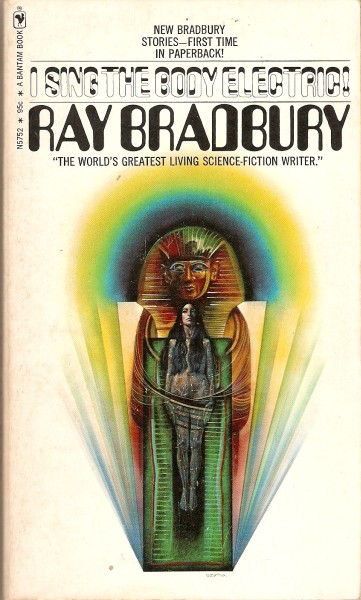
Ray Bradbury is often accused of not being a true science fiction writer. Even as he started selling short stories to science fiction magazines in the 1940s, he knew he didn’t want to be labeled a science fiction writer. Yet, somehow, his very unscientific science fiction from back then has the heart and soul of science fiction, especially his stories collected in The Martian Chronicles and The Illustrated Man.

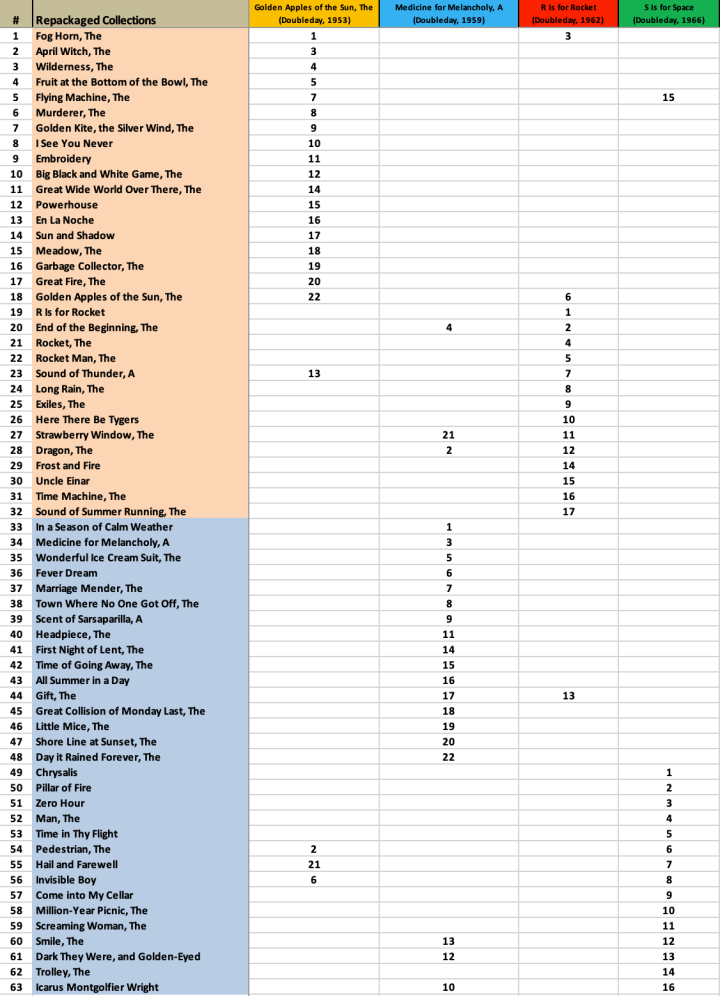
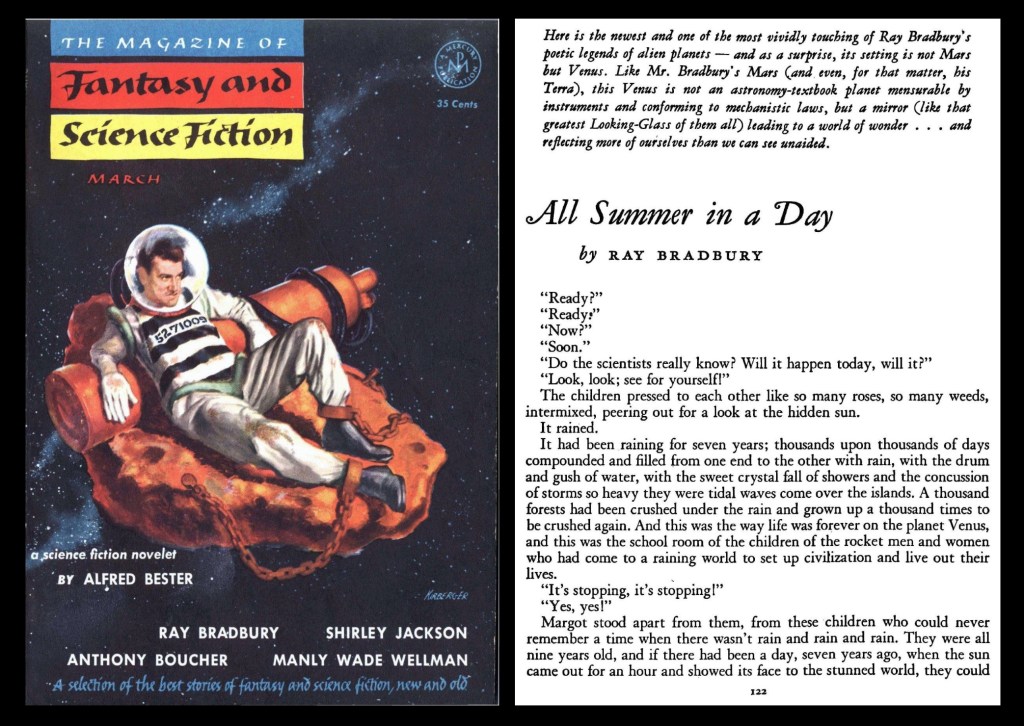
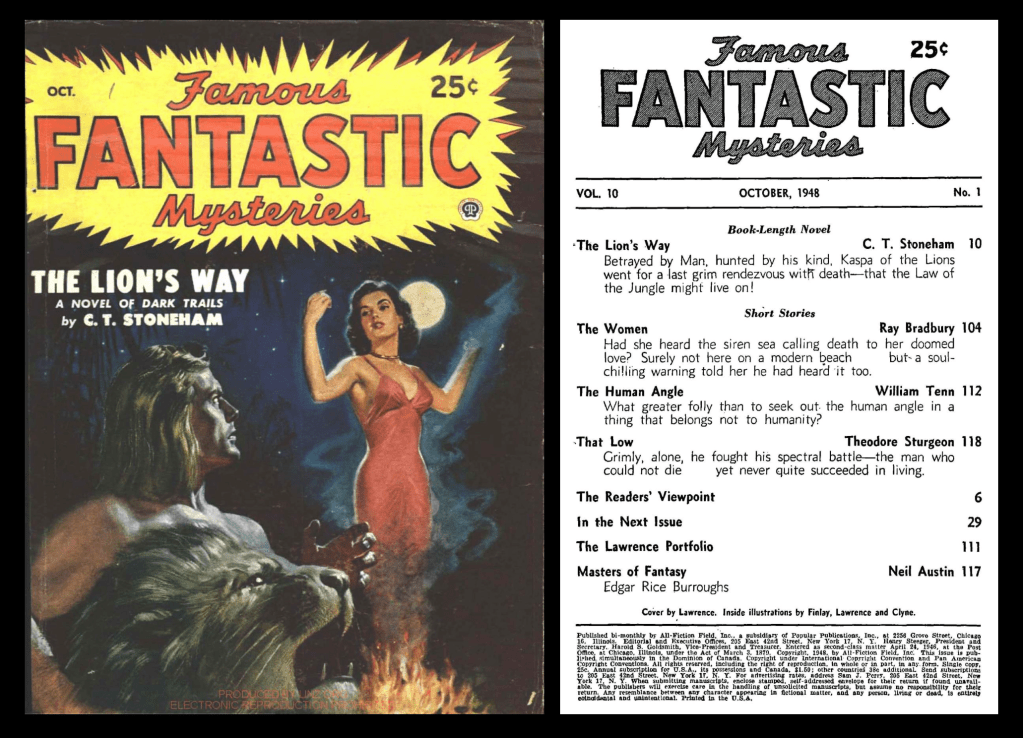
The Rocket Man” first appeared in The Illustrated Man and Maclean’s in early 1951. It’s about a 14-year-old boy who cherishes the few days his father is home from space. The father is always going off for three-month tours of duty as a rocket man. He tells the boy and his mother that when he’s in space he can’t wait to get home, but when he’s home, he can’t wait to get back to space. “The Rocket Man” deglamarizes space travel. In fact, the dad eventually asks his son to promise to never go into space.

The main reason Bradbury’s science fiction stories are great is because he sees both the fantasy and reality of science fiction. Bradbury is obviously obsessed with remembering childhood, but somehow, he was wise when young too.

You can read “The Rocket Man” online here.

By the way, the essence of the story is captured wonderfully in Elton John’s song “Rocket Man.” My favorite version of that song is this bluegrass cover:

But the question I want to explore is why did we all want to go into space? What’s so hot about outer space, the Moon, Mars, etc.? Why did we buy into those dreams that science fiction was selling?

My fantasy was always Mars. But Mars is only a planet that a geologist could love. There ain’t nothing there but rocks and cold. Why did reading The Red Planet by Robert A. Heinlein make me think the best place in existence was Mars? Why does rereading The Martian Chronicles elicit so much intense nostalgia? And why do I think “A Rose for Ecclesiastes” is the epitomy of Martian fantasies?

Over the decades I’ve come to realize that the fantasies we embrace as young children are ones we seldom give up. That’s why kids who embrace religion when little seldom give up God and Heaven no matter how convincing science and logic are at invaliding their faith. Some people never let go of their Christian fantasies, and I never gave up science fiction fantasies. We’re all delusional.

Brian Collins at Science Fiction & Fantasy Remembrance seemed depressed in his current post. His solution is to read old science fiction and fantasy. That’s been my solution too when I think about the state of the world and U.S. politics. Even as a kid, I never really believed I would go into space, but thinking about it was a wonderful way to soothe the stresses of growing up. And now reading science fiction is the balm for growing old.

James Wallace Harris, 4/1/25

If We Can’t Imagine Human Superintelligence Can We Describe It in Fiction?

In Ted Chiang’s impressive overview of human superintelligence in science fiction, he mentions that John W. Campbell Jr. rejected a story by Vernor Vinge about a character with human superintelligence because no one can write such a story. (Vinge had proposed a sequel to “Bookworm, Run!“) The implication: since none of us know what being superintelligent is like subjectively, we can’t describe it. That’s silly. Campbell had been publishing a magazine describing space travel decades before NASA, or atomic bombs before 1945, or robots long before Roombas.

British journalist Ed Yong describes the umwelt of many species in his book An Immense World. How each organism views reality from its collection of sense organs is called umwelt. We might not be able to imagine being a dog, but we can analyze a dog’s senses and speculate what they can perceive.

Shouldn’t we assume science fiction can speculate on a human being with superintelligence by what it’s capable of perceiving and what it does with those perceptions? I’m guessing John W. Campbell assumed that a dog couldn’t imagine what it’s like to be a human. But is that really true? A dog might not comprehend humans reading a book, but I’m sure they understand much about us in their own special way. In fact, they might observe qualities about us that we’re unaware of.

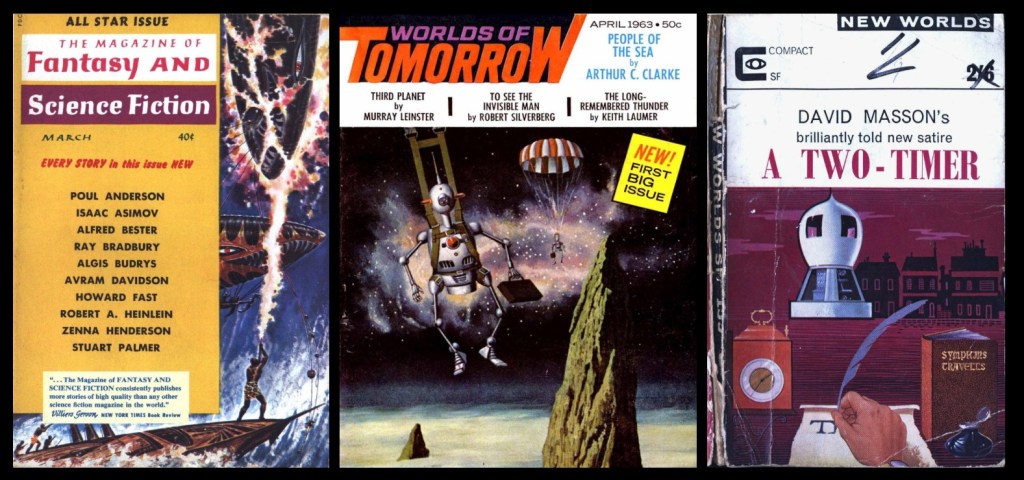
Astounding Science Fiction in the 1950s was full of stories about ESP and other psychic abilities. Campbell called such abilities psionics. Throughout the history of science fiction, writers have speculated that superhumans would have god-like powers. I’ve written about science fiction and human superintelligence before and described many of the most famous of these stories. See: “Science Fiction and Human Evolution” and “The Origins of Higher Intelligence in Science Fiction.” The genre has a long history of attempting what Campbell supposedly told Vinge he couldn’t.

Strangely, hard science fiction writer Arthur C. Clarke wrote two classic novels about superhumans: Childhood’s End and 2001: A Space Odyssey. Clarke gave no scientific explanation of how people might transform into next-stage humans. Clarke’s new humans were almost impossible to imagine. They are god-like to us. This is fun but gives us little to speculate about realistically.

Greg Bear imagines a new strain of virus affecting pregnant women causing a mutation in Darwin’s Radio. Children born of these women are more intelligent, have greater disease resistance, and can communicate non-verbally. This isn’t hard to imagine. Current humans show a tremendously wide spectrum of intelligence and physical health. And some humans are far better at communicating than others, especially via body language and empathy.

Nancy Kress imagines genetic engineering creating a new species of humanity in Beggars in Spain. Their key feature was needing less sleep. This gave them more time to learn, work, and compete. It’s easy to imagine this adaptation and how these new humans would do better than ordinary humans.

The movie Gattaca imagined a future society where normal humans competed with humans with carefully selected genes. The improved humans had the same human frailties, but out-competed normal humans for the better jobs. They were better-looking, smarter, more athletic, and had greater discipline. That’s not hard to imagine.

In Flowers for Algernon by Daniel Keyes, Charlie Gordon undergoes an operation that advances his IQ. At the beginning, Clarlie works as a janitor and is cognitively challenged. The operation allows him to learn new things, and eventually become a super-genius. His new attributes are not beyond belief. Charlie learns new languages, achieves great academic success, and becomes tremendously productive. Charlie doesn’t develop ESP or godlike powers, but achieves the maximum levels of current human skills and traits. This is believable and easy to imagine.

Homo sapiens are only slightly improved over Neanderthals, but those improvements let us do so much more. For us to describe Homo superior we only need to imagine slight enhancements to our species and speculate about what impact they would have.

Some humans have tetrachromacy, which means they can detect four primary colors rather than three. Other people have eidetic memory. Stephen Wiltshire, an autistic savant, can draw detailed images of cities from memory after just a helicopter ride. All the traits that Human 2.0 might have are already showing up in us now. Conversely, all the traits that won’t emerge are those we lack precursors for now.

That’s why I think it’s silly to imagine humans evolving to have telepathy or be able to teleport at will. Those are comic book ideas. Campbell was both too hopeful and too naive about human evolution. He expected “The Man Who Evolved” by Edmond Hamilton. At best, I think we’ll get Gattaca.

One problem with evolving our current abilities is that we often see cognitive issues associated with people with extreme examples of those abilities. Can a perfect memory be imperfect? Can we be too smart? I’ve known many people far ahead of me in many skills. I can’t fathom general and special relativity. Does that mean Albert Einstein was a 2.0 human?

Until recently, I thought the human race was evolving slowly on average. But current events make me think we’re regressing. Some people already have superintelligence compared to others. It could be the evolution of our species won’t be by quantum leaps, but slow adaptation of biological trial and error. Much of science fiction is just fun bullshit speculation. We need to distinguish between fantasy and scientific possibilities.

Personally, I feel our role in evolution was to evolve machine intelligence. I don’t believe humans will ever become giant brains with tiny bodies, nonphysical beings, or something like Q from Star Trek: The Next Generation. It’s interesting that Greg Bear and Nancy Kress in their novels, had normal humans wanting to wipe out the new humans before they got established.

Lester del Rey summed us up nicely in “For I Am a Jealous People!” Our creator and descendants need to watch out.

I don’t see why Campbell rejected Vernor Vinge’s idea of writing a sequel to “Bookworm, Run!” Campbell had already published Slan by A. E. van Vogt and many other stories featuring human superintelligence.

James Wallace Harris, 3/9/25

A Unique History of Science Fiction (1945-1975)

From 1945 to 1975, P. Schuyler Miller reviewed science fiction books for Astounding Science Fiction and Analog Science Fiction. He died in October of 1974. I stumbled upon an online PDF collection of those reviews from 1945-1967. You can download that file here. (Warning – it’s 235MB.)

Unfortunately, the individual reviews aren’t dated and the run is far from complete. However, the PDF is searchable, and you can use ISFDB.org to date an individual review. Just look up the book title, then scroll down to the Reviews section, and find the one for Miller. Someday I’d like to create a file of all of Miller’s reviews from 1945-1975.

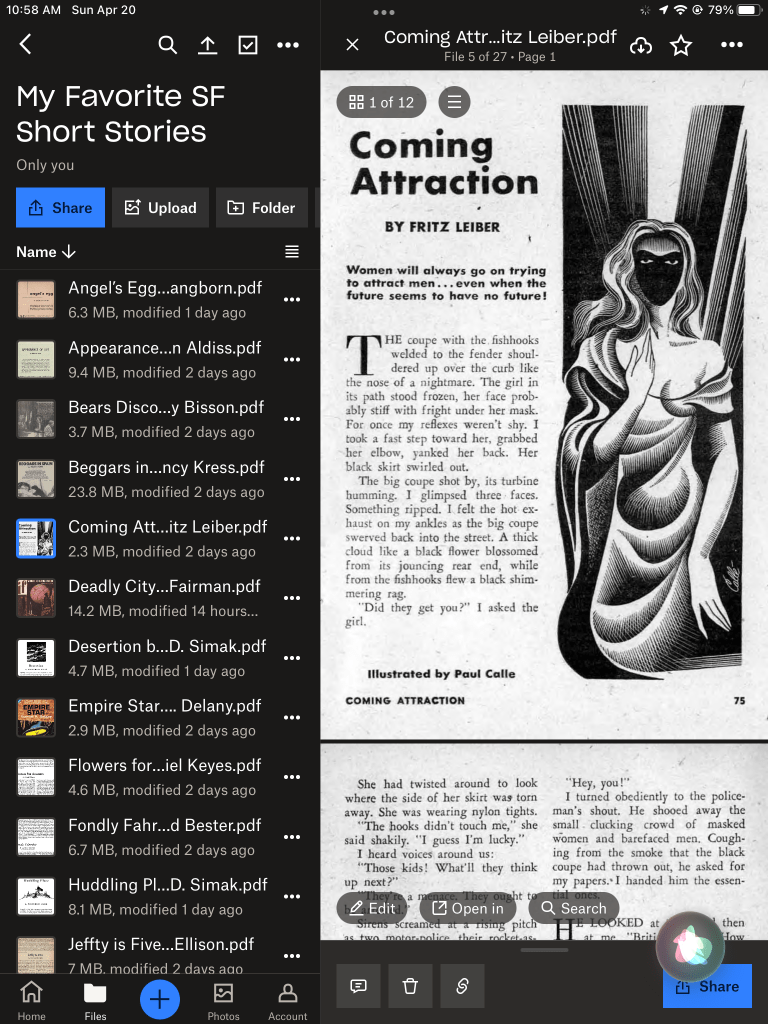
I put this PDF on my iPad and read it like a book. It’s wonderful. The reviews start before science fiction was regularly published in book form. Whoever collected these reviews evidently picked those they thought interesting to modern readers. Collectively, they have a history of science fiction published before 1968. For example, the early reviews cover books published before science fiction was a genre. Then we started seeing books from Gnome and Fantasy Press, essentially fan publishers. After that, we slowly see big name New York publishers take chances on the genre along with the rise of mass market paperback publishers.

We get to read the original reviews of books now remembered as genre classics and books that have since been forgotten. Often I read reviews of forgotten books that sound interesting enough to track down.

The first two reviews are books by Vardis Fisher: Darkness and the Deep and The Golden Rooms (April 1945). These books imagine life when Neanderthals and Cro-Magnon coexisted. Popular writers like H. G. Wells, Jack London, and Stephen Vincent Benet, also wrote on this theme. It wasn’t considered science fiction then, but our genre has claimed that theme since.

Here’s that first review:

Most book reviews in science fiction magazines are short blurbs. Miller writes comprehensive essays. As the years progress, Miller’s reviews become more elaborate, longer, often beginning with some science fiction history. The next review is of The Time Stream by John Taine (March 1947). Miller does more than describe and react to the novel, giving the background of how that story fits in the genre, and biographical information on the author. He compares Taine’s work to A. Merritt’s, and points out how Taine’s work originally appeared in hardback, while Merritt’s stories were serialized in magazines first. I’ve not read Taine or Merritt, but I’ve often read about both in histories of science fiction. This review makes me want to try The Time Stream. These reviews also give me information about collecting original editions. (Amazon has a Kindle edition of The Time Stream for $2.99.) Here’s Miller’s review.

I decided to jump to June 1954 and read the review for The Lights in the Sky are Stars by Fredric Brown, the science fiction novel I’m currently reading. By now Miller’s columns are longer. He reviews more books each month, so each review is shorter. That’s because far more SF books are being published every month. Since October 1951, they come under the title “The Reference Library.” (That’s where I steal the image above for this post.) Miller often begins his columns with a digression exploring topics related to current publishing.

I thought I’d test Miller on something hard. This is his review for Stranger in a Strange Land by Robert A. Heinlein from the January 1962 issue of Analog. I’m including his essay in the introduction as a sample of how he composed his columns.

That should give you enough examples to decide on downloading the entire collection of Miller’s reviews. If you’re reading on a computer with a large monitor, I have a page I’m working on that links to Miller’s reviews in issues of Astounding and Analog at Archive.org. You can read each column one at a time on screen.

P. Schuyler Miller also wrote some science fiction. I own this first edition of The Titan with a beautiful Hannes Bok cover.

James Wallace Harris, 3/5/25

Gimme That Old Time Science Fiction

Whitney at the Secret Sauce of Storycraft YouTube channel recently reviewed several science fiction books she called Just D@mn Good Vintage Science Fiction Reads. She intentionally avoided books considered classic science fiction and defined the kind of books she was looking for in used bookstores as vintage science fiction. She defined vintage science fiction as books published before barcodes appeared on their covers. That would be the mid-1980s. This would be science fiction her parents and grandparents would have read.

She reviewed these books (Links will bring up the video at YouTube):

I have read most of these books with Empire Star and Downward to the Earth being two of my Top 25 science fiction novels. Whitney’s reviews made me think about all the old books I found in used bookstores that weren’t famous but were fun reads. Maybe not outstanding examples of the genre, but the fun kind of science fiction that made you forget about your worries.

Her video makes me want to make my own list of Vintage SF Gems. Books to look for at library book sales that maybe no one is buying. Books you don’t see reprinted in new editions at new bookstores. If you don’t want to hunt used editions, these vintage SF titles are often reprinted as Kindle books at Amazon, sometimes for just $1.99. Kindle and Audible editions are the best sources for finding vintage science fiction today after the demise of the mass-market paperback.

My favorite science fiction books back in the 1960s were Heinlein’s Juveniles. Robert A. Heinlein’s reputation is fading, and I think that’s partly due to online reviewers reviewing the wrong books. Heinlein wanted to be remembered for Starship Troopers, Stranger in a Strange Land, and The Moon is a Harsh Mistress. And those are generally the titles found on new bookshelves and often reviewed. But they are also Heinlein’s novels that many people dislike including myself. And the novels written after that are even worse.

I wish modern reviewers would review Heinlein’s work from the 1950s. If you see old copies of these books give them a try. These science fiction books have given me the most fun over my entire lifetime. I’ve reread them many times. They are how I epitomize science fiction. All by Robert A. Heinlein.

  • Have Space Suit-Will Travel
  • Tunnel in the Sky
  • Time for the Stars
  • The Rolling Stones
  • Farmer in the Sky
  • Citizen of the Galaxy
  • Starman Jones
  • The Star Beast
  • Double Star
  • The Door Into Summer

After this plug for Heinlein, I want to remember those vintage science fiction titles I believe deserve more readers. I’m just going to post images of the covers I fondly remember. Hopefully, you might spot these books at used bookstores, charity shops, and friends-of-the-library sales in their funky old editions. For me, old covers are essential to the vintage science fiction experience.

These are just a handful of books I could recall from memory this morning.

James Wallace Harris, 2/23/25

HEROVIT’S WORLD by Barry N. Malzberg

Back in the 1960s when other teens fantasized about becoming rock stars, playing for the NFL, or being seen on the silver screen, I dreamed about becoming a science fiction writer. After reading the 1973 satire on science fiction writers, Herovit’s World by Barry N. Malzberg, I see that I was much better off working with computers at a university for thirty-five years and retiring with a pension. You can currently buy the Kindle edition for $1.99. But read my review carefully before you risk even that little money. It’s a good read for only certain kinds of science fiction fans.

Barry N. Malzberg died on December 19, 2024, at 85. Although prolific, he was never a famous science fiction writer. Malzberg’s most successful books were written in the 1970s, and Barry is mostly forgotten today. He is getting some attention on YouTube as a few reviewers rediscovering him. Malzberg has a reputation as being the curmudgeon of science fiction. Malzberg often relies on satire, but his stories were never fun like the satires of Kurt Vonnegut. Malzberg wrote dark, edgy, and psychological fiction like Philip K. Dick, but he never developed a cult following.

Recently, Bookpilled on YouTube declared that Malazberg was his new favorite science fiction writer. Bookpilled skews towards literary and dark SF, often from the 1970s. But to be honest, Malzberg is very hit-and-miss. Joachim Boaz, a true connoisseur of seventies science fiction, found little to love in The Many Worlds of Barry Malzberg. Boaz considered most stories good but rated “Death to the Keeper” brilliant. Boaz also called Malzberg’s most notable novel Beyond Apollo brilliant, giving it a 5 out of 5 rating.

Be sure to read MPorcius’ extensive review who believes Herovit’s World was overpromoted by Robert Silverberg and Harlan Ellison, but he did like it a lot.

And if you pay attention, Malzberg is mentioned occasionally on YouTube, print reviews, blogs, and podcasts. Three years ago, the biographer Alec Nevala-Lee interviewed Malzberg for two hours.

Herovit’s World is a short novel, 160 pages in paperback, and just under six hours on audio. Jonathan Herovit, our protagonist, has written 92 science fiction novels in the past but struggles to finish his latest book. It’s overdue. He only has thirty pages and his editor is hounding him. His wife is hounding him. He’s stuck in a small apartment with a new baby who cries endlessly. Herovit is approaching forty, well on the road to being an alcoholic, depressed, delusional, and coming apart mentally.

Herovit wants to be like Mack Miller, the fictional action hero of his endless Survey Team novels. Herovit wants to be like the decisive Kirk Poland, his alter-ego and pen name for his books. Jonathan Herovit has turned Kirk Polan into an imaginary friend, one that’s become an abusive second personality.

Malzberg uses this novel to satirize editors, publishers, authors, readers, fans, conventions, writer conferences, writer associations, and the science fiction genre. We never know if Herovit’s World is autobiographical. Herovit is self-loathing. Is this Malzberg confessing his own feelings, or just creating a character. But if you read Malzberg’s three books of essays, The Engines of the Night: Science Fiction in the Eighties (1982), Breakfast in the Ruins (2007), or The Bend at the End of the Road (2019) you’ll get the feeling that he did use his own life for inspiration.

Malzberg is confusing. He has stated that he loves science fiction and the genre. Listen to the podcast above. But science fiction also depressed him, even tormented the poor guy. Herovit’s World is recursive science fiction. That is science fiction about science fiction. Often recursive science fiction is fun, even zany, like What Mad Universe by Fredric Brown or God Bless You, Mr. Rosewater by Kurt Vonnegut. Herovit’s World is full of creative ideas and psychological observations, but they’re not fun. Malzberg feels more like Kafka.

Malzberg and Herovit are hack writers. They pride themselves on cranking out any style or type of fiction and getting paid for first drafts. However, Herovit’s World reads quite well. It has its literary aspects and is full of fun experimentation. I’m glad I read it even though it’s about an unhappy man going down the tubes. And it does make you think about science fiction.

Malzberg was several years younger than Herovit. Herovit’s writing career began in the 1950s, while Malzberg started publishing in the 1960s. Herovit remembers the science fiction magazine boom of 1953. Herovit was a disciple of John Steele, who I assume is based on John W. Campbell. So is Malzberg really making fun of 1950s science fiction? At one point in an argument with his wife Janice, she gives a bit of a speech which might be the key to the whole story:

I also remember when there were very few females at science fiction clubs and conventions. Boy have things changed. We must acknowledge that Malzberg skewers SF of the 1950s or 1960s in Herovit’s World. But we should also ask: “How would a disgruntled SF writer skewer the genre today?”

There is a dream sequence late in the novel where Herovit is having tremendous sex with a college coed. He had been invited to a conference and the coed approached him telling Herovit that Kirk Poland was her favorite writer. It turns out she was paid by the university to seduce Herovit so he could be studied for academia. Science fiction was getting noticed by the academic world in the early 1970s. Many writers and fans felt vindicated. However, other writers claimed science fiction was better left in the gutter. Malzberg uses this scene to give his opinion:

Herovit and Malzberg regretted giving so much of their creative effort to a genre that gets so little respect. They know they are writing escapism for adolescents. I think the genre has changed a lot since the 1970s. It does get more respect and it’s taken more seriously, probably because it deserves it. However, some of Malzberg’s criticisms might still be true, especially once you analyze why certain stories and themes are so popular with science fiction fans.

A good deal of Herovit’s World is about marriage. Herovit routinely cheats on his wife at science fiction conventions and neglects her at home. I’ve heard plenty of gossip about science fiction writers at conventions and conferences. But there is a non-SF connection here. There are many literary novels about blocked writers and failed marriages. I can’t tell if Malzberg is satirizing them too, or padding his SF novel. Both Herovit and Malzberg have bragged about being able to pad their fiction. My favorite novel on this theme is Wonder Boys by Michael Chabon, who writes in literary and SF genres.

Herovit’s World also contains a lot of sex. Malzberg got his start as a writer cranking out soft-core porn paperbacks. I don’t know if he’s saying that science fiction writers are sex obsessed, or sexually frustrated, or if he was merely padding his story because he didn’t have enough to say about science fiction to fill out the novel length. I do know that Portnoy’s Complaint by Philip Roth had come out a few years earlier and had become a bestseller dealing with sex honestly. As they say, “sex sells,” and Malzberg was hoping to break out of the science fiction ghetto.

Overall, Herovit’s World is mildly amusing. Most readers at Goodreads give it three stars, but a few love it giving it five stars. My rating would be ***+. I thought it was written well enough (***) and I liked it (+), but I wouldn’t ever reread it. That’s my main problem with Barry N. Malzberg. His books are interesting, but they never reach my next rating level. I give **** to books I know I’ll want to reread.

If Herovit’s World was less padded with sex scenes and had more satire about science fiction, it could have been a **** novel with me. If Malzberg had tried harder, gone beyond a first draft maybe, and really thought about the purpose of this novel, it could have been far better.

Malzberg focused on the pathetic without ever showing what we love about science fiction. His novel could have been elevated by showing Malzberg/Herovit’s passion for the genre. Far Beyond the Stars by Steven Barnes is a recursive science fiction novel that does just that. The story is a novelization of a Star Trek: Deep Space Nine episode where the DS9 crew are shown working at a 1950s science fiction magazine much like Galaxy Science Fiction. The story criticizes the racism in the genre back then yet still shows a love for science fiction.

No matter how much I criticize science fiction, I can never forget how much Heinlein’s juveniles meant to me as a kid. I could write a satire on the genre, but I hope I wouldn’t do what Malzberg did in Herovit’s World, by making it all feel slimy and depressing. One reason why my favorite Philip K. Dick novel is Confessions of a Crap Artist is even though it criticizes science fiction fans, it does it with love. It’s a superior recursive science fiction novel.

James Wallace Harris, 2/11/25

“Starfog” by Poul Anderson

If I was pitching “Starfog” by Poul Anderson to a movie producer, I say “Two women are in love with Daven Laure, one is a spaceship computer and the other a mutant human who claims to be from another universe.” I also mention it’s a hard science fiction space opera dealing with a rare astronomical phenomenon reminiscence some episodes of Star Trek: The Next Generation on one hand with the scope and speculation of the Culture Novels of Iain M. Banks on the other.

“Starfog” is the last story in the seventh and final volume of the Technic Civilization Saga, the one called Flandry’s Legacy. (Available in paper, ebook, and audiobook at Amazon.) See the ISFDB.org listing of all the Technic Civilization stories here.

Theoretically, “Starfog” might make a good science fiction adventure movie if they could drastically reduce Anderson’s talky dialog and somehow make the characters endearing. I confess that I’ve never felt any emotional attachment to any of Poul Anderson’s characters. His science ideas are often epic, but his political philosophizing gets crusty.

The setup for the story is a compelling mystery. A spaceship is discovered with a crew that appears human, and despite their strange language, seem to have cultural hints of Earth’s past. But they claim they come from a different universe where space is radically different.

“Starfog” is set five thousand years after Earth achieves space travel according to Sandra Miesel’s chronology of the Technics Civilization stories in Against Time’s Arrow: The High Crusade of Poul Anderson. (You can check it out at Archive.org.) Paul Shackley writes about Miesel’s timeline here and updates it. Baen includes the timeline in the books of the series.

Daven Loure, and his intelligent spaceship Jaccavrie are explorers in a new galactic civilization of humanity called the Commonality. The other stories are about Van Rijn, David Falkayn, and Dominic Flandry written over four decades. I’m afraid the current covers of the books (see above) imply a different feel than the actual stories. However, older covers are just as cheesy.

“Starfog” doesn’t come across like these covers. It’s just a little less dignfied than the Analog cover from when it was first published in August 1967.

Although I haven’t read the series but from reading about the various stories, I’m guessing the quality of storytelling is somewhat like Larry Niven’s Known Space stories. I might read more of Flandry’s Legacy, which includes three novels, two novellas, and one novelette in the series.

However, Anderson’s stories don’t fit my current craving for science fiction. Everyday life in 2025 is wilder than fiction, wilder than science fiction. Sadly, “Starfog” just seemed dull in comparison. Events of recent years is making me rethink about science fictional futures. Most science fiction just doesn’t have the cutting edge of our ever sharpening reality.

Most science fiction is perfect for escaping from reality. But I’m craving the kind of science fiction that plays off of reality. Nothing I’ve found lately says anything about our present and near future. We need the kind of vicious writers who can extrapolate and speculate about our exploding society. Sharp tongue writers like Mark Twain, Gore Vidal, Kurt Vonnegut, Barry Malzberg, Oscar Wilde, Aldous Huxley, Jerzy Kosinksi, Dorothy Parker, George Orwell, Joseph Heller, and Philip K. Dick.

We don’t need science fiction that gives us grownup fairytales about the far future. We need writers that cane us about our head and shoulders like a great Zen Master. We need to read books that pistol whip us until we accept reality and reject our delusions.

James Wallace Harris, 1/28/25

Off My Feed

I haven’t been reading science fiction lately. After years of gorging on the genre, I’ve suddenly had enough. I still have the urge to read SF, but I’m having trouble finding science fiction I want to read. I have quite a large TBR pile but none of its titles interest me. I’m in the mood for something different, but after reading thousands of science fiction novels and short stories, finding something different isn’t easy.

Has anyone read the Technic Civilization books by Poul Anderson? Yesterday, I was testing out a program to view old pulp magazines on my Mac and I randomly picked the August 1967 issue of Analog. It had a cover story for “Starfog” by Poul Anderson. I started reading it. I’ve only read a handful of Anderson’s novels and short stories and always avoided his book series. I avoid series books in general. I started reading “Starfog” and decided it was exactly something I’ve always avoided, so maybe it will be different.

But I wanted to hear the story. After some research on ISFDB.org, I discovered “Starfog” was included in Flandry’s Legacy, Book 7, the last volume of the Technic Civilization series. I only had three Audible credits left, but what the heck, I decided to give it a try. “Starfog” is a novella, but Book 7 includes three novels, three novellas, and one novelette of stories in the series. This could be a tremendous bargain if I like the series.

I’ll let you know what I think — hopefully soon. The other inspiration I had to find something different came from a YouTube video. Bookpilled had a moving account of discovering the books of Barry Malzberg just before he died. I have read a couple of Malzberg books and they were so-so. But he was very prolific and Bookpilled has convinced me I should give Malzberg another try. So I’m reading about his novels. I did have a few emails from Barry, and he recommended his horse racing novels and a couple science fiction novels. I’ve always found Barry’s books about science fiction more interesting. He was a sharp-tongue critic.

File 770 has a nice tribute to Barry, “Curmudgeonly Breakfast: A Farewells-And-Learn-More-About Barry Malzberg (Last) Round-Up” that links to tons of resources about him. I’m hoping out of all that I will find a SF novel by him to read, hopefully, one that’s available on Audible.

Maybe between Anderson and Malzberg, I’ll get back into science fiction. But things might be slow around here for a while. To be honest, I think the real world has gotten more science fictional than science fiction.

If you’ve read a science fiction story you feel is radically different from any science fiction you’ve read before, leave a comment below.

James Wallace Harris, 1/27/25

Reading Science Fiction in the Seventies is Different From Reading Science Fiction in My Seventies

I imprinted on science fiction in the early 1960s. At that time, I considered science fiction to be PR for the space program. I fell in love with science fiction concurrently with Project Mercury and Project Gemini. I mostly read books by Robert A. Heinlein for the first few years, so colonizing the solar system seemed like humanity’s true purpose to me.

In 1968, I discovered Do Androids Dream of Electric Sheep? by Philip K. Dick on the new book shelf at the Coconut Grove Library in Miami, Florida. His science fiction wasn’t about promoting space exploration. By then I had discovered the counter-culture, and PKD made a different kind of sense.

I started college in 1969, but in the fall of 1970, I dropped out because the university I was attending required ROTC, which I was willing to take, but the ROTC insisted I cut my hair, which I wasn’t willing to do. In 1971 I switched to a two-year technical school to study computers.

I was uncertain about my future and the future in general. My indecision led to reading 479 science fiction paperbacks in 1971 and 1972. That was another kind of education. I made friends at the local science fiction club and started publishing fanzines and going to cons. However, by the end of 1975, I was tired of science fiction and gafiated from fandom.

I just finished reading Eye in the Sky, an early novel by Philip K. Dick that was first published in 1957 as a cheap ACE paperback. It was vaguely familiar, and when that happens I assume it’s because it was one of those SF novels I read back in 1971-1972. Back then I consumed SF paperbacks like a stoner eating a bag of chocolate chip cookies. Each book was a momentary distraction from my confused life of not wanting to grow up. Each book provided escapism until I finished it and started the next one.

I spend more time thinking about what I read at seventy-three. Also, my world is very different than it was fifty years ago. In some ways, I’m no different, I’m still trying to figure out what I’m supposed to do with my life, but it is different because the perspective of the future at 23 and 73 is drastically different. I’ve thought a lot more about Eye in the Sky this time.

In the 1970s, I judged science fiction on how well it speculated on the near future, especially regarding space exploration and technology. I thought Philip K. Dick was so poor at this that I didn’t consider him a real science fiction writer. I classified him with Ray Bradbury and Kurt Vonnegut.

In the 2020s, I value Philip K. Dick for insights I never could have imagined back in the 1970s. Eye in the Sky asks us to imagine reality being shaped by subjectivity. In the story, eight people are involved in an accident. When they come to, the world is similar, but religion works instead of science. Eventually, they discover that the world is controlled by the thoughts of one of the eight. When the person controlling reality dies, they find themselves in another world but shaped by the mental perspective of another member of the eight.

This setup gives Dick a chance to explore the idea of subjective reality. What amazed me in this reading, is Dick covers all the themes in this early novel that he would later explore in all his other novels. I’ve always divided PKD’s books into three periods. The 1950s and early 1960s, the 1960s, and the 1970s novels. For example, Dick’s Valis novels of the 1970s explore Gnosticism. Well, Dick might not have known about Gnosticism in 1957, but Eye in the Sky reflects its ideas. Eye in the Sky also anticipates his paranoid reality-bending novels of the 1960s.

On the whole, I enjoyed Eye in the Sky, but it’s not without flaws. The story seems to promise eight stories about eight different realities because of the eight characters involved, but we only get to visit four realities. PKD skipped out on the four perspectives I wanted to see the most. We’re shown the realities of Arthur Sylvester, Joan Reiss, Edith Pritchet, and Charlie McFeyffe.

Our protagonist is Jack Hamilton. We never get his take on reality. But since he’s the main character should we assume the overall story is told from his perspective? It would have been fun to see how his subjective perspective differed from the external reality. I also wanted to see Marsha Hamilton’s reality, Jack’s wife. And most of all, I wanted to see Bill Laws’s reality because he’s African American and a Ph.D. student in physics. Black characters were rare in 1950s science fiction. And it would have been interesting to see David Pritchett’s reality since he was a young teen.

The reason why Eye in the Sky is so much better in my seventies is I see that reality is fought over by many different subjective perspectives in the 2020s. We were just as politically polarized back in the 1970s, but I was young and less aware of how other people thought. Back then I thought everyone was basically the same but with slightly different ideas about reality. Now, I realize that the umwelt of everyone is quite different.

Both then and now, I believe there is an external reality. I’m not one of those woo-woo people who think reality is unreal. I could be wrong, but I’m betting on an external reality and people are crazy. I really don’t want reality to be crazy. I do believe our view of reality is subjective. That we can never perceive the fullness of the external order.

Philip K. Dick in Eye in the Sky imagines reality is mutable, shaped by minds. I hope this doesn’t give anything away, but the eight characters do return to the reality they were in before the accident. Is that PKD affirming my idea that we live in an external reality that is universal? PKD wrote over forty more novels and over a hundred short stories that keep suggesting otherwise. At the end of his life, Dick seemed to believe in a gnostic view of reality, where we lived in a reality created by an evil god, and there’s a higher reality beyond this one, maybe ruled by a kinder diety.

Strangely, in my seventies, I find stories by Philip K. Dick to be comfort reads. His stories are compelling, told with prose that has the right mixture of dialog and detail for a pleasant reading pace. I find it interesting how his characters bash around in reality, struggling to find meaning.

Back in 1970 when I dropped out of the university, my father had died that May, the draft was looming over me, and my mother was nagging me to go to work if I wasn’t going to go to school. I was living in a new city and had no friends. Each science fiction book I read was an escape into a different reality.

Of course, reading science fiction in my seventies might be about trying to escape another reality, of getting old and dying.

Looking back I wonder what life would have been like if I hadn’t gotten addicted to science fiction. I could have cut my hair, finished a four-year degree in physics and astronomy (my childhood fantasy), and joined the Air Force as an officer (my father’s fantasy). Or I could have kept my hair and focused on computers and gotten a job at a Unix site with other long-haired computer geeks. Instead, I read science fiction and fantasized about going to Mars, which was just as crazy as the folks in Eye in the Sky.

Of course, thinking about what could have been, or could be, leads to the madness of PKD.

James Wallace Harris, 1/5/25

THE CRYSTAL WORLD by J. G. Ballard

At a minimum, The Crystal World by J. G. Ballard was an entertaining cozy catastrophe that I was always anxious to get back to reading. What compels me to write this review is figuring out why. The prose is vivid, propelled by a moderately interesting mystery. However, its characters are rather bland but then so are ordinary people. In the end, the story faintly alludes to something, but what?

What elevates this novel is trying to understand how it works. Its Heart of Darkness vibe feels biblical, spiritual, or at least existential. Reading The Crystal World makes me ask why we read fiction. Why are humans addicted to fiction and how does that addiction affect our brains? I do this because I’m also reading Stephen Greenblatt’s The Rise and Fall of Adam and Eve, a nonfiction work that says a great deal about fiction.

Any hardcore bookworm will recognize The Book of Genesis as a genius work of fiction. I also think it’s a brilliant work of speculative fiction. Its author felt challenged to imagine how Earth and life on Earth began. Genesis was written well before the concepts of history or science. The author obviously knew of humans living in cities, and those that farmed and herded animals, the author could even have heard that there were places where humans were hunters and gatherers. And from that knowledge speculated that there was a time when humans lived like animals. The author of Genesis even realized there might be a time when humans didn’t have a language. The author pictured Eden where humans lived in harmony with nature before we became different. The obvious question became: What made us change? The obvious answer was, whatever made everything else. Then the question becomes how. Doesn’t eating from the Tree of Knowledge of Good and Evil make a lovely allegorical explanation?

Do you see why I consider The Book of Genesis an early example of speculative fiction? And isn’t the story of Noah and the Flood, an early apocalyptic tale? Stephen Greenblatt makes a good case that the author of The Book of Genesis cribbed his ideas from much older Babylonian tales. We’ve always had storytellers and writers who tried to explain reality. However, this makes me wonder about modern writers and storytellers. What are they trying to explain?

Billions of humans have believed in the literal story of Genesis. That story says a lot about fiction and its impact on us. The early fathers of the Christian Church tortured the Book of Genesis for centuries producing endless interpretations. That’s a great example of literary criticism gone wrong.

I bring up Greenblatt’s book because we must ask certain questions about the fiction we read. The first question is: Does it have anything to say? In most modern works of fiction, the answer is no, but not always. If the answer is yes, is the fiction allegorical, satirical, literal, comical, historical, romantic, academic, philosophical, speculative, etc. Of course, the last question: Shouldn’t we abandon fiction for nonfiction if we have something to say? Even when fiction is about saying something, it’s often indecipherable.

I’m getting old, and I worry I’ve wasted too much of my life on fiction. I fear that fiction has no value other than as an entertaining way of killing time, and since time is running out, that’s bad.

Reading The Crystal World made me wonder if J. G. Ballard had something to say, or was his novel was just meant to be entertaining? To complicate the answer, The Crystal World is an early work of New Wave science fiction, published before the term was coined.

As evidence, I reprint below Judith Merril’s “Books” column from the August 1966 issue of The Magazine of Fantasy and Science Fiction. Merril recognizes that science fiction is changing in 1966, and has something to say, and that J. G. Ballard might be leading the way.

The older I get the harder it gets to find science fiction to read. I roam up and down the decades looking for worthy books I’ve missed. With each book that still succeeds on any level, I ask why? Such revelations help me squeeze every last drop of wonder I can out of the genre.

I sometimes wonder if reading fiction hasn’t been a wasted diversion. On the other hand, I wonder if processing fiction hasn’t been my life’s work.

Reading The Crystal World made me think about the power of fiction to temporarily suggest that a made-up story could be true. This isn’t true of all fiction. Some writers can use narrative techniques that convey a sense “that this really happened”
more than others. I’m not claiming that The Crystal World is a brilliant work of realism, but it does use such techniques. And I thought they were the same techniques H. G. Wells used with The War of the Worlds.

The primary technique is using an eyewitness POV. The second technique is telling the story in linear time. The third technique is avoiding fancy prose or embellishments. If the prose feels like reporting events the story will feel real.

The Crystal World is about a science-fictional infection that alters plants and animals. This infection has hit the Earth in several places, much like how the Martian canisters land around the globe in The War of the Worlds. But our narrator, Dr. Edward Sanders doesn’t know this. He learns about one site slowly, by word-of-mouth, as people did before being connected to the internet.

Dr. Sanders lands at Port Matarre on a riverboat steamer from Libreville, in the Cameroon Republic of Central Africa. Dr. Sanders wants to visit two friends, Max and Suzanne Clair, who run a leprosy clinic further upriver. Dr. Saunders works at a leper hospital in Fort Isabelle and is in love with Suzanne Clair.

The story feels like Joseph Conrad’s The Heart of Darkness. At Port Matarre, Dr. Sanders finds it difficult to go any further. The police and army have put up a blockade around the infected area but don’t explain why. At first, Dr. Sanders has no idea of what’s happening, but something mysterious is occurring in the jungle.

I’ve only read Ballard’s novel The Dround World and Vermillion Sands, a collection, and less than a dozen short stories from anthologies. Ballard is great at creating an atmosphere. The Crystal World suggests a plague infecting reality spreading across the galaxy, even the universe, which affects time and consciousness. It’s not much of an idea, as science-fictional ideas go, but it is different.

However, what if The Crystal World was the only text found from our times, thousands of years from now like The Book of Genesis is to us. Would future humans imagine it as an allegory for something that happened to us? Would some think it described a literal event? Would the author of Genesis ever imagine billions of future humans believing their speculation was absolutely literal?

Fiction is like dreams, they both feel like they’re about something. Dreams are supposed to serve some kind of biological/psychological function. Is that true of fiction too? The authors of The Bible intended it to mean something. But millions of books and sermons have been created to explain The Bible and we’ve never agreed on any of them. The Crystal World is entertaining because it triggers that mechanism in our brain that fools us into believing we’re making sense of reality, the same mechanism that processes religious works, political news, or even gossip.

If I were a Zen Master or an intelligent robot, I’d discipline myself to ignore that delusion. The ancient Church fathers decided that eating from the Tree of Knowledge of Good and Evil, was the origin of sin, and the downfall of mankind. I believe the allegory could also explain our addiction to fiction, and I include religion as a genre of fiction. Both drive us crazy. The faithful use scripture to explain reality, while we heathens use novels.

In Eden, we wouldn’t have needed novels or scriptures.

James Wallace Harris, 12/25/24

“Books” by Judith Merril (F&SF August 1966):

SciFiScavenger’s 2024 SF Survey

The YouTube channel SciFiScavenger recently conducted a poll of their viewers’ favorite science fiction novels. Viewers were asked to submit their Top 10 SF novels in order. SciFiScavenger received around two hundred submissions. They assigned point values, with ten points for #1, nine points for #2 down to one point for #10 to determine the final ranking of the Top 75 books. Watch the video to see the results and hear comments on each book.

I thought this was a good survey and added it as a citation list to the Classics of Science Fiction database. We like to regularly add new polls, lists, and awards to the database because our two lists are generated on the fly listing the most popular novels and short stories. Keeping up with the times reflects the changes in readers’ tastes. Each list, poll, award, scholarly recommendation, etc. is considered a citation. To get on the Classics of Science Fiction v. 5 requires receiving at least 12 citations. Currently, the book with the most citations is The Left Hand of Darkness by Ursula K. Le Guin with 53 citations. As of today, we have 138 books with 12 or more citations.

SciFiScavenger’s results overlap well with our list. Of the 75 books ranked, 56 were already on our list. One title, Parable of the Sowers was pushed onto the list because of this poll. The novel only had 11 citations before the poll, so with SciFiScavenger’s citation, it now had the minimum 12 to be on v. 5 of the list.

We do have one ongoing problem with our system. Some famous series books get on lists by the name of the series, and sometimes by the name of individual titles. For example, Foundation by Isaac Asimov was voted onto SciFiScavenger’s list. We put the vote with The Foundation Trilogy since most people think of the trilogy as one work, and its sometimes even published in one volume. We put The Shadow of the Torturer with The Book of the New Sun.

By continually adding more citation lists we reveal the most popular books over time. We don’t think of our system as recognizing the absolute best books but recognizing the most remembered books and short stories. You can read about the history of the project here. If v. 5 of the list gets too long, we’ll up the minimum citations. This way books that are being forgotten over time drop off. We like to keep the list in the 100-150 range. For v. 6 we’ll probably make the cutoff 14 citations. If you look at the v. 5 list, you’ll see books with 12 and 13 citations will get knock off unless they get additional citations. If you click on the citation number in the v. 5 list, you will see which citations put it on the list.

Here is a list of all our current book citations. If you scroll down to the bottom, you will see SciFiScavenger’s 2024 Poll. Click here to see it. You will see the 75 books on the survey. Each book in bold is on our v. 5 list. Because there is so much overlap, it suggests that SciFiScavenger’s survey correlates well with the aggragation of all the other citation lists.

You can use our List Builder feature to set your own requirements.

James Wallace Harris, 12/1/24