“Where the Golden Apples Grow” by Kage Baker

Where the Golden Apples Grow by Kage Baker

“Where the Golden Apples Grow” by Kage Baker is the 7th story in The Very Best of the Best edited by Gardner Dozois. I’m reviewing its stories one-at-a-time not to judge them but to explore the current state of science fiction. Baker’s story is about colonizing Mars, which is my favorite theme in science fiction. Every story about a Mars colony is one writer’s idea of how humanity might build a civilization on the Red Planet. None have ever pictured it the way I imagined it, but that’s not a ding on their stories. The Very Best of the Best is 38 SF stories first published between 2002-2017.

“Where the Golden Apples Grow” is part of the late Kage Baker’s Mars Series. Like I said when reviewing the Robert Reed story, this anthology is getting me to read “newer” science fiction authors, taking me out of my mid-20th-century SF rut. I’ve read a few stories by Kage Baker before. Reading about these writers before writing the reviews shows me a much larger science fiction universe. That’s why I’m providing hyperlinks, in case you want to know more too.

Mars is the El Dorado of science fiction. It takes a furious amount of mouse-wheel scrolling to get through the lists of stories about Mars at Wikipedia. Colonizing Mars will be the fulfillment of one of science fiction’s oldest ambitions. Aren’t the efforts of every national space program driven by scientists who are stealth SF fans hoping to get to Mars?

When I started this project of reviewing these stories one-by-one, I said most of the stories in the anthology aren’t my kind of science fiction. This Kage Baker story is exactly my kind of SF. I was born in 1951. I started 1st grade just before Sputnik was launched, and graduate 12th grade just before Apollo 11. Science fiction has always been my Bible for space exploration religion. I thought for sure Mars would be colonized in my lifetime. I have a few years left, and I’m still hoping.

Science fiction can be about almost anything, and the stories in this anthology testify to that. But for me, science fiction has always been about what could happen from 1970-2100 in our solar system. Science fiction is a cognitive tool for speculation and extrapolation. Sure I love stories about interstellar exploration, time travel, utopias, dystopias, and the far future, but all those fictionalized speculations are too far out for me to believe might happen. I’ve always loved down-to-Mars science fiction.

I read science fiction because I wanted to know what might be the big possibilities in my lifetime, or what could happen in the decades after my death. I figured within the 1970-2100 timeframe, colonizing the Moon and Mars were about the limits of what I could realistically hope. I also assumed intelligent robots would evolve in that time period, and as a longshot, we might get lucky and make SETI contact. Exploring those themes are my kind of science fiction.

That being said, Kage Baker’s Mars is not my Mars. Every science fiction writer pictures Mars differently. Imagining how humans will settle on Mars is a kind of intellectual game. I figure Kim Stanley Robinson’s Red Mars/Green Mars/Blue Mars trilogy is the current champ to beat. Some writers ignore science and reality. Edgar Rice Burroughs and Ray Bradbury’s Martian landscapes are like Oz for adults. Some writers try to guess what it might be like to start a colony, sort of like SimCity on another planet. Other writers like to begin their fiction after the colonies have been established. Baker imagines her Mars with truckers and farmers, capitalism and collectives, rich and poor, idealists and scientists, sort of like 1940s Americans with hi-tech on another planet.

Baker’s Mars seems to have evolved from science fiction ancestors she and I have in common, especially Robert A. Heinlein’s Red Planet, The Rolling Stones, and Farmer in the Sky. Kage Baker’s idea of how a Mars colony will develop might be closer to how Heinlein imagined it than Clarke, Bova, or Robinson.

Baker sets up her story by telling about the 2nd and 3rd boys born on Mars. Bill, is the son of a trucker, and he and his father haul ice back from the poles to a settlement at Mons Olympus. Ford, is the son of a farmer who works in a collective called Long Acres. Baker’s Mars is working class, settled by people from Earth who want freedom and opportunity, and who might be just a little bit crazy.

I’ve always wanted to write a story like “Where the Golden Apples Grow” because I’ve always wondered: What if the children of Mars and Moon colonists don’t see the High Frontier dream in the same way as their parents do? Would children growing up on Mars or the Moon fantasize about living on Earth like I fantasized about Mars? Can any child raised in 1/6th or 1/3rd gravity ever return to 1G? Bill and Ford don’t like their destinies, but what can they do?

I was quite moved by Baker’s story, and I have no quibbles with it as it stands as a story. However, she imagines three outcomes for a Mars colony that I don’t. First, she expects colonists to live and work on the surface. I’ve always figured there’s too much hard radiation raining down on Mars for that. I assumed colonists would have to live underground. Second, Baker imagines hordes of immigrants from Earth coming to Mars, with most of them doing hard-labor work. I imagined a few hundred highly-trained scientists seeding a Mars civilization with hordes of robot helpers. I don’t think it will ever be economically/environmentally practical to send too many rockets towards Mars. Third, Baker imagines capitalism will work on Mars. I think it will take centuries before Mars has a manufacturing or service economy. There will be no profit for Earth in colonizing Mars. Every dollar Earth spends on Mars will be a donation towards creating a space civilization, but that civilization will have to create a new kind of economy, and it will take centuries.

Now, these aren’t criticisms of this story. Most readers will read it, be entertained, and go on to their next read. But for some readers, a story like this is a proposed blueprint that begs to be discussed. Science fiction writers make a series of speculations as they tell their stories. When I was growing up my SF reading buddies and I would argue over those speculations. We stopped when we grew up, but I miss that. That’s what I want to bring back in these reviews.

For example, in “Where the Golden Apples Grow” the farmer buys a pair of boots for his son that has to be shipped from Earth. They would be very expensive. Mars has nothing to pay for those boots, nor does the farmer. See, this is where the fun of imagining how a colony on Mars would evolve. What is the best kind of boots to have on Mars? Plastic, leather, cloth, etc? Where does that material come from? Can it be made on Mars? How is the economy created to get everything made that people need to use? When you read “Where the Golden Apples Grow” think about that. What kind of engines and power sources do the long-haul truckers use on Mars? Where does the fuel come from? Mars or Earth? What are the roads made out of, and who built them? Can transparent panels be made to make walkways on Mars that shield residents from radiation? That’s what Baker implies. Where’s the factory that makes them? Where does all the machinery in it come from? Where do the raw materials come from? Can the Martian regolith be turned into fertile soil? Is there uranium on Mars?

Such questions are endless. And any good story about a Mars colony should try to answer some of them. But not in a lecturing way that would slow down the storytelling. Baker does this quite effectively. Her story is a moving dramatic tale, both in pace and emotion. I’ve often seen criticism for Robinson’s Mars trilogy because his speculation bogs down the story.

I consider Kage Baker’s “Where the Golden Apples Grow” to be as fun as one of Heinlein’s juveniles from the 1950s. That’s high praise from me.

James Wallace Harris, March 8, 2019


“Good Mountain” by Robert Reed

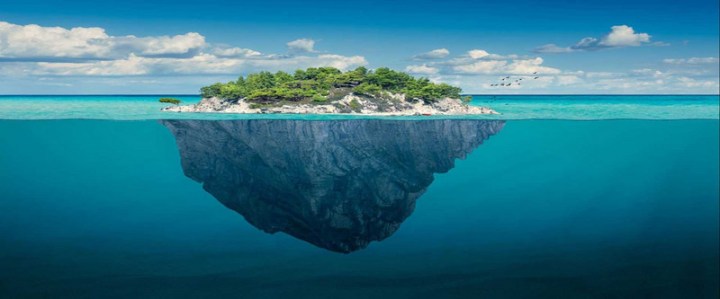
Floating islands

Writers of fantastic fiction face a unique challenge when they sit down to write. They can imagine anything happening anywhere anytime. Their only limitation is making their story readable. One difference between science fiction and fantasy is science fiction implies its stories are not pure fantasy but something reality could have generated. Robert Reed’s story, “Good Mountain” I believe was intended for the realm of the believable, but it feels somewhat like The Bible, not meant to be the literal truth but nonetheless, a message we should interpret.

Robert Reed is a prolific author whose superpower is imagination. I’m not sure “Good Mountain” gets the admiration it deserves. The reason I’m writing about this story is  “Good Mountain” is included in The Very Best of the Best edited by Gardner Dozois, which I’m reviewing one story at a time. This story struck many 2006 reviewers as among the best in One Million A.D., an original anthology edited by Gardner Dozois. But some of those reviewers have gotten distracted by the giant worms that the characters ride and ignored the story’s other more fantastic elements.

Don’t let my enthusiasm for this story suggest it’s a masterpiece, it’s not, but it’s very good. I keep trying to ascertain what would put it over the top but that’s hard to put into words. The story is a third person account of Jopale, a refuge, who meets two significant characters on his fleeing journey, Brace the worm conductor, and Do-ane, a secretive woman with a large book. None of these figures have any literary depth to them, but they each stand for something like characters in a parable. “Good Mountain” is like an oracle, you can read anything into its message. I read it as a metaphor for climate change and the end of our civilization, but I think it will work with any end-of-the-something scenario.

I want to use the word “recapitulate” to describe “Good Mountain” in the same way I used it to review “The Potter of Bones” by Eleanor Arnason. Reed and Arnason use their stories of alien worlds to recapitulate what goes on in our world. They feel like fables or allegories. In “Good Mountain” the characters call themselves human, but we don’t know if they’re Homo sapiens. They do not know about space travel or Earth. In some ways, this story reminds me of Asimov’s “Nightfall.” Jopale’s planet is a strange one, comprised of floating islands that occasionally coalesce into continents long enough for civilizations to arise, but eventually come apart in cycles of natural catastrophes. Reed creates a beautiful biosystem of islands made of wood, with their roots dangling into the ocean, floating on a planetary sea that always faces its star, with a civilization built without metal. Fire and methane are what these people fear.

Arnason and Reed are plowing the same pasture in the science fiction landscape. They accept the challenge of writing the fantastic by creating whole worlds, but they aren’t the kind of worlds that true believers of the final frontier expect humans to colonize. Reed and Arnason aren’t science fiction writers working to scientifically imagine life on exoplanets. Their worlds are metaphorical. Their worlds aren’t NASA discoverable, but Impressionistic worlds of their imagination. Their stories remind me of N. K. Jemison’s recent work, the kind of science fiction that evolved out of Ursula K. Le Guin’s tales in the 1960s.

I get the feeling Robert Reed has much to say about our reality, but he speaks his mind in the language of science fiction. I’m not sure I can properly translate his communique because of its metaphorical nature. I can’t tell if he’s just telling us about a screwy dream, or if he wishes to be like an Old Testament prophet, preaching “The End is Near.” The story’s final twist would have given Philip K. Dick a Cheshire Cat smile.

“Good Mountain” is about Jopale fleeing fires racing across the continent. He rides a giant worm to a distant port, traveling with others hoping to escape to their collective doom. The escapees bring mockmen, their servant/slaves, who may or may not be human, but which give the story an extra twist that I can’t decipher. Along the way, this worm of fools hears a whispered tale, one that offers an enchanted sliver of hope, causing each to selfishly seek their own salvation at the expense of the others. Throughout this story, the citizens of this exotic land always act on self-interest without guilt, except for Brace, the worm handler. That’s why this story feels like a morality play.

One of the benefits of reading a science fiction anthology is learning about new authors and new types of science fiction. I’ve read a few stories by Robert Reed over the years but never researched into his background. For instance, I did not know about his Greatship series, of which “Good Mountain” somehow fits late in its cycle, so I’m now intrigued to find out more. Also, this story could be meta-fiction about science fiction, another avenue to pursue.

“A favorite science fiction writer of mine is William Faulkner!” Reed told Locus in an interview in 1998. That might be a clue to why I liked this story. It’s not my normal kind of science fiction. Both “Good Mountain” and “The Potter of Bones” are novellas and are my favorite stories of the six I’ve read so far in The Very Best of the Best. I’m just beginning my journey through this vast anthology. Reading and writing about it has become a course in science fiction. You can jump back to the beginning of my journey here and follow the links of the stories I’ve reviewed so far.

Read other reviews of “Good Mountain” at:

James Wallace Harris, March 6, 2019

“Tin Marsh” by Michael Swanwick

Venus

When is it appropriate to call bullshit on the science fiction in science fiction? Michael Swanick’s story, “Tin Marsh” is set on Venus. It’s about a woman and man who team up to prospect for metal on Venus but who come to intensely hate each other. The story is a compelling read that makes turning the pages easy, but its setup is completely unbelievable to me.

Since we’re reviewing the stories in The Very Best of the Best, an anthology of science fiction first published between 2002 and 2017, I think the title challenges us to ask: What is great science fiction and are these stories the very best examples of the art.

The basic formula for writing science fiction is to think up a far-out idea and then contrive a plot to embed that idea into a story. The very best science fiction will push the limits of our imagination by speculating on just what might be possible. The very best science fiction is in the box with Schroedinger’s cat. Science fiction has to wait for science to open the box.

Early science fiction wondered if humans could go to the Moon or Mars in a time when we knew little about the solar system. In what I call Pre-NASA Science Fiction, writers imagined Venus and Mars to be habitable worlds that often included intelligent life. Post-NASA science fiction has had to live with what its space probes discovered. Modern science fiction still tries to imagine us living on almost any piece of real estate in the solar system, but is that realistic? I believe science fiction should be judged on scientific realism, and readers need to call bullshit when they see it.

“Tin Marsh” has us believing humans could work on Venus and make a profit. Swanwick has his characters living in power suits that withstand the heat, pressure, and corrosive atmosphere of Venus. I call bullshit on this idea for two reasons. I don’t believe such suits could ever be engineered, nor will mining metal on Venus ever be profitable. No one will invest trillions to earn billions.

Now the plot of “Tin Marsh” is more believable. Two people working closely come to hate each other. Simple enough. Happens all the time. “Tin Marsh” first appeared in Asimov’s Science Fiction in 2006. 20th-century science fiction has been much criticized for the lack of female characters, so in this 21st-century story, gender is balanced with one male (MacArthur) and one female (Patang). The trouble is the gender equality ends there. Patang has driven MacArthur to murder.

The story has MacArthur chasing Patang across the surface of Venus to kill her slowly. MacArthur wants to torture Patang as much as possible before she dies. He hates her that much. And the reasons why MacArthur hates Patang are all the clichéd reasons men hate women. Of course, the reverse is also true. Is the story about Patang trying to survive being murdered, or is it really about why working with women on Venus would drive a man crazy? Because we’re told the story from Patang’s POV, we feel it’s about violence against women. But some male readers are going to identify with MacArthur. And what does the ending say about who is right?

Relying on violence as a plot driver is the core problem of this story, the same as the last story I reviewed, “Dead Men Walking” by Paul McAuley. McAuley’s story also featured a female character in a role that would have been previously given to a male. In both cases, the female role is contrived and connected with violence. In the McAuley story, the woman is given the equal opportunity to play a sadistic Jack-the-Ripper type killer, while Patang is just a sharped tongue woman who ends up torturing her partner in madness.

Is this story the very best of the best? It depends on the rules of judgment. Is it well-written and readable by SF standards? Yes. Is it full of action? Yes. Is it set in an exotic locale? Yes. Will it push emotional buttons? Yes. Does it stand out against its competition? Yes.

Is it scientific? No. Does it offer any ideas about how humans could actually work on Venus? No? Does it expand the frontiers of science fiction? No. Does it say anything about the heart in conflict with itself? Not really. Is it politically correct? You decide.

I have to wonder if Gardner Dozois assumes the very best of science fiction only requires certain writing features but not others? Although science fiction is hugely popular in our society, it’s not a popular reading category, especially for short stories. Writers have to produce a product that editors will buy, and editors have to buy stories that readers will read. For decades science fiction short stories were a product mostly consumed by adolescent males, but that’s changing. Is this 2006 story already PC dated in 2019? Doesn’t society change faster than science fiction imagines it?

Short stories also have to compete with novels, television shows, video games, movies and other kinds of modern entertainment. Short stories were at their peak of popularity before 1950, and they’ve been in decline ever since. Gardner Dozois was the most successful editor of short science fiction since John W. Campbell Jr. He should have the pulse of readers of short science fiction.

I have to assume Dozois knew his market. But I’m not sure if I’m in that market. Science fiction means a lot of different things to a lot of different people. The psychological common denominator of science fiction’s appeal is hope and fears about the future. But do we evaluate our possible futures with science fiction, or just use the genre to escape the present? That’s something I have to ask while reviewing these stories.

Believing humans will ever work on Venus is a fantasy. It makes me wonder if science fiction even tries to be realistic anymore? Are writers of science fiction merely using highly imaginative but contrived ideas to sell stories?

I believe we have to ask if our science fiction writers are Baron Munchausen or H. G. Wells?

James Wallace Harris, March 4, 2019


“Dead Men Walking” by Paul McAuley

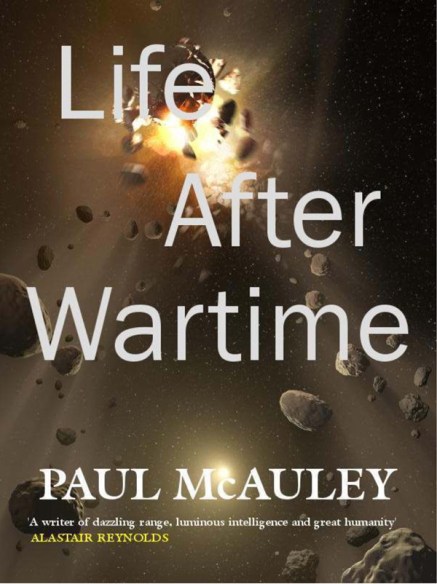
Life-After-Wartime-by-Paul-McAuley

“Dead Men Walking” by Paul McAuley is the fourth story in The Very Best of the Best edited by Gardner Dozois. I’m reviewing this anthology one story at a time while contemplating the nature of writing science fiction. “Dead Men Walking” first appeared in Asimov’s Science Fiction in 2006. In 2007 it was recognized as one of the best stories of the year by both the Dozois and Hartwell/Cramer annuals. In 2013 “Dead Men Walking” was reprinted in Clarkesworld (read/listen) and in Pual McAuley’s ebook collection, Life After Wartime, part of his Quiet War series.

“Dead Men Walking” is the first story in The Very Best of the Best that I thought of as traditional straight-ahead science fiction. The story is told in the first person by a man who is dying. He’s recording his last thoughts for whoever discovers his body. This immediately reminded me of the classic film D.O.A. – not the newer 1988 film, but the great 1949 version with Edmond O’Brien. It’s a highly specialized writing challenge to pull off a first-person account of a dying character. McAuley’s effort is tight and succeeds. However, by its very nature, a murder victim’s POV involves violence.

I’m not knocking “Dead Men Walking” but I’ve reached an age where violence in fiction is not the page-turning force it was when I was younger. I no longer care whodunit. However, I can still watch and read mysteries and thrillers for their settings and characters.  This story takes place on Ariel, the fourth-largest moon of Uranus. Ariel is a cryogenically cold world I doubt humans will ever settle, but Paul McAuley builds a prison there. However, because of the low gravity, McAuley makes it sound rather appealing place to live or read about:

I have a one-room treehouse. It’s not very big and plainly furnished, but you can sit on the porch of a morning, watch squirrel monkeys chase each other through the pines. I’m a member of Sweat Lodge #23. I breed singing crickets, have won several competitions with them. Mostly they’re hacked to sing fragments of Mozart, nothing fancy, but my line has good sustain and excellent timbre and pitch. I hope old Willy Gup keeps it going … I like to hike too, and climb freestyle. I once soloed the Broken Book route in Prospero Chasma on Miranda, twenty kilometres up a vertical face, in fifteen hours. Nowhere near the record, but pretty good for someone with a terminal illness. I’ve already had various bouts of cancer, but retroviruses dealt with those easily enough. What’s killing me—what just lost the race to kill me—is a general systematic failure something like lupus. I couldn’t get any treatment for it, of course, because the doctors would find out who I really am. What I really was. I suppose that I had a year or so left. Maybe two if I was really lucky. It wasn’t much of a life, but it was all my own.

Roy Bruce is about to die. He’s outside the habitat, lying in the cold with little oxygen to breath, and useless legs. This tale is how he got there. It’s a good story, one that would have trilled pulp readers in the 1940s and 1950s. I enjoyed listening to it, however, I would have preferred to know more about life on Ariel than about another casualty of war. Those treehouses and crickets piqued my interest. That’s the kind of details I love in science fiction.

“Dead Men Walking” works very well as a shorter work. It’s well plotted. It begins with a bang and ends with satisfaction. Even though I also greatly admired “The Potter of Bones” and  “The Little Goddess” with their highly creative world-building and textured details, they were both novellas that went on too long.  “Dead Men Walking” is a novelette, and for me personally, that’s about the perfect length for science fiction. I love science fiction at its shorter lengths, but usually, a short story is too short, and a novella is too long, and novelettes are just right.

However, short stories and novelettes need resolvable conflicts, and all too often in space adventures, that involves killing humans or aliens. One of the aspects of fiction I want to study while reading The Very Best of the Best is how often violence is used as the plot engine. Think about all the science fiction movies and television shows you watch. How many use war, crime, killers, invasions, etc to keep your interest? The conflict in “Rogue Farm” was resolved in death. Violence often tends to make science fiction feel like fodder for adolescent males. For example, how many successful video games aren’t shooters of some kind? By the way, the two novellas had little or no violence.

Like I said in an earlier essay about this anthology, these stories are great reads but usually, they aren’t my kind of science fiction. Creating non-violent conflict in stories is a challenge. Of course, the next story is all about violence.

James Wallace Harris, March 3, 2019

“Rogue Farm” by Charles Stross

Rogue Farm by Charles Stross

Stories by Charles Stross often have a gonzo-tech view of the future. The illustration above shows a farmer with a semi-automatic shotgun and his wife in a battle-suit defending the farm they are squatting on against a roving “farm” that is a collective of post-humans hoping to leave Earth for Jupiter. “Rogue Farm” by Charles Stross is the second story in Gardner Dozois’ The Very Best of the Best, an anthology of short science fiction published from 2002-2017.

Yesterday I began my contemplation of writing science fiction by reviewing the first story, “The Potter of Bones.” My conclusion was great science fiction requires a richness of world-building. In “Rogue Farm” Charles Stross looks into the near future, after the technological singularity, to see our lives transformed. The fictional world Stross builds is our current society in savage decline as it metamorphizes into a new society infected by intelligent machines. There’s a civil war between humans and post-humans, and readers aren’t sure which side to take.

Stross accepts the inevitability of technological singularity, feeling sorry for the vanquished, but not condemning the usurpers. The rogue farm of the story is a 21st-century Frankenstein we feel sympathy for while rooting for the farmer who wants to destroy it. “Rogue Farm” is a much more successful story than “The Potter of Bones” being reprinted at least 7 times, performed for Escape Pod and made into a short film.

By all the yardsticks but one, I believe “Rogue Farm” should be measured as excellent short science fiction. It’s well written, it’s cutting edge science fiction, it’s entertaining, it has a high density of science fictional ideas, it’s very damn creative, and it’s delightfully weird, a modern-day Alice in Wonderland. My only criticism is I disagree with Stross on how the technological singularity will unfold in the future. I don’t doubt we’ll have sentient machines, but I do doubt we’ll ever have a brain-machine interface that will allow us to integrate with machines like Stross imagines.

My personal speculation is humans will be left behind. We will not be uplifted by becoming cyborgs or transformed by nanobots, or re-engineered by gene manipulation into post-human greatly different from what we are now, or have our minds downloaded into clones, robots or virtual realities. Maybe this is Luddite thinking on my part, but I don’t think there is any science to support digitizing our soul.

Some readers will believe that Stross is extrapolating a possible future, but I don’t. That means I have to accept “Rogue Farm” as a clever fantasy, and not science fiction. I know I have a rather extreme and strict definition of science fiction that doesn’t jive with commonly accepted definitions. And if I’m wrong and science can create a mind-machine interface between cell and circuit, this story will fit my definition.

Since “Rogue Farm” is in an anthology of science fiction short stories labeled the very best of the best, I have to assume its state-of-the-art science fiction. And I believe that’s perfectly true by the common definition of science fiction. But by my definition, I assume writers and readers of science fiction are playing a very precise game. The goal of this game is to speculate about the future using extrapolation based on all the science we currently know.

Science fiction makes assumptions that are often disproven. H. G. Wells theorized that we could time travel by suggesting time was just the fourth dimension. We have learned a lot more about the nature of time since then, and time travel is probably impossible. Science fiction writers have been imagining faster-than-light travel for about a century, even though Einstein disproved it before they started.

I think the future intelligence of computers is almost unlimited. And I believe Homo sapiens can be intentionally improved and redesigned. I just don’t think our minds can be transferred to machines, or even interfaced with them. I believe our bodies can be supplemented with machines, but I just can’t see how my thoughts can be augmented by digital minds. Like I said, I could be wrong, so science fiction is the perfect place to speculate about the possibilities. We can make muscle-machine interfaces, and we can make the pattern recognition abilities of our current physical senses interface with electronic devices, and we’re even working on brain scanning technology that can carefully discern the activity of our brains, but I just can’t see how we’re going to bridge that last mile between chemical thoughts and digital thoughts.

Of course, isn’t this the exact territory of the science fiction event horizon? The science fiction stories I fantasize writing deal with this exact issue. And maybe that’s why I’m skeptical of the world-building of Charles Stross – I would just build it somewhat differently.

James Wallace Harris, March 1, 2019

“The Potter of Bones” by Eleanor Arnason

Asimovs-2002-09

The first story in The Very Best of the Best edited by Gardner Dozois is “The Potter of Bones” by Eleanor Arnason. It originally appeared in Asimov’s Science Fiction from 2002. This story is part of Arnason’s Hwarhath series of tales about a planet of intelligent fur-covered beings where homosexuality is the norm for relationships and heterosexuality is used for procreation. Eleanor Arnason stories explore the themes of art, anthropology, sociology, sexuality, and feminism by creating science fiction stories that feel like folk tales and allegories. The narrator of “The Potter of Bones” is from the planet’s present time, and she is telling stories that come down from early history, that could be closer to myths.

The heroine of this story is Tulwar Haik. Tulwar is a clan name, so her personal name is Haik. She has become a legendary figure on this alien planet. Haik was a potter who loved finding fossils and is known on her world for developing the theory of evolution. Haik’s story recapitulates Darwin’s discoveries on Earth. “The Potter of Bones” uses a richly drawn fantasy about aliens that sound human but look like furry animals to comment on human society, especially about gender and race.

Is this story science fiction? Eleanor Arnason’s stories often remind me of stories by Ursula K. Le Guin. They’re set on other worlds, which makes them science fiction, but they often feel like folk tales, which makes me think they’re fantasy. Their stories are intensely sociological and often come across as fables for grown-ups.

I am listening to The Very Best of the Best while thinking about the nature of science fiction and how it is written. Being the lead story in a collection of science fiction that claims to be the very best of the best, suggests that Gardner Dozois must have loved “The Potter of Bones” very much. He bought it for Asimov’s when he was the editor there, included it in his annual best-of collections for America and Great Britain and reprints it again here. I had read “The Potter of Bones” when it came out because I like Arnason’s stories about Hwarhath. I found it a compelling read, especially now that I got to listen to it, and thoroughly enjoyed the story, but to be honest, it’s not my kind of science fiction.

How can “The Potter of Bones” be science fiction that entertained me a great deal and not be my kind of science fiction? And how many kinds of science fiction are there? See, that’s why I want to review the stories in The Very Best of the Best. I’ve listened to the first three stories since yesterday (and two are novellas) and even though each is dazzling in their own way, none of them were my kind of science fiction.

I’ve always wanted to write science fiction. And I’ve tried. I’ve even attended Clarion West Writer’s Workshop, but my stories were never any good. I’m reading and listening to this anthology very closely to study what makes science fiction tick. “The Potter of Bones” stands out for its worldbuilding. Arnason has been writing Hwarhath stories since 1993. They were collected into Hwarhath Stories: Transgressive Tales by Aliens in 2016. I generally disliked science fiction series because my favorite aspect of science fiction is its ideas, so stories that constantly recycle its world-building ideas seem less impressive with each successive story.

However, I’m discovering why writers love writing stories in a series. It takes a tremendous mental effort to create new worlds for science fiction. The reason why the Harry Potter stories are the most successful on the planet today is that J. K. Rowling imagined such an incredibly detailed fictional world. Starting from scratch every time you sit down to write a story would give each story a costly overhead. If the writer can assume their readers already understand how the fictional world works they can get down to the storytelling quicker.

Reading the stories in The Very Best of the Best perfectly illustrates the importance of world-building to writing science fiction and fantasy. It often explains why stories get rated 5-stars at Rocket Stack Rank. It also tells me that if I want to write science fiction I’ve got to up the information density of my fiction to include an abundance of imagined details. Here’s the opening for “The Potter of Bones”:

The northeast coast of the Great Southern Continent is hilly and full of inlets. These make good harbors, their waters deep and protected from the wind by steep slopes and grey stone cliffs. Dark forests top the hills. Pebble beaches edge the harbors. There are many little towns. 

The climate would be tropical, except for a polar current which runs along the coast, bringing fish and rain. The local families prosper through fishing and the rich, semi-tropical forests that grow inland. Blackwood grows there, and iridescent greywood, as well as lovely ornamentals: night-blooming starflower, day-blooming skyflower and the matriarch of trees, crown-of-fire. The first two species are cut for lumber. The last three are gathered as saplings, potted and shipped to distant ports, where affluent families buy them for their courtyards. 

Nowadays, of course, it’s possible to raise the saplings in glass houses anywhere on the planet. But most folk still prefer trees gathered in their native forests. A plant grows better, if it’s been pollinated naturally by the fabulous flying bugs of the south, watered by the misty coastal rains and dug up by a forester who’s the heir to generations of diggers and potters. The most successful brands have names like “Coastal Rain” and emblems suggesting their authenticity: a forester holding a trowel, a night bug with broad furry wings floating over blossoms.

Can you even count every detail that Arnason thought up as she typed those sentences? And don’t confuse the technical term “world-building” used in science fiction to mean just describing how a fictionalized world works. In the next story in this anthology, Charles Stross describes Earth just a few decades into the future and it is overflowing with strangely different details, each of which had to be imagined by Stross. World-building can include any detail that paints the science fiction or fantasy of a story. Here’s how we learn that Haik got into fossils:

The young Tulwar, her playmates, found the topic boring. Who could possibly care about shells made of stone? “They don’t shimmer like living shells, and there’s nothing edible in them. Think about living shellfish, Haik! Or fish! Or trees like the ones that support our family!” 

If her kin could not answer her questions, she’d find answers herself. Haik continued her study. She was helped by the fact that the strata along the northeast coast had not buckled or been folded over. Top was new. Bottom was old. She could trace the history of the region’s life by climbing up. 

At first, she didn’t realize this. Instead, she got a hammer and began to break out fossils, taking them to one of the town’s many empty houses. There, through trial and error, she learned to clean the fossils and to open them. “Unfolding with a hammer,” she called the process. 

Nowadays we discourage this kind of ignorant experimentation, especially at important sites. Remember this story takes place in the distant past. There was no one on the planet able to teach Haik; and the fossils she destroyed would have been destroyed by erosion long before the science of paleontology came into existence. 

She began by collecting shells, laying them out on the tables left behind when the house was abandoned. Imagine her in a shadowy room, light slanting through the shutters. The floor is thick with dust. The paintings on the walls, fish and flowering trees, are peeling. Haik—a thin red adolescent in a tunic—bends over her shells, arranging them. She has discovered one of the great pleasures of intelligent life: organization or (as we call it now) taxonomy. 

This was not her invention. All people organize information. But most people organize information for which they can see an obvious use: varieties of fish and their habits, for example. Haik had discovered the pleasure of knowledge that has no evident use. Maybe, in the shadows, you should imagine an old woman with white fur, dressed in a roughly woven tunic. Her feet are bare and caked with dirt. She watches Haik with amusement. 

In time, Haik noticed there was a pattern to where she found her shells. The ones on the cliff tops were familiar. She could find similar or identical shells washed up on the Tulwar beaches. But as she descended, the creatures in the stone became increasingly strange. Also, and this puzzled her, certain strata were full of bones that obviously belonged to land animals. Had the ocean advanced, then retreated, then advanced again? How old were these objects? How much time had passed since they were alive, if they had ever been alive? Some of her senior kin believed they were mineral formations that bore an odd resemblance to the remains of animals. “The world is full of repetition and similarity,” they told Haik, “evidence the Goddess has little interest in originality.”

Now part of this world-building is character development. Notice how Arnason brings in human history to weave her story. Arnason needs to know geology and archeology to sculpt her theme. And taxonomy played a very important part in Darwin’s discovery of evolution.

“The Potter of Bones,” tells several stories about Haik. I won’t quote them all, but Haik has to become a potter. Eventually, she becomes a lover of a traveling actress, Dapple. Haik has children, which Arnason uses to explain mating customs. And Haik grows old. “The Potter of Bones” gathers the legends about Haik and Dapple that the narrator uses to understand their planet’s history, which lets Arnason comment on how we know what we know about our past. “The Potter of Bones” is also about the different forms of communicating history and story.

Eleanor Arnason uses her stories about furry aliens to analyze human society. Does that mean a good science fiction writer must also be a philosopher and cultural observer? If I just consider the three stories I’ve read so far in this anthology, then the answer is a definite yes.

I’ve always judged science fiction by the validity of its speculation about future technology or if extrapolated trends will actually unfold. With Arnason and writers like Le Guin, should I wonder if their imagined aliens and alien societies could possibly exist? Ultimately, isn’t the world-building in “The Potter of Bones” more akin to Mission of Gravity by Hal Clement or Dragon’s Egg by Robert L. Forward than to Kim Stanley Robinson’s Mars trilogy?

Or, is Arnason’s world-building more like Tolkien’s Middle Earth, not meant to be speculation at all, but a deeply adult fairy tale? Gardner Dozois calls “The Potter of Bones” science fiction. The story is about geology, fossils, evolution, classification, taxonomy, so there is a lot of science in it. Of course, it could be a fantasy that uses science rather than magic as its unifying theme.

My kind of science fiction are stories that speculate and extrapolate about the future. There are all kinds of science fiction, and I read all kinds. But the kind I love most is the science fiction that teaches me about the future in the same way history helps me model the past. “The Potter of Bones” is not that kind of science fiction. Of course, it might be science fiction that teaches us about who we are now.

Recommended Reading

James Wallace Harris, 2/28/19


Taxonomy of Science Fiction Themes

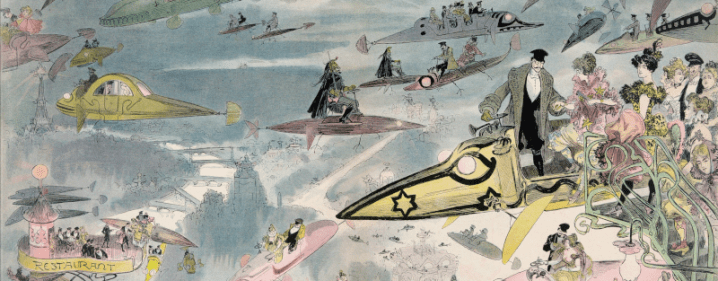
leaving the opera in the year 2000 by albert robida 800

When it comes to reading science fiction, I’ve reached an age where nothing new is under the sun. I feel like I’m approaching the weary wisdom of the author of Ecclesiastes when looking over our genre. And today I’m feeling more like Linnaeus and want to classify all the themes of science fiction. This will be a big undertaking that I won’t be finished soon. I’ve attempted this before with “Classifying Science Fictional Ideas.” What I want to do now is decide which approach should I start building the foundation of my tree?

During the past couple of years, I’ve suggested to other science fiction fans that science fiction might have a limited number of themes. Most have not liked the idea — they want our genre to be without limits. But I’m not so sure. It seems to me that science fiction covers specific territories it has claimed over the years. Reading more 19th-century science fiction has shown me we’ve been exploring the same lands for a very long time.

If we borrow from Linnaeus scheme of Life > Domain > Kingdom > Phylum > Class > Order > Family > Genus > Species and replace “Life” with “Science Fiction” what would be the Domains of our genre? I’m currently toying with:

  • Humans
  • Aliens
  • Artificial beings
  • Machines
  • Society
  • Earth
  • Space
  • Time
  • Dimensions

I’m thinking about the smallest to largest objects science fiction explores in speculation and extrapolation. I could also use point of view (POV) as my basic domains and have:

  • Humans
  • Aliens
  • Artificial beings

All stories depend on the human perspective even when imagining how aliens and robots think. Should the root domains of science fiction be:

  • Extrapolation (if this goes on)
  • Speculation (what if?)

Currently, we divide life into three domains, Bacteria, Archaea, and Eukaryota. Just a few decades ago we only had two domains. So starting science fiction with just two domains might be fine. We need to think about this. How do aliens and robots fit in, for example?

Wouldn’t robots come under extrapolation and aliens speculation? We’re building robots now that are getting smarter and smarter, so it’s no big deal to extrapolate they could eventually become smarter than us. Other than statistics, we have no reason to believe aliens are out there. We can only say, “What if intelligent beings exist on other worlds?”

But what if we ask, “What if robots were ten times smarter than people?” We now have robots under both extrapolation and speculations. Is that problematic? If Machines were a domain we could organize them this way:

  • Machines
    • Nonsentient
      • Computers
      • Matter transporters
      • Holodecks
      • Rockets
    • Sentient
      • Robots
      • AI Minds

But I don’t like that either. What if machines were only inventions and didn’t deal with sentient minds? What if we had a domain for Artificial Beings that included AI machines, as well as artificially created life like in the classic short story “Microcosmic God” by Theodore Sturgeon?

If we think about it, speculation and extrapolation are like mechanisms within nature, such as inheritance and evolution. Linnaeus was actually classifying objects. Science fiction is inspired by objects in the real world such as people, machines, aliens, robots, cities, Earth, moons, planets, stars, galaxies, and objects we assume could exist such as aliens, intelligent machines, artificial life, digital universes, as well as things that probably can’t exist like time machines and time travel.

We could divide science fiction into the domains:

  • What exists
  • What will exist soon
  • What theoretically could exist according to science we know
  • What theoretically can’t exist according to the science we know

But we’re back into splitting robots into different domains, maybe into all four. Once again, I’m thrown back to my object-oriented classification. For example, take Earth:

  • Earth
    • Environmental catastrophes
    • Geological catastrophes
    • Cosmological catastrophes
    • Geoengineering
    • Death of the Earth

I think this works nicely. Each of these could be speculation or extrapolation, or it could be stories based on things happening now or will happen soon, maybe could happen, or even wild speculation like Hothouse by Brian Aldiss that will never happen.

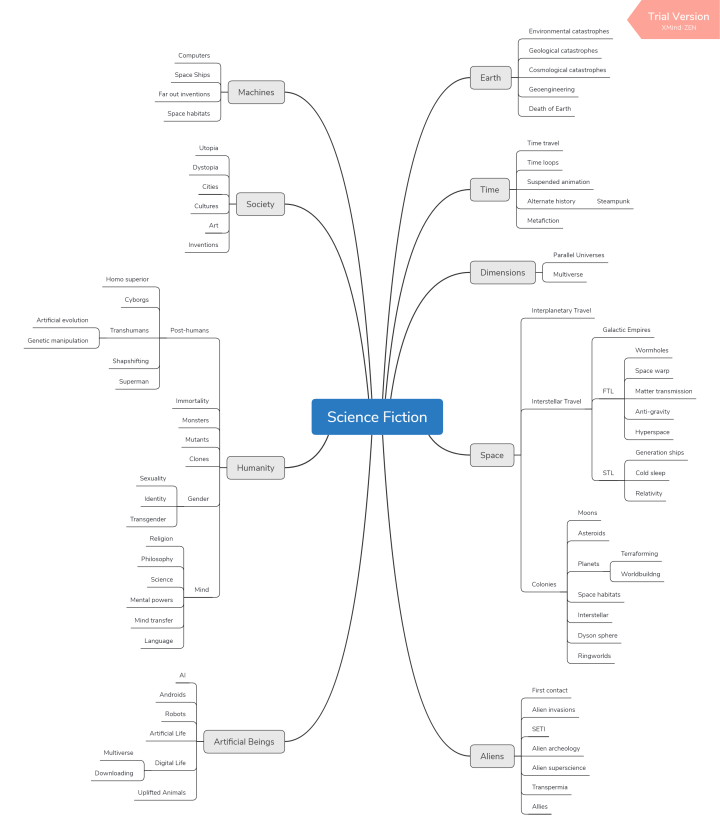
This is my current mindmap:

science fiction taxonomy mindmap

My plan is to read or review old science fiction to see how those stories would fit into the scheme, and grow this tree out with many more leaves.

If you have any ideas about classifying science fiction, please leave a comment below.

James Wallace Harris 1/15/19