“Ghost V” by Robert Sheckley

Ghost V” by Robert Sheckley is story #20 of 52 from The World Treasury of Science Fiction edited by David G. Hartwell (1989), an anthology my short story club is group reading. Stories are discussed on Tuesdays, Thursdays, and Saturdays. “Ghost V” first appeared in Galaxy Science Fiction (October 1954).

Back around 1968, when I was in high school, I had two friends that also read science fiction – Jim Connell and George Kirschner. We’d often sit around and talk about the science fiction we read over our short lifetimes. Mostly, we couldn’t remember titles or authors but always remembered a unique idea within the story. I remember George excitedly telling Connell and me about “Ghost V” back then. I’ve read it since, but probably in the 1970s. I never remembered the story title or details. Just the trick ending.

So when I started reading “Ghost V” again today I remembered nothing about it. As soon as I started reading it I thought, “Hey, this could be that story George had told us about over half a century ago!” And my hunch was right. I remembered the idea that Sheckley used as the punch line of his story. It has always been memorable, and I’ve even told other people about it a few times because it’s a charming little idea with a neat kind of connection to reality.

Now, the question I have is: should I tell the ending here? I never know how much I should say about a story when writing about them. I really want to discuss stories, not review them. To do the same thing that Connell, George, and I did way back when — talk about the most exciting and memorable ideas. I want to just bullshit about the idea or ideas that make a particular story great for me.

“Ghost V” isn’t very long. You could go read it here. It’s part of a series of nine stories Robert Sheckley wrote about the AAA Ace Planet Decontamination Service. “Ghost V” is essentially a joke. It’s about two guys, Richard Gregor, and Frank Arnold who exterminate problem creatures on newly discovered planets. Think Ghostbusters. Gregor and Arnold don’t believe in ghosts or other supernatural beings, but they are hired to get rid of supernatural threats on Ghost V.

Sheckley sets up the story when Mr. Ferngraum comes to visit their office to hire Gregor and Arnold. Ferngraum is a planet flipper, buying planets cheap, and selling them for a profit. He tells Gregor and Arnold how he invested more than his usual amount in a quality planet that he hoped to make a killing with, unfortunately, the first two expeditions to the planet were mysteriously wiped out, killing colonists in the most hideous ways. If they can’t help him he’ll go bankrupt.

By the way, you have to understand the mood of the story. Think of The Hitchhiker’s Guide to the Galaxy. For me, I recalled Sheckley’s novel, Dimension of Miracles which features a minor character we know of as God, who did a cut-rate contracting job creating Earth. The level of humor is not very sophisticated in “Ghost V,” young people might put it on the level of the current TV show Ghosts.

“Ghost V” is silly and completely unscientific, but unlike some of the stories in The World Treasury of Science Fiction, it’s told in a way that I believe the setup while reading it. That’s the difference between “Ghost V” and the stories in the anthology like “The Chaste Planet” and “Tale of a Computer Who Fought a Dragon,” which I’ve criticized for not using the kind of storytelling techniques I prefer. If those stories had been told the way Sheckley told “Ghost V,” I probably would have liked them.

Sheckley tells his tall tale realistically, with a straight face. His storytelling technique is no different from the way Hemingway writes about real-life bullfighting or deep-sea fishing.

Gregor goes off to Ghost V knowing that colonists in two previous expeditions were slaughtered by some kind of horrible scientifically undetectable monsters. Sheckley aims to scare us too. Arnold stays home to be Gregor’s research consultant.

Gregor lands with no problem and sets up living in the quarters of an earlier expedition, the ones who had been sun worshippers. (I assume we’re to read nudists.) That night, after he turns off the light and goes to bed, he sees his clothes come to life in the shadowy dark and menacingly approach him. He blasts them to pieces. Gregor then turns on the light and radios his partner. Arnold claims to have a theory, but Gregor remains frightened.

The second monster Gregor meets is a Purple Striped Grabber. The Grabber wants to eat Gregory with chocolate sauce. The Grabber also informs Gregor that he can only eat him on the first of the month, which is the following day, and asks Gregor for a favor. The monster wants Gregor to eat apples before he comes back because that will make him taste sweeter. The monster leaves and Gregor calls Arnold again. Arnold says this new report confirms his theory. Ghost V monsters are our childhood fears made real. That there must be something in the environment that messes with our brains.

The next day, when the Grabber returns Gregory remembers a monster like it from his childhood, recalling it could be stopped with a magic word. After frantically dredging up several magic words while the Grabber is trying to eat him, Gregor hits on the right one and is saved. (Hey, Gregor was the name of the character in Kafka’s “The Metamorphosis.”)

The next monster is the Shadow. Eventually, Gregor kills it with a water pistol.

Arnold arrives and they discuss the situation clarifying the solution, but the next monster that shows up, the Grumbler, seems to be invincible. Gregor and Arnold quickly take off for Earth thinking they’re escaping the Grumbler but once in space realize the Ghost V atmosphere at gotten into their ship. It must contain a hallucinogenic drug, one that will make them kill themselves. Their only hope is to hide from the Grumbler until the ship’s atmosphere is recycled.

When all hope is lost, they remember one solution that could destroy all childhood fears, and it saves them.

That solution is what I remembered from all these decades. I remembered nothing else about the story, so when I retold it, my summary of the story was always made up, except for the solution.

Should I tell you?

Or do you want to guess?

James Wallace Harris, 6/20/23

“The Green Hills of Earth” by Robert A. Heinlein

The Green Hills of Earth” by Robert A. Heinlein is story #19 of 52 from The World Treasury of Science Fiction edited by David G. Hartwell (1989), an anthology my short story club is group reading. Stories are discussed on Tuesdays, Thursdays, and Saturdays. “The Green Hills of Earth” first appeared in The Saturday Evening Post, on February 8, 1947.

I don’t know how many times I’ve read “The Green Hills of Earth.” I believe every time before I ignored most of the story, responding and remembering the final part. Heinlein does a great deal of wordy tap dancing before he gets down to a rather simple story. This time I realized that all typewriting soft-shoeing is the real gold in the story, and the final emotional part that I’ve always remembered is pyrite that tricked my eye.

With this reading, I was bowled over by the high concentration of imaginative details in “The Green Hills of Earth.” Heinlein sets up a whole interplanetary space-faring society, alluding to the Harriman’s corporation which is chronicled in later stories. There are politics and laws – the Tri-Planet Treaty and The Space Precautionary Act. There are Venusians and Martians, which aren’t detailed, but I imagined in passing, that is fleshed out in later stories like Red Planet and other juveniles, Stranger in a Strange Land, and Double Star. Heinlein throws in rockets, their makes, and models. And more interestingly, Heinlein alludes to languages that don’t yet exist, and how they relate to our current languages. Plus he talks about pop culture, music, and poetry. He does all this in a faux academic style with hints of satire on how future history and sociology work.

Heinlein also sets up the solar system that’s been explored enough to allow for commercial trade. Heinlein’s spacemen are working-class men who seemed modeled on 1940s commercial shipping and merchant marines and are nothing like NASA’s astronauts. Heinlein had high hopes for the final frontier. Just read through these four paragraphs to see how Heinlein embeds details into his story.

I’d say the first two-thirds of “The Green Hills of Earth” is a kind of prologue that sets up one dramatic scene. Heinlein is experimenting with his writing, going beyond normal pulp fiction. When I think about it, science fiction went through several new waves that caused mutations in SF writing techniques. This story was published in a slick magazine, The Saturday Evening Post, something revolutionary for the genre and Heinlein. The term science fiction wasn’t widely known in 1947. It was just coming into vogue in the general public outside of fandom. Heinlein’s stories for the slicks were breakthroughs, helping the general public move away from thinking of science fiction as Saturday serials “Buck Rogers stuff.”

And we can’t ignore the poetry. This story is full of verse and is about a poet who has become mythic. I’m not big on poetry, so I’ve tended to skim over it in the past. I tried harder this time to read Heinlein’s lines of poetry. I have no idea if Heinlein’s verse is any good, but I did study it enough this reading to realize he put a lot of work into writing it. In “The Green Hills of Earth” Heinlein says about Rhysling, his Blind Singer of the Spaceways, “It mellowed his approach, changed his doggerel to verse, and sometimes to poetry.” I can’t tell verse from poetry, so I don’t know if Heinlein’s verse transcends into poetry.

I did notice Heinlein used some phrasing I thought was bumpy – “calm and couth” – and rhyming dearth with girth. Couth, dearth, and girth seem like archaic words now but might have been fine in the 1940s. Even still, “As they rove around the girth” doesn’t quite seem to work as an image or sound right coupled with “Of our lovely mother planet.” I would have thought, “As we rove around the girth / Of our lovely Earth” would sound better. However, he was saving the word “Earth” for the last line, “Of the cool green hills of Earth.” Of course, this was in a section where Rhysling was working out his song.

Like I said, I’m terrible with poetry, but I like the image Heinlein’s going for here. I’d try to work it as “Let sweet fresh breezes thrill me / As they blow round the Earth / From the planet that calls me / To green hills of my berth.” Can I get away with that pun and double meaning in the end? I know, I’m just as bad as Heinlein. My point here is reading and writing poetry is hard, so I’ve got to give Heinlein a lot of credit for trying.

Heinlein had a habit of killing characters to generate emotion in his readers. In this story, the actual bit of storytelling at the end has Rhysling sacrificing his life to save the ship. That’s rather maudlin and melodramatic, and even cheesy, but I think Heinlein gets away with it because it’s a fitting ending for an old spaceman. Did we want Rhysling to die in a nursing home?

Last year I started a project of reading and reviewing all of Heinlein’s stories in the order they were written. “The Green Hills of Earth” jumps five years ahead of where I left off. I need to get back to that project. But I can say “The Green Hills of Earth” appears to be a quantum leap in Heinlein’s writing skills. I was still writing about his stories written before WWII, and evidently, working for the war effort somehow matured Heinlein’s writing. This story is more sophisticated in its storytelling ambition.

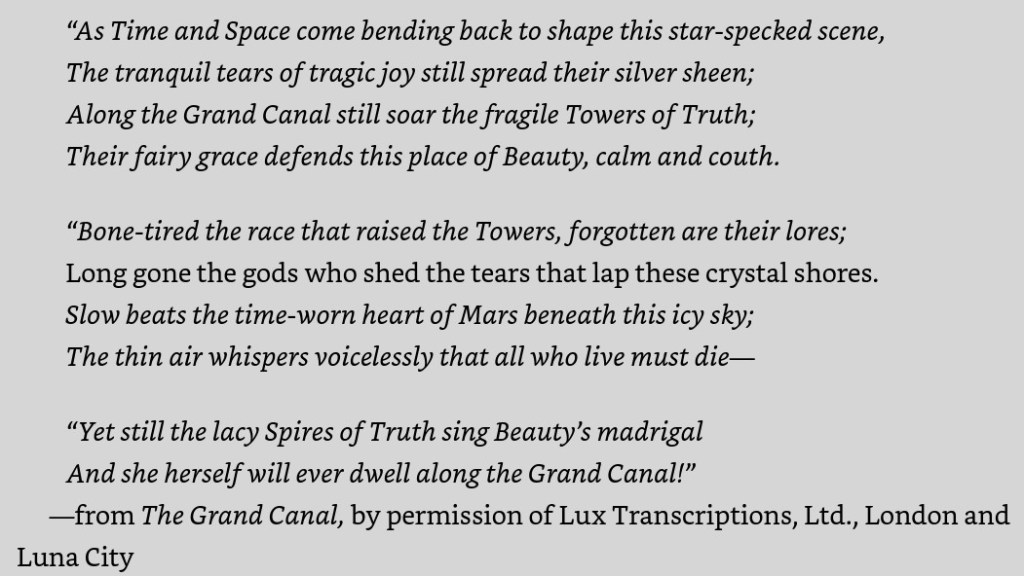
I wish I had the energy and drive to write a comprehensive analysis of “The Green Hills of Earth.” There’s so much going on in this story I could write pages and pages. Looking at the fragment of Rhysling’s poem, “The Grand Canal” makes me wonder if it inspired Roger Zelazny and his story “A Rose for Ecclesiastes” – wasn’t Gallinger writing a madrigal too. Look at Heinlein’s poem. Doesn’t it at least remind you of Ray Bradbury and Planet Stories too?

I could go paragraph by paragraph and find many things to say for each, but that would take too long for a blog post. I imagine each paragraph will remind you of all the science fiction you’ve read too. If you don’t own The Past Through Tomorrow or The Green Hills of Earth, you should be able to find “The Green Hills of Earth” in one of many anthologies.

James Wallace Harris, 6/17/23

“Tale of the Computer That Fought a Dragon” by Stanislaw Lem

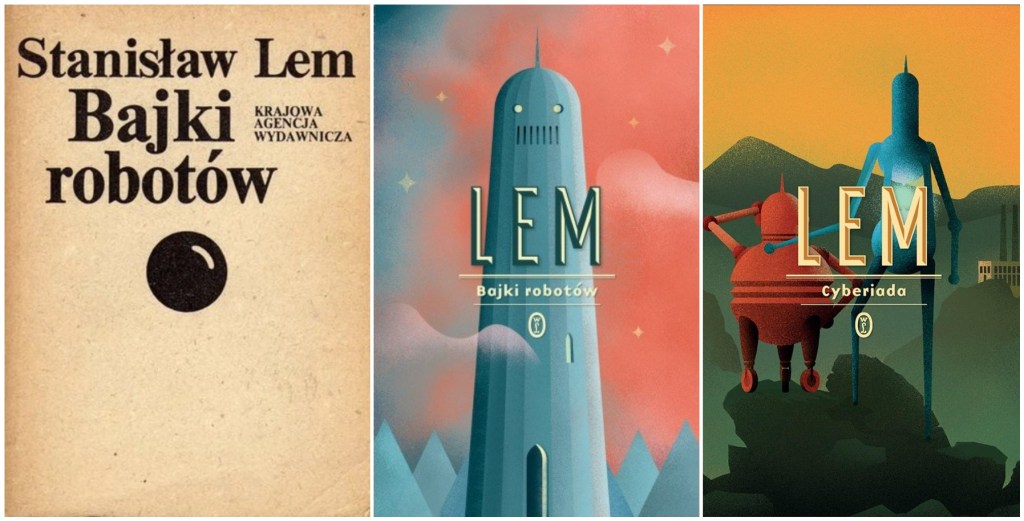
“Tale of the Computer That Fought a Dragon” by Stanislaw Lem is story #18 of 52 from The World Treasury of Science Fiction edited by David G. Hartwell (1989), an anthology my short story club is group reading. Stories are discussed on Tuesdays, Thursdays, and Saturdays. “Tale of the Computer That Fought a Dragon” has a long complicated publication history that I’ll let y’all read at ISFDB.org. It’s part of a series called Robot Fables. But from what I can tell was first published as “Bajka o maszynie cyfrowej, co ze smokiem walczyła” in Zycie literackie (August 1963). It was first translated into English for Other Worlds, Other Seas: Science-Fiction Stories from Socialist Countries edited by Darko Suvin (1970).

“Tale of the Computer That Fought a Dragon” is a very short story that comes across like a fable, and feels like it’s supposed by told by an oral storyteller. I’m afraid I dislike stories that sound like fables. Not because Lem’s tale is bad or uninteresting, but because such stories feel like a quick summary of a novel to me. I feel cheated. Such stories tell what happens instead of dramatizing the plot and developing the characters. A real short story is not a condensed novel. For some reason, many of these translated SF stories are told in this fable-like style. I wonder if that style isn’t normal in other countries because they never had pulp fiction? And thus, never developed the style of short story writing I like?

Basically, “Tale of the Computer That Fought a Dragon” is about a king who computerizes everything and then is threatened by an all-powerful computer. The solution to the king’s problem is silly and childish, much like some of the solutions Captain Kirk used against cybernetic foes in Star Trek. (It also reminds me of a solution Heinlein used against one foe in Glory Road, a fantasy novel.)

Stanislaw Lem has a great reputation, and his stories are widely reprinted. But I’ve yet to read one of his stories which makes me want to read more of them. I believe I read Solaris decades ago, and think I admired it. Need to give it another read.

This brings up an interesting problem. What if storytelling techniques are different from country to country? Are they reflected in the translation? Or, is the fable-feeling structure something that comes out of translation?

I guess it might reveal one of my biases or limitations. Other members of the short story club like these types of stories. They do sound clever, but cleverness can often draw attention away from the story. If you read “Tale of the Computer That Fought a Dragon” how do you visualize it? I visualize it as a Wizard of Id drawing.

Lem wrote a lot of these short satires. I assume, he liked cranking out ideas, but not novels. There’s enough plot content in “Tale of the Computer That Fought a Dragon” to structure a whole novel.

“Tale of the Computer That Fought a Dragon” is obviously a satire, attacking both computerizing everything, but also attacking leaders who feel the need to exert power to inflate their egos. That might have been politically subversive in 1963 in the USSR. It might also explain the childlike fable quality — a politically safer to write.

I wonder what Russians might dare to write about Putin today? Read “Tale of the Computer That Fought a Dragon” and substitute Putin every time you see the word king. It kind of works.

James Wallace Harris, 6/14/23

“Two Dooms” by C. M. Kornbluth

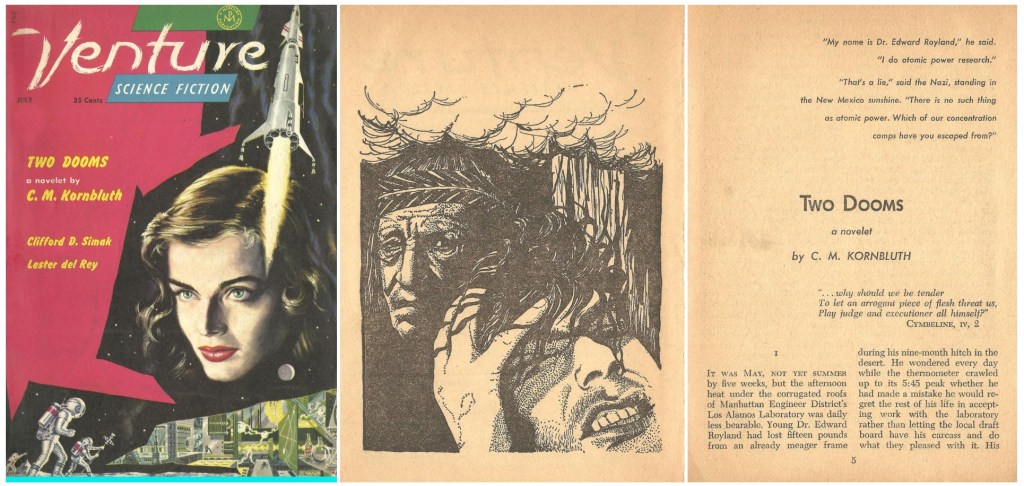
Two Dooms” by C. M. Kornbluth is story #17 of 52 from The World Treasury of Science Fiction edited by David G. Hartwell (1989), an anthology my short story club is group reading. Stories are discussed on Tuesdays, Thursdays, and Saturdays. “Two Dooms” was first published in Venture Science Fiction (July 1958). “Two Dooms” was a posthumously published story since Kornbluth had died earlier that year in March. (By the way, “Two Dooms” is available in The Best of C. M. Kornbluth which is selling today at Amazon for 99 cents for the Kindle edition.)

I finally struck gold. I read these old anthologies hoping to find great science fiction stories I’ve missed, and “Two Dooms” is one such work. I can’t believe I missed it. My memory is faulty, so I could have read it. Decades ago I owned A Mile Beyond the Moon, Kornbluth’s collection that first put the story in book form. I’ve also owned, The Best of C. M. Kornbluth for decades, as well as both the hardback and audiobook of His Share of the Glory: The Complete Short Science Fiction of C. M. Kornbluth, and three anthologies in which “Two Dooms” has been anthologized. Kornbluth is one of those authors I’ve always meant to dive into and read all their stories but never have. “Two Dooms” makes me regret that.

The best way I can describe “Two Dooms” that will make you read it is to say: “Two Dooms” is probably the story that inspired Philip K. Dick to write The Man in the High Castle. I have no way of knowing if PKD read “Two Dooms” but it really feels like it. I’m not saying Dick copied Kornbluth, but like many science fiction stories, many writers read about a juicy idea and want to use it too, but in their own way.

And it’s not just that Dick’s novel and Kornbluth’s novella are alternative histories where Germany and Japan win WWII and occupy the United States — several writers have explored that idea, it’s that each writer chose a mystical philosophy to flavor their story. PKD uses the I Ching and Kornbluth uses Hopi Indians and psychedelic medicine. Both authors gave a low-level view of the occupation. Both authors were concerned with the little people at ground level rather than the big historical perspective. But finally, I think the stories feel similar because both writers were tortured souls.

Kornbluth’s POV character is Dr. Edward Royland, a young physicist working at Los Alamos, New Mexico on the Manhattan Project during WWII. It’s early on, and they aren’t even sure they can build a bomb. Royland isn’t happy with his job, especially working in the miserable heat. One day after work he drives into the desert to meet his friend Charles Miller Nahataspe, a Hopi Indian shaman. This part of the story reminds me tremendously of Carlos Castanada’s books. Kornbluth gives us a fair amount of information about how the Hopi see reality differently from us and even claims the Theory of Relativity is something Hopi understand as children because they have no concept of time like we do. I wonder what books Kornbluth read that inspired him to write this part?

Nahataspe gives Royland some dried, blacken mushrooms. He tells Royland because he doesn’t see reality clearly, they will be safe to experience — that Royland’s cloudy vision of reality will protect him. But Nahataspe was wrong, Royland’s vision isn’t cloudy, and the magic mushrooms take him into the future where the Axis powers rule America.

It’s interesting to compare Kornbluth’s and Dick’s methods of getting their characters into an alternate history. Kornbluth uses the old-fashion literary technique of putting his character to sleep and having them wake up in a new world. Dick begins his story in the alternate history, and one of the amusing aspects of his method, is his characters speculate about our reality.

In olden times, the first-person account was considered the gold standard of believability. That’s why so many old novels have a frame where we learn how the story came about. Modern storytelling has dropped the frame. But with “The Two Dooms” Kornbluth needs Royland to go and come back, and using mystical Native American magic works well as a frame.

Both stories tell what living under Germans and Japanese would be like, and that’s where the two stories differ. While under Japanese rule, Royland spends his time with Chinese peasants, but when he’s on the other side, he spends time with higher-ranking Germans. Kornbluth stereotypes his nationalistic characterizations, but it’s not done in a simple way. I did feel that Kornbluth did quite a lot of research on this story, especially the parts about Los Alamos and the Hopi Native Americans. Since I recently read a nonfiction book about the Manhattan Project, I thought Kornbluth captured some interesting historical details.

I especially like when Kornbluth described a roomful of women as the computer department and Royland wished he had an analog differentiator. All through “Two Dooms” Kornbluth mentions details that entertained me. For example, when Royland leaves his office at the end of the day, Kornbluth says, “Mechanically he locked his desk drawers and his files, turned his window lock, and set out his waster-paper basket in the corridor.” It’s the detail of the waste-paper basket and window that impressed me. Royland’s work is top secret, so it’s logical he would lock his files. But if everything is locked up, how can custodians empty the trash? And it’s 103 degrees at 5:45, so we know the windows are open, and it would be important to lock them too.

Here’s the scene where Royland first enters Nahataspe hut. Notice all the little details Kornbluth sticks in here. Also, notice the humor.

I’ve really got to read more Kornbluth. I’ve been thinking that since I watched Bookpilled’s review of The Best of C. M. Kornbluth. It impressed me that a young guy in his thirties found so much to admire in a mostly forgotten science fiction writer that died over sixty years ago. (Also reviewed are Hothouse, Blood Music, and Nova.)

James Wallace Harris, 6/13/23

“Pairpuppets” by Manuel van Loggem

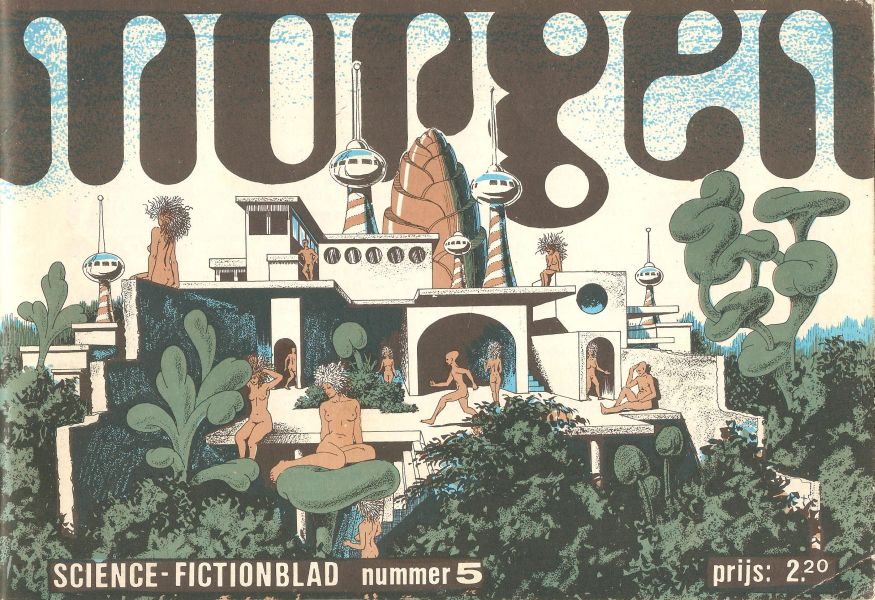
Pairpuppets” by Manuel van Loggem is story #16 of 52 from The World Treasury of Science Fiction edited by David G. Hartwell (1989), an anthology my short story club is group reading. Stories are discussed on Tuesdays, Thursdays, and Saturdays. “Pairpuppets” was first published in Dutch in Morgen #5 (December 1972) and first translated into English for The Best from the Rest of the World: European Science Fiction (1976), edited by Donald A. Wollheim.

“Pairpuppets” is about a young man, Eric, who is getting bored sexually with his current girlfriend, Tina. Eric lives in a future utopia/dystopia where every citizen’s sexual partner is selected by computers with the goal of fulfilling their sexual needs. The plot of this story follows Eric in his search for a new sexually satisfying partner.

Even though the goal of this society is utopian, aiming to make all its citizens happy, humans easily become dissatisfied. So we can also view this society as a dystopia. Basically, one person’s utopia is another person’s dystopia.

I thought “Pairpuppets” was okay as a story, but the storytelling came across as a dry parable. The ending was predictable but realistic. However, I did like the level of detail Loggen used to explain Eric’s plight. Obviously, the author wanted to say a lot about sexual desire and brings up a good many related issues. The story gives us much to think about and would make a great discussion story for a high school literature class (if they allowed discussions of sex (but aren’t we becoming dystopian in that area?)).

I’ve also been thinking about why stories like “Pairpuppets” disappoint me. The biggest problem is I’ve read too much science fiction and I compare every new story I read against the memory of all my favorite science fiction short stories. It’s extremely hard for any new story to compete with my Lifetime Top 100 Science Fiction Short Stories.

Then there is the much smaller problem of pet peeves. “Pairpuppets” is about sexbots, one of my least favorite science fiction themes. Of course, if I had read “Pairpuppets” in 1972 when it first came out (and could read Dutch) it might have been a more entertaining idea. That brings up a third problem with reading SF anthologies — they contain old stories, and thus old ideas.

Now, David Hartwell, had a lifetime of science fiction reading behind him when he selected “Pairpuppets” for this anthology in 1989, so both of my issues weren’t a problem for him. That means, like this story, The World Treasury of Science Fiction is a utopia for Hartwell, but sometimes dystopian for me. The word treasury in the title implies the anthology is where a treasure of science fiction is stored. And like the old saying, “One man’s treasure is another man’s trash.”

“Pairpuppets” is far from trash to me, but it just doesn’t light up my reading soul. Good but no cigar.

Another problem with these translated stories, is they are often on the short side. Shorter short stories often feel condensed, and that hurts their impact, except maybe for intellectuals who love cleverness over other virtues. Cleverness works well at short lengths — just think of Saturday Night Live. (By the way, SNL bores me since I left my twenties.)

I prefer short stories that dramatically reveal the emotional development of a character in a specific situation, ending with an epiphany. If Loggen had written this story with more drama, spending twice as many words, showing us Eric’s development rather than telling us, I might have liked “Pairpuppets” quite a lot more.

I believe “Pairpuppets” would be fine in anthologies that didn’t aim so high, like a theme anthology about sex in science fiction, or an anthology of foreign science fiction that didn’t claim it was the best. I have to assume editors working in English are limited to what foreign stories they can acquire that have been translated into English. And I don’t assume translators always pick the best of the best. My guess is they might pick stories their translation skills can handle. Finally, we don’t know if “Pairpuppets” wasn’t a much better story in its original Dutch.

I haven’t read that many translated stories, and the ones I have, like War and Peace, and Anna Karenina are considered to be among the world’s greatest novels. And when I read those two novels I did study their histories of being translated and tried to find the best translation to read. Also, anyone who reads The Bible knows there are way too many translations to compare, and the problems involved.

Every time I read an anthology or collection of translated science fiction short stories I’ve been disappointed. I don’t know if I’m just hitting a language barrier, or if the stories just aren’t as good as I hope they would be, or maybe they weren’t the best to begin with.

Also, think about this. “Pairpuppets” is how I think of Dutch science fiction now, even though it’s just one story from 1972. Let’s assume it’s a fantastic story in Dutch. But what will people from Holland think of American science fiction if the only story they’ve ever read is “Bears Discover Fire” — even if it has a perfect translation?

James Wallace Harris, 6/10/23

“The Men Who Murdered Mohammed” by Alfred Bester

The Men Who Murdered Mohammed” by Alfred Bester is story #15 of 52 from The World Treasury of Science Fiction edited by David G. Hartwell (1989), an anthology my short story club is group reading. Stories are discussed on Tuesdays, Thursdays, and Saturdays. “The Men Who Murdered Mohammed” was first published in The Magazine of Fantasy and Science Fiction (October 1958).

Alfred Bester is a weird writer. He doesn’t like to just tell a plain story but works out various weird ways to tell stories cleverly. Bester is best known for writing The Demolished Man and The Stars My Destination, but when the name Alfred Bester comes up, I think of his short story “Fondly Fahrenheit.” That’s Bester’s most famous science fiction short story according to our data. “The Men Who Murdered Mohammed” comes in second with the same data. I wish Hartwell had used “Fondly Fahrenheit” instead of “The Man Who Murdered Mohammed” because Bester gave us a real story with “Fondly Fahrenheit,” even though it’s very weird and tricky to read too.

For me, “The Men Who Murdered Mohammed” comes across like “5,271,009,” my second favorite Bester short story, in that he’s making fun of science fiction. This might be heretical to the science fiction faithful, but I feel Bester looked down on us science fiction readers. “The Men Who Murdered Mohammed” is making fun of time travel stories, while poking the writing of science fiction in the ribs, and giving us a wink-wink. I thought that was also true with “5,271,009” – see my review of that story.

Now, I don’t mind Bester looking down on us. He’s obviously far smarter than me, and our genre does shovel out a lot of silly crap worthy of satire. I’ve taken a graduate course on humor in literature and humor often bites the hand that feeds it.

“The Men Who Murdered Mohammed” is an obvious farce. It’s about a wildly brilliant mad scientist, Henry Hassel, professor of Applied Compulsion at Unknown University. Hassel comes home one day and discovers his red-headed wife in the arms of another man. Instead of yelling, “What the fuck is going on here,” Henry dashes to his lab, invents a time machine, and goes back in time to kill one of his wife’s grandfathers. But upon returning to the scene of the tryst, his red-headed spouse is still smooching another. So Henry goes back and kills one of his wife’s grandmothers. That doesn’t work either. Henry decides he must wipe out a significant event in time to affect the present and goes on a killing spree blasting more and more famous people with his .45 — but with no success. Eventually, Henry meets another time traveler who also claims to have murdered Mohammed. Upon reflection, this leads to new theories about the nature of time and travel within.

It’s a rather stupid theory about time travel that Bester assumes will amuse science fiction readers because it’s clever — and unique. “The Men Who Murdered Mohammed” and “5,271,000” are outright farces. They are fun enough, but they aren’t engaging stories like “Fondly Fahrenheit.” Now, don’t get me wrong, “Fondly Fahrenheit” is batshit crazy — but it has a compelling plot and characters with decent fictional conflicts to solve. Now, that I think about it, I’m sure Bester wrote “Fondly Fahrenheit” at our expense too – thinking science fiction readers will believe anything. And I did with “Fondly Fahrenheit.”

That’s the difference between “Fondly Fahrenheit” and “The Men Who Murdered Mohammed” — while reading “Fondly Fahrenheit” I forget I’m being told a story, I suspended my disbelief, and just get into the story. With “The Men Who Murdered Mohammed” I just read along admiring Bester’s cleverness, never forgetting I’m reading a story, especially a story by a man trying to wow us with his ability to be witty.

A lot of humor fiction is absurd. A lot of literary science fiction is intentionally absurd to be clever. I don’t like that. If I’m reading a story and all I notice is cleverness then I never forget myself and drop into the story. Novels like The Confederacy of Dunces, The Hitch-Hiker’s Guide to the Galaxy, or Mindswap are over-the-top absurd. But I stop looking for how the magician did their tricks and just let myself be fooled. That’s fun.

I never stopped watching Bester do his tricks in “The Men Who Murdered Mohammed.” Oh, it’s still a good story, but its main virtue is cleverness. Unfortunately, cleverness alone is never enough for me, no matter how clever the story gets.

To make my point, here are the first two pages of the story:

Writing the above about “The Men Who Murdered Mohammed” clarifies to myself, the kind of story I want to read. I’ve been starting a lot of novels lately that I give up on quickly. Lately, I’ve been hungry to get into a good novel, but I keep being frustrated by not finding one. Maybe I know a little more about how to spot one I will like.

I’m not saying the tried and true methods of fiction are the only way to tell a story, but for me, I need them. I guess I shouldn’t say Hartwell shouldn’t have included “The Man Who Murdered Mohammed” in The World Treasury of Science Fiction — it’s his anthology, but it does disappoint me. “Fondly Fahrenheit” is Bester’s story to remember. It’s his masterpiece.

James Wallace Harris, 6/7/23

“The Blind Pilot” by Nathalie-Charles Henneberg

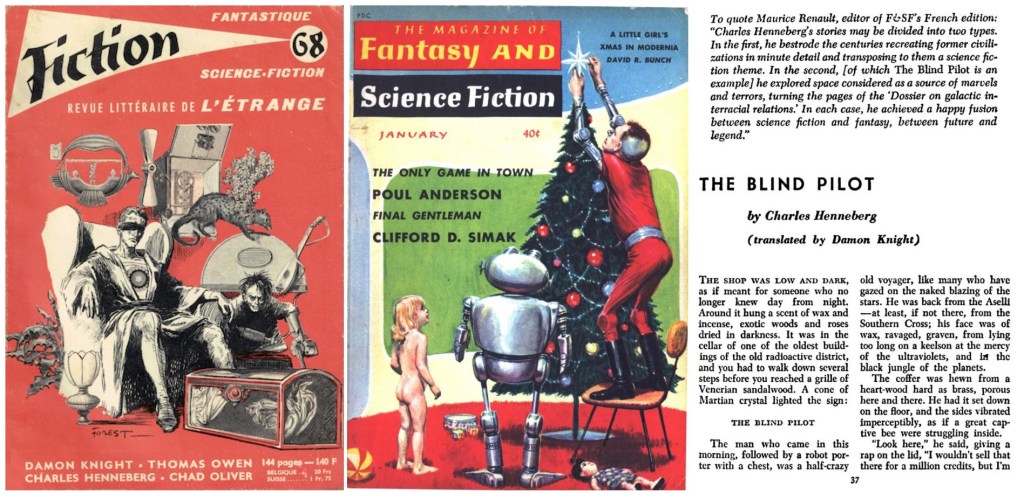
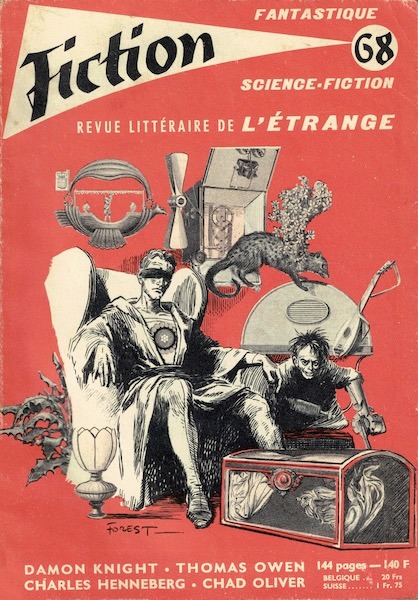
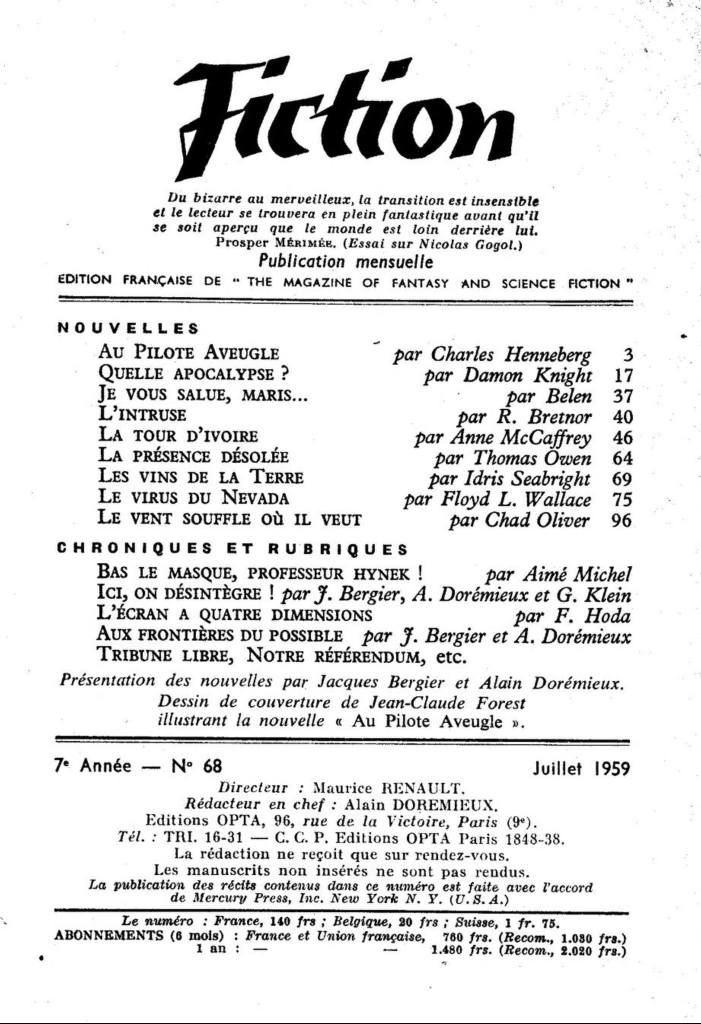
The Blind Pilot” by Nathalie Henneberg is story #14 of 52 from The World Treasury of Science Fiction edited by David G. Hartwell (1989), an anthology my short story club is group reading. Stories are discussed on Tuesdays, Thursdays, and Saturdays. “The Blind Pilot,” translated by Damon Knight from the original French, “Au pilote aveugle“ (Fiction #68, July 1959) was first published in English in The Magazine of Fantasy and Science Fiction (January 1960).

Instead of paraphrasing David Hartwell’s introduction, I’ll just let you read it.

“The Blind Pilot” is real science fiction. Hartwell says it resembles Roger Zelazny’s early work, but it reminded me of a cross between 1950s Alfred Bester and 1960s Samuel R. Delany. Of course, there’s no telling what flavor of writing the original story gave off in the French.

Basically, the story is about an alien who could be from a race of beings that inspired the Siren in Homer’s epic. This idea comes up now and again: fantastic beings in old literature could have been aliens from the stars. To make the story even more exotic, the two humans who encounter the alien are a blind man who used to be a space pilot and his younger brother who is severely crippled. Those two remind me of Delany characters, the alien weirdness reminds me of Bester, and the tie-in to mythology reminds me of Zelazny. But Henneberg couldn’t have known about Delany and Zelazny since the story pre-dates them as writers. That’s why I also say “The Blind Pilot” is real science fiction and not some roped-in foreign literary effort that anthologists want to claim is science fiction.

There were sentences on this page that slightly reminded me of the “Tears in the Rain” scene from Blade Runner.

Even though I consider this story real science fiction and a decent science fiction story, I don’t believe it’s a great SF story. It never takes off, but it does cruise along nicely. A great SF story like “Fondly Fahrenheit,” punches us throughout with unforgettable edginess, while a story like “The Moon Moth” dazzles us constantly with creative imagery. Those stories stay with us. “The Blind Pilot” will fade away quickly.

When you read a lot of science fiction, especially a lot of great science fiction, you realize just how hard it must be to write something spectacular. Our short story club reads anthology after anthology and we often find stories we wonder why they were anthologized at all. Hartwell had certain goals when he aimed to create an anthology that represented science fiction from both the 20th century and stories from around the world. So, far when we’ve read stories from other countries we seldom read ones I think are as great as the best from the English-speaking world. Is that because of translations? Or am I just prejudiced toward my own culture? Maybe, certain SF classics have been burned into my mind, and no new ones, no matter what the language, can compete?

We still have a long way to go in The World Treasury of Science Fiction, so Hartwell still has plenty of opportunity to surprise me. But there’s another problem to consider. I’ve read so many science fiction short stories that I feel that less than 200, maybe even less than 100 stand out from the thousands I’ve read. All too often I feel like I’m comparing all the horses that have won the Kentucky Derby to all the horses that race on any track. And that might not be fair.

But it is what it is. There’s a reason why our method of finding stories for our Classics of Science Fiction Short Story list works so well. When I say a story is only pretty good it’s because I’m comparing them to these stories. The competition is fierce.

James Wallace Harris, 6/6/23

“The Chaste Planet” by John Updike

“The Chaste Planet” by John Updike is story #13 of 52 from The World Treasury of Science Fiction edited by David G. Hartwell (1989), an anthology my short story club is group reading. Stories are discussed on Tuesdays, Thursdays, and Saturdays. “The Chaste Planet” was initially published in The New Yorker (11/10/75).

“The Chaste Planet” isn’t much of a science fiction short story — it’s more of an effort to be a humorous essay that riffs on a decent science-fictional idea but I thought pulled off in a crummy way. What if there were aliens who obsessed over music like humans obsess over sex? John Updike is a literary writer, who has criticized our genre in the past, so I can’t believe he takes his story very seriously. And I’m not talking about the concept, but the execution of the concept as science fiction.

And it’s hard to take this story seriously when it begins, “In 1999, space explorers discovered that within the warm, turbulent, semi-liquid immensity of Jupiter, a perfectly pleasant little planet twirled, with argon skies and sparkling seas of molten beryllium.” I assume he was imagining a planet orbiting inside Jupiter’s atmosphere. But wouldn’t that be another moon? And wouldn’t the atmosphere cause enough friction to quickly de-orbit this world? The planet was called Minerva.

This planet is inhabited by eighteen-inch-tall beings with six toothpick-thin legs. These creatures reveal no sign of sexual reproduction, but it is eventually learned that music is everything to their culture, including forms of kinkiness. At best this story is cute, but even that’s a stretch. It’s the kind of story that people who don’t read science fiction think is science fiction. I find such efforts insulting.

I don’t know why Hartwell included this story in The World Treasury of Science Fiction other than to capitalize on Updike’s name. Harry Harrison and Brian Aldiss had “The Chaste Planet” in their annual Best SF: 75, and I assume for the same exact reason. I consider it a pathetic gesture of “See, even famous literary authors write science fiction!”

When I was young back in the 1970s when this kind of thing was popular. Many in the genre wanted academic recognition and respect. I also thought it wonderful our genre was finally being accepted. But there was a writer or critic back then that rejected these efforts at critical recognition. I wish I remembered who it was, but he (maybe she) said something like this: “Throw science fiction back in the gutter where it belongs.”

Now that I’m older, I agree with that. If Robert Sheckley had written “The Chaste Planet” it would have been entertaining in the way I expect science fiction to entertain, and not some literary effort at slumming.

James Wallace Harris, 6/3/23

“The Fifth Head of Cerberus” by Gene Wolfe

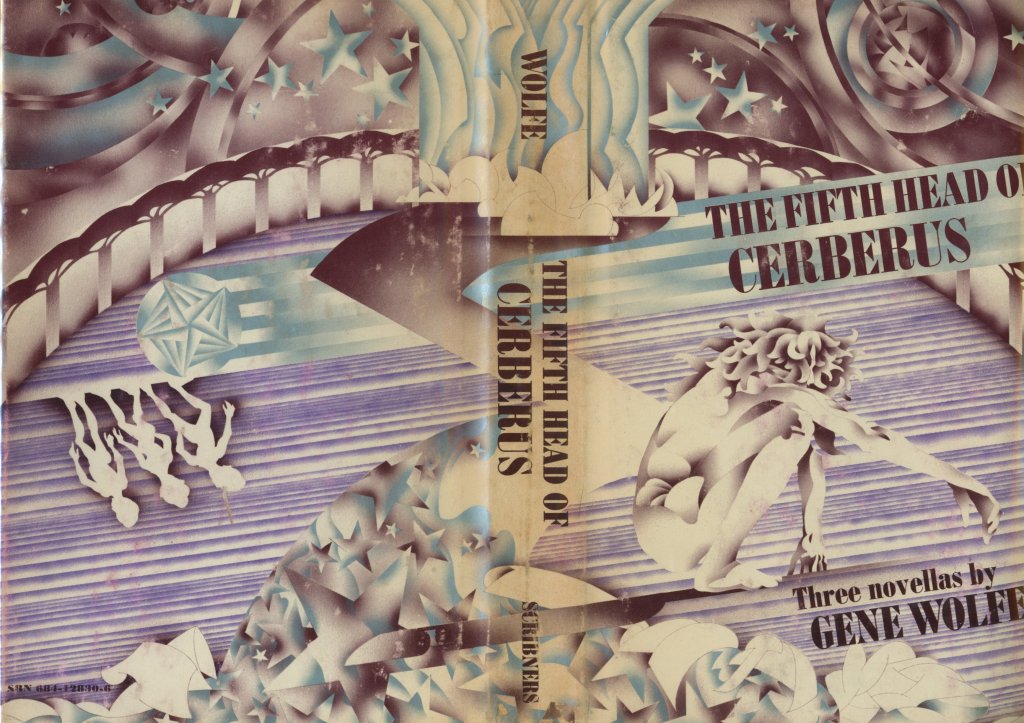
“The Fifth Head of Cerberus” by Gene Wolfe is story #12 of 52 from The World Treasury of Science Fiction edited by David G. Hartwell (1989), an anthology my short story club is group reading. Stories are discussed on Tuesdays, Thursdays, and Saturdays. “The Fifth Head of Cerberus” was initially published in Orbit 10 and edited by Damon Knight in 1972. Wolfe published “The Fifth Head of Cerberus” in his collection by the same name, with two related novellas: “‘A Story,’ by John V. Marsch” and “V.R.T.” (Charles Scribner’s Sons, 1972). Later editions would treat the collection as a novel.

Gene Wolfe has an immense reputation as a significant writer in the science fiction genre. He was awarded the Damon Knight Memorial Grand Master Award by the Science Fiction and Fantasy Writers Association (SFWA) in 2013. He is best known for his novel series, The Book of the New Sun (4 vols. 1980-1983), and follow-up related series. Wolfe dedicated the book version of The Fifth Head of Cerberus to Damon Knight, who was his writing teacher, editor, and mentor. In The Best of Gene Wolfe, Wolfe wrote an afterward to “The Fifth Head of Cerberus,” where he explained the importance of this story and Damon Knight:

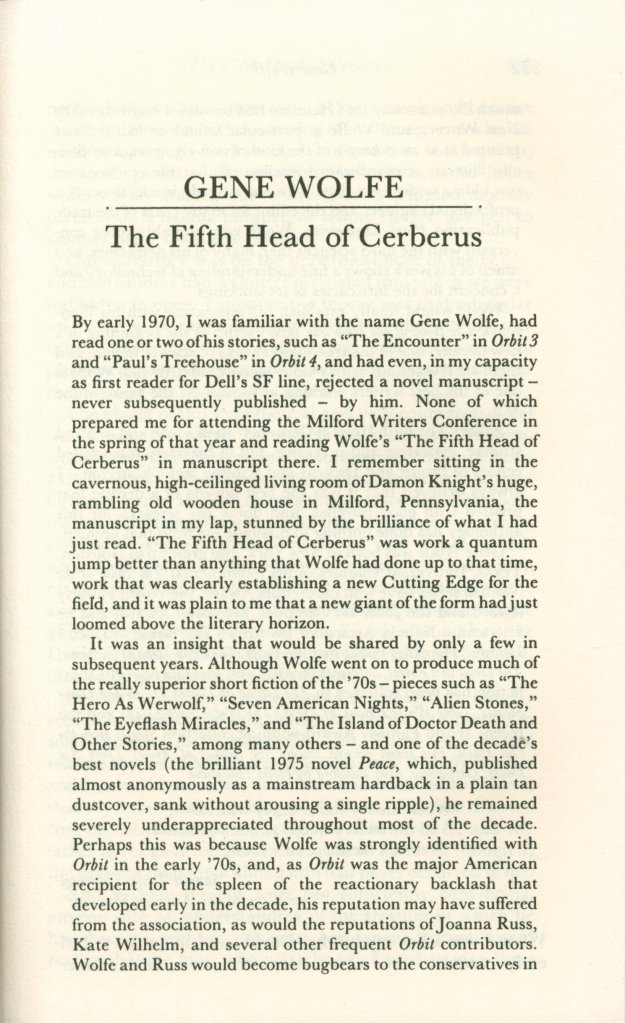
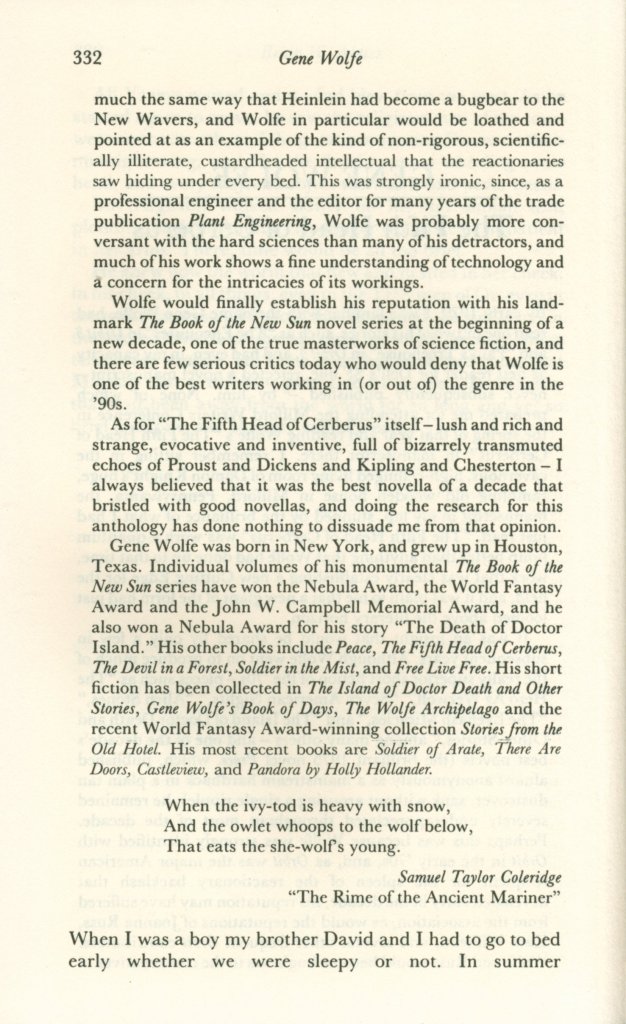
If the New Wave in science fiction had never been defined, Damon Knight’s original anthology series, Orbit (1966-1980) would have shown that the writing of science fiction was undergoing a significant revolution. Stories like “The Fifth Head of Cerberus” were just different, taking the genre to a whole new level. In his introduction to the story in Modern Classics of Science Fiction, Gardner Dozois wrote about when he first read “The Fifth Head of Cerberus” as a manuscript while attending the Mitford Writers Conference in 1970.

The last time I read “The Fifth Head of Cerberus,” I ordered the hardback of the collection because I was so impressed with how the story was written. I haven’t read many Gene Wolfe stories, they are dense and hard to digest, but I’ve been impressed with what I have read. I should read The Book of the New Sun since it’s so widely praised, but I don’t know if I can take such a large concentration of Wolfe’s prose. Many reviewers who gush about The Book of the New Sun say it takes multiple readings to get into the story.

“The Fifth Head of Cerberus” is a mysterious tale to comprehend. The story itself is about several mysteries. In some ways, I felt the setting was the French Quarter in antebellum New Orleans, but it’s actually twenty light years from Earth, on the planet Sainte Croix. Sainte Croix and Sainte Anne are part of a double-planet system that was originally settled by French-speaking people. The plot line takes a long time to develop, and along the way, Wolfe keeps dropping more bits to wonder about. It is hinted that Sainte Croix was originally inhabited by an intelligent species of shape shifters and the current inhabitants, including our narrator Number Five, might be human or aboriginal. I don’t want to tell you too much, if Wolfe wanted to string his readers along, why should I give things out ahead of time?

The story begins with the narrator describing his early years with his brother David in a rather exotic house of prostitution. Slavery exists on Sainte Croix. The boys are raised by a robot named Mister Million who hints at many strange past details during their upbringing. Their father is another source of curiosity. Who and what the narrator might be further clouds this tale. “The Fifth Head of Cerberus” feels like gothic horror rather than science fiction. And even when the story is completed, you never feel you know everything, even after multiple readings.

Ultimately, the story is one of atmosphere, even hallucinogenic and dreamy in many places. It was intentionally meant to be confusing. Whether you like that or not depends.

Like I said, I can only take Wolfe in small doses, but when I do read him I’m impressed.

James Wallace Harris, 6/1/23

“The Valley of Echoes” by Gérard Klein

“The Valley of Echoes” by Gérard Klein is story #11 of 52 from the anthology The World Treasury of Science Fiction edited by David G. Hartwell (1989) that my short story club is group reading. Stories are discussed on Tuesdays, Thursdays, and Saturdays. “The Valley of Echoes” was originally published in France as “La vallée des échos” in the magazine Satellite in March 1959, and was first translated into English for the anthology View From Another Shore edited by Franz Rottensteiner. It was also reprinted in The Road to Science Fiction, Volume 6: Around the World edited by James Gunn.

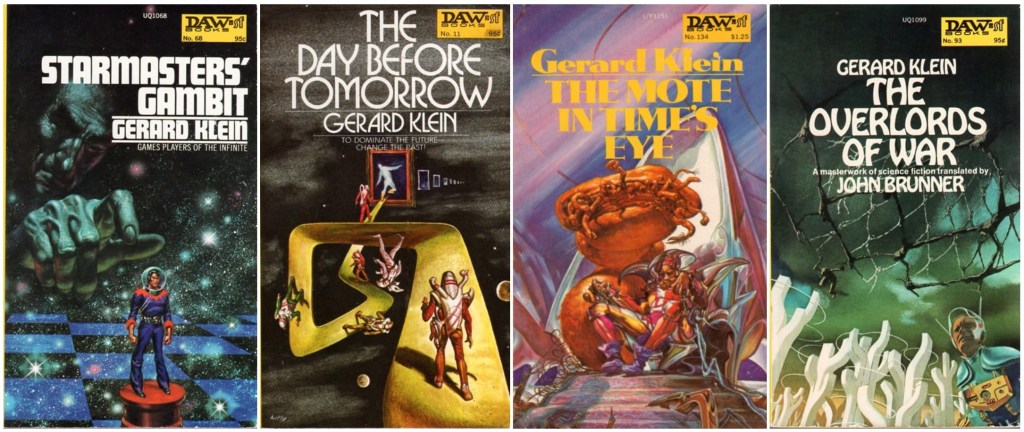
Gérard Klein is a French science fiction writer and editor who was born in 1937 and is still alive according to Wikipedia and ISFDB. The most I could find out about him was in The Encyclopedia of Science Fiction, and it wasn’t much. It only shows how language is such a barrier, but looking at the covers from these four translated novels published by DAW I might like to try one, especially after reading, “The Valley of Echoes.”

“The Valley of Echoes” is what I call pre-NASA science fiction. It’s also about Mars, and in 1959, even before Mariner 4 Klein didn’t hold out much hope of finding life on Mars. However, his three astronauts secretly want to drive over the next Martian sand dune and discover an ancient dead Martian city.

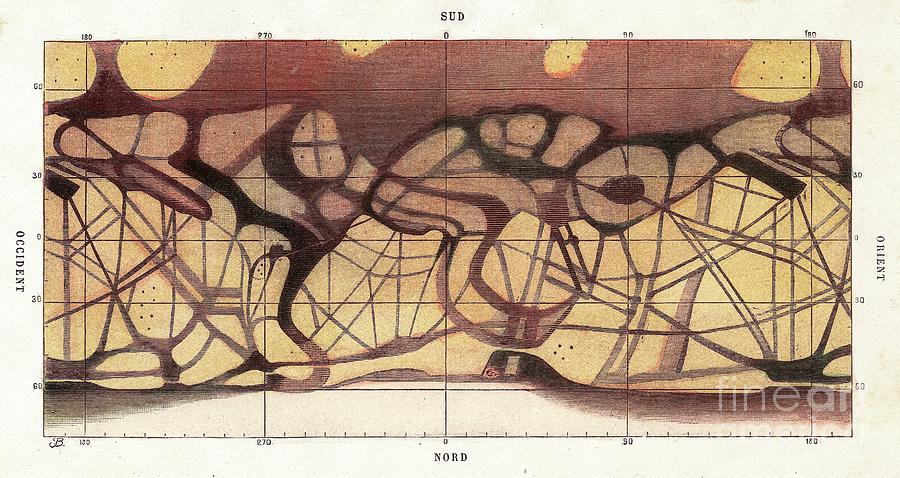
I grew up with a Schiaparelli map of Mars poster on my bedroom wall. I held out hope we’d find Martians on Mars until July 1964 when Mariner 4 flew by Mars and took 22 photographs of Mars. Mars looked more like the Moon than Barsoom. I’ve written about this before in “I Miss Martians” and “Science Fiction Before NASA.”

It’s kind of a fascinating coincidence that I read “The Valley of Echoes” today because yesterday I read “High Weir” by Samuel R. Delany, another story about Mars. “High Weir” and “The Valley of Echoes” have an interesting overlap in that they both have a human explorer on Mars that goes crazy. In Delany’s story, his astronauts do find a dead ancient Martian city. Since his story came out in 1968, Delany was holding out hope even after Mariner 4.

I was disappointed in Delany’s story because the focus wasn’t on Martian archeology but on holograms and mental illness. Klein’s story deromanticizes space exploration while showing how we still hoped to find Martians.

Klein does throw us a bone for our romantic hopes by having, his astronauts, Ferrier, LaSalle, and the narrator stumble upon a strange valley that collects echoes of the past. I was never sure if what they heard was real or delusion. My skeptical nature thinks it was the latter, but again Klein plays up to our desires. Ferrier, like Rimky in “High Weir” went insane on Mars.

Klein is being both realistic about what we’ll find on Mars, and realistic about how our hopes influence what we want to find. “The Valley of Echoes” might be a good story for Joachim Boaz’s list of SF stories that challenge the romanticism of space exploration.

No mention of science fiction is found in “The Valley of Echoes” but I can’t help but believe it’s recursive science fiction. Yesterday I watched a short video on YouTube about philosophy and HP Grice’s paper “Logic and Conversation” which deals with the dynamics of communication. There can be more information in a conversation than just the words we say. Klein has written a story intended for science fiction fans. He knows how we think, so the story doesn’t have to say everything because Klein knows it will trigger certain thoughts in us.

“The Valley of Echoes” is about the realism of exploring Mars. His astronauts are bored and tired of driving up and down Martian sand dunes. In their hearts, they want to find what they’ve always dreamed about finding on Mars. Suddenly, they do find something different, and they desperately want it to fulfill their expectations. But does it? He also knows we want that too, and that will affect how we read the story.

James Wallace Harris, 5/30/23