“The Country of the Kind” by Damon Knight

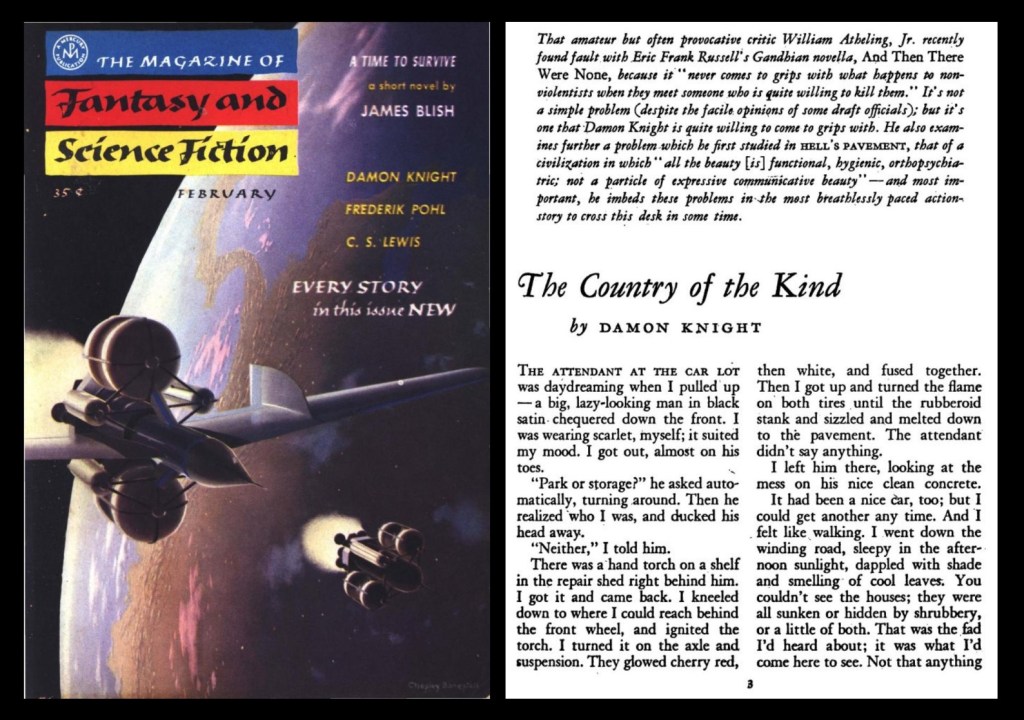
“The Country of the Kind” was first published in The Magazine of Fantasy & Science Fiction, February 1956. You can read it on Archive.org. It is story #5 of 22 for The Best SF Stories of 1956 group read. “The Country of the Kind” is one of the highest rated stories on The Classics of Science Fiction Short Stories v. 2 list, with eleven citations. It is by far the most remembered science fiction short story from 1956. Here are the eleven citations we used:

“The Country of the Kind” is set in an unnamed utopia and is told by an unnamed narrator. When the narrator was fifteen, he killed a girl who spurned him. In this utopian society they couldn’t punish him directly because it doesn’t allow violence. They fixed the narrator so whenever he tried to hurt someone else, he’d have an epileptic fit. And to warn others of his presence, his body odor and breath were made to smell repulsive. He was then left free to do whatever he wanted. For thirty years he has wandered about the Earth trying to retaliate by sabotaging other people’s activities or destroying their property. People ignored him, so he suffered endless loneliness. The narrator creates small works of art which he leaves everywhere with a message inviting other people to join him and be free.

My friend Mike sends me emails with comments about these 1956 science fiction stories since he doesn’t want to use Facebook. Here’s what he had to say:

A good science fiction tale draws you in completely, overriding your skepticism about the implausibility (or impossibility) of events.

Damon Knight asks us to accept the notion that a murderous psychopath is allowed by society to indulge himself in an endless destructive rampage. Although he is prevented from physically harming others by induced epileptic seizures, the community allows him to wreak havoc without restraint.

Perhaps Knight is exposing the passivity and weakness of that society, but it beggars the imagination that any group would allow such extreme behavior to go unchecked, no matter how kind and understanding they profess to be.

After the "king of the world" murdered his girlfriend named Elen when he was fifteen, he tells us "...if I could do it to Elen, I thought, surely they could do it to me. But they couldn't. They set me free: they had to."

Why did "they" have to? Are we to believe that a seemingly well run country is so "kind" that even a psychopath is allowed free rein? That's a bridge too far for me.

Remember, I talked about how believability was very important to me regarding science fiction when reviewing “Brightside Crossing.” I could understand why Mike didn’t think the world of “The Country of the Kind” was believable, but I said to him in a phone call, didn’t we both believe the world of “Brightside Crossing” was impossible? Yet, we still found the story believable. I asked him what crossed the line for him in “The Country of the Kind.” Mike said he just didn’t believe people would allow a person like the narrator in any society, that was too much for him to believe that people wouldn’t stop the narrator from damaging their property.

I said, wasn’t “The Country of the Kind” unbelievable in the same way “The Ones Who Walk Away from Omelas” is unbelievable, and didn’t you love that story? Mike replied that story was metaphorical.” I countered, doesn’t “The Country of the Kind” seem just as metaphorical in the same way? Both are about utopias that that are held together by the suffering of one person. After I said that, I even wondered if Ursula K. Le Guin wasn’t in some way inspired by “The Country of the Kind” when she wrote “The Ones Who Walk Away from Omelas.” Mike said he would reconsider “The Country of the Kind” as a metaphor. Maybe he will post a reply.

Are the fictional worlds of Brave New World, Nineteen Eighty-Four, or The Handmaid’s Tale believable? Aren’t they metaphorical too, because their authors have something to say about our reality? Dune, The Foundation trilogy, The Left Hand of Darkness and even The Man in the High Castle create worlds that we are asked to believe are realistic. Obviously, Alan E. Nourse wanted us to believe “Brightside Crossing” was realistic. But we aren’t expected to believe the fictional universes of The Hitch-Hiker’s Guide to the Galaxy or Sheckley’s Mindswap were realistic.

In other words, fantasy, humor, satire, and metaphorical fiction don’t ask us to believe their settings are realistic. But most literary works, especially of the mimetic type, and some kinds of science fiction do ask us to believe that they are reality based.

Of course, if “The Country of the Kind” is metaphorical, then what is the metaphor? That even kindness can cause great suffering. To be free in a utopia you need to be able to commit evil deeds. 1956 was a time of conformity in America, and many people were freaked out by juvenile delinquents, motorcycle gangs, and other nonconformists. Remember, a year later in 1957, On the Road by Jack Kerouac came out. Kerouac called his kind of nonconformists Beats, and society renamed them beatniks. A few years later, society turned against hippies too. I say On the Road wasn’t metaphorical. But I would say One Flew Over the Cuckoo’s Nest or Catch-22 are.

In the 1950s there was a lot of talk about crime being caused by society, and that criminals were a product of bad biology or a bad environment. Damon Knight’s unnamed narrator is an awful person, but he gets our sympathy. Unlike the tortured child in “The Ones Who Walk Away from Omelas,” the unnamed narrator isn’t the engine of utopia. Or is he? Wouldn’t a perfect utopia be dull and boring? What if evil is needed as the engine of goodness? I’m reminded of a phrase, “What if our world is their heaven?”

What if all fiction is metaphorical? What if “Brightside Crossing” was a metaphor for extreme adventurers?

Fiction is based on a suspension of disbelief. If Mike can’t suspend his disbelief that’s perfectly okay. If he doesn’t like “The Country of the Kind” does it matter that I do?

I’m fascinated by the nature of memory. I’m particularly fascinated by fiction that our culture remembers, like works by Jane Austen or Charles Dickens. But I’m also fascinated by the stories I find personally memorable. “The Country of the Kind” and “The Ones Who Walk Away from Omelas” are such stories. A year for now, I might forget “Brightside Crossing.” As I read and reread these old science fiction stories, I’m amazed by which ones I remember and which ones I don’t.

“The Country of the Kind” was voted into The Science Fiction Hall of Fame Volume One because it was so remembered by the first members of the Science Fiction Writers of America. I wish SFWA would poll their membership every ten years on their favorite stories. I’d love to see what every generation of science fiction writers remember.

With this December 2023 reading; it’s probably the fourth or fifth time I’ve read this story, I am somewhat sympathetic to the unnamed narrator of “The Country of the Kind.” I wasn’t before. I totally loathed the narrator. However, this time I still think his actions are still horrific, but I feel the utopian society has imposed a cruel and unusual punishment upon him.

And I’m still unsure of Knight’s intentions in writing this story. Whatever meaning it has could be entirely accidental. Knight might have thought of the situation without considering its implications.

The epileptic pain the narrator experiences is brought on by his own actions. But the loneliness is caused by the utopian society imposing the punishment. And this society is supposedly incapable of causing harm. Such a society would know that social contact is a necessity.

Writers often make their stories ambiguous but this one might be too unclear. I wonder if Knight has ever written an explanation of “The Country of the Kind.”

James Wallace Harris, 12/6/23

What Do You Want from a Great Science Fiction Robot Story?

For me, great science fiction is about certain concepts: space travel, aliens, the future, time travel, human evolution, alternate history, artificial intelligence, and robots. As I’ve gotten older, I crave tradition in new stories. I’ve gotten rather fussy about how these cherished fictional topics are handled. I don’t like too much innovation. I want to see evolution in these ideas, but not radical new-fangled reinventions. I don’t mind reimagining or rebooting of the concepts, but it depresses me to read stories that have lost the original intent of science fiction.

I started reading “Perfection” by Seanan McGuire and was hugely disappointed. It’s the first story in Robots Through the Ages, a new anthology edited by Robert Silverberg and Bryan Thomas Schmidt. (Currently, $1.99 for the Kindle.) I love a good robot story, and was excited to start reading this anthology, but unfortunately, “Perfection” wasn’t the kind of robot story I was anxious to read. I’m not saying “Perfection” is a bad story, but it’s not about my kind of robot, or what I would call a science fiction story. It’s told in an allegorical style that suggests the story has a message like a modern-day Aesop’s fable. It could be a little postmodern fantasy commenting on science fiction, or just a nice old-fashioned fantasy fable for the contemporary reader. (Luckily, the editors jump back to classic SF stories about robots after “Perfection.”)

Science fiction is a byproduct of modernism. Religion/mythology is the worldview before enlightenment and modernism and the territory of fantasy, not science fiction. I don’t believe science fiction belongs in the postmodern territory either. “Perfection” blends fantasy and postmodernism and appears to see perfection in a robot — although its message is probably satirized, at which point it’s really rejecting robots. Is the transformed wife and husband perfect? Or are we supposed to be horrified by what the modernistic SF world has sought?

This made me think – what are my kind of robots? Science fiction claims certain themes for the genre, and robots have always been one of its major themes. Science fiction writers haven’t portrayed robots consistently though. What we often call robots vary tremendously, from mechanical beings, to androids, replicants, cyborgs, sexbots, and synthetic humans.

More importantly, the kind of robots I like best are science fictional, and truly modernistic. I dislike fantasy and postmodern robots. Often, it’s difficult to tell what kind of philosophy a robot story is set, especially when the robots look indistinguishable from humans. Sometimes a sexbot is really a robot, and sometimes it stands in for something allegorical, metaphorical, or symbolic.

Me, I like robots to be robots. I want them to be sentient, but not slaves. I don’t like robots that pass as humans. I don’t mind robots to be somewhat humanoid in shape, but I don’t want them to be substitutes for humans. And if they’re sentient, they must be free, and not things we own. Asimov’s robots were not supposed to be sentient, and thus we owned them, and they had to do our work. I liked Simak’s robots better, but they were more like P. G. Wodehouse’s Jeeves. Simak’s robots were faithful servants, but were they paid? Or were they property? Asimov’s R. Daneel Olivaw was a co-worker. I want science fiction to be about robots that are independent. I expect robots to be the intelligent species that either co-exist with humans or are our descendants. Of course, sometimes that means a story like The Humanoids by Jack Williamson.

I really dislike the concept of sexbots and human brains downloaded into robot bodies that look perfectly human. We have plenty of humans, we don’t need ersatz copies.

Overall, I’ve been disappointed with how science fiction has presented robots. The stories I’ve like best were sentimental stories about robots like “Rust” by Joseph K. Kelleam.

Is Data from Star Trek a robot by your definition? Is he closer to C-3PO than Roy Batty? I don’t consider the replicants from the film Blade Runner to be robots. But I do for the androids in Do Androids Dream of Electric Sheep? Androids that pass perfectly for humans in appearance aren’t robots to me, but Data still acts mechanical enough to consider “him” a robot.

The first robots I remember from my earliest memories are those from the film Target Earth. They were clunky killers and supposed to be scary – they were scary when I was a little kid back in the 1950s, but now they’re laughable looking. The robots in Forbidden Planet and Lost in Space were way cool, but they had lousy hands. Data from Star Trek is probably among the best robots in science fiction, but ST’s producers and writers kept wanting to make him human. I just don’t see humanity as an ideal to model from.

My favorite robots in science fiction were stationary AI computers. Mike from The Moon is a Harsh Mistress, Galatea from Galatea 2.2 by Richard Powers, HARLIE from When HARLIE Was One, and Webmind from the Wake, Watch, Wonder trilogy by Robert J. Sawyer.

I’m reading Robot Through the Ages and We Robots edited by Simon Ings hoping to find more science fictional robots I like. I’m surprised by how many I don’t like. Rucky Rucker had some wild robots. Lots of people love the Murderbot series, but he’s too human for me, but still fun. Lately, there’s been a lot of little stories about droids that are fun and cute.

I’m sure I’m forgetting a lot of great robots from science fiction. What were your favorites? What do you look for in a great robot?

James Wallace Harris, 10/16/23

Do You Buy the Best-of-the-Year Science Fiction Anthologies?

Back in 2018 I wrote an essay for Book Riot about all the best-of-the-year annual anthologies covering science fiction. The title claimed nine, but I added two more in an update that brought the total to eleven. In 2023 that number had dwindled considerably.

Gardner Dozois died in 2018 after publishing thirty-five giant best-of-the-year science fiction anthologies. Dozois set the pace for decades. Now, it seems the market for these best of the year anthologies has been breaking up. All 35-volumes of Dozois’ annual anthologies are still on sale.

Jonathan Strahan’s last annual anthology was The Year’s Best Science Fiction Vol. 2: The Saga Anthology of Science Fiction 2021 covering the best stories from 2020. (The year in these anthology titles are generally the year following the year the stories were first published.) I’ve been told that Strahan has said online that that series is finished.

Rich Horton’s last annual anthology was The Year’s Best Science Fiction and Fantasy 2021 Edition covering 2020. It came out as an ebook online, and it will be the last of Horton’s series.

Neil Clarke’s latest annual anthology is The Best Science Fiction of the Year Volume Seven published 9/5/23 in trade paper and hardcover. It’s late, covering 2021. Volume 8 is scheduled for next month, covering 2022. Online, Clarke has said he hopes to do an ebook and audiobook edition. It sounds like Clarke’s annual is still ongoing. Volume 7 is discussed at Black Gate and lists the table of contents.

The Best American Science Fiction and Fantasy 2023 edited by John Joseph Adams and guest editor R. F. Kuang covers 2022, meaning it’s on time. It comes out October 17th in trade paper, ebook, and audiobook editions.

The Year’s Top Hard Science Fiction Stories 7 edited by Allan Kaster came out in June and seems to be going strong since it collects stories from 2022. Available as an ebook and trade paperback. I don’t know if Kaster will do a fourth edition of his other series, The Year’s Top Robot and AI Stories. The third edition came out in November 2022, so maybe it will.

This is sad, at least to me. Awhile back I wrote about what anthologies collected the best science fiction short stories and listed all the annuals from 1939-1999. I started a reading project to read them all, starting with 1939. I’m currently stuck on 1957. This has shown me their value in remembering short science fiction. If stories aren’t reprinted by the annuals or other anthologies, they are generally forgotten — unless the author gains enough fans to have a collection published.

I wonder what the demise of so many best-of-the-year science fiction anthologies implies? Did the market just get saturated and is now shaking out? Or, has interest in short fiction fallen off? Print magazines have had dwindling subscribers for decades. The big three of Analog, Asimov’s and F&SF are around ten thousand or fewer. At one time they had over a hundred thousand subscribers. Amazon killing off their Kindle subscriptions for these magazines is going to hurt. I hope it’s not fatal for these magazines.

Do you buy these best-of-the-year science fiction anthologies? I collect them, and own most of them in paper, ebook, and/or audiobook. And I belong to a Facebook group that discusses science fiction short stories. Even though we have 815 members, probably less than a dozen post regularly.

Long ago I wrote an essay about what was the best way to discover the greatest science fiction short stories of all time. I decided there were three approaches. Read a handful of retrospective anthologies, read all the best-of-the-year anthologies, or read all the SF magazines. I’ve taken the middle path.

I’ve wondered if best-of-the-year anthologies are dying if it’s a sign the science fiction genre is fading? Or is it a sign that science fiction publishers have been producing way too much science fiction? Are readers getting overwhelmed by all the authors and just pulling back to a few favorites?

Has our culture been oversaturated with science fiction? I’m a lifelong fan, but even I’m getting a little worn out with the genre. When I was growing up in the 1950s, westerns dominated the television screen and movie theater. Then for many decades science fiction has been extremely popular. Has interest in science fiction starting to fade?

I have a couple of other theories. Maybe short science fiction is fading because most readers prefer the novel? Or maybe many fans have lost interest in new science fiction and have turned to reading mostly old science fiction? That’s happening with me.

James Wallace Harris, 10/8/23

“The Way to Amalteia” by Arkady Strugatsky and Boris Strugatsky

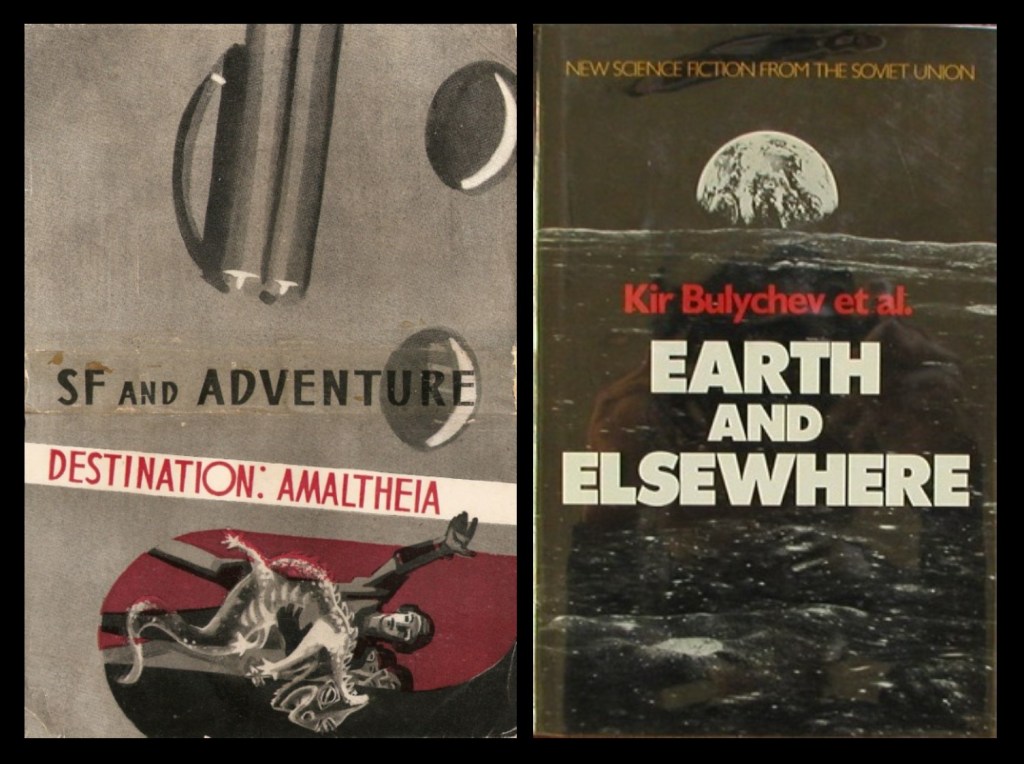
The Way to Amalteia” by Arkady Strugatsky and Boris Strugatsky is story #52 of 52 from The World Treasury of Science Fiction edited by David G. Hartwell (1989), an anthology my short story club is group reading. Stories are discussed on Tuesdays, Thursdays, and Saturdays. “The Way to Amalteia” was first published in Russian in Путь на Амальтею in 1960.

“The Way to Amalteia” was first translated into English in 1963, and later in 1985, before the 1989 translation for The World Treasury of Science Fiction. Finding those other editions will be difficult, and since there have been no English reprints since 1989, it shows the value of owning a copy of The World Treasury of Science Fiction. Collecting retrospective anthologies of science fiction is one way of preserving literary history.

“The Way to Amalteia” starts out on J-Station, a research settlement on Amalthea, the fifth moon of Jupiter. The Strugatsky brothers describe the beautiful site of Jupiter from that moon. But we learn that the station is running out of food, and everyone is on strict rations. The settlement is desperately waiting for the freighter, Takhmasib, to deliver supplies, but it’s running late, and they’ve lost contact with the ship.

The story then cuts to the freighter, where we learn why. The Takhmasib has suffered several mishaps and has fallen into Jupiter. The Strugatsky brothers have set up an almost impossible situation and we don’t know if the crew can save themselves.

This is a hard science story, especially for 1960. Hartwell, in his introduction said it would fit right in an issue of Astounding, and that’s true. Hartwell said it also reminded him of Clarke’s “A Meeting with Medusa,” which I thought too. I also thought the story sounded like something Hal Clement would write, and it turns out Arkady Strugatsky translated Mission of Gravity into English.

There’s a lot going for “The Way to Amalteia,” but unfortunately, on this first reading, the story didn’t thrill me. I vaguely sensed it was an outstanding story, but something kept me at a distance. Having so many things go wrong spoiled it for me on one level. Having the cause of the major catastrophe be due to meteorites seemed cheesy. And I wondered if I was missing the flavor of the story because it was a translated work. Finally, there were places where figures were given, and they just seemed impossible to believe.

On page 1027 the photon drive pushes the ship to sixty-seven thousand kilometers a second. That’s about a fourth of the speed of light (299,792 kps). On page 1058 we learn the pressure on the ship as it descends into Jupiter’s atmosphere is three hundred atmospheres. This is after the ship had several holes punched in it from meteors and was patched with resin and metal plates. And there was another mention of the crushing pressure of Jupiter’s atmosphere that was much higher than three hundred atmospheres, but I can’t find it. All these problems remind me of old science fiction movies of the 1950s where science was often mumbo jumbo. But were these errors the writers’ fault, or the translators?

I also feel if I read “The Way to Amalteia” a couple more times in the future I might get to like it quite a bit. I don’t think one reading does the story justice. The story comes across like an episode of Star Trek, where a valiant captain is forced to deal with a series of ever escalating problems, but then at the last minute saves the day.

The Strugatskys spend a lot of time developing the characterization of the international crew and filling the story with textural details. I couldn’t tell if they were realistic or stereotypes because I wondered if some of the flavor was lost in translation.

“The Way to Amalteia” was an interesting story to close the anthology, especially since it’s a novella. Hartwell must have thought highly of the story. That’s why I think it might improve on rereading. But most readers don’t reread. I would have put “The Way to Amalteia” where Hartwell put “A Meeting with Medusa” on page 146 and closed with “A Meeting with Medusa.” The Clarke story offers way more hope for the future.

James Wallace Harris, 9/2/23

The World Treasury of Science Fiction edited by David G. Hartwell

The World Treasury of Science Fiction edited by David G. Hartwell came out in 1989 and contains over one thousand pages of short science fiction. I call this kind of science fiction anthology a retrospective anthology because it collects fiction that covers a time period rather than theme. Reading it should give SF fans a good sampling of science fiction published around the world from the late 1930s through the 1980s. For other retrospective anthologies see “The Best Science Fiction Short Stories.”

Unfortunately, most of the great retrospective anthologies of science fiction are out-of-print. Our database at CSFquery lists the most frequently reprinted and cited stories. If you click on the title in the list, it will take you to ISFDB and show you all the places a story has been reprinted. This way you can create your own virtual retrospective anthology.

Only 9 of the 52 stories from The World Treasury of Science Fiction made it to our list of Classics of Science Fiction Short Stories. That suggests that most of the stories were Hartwell’s favorites and not popular picks. The anthology is a good read for discovering diverse science fiction.

You can see how many citations each of the 52 stories received here. To see which anthology has the highest percentage of cited stories, see “The SF Anthology Problem Solved.” A list of all the citation sources for short stories is here.

I’ve hyperlinked the stories I’ve reviewed from The World Treasury of Science Fiction.

  1. Harrison Bergeron • (1961) • short story by Kurt Vonnegut, Jr.
  2. Forgetfulness • (1937) • novelette by John W. Campbell, Jr.
  3. Special Flight • (1939) • novelette by John Berryman
  4. Chronopolis • (1960) • novelette by J. G. Ballard
  5. Triceratops • (1982) • short story by Kono Tensei
  6. The Man Who Lost the Sea • (1959) • short story by Theodore Sturgeon
  7. On the Inside Track • (1986) • novelette by Karl Michael Armer
  8. The Golem • (1955) • short story by Avram Davidson
  9. The New Prehistory • (1983) • short story by René Rebetez-Cortes
  10. A Meeting with Medusa • (1971) • novelette by Arthur C. Clarke
  11. The Valley of Echoes • (1973) • short story by Gérard Klein
  12. The Fifth Head of Cerberus • (1972) • novella by Gene Wolfe
  13. The Chaste Planet • (1975) • short story by John Updike
  14. The Blind Pilot • short story by Nathalie-Charles Henneberg]
  15. The Men Who Murdered Mohammed • (1958) • short story by Alfred Bester
  16. Pairpuppets • (1976) • short story by Manuel van Loggem
  17. Two Dooms • (1958) • novella by C. M. Kornbluth
  18. Tale of the Computer That Fought a Dragon • (1977) • short story by Stanislaw Lem
  19. The Green Hills of Earth • (1947) • short story by Robert A. Heinlein
  20. Ghost V • (1954) • short story by Robert Sheckley
  21. The Phantom of Kansas • (1976) • novelette by John Varley
  22. Captain Nemo’s Last Adventure • (1973) • novelette by Josef Nesvadba
  23. Inconstant Moon • (1971) • novelette by Larry Niven
  24. The Gold at the Starbow’s End • (1972) • novella by Frederik Pohl
  25. A Sign in Space • (1968) • short story by Italo Calvino
  26. The Spiral • (1968) • short story by Italo Calvino
  27. The Dead Past • (1956) • novelette by Isaac Asimov
  28. The Lens • (1984) • short story by Annemarie van Ewijck
  29. The Hurkle Is a Happy Beast • (1949) • short story by Theodore Sturgeon
  30. Zero Hour • (1947) • short story by Ray Bradbury
  31. Nine Lives • (1969) • novelette by Ursula K. Le Guin
  32. The Muse • (1968) • short story by Anthony Burgess
  33. The Public Hating • (1955) • short story by Steve Allen
  34. Poor Superman • (1952) • novelette by Fritz Leiber
  35. Angouleme • (1971) • short story by Thomas M. Disch
  36. Stranger Station • (1956) • novelette by Damon Knight
  37. The Dead Fish • (1955) • short story by Boris Vian
  38. I Was the First to Find You • (1977) • short story by Kirill Bulychev
  39. The Lineman • (1957) • novella by Walter M. Miller, Jr.
  40. Tlön, Uqbar, Orbis Tertius • (1962) • short story by Jorge Luis Borges
  41. Codemus • (1976) • short story by Tor Åge Bringsvaerd
  42. A Kind of Artistry • (1962) • novelette by Brian W. Aldiss
  43. Second Variety • (1953) • novelette by Philip K. Dick
  44. Weihnachtsabend • (1972) • novelette by Keith Roberts
  45. I Do Not Love Thee, Doctor Fell • (1955) • short story by Robert Bloch
  46. Aye, and Gomorrah … • (1967) • short story by Samuel R. Delany
  47. How Erg the Self-Inducting Slew a Paleface • (1977) • short story by Stanislaw Lem
  48. Nobody’s Home • (1972) • short story by Joanna Russ
  49. Party Line • (1976) • novelette by Gérard Klein
  50. The Proud Robot • (1943) • novelette by Henry Kuttner
  51. Vintage Season • (1946) • novelette by Henry Kuttner and C. L. Moore
  52. The Way to Amalteia • (1984) • novella by Arkady Strugatsky and Boris Strugatsky

James Wallace Harris, 9/1/23

“Vintage Season” by C. L. Moore and Henry Kuttner

I’ve always wanted to visit the future — but what if the future visited me? “Vintage Season” by Lawrence O’Donnell (C. L. Moore and Henry Kuttner) is about people from the future visiting the present. We don’t know when and where this story takes place, but we identify with it as now. The sense of wonder “Vintage Season” generates comes from imagining visitors from the future and why they would hang with us.

Science fiction’s foundation is built on four pillars: space travel, time travel, aliens, and robots. Two stories get closest to the heart of time travel. The first is, “The Time Machine,” by H. G. Wells. The second is “Vintage Season.” I’m not sure any other time travel story even comes close.

There is a mystery about “Vintage Season” — who wrote it — Moore or Kuttner or both. Does it really matter? Can’t we consider the couple one creative god and let it go at that? I have read accounts of how Catherine and Henry would leave a story in a typewriter and either one of them would stop and work on it. I’m not sure if I believe that myth, or at least how it stands.

In writing classes, they talk about two kinds of writers: pantsers and plotters. Pantsers write by the seat of their pants just letting stories unfold and go where they want. Plotters are writers who outline before they start writing. “Vintage Season” was written by a plotter. It’s a three-dimensional puzzle that depends on every piece fitting together perfectly, and it does. Leaving a story in a typewriter for whomever to finish is a pantser technique. Generally, when I read Kuttner stories they feel like a pantser story. When I read a Moore story, they feel like a plotter story. It reminds me of Moore’s “No Woman Born” and maybe “Greater Than Gods”

Vintage Season” is story #51 of 52 from The World Treasury of Science Fiction edited by David G. Hartwell (1989), an anthology my short story club is group reading. Stories are discussed on Tuesdays, Thursdays, and Saturdays. “Vintage Season” was first published in Astounding Science-Fiction (September 1946).

“Vintage Season” is an outstanding story. To me, it’s the absolute best science fiction story from the Golden Age of Astounding Science-Fiction in the 1940s. I’ve read it many times over many decades. I also consider “Vintage Season” one of the best science fiction stories ever written.

I love listening to the narration of it from the audiobook edition of The Science Fiction Hall of Fame, v. 2a. In fact, I feel sorry for anyone who hasn’t listened to that audio edition of “Vintage Season” — it was pitch perfect. As I listened to it, I marveled at how “Vintage Season” was so damn well-written.

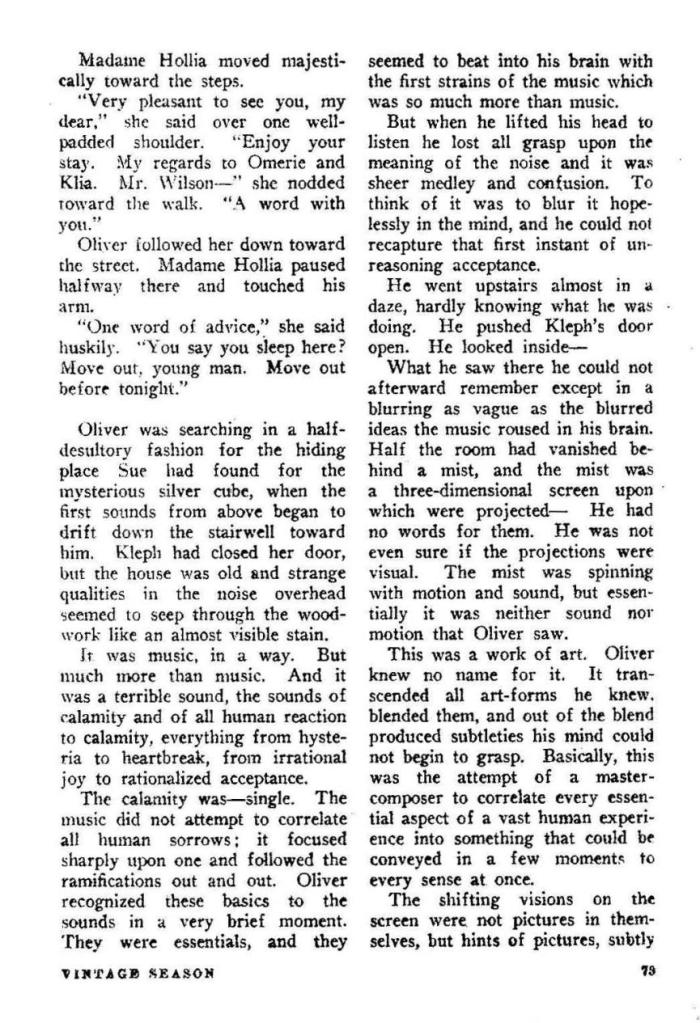
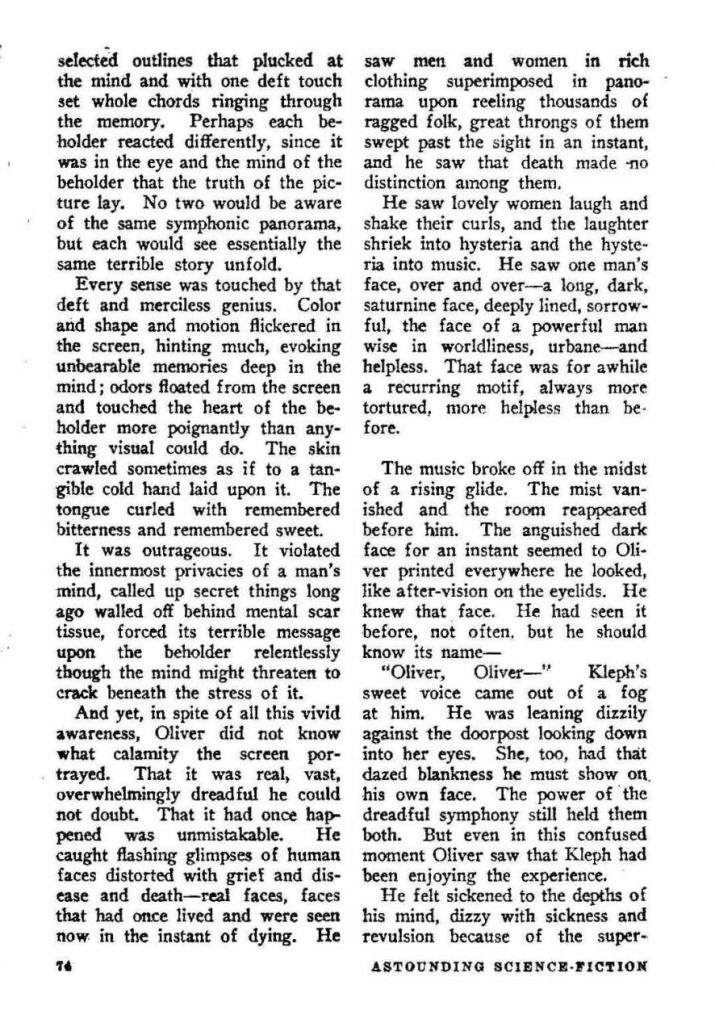
One of the hardest things to write in science fiction is what readers can’t know — what the future is like, how an alien thinks, or how an artificial mind will relate to us. Science fiction writers must make those things up. This is why I believe Moore and Kuttner were so successful in “Vintage Season.” Start reading with “Oliver was searching” and read until “The music broke off.” Oliver goes into Kleph’s room where she’s playing a work of art composed by a fellow time traveler. We need to remember this was written in 1946 and most people did not know about most science fiction concepts. Moore, and I believe she wrote most of “Vintage Season,” especially the parts about people’s emotions. Think of this passage as someone trying to describe an LSD trip, and how hard it would be to put it into words. Moore does a fantastic job.

Few science fiction writers attempt anything like this. Everything in the story led to Oliver being able to experience that moment. It’s also key to the ending. Everything in the story is built to support every other part. We need Oliver’s experience with the euphoria tea. We need the tension over Sue wanting Oliver to sell the house. We need all the clues Oliver is picking up. We need Oliver to be attracted to Kleph. Every bit of this story leads up to the ending.

And if Kuttner wrote the last story I reviewed, “The Proud Robot” by himself, it shows nothing of that kind of writing. Kuttner wrote a series of scenes, each one a little battle of wits. He keeps giving us scenes with conflicts and solving them. Eventually, he wraps things up. He tells us Gallegher invented Joe the robot as a can opener. It fits with the other scenes, but the other scenes don’t require that ending. And almost any scene could be removed, and the story would still work. That’s how pantser plotting works.

I wish I had the time and psychic energy to mind map “Vintage Season” and show how tightly connected every element of the story is with the other elements. But such an effort could take days. Just read the story.

I wish I had the time and psychic energy to be more of a literary scholar. I could spend weeks analyzing “Vintage Season.” Instead, I write these essays over a couple of hours hoping to say just enough to get people to read the story. I write these essays to focus my mind and organize my thoughts about a story. If I didn’t exercise my mind this way, I think it would deteriorate.

When I listened to “Vintage Season” this time the reading experience was something significant. I wish I could put that into words. Reading science fiction has been an essential part of my life, but not all science fiction reading is essential. Most of it is a waste of time. “Vintage Season” is not. Understanding why would tell me something. Maybe I’ll write about that someday.

James Wallace Harris, 8/31/23

“The Proud Robot” by Lewis Padgett

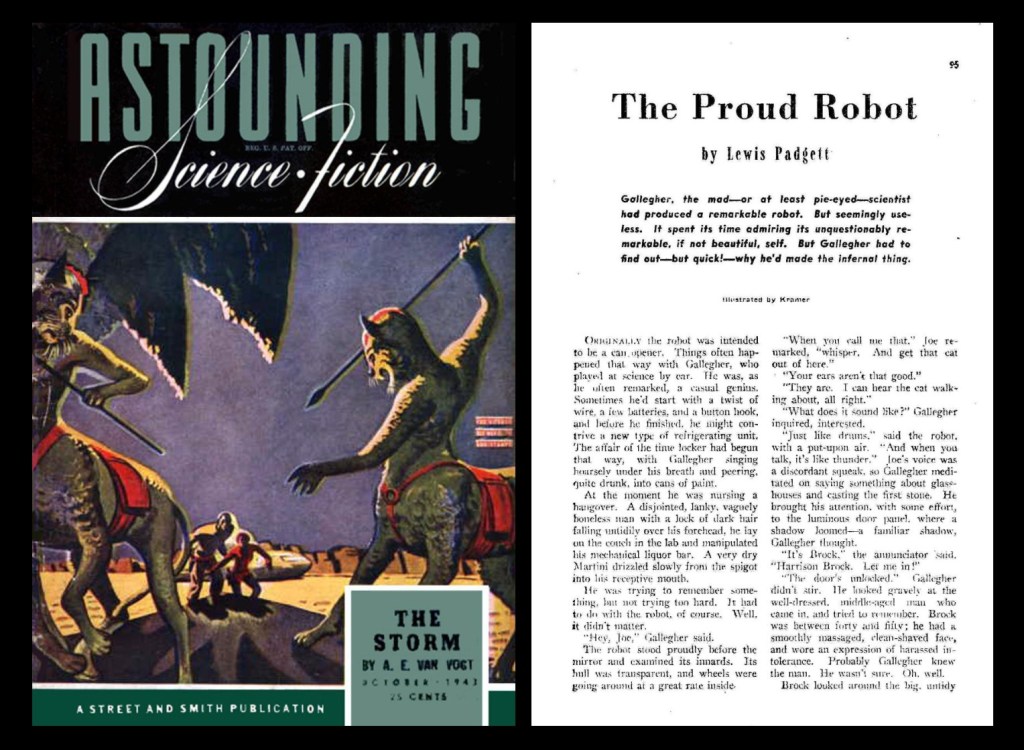
The Proud Robot” by Lewis Padgett is story #50 of 52 from The World Treasury of Science Fiction edited by David G. Hartwell (1989), an anthology my short story club is group reading. Stories are discussed on Tuesdays, Thursdays, and Saturdays. “The Proud Robot” was first published in Astounding Science-Fiction (October 1943). Lewis Padgett was the pen name of husband-and-wife writers Henry Kuttner and C. L. Moore, but most fans think it was written by Kuttner.

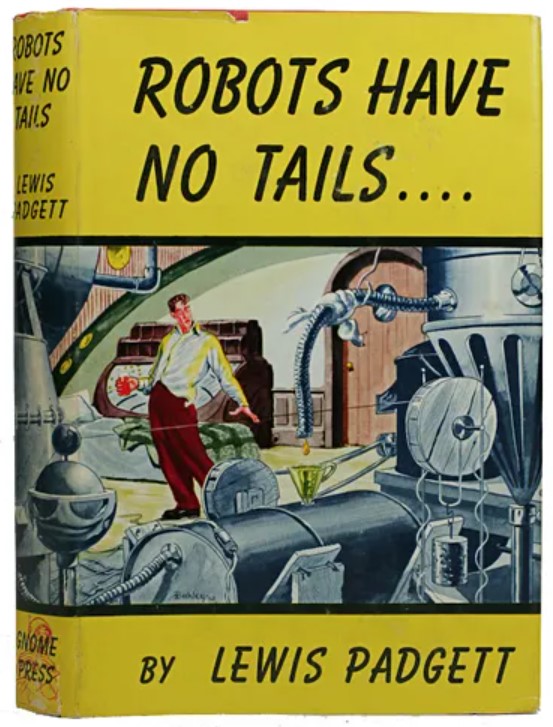
Back in the mid-1970s I discovered Robots Have No Tails in an old library downtown. It was a rebound copy of the original Gnome Press edition without a dustjacket. I read the first story, “The Proud Robot” and loved it because I was also a recent fan of The Thin Man movies with William Powell and Myrna Loy. I mention this because Kuttner obviously based the zany alcoholic mad-scientist Galloway Gallegher on the movie version of Nick Charles. I think most people might agree with me on that. However, I have another theory. I believe Joe, the vain robot was based on Bungle, the glass cat from The Patchwork Girl of Oz by L. Frank Baum. Both the robot and cat had transparent bodies so you could see their insides, and both were obsessed with looking at themselves.

I’ve read “The Proud Robot” several times over the years. Sometimes I like it, and sometimes I don’t — it all depends on my mood. Sometimes a drunk protagonist is amusing, and other times, Gallegher is just too damn annoying. Joe the robot is always annoying — but he was meant to be.

Harrison Brock, a television/movie mogul hires Gallegher to invent technology that will bypass patents that bootleg theaters are using to put his Vox-View Pictures out of business. Gallegher has accomplished the task but doesn’t remember how. Gallagher works when he’s drunk using his subconscious mind as a creative power. Most of the story is about Gallegher trying to remember what he did. All he knows is he came to after building a vain robot. Kuttner wrote a lot of pulp mysteries besides writing science fiction, so this story is really a SF mystery.

The central plot of the story lets Kuttner speculate about the future of television in 1943. He imagines the television industry paying for itself through household subscriptions, which was a path taken in England. He didn’t anticipate the power of commercials. Kuttner also imagined how the movie industry would fight back against television by offering viewers greater technological features to leave their homes. The speculation about the future of TV is fun but isn’t enough to carry the story.

How Gallegher solves the mystery is silly but logical enough within this silly story. Like I said whether this will be amusing will depend on your mood. I wished that I had an audio version of “The Proud Robot” because a good narrator would help me to hear this story in its funniest light.

I’m not keen on Kuttner. My hunch is I like the C. L. Moore part of the team, that’s Lewis Padgett. If a Lewis Padgett story is serious and moving, I assume Moore did most of the writing. If it’s intellectual, silly, or pulpy, I tend to think it’s Kuttner. Our next story, “Vintage Season,” was written by the same team. Because that story is so wonderful, I feel it was mostly written by Moore.

I feel “The Proud Robot” was Kuttner’s hack work, and sometimes, if the mood strikes me, it’s amusing hack work.

James Wallace Harris, 8/29/23

“Party Line” by Gérard Klein

Party Line” by Gérard Klein is story #49 of 52 from The World Treasury of Science Fiction edited by David G. Hartwell (1989), an anthology my short story club is group reading. Stories are discussed on Tuesdays, Thursdays, and Saturdays. “Party Line” was first published in French in Fiction (March 1969). It was translated into English in 1976 for The Best from the Rest of World: European Science Fiction edited by Donald A. Wollheim.

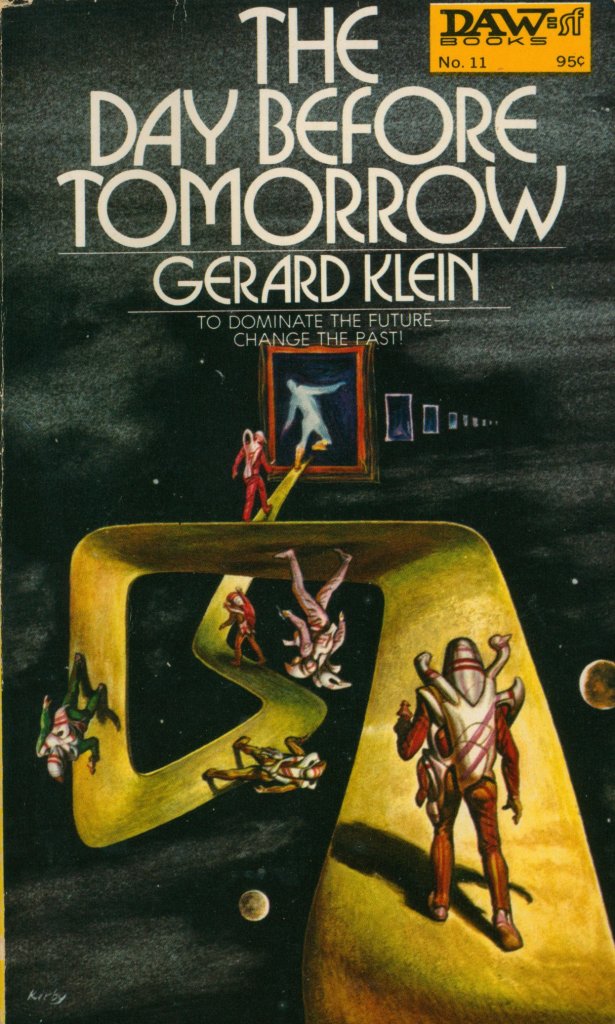
This is the second appearance of Gérard Klein in The World Treasury of Science Fiction. See my earlier review of “The Valley of Echoes.” After I read that story, I bought two of Klein’s novels, but I haven’t read them yet. I’m not sure I would have done that after only reading “Party Line.” However, one of those novels, The Day Before Tomorrow has a blurb that could fit with “Party Line” — “To Dominate the Future — Change the Past.”

“Party Line” uses one of my favorite science fictional concepts — having a future older-self influence a younger-self. Jerome Bosch is working in his office when he receives two phone calls on two separate phones. The phone in the left hand tells him he’s going to receive a terrific opportunity, and the one is the right warns against taking it.

Jerome Bosch is also a writer. He fantasizes at work about having all his time free to write. And I must wonder if Klein was working in his office one day, daydreaming this idea about himself and deciding to work it into a story. At first, it felt like “Party Line” was something Philip K. Dick would write. But then the dominant mood of the story shifted to indecision, paranoia, and fear, which is still PKD’s territory, but the story felt weirdly different, more like Kafka.

The first caller calls back and tells Jerome if he will only do what he says, his books will be made into movies, he will become rich and famous, and have lots of women. Then the other caller calls back and tells him something terrible will happen. For the rest of the story Jerome can’t decide.

I liked “Party Line” until I got to the end. Unfortunately, it’s one of those stories that promises a lot, but doesn’t know how to deliver on its promises. “Party Line” does have an ending, but one, I thought Klein had to scrounge up when he discovered he had painted himself into a corner.

I wrote an older self advises younger self story when I was at Clarion West. The problem is people seldom take advice. I wondered if someone would take advice from themselves. Klein complicates the idea by having two versions of his future self give him advice. That created a lot of tension for the story, but I wonder if “Party Line” would have been better if Jerome had only gotten one phone call from the future. How many people would jump at getting everything they wanted if they got a message from their future self?

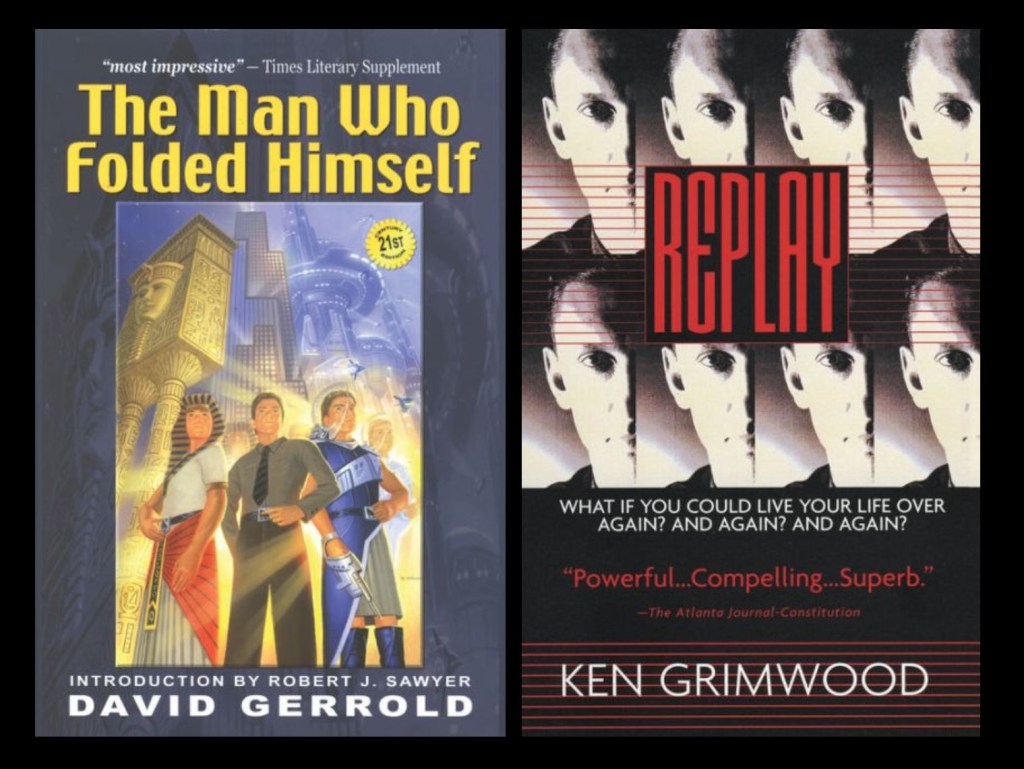
The idea of an older version of a person trying to influence their younger self is a challenging problem for writers. David Gerrold did an excellent job with it in The Man Who Folded Himself. But to fully explore the idea, I think people should read Replay by Ken Grimwood. It’s not the same exact idea, but it works out the same philosophical problem. The idea needs novel length to work out.

I believe my disappointment with “Party Line” is because Gérard Klein should have made it into a novel and worked out a satisfying ending. However, I might reread “Party Line” in the future and see it differently. Maybe my future self will understand it better.

James Wallace Harris, 8/26/23

“Nobody’s Home” by Joanna Russ

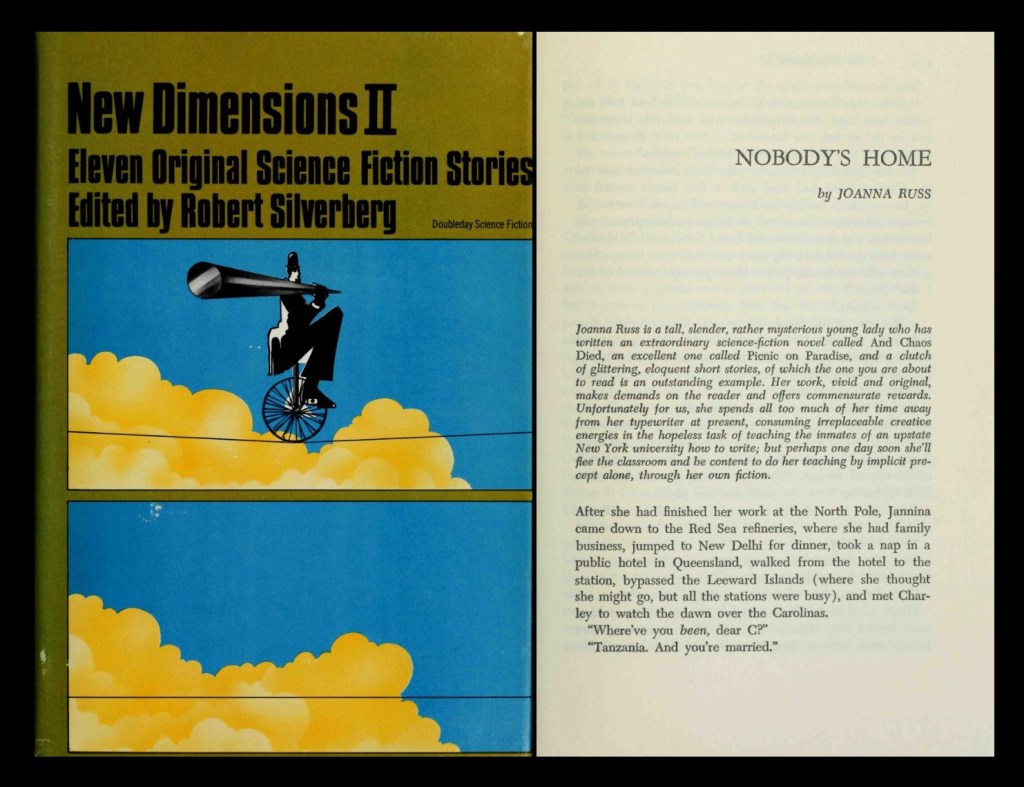
Nobody’s Home” by Joanna Russ is story #48 of 52 from The World Treasury of Science Fiction edited by David G. Hartwell (1989), an anthology my short story club is group reading. Stories are discussed on Tuesdays, Thursdays, and Saturdays. “Nobody’s Home” was first published in 1972 in New Directions II, an original anthology edited by Robert Silverberg.

“Nobody’s Home” is one of those science fiction stories where the author tries to cram in as many speculative ideas into each sentence and paragraph as possible. Joanna Russ paints us a picture of a utopian future where the Earth’s population is vastly smaller, and everyone is rich enough to do whatever they want. The whole of humanity routinely wanders across the face of the Earth via teleportation booths, seeing sites, having casual affairs, pursuing hobbies, whims, and vocations. If they wanted, they could view twenty-five sunsets from various locations around the world in one twenty-four-hour period. And they can choose any environment, no matter how extreme, in which to build their abodes.

Janina, our main character, is highly intelligent and lives in a family commune that includes numerous kinds of marriage arrangements, hookups, and parent-child relationships. Their family name is Komarov. This reminded me of the group marriages in “The Star Pit” by Samuel R. Delany. Household members speak in clever repartee that challenge each other in verbal games. The parents are all geniuses, and their children are even smarter.

So, what kind of problems mar this bright future? Well, the commune gets a visit from a young woman named Leslie Smith, who is ordinary. I assume Leslie is like one of us from the 21st century. She’s not that smart, not that good looking, not that clever. She can handle monotonous work tasks and enjoys herself by pursuing boring solitary activities. She can’t play the verbal games, nor can she pick up on the household’s carefully crafted social customs. Leslie is a bringdown to have around. The group tries to be kind to her, but in the end, they decide to pass Leslie on, like so many others have done with her before.

I’m curious why Russ wrote this story. Russ was a highly intelligent woman, so I wondered if the story was inspired by having to deal with a dull house guest. Or did she imagine a far-out future and wanted to point out that present-day plebians like us wouldn’t fit in with the hoi polloi of the future.

I know I couldn’t keep up with the future world of “Nobody’s Home.” I struggled to read the story slow enough to decipher all the alluded to ideas that Russ presented.

But, what about the title “Nobody’s Home?” Could Russ have intended something different? Could the unease the Komarov family felt when Leslie shows up be caused by them recognizing their own lack of purpose? That instead of no one being at home in Leslie’s head, that there’s no one home in their commune, or even Earth?

Joanna Russ is famous for her feminist fiction, but I didn’t feel this story was about feminism. This is the third time I’ve read this story and I’m still not sure what it’s about. It could be an attack on the high-tech fantasies science fiction writers love to give to the future. I imagine if you’re a science fiction reader who feels like a Slan, then maybe you see there’s nobody home regarding Leslie. But if you’re a critic of science fiction, you might think there’s nobody home with these Eloi-like beings of this future.

James Wallace Harris, 8/23/23

“How Erg the Self-Inducting Slew a Paleface” by Stanislaw Lem

How Erg the Self-Inducting Slew a Paleface” by Stanislaw Lem is story #47 of 52 from The World Treasury of Science Fiction edited by David G. Hartwell (1989), an anthology my short story club is group reading. Stories are discussed on Tuesdays, Thursdays, and Saturdays. “How Erg the Self-Inducting Slew a Paleface,” a 1964 Polish story was first published in English in Mortal Engines in 1971.

I won’t argue that “How Erg the Self-Inducting Slew a Paleface” is not science fiction, because people are tired of me doing that, but just listen to this audiobook version of the story in Mortal Engines.

I found Lem’s prose charming and dazzling, and “How Erg the Self-Inducting Slew a Paleface” is a fun fairytale about a cybernetic king who captures a human for his collection of curiosities. Unfortunately, the wily human tricks the king’s daughter into giving him her windup key and forces the king into letting him go. But the human doesn’t keep his part of the bargain to return the key. The princess winds down, and the king announces to his kingdom that anyone who returns the key can marry his daughter.

Hartwell’s introduction makes me wonder why he included this story in his anthology.

My hunch as I read “How Erg the Self-Inducting Slew a Paleface” was Lem holds science fiction in contempt, and his story is poking fun at science fiction readers. Now, that’s not saying this story isn’t impressive. Of course, Lem shows quite a bit of disdain for humanity too. But read this page to see if you agree with me. This could be my own aging cynicism reading into Lem, so you decide.

I liked this story despite it not being the kind of story I wanted to find in this anthology.

James Wallace Harris, 8/22/23

p.s. – I missed reviewing several stories from The World Treasury of Science Fiction because I’ve been having back trouble and can’t sit at the computer for long, and for two weeks we lost our connection to the internet. I might go back and review them in the future.