Tracking Down Pre-Fandom Science Fiction Readers

Ever since I’ve been reading 19th-century science fiction I’ve wondered what were the reactions to those stories by readers of the day. The term science fiction applied as a unique category of fiction didn’t exist before Hugo Gernsback began publishing Amazing Stories in 1926, and even then it took a number of years to get the label we have today. At first, Gernsback called the type of stories he wanted for his magazine scientifiction, but within a few years it was changed to science-fiction, and then to science fiction. (See “When Mainstream America Discovered Science Fiction.”)

Before that according to Brian Stableford in his 4-volume New Atlantis: A Narrative History of Scientific Romance, the French called stories like those written by Jules Verne roman scientifique, and the British called stories like those written by H. G. Wells scientific romances. I’ve yet to find what Americans called such stories. It’s doubtful in any country if the reading public thought those kind of stories represented a distinctive branch of literature.

During the 1930s American admirers of the science fiction story in pulp magazines began to communicate via letters, then meeting in person, eventually creating clubs and holding conventions. The first Worldcon was in 1939. Those organized science fiction readers called themselves fans, and collectively called their activities fandom. During the period 1930s-1950s is when the genre of science fiction slowly emerged — finally to be recognized by book publishers who marketed science fiction by that label, and libraries and bookstores began shelving it separately under that term too.

However, the kind of stories we now call science fiction existed well before the label, and I’m sure those stories resonated with a tiny segment of the reading public. How soon did those readers begin to seek out stories we call science fiction? We know this began for sure when Gernsback started publishing them together in a magazine, but when did publishers, editors, and readers recognize there was a type of fiction that wasn’t about what was but what could be? Stableford cites reviewers using the term scientific romances and roman scientifiques but how universal were those labels? Did readers intentionally track down those stories because of those descriptive phrases?

We’ve always had fantasy, but fantasy is fiction about events and places that could never be. When did readers start saying to themselves, “I like those stories about what could happen in the future?” Can I find published accounts of reader reactions to science fiction stories published before 1926. Starting in the 1930s fans of science fiction began publishing amateur magazines they called zines. There are several histories of these, and they do document how readers felt. What I’m looking for is pre-fandom documentation.

My first hunch was to wonder about book clubs. I found, “The evolution of American book clubs: A timeline” by Audra Otto that suggests Americans liked getting together to discuss books and have been for at least four hundred years. The kind of stories we call science fiction didn’t really begin to appear regularly until the 19th-century with tales like Frankenstein (1818) by Mary Shelley and “Rip Van Winkle” (1819) by Washington Irving. Did any reader in those days claim they were a different kind of fiction? When did readers who liked those kind of stories start noticing they were different?

And when did readers start saying to one another “I want to read more stories about traveling in time” or “I want to read more stories about amazing inventions” or “I love stories about traveling to other worlds?” Wouldn’t that be the first seeds science fiction fandom? For example, we know hundreds of Nationalist clubs were formed over Edward Bellamy’s utopian novel Looking Backward. That represents a kind of fandom, and they also had a national magazine. Could other book clubs have formed for fans of Edgar Allan Poe, Jules Verne, Fitz-James O’Brien, Edward Page Mitchell, or H. G. Wells?

What I would like is to find documentation of early interest in science fiction. I have no idea of how to go about it. Fanzines from the 1930s are the documented proof of fandom as we know it, but were there amateur publications before then that dealt with science fiction stories even though they didn’t have a universal label yet for those kinds of stories? There was amateur press associations in the 19th century, but can I find copies their publications online?

Conversations weren’t recorded in the 19th century, so letters and diaries should be the first kinds of lasting evidence. Did Jules Verne get fan letters? Are there any published diaries whose authors secretly wrote about their fondness for stories we’d now call science fiction? When did the letters to the editor columns begin? Did fans of Edgar Allan Poe’s stories ever write to the periodicals where his stories were published? I can’t believe readers of in 1895 couldn’t have been silent after having their minds blown with “The Time Machine” by H. G. Wells.

Here’s my problem. There are vast reservoirs of 19th-century publications out there, even on the net, but I’m not ready to devote the rest of my life to systematically sifting through them to answer this one idle question that keeps intriguing me. First, I’m going to look for books, probably scholarly books, that document science fiction back then. By blogging this essay, I hope readers that might know of books or articles that cover this topic will post a comment.

I’ll use the New Atlantis: A Narrative History of Scientific Romance by Brian Stableford to outline the main works that should have generated reviews and then begin to search for those reviews. Maybe reviews inspired letters to the editor or even counter-reviews or essays. I’ll also see if any of those authors had collected letters, memoirs, autobiographies, or biographies. A lot of this depends on finding periodicals and books online from 1830-1930.

After that I have an anthology The Rivals of H. G. Wells that collected short stories similar to H. G. Wells published in magazines from late 1800s to early 1900s. If I can find scans of those magazines online, I’m going to see if I can find any reader responses in later issues. I’ll also use the list of stories I generated for my essay “19th Century Science Fiction Short Stories” as starting points for similar research.

This will be a long term project. It’s doubtful I’ll find much evidence, but I’ll keep a subprogram running in the back of my head to interrupt me for when I do. And if anyone reading this finds any, please post a comment.

James Wallace Harris, 8/24/20

Update: 8/24/20SFFAudio pointed me to Vril, a concept in a science fiction like novel The Coming Race (1871) by Edward Bulwer-Lytton that led to legions of fans, mostly occult, and its implications in novels and works of occult beliefs. This inspired some science fiction writers, even Heinlein had his occult moments. I’m thinking both the Bellamy and Bulwer-Lytton followers and their organized activities might have been precursors to 20th-century fandom.
When Did E. M. Forster’s “The Machine Stops” Become Science Fiction?

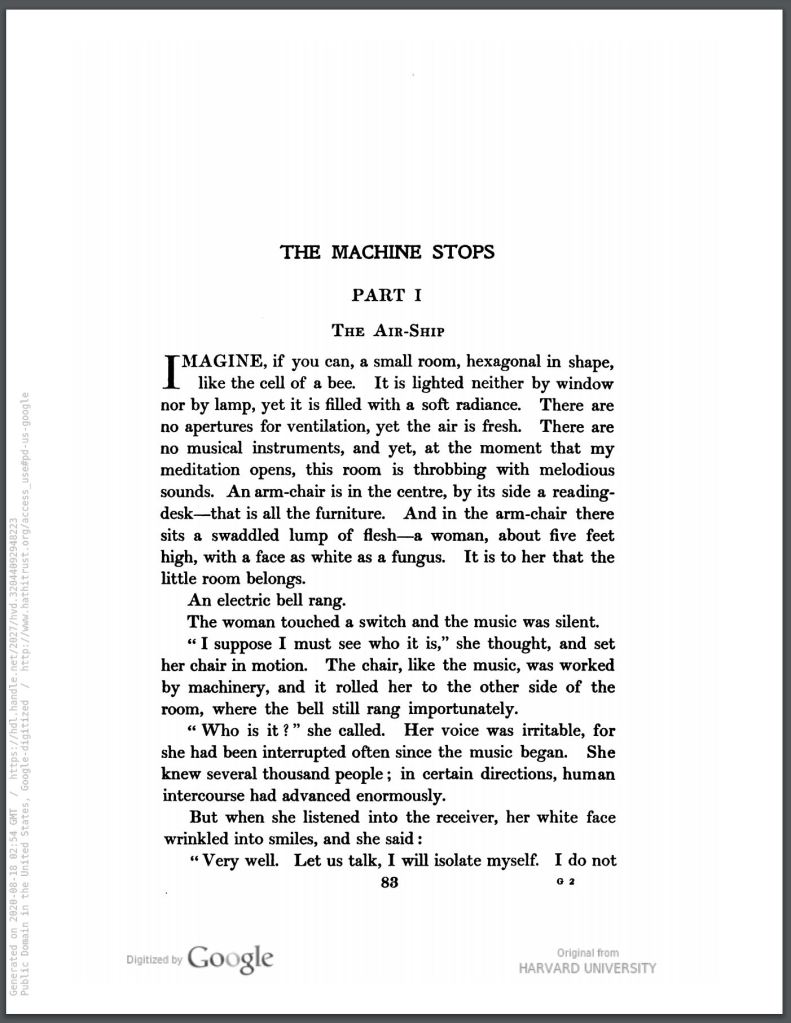
In 1909 E. M. Forster’s story “The Machine Stops” was published in the November issue of The Oxford and Cambridge Review. It is a dystopian tale about a future society run by a machine. Forster was replying to H. G. Wells novel, A Modern Utopia serialized in the Fortnightly Review in 1904 and 1905. Neither writer thought they were writing science fiction because, first, the term did not yet exist, and second, because Wells was promoting scientific socialism and Forster was protesting it. However, both stories had all the trappings of science fiction.

A Modern Utopia is seldom remembered by science fiction fans, but “The Machine Stops” is considered one of the classics of the genre, and often reprinted in retrospective anthologies of science fiction short stories. When did science fiction fans first discover “The Machine Stops” and claim it for the science fiction genre? And did E. M. Forster who lived until 1970 ever know this?

Many within the genre consider science fiction originating with Hugo Gernsback’s Amazing Stories, first published in April 1926. Gernsback first called these stories scientifiction, but within a few years coined the term science fiction. That term “science fiction” didn’t become widely known outside of the genre until the late 1940s and early 1950s. See my essay, “When Mainstream America Discovered Science Fiction.”

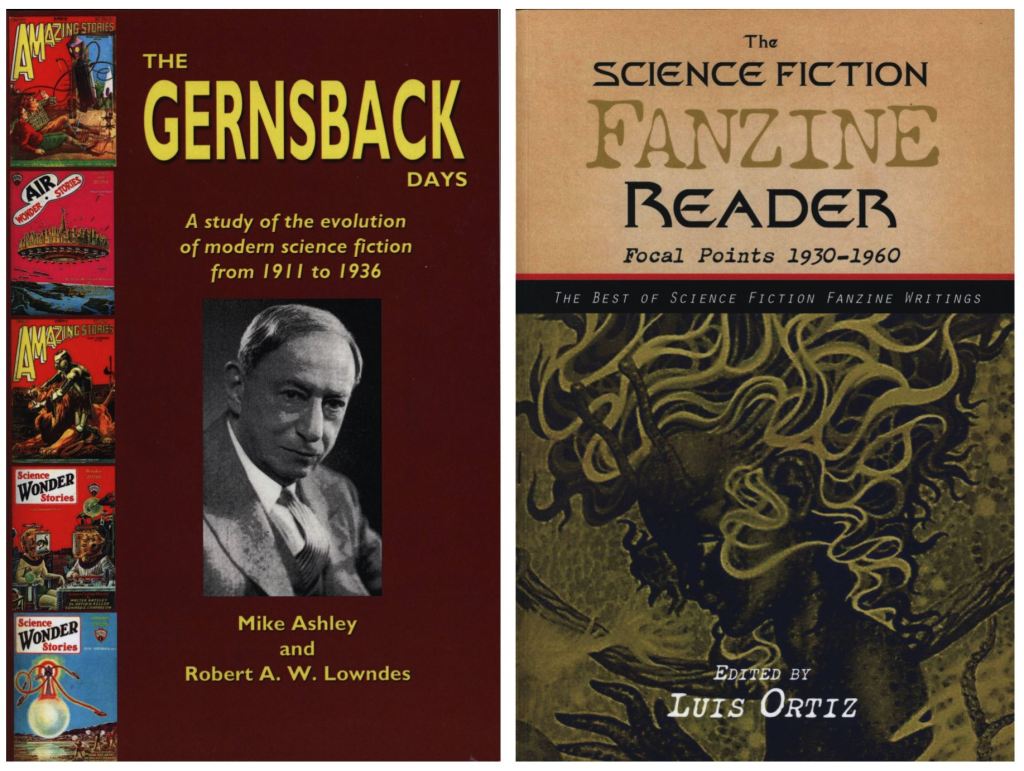
Hugo Gernsback is also credited with creating science fiction fandom by encouraging readers of the stories in his magazines to communicate in his letter column. Eventually, he organized the Science Fiction League in the April, 1934 issue of Wonder Stories. Throughout the 1930s and 1940s science fiction developed as a genre, and readers began calling themselves fans and developed a subculture they called fandom. You can read more about both in these two wonderful books.

However, what do you call stories that use the techniques and themes of science fiction published before Gernsback? What do you call readers who loved these kinds of stories before fandom? Science fiction has always been written by writers who work outside of the genre – before and after it was established. And there were readers before the genre existed that loved stories we now call science fiction.

Science fiction has been laying claim to these proto-SF stories for decades. Gernsback had to reprint Poe, Verne, and Wells in the early issues of Amazing Stories because he didn’t have enough new science fiction to start his magazine. Interestingly, he didn’t reprint “The Machine Stops.” Nor did any of the other pulps that eventually began reprinting classic fantasy and science fiction.

When I reread “The Machine Stops” for a Facebook group that discusses science fiction short stories, I noticed something interesting. Forster describes a future where humans have withdrawn from the surface of the Earth, but automatic aerodromes run by the machine keep the flying machines going on their old routes. This was very reminiscence of “Twilight” by John W. Campbell, Jr., where a time traveler visits a far future Earth and the people have abandoned cities that still function by automatic machinery, including air fields. This made me wonder if Campbell had read Forster’s story. It also made me wonder just when did science fiction fans discovered “The Machine Stops.”

The internet is a wonderful tool for doing such research. We know that “The Machine Stops” was originally published in a 1909 journal. I quickly found out it was reprinted in a collection of E. M. Forster’s stories called The Eternal Moment and Other Stories in 1928. “Twilight” was first published in 1934, so theoretically Campbell could have read it. However, I can find no evidence that he had, nor could any of my online chums who were helping me.

Then, when did fandom discover “The Machine Stops” and begin calling it science fiction? There is a wonderful tool called the Internet Science Fiction Database (ISFDB.org) that indexes all it can about published science fiction. It’s entry for “The Machine Stops” is quite revealing, giving a listing of all the times it was reprinted in works related to science fiction.

The first SF anthology that reprinted “The Machine Stops” is The Science Fiction Galaxy edited by Groff Conklin in 1950, and it just so happens I have a copy. It’s a tiny hardback the size of a paperback. Conklin was an early anthologist of science fiction, assembling over forty of them. And there is a clue here to our mystery. In his first three large anthologies most of the stories he collected were from the science fiction pulp magazines. In The Science Fiction Galaxy he begins with three stories that existed before the genre emerged, “The Machine Stops” (1909) and “As Easy as A. B. C.” (1912) by Rudyard Kipling, and “The Derelict” (1912) by William Hope Hodgson. In his previous anthology he had found two pre-genre stories. (Joshua Glenn in recent times has done extensive discovery of stories from this era which he calls Radium Age Science Fiction.)

Conklin never searched hard for these older stories, but other antologists did. See my essay “19th Century Science Fiction Short Stories.” There were plenty of stories published before science fiction was known as a genre that could be called science fiction. I’ve often wondered about the readers who read them. It’s one thing to get a sense of wonder from science fiction in the 20th century, because we had rockets, robots, and atomic bombs to validate our genre’s tales, but can you imagine what readers in the 19th and early 20th century felt when reading their version of science fiction stories?

Scholars have tracked down these old stories, but I’ve never read anything about the readers. I’d love to know the reactions. Did they ever write letters to the editors, or reviews, or even include their thoughts in memoirs and diaries? I can’t find them.

Had science fiction fans discovered “The Machine Stops” before Groff Conklin in 1950? That’s harder to track down but I’ve gotten some help from chums on the net. I believe the trail begins with The Eternal Moment and Other Stories published in 1928. One of those chums named Bill, found these reviews for me:

From an unsigned 13 May 1928 review in the Hartford Courant of The Eternal Moment:
"Here are six strange and striking tales by Mr. Forster, one of the most individual and distinguished of contemporary British novelists . . . "The Machine Stops," which opens the volume, is one of those prophetic fantasies belonging roughly in the same class with certain well-known stories of H. G. Wells. "The Machine Stops" is a ghastly conception, its period set at some immeasurably distant point in an assumed future, when the human race dwells in underground shelters and individuals very seldom see one another; horrible, fantastic and sinister as this story is, it simply follows out, at least along certain lines, the prophecies lately revealed to us in the blinding flash-lights of the Today and Tomorrow Series, and we have already, now in our own existent daily life, attained to some of the wonders which form the abhorrent commonplaces of life in Mr. Forster's fantasy. It may be noted that the fantasy is essential and bitter satire, and that "the machine" does not satisfy every man."
Frank Weir, reviewing in the Decatur IL Daily Review, 8 Jun 1928:
" "The Machine Stops" tells the story of a world inside the earth. Life is controlled by a machine. Forster turns ironical as he presents his travesty on what may be the final result of an age entirely dependent on mechanical genius. Fine writing around an exceptional idea marks this tale as a gem."
John F. Geis in The Brooklyn NY Times Union, 3 Jun 1928:
" "The Machine," which begins the book, is acknowledged an output of two decades ago and portrays the millennium of the electrical age even to the mechanical doctor, but doesn't it sound a bit as though it might be a travesty on birth control? At any rate, the machine, like man, is fallible, and only God reigns omnipotent."

None of those quotes suggest the story is science fiction, but then it was 1928 and the term didn’t really exist. But none of those quotes suggests the story is a different kind of story, or something experimental, or a unique kind of fiction in any way. However, sometime between 1928 and 1950 science fiction fans began to recognize this story as part of their genre.

There are a number of sites that preserve old fanzines digitally, including fanac.org, efanzines.com, and fiawol.org.uk. I’ve discovered that .pdf files at these sites that have been OCRed are indexed in Google. And I’ve also learned that some fanzines are indexed in the many indexes hosted at Galactic Central. Still, with all those sources, and my online helpers, we found very few references to “The Machine Stops.”

The best reference located was in The Acolyte #9 (Winter 1945), which had a column by Harold Wakefield devoted to finding old pre-genre SF/F fiction called “Little Known Fantasisistes.” The editors said Wakefield had found a copy of The Eternal Moment and Other Stories and would review it in the future. He never did.

We know British fans had a chance to read The Eternal Moment and Other Stories as early as 1937 because a mimeograph bibliography of available science fiction.

Finally, there were references to “The Machine Stops” in Pilgrims Through Space and Time: Trends and Patterns in Scientific and Utopian Fiction by J. O. Bailey, a 1947 book publication of his 1934 dissertation on proto-SF.

Of course, none of these clues proved that science fiction fans read “The Machine Stops” before Conklin’s The Science Fiction Galaxy in 1950 but I imagine that some did. After 1950 the story was reprinted in numerous anthologies, but most importantly in The Science Fiction Hall of Fame Volume 2B (1973) edited by Ben Bova. This was where members of the Science Fiction Writers of America voted for their favorite science fiction stories published before the advent of their Nebula Awards in 1965. To come in at the top of such a poll meant many of those writers knew the story, and probably most, if not all, had read “The Machine Stops” in anthologies since 1950. I can’t prove that though.

“The Machine Stops” has become even more famous since the emergence of the Internet because E. M. Forster in 1909 imagined humans isolating themselves and mainly communicating via a machine. It’s heroine is a kind of blogger. Read the BBC essay, “Did E. M. Forster predict the internet age” or Wired Magazine’s take on the subject.

The story feels like uncanny prophecy. Actually, it’s Forster’s fear about the industrial age completely taking over human society. If you’ve never read “The Machine Stops” you can read it online here or listen to it here:

“The Machine Stops” proves the qualities that define science fiction existed before the label, but I’m also curious if the specific love for such stories existed before fandom?

James Wallace Harris, 8/21/20

The SF Anthology Problem – Audiobooks

There are so few retrospective science fiction anthologies on audio that it’s not really practical to run Szymon’s program to solve for the SF Anthology Problem. I’ve decided to do the search manually.  Basically, I printed out the Classics of Science Fiction Short Stories list (ordered by author) and went looking for audiobook editions — mainly at Audible.com. For stories I couldn’t find there I tried online sources such as Escape Pod, Lightspeed, Clarkesworld, StarShipSofa, YouTube, LibriVox, etc.

The Science Fiction Hall of Fame Volume One is the one major anthology for SF short stories on audio, with 17 of the 101 Classics of Science Fiction Short Stories. Volumes 2A and 2B are also on audio, but they only get an additional three stories between them. I hope audiobook publishers will start producing more retrospective anthologies.

Stories by the same author grouped together are in the same collection/anthology.

“The Queen of Air and Darkness” Poul Anderson 1971
YouTube

“Nightfall” – Isaac Asimov (1941)
The Science Fiction Hall of Fame Volume One

“The Last Question” – Isaac Asimov (1956)
Robot Dreams

“The Bicentennial Man” – Isaac Asimov (1976)
Robot Visions

“The Voices of Time” – J. G. Ballard (1960)
The Complete Short Stories

“Blood Music” – Greg Bear (1983)
Best of Science Fiction and Fantasy

“Fondly Fahrenheit” – Alfred Bester (1954)
Science Fiction Hall of Fame Volume One

“Bears Discover Fire” – Terry Bisson (1990)
Bears Discover Fire and Other Stories

“Surface Tension” – James Blish (1952)
Science Fiction Hall of Fame Volume One

“There Will Come Soft Rains” – Ray Bradbury (1950)
The Martian Chronicles

“Arena” – Fredric Brown (1944)
Science Fiction Hall of Fame Volume One

“The Mountains of Mourning” – Lois McMaster Bujold (1989)
Borders of Infinity

“Speech Sounds” – Octavia E. Butler (1983)
“Bloodchild” – Octavia E. Butler (1984)
Bloodchild and Other Stories

“Who Goes There?” – John W. Campbell, Jr. (1938)
Science Fiction Hall of Fame Volume 2A

“Story of Your Life” – Ted Chiang (1998)
“Hell Is the Absence of God” – Ted Chiang (2001)
Stories of Your Life and Others

“The Merchant and the Alchemist’s Gate” – Ted Chiang (2007)
Exhalation

“The Sentinel” – Arthur C. Clarke (1951)
“The Nine Billion Names of God” – Arthur C. Clarke (1953)
Science Fiction Hall of Fame Volume One
“The Star” = Arthur C. Clarke (1955)
“A Meeting with Medusa” – Arthur C. Clarke (1971)
The Collected Stories of Arthur C. Clarke

“Snow” – John Crowley (1985)
StarShipSofa
Lightspeed

“Great Work of Time” – John Crowley (1989)

“Or All the Seas with Oysters” – Avram Davidson (1958)
Or All the Seas with Oysters

“The Star Pit” – Samuel R. Delany (1967)
1967 radio show

“Aye, and Gomorrah …” – Samuel R. Delany (1967)

“Time Considered as a Helix of Semi-Precious Stones” – Samuel R. Delany (1968)

“Second Variety” – Philip K. Dick (1953)
“We Can Remember It for You Wholesale” – Philip K. Dick (1966)
Minority Report and Other Stories

“”Repent, Harlequin!” Said the Ticktockman” – Harlan Ellison (1965)
YouTube

“I Have No Mouth, and I Must Scream” – Harlan Ellison (1967)
YouTube

“Jeffty Is Five” – Harlan Ellison (1977)
The Greatest Science Fiction Stories of the 20th Century

“A Boy and His Dog” – Harlan Ellison (1969)
The Beast that Shouted Love at the Heart of the World and Other Works

“Burning Chrome” – William Gibson (1982)
Burning Chrome

“The Cold Equations” – Tom Godwin (1954)
Science Fiction Hall of Fame Volume One

“All You Zombies—” – Robert A. Heinlein (1959)
All You Zombies (5 stories)
Escape Pod

“The Man Who Bridged the Mist” – Kij Johnson (2011)

“Think Like a Dinosaur” – James Patrick Kelly (1995)
“Think Like a Dinosaur”

“Flowers for Algernon” – Daniel Keyes (1959)
Science Fiction Hall of Fame Volume One
Escape Pod

“The Country of the Kind” – Damon Knight (1956)
Science Fiction Hall of Fame Volume One

“The Little Black Bag” – C. M. Kornbluth (1950)
Science Fiction Hall of Fame Volume One

“Beggars in Spain” – Nancy Kress (1991)

“Mimsy Were the Borogoves” Henry Kuttner, C. L. Moore (1943)
Science Fiction Hall of Fame Volume One

“Vintage Season” – C. L. Moore (1946)
Science Fiction Hall of Fame Volume 2A

“The Day Before the Revolution” – Ursula K. Le Guin (1974)

“Nine Lives” – Ursula K. Le Guin (1969)
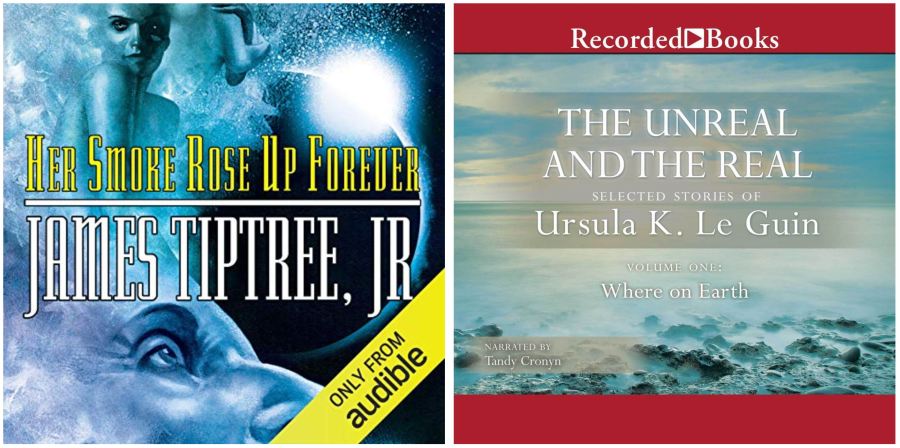
The Unreal and the Real: Volume One
The Unreal and the Real: Volume Two

“Vaster Than Empires and More Slow” – Ursula K. Le Guin (1971)
“Buffalo Gals, Won’t You Come Out Tonight” – Ursula K. Le Guin (1987)
The Found and the Lost: The Collected Novellas of Ursula K. Le Guin

“Coming Attraction” – Fritz Leiber (1950)
Science Fiction Hall of Fame Volume One

“First Contact” – Murray Leinster (1945)
Science Fiction Hall of Fame Volume One

“A Song for Lya” – George R. R. Martin (1974)

“Sandkings” – George R. R. Martin (1979)
YouTube

“The Way of Cross and Dragon” – George R. R. Martin (1979)
Lightspeed

“Of Mist, and Grass, and Sand” – Vonda N. McIntyre (1973)

“That Only a Mother” – Judith Merril (1948)
Science Fiction Hall of Fame Volume One

“Rachel in Love” – Pat Murphy (1987)
Escape Pod

“Inconstant Moon” – Larry Niven (1971)

“Day Million” – Frederik Pohl (1966)
Drabblecast

“The Lucky Strike” – Kim Stanley Robinson (1984)
The Best of Kim Stanley Robinson

“When It Changed” – Joanna Russ (1972)

“Souls” – Joanna Russ (1982)

“Light of Other Days” – Bob Shaw (1966)
YouTube

“R & R” – Lucius Shepard (1986)

“Passengers” – Robert Silverberg (1968)
Escape Pod

“Born with the Dead” – Robert Silverberg (1974)

“Sailing to Byzantium” – Robert Silverberg (1985)
“Sailing to Byzantium”

“Desertion” – Clifford D. Simak (1944)
City

“Scanners Live in Vain” Cordwainer Smith (1950)
Science Fiction Hall of Fame Volume One
“The Game of Rat and Dragon” – Cordwainer Smith (1955)
The Best of Cordwainer Smith

“Swarm” – Bruce Sterling (1982)

“Lobsters” – Charles Stross 2001

“Microcosmic God” – Theodore Sturgeon (1941)
Science Fiction Hall of Fame Volume One

“Thunder and Roses” – Theodore Sturgeon (1947)

“The Man Who Lost the Sea” – Theodore Sturgeon (1959)
Escape Pod

“And I Awoke and Found Me Here on the Cold Hill’s Side” – James Tiptree, Jr. (1972)
“The Women Men Don’t See” – James Tiptree, Jr. (1973)
“The Girl Who Was Plugged In” – James Tiptree, Jr. (1973)
“Houston, Houston, Do You Read?” – James Tiptree, Jr. (1976)
“The Screwfly Solution” – James Tiptree, Jr. (1977)
Her Smoke Rose Up Forever

“The Only Neat Thing to Do” – James Tiptree, Jr. (1985)

“The Moon Moth” – Jack Vance (1961)
Science Fiction Hall of Fame Volume 2B

“Black Destroyer” – A. E. van Vogt (1939)

“Air Raid” John Varley (1977)

“Press ENTER ■” – John Varley 1984
“Press ENTER ■”

“The Persistence of Vision” John Varley (1978)
“The Persistence of Vision”

“Harrison Bergeron” – Kurt Vonnegut, Jr. (1961)
Favorite Stories of Science Fiction v. 1

“The Ugly Chickens” – Howard Waldrop (1980)
Drabblecast

“The Island” – Peter Watts (2009)
StarShipSofa

“The Things” – Peter Watts (2010)
The Very Best of the Very Best edited by Gardner Dozois
Escape Pod
Clarkesworld

“A Martian Odyssey” – Stanley G. Weinbaum (1934)
Science Fiction Hall of Fame Volume One

“The Star” – H. G. Wells (1897)
Short Stories – Volume One

“Fire Watch” – Connie Willis (1982)
“The Last of the Winnebagos” – Connie Willis (1988)
“At the Rialto” – Connie Willis (1989)
Escape Pod
“Even the Queen” – Connie Willis (1992)
Escape Pod
The Best of Connie Willis (all 4)

“The Fifth Head of Cerberus” – Gene Wolfe (1972)

“The Death of Doctor Island” – Gene Wolfe (1973)

“Seven American Nights” – Gene Wolfe (1978)

“A Rose for Ecclesiastes” – Roger Zelazny (1963)
Science Fiction Hall of Fame Volume One

“For a Breath I Tarry” – Roger Zelazny (1966)

I hope audiobook producers see this list and get inspired to record science fiction short stories. They especially need to pay attention to Samuel R. Delany, Joanna Russ, and Gene Wolfe, but quite a few classic science fiction writers need short story collections on audio.

James Wallace Harris, 8/13/20

The SF Anthology Problem – Kindle Solution

The original Science Fiction Anthology Problem required finding anthologies that contained all the 101 stories from the Classics of Science Fiction Short Story list. Szymon Szott solved that problem, but then he wrote and told me since he lived in Poland that it was too expensive to buy physical books from overseas. He wanted to rerun the program but this time pick only anthologies that were available in ebook format.

His first effort could only find 80 of the 101 stories. There just weren’t that many science fiction anthologies available on the Kindle. I told him to break the original rule and include single-author collections.  That allowed him to bring the total stories to 94. It was especially surprising that he couldn’t find an ebook collection of James Tiptree, Jr. stories, however, Her Smoke Rose Up Forever that’s available on audio contains those stories. That suggests we should also do a Science Fiction Anthology Problem with an audiobook solution.

By the way, the two giant anthologies, Sense of Wonder and The Big Book of Science Fiction are so huge in print that I don’t like holding them to read, and Sense of Wonder has a typeface that demands perfect vision. They are better read as an ebook. In fact, I’m starting to want the Kindle edition as my primary format. My eyes still prefer reading off of paper pages but only if the font is large enough, otherwise my eyes like the Kindle e-ink page. My eyes do enjoy reading off my phone or tablet, but they tire more easily.

There is another reason to prefer the Kindle edition. All these books fit on one small device. And they can be read on my phone. It’s great to pull out my iPhone and read a science fiction short story whenever I have an idle moment.

Here are Szymon’s program results looking for Kindle editions:

Sense of Wonder

- "Arena" by Fredric Brown
- "Bears Discover Fire" by Terry Bisson
- "Black Destroyer" by A. E. van Vogt
- "Blood Music" by Greg Bear
- "Bloodchild" by Octavia E. Butler
- "The Cold Equations" by Tom Godwin
- "The Country of the Kind" by Damon Knight
- "Day Million" by Frederik Pohl
- "First Contact" by Murray Leinster
- "Fondly Fahrenheit" by Alfred Bester
- "The Game of Rat and Dragon" by Cordwainer Smith
- "Hell Is the Absence of God" by Ted Chiang
- "Jeffty Is Five" by Harlan Ellison
- "The Little Black Bag" by C. M. Kornbluth
- "Lobsters" by Charles Stross
- "The Lucky Strike" by Kim Stanley Robinson
- "A Martian Odyssey" by Stanley G. Weinbaum
- "Microcosmic God" by Theodore Sturgeon
- "The Mountains of Mourning" by Lois McMaster Bujold
- "Nightfall" by Isaac Asimov
- "The Only Neat Thing to Do" by James Tiptree, Jr.
- "Or All the Seas with Oysters" by Avram Davidson
- "Passengers" by Robert Silverberg
- "The Persistence of Vision" by John Varley
- "Rachel in Love" by Pat Murphy
- "A Rose for Ecclesiastes" by Roger Zelazny
- "The Sentinel" by Arthur C. Clarke
- "Seven American Nights" by Gene Wolfe
- "Souls" by Joanna Russ
- "Surface Tension" by James Blish
- "That Only a Mother" by Judith Merril
- "Think Like a Dinosaur" by James Patrick Kelly
- "The Ugly Chickens" by Howard Waldrop
- "Who Goes There?" by John W. Campbell, Jr.

Running story total: 34

The Big Book of Science Fiction: The Ultimate Collection

- ""Repent, Harlequin!" Said the Ticktockman" by Harlan Ellison
- "And I Awoke and Found Me Here on the Cold Hill's Side" by James Tiptree, Jr.
- "Aye, and Gomorrah …" by Samuel R. Delany
- "Desertion" by Clifford D. Simak
- "Sandkings" by George R. R. Martin
- "Snow" by John Crowley
- "Story of Your Life" by Ted Chiang
- "Swarm" by Bruce Sterling
- "The Last Question" by Isaac Asimov
- "The Man Who Lost the Sea" by Theodore Sturgeon
- "The Star" by Arthur C. Clarke
- "The Star" by H. G. Wells
- "The Voices of Time" by J. G. Ballard
- "Vaster Than Empires and More Slow" by Ursula K. Le Guin
- "When It Changed" by Joanna Russ

Running story total: 49

The Science Fiction Hall of Fame, Volume I

- "Coming Attraction" by Fritz Leiber
- "Flowers for Algernon" by Daniel Keyes
- "Mimsy Were the Borogoves" by Henry Kuttner, C. L. Moore
- "Scanners Live in Vain" by Cordwainer Smith
- "The Nine Billion Names of God" by Arthur C. Clarke

Running story total: 54

The Best of Connie Willis: Award-Winning Stories

- "At the Rialto" by Connie Willis
- "Even the Queen" by Connie Willis
- "Fire Watch" by Connie Willis
- "The Last of the Winnebagos" by Connie Willis

Running story total: 58

The Reel Stuff

- "Air Raid" by John Varley
- "Second Variety" by Philip K. Dick
- "We Can Remember It for You Wholesale" by Philip K. Dick

Running story total: 61

Modern Classic Short Novels of Science Fiction

- "Sailing to Byzantium" by Robert Silverberg
- "The Death of Doctor Island" by Gene Wolfe
- "The Star Pit" by Samuel R. Delany

Running story total: 64

Dreamsongs: GRRM: A RRetrospective

- "A Song for Lya" by George R. R. Martin
- "The Way of Cross and Dragon" by George R. R. Martin

Running story total: 66

Beyond the Rift

- "The Island" by Peter Watts
- "The Things" by Peter Watts

Running story total: 68

Future on Ice

- "Press ENTER ■" by John Varley
- "Speech Sounds" by Octavia E. Butler

Running story total: 70

The Wind's Twelve Quarters

- "Nine Lives" by Ursula K. Le Guin
- "The Day Before the Revolution" by Ursula K. Le Guin

Running story total: 72

The Top of the Volcano: The Award-Winning Stories of Harlan Ellison

- "A Boy and His Dog" by Harlan Ellison
- "I Have No Mouth, and I Must Scream" by Harlan Ellison

Running story total: 74

Masterpieces: The Best Science Fiction of the Twentieth Century

- "All You Zombies—" by Robert A. Heinlein
- "Inconstant Moon" by Larry Niven

Running story total: 76

Sisters of the Revolution: A Feminist Speculative Fiction Anthology

- "The Screwfly Solution" by James Tiptree, Jr.

Running story total: 77

The Best of C. L. Moore

- "Vintage Season" by Henry Kuttner, C. L. Moore

Running story total: 78

The Year's Best Science Fiction & Fantasy 2012

- "The Man Who Bridged the Mist" by Kij Johnson

Running story total: 79

The Best of Lucius Shepard

- "R & R" by Lucius Shepard

Running story total: 80

Born with the Dead

- "Born with the Dead" by Robert Silverberg

Running story total: 81

The Best of the Best Volume 2: 20 Years of the Best Short Science Fiction Novels

- "Beggars in Spain" by Nancy Kress

Running story total: 82

The Martian Chronicles

- "There Will Come Soft Rains" by Ray Bradbury

Running story total: 83

Exhalation

- "The Merchant and the Alchemist's Gate" by Ted Chiang

Running story total: 84

Hackers

- "Burning Chrome" by William Gibson

Running story total: 85

The Mammoth Book of 20th Century Science Fiction: Volume One

- "Great Work of Time" by John Crowley

Running story total: 86

The Last Defender of Camelot

- "For a Breath I Tarry" by Roger Zelazny

Running story total: 87

The Best of Gene Wolfe: A Definitive Retrospective of His Finest Short Fiction

- "The Fifth Head of Cerberus" by Gene Wolfe

Running story total: 88

The Collected Stories of Arthur C. Clarke

- "A Meeting with Medusa" by Arthur C. Clarke

Running story total: 89

Modern Classics of Fantasy

- "Buffalo Gals, Won't You Come Out Tonight" by Ursula K. Le Guin

Running story total: 90

The Science Fiction Hall of Fame, Volume Two B

- "The Moon Moth" by Jack Vance

Running story total: 91

Nebula Awards Showcase 2015

- "Time Considered as a Helix of Semi-Precious Stones" by Samuel R. Delany

Running story total: 92

The World Turned Upside Down

- "Thunder and Roses" by Theodore Sturgeon

Running story total: 93

Welcome to the Monkey House: The Special Edition

- "Harrison Bergeron" by Kurt Vonnegut, Jr.

Running story total: 94

Missing stories:

['"Houston, Houston, Do You Read?" by James Tiptree, Jr.', '"Of Mist, and Grass, and Sand" by Vonda N. McIntyre', '"The Women Men Don\'t See" by James Tiptree, Jr.', '"The Bicentennial Man" by Isaac Asimov', '"The Girl Who Was Plugged In" by James Tiptree, Jr.', '"The Queen of Air and Darkness" by Poul Anderson', '"Light of Other Days" by Bob Shaw']

Selected books:

Sense of Wonder
The Big Book of Science Fiction: The Ultimate Collection
The Science Fiction Hall of Fame, Volume I
The Best of Connie Willis: Award-Winning Stories
The Reel Stuff
Modern Classic Short Novels of Science Fiction
Dreamsongs: GRRM: A RRetrospective
Beyond the Rift
Future on Ice
The Wind's Twelve Quarters
The Top of the Volcano: The Award-Winning Stories of Harlan Ellison
Masterpieces: The Best Science Fiction of the Twentieth Century
Sisters of the Revolution: A Feminist Speculative Fiction Anthology
The Best of C. L. Moore
The Year's Best Science Fiction & Fantasy 2012
The Best of Lucius Shepard
Born with the Dead
The Best of the Best Volume 2: 20 Years of the Best Short Science Fiction Novels
The Martian Chronicles
Exhalation
Hackers
The Mammoth Book of 20th Century Science Fiction: Volume One
The Last Defender of Camelot
The Best of Gene Wolfe: A Definitive Retrospective of His Finest Short Fiction
The Collected Stories of Arthur C. Clarke
Modern Classics of Fantasy
The Science Fiction Hall of Fame, Volume Two B
Nebula Awards Showcase 2015
The World Turned Upside Down
Welcome to the Monkey House: The Special Edition

Number of selected books:  30

Szymon is still tweaking this program and the latest results can be found here. For example, he found “The Bicentennial Man” in Robot Visions.

This solution can be reconfigured easily with other options. For example, instead of buying The Best of C. L. Moore to get “Vintage Season,” you could purchase The Science Fiction Hall of Fame Volume 2A. You’d need to decide if you wanted more Moore or more other SF writers.

This effort shows the weak ebook support SF anthologies have. Retrospective and theme anthologies don’t seem to be as popular as they used to be, but then I’m not sure that reading short science fiction is as popular as it used to be.

Maybe anthologists will read this and be inspired to assemble an ebook anthology. I hope.

James Wallace Harris, 8/12/20

The SF Anthology Problem – Solved

Two years ago when we completed version 1 of The Classics of Science Fiction Short Story list I proposed a math challenge. Version 1 came up with 275 stories. I asked if there was any mathematically way to decide what were the fewest anthologies that contained all 275 stories using ISFDB.org as a reference database. Version 1 was generated using .csv files. Since then we updated the process to a database for version 2 of the list, which produced 101 stories — we believe that was a more practical reading list.

A science fiction fan could read the entire list over the summer by reading one story a day, or in a year by reading one story every three days, but where would they get the 101 science fiction short stories? It might be possible to track down many stories on the internet, but what if people wanted to read them in a printed book? What would be the minimum number of anthologies to buy to get all the stories? That seem like an fascinating mathematical problem to me.

Well, Szymon Szott just came up with a solution using version 2 of the list. The second link goes to GitHub for Szymon’s Python code and documentation. The first link goes to his bio. Even if you can’t read the programming code you should visit this page that explains his solution. Szymon was able to come up with 22 anthologies that collected the 101 stories on the v. 2 of The Classics of Science Fiction Short Stories list.

The photo above pictures eight anthologies that get 81 stories of the version 2 list. Of course, those eight anthologies gets you a lot more than 81 stories. I tried to figure out the solution myself by using a spreadsheet and the best I could do was find fifteen anthologies to cover 81 stories, and then gave up. I figured my eyeballing method might have gotten me to 30-35 anthologies.

Here’s what Szymon says about the project:

As a fan of science fiction and a compulsive completionist, Worlds Without End is one of my favorite sites on the Internet. It was there that I learned about Jim and Mike's work on the list of classic science fiction novels which I've been eagerly following. When the list of classic science fiction short stories was announced and Jim blogged about The Mathematics of Buying Science Fiction Anthologies, I knew this was an interesting problem to solve. But it wasn't until I started dabbling in Python that I realized that, along with the 2020 travel-restricted summer holidays, I now had the tools to start chipping away at this. Creating a story-to-anthology mapping using data from the Internet Speculative Fiction Database didn't take too long, but the underlying mathematical problem was harder than I initially thought: it turned out that a brute-force approach of checking all possible combinations is unfeasible. Still, the heuristic used has given us a solution which I'm satisfied with and I don't think there exists a much better global solution. I was most surprised that the Science Fiction Hall of Fame series did not make the list (as I've already read volume one). Thank you Jim for this challenge! Now, all this coding was fun, but it's time to get back to reading: Sense of Wonder is next!

This isn’t an easy problem. Szymon had to screenscrape the table of contents from 290 anthologies from ISFDB.org, which contained one or more of the 101 stories. Just look at this listing to see how often each of these stories was reprinted. Towards the end of his programming loops, he had to use eight anthologies to cover eight stories. If all those singletons had been in one anthology, Szymon’s finally anthology list would have been 15. Most of those singletons were newer stories and there haven’t been enough time for them to be collected into a retrospective anthology. One new anthology could shorten Szymon’s final list.

I know many people won’t follow links, so here is Szymon’s program results:

Sense of Wonder

- "Arena" by Fredric Brown
- "Bears Discover Fire" by Terry Bisson
- "Black Destroyer" by A. E. van Vogt
- "Blood Music" by Greg Bear
- "Bloodchild" by Octavia E. Butler
- "The Cold Equations" by Tom Godwin
- "The Country of the Kind" by Damon Knight
- "Day Million" by Frederik Pohl
- "First Contact" by Murray Leinster
- "Fondly Fahrenheit" by Alfred Bester
- "The Game of Rat and Dragon" by Cordwainer Smith
- "Hell Is the Absence of God" by Ted Chiang
- "Jeffty Is Five" by Harlan Ellison
- "The Little Black Bag" by C. M. Kornbluth
- "Lobsters" by Charles Stross
- "The Lucky Strike" by Kim Stanley Robinson
- "A Martian Odyssey" by Stanley G. Weinbaum
- "Microcosmic God" by Theodore Sturgeon
- "The Mountains of Mourning" by Lois McMaster Bujold
- "Nightfall" by Isaac Asimov
- "The Only Neat Thing to Do" by James Tiptree, Jr.
- "Or All the Seas with Oysters" by Avram Davidson
- "Passengers" by Robert Silverberg
- "The Persistence of Vision" by John Varley
- "Rachel in Love" by Pat Murphy
- "A Rose for Ecclesiastes" by Roger Zelazny
- "The Sentinel" by Arthur C. Clarke
- "Seven American Nights" by Gene Wolfe
- "Souls" by Joanna Russ
- "Surface Tension" by James Blish
- "That Only a Mother" by Judith Merril
- "Think Like a Dinosaur" by James Patrick Kelly
- "The Ugly Chickens" by Howard Waldrop
- "Who Goes There?" by John W. Campbell, Jr.

Running story total: 34

The Wesleyan Anthology of Science Fiction

- ""Repent, Harlequin!" Said the Ticktockman" by Harlan Ellison
- "Air Raid" by John Varley
- "All You Zombies—" by Robert A. Heinlein
- "And I Awoke and Found Me Here on the Cold Hill's Side" by James Tiptree, Jr.
- "Aye, and Gomorrah …" by Samuel R. Delany
- "Burning Chrome" by William Gibson
- "Coming Attraction" by Fritz Leiber
- "Desertion" by Clifford D. Simak
- "Nine Lives" by Ursula K. Le Guin
- "Speech Sounds" by Octavia E. Butler
- "The Star" by H. G. Wells
- "There Will Come Soft Rains" by Ray Bradbury
- "Thunder and Roses" by Theodore Sturgeon
- "We Can Remember It for You Wholesale" by Philip K. Dick
- "When It Changed" by Joanna Russ

Running story total: 49

Science Fiction: Stories and Contexts

- "At the Rialto" by Connie Willis
- "Flowers for Algernon" by Daniel Keyes
- "For a Breath I Tarry" by Roger Zelazny
- "The Girl Who Was Plugged In" by James Tiptree, Jr.
- "Mimsy Were the Borogoves" by Henry Kuttner, C. L. Moore
- "The Nine Billion Names of God" by Arthur C. Clarke
- "Second Variety" by Philip K. Dick
- "Story of Your Life" by Ted Chiang
- "Vaster Than Empires and More Slow" by Ursula K. Le Guin
- "Vintage Season" by Henry Kuttner, C. L. Moore

Running story total: 59

The Big Book of Science Fiction: The Ultimate Collection

- "Sandkings" by George R. R. Martin
- "Snow" by John Crowley
- "Swarm" by Bruce Sterling
- "The Last Question" by Isaac Asimov
- "The Man Who Lost the Sea" by Theodore Sturgeon
- "The Star" by Arthur C. Clarke
- "The Voices of Time" by J. G. Ballard

Running story total: 66

The Science Fiction Hall of Fame, Volume IV

- "A Meeting with Medusa" by Arthur C. Clarke
- "Born with the Dead" by Robert Silverberg
- "Of Mist, and Grass, and Sand" by Vonda N. McIntyre
- "The Day Before the Revolution" by Ursula K. Le Guin
- "The Death of Doctor Island" by Gene Wolfe
- "The Queen of Air and Darkness" by Poul Anderson

Running story total: 72

The Very Best of Fantasy & Science Fiction: 60th Anniversary Anthology

- "Harrison Bergeron" by Kurt Vonnegut, Jr.
- "The Merchant and the Alchemist's Gate" by Ted Chiang
- "The Women Men Don't See" by James Tiptree, Jr.

Running story total: 75

The Science Fiction Century

- "Beggars in Spain" by Nancy Kress
- "Fire Watch" by Connie Willis
- "Great Work of Time" by John Crowley

Running story total: 78

The Best of the Nebulas

- "A Boy and His Dog" by Harlan Ellison
- "Houston, Houston, Do You Read?" by James Tiptree, Jr.
- "Time Considered as a Helix of Semi-Precious Stones" by Samuel R. Delany

Running story total: 81

Armageddons

- "Inconstant Moon" by Larry Niven
- "The Screwfly Solution" by James Tiptree, Jr.

Running story total: 83

Survival Printout

- "I Have No Mouth, and I Must Scream" by Harlan Ellison
- "Scanners Live in Vain" by Cordwainer Smith

Running story total: 85

Modern Classic Short Novels of Science Fiction

- "Sailing to Byzantium" by Robert Silverberg
- "The Star Pit" by Samuel R. Delany

Running story total: 87

The Legend Book of Science Fiction

- "The Fifth Head of Cerberus" by Gene Wolfe
- "The Moon Moth" by Jack Vance

Running story total: 89

The Arbor House Treasury of Modern Science Fiction

- "Light of Other Days" by Bob Shaw
- "The Bicentennial Man" by Isaac Asimov

Running story total: 91

The Locus Awards: Thirty Years of the Best in Science Fiction and Fantasy

- "Even the Queen" by Connie Willis
- "The Way of Cross and Dragon" by George R. R. Martin

Running story total: 93

Hugo and Nebula Award Winners from Asimov's Science Fiction

- "Press ENTER ■" by John Varley

Running story total: 94

The Hugo Winners, Volume Three

- "A Song for Lya" by George R. R. Martin

Running story total: 95

The Best Science Fiction and Fantasy of the Year Volume Six

- "The Man Who Bridged the Mist" by Kij Johnson

Running story total: 96

The Best Science Fiction and Fantasy of the Year Volume Five

- "The Things" by Peter Watts

Running story total: 97

The Year's Best Science Fiction: Fourth Annual Collection

- "R & R" by Lucius Shepard

Running story total: 98

The Unreal and the Real: The Selected Short Stories of Ursula K. Le Guin

- "Buffalo Gals, Won't You Come Out Tonight" by Ursula K. Le Guin

Running story total: 99

The New Space Opera 2

- "The Island" by Peter Watts

Running story total: 100

The New Hugo Winners, Volume III

- "The Last of the Winnebagos" by Connie Willis

Running story total: 101

Selected books:

- Sense of Wonder
- The Wesleyan Anthology of Science Fiction
- Science Fiction: Stories and Contexts
- The Big Book of Science Fiction: The Ultimate Collection
- The Science Fiction Hall of Fame, Volume IV
- The Very Best of Fantasy & Science Fiction: 60th Anniversary Anthology
- The Science Fiction Century
- The Best of the Nebulas
- Armageddons
- Survival Printout
- Modern Classic Short Novels of Science Fiction
- The Legend Book of Science Fiction
- The Arbor House Treasury of Modern Science Fiction
- The Locus Awards: Thirty Years of the Best in Science Fiction and Fantasy
- Hugo and Nebula Award Winners from Asimov's Science Fiction
- The Hugo Winners, Volume Three
- The Best Science Fiction and Fantasy of the Year Volume Six
- The Best Science Fiction and Fantasy of the Year Volume Five
- The Year's Best Science Fiction: Fourth Annual Collection
- The Unreal and the Real: The Selected Short Stories of Ursula K. Le Guin
- The New Space Opera 2
- The New Hugo Winners, Volume III

Number of selected books: 22

Most of those 22 anthologies are out-of-print and you’ll need to shop ABEbooks.com or eBay.com to find them. I’ve added links to the final 22 anthologies so you can find the various editions of these books that have been published over the years. Clicking on links to individual editions will show you the table of contents and usually a photo of the book’s cover. Some anthologies have been published under multiple titles, and some of those are easier to find used. For Sense of Wonder, I highly recommend getting it in the Kindle edition, the paper edition is much too big to comfortably hold. Ditto for The Big Book of Science Fiction.

If you click on the story title in the Classics of Science Fiction Short Story list it will take you to its entry on ISFDB.org where you can see all the anthologies and collections where it’s been reprinted. This will let you find an alternative source for the story, or even let you try to beat Szymon’s results by coming up with another combination of anthologies.

Update: See The Science Fiction Anthology Problem – Kindle Edition for the solution using ebooks.

James Wallace Harris, 8/9/20


Which Will Come First?

Science fiction never predicts the future, but it often anticipates things to come. Of these three breakthrough visions of science fiction, which do you believe will happen first?

  1. The AI Singularity
  2. A self-sustain colony on Mars
  3. Humans leaving the solar system

It feels like the vast majority of science fiction has been about space travel, especially interstellar travel. Star Trek and Star Wars certainly suggest that’s what we hope will happen. Mars has always been a popular destination in science fiction, and in the old days, a common source of Earth invaders. And finally, robots are that other big science-fictional idea that has been kicking around for centuries.

I grew up with Mercury, Gemini, and Apollo space programs in the 1960s. When I graduated high school in 1969 I was predicting we’d land on Mars by the late 1970s or early 1980s, and by the 21st-century, be building a colony. That prediction failed miserably. Nor do I expect it will happen anytime soon, despite the successes of Elon Musk.

As a kid, I wanted the 1966 TV show Star Trek to herald the future of mankind. Since then I’ve learned to say humankind, which is another kind of progress. After a lifetime of reading science books, I realize interstellar travel will probably never happen — well not for us.

That leaves intelligent robots. Everything depends on the Technological Singularity. If it’s possible, and I believe it might be, even as early as 2030-2050, when a world full of intelligent robots might begin. Once our laboratories evolve one superintelligence, it will create the next, and after that, the robot transformation will happen fast. Who knows, AI robots could help us build a colony on Mars and even engineer interstellar spaceships. However, the long voyages into space will be better suited for silicon-based beings. Isn’t it becoming obvious that machines are perfectly suited for colonizing space, and we’re not?

My pick? Robots will happen first, and they will have all the space exploring fun.

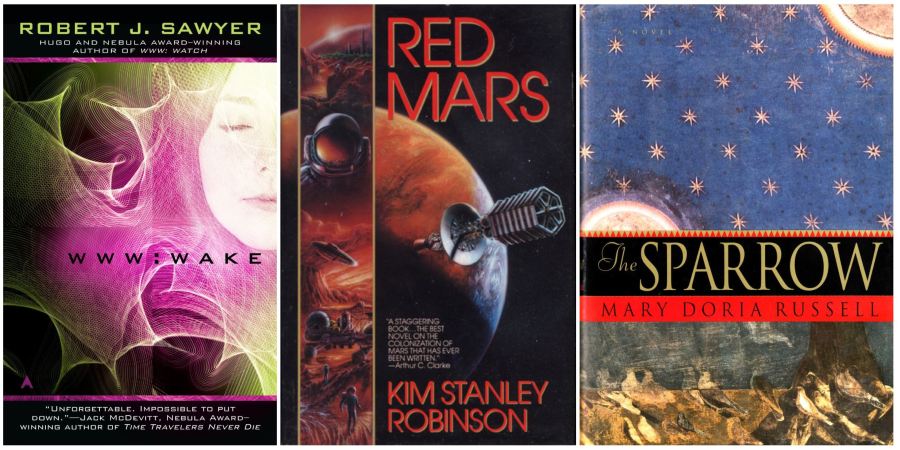
Are we ready for that? Despite all the science fiction books and movies about robots becoming our evil overlords, are we ready to be the #2 intelligence on planet Earth? I’m not sure we’ve thought this through carefully. I’d say most science fiction hasn’t explored the idea of intelligent machines deeply enough. Too often, robot characters are just silly, or variations of ourselves. I do think Robert Sawyer did a good job with his WWW Trilogy, but we need more science fiction about a post-singularity world. Not Terminators are falling from the sky stories or more stories about fuckable robots that look exactly like humans. What if The Humanoids by Jack Williamson came true, but the humanoids actually made created a utopian society? Wouldn’t that even be scarier?

James Wallace Harris, 8/3/20