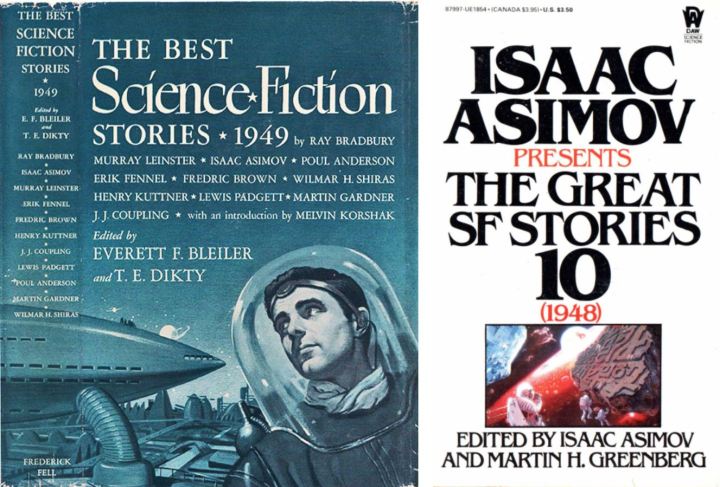
Is there any reason to read SF short stories from 1948 in 2019? Over at the blog Doomsdayer, Zach read the Bleiler/Dikty anthology and judged it unworthy claiming the experience was “monumentally boring.” He went on to point out there was only one story was completely written by a woman, while another had a woman coauthor. He also noted that 8 of the 12 stories had no women characters at all while ethnicity was barely alluded to once. I can imagine that Zach is young and that most readers from recent generations will have his reaction to these 1948 SF short stories.
Escaping into the past feels like fiddling while Rome burns. We face so many social problems today that we barely have time to think about the countless threats to our future, so why look backward? These 1948 science fiction stories have nothing relevant to say to the people of 2019. So why read them?
I enjoy old science fiction, but I assume these stories won’t appeal to 99.9% of science fiction fans. A few are beautiful if beheld by the right beholder. Odds are, you aren’t that person. But who is? Who is the target reader for these 71-year-old science stories?
We want to believe that art is timeless and enduring, but it’s not. Enjoying these stories often depends on being a pop culture archeologist. Or a student of literary evolution. They are snapshots of our hopes and fears from 1948. Science fiction writers are known for their wild speculations about fantastic possibilities. For example, in “No Connection,” Isaac Asimov imagines millions of years from now intelligent bears populating North America, and one of them learns that on a distant continent there is a high tech civilization populated by descendants of chimpanzees. Sounds fun, but it’s poorly written.
In 1948 there were many stories about how we’d destroy ourselves with atomic bombs but that’s not something we worry about today — we have other ways of destroying ourselves. Mostly these stories are too talky lacking in drama, structure, and emotion. Science fiction writers were still learning how to tell a story in 1948.
Once you begin sampling science fiction from different generations you realize that we ask the same questions over and over again. Asimov asks: What animal will replace homo sapiens when we fail? L. Sprague de Camp asked it in 1939 with “Living Fossil” and Pierre Boulle asked it again in 1963 with Planet of the Apes. Probably every generation since 1968 has been exposed to that idea via the latest remake of the Planet of the Apes films. To give Asimov extra credit, he gives his bears a superior civilization and suggests the evolved chimpanzees will have our trait of self-destruction.
Several of the stories from 1948 try to imagine superior humans and social structures, but their efforts are clumsy. It seems to me that few science fiction stories today attempt that, and instead imagine all the ways we can live with our bad traits. But is comparing the hopes of today against our hopes in the past make rereading these old stories worthwhile? Why do we continue to remember certain books, short stories, songs, and movies decades after they first appeared?
If I asked you to list the artwork from 1948 that you remember and cherish, could you? Unless you’re a major film buff, it’s doubtful you’d recall many of the top movies from 1948. Unless you’re an aficionado of an art form, it’s doubtful you cherish older works. For every Pride and Prejudice, there are a million forgotten works of fiction. Most people are happier with contemporary artistic escapes, with Game of Thrones or Fortnite.
I’m fascinated by how fiction is remembered over the decades. This website is devoted to identifying how those science fiction stories are retained in our collective memory. Sure, we call them classics, but that’s a loaded term because often readers feel classics should be the best stories of all time. I think of classics as those stories that keep hanging around and getting read regardless of their literary quality. We use statistical methods to search for ways to identify how stories are remembered and don’t deal with their aesthetic value.
1948 was a special year for science fiction. It was the first year that anthologists evaluated all the stories for a best-SF-of-the-year anthology. Everett F. Bleiler and T. E. Dikty also created an annoying titling standard we still use today. They named their book The Best Science Fiction 1949 but collected stories first published in 1948. WTF?! In 1983, when Isaac Asimov and Martin H. Greenberg retroactively collected their favorite short SF of 1948 they called their volume The Great SF Stories 10 (1948). So I’m reviewing two anthologies that collected the “best” science fiction short stories of 1948, one labeled 1949 and one 1948. That’s confusing. This year we’ll see anthologies called the best stories of 2019 but they will reprint 2018 stories.
I find it fascinating to compare what Bleiler/Dikty liked in 1949 with what Asimov/Greenberg liked in 1983, with the statistical analysis we did in 2018. Unfortunately, there’s no Retro Hugo awards 1949 for the 1948 stories. (Hugo awards are also one year off from the actual publication years.)
Here’s what Bleiler and Dikty picked back in 1949. I’ve bolded the stories the two anthologies have in common.
- “Mars is Heaven!” by Ray Bradbury
- “Ex Machina” by Lewis Padgett (Henry Kuttner and C. L. Moore)
- “The Strange Case of John Kingman” by Murray Leinster
- “Doughnut Jockey” by Erik Fennel
- “Thang” by Martin Gardner
- “Period Piece” by John R. Pierce (J. J. Coupling)
- “Knock” by Fredric Brown
- “Genius” by Poul Anderson
- “And the Moon Be Still As Bright” by Ray Bradbury
- “No Connection” by Isaac Asimov
- “In Hiding” by Wilmar H. Shiras
- “Happy Ending” by Henry Kuttner and C. L. Moore
Asimov and Greenberg pick these stories in 1983 as the best of 1948:
- “Don’t Look Now” by Henry Kuttner
- “He Walked Around the Horses” by H. Beam Piper
- “The Strange Case of John Kingman” by Murray Leinster
- “That Only a Mother” by Judith Merril
- “The Monster” by A. E. Van Vogt
- “Dreams are Sacred” by Peter Phillips
- “Mars is Heaven!” by Ray Bradbury
- “Thang” by Martin Gardner
- “Brooklyn Project” by William Tenn
- “Ring around the Redhead” by John D. MacDonald
- “Period Piece” by J. J. Coupling
- “Dormant” by A. E. Van Vogt
- “In Hiding” by Wilmar H. Shiras
- “Knock” by Fredric Brown
- “A Child is Crying” by John D. MacDonald
- “Late Night Final” by Eric Frank Russell
I’ve tried to find other sources from the era where fans discuss their favorite stories. If I had time I’d go through the old fanzines to see what fans got excited about back then, but for now, I turned to Alva Rogers and his history A Requiem for Astounding, first published in 1964. I’m sure Rogers first read the stories as they came out in 1948, and then reread them for his book – so it’s not quite a 1948 perspective.
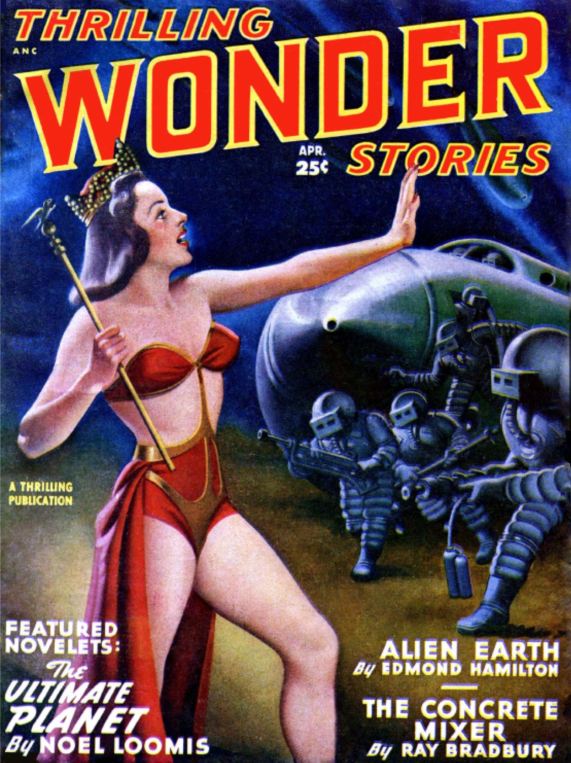
Rogers called the chapter on 1948 “The Threshold of Maturity,” claiming John W. Campbell was finally fulfilling his dream of making science fiction for mature readers. Rogers said Amazing Stories and Fantastic Adventures were serving up adolescent pap that was ignored by mature fans, and that Planet Stories was fun but still immature. He did say that Thrilling Wonder Stories and Startling Stories were the closest in competition to Astounding Science-Fiction. As I’ve read The Great SF Stories 1-9 (1939-1947) I have seen an evolution in storytelling development.
Rogers thought the standout stories of 1948 (from Astounding) were:
- “Now You See It” by Isaac Asimov
- “Police Operation” by H. Beam Piper
- “In Hiding” by Wilmar H. Shiras (one of the real sleepers of the year)
- “Genius” by Poul Anderson (excellent)
- “The Rull” by A. E. Van Vogt
- “That Only A Mother” by Judith Merril (one of the most impressive debuts)
“Now You See It” became part of Second Foundation. “Genius” was a very tedious story in my mind that was based on a good idea. It’s about a future galactic empire ruled by psychologists (shades of Asimov) that experiment with a planet colonized by genetically engineered geniuses. “The Rull” became part of the fix-up novel, The War Against the Rull.
Rogers also mentioned some almost-as-good stories:
- “There is No Defense,” “The Love of Heaven,” and “Unite and Conquer” by Theodore Sturgeon
- “He Walked Around the Horses” by H. Beam Piper
- “West Wind” and “The Strange Case of John Kingman” by Murray Leinster
- “Her Majesty’s Aberration” and “The Great Air Monopoly” L. Ron Hubbard
- “Ex Machina” by Henry Kuttner
Only three stories made our Classics of Science Fiction Short Stories list (those getting 5 or more citations) but I’m including the runner-ups, which got 3 or more citations.
- “That Only a Mother” by Judith Merril (11)
- “Mars is Heaven!” by Ray Bradbury (7)
- “In Hiding” by Wilmar H. Shiras (5)
- “The Lottery” by Shirley Jackson (4)
- “The Strange Case of John Kingman” by Murray Leinster (3)
- “Dreams Are Sacred” by Peter Phillips (3)
Only “Mars is Heaven!” and “In Hiding” are on all three lists. Both of those stories, and “That Only a Mother” made The Science Fiction Hall of Fame. So our statistical system works pretty good at identifying stories that are generally remembered.
Read Some of these Stories Online
I’d say the top four stories above are the ones worth reading most. But here’s a sampling to try for yourself. Links are to the stories at Internet Archive using scans of old pulp magazines.

“That Only a Mother” by Judith Merril is about the fears of mutations caused by radiation. Right after Hiroshima, the public and science fiction worried that atomic research would lead to the birth of either monsters or superhuman mutants. I wasn’t impressed the first time I read this story, but it gets better and better with every new reading. “That Only a Mother” was reprinted again last year for The Future is Female! edited by Lisa Yaszek for the prestigious Library of America. “That Only a Mother” is also about a new superhuman, like “In Hiding.”
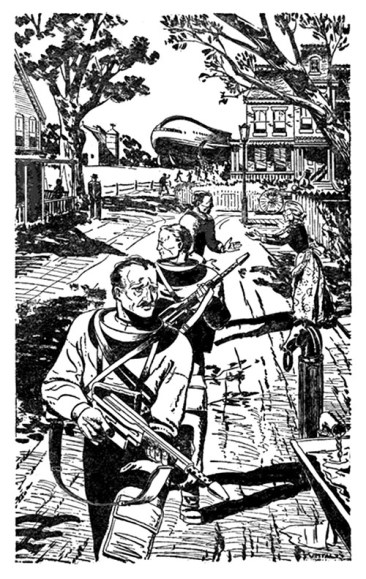
“Mars is Heaven!” is preserved in Ray Bradbury’s enduring classic The Martian Chronicles. Bradbury was considered literary back then, and he eventually left the genre, so he straddles two reading worlds. “Mars is Heaven” is so obviously scientifically wrong, yet so wonderfully right in its storytelling. I’ve read this story four or five times now, and it still reveals new pleasures. One of my all-time favorite SF short stories.
Bleiler and Dikty also included “And the Moon Be Still As Bright” – another wonderful story from The Martian Chronicles. Of all the stories here, this story is the most relevant to today. Bradbury wrote nostalgic feel-good stories that recognized the nastiness of the human race.
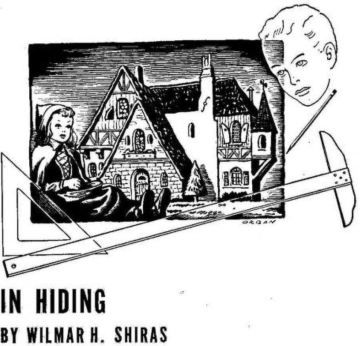
“In Hiding” by Wilmar H. Shiras is a forgotten classic. It’s my favorite science fiction story from 1948. “In Hiding” is a gentle story about a child genius that was so different from all the other similar stories from back then using that theme. “In Hiding” was also included in The Future is Female! Shiras wrote four sequels to this story and made them into the fix-up novel Children of the Atom (Gnome Press, 1953). That novel is mostly forgotten today, but I liked it well enough to buy a first edition copy to keep. And I noticed the other day on a Facebook science fiction book club. people were fondly discussing Children of the Atom, so maybe someone will reprint it soon. Many readers don’t know that Shiras was a woman, which makes two of the three great SF stories from 1948 by female writers. Shiras thought out the consequences of an emergent new species of human far more carefully than any of her male writers.
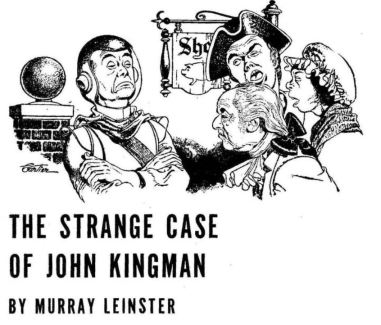
“The Strange Case of John Kingman” by Murray Leinster is a very good story but not great, at least not compared to the three above. It’s about an alien that looks mostly human being put away in a mental hospital. It’s still a very readable story but lacks an emotional punch. And I think that’s key for a story to become the kind of classic that is remembered for years and years.

“Dreams Are Sacred” by Peter Phillips still works too, and it prefigures Roger Zelazny’s The Dream Master (“He Who Shapes”) which won the Nebula award in 1966. A writer is in a psychotic coma and his psychiatrist invents a way to send an observer into his patient’s dreams. This is still a cool idea today. Imagine Don Quixote in an Edgar Rice Burroughs nightmare being rescued G.I. Joe.
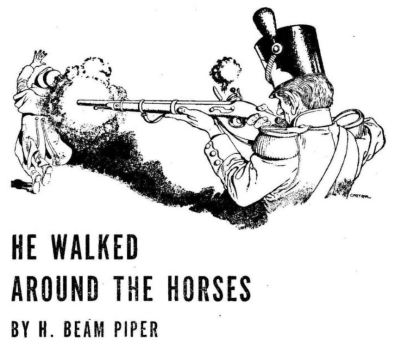
I’m partial to “He Walked Around the Horses” by H. Beam Piper. Campbell and some of the Astounding readers back in the 1930s and 1940s were intrigued by the writings of Charles Fort who collected supposedly true unexplained mysteries. Most readers considered Fort a nutjob and crank. Piper took a real case of a missing person and wrote an epistolary narrative about the man being found in an alternative universe where Napolean didn’t start a war. Piper’s story is still very readable today but isn’t really science fiction, but falls in the sub-genre of alternate history. It probably inspired Piper to write his Paratime series. H. Beam Piper is one of the writers I’ve rediscovered this past year that I think deserves more attention.
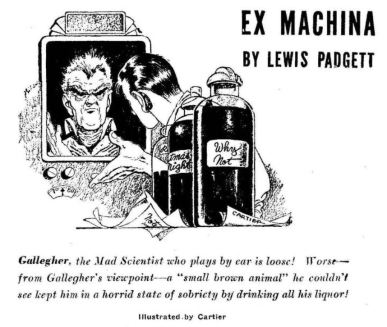
“Ex Machina” by Lewis Padgett was probably mostly written by Henry Kuttner and not C. L. Moore. Husband and wife tag team writers regularly wrote under the byline, Lewis Padgett. Back in the 1970s, I ran across a copy of Robots Have No Tails which collected all the Gallegher stories and was enchanted by it, but nowadays I have a hard time enjoying Kuttner’s stories. I found “Ex Machina” rather long and tedious until I came to this paragraph:
The social trend always lags behind the technological one. And while technology tended, in these days, toward simplification, the social pattern was immensely complicated, since it was partly an outgrowth of historical precedent and partly a result of the scientific advance of the era. Take jurisprudence. Cockburn and Blackwood and a score of others had established certain general and specific rules—say, regarding patents—but those rules could be made thoroughly impractical by a single gadget. The Integrators could solve problems no human brain could manage, so, as a governor, it was necessary to build various controls into those semi-mechanical colloids. Moreover, an electronic duplicator could infringe not only on patents but on property rights, and attorneys prepared voluminous briefs on such questions as whether "rarity rights" are real property, whether a gadget made on a duplicator is a "representation" or a copy, and whether mass-duplication of chinchillas is unfair competition to a chinchilla breeder who depended on old-fashioned biological principles. All of which added up to the fact that the world, slightly punch-drunk with technology, was trying desperately to walk a straight line. Eventually, the confusion would settle down.
That’s exceedingly perceptive for 1948, and if you realize by integrators Kuttner meant computers and electronic duplicators he meant 3D printers, it’s still insightful for 2019. I dislike the Gallegher stories today because I’m impatient with the drunk inventor and because Kuttner withholds information from the reader for suspense. However, if I saw this story dramatized for Black Mirror or the new Twilight Zone it’s zaniness might reconstitute itself.
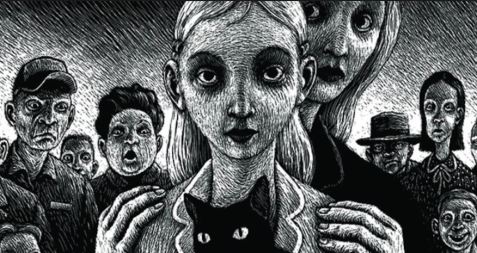
“The Lottery” by Shirley Jackson originally appeared in The New Yorker and is one of the most famous short stories ever written. I wouldn’t think most readers would think of “The Lottery” as science fiction, but it made it onto three SF fan polls of favorite stories. It does fall in the realm of speculating about alternate societies that sociological science fiction likes to explore. Ursula K. Le Guin did a much more science fictional version of the theme with her story “The Ones Who Walk Away from Omelas.”

“No Connection” by Isaac Asimov doesn’t fit into his Robot or Foundation series. Without the illustration, I wonder how soon many readers would have figured out the main character was a bear? I guessed gorilla. It’s funny but in all these stories, all intelligent beings smoke, even the bears.
James Wallace Harris


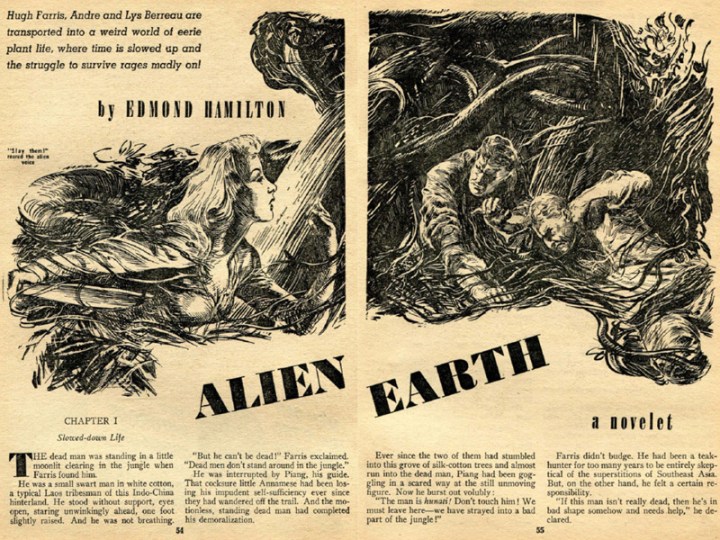

 Who comes after humans? “Living Fossil” speculates they could be capuchin monkeys from South America after 10 million years. The story opens with Nawputta, a zoologist and his guide Chujee riding their agoutis exploring northeast North America near Pittsburgh. Ten million years have made a lot of smaller species much larger in their world, and now the agoutis are as large as mules.




 Classics of Science Fiction