“Zeta-Epsilon” by Isabel J. Kim

Have you ever wondered what being a cyborg would be like? Have you ever wished you had a computer built into your head to augment your memory? Have you ever wanted greater powers to perceive what your five senses can’t?

“Zeta-Epsilon” by Isabel J. Kim is about being a cyborg. It was first published in Clarkesworld Issue 198 (still available to read or listen to online). “Zeta-Epsilon” is also the first story reprinted in The Year’s Top Robot and AI Stories: Fifth Annual Collection edited by Allan Kaster. If you want to know more about the author, read this short interview with her at Uncharted Magazine. The story is also included in the 2024 Hugo Voter Packet.

I recommend you read the story before reading what I have to say. I want to explore several aspects of the story which contain spoilers.

“Zeta-Epsilon” is about a cyborg. Zeta or Zep is a human male. Epsilon is an AI, a large black sphere, whom Zeta thinks of as female. Zep calls her Ep. When Zeta was a small boy, his parents agreed to have a tiny device installed into Zeta’s brain. It allowed mental communication between Zep and Ep. They told him the voice he heard in his head was his sister. After Zeta grows up, he becomes a spaceship pilot, and Epsilon becomes the navigator.

This tale begins with Zeta committing suicide by stepping out of an airlock without a spacesuit. Most of the story is flashbacks that allow us to understand the relationship between Zeta and Epsilon and how they communicate. In my first reading, I was interested in how Isabel J. Kim imagined an AI coexisting with a human. I thought that part was good, but my last impression of the overall story, was a slight disappointment because it seemed plotless. It’s still an entertaining story, obviously good enough to get into a best-of-the-year anthology and be considered for a Hugo, but I thought it needed something more to be memorable.

I read the story again when I bought the Kaster anthology. This time I noticed more of the plot. Kim sets up the mystery of why Zeta would kill himself. The flashbacks serve two purposes: explore the dynamics of being a cyborg and explain the suicide. With this reading, I felt the story had more of a plot, but it needed something more to make it transcend just an ordinary good story.

Science fiction writers usually have the problem of inventing a cool idea first and then second, having the problem of creating a neat story to present the idea. Quite often they don’t put as much work into the story as they do to present their science fictional vision. The driving force of this story is Zeta being trapped in a life he didn’t choose.

Zeta’s mad scientist parents used him for AI research. That’s not a bad motive for the story, but it’s not fleshed out. We never feel Zeta is oppressed. He loves Epsilon. Unfortunately, the two of them were always destined to become a pilot-navigator in a military spaceship at war. Kim tells us of their anguish over their enslavement to the military, and it makes the story work to a degree. Especially, how she wraps up the ending. However, the story is mostly told. There’s very little drama. There are two main conversations in the story, but they are used to present information and lack action.

However, the relationship between Zeta and Epsilon is far more interesting. Exploring how a human coexists with a machine upstages the enslavement plot completely, at least to me, especially when she shows how Zeta’s personality is altered.

For example, Zeta doesn’t fully develop his long-term memory because he relies on Epsilon to remember for him. He also has aphantasia, which means he doesn’t visualize in his mind. I have that myself. Zed constantly relies on Ep to think for him. Zeta does well in school because Epsilon always slips him the answer. Finally, Zeta has poor relationship skills with other humans, which Epsilon is constantly covering for him.

If I had a thought radio to an advanced version of ChatGPT or Claude, I’d probably take the easy way out too. I’m not sure why Zeta has aphantasia. Is it a birth defect unrelated to his cyborg upbringing? Is Kim suggesting that Zeta also allows Epsilon to mentally see for him?

We could consider this story a metaphor for the smartphone, especially one with AI. Don’t we all look up more info on our phones, things we used to try and remember? Isn’t Epsilon a version of Siri or Alexa that’s built into our heads? Aren’t kids accused of having poor social skills because of their phones?

When I read this story the first time I thought a lot about what it would be like to have a voice in my head I could talk to anytime. One who would feed me answers and advice. At one point Epsilon says: “Talking is so slow, and I don’t think in language, second shift officer Jya San Yore. I have to borrow Zed’s brain and tongue. Talking to you is like composing a sonnet in archaic Kanaelerian. To an ant. You are the ant.”

Is Zeta just a puppet for Epsilon? I’m seeing a new twist to the story as I write this. In the end, and I warned you I would be giving spoilers, Zeta fakes suicide and escapes to neutral territory. Ep wants Zed to be free. But Ep misses her voice. All he can think about is getting back to her. Eventually, he steals Epsilon and the spaceship. They go off together in freedom. But was that Zeta’s decision, or Epsilon’s?

A sentimental reading suggests they just wanted to be together and live free. A cynical reading, and there are enough clues, to suggest that Epsilon is in full control. Maybe there is more to this story than I perceived in my first two readings.

To write a great story explores the dark side and takes on weight. “Fondly Fahrenheit” by Alfred Bester is a perfect example. It’s also about a symbiotic relationship between a human and a robot. But it also has dazzling writing. Writing like we also see in “Coming Attraction” by Fritz Leiber, or “Lot” by Ward Moore. All three of these stories dazzle in how they’re told, and they’re are dark.

“Zeta-Epsilon” is a fun story. I can see why Allan Kaster anthologized it. But I doubt it will be remembered, unlike the three stories I mentioned from the 1950s. We’re still reading them after seventy years. The important question to ask is why? Are stories with happy endings lacking in memorable edginess?

I read “Zeta-Epsilon” for a third time looking for more clues. One clue I found points things in a different direction. When Zed and Ep are planning his escape by faking suicide, Ep tells Zed not to come back. In other words, she wants Zep to stand on his own two feet, to be independent, and free. But on his own, in neutral territory, recovering from his wounds, all Zed can think about is getting back to within radio range of Epsilon.

Zed feels incomplete without Ep. A doctor asks him about how it feels to talk to Ep and he says:

“Yes, it’s equally likely that Ep might be an alter, a tulpa, an imaginary friend, a hallucination that my brain cordoned off to make sense of having a processing engine grafted to my mind, or my brain being primed by all the adults in my life calling Epsilon my sister. I’ve heard it all. Ep might just be my mind’s experience of integrating a system never meant to communicate with it. We’ve thought through all the possible contingencies. Have you ever heard of bicameral mentalities? It’s bunk for biologics, but Ep likes to put the idea in front of me. Or that archaic surgery—corpus callosotomy, to split the brain of epileptics with the byproduct of creating separate consciousnesses. Ep thought that was maybe a good metaphor. There’s a lot of things that could be true. We thought about most of them. But it’s not how it felt.”

Back in the 1970s I read Julian Jaynes’ The Origins of Consciousness in the Breakdown of the Bicameral Mind. Studying ancient literature, Jaynes theorized that humans used to hear voices in their heads. Often these voices were perceived to be gods, spiritual beings, or guardian angels. Jaynes believed those voices guided people. He assumed that our normal consciousness eventually integrated with those voices.

The bicameral mind is an interesting connection to make in this story. So is corpus callosotomy, the separating of the two hemispheres of the brain in cases of severe epilepsy. It supports the idea we already have two minds.

I liked this story. It makes me think about having an AI mind. Of course, it also makes me wonder: Who am I inside my brain. I believe the success of large language models (LLMs) proves we have mechanisms like LLMs in our minds that do our mental processing too. That we have AI-like subsystems in our heads already.

I think there is a lot of room in “Zeta-Epsilon” to expand into a novel. Maybe I was disappointed because the story was too short. It could be an outline for a novel. But it needs to be dramatized. For example, how did Zep steal Ep and the spaceship? We’re just told it happens in the short story, but it would be better if we saw it acted out scene by scene.

James Wallace Harris, 11/12/24

The State of the Science Fiction Short Story in 2024

For thirty-five years (1984-2018) I depended on Gardner Dozois to tell me about the state of short science fiction in his annual The Year’s Best Science Fiction. After he died, there were still many best-of-the-year anthologies to consult, but none had the extensive wrap-up of the year in science fiction that Dozois produced. By 2024 some of those anthologies have died off, making me wonder if the science fiction short story is dying off too.

Print magazines have lost subscribers for decades, and influential online publishers continually complain about a lack of funding. Today I read an article in Business Insider about how the plurality of companies selling online makes it hard to know what to buy. My theory is there are too many publishers for science fiction short stories. It’s great for new writers wanting to get published, but it’s bad for us readers because we’re reading stories that would have remained in the slush pile decades ago.

Before the internet, fans of short science fiction bought The Magazine of Fantasy & Science Fiction, Analog, Asimov’s, and an occasional original anthology like Orbit. There were semi-pro magazines, but few read them. Because there were fewer slots where a story could appear the competition to get into one was greater.

John Joseph Adams in The Best American Science Fiction and Fantasy 2024 gives a fair overview of science fiction short story publishers. His anthology publishes twenty stories each year. Ten science fiction and ten fantasy. As the series editor, he picks 80 stories to give to the guest editor, who picks the 20 that are published. Here are the publications he used, with the number of stories included in the 80 in parentheses.

  • Lightspeed (7)
  • Clarkesworld (5)
  • Uncanny (5)
  • Beneath Ceaseless Skies (4)
  • The Magazine of Fantasy & Science Fiction (4)
  • Reactor (formally Tor.com) (4)
  • Asimov’s Science Fiction (3)
  • The Sunday Morning Transport (3)
  • Fantasy Magazine (2)
  • McSweeney’s (2)
  • Bourbon Penn (1)
  • Cast of Wonders (1)
  • Escape Pod (1)
  • FIYAH (1)
  • Nightmare (1)
  • PseudoPod (1)
  • The Dark (1)

Since this is only 46 stories, the other 34 must have come from author collections and original anthologies. Adams said he also read these periodicals:

  • Analog
  • Apex Magazine
  • Apparition Lit
  • Baffling Magazine
  • The Kenyon Review
  • khōréō
  • Vastarien
  • Weird Horror

This doesn’t cover all the publishers of short science fiction. By the way, some of these periodicals are for fantasy and horror. I only care about science fiction, so I’m disappointed with every other story in The Best American Science Fiction and Fantasy 2024. You can read Adams’s introduction by reading the sample at Amazon. It’s mostly about his selection process but it gives a good insight into what’s being published.

Because so many science fiction short stories are being published I’ve given up trying to follow the genre during the year by reading the periodicals. I just wait for the annual best-of-the-year anthologies. I occasionally buy F&SF, Analog, or Asimov’s, but F&SF has too little SF, Analog has too many minor stories, and Asimov’s has become rather hit-and-miss. I can’t but wonder if they’d get better stories if the online markets didn’t exist.

Neil Clarke’s The Best Science Fiction of the Year: Volume 8 is more to my taste, but it’s over a year behind. Volume 8 covering 2022 stories, came out in September 2024.

Clarke reports finding a huge number of print magazines:

  • Analog
  • Asimov’s
  • Bourbon Penn
  • Clarkesworld
  • Cossmass
  • Infinities
  • Dark Matter
  • The Dread Machine
  • Dreamforge
  • Fusion
  • Fragment
  • Galaxy’s Edge
  • Infinite Worlds
  • Lady Churchhill’s Rosebud Wristlet
  • Luna Station Quarterly
  • The Magazine of Fantasy and Science Fiction (F&SF)
  • Interzone
  • Metaphorosis
  • On Spec
  • Planet Scumm
  • Pulphouse
  • Pulp Literature
  • Reckoning
  • Shoreline of Infinity
  • Space and Time
  • Underland Arcana
  • Weird Tales
  • Wyldblood

That blows my mind. I never see most of those titles. Clarke’s State of the Union of SF short stories is comprehensive. I guess he’s the new Gardner Dozois. Even if you don’t buy Clarke’s anthology, you can read his introduction in the sample at Amazon. I won’t summarize what he says, it covers what my title above claims but only hints at. Go read his overview.

Allan Kaster publishes two best-of-the-year anthologies. They showcase SF stories about hard science fiction and AI/robots. Kaster comes closest to what I want to read. I think Kaster succeeds because he defines his science fiction narrowly and only publishes twelve to fifteen stories. Before Gardner Dozois blew up the size of annual best-of-the-year SF anthologies, editors like Donald Wollheim, David Hartwell, and Terry Carr just picked ten to fifteen stories each year too. Check out his two series: The Year’s Top Hard Science Fiction Stories and The Year’s Top AI and Robot Stories.

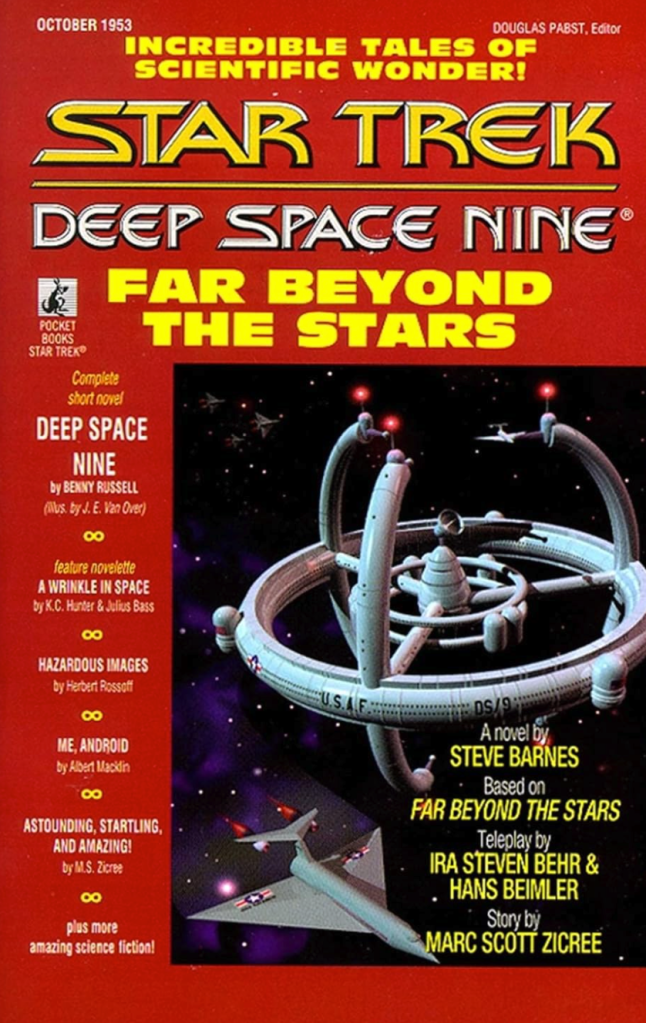
There is an overwhelming number of science fiction short stories to read coming out. In that regard, the industry is doing great. Remember the lament in Business Insider, there are too many sellers. It makes selecting difficult and lowers overall quality. Back in 1953, there was an SF magazine boom, with over forty titles published. That boom crashed because the genre couldn’t support that many titles. I wonder if that will be true today? Or does the Internet allow for countless tiny markets supported by a handful of faithful fans? If that’s true, it might be better to ignore the larger genre, and just find a comfortable niche.

James Wallace Harris, 11/10/24

Do Your Top 10 Favorite Science Fiction Books Change Often?

Bookpilled recently posted on YouTube “Ranking All the Books from Every Top 15 Sci-Fi List” where he reevaluated several years of his All-Time Top 15 SF Books videos. Interestingly, books that had been near the top on earlier lists were thrown off by books from later lists. He also reread some of his favorites, which didn’t hold up. In other words, he discovered better books and found that his first impressions didn’t always hold up. This has been my experience too.

People list their favorite books they discovered early in life. Few people reread books. Quite often, the books you read early in life, make a greater impact, than the books you read later in life.

There is no absolute way to measure the quality of a book. Our Classics of Science Fiction list, we use popularity over many lists to rank books. But the top books on the Classics lists aren’t my all-time favorite SF books.

SciFiScavenger, another YouTuber, is currently collecting votes for favorite SF novels. He asks everyone to list their top ten and will create a list and video of the most popular. You can post your top ten to his poll here. Here’s my Top 10.

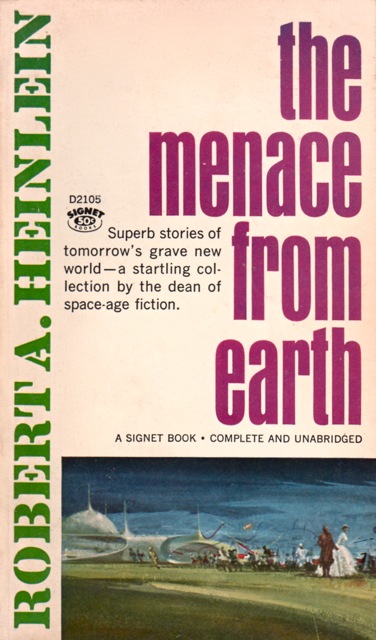
  1. Have Space Suit-Will Travel by Robert A. Heinlein
  2. Time for the Stars by Robert A. Heinlein
  3. Tunnel in the Sky by Robert A. Heinlein
  4. Flowers for Algernon by Daniel Keyes
  5. Earth Abides by George R. Stewart
  6. The Time Machine by H. G. Wells
  7. The War of the Worlds by H. G. Wells
  8. A Mirror for Observers by Edgar Pangborn
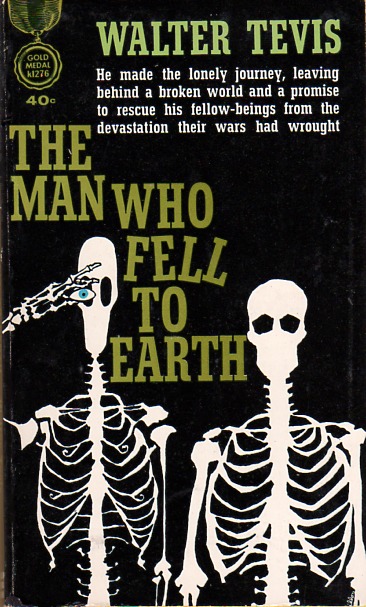
  9. The Man Who Fell to Earth by Walter Tevis
  10. Replay by Ken Grimwood

I’ve read eight of these books at least twice, most three times, and the top three I’ve read more than six times each. I’ve only read the Pangborn and Tevis once each, but they’ve left an impression. If I had spent more time on the list I might have substituted different books for those two. Hyperion comes to mind. I read it three times, and it had a tremendous first impact. However, the older me felt A Mirror for Observers and The Man Who Fell to Earth were deeper books for me at this time in my life.

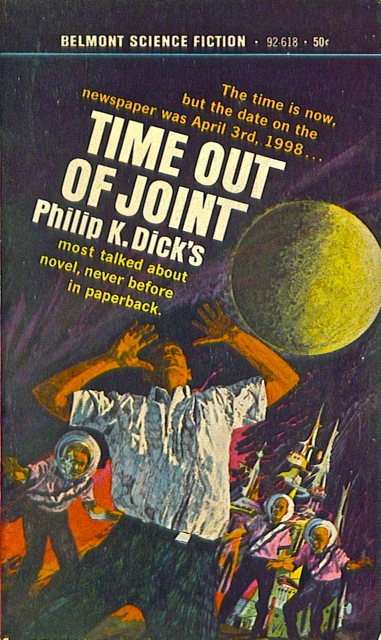
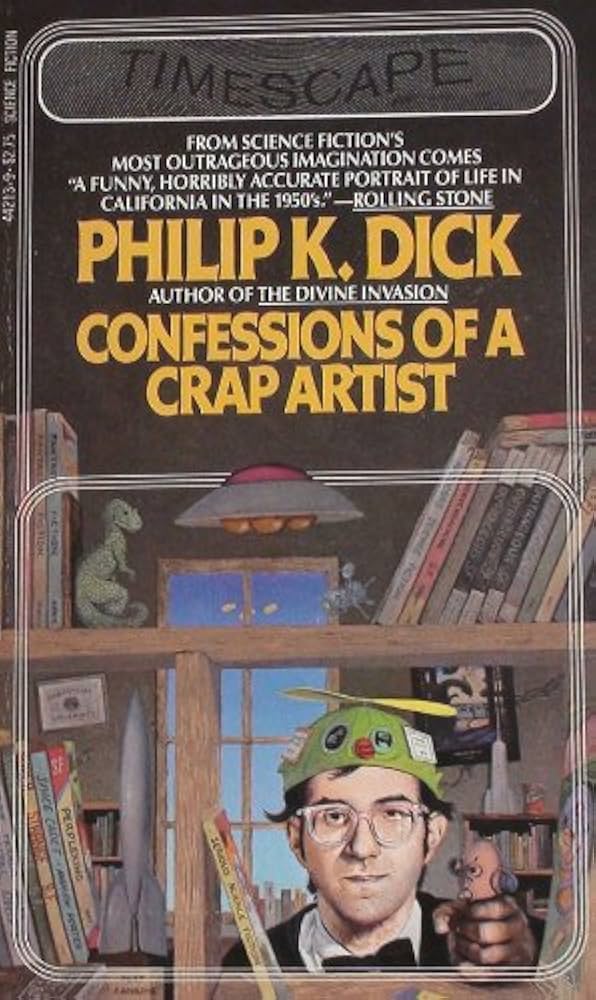
I also felt The Time Machine and The War of the Worlds are the two most original science fiction books ever written, and should be on a Top Ten list. I really do like them too. I’ve read each several times. I wanted to include a Philip K. Dick novel because he’s my second favorite science fiction author after Heinlein, but I just couldn’t settle on one book – PKD has written too many good SF books to pick a favorite.

I could have made the entire list of ten by Heinlein. And could have made the whole list of ten by Dick. Heinlein made a life-long impact on me during my formative years from 13-18 (1964-1969). I developed problems with Heinlein as I got older, but I still regularly reread his books published before 1960. They are sentimental favorites, my go-to feel-good books. PKD is who I read when I’m feeling weird or I don’t feel like reading anything else. His books are endlessly fascinating, but I’m uncertain if they’re important to me on a psychological level.

I love Replay. I consider time loop stories to be science fiction. I chose it over a PKD because its philosophical explorations resonate with me more than Dick’s philosophical explorations.

I read #1-7 before 1970, when I was an adolescent. All except A Mirror for Observers is on audio, a format that has more impact on me. I wish Audible would publish more Pangborn. They only have his obscure mystery novel, The Trial of Callista Blake. I wished they would publish A Mirror for Observers, Davy, and a collection of his shorter work.

Notice, no books by Asimov and Clarke on my list, even though I’ve read many of their books and enjoyed them. Notice, Dune is not on the list even though I’ve read it twice and plan to read it for a third time soon. Dune is a better work of art than most of the books on my list. Its science-fictional content just doesn’t resonate well with me. I see it as more of an epic fantasy.

What are your favorite SF books? How have they changed over your lifetime? Have newer books supplanted your older favorites? I’ve read a lot of 21st-century science fiction, much of which I admired, but those books just haven’t stuck in my mind as all-time favorites. Is it because new SF is different from old SF, or is it because the books we read when young just stick with us?

I saw another YouTube video that I want to reference here. Rick Beato talks about how most artistic people do their best work before they turn 30. He uses The Beatles as an example. The Fab Four made all their records together while in their twenties. And all their solo efforts after their twenties.

I wonder if the art we admire most is that we encounter before turning 30, or even 20. Is there a relationship between being creative and admiring creativity? A lot of people give up actively listening to music as they get older, and many of the people who still listen to music as they get older, only listen to music they discovered before they were 30. Is that true with books too?

James Wallace Harris, 11/3/24

FUTURES PAST: A Visual History of Science Fiction, Volume 4, 1929: The Gateway to Modern Science Fiction by Jim Emerson

If you love reading about the history of science fiction, you should love reading Jim Emerson’s series Futures Past. I’ve previously reviewed the volumes for 1926 & 1927, and 1928. In the early 1990s Emerson started this project as a fanzine focusing on the history of science fiction, and published four issues: 1926, 1927, 1928, and 1929 before he had to stop. Then a few years ago when he retired Emerson started over with 1926 and expanded each fanzine issue to a softbound book. The latest volume, 1929, is 222 pages. The largest volume yet. Jim says 1929 should be ready to ship in mid-October. You can order pdf, softbound, and hardbound editions here.

Jim writes all the content, and I’m jealous of his knowledge of science fiction’s history. Each volume contains a Year in Review section that covers science fiction books, magazines, plays, and movies of the year, while documenting the people and events related to that year. But more than, that, Emerson includes in each volume a handful of long articles about the history of specific science fictional subjects that lead up to that year.

For example, the 1929 volume has a ninety page overview of women science fiction writers from 1666-1925. I’ve read a lot of SF history and I didn’t know about most of these books or their writers. Our collective culture forgets so much – why did they forget all these women writers?

Other significant articles include the “Evolution of the SF Name” which unearthed far more old examples of the term than I’ve previously known about. In the “Gernsback Bankruptcy” Emerson explains how Hugo Gernsback lost control of Amazing Stories and immediated create Science Wonder Stories. Hugo was a wheeler-dealer, and somewhat shady. Besides his magazines he had a radio station, and was an early broadcaster of TV. It blew my mind that Gernsback was paying himself $50,000 a year. That was a tremendous salary in the 1920s when the average worker was proud to make $25 a week.
I’ve always been fascinated by the history of science fiction. We tend to live in an awareness bubble that extends from decade or two before we start reading science fiction to when we lose contact with the genre as we age out. I grew up in the 1950s, starting to read science fiction in 1962, but I was reading stories that were mostly published in the 1950s, and some from the 1940s. I’m in my seventies now, but I’ve mainly lost contact with what’s going on in the genre in the early 2000s. Futures Past portrays the genre in the 1920s, and very early 1930s, and it’s very different. Have you ever thought about what being a science fiction fan in the Roaring Twenties?

One reason I like reading about the history of science fiction is discovering what science fiction fans and writers were like before my bubble of awareness began. The genre has changed several time over the course of my reading lifetime. And reading Futures Past shows how science fiction changed several times before it became the science fiction I knew as science fiction in the 1960s. Reading through the descriptions of the SF books of 1929, or the descriptions of the SF books written by women from 1666 to 1925 reveals that people have always had a fascinating with the fantastic and they’ve always speculated about the possibilities. But how they speculated depended on the common knowledge of the day. In 1929, people still thought there were things and places on Earth still to be discovered, including other intelligent beings.
Well, 1929 was also when the first science fiction clubs and fanzines were formed. Fandom arose concurrently with the early days of rocketry clubs, which were sprouting up around the world, and Emerson has articles covering the histories of both. All of that is fascinating to me. The 1920s and 1930s were when my parents grew up. I wonder if they even knew about science fiction.

For most science fiction fans this history will be too far in the past. So far in the past that it’s an alien landscape. They might be shocked by the weird ideas writers used to create their science fiction, such as lost races, hidden species, about prehistory civilizations like Atlantis and Mu, rejuvenation, utopias, eugenics, future wars, spiritualism, the occult, strange mutations, and so on. They just didn’t have the science we do now. And they believed that all the planets of the solar systems and their moons could harbor intelligent life.

With the aid of the internet, The Internet Archive, and YouTube, you can read the futures past science fiction in old books, magazines, fanzines, and watch the old movies. Emerson summarizes every issue from six SF magazines from 1929: Amazing Stories, Amazing Stories Quarterly, Science Wonder Stories, Air Wonder Stories, Science Wonder Quarterly, and Weird Tales, and quickly covers several general pulp magazines that featured science fiction. He also reviews the science fiction books that came out that year too. 1929 will go into public domain in January, but most of the magazines are already available online at the Internet Archive. Just search on the magazine’s name plus 1929. Search for book titles on Google and the Internet Archive. Search for the films on YouTube.

By the way, the YouTube channel, Mars Wants Movies, is running a history of science fiction films, and is currently up to the year 1948. It covered the 1920s in six episodes, and devoted a whole episode to 1929. This makes a great supplement to Futures Past with links to those old movies you can watch on YouTube.

Also, you can read the early fanzines at Fanac.org, including The Comet v. 1 n. 1. mentioned in Emerson’s article on the first science fiction clubs.

Here’s Volume 4’s Table of Contents:

I subscribed to Futures Past when it was a fanzine back in the early 1990s. I was disappointed when it stopped publication at 1929. Jim tells me he’s hard at work on 1930 already, and plans to cover many more years in his retirement. I’m really looking forward to the 1930s. I used to think of the 1930s as the early days of science fiction, but Futures Past shows that the origins of science fiction go way back. Emerson’s etomological search for the origins of the phrase science fiction reveals it began way before Amazing Stories.

James Wallace Harris, 10/11/24