How and Why to Assemble an Anthology of Your Favorite Science Fiction Short Stories

I’ve decided to assemble an anthology of my favorite science fiction short stories. I’m not going to publish it. This book will be just for me to read. Before personal computers I would have created such an anthology by xeroxing all my favorite stories and putting them into a big folder, binder, or box. Now, with computers I can create a digital file that I can read with my iPad. I’ve discovered I can convert digital magazines, e-book pages, web pages, or even scan physical books to .pdf files that are easy to read on my iPad.

This project is only practical if you’re savvy with computers.

You can read .pdf files with almost any device, but for fiction reading, it’s best to read on a tablet. My method doesn’t work well with Kindles, other e-ink readers, or smartphones because the .pdf files are a collection of .jpg images. This system works great with both iOS and Android tablets.

The next step for this project to be practical is to have a convenient way to load files onto your tablet. I save .pdf versions of stories to a folder on Dropbox and read them with the Dropbox application on my tablets. Dropbox has a built-in reader for common file formats like .pdf files.

I create the .pdf files using Abbyy Finereader 15, but you can use any program that will convert a collection of images to a .pdf file. The free PDFgear works great on Windows. However, the Mac version doesn’t allow for no margins and centers all images on a white background. That works but annoys me.

There are other cloud storage providers that work with tablets if you don’t use Dropbox. Dropbox has a free basic account with 2GB’s of space that will hold hundreds of stories. If you’re a tablet user, you probably already know which cloud drive works well with it.

If you have these technical solutions solved, the next step is to find stories to read on your computer. They can be from an ebook, web pages, or a page you scan yourself. If you look around, many old science fiction magazines have been digitized in the CBR/CBZ format. I use a CBR reader call YACreader. YACreader allows me to right-click on any page and save it to a .jpg. I name each page by the title of the story – author – page number of the original publication.

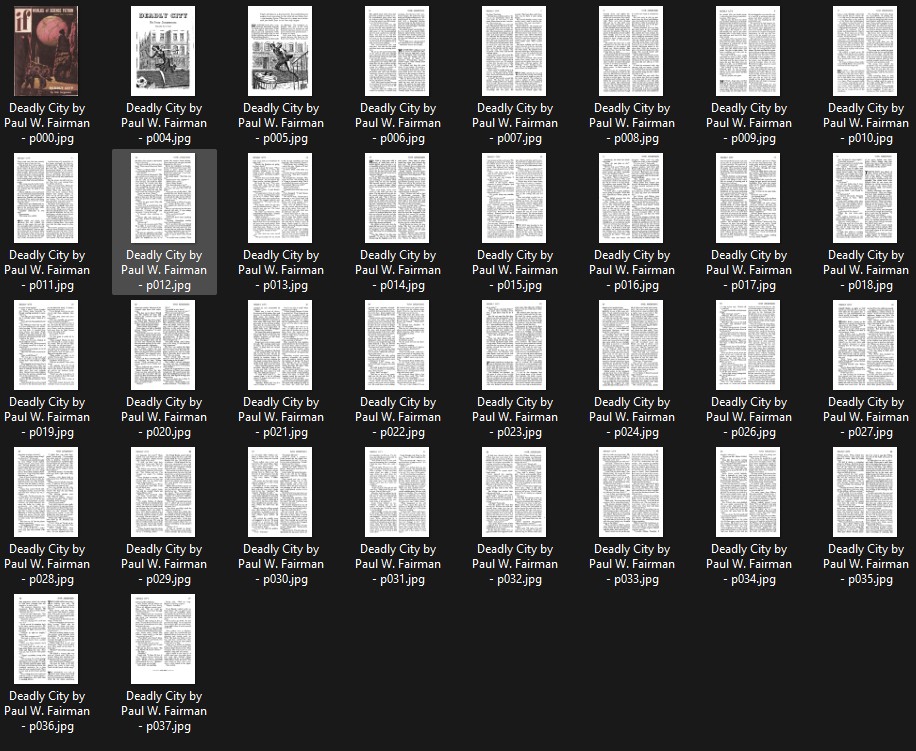
You can also use your screenshot utility to capture what you see on screen from a web page, ebook, or any program that displays stories to save as a .jpg file. I put all the .jpg pages in a folder that I name after the story. Here’s my folder for “Deadly City” by Paul W. Fairman from the March 1953 issue of If Magazine.
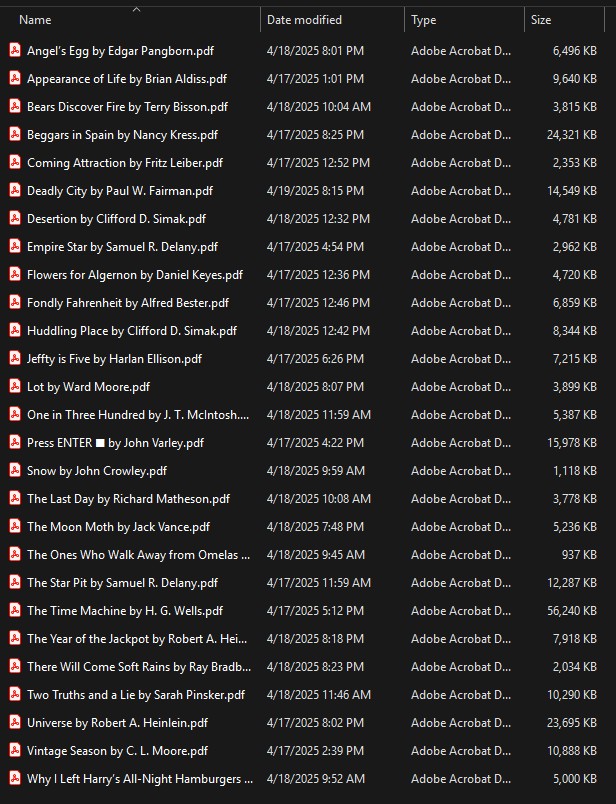
I then launch Abbyy Finereader (or PDFgear) and tell it to covert those pages to .pdf. I save the resulted file to a folder called “My Favorite SF Short Stories” and name the file by the title and author. Here are my first 27 stories. I just convert stories as I reread them and determine they are a favorite. Here’s my current folder on Windows:
Here’s what my directory of favorite stories looks like in Dropbox on my iPad mini. The directory is on the left, and the preview is on the right. It’s very nice.
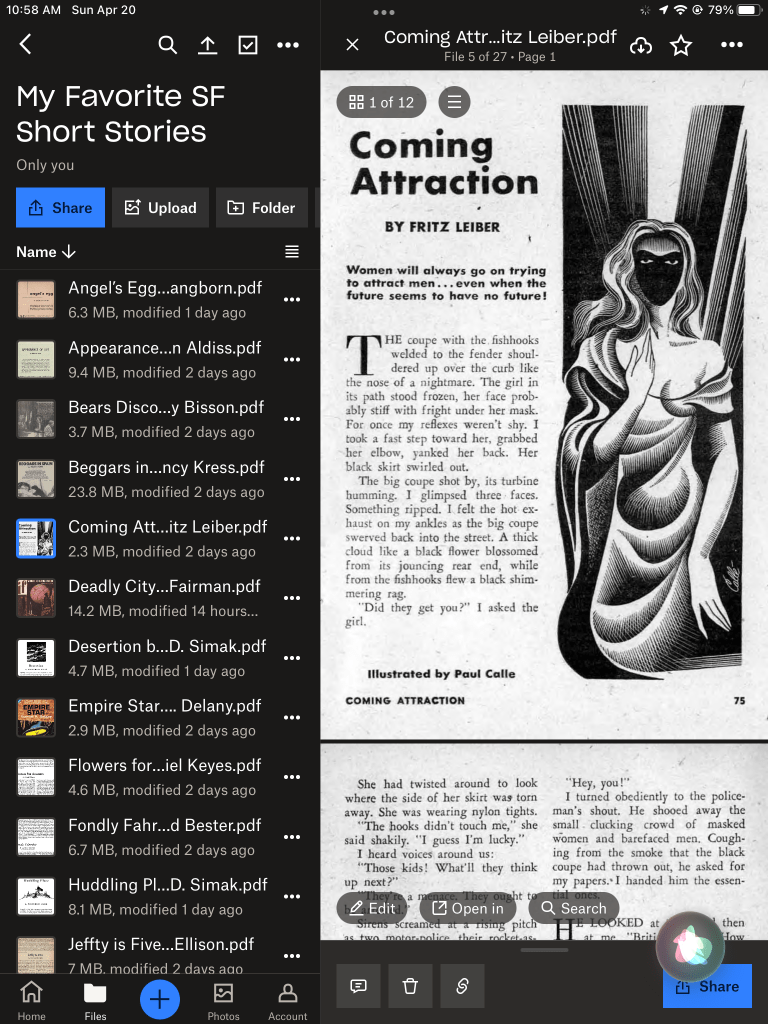
And here’s what the story looks like in the reader view of Dropbox:
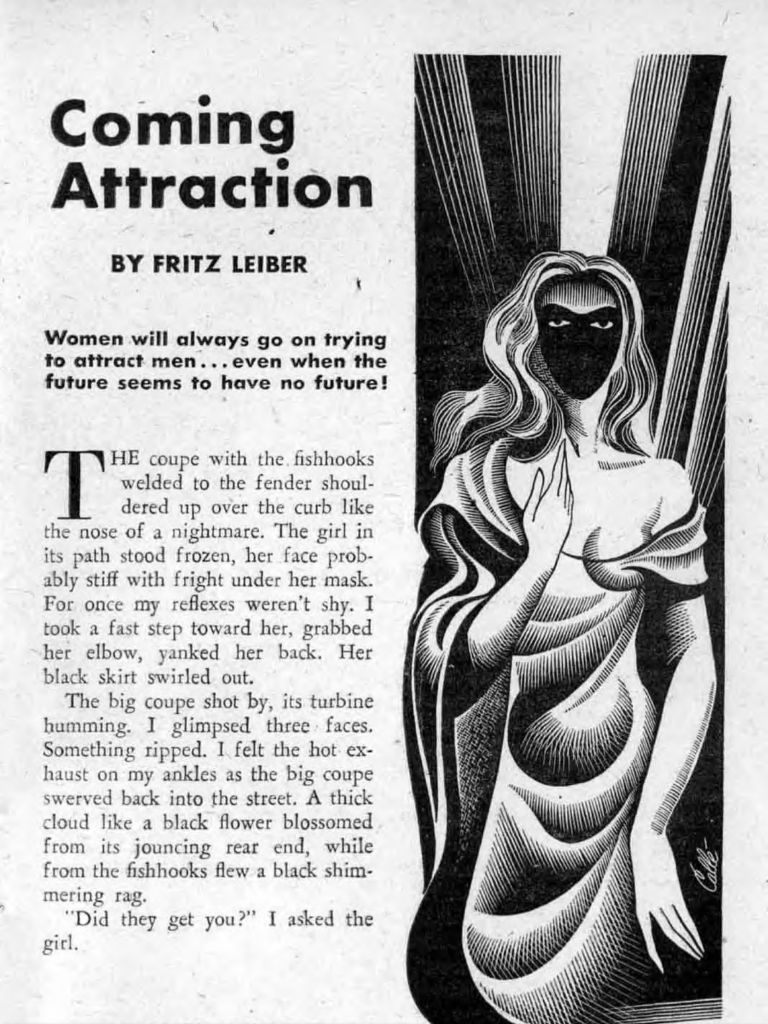
As you can see, I’ve copied the story from a scan of the original magazine. You can find scans of old magazines all over the web, such as archive.org. However, sellers on eBay and Facebook are now selling complete collections of digitized old magazines fairly cheap. I bought DVDs years ago with complete runs of my favorite SF magazines.

I do own several hundred of hardback, paperback, ebook, and audiobook science fiction anthologies. I also own several hundred physical issues of science fiction magazines from the 20th century. And I can call up nearly every issue of any science fiction magazine published in the 20th century on my iPad. So, why would I want to take the trouble to make my own anthology of favorite SF stories?

I’ve read thousands of science fiction short stories over the last sixty-three years. Some I’ve read several times. Since I’ve gotten older, I’ve discovered that there’s a depth to fiction that’s only revealed through rereading and study. I’m working to get beyond just reading and pursue understanding. Creating this anthology is my way of narrowing down the list of stories I want to study. I will add and delete to “My Favorite SF Stories” folder for the rest of my life. It’s becoming a project.

I’m focusing on the science fiction short story because I’ve always believed the science fiction magazine was the true heart of science fiction. And besides, novels are too long.

Think of fiction as a symbolic message from another person. How often in day-to-day interaction with your friends would you let one of them talk to you for hours without stopping? Usually, it’s no more than a few seconds. If your friend went on for minutes, you’d get annoyed. But we listen to what the author of fiction says for hours on end because they tell entertaining stories.

When you read a story one time it feels like you got the message and you’re done. But if you reread that story, you’ll often discover that you missed many parts of the message. Sometimes the author is saying something that requires reading the story several times before it’s understandable. You’ll discover there was a lot more to the story than you imagined. Great fiction has great depths to explore. Authors of great fiction often have many things to say but don’t say it directly. Words have severe limitations, so writers must communicate with imagery, symbolism, poetry, psychology, philosophy, and in ways that have no label.

I had a friend who died a long time ago, his name was Williamson. Before Williamson died, he started rejecting everything he loved in life until he had only two interests that kept his interest. I didn’t talk to him just before he died, but I’ve always wondered if he chose his final favorite before leaving this existence.

I’ve notice this process in others who have died. Now that I’m getting old, I understand that process. Our psychic energy dwindles away, and we can’t hang onto everything we once loved, so we start triaging out passions. I call this The Williamson Effect.

I’m in the process of identifying the science fiction stories I still care about and want to remember. My ability to remember is fading. I forget new fiction as fast as I consume it, but some older fiction has lasting power. Like Williamson, I realize I’m letting things go to focus on what I loved best. However, I’m not down to two things yet. I can still hold onto to about a hundred stories. I know the number of stories in my anthology will dwindle over time as I let some stories go.

I have several goals in mind for assembling this anthology:

  1. To decide on my all-time favorite science fiction short stories
  2. To reread short remembered stories to see if they still hold up
  3. To read recommended stories I haven’t read
  4. To collect stories I will regularly reread and study
  5. To collect stories that exhibit the best qualities of science fiction
  6. To collect stories that convey a sense of genre history and evolution
  7. To collect stories that were the most groundbreaking
  8. To collect stories that cover all the essential themes
  9. Hopefully find audio editions of all these stories
  10. To collect stories to psychoanalyze as to why I liked them
  11. To collect stories I feel had special messages in them by the authors

Currently, I’m contemplating how to organize this anthology. My first inclination is by date, like The Science Fiction Hall of Fame Volume One. It also occurs to me I should organize the stories by science fictional themes. Groff Conklin did that in The Best of Science Fiction.

Then, I’ve also had some ambitious ideas. Could I find a program where I could write a memoir of reading science fiction and provide links to all the stories where I could read the full text? Could a wiki or Obsidian handle that? What about feeding all my memories and texts into an AI? I once fed Google’s Notebook LM “The Star Pit” by Samuel R. Delany and it produced a podcast of two people talking insightfully about the story. That was damn neat.

One reason I’m inventing this project is because my memory is becoming unreliable. I’m hoping that working on the project will stenghten my mind. But I’m also running out of energy, so I need to keep things simple enough to get things done. Putting all my favorite stories in one anthology will be the easiest and quickest solution. Right now I remember too many favorite stories. I’ll need to create multiple volumes of this anthology at first, probably by decade.

Ultimately, my anthology of favorite stories will start to shrink as I distill the table of contents to my absolute favorites. I’m hoping, even assuming, that I will discover new insights about myself and my life-long addiction to fiction.

James Wallace Harris, 4/20/25
How to Judge Hack Writing?

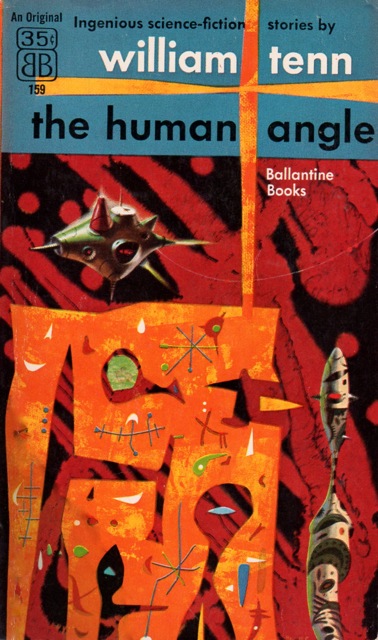
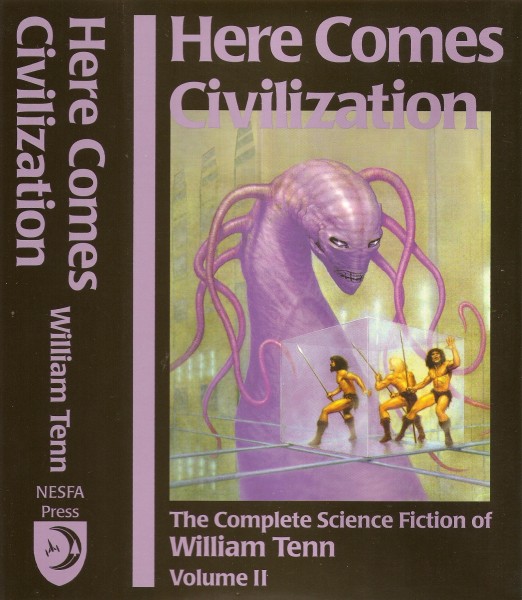
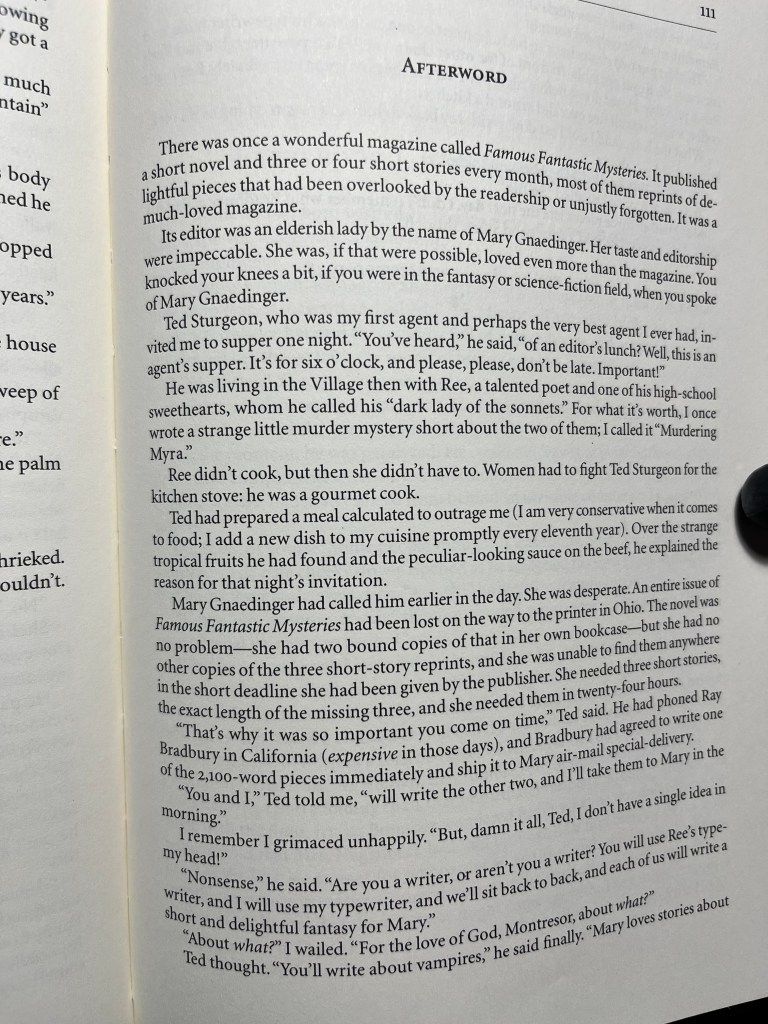
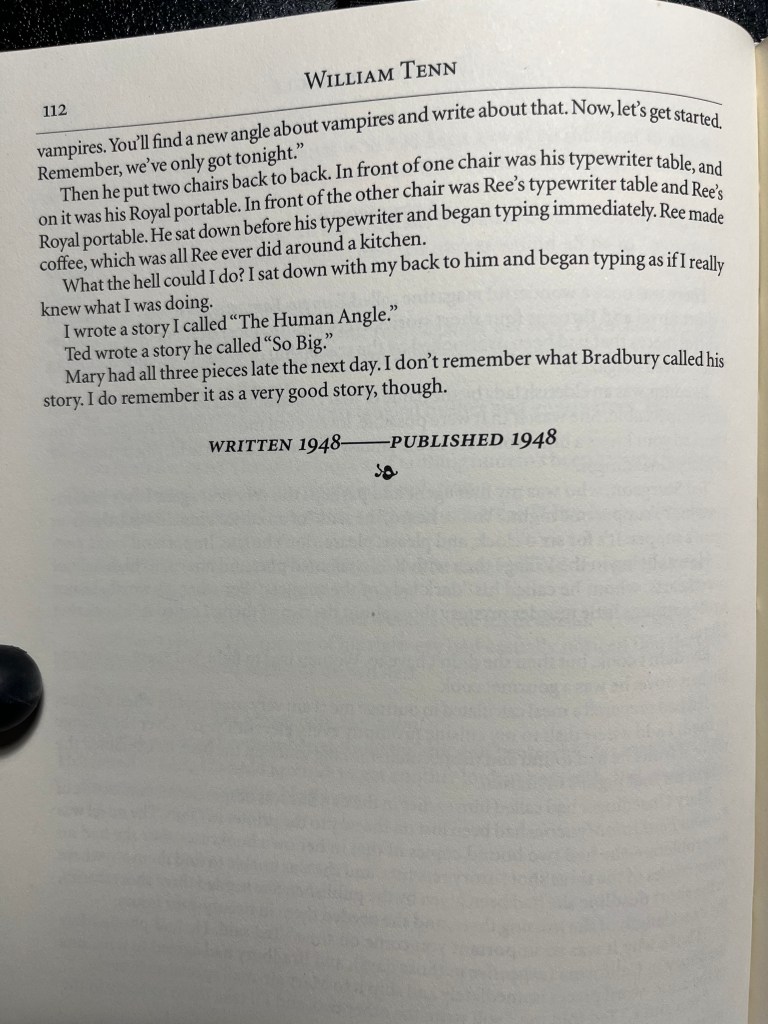
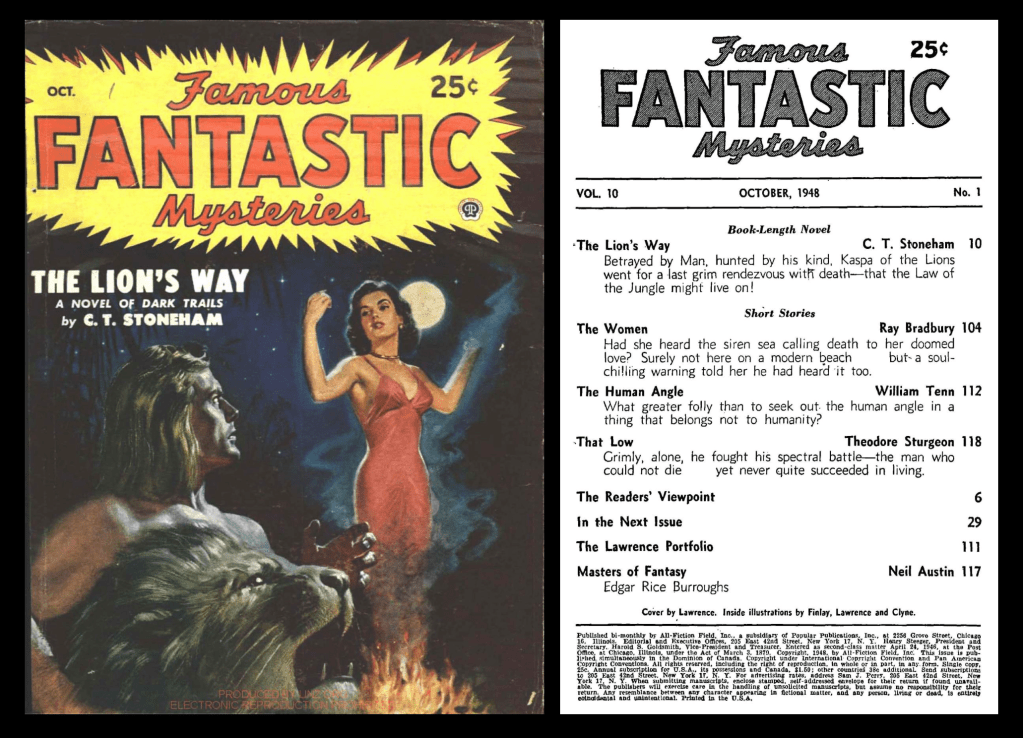
My friend Mike recently told me an anecdote from Here Comes Civilization: The Complete Science Fiction of William Tenn Volume 2. It was in the afterward to the story “The Human Angle.” It seems Ted Sturgeon invited William Tenn over for dinner with a hidden agenda. When Tennn arrived, Sturgeon told him that Mary Gnaedinger, the editor of Famous Fantastic Mysteries needed three short stories by tomorrow and they would write two of them that night. Ray Bradbury was going to write the third and air mail it special delivery to Mary from California. (See the “Afterward” below for the full tale.)

Tenn, Sturgeon, and Bradbury did come through in twenty-four hours and their stories were printed in the October 1948 issue of Famous Fantastic Mysteries. You can read that issue at Archive.org.

There were many legendary science fiction writers (and pulp writers) who bragged they could crank out a short story in a day, or a novel in a weekend. But is this hack writing any good? That’s hard to say. What is good? All three stories, “The Women,” “The Human Angle,” and “That Low” were readable stories and even entertaining. However, they are also quite forgettable. But not completely forgettable. Follow the links to view their reprint histories.

Men and women who wanted to make a living writing science fiction back in the 1930s, 1940s, and 1950s had to produce a lot of content. Many science fiction writers made a half-ass living churning out short stories for magazines. But are these speedy productions worth your time to read today? That depends.

Short stories can achieve several levels of quality and recognition. Getting published in a magazine is the first rung up in a ladder of publishing success. The next step up in recognition of quality is being nominated for an award or getting reprinted in an anthology, especially an annual best-of-the-year anthology. Winning an award is another step up. After that, recognition comes slowly. Having an author include a story in one of their short story collections at least says the author is proud of that story. But having a story reprinted in a retrospective or theme anthology means the story stands out over the other stories that came out in the year it was first published. Even greater recognition is when a short story is used in a textbook and taught in school or optioned for a film or television show.

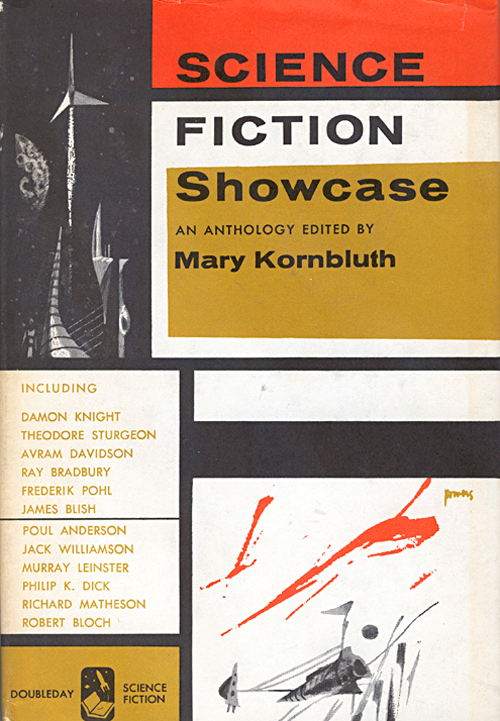
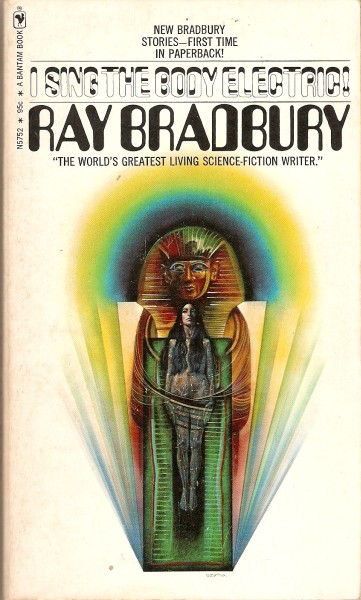
The Bradbury and Tenn were anthologized in a few minor theme anthologies as well as a few author collections. Bradbury included “The Women” in his famous I Sing the Body Electric collection. Tenn used “The Human Angle” for the title of a collection. Sturgeon’s story was reprinted in Mary Kornbluth’s Science Fiction Showcase, which was a special anthology probaby to help the widow of C. M. Kornbluth. “That Low” was only reprinted in Sturgeon’s complete stories series, suggesting that Sturgeon never liked it much. They were not major stories. However, these stories were sold several times, and they are in print today.

But back to my title question: How to judge hack writing. First, we must consider what kind of reader you are. Are you an indiscriminate reader, like someone who comes home from work and turns on the television and quickly finds something to watch by flipping through the channels? Or, are you the kind of person who Googles to find the critically admired shows that just came out this month? Maybe, you’re the person who looks at lists of the best TV series of all-time hoping to find something amazing to watch.

The Bradbury, Tenn, and Sturgeon stories are perfectly good stories if you’re capable of being entertained by an average episode of an average TV series. And that might be good enough for most people. But if you’re the kind of person who thinks in terms of the “Ten Best Episodes of The Twilight Zone,” these stories don’t even come close. And, if you compare them to “Fondly Fahrenheit” by Alfred Bester, or “The Story of Your Life” by Ted Chiang, or “The Ones Who Walked Away from Omelas” by Ursula K. Le Guin, then they aren’t even in the same galaxy.

I’ve developed a rating system I sometimes use in group discussions about short stories. One star is an amateur effort, and two stars is a story that still needs work and shouldn’t have been published. I seldom even mention these stories. Three stars to me is a professional story acceptable for magazine publishing. Four stars is a story that is good enough for me to look forward to rereading. Five stars is a story I’ve read many times and consider a classic.

Hack writers can routinely crank out three-star stories. The stories by Bradbury, Tenn, and Sturgeon are all three-star stories. I didn’t mind reading them, but at my age, they are a waste of my precious reading time – a commodity that’s dwindling. They were fun to look up and read because of Tenn’s anecdote about how and why they got written, but that’s about all.

When I’m restless, I still enjoy reading old science fiction anthologies. I have trouble watching TV, but I can still read for fun. I enjoy looking for gems. The trouble is I seldom find stories like “The Star Pit” by Samuel R. Delany or “Flowers for Algernon” by Daniel Keyes. But that’s what I’m really hoping to find, stories that work at that level.

I also want to know why and how stories work at the highest level of short story writing. I assume there must be definable qualities I can list, but I can’t list those qualities now. I plan to study my favorite 5-star stories and make a list in the future.

I will say the Bradbury story had the most writing qualities of the three stories. It had the most emotional tension. It had the most vivid details. It had the most poetic imagery. I cared for the wife in the black bathing suit. And it was the least predictable of the three stories.

The Tenn story was a vampire story. It has an unusual setting for a vampire story, which was a plus, and it had a different kind of vampire, another plus. But it was the most predictable of the three stories, and the least developed. Bradbury just had way more tension and conflict in his story. Sturgeon’s ending was the most surprising, but it wasn’t a very insightful surprise.

The obvious thing I can say about hack writing is it needs more drafts. Many hack stories could have been far better if they had baked longer in the oven. Writers who are proud of their first-draft writing might regularly sell their work, but it will never be considered great. A good example is Barry Malzberg. Some of his stories and novels are quite appealing, but none of them are books I want to reread. The absolute measure of great fiction is how often readers reread such work.

Robert Silverberg at the beginning of his career cranked out science fiction. Some of it was readable, but neither memorable nor something I’d want to reread. Then at the end of the sixties he changed. I assume he spent more time rewriting, although in some of those same years he cranked out four novels. But Downward to the Earth was different. I’ve read it twice and look forward to rereading it again.

I’m currently reading book 20 of The Great SF Stories 1-26 (1939-1964) edited by Isaac Asimov and Martin H. Greenberg with Robert Silverberg doing #26 with Greenberg after Asimov died. I’ve been reading them in order, along with the other best of the year anthologies that covered the same year. For any given year, I’d say there were less than five stories that I’d rate 5-stars. On average I’d say it’s two 5-star stories in each year. Most of the other stories are 3-stars and 4-stars.

I’m not sure if there are even three hundred 5-star stories in all the years of science fiction. Most would-be science fiction writers who achieve some success publish a handful of stories before starting on novels. I’m not sure if hack writers still exist. There are bestselling writers who crank out one or two novels a year who might be considered hack writers because of their productivity, but I don’t know if they are hack writers like Philip K. Dick, Ray Bradbury, Clifford Simak, Harlan Ellison, Robert Silverberg, and Theordore Sturgeon were early in their career when they could publish a dozen short stories and a couple of novels in a year. Ray Bradbury was quite proud of selling one short story a week pace, and he published in both the pulps and slicks.

Just because a story was written fast, doesn’t mean it’s bad. But the odds of it being great are low. I’m in a handful of online groups whose members love short fiction. There are many readers out there who appreciate good hack writing, especially those old readers who love pulp fiction. I don’t want to criticize such stories and their fans. I have often enjoyed a fun average story, but I’ve forgotten thousands of them.

James Wallace Harris, 4/9/25

The State of the Science Fiction Short Story in 2024

For thirty-five years (1984-2018) I depended on Gardner Dozois to tell me about the state of short science fiction in his annual The Year’s Best Science Fiction. After he died, there were still many best-of-the-year anthologies to consult, but none had the extensive wrap-up of the year in science fiction that Dozois produced. By 2024 some of those anthologies have died off, making me wonder if the science fiction short story is dying off too.

Print magazines have lost subscribers for decades, and influential online publishers continually complain about a lack of funding. Today I read an article in Business Insider about how the plurality of companies selling online makes it hard to know what to buy. My theory is there are too many publishers for science fiction short stories. It’s great for new writers wanting to get published, but it’s bad for us readers because we’re reading stories that would have remained in the slush pile decades ago.

Before the internet, fans of short science fiction bought The Magazine of Fantasy & Science Fiction, Analog, Asimov’s, and an occasional original anthology like Orbit. There were semi-pro magazines, but few read them. Because there were fewer slots where a story could appear the competition to get into one was greater.

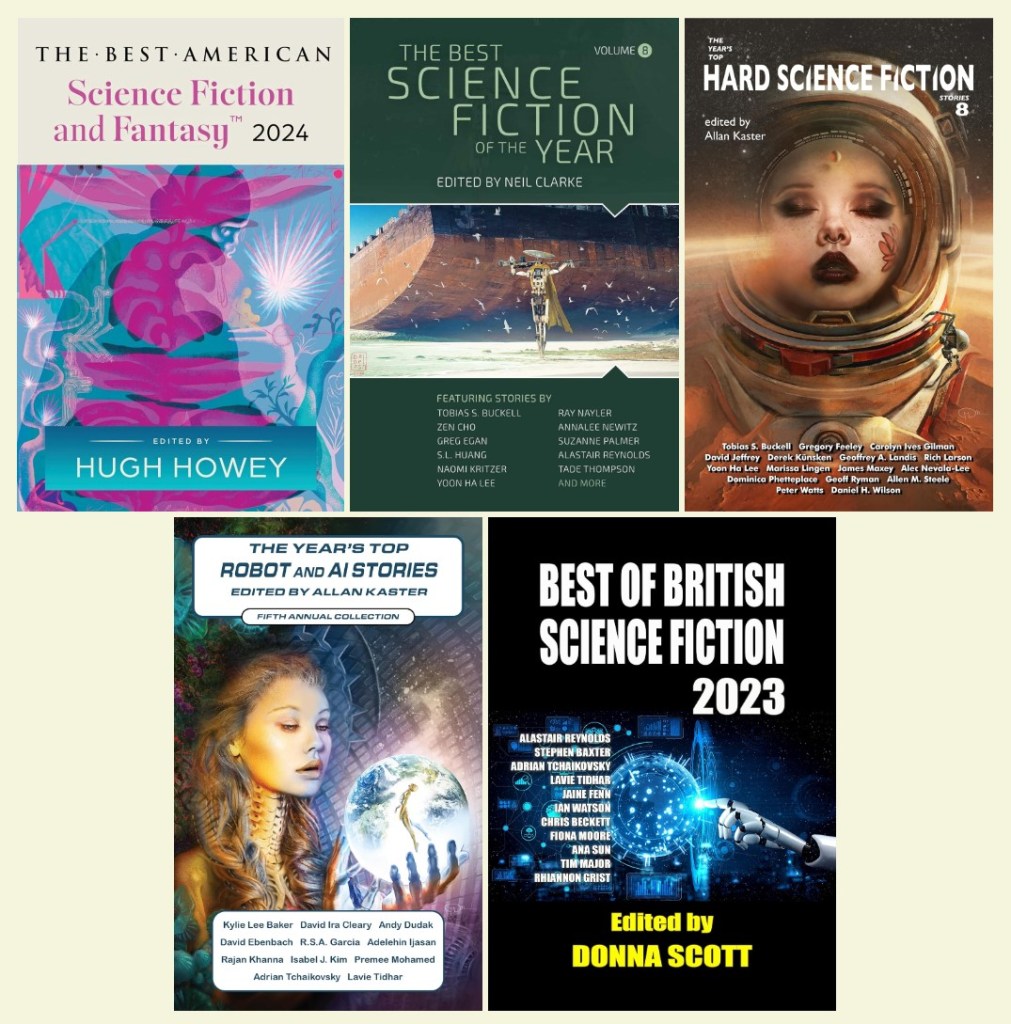
John Joseph Adams in The Best American Science Fiction and Fantasy 2024 gives a fair overview of science fiction short story publishers. His anthology publishes twenty stories each year. Ten science fiction and ten fantasy. As the series editor, he picks 80 stories to give to the guest editor, who picks the 20 that are published. Here are the publications he used, with the number of stories included in the 80 in parentheses.

  • Lightspeed (7)
  • Clarkesworld (5)
  • Uncanny (5)
  • Beneath Ceaseless Skies (4)
  • The Magazine of Fantasy & Science Fiction (4)
  • Reactor (formally Tor.com) (4)
  • Asimov’s Science Fiction (3)
  • The Sunday Morning Transport (3)
  • Fantasy Magazine (2)
  • McSweeney’s (2)
  • Bourbon Penn (1)
  • Cast of Wonders (1)
  • Escape Pod (1)
  • FIYAH (1)
  • Nightmare (1)
  • PseudoPod (1)
  • The Dark (1)

Since this is only 46 stories, the other 34 must have come from author collections and original anthologies. Adams said he also read these periodicals:

  • Analog
  • Apex Magazine
  • Apparition Lit
  • Baffling Magazine
  • The Kenyon Review
  • khōréō
  • Vastarien
  • Weird Horror

This doesn’t cover all the publishers of short science fiction. By the way, some of these periodicals are for fantasy and horror. I only care about science fiction, so I’m disappointed with every other story in The Best American Science Fiction and Fantasy 2024. You can read Adams’s introduction by reading the sample at Amazon. It’s mostly about his selection process but it gives a good insight into what’s being published.

Because so many science fiction short stories are being published I’ve given up trying to follow the genre during the year by reading the periodicals. I just wait for the annual best-of-the-year anthologies. I occasionally buy F&SF, Analog, or Asimov’s, but F&SF has too little SF, Analog has too many minor stories, and Asimov’s has become rather hit-and-miss. I can’t but wonder if they’d get better stories if the online markets didn’t exist.

Neil Clarke’s The Best Science Fiction of the Year: Volume 8 is more to my taste, but it’s over a year behind. Volume 8 covering 2022 stories, came out in September 2024.

Clarke reports finding a huge number of print magazines:

  • Analog
  • Asimov’s
  • Bourbon Penn
  • Clarkesworld
  • Cossmass
  • Infinities
  • Dark Matter
  • The Dread Machine
  • Dreamforge
  • Fusion
  • Fragment
  • Galaxy’s Edge
  • Infinite Worlds
  • Lady Churchhill’s Rosebud Wristlet
  • Luna Station Quarterly
  • The Magazine of Fantasy and Science Fiction (F&SF)
  • Interzone
  • Metaphorosis
  • On Spec
  • Planet Scumm
  • Pulphouse
  • Pulp Literature
  • Reckoning
  • Shoreline of Infinity
  • Space and Time
  • Underland Arcana
  • Weird Tales
  • Wyldblood

That blows my mind. I never see most of those titles. Clarke’s State of the Union of SF short stories is comprehensive. I guess he’s the new Gardner Dozois. Even if you don’t buy Clarke’s anthology, you can read his introduction in the sample at Amazon. I won’t summarize what he says, it covers what my title above claims but only hints at. Go read his overview.

Allan Kaster publishes two best-of-the-year anthologies. They showcase SF stories about hard science fiction and AI/robots. Kaster comes closest to what I want to read. I think Kaster succeeds because he defines his science fiction narrowly and only publishes twelve to fifteen stories. Before Gardner Dozois blew up the size of annual best-of-the-year SF anthologies, editors like Donald Wollheim, David Hartwell, and Terry Carr just picked ten to fifteen stories each year too. Check out his two series: The Year’s Top Hard Science Fiction Stories and The Year’s Top AI and Robot Stories.

There is an overwhelming number of science fiction short stories to read coming out. In that regard, the industry is doing great. Remember the lament in Business Insider, there are too many sellers. It makes selecting difficult and lowers overall quality. Back in 1953, there was an SF magazine boom, with over forty titles published. That boom crashed because the genre couldn’t support that many titles. I wonder if that will be true today? Or does the Internet allow for countless tiny markets supported by a handful of faithful fans? If that’s true, it might be better to ignore the larger genre, and just find a comfortable niche.

James Wallace Harris, 11/10/24