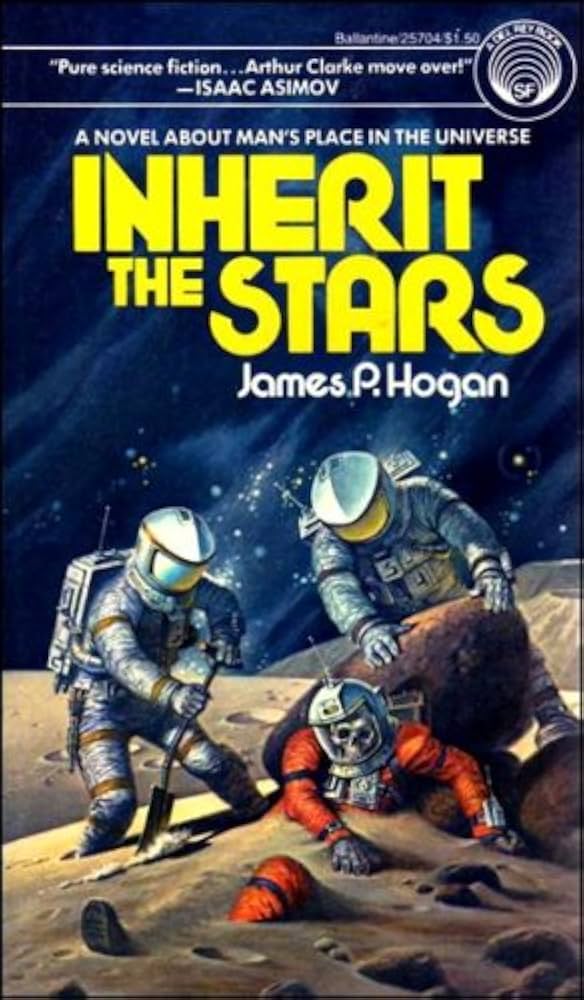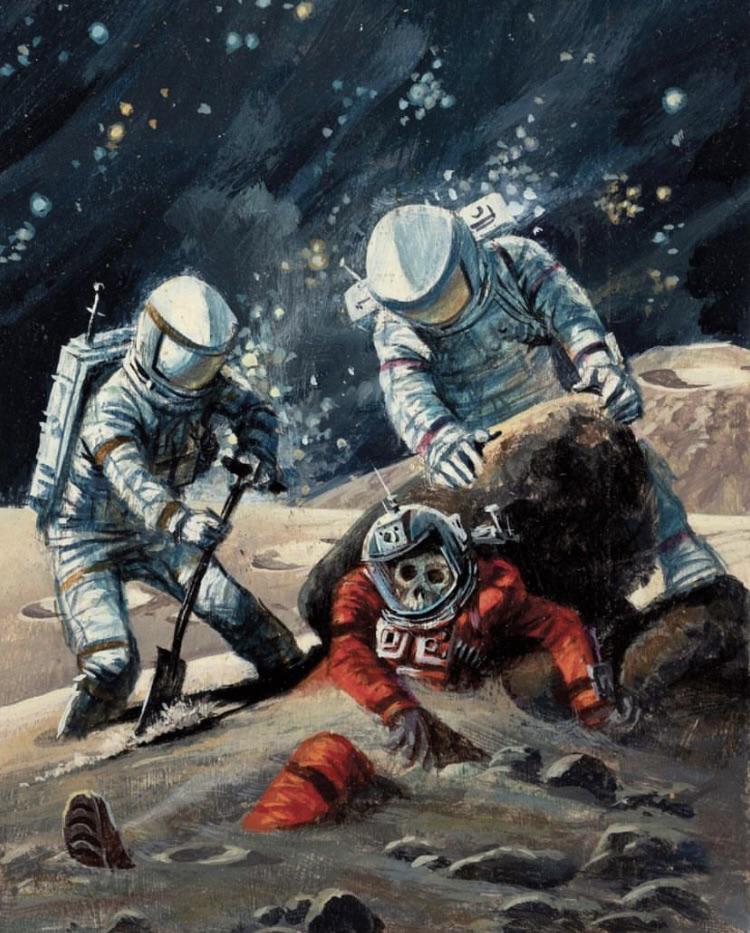
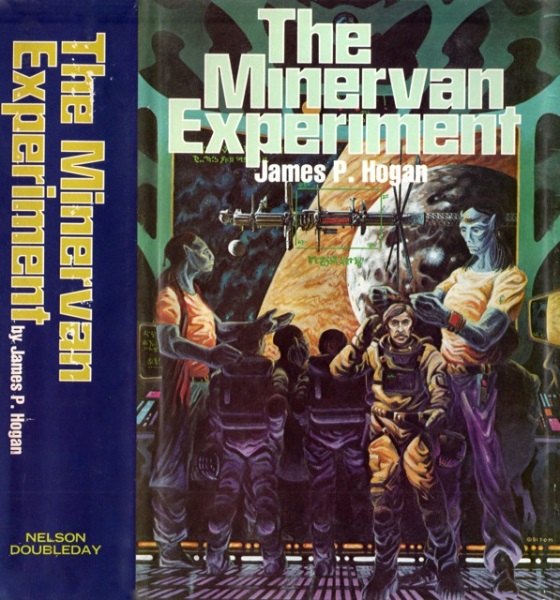
The original paperback, Inherit the Stars by British writer James P. Hogan (1941-2010), had a terrific cover – the kind that made you buy the book. The artwork appears to show astronauts on the Moon finding a dead astronaut, but that is deceptive. Hogan creates a scientific mystery because the dead astronaut has been there for 25,000 years.
I first read Inherit the Stars in 1992 but after seeing Whitney’s review on YouTube, I wanted to reread the story. I went to Amazon but couldn’t find the book. Was it out of print? I did find it on Audible. Later, I discovered that Inherit the Stars and its sequel The Gentle Giants of Ganymede are now being sold together as The Two Moons for the Kindle. A bargain for $6.99, especially since Whitney also praised the second book. It turns out that there are five books in the series being sold as three Kindle editions. The series is called Giants. Only the first three novels are available on Audible. The Science Fiction Book Club once published the first three novels as The Mirnervan Experiment. Ballentine also published a paperback called The Giants Novels that contains all three.
Before anyone rushes out to buy Inherit the Stars, I need to describe it more, but not enough to give spoilers. Hogan’s story is the kind you want to figure out for yourself. It kept me guessing for the entire novel even though I had read it before. That worried me. Why wasn’t it more memorable? Was that an indication it was a bad book? I don’t think so. How the story is told isn’t very memorable, but the ideas are big-time fun. I did remember some of those, but not connected to the book.
Inherit the Stars is basically scientists talking about one mystery after another. There’s no real plot. A lot happens, but it’s not dramatic. With each discovery, there’s a new puzzle, which makes you think and try to guess what caused each mystery. Inherit the Stars is science fiction focused on ideas and not storytelling. I’ve told you the first mystery, but I don’t want to give away any others.
However, I will give you some fun clues. Inherit the Stars reminds me a lot of Rendezvous With Rama by Arthur C. Clarke. Hogan’s prose is similar to Clarke’s. At one point, the story reminded me of the classic short story “Omnilingual” by H. Beam Piper. The novel also triggered memories of Gateway by Frederik Pohl. At other times it reminded me of the Winston Science Fiction, a series of young adult SF that came out in the 1950s, especially the entries where the protagonists find relics of ancient alien technology. If you love alien archeology stories, you might like Inherit the Stars.
I call Inherit the StarsPre-NASA Science Fiction, by which I usually mean science fiction written before Mariner 4 photographed Mars in July 1965. Until NASA started exploring the solar system with robotic probes, many people hoped that we would find life, even intelligent life somewhere on other planets in our solar system. For example, Heinlein’s Stranger in a Strange Land from 1961 imagines Mars being inhabited by a dying race. However, after Mariner 4, serious science fiction assumed we were alone in the solar system. (I must admit, that I still love Pre-NASA science fiction. Growing up in the 1950s and 1960s, I desperately wanted us to find Martians.)
I consider Hogan’s 1977 Inherit the Stars Pre-NASA Science Fiction because Hogan maintains the hope that we had neighbors. However, some readers might feel Hogan’s ideas might come across like those of Erich von Däniken, who wrote Chariot of the Gods? Another reviewer dismissed this book as unbelievable. Personally, I find Erich von Däniken’s theories to be insulting to humanity. But I consider Hogan’s speculation to be great science fictional fun.
Whitney at the Secret Sauce of Storycraft YouTube channel recently reviewed several science fiction books she called Just D@mn Good Vintage Science Fiction Reads. She intentionally avoided books considered classic science fiction and defined the kind of books she was looking for in used bookstores as vintage science fiction. She defined vintage science fiction as books published before barcodes appeared on their covers. That would be the mid-1980s. This would be science fiction her parents and grandparents would have read.
She reviewed these books (Links will bring up the video at YouTube):
I have read most of these books with Empire Star and Downward to the Earth being two of my Top 25 science fiction novels. Whitney’s reviews made me think about all the old books I found in used bookstores that weren’t famous but were fun reads. Maybe not outstanding examples of the genre, but the fun kind of science fiction that made you forget about your worries.
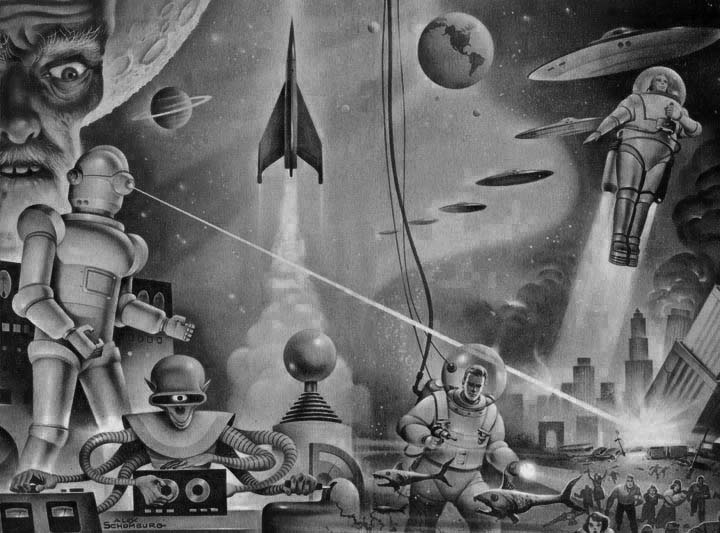
Her video makes me want to make my own list of Vintage SF Gems. Books to look for at library book sales that maybe no one is buying. Books you don’t see reprinted in new editions at new bookstores. If you don’t want to hunt used editions, these vintage SF titles are often reprinted as Kindle books at Amazon, sometimes for just $1.99. Kindle and Audible editions are the best sources for finding vintage science fiction today after the demise of the mass-market paperback.
My favorite science fiction books back in the 1960s were Heinlein’s Juveniles. Robert A. Heinlein’s reputation is fading, and I think that’s partly due to online reviewers reviewing the wrong books. Heinlein wanted to be remembered for Starship Troopers, Stranger in a Strange Land, and The Moon is a Harsh Mistress. And those are generally the titles found on new bookshelves and often reviewed. But they are also Heinlein’s novels that many people dislike including myself. And the novels written after that are even worse.
I wish modern reviewers would review Heinlein’s work from the 1950s. If you see old copies of these books give them a try. These science fiction books have given me the most fun over my entire lifetime. I’ve reread them many times. They are how I epitomize science fiction. All by Robert A. Heinlein.
Have Space Suit-Will Travel
Tunnel in the Sky
Time for the Stars
The Rolling Stones
Farmer in the Sky
Citizen of the Galaxy
Starman Jones
The Star Beast
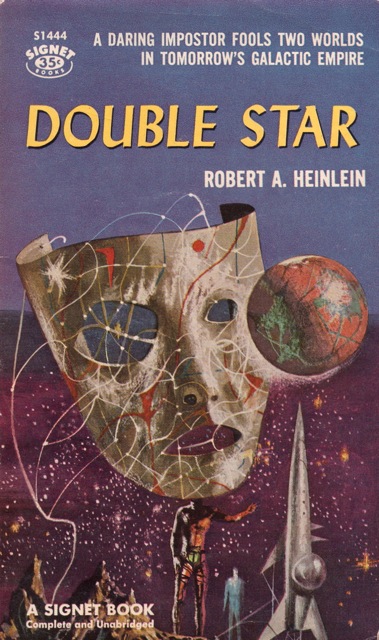
Double Star
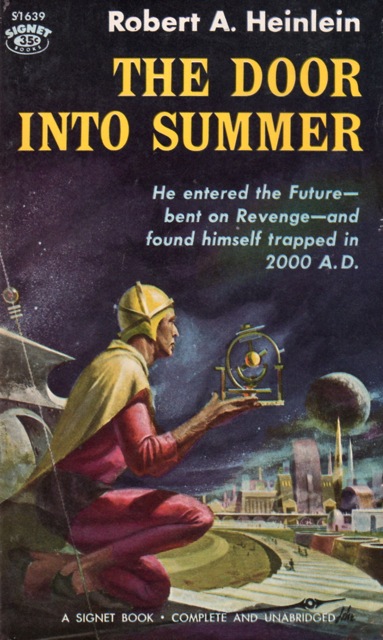
The Door Into Summer
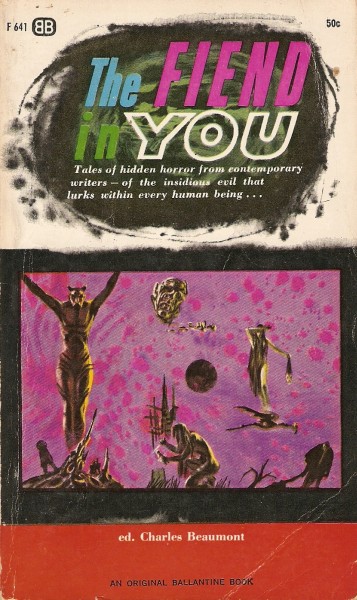
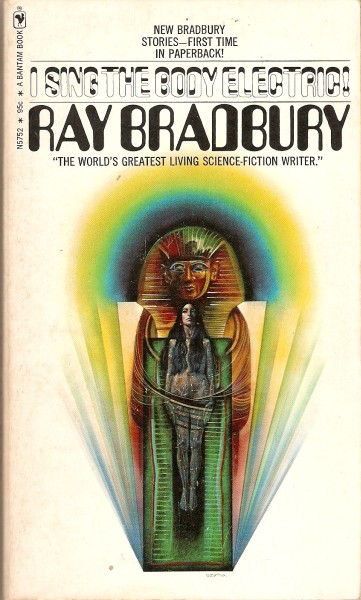
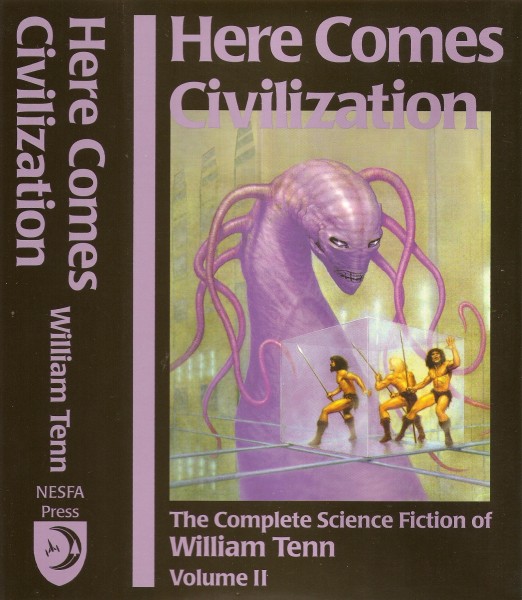
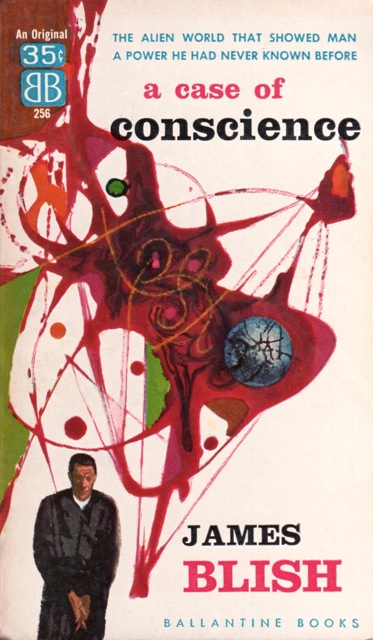
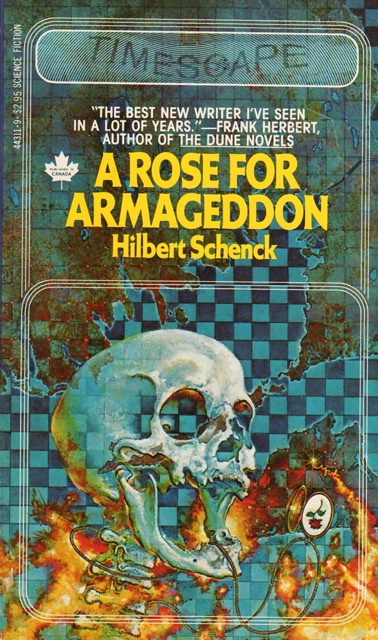
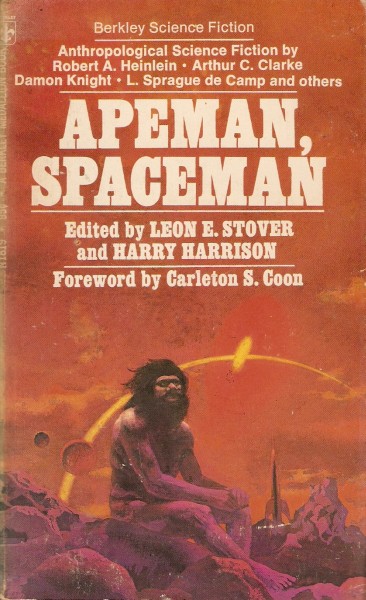
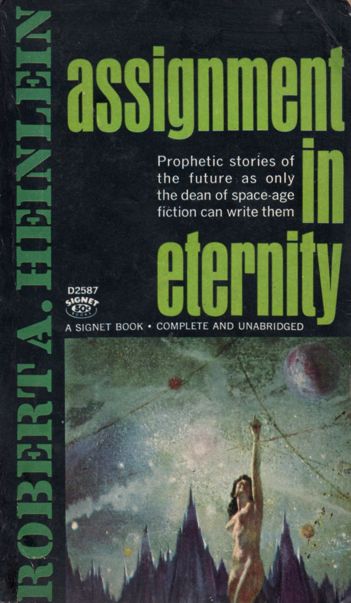
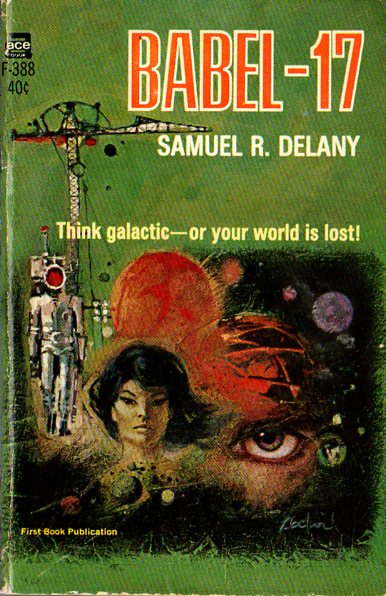
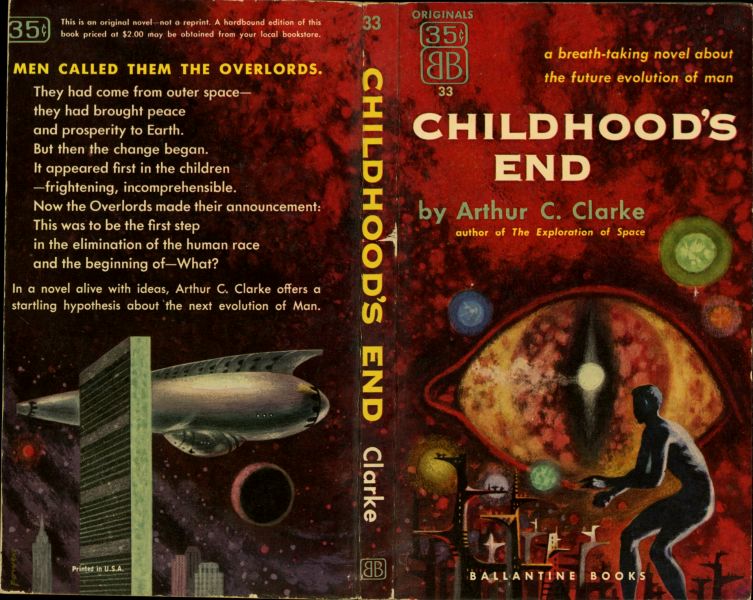
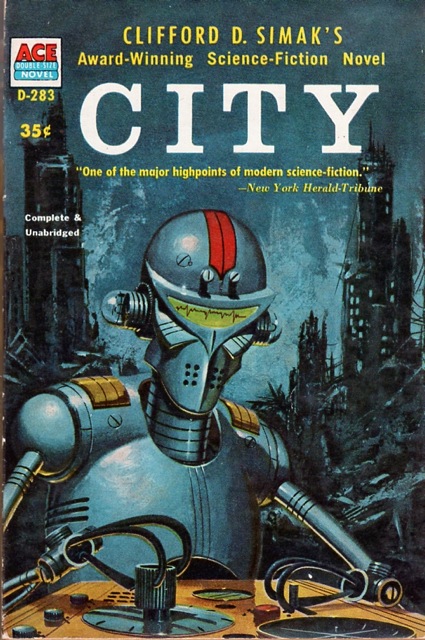
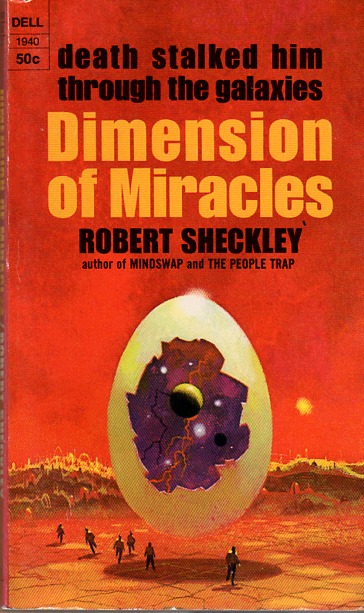
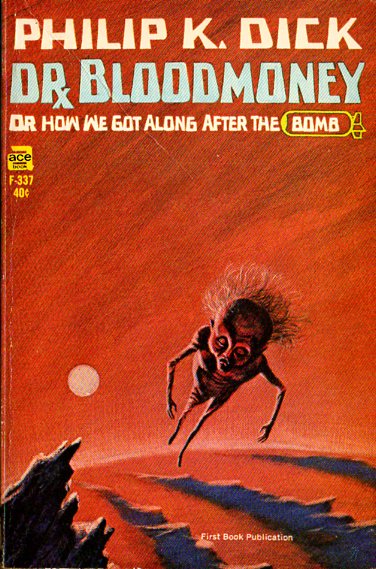
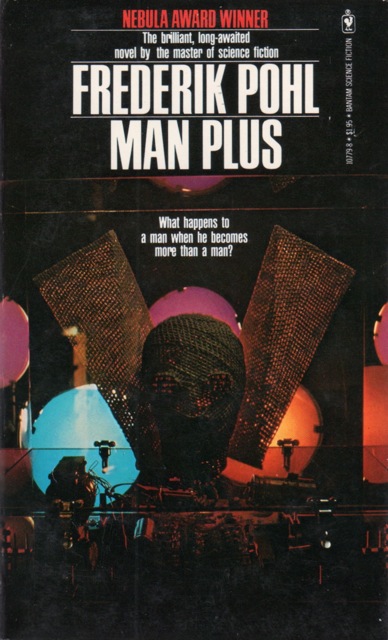
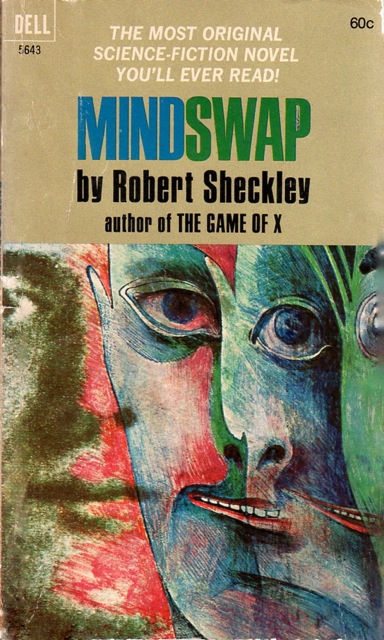
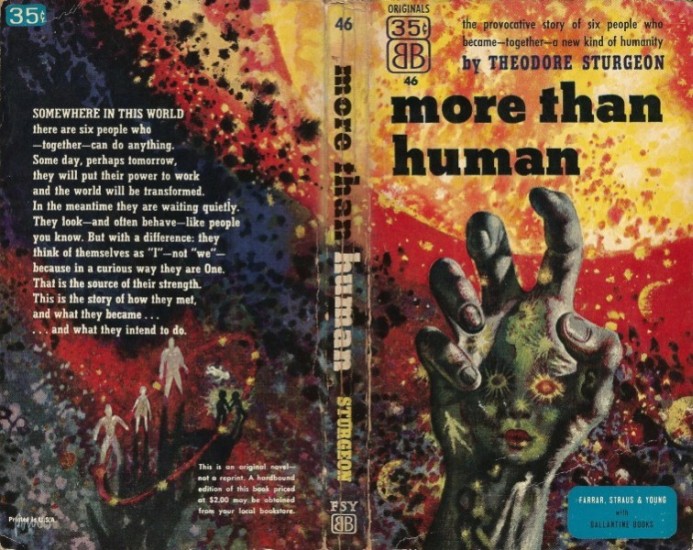
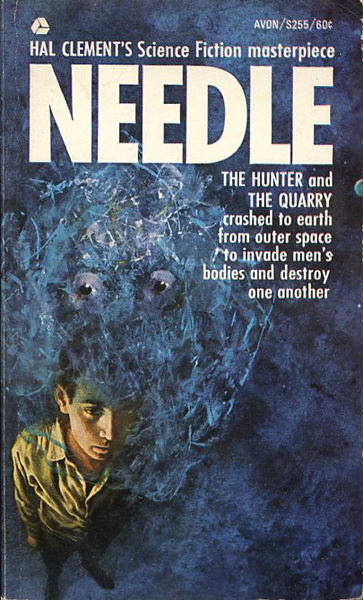
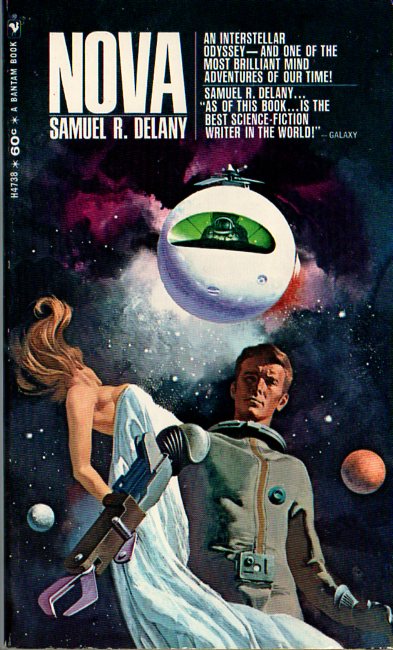
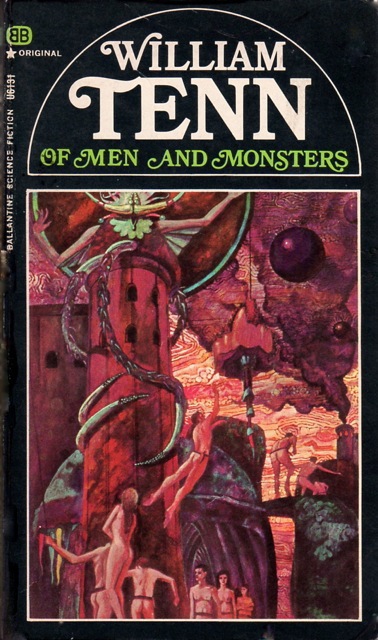
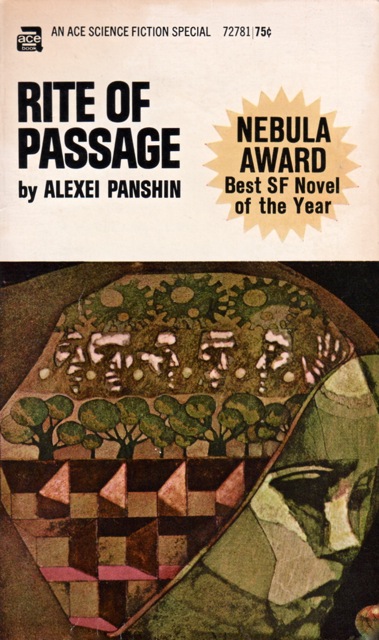
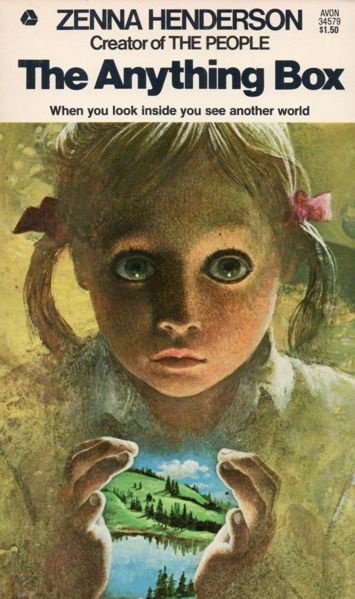
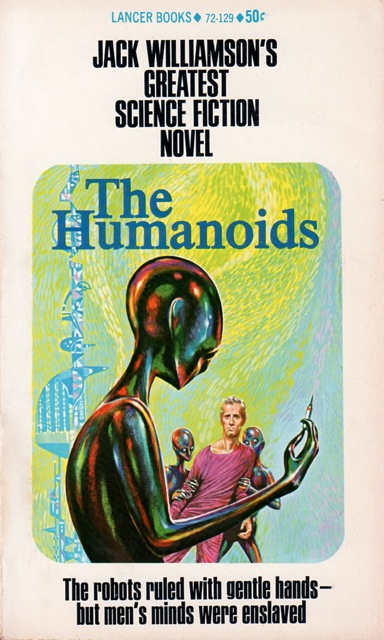
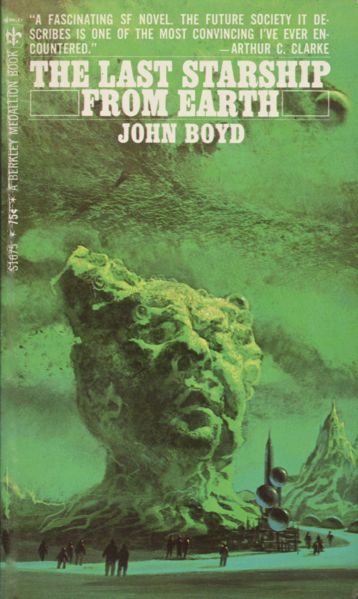
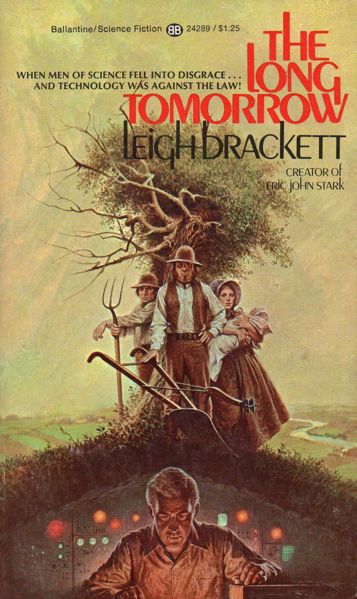
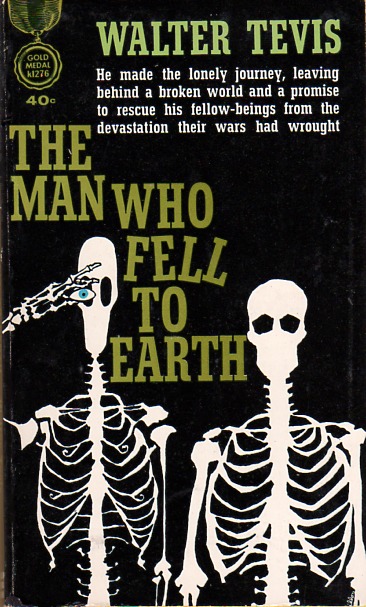
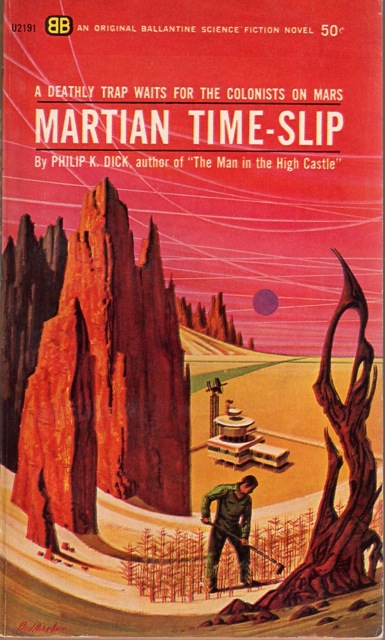
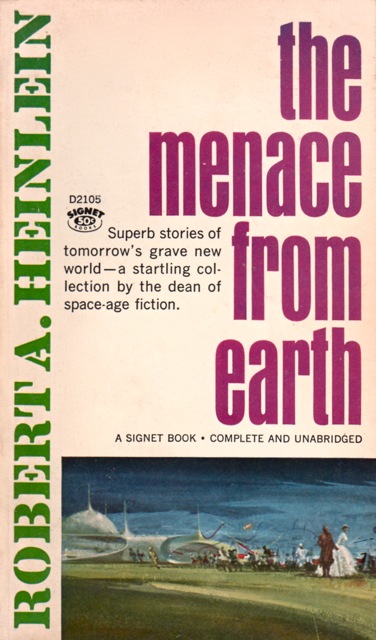
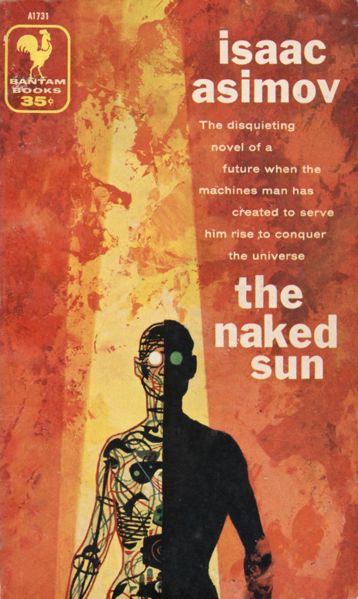
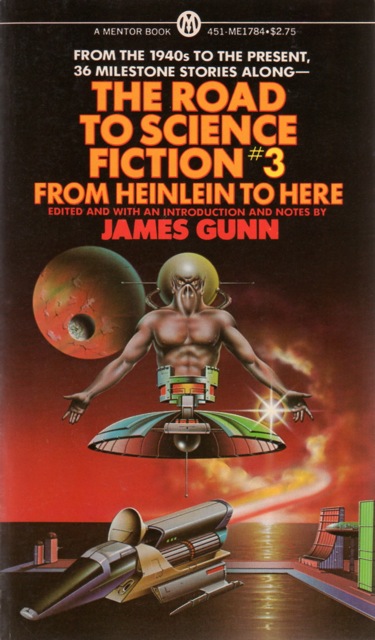
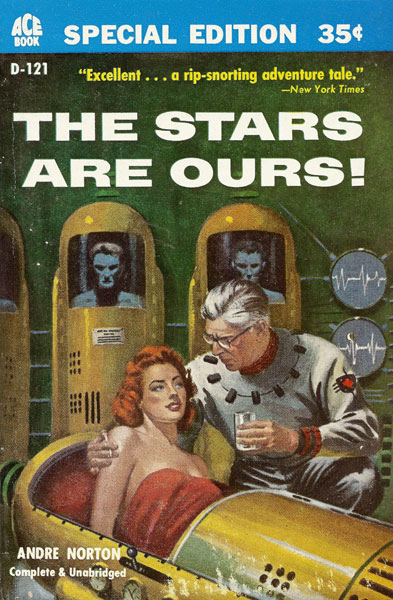
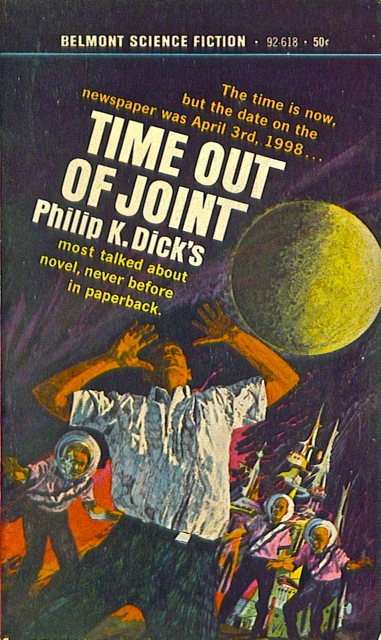
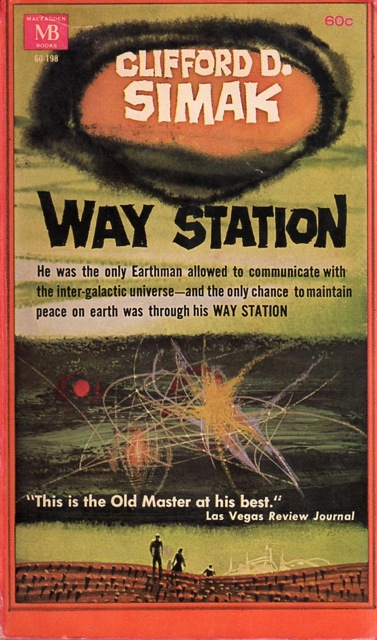
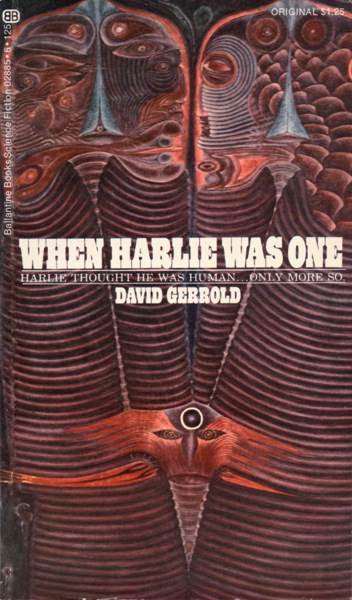
After this plug for Heinlein, I want to remember those vintage science fiction titles I believe deserve more readers. I’m just going to post images of the covers I fondly remember. Hopefully, you might spot these books at used bookstores, charity shops, and friends-of-the-library sales in their funky old editions. For me, old covers are essential to the vintage science fiction experience.
These are just a handful of books I could recall from memory this morning.
Most science fiction stories seem to go stale after a couple decades. This week, I listened to The Heads of Cerberus by Frances Stevens, initially published 106 years ago. The story had passed its expiration date decades ago, but I still found it mildly enjoyable as a historical curiosity.
If you’re not fascinated by the evolution of science fiction, I’ll understand you leaving this essay now. The Heads of Cerberus is not a forgotten classic. It gets points for being an early example of time travel and dystopian fiction written by a woman, but it’s not a good example. At best, it’s a sample from 1919, the kind that MIT Press is reprinting in its Radium Age science fiction series.
Gertrude Barrows Bennett (1884-1948) published several fantasy and science fiction stories between 1917 and 1923 as Francis Stevens. This makes her a pioneering author in the pre-Amazing Stories era, especially as a woman writer, but she is practically forgotten today. I just learned about Francis Stevens by reading a two-part review of “Sunfire” on Science Fiction and Fantasy Remembrance (Part 1, Part 2) by Brian Collins. That review inspired me to research her, and what I learned inspired me to read The Heads of Cerberus.
The Heads of Cerberus was first serialized in five 1919 issues of The Thrill Book. It was first printed in hardback in 1952. It’s been reprinted at least a dozen times since.
I listened to a free copy on LibriVox. There are several public-domain ebook editions available, here is one at Gutenberg Australia. Lisa Yaszek who edited The Future is Female! series for theLibrary of America recently published a collection of Francis Stevens’ stories at MIT Press Radium Age series called The Heads of Cerberus and Other Stories. Gertrude Barrows Bennett is getting rediscovered. However, she’s been rediscovered before, it just never sticks.
The Heads of Cerberus is about three people from 1918 Philadelphia traveling to Philadelphia in 2118. Bob Drayton is a disbarred lawyer. Terry Trenmore is his Irish friend who is a powerfully built giant. And Viola Trenmore, Terry’s beautiful little sister, and just seventeen. In 2118 they find a dystopian society run by a handful of weird characters. The story is painfully simple, although I enjoyed it somewhat. The fun in reading these old science fiction tales is not the storytelling, but seeing how people imagined science fictional ideas before the concept of science fiction was invented.
The 19th century had several tales of people traveling to the future that could have inspired Bennett, each with a unique method of time travel. In “Rip Van Wrinkle,” Washington Irving has his title character sleep for twenty years after drinking potent liquor. Edward Bellamy had Julian West sleep for 113 years via hypnosis in Looking Backward. Frances Stevens has her characters jump ahead two hundred years by sniffing grey dust from a vial of mysterious ancient origins. The vial’s stopper is shaped like Cerberus.
As I said, The Heads of Cerberus isn’t very sophisticated. Its tone reminded me of the Oz books by L. Frank Baum, which were for children. Those books were often about ordinary people meeting extraordinary beings in strange places. Bennett’s imagined future is minimalistic, and somewhat goofy, reminding me of Alice’s Adventures in Wonderland. However, Stevens lacks the creative imagination of Baum and Carroll.
Edward Bellamy created a complex economic system for his future society that inspired many readers in the 19th century to form over five hundred Nationalist Clubs based on socialist ideas in Looking Backward. Francis Stevens imagines an economy based on the number of hours worked. Her society was ruled by an elite called The Superlatives. Ordinary people didn’t have names but numbers, and the Superlatives had names based on cardinal virtues like the Loveliest, The Bravest, the Fastest, the Strongest, etc.
The main problem with Stevens’ science fiction is her future society isn’t a philosophical idea she believed in or promoted, but merely conjured up quickly to fit a plot. Bennett was a young widow, with a child and mother to support after her dad died. She was a stenographer but made extra money by writing for the pulps. She quit writing after her mother died. The Thrill Book that serialized The Head of Cerberus was a low-paying market, but Stevens sold three novels to Argosy, a much-admired pulp after it. They were Claimed, The Citadel of Fear, and Possessed: A Tale of the Demon Serapion. Even though they are dark fantasies, a genre I’m uninterested in, I should try one to see if her writing improved. Her first serial, The Labyrinth, was to All-Story in 1918, another legendary pulp.
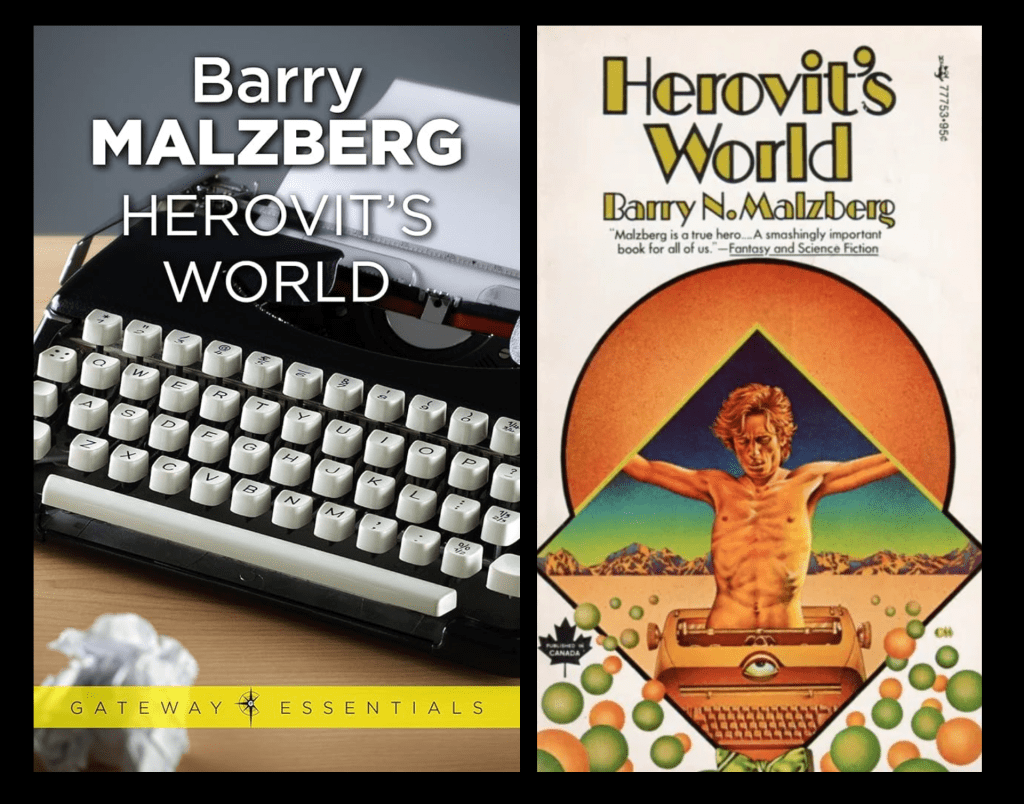
Back in the 1960s when other teens fantasized about becoming rock stars, playing for the NFL, or being seen on the silver screen, I dreamed about becoming a science fiction writer. After reading the 1973 satire on science fiction writers, Herovit’s World by Barry N. Malzberg, I see that I was much better off working with computers at a university for thirty-five years and retiring with a pension. You can currently buy the Kindle edition for $1.99. But read my review carefully before you risk even that little money. It’s a good read for only certain kinds of science fiction fans.
Barry N. Malzberg died on December 19, 2024, at 85. Although prolific, he was never a famous science fiction writer. Malzberg’s most successful books were written in the 1970s, and Barry is mostly forgotten today. He is getting some attention on YouTube as a few reviewers rediscovering him. Malzberg has a reputation as being the curmudgeon of science fiction. Malzberg often relies on satire, but his stories were never fun like the satires of Kurt Vonnegut. Malzberg wrote dark, edgy, and psychological fiction like Philip K. Dick, but he never developed a cult following.
Recently, Bookpilled on YouTube declared that Malazberg was his new favorite science fiction writer. Bookpilled skews towards literary and dark SF, often from the 1970s. But to be honest, Malzberg is very hit-and-miss. Joachim Boaz, a true connoisseur of seventies science fiction, found little to love in The Many Worlds of Barry Malzberg. Boaz considered most stories good but rated “Death to the Keeper” brilliant. Boaz also called Malzberg’s most notable novel Beyond Apollo brilliant, giving it a 5 out of 5 rating.
Be sure to read MPorcius’ extensive review who believes Herovit’s World was overpromoted by Robert Silverberg and Harlan Ellison, but he did like it a lot.
And if you pay attention, Malzberg is mentioned occasionally on YouTube, print reviews, blogs, and podcasts. Three years ago, the biographer Alec Nevala-Lee interviewed Malzberg for two hours.
Herovit’s World is a short novel, 160 pages in paperback, and just under six hours on audio. Jonathan Herovit, our protagonist, has written 92 science fiction novels in the past but struggles to finish his latest book. It’s overdue. He only has thirty pages and his editor is hounding him. His wife is hounding him. He’s stuck in a small apartment with a new baby who cries endlessly. Herovit is approaching forty, well on the road to being an alcoholic, depressed, delusional, and coming apart mentally.
Herovit wants to be like Mack Miller, the fictional action hero of his endless Survey Team novels. Herovit wants to be like the decisive Kirk Poland, his alter-ego and pen name for his books. Jonathan Herovit has turned Kirk Polan into an imaginary friend, one that’s become an abusive second personality.
Malzberg uses this novel to satirize editors, publishers, authors, readers, fans, conventions, writer conferences, writer associations, and the science fiction genre. We never know if Herovit’s World is autobiographical. Herovit is self-loathing. Is this Malzberg confessing his own feelings, or just creating a character. But if you read Malzberg’s three books of essays, The Engines of the Night: Science Fiction in the Eighties (1982), Breakfast in the Ruins (2007), or The Bend at the End of the Road (2019) you’ll get the feeling that he did use his own life for inspiration.
Malzberg is confusing. He has stated that he loves science fiction and the genre. Listen to the podcast above. But science fiction also depressed him, even tormented the poor guy. Herovit’s World is recursive science fiction. That is science fiction about science fiction. Often recursive science fiction is fun, even zany, like What Mad Universe by Fredric Brown or God Bless You, Mr. Rosewater by Kurt Vonnegut. Herovit’s World is full of creative ideas and psychological observations, but they’re not fun. Malzberg feels more like Kafka.
Malzberg and Herovit are hack writers. They pride themselves on cranking out any style or type of fiction and getting paid for first drafts. However, Herovit’s World reads quite well. It has its literary aspects and is full of fun experimentation. I’m glad I read it even though it’s about an unhappy man going down the tubes. And it does make you think about science fiction.
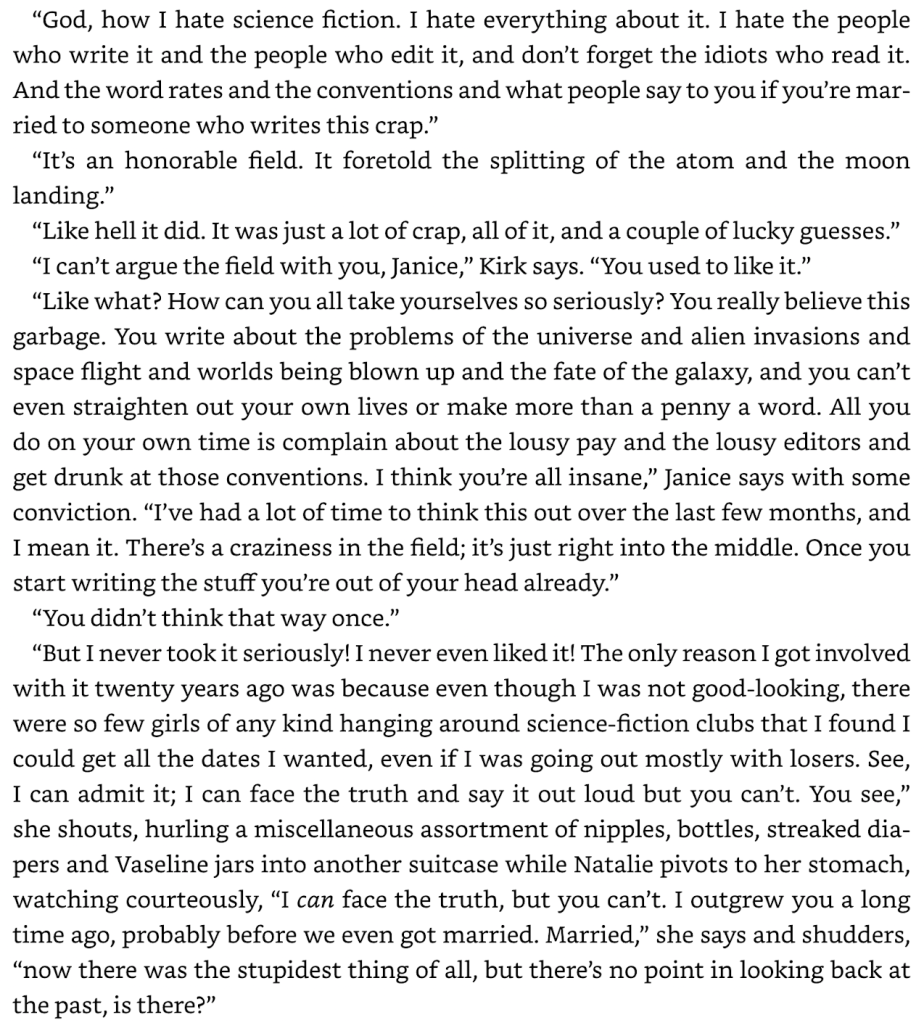
Malzberg was several years younger than Herovit. Herovit’s writing career began in the 1950s, while Malzberg started publishing in the 1960s. Herovit remembers the science fiction magazine boom of 1953. Herovit was a disciple of John Steele, who I assume is based on John W. Campbell. So is Malzberg really making fun of 1950s science fiction? At one point in an argument with his wife Janice, she gives a bit of a speech which might be the key to the whole story:
I also remember when there were very few females at science fiction clubs and conventions. Boy have things changed. We must acknowledge that Malzberg skewers SF of the 1950s or 1960s in Herovit’s World. But we should also ask: “How would a disgruntled SF writer skewer the genre today?”
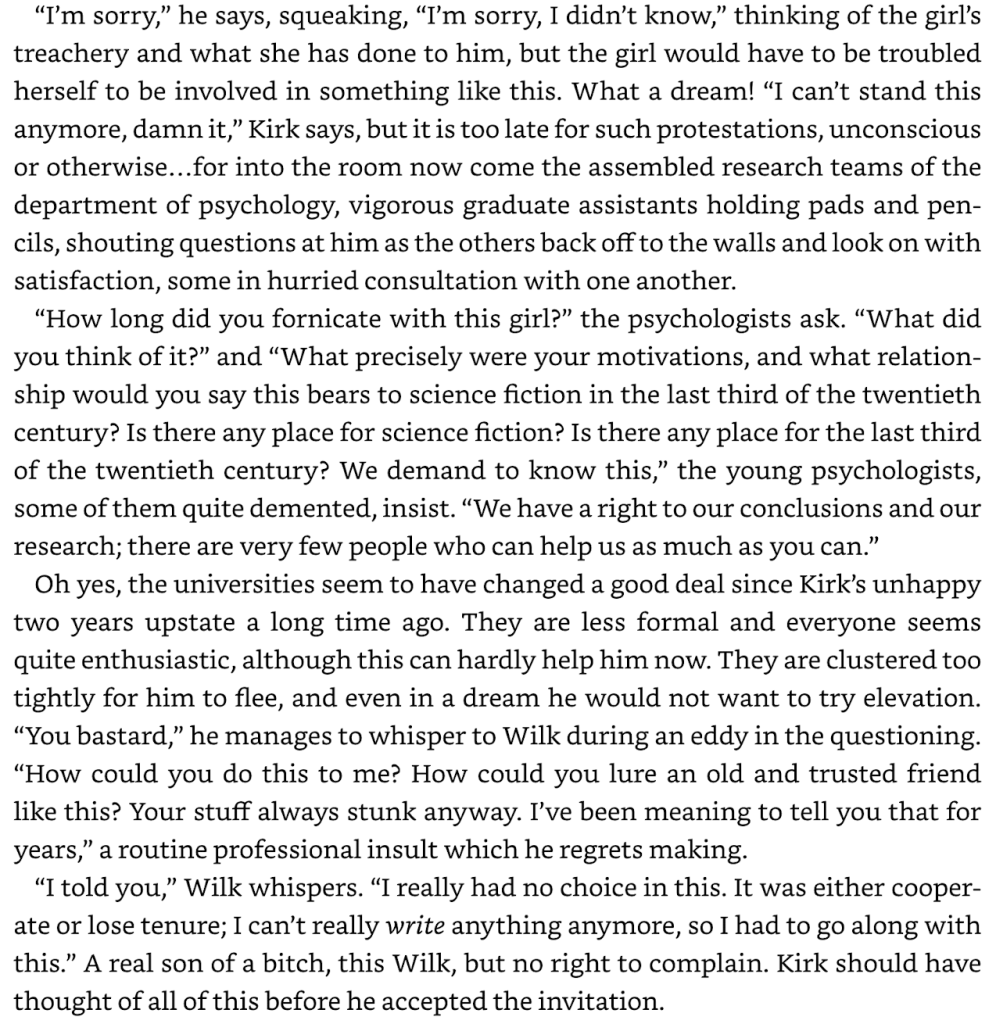
There is a dream sequence late in the novel where Herovit is having tremendous sex with a college coed. He had been invited to a conference and the coed approached him telling Herovit that Kirk Poland was her favorite writer. It turns out she was paid by the university to seduce Herovit so he could be studied for academia. Science fiction was getting noticed by the academic world in the early 1970s. Many writers and fans felt vindicated. However, other writers claimed science fiction was better left in the gutter. Malzberg uses this scene to give his opinion:
Herovit and Malzberg regretted giving so much of their creative effort to a genre that gets so little respect. They know they are writing escapism for adolescents. I think the genre has changed a lot since the 1970s. It does get more respect and it’s taken more seriously, probably because it deserves it. However, some of Malzberg’s criticisms might still be true, especially once you analyze why certain stories and themes are so popular with science fiction fans.
A good deal of Herovit’s World is about marriage. Herovit routinely cheats on his wife at science fiction conventions and neglects her at home. I’ve heard plenty of gossip about science fiction writers at conventions and conferences. But there is a non-SF connection here. There are many literary novels about blocked writers and failed marriages. I can’t tell if Malzberg is satirizing them too, or padding his SF novel. Both Herovit and Malzberg have bragged about being able to pad their fiction. My favorite novel on this theme is Wonder Boys by Michael Chabon, who writes in literary and SF genres.
Herovit’s World also contains a lot of sex. Malzberg got his start as a writer cranking out soft-core porn paperbacks. I don’t know if he’s saying that science fiction writers are sex obsessed, or sexually frustrated, or if he was merely padding his story because he didn’t have enough to say about science fiction to fill out the novel length. I do know that Portnoy’s Complaint by Philip Roth had come out a few years earlier and had become a bestseller dealing with sex honestly. As they say, “sex sells,” and Malzberg was hoping to break out of the science fiction ghetto.
Overall, Herovit’s World is mildly amusing. Most readers at Goodreads give it three stars, but a few love it giving it five stars. My rating would be ***+. I thought it was written well enough (***) and I liked it (+), but I wouldn’t ever reread it. That’s my main problem with Barry N. Malzberg. His books are interesting, but they never reach my next rating level. I give **** to books I know I’ll want to reread.
If Herovit’s World was less padded with sex scenes and had more satire about science fiction, it could have been a **** novel with me. If Malzberg had tried harder, gone beyond a first draft maybe, and really thought about the purpose of this novel, it could have been far better.
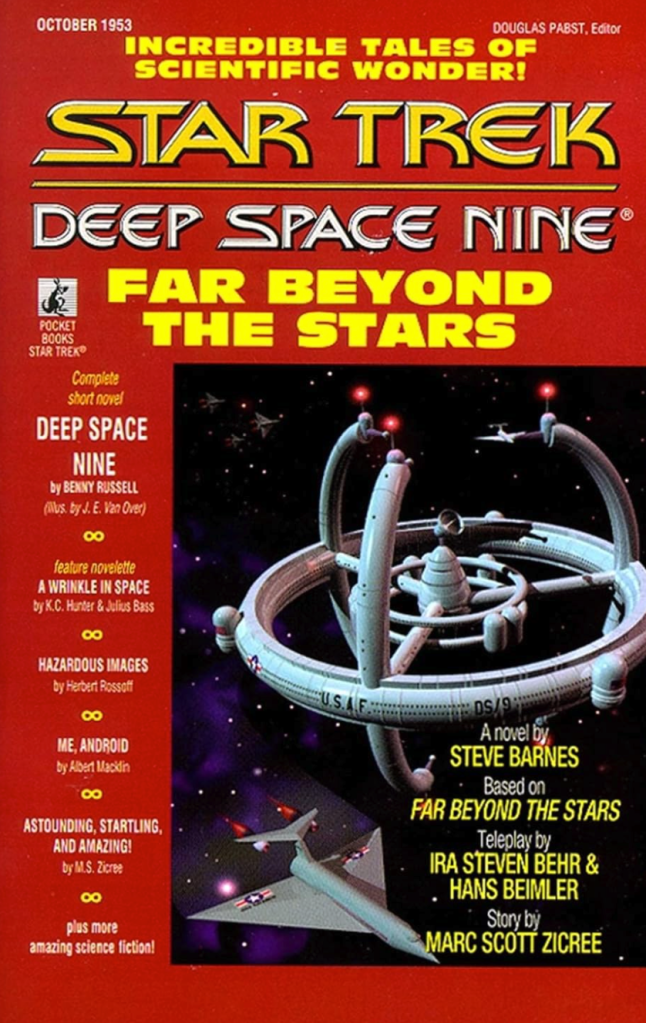
Malzberg focused on the pathetic without ever showing what we love about science fiction. His novel could have been elevated by showing Malzberg/Herovit’s passion for the genre. Far Beyond the Stars by Steven Barnes is a recursive science fiction novel that does just that. The story is a novelization of a Star Trek: Deep Space Nine episode where the DS9 crew are shown working at a 1950s science fiction magazine much like Galaxy Science Fiction. The story criticizes the racism in the genre back then yet still shows a love for science fiction.
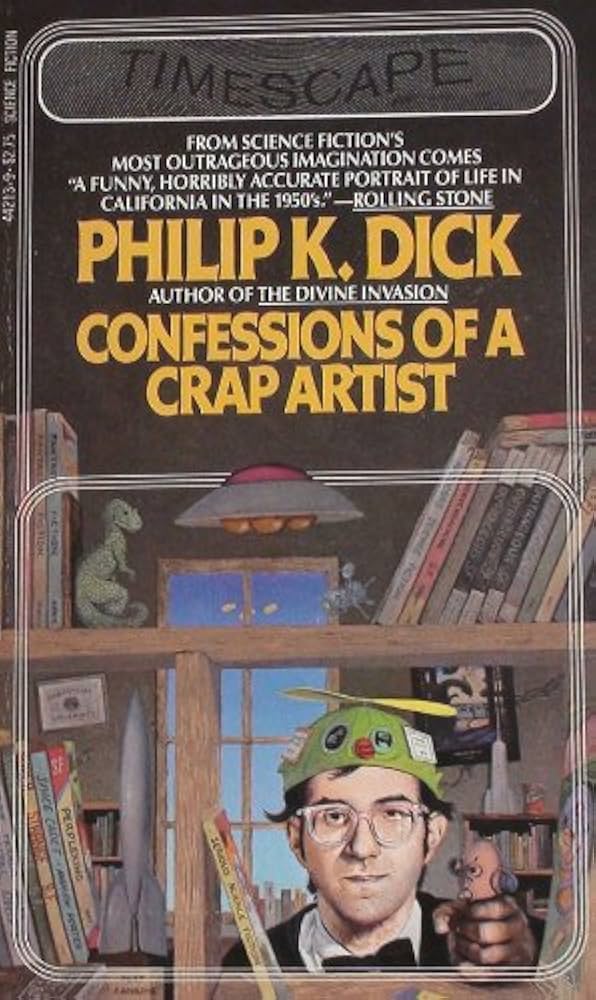
No matter how much I criticize science fiction, I can never forget how much Heinlein’s juveniles meant to me as a kid. I could write a satire on the genre, but I hope I wouldn’t do what Malzberg did in Herovit’s World, by making it all feel slimy and depressing. One reason why my favorite Philip K. Dick novel is Confessions of a Crap Artist is even though it criticizes science fiction fans, it does it with love. It’s a superior recursive science fiction novel.
Parable of the Sowers by Octavia E. Butler is a classic post-apocalyptic science fiction novel from 1993. It’s one of the best stories to read if you want to contemplate America collapsing from economic inequality. Most post-apocalyptic novels begin during the collapse or a short time after and are about the characters struggling to survive. The Parable of the Sowers is different. It starts in the early stages of collapse, so it’s technically a pre-apocalyptic novel. The rich still have civilization, but chaos is moving up from the poor, into the middle class. It begins with the fear of the coming apocalypse.
The Parable of the Sowers should offer a great panel discussion topic at a preppers’s convention. Most preppers picture themselves surviving when others don’t. They imagine grabbing their bug-out bags and heading to the hills where they own a private redoubt to make their last stand. Many post-apocalyptic novels start with tens of millions dying, making more room for those struggling to survive. Octavia Butler’s book imagines a collapse without a huge population die-off. Her scenario has millions clogging the highways fleeing collapsing cities.
Owning an AR-15 and backpack stuffed with survival food and gear won’t get you far. In fact, anyone with anything will be a target. That was also true in Cormac McCarthy’s The Road. Reading Parable of the Sower is about as depressing as reading The Road. However, Butler adds one twist that’s different from other post-apocalyptic novels.
The Parable of the Sower is the journal of Lauren Olamina who wants a reason to survive when all around her are dying. She redefines God to explain the horrors she’s experiencing. In fact, she begins writing a book that will eventually be called Earthseed:The Books of the Living. Lauren quotes from Earthseed to head her journal entries. Lauren decides God is change and our purpose is to shape God. Don’t get turned off by the religious angle of the book, most of the story is about survival. There is a sequel called Parable of the Talents. The story was planned as a trilogy, with additional books, but Butler died before finishing it.
Parable of the Sower begins with Lauren a teenager living in a gated community. Her father is a black Baptist minister, and her mother is a deceased drug addict. Her father has remarried and Lauren has three step-brothers. The novel begins in 2024 when Lauren is 15 and ends in 2027 when she is 18. The first half of Parable of the Sowers is about how the people in Lauren’s gated community survive while watching the world outside their walls fall into chaos and violence.
Butler’s book was written thirty years before the time it describes, which happens to be our now. Butler describes living under a president named Donner who has many similarities with Donald Trump. The reason this novel is so powerful is because it feels relevant and all too relatable. It’s exactly the kind of science fiction I consider serious speculation.
Lauren’s father is a leader of the community populated by white, black, and Hispanic people. He teaches both spiritual hope and how to use guns. Lauren doesn’t believe in his God and creates a science fictional religion to give her hope for the future. By the time the poor finally overrun her gated community, Lauren is 18, and the sole survivor of her family. She must survive alone among the hordes fleeing southern California. People survive any way they can, often by robbing each other. The most desperate set fires to force people out of their homes, robbing and killing them as they flee.
Any successful work of science fiction must tell a compelling story about a character or characters we care about who overcome their limitations. The act of reading the story should feel transcendent. Butler succeeds very well at this level.
A great work of fiction will also have its own ontology and epistemology, and Butler puts that into her story. I’m just not sure how well it works. But I give her credit for trying. At least she recognizes that living through an apocalypse will inspire deep existential thoughts.
The best fiction is about surviving reality, but great fiction is about confronting God or the absence of God. I also believe Butler was aiming that high. Again, I’m not sure she succeeds. But it feels close.
I do have one major disappointment with the novel. Lauren’s mother was a drug addict using one of many new designer drugs. As a byproduct of her addiction, Lauren is born with psychic empathy. That makes fighting to survive in a dog-eat-dog world difficult. This affliction jazzes up the plot but detracts from the realism Butler paints.
Octavia Butler spent an afternoon with our Clarion West class in 2002. At the time, I had not read anything by her, but I had read about her. I wish I had read the works I’ve since read so I could have asked her many questions. Just another regret on my giant pile of regrets.
If I was pitching “Starfog” by Poul Anderson to a movie producer, I say “Two women are in love with Daven Laure, one is a spaceship computer and the other a mutant human who claims to be from another universe.” I also mention it’s a hard science fiction space opera dealing with a rare astronomical phenomenon reminiscence some episodes of Star Trek: The Next Generation on one hand with the scope and speculation of the Culture Novels of Iain M. Banks on the other.
“Starfog” is the last story in the seventh and final volume of the Technic Civilization Saga, the one called Flandry’s Legacy. (Available in paper, ebook, and audiobook at Amazon.) See the ISFDB.org listing of all the Technic Civilization stories here.
Theoretically, “Starfog” might make a good science fiction adventure movie if they could drastically reduce Anderson’s talky dialog and somehow make the characters endearing. I confess that I’ve never felt any emotional attachment to any of Poul Anderson’s characters. His science ideas are often epic, but his political philosophizing gets crusty.
The setup for the story is a compelling mystery. A spaceship is discovered with a crew that appears human, and despite their strange language, seem to have cultural hints of Earth’s past. But they claim they come from a different universe where space is radically different.
“Starfog” is set five thousand years after Earth achieves space travel according to Sandra Miesel’s chronology of the Technics Civilization stories in Against Time’s Arrow: The High Crusade of Poul Anderson. (You can check it out at Archive.org.) Paul Shackley writes about Miesel’s timeline here and updates it. Baen includes the timeline in the books of the series.
Daven Loure, and his intelligent spaceship Jaccavrie are explorers in a new galactic civilization of humanity called the Commonality. The other stories are about Van Rijn, David Falkayn, and Dominic Flandry written over four decades. I’m afraid the current covers of the books (see above) imply a different feel than the actual stories. However, older covers are just as cheesy.
“Starfog” doesn’t come across like these covers. It’s just a little less dignfied than the Analog cover from when it was first published in August 1967.
Although I haven’t read the series but from reading about the various stories, I’m guessing the quality of storytelling is somewhat like Larry Niven’s Known Space stories. I might read more of Flandry’s Legacy, which includes three novels, two novellas, and one novelette in the series.
However, Anderson’s stories don’t fit my current craving for science fiction. Everyday life in 2025 is wilder than fiction, wilder than science fiction. Sadly, “Starfog” just seemed dull in comparison. Events of recent years is making me rethink about science fictional futures. Most science fiction just doesn’t have the cutting edge of our ever sharpening reality.
Most science fiction is perfect for escaping from reality. But I’m craving the kind of science fiction that plays off of reality. Nothing I’ve found lately says anything about our present and near future. We need the kind of vicious writers who can extrapolate and speculate about our exploding society. Sharp tongue writers like Mark Twain, Gore Vidal, Kurt Vonnegut, Barry Malzberg, Oscar Wilde, Aldous Huxley, Jerzy Kosinksi, Dorothy Parker, George Orwell, Joseph Heller, and Philip K. Dick.
We don’t need science fiction that gives us grownup fairytales about the far future. We need writers that cane us about our head and shoulders like a great Zen Master. We need to read books that pistol whip us until we accept reality and reject our delusions.
I haven’t been reading science fiction lately. After years of gorging on the genre, I’ve suddenly had enough. I still have the urge to read SF, but I’m having trouble finding science fiction I want to read. I have quite a large TBR pile but none of its titles interest me. I’m in the mood for something different, but after reading thousands of science fiction novels and short stories, finding something different isn’t easy.
Has anyone read the Technic Civilization books by Poul Anderson? Yesterday, I was testing out a program to view old pulp magazines on my Mac and I randomly picked the August 1967 issue of Analog. It had a cover story for “Starfog” by Poul Anderson. I started reading it. I’ve only read a handful of Anderson’s novels and short stories and always avoided his book series. I avoid series books in general. I started reading “Starfog” and decided it was exactly something I’ve always avoided, so maybe it will be different.
But I wanted to hear the story. After some research on ISFDB.org, I discovered “Starfog” was included in Flandry’s Legacy, Book 7, the last volume of the Technic Civilization series. I only had three Audible credits left, but what the heck, I decided to give it a try. “Starfog” is a novella, but Book 7 includes three novels, three novellas, and one novelette of stories in the series. This could be a tremendous bargain if I like the series.
I’ll let you know what I think — hopefully soon. The other inspiration I had to find something different came from a YouTube video. Bookpilled had a moving account of discovering the books of Barry Malzberg just before he died. I have read a couple of Malzberg books and they were so-so. But he was very prolific and Bookpilled has convinced me I should give Malzberg another try. So I’m reading about his novels. I did have a few emails from Barry, and he recommended his horse racing novels and a couple science fiction novels. I’ve always found Barry’s books about science fiction more interesting. He was a sharp-tongue critic.
Maybe between Anderson and Malzberg, I’ll get back into science fiction. But things might be slow around here for a while. To be honest, I think the real world has gotten more science fictional than science fiction.
If you’ve read a science fiction story you feel is radically different from any science fiction you’ve read before, leave a comment below.
I imprinted on science fiction in the early 1960s. At that time, I considered science fiction to be PR for the space program. I fell in love with science fiction concurrently with Project Mercury and Project Gemini. I mostly read books by Robert A. Heinlein for the first few years, so colonizing the solar system seemed like humanity’s true purpose to me.
In 1968, I discovered Do Androids Dream of Electric Sheep? by Philip K. Dick on the new book shelf at the Coconut Grove Library in Miami, Florida. His science fiction wasn’t about promoting space exploration. By then I had discovered the counter-culture, and PKD made a different kind of sense.
I started college in 1969, but in the fall of 1970, I dropped out because the university I was attending required ROTC, which I was willing to take, but the ROTC insisted I cut my hair, which I wasn’t willing to do. In 1971 I switched to a two-year technical school to study computers.
I was uncertain about my future and the future in general. My indecision led to reading 479 science fiction paperbacks in 1971 and 1972. That was another kind of education. I made friends at the local science fiction club and started publishing fanzines and going to cons. However, by the end of 1975, I was tired of science fiction and gafiated from fandom.
I just finished reading Eye in the Sky, an early novel by Philip K. Dick that was first published in 1957 as a cheap ACE paperback. It was vaguely familiar, and when that happens I assume it’s because it was one of those SF novels I read back in 1971-1972. Back then I consumed SF paperbacks like a stoner eating a bag of chocolate chip cookies. Each book was a momentary distraction from my confused life of not wanting to grow up. Each book provided escapism until I finished it and started the next one.
I spend more time thinking about what I read at seventy-three. Also, my world is very different than it was fifty years ago. In some ways, I’m no different, I’m still trying to figure out what I’m supposed to do with my life, but it is different because the perspective of the future at 23 and 73 is drastically different. I’ve thought a lot more about Eye in the Sky this time.
In the 1970s, I judged science fiction on how well it speculated on the near future, especially regarding space exploration and technology. I thought Philip K. Dick was so poor at this that I didn’t consider him a real science fiction writer. I classified him with Ray Bradbury and Kurt Vonnegut.
In the 2020s, I value Philip K. Dick for insights I never could have imagined back in the 1970s. Eye in the Sky asks us to imagine reality being shaped by subjectivity. In the story, eight people are involved in an accident. When they come to, the world is similar, but religion works instead of science. Eventually, they discover that the world is controlled by the thoughts of one of the eight. When the person controlling reality dies, they find themselves in another world but shaped by the mental perspective of another member of the eight.
This setup gives Dick a chance to explore the idea of subjective reality. What amazed me in this reading, is Dick covers all the themes in this early novel that he would later explore in all his other novels. I’ve always divided PKD’s books into three periods. The 1950s and early 1960s, the 1960s, and the 1970s novels. For example, Dick’s Valis novels of the 1970s explore Gnosticism. Well, Dick might not have known about Gnosticism in 1957, but Eye in the Sky reflects its ideas. Eye in the Sky also anticipates his paranoid reality-bending novels of the 1960s.
On the whole, I enjoyed Eye in the Sky, but it’s not without flaws. The story seems to promise eight stories about eight different realities because of the eight characters involved, but we only get to visit four realities. PKD skipped out on the four perspectives I wanted to see the most. We’re shown the realities of Arthur Sylvester, Joan Reiss, Edith Pritchet, and Charlie McFeyffe.
Our protagonist is Jack Hamilton. We never get his take on reality. But since he’s the main character should we assume the overall story is told from his perspective? It would have been fun to see how his subjective perspective differed from the external reality. I also wanted to see Marsha Hamilton’s reality, Jack’s wife. And most of all, I wanted to see Bill Laws’s reality because he’s African American and a Ph.D. student in physics. Black characters were rare in 1950s science fiction. And it would have been interesting to see David Pritchett’s reality since he was a young teen.
The reason why Eye in the Sky is so much better in my seventies is I see that reality is fought over by many different subjective perspectives in the 2020s. We were just as politically polarized back in the 1970s, but I was young and less aware of how other people thought. Back then I thought everyone was basically the same but with slightly different ideas about reality. Now, I realize that the umwelt of everyone is quite different.
Both then and now, I believe there is an external reality. I’m not one of those woo-woo people who think reality is unreal. I could be wrong, but I’m betting on an external reality and people are crazy. I really don’t want reality to be crazy. I do believe our view of reality is subjective. That we can never perceive the fullness of the external order.
Philip K. Dick in Eye in the Sky imagines reality is mutable, shaped by minds. I hope this doesn’t give anything away, but the eight characters do return to the reality they were in before the accident. Is that PKD affirming my idea that we live in an external reality that is universal? PKD wrote over forty more novels and over a hundred short stories that keep suggesting otherwise. At the end of his life, Dick seemed to believe in a gnostic view of reality, where we lived in a reality created by an evil god, and there’s a higher reality beyond this one, maybe ruled by a kinder diety.
Strangely, in my seventies, I find stories by Philip K. Dick to be comfort reads. His stories are compelling, told with prose that has the right mixture of dialog and detail for a pleasant reading pace. I find it interesting how his characters bash around in reality, struggling to find meaning.
Back in 1970 when I dropped out of the university, my father had died that May, the draft was looming over me, and my mother was nagging me to go to work if I wasn’t going to go to school. I was living in a new city and had no friends. Each science fiction book I read was an escape into a different reality.
Of course, reading science fiction in my seventies might be about trying to escape another reality, of getting old and dying.
Looking back I wonder what life would have been like if I hadn’t gotten addicted to science fiction. I could have cut my hair, finished a four-year degree in physics and astronomy (my childhood fantasy), and joined the Air Force as an officer (my father’s fantasy). Or I could have kept my hair and focused on computers and gotten a job at a Unix site with other long-haired computer geeks. Instead, I read science fiction and fantasized about going to Mars, which was just as crazy as the folks in Eye in the Sky.
Of course, thinking about what could have been, or could be, leads to the madness of PKD.
At a minimum, The Crystal World by J. G. Ballard was an entertaining cozy catastrophe that I was always anxious to get back to reading. What compels me to write this review is figuring out why. The prose is vivid, propelled by a moderately interesting mystery. However, its characters are rather bland but then so are ordinary people. In the end, the story faintly alludes to something, but what?
What elevates this novel is trying to understand how it works. Its Heart of Darkness vibe feels biblical, spiritual, or at least existential. Reading The Crystal World makes me ask why we read fiction. Why are humans addicted to fiction and how does that addiction affect our brains? I do this because I’m also reading Stephen Greenblatt’s The Rise and Fall of Adam and Eve, a nonfiction work that says a great deal about fiction.
Any hardcore bookworm will recognize The Book of Genesis as a genius work of fiction. I also think it’s a brilliant work of speculative fiction. Its author felt challenged to imagine how Earth and life on Earth began. Genesis was written well before the concepts of history or science. The author obviously knew of humans living in cities, and those that farmed and herded animals, the author could even have heard that there were places where humans were hunters and gatherers. And from that knowledge speculated that there was a time when humans lived like animals. The author of Genesis even realized there might be a time when humans didn’t have a language. The author pictured Eden where humans lived in harmony with nature before we became different. The obvious question became: What made us change? The obvious answer was, whatever made everything else. Then the question becomes how. Doesn’t eating from the Tree of Knowledge of Good and Evil make a lovely allegorical explanation?
Do you see why I consider The Book of Genesis an early example of speculative fiction? And isn’t the story of Noah and the Flood, an early apocalyptic tale? Stephen Greenblatt makes a good case that the author of The Book of Genesis cribbed his ideas from much older Babylonian tales. We’ve always had storytellers and writers who tried to explain reality. However, this makes me wonder about modern writers and storytellers. What are they trying to explain?
Billions of humans have believed in the literal story of Genesis. That story says a lot about fiction and its impact on us. The early fathers of the Christian Church tortured the Book of Genesis for centuries producing endless interpretations. That’s a great example of literary criticism gone wrong.
I bring up Greenblatt’s book because we must ask certain questions about the fiction we read. The first question is: Does it have anything to say? In most modern works of fiction, the answer is no, but not always. If the answer is yes, is the fiction allegorical, satirical, literal, comical, historical, romantic, academic, philosophical, speculative, etc. Of course, the last question: Shouldn’t we abandon fiction for nonfiction if we have something to say? Even when fiction is about saying something, it’s often indecipherable.
I’m getting old, and I worry I’ve wasted too much of my life on fiction. I fear that fiction has no value other than as an entertaining way of killing time, and since time is running out, that’s bad.
Reading The Crystal World made me wonder if J. G. Ballard had something to say, or was his novel was just meant to be entertaining? To complicate the answer, The Crystal World is an early work of New Wave science fiction, published before the term was coined.
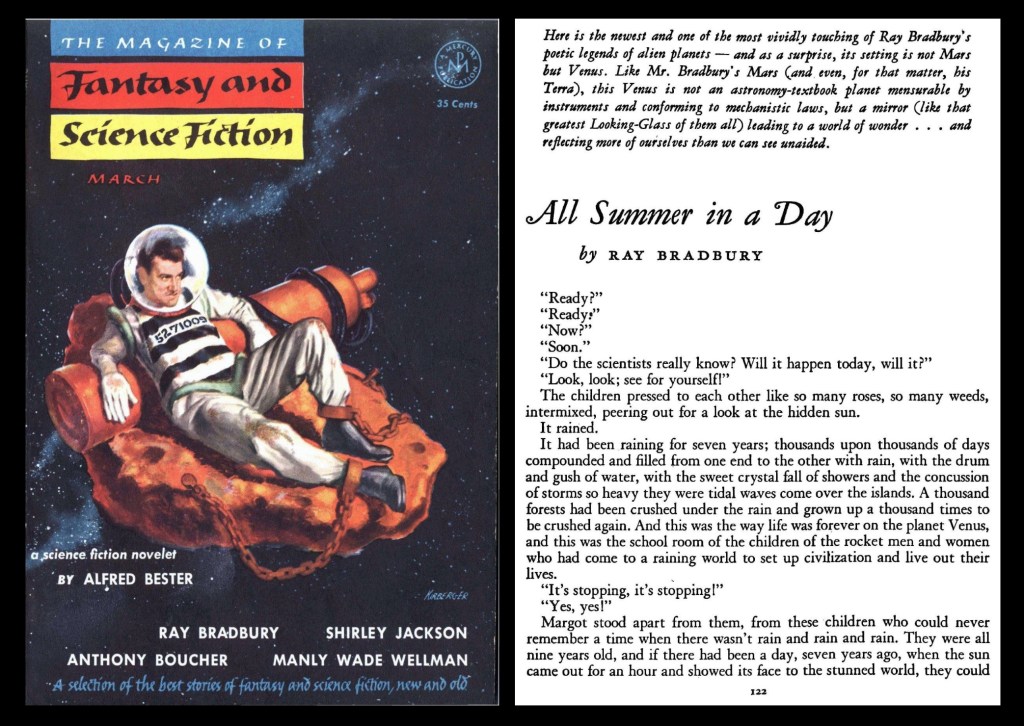
As evidence, I reprint below Judith Merril’s “Books” column from the August 1966 issue of The Magazine of Fantasy and Science Fiction. Merril recognizes that science fiction is changing in 1966, and has something to say, and that J. G. Ballard might be leading the way.
The older I get the harder it gets to find science fiction to read. I roam up and down the decades looking for worthy books I’ve missed. With each book that still succeeds on any level, I ask why? Such revelations help me squeeze every last drop of wonder I can out of the genre.
I sometimes wonder if reading fiction hasn’t been a wasted diversion. On the other hand, I wonder if processing fiction hasn’t been my life’s work.
Reading The Crystal World made me think about the power of fiction to temporarily suggest that a made-up story could be true. This isn’t true of all fiction. Some writers can use narrative techniques that convey a sense “that this really happened” more than others. I’m not claiming that The Crystal World is a brilliant work of realism, but it does use such techniques. And I thought they were the same techniques H. G. Wells used with The War of the Worlds.
The primary technique is using an eyewitness POV. The second technique is telling the story in linear time. The third technique is avoiding fancy prose or embellishments. If the prose feels like reporting events the story will feel real.
The Crystal World is about a science-fictional infection that alters plants and animals. This infection has hit the Earth in several places, much like how the Martian canisters land around the globe in The War of the Worlds. But our narrator, Dr. Edward Sanders doesn’t know this. He learns about one site slowly, by word-of-mouth, as people did before being connected to the internet.
Dr. Sanders lands at Port Matarre on a riverboat steamer from Libreville, in the Cameroon Republic of Central Africa. Dr. Sanders wants to visit two friends, Max and Suzanne Clair, who run a leprosy clinic further upriver. Dr. Saunders works at a leper hospital in Fort Isabelle and is in love with Suzanne Clair.
The story feels like Joseph Conrad’s The Heart of Darkness. At Port Matarre, Dr. Sanders finds it difficult to go any further. The police and army have put up a blockade around the infected area but don’t explain why. At first, Dr. Sanders has no idea of what’s happening, but something mysterious is occurring in the jungle.
I’ve only read Ballard’s novel The Dround World and Vermillion Sands, a collection, and less than a dozen short stories from anthologies. Ballard is great at creating an atmosphere. The Crystal World suggests a plague infecting reality spreading across the galaxy, even the universe, which affects time and consciousness. It’s not much of an idea, as science-fictional ideas go, but it is different.
However, what if The Crystal World was the only text found from our times, thousands of years from now like The Book of Genesis is to us. Would future humans imagine it as an allegory for something that happened to us? Would some think it described a literal event? Would the author of Genesis ever imagine billions of future humans believing their speculation was absolutely literal?
Fiction is like dreams, they both feel like they’re about something. Dreams are supposed to serve some kind of biological/psychological function. Is that true of fiction too? The authors of The Bible intended it to mean something. But millions of books and sermons have been created to explain The Bible and we’ve never agreed on any of them. The Crystal World is entertaining because it triggers that mechanism in our brain that fools us into believing we’re making sense of reality, the same mechanism that processes religious works, political news, or even gossip.
If I were a Zen Master or an intelligent robot, I’d discipline myself to ignore that delusion. The ancient Church fathers decided that eating from the Tree of Knowledge of Good and Evil, was the origin of sin, and the downfall of mankind. I believe the allegory could also explain our addiction to fiction, and I include religion as a genre of fiction. Both drive us crazy. The faithful use scripture to explain reality, while we heathens use novels.
In Eden, we wouldn’t have needed novels or scriptures.
Science fiction writers can’t predict the future but some aim to speculate on times to come by extrapolating current trends. One of the most famous SF novels to do this was Stand on Zanzibar by John Brunner, his 1968 novel that anticipated the world of 2010. Bruce Sterling’s 1996 novel Holy Fire tries to imagine life in 2096 via speculation and extrapolation. Do I recommend it? That’s hard to say, even at the current Kindle price of $1.99.
How self-aware are you regarding the selection of the science fiction you read? Does your mind crave a tightly plotted story? If so, Holy Fire by Bruce Sterling might not be for you. Or do you love reading novels with characters you care about, even identify with, and want to vicariously live their fictional adventures? Again, Holy Fire might not be your cup of tea. If you are the kind of science fiction reader who resonates with dense science fiction speculation, reading Holy Fire should definitely be for you.
We judge such speculative fiction in two ways. Does it jive with our own efforts to imagine the future, and now that the novel is almost thirty years old, how well has it done so far? Evidently, back in 1996, Sterling saw that medical technology, changing trends in family size, and population demographics would lead to a world where there were far more old people than young people. The exact opposite of the Baby Boom generation I grew up with. All the current 2024 demographics point to such a future.
Sterling solved the overpopulation problem that many science fiction writers before him saw by having a great pandemic in the 2020s. And he imagined that networks, artificial reality, and artificial intelligence would reshape society. Instead of predicting gloom and doom like so many science fiction novels from the late 20th century, Sterling imagines a near-liberal utopia and a post-scarcity society. The problems faced by the characters in this novel divide between the old and young. The old strive to find purpose with an ever-lengthening lifespan, while the young feel crushed under the weight of a gerontocracy that advises the youth to learn from their experience and live longer.
Because humans have been trying out medical life-extension procedures for decades, a growing percentage of the population is old. These elders have the wealth and power and dominate politics with their gerontocracy. Mia Ziemann, Holy Fire’s protagonist, is 94 at the start. Because she has led such a cautious life and is in such good shape, the medical establishment offers her the latest life extension treatment, one that goes way beyond any previous effort. The procedure is so arduous, that it can be fatal. Mia comes through the process and now looks 20, although some of her memories are gone.
Mia’s doctors consider her an expensive experiment and legally bind her to them for years of research. Mia runs away to Europe and hides as an illegal alien, living among a youthful bohemian crowd of revolutionaries. She changes her name to Maya. On nearly every page of Holy Fire, Sterling speculates about the future evolution of society, technology, and politics. Strangely, climate change is never brought up. But then, Holy Fire came out a decade before An Inconvenient Truth.
Sterling doesn’t focus on space flight, but it happened. The focus of the story is finding meaning in everyday living on Earth. Dogs and other animals have been uplifted, and talk with computer-aided voices. Governments take care of the needy. People use public transportation. People engineer their minds with designer hormones and neural transmitters. And the net and virtual reality is everywhere. Holy Fire makes me think that Bruce Sterling had abundant optimism for the future in the 1990s. I used to have such liberal optimism but it was crushed in 2016.
Sterling’s future is not quite a utopia, because segments of the population are discontented, especially the young who are too brilliant for their own good. That’s the crowd Mia/Maya, embraces. They want the freedom to fail.
Sterling calls Mia/Maya and others in this book posthumans, and that’s where this story shines. His posthumans aren’t silly comic-book superheroes like in many 21st-century SF books. Virtual reality is toned down too from 21st-century SF stories of people downloading themselves into virtual realities. Sterling tries to stay reasonably realistic and scientific. Holy Fire reminds me of the dense speculation in John Brunner’s Stand on Zanzibar. Sterling doesn’t take it to narrative gonzo extremes like Brunner.
Holy Fire is a somewhat picaresque novel, with one reviewer comparing it to Candide. Of course, Candide is considered a broad satire, and I’m not sure that’s true of Holy Fire. I didn’t read it that way, but I could see how a filmmaker could present Holy Fire as a satire. The novel attempts to be transcendental, you might have guessed that from the title. The youth rebellion in Sterling’s 2090s is like the 1960s involving art, music, drugs, and mind-expansion — adding networking, AI, and AR.
The problem with picaresque novels is they are episodic. The hero is exposed to a series of people and subcultures, and that’s what happens to Mia/Maya. There are so many different characters it’s hard to keep up with them or even care about them. Most of the story is about how they impact Mia/Maya, whereas I believe a novel about a 94-year-old woman becoming 20 again should be about her inner transformations.
Mia is an uptight old lady who protects herself by hiding from life, and Maya is a free-spirit young woman giving everything a try and throwing all caution to the wind. We are told that Mia lost some of her memories, but would she lose all wisdom from living to 94?
Response to Holy Fire is all over the place. Hundreds at Goodreads gave it five stars, a few more hundred gave it four stars, but plenty of folks just didn’t care for the story.
Reviews were also mixed. Tom Easton in “The Reference Library” for the March 1997 issue of Analog has this to say:
Norman Spinrad’s “On Books” from the August 1997 issue of Asimov’s Science Fiction also compares Holy Fire to William Gibson’s Idoru but comes to a different conclusion. Both novels are later cyberpunk works from the two leading founders of the cyberpunk movement, so it was logical to review them together. Spinrad is the more insightful of the two reviewers.
That Damien Broderick and Paul Di Filippo would recommend Holy Fire as one of the best SF novels from 1985-2010 is high praise. But why don’t I hear more about this novel after all these years? My assumption, is most science fiction readers don’t particularly care for serious speculation about the future and would prefer to read stories that compel you to turn the pages because of tight plots and characters they care about.
This is my second reading of Holy Fire. I first read it when it came out from the Science Fiction Book Club. I bought it then because its plot sounded similar to a 1926 novel I was trying to find, Phoenix by Lady Dorothy Mills. That book was also about an old woman undergoing a rejuvenation process and then running off to Europe to join a bohemian crowd. I finally found Phoenix several years ago and it’s more of a love story than science fiction. I need to reread it and compare the two.
For my second reading, I listened to it on audio. I’ve started rereading it again with my eyes. I never developed an emotional bond with Holy Fire like I have with the novels I consider my favorites. However, I admire it intellectually. It could have had the emotional impact of Flowers for Algernon because Mia/Maya goes through a similar arc of intellectual development. We just don’t see her experiences as tragic.
I think Sterling tried though. Throughout the novel, Mia/Maya experiences epiphanies that should have had a deep emotional impact. To me, they were just intellectually interesting. The ending should have been profoundly spiritual, like something from Hermann Hesse. Instead, it just seemed like a logical way to end the story. The choices Mia/Maya and her former husband, Daniel made in the end are vivid, even dramatic in concept. That just didn’t make an emotional impact on me. I assume Bruce Sterling wanted the ending to be an emotional epiphany. The ending does say a lot about how a posthuman would react to becoming posthuman.
Please leave a comment if you’ve read Holy Fire. I’m curious if you had an emotional response to the story. I found it intellectually exciting. I would recommend it on that level. However, it didn’t touch me, so I’m hesitant to say it’s good. I gave it four stars on Goodreads.