A family sitting on a grassy Earth cliffside, looking at a glowing holographic bubble of Mars and the stars.
Science fiction writers can’t predict the future, but they love to imagine possibilities. For the most part, readers know they are just reading stories, but science fiction has given them certain concepts that they want to believe will come true. Three of the most popular memes that have been passed down over centuries are space travel, aliens, and robots.
Science fiction has also warned us about futures we want to avoid. The genre offers a spectrum of visions ranging from horror to hope. We don’t want War of the Worlds by H. G. Wells to come true, but many would find Carl Sagan’s vision in Contact to be wonderful.
Most science fiction fans know they read to escape ordinary lives, but a few hoped some of the things imagined by science fiction would come to be, even hoping in their lifetimes. Things like space travel, colonizing the Moon and Mars, first contact, robots, artificial minds, and life extension.
The robots and artificial minds of 2026 are almost like what we read about, and in the next few years, might catch up with science fiction. Many real robots surpass the abilities of the robots we saw in Forbidden Planet and Lost in Space. And real robots are way beyond the clunky robots we saw in The Twilight Zone. I’d even say modern robotics has evolved past most of the robots in early Asimov stories. We haven’t gotten Data or R. Daneel Olivaw yet. But I’d say they are within the realm of possibility.
For some reason, humans have long wanted to create intelligent companions. You can trace these desires back to folk tales and myths. But now that this dream is about to come true, will it make us happy?
Science fiction also dwells on aliens, alien invasion, and first contact. Again, this says something about our sense of aloneness in the universe. However, meeting aliens depends on science fiction’s prime hope, space travel.
With NASA and SpaceX, you’d think I’d give space travel an A+ too, but I don’t. I’m afraid I’m going to give science fiction a fail. It’s almost certain we won’t go to the stars. We might make it to Mars, but I doubt that we will stay there. My bet is we’ll screw around on the Moon for several years, maybe send a few crewed missions to Mars, and then decide space exploration isn’t very desirable at all. That is, at least for humans.
All the nearby real estate outside of Earth is only suitable for robots. Robots don’t breathe or eat, and they don’t mind the extreme cold and heat of space, or even the radiation. Since they don’t need to carry a biosphere with them, it makes it much easier for them travel in space. More than that, they can handle voyages of years or even centuries. You have to wonder if evolution is working here. That robots are our evolutionary descendants.
Science fiction has glamorized outer space. Years ago, I was talking with a young woman who told me she was a science fiction fan. I asked her if she wanted to be an astronaut. She said, “No way!” But she went on to say she’d love to travel in space like Captain Picard and crew. I told her a spaceship like the Enterprise will probably never exist. She replied, “That’s depressing, so I don’t want to go, then.”
I’m pretty sure space travel, even the limited travel within the solar system that we see in The Expanse, is nearly impossible. The millions of would-be Mars colonists who put their faith in Elon Musk will beg to go home not long after they land on the Red planet.
I had Notebook LM collect a bunch of articles and videos about colonizing Mars and traveling to distant stars. Strangely, it found one of my blog posts that I had forgotten I had written. See “What If Science Fiction Is Wrong About Space Travel?” I often forget what I write, and the same inspiration often returns. I end up writing a new version of my thoughts. This post is one example.
I was inspired to start this research when several YouTube videos showed up in my feed. (See some of them below.)
These videos made me contemplate why I didn’t want to believe them. A lifetime of reading science fiction made me assume sooner or later we’d colonize the solar system and then the galaxy. I thought that gave humanity an existential purpose. I justified this need by believing humanity needed to back up our species on other worlds.
For decades, I’ve known these hopes were naive and unscientific. They were my narrative fallacy. I always wanted to maintain these beliefs first acquired in childhood, using confirmation bias by finding supporting evidence.
A lifetime of reading science fiction has made me ignore the reality that Earth is our only home. I again come to the same final thought as I did in my first essay, and one Notebook LM latched onto: “Yet, reality suggests we’ll eventually bang into the glass walls of our aquarium. I wonder what science fiction will speculate on then.”
Can science fiction imagine possible futures where we stay home for millions of years and develop a healthy relationship with Earth and nature? Will such stories be as exciting and inspiring as current science fiction? Solarpunk and Hopepunk aim to offer hope, but they still see us as space-faring creatures. Is that real hope, or false hope? Should genuine hope be realistic?
Resources:
Notebook LM created a podcast from all the research articles it collected for me. It’s quite impressive, especially when you think an AI created it. It’s actually very science fictional.
I’ve had this fantasy for the last few years, since the beginning of the AI boom, of creating a Philip K. Dick chatbot. I envision finding a local LLM with a huge upload capacity. Currently, Claude allows for up to 30 megabytes in a maximum of 20 files. That’s not nearly enough for my fantasy.
According to Wikipedia, Dick wrote 45 novels and 121 short stories. I’d want to include all of those, plus all the letters I could find. I currently have a five-volume set of his letters, but unpublished letters might be available. I’d also include all the biographies on PKD, as well as every interview I could find. Then I would track down every review and critical work. Also, add every photo I could find of him and those of anyone he knew. I’d also want to include books that we know PKD read or studied. And the memoirs of his wives or the people who knew Dick. Finally, I’d include any Wikipedia entry on topics Phil liked to discuss. That could easily end up being over a thousand files, and who knows how much disc space they would take up.
Here’s the thing. I run into a roadblock with my fantasy. When I begin to fantasize about chatting with this artificial Phil, I have doubts about the project. I know AI Phil can not be trusted to say the same things that human Phil would have said. But theoretically, this AI chatbot should be an expert on PKD.
I think I would need to rename this AI. I’d call it Jack Isidore. That’s the protagonist of my favorite PKD novel, Confessions of a Crap Artist. Phil created Jack, so I would use Jack to recreate Phil, to be the ultimate scholar on PKD.
To test Jack’s ability, I would give the AI this prompt:
Write a 200,000-word biography of Philip K. Dick. Tell his story day by day as much as possible working in as much verifiable details as possible. Where you don’t have good validation of source material, but there is good reason to speculate, give us the most reasonable assumption and state why. Describe the writing of each of his work and why he wrote them. Relate any of PKD’s life experiences that inspired his fiction. Do not hallucinate.
I’ve read several biographies on PKD, and a handful of memoirs by wives and friends. I’m curious if I will be able to properly judge Jack’s biography of PKD. Would it be more insightful than any biography written by a human? Would we learn anything about Phil that we didn’t know, but feel might be an undiscovered truth about him?
Mostly, I’ve wanted a PKD chatbot to discuss Phil’s stories. Dick’s books are like comfort food for me. I read them when I’m tired of dealing with reality. They are wildly creative, and I often wonder what PKD is implying in his stories. Was he just making shit up, or were creations commentary on experiences in his life? Was he being silly or serious?
Philip K. Dick was a guy I wish I had known. Talking with him would be fascinating. There’s always a chance that an AI chatbot would be a decent substitute. It would be fun to try.
It would also be fun to say, “Jack, tell me a new PKD story.”
Humans have created artificial realities long before computers. I define artificial realities as cognitive models that claim to describe reality that have no basis in reality. In crude terms, it’s shit we make up, believe to be true, act like it’s real, but isn’t. I like Philip K. Dick’s definition of reality: “Reality is that which, when you stop believing in it, doesn’t go away.”
Science fiction has created a number of artificial realities we hope will become real. One desire is for a galactic civilization, or galactic empire. Often with artificial realities we try to make them real. For centuries traveling to the Moon was an artificial reality. Then it became real on July 20, 1969.
When I read “Foundation” by Isaac Asimov I wondered if he was ground zero for the idea of a galactic empire? I knew there was earlier science fiction stories that imagined the galaxy occupied by other intelligent beings. And there were stories about humans exploring the galaxy, and even having wars with other intelligent beings. But had any writer imagined humans colonizing the entire galaxy?
Today, that idea firmly exists as an artificial reality in our culture. Many people assume in the future humanity will spread across the Milky Way. It’s a kind of faith. We see it especially in Star Trek and Star Wars, but also in books like the Culture series by Iain Banks.
Like any artificial reality, I assume one person got the ball rolling. Was that Isaac Asimov? Like all the famous explorers looking for the source of the Nile, I wonder if I can find the source of galactic civilizations or galactic empires.
The oldest surviving artificial realities are myths and religions. Artificial realities start in one mind as ideas, and are spread as memes. Each person who spreads the memes mutates the artificial reality slightly. That’s why there were many forms of Christianity in the first century, and why they are so different from all the forms of Christianity in the twenty-first century. Reading books about the origins of Christianity or how the Old Testament came into being is a black hole of fascinating research.
In 2015 and 2025, I tried to reread The Foundation Trilogy. I’m embarrassed to admit this, but I just hated that much-loved science fiction classic. In both attempts, I couldn’t get past the first book. All I could focus on were its flaws.
That bothered me. Was I being unfair to the book? What was I missing that so many readers found in this story? When Paul Fraser came up with a great idea for a group read at the Best Science Fiction and Fantasy Short Fiction Facebook group, I decided to give the trilogy one more chance.
Paul suggests we read The Foundation Trilogy as it was originally published in Astounding Science-Fiction back in the 1940s. That gave me an idea. I would read the stories in the order they were published. I would seek to enjoy them as the fans originally did, as they were published one by one in Astounding Science-Fiction. Furthermore, I would try my damndest to get what Asimov was doing.
Wikipedia nicely lays out the publication history of the Foundation Trilogy in this table:
Collections
Astounding Science Fiction
Published
Book title
Story retitle
Original title
Published
Original trilogy
1951
Foundation
“The Psychohistorians”
—
“The Encyclopedists”
“Foundation”
May 1942
“The Mayors”
“Bridle and Saddle”
June 1942
“The Merchant Princes”
“The Big and the Little”
August 1944
“The Traders”
“The Wedge”
October 1944
1952
Foundation and Empire
“The General”
“Dead Hand”
April 1945
“The Mule”
“The Mule”
November 1945 December 1945
1953
Second Foundation
“Part I: Search by the Mule”
“Now You See It…”
January 1948
“Part II: Search by the Foundation”
“…And Now You Don’t”
November 1949 December 1949 January 1950
In the 1960s, I read The Foundation Trilogy when I bought the one-volume edition from the Science Fiction Book Club. At the time, I was unaware that many of the classic science fiction stories I was reading in book form were first published in magazines. Nor did I know about the concept of the fix-up novel. I didn’t question what I read. I just consumed it. (I recently wrote about this in “Reading at 13 vs. 73.”)
I can remember how thrilled I was by the first story, “The Psychohistorians,” which was set on the planet Trantor. And I liked all the pseudo-encyclopedia intros. The other stories didn’t stick with me. I remember the trilogy as an epic idea and visualized Trantor and Terminus existing in a galaxy with humans living on twenty-five million worlds.
In 2015, I reread Foundation, the first book in the trilogy. By then, I knew all about pulp magazines and fix-up novels. Foundation was obviously five separate, standalone stories. The first story was again impressive, the second was still interesting, but the rest were tedious. I was shocked that this famous book was so annoying to read. I gave it one star on Goodreads. I didn’t go on to reread the other two books.
Over the years, I’ve talked to so many science fiction fans who loved The Foundation Trilogy. It was the first series to be given a special Hugo Award. Recently, I watched a YouTube video about the Top 20 SF Series, and The Foundation series came in fourth. (Really, it was second after Dune. #1 were Star Wars books, and #2 were Star Trek books, and I don’t consider them a proper SF series. The host said that 20 million copies of The Foundation series have been sold.
So, why don’t I like it? And why did so many people love it? Was it because it first instilled the artificial reality of galactic civilization into their minds? This made me wonder if I could put myself in their shoes as they read the Foundation stories.
To get into the character of a 1940s science fiction fan, I intentionally skipped the first story in the book. I began my reading with “Foundation” from the May 1942 issue of Astounding Science-Fiction. I wanted to feel like I was living back in 1942, encountering the series for the first time. To see if Asimov rewrote the story for the hardback, I read the magazine with my eyes, but listened to the story with an audiobook edition.
In creative writing classes, we’re urged to start our stories in the middle of the action to avoid boring the reader with introductory material. This is exactly what Isaac Asimov did. However, when Asimov published Foundation as a book, he wrote an introductory story, “The Psychohistorians.” Out of the nine short stories, novelettes, and novellas in the Foundation Trilogy, “The Psychohistorians” was my favorite.
Asimov opened “Foundation” with this introduction on the first page. This is how we learn about Hari Seldon and his plan. This is how the series began in 1942, in just thirteen short paragraphs. We never see Trantor or meet Gaal Dornick. Our first real character is Salvor Hardin. In the book form, “The Psychohistorians” replaced this intro.
Most readers assume Asimov had just become a better writer by the time he wrote “The Psychohistorians” for the hardback. I’m not so sure. I feel I loved “The Psychohistorians” so much more because the Empire was more interesting than Terminus. Trantor is far more fascinating than any other setting in the trilogy. Asimov has claimed that the series was inspired by his discussions with John W. Campbell, Jr., and reading The History of the Decline and Fall of the Roman Empire by Edward Gibbon. But be honest, don’t most people love reading about Rome in its glory days?
As a young reader in the 1960s, I remember being blown away by the idea of a galactic civilization. But the stories of its fall didn’t make a lasting impression on me. I’m not sure, but I believe I read The Foundation Trilogy before seeing Star Trek in 1966. It might have been my first introduction to the idea of a galactic civilization. Was it to readers back in the 1940s?
To get into the spirit that I wanted to achieve, I need to forget all of this. I need to put myself back in 1942. I’d be reading the May issue of ASF just five months after the U.S. declared war on Germany and Japan. Let’s imagine I’m in the golden age of science fiction, and I’m 12 years old. How would “Foundation” WOW! me?
If you read Hari Seldon’s speech above, we don’t get what the empire is like. We only learn that it’s collapsing. The only empire I might have known about at that age in 1942 was the British Empire, due to watching Gunga Din. I doubt I would know anything about Rome.
I guess that I, and other readers, would have gotten a strong sense of wonder rush thinking about the galaxy being populated by humans. But was that a new idea? Is there any way to find out? I thought I’d poke around and see.
With this issue, Isaac Asimov launched his monumental “Foundation” series with the appearance of the initial novelette of the series, “Foundation.” After tens of thousands of years the Galactic Empire had spread to millions of worlds throughout the galaxy, its power all but absolute, its influence all pervading. The Empire, however, was on the brink of collapse and, with the impending collapse, the universe could be expected to be plunged into at least thirty thousand years of anarchism and barbarism. Hari Seldon, through the application of psychohistory which enables him to predict the future course of history by the interpretation of statistical laws as derived from the inconceivable mass of humanity, foresees this imminent fate of civilization and takes measures to insure the survival of civilization and knowledge through the long dark ages ahead and, if possible, shorten the period of barbarism. He does this by establishing two Foundations at opposite ends of the galaxy: the First Foundation of the Encyclopedists at Terminus, a small system on the edge of the galaxy, the Second Foundation — hidden even from the First — at “Star’s End,” at the “other end of the galaxy.” “Foundation” introduced the basic elements of the plot of the series and recounted the successful resolution of the first of the critical crises predicted by Seldon which the Foundation must surmount in order to carry on the Seldon Plan.
Rogers’ book remembered Astounding issue-by-issue. I had hoped his entry for “Foundation” would have given me his initial reaction, but I feel this quote is heavily influenced by reading the trilogy.
Next, I found the July issue to see how “Foundation” did in The Analytical Laboratory feature, where readers vote for their favorite stories. Evidently, “Foundation” didn’t make much of an impression, since it came in a distant fourth. Nor did it get mentioned in a letter to the Brass Tacks second.
I thought about looking through fanzines at Fanac.org, but I fear what I want might be looking for a needle in a haystack.
My next stop was The World Beyond the Hill by Alexei and Cory Panshin, my favorite book about Astounding during the Golden Age of Science Fiction. It can be checked out from the Archive.org, or ordered from Amazon for the Kindle for $9.99.
“Chapter 17 – An Empire of Mind” covers how Asimov developed the Foundation series on pages 520-566. If I had read this chapter before rereading “Foundation,” I would have approached the story with far more enthusiasm. Alexei and Cory Panshin describe Asimov’s inspiration and writing process for starting the series. I have read The World Beyond the Hill twice, but I didn’t remember any of this. I especially didn’t remember how Asimov was influenced by “After World’s End,” a short novel by Jack Williamson, which he read in the February 1939 issue of Marvel Science Stories. It also influenced Asimov’s take on robots.
The Panshins got most of details about Asimov working with John W. Campbell from Aismov’s biography, In Memory Yet Green. That book can be checked out from Archive.org.
The Panshins cited “After World’s End” and others as proto-stars that would evolve into galactic empire science fiction.
I wish I could reprint the 46 pages from this book because it describes in great detail how Asimov got the idea for a galactic empire. The Panshins showed that Asimov had already started on the idea in earlier stories.
Panshins have this to say, despite the fact that we know E. E. “Doc” Smith, Edmond Hamilton, and John W. Campbell had been publishing stories about humans speeding around the galaxy since the 1920s.
I would love to copy more of the Panshin’s book, but I don’t know if that’s proper. I highly recommend The World Beyond the Hill to anyone interested in learning about the evolution of science fiction in the 1940s.
I haven’t read Gibbon’s six-volume history, but reading the Wikipedia entry, it’s considered lacking in accuracy, and scholars disagree with his thesis that Christianity is to blame for Rome’s decline. The Panshins explores how Asimov’s used religion in the series. They felt Asimov saw it as a positive tool, while Heinlein saw it as a manipulative tool in his stories at the time.
The Panshins go into great detail Asimov’s collaboration with Campbell and how the first two Foundation stories were written, edited and published. Both were finished and sold to Campbell before December 1945. The Panshins then go on to deeply analyze “Foundation” and “Bridle and Saddle.”
I admire this chapter immensely. This is the kind of writing about science fiction history that I’ve always fantasized of achieving myself. I can’t come close. This chapter does give one excellent account of the origins of the idea of galactic empire. However, is it correct? Is it the only one. Many explorers thought they found the source of the Nile only to be proved wrong.
While reading the five stories that make up Foundation, I didn’t find much serious speculation about how a galactic empire would collapse. All of Asimov’s speculations seem rather superficial to me. It’s such a wonderful idea that I’m always disappointed when the individual stories in the first volume don’t live up to the grand vision.
If I studied the series and analyzed it as deeply as the Panshins, I probably would see far more than I have. I know I’m not being fair to the series. I fear my dislike of Asimov’s prose keeps me from enjoying his ideas. The Panshins found many layers of ideas to explore that I missed. I’m sure a scholarly work the size of the trilogy could be written on the Foundation series.
I believe America is beginning its decline. Predicting the future is impossible. We can’t even foretell one year, much less a thousand. But let’s say you’re a science fiction writer and want to set a story one hundred years in our future. How would you set up your story to convey a big picture of how the United States will change? Having a series of short stories is one possible solution.
Each time I read Foundation, I’ve been disappointed that it has no continuing characters. Let me provide an example to make a point. My wife loves TV shows, but I also want to watch movies. Switching between the two formats, I must admit that TV shows, with continuing characters, are far more addictive than movies. Not having characters that last the entire book hurts Foundation. That’s why the miniseries changed the story so drastically.
In 1968, John Brunner published Stand on Zanzibar, envisioning the world of 2010. This was far less ambitious than Asimov. The Foundation series attempts to portray a thousand years of a galactic empire featuring twenty-five million inhabited worlds. I never felt the immensity of such a setting while reading Asimov’s classic. However, Brunner’s technique of combining a novel with continuing characters, interspersed with short stories about people around the world, with samples from newspapers, television shows, radio broadcasts, and journals, and the regular commentary of a shock jock, does give us a complex picture of 2010.
For me, and I mean just me, because I know this series is so beloved, Asimov promised us a trip to Mars but took us on a suborbital flight. The original trilogy never delivers what it promises.
“Foundation” – Astounding (May 1942)
“Foundation,” the story that readers first learned about the Foundation series, didn’t get the cover. Evidently, John W. Campbell, Jr. wasn’t impressed enough. Readers preferred Heinlein, van Vogt, and Bester over Asimov’s story in the July readers’ poll. Not an auspicious beginning. Yet, the series is still admired today, and is even the basis of a television miniseries. And I believe the Foundation stories must have influenced the creation of Star Wars.
For some reason many people love the idea of the galaxy populated by humans. I see that as a growing artificial reality that will continue to build. Whether we make it reality is a whole other issue. I tend to doubt it. I think a future reality with humanity spread across the galaxy is no more real than the past artificial realities of the history of religions.
Note:
Normally, I try to keep my blog posts to 500-1,000 words. Even that is uncommonly long for most blog posts. That’s because internet readers don’t like to spend a lot of time reading any one piece. The internet is a browsing medium.
This piece kept going and going. I finally just had to quit. I feel I could write an entire book just on searching for the origins of specific science fiction concepts. I could have also written a whole book just on the Foundation Trilogy.
I’m old and I have trouble focusing my mind. I also lack the energy to keep working at any one task for long. I’d love to be able to write a book like The World Beyond the Hill but that is impossible at 73. More than likely, I never had the brain power to write such a book at any age. I need to learn how to convey a major insight in a few words.
In The Outliers, Malcolm Gladwell claims that successful people often grew up with mentors. I never had one. Looking back, I could have used Robert A. Heinlein as my mentor, because his books for young people gave a great deal of advice. Unfortunately, I ignored his wisdom.
I’ve always been embarrassed to recommend Rocket Ship Galileo to science fiction fans because it’s so dated, unrealistic, and naive. Yet, I’ve enjoyed reading it several times over my lifetime. This 1947 novel for kids sets the stage for much of science fiction to come. Rocket Ship Galileo was Robert A. Heinlein’s first published novel. It was written in 1946, just a year after the war, and published by Charles Scribner’s Sons. That was quite a coup for Heinlein, since science fiction was just starting to be published by fan presses, and his first book was coming from the same publisher as Ernest Hemingway, F. Scott Fitzgerald, and Thomas Wolfe.
Heinlein’s writing is several steps up from most science fiction being written in 1947, but Rocket Ship Galileo is not much more than an updated Tom Swift novel. The story is set in the late 1950s, when Heinlein speculates that commercial rockets have been established for transporting freight and passengers. Military jets were being tested in 1947, but there were no commercial jets, so Heinlein expected rocket technology to be the winning technology.
Heinlein based his speculation on Werner von Braun’s rockets and our use of atomic bombs in 1945. However, I thought Heinlein was overly naive and incredibly unrealistic to suggest that three high school students and one Manhattan Project scientist could retrofit a commercial chemical rocket with an atomic drive and fly to the Moon. That’s why I find the book embarrassing to recommend to modern readers. Even more embarrassing are the Nazis found hiding on the Moon.
I first read Rocket Ship Galileo in 1964. This was just before the Project Gemini manned missions in 1965. It was obvious that three teenagers and an adult could never build a rocket in one summer capable of traveling to the Moon. I was in the 8th grade. That kind of belief was common in the Tom Swift and Tom Swift, Jr. books I read in the 5th grade. I should have been savvy enough in 1964, at age 13, to quit reading Rocket Ship Galileo after a few pages. Why didn’t I? And why have I read it another four times since then?
In the fall of 1964, I loved the new TV show Gilligan’s Island, but whenever I watch an episode of it today, I wonder if my brain was damaged as a teenager. Why wasn’t I more discerning about what I read and watched? However, I was a dumbass kid of twelve and thirteen when I first read Heinlein’s fourteen novels for young adults. (I’m adding in Starship Troopers and Podkayne of Mars to the twelve from Charles Scribner’s Sons.)
This is going to sound weird. I now consider embracing science fiction as a kid was psychologically similar to becoming religious. Accepting fantastic science fiction beliefs gave me the same comforts as accepting Jesus. I just wanted to travel to the heavens before I died.
Now Heinlein wasn’t trying to be irrational or promote silly ideas. Rocket Ship Galileo is full of scientific digressions, also called info dumps. I felt Heinlein was speculating as scientifically as possible with what people knew in 1947. He uses his own ideas about the possibilities of applied atomic power. But he doesn’t think things through. Heinlein understood that radioactivity could superheat fuel and create a more powerful exhaust than chemical combustion. However, to suggest liquid zinc or mercury as a rocket fuel is insane. Did they have no concept of pollution back in 1947?
Heinlein also understood that computers would be used to navigate to the Moon. He references ENIAC, built in 1945, the first general-purpose digital computer.
Because of rockets, computers, and atomic bombs in 1945, the guiding philosophy of science fiction became, if we can do this now, why can’t we do something like it in the future? Heinlein was leading the charge for science fiction to speculate and extrapolate. The twelve Heinlein juveniles, published from 1947 until 1958, became my gospels and epistles to a religion founded on science fiction. Heinlein became my guru, my substitute father, yet I missed all his advice that could have been considered mentoring.
All the Heinlein juveniles advocated studying science and mathematics, especially math. I read these books in the mid-1960s, believing I’d grow up and travel into space in the 1970s and 1980s. But I didn’t follow Heinlein’s guidance. In the 1920s, Heinlein had worked hard at school, making his way through the Naval Academy at Annapolis. Heinlein repeatedly emphasized studying.
Most Christians want easy Christianity. All they want to do to get to heaven and have everlasting life is to say, “I believe.” I was no better in my approach to science fiction. I have read several accounts from rocket scientists who claimed Heinlein inspired them to become who they were. There are millions like me, who aren’t rocket scientists, who also read Heinlein.
I’ve criticized some science fiction stories for using comic book science. You know the kind, exposure to Z-rays leads to superpowers. In the early years of science fiction, the public considered it moronic trash. And kids who loved it justified reading science fiction to their parents, claiming they learned science from science fiction. The frequency of science lecture infodumps in the Heinlein juveniles is high. They were respected by librarians and teachers. Ultimately, their appeal was adventure. They were crack for geeks. They preached that humanity’s manifest destiny was exploring space. Each book took readers further away from Earth. (Chart provided by CoPilot.)
Year
Title
Primary Setting
Scope of Exploration
1947
Rocket Ship Galileo
Earth ↔ Moon
First lunar mission; atomic propulsion
1948
Space Cadet
Earth ↔ Solar System
Venus and outer planets via military service
1949
Red Planet
Mars
Colonial life and rebellion
1950
Farmer in the Sky
Ganymede (Jupiter moon)
Terraforming & settlement life
1951
Between Planets
Earth ↔ Venus
Interplanetary conflict and diplomacy
1952
The Rolling Stones
Earth ↔ Mars ↔ Jupiter system
Freewheeling space travel by a family
1953
Starman Jones
Earth ↔ Deep Space
Galactic navigation and far-flung trade routes
1954
The Star Beast
Earth ↔ Galactic Civilizations
Alien ambassador pet and interstellar law
1955
Tunnel in the Sky
Unknown planet
Survival and societal formation via teleportation
1956
Time for the Stars
Earth ↔ Deep Space
Relativistic travel and twin-linked telepathy
1957
Citizen of the Galaxy
Various worlds in Galactic Empire
Slavery, social caste, and galactic society
1958
Have Space Suit—Will Travel
Earth ↔ Pluto ↔ Intergalactic Tribunal
Kidnap into deep space; galactic ethics debate
While rereading Rocket Ship Galileo this time, I noticed many of Heinlein’s lifelong pet ideas, which Heinlein elaborated on in his adult science fiction in the 1960s. Heinlein wanted to be a philosopher and teacher. The Heinlein philosophy is gentle in these books for young people. One of my pet theories is that Heinlein was influenced by Ayn Rand in her 1957 novel, Atlas Shrugged. After that, he switched to writing novels for adults, and the Heinlein philosophy became more pronounced.
Heinlein’s core philosophy in the twelve juveniles is that space exploration is humanity’s manifest destiny. In Rocket Ship Galileo, the first of the twelve, is about going to the Moon. In Have Space Suit-Will Travel, the twelfth and last, it’s about travel across the galaxy. Each new book goes further out into space, expanding on Heinlein’s pet ideas. Strangely, after the juveniles, Heinlein turns to politics in his adult science fiction novels. Space travel is part of these stories, but it’s no longer being promoted. It’s just accepted.
I first read the twelve Heinlein juveniles just after Project Mercury and just before Project Gemini. I had followed all the manned flights of Project Mercury. Was I a space enthusiast because of NASA or Heinlein? When Heinlein began his series for boys in 1946, few people thought about actual space travel. Science fiction was considered that Buck Rogers stuff, and if you’ve seen any of the Buck Rogers serials, you know that’s a put down.
Heinlein does contribute to a long line of books speculating about the first mission to the Moon. Verne imagined a giant gun. Wells imagined anti-gravity. Heinlein imagined rockets evolving from V-2s. Heinlein just didn’t imagine how difficult the task would be to send a human to the Moon but had anyone else. I asked CoPilot and got this answer:
Era
Title & Author
Mode of Travel
Notable Themes
2nd century CE
True History by Lucian of Samosata
Whirlwind
Satire of fantastical travel tales
1634
Somnium by Johannes Kepler
Lunar demons during eclipses
Early scientific speculation; heliocentrism
1638
The Man in the Moone by Francis Godwin
Migrating swans
Utopian society; weightlessness
1657
States and Empires of the Moon by Cyrano de Bergerac
Fireworks & dew bottles
Satirical science; proto-rocketry
1705
The Consolidator by Daniel Defoe
Winged chariot
Political satire; lunar governance
1835
The Unparalleled Adventure of One Hans Pfaall by Edgar Allan Poe
Balloon
Comic realism; early space travel logic
1865
From the Earth to the Moon by Jules Verne
Space cannon
Technological optimism; post-Civil War science
1901
The First Men in the Moon by H.G. Wells
Antigravity material (Cavorite)
Alien civilizations; imperialism
1926
The Moon Maid by Edgar Rice Burroughs
Spaceship
Hollow Moon; hidden civilizations
1947
Rocket Ship Galileo by Robert A. Heinlein
Atomic rocket
Youthful ingenuity; Cold War anxieties
1950
The Man Who Sold the Moon by Robert A. Heinlein
Corporate-funded rocket
Capitalism and space exploration
1956
Mission to the Moon by Lester del Rey
Rocket
Realistic Moon landing prep
1977
Inherit the Stars by James P. Hogan
Archaeological discovery
Human origins; Moon as historical site
Rocket Ship Galileo will probably not appeal to modern science fiction readers. But for science fiction fans who study the evolution of the genre, is it worth reading? I was surprised by how many things I had forgotten about the novel. All I remembered was the Nazis on the Moon. I had forgotten all the details about creating an atomic rocket engine based on nuclear thermal propulsion, ballistics, space navigation, space suits, autopilots, airlocks, weightlessness, space sickness, computers, radio communication, and more.
After Apollo 11, reading books about the first landing on the Moon is problematic. However, Mary Robinette Kowal’s Lady Astronaut Universe series and Apple TV’s series For All Mankind have succeeded uniquely by creating retro histories. Because I grew up reading pre-NASA science fiction, I can still enjoy stories that are obviously dated because of nostalgia. I also love reading old science fiction because I love studying how the genre evolved.
But is Rocket Ship Galileo really worth reading five times over sixty-plus years? I imprinted on the Heinlein juveniles like baby ducks imprint on their mother. I loved these books so much that I ordered all twelve in hardback directly from Charles Scribner’s Sons with my first paycheck at age sixteen in 1967. I still have them.
At 73, I’m trying to understand how my personality was created. There are the genes I inherited from my parents. And my upbringing and education. I also believe a great deal of who I am came from pop culture – books, movies, TV shows, and music. One of the biggest factors was science fiction. When I reread old favorite books from childhood, I look for clues about how my personality formed.
I’m forced to ask myself: Did I really believe I would go into space someday? I thought I did, but was it a realistic belief? Do kids really believe they will grow up to be football players, or rock stars, or astronauts?
Here’s the thing. If I truly paid attention to Heinlein’s books, I should have modeled myself after his characters. I didn’t. I half-ass did. I read easy popular science books. I built Estes model rockets. I even tried to grind my own telescope mirror but failed. However, I mostly read science fiction. The Heinlein characters didn’t read science fiction.
Today, we have the Maker Culture. That’s what Heinlein was really promoting. Heinlein wanted his readers to become junior scientists. Reading his books made me fantasize about doing that. Instead, I just read more science fiction.
I’ve often pondered how many science fiction books anyone should read. Taking psychedelics back in the 1960s opened the doors of perception. Science fiction was like that. But like people asked back in the 1960s, how many times do you need to go through the doors of perception?
In retrospect, I feel I read too much science fiction and didn’t do enough of other things. I’ve often wondered what my life would have been like if I had stopped with Have Space Suit-Will Travel and gotten busy doing things. Rereading Rocket Ship Galileo reminds me of what I wanted to be as a kid, but reveals I took the wrong path.
If I was pitching “Starfog” by Poul Anderson to a movie producer, I say “Two women are in love with Daven Laure, one is a spaceship computer and the other a mutant human who claims to be from another universe.” I also mention it’s a hard science fiction space opera dealing with a rare astronomical phenomenon reminiscence some episodes of Star Trek: The Next Generation on one hand with the scope and speculation of the Culture Novels of Iain M. Banks on the other.
“Starfog” is the last story in the seventh and final volume of the Technic Civilization Saga, the one called Flandry’s Legacy. (Available in paper, ebook, and audiobook at Amazon.) See the ISFDB.org listing of all the Technic Civilization stories here.
Theoretically, “Starfog” might make a good science fiction adventure movie if they could drastically reduce Anderson’s talky dialog and somehow make the characters endearing. I confess that I’ve never felt any emotional attachment to any of Poul Anderson’s characters. His science ideas are often epic, but his political philosophizing gets crusty.
The setup for the story is a compelling mystery. A spaceship is discovered with a crew that appears human, and despite their strange language, seem to have cultural hints of Earth’s past. But they claim they come from a different universe where space is radically different.
“Starfog” is set five thousand years after Earth achieves space travel according to Sandra Miesel’s chronology of the Technics Civilization stories in Against Time’s Arrow: The High Crusade of Poul Anderson. (You can check it out at Archive.org.) Paul Shackley writes about Miesel’s timeline here and updates it. Baen includes the timeline in the books of the series.
Daven Loure, and his intelligent spaceship Jaccavrie are explorers in a new galactic civilization of humanity called the Commonality. The other stories are about Van Rijn, David Falkayn, and Dominic Flandry written over four decades. I’m afraid the current covers of the books (see above) imply a different feel than the actual stories. However, older covers are just as cheesy.
“Starfog” doesn’t come across like these covers. It’s just a little less dignfied than the Analog cover from when it was first published in August 1967.
Although I haven’t read the series but from reading about the various stories, I’m guessing the quality of storytelling is somewhat like Larry Niven’s Known Space stories. I might read more of Flandry’s Legacy, which includes three novels, two novellas, and one novelette in the series.
However, Anderson’s stories don’t fit my current craving for science fiction. Everyday life in 2025 is wilder than fiction, wilder than science fiction. Sadly, “Starfog” just seemed dull in comparison. Events of recent years is making me rethink about science fictional futures. Most science fiction just doesn’t have the cutting edge of our ever sharpening reality.
Most science fiction is perfect for escaping from reality. But I’m craving the kind of science fiction that plays off of reality. Nothing I’ve found lately says anything about our present and near future. We need the kind of vicious writers who can extrapolate and speculate about our exploding society. Sharp tongue writers like Mark Twain, Gore Vidal, Kurt Vonnegut, Barry Malzberg, Oscar Wilde, Aldous Huxley, Jerzy Kosinksi, Dorothy Parker, George Orwell, Joseph Heller, and Philip K. Dick.
We don’t need science fiction that gives us grownup fairytales about the far future. We need writers that cane us about our head and shoulders like a great Zen Master. We need to read books that pistol whip us until we accept reality and reject our delusions.
I imprinted on science fiction in the early 1960s. At that time, I considered science fiction to be PR for the space program. I fell in love with science fiction concurrently with Project Mercury and Project Gemini. I mostly read books by Robert A. Heinlein for the first few years, so colonizing the solar system seemed like humanity’s true purpose to me.
In 1968, I discovered Do Androids Dream of Electric Sheep? by Philip K. Dick on the new book shelf at the Coconut Grove Library in Miami, Florida. His science fiction wasn’t about promoting space exploration. By then I had discovered the counter-culture, and PKD made a different kind of sense.
I started college in 1969, but in the fall of 1970, I dropped out because the university I was attending required ROTC, which I was willing to take, but the ROTC insisted I cut my hair, which I wasn’t willing to do. In 1971 I switched to a two-year technical school to study computers.
I was uncertain about my future and the future in general. My indecision led to reading 479 science fiction paperbacks in 1971 and 1972. That was another kind of education. I made friends at the local science fiction club and started publishing fanzines and going to cons. However, by the end of 1975, I was tired of science fiction and gafiated from fandom.
I just finished reading Eye in the Sky, an early novel by Philip K. Dick that was first published in 1957 as a cheap ACE paperback. It was vaguely familiar, and when that happens I assume it’s because it was one of those SF novels I read back in 1971-1972. Back then I consumed SF paperbacks like a stoner eating a bag of chocolate chip cookies. Each book was a momentary distraction from my confused life of not wanting to grow up. Each book provided escapism until I finished it and started the next one.
I spend more time thinking about what I read at seventy-three. Also, my world is very different than it was fifty years ago. In some ways, I’m no different, I’m still trying to figure out what I’m supposed to do with my life, but it is different because the perspective of the future at 23 and 73 is drastically different. I’ve thought a lot more about Eye in the Sky this time.
In the 1970s, I judged science fiction on how well it speculated on the near future, especially regarding space exploration and technology. I thought Philip K. Dick was so poor at this that I didn’t consider him a real science fiction writer. I classified him with Ray Bradbury and Kurt Vonnegut.
In the 2020s, I value Philip K. Dick for insights I never could have imagined back in the 1970s. Eye in the Sky asks us to imagine reality being shaped by subjectivity. In the story, eight people are involved in an accident. When they come to, the world is similar, but religion works instead of science. Eventually, they discover that the world is controlled by the thoughts of one of the eight. When the person controlling reality dies, they find themselves in another world but shaped by the mental perspective of another member of the eight.
This setup gives Dick a chance to explore the idea of subjective reality. What amazed me in this reading, is Dick covers all the themes in this early novel that he would later explore in all his other novels. I’ve always divided PKD’s books into three periods. The 1950s and early 1960s, the 1960s, and the 1970s novels. For example, Dick’s Valis novels of the 1970s explore Gnosticism. Well, Dick might not have known about Gnosticism in 1957, but Eye in the Sky reflects its ideas. Eye in the Sky also anticipates his paranoid reality-bending novels of the 1960s.
On the whole, I enjoyed Eye in the Sky, but it’s not without flaws. The story seems to promise eight stories about eight different realities because of the eight characters involved, but we only get to visit four realities. PKD skipped out on the four perspectives I wanted to see the most. We’re shown the realities of Arthur Sylvester, Joan Reiss, Edith Pritchet, and Charlie McFeyffe.
Our protagonist is Jack Hamilton. We never get his take on reality. But since he’s the main character should we assume the overall story is told from his perspective? It would have been fun to see how his subjective perspective differed from the external reality. I also wanted to see Marsha Hamilton’s reality, Jack’s wife. And most of all, I wanted to see Bill Laws’s reality because he’s African American and a Ph.D. student in physics. Black characters were rare in 1950s science fiction. And it would have been interesting to see David Pritchett’s reality since he was a young teen.
The reason why Eye in the Sky is so much better in my seventies is I see that reality is fought over by many different subjective perspectives in the 2020s. We were just as politically polarized back in the 1970s, but I was young and less aware of how other people thought. Back then I thought everyone was basically the same but with slightly different ideas about reality. Now, I realize that the umwelt of everyone is quite different.
Both then and now, I believe there is an external reality. I’m not one of those woo-woo people who think reality is unreal. I could be wrong, but I’m betting on an external reality and people are crazy. I really don’t want reality to be crazy. I do believe our view of reality is subjective. That we can never perceive the fullness of the external order.
Philip K. Dick in Eye in the Sky imagines reality is mutable, shaped by minds. I hope this doesn’t give anything away, but the eight characters do return to the reality they were in before the accident. Is that PKD affirming my idea that we live in an external reality that is universal? PKD wrote over forty more novels and over a hundred short stories that keep suggesting otherwise. At the end of his life, Dick seemed to believe in a gnostic view of reality, where we lived in a reality created by an evil god, and there’s a higher reality beyond this one, maybe ruled by a kinder diety.
Strangely, in my seventies, I find stories by Philip K. Dick to be comfort reads. His stories are compelling, told with prose that has the right mixture of dialog and detail for a pleasant reading pace. I find it interesting how his characters bash around in reality, struggling to find meaning.
Back in 1970 when I dropped out of the university, my father had died that May, the draft was looming over me, and my mother was nagging me to go to work if I wasn’t going to go to school. I was living in a new city and had no friends. Each science fiction book I read was an escape into a different reality.
Of course, reading science fiction in my seventies might be about trying to escape another reality, of getting old and dying.
Looking back I wonder what life would have been like if I hadn’t gotten addicted to science fiction. I could have cut my hair, finished a four-year degree in physics and astronomy (my childhood fantasy), and joined the Air Force as an officer (my father’s fantasy). Or I could have kept my hair and focused on computers and gotten a job at a Unix site with other long-haired computer geeks. Instead, I read science fiction and fantasized about going to Mars, which was just as crazy as the folks in Eye in the Sky.
Of course, thinking about what could have been, or could be, leads to the madness of PKD.
Why is A Mirror for Observers by Edgar Pangborn out of print at Amazon? There is no Kindle or Audible edition either. This 1954 novel won the International Fantasy Award back in 1955. Being out-of-print is especially puzzling when you consider the other winners of that short-lived award: Earth Abides by George R. Stewart (1951), Fancies and Goodnight by John Collier (1952), City by Clifford Simak (1953), More Than Human by Theodore Sturgeon (1954), and The Lord of the Rings by J. R. R. Tolkien (1957). A Mirror for Observers has been reprinted several times since 1954, but it’s mostly forgotten.
Two weeks ago, I listed A Mirror for Observers as one of my top ten favorite science fiction novels for a YouTuber survey. I first read the novel back in 2018 and was so impressed with Pangborn that I bought several of his other novels. But that was a first impression. I reread A Mirror for Observers this week and felt it was seriously flawed. Not one I’d still list in my top ten. However, it’s an impressive effort. The main reason I admired the story in 2018 because I was an older reader. I’m not sure younger readers today will care for the novel.
Let’s face it, most science fiction is aimed at our adolescent selves. Science fiction appeals to our fantasies about reality. When I read science fiction at age seventy-three and like a story, it’s generally because that story nostalgically recalls the science fiction I read when I was young, unearthing buried adolescent emotions of hope for the future.
Science fiction readers spend their lives in quiet desperation waiting for their favorite sense of wonders to come true. When you get old and realize you’re never going to trek across Mars or rocket across the galaxy at faster-than-light speeds, you start thinking about reality differently, certain science fiction works take on a new light.
Rereading A Mirror for Observers makes me think it could have been a science fiction novel that Robert M. Pirsig might have written in an alternate reality. In case you’re too young to remember, Pirsig wrote the 1974 bestseller, Zen and the Art of Motorcycle Maintenance: An Inquiry into Values. Edgar Pangborn also used his story to express his philosophical views about society, quoting Greek philosophers, dealing with ethics and aesthetics. Another parallel, both stories involve an older man mentoring a teenage boy.
A Mirror for Observers is a story about two groups of Martians who live among us and have been for thirty thousand years. Mars and Martians, Salvay and Salvayans in their language. The Martians abandoned a dying planet to come to Earth. Think about that word Salvayans. It’s awful close to the world salvation. The two groups of Martians are called the Observers and the Abdicators. The observers watch us hoping to help us without us knowing or interfering with our own development, they are like guardian angels. The Martian renegades, the abdicators, gave up on humanity, deciding we were too stupid to survive the evolutionary challenge, figuring it would be best if we became extinct. The one abdicator we meet, Namir, takes on a role like the devil.
Pangborn throws out a lot of science fictional speculation in the story, but it ultimately feels like a morality tale. Pangborn is spiritual, if not Christian. He’s also very influenced by philosophy and classical music. The story is fun where Pangborn guesses what his near future would be like, now fifty years in our past.
Pangborn was born in 1909, so he was in his forties when he wrote A Mirror for Observers, but the voice of the novel feels much older. Pangborn’s voice comes through as Elmis, the Martian observer who goes by the names Benedict Miles and Will Meisel. Elmis is competing with the abdicator named Namir for the soul of the 12-year-old boy, Angelo Petrovecchio. Elmis also discovers another brilliant child, Sharon, a friend of Angelo who is a few years younger.
As I reread A Mirror for Observers I wanted to love this novel. I wanted it to be great. Unfortunately, this time I discovered too many flaws. The plot has three main disjointed acts. Elmis is sent to the small town, Latimer, Massachusetts to guard Angelo from Namir. We were told that Angelo is very special, an exceptional human that has great potential and needs protection. We do get some hints of that in the conversations between Elmis and Angelo. Martians live for hundreds of years. Elmis is well over three hundred, so he has a great deal of experience with human history, but so has Namir, who is even older.
I do praise Pangborn for imagining Angelo a superior human without giving him superpowers or ESP. Robert Heinlein and John W. Campbell, Jr. often did that to designate a sign of future human evolution. The best part of the story is the Latimer setting, when Angelo and Sharon are young. Sharon is better developed as a character than Angelo, especially with her creative dialog. She even seems more aware than Angelo.
The story eventually jumps a few years, leaving Latimer for New York City, and that’s when the story lost its charm for me. The plot shifts to fighting an emerging fascist organization run by Namir, who wants to take over America, and eventually destroy the world. I thought this section was poorly done, and it reminded me of Heinlein’s early novels about secret societies wanting to overthrow the U.S. Angelo, under a new name, Abraham Brown, does not stand out in this section. He’s rather passive. And the proxy war that Elmis and Namir are fighting is vague and fictionally lame.
The final section of the novel involves a pandemic. (That could elevate the story with readers this decade because of our recent pandemic.) Angelo becomes more active, but he doesn’t do anything exceptional. Strangely, the exceptional human in this story, is Sharon. She has become a musical prodigy through arduous work, practicing up to twelve hours a day. She has always been in love with Angelo and wants to be reunited with him.
I like Elmis and Sharon as characters. Angelo just never gels to what Pangborn promised. We needed him to stand out, like Charlie Gordon in Flowers for Algernon, or Valentine Michael Smith in A Stranger in a Strange Land. He never does. That’s the major fault of this novel.
Pangborn focuses on juvenile delinquency and gangs in the first section of the novel, a worry considered a national threat in the 1950s. Pangborn is also concerned with the cold war, and other elements underming society. You sense that Pangborn is anxious about the world and uses this novel to explore his fears. That’s why I compare it to Zen and the Art of Motorcycle Maintenance. The heart of this story is very strong, which is why I wanted to love A Mirror for Observers. I admire it for its intent, but I can see why its flaws make it a forgotten novel.
Pangborn made a huge writing mistake by having the Martians go through three sets of names. Angelo is needlessly renamed Abraham Brown in the second section. This was very confusing. Drastically shifting the plot twice also hurt the story. The subplot with the fascists was just poorly developed, although it resonates with our present, making it feel more relevant than it really is. The pandemic section is well done, and moving, being the emotional peak of the story, but the emotions are melodramtically generated.
We are promised a spirtual novel. The Martian observers see potential in us, but that potential is never revealed. Pangborn gives us more evidence to support Namir’s position that we don’t deserve survival.
A Mirror for Observers reminds me of another novel I picked for my top ten list, The Man Who Fell to Earth by Walter Tevis. That 1963 novel is about a Martian coming to Earth hoping to find the technology to secretly build a spaceship that could bring 300 surviving Martians to Earth from their dying planet. Tevis also uses his story to comment on the evils of current day society. His Martian, whom we know as Thomas Jerome Newton, is a much better developed character. Like Pangborn, Tevis takes his character through several jarring plot twists, but I remember it working better. I need to reread it too, to know for sure.
At seventy-three I’m going back in time looking for science fiction works originally aimed at mature readers. The trouble is I’m concurrently reading the literary classics of the 20th and 21st century, and the contrast reveals how poorly written science fiction has always been. There are exceptions, but they are few. I just finished Attonement by Ian McEwan, and the character development is light-years beyond Pangborn’s efforts.
Still, I want to like A Mirror for Observers. Jo Walton, in her review says she rereads Mirror every decade. I will probably reread A Mirror for Observers again someday too. Quite often flaws I see in a second reading are overcome in a third or fourth reading.
Bookpilled recently posted on YouTube “Ranking All the Books from Every Top 15 Sci-Fi List” where he reevaluated several years of his All-Time Top 15 SF Books videos. Interestingly, books that had been near the top on earlier lists were thrown off by books from later lists. He also reread some of his favorites, which didn’t hold up. In other words, he discovered better books and found that his first impressions didn’t always hold up. This has been my experience too.
People list their favorite books they discovered early in life. Few people reread books. Quite often, the books you read early in life, make a greater impact, than the books you read later in life.
There is no absolute way to measure the quality of a book. Our Classics of Science Fiction list, we use popularity over many lists to rank books. But the top books on the Classics lists aren’t my all-time favorite SF books.
SciFiScavenger, another YouTuber, is currently collecting votes for favorite SF novels. He asks everyone to list their top ten and will create a list and video of the most popular. You can post your top ten to his poll here. Here’s my Top 10.
Have Space Suit-Will Travel by Robert A. Heinlein
Time for the Stars by Robert A. Heinlein
Tunnel in the Sky by Robert A. Heinlein
Flowers for Algernon by Daniel Keyes
Earth Abides by George R. Stewart
The Time Machine by H. G. Wells
The War of the Worlds by H. G. Wells
A Mirror for Observers by Edgar Pangborn
The Man Who Fell to Earth by Walter Tevis
Replay by Ken Grimwood
I’ve read eight of these books at least twice, most three times, and the top three I’ve read more than six times each. I’ve only read the Pangborn and Tevis once each, but they’ve left an impression. If I had spent more time on the list I might have substituted different books for those two. Hyperion comes to mind. I read it three times, and it had a tremendous first impact. However, the older me felt A Mirror for Observers and The Man Who Fell to Earth were deeper books for me at this time in my life.
I also felt The Time Machine and The War of the Worlds are the two most original science fiction books ever written, and should be on a Top Ten list. I really do like them too. I’ve read each several times. I wanted to include a Philip K. Dick novel because he’s my second favorite science fiction author after Heinlein, but I just couldn’t settle on one book – PKD has written too many good SF books to pick a favorite.
I could have made the entire list of ten by Heinlein. And could have made the whole list of ten by Dick. Heinlein made a life-long impact on me during my formative years from 13-18 (1964-1969). I developed problems with Heinlein as I got older, but I still regularly reread his books published before 1960. They are sentimental favorites, my go-to feel-good books. PKD is who I read when I’m feeling weird or I don’t feel like reading anything else. His books are endlessly fascinating, but I’m uncertain if they’re important to me on a psychological level.
I love Replay. I consider time loop stories to be science fiction. I chose it over a PKD because its philosophical explorations resonate with me more than Dick’s philosophical explorations.
I read #1-7 before 1970, when I was an adolescent. All except A Mirror for Observers is on audio, a format that has more impact on me. I wish Audible would publish more Pangborn. They only have his obscure mystery novel, The Trial of Callista Blake. I wished they would publish A Mirror for Observers, Davy, and a collection of his shorter work.
Notice, no books by Asimov and Clarke on my list, even though I’ve read many of their books and enjoyed them. Notice, Dune is not on the list even though I’ve read it twice and plan to read it for a third time soon. Dune is a better work of art than most of the books on my list. Its science-fictional content just doesn’t resonate well with me. I see it as more of an epic fantasy.
What are your favorite SF books? How have they changed over your lifetime? Have newer books supplanted your older favorites? I’ve read a lot of 21st-century science fiction, much of which I admired, but those books just haven’t stuck in my mind as all-time favorites. Is it because new SF is different from old SF, or is it because the books we read when young just stick with us?
I saw another YouTube video that I want to reference here. Rick Beato talks about how most artistic people do their best work before they turn 30. He uses The Beatles as an example. The Fab Four made all their records together while in their twenties. And all their solo efforts after their twenties.
I wonder if the art we admire most is that we encounter before turning 30, or even 20. Is there a relationship between being creative and admiring creativity? A lot of people give up actively listening to music as they get older, and many of the people who still listen to music as they get older, only listen to music they discovered before they were 30. Is that true with books too?
If you love reading about the history of science fiction, you should love reading Jim Emerson’s series Futures Past. I’ve previously reviewed the volumes for 1926 & 1927, and 1928. In the early 1990s Emerson started this project as a fanzine focusing on the history of science fiction, and published four issues: 1926, 1927, 1928, and 1929 before he had to stop. Then a few years ago when he retired Emerson started over with 1926 and expanded each fanzine issue to a softbound book. The latest volume, 1929, is 222 pages. The largest volume yet. Jim says 1929 should be ready to ship in mid-October. You can order pdf, softbound, and hardbound editions here.
Jim writes all the content, and I’m jealous of his knowledge of science fiction’s history. Each volume contains a Year in Review section that covers science fiction books, magazines, plays, and movies of the year, while documenting the people and events related to that year. But more than, that, Emerson includes in each volume a handful of long articles about the history of specific science fictional subjects that lead up to that year.
For example, the 1929 volume has a ninety page overview of women science fiction writers from 1666-1925. I’ve read a lot of SF history and I didn’t know about most of these books or their writers. Our collective culture forgets so much – why did they forget all these women writers?
Other significant articles include the “Evolution of the SF Name” which unearthed far more old examples of the term than I’ve previously known about. In the “Gernsback Bankruptcy” Emerson explains how Hugo Gernsback lost control of Amazing Stories and immediated create Science Wonder Stories. Hugo was a wheeler-dealer, and somewhat shady. Besides his magazines he had a radio station, and was an early broadcaster of TV. It blew my mind that Gernsback was paying himself $50,000 a year. That was a tremendous salary in the 1920s when the average worker was proud to make $25 a week.
I’ve always been fascinated by the history of science fiction. We tend to live in an awareness bubble that extends from decade or two before we start reading science fiction to when we lose contact with the genre as we age out. I grew up in the 1950s, starting to read science fiction in 1962, but I was reading stories that were mostly published in the 1950s, and some from the 1940s. I’m in my seventies now, but I’ve mainly lost contact with what’s going on in the genre in the early 2000s. Futures Past portrays the genre in the 1920s, and very early 1930s, and it’s very different. Have you ever thought about what being a science fiction fan in the Roaring Twenties?
One reason I like reading about the history of science fiction is discovering what science fiction fans and writers were like before my bubble of awareness began. The genre has changed several time over the course of my reading lifetime. And reading Futures Past shows how science fiction changed several times before it became the science fiction I knew as science fiction in the 1960s. Reading through the descriptions of the SF books of 1929, or the descriptions of the SF books written by women from 1666 to 1925 reveals that people have always had a fascinating with the fantastic and they’ve always speculated about the possibilities. But how they speculated depended on the common knowledge of the day. In 1929, people still thought there were things and places on Earth still to be discovered, including other intelligent beings.
Well, 1929 was also when the first science fiction clubs and fanzines were formed. Fandom arose concurrently with the early days of rocketry clubs, which were sprouting up around the world, and Emerson has articles covering the histories of both. All of that is fascinating to me. The 1920s and 1930s were when my parents grew up. I wonder if they even knew about science fiction.
For most science fiction fans this history will be too far in the past. So far in the past that it’s an alien landscape. They might be shocked by the weird ideas writers used to create their science fiction, such as lost races, hidden species, about prehistory civilizations like Atlantis and Mu, rejuvenation, utopias, eugenics, future wars, spiritualism, the occult, strange mutations, and so on. They just didn’t have the science we do now. And they believed that all the planets of the solar systems and their moons could harbor intelligent life.
With the aid of the internet, The Internet Archive, and YouTube, you can read the futures past science fiction in old books, magazines, fanzines, and watch the old movies. Emerson summarizes every issue from six SF magazines from 1929: Amazing Stories, Amazing Stories Quarterly, Science Wonder Stories, Air Wonder Stories, Science Wonder Quarterly, and Weird Tales, and quickly covers several general pulp magazines that featured science fiction. He also reviews the science fiction books that came out that year too. 1929 will go into public domain in January, but most of the magazines are already available online at the Internet Archive. Just search on the magazine’s name plus 1929. Search for book titles on Google and the Internet Archive. Search for the films on YouTube.
By the way, the YouTube channel, Mars Wants Movies, is running a history of science fiction films, and is currently up to the year 1948. It covered the 1920s in six episodes, and devoted a whole episode to 1929. This makes a great supplement to Futures Past with links to those old movies you can watch on YouTube.
Also, you can read the early fanzines at Fanac.org, including The Comet v. 1 n. 1. mentioned in Emerson’s article on the first science fiction clubs.
Here’s Volume 4’s Table of Contents:
I subscribed to Futures Past when it was a fanzine back in the early 1990s. I was disappointed when it stopped publication at 1929. Jim tells me he’s hard at work on 1930 already, and plans to cover many more years in his retirement. I’m really looking forward to the 1930s. I used to think of the 1930s as the early days of science fiction, but Futures Past shows that the origins of science fiction go way back. Emerson’s etomological search for the origins of the phrase science fiction reveals it began way before Amazing Stories.
“Earth for Inspiration” is a comic science fiction story by Clifford Simak set millions of years into the future about a science fiction writer and his robot visiting a forgotten Earth. The pair go there hoping to find inspiration to write new science fiction stories. You can read it online in the April 1941 issue of Thrilling Wonder Stories.
I read “Earth for Inspiration” by Clifford D. Simak because I read When the Fires Burn High and the Wind is From the North: The Pastoral Science Fiction of Clifford D. Simak by Robert J. Ewald. I bought that book after I read and reviewed A Heritage of Stars by Simak which made me want to know more about Clifford D. Simak. I mentioned my interest in Simak on the Clifford Donald Simak Facebook group and the Ewald book was one of two books about Simak that was recommended. I forgot I already owned the second book, Clifford Donald Simak: An Affectionate Appreciation by Francis Lyall. I haven’t read that one yet because I leant it to my friend Mike who had recently read the twelve volumes of Simak’s short stories. Mike is who got me to read A Heritage of Stars in the first place. I guess that puts me into some kind of inspiration loop.
A Heritage of Stars involved a post-apocalyptic America with few humans and some robots. In that story, most robots had been destroyed except for their brain cases which were saved as trophies after a war with the robots. Unknown to the humans, the robots continued to be conscious inside their brain cases for a thousand years. That idea of a conscious mind without outside sensory data intrigued me. Then I read in the Ewald monograph about “Earth for Inspiration,” involved a dying Earth, robots, and isolated robot brain cases. I had to read it. The story is also included in Simak’s collection Earth for Inspiration and Other Stories: The Complete Short Fiction of Clifford D. Simak Volume Nine. Amazon now sells 14 volumes in the complete stories. Audible.com now offers ten of those volumes in audiobook editions.
Version 1.0.0
Most of the famous science fiction short stories we remember from the 1940s were first published in Astounding Science Fiction. Thrilling Wonder Stories was aimed at younger, less educated science fiction fans, and we seldom see reprints from that pulp magazine. For the most part, its stories are less sophisticated with far more action. And that’s true for “Earth for Inspiration.” I thought it was a funny story, but somewhat simple and hyper paced. It has an old fashion voice because of all old-timey colloquialisms. Simak is known for his pastoral prose and midwest settings.
“Earth for Inspiration” was more fun than I expected to find in Thrilling Wonder. Usually, when we think about robots in science fiction, we think of Isaac Asimov, but I’m seeing how important robots were to Simak stories.
When I read it with my eyes, “Earth is Inspiration” felt like cliched pulp science fiction from the 1930s. However, when I listened to the story after buying the audiobook edition, I thought the writing was much better than my first impression, except for all the saidisms. (I think the worse was — “Look at that, will you!” he jubilated.) The second reading with my ears made me notice how many ideas Simak was using to develop the story. It’s a satire on writing science fiction, maybe even the first example of recursive science fiction.
However, “Earth for Inspirations” gives us a few clues about how Clifford D. Simak thought when comparing them to his other work. The more Simak I read, the more I spot common ideas, characters, and elements that he used and reused.
The Ewald monograph has a few pages of biographical information, almost just a list of dates. Most of the 155 pages describe Simak’s stories and novels. I was hoping to find a biography of Simak, something like William H. Patterson did for Heinlein, but such a book doesn’t exist as a far as I can tell for Simak. Second to that, I was hoping to find an analysis of the impact of Simak’s stories, like what Alexei and Cory Panshin did for Heinlein, Asimov, and van Vogt in The World Beyond the Hill. It’s not that either. When the Fires Burn High and the Wind is From the North, is a standalone journal, volume 73 of The Milford Series: Popular Writers of Today. The content is like Alva Rogers A Requiem for Astounding, which is a description of the stories in all the issues of Astounding Science Fiction in chronological order.
I thought it fascinating that Simak was thinking of robots in the same way in 1941 and 1977. He obviously had a fondness for the idea of robots and had developed an idea of what they would be like early in his career and stuck with it until he died. Robots were faithful servants who were also friends. Simak imagines them with bodies that can break down, but with nearly indestructible brain cases. I assume those brain cases have an internal power supply that could last for millions of years. A couple years ago I read a collection called The Complete Robot by Isaac Asimov. I wonder if Simak has enough robot stories to warrant such a collection?
Reading Simak, we can assume he didn’t like cities or corporations and had a low opinion of mankind’s ability to survive in the long run. Although, “Earth for Inspiration” is set millions of years in the future after humans have colonized the galaxy, but long after we’ve used up Earth’s resources and abandoned it.
The first scene of “Earth for Inspiration” opens with a short tale about a robot named Philbert who became inert after his body rusted up. Eventually, his body rusted away and Philbert lived inside his braincase for millions of years. This reminds me of the Tin Woodsman of Oz.
The second scenes jumps to Jerome Duncan, a once successful science fiction writer who is again getting rejection slips after a successful career. Duncan lives millions of years from now. It’s amusing that Simak thinks science fiction will last that long.
Anyway, Duncan’s robot Jenkins suggests going to Earth to get inspiration for writing a new story. Jenkins is also the name of the robot in City, Simak’s most famous book, a fix-up-novel. Duncan is famous for writing Robots Triumphant. I won’t tell you what it was about because it becomes part of the story.
The next scene has Duncan and Jenkins arriving on Earth with a lot of camping equipment and meeting an old-timer, Hank Wallace, who has been waiting for new tourists for over a thousand years. He manages the Galactic Trainsport station, but no one informed him that the line had been shut down a thousand years earlier. Duncan and Jenkins had hired a private rocket. This points to another idea that Simak loved, that humans would eventually have very long lives. In this story, we last for ten thousand years. And his second most famous novel, Way Station, is about an old-timer who manages a transport station and who doesn’t age. By the way, the old-timer in that novel was named Enoch Wallace.
Should we assume that Simak had been thinking about writing his most famous novels for years?
I don’t think I should tell you any more of “Earth for Inspiration.” It’s a fun enough story so that I shouldn’t spoil it for you. I’ll just hint at a few more scenes. Earth in the far future is dry, and has lost most of its air. There’s a confrontation with humans living in primitive tribes in dry deep sea canyons where the air is thicker. That makes it a dying Earth story. There are slapstick scenes with a crazy robot and another confrontation with horde of runaway robots.
“Earth for Inspiration” has decent humor, although not sophisticated. It would make a great humorous episode for Love Death & Robots. The humor is slapstick Sheckley with a touch of Frederic Brown’s ironic weirdness. I’m not sure if Simak intended it to be entirely comic, although, he probably did, but I bet a lot of young readers in 1941 took it straight realistic action.
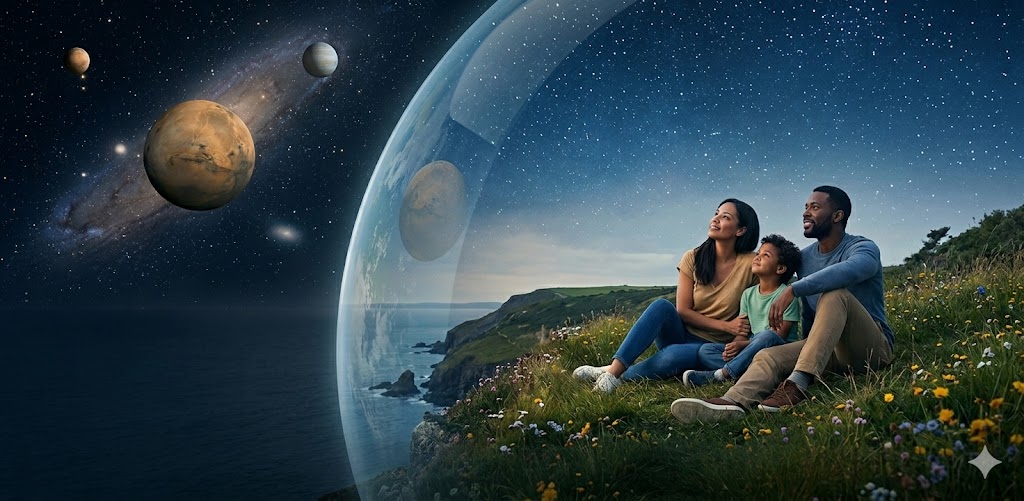
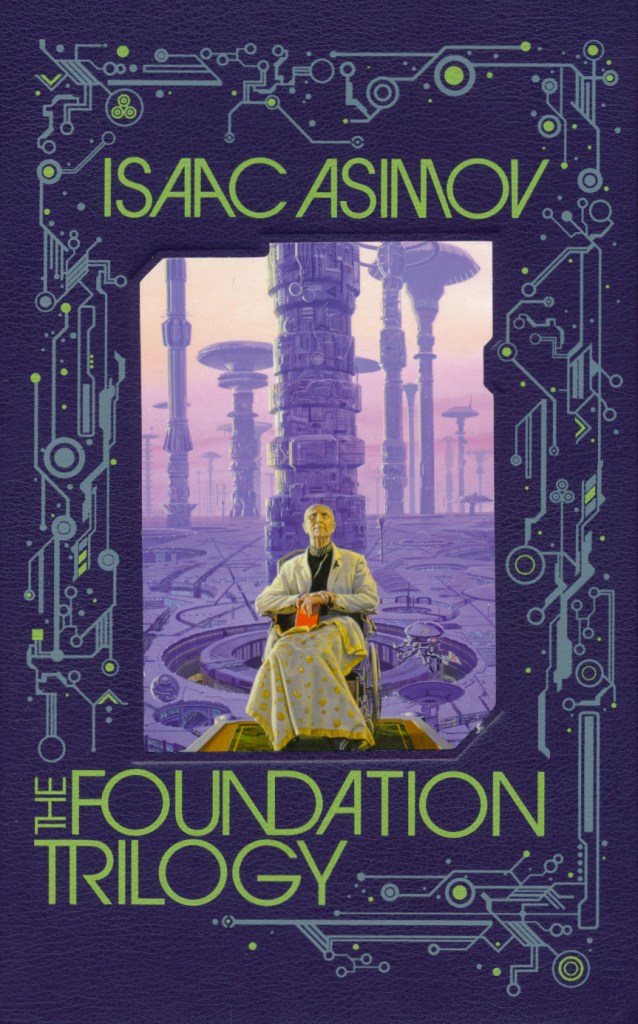
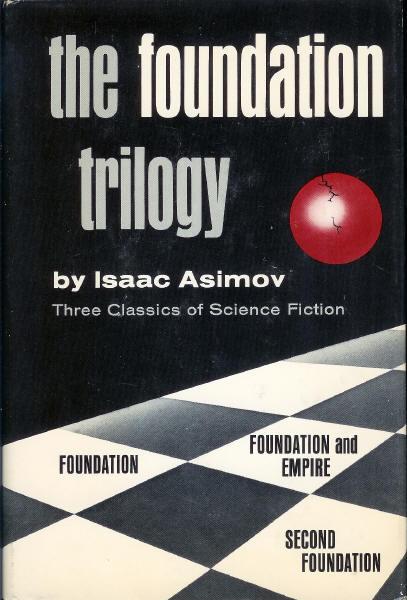
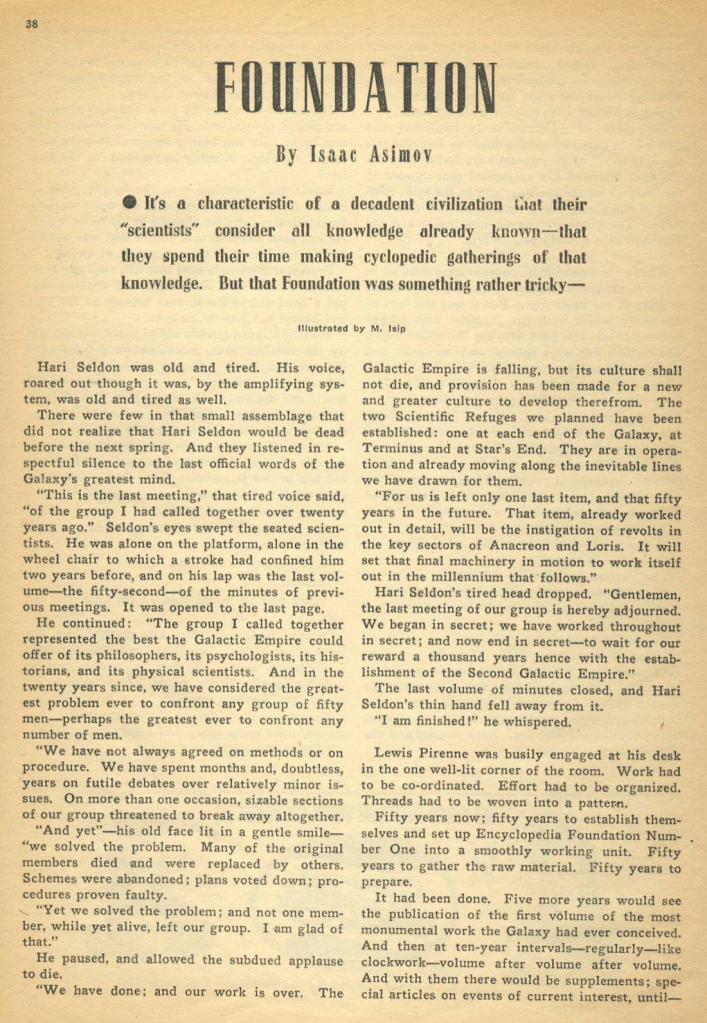
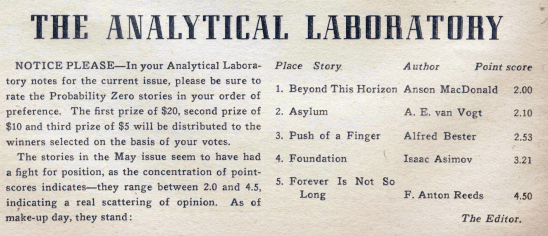
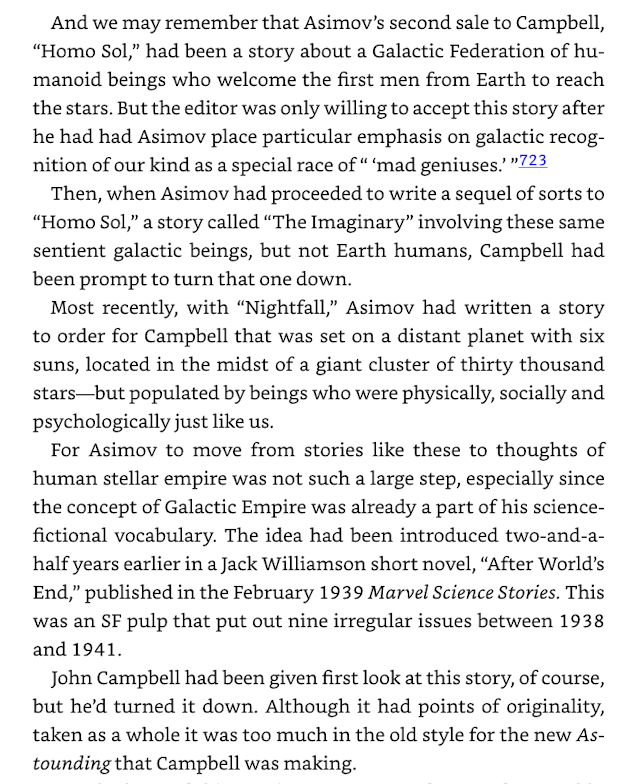
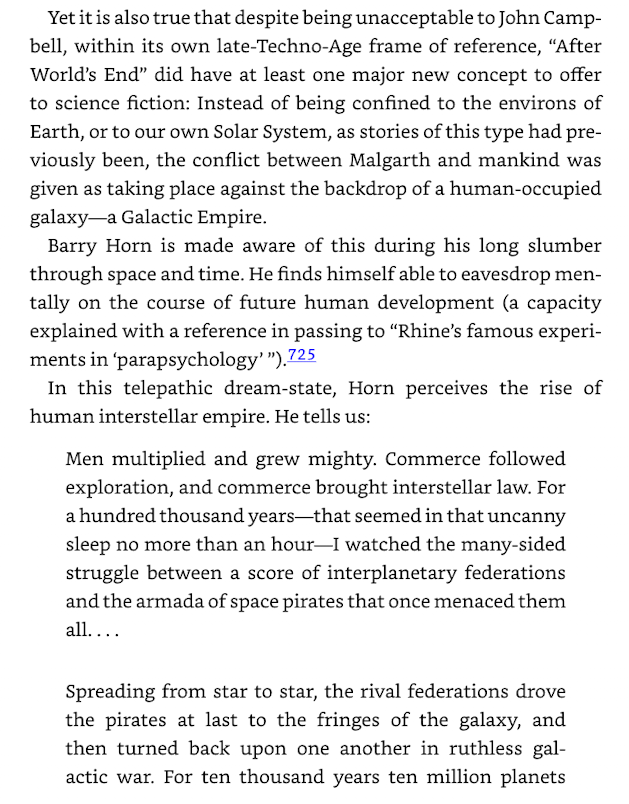
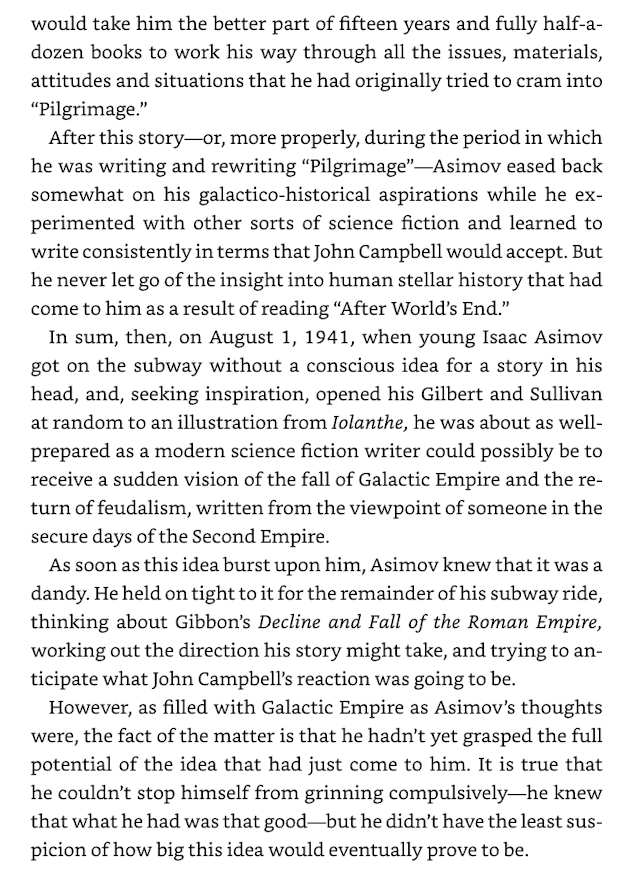
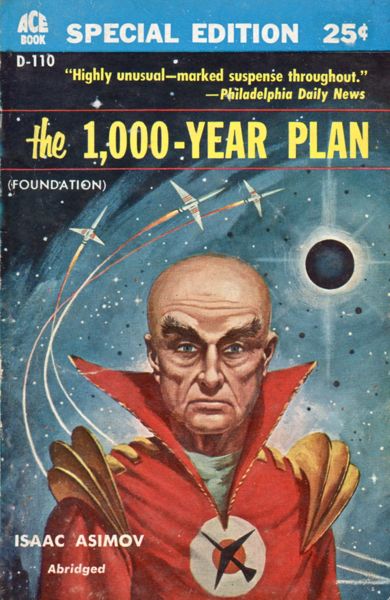
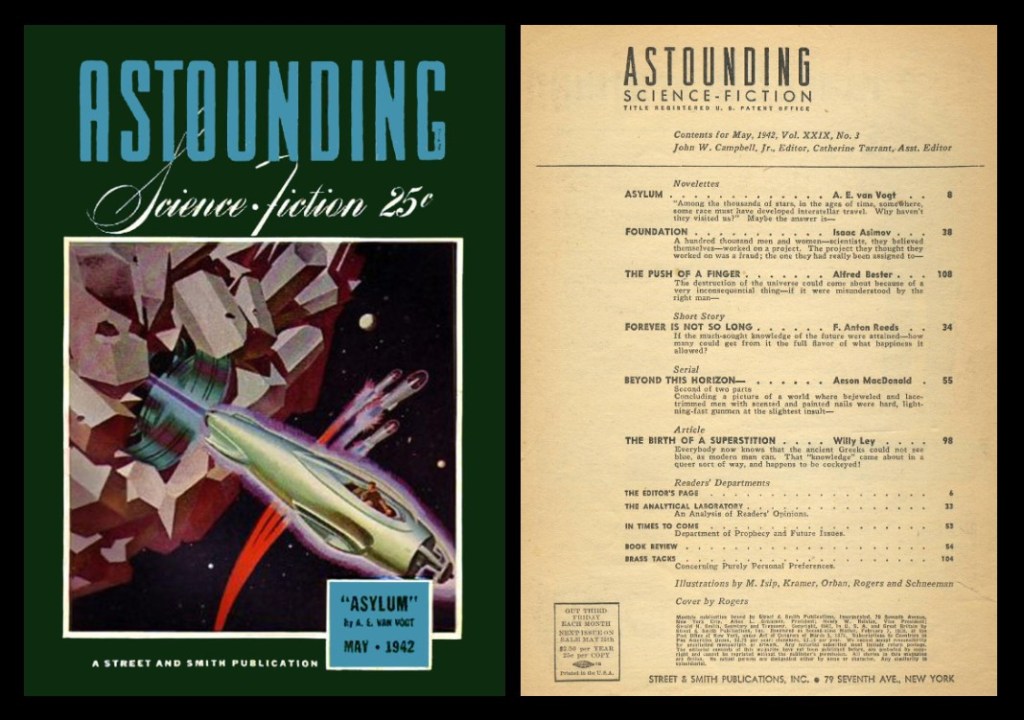
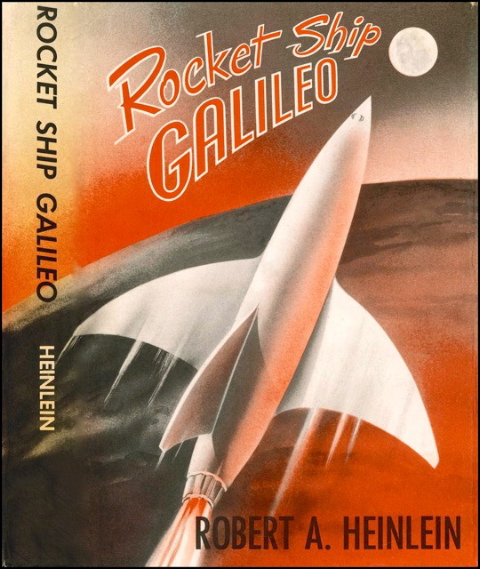
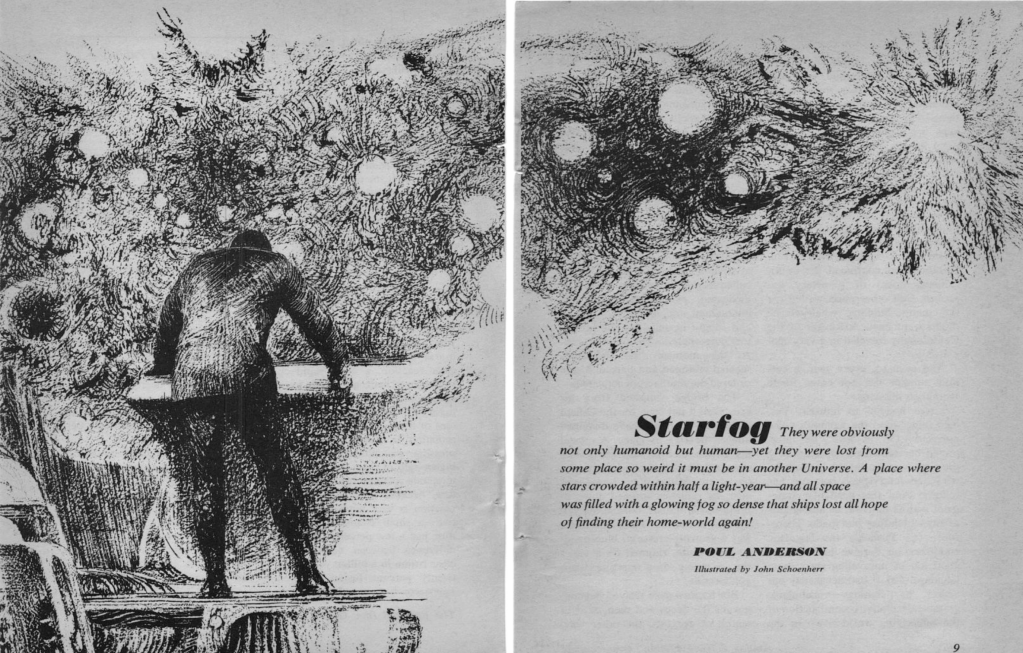
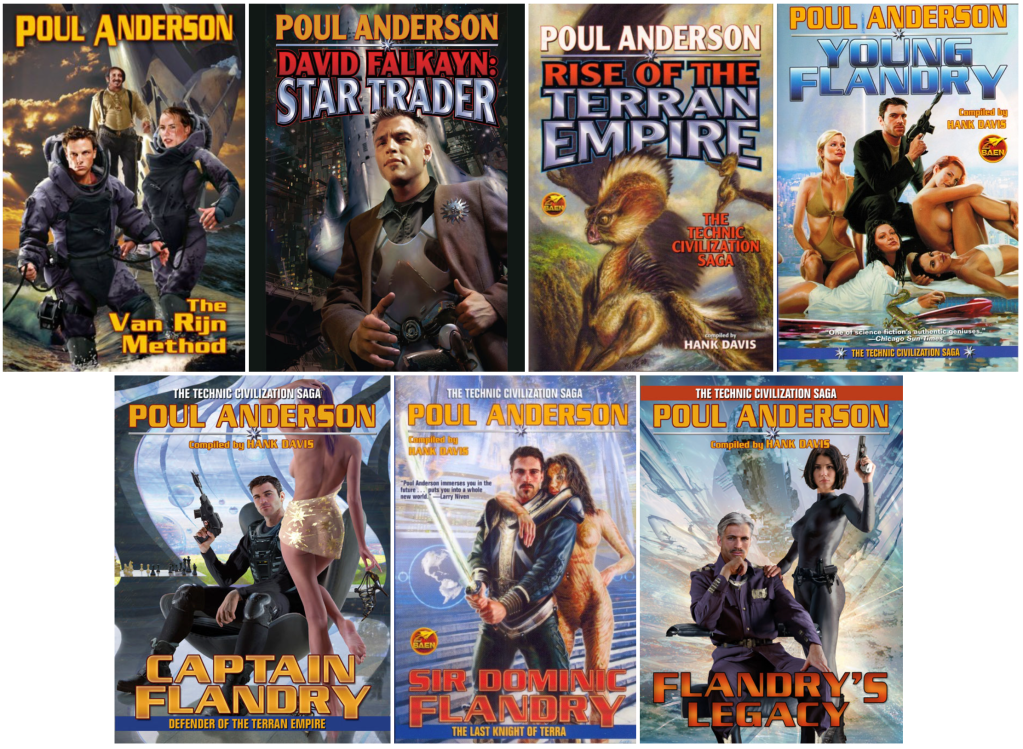
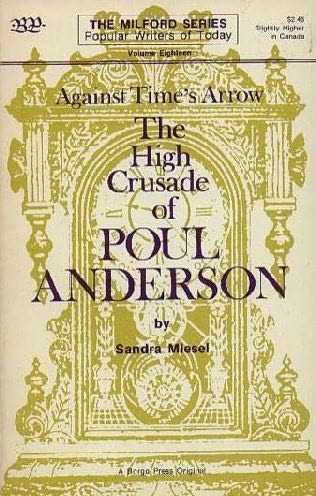
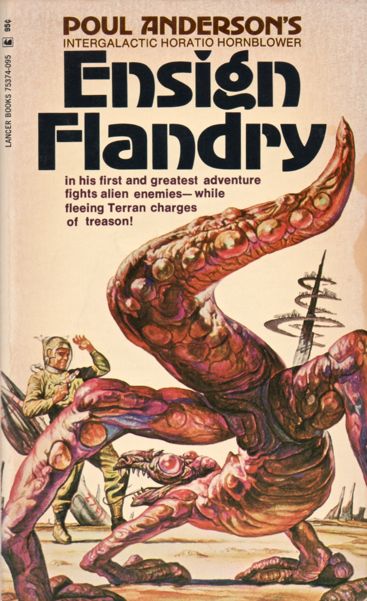
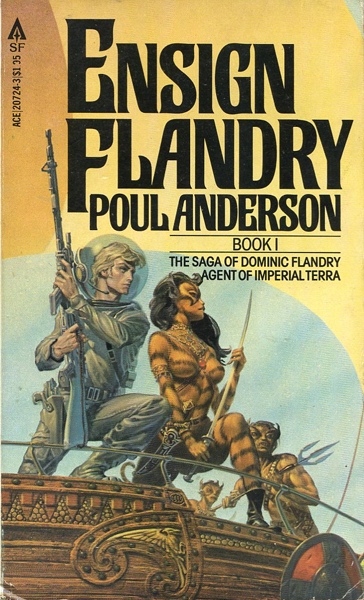
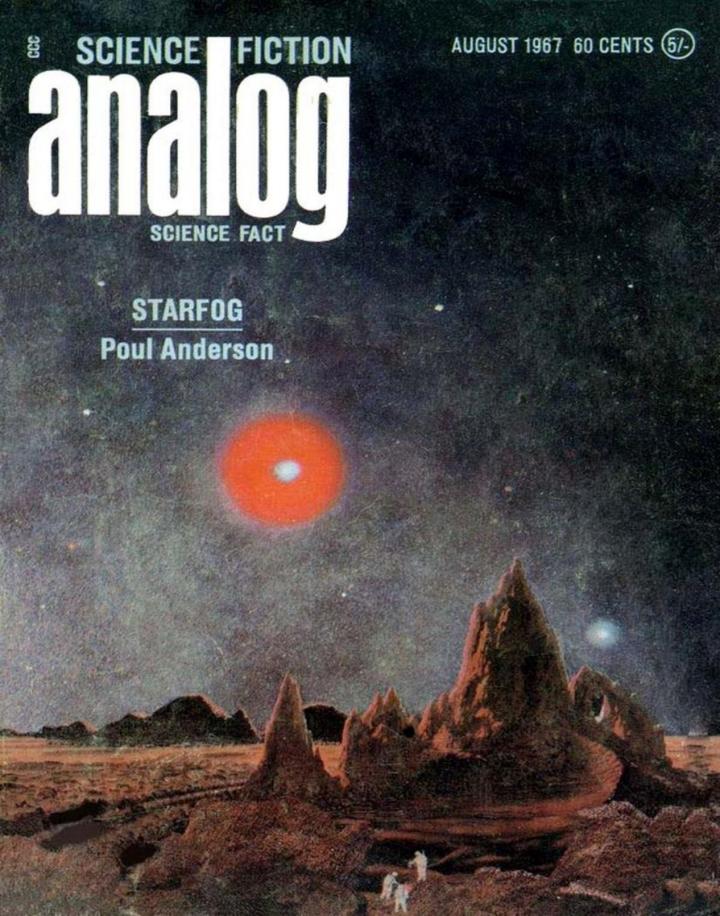
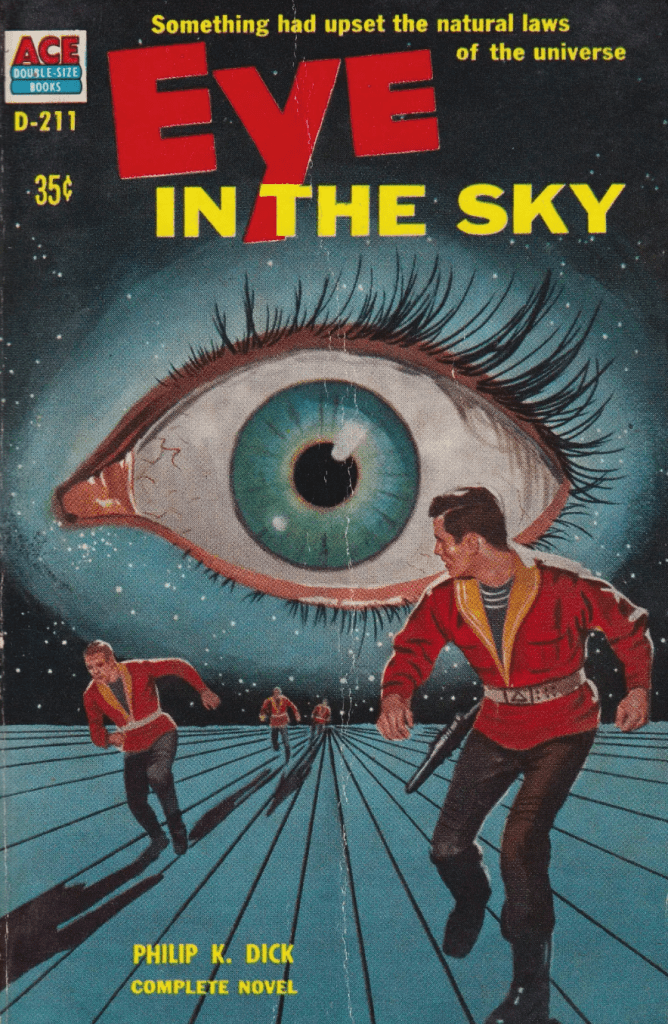
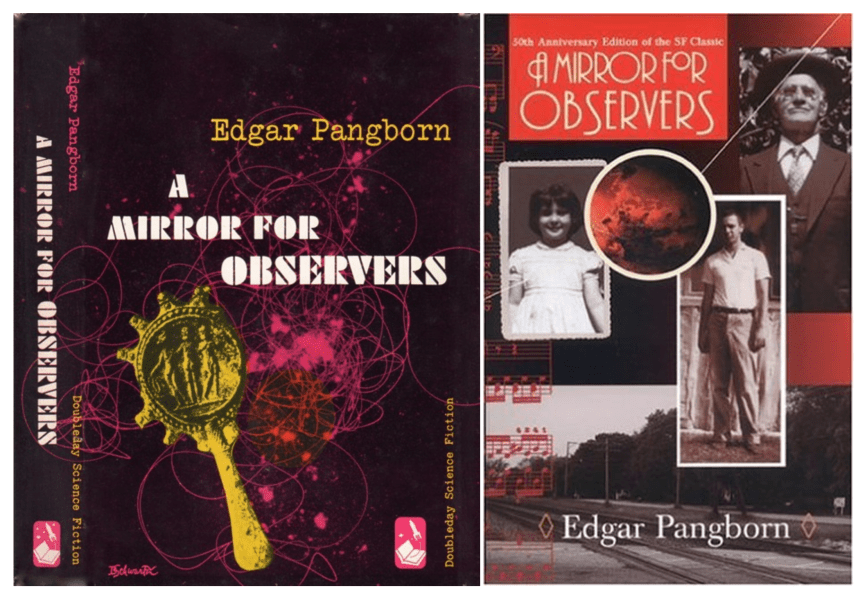
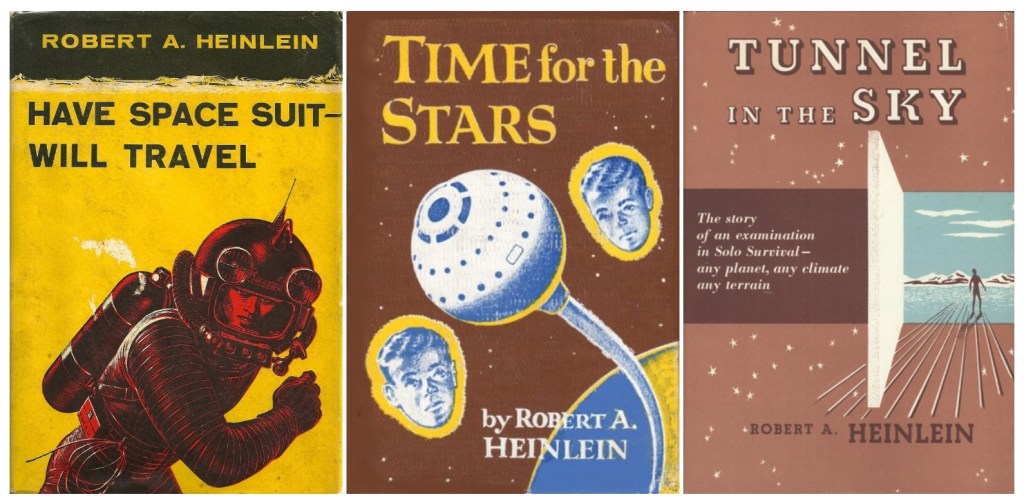


 Classics of Science Fiction