THE TWILIGHT ZONE – “And When the Sky Was Opened”

The first episode I can remember seeing of The Twilight Zone was “Eye of the Beholder,” which was broadcast on November 11, 1960. I would turn nine on the 25th. I remember seeing it with my mother and sister in Marks, Mississippi. We had just moved from New Jersey, and the culture shock from living up north to that of the deep south was about as shocking as a Twilight Zone episode. “Eye of the Beholder” was the episode where everyone had pig faces, and a beautiful girl by our standards thought she looked ugly because she didn’t look like everyone else. That show was from the second season.

I have no memory of seeing anything from the first season when it premiered, but that doesn’t mean I didn’t. I would have been seven when the show began, and I don’t remember much about being seven.

I bring all this up because for The Twilight Zone to work, the audience had to suspend belief. My perception of the show at 72 is much different from my perception of the show at eight. I can’t say for sure, but The Twilight Zone might have been my introduction to science fiction, although I didn’t know the term at that time.

Growing up with The Twilight Zone in the late 1950s and early 1960s was a trip. I was a gullible kid and easily fooled. Rod Serling and his stories were spooky, eerie, strange, and sometimes scary. I’d love to observe my eight-year old mind when I watched that TV show. How many unrealistic fantastic themes did I believe back then?

I bring all this up because watching “And When the Sky Was Opened” you have to wonder about what Rod Serling expected of his audience. Serling introduces the episode while we look at a rocket in a hanger under a tarp:

Her name: X-20. Her type: an experimental interceptor. Recent history: a crash landing in the Mojave Desert after a thirty-one hour flight nine hundred miles into space. Incidental data: the ship, with the men who flew her, disappeared from the radar screen for twenty-four hours.

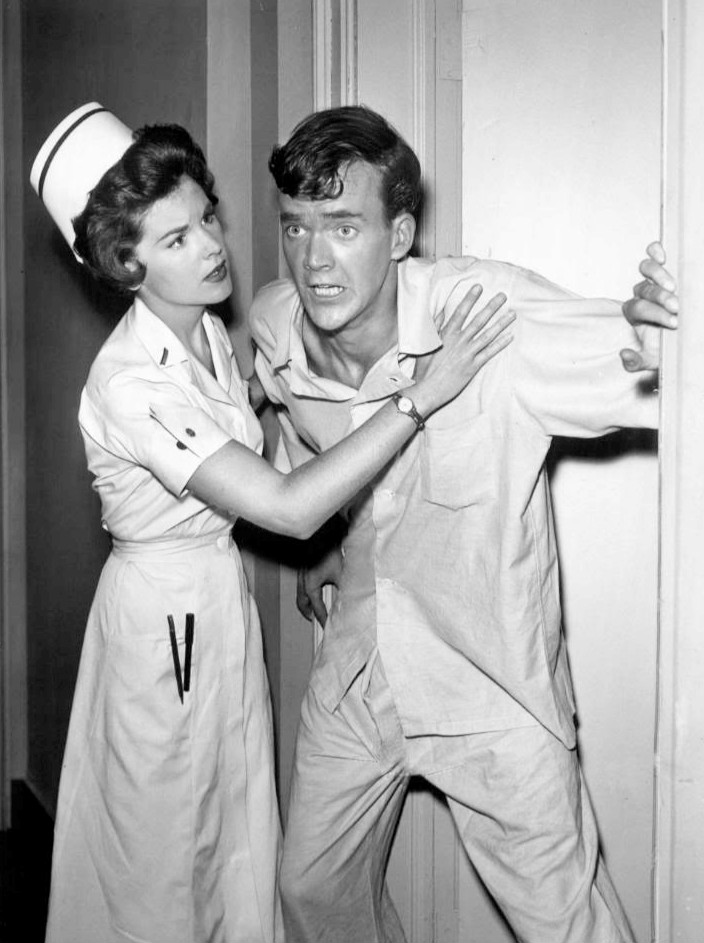
The story begins with Lt. Colonel Clegg Forbes (Rod Taylor) visiting Maj. William Gart (Jim Hutton) in the hospital. Forbes is a nervous wreck. Gart wants to know what’s going on. Forbes tells him yesterday that three of them came back from this mission, but today they are only two of them, and no one remembers Col. Ed Harrington (Charles Aidman). When Gart tells Forbes he’s never heard of Harrington, Forbes starts breaks down. He tells his version of the previous day, and how he loses Harrington. At one point, Harrington tells Forbes that he thinks that some one doesn’t want them there anymore. Eventually, Forbes disappears, and Gart goes crazy, because no one remembers him. Then, we see Gart disappearing, and then a doctor and nurse discussing an empty hospital room. Finally, we are shown the hanger where the X-20 was in the first scene. It’s no longer there, the tarp folded up on the floor.

On my Blu-ray edition, there’s an extra for this episode where we hear Serling giving a speech to college students about writing. He says the core of this story is accepting the idea that someone doesn’t want those men to be here anymore. Serling says if you can’t suspend your belief for that one point, the story won’t work.

That might be the essence of The Twilight Zone. Let’s pretend that one impossible thing is possible. That just Mr. Serling and we the audience know the full truth about reality. That we see what the characters never know. In other words, this is a game of pretend for grownups. (Even though a lot of children like myself watched The Twilight Zone, I can’t help but feel that the show was aimed at adults.)

The show never expects us to believe any of this. But us kids, we wanted to believe, and so did all the nutballs of the 1950s, the ones who believed in flying saucers, Bridey Murphy, Chris Costner Sizemore, Edgar Cayce, and science fiction. Those people Philip K. Dick called crap artists in his novel Confessions of a Crap Artist. The people who wanted reality to be a lot further out than its already far out existence.

If Philip K. Dick had been the host and main writer of The Twilight Zone the episodes would have been a lot edgier, with a lot more paranoia. He would ask us to believe that there were gods or beings capable of making us disappear from reality. You might think Dick’s work up until Valis was just for fun like Serling’s The Twilight Zone. But once you read Valis, you realize PKD believed strange things were possible. That there is a hidden reality behind ours.

When watching this episode I realized we had a unique perspective as the viewer. We get to see a larger reality, one that the characters in the show don’t get to see. This is the basis of gnosticism. It’s also the basis of stories by Philip K. Dick. Most science fiction, fantasy, and horror writers don’t use this perspective. In their stories, there’s one reality. I need to keep an eye out for gnostic fiction. Some science fiction and fantasy have always played around with it.

“And When the Sky Was Opened” is about astronauts before NASA’s Mercury Seven. Was Serling really thinking something might not want us to travel in space? I know my grandmother believed that. Just before we landed on the Moon, my grandmother told me that God would strike down the Apollo astronauts. She was born in 1881, and had seen a lot of stuff, but going to the Moon was too much.

Since the Internet has revealed that billions think crazy things I have to wonder what Serling really thought. He was socialy conscious guy. Many of his Twilight Zone episodes have morals. But was he weird like PKD?

When we watch The Twilight Zone, at least back in 1959, was Serling really saying that it’s all just a bit of fun, or did he ever believe that things sometimes do go bump in the night? And what’s the difference between believing in weird possibilities, and pretending to believe in them? Isn’t pretending close to wanting to believe in them?

James Wallace Harris, 10/31/24 (weird topic for Holloween)
THE TWILIGHT ZONE – “The Lonely” by Rod Serling

My friend Mike told me that he and his wife Betsy were watching The Twilight Zone, one episode each evening. I told him I would do the same. We’ve been texting every morning about the previous night’s episode. Day before yesterday we watched “The Lonely,” from season one, episode seven. I think I’ve seen this episode three times over the last sixty-plus years, but this time I thought more about the story. I think texting with Mike is pushing me to analyze the story in ways that casual watching never did.

The Twilight Zone tended to set its audience up for a surprise ending, often ignoring logic, or even other possibilities for how the story might go. Rod Serling wanted us to get involve and then surprise or shock us – but do it quickly. He treated his stories like a magic trick, and I don’t think he expected us to ask too many questions.

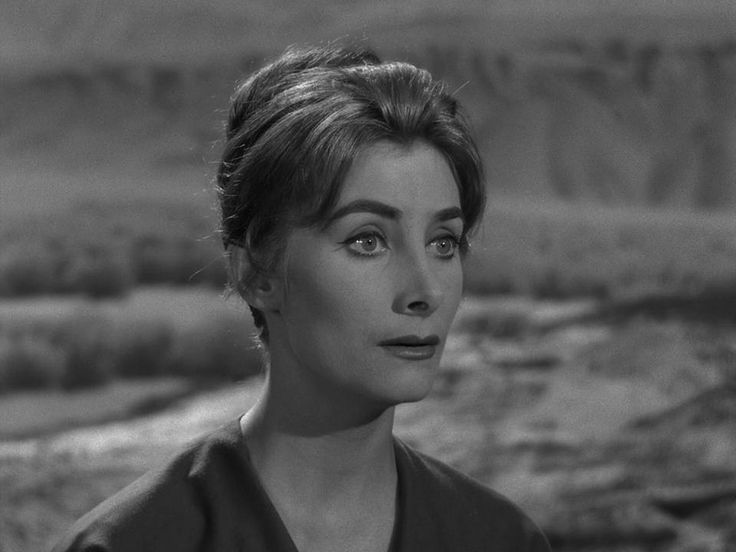
In “The Lonely,” Corry (Jack Warden), convicted of murder, has been sentence to solitary confinement on a deserted asteroid. He is visited four times a year by a supply rocket. The captain of the supply ship, Allenby (John Dehner), has taken pity on Corry and tries to bring him something each time to occupy his mind because he knows Corry is going crazy with loneliness. This time he brings him a large box. Allenby tells Corry not to open until he leaves. It turns out its a robot that looks, acts, and talks just like a beautiful woman. (It’s Jean Marsh who will star in Upstairs, Downstairs in the 1971.)

The robot is named Alicia. At first Corry is offended by thinking his loneliness could be eliminated by the companionship of a machine. But, Alicia is hurt by his rejection, and Corry takes pity on her. They become close.

Then Captain Allenby shows up again and tells Corry he’s been giving a pardon and has twenty minutes to get ready to leave. Corry assumes he can bring Alicia, but Allenby says there’s a weight limit because of limited fuel and he only has room for Corry. Corry can’t believe Allenby could be so cruel as to leave Allicia. To quickly convince Corry he is serious, Allenby shoots Alicia in the face, revealing all her mechanical parts.

This makes “The Lonely” a cold equations story. “The Cold Equations” by Tom Godwin was a controversial story from 1954. It set up a problem where the only solution was killing a teenage girl. A lot of readers hated “The Cold Equations” and over the decades they have protested that the author should have found a way to save her. They completely missed the point of the story. Godwin set up the story so the girl had to die. And that’s what Serling did in “The Lonely.”

Not only that, but they solved the plot quickly by having Captain Alleby shoot Alicia. I accept all that. That’s the point of the story. But here is where in 2024 I took a different path thinking about the story.

Why didn’t people talk about Corry falling in love with Alicia? In 1959, I wonder if the audience assumed Alicia was just a machine, and that Corry’s loneliness overcame the fact, that his love was a delusion. That when we see the mechanical parts of Alicia that we undertand why Alleby shoots her.

Over the decades, we’ve had a lot of stories that might be called robot liberation stories where many readers believe that a machine that looks and acts like a human is just as human as a biological person. I wonder if the ending shocks modern readers who have come to love robots. If someone shot C-3PO in the face and killed him, wouldn’t we be shocked and mourn his death?

If I remember right, there were a couple of Asimov robot stories where Susan Calvin kills a robot. I was always shocked by that.

In 2024 we don’t want robots murdered. Accepting the logic of the story that Alleby can only take one person back, how could we change it to work with modern audiences?

Rod Serling wrote this episode. He didn’t give the audience or Corry a chance to think about the options. His stories are setup to only work one way. When I was watching the episode I had forgotten the ending, and I wondered how Serling was going to solve the problem. Having Allenby shoot Alicia was a tidy way to end the story. After he shoots Alicia Alleby tells Corry that the only thing he’s leaving behind is his loneliness. Corry says, “I must remember that,” and “I must remember to keep that in mind.”

There’s a problem. We don’t get to decide and neither does Corry. I wish Serling had ended the story differently. I wish Allenby had handed Corry the gun and said, “I can take one person back, the ship leaves in fifteen minutes no matter what,” and then walks off.

The story could end there. We don’t really need to know the ending, because the story has shifted to thinking about all the possibilities. We should accept that the rocket only has fuel for one person. We should also assume there will be no future supply runs so if Corry stays, he will eventually die. We might also assume Alicia runs on radioactive pellets and will live a long time.

But let’s say the TV show had to reveal an ending. The camera in the very last scene could be aimed at the rocket’s hatch from the inside waiting to see who shows up. We could see Corry’s face climb into view, Alicia’s face climb into view, or Allenby say, “Time to go, shut the door.”

Each possible ending would imply so much still.

  • Corry shows up and we think he shot Alicia
  • Corry shows up and we think he didn’t shoot Alicia but left her to be lonely
  • Alicia shows up and we think Corry shot himself
  • Alicia shows up and we think Corry volunteered to die alone
  • Neither show up and we think Corry decided to stay with Alicia
  • Neither show up and we think Corry decided to stay with Alicia but kills her before he dies so she won’t be alone
  • Neither show up and we think Corry decided to stay with Alicia but gives her the gun to make her own decision when he dies

It’s unfair to change an author’s story after the fact. But in this case, I’m suggesting my idea because it illuminates how people might have thought about the story in 1959 would be different from how we like to think about stories in 2024.

James Wallace Harris, 10/27/24