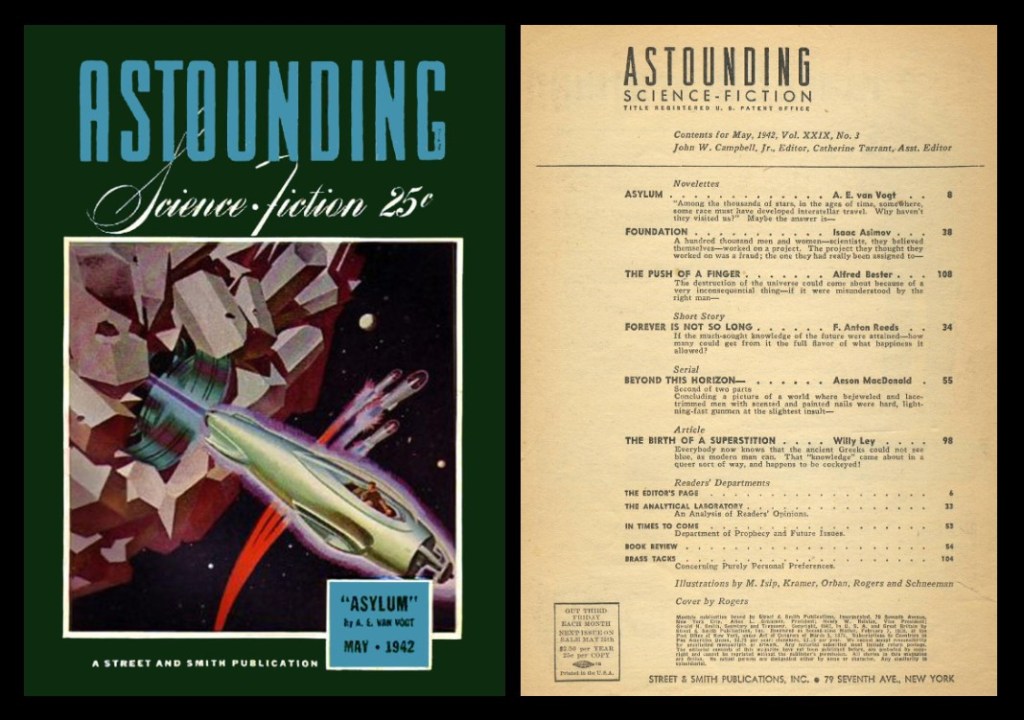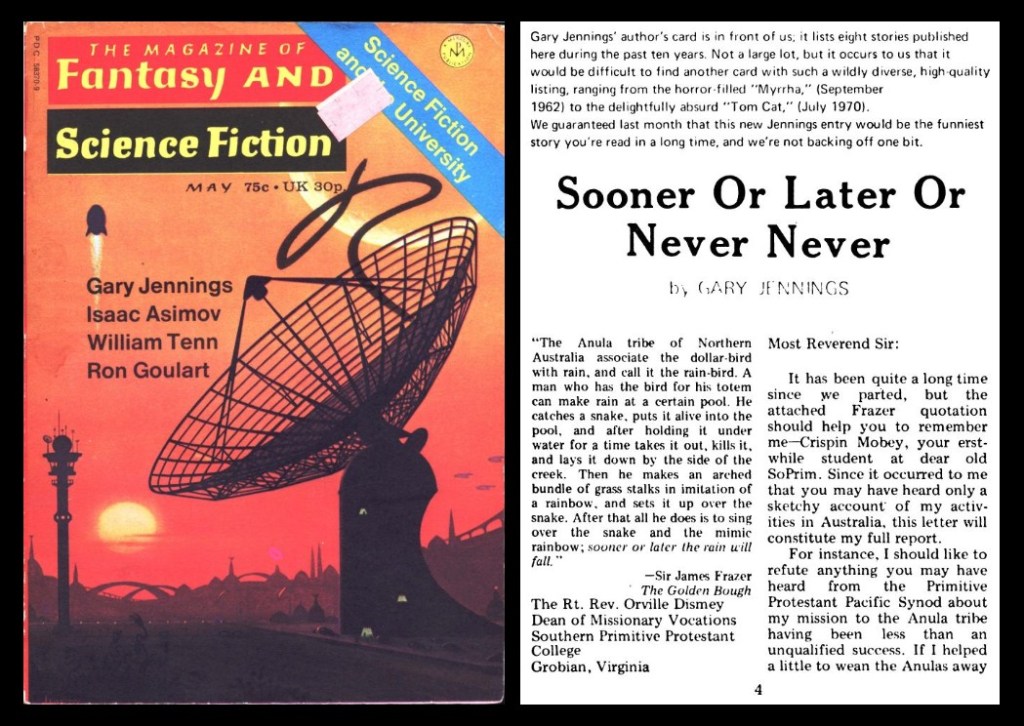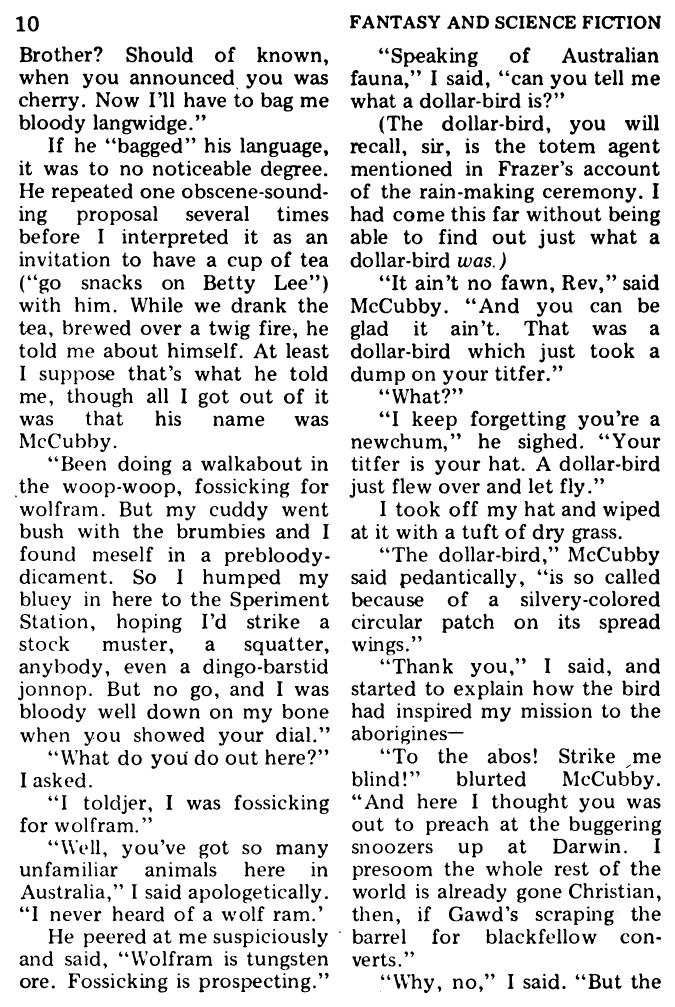
What exactly is fantasy? “Sooner Or Later Or Never Never” by Gary Jennings has no magic, no fantastic creatures. Its setting is present-day Australia. The story is both comic and absurd. Yet, it’s based on a somewhat realistic premise. Yes, the characters and plot are made up, but so is most fiction. I can find no reason to call this a fantasy. I assume Edward L. Ferman published it in the May 1972 issue of The Magazine of Fantasy & Science Fiction because he admired the creative prose — and he had the power to publish it.
“Sooner or Later or Never Never” is told as a letter to The Rev. Orville Dismey, Dean of Missionary Vocations, at the Southern Primitive Protestant Seminary in Grobian, Virginia. Crispin Mobey narrates his effort to bring Christ to the Anula tribe in the Australian outback. Mobey was inspired by a quote from The Golden Bough by Sir James Frazer. The quote describes a ritual Frazer witnessed. Mobey wants to use that ritual to bring Christianity to a rather primitive tribe.
I’ve read “Sooner or Later or Never Never” before, but I’m not sure where and how. I don’t normally read this kind of fiction. However, the prose is quite entertaining. Normally, I dislike dialect, but Jennings captures outback Aussie hilariously. I wish I had an audiobook version.
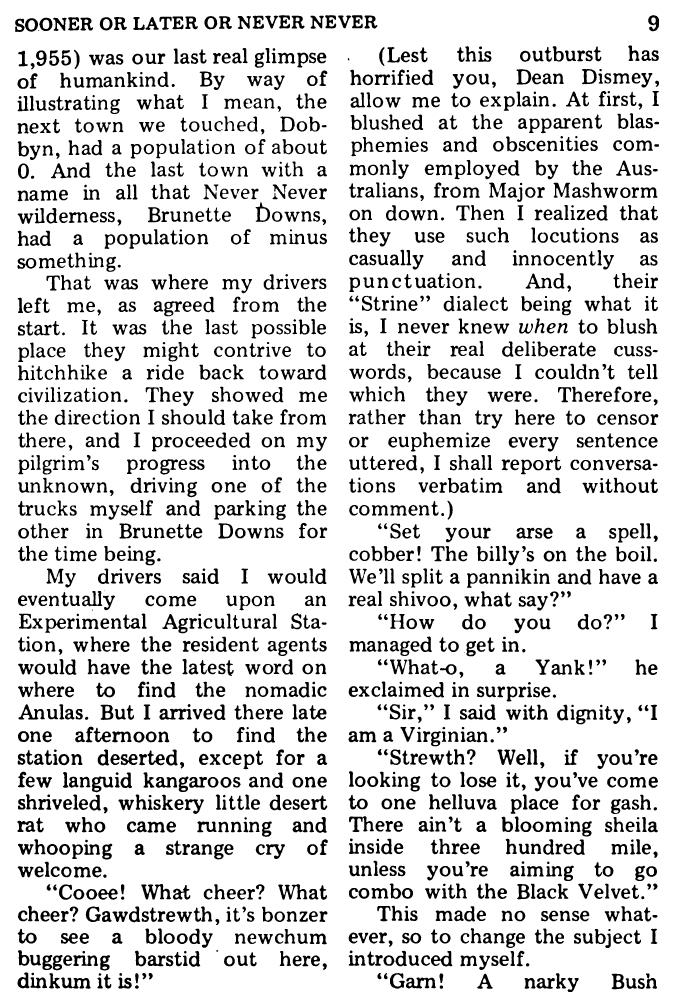
There is no way I can describe this story, so I’m just going to give you two pages to read as a sample.
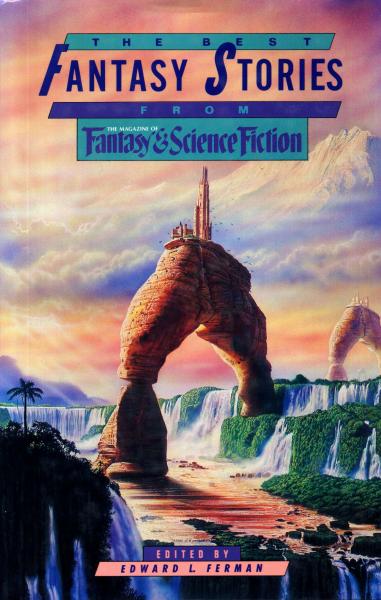
I know this is cheating, but I’m taking the easy way out. I’m posting this merely to encourage people to read this story. I read it today because my Facebook short story club is reading The Best Fantasy Stories from The Magazine of Fantasy and Science Fiction. Reading this 792-page anthology demonstrates the range of what people call fantasy.
I routinely tell people I dislike fantasy. But of the stories we’ve read in this anthology, the ones set in the present about ordinary people have been the most entertaining to read. And the ones that people consider traditional fantasy were no fun to read. I guess when I say I dislike fantasy, I dislike only a subset of the genre.
However, I also think Ferman is cheating to call “Sooner or Later or Never Never” fantasy. It could have been published in almost any kind of fiction magazine.
Our species, Homo sapiens, have been around for 300,000 years, but we only have recorded history for about 5,000 years. Neanderthals date back even further in time. For hundreds of thousands of years, people created societies and maybe even forgotten civilizations that existed before history. Science fiction is mostly known for imagining possible futures, but a subgenre exists that speculates about human life in prehistory.
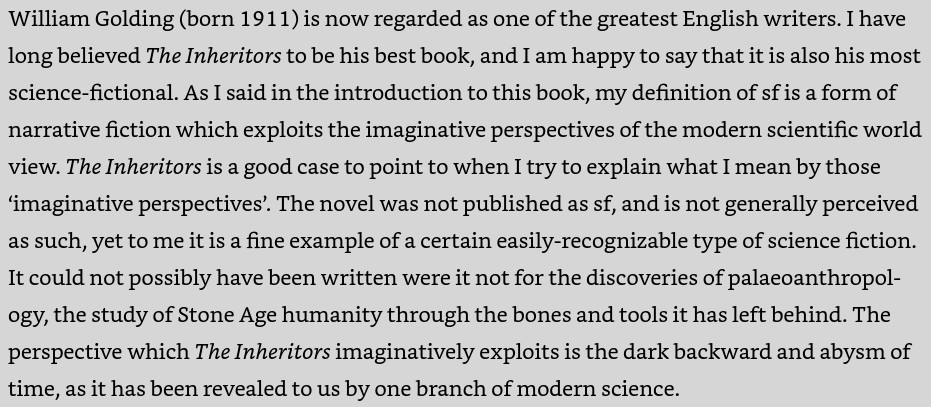
Probably, many science fiction fans would consider stories about our cave-dwelling ancestors as historical fiction or historical fantasy. David Pringle claims the novel was inspired by science, so it should be science fiction. Of course, that opens up a whole can of worms. But I’m willing to embrace these kinds of stories into our genre.
I read The Inheritors by William Golding because I’m reading or rereading the classics of science fiction. I’m going through David Pringle’s Science Fiction: The 100 Best Novels. The Kindle edition of the Pringle book is $1.99. The Kindle edition of The Inheritors is just 99 cents. You can read a list of Pringle’s 100 recommended SF titles here.
William Golding’s first novel was The Lord of the Flies (1954). His second novel, published in 1955, was The Inheritors. Lord of the Flies is about a group of schoolboys forced to live like primitives. The Inheritors is about a small band of Neanderthals confronting Homo Sapiens. It’s obvious Golding was exploring similar themes in these two novels.
Writers have long speculated about Neanderthals in fiction. Neanderthals thrived for 400,000 years but became extinct 40,000 years ago. Modern humans may have coexisted with them for up to 100,000 years. William Golding portrays Neanderthal life based on scientific speculation in 1955. It’s quite sympathetic.
Most of the novel is in third-person Neanderthal point of view, following a male named Lok. Golding expects his readers to decode action from the limited awareness of Lok’s mind. He does not say “bow and arrow” but describes them in terms that a Neanderthal would understand. Quite often, the narrative is confusing, but that’s intentional. Golding wants the reader to struggle in the same way that Lok struggles to understand.
Golding offers several interesting speculative theories. He suggests that Neanderthals had no sense of time but understood past and possibly future events by talking about pictures in their minds. Their language consists of simple nouns and verbs. The members of the tribe spend a lot of time comparing mental imagery. Their social bonding suggests they felt an almost telepathic connection with each other. Golding suggests that gender roles were divided. Males, especially the leader, decided on actions, while females, through a primitive religion, decided on meaning.
This speculation about how Neanderthals thought reminded me of The Origins of Consciousness in the Breakdown of the Bicameral Mind by Julian Jaynes, first published in 1976. Jaynes theorized that humans didn’t always have the same kind of internal consciousness that we have now. Golding anticipates this idea in 1955.
Throughout the novel, characters are forced into an original concept. The plot begins with crossing a stream. The Neanderthals are terrified of water. They have always depended on a fallen log to cross a stream, but one day it’s no longer there. It takes a great deal of group effort to come up with a solution.
The leader of the Neanderthal band is Mal, an old man. An unnamed old woman, maybe Mal’s mate, leads the group in other ways. There are indications that tribe members mated with whomever. There are four adults, Lok and Fa are the younger ones, and they become the main characters. Ha and Nil are the other two. There is a little girl named Liku and a baby.
Liku and the baby go missing. Then Ha and Nil. We follow Lok as he tries to track them down. Lok eventually discovers a new animal that Lok hasn’t seen before. After observing them, he starts calling them the new ones. They are Homo Sapiens, or Cro-Magnon, but it’s never said.
The women carry a small figurine they call Oa and treat it as if it were alive. My guess is the Oa is a Venus figurine, but I’m not sure. The Venus figurines came much later, well after Neanderthals went extinct. I assume Golding is speculating that such a religious symbol might have existed far back into time, so that intellectual attributes we speculate began with modern humans had early antecedents in Neanderthals.
In chapter 11, the penultimate chapter, we follow Lok at first through a close third-person narrative. But near the end, the point of view changes to omniscient. This lets Golding describe the scene as if we were seeing it through the modern mind. We are told Lok holds something in his hand: “It was a root, old and rotted, worn away at both ends but preserving the exaggerated contours of a female body.” I’m sure this is Oa.
In Chapter 12, the final chapter, we get a third-person account from the perspective of the Homo sapiens. This lets us know what they thought about the Neanderthals. It also allows Golding to speculate about their state of consciousness.
The Inheritors is not a breezy read. In some ways, it reminds me of A Clockwork Orange and how I had to struggle to understand what was going on. I’m quite sure if I reread The Inheritors two or three times, I would discover many more layers of speculation and narrative devices. With just this one reading, I’m left puzzled over several scenes.
The Inheritors is not famous enough to have a current audiobook edition. I believe hearing the story would help me understand it better. I did find an old audiobook edition on YouTube. Listening to it did indeed make the action clearer. I have long known that I tend to read too fast. Audiobooks make me slow down. Listening makes certain parts of the prose easier to understand. However, I need to read with my eyes to understand other parts. I believe The Inheritors deserves to be read with both my eyes and ears. By the way, Audible is scheduled to publish a new audiobook edition next year.
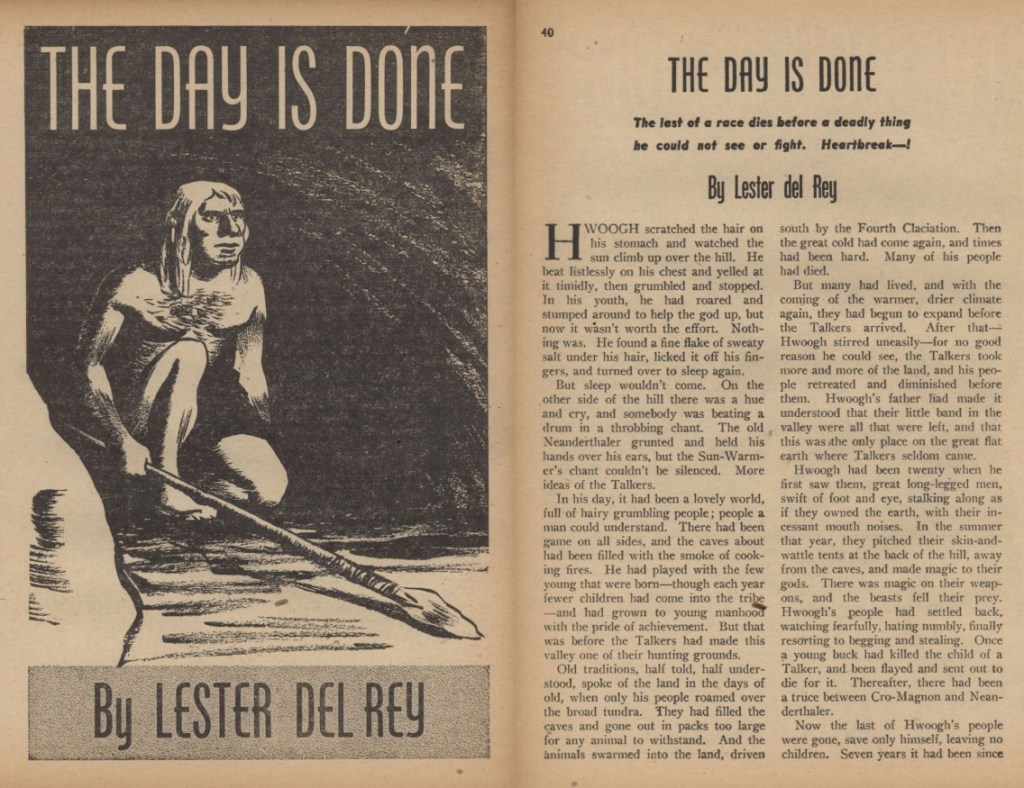
The Inheritors reminds me of the short story, “The Day is Done” by Lester del Rey, first published in the May 1939 issue of Astounding Science-Fiction. It’s another tale of a Neanderthal confronting Homo sapiens. You can read it here. I wonder if William Golding had read “The Day is Done.”
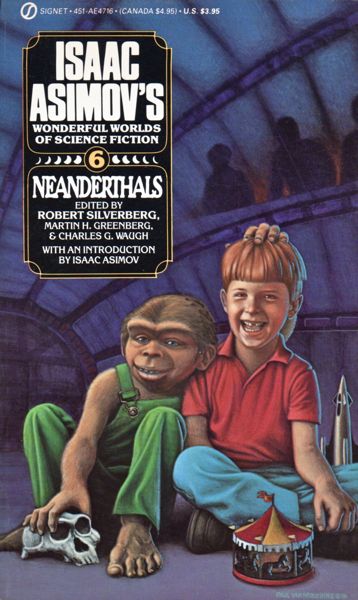
There is an anthology of science fiction stories, Neanderthals, edited by Robert Silverberg, Martin H. Greenberg, and Charles G. Waugh. View the table of contents here.
H. G. Wells wrote “The Grisly Folk” in 1921, an unflattering look at Neanderthals.
Of course, the most famous fiction featuring Neanderthals is Earth’s Children series, by Jean M. Auel.
I’m an atheist who doesn’t normally enjoy reading fantasy fiction; however, I found “The Invasion of the Church of the Holy Ghost” by Russell Kirk, a religious ghost story, to be quite entertaining and well-written. The characters of Father Raymond Thomas Montrose and Fork Causland are so well developed that it’s hard not to like this story. Plus, the story is set in a seedy, rundown section of town filled with hustlers, prostitutes, and con men, has all the feel of a Damon Runyon tale.
I had no idea who Russell Kirk was, but after reading about him on Wikipedia, the philosophy behind the story made more sense. Kirk was a major conservative intellectual and a distinguished fellow at the Heritage Foundation. Since I’m a liberal, this doesn’t endear me to him. Kirk was also a convert to Catholicism and enjoyed writing ghost stories.
Kirk’s significant spiritual, political, and philosophical background forces me to look deeper into “The Invasion of the Church of the Holy Ghost.” Kirk was a serious thinker. That makes it hard to dismiss the story as a silly, inconsequential ghost story.
Even while liking “The Invasion of the Church of the Holy Ghost” very much, it proposes ideas I find totally repugnant. Both Father Montrose and Fork Causland are possessed. Kirk suggests that when people do bad things, it’s because they are influenced by evil ghosts, and when they do good things, they are empowered by higher-order beings. He doesn’t specifically say angels, but that’s how I interpreted the story.
In old religious philosophy, good comes from God, and evil from Satan. If humans do good, it’s because of the influence of the divine, and if we do bad, it’s because of the devil working through us. At one point, the normally good Father Montrose starts thinking about raping a young woman. Kirk proposes that those thoughts come from being possessed by an evil spirit.
I don’t believe in free will, but I also refuse to believe that our thoughts and actions originate with ghosts or other metaphysical beings. I don’t know if Russel Kirk believes that either, but “The Invasions of the Church of the Holy Ghost” is based on such a religious foundation. This fantasy is a religious reality to some. On the other hand, it might just be Kirk’s way of scaring us.
However, if I ignore what this story is suggesting, it’s an exceptionally creative work. Russell Kirk does an amazing amount of world-building. When I like fantasy, it’s often because it’s set in our present-day world. For example, It’s a Wonderful Life or The Bishop’s Wife.
Yesterday, I was pondering the value of fiction and nonfiction. Writers of nonfiction strive to be as accurate as possible. We read nonfiction to understand reality. Fiction is elaborate lies, but sometimes fiction writers work to express a truth they perceive at a deep, personal level. Knowing the kind of person Russell Kirk was, I can’t help but believe that he might believe in ghosts and possession.
I reread “The Cloud Sculptors of Coral-D” by J.G. Ballard because my short story reading group is reading The Best Fantasy from The Magazine of Fantasy and Science Fiction. Inclusion in this volume suggests its fantasy. However, it was also included in The Great Science Fiction Series edited by Martin H. Greenberg, Joseph Olander, and Frederik Pohl. The story contains no magic, no dragons or elves, and it’s set in our present day, but in a fictional resort called Vermillion Sands.
Vermillion Sands feels like a decadent playground for the rich, which also features the many kinds of parasites that live off the wealthy. It’s also an artist and expat colony. We don’t know its location, but it feels like Palm Springs, California. Many worldly travelers come and go there.
“The Cloud Sculptors of Coral-D” was my first introduction to J. G. Ballard back in the 1960s. Other stories from that setting make up the series, collected into Vermillion Sands.
“Prima Belladonna” (Science Fantasy, December 1956)
“Venus Smiles” (Science Fantasy, June 1957)
“Studio 5, the Stars” (Science Fantasy, February 1961)
“The Thousand Dreams of Stellavista” (Amazing Stories, March 1962)
“The Singing Statues” (Fantastic Stories, July 1962) (not in original collection)
“The Screen Game” (Fantastic Stories, October 1963)
“Cry Hope, Cry Fury!” (F&SF, October 1967)
“The Cloud-Sculptors of Coral D” (F&SF, December 1967)
“Say Goodbye to the Wind” (Fantastic, August 1970)
Wikipedia provides an excellent overview of the stories, highlighting that each dealt with a different artistic medium being affected by technology.
When I first read “The Cloud Sculptors of Coral-D” as a teen, it felt very grown-up to me. The characters were the kinds of people I met growing up in Miami, not the typical heroes of science fiction stories I spent so much time reading. It never occurred to me to think of the story as fantasy, but it didn’t seem like science fiction either. At the time, I was just discovering British science fiction writers like Brian Aldiss and John Brunner and the New Wave SF. The stories were set in the present or near future and took place on Earth. No rockets or robots. Was this actual science fiction?
“The Cloud Sculptors of Coral-D” is about a band of glider pilots who shape clouds with silver iodide. At first, their audience and patrons are people who park their cars along the lagoon road to watch. Eventually, the Garbo-like Leonora Chanel hires them to perform for her party. Sculpting clouds is a neat idea, but far from realistic. Does that make the story science fiction? Ballard does throw in a creature called sand rays, which I suppose are like manta rays that live under the sand instead of the sea. Do they make the story a fantasy?
Science fiction has often been the dumping ground for any kind of weird story that can’t be classified. The Vermillion Sands stories would have been rejected by mainstream and literary magazines. They fit nicely in The Magazine of Fantasy & Science Fiction. They were also published in the British magazine Science Fantasy and the American Fantastic. Only one was published in a straight-ahead science fiction magazine, Amazing Stories. I doubt John W. Campbell would have accepted them in Astounding or Analog. Nor would he have published them in Unknown. I wonder if Rod Serling would have used “The Cloud Sculptors of Coral-D” for The Twilight Zone?
I’m not fond of traditional fantasy, and many of the stories in The Best Fantasy from The Magazine of Fantasy and Science Fiction aren’t enjoyable for me to read. But I did enjoy “The Cloud Sculptors of Coral-D.” The story has a pleasant, surreal feel. The setting is very close to this world, but just a smidge off. I love the artist colony atmosphere, the hint of decadence, the ever-so-slight sense of unreality. The story combines barnstorming, carny folks, and the ugly rich. I visualize it as a cross between early Faulkner and Fellini.
The shortest description would be to say the story has atmosphere.
I don’t read many science fiction novels nowadays. I prefer SF short stories. I just don’t read as many books as I used to. However, after my friend Laurie told me about The Last Astronaut by David Wellington, I decided to give it a try. The Last Astronaut is the kind of science fiction thriller that Michael Crichton used to write — fast pace, lots of physical action, and basically fun. The Last Astronaut reminded me how entertaining reading a novel used to be. I wouldn’t call it great, but it does have that page-turning quality.
Now I do have some things to say about it, but what I have to say is full of spoilers. I recommend you go read the novel and then come back here, if you can remember. The Last Astronaut made me think about how science fiction novels change over the years, and how each generation retells old themes in new ways.
The Last Astronaut is about a Big Dumb Object. That’s the official name of a specific science fiction plot device. When I started reading The Last Astronaut, I immediately thought of Rendezvous with Rama. In 2020, The Last Astronaut was nominated for the Arthur C. Clarke Award. Wikipedia even says, “Edward Guimont and Horace A. Smith propose that the origins of the Big Dumb Object trope can be found in H. P. Lovecraft’s novellas At the Mountains of Madness and The Shadow Out of Time, both of which feature human expeditions to immense ancient alien cities in remote parts of our world, and both of which were early influences upon Arthur C. Clarke.”
Funny that they mention H. P. Lovecraft. Because I also thought of Lovecraft while reading The Last Astronaut. Wellington’s novel features horror. Horror like the film Alien, but also horror like Lovecraft’s monstrous alien gods.
The setting, inside the vast alien spacecraft, is dark. Having a story set almost completely in darkness reminded me of Jules Verne’s Journey to the Center of the Earth and The Night Land by William Hope Hodgson.
I’m finally reminded of another story/movie, Fantastic Voyage by Isaac Asimov, along with “Finisterra” by David Moles. This last reminder should give you one huge clue to what’s happening in The Last Astronaut. But I did warn you about spoilers.
My point in this essay is that science fiction is seldom original anymore. The Last Astronaut feels like David Wellington took several of his favorite science fiction themes and blended them into a new SF novel. It succeeds well. I had a lot of problems with the characters because I felt their psychological motivations were too contrived. However, Wellington does use those contrived motivations to wrap up his novel. The ending does make sense and is satisfying.
I was entertained by how Wellington told his story. Wellington places himself in the book as an author in the future, writing a historical novel, but a history that hasn’t happened yet. It’s amusing that one of his characters criticizes the future Wellington for getting his facts wrong. Since we know the story is based on history, there are clues as to who survives and who doesn’t. The audiobook is especially nice because they rig up the audio so that interviews of characters taken after events sound different.
In the 40s and 50s, science fiction writers aimed to create new ideas and themes, but their stories were told without sophistication. In the 60s and 70s, SF writers added literary techniques to their stories. In the 80s and 90s, SF writers upped the ante by going epic. Hyperion is a great example. In the 21st century, SF writers have had to constantly find new ways to tell stories that have already been told.
If you haven’t read old science fiction, new science fiction seems novel. If you have read old science fiction, new science fiction feels recycled. That’s not a bad thing, but it makes the stories feel baroque when you cram so many old ideas into one story. Wellington does streamline his novel, so it feels action-packed like old science fiction. In some ways, his storytelling is as speedy as Edgar Rice Burroughs’ stories or pulp fiction.
Ray Bradbury published hundreds of short stories over and over again in various collections. Bradbury and his publishers often repackaged his stories into new collections or reprinted older collections with a slightly different lineup of stories. Ray Bradbury’s bibliography at ISFDB.org is so confusing that we’ve decided to select those collections that will provide the most stories by buying the fewest books.
Mike, the programmer for the Classics of Science Fiction website, coded several programs to find the right combinations of Bradbury collections that would give the widest selection of stories to read. The permutations turned out to be excessively large, so we simplified the procedure.
Our solution was to pick the collection that provided the most Bradbury stories. Then add a second collection that provides the most additional stories not in the first collection. Then add the third collection that contributes the next most additional stories, not in the previous two. And so on. Study the table, and the technique will become obvious.
Here are the twenty-five collections we used. We only used collections that are in print, either in hardback, paperback, e-book, or audiobook. Hyperlinks are to Amazon affiliate links.
“A Two-Timer” by David I. Masson (New Worlds 159, February 1966) (Amazon)
Back in the sixties, in high school, my friends and I would argue endlessly over science fiction short stories. We didn’t remember them by their title or author, but by whatever neat idea they imagined. I still remember my friend George telling Connell and me about a humorous short story, where a human crewed military spaceship tries to get cooperation from a human colony world where the social norms and economy were wacky. The colonists kept telling the crew “myob” to everything asked. I didn’t learn until years later that this was a famous story by Eric Frank Russell called “… And Then There Were None.” Another story George told us was about an Earthman who fell in love with a girl, and she wanted him to tell him he loved her. But the guy didn’t want to use such a trite phrase, so he left Earth and went all over the galaxy to learn about the preciseness of language. Eventually, he returns to the girl and says, “My dear, I’m rather fond of you.” Of course, the girl was hugely disappointed and rejected the guy. When the guy told his language guru what happened, the guru said, “Lucky devil, vaguely enjoyable was the best I could ever find.” I didn’t discover until decades later that it was “The Language of Love” by Robert Sheckley.”
The point of all this was that we judged science fiction solely on the ideas in the stories, not the plot, characterization, or writing. George read the most and was the best at retelling a story. I think he mainly read anthologies. I read anthologies and magazines. I was more into neat inventions. For example, I told them about the ecologariums in “The Star Pit” by Samuel R. Delany. Connell and I loved Mindswap by Sheckley, and we told everyone about the Theory of Searches. We worked at the Kwik Chek in Coconut Grove, Florida. At the time, its park was a gathering place for would-be hippies. The odds of meeting someone you knew from all over Dade County were increased if you came to the park on Saturdays. That fit Sheckley’s idea that there were optimal places to go if you were searching for someone.
The last three stories we read for the Best Science Fiction and Fantasy Short Fiction Facebook group were all idea stories, the kind my buddies and I would have discussed at Connell’s house on Vista Ct.
“The Certificate” by Avram Davidson is a tight little story about alien invaders who take complete control over humanity, making us their slaves. The aliens create a vast bureaucracy that’s impossible to fight. The aliens also punish us severely if we don’t cooperate. To make matters worse, they have altered us so we heal immediately, so they can torture us over and over again.
The story’s protagonist is Dr. Roger Freeman, who desperately wants a new winter coat. To apply for one involves going through an obstacle course that takes years. But Freeman is finessing the system.
Back in high school, this story would have caused us to argue about how we’d overthrow those aliens. Being young guys, we’d probably claim to know how to start a rebellion, even though Davidson sets up the story to suggest no rebellion is possible. When I read this story this week, the idea didn’t appeal to me much. The story is well-written, with an O. Henry surprise ending. However, it doesn’t offer anything to me as an older reader.
“To See the Invisible Man” by Robert Silverberg seems like a reply to Damon Knight’s classic short story, “Country of the Kind.” Like the Knight story, Silverberg sets up a society with a unique liberal form of punishment. The unnamed first-person narrator is sentenced to a year of invisibility for being cold and detached. He’s not actually made invisible. He’s just branded on the forehead, so anyone who sees him should act like he doesn’t exist. The story is about the psychological changes this character undergoes during the year. The narrator learns that he can steal whatever he wants or visit women’s locker rooms and be completely ignored. But he gets lonely, even desperate for someone to talk to. Silverberg takes us to a different place in his story. His character rebels in a different way by being compassionate.
My buddies and I would have had a lot to say about this story, with each of us coming up with how to handle the punishment. We’d probably argued over whether or not we’d go into the women’s locker room. I would have said that my solution would have been to read science fiction for a year. We did know of “Country of the Kind,” so we would have compared the two, but only about what the two criminals did, not about the writing, plotting, or characterization. Science fiction was about setting up a situation that you could argue over.
“To See the Invisible Man” is a good story. It’s tightly told, immediate, and works. However, it is not nearly as dramatic as “Country of the Kind,” and thus won’t be as memorable.
There’s little likelihood we would have read “A Two-Timer” by David I. Masson in the 1960s because it came out in a British SF magazine. Also, the idea behind this story is probably too subtle for three teenage boys in the 1960s. Joe, the narrator, is a guy from 1683 who steals a time machine and visits 1964. Of course, he doesn’t know it’s a time machine when he discovers it, or comprehends the idea of time travel. He just sees a guy walk away from a weird enclosed chair. He gets in and sees all kinds of dials and buttons labeled with words he doesn’t understand. He pushes a button and goes to 1964. Eventually, Joe figures out how the machine travels in time and space, like the DeLorean in Back to the Future.
The real point of this story is Joe, with his Middle English mind, describing 1964 to the reader. That might have entertained us back in the sixties, but I’m not sure. Old man me, found it very creative. There’s little action in the story. The piece is Masson’s playground for showing off his knowledge about language and history. Present-day me was disappointed that Joe wasn’t inspired to explore time based on his 17th-century knowledge.
I’m getting old and jaded. I find it hard to discover science fiction that thrills me in the remaining years of my life. I’ve loved reading science fiction magazines my whole life, but most of the stories were aimed at readers like my younger self. Masson’s exploration of language is more ambitious and mature than the other two stories, but Masson built his story on a lame plot.
Even though I’ve been reading science fiction for over sixty years, I still want to find stories that thrill me to the same degree as I was at 13. I’m not sure that’s even possible. Breakthrough science fiction novels like Hyperion are rare. But it’s interesting to note that Hyperion would have been a novel that thrilled me and my high school science fiction buddies.
Obviously, many of the stories that wowed me as I grew older would have also thrilled the younger me. For example, “Think Like a Dinosaur” by James Patrick Kelly or “Beggars in Spain” by Nancy Kress.
On the other hand, would “Story of Your Life” by Ted Chiang have inspired our younger selves? We would have avidly talked about translating an alien language, but would we have appreciated the advanced plotting and exceptional writing?
And could we have appreciated “Loneliness Universe” by Eugenia Triantafyllou without having lived through the social media era? Or could my younger self appreciate “Two Truths and a Lie” by Sarah Pinsker, which moved my older self? Wasn’t I mainly moved by the writing? I’m not sure high school Jim could have.
What if we could have read “Press ENTER ■” by John Varley in 1966? Would it blow us kids away like it did me in 1984? Did we need to understand computers and know about the technological singularity first?
I have to assume certain stories in the 1960s were relevant because of my age and current events. That’s why Dangerous Visions was exciting in 1969 but painful to read last year.
I keep looking for old science fiction I missed back then that will thrill me as much now as it would have thrilled me back when — if I had discovered it when I was young. One such book was The Man Who Fell to Earth by Walter Tevis. The trouble is, I think George, Connell, and I would have all thought that story was dull. Isn’t that novel better for the old and jaded?
I need to find cutting-edge science fiction for today that would have thrilled me as a 13-year-old but also a 73-year-old.
By the way, my 1964 self expected a much different 2025 than the one I live in now. There are many nonfiction books about current affairs that, if I could send to my 1964 self, would read more like science fiction than science fiction.
My library constantly discards science fiction from its holdings. I know that because I see those books in the Friends of the Library book sale stamped DISCARD. Often, they are books I would consider SF blasts from the past. Evidently, if they aren’t checked out for a certain period, they get discarded. I used to believe libraries were supposed to preserve the past, but I don’t think that’s true anymore.
But that’s not my only clue that science fiction has a shelf life. At the used bookstore I visit every week I see the same old books week after week – no one is buying them. It’s the newer books that come and go so quickly.
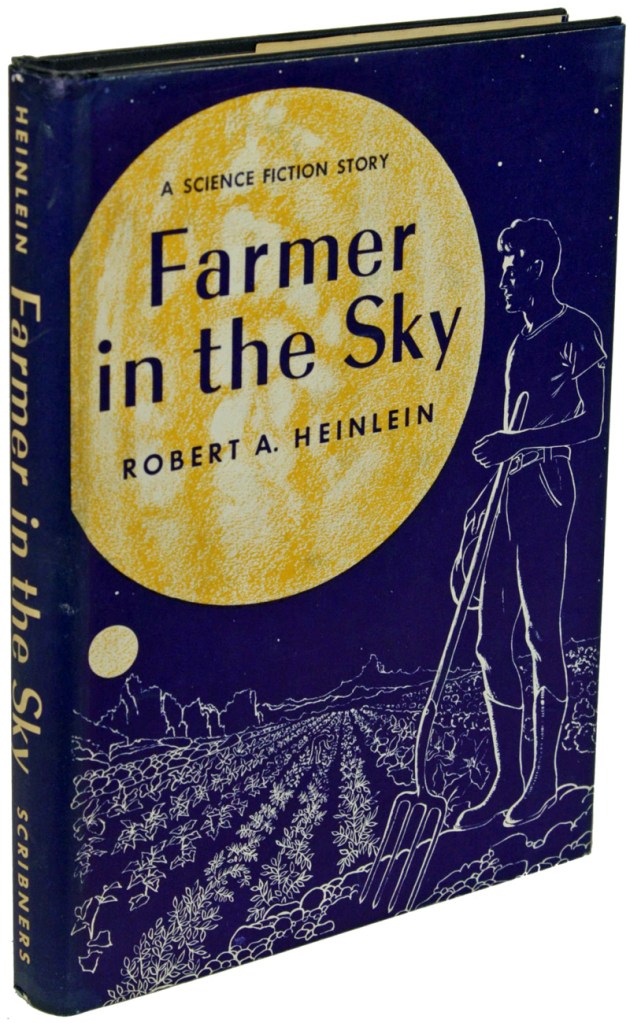
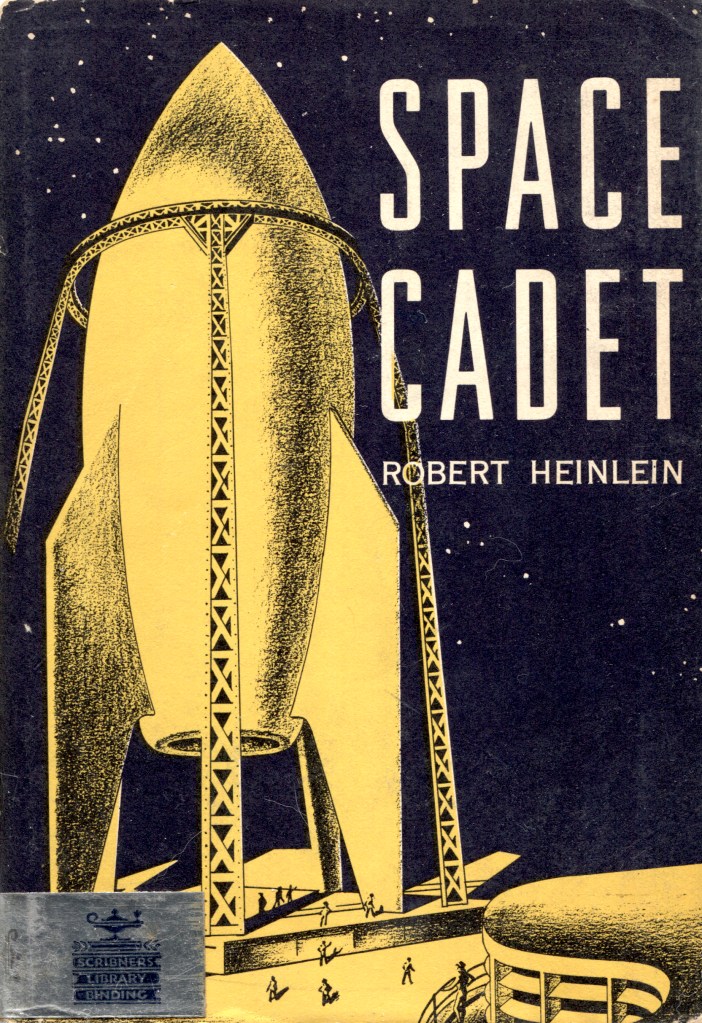
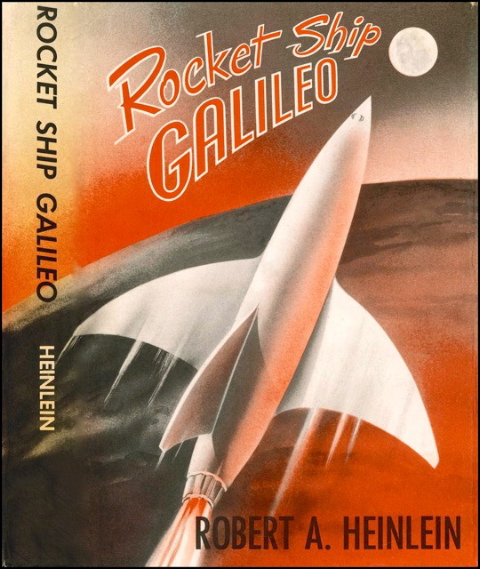
For years now, I’ve been watching people review science fiction books on YouTube. I can sense that many authors and their books are falling out favor over time. A major example is Robert A. Heinlein. When I was growing up, he was considered the #1 science fiction author. He was my favorite SF writer. I still love his books published before 1960, but the ones after that haven’t aged well with me. Reviewers generally pan Heinlein nowadays. I often see critical comments about Heinlein on Facebook. He’s just not popular anymore. I see many of his books at the used bookstore, but only a couple at the new bookstore.
Whitney at the YouTube channel Secret Sauce of Storycraft has been reviewing old Hugo winning novels by decades. She didn’t like over half of the winners. Five of the ten (The Wanderer, Stranger in a Strange Land, The Moon is a Harsh Mistress, This Immortal, and Lord of Light) have stopped working for me too.
If I gave the Hugo Award now for the 1960s, my list would be:
1960 – STARSHIP TROOPERS by Robert A. Heinlein
1961 – ROGUE MOON by Algis Budrys ( for A CANTICLE FOR LEIBOWITZ)
1962 – STRANGER IN A STRANGE LAND by Robert A. Heinlein
1963 – THE MAN IN THE HIGH CASTLE by Philip K. Dick
1964 – THE MAN WHO FELL TO EARTH by Walter Tevis (for WAY STATION)
1965 – THE MARTIAN TIME-SLIP by Philip K. Dick (for THE WANDERER)
1966 – DUNE by Frank Herbert
1967 – FLOWERS FOR ALGERNON by Daniel Keyes (THE MOON IS A HARSH MISTRESS)
1968 – no award
1969 – STAND ON ZANZIBAR by John Brunner
I thought there would be hundreds of science fiction books that would be Hugo worthy from the 1960s, but there weren’t. I used CSFquery.com and ISFDB.org to look at each year 1960-1969 and there just was’t that many older books that’s being read today that people still admire.
I love A Canticle for Leibowitz still, but it’s a fixup novel, and I mostly love it for the first story. And reviewers aren’t as wowed as they used to be for it. I kept Stranger on the list even though I no longer like it, because it’s so ambitious for the times, and historically, it is the standout novel of the year. I love Way Station, but I don’t think people still read it much. The Man Who Fell to Earth has grown in popularity since 1963. The Martian Time-Slip is way better than The Wanderer, and people still read it. I definitely think Flowers for Algernon has aged better than Mistress. I’d give No Award over Lord of Light, or any other novel I remember from 1967.
All the books on my list are in print, and all are available as audiobooks. That’s a good indicator that they are still being read.
I was shocked by how few science fiction books from the 1960s I still admire. Twelve years ago I wrote a series about the best SF books from each decade. Looking at my essay for the 1960s shows damn few books that people still read.
I remember back in the 1960s when old guys would gush about E. E. “Doc” Smith books from the 1920s and 1930s. I tried them, and they were horrible. I guess today’s young readers would feel the same about most of the books I loved back in the 1960s. Is anyone still reading Keith Laumer, John Boyd, Mack Reynolds, A. Bertram Chandler, etc.
What are the best science fiction books from the 1960s that you still read and think young people should try?
You might like to read An Information History of the Hugo Awards by Jo Walton. This was first published at Tor.com and many of the comments from readers are included.
“Loneliness Universe” by Eugenia Triantafyllou appeared in Uncanny (#58, May/June 2024) and is a finalist for the 2025 Hugo Award in the Best Novelette category. You can read or listen to the story online. If you are a member of the 2025 Seattle Worldcon, you can vote for this story through July 23, 2025.
I first learned about the Hugo Awards back in the 1960s. I never attended a Worldcon but always wanted to. I did attend some regional conventions back in the 1970s. I kept up with the Hugo and Nebula awards for most of the 20th century, but slowly lost touch with science fiction and fandom in the 21st century. I discovered “Loneliness Universe” when I read Austin Beeman’s “Reviewing the 2025 Hugo Award Finalists: Best Novelettes” at his website www.shortsf.com.
I’m so impressed with “Loneliness Universe” that I will try to read all the finalists. I might even join the convention as a virtual member and vote. Members get a packet that includes many of the works up for voting. Membership is $50, and adding virtual attendance is another $35. There’s little chance I will physically attend a Worldcon, so that might be my best shot at achieving an old desire.
“Loneliness Universe” is not what I’d call science fiction. Nor would I categorize it as fantasy. One reason I let the science fiction genre pass me by is that it’s no longer what I thought it was supposed to be. That’s not a criticism. I just didn’t feel like keeping up with changing times. However, “Loneliness Universe” is an outstanding work of fiction.
The story begins with an email from Nefeli to Cara dated September 18, 2015. Throughout the story, we get to read email exchanges, but the next one is dated July 5, 2015. I don’t know if this is a spoiler, but the first email is the end of the story. I did not discover right away. In fact, I wouldn’t have discovered it at all if I hadn’t immediately reread the story by listening to it a second time.
I recommend you read this story the first time, then listen to it a second time.
I’m not going to spend much time describing this story. Read it. I will spend some time trying to explain what it’s doing.
There are infinite ways to understand fiction. One way is to think of fiction as a spectrum. At one end are stories where the author sends the readers a message. On the other end of that spectrum are stories where the author creates a story that is just a story.
Think of the first type as a message in a bottle from an individual stranded on a deserted island. And think of the second type as how some people describe God as an artist who created our existence but walked away.
In “Loneliness Universe,” Eugenia Triantafyllou has created a metaphor for our current cultural existence. In this story, Nefeli realizes she is losing physical contact with everyone she knows. She can only communicate with them through email and instant messages. They can leave evidence of their existence, but she no longer communicates with people face-to-face.
The setup for this story reminds me of an experience I had on LSD fifty-five years ago. I thought everyone was in an isolated universe by themselves, and our efforts to communicate in words were no better than writing a message, putting it in a bottle, and throwing it into the sea, hoping for a reply. That each of us was an isolated universe inside our heads. In Eugenia’s story, she imagines we’re all moving into separate universes of a multiverse, and for a while, can communicate via email and instant messages. This sounds science-fictional, but it’s probably more Kafkaesque.
The thing about metaphors is not that they are accurate, true, or valid, but that they make you think about a concept from a new perspective. In recent weeks, I’ve often woken in the middle of the night and thought about all the hundreds of people I’ve known in my lifetime and wondered about what has happened to them. And I ask myself, did we ever really communicate? This is what “Loneliness Universe” is about. Are we on the same wavelength?
Are we ever in the same room at the same time with someone else? If you truly understand this question, I will say those moments of being together are fleeting. Many people want to believe sex is a way to achieve such synchronicity, but that’s not true either. I don’t believe telepathy is possible, but sometimes, when two people have had the same life experiences, they can say just the right words, they know they have achieved a kind of psychic Venn diagram intersection for a fleeting moment.
“Loneliness Universe” is not a perfect story. It’s only as good as you can resonate with what Eugenia Triantafyllou is expressing. I don’t know how well her message in a bottle was decoded by my inner self. We will never be in the same room together. But I’d like to believe I know what she was trying to say.
“Watershed” by James Blish was first published in IF Worlds of Science Fiction (May 1955). You can read it online here. “Watershed” became part of James Blish’s The Seedling Stars, a collection of short stories about adapting humans to new environments. The most famous story of the collection is the classic “Surface Tension.” Unfortunately, “Watershed” is not in print except for Supermen: Tales of a Posthuman Future, a 2002 anthology edited by Gardner Dozois.
“Watershed” is a rather preachy tale, not a thrillingly dramatic story like “Surface Tension.” Capt. Gorbel of the spaceship R.S.S. Indefeasible is traveling to Earth to deliver new colonists, but it’s not what you think. Humans have long colonized the galaxy, and the environment of Earth can no longer sustain “standard form” humans. Gorbel is going to Earth to deliver colonists that look like seals, but are considered just as human as we are, well, that’s by the standards of political correctness of their day.
The adapted human is Hoqqueah. He likes to sit in the forward greenhouse and stare into space as the ship approaches Earth. However, the standard form crew considers itself superior to the adapted humans. Averdor doesn’t like that Hoqqueah spends so much time in the greenhouse, and is annoyed by his constant talking. Averdor tries to convince Gorbel to forbid the adapted humans from using the greenhouse.
Hoqqueah knows of this prejudice, and he tells the Captain a story about Earth. He explains that Earth was the original home of all humans. He also tells how humans have found many planets that couldn’t support the standard human body, so they adapted humans to new forms. The concept is called pantropy. (That link gives several classic examples in SF.)
However, this is 1955, and we must ask ourselves if this story is about space exploration. The famous civil rights case, Brown v. Board of Education, happened in 1954. To be fair to James Blish, he had been exploring pantropy since 1942. But then Blish has Hoqqueah tell Captain Gorbel about prejudice against dark skin humans on old Earth.
The kicker to this story is that the standard form is now the minority.
“Watershed” has nice sentiments, but not much of a story. It’s told, not shown. It would have been far better if it had been dramatized. We don’t get to know Hoqqueah or what it’s like to be a seal person. And why, if standard form humans can’t handle Earth, how can the adapted men of his kind handle the spaceship with Gorbel and Averdor?
I recommend reading “Surface Tension” to understand what I mean by telling the story with drama. You can read it in the August 1952 issue of Galaxy Magazine.