Why Isn’t There An Audiobook Of The Complete Robot by Isaac Asimov?

Asimovs Robots

It all started when I saw an ad for The Prelude to Foundation on sale for the Kindle. I had read the Foundation trilogy back when I was a kid and I wondered if I read the Foundation series now should I read them in publication order or internal chronological order. I did some research and found these recommendations. Then a guy in my book club recommended a variation of those recommendations which included books not written by Asimov:

  1. The Complete Robot (no audiobook)
  2. Caves of Steel
  3. Naked Sun
  4. Robots of Dawn
  5. Robots and Empire
  6. The Stars, Like Dust
  7. Currents of Space
  8. Pebble in the Sky
  9. Prelude to Foundation
  10. Forward the Foundation
  11. Foundation’s Fear by Gregory Benford (no audiobook)
  12. Foundation and Chaos by Greg Bear (no audiobook)
  13. Foundation’s Triumph by David Brin (no audiobook)
  14. Foundation
  15. Foundation and Empire
  16. Second Foundation
  17. Foundation’s Edge
  18. Foundation and Earth

I love to listen to science fiction, so I was disappointed that the first book wasn’t on audio. However, there are three audiobooks available of Asimov’s short stories, I, Robot, Robot Dreams, and Robot Visions. I’m still going to have to read twelve short stories and the essays out of The Complete Robot, but it’s nice to know I can listen to 18 of them. Plus, Robot Dreams (1986) and Robot Visions (1990) have a handful of robot stories not in The Complete Robot (1982). Robot Dreams and Robot Visions have misleading titles. You’d think they’d be two collections all about robots, but they’re really collections of some of Asimov’s more popular stories and essays that feature a handful of robot stories.

The stories in The Complete Robot In the Audiobook
“A Boy’s Best Friend” (1975)
“Sally” (1953) Robot Dreams
“Someday” (1956) Robot Visions
“Point of View” (1975)
“Think!” (1977) Robot Visions
“True Love” (1977) Robot Dreams
“Robot AL-76 Goes Astray” (1942)
“Victory Unintentional” (1942)
“Stranger in Paradise” (1974)
“Light Verse” (1973)
“Segregationist” (1967) Robot Visions
“Robbie” (1940) I, Robot, Robot Visions
“Let’s Get Together” (1957)
“Mirror Image” (1972) Robot Visions
“The Tercentenary Incident” (1976)
“First Law” (1956)
“Runaround” (1942) I, Robot, Robot Visions
“Reason” (1941) I, Robot
“Catch that Rabbit” (1944) I, Robot
“Liar!” (1941) I, Robot, Robot Visions
“Satisfaction Guaranteed” (1951)
“Lenny” (1958) Robot Visions
“Galley Slave” (1957) Robot Visions
“Little Lost Robot” (1947) I, Robot, Robot Dreams
“Risk” (1955)
“Escape!” (1945) I, Robot
“Evidence” (1946) I, Robot
“The Evitable Conflict” (1950) I, Robot, Robot Visions
“Feminine Intuition” (1969) Robot Visions
“—That Thou Art Mindful of Him!” (1974)
“The Bicentennial Man” (1976) Robot Visions

According to Wikipedia, these six robot stories were not in The Complete Robot:

  • “Robot Dreams” (found in Robot Dreams)
  • “Robot Visions” (found in Robot Visions)
  • “Too Bad!” (found in Robot Visions)
  • “Christmas Without Rodney” (found in Robot Visions)
  • “Cal” (found in Gold)
  • “Kid Brother” (found in Gold)

What has started as an idle whim thinking about reading Foundation series, has turned into a project to read all the Robot series. I really wish I could get The Complete Robot with all the stories and essays in an audiobook. Who makes the decisions about which older books get put on audio — do they have a suggestion box? Evidently, short story collections aren’t big sellers. I’ve been hoping for years to see the shorter works of Samuel R. Delany, but no luck so far. If I think about it, I can rattle off a whole list of SF authors whose short stories I’d like to listen to. The first three to come to mind are William Tenn, Zenna Henderson, and Robert F. Young.

It’s rather fascinating that Isaac Asimov’s science fiction career focuses so much on these two series. I’ve always thought space travel, aliens, and robots were the core of science fiction, so it’s odd that Asimov pretty much ignores aliens, although not completely. He said he did this earlier in his career so as not to conflict with John W. Campbell’s editorial belief in human superiority. And this is especially ironic since Asimov was a professor of biochemistry and probably could have produced some great hard science fiction about alien lifeforms.

My gut tells me the new Anthropocene will quickly be supplanted by an age of robots. I’d bet sometimes before the end of this century we will have self-aware robots that are much smarter than us. For many years Asimov’s stories about robots dominated the sub-genre. So I think it’s a good time to read and think about them. I’m not sure, but I’m guessing Asimov will be completely wrong in his speculations about intelligent machines. Asimov is famous for formulating his Three Laws of Robotics, but I doubt we will ever be able to implement them into sentient AI. The three laws made a great structure for fiction though.

Asimov along with Patricia S. Warrick and Martin H. Greenberg also edited Machines That Think: The Best Science Fiction Stories About Robots & Computers. I wish that anthology was also on audiobook, but alas such classic anthologies seldom get produced with professional narration.

Asimov - Machines That Think

It’s odd. I opened my email this morning, found an ad for The Prelude to Foundation, and by the end of the day, have been sidetracked into a reading plan that might take a year to finish.

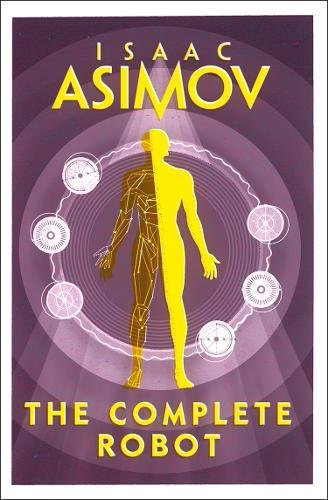
By the way, there’s a new edition of The Complete Robot that came out in 2018. Unfortunately, it’s only available in paper, no ebook or audio.

The Complete Robot (2018)

Asimov’s Robot Stories in order of publication:

  1. (1940) “Robbie”
  2. (1941) “Liar!”
  3. (1941) “Reason”
  4. (1942) “Robot AL-76 Goes Astray”
  5. (1942) “Runaround”
  6. (1942) “Victory Unintentional”
  7. (1944) “Catch That Rabbit!”
  8. (1945) “Escape!”
  9. (1946) “Evidence”
  10. (1947) “Little Lost Robot”
  11. (1950) “The Evitable Conflict”
  12. (1951) “Satisfaction Guaranteed”
  13. (1953) “Sally”
  14. (1954) The Caves of Steel
  15. (1955) “Risk”
  16. (1956) “First Law”
  17. (1956) “Someday”
  18. (1957) “Galley Slave”
  19. (1957) “Let’s Get Together”
  20. (1957) The Naked Sun
  21. (1958) “Lenny”
  22. (1967) “Segregationist”
  23. (1969) “Feminine Intuition”
  24. (1972) “Mirror Image”
  25. (1973) “Light Verse”
  26. (1974) “Stranger in Paradise”
  27. (1974) “. . . That Thou Art Mindful of Him”
  28. (1975) “A Boy’s Best Friend”
  29. (1975) “Point of View”
  30. (1976) “The Bicentennial Man”
  31. (1976) “The Tercentenary Incident”
  32. (1977) “Think!”
  33. (1977) “True Love”
  34. (1983) The Robots of Dawn
  35. (1985) Robots and Empire
  36. (1986) “Robot Dreams”
  37. (1988) “Christmas Without Rodney”
  38. (1989) “Too Bad!”
  39. (1990) “Kid Brother”
  40. (1990) “Robot Visions”
  41. (1991) “Cal”

This shows Isaac Asimov never stopped thinking about robots. Asimov died in 1992.

James Wallace Harris

I Guess Every Generation Needs An End-of-Civilization Novel

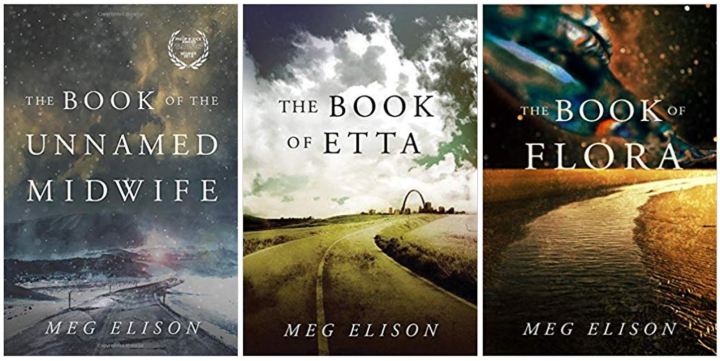
After finishing The Book of the Unnamed Midwife by Meg Elison it occurred to me that every generation might need its own end of civilization novel. One of my favorite books growing up was Earth Abides by George R. Stewart, about a disease that kills off most of humanity. It’s a great novel, so why does anyone need to write another novel about a disease that kills off most of humanity? Meg Elison’s novel is just as gripping as Earth Abides and leaves the same psychological taste in the mind, so in some ways, they are almost identical. But not quite.

Elison’s main character is a woman, and Elison gives a feminist view to the collapse of civilization that George R. Stewart could never have imagined back in 1949. The Book of the Unnamed Midwife is a last-woman-on-Earth novel for the #MeToo generation. (By the way, these books start off with the main character feeling they are the last person on Earth, but eventually find other people. I’d like to read one where the main character is really the last person on Earth.)

Science fiction has a set of standard concepts that every child eventually encounters. Space travel, aliens, time travel, and robots are the biggest science-fictional concepts kids learn about first, usually from television. The end of civilization and the post-apocalyptic new world does appear now and then in movies and television, but I believe many people don’t really grasp the idea fully until they read about it in a book. And I’m not sure how many people have read any end of civilization novels.

Everyone learns about Frankenstein but few people ever read Mary Shelley’s novel, which is a shame because the novel is so superior to the films. Fewer still know she wrote The Last Man, one of the earliest end of civilization novels. Ever since then such novels have come out infrequently but consistently. I’m wondering if every generation has one. When I was growing up in the 1950s we were afraid of The Bomb and WWIII, and read On the Beach by Neville Shute and Alas, Babylon by Pat Frank. At the movies, we saw The World, The Flesh, and The Devil where Harry Belafonte was the last man on Earth until Inger Stevens showed up. I think it’s hard to convey the depth of loneliness in a film of believing you’re all alone in the world. A first-person novel is required.

Meg Elison trilogy

Like I said, science fiction has a set of defining concepts that the genre owns, and some are so popular that most people can’t remember when they first encountered them. Post-apocalyptic stories have become almost as common as space travel, but not quite. I don’t remember when I first encountered the idea. I can’t say if it was a book or movie, but I feel it was Earth Abides, which I read in my late teens. I’m wondering to fully get into the concept you have to read a book and be old enough to appreciate the idea. To grok the existential crisis of the collapse of society we need to understand civilization and imagine what it would be without it.

Meg Elison imagines being a woman without all the protections of law and order. In her story, women and children die off at a rate greater than men. Women are hidden or enslaved. Strong men take women away from weak men. They are raped and put on leashes, they are captured for group marriages, or they are aligned with men who are willing to kill and die for them. The unnamed midwife of this story is a woman who dresses as a man and hides from people. She is a loner traveling across the western states trying to survive while encountering many horrors. She feels the safest living alone but suffers from soul-crushing loneliness and boredom.

Elison’s story is not exactly a first-person point-of-view narrative. Her novel has a frame. It begins in the future, supposedly after civilization starts developing again, where boys are taught to copy the journals of the unnamed midwife. Part of Elison’s tale comes from journals, partly first-person, and part is an omniscient narrator. I wasn’t bothered by this mish-mash of techniques, but some reviewers have complained about it. It allows Elison to let us inside the head of the unnamed midwife – she actually goes by many aliases. But we also get to read the stories of other characters in their first-person voices, plus we get to hear what happens to people that the unnamed midwife never gets to know.

The Book of the Unnamed Midwife has some similarities to The Handmaid’s Tale. I assume the boys are made to copy these journals so future men will be sensitive to women’s point of view. Elison also deals with patriarchal religions. And the framework suggests a new religion, which might be revealed in the later novels.

In The Book of the Unnamed Midwife, the population is killed off by a mysterious flu-like illness. During the cold war era, nuclear holocaust and biological weapons were usually the cause of leaving few people alive. A couple decades later it was nuclear winter or comet impact. Writers have come up with all kinds of ways of reducing the population down to near zero. These end of the world stories have humans almost becoming extinct, but not quite. Their stories are always about how a few people start over.

I’ve read a lot of these stories. They nearly all follow the same basic plot. A protagonist discovers they are alone. They wander about wondering what happened. Eventually, the protagonist encounters a few other people, but they quickly learn that other people can be dangerous. The stories continue with the search for food and shelter in the ruins, and after a lot of violence, people start finding a way to rebuild. The point of these stories is to tell us what life without civilization would be like. They also get into the foundation of right and wrong, and why people bond. It’s a good sub-genre for being philosophical. It’s a way to criticize the existing civilization and theorized about a better one.

Meg Elison covers all the bases. Her book has two sequels that are set in the same universe, but The Book of the Unnamed Midwife can stand alone just fine. I recommend it to any connoisseurs of end of civilization novels, or to any male that doesn’t fully comprehend the importance of the #MeToo movement. However, I should warn readers who like light and uplifting tales that this one is heavy and painful. I admire these kinds of books because they really make me think hard about existence, but I finish them psychologically worn out.

James Wallace Harris, October 8, 2019

Do We Still Need Science Fiction?

Spaceflight pioneers Konstantin Tsiolkovsky, Robert H. Goddard, and Hermann Oberth all claimed their careers were inspired by reading Jules Verne. If you read interviews or memoirs from almost any space scientist they will say they were inspired by science fiction. I imagine if you asked scientists working with robotics and artificial intelligence the same kind of questions, they would also say they were inspired by science fiction too. Millions of people work in fields that were once considered science fictional. Do we still need science fiction to inspire students to study these endeavors? In fact, isn’t science fiction now a distraction?

Are there new theoretical ideas in science fiction stories being written about today that would inspire young people to grow up and make them real? Science fiction has always served two purposes. First, it speculated about reality. Second, it was escapist entertainment that helped us escape reality. Of the new science fiction produced today, how much of it helps us speculate about reality and how much helps us escape?

If you really cared about space exploration aren’t there enough nonfiction books to study to fill lifetimes? More than that, you can major in space sciences and actually work in the space industry. Why read about robots when you can build them? Why read about AI minds when you can be programming them? Why read stories about life extension and cyborg enhancements when you can be working to make them happen?

Science fiction has always helped us imagine tomorrow, either to inspire us to create better futures from our dreams, or avoid the nightmares by extrapolating on our sinful ways. Yet, how much science fiction is written today that is actually useful? Is science fiction best use today to let us pretend we aren’t here? The world has a lot of problems, peoples’ lives are filled with stress. So escapism is a needed commodity.

Hasn’t fantasy supplanted science fiction? Star Wars is immensely popular, but has it ever speculated about anything real? Isn’t it just a spaced theme Disneyland? And doesn’t most hard science fiction speculate about futures so far ahead that they are fantasies too? How often do we get books like The Windup Girl or Aurora that make us think hard about the future? Books like Nineteen Eighty-Four and The Handmaid’s Tale are still incredibly useful but how often do we get genuine warnings like them? All too often modern dystopian novels are just escapist adventures for teenagers.

Do we need any more novels advocating space travel when the world is full of public and private space programs? Do we need any more novels about conscious machines when we’re speeding ever faster towards building them? Has the only value of science fiction become another opiate of the masses?

Where are the modern science fiction visionaries who are imagining things we haven’t imagine but need to build? What books being written today will be mentioned by future scientists as their inspiration for creating new technologies and social systems? Or has science fiction imagined all the possibilities already?

I hope readers can provide me with long lists of relevant stories and novels. Can you think of any SF story about something you want to see created in the real world that people aren’t already working on today?

James Wallace Harris. 10/1/19
[I got the idea for this essay while watching Last Call For Titan! on Prime Video last night. I realized while listening to the interviews with the scientists who built the Cassini-Huygens spacecraft as well as the authors of Beyond Earth who advocate human missions to Titan that we don’t need science fiction anymore. Not when real people can accomplish what they did with the Cassini-Huygens spacecraft and plan future missions to Titan.]


Forgotten Science Fiction Writer: Peter Phillips

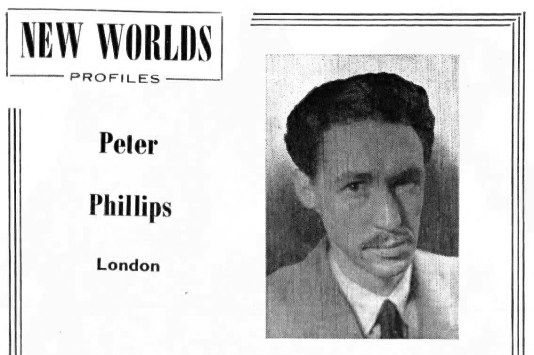
Peter Phillips bio at New Worlds bw

I have a growing fascination with forgotten writers. This began when I discovered a mention of a rare science fiction novel in an old fanzine, Phoenix by Lady Dorothy Mills published in 1926. That was the same year Amazing Stories began publishing. There wasn’t much science fiction published in hardback before the 1950s, and this was one was by a woman, and even rarer oddity. It took me about twenty years to track down a copy of Phoenix. I’ve since maintained a website devoted to Lady Dorothy Mills. At first, I’d get 2-3 inquires every year or two, but it’s now been years since anyone has shown any interest.

Over the past year, I’ve stumbled across three short stories by Peter Phillips. They were “Dreams Are Sacred,” “Manna,” and “At No Extra Cost.” I can’t say they are classics, but they were entertaining and eclectic. I liked them immediately. The Internet Science Fiction Database lists only 21 stories for Phillips, but two of them are the same story with different titles. It lists no published novels or short story collections. Philips died in 2012, but I did find a short biography of him in a 1958 issue of New Worlds, the issue of his last published science fiction story. There I learned that Phillips was a professional newspaper writer and editor, who had little time for writing fiction. The little bio also reported he had over thirty stories published, including detective stories. Wikipedia didn’t have much on Phillips, but the Science Fiction Encyclopedia had a concise but enticing write-up.

I enter a lot of data about science fiction into databases. Over the years I’ve noticed there are many writers who have just a handful of short stories published and then they disappeared. I’ve wondered what happened to them. Was getting published not the experience they dreamed about and worked so long to achieve? Is writing fiction more trouble than it’s worth? Did they not get the praise and attention they expected?

Phillips had some minor recognition. His name was only on one magazine cover, but a handful of his stories made it to some nice collectible anthologies.

“Dreams Are Sacred” were in these books:

Imagination Unlimied edited by Bleiler and Dikty

The Astounding-Analog Reader edited by Harrison and Aldiss

The Arbor House Treasury of Science Fiction Masterpieces edited by Silverberg and Greenberg

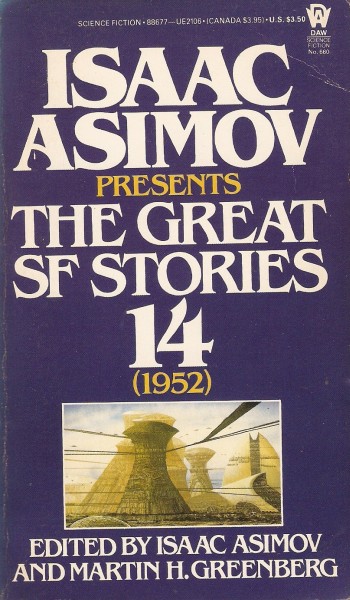
The Great SF Stories 10 edited by Asimov and Greenberg

The Road to Science Fiction v. 5 edited by James Gunn

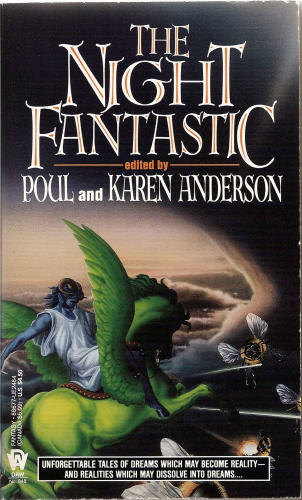
The Night Fantastic edited by Poul and Karen Anderson

“Manna” was included in these anthologies:

The Big Book of Science Fiction edited by Groff Conklin

The Science Fiction Argosy edited by Damon Knight

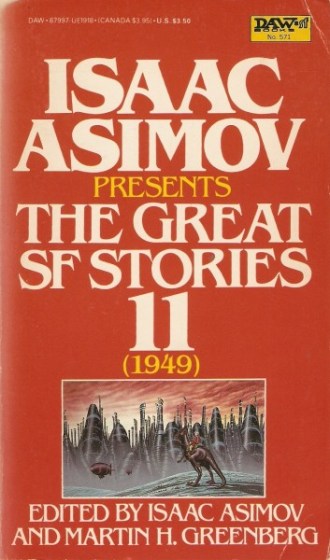
The Great SF Stories 11 edited by Asimov and Greenberg

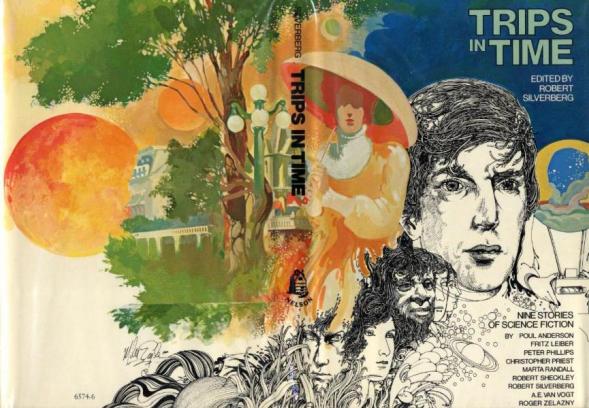
Trips in Time edited by Robert Silverberg

“P-Plus” and “Unknown Quantity” were reprinted here:

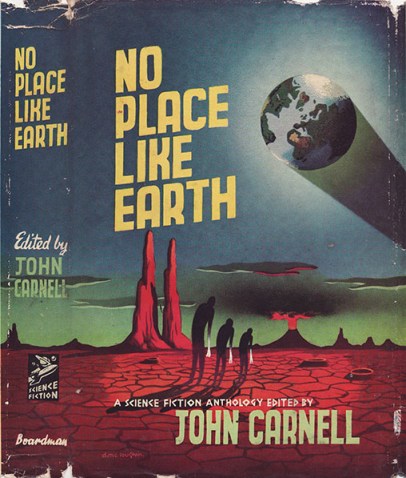
No Place Like Earth edited by John Carnell

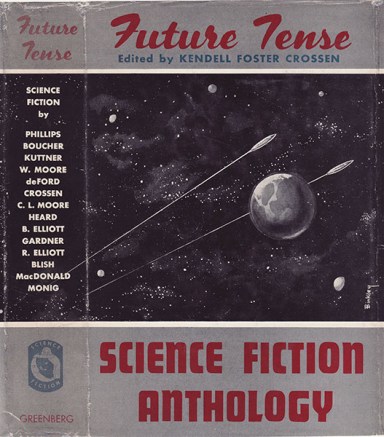
“Plagiarist” was reprinted in:

Future Tense edited by Kendell Foster Crossen

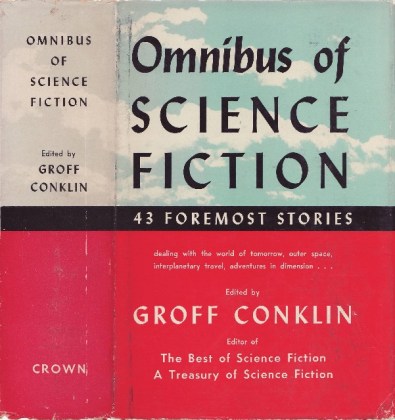
“Counter Charm” was included in:

Omnibus of Science Fiction edited by Groff Conklin

50 Short Science Fiction Tales edited by Asimov and Conklin

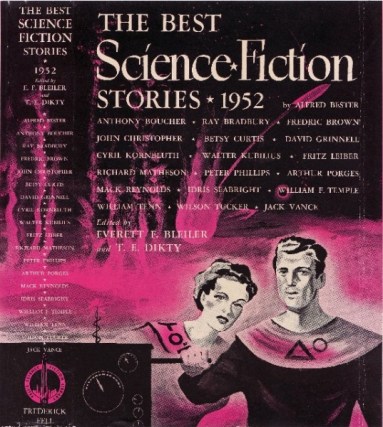
“At No Extra Cost” made this classic best-of-the-year anthology:

The Best Science Fiction Stories 1952 edited by Bleiler and Dikty

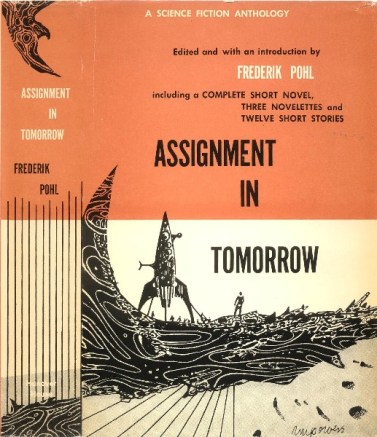
“She Who Laughs” was liked by Fred Pohl:

Assignment in Tomorrow edited by Frederik Pohl

“Lost Memory” is remembered here:

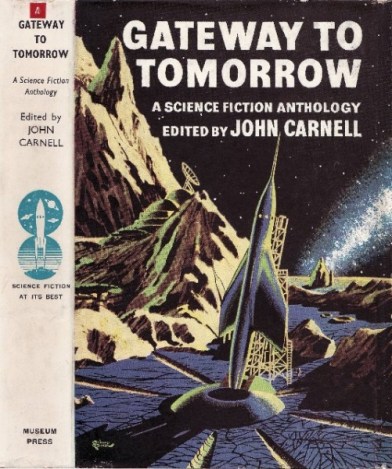
Gateway to Tomorrow edited by John Carnell

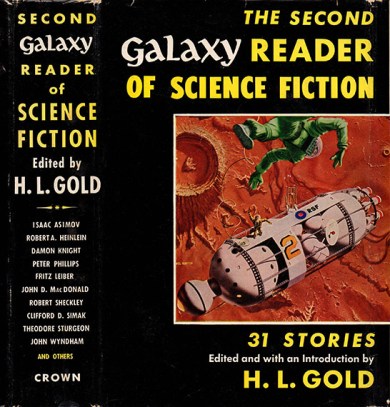
Second Galaxy Reader of Science Fiction edited by H. L. Gold

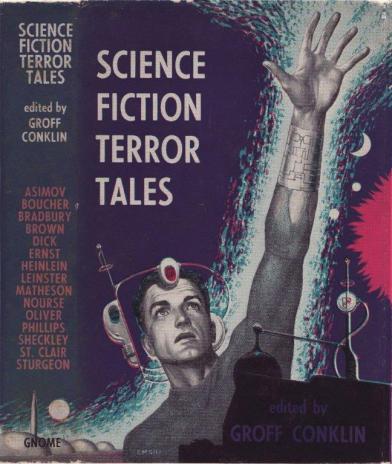
Science Fiction Terror Tales edited by Groff Conklin

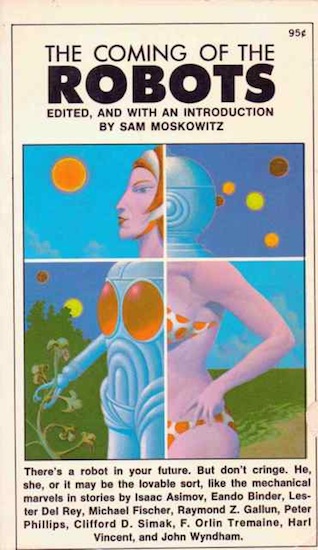
The Coming of the Robots edited by Sam Moskowitz

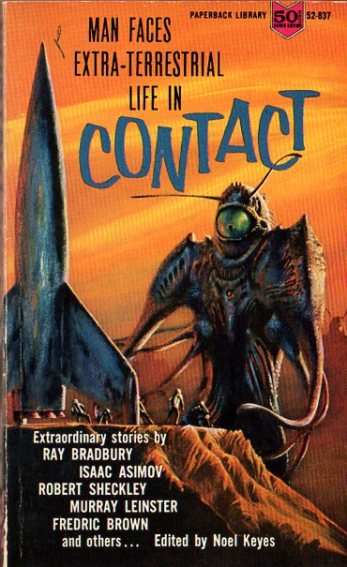
Contact by Noel Keyes

The Great SF Stories 14 edited by Asimov and Greenberg

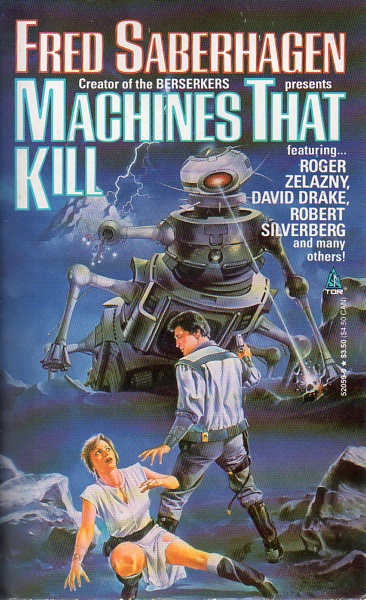
Machines that Kill edited by Fred Saberhagen

“University” was Phillips second story in:

Second Galaxy Reader of Science Fiction edited by H. L. Gold

“The Warning” was snagged by Judith Merril:

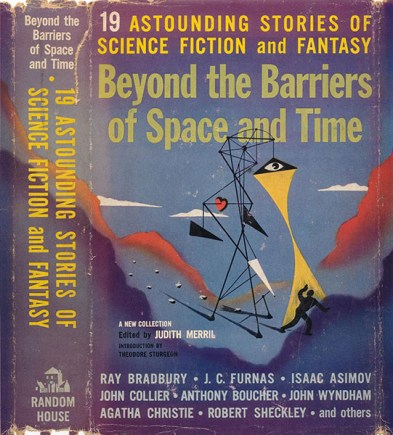
Beyond the Barriers of Space and Time edited by Judith Merril

“c/o Mr. Makepeace” was included in:

Operation Future edited by Groff Conklin

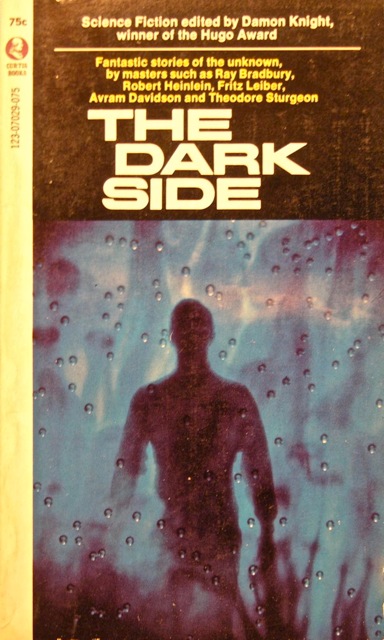
The Dark Side edited by Damon Knight

Listing out these anthologies (and I didn’t list the foreign and obscure reprints) shows that Phillips was liked by a number of anthology editors. Because most of these anthologies are old, it indicates that Phillips is being forgotten. That’s sad.

I’m going to read his stories and then maybe write about them. I don’t think they hold up for younger, modern readers, but they are interesting in a historical way regarding the genre. Phillips seemed up on current affairs in his tales, but then he was a newspaperman. Of the three I’ve read, they felt like he had a good sense of speculating about the future and social changes. They had some impact on readers of his day, but evidently not lasting impact. I’d like to explore why.

Most science fiction is eventually forgotten, but not all. I hear there are two television productions of The War of the Worlds coming out this fall. Why is that story enduring, but most other SF not?

James Wallace Harris

“At No Extra Cost” by Peter Phillips

At No Extra Cost by Peter Phillips

I’ve always hoped that editors of retrospective science fiction anthologies missed a few gems when mining old science fiction magazines because I want new editors to still have stories to discover. I believe “At No Extra Cost” by Peter Phillips is one to consider. It’s not a classic, but if I was editing a collection of AI and robot science fiction stories I’d include it. “At No Extra Cost” came out in the August 1951 issue of Marvel Science Fiction and was recognized as one of the best stories of 1951 by Bleiler and Dikty in The Best Science-Fiction Stories: 1952. Except for one minor German reprint in 1974, Bleiler and Dikty were the last editors to appreciate this story.

I feel “At No Extra Cost” is as good as Heinlein’s shorts in the 1940s. Phillips combined a good futuristic conflict without doing a lot of info-dumping. But like I said, it comes from a lesser SF magazine, and it’s not been regularly reprinted over the years, so maybe it’s something that only tickles my interest. Recent news reports suggest that stories published during this time are not likely under copyright, so I’ll reprint it below. It will be a test of my new OCR program. See if you find it fun too.

We don’t know much about Peter Phillips. He never published much. I wonder if editors overlooked him because he never stood out in the digests. He has five stories in our database but never got enough citations to make the final list.

When reading an old SF story we should try to consider the scientific knowledge of the period. In 1951 computers were just being discussed in the public, and it would be years before the term artificial intelligence would be created. Most science fiction writers at the time just presented robots that acted human, so we have to give Phillips credit for trying to imagine how a computer could evolve into a conscious entity. And we should give him extra credit for creating an interesting religious angle for society to reject robots. Although, I have to ding Phillips ten points for not taking the plot to its logical conclusion – won’t intelligent robots be slaves if we own them and make them work?


James Wallace Harris, 9/28/19
Should I Review Stories I Don’t Like?

Anthologies - 2 shelves

Whenever I read a story I want to write about it. The impulse is not to review but to crystallize my thoughts. If I publish what I write, it will be considered a review. If I don’t like aspects of a story, my readers will think I’m telling them to avoid the story. In actuality, I’m only describing my personal reactions. It doesn’t mean other people reading the story won’t enjoy it or have different reactions altogether.

I’ve been disturbed lately by reading essays by young people dismissing older books and authors because those books and writers don’t meet their modern moral standards. I recently wrote an essay about this, “The Uneducated Unkindness of Youth Censoring the Past.” I’ve been thinking about why they do this, and why critics write about fiction they don’t like. At one level its a kind of censorship. The young are saying don’t read these stories because the author is morally suspect, or the characters express repugnant beliefs, or that the theme of the story is objectionable. Ordinary critics when they pan a story are merely helping their readers save money, or helping the writer by pointing out flaws that need fixing. These good intentions have the same censorship effect.

Stories need readers and the best way to get readers is by positive reviews and word-of-mouth praise. Protests by young writers often feel like they are implying, don’t read old stories, read our new stories. However, they seldom offer substitutes for the stories they protest against. Reviewers might think by warning their readers against poor stories their readers will find superior stories to buy instead, but again, they usually don’t offer superior alternatives. Of course, offering substitutes is hard. If you protest a 1950s novel, you should suggest another 1950s novel covering the same thematic territory that does meet your standards. If your review rips up a new novel, you might suggest another contemporary novel that tackles the same subject without those faults.

I’m wondering if I should only write about stories I believe worthy of reading. The real goal should be to promote stories I love, and not gossip about stories I hate. I realize now in popular culture there are two kinds of people out there – promoters and protesters. But it gets very complicated. Take climate change. I’m against it, and I’m all for the protesters who are also against it. But the problem isn’t pro v. anti regarding climate change. It’s really capitalism v. stable weather, a healthy environment, preserving species. It’s positive v. positive. This is why the issue of climate change is so divisive, it’s a fight over two positives. If fixing climate change didn’t involve dismantling capitalism, most people would be for fixing the problem.

We all have limited reading time. We don’t want to waste it on bad books. The real choice should be between all the great stories we could be reading. This makes me think when I mention a book it should be a book worthy of recommending. There are thousands of science fiction novels and short stories published each year. Reading about bad stories is only wasting your reading time – time you could be actually be reading good stories. It also wastes my writing time.

I don’t know if I can break my habit of writing about stories I don’t like. I think there is a strong drive in everyone to criticize what annoys them. I read a story yesterday that annoyed the crap out of me. I kept waiting for it to get to its point thinking the author would redeem a bad beginning with a good ending. He didn’t. I then wanted to write about my feelings of reading outrage. But why should you care about my reading meltdown? Other than people who think, “If Harris hates it, I’ll love it” there are no upsides.

There are still problems with only writing about stories I love. Stories aren’t always good or bad. Sometimes they are almost excellent except for a few flaws. Should I promote those books? I recently read an award-winning novel that I thought extremely creative. Yet, it left me emotionally empty in the end because it never developed a heart. It was a fireworks display of ideas and dazzling writing, but the characters were blah. Of course, other readers might have felt more for those characters and the book would be 100% satisfying for them. However, should I review it and say take a risk of steering you wrong? Ultimately, I decided if I can’t completely back a story I shouldn’t mention it.

Finally, there’s the problem of me loving a story but it fails to be loved by my readers. I can’t guarantee you’ll love the stories I do. I believe I have two choices. When dealing with fiction I can either write about what I love and hope you love it too, or I can give up writing about fiction and try to write fiction instead. I’d rather do the latter, but I can’t right now. But if I did get my fiction published how would I feel about people writing about it?

I’ve taken a lot of writing classics and workshops and criticism is very important. Critiques are a kind of marketing data for writers. Pure praise is useless, other than encouraging the ego. Complete criticism makes you want to stop writing. What is helpful are critiques that say these parts made me want to keep reading, and these parts made me want to stop reading. I wonder if this approach would also work for reviewing stories? It might be helpful to writers, but I don’t know if potential readers care.

Of the two approaches, which do you prefer? Only read reviews of stories worthy of reading, or read reviews which lists the highs and lows? Do you really want to run out and read a flawed book?

James Wallace Harris, 9/28/19


OA (Older Adult) Science Fiction

Man in His Time by Brian W. Aldiss

Science fiction is youthful literature. Its bestsellers are often YA titles. Overall SF fans are mostly young, as are the protagonists in SF. My hunch is most science fiction readers discover science fiction early in life and eventually put it away for other interests as they get older. There’s a certain percentage of SF fans that stay loyal their whole life, but often they stick with the kind of science fiction they grew up reading. We just don’t see much science fiction aimed at readers in their last third of life, or feature lead characters in their waning years. There’s a reason for this – science fiction is future-oriented, and old readers don’t have much of a future.

Last year I started reading anthologies that collect the best SF of the year. Annual best-of-the-year anthologies first appeared in 1949, but Isaac Asimov and Martin Greenberg produced a retrospective annual series starting with 1939. So far, I’ve read the best stories for 1939-1950, a time period often referred to as The Golden Age of science fiction when John W. Campbell reigned as supreme editor of the genre with his magazine Astounding Science-Fiction. I feel less than a quarter of these stories still work in 2019 and for a reader my age. For the most part, the genre was youthful, the writers youthful, and the readers were youthful. There was an abundance of optimism back then.

After a lifetime of reading science fiction, I feel the genre has a problem with maturity. However, that might be because I’m 67 and I’m having trouble finding science fiction that’s relevant in my waning years. Science fiction doesn’t want to grow up. Even when science fiction deals with a serious subject the treatment is often YA. In the past, I guess the editors and writers knew most of their readers were under 25. Campbell was acclaimed in the 1940s for producing a science fiction magazine for adults. Well, at least readers in their twenties and thirties.

The genre matured in the 1950s when The Magazine of Fantasy and Science Fiction and Galaxy Science Fiction appeared, and the major New York publishers began publishing science fiction in hardback. The New Wave in the 1960s pushed the genre even further into growing up. Then in the 1970s academics started teaching about the genre, boosting the maturity a bit more. On average, science fiction books have gotten larger, more ambitious, better written, and a bit more adult. The genre left the young adult stage, but most adult science fiction today is still aimed at readers in their restless twenties or maturing thirties. I seldom find SF books that reflect the maturity of middle-age, much less old age.

Since 1977 science fiction has been taken over by movies and television, and readership for the magazines has dwindled. At one time Analog had 130,000 paying readers, but now it’s one-sixth or one-seventh of that. Star Wars has lowered the maturity of science fiction, and science fiction based on comics reduces its concepts to childishness. There is little movie science fiction that appeals to the mature mind. I’m not saying there is anything wrong with Star Wars or superhero movies, but from my age perspective, they are for children. Too much of science fiction suffers from arrested development, especially the films and television SF. I have to admit that I didn’t tire of being a YA until my forties.

I write this because I just listened to The Best SF of Brian W. Aldiss from Audible, which I believe is based on the collection Man in His Time: The Best Science Fiction Stories of Brian W. Aldiss which came out in 1988. These stories have completely derailed me from my best-of-the-year reading project. His stories have grabbed my attention because they are different and for the most part serious and adult. I read a couple of Aldiss novels and a handful of short stories way back when but have mostly forgotten about him and his work. In researching Brian W. Aldiss, I think most SF fans have forgotten him too. Three of the books I bought were library discards and they had date-due paper glued in their back. None of them seem to have ever been checked out.

If you look at the entry for Brian W. Aldiss in Wikipedia, most of his bibliography has no separate linked entries, and the content for those that do are often skimpy. That implies that he doesn’t have the fans to keep his work alive, which is a terrible shame. If you look at the bibliography for Robert A. Heinlein at Wikipedia nearly every last novel and short story has a link to its own entry in the encyclopedia, and often they are extensive.

Part of the problem is Aldiss is English, and English science fiction writers other than Arthur C. Clarke have never been hugely popular in the United States. Aldiss and J. G. Ballard achieved a certain level of success. And readers have always loved the odd novel from John Wyndham or John Christopher, but for the most part, I don’t see these names mentioned when people state their favorite SF writers today. Sure, some of the New Space Opera writers from Great Britain have gained a swelling of new fans in the last two decades, but I really don’t know how big their fanbase is compared to American SF writers.

1I assume part of my attraction for Aldiss right now is he’s both serious and British. I’ve gotten into Aldiss so much that I bought and read his memoir about writing, Bury My Heart at W. H. Smith’s. Aldiss does a lot of name dropping in that book, referring to British science fiction and literary writers, and to be honest, I know of only a small percentage of those supposedly famous people. It’s like an alternate universe of science fiction. I’m incredibly thankful for pulp scanners because I can now look up works in New Worlds, Science Fantasy, and Interzone.

Brian Aldiss isn’t OA, but he is MA (Middle Adult Science Fiction), and his stories feel like they are more serious and adult than most SF that was written by his American contemporaries. The stories I listened to were:

  • “Outside” (1955)
  • “The Failed Man” (1956)
  • “All the World’s Tears” (1957)
  • “Poor Little Warrior!” (1958)
  • “Who Can Replace a Man?” (1958)
  • “Man on Bridge” (1964)
  • “The Girl and the Robot with Flowers” (1965)
  • “The Saliva Tree” (1965)
  • “Man in His Time” (1965)
  • “Heresies of a Huge God” (1966)
  • “Confluence” (1967)
  • “Working in the Spaceship Yards” (1969)
  • “Super-Toys Last All Summer Long” (1969)
  • “Sober Noises of Morning in a Marginal Land” (1971)
  • “The Dark Soul of the Night” (1976)
  • “Appearance of Life” (1976)
  • “Last Orders” (1976)
  • “Door Slams in Fourth World” (1982)
  • “The Gods in Flight” (1984)
  • “My Country ‘Tis Not Only of Thee” (1986)
  • “Infestation” (1986)
  • “The Difficulties Involved in Photographing Nix Olympica” (1986)

Aldiss published over 300 short stories, and his collected short stories run 5 volumes just for the 1950s and 1960s. Except for “The Saliva Tree” which won a Nebula, and “Super-Toys Last All Summer Long” which was the inspiration for Spielberg’s film A.I., these tales aren’t that well known, at least with American readers and anthologies. Aldiss has 41 short stories in our database with at least one citation, but none of them made it to our list Classics of Science Fiction Short Stories which required a minimum of 8 citations.

This is an exciting change for me and reading science fiction, I’m really digging Aldiss. I even bought Apertures: A Study of the Writings of Brian W. Aldiss by Brian Griffin and David Wingrove. Aldiss says in his memoir that they did a good job covering his work. My copy is also a library discard and no one had ever checked it out either.

Of these stories I wish “Appearance of Life” which I’ve written about twice already, and “The Saliva Tree” were on the Classics of Science Fiction Short Stories list. I’ve also written about “The Saliva Tree.”

There’s a story in The Best SF Science Fiction of Brian W. Aldiss that divides his work, “The Girl and the Robot with Flowers” from 1965. In this story, a character named Brian W. Aldiss is talking to his wife about his struggle to write his latest science fiction story. He tells his wife the plot and she said it sounded like a pretty good run-of-the-mill SF story, but it also felt like something from Poul Anderson, and Brian replies, it also sounded like something from an anthology edited by Harry Harrison. Brian the character tells his wife that he’s pretty sure Michael Moorcock at New Worlds or Fred Pohl at Galaxy would buy it. Then the Brain W. Aldiss character goes on to narrate to the reader why he didn’t want to write anymore 1950s kind of science fiction. All that interplanetary stuff wasn’t about real-life or his life.

Could this be Aldiss’ conversion to the New Wave? Could this have been when Aldiss decided to become a grown-up SF writer? Of course, his novels after that seem to have lost readers in America. It wasn’t until his Helliconia Trilogy in the 1980s did he make a comeback, and even then only with limited popularity among the average American SF fan.

Science fiction has gotten more exciting in the last two decades as it has gotten more diverse writers and readers. It is taken seriously. I believe The Calculating Stars which just won the Hugo is a serious novel that has an adult appeal. But its heroine Elma York is just in her twenties. I loved her story. Yet, it’s about an alternate past that I wished had happened (except for the reason the world changes) that might appeal to people my age. But it’s POV still focuses on the very young. Philosophically it asks why we didn’t go to Mars. That’s what I asked too when I was young. Now I ask, why did so many of us have that Mars fantasy?

I’m looking for science fiction aimed at people in their seventh decade of life that takes reality deadly serious and explores realistic possibilities. Modern science fiction books like The Calculating Stars still work well for me, but I still want something different. Something philosophically deeper. I might need to leave the genre, but for now, I’m picking up the trail where Brian Aldiss and J. G. Ballard diverged in the 1960s.

James Wallace Harris, 9/11/19

Be sure and read MarzAat’s review of this book, “Man in His Time; or, Adventures in Reviewer Parallax,” which gives each story its own review. That’s what I sat down to do when I started writing this essay. But my memory forgets stories almost as fast as I read them, so it’s a real struggle for me to review anthologies and collections. I wish I could have reviewed <i>Man in His Time</i> like MarzAat.

Why Read Outdated Science Fiction?


The Moon is Hell! by John W. Campbell Jr.

I was trying to make space on my bookshelves by thinning out a few books. I noticed The Moon is Hell! by John W. Campbell Jr. This book collects two novellas, “The Moon is Hell!” and “The Elder Gods.” My immediate thought was to cull The Moon is Hell! because it wasn’t a major work and John W. Campbell has been designated a repugnant person. I checked Alec Nevala-Lee’s account of this book and “The Moon is Hell!” appears to be a trunk story written in the thirties and rewritten for this 1951 hardback publication. “The Elder Gods” was a story Arthur J. Burks submitted to Unknown that Campbell rejected but later rewrote himself. Not a very promising pedigree. Besides, I have a couple thousand more worthy books to read.

Just to be sure, I started reading “The Moon is Hell!” and damned if I didn’t get hooked. The story is about the second mission to the moon where fifteen scientists land on the far side to set up base in 1979. The first manned landing had been five years earlier. The new mission is to live on the moon for two years. A resupply ship would arrive to take the men home in 1981. However, that ship crashes. Because the base is on the far side of the moon, there is no radio contact with Earth. Campbell didn’t give this story a lunar communications satellite to relay messages.

Basically, Campbell’s setup is like the famous Shackleton antarctic expedition or the ill-fated Franklin arctic expedition. The men are cut off and must survive on their own. They figure it will be almost a year before a rescue mission could be sent and they only have supplies for a couple months. The majority of this story is the leader’s diary describing their efforts to survive. It’s very reminiscent of The Martian by Andy Weir. The stranded scientists all become inventors with the productivity of Thomas Edison. “The Moon is Hell!” has a lot of science and engineering in it, which I found fascinating but wondered about its accuracy. However, I love this kind of tale, whether it’s fiction or nonfiction.

This brought up several questions:

  1. Why read a very dated science fiction story?
  2. Why not read nonfiction about actual historical moon missions instead?
  3. Why even consider reading a minor story?
  4. Why not read the best current science fiction?
  5. Why read a story by an author who’s been deemed bad person?
  6. With a TBR pile in the thousands, shouldn’t I triage my reading?

Once I started reading “The Moon is Hell!” I stopped thinking about those questions. I guess it’s like wanting to eat healthily, but once you take a bite of junk food all considerations are off.

I could nitpick “The Moon is Hell!” to pieces yet I kept reading with great enjoyment. We’re reading The Calculating Stars by Mary Robinette Kowal this month at my online book club. Several members refused to join the group read because they claim the book too unscientific and illogical for their tastes. I think the novel is outstanding and argued they should read it because it’s a good story. I also argued that our group should try any science fiction book that’s swept the awards.

Reading “The Moon is Hell!” showed me I didn’t care about science. Nor did I care about Campbell’s growing bad reputation. The story is everything. That’s what it comes down to. I’m also in a Facebook group that’s discussing “In the Walls of Eryx” by H. P. Lovecraft, another outdated story about intelligent life on Venus by another shunned writer. Again, it’s the story stupid.

We don’t read for facts. We don’t care about literary standing or the author’s morality. Few readers compare the books in their collection to find the best one to read next. We select books on random whims. If the story grabs us we keep reading. Readers are simple creatures of habit. I could clear a shelf of my books without looking at the titles and it wouldn’t matter, because I’ve got plenty more to randomly grab.

Why aren’t readers more philosophical, scientific, mathematical, logical, and aesthetically aware when picking their next read? Why read any old book when we could always read a great book? I suppose some people are disciplined in what they read, but I’m not. I have over a thousand unread nonfiction books written by the most brilliant people writing today, but nine times out of ten I pick an old science fiction story that’s poorly written by literary standards, outdated by modern science, and far less popular than current science fiction.

I guess I know my drug of choice.

I also know if I studied all the books I own to select the very best book to read next it would take me a year to decide. Knowing this means I should never buy another book, worry about cataloging my books in Goodreads, or even worry about creating an order for shelving my books. Just grab a book at random. Keep reading if I like it, give it away if I don’t. It also tells me that buying books has no relation to reading books. I have an urge to read. I have an urge to buy. They are two unrelated urges.


James Wallace Harris, 9/9/19


Untying a Knotted Plot

Yali on the Bosporus

I hope you have read “The Ocean Between the Leaves” by Ray Nayler from the July-August issue of Asimov’s Science Fiction. I’ve read this story four times trying to follow all the plot twists so I’ll be giving away spoilers describing my thoughts from each reading. If you’ve read the story, it will be more fun to follow my bumbling efforts to figure things out. “The Ocean Between the Leaves” is not free to read online, but it was made into a free podcast read by the author. The story is about a young woman who works at a yali on the Bosphorus, maybe like the one pictured above. Ray Nayler has lived all over the world, so this tale is full of exotic details.

I hope Nayler doesn’t mind that I dissect his story. I’m doing it for several reasons. First, my friend Piet asked me to read the story to see what I thought about the plot. He was confused but got some help from Greg Hullender’s review at Rocket Stack Rank. Piet wondered if I would get the story in one reading. I didn’t. I also looked at Greg’s review, and then read it again. After two readings, I thought I got it. But there were many lingering plot questions that kept popping into my head. I then found the audio version and listened to it. Okay, I thought when I finished it this time, I’d gotten everything for sure now and laid down to take a nap. I woke up with more questions. (That pesky subconscious.) That’s when I thought about writing down my convoluted journey through this story.

I’m going to explain all my reading reactions to the story while I still remember them. I hope I don’t hurt Ray Nayler’s feelings. I’m trying not to criticize his story because I don’t know if the problems are with me the reader or with him the writer. The plot of the story is both simple and complicated. It’s simple in that not a whole lot happens, but it’s complicated by how the story is told. It’s intended as a mystery, one meant to make the reader keep guessing. By the way, the story is full of colorful details that make the story enjoyable on other levels, but ones I won’t comment on.

First Reading

Read it the first time on my iPhone 6s Plus while lying on a couch. To be honest, I read it somewhat fast and I just missed the whole issue of mindswapping. That’s a huge plot point to pass over. In my defense though, it wasn’t ever explicit. It was hidden to create a mystery.

I liked how “The Ocean Between the Leaves” started out about a young woman gardener, Feride, on a rich person’s estate. She pricks her finger and it gets infected. Three months later she’s still in intensive care. Nayler describes the infection in gruesome detail.

We’re now introduced to the doctor Melek and Feride’s brother Fahri. Fahri visits his sister every day and flirts with the doctor each time with a 5-minute date. On this day Fahri has a cut that the doctor fixes. Then he goes out to work. We learn that he isn’t rich and his sister’s bills are high. We learn that he makes money tagging skips. I assume this is attaching some kind of signaling device to people who are skipping out on something. His boss Tarik is shady and wears VR glasses. We also learn that Tarik is shaking Fahri down for a lot of money.

Fahri tries to catch three slips in one day to get ahead on the bills but is knocked out by the third slip.

Then the story jumps back in time. Feride is told she is going to die, but the state is going to transfer her mind to another body so she can wrap up her life and say goodbyes. I thought that was rather odd. She/we are told she will be an experiment. At the time, I thought it was an uncommon procedure.

Feride goes back to the yali where she worked but tells people she is her brother. The first time I read this I didn’t realize we had jumped back in time and didn’t realize this Fahri was the same as the Fahri we had already met. Feride/Fahri hears a story from the old head gardener Suat about fighting the system. The first time I read this, I didn’t understand how the story changed Feride into Fahri. I was confused by the pronouns of describing her in his body. I focused on Fahri’s effort to make money and the action surrounding him. I wondered if Feride had died and had been transferred to another becoming Fahri. I was totally confused by the plot. The two similar names Feride and Fahri kept tripping me up, and I didn’t understand why they were the same person. At first, they seemed to be two separate people, and then they were the same person. Probably all of this confusion was due to me reading too fast. But I think some of the confusion was due to information behind withheld from the reader. But I also considered I’m getting old and I’m not sure if I can keep enough of the story in my head to make all the puzzle pieces reveal the overall picture.

Second Reading

This time I read the story on my iPad mini while in my reading chair. I was more determined to read slowly, understand the story, and concentrate on the details. This time around I noticed several references to Fahri being a prince. I also admired the rich background details more in the story.

On my second reading, I paid more attention to the first line, “It began just like a fairy tale; an orphaned young woman pricked her finger on the thorn of a rose, and fell asleep.” With this reading, I only figured this line linked Feride pricking her finger and getting infected. I didn’t try to imagine what it might mean for the whole story.

I also noticed this time we’re told Feride means “the only one.” Now that’s an obvious clue, but only in hindsight. But we’re also told Feride believes it means “the lonely one.”

I had read Greg Hullender’s review with spoilers. The keyword he gave was androids. I remembered from the first reading there had been androids, but I assumed they looked artificial and were just slave workers on the docks. I didn’t realize that androids could look just like people. I realized I was reading a story much like Mindswap by Robert Sheckley where technology allowed people to easily swap minds between bodies. In the first reading, I thought Feride was being put into a clone body. Nor did I realize that the skippers Fahri chased were minds in rented bodies trying to run away with them.

In the second reading, I realized that Feride was given a three-day rental body to wrap up her life, and she decided to keep it and work to pay her medical bills to save herself. I still didn’t understand some things. Did she skip out with the three-day body, or got a third body on the black market.

However, the story simplified into one of a person saving themselves. That’s a pretty neat idea of paying for your own medical bills by working in another body while your sick body remained in a coma. Pretty cool. Happy ending.

However, more questions kept popping into my mind.

Third Reading

This time I listened to the podcast version. I love listening to science fiction stories. I would have made my second reading a listen if I had known about the podcast. This time I just “read” the story to enjoy it. I thought I had all the plot twists down. However, after the podcast was over, I put the story out of my mind. But once again new questions started bubbling up.

When we see Dr. Melek talking to Fahri in a man’s body the first time we don’t know that Feride is inside, but she would — wouldn’t she? The reader thinks the brother and doctor are flirting with each other. Doesn’t the doctor know that it’s her patient? But did she talk to Fahri like Feride was inside? Was this the same three-day body the Institute bought for Feride? If Fahri had been working for Tarik for a third of a year as a skip chaser, was Feride in a different rented body, or had she skipped out with the three-day body, or had she merely taken up the payments on the three-day body?

Why was Feride given a male body to close out her life? That seemed rather insensitive. And why didn’t Feride tell Suat that it was her? Why did she make up the story about her brother? Obviously, swapping bodies was common in this time period, so Suat shouldn’t have been shocked. Feride was given a chance to say goodbye to the only people she knew and loved. But she didn’t, why? Obviously, Nayler liked the idea of a sister and brother because it diverts the reader’s attention so they will think they are two different people in the story. But that confused me and almost ruined the story.

What happened to Fahri, or his body?

We are told it’s three months later when Melek and Fahri agree to go on daily 5-minute dates. But we also know Fahri has been using the body for a while as a skip tracer. We are told later he’s been doing it for months. Is it the same three months? When did Feride almost die and Melek buy her three days to wrap up her affairs? At the beginning of the three months. Why would a doctor spend so much money on a patient she didn’t know? Or had she gotten to know Feride well enough to fall in love with her? And like Greg Hullender asked, how did the hospital keep a nearly dead woman without her mind in stasis for months?

Fourth Reading

This time I read my physical copy of Asimov’s Science Fiction. I’m currently buying both the Kindle and paper copies. I’m trying to decide which I prefer. I still don’t know, each has their pluses and minuses. However, I’m annoyed as hell that the Kindle version doesn’t display on my Kindle for the PC. That sure would make reviewing stories so much easier. There are times when I’m tempted to buy an OCR program so I can grab quotes without retyping.

With this fourth reading, I’m starting to feel like Phil Conners from Groundhog Day. Opening line: “It began just like a fairy tale; an orphaned young woman pricked her finger on the thorn of a rose, and fell asleep.” This time around I remember the fairy tales Sleeping Beauty and Snow White and read about them at Wikipedia. But both involved pricked fingers and women who sleep in a spell. However, in Snow White, it’s the evil witch that pricks her finger, so I guess we’re talking Sleeping Beauty here. That means Fahri is going to be her own Prince or is it, Dr. Melek? Melek saves her from permanent sleep but only intending it to be for three days. Feride saves her own life, so is Feride her own Prince Charming? If Melek is in love with Feride and not Fahri, is she the rescuing Prince of this story?

Here’s the thing, Ray Nayler knew what he wanted to do with this story and then contrived to make it happen. Readers don’t know that intention, so they read the story guessing as they go what might be happening. I now wonder at the sequence of inspirations Nayler got for this story. Did he first intend for it to be about a woman who gets a three-day chance to close out her life with a mindswap and then gets the idea of Feride saving herself? Or was that the plan all along? Was the love story an afterthought, and the three-day mindswap added in to make a better ending?

Ah-ha! When we’re first told about Fahri and Dr. Melek, Melek asks, “How is your sister?” The POV is following closely to Fahri and it says, “They had met the first night Fahri came in to see his sister. Melek had sat across from him the same way, nearly three months ago now, when they first met.” This is all very definite, and probably why I was so confused in the first reading. At the beginning of the story, we were told that Feride had a brother she never had met. It’s three months after she falls ill. But Fahri has been visiting her for three months. This leads the reader to believe that Fahri is a real person, found out right away about Feride’s illness and came to see his sister.

In the first scene with Fahri and Melek, there is no foreshadowing of things to come. And there’s an indication that Fahri has been a skip chaser for some time because he’s worn out. Knowing what we know from previous readings for this story to work Feride nearly died immediately after entering the hospital and Dr. Melek bought her a three-day rental on a body right after she arrived. We are told that the Institute did this as an experiment, but the very ending of the story suggests that Melek spent her own money. Why?

This also suggests that Melek never saw the rental body, or Feride got a third body. But this now brings up another interesting question. Did Melek ever know that Fahri was really Feride? The last two paragraphs are:

     "But the expense. It must have been ... I remember struggling to pay ... it's thousands of lire a day ... you can't possibly afford ..."

     "Hush." Melek presses a finger to Feride's lips. "It's my choice to make, Fahri. And where else would I find such a hero? And who would I go on my five-minute dates with? Are you trying to make me drink my coffee alone?"

Notice Melek touches Feride but addresses her as Fahri. I assume, and that’s dangerous with this story, that Feride survives and Feride/Fahri is back in her original body. But when did Melek realize that Fahri was Feride? If Feride had stolen the three-day body, didn’t Melek know? When Feride is visiting Suat she’s already thinking of the body as Fahri. Wouldn’t Melek have seen this rental body? Feride in her new body awakes with Dr. Solmaz Haznader explaining things. But there’s another clue on page 105. Feride/Fahri asks Tarik about the Institute who rented the three-day body when Tarik offered him a job chasing skips. (I don’t know why it says Tahir in this paragraph and not Tarik. Is it another person, or a name change not corrected?)

"I'll deal with the institute," Tahir said, "That's what you'll be paying me for. That' and your nice new body not full of poisonous bacteria. And your other body, drifting on the edge of death. And the price for all three together is going to be very, very high."

He’s paying off the Institute, the rental on the new body, and the medical care of the original body. But we don’t know if he keeps the three-day rental or gets a new body.

Because of Tarik/Tahir conversation with Dr. Haznader I think the Institute story is real, and wonder about Melek’s involvement. Then why does Feride think at the end of the story that Melek paid for everything? But the lengthy discussion of the Institute’s research suggests that they planned all along for Feride to use the rental body for an extended period. So Feride/Fahri stayed in the same body.

But now I have a whole new theory. Feride thanks Melek for the three additional days. Maybe Melek didn’t pay for mindswap, but just three more days of healthcare. And that all the story about mindswapping was in Feride’s feverous mind. Oh no, do I need to read this story again? But wait, Melek thinks about Fahri and mentions their 5-minute dates, so that can’t be right either.

This could go on forever, but it stops here.

(I hope.)

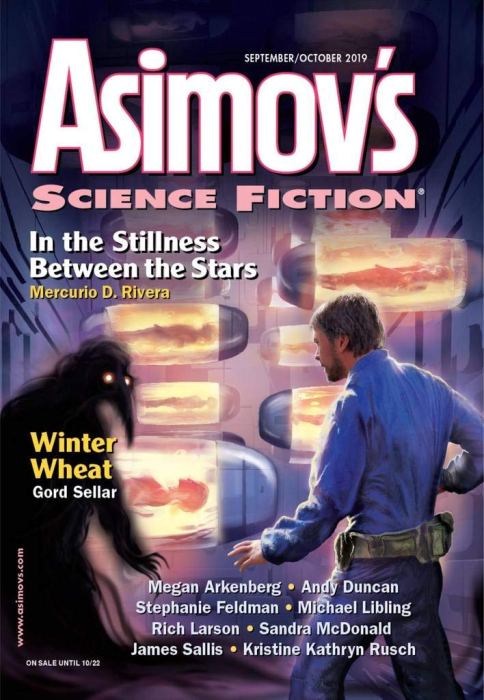
Asimovs Science Fiction July-August 2019

James Wallace Harris, 9/1/19

p.s. – To further explain how hard it was to read this story and write this essay I wrote: “Quantifying My Cognitive Decline.” I believe aging is affecting my reading ability.


What Were the Other Best SF Novels of 2018?

2018 SF books

After winning the Nebula, Locus, and Hugo awards, we know that The Calculating Stars by Mary Robinette Kowal was the standout SF novel of 2018. But which 2018 SF novels were nipping at Kowal’s heels? Keep an eye out for these read-worthy 2018 SF novels, they are showing up in ebook and audiobook sales.

2018 is long gone, but throughout 2019 awards are given to the best novel of last year. Novels must compete for readers like animals in nature to survive. At first, they just want an editor to accept them, then they compete for reviewers, and then for readers to buy them. In their second year of life, they compete for awards. By that second year, most of the books from the previous year have lost the fight to survive, disappearing from the bookshelves and readers memories. Winning an award is huge advantage for long-term survival.

There is a period towards the end of the year where readers are thinking about the best books of that year and novels from the previous year are forgotten — unless they win a Hugo or go on sale at Bookbub. Once a novel reaches a certain age, about the only way it finds new readers is if its author becomes popular and readers of their new novels decide to go back and read their old ones. In pre-digital days, books would often go out of print. But with ebooks and audiobooks, they hang around longer, often showing up in $1.99 sales.

Ask yourself, how many of these novels did you read, or remember reading a review, or had someone recommend it to you, or is already on your TBR pile? Also, how many titles are completely unknown to you? Hundreds of science fiction novels were published in 2018, but how many got popular attention?

The nice thing about the Locus Awards is they break out the science fiction, fantasy, and horror novels to win their own awards. Here are their other SF finalists:

  • Record of a Spaceborn Few by Becky Chambers (Harper Voyager U.S.; Hodder & Stoughton)
  • If Tomorrow Comes by Nancy Kress (Tor)
  • Revenant Gun by Yoon Ha Lee (Solaris US; Solaris UK)
  • Blackfish City by Sam J. Miller (Ecco; Orbit UK)
  • Embers of War by Gareth L. Powell (Titan US; Titan UK)
  • Elysium Fire by Alastair Reynolds (Gollancz; Orbit US)
  • Red Moon by Kim Stanley Robinson (Orbit US; Orbit UK)
  • Unholy Land by Lavie Tidhar (Tachyon)
  • Space Opera by Catherynne M. Valente (Saga)

I wished that the Nebula and Hugo awards gave separate awards to the various genres. It would help us readers who focus only on specific genres and give more recognition and awards to writers. (While I’m wishing, I wish they had separate awards for print/paid short fiction, and free-to-read online short fiction.) There were three other SF novels up for the Hugo in 2019, and all were finalists at Locus:

  • Record of a Spaceborn Few by Becky Chambers (Hodder & Stoughton / Harper Voyager)
  • Revenant Gun by Yoon Ha Lee (Solaris)
  • Space Opera by Catherynne M. Valente (Saga)

Of the Nebula finalists, only one book was science fiction:

  • Blackfish City by Sam J. Miller (Ecco; Orbit UK)

To widen the scope, I’m going to add the starred reviewed SF from Kirkus Reviews. I’m not including young adult novels.

Strangely, The Calculating Stars was not a starred review at Kirkus Reviews. Except for one title (Blackfish City) Kirkus picked books that weren’t award-winners or finalists.

Goodreads voted 20 SF novels for the best of 2018, several of which have already been mentioned above. Their winner was Vengeful by V. E. Schwab that was also picked as a starred review at Kirkus Reviews. However I don’t really consider it science fiction, but a superhero fantasy, which should be a new genre. The Calculating Stars came in #14 with the Goodreads voters. I loved that book, and after it won all the awards, I figured everyone else did too. Obviously, fans and reviewers don’t always align themselves with award winners. Some of the books below I wouldn’t count as science fiction and others that aren’t novels but novellas. Remember Goodreads represents books people bought, tracked, and saved in a books database. Here’s the twenty in ranked order.

  1. Vengeful by V. E. Schwab
  2. Iron Gold by Pierce Brown
  3. Vox by Christina Dalcher
  4. Only Human by Sylvain Neuvel
  5. Red Clocks by Leni Zumas
  6. Binti: The Night Masquerade by Nnedi Okorafor
  7. Perspolis Rising James S. A. Corey
  8. Artificial Conditions by Martha Wells
  9. The Oracle Year by Charles Soule
  10. Head On by John Scalzi
  11. Record of a Spaceborn Few by Becky Chambers
  12. Star Wars: Thrawn Alliances by Timothy Zahn
  13. Severance by Ling Ma
  14. The Calculating Stars by Mary Robinette Kowal
  15. Rosewater by Tade Thompson
  16. Ball Lightning by Cixin Liu
  17. Space Opera by Catherynne M. Valente
  18. The Gone World by Tom Sweterlitsch
  19. Relevant Gun by Yoon Ha Lee
  20. The Consuming Fire by John Scalzi

The Chicago Review of Books picked 10 SF novels as the best of 2018. What we’re starting to see if both confirmations of award-nominated books and other titles being repeatedly recognized by reviews and fans.

  • Mem by Bethany C. Morrow (Unnamed Press)
  • The Book of M by Peng Shepard (William Morrow)
  • Semiosis by Sue Burke (Tor)
  • Severance by Ling Ma (FSG)
  • Rosewater by Tade Thompson (Orbit)
  • The Calculating Stars by Mary Robinette Kowal (Tor)
  • Black Star Renegades by Michael Moreci (St. Martins Press)
  • Blackfish City by Sam J. Miller (Ecco)
  • State Tectonics by Malka Older (Tor)
  • The Strange Bird by Jeff Vandermeer (MCD Books)

Best Science Fiction Books picked their 25 favorite SF books of 2018, and many of the now usual suspects are at hand again. Here they are in their ranked order (and some are novellas and one anthology):

  1. The Freeze-Frame Revolution by Peter Watts
  2. The Tea Master and the Detective by Aliette de Bodard
  3. The Only Harmless Great Thing by Brooke Bolander
  4. Medusa Uploaded by Emily Devenport
  5. The Reincarnated Giant edited by Mingwei Song and Theodore Huters
  6. The Sky is Yours by Chandler Klang Smith
  7. Iron Gold by Pierce Brown
  8. Semiosis by Sue Burke
  9. Revenant Gun by Yoon Ha Lee
  10. Blackfish City by Sam J. Miller
  11. The Rig by Roger Levy
  12. Head On by John Scalzi
  13. Elysium Fire by Alastair Reynolds
  14. Gods, Monsters, and the Lucky Peach by Kelly Robson
  15. The Book of M by Pen Shepherd
  16. The Calculating Stars by Mary Robinette Kowal
  17. Zero Sum Game by S. L. Huang
  18. Empire of Silence by Christopher Ruocchio
  19. Embers of War by Gareth L. Powell
  20. The Oracle Year by Charles Soule
  21. Space Opera by Catherynne M. Valente
  22. Big Ship at the Edge of the Universe by Alex White
  23. State Tectonics by Malka Older
  24. Tell the Machine Goodnight by Katie Williams
  25. Binti: The Night Masquerade by Nnedi Okorafor

Reading about these books makes me wish I could read all of them. The trouble is I only read a handful of new books each year. I’ve already bought many thinking I would read them, but I’ve already been diverted by 2019 books. I’m very lucky if I read three new SF novels during the year they come out, and then three more when they get noticed for awards in the following year. That means I miss a shelf of great science fiction every year.

Maybe we need awards for the best novels and stories that are 5, 10, 15, and 25 years old, to help some stories survive just a little bit longer. Some books deserve more time to find readers. Most writers hope when they create their novel it will outlive their own mortality. Most stories are forgotten in their first year of publication. That’s a shame because we overlook many brilliant works of art. Most writers give up because they don’t find readers. I urge you don’t always read books from your same three favorite writers, or from endless book series. Try something new.

I know writers love having a hit trilogy or successful series, but I find extended stories kind of selfish because reading sequels means sticking with the familiar until it jumps the shark and not taking a chance on new writers and new stories.

James Wallace Harris