With the ninth story of The Big Book of Science Fiction edited by Ann and Jeff VanderMeer, we’ve finally reached the land of science fiction. In our group discussions many have questioned whether the earlier stories were truly science fiction. With “The Fate of the Poseidonia” by Clare Winger Harris from the June 1927 issue of Amazing Stories we’ve finally reached the era of pulp science fiction magazines. If anything defined the concept, it was the science fiction magazines.
Clare Winger Harris images a much different winter of 1994-95. George Gregory discovers his girlfriend Margaret has taken up with another guy, a Mr. Martell. Martell looks odd, and acts suspicious. George tells Margaret of his worries, but she defends Martell and dumps Gregory. Mr. Gregory starts spying on Mr. Martell out of jealousy, and learns that Martell is a Martian spy. Unfortunately, no one will believe him, and he’s committed to a mental hospital.
Is “The Fate of the Poseidonia” the earliest example of Martians living amongst us stories? My two favorites of that theme are A Mirror for Observers (1954) by Edgar Pangborn and The Man Who Fell to Earth (1963) by Walter Tevis. Both of these novels have a quiet beauty you don’t often find in science fiction. This theme was also used on The Twilight Zone and The Outer Limits. The idea of Martians passing for humans is very entertaining to me which caused me to like “The Fate of the Poseidonia” more than it probably deserves. It’s a decent story, mainly suffering from an unskilled writer, but Harris did win third prize for it at Amazing Stories.
What makes this story so distinctive among those we’ve read so far is how the reader in thrown into the future. This isn’t a dream, or an experiment in storytelling, a political allegory, or philosophical musing. This story contains the real essence of science fiction. The setting is science fictional, and the intent of the story is science fictional. Clare Winger Harris asks us to believe that there are intelligent beings on Mars who come to Earth to steal our water. Their planet has dried up and they have the technology to lower ocean levels by many feet. Harris has created an entertaining example of “What if …?”
In 1927 it was widely assumed there could be life elsewhere in the solar system, especially Mars and Venus. Until Mariner 4 flew by Mars in July of 1965, hope was held out for life on Mars, even intelligent life. I’m not sure people growing today can understand how it was almost a common assumption that Mars and Venus could actually be inhabited. Sure, most scientists held little hope, but the public did, and it was reflected in Pre-NASA science fiction. From H. G. Wells to Roger Zelazny there were endless science fictional speculations about Martians. I loved the idea of Martians as a kid, and even wrote an essay, “I Miss Martians.”
I also grew up with NASA, so I quickly gave up all hope for finding any kind of life within our solar system. The more I read popular science, the more skeptical I became about science fiction. Eventually, I doubted most of what science fiction hoped. But in my old age I realized I still love the old unscientific science fiction. (I’m really digging listening to The Best of Walter M. Miller, Jr.)
I’ve mentioned this before, but I grew up reading Oz books before I discovered science fiction. At the beginning of the 20th century L. Frank Baum produced a series of children’s books about a fictional location that existed somewhere on Earth, but in a geography that had eluded all explorers. Over the series, the Land of Oz became richly complex. As a gullible nine-year-old in 1962 I wanted Oz to actually exist. I knew it didn’t, but I wanted it to be a real place. Hell, it was crushing to lose Santa Claus at 6, then Oz at 9, and Christianity at 12. So I turned to science fiction. My 69-year-old self realizes that for most of my lifetime, science fiction was my replacement for Oz and religion. I always rationalized that reading science fiction prepared me for the future, and inspired me to learn about science, but in reality, it was my way to escape the mundane.
This is very different from my middle-age self who wanted science fiction to be scientific. Now I see very little difference between science fiction and fantasy. Both are fairytales for readers who have left childhood. Both are about world building fictional universes. There seems to be some differences because some readers show preferences for one over the other. Maybe science fiction are those tales that seem more realistic. However, in 2021 how realistic is “The Fate of the Poseidonia” then? It’s far from scientific. In 1927 it was thought to be more realistic, but not if you were properly educated.
I’m using these essays reviewing the stories in The Big Book of Science Fiction to understand the evolution of the genre, but also to psychoanalyze myself. Why do I love science fiction so much? I want to define the term science fiction because it seems to point to exactly something that pushes my buttons. A good deal of pop culture is now science fiction, so I’m not alone in my attraction. Maybe we should all analyze this fixation?
We could say science fiction is fiction set is the future. That might be the one telling trait that defines science fiction for me, but maybe not everyone. Fantasies are set in the past, present, or never-never land. When they are set in the future, like Jack Vance’s The Dying Earth, I want to call them science fiction. This lets us file steampunk and alternate history in the fantasy bin. I like that, because neither of those types of stories feel like science fiction to me. We could split the difference on time travel stories. If characters head to the past, it’s fantasy, but if they go forward, it’s science fiction. But there’s a problem. All those stories about visiting dinosaurs are definitely science fiction to me.
What if someone today wrote a story set in the future where we discover an ancient dying civilization on Mars, something that’s been proven to be impossible? I can amend my definition by saying even fantasies set in the future belong in the science fiction bin too. In fact, older unscientific SF has become my favorite kind of science fiction in recent years. And I’ve notice a trend for writers to produce alternate history science fiction, like the novel The Calculating Stars by Mary Robinette Kowal, or the Apple TV+ series For All Mankind. I might not be the only person nostalgic for what science fiction used to be.
As I read and review the stories in The Big Book of Science Fiction, and our Facebook group discusses them, I’m trying to find a reason to keep the term science fiction. I swing back and forth from wanting to throw out all genre labels, to finding a practical meaning for the term science fiction that most people can agree on.
Right now my working definition is “Science fiction is fiction set in the future.” That leaves a lot of holes, but then we have almost a hundred stories yet to consider.
“The Comet” by W. E. B. Du Bois is the first story we’ve read in The Big Book of Science Fiction that reads like a modern short story, and feels like modern science fiction. Is there a name for the form of fiction we now consider the standard model? All the stories we’ve read so far felt quaint, experimental, philosophical, pretentious, or unnatural. “The Star” by H. G. Wells was the closest to normal, but it did feel old fashioned, like other stories from the 19th century. Du Bois story is from 1920, yet felt more polished and modern than most science fiction from the 1920s, 1930s, and into the 1940s.
I know I’m not being very precise here when trying to talk about writing styles or forms. I just don’t have the terminology. I’m trying to describe something I’ve observed from personal experience that might have precise labels among academics. The prose of Charles Dickens, Henry James, or Edith Wharton has a quality that makes them feel old to me, but they are still very readable. Then in the 1920s, Hemingway and Fitzgerald and other writers made their prose more streamlined, and thus created what I think of as the modern form of fiction. Modern fiction has a greater percentage of dialog, and that dialog rings more natural. In the 19th century, the narrative part of fiction was quite wordy, especially with writers like Henry James. H. G. Wells was long on narrative and short on dialog, and his characters sounded Victorian.
The prose in 1920s Amazing Stories and early 1930s Astounding feels oldy too, and has a clunky quality of bad writing. Science fiction has always had the extra burden of explaining the science fictional aspects. This is called info-dumping, and is comparable to 19th descriptive narration that would spend paragraphs describing a mantelpiece.
“The Comet” feels more like Fitzgerald in its storytelling techniques, which are more advanced than the first decades of science fiction of the 1920s and 1930s. A large part of Heinlein’s success when he made a splash in the early 1940s was his use of modern streamline writing. The focus was on dramatic dialog, while minimizing the infodumping and narrative descriptions. Heinlein’s prose sounds snappy, even breezy compared to his predecessors. Heinlein’s style immerses the reader into the fantastic with the minimum of fuss and notice.
In other words, I’m quite impressed with W. E. B. Du Bois writing in “The Comet.” It’s a shame he didn’t become a genre writer during the pulp era. “The Comet” is pre-apocalyptic, apocalyptic, and post-apocalyptic, as was “The Star” by Wells. The difference was Wells was narrating a ponderous worldwide overview, while Du Bois used the POV of one person.
Both are good stories, but “The Comet” points the way to the future. As we progress through the stories in The Big Book of Science Fiction, we’re seeing both science fiction themes evolve, as well as the techniques of fiction writing.
I would love if I could quantify these two progressions. I have no idea how to track changes in fiction writing. For science fiction themes I picture myself building a database of theme examples. Designing the structure of such a database will take considerable thought. Most science fiction stories have multiple themes. For example:
Notice that Earth Abides and The World, The Flesh, and The Devil do away with Pre-Apocalyptic and Apocalyptic phases of the story, jumping immediately into the Post-Apocalyptic phase. The direction of storytelling is towards getting into a tale quicker, and when there, conveying the action in prose that is speedier to read. Modern bestsellers are very easy to read, dominated by near realistic dialog. Older fiction have archaic dialog, sometimes sounding like lectures, that slow the story.
Written fiction, novels and short stories, can convey the inner world of thoughts and opinions, that media fiction, movies and television shows, seldom attempt to express. But written fiction seems to be moving away from this unique attribute in favor of speed. But it would be a shame to abandon it entirely. (As an aside, some modern written fiction comes across like the young writers were inspired by movies rather than books.)
All stories have a setup and something to say. In “The Comet” Du Bois wants to say things about race, using the setup of a science fiction theme to express himself. The collapse of civilization allows Jim Davis, a black man from 1910s New York City to connect with Julia, a white woman. This connection was impossible before the apocalypse. Like Rod Sterling talking about a character entering the twilight zone, science fiction allowed Du Bois to put Jim Davis in a setting to show how race is an artificial construct of society.
Because Du Bois’ goal was to change readers’ minds about race, can “The Comet” still be science fiction? In an earlier essay, I said science fiction are those stories set within specific themes, like the future, traveling in space, or after the collapse of civilization. Racism is a universal theme that SF can’t claim. Science fiction is the setup of “The Comet,” but the story was written to say things about racism.
This brings us to an interesting question: Do both the setup and the intent of the story have to be science fictional to make the story science fiction? Eventually, in The Big Book of Science Fiction, we’ll reach such stories. I expect that will be soon, maybe with “The Star Stealers” by Edmond Hamilton. Both Earth Abides by George R. Stewart and The World, the Flesh, and The Devil use both science fiction as a setup, and to say things about living in a post-apocalyptic world. Sure, they also say things about us and our society, but the purpose of these stories is to speculate about life after the apocalypse, in that territory of the future belonging to science fiction.
Because W. E. B. Du Bois brings back civilization at the end of “The Comet,” we’re not really in the future. “The Comet” feels like science fiction, even great science fiction, until the end, that is. We’re jerked back to the present like in the earlier story “Sultana’s Dream.” Du Bois ventured into the shadows of the twilight zone, but didn’t stay.
On one hand, does the label science fiction really matter? “The Comet” is an excellent short story. The literary world has had several major writers rejecting the science fiction label on their work. They have good reason to reject the label. On the other hand, if a literary writer strays into science fiction’s territory, using science fictional techniques for their story’s setup, and especially when what they have to say is science fictional, shouldn’t the work be called science fiction? On our third hand, if the term science fiction isn’t precise, isn’t it unfair to use the label on those who don’t want it? And if science fiction is just a marketing term, shouldn’t it be restricted to genre fiction? “The Comet” is literary fiction. The Handmaid’s Tale and Nineteen Eighty-Four are literary fiction and science fiction by my definition. But I can understand why literary writers wouldn’t want the science fiction label if its also equated with genre writing.
I believe we’re still on the road to science fiction, but we haven’t gotten there yet. But I’m starting to wonder whether or not I’m painting myself into a corner. I do not know our ultimate destination, but my intuition tells me I’m going to define science fiction in way that only I use. Most people will gladly accept “The Comet” as a perfectly good example of science fiction. I’m sure old Hugo Gernsback would have reprinted this story in Amazing Stories if he had known about it.
What would W. E. B. Du Bois think? 1920 was well before the term science fiction existed, but Du Bois lived until 1963. Did anyone ever ask him, “Were you writing science fiction when you wrote ‘The Comet?'” I believe he had a very clever idea for a story setup to express significant insights about racism. I’m not familiar with his work, but did he ever write a story about the future where racism didn’t exist? “The Comet” almost goes there. Such a story would be fully within my definition of science fiction.
Didn’t Du Bois pull back at the last moment because he knew most of his readers couldn’t go all the way? My point is science fiction is about going places we haven’t thought about going before. Du Bois got so very close. I’d like to even imagine he wanted to write that story.
These early stories in The Big Book of Science Fiction represent fiction on the road to science fiction. I already know where we’re heading because I’m well versed in 1930s and 1940s science fiction. What I classify as science fiction is down the road a piece further, into the 1950s and 1960s. Science fiction evolved and mutated in every decade of the 20th century. 21st century science fiction is already rejecting this past, those stories and authors I love. The ones I use to define my sense of the genre. It’s becoming something else again. But the road goes on, and I don’t.
I believe as we read the stories in the VanderMeers’ anthology, we’ll learn to sense the essence of science fiction, which is to use certain techniques of storytelling to speculate about the edges of science. In “The New Overworld” Paul Scheerbart creates a fairytale about two lifeforms on Venus that I mentally pictured as illustrations from Dr. Seuss books. We can call this story science fiction because its set on Venus and it speculates about alien lifeforms, but it’s closer in tone to a children’s picture book. It’s all too obvious that the story is about solving social problems with cooperation and technology. But we never believe Scheerbart believes he is speculating about Venus or alien lifeforms. It’s all allegorical in intent. The story obviously has a philosophical lesson.
On the road to science fiction, our destination is fiction that convinces us we are there, in the future, out in space, on other planets. Wells was there in “The Star” because we could picture the worldwide catastrophes. In “Sultana’s Dream” we were almost there but then had it snatched away from us when we learned it was all a dream. In “The Triumph of Mechanics” we got there again because we were meant to believe mechanical rabbits were possible. However, the story was a tall tale and we knew Strobl didn’t mean it.
Science fiction writers know they can’t predict the future, but real science fiction feels like they have. It has to be convincing. It doesn’t matter if their future can’t possibly become real, it’s got to feel real when we read it. We’ve got to believe while we read. It has to be a fully realized fictional reality.
Back in 1911 when “The New Overworld” came out, what we think of as science fiction was an oddity. The following year, in 1912, A Princess of Mars by Edgar Rice Burroughs will be serialized in All-Story Magazine as “Under the Moons of Mars” by Norman Bean. Probably most readers wouldn’t buy astral projection, but they wanted to believe in Barsoom. Burroughs triggers a certain kind of desire in readers, and that’s the heart of science fiction. Readers still want to believe in Barsoom, long after NASA put a stake in that dream.
I have not read Paul Scheerbart’s other works, or novels, which this article in Science Fiction Studies describe. The VanderMeers regrets Scheerbart isn’t remembered, but from the description of his stories I can see why he is. But Erik Morse in The Paris Review has read some of the recent English translations of Scheerbart and he found them interesting, even captivating, but strange.
Authors and their books are forgotten over time for many reasons. Usually, it’s because the work just doesn’t hold up. Sure, academic publishers will come out with expensive editions that are historical curiosities, but they just aren’t readable by the public at large. Wells was not forgotten because his SF novels are still page-turners.
I will give one other reason why Paul Scheerbart is forgotten, he was German. I wouldn’t have considered this reason until I read The Invention of Nature: Alexander von Humboldt’s New World by Andrea Wulf. Alexander von Humboldt was probably one of the most amazing men to ever live. In the 19th century, he was probably the most famous of the century, maybe even more famous than Napoleon or Lincoln in their times. I had no idea who he was before I read the book, and neither do most English speaking people, even though in the 1800s most Americans loved him very much.
At the end of the biography, Wulf gives an interesting reason why von Humboldt was forgotten in America and Great Britain. During WWI Americans actually burned German books, and anti-German sentiment became ever greater during WWII. So if we can collective erase Alexander von Humboldt who inspired Thomas Jefferson, Edgar Allan Poe, Ralph Waldo Emerson, Henry David Thoreau, John Muir, and many other influential Americans, then it’s easy to imagine not remembering Paul Scheerbart.
The 19th century was full of brilliant eccentric writers who wrote far out books with wild ideas, many of which could be considered science fiction. And we’ve forgotten most of them. Actually, we’ve forgotten probably 99.99% of them. If we don’t remember Konstantin Eduardovich Tsiolkovsky for his great science fictional predictions, why should we remember Paul Scheerbart?
It’s a shame that pop culture has such a short attention span. Books like The Big Book of Science Fiction try to correct that. Sure, our group argues over what the VanderMeers collect for us to read, but shouldn’t we judge them not by whether or not we enjoy the stories, but by what they are helping us to recall from a pop culture ancestry? There was a great deal of proto-SF published before Amazing Stories came out in 1926, but we remember damn little of it today. What I want to remember is what popular literature was like from 1900-1925, in all its forms. Their anthology helps. The VanderMeers’ introductions hint at so much more I want to know.
I do have one quibble. Why did they leave out “The Machine Stops” by E. M. Forster? Was it already too famous? Or too long? That 1909 story was the best single science fiction story from 1900-1925.
This my second review of “The Star” by H. G. Wells, because I attempted to read The Big Book of Science Fiction earlier this year. I didn’t get far. I’m hoping the group read will get me to the end this time. But we will see. Since this is a second review I’ll need to find new things to say.
One thing I noticed this time while poking around on Google to see how “The Star” is used in a number study sites for classroom discussion. Being taught in school is one indicator that a work of fiction has become a classic. Three cheers for science fiction then. The story came out in 1897, between the publication of The Time Machine and The War of the Worlds. Hugo Gernsback liked it so much he reprinted it twice, in 1923 and 1926.
“The Star” had already been repackaged in several collections by Wells, including an edition put out by Charles Scribner’s Sons in 1925, the prestigious publisher of Ernest Hemingway and F. Scott Fitzgerald in the 1920s. I’ve read that before pop culture used Albert Einstein’s name to imply the smartest man in the world, people used Mr. Wells. One of the more popular books in the early days of fandom was The Short Stories of H. G. Wells that ran over a thousand pages. Another giant collection of short stories by Wells was put out the The Literary Guild, for the high-brow crowd. This listing of reprints at ISFDB is one of the longest I know about, and I’m sure that database hasn’t indexed all the places “The Star” has been reprinted.
In other words, “The Star” was widely read outside of science fiction, especially in the 1920s and 1930s before the genre had established itself in the public’s consciousness. I can’t help but wonder what the average person thought of the story? Did Charlie Chaplin talk about it at Hollywood parties while he was working on The Gold Rush? What did the average British citizen think of the story when they read it in The Graphic, the Christmas Number for 1897? Here’s an ad from that issue to give you an idea of the times.
Why would they run an end-of-the-world story in their Christmas issue? I have to assume they really thought the story something special. So what did people say about it then? I wish I could find references to how average readers reacted to early science fiction. So far my best indication of what people read back then that we’d call science fiction is the anthology Science Fiction by The Rivals of H. G. Wells which presents thirty stories that came out around the same time as “The Star.” I wish I had a book of letters to the editors about those stories, or extracts from diaries and personal letters where people wrote about them.
In the introduction to The Big Book of Science Fiction the VanderMeers say this about science fiction:
This kind of eclectic stance also suggests a simple yet effective definition for science fiction: it depicts the future, whether in a stylized or realistic manner. There is no other definitional barrier to identifying science fiction unless you are intent on defending some particular territory. Science fiction lives in the future, whether that future exists ten seconds from the Now or whether in a story someone builds a time machine a century hence in order to travel back into the past. It is science fiction whether the future is phantasmagorical and surreal or nailed down using the rivets and technical jargon of “hard science fiction.” A story is also science fiction whether the story in question is, in fact, extrapolation about the future or using the future to comment on the past or present.
But “The Star” isn’t about the future, and neither are most of the stories in that rivals anthology. Back then, the fantastic happened in the present. When Wells was writing, science fiction hadn’t evolved into its future oriented self. The VanderMeers wants their anthology to show the evolution of science fiction and I think this is an important distinction about “The Star.” I believe as we read along in the volume, we’ll observe how science fiction moved into the future.
There is one weak area in “The Star.” I was never sure what kind of astronomical object the intruder was. At different times in the story it’s implied that the intruder is a comet, planet, or star. Wells was big on science, so why was he so sloppy here? If the visitor was another planet, wouldn’t it and Neptune have shattered when they collided? If it was a comet, Neptune would have absorbed it. I’m guessing it was some kind of dark or dwarf star that absorbed Neptune in the collision. We know Wells knew about stellar evolution because he has the Earth being destroyed when the sun expanded into a red giant in “The Time Machine.”
What writers create with the tools of science fiction varies as tremendously what carpenters build with their tools. However, the consumers of science fiction, the editors and readers, tend to prefer specific products often by specific tools. In our short story club on Facebook, one reader noted that The Year’s Best Science Fiction: Third Annual Collected edited by Gardner Dozois which we just finished reading only had one story about spaceships. (I don’t know if it was just a curious observation or lament.)
If you expect science fiction writers to always use their tools to build spaceship stories you’ll be disappointed by how diverse science fiction stories have become. In the old days writers had fewer tools, mainly extrapolation (If this goes on…) and speculation (What if?), so they produced similar products.
Extrapolation was a great tool for creating stories about the near future that dealt with social and political change. George Orwell and Aldous Huxley used that tool to great success. Many SF writers cranked out stories based on the speculation tool: “What if we could travel to the planets?” “What if we could travel to the stars?” “What if we could travel in time?” “What if aliens invade the Earth?” and “What if we could build machines that act like humans?”
Over time, writers invented new tools to craft new kinds of science fiction stories. Take for instance alternate history or time looping or digital reality. If you look at the twenty-four stories collected in the Dozois anthology no two are really that much alike.
I discovered science fiction in the 1960s, so my concept of science fiction was shaped by the tools writers were using then. Even as a kid, I could tell that stories produced in the 1930s were different from those created in the 1940s or the 1950s. Writers in the 1960s were using new tools to create new kinds of science fiction that riled some older readers. Those oldsters claimed New Wave stories weren’t even science fiction, but I was young and loved that stuff. Now I’m old, and new waves are washing over me.
On social media I often see comments from science fiction readers bitterly bitching about contemporary science fiction. Does that mean what N. K. Jemisin produces isn’t science fiction? It’s true, what she’s building with the tools of science fiction in the 2010s doesn’t look like what Lois McMaster Bujold built in the 1990s, or Ursula K. Le Guin crafted in the 1970s, or Robert A. Heinlein hammered together in the 1950s. But isn’t all that work crafted with the same tools out of the SF toolbox?
The opening story in the Dozois anthology was “The Jaguar Hunter” by Lucius Shepard. It’s about a central American guy escaping into an Aztec reality. That doesn’t sound very science fictional. But is it any different from Harold Shea escaping into various western mythologies by L. Sprague de Camp and Fletcher Platt? Sure, we can claim both stories were built with fantasy writing tools, but isn’t that missing the point?
The next story was “Dogfight” by William Gibson and Michael Swanwick, a What If story. What if we had technology that allowed people to mentally projects images into the air and make games out of them? This was a product of adding cyberpunk tools to the science fiction toolbox. I’ll assume most of our short story club members felt it was science fiction. “Snow” by John Crowley uses a slight variation of this tool. What if we had a tiny machine that followed us around like a wasp and filmed our life?
“Dinner in Audoghast” by Bruce Sterling imagines a dinner party hundreds of years ago in the Arab world when Europe was in decline. This story feels like it was completely constructed by tools for writing historical fiction. It wasn’t the only such story that Dozois picked for his anthology of the best science fiction short fiction of 1985. Many in the group rebelled at his decision, claiming those stories weren’t science fiction. And to be honest, even though I liked these historical stories I thought it odd they were in an anthology labeled the best science fiction. In other words, even when I try to be broadminded there are walls of the box that I can’t think outside of.
The group is about to start reading The Big Book of Science Fiction edited by Ann and Jeff VanderMeer. There are already grumbles that their view of science fiction isn’t science fiction. Not only do readers prefer science fiction built with specific tools, so do editors, and unfortunately, there’s also generational preferences.
This has interesting implications for our group. We vote for the anthologies we read. We’ve learned that Judith Merril saw the genre much differently than Donald Wollheim or Gardner Dozois or Terry Carr. I’m expecting the VanderMeers to have a very unique view too. I still say the various stories are constructed with the same tools, but what writers make with them varies, and that’s reflected in editor choices, or fan’s personal preferences. I can easily see our group balkanize into Facebook groups devoted to Dozois SF or Carr SF or 1950s SF, or Military SF. John W. Campbell, Jr. really did define a certain kind of science fiction, and I think we’re learning anthology editors have distinct views too.
There is no requirement or pressure in our group for people to read the stories. We expect members to read whatever they want. But there is a certain pressure to find anthologies that people will like. It is somewhat disappointing to hear too many complaints about disappointing stories. Although I don’t want people to stop criticizing stories. I believe we all like learning about each other’s tastes, and some stories are actually better than others. Maybe what I want is for people who love collies to not judge pugs by collie standards.
One reason we only have about a dozen members who regular read most of the stories out of over five hundred members, is the lurkers probably choose to read only what they like. It’s probably why most SF fans prefer novels over short stories, and books over magazines. There are very few readers who have eclectic tastes suited for enjoying the diversity of short stories.
We’re a short story club, and like book clubs it’s very hard to find consensus, even more so because of the nature of anthologies. I’m looking forward to the VanderMeer anthology and I’m trying to be open to what they present, however I fear a backlash. Don’t get me wrong, I’ve complained myself about reading stories I didn’t like. On the other hand, I’m getting tired of younger generations complaining about older works and writers, and older generations complaining about newer works and writers. That’s driving me to expand my reading consciousness. It doesn’t mean I don’t prefer living in the past with 1950s and 1960s science fiction, but I’m trying not to be my dad who always screamed “Turn off that goddamn noise” when I played The Beatles.
I believe our Facebook group offers an interesting chance to try out a lot of different kinds of science fiction built with many different tools over many generations. It’s both rewarding and enlightening.
Even though I bought all 35 volumes of The Year’s Best Science Fiction edited by Gardner Dozois as they came out, I never read one from cover to cover until now. Their size was just too daunting. I finally overcame my fear of giant anthologies when I listened to The Very Best of the Best from beginning to end, and then again when the Facebook group Best Science Fiction and Fantasy Short Fiction voted it in as a group read. For summer 2021 we read The Year’s Best Science Fiction: Third Annual Collection. This is the first of the annuals I’ve finished. Reading and discussing a short story every other day is a great way to read an anthology, and I expect someday to read the other 34 volumes – with or without the group.
Since I’ve joined this Facebook group, I’ve been reading at least one short story a day. We keep two group reads going concurrently. Because I also read stories on my own I’ll read over four hundred short stories this year, maybe as many as five hundred. For the three years before joining the group, I read at least two to three hundred short stories each year. I’m slowly getting a feel for the form, since I’ve probably gotten my ten thousand hours in. However, it wasn’t dedicated study.
For this post I thought I’d reprint my Facebook comments on the twenty-four stories in this anthology. If I find time, I’ll write separate reviews of the stories I liked best. Here’s my rating system. One and two stars usually only show up in magazines.
*
Writing level of a fiction workshop or amateur publication
**
Writing level of semi-pro magazine, or lesser pro magazine story
***
Solid story from a professional magazine, should be minimum level for an annual anthology
***+
Solid story that I found particularly entertaining
****
An exceptional story I know I’ll want to reread someday, or have already read many times
****+
An exceptional story that’s almost a classic, something I’d anthologize
*****
A classic that’s well anthologized and remembered
My Rating System
01 of 24 – “The Jaguar Hunter” by Lucius Shepard F&SF (May 1985)
“The Jaguar Hunter” by Lucius Shepard is not science fiction, but magic realism that claims we can return to an past reality destroyed by modernity. The setting appears to be current day Honduras and the plot focuses on Esteban Caax, 44, a farmer, probably a descendent of the Azetecs. Esteban loves living in the country, and pursuing a simple life. However, his life is complicated when his wife Incarnación, 41, buys a battery powered TV on credit from Onofrio Esteves. Incarnación wants to move to town and take up modern ways.
Onofrio sold the TV to Incarnación to force Esteban into debt so he has to return to jaguar hunting. There is a rare black jaguar that’s keeping a tourist resort from being built, one that Onofrio and his son want to develop.
When Esteban goes hunting the jaguar he finds a beautiful woman, Miranda, in the jungle who suduces him. He eventually learns she is the black jaguar and she wants Esteban to return to an older, magical reality, part of his real heritage. At first Esteban refuses, but ultimately, he’s forced to follow Miranda into an ancient alternate existence.
Shepard’s writing is amazing and beautiful, and this story reminds me of “The Woman Who Rode Away” by D. H. Lawrence, another story about finding a way back to an older reality of the Aztecs, and one of my all-time favorite stories.
I’ve seen this theme enough times to wonder if people really do believe there are ancient ways to rediscover. I got to meet Shepard at Clarion West 2002. It’s a shame his work hasn’t stayed in print. The collection, THE BEST OF LUCIUS SHEPARD is available for the Kindle for $2.99. He has nothing on Audible. https://en.wikipedia.org/wiki/Lucius_Shepard
Rating: ****+
02 of 24 – “Dogfight” by William Gibson and Michael Swanwick Omni (July 1985)
You’ve heard of unreliable narrators, well, Deke is an unlikeable narrator. “Dogfight” by Michael Swanwick and William Gibson is now considered a Cyberpunk classic, and it brings back memories of all the excitement that literary movement generated in the 1980s. Many cyberpunk stories embraced a noirish quality of dark settings, involving criminal activities, and “Dogfight” fits the stereotype. Deke is a petty thief that finds his calling in a game of Spads & Fokkers. In a rundown bus stop, Tidewater Station, Deke discovers a crippled vet named Tiny playing out the role of Minnesota Fats with the game of Spads & Fokkers, and Deke decides to steal Tiny’s throne by becoming the Fast Eddie of the game.
Along the way Deke befriends a college girl with her own ambitions named Nance. Ultimately, Deke uses Nance, and brutually steals her dream and crushes Tiny’s purpose for being. Deke is elated to finally be good at something, ignoring the cost of his success the others paid.
The neat thing about “Dogfight” is the idea we’ll being able to jack into hardware and project 3D images that others can see. There is no explanation for how this works at all. We’re just told people can imagine tiny WWI planes and people will see them flying around the room fighting in aerial dogfights. That was the problem with most cyberpunk stories, they imagined computer technology doing things it will never do.
Rating: ****
03 of 24 – “Fermi and Frost” by Frederik Pohl Asimov’s (January 1985)
This is the third reread for me, so I’m wonder if I didn’t read part or all of this anthology back when it came out. “Fermi and Frost” is barely a short story. It’s more of a meditation by Pohl on nuclear winter.
The story begins in the chaos of people trying to fly out of JFK knowing that the missiles are coming to hit New York. Harry Malibert lucks out and gets a flight to Iceland and rescues a nine-year-old boy named Timmy. Iceland barely survives the nuclear winter, and Harry becomes Timmy’s father. Pohl tells us they could have a happy ending or a bad one. I’m sure most readers picture the happy ending, where humanity survives.
I liked this story because I always liked stories about the last humans on Earth, but this one is barely a sketch on the subject.
Rating: ***
04 of 24 – “Green Days in Brunei” by Bruce Sterling Asimov’s (October 1985)
“Green Days in Brunei” was a finalist for the novella Nebula, but it lost to the 800-pound gorilla “Sailing to Byzantium,” also in this anthology, as is “Green Mars” by KSM, another heavyweight.
The pacing of “Green Days in Brunei” felt like an condensed novel rather than a stretched short story. I believe it’s really hard to pull off a novella that feels perfect for its length. In this case, I was wanting more, not less. The plot of the story is rather sparse, a techie, Turner Choi, takes job in a country that’s fighting technology, Brunei, falls in love with a princess, and has to choose between East and West worlds. Sort of a reverse King and I.
Turner is an interesting creation set in the middle of a fascinating political/philosophical situation. Sterling has done a good job creating a computer geek trying to make it in a repressive society. Seria, the princess and love interest, is also interesting, but more contrived. I wished her character could have been fleshed out, and it would have been if this story had been a novel. Jimmy Brooke, the corrupt and aged rock star almost steals the story. He feels somewhat like a J. G. Ballard character. Moratuwa, the political prisoner, and Buddhist is another character needing more onpage time.
This 1985 near future cyberpunk story missed the internet but scored hits on the social changes. The reason this story is so interesting to read is all the details of the Brunai society, which tries to repress western technology but still wants to succeeed at finding work for its people. That’s a valid philosophical problem today.
Like most cyberpunk writers, Sterling vastly oversimplifies programming robots. In many ways, SF writers expected too much from computers, but often imagined too little.
Rating: ***+
05 of 24 – “Snow” by John Crowley Omni (November 1985)
John Crowley was one of our teachers for the week at Clarion West 2002. I had not read anything by him at the time. I wish I had read “Snow” before I met him. What a beautiful story – but then I resonated with “Snow” because of my lifelong obsession with memory. I wanted wasp technology starting back in the 1950s. But I wouldn’t use it for remembering dead people. I’d want it for remembering my own life. I especially loved the randomness of the memories. “Snow” reminds me of one of my all-time favorite stories, “Appearance of Life” by Brian Aldiss.
Rating: *****
06 of 24 – “The Fringe” by Orson Scott Card F&SF (October 1985)
Orson Scott Card continues the winning streak of great stories with “The Fringe.” Timothy Carpenter, is a wheelchair-bound teacher in a post-apocalyptic farming community who like Stephen Hawking speaks through a computer-generated voice. Because this 1985 story was probably before Hawking was famous I wonder if he was Card’s inspiration? And the use of the computer for speech synthesis and networks suggests Card could see into the future.
The plot of “The Fringe” is told in a straightforward narrative yet suggests complexity and layers. Carpenter, a hero of a rebuilding civilization because of his ideas on crop rotation, chooses to teach farm children on the fringe of that recovering civilization. The conflict of the story is between Carpenter and the students who hate him for turning in their fathers for their black market activities that undermine a community whose survival depends on interdependence. The story is surprisingly dramatic throughout, although Carpenter’s rescue is almost too good to believe possible.
Rating: ****+
07 of 24 – “The Lake Was Full of Artificial Things” by Karen Joy Fowler Asimov’s (October 1985) 2nd story from this issue
Miranda suffers from lifelong guilt for dumping Daniel who then volunteered for the army during the Vietnam War and was killed. Decades later she encounters him again several times during lucid dream psychotherapy. At first, Daniel is a realistic mental projection, the same age as Miranda as if he had continued to live, but as the sessions progress, he becomes younger, and eventually Miranda witnesses Daniel kill a child, one Daniel shot thinking he has a grenade. Miranda becomes obsessed she’s learning details about Daniel’s real life that she couldn’t possibly know.
At the beginning of the story, the idea of lucid dreaming therapy sounds practical, but as the story progresses the encounters in the lucid dream world suggest that Miranda is somehow communicating with an afterlife Daniel, making the story into a supernatural fantasy. However, we are restrained by the title. Is Miranda just looking at a lake of artificial things?
This is another story I read back then that I couldn’t tell you anything about before rereading it, but as I read it came back to me, with the scene with Daniel killing the kid triggering a memory of horror I felt reading it the first time. I thought this story was quite effective and wonder how Paul can consider it mediocre.
Rating: ****
08 of 24 – “Sailing to Byzantium” by Robert Silverberg Asimov’s SF (February 1985)
“Sailing to Byzantium” is not my all-time favorite SF story, but it should be. It’s an epic work of imagination that only a few science fiction stories surpass. I know it doesn’t quite reach the heights of “The Time Machine,” but it might equal the haunting mood of “The Vintage Season.” I still have a greater personal attachment to “The Star Pit.” Obviously, the Muse was with Silverberg when he wrote: “Sailing to Byzantium.”
Many science fiction writers have tried their hand at far-future stories, but “Sailing to Byzantium” comes closest at conveying what we can never know. What Silverberg works to do in this story is to explain to us what Phillips tries to convey to Willoughby.
Rating: *****
09 of 24 – “Solstice” by James Patrick Kelly Asimov’s SF (June 1985)
“Solstice” is a horrifying examination of the sexual abuse of a clone. Tony Cage, who is a wealthy superstar drug designer has himself cloned, but in the cloning process had the clone made female. Cage raised the clone as Wynne who everyone thinks of as his daughter, but Cage sees as a version of himself. There are two other stories I know about that explore sex with the self theme, “All You Zombies—” by Heinlein, and David Gerrold’s THE MAN WHO FOLDED HIMSELF. Both of these stories used time travel to hook up a person with themselves, but Kelly uses cloning, so it’s not quite the same, but I think it’s meant to be.
Tony Cage is an egomaniac of the first order who doesn’t see Wynne as herself, but the perfect companion he is creating over time. Cage is educating Wynne to be him and is troubled when Wynne goes in her own direction. Cage even uses cold sleep to even out the years between them as Heinlein did in THE DOOR INTO SUMMER for his unrelated characters. As the story unfolds we see Cage’s obsession with Wynne grow and only get hints of what’s happening to Wynne, but in the climax of the story, we learn that Wynne suffered from deep psychological damage because she saw herself as a daughter of Cage.
The common belief is clones will be duplicates of a person, but they won’t be, and I believe Kelly’s insight is right, they will be our children.
This story is actually two stories, the one described above, and the story of Stonehenge. I was fascinated by all the infodumping about Stonehenge Kelly presented, and I assume it’s true, but I believe it diluted and damaged the main story. The dramatic conclusion of Tony and Wynne’s tale happens at a solstice event at Stonehenge and evidently, Kelly wanted to make that more impactful. For me, the blending of the two stories was clunky, and I would give this story a lower rating, but the other part is too powerful.
Rating: ****
10 of 24 – “Duke Pasquale’s Ring” by Avram Davidson Amazing Stories (May 1985)
Cosimo Damiano, the King of the Single Sicily is aided by Dr. Engelbert Eszterhazy to ward off the attacks of Mr. Melanchthon Mudge who wants to steal Cosimo’s only possession of value, Duke Pasquale’s ring.
Avram Davidson’s charming prose is due to his creative use of names and nouns, and a lot of knowledge about old literature and history. However, why is this fantasy story in an anthology devoted to science fiction?
And “Duke Pasquale’s Ring” doesn’t even contain fantastical fantasy, it’s really a very gentle fantasy about what feels like medieval times when people believed in magic. This story reminds me of the Thomas Burnett Swann story we read. Both Swann and Davidson are enchanted by the past, by arcane mysteries and myths.
Not sure how to rate this story. It’s beautiful writing, but the story is all cotton candy, it expresses very little emotion or philosophy, other than the kindness of Eszterhazy for the poor deluded Cosimo. For now, I’ll say ***+ because I have no desire to read it again, although I can imagine fans of Davidson frequently returning to his kind of storytelling. It’s a very delicate form of escapism.
11 of 24 – “More Than the Sum of His Parts” by Joe Haldeman Playboy
Joe Haldeman seems to suggest in “More Than the Sum of His Parts” that becoming a cyborg will go to our heads and make us into monsters, like a variation of power corrupts and absolute power corrupts absolutely. Or maybe the moral was better bodies don’t make for better minds. I thought this was the weakest story in the collection so far, but it’s still pretty good. I did wonder if Playboy would have bought this story without the cyborg penis and description of its use?
Rating: ***+
12 of 24 – “Out of All Them Bright Stars” by Nancy Kress The Magazine of Fantasy and Science Fiction (March 1985)
Sally Gourley, a waitress, waits on a blue alien named John who her boss Charles demands she not serve. This story won the Nebula and was included in two textbooks devoted to science fiction, so it’s bound to be an important story, however it’s short and somewhat mysterious. Sally doesn’t feel the prejudice and hatred towards the alien, but then in the end she thinks: “And all at once I’m furious at John, furiously mad, as furious as I’ve ever been in my life.”
Why. I’ve read this story before, and I read it twice in a row tonight trying to figure out why Sally is furious at John. My guess is Sally doesn’t want to know there are better beings in the universe because she had to live with humans. In the last lines she’s responding to something John said:
“I make so little difference,” he says. Yeah. Sure.
Not only do humans look bad in comparison, Sally knows we aren’t going to change, even when we encounter Christ-like figures. I wonder if Kress was saying this to herself regarding her efforts to write enlightening stories?
Rating: ****
13 of 24 – “Side Effects” by Walter Jon Williams F&SF (June 1985)
“Side Effects” is something that could have run in THE NEW YORKER because it was so well-written, and whatever mild science fiction it contained was minimal and slipstream.
I was quite impressed with this story and tried to imagine all the intellectual work that Walter Jon Williams had to put into it. It’s also still very relevant. Even after 35 years, it works as a near-future tale. Since I’m old, I’m having to take a lot of drugs, some of which doctors give me as samples. I often wonder if I’m a guinea pig. And they frequently cause side effects.
Rating: ****+
14 of 24 – “The Only Neat Thing to Do” by James Tiptree, Jr. F&SF (October 1985) (2nd story from this issue)
I didn’t know Tiptree wrote space opera, although “The Only Neat Thing to Do” feels slightly familiar. As does most of the stories we’ve read from this anthology. It’s weird to think what my brain might retain after thirty-five years.
While reading this story I wondered about how Tiptree wrote it. Was she a fan of space opera beforehand? Had she read “The Cold Equations?” To write space opera requires thinking about interstellar travel and other space travel fiction. Tiptree’s sense of space travel feels like it came from Star Wars or Edmond Hamilton (in other words, not hard SF). And Coati Cass reminds me a lot of Heinlein’s title character in PODKAYNE OF MARS. Not only is Triptree writing space opera, but it’s also YA.
Overall, I loved this story, but it had some problems. The communication pipes don’t make sense. What’s their propulsion system? How do they navigate? How long do they take to get where they are going? Even with cold sleep, how long has Coati been gone?
Dozois sure could pick them this year. Four of the six finalists for the Nebula award for the novella are in this anthology. We have one more to read, “Green Mars.”
Rating: ****
15 of 24 – “Dinner in Audoghast” by Bruce Sterling Asimov’s Science Fiction (May 1985)
“Dinner in Audoghast” is an odd story to appear in a science fiction magazine. I try to imagine why Bruce Sterling wrote it. Picturing a long-forgotten African-Arab city is an interesting choice. I assume because William Gibson had made Japanese culture famous Sterling thought he might try it with Arab culture. George Alec Effinger also used Arab culture in a cyberpunk novel two years later in WHEN GRAVITY FAILS.
Audoghast was the western terminus of a trans-Saharan caravan system during a time when Arab culture was waxing and European culture was waning. It’s a fascinating time period to set a historical novel. Maybe Sterling wanted to write such a historical piece and added the leprous fortune-teller into the story to give it some reason for an SF magazine to publish it. Sterling certainly had to do the work of a historical fiction writer to write this story, and he found a wealth of details to paint a colorful setting.
Rating: ****
I don’t know if cyberpunk writers started this or not, but in the coming decades coopting foreign and historical cultures became big in science fiction. It’s led up to today’s World SF stories.
16 of 24 – “Under Siege” by George R. R. Martin Omni (October 1985)
On one hand, “Under Siege” is not the kind of story I enjoy. I’m not fond of alternate history. On the other hand, this is an impressive story. It showcases the kind of writing skills George R. R. Martin had before writing The Song of Ice and Fire books.
Again, we’re treated to another bit of history. Was this a fad back then for SF writers? I looked up the Siege of Sveaborg to see what Martin was working with. It seems like a rather esoteric point in time to pivot the future of the U.S.S.R.
I admired what Martin was doing in the 1808 scenes, but I felt nothing for those characters. However, the narrator, the killer geek mutant narrating the story did grab me. Was his name ever given? I felt for him.
Rating: ***+
17 of 24 – “Flying Saucer Rock & Roll” by Howard Waldrop Omni (January 1985)
Reading “Flying Saucer Rock & Roll” made me order THINGS WILL NEVER BE THE SAME: SELECT SHORT FICTION 1980-2005 by Howard Waldrop. I’ve read this story before, and a few other Waldrop stories and always loved him. Don’t know why I haven’t tried to read more from the guy. I’m amazed that Waldrop comes from Houston, Mississippi, because my mother’s folks are from that part of the country, and I’ve briefly lived in two small northern Mississippi towns and know what kind of upbringing Waldrop would have had. It’s not the kind that would produce these stories. Houston is not far from Oxford, the stomping grounds of William Faulkner.
“Flying Saucer Rock & Roll” is another nostalgia-driven story about a time I fondly remember. I started listening to the radio in the 1958-1963 era when many of the songs in the story first appeared. I even lived in Philadelphia in 1959 for a few months. I loved that glorious Doo-Wop music before it was shut out by the British Invasion in 1964-1965, it’s like imprinted on my soul. I also remember AM radio having Oldie-Goldie weekends. All the songs mentioned in the story push my nostalgia buttons like crazy. Even the UFO book Leroy was reading was probably one I read, because for a short while I gorged on UFO books, however, I mainly remember the crazy George Adamski.
The battle of the bands between Leroy and Kool-Tones and Bobby and the Bombers on November 9, 1965, that knocked out the lights of the northeast USA was one cool story.
Rating: *****
18 of 24 – “A Spanish Lesson” by Lucius Shepard F&SF (December 1985)
Lucius Shepard creates a fake Roman à clef about his 17-year-old self vagabonding in Europe in 1964 and meeting two escaped clones from an alternate reality spawned by the evil soul of Hitler. This story is rather schizoid, mixing an On The Road memory with Nazi occult horror, where Adolf is a Lovecraftian elder god. Fictionalizing Nazis is dangerous artistic territory because it generally makes any work trivial in comparison to reality. Shepard would have been better off stealing from Lovecraft. Yet, there is a lot to admire in “A Spanish Lesson.”
The trouble with being an SF/F writer is needing to add the fantastic to every story so it can be sold to an SF/F market. The start of this story and the ending is far better than its SF/F elements. It’s too bad Shepard didn’t stick with straight Kerouac, with maybe a dash of Ballard. I really liked the dynamics of Shepard being the youngest member of an ex-pat community trying to earn some respect from the older cats that he thought were cooler, but were just pretenders.
Rating: ***+
19 of 24 – “Roadside Rescue” by Pat Cadigan Omni (July 1985) – 2nd story from this issue
“Roadside Rescue” was a wham, bam, thank you ma’am kind of story, for us and the protagonist.
Rating: ****
20 of 24 – “Paper Dragons” by James P. Blaylock Imaginary Lands
“Paper Dragons” is a story about the intersection of reality, fantasy, and science fiction. The narrator exists sometimes in the real world of ordinariness, sometimes in a fantasyland, and sometimes in a steampunk-like continuum. There were glittering aspects to this story, but it was often murky to me. I did relate to it in a couple of weird ways though. When I lived in south Florida there would be invasions of crabs. Millions of them would suddenly travel through our neighborhood. And I once found a furry caterpillar and put it in a gallon jar with branches from the bush I found it on. It made a cacoon and eventually emerged as a moth. I was somewhat disappointed that it wasn’t a butterfly.
Sorry, but I thought this was another story not suited for this anthology because it wasn’t science fiction. A slight case could be made that since Filby could assemble a dragon from pieces of metal that it’s science fiction, but it never felt science-fictional. Its tone was always a lament that fantasy was fading from the world.
Rating: ***+
21 of 24 – “Magazine Section” by R. A. Lafferty Amazing Stories (July 1985)
I admired Lafferty’s writing and wild imagination in this tall tale but it’s another story that doesn’t belong in this collection. Lafferty does use the word “clone” but the cloning in this story is not the least bit science fiction.
What’s interesting about Lafferty is trying to categorize his writing. I wonder what he was like in person? Was he always pulling people’s legs and telling his tall tales to other people? He’s a kind of literary leprechaun, a class clown with print. He was capable of writing science fiction, PAST MASTER is an example, but for the most part, his stories aren’t science fiction in intent. Nor do they have the flavor of fantasy. His stories are fantastic, but not genre fantastical. It’s a shame the literary world didn’t embrace him because stories like his do appear in literary magazines.
Rating: ***+
22 of 24 – “The War at Home” by Lewis Shiner Asimov’s Science Fiction (May 1985) (2nd story from this issue)
“The War at Home” is a punch in the gut. The Vietnam war comes to haunt America’s reality like a bad dream we can’t escape. Although the Safeway bit made me think of our times. Shiner’s story suggests chickens do come home to roost. But I wonder why he wrote it in 1985? That was ten years after the war ended. If civilizations suffer Karmic retribution, then we’re in for some bad shit, much worse than what’s going on now.
My overactive bladder means I never sleep long, so I wake up dreaming many times a night. The intensity of the opening dream sequence resonated with me. Like I said, this very short story was a punch in the gut. Hope it doesn’t give me bad dreams tonight.
Rating: ****+
23 of 24 – “Rockabye Baby” by S. C. Sykes Analog Science Fiction (Mid-December 1985)
“Rockabye Baby” feels like another one of those literary stories with an embedded fantastic element so it’s salable to a genre market. I thought the first part was excellent. The van crash, the hospital, the group home, the pursuit of drawing, all felt very realistic. Even the part of Sharkey chasing after an experimental treatment. But memories don’t equal a personality, so I don’t buy the fantastic element of the story.
I believe if the real focus of the story was the experimental treatment, the story should have started with Cody trying to rebuild his personality with cassette tapes. Now that would have been a great story too. This could have been a novel, but ISFDB doesn’t show that. Sykes has one other story and one novel listed in their database.
24 of 24 – “Green Mars” by Kim Stanley Robinson Asimov’s Science Fiction (September 1985)
“Green Mars” is a hard story to describe and rate. 70% of this long novella is about rock climbing, something I’m not particularly interested in. 20% is about terraforming Mars and the conflict between Red Mars and Green Mars philosophy, something I’m very interested in. And finally, 10% of the story is about Roger and Eileen, and issues with living 300 years, another aspect of the story I loved.
Even though I’m not interested in rock climbing, Robinson did some impressive writing in presenting this part of the story. I have read memoirs of mountain climbers with the details of rock climbing, and I think KSM gives more blow-by-blow details of climbing than those memoirs. Is KSM a rock climber himself?
I admire KSM’s books for their ideas. However, he seldom produces an emotional story for me, but by the end of “Green Mars” I was feeling this story emotionally.
Has any science fiction writer from the 20th or 21st centuries ever done a better job exploring the science fictional themes than H. G. Wells covered in the 19th century? Has any novel or film ever gone any deeper into the idea of invaders from outer space than The War of the Worlds? Haven’t we been recycling the same speculations that H. G. Wells began way back then?
This is the third time I’ve read The War of the Worlds by H. G. wells since 1963. The first time I was in the seventh grade. I was too young to understand the novel and read too fast to really appreciate anything other than the basic plot. Back in 2005 I listened to an audiobook edition. I realized then that The War of the Worlds was far better than what I remembered, or any film or TV version I had seen over my lifetime. Reading it again this week, after rewatching the 1953 film, and seeing the 2019 British TV miniseries, I understand why we’re still reading this 1898 novel, and why people keep making filmed versions of it. There were three in 2005 and two in 2019. The War of the Worlds is truly a five-star classic.
I’m not sure young readers know how much credit we should be giving H. G. Wells for his contributions to science fiction. In one sense, the novels he published from 1895 to 1900 can almost be considered the foundation of the genre. Wells covered many of the main science fictional themes that writers are still tilling today. The trouble is, I haven’t read widely enough in earlier literature to know how much Wells borrowed and how much he created.
I do feel Wells brought new speculations and what ifs to the genre. We credit Wells for starting the space alien invasion theme, but Wells only took invasion literature that began in 1871 with The Battle of Dorking in a new direction. Instead of worrying about invaders from Germany or France, Wells asked, “What if invaders didn’t come from Earth?”
Once he proposed that one question, it generated all kinds of possible SF speculation. What if beings from other worlds were more advanced than us? Science fiction has explored that question over and other, but I’m not sure we’ve ever psychologically accepted any being could be superior to ourselves. Reading The War of the Worlds this time made me noticed just how much Wells thought about it. I would love to find reviews of his book published at the end of the 19th century to see if his readers significantly pondered Wells’ ideas. Here are some quotes:
No one would have believed in the last years of the nineteenth century that this world was being watched keenly and closely by intelligences greater than man’s and yet as mortal as his own; that as men busied themselves about their various concerns they were scrutinised and studied, perhaps almost as narrowly as a man with a microscope might scrutinise the transient creatures that swarm and multiply in a drop of water. With infinite complacency men went to and fro over this globe about their little affairs, serene in their assurance of their empire over matter. It is possible that the infusoria under the microscope do the same. No one gave a thought to the older worlds of space as sources of human danger, or thought of them only to dismiss the idea of life upon them as impossible or improbable. It is curious to recall some of the mental habits of those departed days. At most terrestrial men fancied there might be other men upon Mars, perhaps inferior to themselves and ready to welcome a missionary enterprise. Yet across the gulf of space, minds that are to our minds as ours are to those of the beasts that perish, intellects vast and cool and unsympathetic, regarded this earth with envious eyes, and slowly and surely drew their plans against us. And early in the twentieth century came the great disillusionment.

...

Yet so vain is man, and so blinded by his vanity, that no writer, up to the very end of the nineteenth century, expressed any idea that intelligent life might have developed there far, or indeed at all, beyond its earthly level. Nor was it generally understood that since Mars is older than our earth, with scarcely a quarter of the superficial area and remoter from the sun, it necessarily follows that it is not only more distant from time’s beginning but nearer its end.

...

And we men, the creatures who inhabit this earth, must be to them at least as alien and lowly as are the monkeys and lemurs to us.

...

And before we judge of them too harshly we must remember what ruthless and utter destruction our own species has wrought, not only upon animals, such as the vanished bison and the dodo, but upon its inferior races. The Tasmanians, in spite of their human likeness, were entirely swept out of existence in a war of extermination waged by European immigrants, in the space of fifty years. Are we such apostles of mercy as to complain if the Martians warred in the same spirit?

...

In three other points their physiology differed strangely from ours. Their organisms did not sleep, any more than the heart of man sleeps. Since they had no extensive muscular mechanism to recuperate, that periodical extinction was unknown to them. They had little or no sense of fatigue, it would seem. On earth they could never have moved without effort, yet even to the last they kept in action. In twenty-four hours they did twenty-four hours of work, as even on earth is perhaps the case with the ants.

...

“This isn’t a war,” said the artilleryman. “It never was a war, any more than there’s war between man and ants.”

...

I learned nothing fresh except that already in one week the examination of the Martian mechanisms had yielded astonishing results. Among other things, the article assured me what I did not believe at the time, that the “ Secret of Flying,” was discovered.

...

It may be that in the larger design of the universe this invasion from Mars is not without its ultimate benefit for men; it has robbed us of that serene confidence in the future which is the most fruitful source of decadence, the gifts to human science it has brought are enormous, and it has done much to promote the conception of the commonweal of mankind.

...

If the Martians can reach Venus, there is no reason to suppose that the thing is impossible for men, and when the slow cooling of the sun makes this earth uninhabitable, as at last it must do, it may be that the thread of life that has begun here will have streamed out and caught our sister planet within its toils.

...

Dim and wonderful is the vision I have conjured up in my mind of life spreading slowly from this little seedbed of the solar system throughout the inanimate vastness of sidereal space. But that is a remote dream. It may be, on the other hand, that the destruction of the Martians is only a reprieve. To them, and not to us, perhaps, is the future ordained.
Can we really imagine meeting a being that is as far above us as we’re above a dog? What if the gap is as large as between people and ants, another comparison Wells makes in the book. Actually, in several places, we’re no more important to the Martians than bacteria are to us under the microscope. Wells can imagine this possibility and he tries to illustrate it in the story, but I don’t think he really succeeds because it’s something impossible to imagine. But Wells, and science fiction written since have tried. Consider Roadside Picnic by Arkady and Boris Strugatsky.
We have to remember how Wells portrays the Martians and how readers of Pearson’s Magazine in 1897 imagined them. The Martians had weapons that used heat, light, gas, and biological agents that quickly dispatched the greatest military in the world. London, the most advanced city on the planet was quickly overrun, and millions had to flee. This is impressive, but does it really mean the Martians are intellectually superior to us? They are more advanced technologically. And that’s been the most common thread in alien invasion stories since, even though we keep gaining in our own technological prowess.
Martians treated us like animals. In fact, they treated us like cows or pigs, and used humans for food. Does this mean they’re superior? We assume we’re superior to farm animals, but we’ve never been a cow and can’t imagine what cows think of us.
The Martians invaded Earth like England invaded other countries, and the English felt superior because they could get away with it. But does it make them superior? Over and over again science fiction has tried to portray superior aliens. Usually, writers give them advance technology like Wells did in his novel. Writers often give aliens telepathy or other psychic powers to suggest a higher state of being, and at one point Wells speculated about this. Often, advanced aliens are described like gods in old religious texts. But just how realistic is that? Isn’t it really a lack of imagination? I’m not faulting Wells, because he did try, but I think he hit a wall, and so has every other SF writer since.
Notice that Wells gave the Martians the same power that Nancy Kress did in her story Beggars in Spain. Not needing sleep would indeed be a plus, but does it make a being superior? It is a very nice specific attribute. What other attributes make a superior being?
Are we incapable of imagining a realistic being more developed than humans? We consider ourselves superior to animals because we have language. In recent years, many science fiction stories have explored the idea of communication with beings from other stellar systems. The film Arrival, based on Ted Chiang’s “Story of Your Life” does suggest a possibility. What if a language isn’t based on linear time, and the structure of the sentence isn’t depended on word order? That’s a wonderful theory, but is it even possible? Imagining the impossible is impressive, but not as impressive as imagining the possible that hasn’t been discovered yet.
Can we imagine a process of communication that goes beyond language? We always fall back on telepathy. Would that be instantaneously sharing of words, or sharing sense organ input? If the Martians of Wells’ novel could read human minds, would they still kill and eat people, and destroy their civilization? Wouldn’t a superior alien have empathy and compassion for other beings? If we were really superior to animals would we eat them and kill them the way we do? Aren’t we just acting like animals that eat each other?
If you look at in the right light, Christianity was an effort to create a superior human. Unfortunately, few humans have ever achieved what Christian theory hoped to have achieved. Religions have routinely rediscovered compassion throughout history, but they’ve never been able to make humans compassionate. We see in Star Trek, at least in some episodes about the Prime Directive, how the Federation tried to codify a compassionate treatment of other beings, but often the plots don’t allow for it. Still, it’s a concrete example.
Science fiction writers keep trying to imagine a superior being and keep failing. I believe Heinlein tried with Stranger in a Strange Land, by giving his Martian named Smith superpowers. But Smith shows no compassion for lesser beings, and frequently vanishes them out of existence. Clarke tried with Childhood’s End and 2001: A Space Odyssey, but again he falls back on godlike powers, and a lack of compassion for lesser beings. Remember, Earth and humans were destroyed when a new species of humans emerged. Why do we continually believe superior beings have the right to destroy lesser beings?
We seem stuck in a Groundhog Day loop regarding invading aliens. Did anything new really show up in Independence Day (1996) a century after The War of the Worlds, or will show up in The Tomorrow War that’s coming out on Amazon Prime? Isn’t it logical to assume any alien that’s invading us can’t be superior because they’re invading us? Superior beings don’t go around exterminating other beings? Conversely, we can’t be all that superior to the other species on this planet. Unless the only definition of superior is the ability to destroy. And how often in science fiction are we the alien invader? Just recall the film Avatar for an easy example. Or think of how we treated the aliens in District 9.
There are two stories I’ve read this year that dealt with this issue, but sadly, I can’t remember the title and author of either one. The first suggested there were two types of beings in the galaxy. One type wants to conquer the galaxy because they are spreaders. The other type wanted to explore the galaxy because they are seekers, seekers of knowledge. We like to think humanity is a seeker species, but we’re really spreaders.
The other story was about species genocide. A character had the military power to destroy a whole species of alien invaders, but worried about using it. The justification given to her claimed the galaxy was full of violent species that acted no better than murderers or thieves, so it was either kill or be killed, so she killed the invading aliens. As long as we’re a product of evolution do we always assume we have to keep playing its game.
My idea of a superior alien is one that can step outside of their evolutionary upbringing and can act with compassion and empathy towards their fellow species. But I also imagine, this superior species would also develop the ability to communicate precisely, way beyond the power of words, and understand reality. We only perceive reality indirectly, with very limited senses, and usually interpret what we perceive with a lot of bullshit desires. I’m guessing a real superior space alien would avoid us like a dangerous pathogen or generator of gamma ray bursts.
In the end, I wondered if Wells didn’t model his Martians on the English in Africa and India. That implies any science fiction about aliens is really about looking at ourselves in a mirror. Shouldn’t science fiction writer ask how we could become superior beings?
Have you ever spent time thinking about why you like a particular story, movie, television show, song, photograph, painting, etc.? I believe most of us assume the critical ingredient is in the artwork itself. What if that’s not altogether true? What if our admiration also depends on what’s inside ourselves too?
I just read “Minla’s Flowers” by Alastair Reynolds in The New Space Opera edited by Gardner Dozois and Jonathan Strahan. It was the eleventh story in the anthology and the first one that grabbed me. The other ten were well-told tales, but they just didn’t resonate with my Sci-Fi soul. And that’s a hint at what I’m talking about. “Minla’s Flowers” pushed my buttons, but which buttons, and where did they come from?
People turn to genealogy when they want to know how their body got here, but it doesn’t explain the programming that went into creating their personality. What if we use the Butterfly Effect to explain the lineage of our personality and show where all beliefs, opinions, likes, dislikes, prejudices, loves, hates, fears, etc. that went into making who we think we are. What if the Big Bang origin of all our traits can be traced back to specific triggers, whether huge emotional explosions or tiny seeds of inspiration? Can we ever trace specific emotions back to the first flutter of butterfly wings?
This theory started taking form a few years ago when I realized I didn’t enjoy modern science fiction short stories as much as I loved older SF stories. Had I changed, or science fiction? It’s been sixty years since I started reading SF. It seems obvious that both myself and the genre have changed, but have we? The macro aspects of my personality and the genre haven’t I don’t think. But how many micro details reveal any real change? Both are complex system not easily understood, so my Freudian-like analysis will only be guesswork.
One hypothesis I’ve considered deals with information density. I know a lot more in 2021 than I did in 1962, and so does science fiction. My mind reads with a greater density of relatable knowledge, and modern SF prose is often written with a greater density of information and science fictional speculation. Yet science fiction themes don’t seem to change over time. About the only new themes to emerge during my lifetime is digital worlds and brain downloading/uploading, and both probably had precursors if I researched it enough. Last night I watched the 2019 British miniseries of The War of the World, and then started rereading the novel. It only reminds me of how I’ve been seeing shadows of Wells my whole life.
When I grew up SF stories had basic plots that exposed ordinary humans to usually one far-out bit of speculation. Now SF stories are written with a Phil Spector-like Wall of Speculation approach, embedding the plot and far-from-ordinary-humans into narratives of greater information density, especially the New Space Opera stories about the far future.
First off, I didn’t feel “Minla’s Flowers” was a five-star story, but I did feel it deserved a solid four-stars, mainly because I knew I’d want to reread it someday. In fact, I’ve already reread parts of it to compose my comment for our reading group at Facebook. That’s when I realized something. I liked “Minla’s Flowers” because it reminded me of so many other science fiction stories. Here’s my comment to the group:
Alastair Reynolds begins "Minla's Flowers" with a lone adventurer, Merlin, and his AI spaceship, Tyrant, falling out of subspace, Waynet, to make repairs on a planet, Lecythus, only to discover it inhabited by humans who had colonized it thousands of years ago and are currently at war, where he befriends an old scientist, Malkoha, and his daughter Minla.

I have to say all this triggered memories of Flash Gordon/Buck Rogers, Dr. Zarkov/Dr. Huer, and Dale Arden/Wilma Deering. "Minla's Flowers" is the first story in this collection that feels like Old Space Opera, and it was a lot of fun.

I thought for sure Reynolds was going to arrange for Merlin and Minla to become lovers ala cold sleep (think THE DOOR INTO SUMMER), but that didn't happen. Minla became his rival, even the antagonist of the story. Eventually, the plot of "Minla's Flowers" turns into the plot of WHEN WORLDS COLLIDE, escaping a doomed planet by building a spacefaring nation in seventy years.

Since Merlin is needed for a future adventure by Reynolds, he undergoes a series of cold sleep timeouts, and only ages a few months during this story, while Minla reaches 80. That should remind me of several SF stories, but I can't recall any at the moment. (INTERSTELLAR?)

Reynolds extends this story time and again through philosophical and ethical issues of helping a civilization speed up its development. In this regard, Merlin's and Tyrant's roles remind me of Klaatu and Gort from the film THE DAY THE EARTH STOOD STILL.

Because Reynolds embeds so much of the science fiction mythos into his story it caused the science fiction region of my soul to resonate with it. I know I will reread this story in the future, and it might even resonate more, but for now...

Rating: ****
Science fiction speculates on a limited number of subjects. One of the reasons I didn’t enjoy many of the ten stories before this one in The New Space Opera is because they speculated about topics I either discount, or I believe are too overused. Many of the stories in this anthology assume in the far future humans will have colonized the galaxy, and we’ll share it with aliens, intelligent robots, androids that look like us, cyborgs, humans that have achieve immortality, posthumans, transhumans, and downloaded humans. Decades ago it was common to see one of these elements as the basis of a science fiction story, but now it seems science fiction writers assume they will all coexist in the future, and somehow they must all be mentioned whenever writing a story about the far future. Actually, I’d find it a reading thrill for a writer to challenge these assumptions. It’s why I loved Aurora by Kim Stanley Robinson.
New science fiction writers have to recycle old themes because developing new ones are next to impossible. And as a reader, at least for me, if I encounter too many stories using the same concepts, I get bored with them. I should probably avoid theme anthologies like The New Space Opera. Yet, I responded positively to “Minla’s Flowers” because it caused me to resonate with old SF I loved in adolescence. Freud was a big explorer of our subconscious mind, but did he ever suggest early sense of wonder experiences would create chimes in our personality that would ring in later years if we encounter similar wonders on the same wavelength?
Of course, I might need to be careful with line of self-analysis, or I might find out that everything I love and believe originated in old science fiction stories I first encountered in youth. I’ve often thought science fiction was my substitute for religion when it didn’t take when I was a kid.
“Minla’s Flowers” has one human, one AI spaceship, and an alien world populated by humans that colonized the planet so long ago they’ve forgotten how they got there. This simplicity of story elements reminds me of Old Space Opera. (Although Reynolds does keep trying to cram in even more science fictional elements I felt diluted the story.)
At the plot’s core, “Minla’s Flowers” is about a civilization that needs to flee its home planet to find a new world because their sun will be destroyed in seventy years. One of the first SF books I read with this theme was the omnibus When Worlds Collide and After Worlds Collide by by Edwin Balmer and Philip Wylie. Has that story I read at age twelve shaped my response to future fiction? All my life I’ve thought humanity should colonize space to protect itself from extinction. Did that too come from Balmer and Wylie? Thinking about it now, I’m not sure it’s a practical or realistic idea. We were evolved for living on Earth, and all our space exploring fantasies may just be that.
Merlin fits the archetype for the science fiction hero, as does his sidekick. Where Reynolds took his story in an anti-tradition was with Minla, and that also thrilled me too. Is the right mixture for entertaining new science fiction a good bit of the tried and true, with a touch of the contrary?
Fiction is still magical. I don’t know how it works its spells. But now that I’m much older, and have consumed vast quantities of the genre, I sense patterns that my unconscious mind likes. It’s almost as if my unconscious mind learns and evolves, and maybe even has its own logic. I’m old and tired, and have a difficult time finding stories I still love, but every once in a while, something clicks. It’s a weird unexplainable experience.
When I first started reading science fiction, I thought it superior to ordinary fantasy because science fiction prepared readers for the future. I never believed science fiction predicted the future, but I did believe science fiction could seriously ponder future possibilities. To me, the best science fiction was philosophical, speculative, and extrapolated on current trends. Both the fixup novel The Dying Earth by Jack Vance and the anthology The New Space Opera edited by Gardner Dozois and Jonathan Strahan ponders the far future. But do their stories say anything serious about the future? Do any of their stories speak specifically to the adult mind? Or are they just fairy tales for grown up readers?
The Dying Earth is a collection of six related short works of fantasy that imagines life on Earth after the sun grows old, which is a wonderful science fictional concept. The stories are a cross between fantasies about magicians and science fiction about dying civilizations that barely remembers technology. In a vague way, its stories remind me of the stories in One Thousand and One Nights, but that’s because I just read “Ask Yourself Which Books You Truly Love” by Salman Rushdie in The New York Times. Rushdie was writing about our love of stories, especially the ones we first encounter as children. But I thought the Arabian Nights stories imagined when humanity and history were young, and the Jack Vance stories imagine humanity and history when old.
The Dying Earth contain these six stories:
“Turjan of Miir”
“Mazirian the Magician”
“T’sais”
“Liane the Wayfarer”
“Ulan Dhor”
“Guyal of Sfere”
The first three stories feel like Aesop, Homer or Grimm, simple fable or fairy tale in tone, while the later ones grow in sophistication feeling more like Dante or Chaucer. “Ulan Dhor” comes across the most like science fiction, but science fiction from the 1930s out of Weird Tales.
After “The Time Machine” by H. G. Wells, and The Night Land by William Hope Hodgson, other writers began expanding the end of time theme, but Vance got to name it with this book. Normally, I don’t like fantasy stories, but I did like The Dying Earth. This book was so successful that Vance wrote more stories about living under the dark red sun that were collected in three different volumes. I haven’t read them yet, but I bought Tales of the Dying Earth for the Kindle which puts all four into one book.
Normally, I avoid fantasy, preferring science fiction, but I started life as a bookworm with the Oz books by L. Frank Baum. If you only know Oz from the 1939 film, The Wizard of Oz, then you don’t know Oz. Not that the film isn’t wonderful, but it doesn’t convey the vastness of Baum’s fantasy worldbuilding. I’m not a scholar on children’s fantasy books, but is there any fictional world building before the 20th century that can compete with the Oz books?
I know pop culture has pretty much forgotten Baum’s fantasyland, but for children growing up in the early decades of the 1900s, the Oz books were as popular as the Harry Potter books are today. Many classic science fiction writers grew up reading Oz books, including Robert A. Heinlein, who referenced them in his later World as Myth novels.
I bring up the Oz books here because Baum’s basic plotting device is often used by fantasy and science fiction writers. It works like this. Introduce one or more normal characters, and maybe some exotic or magical characters. Give them a quest. Take the group from one strange location to the next, where they meet wonders and far out beings. Keep it up until you’ve filled a book’s worth of pages. Tie things up with a satisfying insight. Ringworld by Larry Niven is a great example of this, and so is some of the stories in The Dying Earth, especially “Ulan Dhor” and “Guyal of Sfere.” The later story even has an Oz like wizard that explains things at the end.
The Dying Earth theme is powerful because writers usually explore two visions: the end of man, and the end of Earth. Just to meditate on that idea generates a powerful sense of wonder. However, I don’t think Vance’s stories say any more about the future than One Thousand and One Nights says about the past. They are just fairy tales for grownups. Modern fantasy has vastly evolved past these stories in sophistication. I will keep reading in this series because I’ve been told Vance eventually gets more sophisticated too, but I wonder if he ever gets more adult.
I wonder if the 20th century trend of writing stories set in an ever-growing fantasyland might have begun with Baum? That kind of never-ending world building appeals to both children and adolescents, and has apparently seduced many an adult reader too, because it seems like all genre writers are churning out countless books in series. And doesn’t our hunger for story series and complex world building comes from our childhood love of fantasy series?
The Dying Earth as a theme keeps expanding with new writers and new readers. Science fiction writers and readers also love the Far Future as a similar setting for a theme, although the name for that theme seems to have become The New Space Opera. Fans of this theme don’t worry about the end of the Earth or humankind, because they believe humanity has plenty of places to go. And like Baum inventing endless fantasy beings for Oz, the New Space Opera writers have invented endless far out aliens, robots, AI, transhuman, and posthumans to populate stories using this theme.
But to be honest, I’m not that fond of the New Space Opera theme. Oh, the ideas they come up with have a wonderful sense of wonder, but these stories are often presented as hard science fiction, which imply their science fictional inventions could be possible, and I don’t believe that. The opening of “Glory” by Greg Egan is dazzling. It sounds so scientific yet I can’t believe it’s no more realistic than magic. It begins:
An ingot of metallic hydrogen gleamed in the starlight, a narrow cylinder half a meter long with a mass of about a kilogram. To the naked eye it was a dense, solid object, but its lattice of tiny nuclei immersed in an insubstantial fog of electrons was one part matter to two hundred trillion parts empty space. A short distance away was a second ingot, apparently identical to the first, but composed of antihydrogen.

A sequence of finely tuned gamma rays flooded into both cylinders. The protons that absorbed them in the first ingot spat out positrons and were transformed into neutrons, breaking their bonds to the electron cloud that glued them in place. In the second ingot, antiprotons became antineutrons.

A further sequence of pulses herded the neutrons together and forged them into clusters; the antineutrons were similarly rearranged. Both kinds of cluster were unstable, but in order to fall apart they first had to pass through a quantum state that would have strongly absorbed a component of the gamma rays constantly raining down on them.

Left to themselves, the probability of them being in this state would have increased rapidly, but each time they measurably failed to absorb the gamma rays, the probability fell back to zero. The quantum Zeno effect endlessly reset the clock, holding the decay in check.

The next series of pulses began shifting the clusters into the space that had separated the original ingots. First neutrons, then antineutrons, were sculpted together in alternating layers. Though the clusters were ultimately unstable, while they persisted they were inert, sequestering their constituents and preventing them from annihilating their counterparts. The end point of this process of nuclear sculpting was a sliver of compressed matter and antimatter, sandwiched together into a needle one micron wide.

The gamma ray lasers shut down, the Zeno effect withdrew its prohibitions. For the time it took a beam of light to cross a neutron, the needle sat motionless in space. Then it began to burn, and it began to move.
The stories in The New Space Opera are exactly what I wanted to believe in growing up. I desperately wanted humanity to have all this potential. I knew I’d never live to see such successes in space, but I wanted to die confident that humanity would go on to achieve these wonders. Now that I’m approaching seventy, I realize my childhood dreams were wishful fantasies, no more realistic than the far-out promises of religion. Sure, we will explore space, but not like the epic super-science visions produced by the New Space Opera stories. We’re not going to transfer our minds into other bodies, whether biological or digital. We’re not going to build spaceships the size of Jupiter. We’re not going to have galaxy spanning civilizations. All those ideas are just fairy tales for adults.
However my problem with the New Space Opera stories is not that they imagine impossible futures, but how the stories are often told. Many of the stories in this anthology cram too many ideas into one plot. Their authors love to jam in so many speculative concepts that basic story gets crushed. Characterization and plotting take a back seat to worldbuilding. And it’s not that these writers are constantly infodumping ideas, but instead they throw out endless hints assuming readers can fill in the details mentally. Often those hints require cognitive decryption which for me distracts from the story. Sometimes stories combine a dozen science fictional concepts into one futuristic setting as if every science fictional speculation to date will come true. The cumulative effect is a goulash of cliché science fiction. That’s why when I got to Kage Baker’s “Maelstrom” it felt refreshingly different. Her speculation about colonizing Mars took a backseat to plot and character. That’s why I prefer Robert Reed’s “Good Mountain” to “Hatch,” his entry in the anthology.
I’m afraid too many of the stories in The New Space Opera depend too much on the big standard theories of current SF. I love science fiction for its ideas, but I also need a good story. Dense worldbuilding isn’t good enough for me. But hey, that might just be me. Maybe my aging brain can’t handle modern science fiction. Maybe that’s why I preferred Vance’s fantasy stories, even though I prefer science fiction over fantasy. Evidently, there’s something in how storytellers need to tell adult fairy tales that count.
Paul Fraser in our science fiction short story discussion group on Facebook makes a distinction between dense stories and story stories in modern SF fiction. I agree. I think the editor Gardner Dozois liked to promote dense stories, and we see that in The New Space Opera. Our group has seen dense stories popular in Asimov’s Science Fiction too. See their list of finalists for their 35th annual reader awards. One example of an overly dense story is Ray Nayler’s “Return to the Red Castle,” where he takes a simple plot of a woman wanting to help her old teacher, an android, recover her memory, by throwing in enough ideas for a half-dozen science fiction stories. I wanted the story to be more about Irem and Umut’s issues with memory, and less about the world building for the Istanbul Protectorate. But obviously, plenty of readers loved it just the way it is.
But whatever you prefer, dense or story, aren’t these stories still adult fairy tales? Isn’t the problem how the story is told rather than issues with the content? Is Little Red Riding Hood and her problems with the wolf any different in true age appeal than Irem’s problem with her android? I’m sure James Joyce and Proust’s novels are aimed at adult minds. But how much science fiction is truly adult in nature? And I’m not talking about X-rated content. If young children and young adults had the readings skills, wouldn’t they find most science fiction and fantasy fiction appealing? Can you name any science fiction novel that only appeals to a mature mind?
I wonder now if The Dying Earth and The New Space Opera stories aren’t aimed at the child in me. That I still read such stories because I never grew up. Or maybe, the wonders we imagined in childhood never leave us. As a ten year-old I wanted to live in Baum’s Oz. As a thirteen year-old I wanted to live on Heinlein’s Mars. It’s taking me sixty-nine years to accept the only place for humans is Earth, but I’m not sure if I will ever grow up and accept that. I have to wonder if I’ve never outgrown fairy tales.
Daniel F. Galouye (1920-1976) was never a famous science fiction writer, but back in the 1950s and 1960s his shorter work appeared regularly in many of the SF magazines with the notable exception of Astounding/Analog. Galouye published five novels, three of which made it to my list of SF novels of the 1960s (Dark Universe, Lords of the Psychon, and Simulacron-3). Over the years, I’ve seen several mentions of his work and have meant to read them, but it hasn’t been until I got Lords of the Psychon in a batch of old paperbacks from eBay that I’ve had a chance. Galouye’s books aren’t rare, but they aren’t widely known either. Dark Universe and Simulacron-3 are currently in print, and Dark Universe is even available on Audible.com. Simulacron-3 inspired both a TV miniseries (World on a Wire) and a movie (The Thirteenth Floor), and some have called it an early cyberpunk novel. Not a bad legacy for a writer who is mostly forgotten.
Lords of the Psychon was a lot of fun to read, but not as much fun as I had with Of Men and Monsters by William Tenn, the SF book I read before it. Both of these 1960s novels deal with alien invasion. Both novels are set years after the aliens have conquered Earth. Both novels deal with a small group of humans hoping to overthrow the aliens. Both novels have a unique take on showing the alienness of the invaders.
Don’t read beyond this point if you hate any kind of spoilers.
In this section I’ll give you a bit more of the details but still try to avoid all plot spoilers. The 1950s was a time when many science fiction stories, especially in Astounding Science Fiction, explored psychic powers, ESP, or sometimes called psionics. I’ve always thought Stranger in a Strange Land (1961) was the pinnacle of that trend which quickly faded from popularity. I now see that Daniel F. Galouye had something more to add in 1963 with Lords of the Psychon. Actually, I feel the novel was inspired by Heinlein, and even feels somewhat like a 1950s Heinlein novel in tone. Galouye was a test pilot during WWII, so he also has a military background like Heinlein.
The setup for Lords of the Psychon is the speculation that the fundamental subatomic building blocks of reality can be controlled by thought, and this 1963 novel predates such woo-woo physics books as The Tao of Physics (1975) by Fritjof Capra and The Dancing Wu Li Masters (1979) by Gary Zukav. Basically, Galouye tortunes quantum mechanics to come up with a fun science fictional idea. Instead of swinging East like Capra and Zukav, Galouye keeps a western view of psychic powers.
Today, we think of such psionic themes as malarky, but I believe Galouye worked hard to pull off his speculative fiction. Eventually, the story moves towards Theodore Sturgeon and gestalt minds. In other words, I give Galouye credit for producing an evolutionary science fictional work.
I won’t go into plot details because I really don’t like any such spoilers myself, but I will reprint two reviews from 1963 that do, so read them at your own risk. The first is from Analog, November 1963 by P. Schuyler Miller.
I love reading reviews of books from when they first came out to see how my reaction is different. Miller praises Lords of the Psychon but claims Galouye’s first novel, Dark Universe, is the real standout. That means I need to read it soon.
S. E. Cotts reviews the novel in the August 1963 issue of Amazing Stories. I know nothing about Cotts, but I like her review. If you know anything about S. E. Cotts, leave a comment.
Cotts also gives away way too much of the plot for my taste. I’m still figuring out how to review fiction. I like the details of a story to unfold as the author intended. Both Miller and Cotts reveal things I prefer to learn for myself. However, I suppose they believe that a certain amount of plot details need to be given to hook the reader into buying the novel.
Rosemary Benton writing for Galactic Journey gives this novel 4.5 stars. Her 2018 review pretends to have been written in 1963. She also gives away quite a few plot points. Unlike Miller and Cotts, Benton seems to prefer Psychon over Dark Universe.
I believe Lords of the Psychon is a 4-star out of 5-star novel for those readers who delight in reading science fiction novels from the 1960s. I admire Galouye’s speculation even though I don’t think it’s scientific. I feel the novel is plotted tighter than modern SF novels, and is told with far fewer words, which is one of the reasons why I prefer older science fiction. Hopefully, that’s enough information for people who don’t like spoilers, but if it’s not, just read the three reviews above.
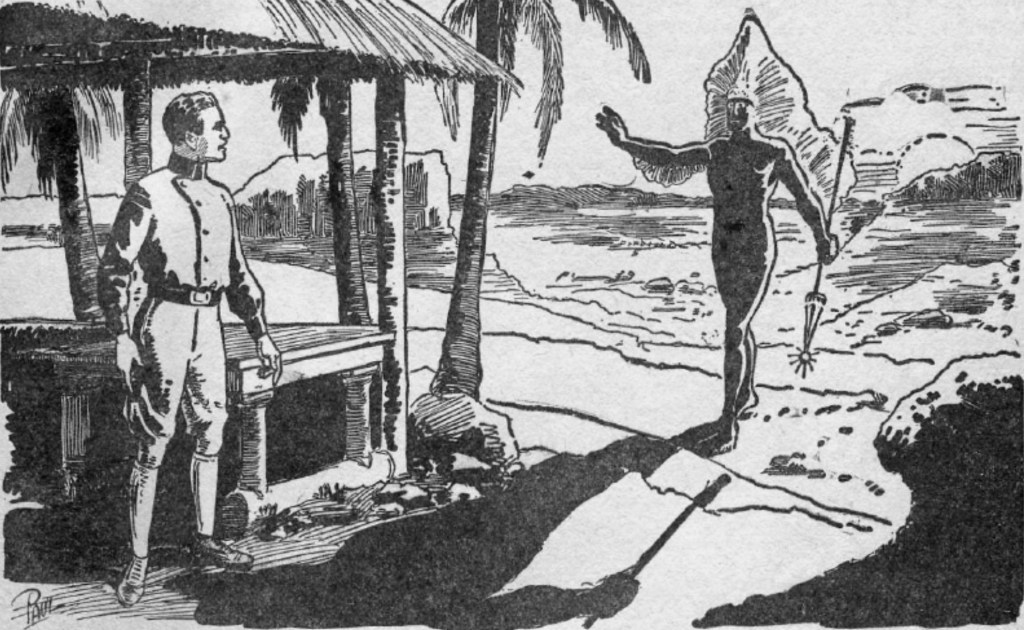
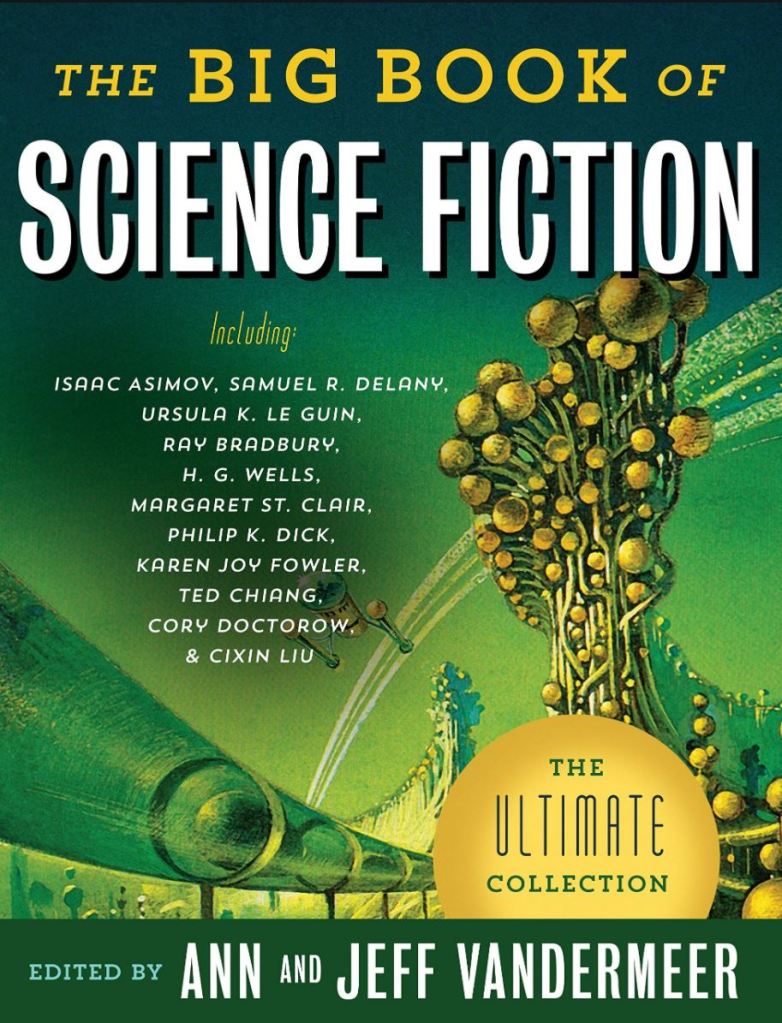
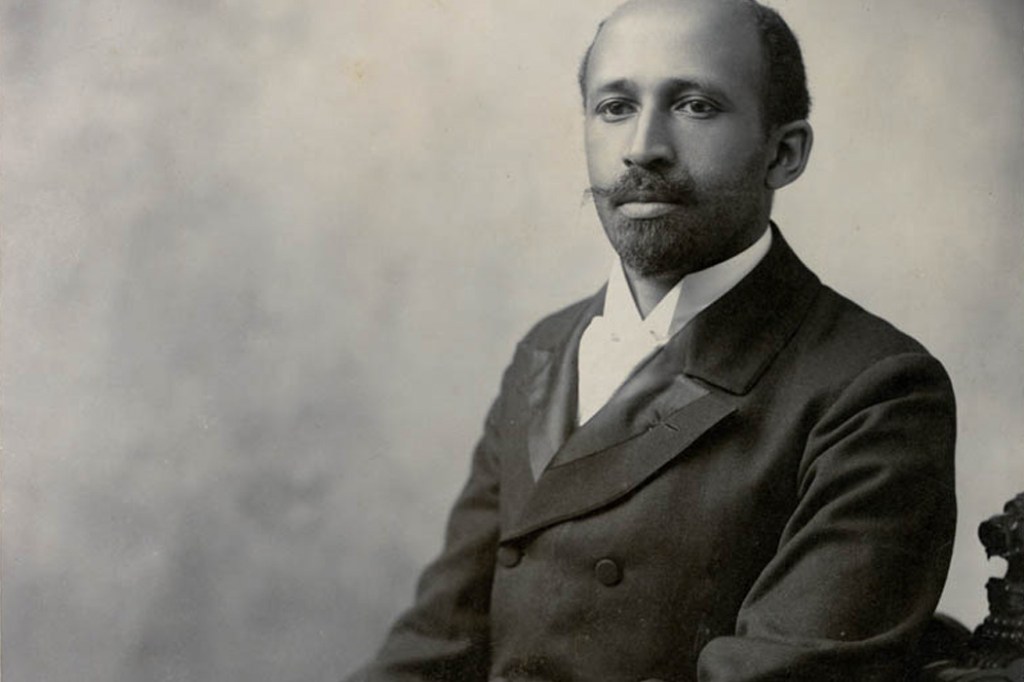
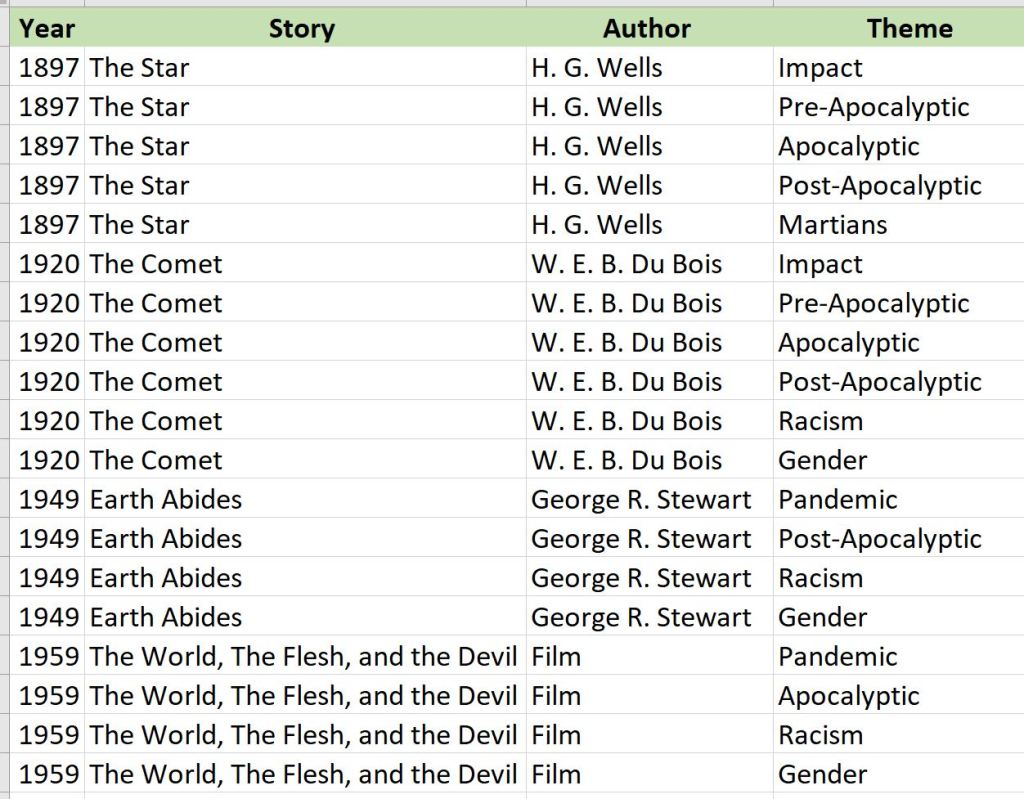


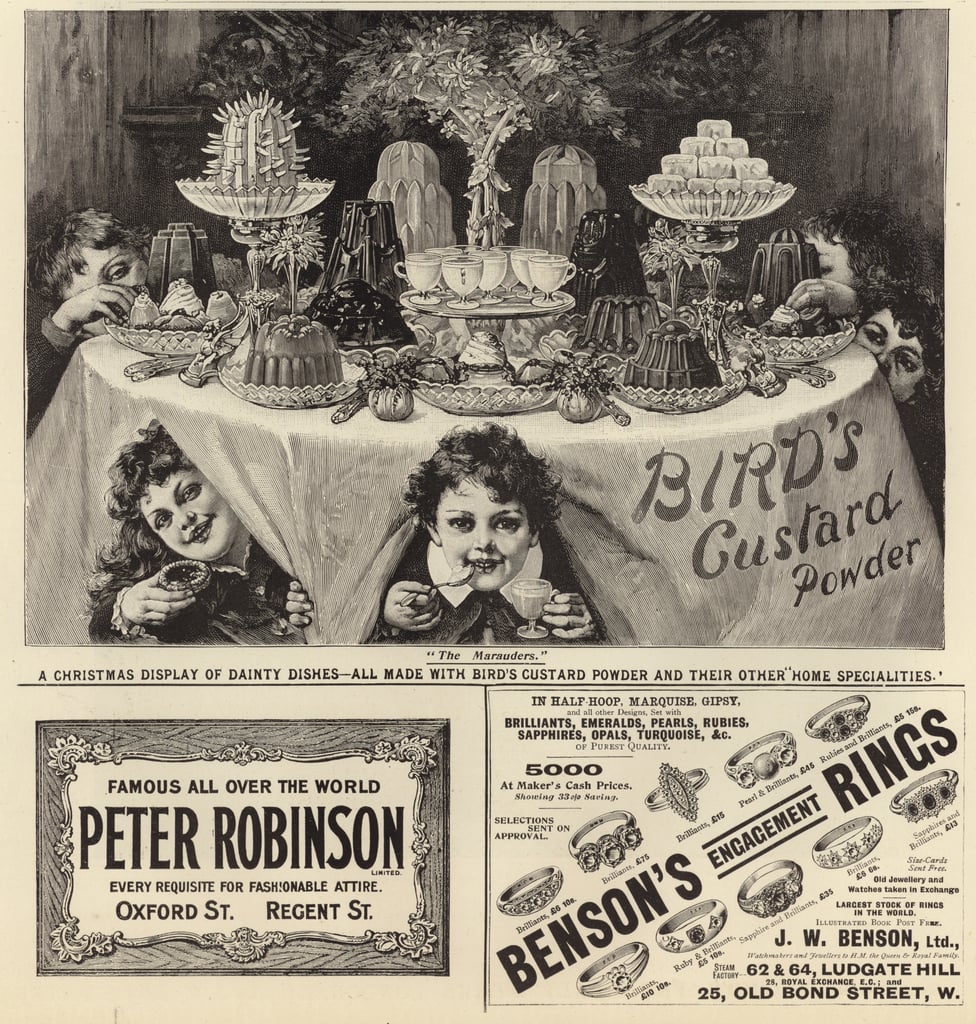


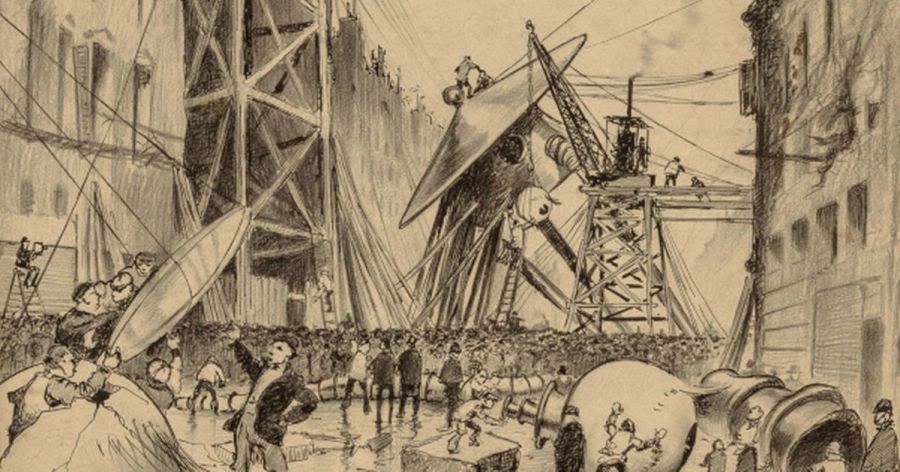

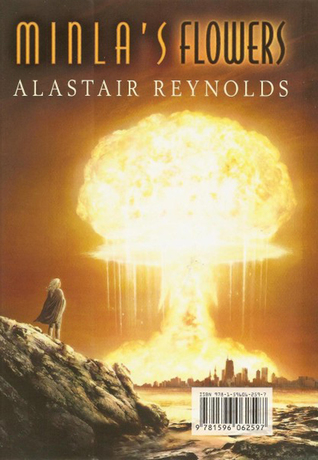


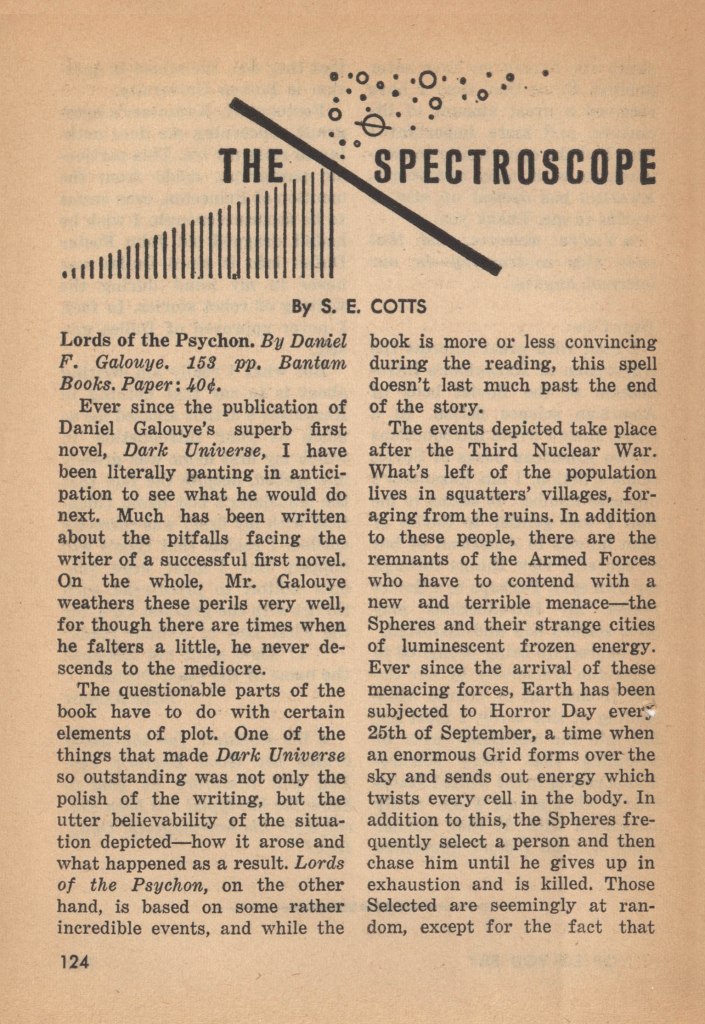

 Classics of Science Fiction