We can often find political opinions in science fiction, but in terms of political philosophers, how useful are science fiction writers? I just read “The Last of the Deliverers” by Poul Anderson from the February 1958 issue of The Magazine of Fantasy and Science Fiction. You can read it here. Or find it in these anthologies. It was revised in 1976, but I don’t have a copy to evaluate.
“The Last of the Deliverers” is set after the collapse of the United States and the Soviet Union, in a small village in Ohio. It’s told from the point of view of a nine-year-old boy. The boy describes an old man of one hundred, who the village kids call Uncle Jim, and the day a stranger shows up, another old man named Harry Miller. The two men take an instant dislike to each other because Jim is a capitalist and Harry is a communist. Both men hate the way the village is run and criticize it.
Poul Anderson is well known for believing that feudalism was about the most complex form of government humanity could handle. In this 1958 tale, written in the middle of the cold war between America and Russia, Anderson predicts that both systems would fail. The residents of the small town are quite happy getting by with what they can grow and make themselves, and they share the use of land and some technology. Jim thinks these Americans have become degenerate because they don’t want to get ahead and want more. But the village is happy. Harry thinks there should be more collectivism, but the villagers don’t see the point. These two longest paragraphs by the mayor explain their community.
Anderson isn’t promoting a utopia. His ending is rather cynical and bleak. He knows humans can’t find happiness. Of course, Poul Anderson is no political scientist. He’s using his own opinions about how he thinks things should work. Robert A. Heinlein ruined a lot of his fiction by doing this.
On one hand, I admire Anderson’s speculation and extrapolation. On the other hand, why should I trust his insights? I don’t imagine many readers get their political opinions from science fiction writers, but I do imagine they enjoy stories and writers whose opinions resonate with their own. I do think “The Last of the Deliverers” resonates with 2024.
We do know that George Orwell had brilliant insights about politics in his science fiction novel, Nineteen Eighty-Four. They are very respected. However, do they have objective validity? I don’t know. I’m impressed with the many ideas Orwell presented in his novel, and I can use them to reference real world events, but how useful is that? Many people have trouble today recognizing fascism even when endless experts with all kinds of degrees and political experience lecture about it constantly. Anderson doubted people could maintain a complex society. I doubt whether we can understand any kind of complexity.
I think the average person wants to believe they understand the world around them. That their opinions are valid. And some of those people, including some science fiction writers, want to promote their beliefs in their stories. But should we listen to them?
I feel that both conservatives and liberals get their beliefs from other believers. That all concepts are memes that spread through society. Are there any ways to validate these memes? Science can study certain aspects of reality by experimentation. They get no 100% sure answers, but they do find answers with statistical weight. I’ve not sure political theories can be disproved by the scientific method.
I do agree with a lot of what Poul Anderson says in this story. And I think he knows his wishes for creating a harmonious society are just wishes, because of the ending. World building is easy for science fiction writers, futurists, and political theorists but are their ideas ever more than just sand castles?
Sometime in the recent past I read a story very much like “The Last of the Deliverers.” However, it was set in a village in Russia. They had an American scientist studying collective farming when WWIII happened. He had to stay on. The village got by and found a similar kind of simple harmony that Anderson’s story describes. But then a communist party official finds his way to the village and wants to take over. Like the Anderson story, it allowed capitalism and communism to duke it out in a fictional setting. I wish I could remember that story. I may have even reviewed it. I used to believe my blogs were a form of external memory, but not anymore. Like my regular memory, access is poor, and getting poorer.
First off, let me say that I believe “Riders of the Purple Wage” by Philip José Farmer is as complex and ambitious as John Brunner’s Stand on Zanzibar, which came out the year after Dangerous Visions. It’s not an easy story to read, and at 30,000 words it will feel overly bloated if you’re not in the mood for Farmer’s purple prose. It co-won the Hugo Award for best novella in 1968 and was up for a Nebula too. When I first read “Riders of the Purple Wage” back in the 1960s, I was still in high school, had not yet discovered James Joyce. I was clueless at what Farmer was attempting to do in the story. Still, it was my favorite story in the anthology.
When Dangerous Visions came out in audio a couple of months ago, I listened to “Riders of the Purple Wage.” It made all the difference at revealing Farmer’s literary ambitions and philosophical insights. Then before writing this review, I listened to the story again, and it was even more revealing. Unless you’re the kind of person who reads very slowly, working out all the intended voices, decoding all the allusions, I doubt you’ll get a fraction of what Farmer intended. I’ve listened to it twice now in two months, and I’ve hardly begun to comprehend everything Farmer is doing. To really understand “Riders of the Purple Wage” will require many close readings and listening, taking lots of notes. It’s easily worth a dissertation.
I highly recommend listening to “Riders of the Purple Wage.” Check your library. If you subscribe to Spotify for music, it’s there as part of your membership. I won’t recommend you buy Dangerous Visions at Audible just for one story unless you really want the whole anthology.
I also expect many people will read “Riders of the Purple Wage” and go “WTF is this crap!” I know that me liking something doesn’t mean others will like it.
Farmer is not working on the same literary level as James Joyce, but he’s trying his best to imitate the guy. Farmer was never a major science fiction writer despite Ellison’s introduction. His one major work, To Your Scattered Bodies Go, the first of his Riverworld series in 1971, shows tremendous imagination, but was a cheat in my book because he used Sir Richard Burton as his protagonist. I consider fiction that uses historical people for characters equal to doping a horse to win a race. And for much of his career after that, Farmer wrote pastiches based on famous real people and famous fictional people. In other words, I consider “Riders of the Purple Wage” the peak of Farmer’s creative efforts. (Although, Blown and Image of the Beast were very impressive.)
I don’t agree with Farmer in what he says in places, but I do admire his ambition.
Don’t let my enthusiasm for the story give you unfillable expectations. Farmer was born in 1918, and was almost fifty when he wrote “Riders of the Purple Wage.” His mid-1960s conservative views might offend some people, especially modern readers, but so will some of his liberal views. “Riders of the Purple Wage” is intentionally vulgar, gross, and punny. The setting is mid-22nd century, where most people live on a guaranteed income, the purple wage, and the government tries to eradicate wars by homogenizing the world’s population by forcing citizens to relocate to other countries. This story is both utopian and dystopian, and gives Farmer a chance to comment on politics, history, sexuality, psychology, literature, and anything else he can squeeze in.
“Riders of the Purple Wage” has a simple plot. Chibiabos Elgreco Winnegan, known as Chib, wants to win a grant for his artwork so he and his mother won’t be forced to emigrate to Egypt. He also wants to get away from his mother whom he had a sexual relationship with until adolescence, when she stop fulfilling his needs. Incest is accepted in this future society. Chib also hides his great grandfather from the authorities. Grandpa Winnegan is the philosopher of this story. He’s supposed to be dead, but the IRB thinks he’s still alive and sheltering a fortune. This plot description is just the skeleton. From just the bones, you won’t be able to imagine how big the full body of this story really is. Whether it’s all bloat will be up to you. Farmer does some furious tap dancing, but I can’t promise you’ll like his routine. I just marveled, thinking, “Look at that old man go!”
I wanted to describe everything in this novella and give my reaction, but I just don’t have the time, energy, or concentration. I’ve tried several times to collect appropriate quotes that would give a sense of the story, but that’s almost impossible. Taken out of context it makes them seem weird and confusing. Even listening to them in context requires a great deal of concentration. Farmer expects you to keep up.
To properly experience this story requires listening to it. Think of it as a one man show on Broadway. An intense experience that runs over two hours. But also imagine that one man one stage morphing between Jonathan Winters and Frank Zappa, to James Joyce and Bob Dylan, to R. A. Lafferty and Robert Sheckley, and at other times Robert A. Heinlein and Edgar Rice Burroughs doing imitations of Shakespeare, Dante, and Laurence Sterne. And if you can recognize them, several ancient Greeks, and Romans.
I get the feeling that Farmer was well educated and was bursting with ideas about how everything is interrelated. I’d love to see the letter Harlan Ellison sent Phil requesting he submit to the anthology. Farmer must have thought he had free rein to write anything. In his afterward, Farmer admits to originally producing 40,000 words, then cutting it to 20,000. Ellison says Farmer asked him if he could expand on that, which Ellison agreed, so Farmer built the story back to 30,000 words. Evidently, Farmer just ran with this story. I picture Farmer typing like a madman for days, just screaming and laughing manically at his own wittiness. I bet he loved writing this story. It runs 2 hours and 31 minutes on audio.
Farmer, in his afterword, also explains the story was inspired by an Ad Hoc Committee report to Lyndon B. Johnson. Farmer calls it the Triple Revolution document that covers (1) the Cybernetion Revolution, (2) the Weaponry Revolution, and (3) the Human Rights Revolution. And you can see all of that in “Riders of the Purple Wage.” The story does some major extrapolation, like I said, comparable to Stand on Zanzibar.
I read a 1901 short story the other day, “The Lady Automaton” by E.E. Kellett, that felt up to date regarding AI but Victorian in its setting. I discovered it at the web site Forgotten Futures, where you can read old science fiction online, or download a CD of over four hundred megabytes of public domain fiction.
Since the story is in the public domain, I thought I’d copy it here for y’all to read. It doesn’t use terms like artificial intelligence or robots because they hadn’t been coined yet, but the story does cover those subjects. It even suggests a kind of Turing Test, and like most early AI studies, proposed creating a chess playing program first. Absurdly, the technology proposed to back the idea of artificial intelligence is the phonograph.
This story made me ask a lot of questions, the main one being: “What’s the deal with wanting android women?” In some ways this story reminds me of Shaw’s Pygmalion or My Fair Lady. But that story is about shaping a woman’s behavior. AI girlfriend stories about building women to exact specifications. That should say a lot about the authors of these stories.
There is even an earlier story of this type, “A Wife Manufactured to Order” by Alice W. Fuller, from 1895. I read that in Frankenstein Dreams: A Connoisseur’s Collection of Victorian Science Fiction edited by Michael Sims. Sims says Fuller’s story might be the first to describe robot that looks perfectly human. Of course, creating an artificial woman comes up again in 1927 with Fritz Lang’s Metropolis. And we shouldn’t forget “Helen O’Loy,” a 1938 short story by Lester del Rey about creating the perfect wife.
So, what’s the deal here? I have a theory that all science fictional ideas go way to the dawn of humanity. We know Shaw’s play is based on the Greek myth about Pygmalion who sculpted a statue of a woman who came to life — but I bet the idea wasn’t even new then.
What’s different today is AI girlfriends are becoming closer to reality. What happens when something is no longer myth or fiction?
The Lady Automaton By E.E. Kellett From Pearson’s Magazine, June 1901
“YES,” said Arthur, “I feel very much inclined to try it.”
The speaker, Arthur Moore was a man whom I was proud to call my friend. Early in life he had distinguished himself by many wonderful inventions. When a boy he had adorned his bedroom with all sorts of curious mechanical contrivances; pulleys for lifting unheard-of weights; rattraps which, by cunning devices, provided the captured animal with a silent and painless end; locomotives which, when once wound up, would run for a day; and numberless other treasures, which, if hardly useful or even ornamental, had yet the effect of inspiring the housemaid who made the bed with a mortal terror of everything in the room.
As he grew older he lost none of his skill. At the age of fifteen he had successfully emulated most of the feats of Vaucanson; his mechanical ducks gobbled and digested their food so naturally that even the famous scientist, the Rev. Henry Forest, was for a moment taken in. He had been to College, but, after a year of University life, he had wearied of the dull routine, and had begged his father to let him start life on his own account.
His father need have had no fear for the result. Within a year young Moore’s automatic chess player, that had played a draw with Steinitz himself, had attracted the awe-struck attention of the civilised world by the simplicity and daring of its mechanism. The chess player was followed in two years by a whist player, still more simply and boldly conceived; and after that time scarcely a year passed without being signalised by the appearance of new wonders from Moore’s fertile brain and dexterous hand.
His last achievement had been a phonograph so perfectly constructed that people began to think that even Edison must soon begin to look to his laurels, or he would be eclipsed by the rising fame of this young man of thirty.
I had known him since he was a boy; and had kept my acquaintance with him in spite of the ever-widening difference between our paths and our beliefs. I had chosen the medical profession, and was already a fashionable doctor, pretty well known by the public.
It was just after the new phonograph had appeared that I had with Arthur the memorable and unfortunate conversation which I shall regret to the very end of my life.
“Well,” I said, “a new and great success again. You will be one of the greatest benefactors of the century in a few years.”
“Yes,” he answered, for he had no false modesty. “I believe the phonograph is about as perfect as I can make it. Suppose we listen to it now.” He produced the instrument, and I had the pleasure of listening to a speech of Lord Rosebery with the familiar tones and inflections of the great orator reproduced to the life. I could have believed I saw the President before me.
“Wonderful,” I said. ” It is indeed perfect. What a strange and almost uncanny thing it is! We shall soon have to be very careful what we say; for a bird of the air shall carry the voice, and that which hath wings shall tell the matter. Fancy what a preventive of crime a phonograph fastened on every lamp-post would be! It would be a kind of Magic Flute, forcing people to tell the truth whether they would or no. Jones might say, ‘I said this,’ but the phonograph would say ‘You said that.’ Mere human fallible creatures will soon be banished from the witness box; judges and juries will content themselves with taking the evidence of unerring, unlying phonographs.”
“Heaven save us,” Moore replied; ” all of us say many things that will hardly bear repeating; and if they are all to be recorded how dreadful it would be.”
“Yes, you see you are after all but a doubtful benefactor of the human race; it is not everybody, who, like Job, can wish that his words were now written.”
“Nor Job himself at all times,” he answered; “perhaps he would hardly have wished to have recorded the words he used when he cursed his day.”
“In fact,” I said, ” what is a phonograph after all but a tattling old woman, repeating whatever it hears without discrimination or tact?”
“Exactly, he said; “but with this difference; that the phonograph repeats what it hears without alteration or addition, whereas the old woman repeats it just as it suits her.”
At this moment the fatal idea struck me, which now I would give worlds to have forgotten or suppressed before it came to the birth. Alas, we know not the result of our least words.
“Why,” I said, “don’t you try to make a kind of complement of a phonograph?”
“What do you mean?”
“Why, this. Your phonograph only repeats what it hears. Why not make an instrument which should not repeat words, but speak out the suitable answer to them? If, for instance, I were to say to it ‘ Good morning; have you used So-and-so’s Soap? ‘ then why should it not answer ‘ No, I use somebody else’s,’ instead of merely reiterating my words? At present your machine is nothing but an echo; glorious, I grant; a triumph of civilisation; but what an achievement it would be to contrive a sort of anti-phonograph, that should give the appropriate answer to each question I like to put!”
“Why, a thing that could do that would be nothing less than man.”
“Well,” I said, ” what is man but a bundle of sensations — a machine that answers pretty accurately to the questions daily put to it?” For I was, or pretended to be, a full-blown materialist.
“It may be so,” he answered, ” yet it seems to me that he is a very complex machine for all that. He has taken thousands of years to evolve, if what Darwin in says is true; you ask me to make him in at most a year or two.”
“Listen to me,” I said, half in irony, half in earnest. “When you made your whist player, what did you do but calculate on a certain number of actions, all theoretically possible, and arrange that the machine should give the proper answer to them? “
“True.”
“And with your chess player, was it not the same ? “
“Exactly.”
“Well, then, the general principle is granted. Are there not practically infinite varieties of hands at whist? Yet your automaton never made a mistake. Are there not infinite varieties of number? Yet did that puzzle Babbage’s calculating machine?
“You may be right, Phillips,” he said, smiling at my earnestness. ” I will think of it.”
I took my leave, little dreaming that I had set in motion a mighty force which would bring misery to more than a few. Indeed, I completely forgot the whole conversation. It was not till several months later that, happening to meet Moore in the street, I was suddenly startled by hearing the words I have already mentioned.
“Yes, I feel very much inclined to try it.”
“To try what?” I said, completely bewildered.
“Why, the thing we were talkingg of some months ago. Listen. Words are nothing but air-vibrations, are they? “
“Nothing,” I answered.
“Well, then, it follows that words, if put in the proper positions, can generate motion.”
“I follow you; a molecular windmill.”
“Well,” he said, “this is the idea of my machine. Words are spoken into the ear of my automaton. Passing through the ear they enter a machine you would call an antiphonograph, and set in motion various processes which in a very short time produce the words constituting the proper answer.”
“Wonderful,” I said, “if true.”
“Come and see then,” he rejoined, “if you will be so sceptical.”
I followed him to his workshop, and saw a small instrument, in its main external details exactly like a phonograph.”
This,” said Moore, ” is the centre of my automaton. Try it yourself. Ask it a question–anything you like.”
Wondering, I did as he suggested. There was a tube on each side of the instrument, communicating with its centre, which I supposed would form the ” ear ” of the automaton when finished. I was at a loss how to begin the conversation, so called the weather to my aid.
“A very cold day,” I remarked.
A sweet and beautifully modulated feminine voice answered.
“Yes; but hardly so cold as yesterday.” I started, as though I had seen a ghost. Had I not been a doctor, old as I was, I should have precipitately fled. But it takes a good deal to shake the nerves of a physician. In an instant I recovered myself.
“Moore,” I said, ” you can’t play with me. You are ventriloquising.”
He was very indignant. “What do you think of me? ” he said. ” I to go playing the tricks of a strolling mountebank!
“Try it again. I will not open my mouth.”
I tried again, a certain uncanny feeling still possessing me. Oh, for the inventive powers of a Frenchman, in order to begin the conversation naturally!
“That was a fine speech by Mr. Chamberlain yesterday evening.”
“Yes,” the delicate feminine voice again replied; “I didn’t read it all, but the beginning and the end were very good, weren’t they?”
Again the same eerie feeling came over me, followed as before by the conviction that some trickery must be at the bottom of this most unparalleled experience.
I tried yet a third time, determined to watch Moore’s face during the whole operation.
“It looks as if there’ll be war between China and Japan,” I said rather inanely.
“Yes, and I fancy Japan will win,” replied the voice, precisely at the same moment as Moore was saying:
“Two to one on the little ‘un.”
I was convinced by that. No human being ever spoke two sentences precisely at the same instant. Either there was somebody else in the room, or Moore had succeeded, marvellously succeeded. He had made an instrument that could not only imitate the tones of the human voice, but could keep up a conversation as constantly, if not as wittily, as Miss Notable and Mr. Neverout in Swift’s “Polite Conversation.”
“Satisfied, old fellow? ” said Moore, rising from his chair and coming toward me.
“My dear fellow,” I said, “I know you are incapable of deception. But this is extraordinary. I never heard anything like it.”
“No more did I,” he replied with pardonable vanity, “until a week or so ago. I had tried all kinds of devices to make the thing answer sensibly; she would answer, of course, long ago, but I wanted her to behave like a lady, not like a lunatic.”
“So you mean your automaton to be a lady, do you?”
“Yes,” he replied, drawing closer. “And I want her to be a lady that would deceive anyone. Not a thing that can only act when lifted into a chair, or stuck up on a platform; but a creature that will guide herself, answer questions, talk and eat like a rational being — in fact, perform the part of a society lady as well as the best bred of them all.”
“Moore,” I said, “you must be mad.”
“Mad or not, I mean to try it. See here. Here is another automaton that can walk, eat, turn its head, shut its eyes. That is common enough. Here is the brain power, the ‘antiphonograph’ that can speak and hear–indeed, do anything but think. What is wanted but that the two should be combined ?”
“My dear fellow,” I answered, “it is easy to talk like that. I am a materialist, and would grant you more than most; but even in my view the brain is more than a mere machine. A man guides himself; you have to guide this automaton. How are you to get inside her and make her do all these things together at the proper time?
“Take a very simple example; your thing has to be sure to open its mouth when it speaks. How are you to insure that the process which causes it to open its mouth, and the process which causes certain words to be uttered, shall take place simultaneously? Suppose the thing to say, ‘I will sit down,’ how are you to insure that, at the proper moment, she shall go through the proper motions involved in sitting down? Remember, an error of half a second in y our mysterious clockwork may make all the difference between your lady occupying a dignified position in a chair and sprawling ingloriously on the floor.
“Why, think of the actions of but five minutes. She rises from a chair, she avoids the toes of the ladies and gentlemen in the room, she bows to a gentleman, she smiles — more or less hypocritically — at a lady, she makes a bon-mot, she laughs at somebody else’s bon-mots; she even blows her nose. What countless simultaneous processes, not one of which must go wrong!”
Moore heard me through.
“Plausible enough,” he said, when I had finished; ” we shall soon see who is right.”
“Who was it,” he went on, “who lectured so vigorously on the folly of certain women of our time, and talked so largely about their utter inanity? ‘The Society woman of our time,’ you proclaimed, ‘what is she but a doll? Her second-hand opinions, so daintily expressed, would not a parrot speak them as well?’ You meant that for metaphor and eloquence, old fellow, and yet you object to my proving that it is all literal truth.”
“Prove it first,” I said.
“Only give me time,” he answered. “But before you go,” he said, with a sudden impulse, as he saw me nearing the door, “for Heaven’s sake not a word of this until I give you leave.”
“Make your mind easy,” I replied, “a doctor knows how to keep a secret. When your lady goes out of order, send for a bottle of my emulsion, and I’ll engage she’ll trouble you no more.”
During the next few months, I often thought of Moore and his hallucination; the picture of the poor fellow engaged on a hopelessly mad task often rose before my mind. I pitied him greatly. “Another fine brain wasted,” I used to say. “A man that more than rivalled Edison spending the best years of his life over a mad chimera!”
I urged rest, a sea voyage, anything to cure him of his brain-sick folly. But he met me always with one reply: ” Rest then; not before.” Rest in the grave, poor fellow, I thought, as I noted his hectic cheek and staring bones. His fiery soul was fretting his body to decay.
At last, more than a year after our last conversation, amid the heap of letters Iying on my table at breakfast, I came upon one that startled me. It was from Arthur Moore, short, but to the point.
” Success at last; come when you can.”
As soon as my round of visits was finished, I drove to his rooms. Mounting the stairs, I was ushered into the room by the most beautiful girl I had ever seen; a creature with fair hair, bright eyes, and a doll-like childishness of expression.
“Can he have married?” I thought, as I looked at her. ” How is Mr. Moore? ” I said aloud.
“Poorly to-day,” she replied. “He will be here in a minute.”
Where and when had I heard that voice before? I seemed to know it, and yet I could not associate it with anybody. But I had no time to be perplexed, for in two or three seconds Moore appeared, looking ghastly and deathlike in his pallor.
“You are ill,” I said, when the first greeting was over. ” You have been overstraining yourself. You must really rest, or you will kill yourself.”
“Yes, I must,” he replied; ” and I think I shall. It has been toilsome work. But I think it was worth it, don’t you?”
“How should I know? ” I answered. ” I haven’t seen it yet.” ” Yes, you have,” he said, smiling in spite of the pain that he must have been feeling.
I looked around, bewildered. I could see nothing but the same old room, and the strange girl sitting in an easy chair in the corner.
“You are mysterious,” I said.
“Wait a moment,” said Moore. Then, turning to the girl, he spoke a little louder.
“It looks as if there has been war between China and Japan,” he said.
Again those clear, distinct, delicate tones, as the answer came.
“Yes, and I fancy Japan has won.”
I saw it all now. That beautiful, lady-like girl that had ushered me into the room, whom I had taken for his wife, was an automaton! That doll-like expression was due to the fact that she was a doll. I was utterly astounded. Moore sat by, enjoying my bewilderment; for a moment his weakness left him.
“Come here,” he said to the automaton.
The lady arose, after one second of apparent indecision, and approached him.
“Let me introduce to you Dr. Phillips,” he said.
The lady smiled approval. (To this day I have never understood how Moore had managed to produce that smile — that fatal monotonous, fascinating smile.)
“Dr. Phillips, Miss Amelia Brooke.”
The lady bowed, and extended her hand.
“I am most happy to meet one of whom I have so often heard,” she said.
Could it be a reality? I felt more and more staggered. The lady stood perfectly still, her hands clasped before her. This fair creature not of flesh and blood? Impossible!
“You may go,” said Moore.
The thing moved back to her place, and sat down.
” What do you think of her? ” he said aloud.
Before answering, I looked round to see where she was.
“Don’t mind,” he said laughing; ” she can’t hear. I often have that feeling myself. You may discuss her as you please, and she won’t be offended. She has one merit other women haven’t; she is not touchy; but she has a failing the best of them have not ; she can’t blush. On the whole, however, I prefer her.”
” I am still almost incredulous,” I replied; ” indeed, until I have dissected her, and found pulleys instead of a liver, and eccentrics instead of a spleen, I shall hardly believe she isn’t a woman in reality.”
” You can easily do so,” he said. ” Come here, Amelia.’ The creature rose, and came forward. ” Let Dr. Phillips see your arm,” he said. The lady showed me her arm, and turned up her sleeve. It did not need a moments inspection to show me that this was not an arm of flesh and blood. What it actually was made of Moore would not tell me.
“Better than a waxwork figure, isn’t it? ” he said.
“Much better,” I replied. ” Might deceive anyone but a doctor.”
Passing my hand down to her wrist, I noted an exactly-moving pulse. So wonderfully was the human pulse imitated, that I believe anybody but one, like myself, trained to accurate discrimination would have been deluded. I could not refrain from expressing my admiration.
“Yes,” said Moore, ” she will often have her arms bare, and there may be a good deal of hand-pressing and that sort of thing; so that I thought I ought to have everything right.”
“Does her heart beat, too? ” I asked.
“No,” he said; “I wanted the space for other mechanism, so she has to do without a heart altogether. Besides,” he added, smilingly, “I wanted her to be a Society lady.”
“The thing will be worth thousands to you,” I said, when I had finished the examination of the creature’s cutaneous covering. It is uncanny enough, and I can’t say I like it, but it will draw. What a pity Barnum has gone! He would have given you a million pounds for it.”
Moore rose angrily.
“Do you think I will sell my own lifepower for money? ” he cried. ” That thing has cost me at least ten years of my life, and she shall never be exhibited like a twoheaded nightingale, or a creature with its legs growing out of its pockets! She shall walk drawing-rooms like a lady, or I will break her to pieces myself! “
” My dear fellow,” I said, ” you are overexcited and ill. Surely you cannot know what you are saying? “
” I know well enough,” he answered doggedly. ” I have made a lady, you can’t deny it; and a lady she shall be.
“Phillips,” he went on, all the force of his character coming out in his face, “I am determined that she shall be the beauty of the season. She shall eclipse them all! I tell you. What are they but dolls? and she is more than a doll; she is ME. I have breathed into her myself, and she all but lives; she understands and knows! Come, promise me you will not betray me.”
” Of course I will not,” I said; ” but you must give up this mad scheme. Consider, as an automaton she will make you for life; as a lady she will be found out in five minutes, and you will be laughed at. For your own sake pause.”
” Listen,” he said fiercely. ” You call her an automaton. I tell you she is alive. See!”
He called the thing to him.
“Amelia,” he said, ” I have made you, and you are mine. Are you grateful?”
The creature smiled — the one smile she possessed, which she had, as I knew afterwards, for prince or peasant, man or maid.
” I can never forget what I owe you,” she replied.
“Kiss me, then,” he said. The thing bent down and kissed him obediently.
“You see,” he cried, “is that an automaton? Now, will you introduce her to Society as a lady?
“For the present she is perfect. I have taught her French — drawing- room French, I mean — and three songs. She can enter a room, bow, smile, and dance. If, with these accomplishments, she can’t oust the other dolls and turn them green with jealousy for one season, 1 am much surprised. Now, will you help me?”
I tried to enter a feeble protest, but he overbore me. You ask how; I cannot tell. Call it magic — anything you like; but it overbore me. I yielded; I promised my assistance.
We sat like two mischief-making children far into the small hours of the night, plotting how we could carry out the plan best. Moore had enslaved me, body and mind; I was carried away in a kind of drunken enthusiasm and almost as feverishly excited as Moore himself. Nothing would now have stopped me. Would Frankenstein have paused the very hour before his creature took life? As for Moore, I believe he would have gone on with his designs in the very midst of the thunders of the Judgment Day itself.
Why should I linger over the early triumphs of our Phantasm? I was a fashionable doctor; I brought Miss Amelia Brooke out as a niece of mine. The Countess of Lorimer, one of my patients, undertook to pilot her through the first shoals of real life.
Never shall I forget that first evening. Scarcely had she entered the room — it was at Mrs. Vandeleur’s when the eyes of all seemed, as if by magic, to be turned towards her. Exquisitely dressed, with a proud demeanour, with the step of a queen, she swept into the ball-room. She was my niece; I ought to have been proud of her, but I hated her with an intense loathing. Moore could do much with me, but he could not make me like this creature. Yet I was bound in nature to do all I could for her.
“Who is she? ” said young Harry Burton to me. “By Jove, she looks like a born queen.”
“You flatter me,” I replied. “She is my niece. Good Heavens,” I went on to myself, “would that she were a born anything, instead of a made doll!”
“Oh,” rejoined Burton, ” lucky man that you are! Introduce me, will you?”
“With pleasure,” I answered. I took him up and introduced him. During the ceremony I watched the creature carefully. No, there was no doubt about it. Such acting would deceive the Master of the Ceremonies in the Court of Louis XIV. himself. Every motion, every word, was exactly as it should be. How on earth had Moore managed it? I was almost deceived myself. Could this be after all a real creature of flesh and blood, substituted for the Phantasm? No; that detestable, beautiful smile was there — a smile which no woman ever wore, yet which none the less would be the bane of more than one man’s existence.
Harry Burton danced many dances with her that night. When it closed, he was head over ears in love.
“Phillips,” he said in a brief interval, “she is divine.”
“Fiendish, rather,” I thought. “Yes,” I said aloud, ” I think she is good looking.
“Good looking!” he cried. “What are all these painted dolls to her? They have nothing to say for themselves, they are mere bundles of conventionality; but she — she is all soul.”
“My boy,” I said warningly, ” you are evidently all heart. Be careful. Don’t do anything rash. Dance with her, talk to her –do anything but fall in love with her.”
“Who talked of falling in love? ” he said, astonished at my earnestness. ” I said nothing but that she was the finest girl in the room, and so she is, by Jove!”
At this moment a new dance began, and Burton ran off to claim his partner. I remained, absorbed in not very pleasant reflections. Things were getting involved already. Moore had only told me he was making a woman; I had never calculated that he would make a coquette. What would come of it? I sat and watched her as she danced, dancing beautifully but a little mechanically, I thought, saying always the right things, answering questions always in the same way, and wearing at pretty regular intervals the same detestable smile.
If I hated her before, I hated her tenfold now. I would speak to Moore, and put an end to it. A sudden cold — ordered to the South of France — and never let her come back. Good Heavens, this creature never had a cold, never had a headache, never felt out of sorts; yet Moore said he had made a woman.
Slowly the evening dragged to its close-the most wearisome evening I had ever spent. The creature did not seem to tire; one dance or twenty was the same to her. The monotony of it all became at length intolerable to me. At the earliest decent opportunity I took my leave.
Moore had never been a Society man. Even to witness his own triumph he had refused to be drawn out of his retirement. and it was with a feverish eagerness that he waited for the story of her successes from my lips.
“How did it go off? ” he said anxiously, as I made my promised call to tell him.
“As an experiment, very well,” I answered. ” There was no hitch, no failure. The success was only too monotonous. Human beings sometimes put their foot in it; she never. Would to Heaven she might show now and then a little proneness to error!”
“You are queer,” Moore answered. ” Why should you grudge her her victories? “
“Arthur,” I said, ” the joke has gone quite far enough. Put a stop to it. Why go further? Think of the chances of detection — no, think of the far worse chances of success! Can’t you see that the more skilful the deception the more dangerous will its consequences be? Already, more than one young fellow has fallen head over ears in love with her. It is horrible to think of!”
“The fools !” he said, with a rather cynical smile. “That is just the way with young fellows — never looking below the surface, looking only at the face. Why, Phillips, if they are taken in in that way they deserve to be taken in. I shall do nothing.”
So the thing went on, new developments constantly arising. I hasten to the fatal ending.
Among the many deserters from the shrines of other goddesses who thronged to pay their court to this new and strange divinity, two seemed to hold the divided first place in her favour. One was my young friend Harry Burton; the other was handsome, impulsive, universally-liked Dick Calder. These two had been firm friends before, in spite of the fact that they had often flirted with the same girl. But it was impossible for two young fellows to love Amelia and continue to love each other.
To do Amelia justice, she was rigidly impartial between Burton and Calder. For both she had the same silvery tones, for both the same fascinating smile. To both, if they asked the same questions, she returned identically the same answers. To both she sang the same songs, with the crescendo on the same passages, and both, at the conclusion of the songs, received the same languishing, irresistible smile over the right shoulder, which made them her slaves on the spot.
One evening, a curious incident happened. Burton and Calder were as usual basking in the rays of their divinity, when by some mischance Amelia’s brooch fell to the ground. Both the swains stooped to pick it up, but Burton was successful. Delighted at his triumph over his rival he solicited the honour of refastening it. Calder watched him with jealous eyes. Suddenly a clumsy pair of waltzers, not looking where they were going, came hard into Burton. The brooch pin was driven deep into the fair throat of Amelia. Burton started in horror; he began a savage oath, but stopping in time he pulled out the pin. Amelia had not uttered a sound.
Burton, speechless with dismay, was taking out his handkerchief to staunch the blood; a little crowd was gathering round them; when I, suddenly recollecting myself, rushed in. With the speed of lightning I slipped out my handlierchief and tied it round Amelia’s neck.
“Stand back, all of you!” I said in a tone of command. Even Burton and Calder fell back a little. ” My niece is very sensitive,” I said. “The hurt is not great, but it would be as well that she should go home at once.” A terror had possessed me; an overmastering fear of detection held me as in a vice.
“I assure you, uncle, that I am not hurt at all,” said Amelia.
“Come along,” I said sternly.
I hurried her off, finding just time to bid my adieus to my hostess, and to console the dumfounded Burton by saying there was no danger.
We drove, not home, but direct to Moore’s lodgings. Hurriedly we went upstairs. Moore was still up. He seemed surprised to see us.
“What do you want,” he said.
“Fools that we are,” I answered. “Why, we were within a hair’s breadth of detection. The creature can’t bleed.”
“Why, what need has she to bleed?” he said.
“Every need,” I answered. “Doesn’t a girl bleed when a pin is driven a good inch into her throat?”
“What do you mean?”
I explained the circumstances, and how I hoped I had for this once staved off discovery. I had been just in time.
“No,” he said, when I had finished. “I never thought she would need to bleed. Strange that I should have forgotten that. They say that murderers always forget just one thing, just one little thing. But they take pains to get rid of the blood, and I ought to take pains to have it there.”
“Give it up, Moore,” I said.
“Give it up! Never! ” he shouted. “Give it up for a few drops of blood! Rather would I drain my own veins into hers. Rather go out and kill somebody. What did Mephistopheles say? ‘Blood is a peculiar sort of juice.’ But I will make it.”
Miss Brooke was “ill” for a few weeks from “shock to the system.” At the end of that time I saw Moore again. He and the Phantasm were in the room together. He gave me a pin.
“Prick her,” he said. I obeyed, not unwillingly; and to my horror something very like bleeding began. ” Yes,” said Moore! ” I have done it. I have looked up Shakespeare. Do you remember what Shylock says, to prove that a Jew is, after all, a man? ‘ Hath not a Jew eyes? Hath not a Jew hands, organs, dimensions, senses, affections, passions? Fed with the same food! hurt with the same weapons! subject to the same diseases, healed by the same means, warmed and cooled by the same winter and summer, as a Christian is? If you prick us, do we not bleed? If you tickle us, do we not laugh? If you poison us, do we not die? ‘ Now every one of these marks my Amelia has; so I say she is a genuine woman. Why, if you tickle her, she will laugh!”
“No one is likely to tickle her,” I said.
“No; but after our last experience it is well to be prepared for all emergencies.”
In this case, however, I did not make an experiment. Moore’s word was enough. If the creature’s smile was so detestable! what must her laugh be like?
After her time of seclusion, Amelia again appeared in Society, and was again the cynosure of all eyes, chiefly, however, of the four owned by Burton and Calder. These latter had never ceased to make inquiries after her health.
I had often wondered whether Burton had noticed that the scratch of the pin had drawn no blood; but his conduct afterwards set me at ease. If he had seen it he had probably thought that his Venus was too ethereal to bleed even the thinnest celestial ichor.
Though Amelia certainly could not feel, yet there was no doubt that in the future she would bleed if pricked, and I was free from anxiety on that score. But there was one thing which caused me considerable uneasiness. She was a girl of originality — indeed, I venture to think that there has never been a girl quite like her — yet there was a sameness, an artificiality. about her which puzzled and alarmed me. To the same question she always and inevitably returned the same answer. On topics of the day she always had the same opinion, expressed in the same words. My rival, Sir John Bolas, who didn’t like her for some reason or other, used to say that in her company he always felt as if talking to a very well-trained parrot. She uttered her opinions as if they had been learnt verbatim from someone else.
The time drew near for Calder and Burton to declare themselves. I need not say that, closely as I watched the doings of Amelia! I was not present on these auspicious occasions. But I can distinctly assert, nevertheless, from my knowledge of human nature! that the language of Calder, who came second, was almost precisely the same as that of Burton, who had the first chance. Hence it followed, with mathematical certainty, that Amelia’s reply would be the same to both.
Here was a pretty predicament! What I had blamed in her was her unwomanly constancy; but this very constancy had led — as I was sure both a priori and from the happy faces of the two young men — to a display of fickleness unparalleled in the whole history of womankind. Within an hour after accepting Burton the faithless creature accepted Calder in almost identically the same terms. Even the most heartless of coquettes had surely never been guilty of such conduct as this.
All this, however, was for the present merely a plausible conjecture, based upon a more or less certain knowledge of character. To make sure of it, I determined to ask. The result but too sadly confirmed my fears. Burton was almost delirious with joy.
“She is mine,” he said; “and that beast Calder was never in it with her. To think that I should ever have been afraid of a cad like that!”
I congratulated him, as in duty bound, and spent an hour with him, which may have been pleasant to him, but became very tedious to me, so difficult was it to get him off his one eternal topic and induce him to talk like a rational being. At last, however, I managed to effect my escape, and made y way to Calder. He also received me very graciously.
“Old man,” he said, ” I have good news to tell you. Amelia has just consented to be engaged to me!”
“Indeed! ” I replied; ” I am very pleased to hear it. You are a happy man, Dick.”
“Yes!” he said! ” happier than I deserve. But what delights me almost as much as having won her is that she never gave a thought to that fellow Burton. If I had had any sense I must have seen that a girl like her could never be taken in by a wretched fellow like him; but somehow I managed to be jealous of him. Well, that’s all over! thank goodness. I really believe I shall get to like him now I’m sure he can do me no harm.”
And so the young fellow chatted on, cutting me to the heart with almost every sentence that he uttered. What a dreadful awakening I was preparing for him! For of course! the awful truth must be told him, that he and his rival had fallen in love with a sham. It would be an awkward moment for both of us. Should I tell him now, and get it over? On lhe whole I preferred to put it off, and consult Moore first. His fertile brain would suggest a way out of the difficulty. Perhaps he would make a second automaton that would do for one of the rival suitors, while the other kept to Amelia. At any rate! I preferred to get his advice before acting. He had made the Phantasm bleed; might he not get us out of this still more unpleasant position?
I told him of the new complication. To my surprise he made light of it.
“Well?” he said, when I had finished my recital.
“Well?” I replied, “I should think that was enough.”
“Why,” he said, ” I can see nothing wonderful in that. The wonder would be if they hadn’t proposed to her. Women have had offers before now.”
“But you can’t intend to let things go on as they are?” I cried.
“That’s exactly what I do intend,” he answered. “Why should I interfere?”
“But think of it for one moment,” I said. ” Two men in love with the same automaton; two men in the position of accepted lovers at the same moment! Think of even one man in that position! How awful it is–why, it is too dreadful to think of!”
“Then I shan’t think of it,” he answered coolly. “My dear fellow, what is there so strange in it all? Men have been in love with stone-like women before this. Men have given themselves up to heartless and soulless abstractions before this. Anyone who gets my Amelia will get something, at any rate, not a mere doll.”
The plain fact dawned on me that Moore’s extraordinary success had turned his brain. He had put so much of himself into his automaton that he had positively begun to regard her as a real living being, in whose veins flowed his own blood, in whose nostrils was his own breath. Eve was not more truly bone of Adam’s bone than this Amelia was part and parcel of Moore’s life.
There was a mysterious union between them which gave me an uncanny feeling of sorcery. Could it be that by some unholy mealls Moore had succeeded in conveying some portion of his own life to this creature of his brain? I tried to dismiss the thought, for I am a man of science; yet it recurred again and again.
Burton and Calder were engaged to Amelia. It may be easily understood that now and then they came into collision. Sometimes things looked strange to them. Calder once demanded an explanation of his fiancée as to the frequency of Burton’s visits. She gave him an account that satisfied him, and sealed it with a smile and a kiss that made him feel like a villain forever doubting her. People wondered at the confidence with which both the young men asserted that they were the favoured suitors, and admired the daring skill with which Amelia played off one against the other. No one warned the young men; it was none of our business to interfere with them.
In such matters one young man is remarkably similar to another. Their very modes of speech tend to become the same. In asking Amelia to fix the day, need it be wondered at that they used precisely the same terms as have been used by all young rnen from the dav when that nameless suitor of “pretty Jane” promised to buy the ring for his beloved? The result may be easily foreseen. Amelia, by some hidden law of her being, for which not she but perhaps Moore was to blame, could not help fixing the same day for both. Had a third candidate appeared on the scene, she would have fixed the same day for him also.
When I had heard this fatal dénouement, I confess that even Moore’s influence could not keep me from taking a step on my own account. I would not destroy Amelia, much as I hated her for the trouble she had caused me. Something seemed to tell me that her death would be the certain death of Moore, whose life was bound up in hers as closely as the life of Jacob was bound up in that of Benjamin.
By some subtle process, every time danger threatened Amelia, Moore’s spirits seemed to sink; every time she surmounted the danger his spirits rose again. He had put himself into her. I would not destroy her; but I went to Calder and I gave him a pretty plain hint as to the position of affairs between her and Burton. He would not believe me.
“If I thought she was false,” he said, ” I would stab her where she stood, were it at the very altar. But it cannot be. She has pledged herself to me, and mine she is!”
“I know it for a fact,” I answered, ” that she has promised to marry Burton on the 29th of February.”
“The twenty-ninth,” he cried. ” Why, that is my day, the day on which she promised to marry me.”
“Precisely so,” I said. ” What she means to do I don’t know.”
“But I know what I mean to do,” he answered gloomily. ” I will have it out with her.”
“No violence.”
” None at all. Don’t fear me. By Heaven, what a heartless creature. But it can’t be true. You are deceiving me.”
“Too true. But find out for yourself.” I took my leave, and went home. I afterwards ascertained what Calder’s plan was. He made no inquiry from Amelia; he simply went and begged her to put off the day of his marriage a month, from the twenty-ninth of February to the last day of March. She readily agreed. He then went off and bought a sharp Spanish dagger.
The day of the marriage drew near, and nearer. Every preparation was completed. It was to be fashionable. The church was got ready in expectation of a large assemblage of people. At length the eventful morning dawned. I was to give the bride away to Burton, as after the postponement of Calder’s wedding he was the only bridegroom left in the race. We came out and stood before the altar.
As I passed along I noticed two figures in different parts of the building, both familiar to me. They were Moore and Calder. The former was untidy, evidently excited and restless. The latter was scrupulously neat; but he had a strangely determined look on his face. One hand was hidden under the breast of his frock coat.
The service proceeded. Fancy a girl like this being told she was a daughter of Abraham, so long as she was not afraid with any amazement! Certainly a cooler, less perturbed daughter of the patriarch I never saw. She gave the response in a clear, musical voice. They came to the fatal question–” Wilt thou have this man to be thy husband?”
Before she could answer “I will,” there was a sudden confusion; a man rushed forward, drew forth a dagger from his breast and shouting, “You shall not!” stabbed Amelia to the heart — or rather through the left side of her bodice. She fell to the ground, striking her head heavily as she fell against the rail. There was a whirr, a rush. The anti-phonograph was broken. I bent over her, and opened her dress to staunch the wound. Moore had made no provision for her bleeding there. As I drew out the dagger, it was followed by a rush of sawdust.
In the confusion of the strange discovery, no one noticed that a real death was taking place not twenty feet away. As the sexton was clearing out the church, he noticed a man asleep in one of the pews, leaning against a pillar. He went up and touched him; but there was no answer. He shook him; but the man was as heedless as Baal. It was Arthur Moore, and he was dead. He had put his life into his masterpiece; his wonderful toy was broken, and the cord of Moore’s life was broken with it.
And as for me, why, I am no longer a fashionable physician. As I write, there are men about me, who talk of me as a patient.
After reading a story about hunting down God and another story about vicious attacks on women, Frederik Pohl anti-prejudice story seems downright pleasant. It is a breezy tale about how people recycle all their old ethnic jokes when NASA brings home a Martian.
“The Day After the Day the Martians Came” reminded me of how things were back in the 1950s and 1960s. People often retold jokes they had heard, and many of them depended on ethnic stereotypes. I seldom hear people tell a joke anymore, and I can only remember one that I heard that I retold in the last few years. It went something like this:
A young guy is out hitchhiking, and he gets a ride with an old man driving a new car. The young guy doesn’t know how to strike up a conversation but finally says, “Aren’t you afraid of giving rides to hitchhikers? They might be a serial killer.” And the old man laughs, “Oh no, I’m not afraid. What are the odds of two serial killers being in the same car?”
Now, that joke is based on a stereotype, but until people start feeling sorry for serial killers, I assume it will be politically correct to use them in a joke. That’s the thing about humor, it usually has a target, and it’s often about cruelty or pain, or someone being the butt of the joke.
Essentially, Pohl’s story is a civil rights tale. It was written during the peak years of the Civil Rights movement. However, its punchline conveys a stereotype about black people. “The Day After the Day the Martians Came” is well-intended, but simplistic. It lacks sophistication.
The setting is a hotel where reporters are staying to report on NASA bringing back a Martian. The hotel is managed by a man, Mr. Mandala, who sounds like he’s from India, who bosses around two black men, one who is the bell captain. Pohl doesn’t use the old word bellboy here. It describes a lobby that is overflowing with reporters who all take turns making up jokes about Martians. We are told Martians are quite ugly and look a lot like seals. All the characters are based on stereotypes. The reporters sound like they came out of the 1940 screwball comedy, His Girl Friday.
It seems rather odd that Pohl is satirizing joke tellers for using stereotypes when his story depends on stereotypes. I wonder if Pohl was aware of this on meta level. I don’t think so. Science fiction evolved out of pulp fiction magazines, and the best pulp fiction writers were brilliant at typing out stories fast and furiously. They depended on stereotypes and caricatures. And like movies from the 1930s and 1940s, readers and audiences loved a good character creatively based on a type, such as a newspaper reporter.
For Pohl to have explored this situation in a deeper way, he would have had to create a unique individual reporter observing a unique individual Martian and realistically portraying unique individual humans reacting to the Martian with specific prejudices regarding specific physical details and characteristics. Something James Joyce or Flannery O’Conner or even Raymond Chandler might have written. I think some New Wave writers knew this in theory, but not in practice.
I’m afraid people will think I’m picking on Dangerous Visions. Ellison claims its stories point to a new way of writing in science fiction, but so far, I don’t think the first three stories have demonstrated a new kind of writing. I think science fiction will change in the decades after the 1960s, but I’m not sure it has changed much in 1967.
The first story in Dangerous Visions was by Lester del Rey, an old friend and mentor to Harlan Ellison. The second story is by Robert Silverberg, one of Ellison’s best friends from the 1950s. And the next story is by Frederik Pohl, another editor and mentor from the 1950s. I get the feeling Ellison said to all his friends, “Hey gang, let’s put on a show!” (in his best imitation of Micky Rooney from 1939). But “Flies” by Silverberg is one disturbing performance, making me think this anthology should have been called Disturbing Visions.
I thought it interesting in Ellison’s introduction, where he’s bragging what a great writer Silverberg is, and listing all Silverberg’s great works, that none of them were the famous science fiction stories we know today. Then I realized that in 1967, Silverberg had not yet become a famous science fiction writer, the one who wrote the stories we associate with him today. I don’t think anyone will ever list “Flies” as great Silverberg. However, Silverberg would take off in 1967 with his story “Hawksbill Station,” which was a finalist for both the Hugo and Nebula and was anthologized in two best-of-the-year annuals. In the following few years Silverberg would become a giant in the genre.
“Flies” is about an astronaut, Richard Henry Cassiday, who nearly dies in space, but aliens find and repair him. They are God-like beings, who make him physically perfect again. But before sending him back to Earth, they turn up the sensitivity of his brain and fix it so he can telepathically report back to them.
Cassiday returns to Earth and proceeds to track down his three ex-wives. With each, he cruelly hurts them. The story is quite vivid, describing what he does. The alien watchers make him come back to be fixed. On being returned to Earth again, he suffers and reports back on his suffering. We are told that Cassiday is “nailed to his cross.” Are we to wonder if Jesus came to Earth to experience God’s sins against humans? I don’t know.
Cassiday even explains himself by quoting Shakespeare, “As flies to wanton boys are we to the gods. They kill us for their sport.” Is Silverberg explaining suffering with theology? Are these two references to religion making the story deeper, or just bullshitting us?
All I know, while reading this unpleasant story, all I felt was horror. Why would Silverberg write such a disgusting tale? Often the stories in Dangerous Visions seem like they were written to top all other stories in grossness. Here’s what Silverberg wrote for his afterward, suggesting the story is about vampirism.
I’ve recently been reading dozens of science fiction stories published before 1930. And one of the most common themes is horror. Before space opera ramped up in the late 1920s, I would say horror was the number one theme of science fiction stories. And if you think about it, horror is still a common theme. A thrilling alien invasion film like Independence Day is full of horrible things happening to people — but the peak thrill of the film is when we do horrible things to the aliens. Isn’t science fiction often being Romans at the Colosseum?
Kurt Vonnegut had advice to budding writers, “Do mean things to your protagonist.” We love characters who overcome adversity. But do we love characters who create adversity? I’m reminded of “Fondly Fahrenheit” by Alfred Bester. In that story, James Vandaleur and his android servant kill people, even children, in horrendous ways. That’s one of my all-time favorite science fiction short stories. But it didn’t disgust me. Why?
One of the reasons why I’m reading all those old pre-1930 science fiction stories is because it shows that science fiction stories were inspired by previous science fiction stories, and if they are successful, inspire later science fiction stories.
Here’s my problem with Dangerous Visions. I can find antecedents for its stories, but I’m having trouble finding stories that DV inspired in the years since. For all its success, Dangerous Visions is a kind of dead end, at least so far in my reading. Is that because science fiction as a genre decided to head off in another direction after Dangerous Visions? Probably not, probably I just can’t recall stories that follow the trajectories of DV stories. Maybe DV taught me to avoid them.
But so far, Dangerous Visions feels like a combination of the 1969 rock festival at Altamont and Charles Manson. Those were two years into the future. Maybe DV was being prophetic.
I thought I’d add this review of Dangerous Visions.
For me, the most rewarding pages of Dangerous Visions were the introductions by Harlan Ellison and the afterwards by the authors. When I first read this anthology back in the late 1960s, I felt those introductions gave me insight into the family of science fiction writers, one I wanted to join. At the time I was sixteen and I totally bought Ellison’s enthusiasm and promises. Fifty-six years later, I reacted to this anthology and its stories very differently.
Ellison honors del Rey by putting his story in the pole position, and he praises his friend and mentor Lester for being a giant of the genre. Back in 1968, Lester del Rey was not a major figure to me. I had read some of his Winston Science Fiction juveniles, but unknowingly, because they were published under his pen names. However, one had his name on the cover, Marooned on Mars. It wasn’t a standout, and I didn’t remember he wrote it. Lester del Rey was not a giant in the field to me. Later on, I’d discover he wrote “Helen O’Loy” and “Nerves” when I read The Science Fiction Hall of Fame anthologies. I don’t think Lester del Rey was ever a great writer of science fiction, but he became a great editor and publisher.
Ellison hyped Dangerous Visions for publishing stories that editors couldn’t or wouldn’t because they contained ideas that challenged the norms of society, or were too mature for the typical youthful science fiction reader, or were written in creative styles that average science fiction reader would reject.
“Evensong” is about hunting down a fugitive. That fugitive was God. At sixteen that excited my young atheist mind. But at seventy-two, it felt like Mad Magazine’s Alfred E. Neuman saying, “What, me believe?”
Was that really a dangerous vision that no publisher would accept? Then how could Fred Pohl publish del Rey’s “For I Am a Jealous People!” in Star Short Novels in 1954? In that story, mankind is fighting aliens and learns that God has sided with the enemy, so humans declares God is their enemy too. In other words, del Rey gave Ellison a dangerous vision that he’d already used years earlier.
That’s something I keep finding as I reread Dangerous Visions. Ellison was wrong that science fiction publishers wouldn’t take them. It made me wonder if Ellison could have assembled a reprint anthology called Dangerous Visions and collected all the science fiction stories that were published that had been quite startling for the times. Many classics come to mind that I think had more impact than those in Dangerous Visions, such as “Fondly Fahrenheit” by Alfred Bester and “Lot” by Ward Moore. I also think “For I Am a Jealous People!” is a better story than “Evensong.”
Ellison quotes del Rey’s letter to him about the afterward he wrote for the anthology. I thought this part was rather telling:
The afterword isn’t very bright or amusing, I’m afraid. But I’d pretty much wrapped up what I wanted to say in the story itself. So I simply gave the so-called critics a few words to look up in the dictionary and gnaw over learnedly. I felt that they should at least be told that there is such a form as allegory, even though they may not understand the difference between that and simple fantasy.
I was bothered that del Rey didn’t think critics wouldn’t know what an allegory was and couldn’t tell it from fantasy. That suggests del Rey felt a naive self-importance about his writing. But I also felt that Ellison showed a naive sense of self-importance about Dangerous Visions.
Allegory always seemed to me to be lazy way to tell a story in modern times. And I don’t think “Evensong” is total allegory either because we’re told God’s thoughts and perspective. Would John W. Campbell (Analog), Frederik Pohl (Galaxy), or Edward L. Ferman (F&SF) have rejected “Evensong” in 1967 because it was too dangerous? My guess is they would have run it because of del Rey’s name, although they might have rejected it for being too bland and simple in construction. It’s not a very sophisticated story and comes across as something a precocious student would write who was trying to be daring.
In 1967 revolution and rebellion were in the air. The youth of the 1960s were revolting against the status quo. Looking back, I feel Ellison was trying to do the same thing in the science fiction genre. Ellison was loud, outrageous, and pugnacious, so we might consider him the Abbie Hoffman of the science fiction counter-culture.
As I go through the stories in Dangerous Visions I’m expecting to find psychological snapshots of Ellison, the genre, the writers, and the times. The April 8, 1966, cover of Time Magazine asked if God was dead. Had del Rey forgotten his earlier story and “Evensong” was merely a science fiction riff on the Time cover?
Were the writers in Dangerous Visions thinking about old science fiction, or current events? Was Dangerous Visions anticipating the future, or reacting to an already fading pop culture rebellion?
“The Man from the Atom” by G. Peyton Wertenbaker was first published in the August 1923 issue of Science and Invention before being reprinted in the first issue of Amazing Stories. All the stories in the famous April 1926 issue of Amazing Stories were reprints. However, Wertenbaker has the honor of having the first original science fiction story, “The Coming of the Ice,” published in Amazing Stories, in the June 1926 issue.
Today I’ve been meditating on the idea of science fiction before science fiction was a concept with a label. People who love to read what we now call science fiction back in April 1926 didn’t know they were science fiction fans because the term didn’t exist. Hugo Gernsback was trying to get people to call it scientifiction, a word hard to say. Putting the names “H. G. Wells,” “Jules Verne,” and “Edgar Allen Poe” on the cover in large red letters was the perfect bait for readers who hankered after what we now call science fiction. Although they misspelled Poe’s middle name.
I’ve always assumed readers who bought the first issue of Amazing Stories discovered the kind of fiction they like by reading magazines and newspapers, including pulps. But checking my database I found 108 titles now considered science ficton (or fantastic) published from 1900-1925. But that brings up another question.
How many people had access to bookstores before 1926? I don’t think paperbacks as we know them existed back then. What percentage of Americans were readers? I just finished reading Chasing the Last Laugh: How Mark Twin Escaped Debt and Disgrace with a Round-the-World Comedy Tour by Richard Zacks. It focuses on the years 1893-1895 and discusses book selling. Publishers sold a significant percentage of Twain’s books via door-to-door salesmen. That suggests bookstores were not common.
My guess is would-be science fiction fans mostly read magazines and newspapers. This was an era when radio was becoming popular, but it wasn’t widely adopted yet. That meant most people got their information about the world from newspapers and magazines.
What did people think of “The Man from the Atom?” By today’s standard it’s both stupid and silly. A guy named Kirby has a friend, Professor Martyn, who is an inventor. Kirby enjoys volunteering to be an experimental subject for the professor’s experiments. In this story he’s invited over to test a machine that can do what Alice in Wonderland experienced when eating the food that made her bigger or smaller. Professor Martyn wants to use the device to explore the stars and atoms.
Wertenbaker was likely inspired by The Girl in the Golden Atom by Ray Cummings, which was serialized in All-Story Magazine in 1919. And Cummings was probably inspired by The Diamond Lens (1858) by Fitz james O’Brien and The Time Machine (1895) by H. G. Wells. And maybe young readers of Amazing Stories had already read those stories. I don’t know if any science fiction story is ever completely original. There are always stories that inspired that story, and if the writer is good, their story inspires future science fiction stories.
Kirby is given a space suit to provide oxygen and protect him from heat and cold. He then presses the button to grow larger, and he expands and expands. First, he steps off the earth, then out of the solar system, and then out of the Milky Way, but that’s not said explicitly. That’s because Edwin Hubble was still proving the existence of galaxies in the 1920s and the nature of The Milky Way.
Like many other stories, Kirby grows until he sees our universe as an atom among many, and then expands until he emerges into the water of another world. He realizes that he could never go back to Earth, and for two reasons. First, he couldn’t pick out the atom that was our universe, and two because expanding evidently meant time speeded up, and he figures he was millions of years into the future.
Ultimately, I liked “The Man from the Atom” even though it’s absolute horseshit. It’s just so damn imaginative for 1926. As the hippies use to say, “‘That’s far out, man!” And what kid hasn’t imagined the solar system as an atom?
Of course, I’m curious if readers back then believed any of this story was possible or scientific? Our knowledge of cosmology and subatomic physics in 1926 wasn’t very much. Wertenbaker was savvy enough to give Kirby a space suit. And he figured expanding meant speeding up time. Kirby had to grow much faster than light.
In the July issue, Gernsback wrote “Fiction Versus Facts” and quotes Wertenbaker. He contrasts scientifiction with “sex-type” literature, which I assume he means stories about romance, and says, “Scientifiction goes out into the remote vistas of the universe, where there is still mystery and so still beauty. For that reason, scientifiction seems to me to be the true literature of the future.” Evidently, right from the beginning readers of Amazing Stories, attracted readers of proto-science fiction that were true believers in human potential.
I’ve been writing about science fiction short stories from 1957 for the past two months, but I realized today I’ve already forgotten most of them. I can’t tell if that memory loss is due to aging or forgettable stories. No science fiction story from 1957 made it to The Classics of Science Fiction Short Stories list. To get on that list a short story needs eight recommendations that we call citations. Here are the 1957 SF stories in our citation database, a total of 43. For our Facebook group discussion we read 23:
The most remembered story by our system was “Call Me Joe” by Poul Anderson. It had six citations. Next was “Omnilingual” by H. Beam Piper with four citations. I remember both of those stories very well because I’ve read them multiple times over the decades. “Call Me Joe” was included in the Science Fiction Hall of Fame volumes, which helps it to be remembered. “Omnilingual” is much less famous, as is its author, H. Beam Piper.
My favorite, and most remembered SF story from 1957 is “The Menace from Earth” by Robert A. Heinlein. Heinlein is famous, and that helps his stories to be remembered. I love and remember this story because I love Heinlein’s juveniles, the twelve YA novels he published in the 1940s and 1950s with Charles Scribner’s Sons. I feel “The Menace from Earth” is the only Heinlein juvenile short story. However, “The Menace from Earth” has not been popular with our group. It only has three citations in CSFquery. If you look at the list of Heinlein’s stories, and sort the list on citations, you’ll see “The Menace from Earth” isn’t one of Heinlein’s most remembered stories.
Dave Hook took a deep dive in 1957 and liked quite a few short stories. He read 102 stories, of which he rated 51 great or superlative. I wasn’t that generous. I wouldn’t call any of these stories great, and I would only use the description superlative for less than a dozen science fiction short stories ever published, such as “Flowers for Algernon,” “Fondly Fahrenheit,” or “Light of Other Days.”
“Omnilingual,” “Call Me Joe,” and “The Menace from Earth” are only very good stories in my opinion, but they are among my all-time favorites.
Besides the three I’ve already mentioned, I think I’ll only remember two others in the future, “The Language of Love” by Robert Sheckley and “Time Waits for Winthrop” by William Tenn, and I thought they were merely good because of their ideas. I say I’ll remember them because I’ve already remembered them for fifty years.
I liked “Small World” by William F. Nolan and “Game Preserve” by Rog Philips because they were gritty and dark. Both of which I read before, but I hadn’t remembered, and I think I’ll soon forget again.
I enjoyed reading all these 1957 stories as I read them. Sadly, most of them just aren’t that memorable.
Starting May 5, 2024, our Facebook group read for Sundays will be Dangerous Visions edited by Harlan Ellison. It will be designated GR76W. I thought I’d announce it today so people will have a week to get a copy of the book. There’s a new edition with a new a foreword and introduction, that also includes the 2002 foreword and introduction, and two forewords from the original 1967 edition. Otherwise, the stories are the same. If you have the older editions already, you can read all the forewords and introductions online at Amazon in the Read Sample feature.
I’m going to go over all those forewords and introductions to analyze all the claims for the book that’s been made since 1967. Dangerous Visions is probably the most famous science fiction anthology ever, yet I’m not sure if it ever lived up to the hype. I’m going to cover the forewords and introductions in reverse order.
Foreword 2: “Harlan and I” by Isaac Asimov
It’s interesting Ellison includes two forewords by Asimov, especially since they’re mainly about the two men trading insults. Asimov does not have a story in this collection, and I’m not sure if Asimov isn’t offering the sales value of his name in exchange for slyly warning the reader about Harlan Ellison, who wasn’t famous in 1967, and is one pugnacious little guy.
As we’ll come to see, Dangerous Visions is really all about Harlan Ellison. The success of this anthology is due completely to Ellison’s force of will. And this new 2024 edition is a tribute to his memory. I highly recommend renting Dreams with Sharp Teeth, a documentary about Harlan Ellison. It’s $3.99 at Amazon. Here’s a trailer.
Foreword 1: “The Second Revolution” by Isaac Asimov
In this forward Asimov talks about himself, which was typical, and about the history of science fiction leading up to 1967. Asimov describes Campbell’s Golden Age as the First Revolution in science fiction, and what we’ll be reading in this anthology represents the Second Revolution in science fiction. Readers back in 1967 didn’t know it yet, but this new type of SF will soon be labelled The New Wave in science fiction, something Michael Moorcock and the writers at New Worlds in England had already exploring since the early sixties, and that Judith Merril would call The New Thing in her 1968 anthology England Swings SF. What was great fun was reading all the arguments over New vs. Old in Science Fiction Review in the coming years. That was a fanzine published by Richard Geis that won many Hugo awards. You can read old issues of that fanzine here.
Since its publication, Dangerous Visions has gotten the reputation for being a groundbreaking anthology of New Wave writing. I don’t think Ellison anticipated that. He aimed to be groundbreaking, but I don’t think he intended to start the new wave in science fiction.
Introduction to the 2002 Edition by Harlan Ellison
In this piece, Ellison does a lot of bragging, but it’s been thirty-five years, and he knows how successful and influential Dangerous Visions has been. He asserts that the anthology was a milestone, not because his ego believes it, but because everyone else believes it. But he also says:
Did this really happen? I think over the thirty-three weeks we’ll be discussing Dangerous Visions we need to decide if Ellison was right or not. Was Dangerous Visions the shape of things to come in science fiction? And did the old-style science fiction die off? Personally, I believe readers tried New Wave science fiction, digested it, and then spit out the rest. What happened was another new wave hit in the 1980s after Star Wars came out, when new writers, often with university creative writing experience, entered the genre, and aimed to write SF best sellers. Their work wasn’t daring or literary, but modern writing styles applied to retreading old science fiction themes.
Foreword to the 2002 Edition by Michael Moorcock
I’m surprised by what Moorcock says. He seems to give Harlan Ellison all the credit for the New Wave without even telling how he got the ball rolling in the first place.
What Ellison did next was the hard bit. By any means he knew—by challenging, by cajoling, by flattery and by confrontation—he persuaded the most brilliant Anglophone writers to raise their own standards and offer the world their personal best. He paid them top dollar for it, too—exceeding his publisher’s budget and reaching deep into his own pockets. And he didn’t stop there. He wrote a commentary, beginning with an introduction and running through the whole book, talking about his contributors, their talent and their potential. Singlehandedly he produced a new benchmark, demanding that in future nothing anyone of any ambition did should fall below that mark. He did what we had, as visionaries, wanted to do. He changed our world forever. And ironically, it is usually a mark of a world so fundamentally altered—be it by Stokely Carmichael or Martin Luther King, Jr. or Lyndon Johnson, or Kate Millett—that nobody remembers what it was like before things got better. That’s the real measure of Ellison’s success.
I believe that we need to remember this while we read the stories from Dangerous Visions. Was Moorcock, right? Did the DV writers set a new standard for writing science fiction? Did it change the genre?
Introduction to the Blackstone Publishing Edition of The Dangerous Visions Trilogy by J. Michael Straczynski
Straczynski greatly admired Harlan Ellison, and he’s doing everything he can to elevate and remember Ellison for new editions of the Dangerous Visions anthologies, and a greatest hits collection of Ellison’s own stories.
Straczynski talks about how writers in America have faced censorship and self-censorship. He puts Ellison and Dangerous Visions into a much larger context. He brings up Ralph Ellison, J. D. Salinger, John Steinbeck, F. Scott Fitzgerald, and Harper Lee. Has any science fiction writer ever been in that league of writers?
In the original foreword Ellison claims that science fiction writers couldn’t write what they wanted because science fiction magazine editors wouldn’t or couldn’t accept stories about certain topics. It’s also implied that old style science fiction was poorly written. I think as we discuss the Dangerous Visions stories 2024, we need to judge them by those two assertions.
My goal for this group read is to decide if the stories in Dangerous Visions couldn’t be expressed or published before 1967, and were they written to a higher literary standard that uplifted the genre. Was the anthology truly ground breaking, or just a tremendous sales pitch by Harlan Ellison?
“Time Waits for Winthrop” by William Tenn #16 of 20 (Read)
Virgil Finlay usually created drawings and paintings that featured beautiful or fantastic subjects, but the interior illustration for “Time Waits for Winthrop” is hideous to see. But then, the 25th-century future William Tenn describes is supposed to be hideous to people from the 20th century, and the title character’s personality is downright hideous too, so Finlay does an excellent job preparing us for the story.
“Time Waits for Winthrop” is a plodding piece of fiction that speculates about the future in ways that make it worth reading, but just barely. That same statement could be made about much of science fiction. It’s a shame that “Time Waits for Winthrop” wasn’t better told because it could have been a genre classic.
The setup for “Time Waits for Winthrop” involves five people from 1958 swapped with five people from 2458 for two weeks. Tenn’s science fictional hypothesis is the future will be so different to us that we’ll find it repulsive. Tenn then plots the story around a clock driven conflict. At the appointed hour of return, all five people from both groups must return to the time travel depo to make the exchange possible. The kicker is Winthrop who loves the 25th century and doesn’t want to return to the 20th century. And the 25th century has one cardinal rule, you can’t make anyone do anything they don’t want to.
This means Dave Pollock, Mrs. Brucks, Mary Ann Carthington, and Oliver T. Meed will be stuck in the future that unnerves them, and the time travelers from the future will be stranded in the past.
“Time Wait for Winthrop” is a rather long story, a novella, and the plot involves the four 20th century people who desparately want to go home each trying to convince Winthrop or someone else to make Winthrop want to return to the 20th century. This gives Willian Tenn a chance to describe the 25th century. Sure, it’s pure speculation from the vantage of 1957, but I thought Tenn imagined some neat possibilities.
The first time I read this story over fifty years ago, I was under twenty, and I didn’t tune into what Tenn was trying to do in his story. I thought “Time Waits for Winthrop” was a somewhat funny potboiler. For my 2024 reading, I saw the story in a completely different light. In my first reading “Time Waits for Winthrop” came across as lame Sheckley. In this reading, “Time Waits for Winthrop” came across as Heinlein trying to be funny.
Winthrop and Mrs. Brucks were the old folks of the five 20th century travelers, and the group of four who wanted to return picked Mrs. Brucks to visit Winthrop and appeal to his moral decency. The other three thought since she was about the same age as Winthrop he would understand her best. Mrs. Brucks was a grandmother of two, and mother of six, and kind and genteel. Everything Winthrop was not.
Winthrop is the only person from the past who embraces all the new ways. It’s a rather wild future where clothes and floors appear to be alive and inanimate objects respond to human needs. You’ll need to read the story to get all the gosh-wow details. Winthrop relishes the opportunities offered and takes advantage of them all. He feels his companions from the past are rigid and scared. After Mrs. Brucks polite pleas, he still refuses. Winthrop says he’s obviously better off as a person in the future than he was in the past. Mrs. Brucks fails in her mission.
Next, Mr. Oliver T. Mead then agrees to plead their case with Mr. Storku, The Chief of Protocol for the State Department. This is where the story took off for me. Mead must track down Storku, but he’s at Shriek Field. In the future, humans are very well adjusted but that’s because they regularly visit Shriek Field or Panic Stadium to experience psychological release and transcendence. This 2024 reading now reminds me of many of the New Age therapies from the 1970s. I didn’t know of their existence the first time I read this story around 1969. Were such techniques already emerging in the 1950s?
Mr. Meads experience at Shriek Field is so prophetic that I decided to reprint those pages. How did Tenn guess this in 1957?
Doesn’t that sound like Primal Scream therapy? I believe Tenn also anticipates therapies like Erhard Seminars Training (EST) and other similar New Age personal development programs. This section of the story goes on for several more pages, and I felt begins the real purpose of the story.
Mr. Mead gets nowhere too.
Next up, the group decides Mary Ann Carthington, a pretty young woman, should try to convince Edgar Rapp from the Temporal Embassy to help them make Winthrop go back. She ultimately locates Rapp, but he’s in a microscopic world battling tiny cellular creatures. This section allows Tenn to explain what individual freedom means in the future. It was here that I was sure I knew what the ending would be, but I was wrong. This is the most fantastic part of the story, because Edgar Rapp can shrink himself down to thirty-five microns. This section reminded me of “Surface Tension” by James Blish, and Fantastic Voyage by Isaac Asimov.
I’ve tried to read “Time Waits for Winthrop” one or two times between 1969 and 2024, and in each case, I thought the story was over long and dragged. I again thought that this reading, but I liked the story a whole lot more this time and was more forgiving. If that trend continues, one day I might actually love “Time Waits for Winthrop.”
The story is episodic. It’s a shame that it wasn’t fleshed out into a short novel and told with more realistic drama that tied the sections together better. Tenn is mainly known for writing short stories, but I absolutely loved his novel Of Men and Monsters, see my review, and heed my warning. Don’t read anything about the book or even the blurbs on the cover, because the book is so much more fun coming to it cold. But my point, that novel is also episodic, but it has a well-integrated plot with lots of drama.
All too often, science fiction writers hacked out their stories. Probably most are just tweaked first drafts. “Time Waits for Winthrop” feels like Tenn sat down one day and came out with the setup, then for four days in a row used four characters to describe a different aspect of an imagined future, then on the last day produced a quick solution to the plot. Now, I might be unfairly damning Tenn because I didn’t experience everything Tenn intended. There’s a whole lot to “Time Waits for Winthrop,” especially when you consider the last section.
Dave Pollock is a young guy who is a science teacher in the 20th century. The group gives him the unpleasant task of consulting the Oracle Machine about their problem. Pollock finds that distasteful because he feels it’s beneath his scientific mind to consult anything with the trappings of primitive religion. I’m guessing Tenn imagined the Oracle Machine as a kind of AI. Tenn even mentions chess in his story and predicts that machines will outplay humans in the future. He also predicts that humans will continue to enjoy playing chess and will even work together with machines to play. And this is what has happened, just sixty years into the future, not five hundred.
Again, the Dave Pollock section gives Tenn another platform to speculate about the future. And like the other three sections, speculation about the future also means commentary on the present. “Time Waits for Winthrop” is a wonderful contrivance for William Tenn to express himself on many topics. Each time he stops to philosophically tap dance, the plot freezes and the story’s momentum slows to a crawl. However, if readers enjoy the philosophical tap dancing, then they might forget the plot is about how to get back to the 20th century.


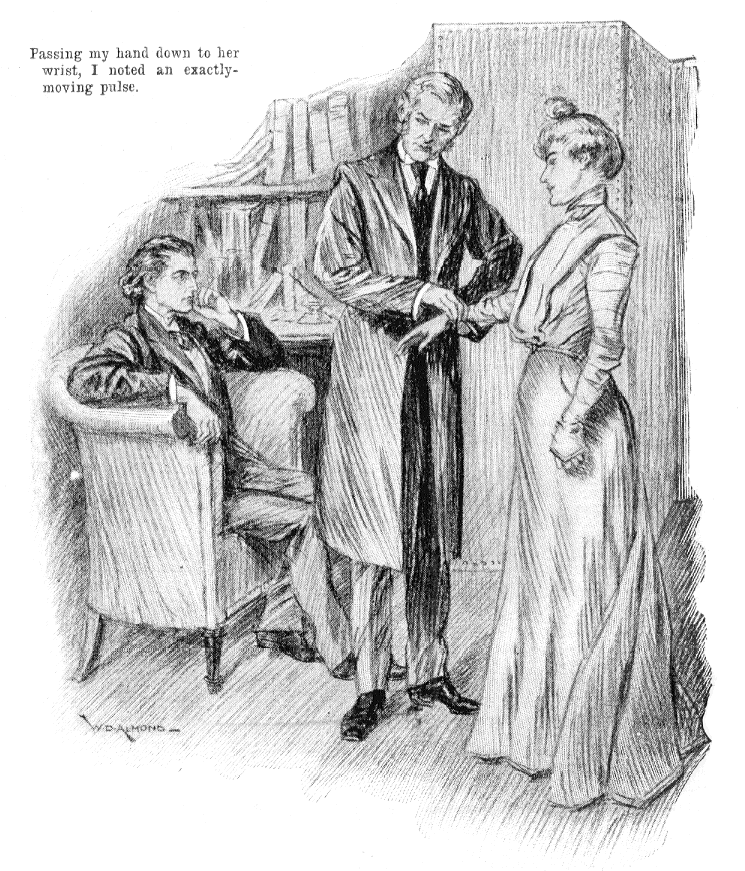

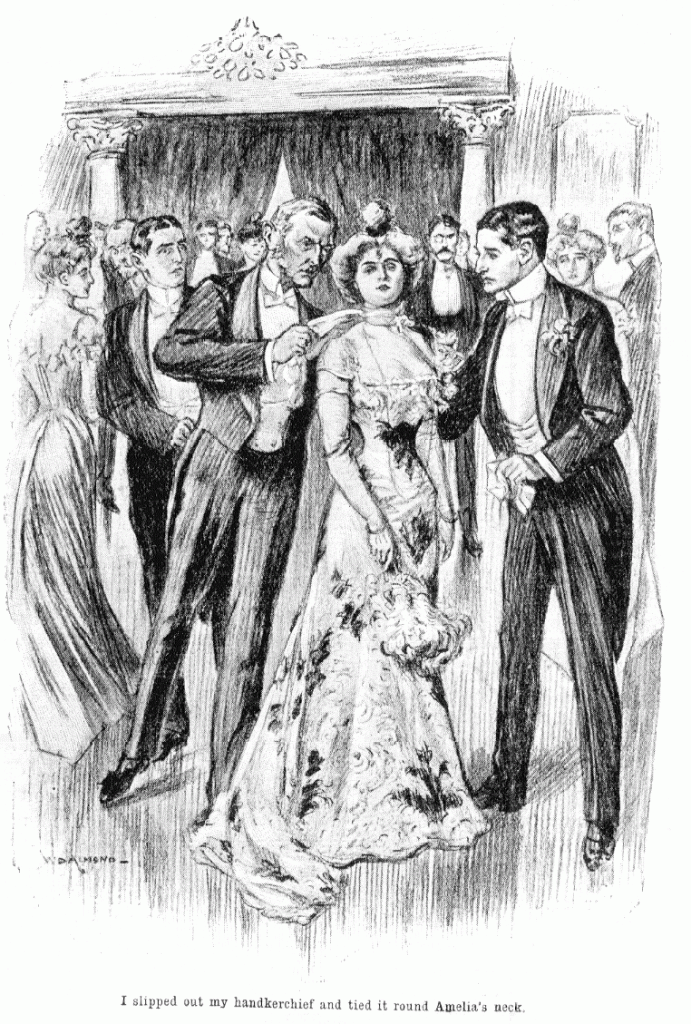
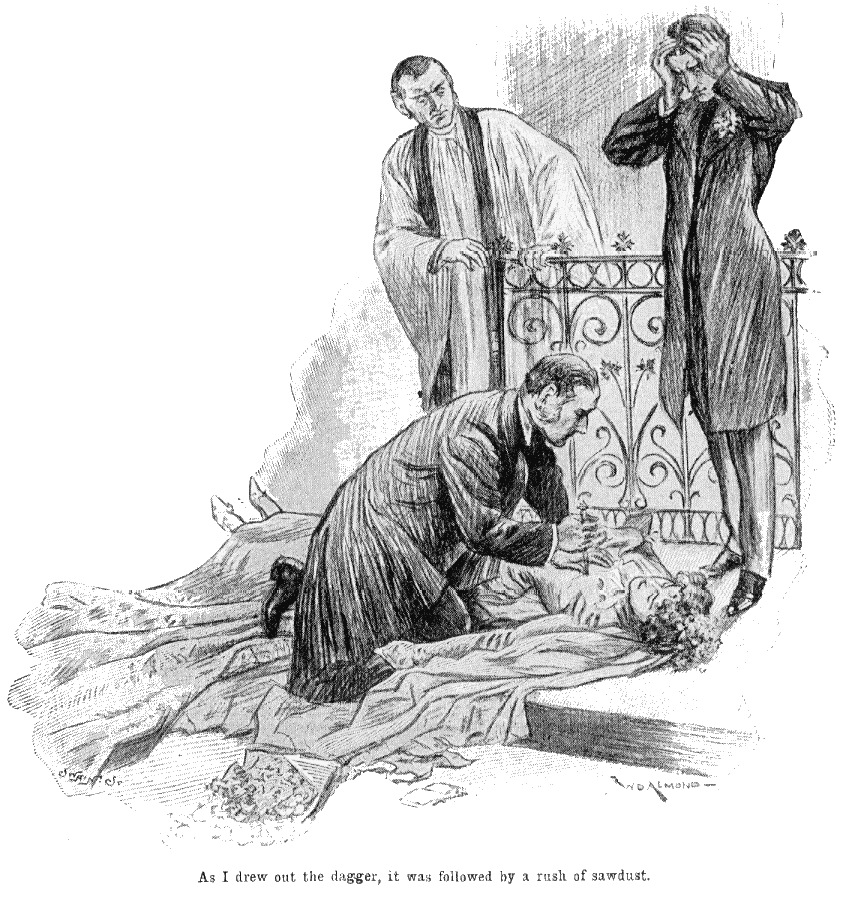


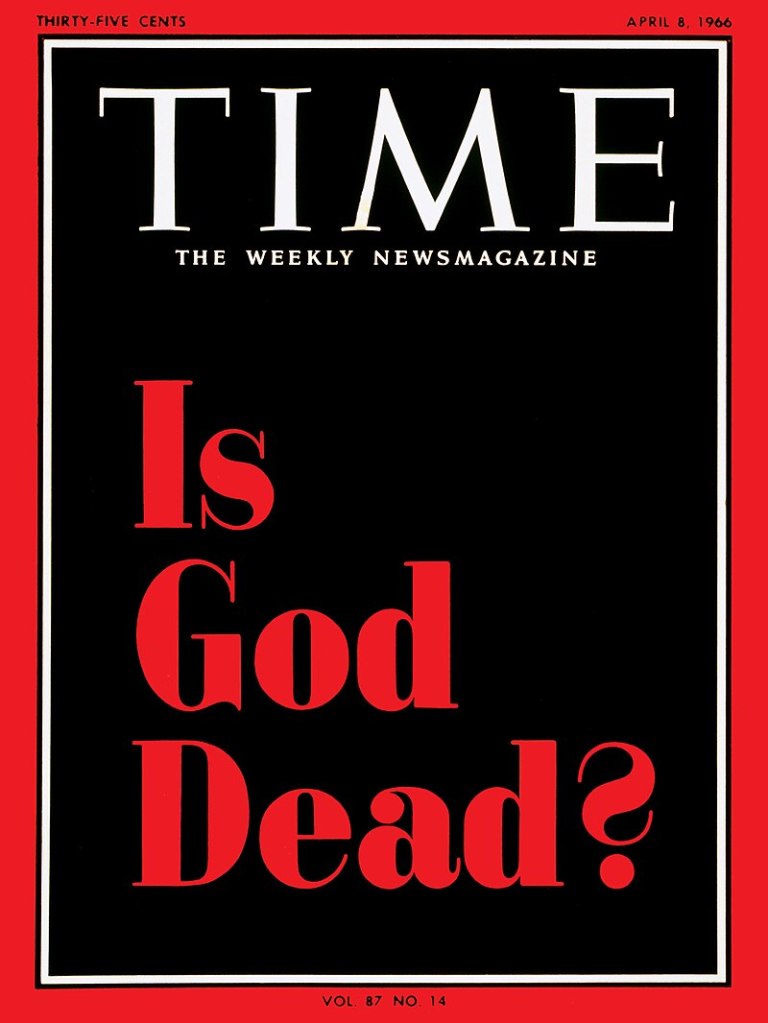


 Classics of Science Fiction


