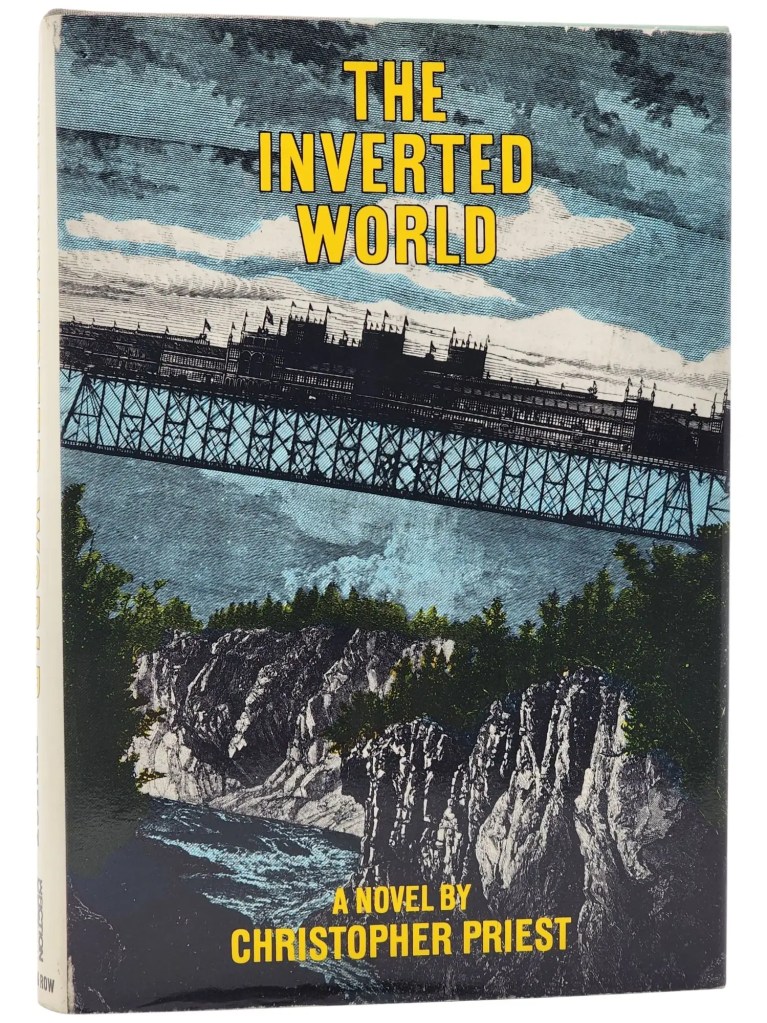
Read The Inverted World by Christopher Priest is my first recommendation. My second recommendation is not to read anything about this novel before you read it. This well-designed novel is a science fiction mystery. It unwraps like the layers of an onion. To get the maximum joy out of reading The Inverted World, you should do all the problem-solving yourself. Don’t even read the blurbs to the book.
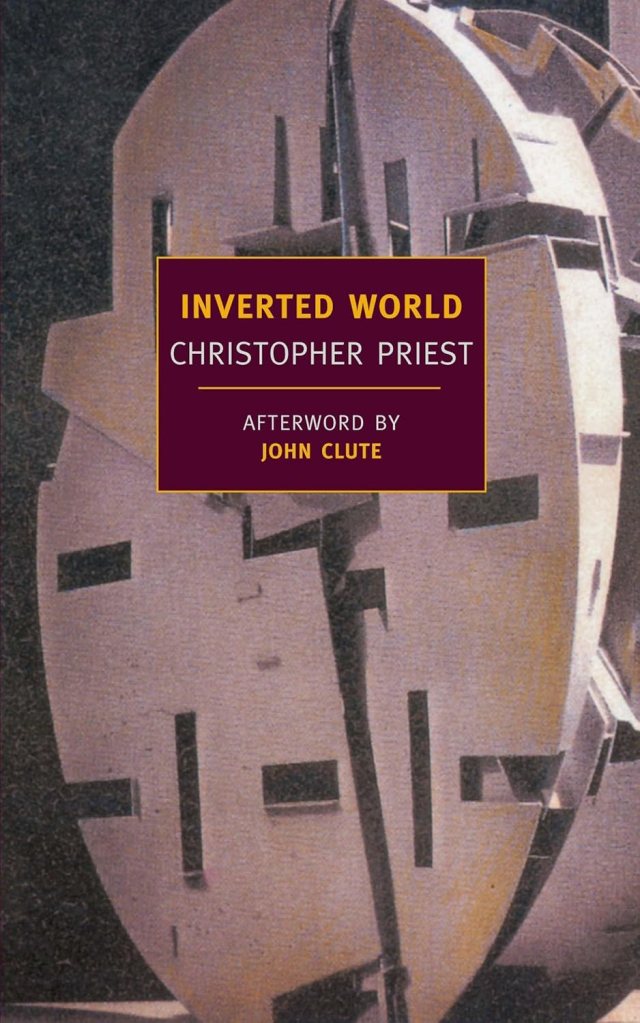
The Inverted World is recommended in Science Fiction: The Best 100 Novels by David Pringle, which is currently $1.99 for the Kindle edition at Amazon. I’m using Pringle’s recommendations for a buddy read with my friend Mike. The novel also won the British Science Fiction Award and was nominated for the Hugo Award. It’s currently available in print from New York Review Books Classics, a highly respected publisher of forgotten literary classics. You can purchase a Kindle or a paperback edition, but unfortunately, there is no audiobook edition.
I read The Inverted World on my iPhone, using the Kindle app with the text-to-speech feature turned on. No matter how hard I try, I read too fast. And even though the computer voice is not very good, it kept me reading slowly and deliberately. And that was very important in The Inverted World.
You know this story is different when the protagonist gives his age in miles. That’s about the only thing I will tell you about this story specifically. There are many mysteries in this novel. And I found them delicious to contemplate. If you need straightforward adventure stories, you should probably skip this one.
Priest creates a very different science-fictional reality. The story is tightly plotted. Priest obviously rewrote his draft many times to get his plot to work so well and to unfold so smoothly.
The Inverted World sometimes feels metaphoric or symbolic, and it is. But it’s also a unique kind of hard science fiction. The NYRB Classic edition includes an afterward by John Clute that explains the social and political climate of England in 1974 when the book was first published. That might make you think the book is about that. But the novel fits so perfectly with 2025 that you’ll realize it’s not really. It’s more universal.
The Inverted World is a philosophical novel. To get the most out of it, you need to think about this story, and if you can, you need to talk about this story with a friend. Mike and I had quite a conversation. Our society is undergoing paradigm shifts that disappoint and depress me. I’m amazed by this novel, which came out fifty-one years ago, speaks so directly to today.
I’m surprised this novel isn’t more famous among science fiction fans. This is the reason I’m reading my way through Pringle’s book. So far, he’s gotten me to read two outstanding forgotten classics that I haven’t read before. You can see his list of recommended novels on Wikipedia. (I recommend buying Pringle’s book. It’s only $1.99.) Before I started my project to read all the books recommended in Science Fiction: The 100 Best Novels 1949-1984, I had read 62 of the 100. I already knew it was a solid list of great science fiction books. Reading The Inheritors by William Golden and The Inverted World by Christopher Priest suggested I still had 38 great SF novels to blow my mind.
Our species, Homo sapiens, have been around for 300,000 years, but we only have recorded history for about 5,000 years. Neanderthals date back even further in time. For hundreds of thousands of years, people created societies and maybe even forgotten civilizations that existed before history. Science fiction is mostly known for imagining possible futures, but a subgenre exists that speculates about human life in prehistory.
Probably, many science fiction fans would consider stories about our cave-dwelling ancestors as historical fiction or historical fantasy. David Pringle claims the novel was inspired by science, so it should be science fiction. Of course, that opens up a whole can of worms. But I’m willing to embrace these kinds of stories into our genre.
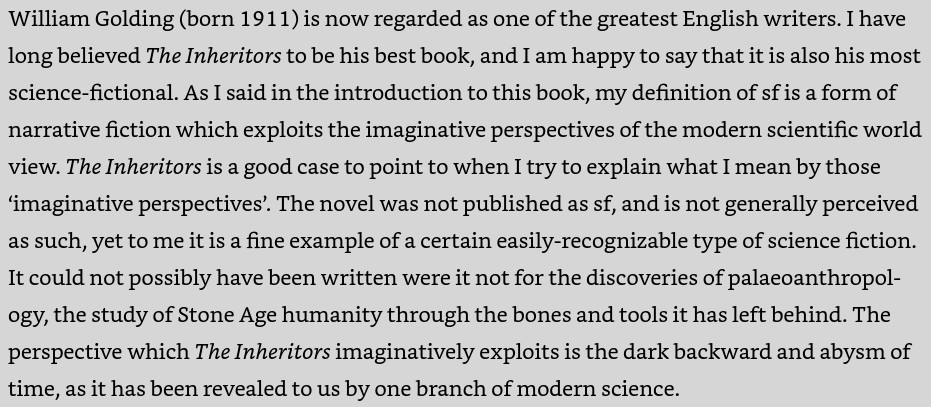
I read The Inheritors by William Golding because I’m reading or rereading the classics of science fiction. I’m going through David Pringle’s Science Fiction: The 100 Best Novels. The Kindle edition of the Pringle book is $1.99. The Kindle edition of The Inheritors is just 99 cents. You can read a list of Pringle’s 100 recommended SF titles here.
William Golding’s first novel was The Lord of the Flies (1954). His second novel, published in 1955, was The Inheritors. Lord of the Flies is about a group of schoolboys forced to live like primitives. The Inheritors is about a small band of Neanderthals confronting Homo Sapiens. It’s obvious Golding was exploring similar themes in these two novels.
Writers have long speculated about Neanderthals in fiction. Neanderthals thrived for 400,000 years but became extinct 40,000 years ago. Modern humans may have coexisted with them for up to 100,000 years. William Golding portrays Neanderthal life based on scientific speculation in 1955. It’s quite sympathetic.
Most of the novel is in third-person Neanderthal point of view, following a male named Lok. Golding expects his readers to decode action from the limited awareness of Lok’s mind. He does not say “bow and arrow” but describes them in terms that a Neanderthal would understand. Quite often, the narrative is confusing, but that’s intentional. Golding wants the reader to struggle in the same way that Lok struggles to understand.
Golding offers several interesting speculative theories. He suggests that Neanderthals had no sense of time but understood past and possibly future events by talking about pictures in their minds. Their language consists of simple nouns and verbs. The members of the tribe spend a lot of time comparing mental imagery. Their social bonding suggests they felt an almost telepathic connection with each other. Golding suggests that gender roles were divided. Males, especially the leader, decided on actions, while females, through a primitive religion, decided on meaning.
This speculation about how Neanderthals thought reminded me of The Origins of Consciousness in the Breakdown of the Bicameral Mind by Julian Jaynes, first published in 1976. Jaynes theorized that humans didn’t always have the same kind of internal consciousness that we have now. Golding anticipates this idea in 1955.
Throughout the novel, characters are forced into an original concept. The plot begins with crossing a stream. The Neanderthals are terrified of water. They have always depended on a fallen log to cross a stream, but one day it’s no longer there. It takes a great deal of group effort to come up with a solution.
The leader of the Neanderthal band is Mal, an old man. An unnamed old woman, maybe Mal’s mate, leads the group in other ways. There are indications that tribe members mated with whomever. There are four adults, Lok and Fa are the younger ones, and they become the main characters. Ha and Nil are the other two. There is a little girl named Liku and a baby.
Liku and the baby go missing. Then Ha and Nil. We follow Lok as he tries to track them down. Lok eventually discovers a new animal that Lok hasn’t seen before. After observing them, he starts calling them the new ones. They are Homo Sapiens, or Cro-Magnon, but it’s never said.
The women carry a small figurine they call Oa and treat it as if it were alive. My guess is the Oa is a Venus figurine, but I’m not sure. The Venus figurines came much later, well after Neanderthals went extinct. I assume Golding is speculating that such a religious symbol might have existed far back into time, so that intellectual attributes we speculate began with modern humans had early antecedents in Neanderthals.
In chapter 11, the penultimate chapter, we follow Lok at first through a close third-person narrative. But near the end, the point of view changes to omniscient. This lets Golding describe the scene as if we were seeing it through the modern mind. We are told Lok holds something in his hand: “It was a root, old and rotted, worn away at both ends but preserving the exaggerated contours of a female body.” I’m sure this is Oa.
In Chapter 12, the final chapter, we get a third-person account from the perspective of the Homo sapiens. This lets us know what they thought about the Neanderthals. It also allows Golding to speculate about their state of consciousness.
The Inheritors is not a breezy read. In some ways, it reminds me of A Clockwork Orange and how I had to struggle to understand what was going on. I’m quite sure if I reread The Inheritors two or three times, I would discover many more layers of speculation and narrative devices. With just this one reading, I’m left puzzled over several scenes.
The Inheritors is not famous enough to have a current audiobook edition. I believe hearing the story would help me understand it better. I did find an old audiobook edition on YouTube. Listening to it did indeed make the action clearer. I have long known that I tend to read too fast. Audiobooks make me slow down. Listening makes certain parts of the prose easier to understand. However, I need to read with my eyes to understand other parts. I believe The Inheritors deserves to be read with both my eyes and ears. By the way, Audible is scheduled to publish a new audiobook edition next year.
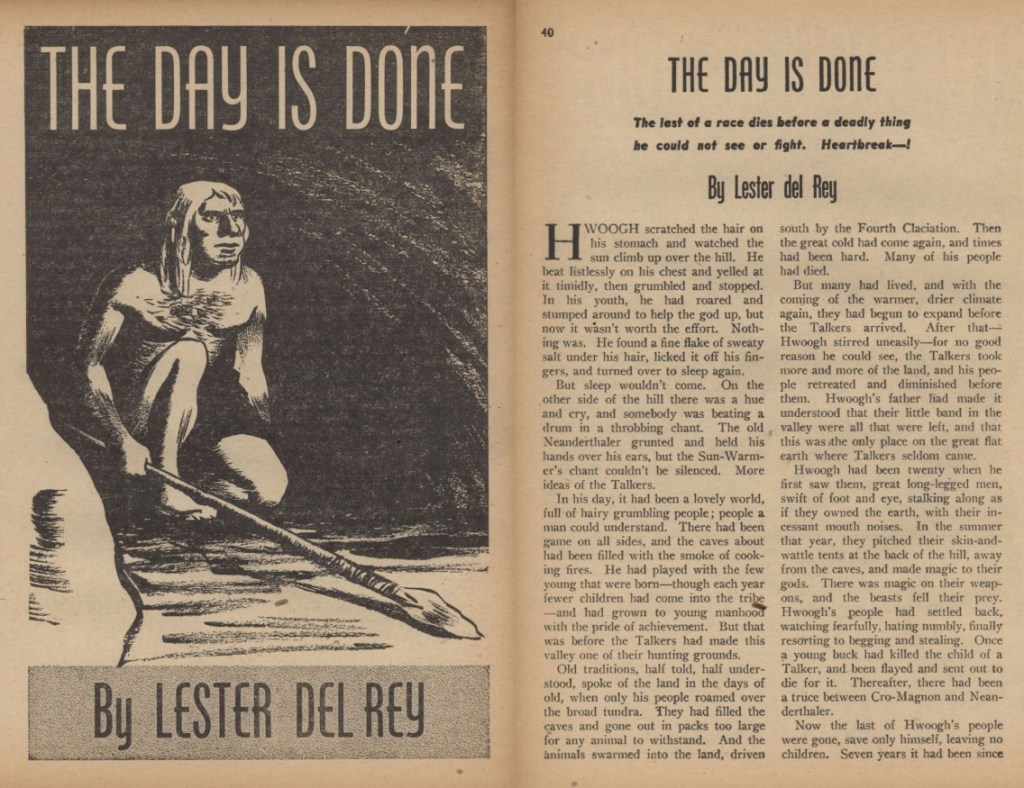
The Inheritors reminds me of the short story, “The Day is Done” by Lester del Rey, first published in the May 1939 issue of Astounding Science-Fiction. It’s another tale of a Neanderthal confronting Homo sapiens. You can read it here. I wonder if William Golding had read “The Day is Done.”
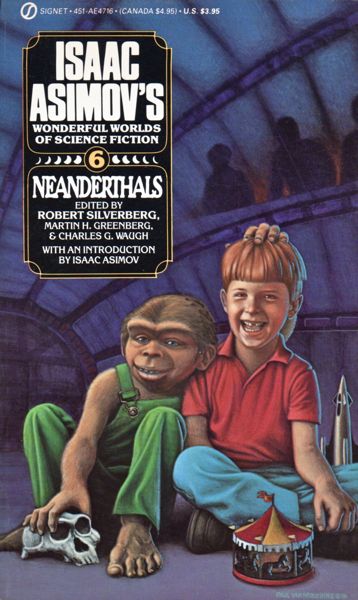
There is an anthology of science fiction stories, Neanderthals, edited by Robert Silverberg, Martin H. Greenberg, and Charles G. Waugh. View the table of contents here.
H. G. Wells wrote “The Grisly Folk” in 1921, an unflattering look at Neanderthals.
Of course, the most famous fiction featuring Neanderthals is Earth’s Children series, by Jean M. Auel.

 Classics of Science Fiction