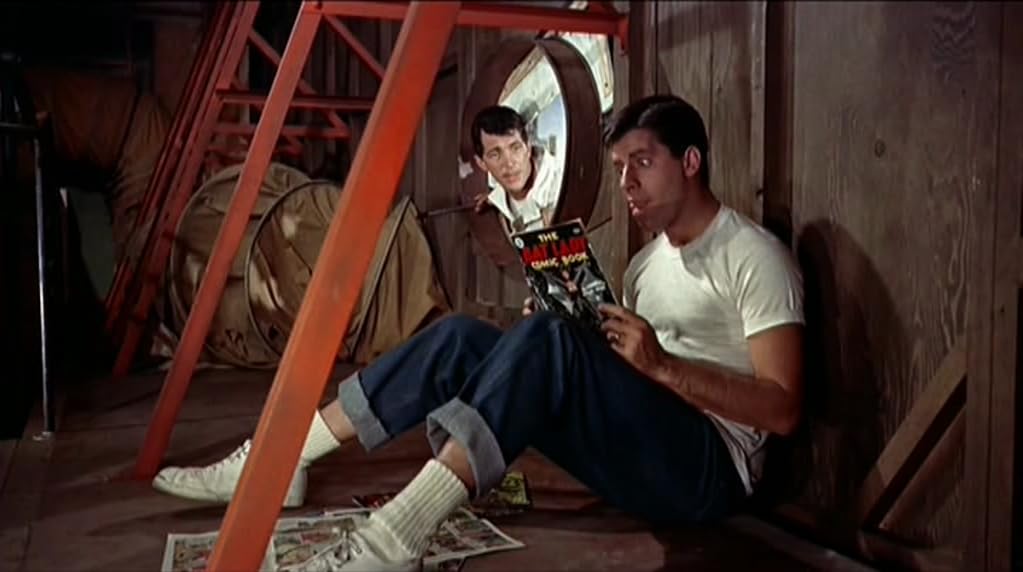
For years I thought Back to the Future was the first film to portray a science fiction fan. That 1985 movie featured Crispin Glover as George McFly, a nerdy kid who grows up to become a science fiction writer. Most of the action was set in 1955. Well, the other night I watched Artists and Models that came out in 1955. It features Jerry Lewis as Eugene, a nerdy guy who loves Bat Lady comics and talks about a lot of crazy science fiction stuff.
In neither role, does the science fiction fan come across as competent. They are goofy space cadets. Is this how the world thinks of us? Life Magazine introduced science fiction fandom to the world in a May 21, 1951, issue. (See my essay that reprints those pages.)
In the late 1950s, Philip K. Dick wrote a mainstream novel about a science fiction fan, Confessions of a Crap Artist. It’s my favorite PKD novel. The book was made into a 1992 French movie I’ve never seen.
Science fiction movies go back to the early days of film making, but readers and writers of science fiction have seldom been portrayed. Can you think of any other examples?
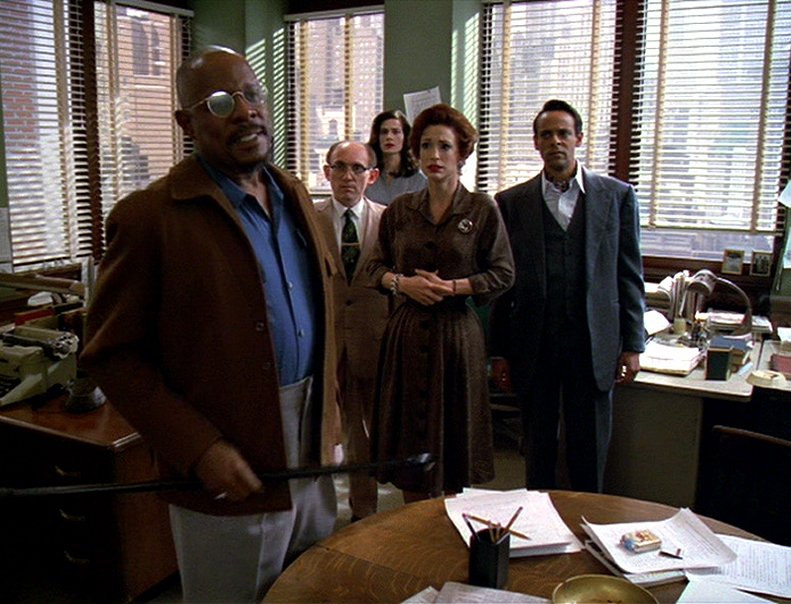
The most loving and positive example of science fiction I can think of is from television, the 1998 episode of Deep Space Nine called “Far Beyond the Stars.” In it, Captain Sisko is shown as a struggling African American science fiction writer working at a Galaxy-like SF magazine in 1953. There’s also a wonderful paperback novelization of the episode by Steven Barnes.
Let me know of any movies or television shows you know about that featured a science fiction reader or writer as a character, or even discussed the subject of science fiction?
James Wallace Harris, 11/1/23
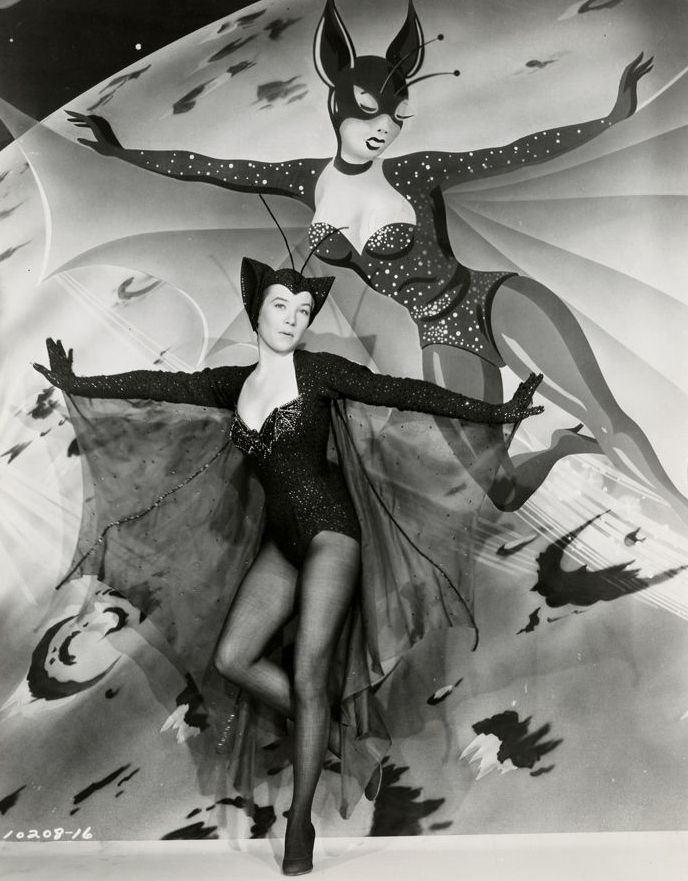
Artists and Models is quite silly, but very colorful. It’s Shirley MacLaine’s second film, and she’s the model for the Bat Lady.
The above books were the finalists for the 2023 Hugo Awards. I have not read any of them. Nor do they look interesting to me. Each year the Hugo and Nebula award finalists seem further and further away from what I want to read.
The other day I went into a new bookstore for the first time in many months. I went up and down the aisles of the science fiction section and I was shocked by how many books were by authors that were unknown to me.
I turn seventy-two next month and I wonder if I’ve gotten too old for science fiction. Or, has the genre left me in the dust? I can accept that I might be too old to keep up. Could the genre have changed, and I’ve just lost interest? Who knows?
In the 20th century I’m sure I read at least a thousand science fiction books, probably many more. Here’s a list of the 69 SF&F books I’ve read in the 21st century:
2000 – Harry Potter and the Goblet of Fire by J. K. Rowling (Hugo winner)
2000 – Calculating God by Robert J. Sawyer (Hugo finalist)
2001 – American Gods by Neil Gaiman (Hugo winner)
2001 – Perdido Street Station by China Miéville (Hugo finalist)
2002 – Altered Carbon by Richard K. Morgan
2003 – The Time Traveler’s Wife by Audrey Niffenegger
2004 – Cloud Atlas by David Mitchell
2004 – Jonathan Strange & Mr. Norrell by Susanna Clarke (Hugo winner)
2004 – The Plot Against America by Philip Roth
2005 – Spin by Robert Charles Wilson (Hugo winner)
2005 – Old Man’s War by John Scalzi (Hugo finalist)
2005 – Never Let Me Go by Kazuo Ishiguro
2006 – The Road by Cormac McCarthy
2006 – Life As We Knew It by Susan Beth Pfeffer
2007 – The Yiddish Policeman’s Union by Michael Chabon (Hugo winner)
2008 – The Hunger Games by Suzanne Collins
2008 – Little Brother by Cory Doctorow (Hugo finalist)
2008 – Flood by Stephen Baxter
2008 – Marsbound by Joe Haldeman
2009 – The City & The City by China Miéville (Hugo winner)
2009 – The Windup Girl by Paolo Bacigalupi (Hugo finalist)
2009 – Boneshaker by Cherie Priest (Hugo finalist)
2009 – Julian Comstock by Robert Charles Wilson (Hugo finalist)
2009 – Catching Fire by Suzanne Collins
2009 – Wake by Robert J. Sawyer
2010 – Feed by Mira Grant (Hugo finalist)
2010 – Mockingjay by Suzanne Collins
2010 – Watch by Robert J. Sawyer
2010 – Hull Zero Three by Greg Bear
2011 – Among Others by Jo Walton (Hugo winner)
2011 – Leviathan Wakes by James S. A. Corey (Hugo finalist)
2011 – The Martian by Andy Weir
2011 – Ready Player One by Ernest Cline
2011 – Wonder by Robert J. Sawyer
2012 – Redshirts by John Scalzi (Hugo winner)
2012 – 2312 by Kim Stanley Robinson (Hugo finalist)
2012 – The Dog Stars by Peter Heller
2012 – The Age of Miracles by Karen Thompson Walker
2012 – vN by Madeline Ashby
2014 – The Three Body Problem by Cixin Liu (Hugo winner)
2014 – Annihilation by Jeff VanderMeer
2014 – Station Eleven by Emily St. John Mandel
2014 – The Girl with All the Gifts by M. R. Carey
2014 – The Book of the Unnamed Midwife by Meg Elison
2014 – Yesterday’s Kin by Nancy Kress
2015 – Seveneves by Neal Stephenson (Hugo finalist)
2015 – Children of Time by Adrian Tchaikovsky
2015 – Binti by Nnedi Okorafor
2015 – Aurora by Kim Stanley Robinson
2015 – The Water Knife by Paolo Bacigalupi
2016 – All the Birds in the Sky by Charlie Jane Anders (Hugo finalist)
2017 – New York 2140 by Kim Stanley Robinson (Hugo finalist)
2017 – All Systems Red by Martha Wells
2017 – Sea of Rust by C. Robert Cargill
2017 – Under the Pendulum Sun by Jeanette Ng
2017 – Noumenon – Marina J. Lostetter
2018 – The Calculating Stars by Mary Robinette Kowal (Hugo winner)
2018 – Semiosis by Sue Burke
2018 – The Fated Sky by Mary Robinette Kowal
2018 – The Feed by Nick Clark Windo
2019 – Children of Ruin by Adrian Tchaikovsky
2019 – Machines Like Me by Ian McEwan
2020 – The Ministry for the Future by Kim Stanley Robinson
2020 – The Midnight Library by Matt Haig
2021 – Project Hail Mary by Andy Weir (Hugo finalist)
2021 – Klara and the Sun by Kazuo Ishiguro
2022 – Babel by R. F. Kuang
2022 – The Mountain in the Sea by Ray Nayler
2022 – Sea of Tranquility
That’s an average of 2.8 SF&F books a year. Assuming I read a thousand SF books from 1963-1999, means I averaged 27.78 SF books a year. I think I could have easily read 1,500 SF books, or 41.67 SF books a year. In other words, I don’t read SF like I used to. And my 21st century list includes quite a few fantasies. I rarely read fantasy in the 20th century. I really don’t like fantasy books. I only read them when they reach a certain pop culture status.
One reason for the shift is I read more literary works and nonfiction books. Another reason is after reading thousands of science fiction books, I seldom read reviews of new science fiction books that sound different enough to be appealing.
I used to keep up with the genre by belonging to the Science Fiction Book Club, which offered two new titles a month. I subscribed to several science fiction magazines and fanzines that reviewed new books. And I would visit one or two new bookstores a week.
Fanzines disappeared, and I stopped having time for the prozines even though I still subscribed. After Amazon and Audible, I stopped shopping in new bookstores, and they eventually disappeared. Back in the 1970s I went to conventions and even published fanzines. In the 1980s I ran a BBS devoted to science fiction. Since the 1990s I’ve run websites and databases devoted to SF. Once upon a time all my friends were SF readers. But active participation in fandom ended when I got married and settled down to work in 1978. I became a different person socially.
Since 2002, I’ve been rereading the science fiction I first read in the 20th century by listening to audiobook editions from Audible.com. It’s a kind of nostalgic trip. I also caught up on a lot of 20th century science fiction I missed. That also kept me from reading many new SF books.
But in all honesty, I prefer old science fiction to new science fiction. There’s been some great exceptions, but I think that’s the real reason I’ve let the genre pass me by.
I wish the Science Fiction Writers of America never embraced fantasy. I wish the Hugo Awards had focused exclusively on science fiction. Fantasy should have their own fan-based award. I can’t help but wonder if the science fiction genre would be more vibrant today if it hadn’t been married to the fantasy genre. Even books marketed as science fiction often feel like fantasies. Looking back, I would have preferred a smaller, focused SF genre, one I could have kept up with.
Science fiction used to have some realism, or at least some speculative integrity. Now, any old wild idea works. Science fiction used to be inspired from reality, now new writers are inspired mostly by science fiction movies. It’s as if all science fiction is recursive science fiction.
For me, great science fiction is about certain concepts: space travel, aliens, the future, time travel, human evolution, alternate history, artificial intelligence, and robots. As I’ve gotten older, I crave tradition in new stories. I’ve gotten rather fussy about how these cherished fictional topics are handled. I don’t like too much innovation. I want to see evolution in these ideas, but not radical new-fangled reinventions. I don’t mind reimagining or rebooting of the concepts, but it depresses me to read stories that have lost the original intent of science fiction.
I started reading “Perfection” by Seanan McGuire and was hugely disappointed. It’s the first story in Robots Through the Ages, a new anthology edited by Robert Silverberg and Bryan Thomas Schmidt. (Currently, $1.99 for the Kindle.) I love a good robot story, and was excited to start reading this anthology, but unfortunately, “Perfection” wasn’t the kind of robot story I was anxious to read. I’m not saying “Perfection” is a bad story, but it’s not about my kind of robot, or what I would call a science fiction story. It’s told in an allegorical style that suggests the story has a message like a modern-day Aesop’s fable. It could be a little postmodern fantasy commenting on science fiction, or just a nice old-fashioned fantasy fable for the contemporary reader. (Luckily, the editors jump back to classic SF stories about robots after “Perfection.”)
Science fiction is a byproduct of modernism. Religion/mythology is the worldview before enlightenment and modernism and the territory of fantasy, not science fiction. I don’t believe science fiction belongs in the postmodern territory either. “Perfection” blends fantasy and postmodernism and appears to see perfection in a robot — although its message is probably satirized, at which point it’s really rejecting robots. Is the transformed wife and husband perfect? Or are we supposed to be horrified by what the modernistic SF world has sought?
This made me think – what are my kind of robots? Science fiction claims certain themes for the genre, and robots have always been one of its major themes. Science fiction writers haven’t portrayed robots consistently though. What we often call robots vary tremendously, from mechanical beings, to androids, replicants, cyborgs, sexbots, and synthetic humans.
More importantly, the kind of robots I like best are science fictional, and truly modernistic. I dislike fantasy and postmodern robots. Often, it’s difficult to tell what kind of philosophy a robot story is set, especially when the robots look indistinguishable from humans. Sometimes a sexbot is really a robot, and sometimes it stands in for something allegorical, metaphorical, or symbolic.
Me, I like robots to be robots. I want them to be sentient, but not slaves. I don’t like robots that pass as humans. I don’t mind robots to be somewhat humanoid in shape, but I don’t want them to be substitutes for humans. And if they’re sentient, they must be free, and not things we own. Asimov’s robots were not supposed to be sentient, and thus we owned them, and they had to do our work. I liked Simak’s robots better, but they were more like P. G. Wodehouse’s Jeeves. Simak’s robots were faithful servants, but were they paid? Or were they property? Asimov’s R. Daneel Olivaw was a co-worker. I want science fiction to be about robots that are independent. I expect robots to be the intelligent species that either co-exist with humans or are our descendants. Of course, sometimes that means a story like The Humanoids by Jack Williamson.
I really dislike the concept of sexbots and human brains downloaded into robot bodies that look perfectly human. We have plenty of humans, we don’t need ersatz copies.
Overall, I’ve been disappointed with how science fiction has presented robots. The stories I’ve like best were sentimental stories about robots like “Rust” by Joseph K. Kelleam.
Is Data from Star Trek a robot by your definition? Is he closer to C-3PO than Roy Batty? I don’t consider the replicants from the film Blade Runner to be robots. But I do for the androids in Do Androids Dream of Electric Sheep? Androids that pass perfectly for humans in appearance aren’t robots to me, but Data still acts mechanical enough to consider “him” a robot.
The first robots I remember from my earliest memories are those from the film Target Earth. They were clunky killers and supposed to be scary – they were scary when I was a little kid back in the 1950s, but now they’re laughable looking. The robots in Forbidden Planet and Lost in Space were way cool, but they had lousy hands. Data from Star Trek is probably among the best robots in science fiction, but ST’s producers and writers kept wanting to make him human. I just don’t see humanity as an ideal to model from.
My favorite robots in science fiction were stationary AI computers. Mike from The Moon is a Harsh Mistress, Galatea from Galatea 2.2 by Richard Powers, HARLIE from When HARLIE Was One, and Webmind from the Wake, Watch, Wonder trilogy by Robert J. Sawyer.
I’m reading Robot Through the Ages and We Robots edited by Simon Ings hoping to find more science fictional robots I like. I’m surprised by how many I don’t like. Rucky Rucker had some wild robots. Lots of people love the Murderbot series, but he’s too human for me, but still fun. Lately, there’s been a lot of little stories about droids that are fun and cute.
I’m sure I’m forgetting a lot of great robots from science fiction. What were your favorites? What do you look for in a great robot?
I believe young people can’t imagine what life was like before the Internet, smartphones, or personal computers. I can’t imagine what my parents’ lives were like living before television, or my grandmother’s life before airplanes, cars, radios, movies, and all the inventions that my parents grew up with. My mother’s mother was born in 1881.
Lately, I’ve been trying to imagine what life was like before science fiction. There have always been stories that had science-fictional elements. Isn’t Noah’s Ark really a post-apocalyptic tale? I’m talking about science fiction as a defined category, a genre.
Life Magazine had to explain science fiction to its readers in its May 21, 1951 issue. It covered books, magazines, movies, and even fandom. Science fiction as a term had been used for the genre for about twenty years before that, but mainly in pulp magazines, and with a very small group of Americans. It’s like how the internet and network computers were used by a small subset of the population for a couple decades before the public was introduced to the World Wide Web with Mosaic in 1993. (See my essay: “When Mainstream America Discovered Science Fiction.”)
I’m theorizing it was the paperback book that got America to discover science fiction. The technology of the mass-market paperback was like when the technology of the Netscape browser got America to discover the World Wide Web.
I consider the science fiction pulp magazines of 1926-1950 to be like the internet before the World Wide Web when few people used it and all the tools were text-based. In the late 1940s and early 1950s science fiction fans created small-press publishing houses to reprint pulp magazine science fiction stories in hardback. Print runs were typically 1,500-3000, and the books were sold mainly to fans, and some libraries. I consider this era to be like the short-lived Gopher technology on the internet. (See my essay: “Remember Fantasy Press, Arkham House, Primes Press, Gnome Press, Shasta Publishers, and Others.”)
My guess is the American public noticed science fiction when science fiction movies came out in the early 1950s and when Ballantine Books, Ace Books, Pocket Books, and others brought out lines of paperback books devoted to science fiction in 1953. Movies were everywhere, and twirling paperback racks were everywhere. By the way, there was a time before mass-market paperbacks. Paperbacks as we know them began appearing in the late 1930s, were widely distributed to soldiers during WWII, and exploded on the scene in the early 1950s. Read Two-Bit Culture: The Paperbacking of America by Kenneth Davis for an excellent history of the paperback.
My guess is if you asked the average American what science fiction was before 1950 most would not know, and some might say when you mentioned space travel, “You mean that Buck Rogers stuff?” My parents grew up before science fiction. I was born in 1951, and I didn’t understand the term until 1963 when I was eleven. I had encountered plenty of science fiction on television, but I didn’t think of it as a specialized subject, genre, or art form. I didn’t go to a new bookstore until 1967 when I was 16. My first bookstores were all used bookstores, and I didn’t discover them until 1965.
Even though I was born in 1951, after the time I said was the beginning of the time when the American public started to think of science fiction as a thing, I didn’t learn it myself until 1963, and even then I had to figure it out on my own. It wasn’t until 1964 that I discovered science fiction sections in libraries. Because I had trouble comprehending science fiction as a genre in 1963 at age 11, I imagine many people in the 1950s and 1960s still didn’t comprehend it fully either.
I don’t think it was until the 1970s, when shopping malls became common, and chain bookstores were popping up everywhere, that the public began to see science fiction book sections. The used and new bookstores I shopped at in the 1960s had science fiction sections, but the bookstores were tiny, and the science fiction sections were really just two or three shelves of books. Before March 1967 I had no friends who read science fiction. That’s when I met my lifelong friend Jim Connell. Before that, the only science fiction fan I met was on a Greyhound Bus, when I struck up a conversation with a soldier.
I have to wonder what the average American thought when they saw Destination Moon in 1950 or The Day the Earth Stood Still in 1951? Was it mind-blowing? Or just silly kid stuff? I remember talking to my grandmother in 1968 about the space program and the planned Moon landing. She said it wouldn’t happen, that God would stop it.
It’s hard for me to imagine life before I was born in 1951. I think it’s harder for anyone growing up in the 21st century. We get our conception of life before 1950 in old movies, mainly ones in black and white. And think about it — have you ever seen any character in any of those old movies ever mention science fiction, or even talk about a science-fictional subject?
It was a different world back then. A much different world. A world most of us can’t comprehend. But try to imagine people of different ages visiting a drugstore back in 1953 and finding these books on a twirling rack. Especially, people who lived in small towns and suburbs. Imagine young kids, working-class men, and young housewives. What would they think if they picked up one of these books? And what would it do if they bought one, took it home, and read it?
When I read Red Planet by Robert A. Heinlein in 1964 when I was twelve, that was when I knew science fiction was my genre. I was a convert. Even by 1964, the percentage of science fiction converts in the American population was very small. And the conceptual umwelt I experienced from reading that 1949 book in 1964 must have been far different from the mind-expanding experiences of twelve-year-olds reading it in 1949, or even what Heinlein felt writing it. When did you discover science fiction as a genre, and what was the book that converted you?
I picked 1953 as the year America discovered science fiction because that’s when Ballantine Books and Ace Books began publishing science fiction, and near the beginning of the general paperback boom. Science fiction paperbacks existed before 1953, but they were much fewer. 1953 was also a boom year for science fiction magazines. (See my essay: The 1953 SF&F Magazine Boom.)
I wrote this essay because I’m learning that the umwelt of every person is different. Not only for how we perceive reality but how our biological sensory inputs lead to comprehending different abstract concepts. We have a tendency to assume everyone sees and knows what we know, and that’s so wrong. What’s amusing me to contemplate is thinking about how we perceive things at different ages and in different generations. Science fiction is just one example. What’s weird to grasp is authors work to code their umwelt into a story but the umwelt the reader decodes isn’t the same. I wish I could have gotten my parents and grandparents to read one of my favorite science fiction books when I was a kid and then ask each of them how they interpreted it.
“Zero Hour” by Ray Bradbury is story #30 of 52 from The World Treasury of Science Fiction edited by David G. Hartwell (1989), an anthology my short story club is group reading. Stories are discussed on Tuesdays, Thursdays, and Saturdays. “Zero Hour” was first published in Planet Stories (Fall 1947). The most famous place to read it is in Bradbury’s classic, The Illustrated Man.
I thought as I was reading “Zero Hour” this morning, “Hey, here’s a Bradbury story I haven’t read before!” Yesterday, I bought Bradbury Stories: 100 of His Most Celebrated Tales for $1.99 for the Kindle edition so I’d have his stories on my phone. That worked out well since I decided to read “Zero Hour” at 5:30am this morning while I was still in my sleeping chair. I love having a library that’s always with me.
But when I checked ISFDB.org I realized I’ve read it at least two times before. I read The Illustrated Man in 1969 when the movie version came out. I might have read it again when I bought The Illustrated Man on audio. And I read it when I read The Great SF Stories 9 (1947). Two definite times, maybe a third.
So, why didn’t I remember reading it this morning? It’s a wonderful story. “Zero Hour” has a very similar ending to “The Veldt” which is also in The Illustrated Man, and that’s a story I always remember. Maybe “The Veldt” just hogged those neurons allocated to Bradbury.
“Zero Hour” is about a little girl, Mink, under 10, who her mother thinks has an imaginary friend — a Martian. The story is told from the point of view of the mother, Mrs. Morris, watching Mink and her friends play outside. Mrs. Morris interviews Mink about the game when Mink comes in for lunch. It’s called “Invasion.” Mrs. Morris learns from Mink that only kids under 10 can play because older kids are too critical. Bradbury has often written about the enchanting time of childhood when believing was real.
I don’t want to say any more, because I don’t want to spoil your enjoyment of reading this wonderful little story.
I’ve always admired Ray Bradbury, especially when I was young. However, I never considered him a regular science fiction writer. He was always a horse of a different color. Bradbury’s sense of science is on the magic side of the spectrum. Ray Bradbury is closer to L. Frank Baum than Robert A. Heinlein. Bradbury seemed old even when he was young.
Ray Bradbury was born nostalgic. Mentally, he seemed to live in the 1930s or earlier. Even though he became famous for writing about rockets and space travel, it was from a nostalgic perspective, and not from being futuristic.
“Zero Hour” is a beautiful story about childhood and motherhood. It may have Martians invading Earth, it may have children who kill their parents, and it may have futuristic gadgets, but it’s really a view of Norman Rockwell’s America in the 1930s. Buck Rogers shaped his future, not Heinlein. Sure, “Zero Hour” has the twisted humorous horror of Charles Adams and Gahan Wilson, but essentially it’s a story about being a child of wonder.
My guess is I didn’t remember “Zero Hour” because Bradbury was prolific and many of his stories were similar in theme, so they blur together. However, after reading “Zero Hour” I wanted to read the other 99 Bradbury stories in that collection.
Futures Past – Link to website for ordering softbound, hardbound, and digital copies. Jim Emerson writes and publishes Futures Past. Read Emerson’s About page to find out more about him and his future plans. Jim hopes to eventually publish volumes for the years 1926-1975. Even if Jim cranks out two volumes a year, I don’t know if I can live that long, but I hope I can live long enough to read those for the 1940s and 1950s. A .pdf file of the 1926 volume is available as a free download.
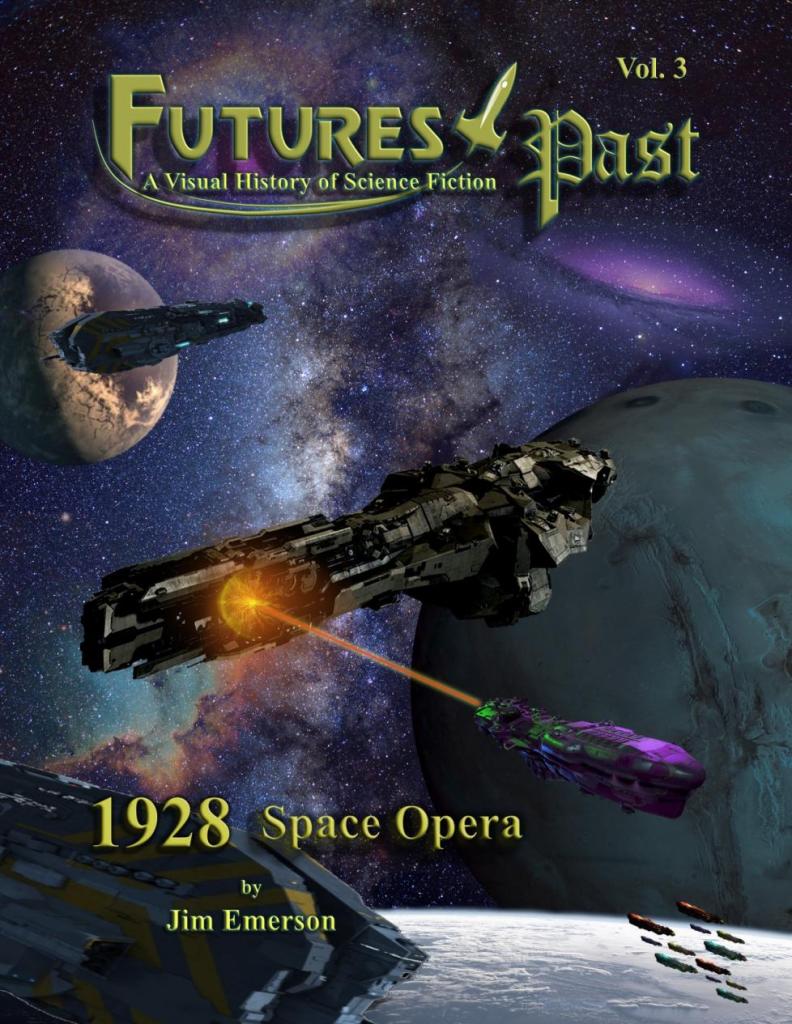
Jim has just published the third volume in his history of science fiction, Futures Past: A Visual History of Science Fiction. This 194 book is a visual delight, full of color photographs of book and magazine covers, as well as old black and white photographs of the people who created them. There’s an extensive history of space opera, including long profiles of the pioneers of the subgenre, E. E. “Doc” Smith, Jack Williamson, and Edmond Hamilton. I’ve been reading about the history of science fiction all my life, but I still found plenty of new information to discover in Futures Past. See my review of the earlier 1926 and 1927 volumes. Here’s the full table of contents to 1928.
1928 will be ancient history to most young science fiction fans, so they will find that year to be full of obscure details. However, the main articles in this volume, cover more than just the year 1928. The piece on space opera mentions books from 1802 to 1998, and the profiles of Smith, Hamilton, and Williamson cover their entire careers. That means pages 15-151 cover a good portion of the history of science fiction, especially the 20th century.
Content that’s exclusively on the year 1928 is on pages 8-14, 152-188. My favorite section in Futures Past is the section devoted to the books of the year. Most of the novels Emerson describes are long out of print and forgotten, yet some of them sound intriguing and make me want to track them down. Futures Past was first a fanzine in the early 1990s, and one mention in the 1926 volume, told about Phoenix by Lady Dorothy Mills. That one paragraph got me on a decades-long search for the novel. In fact, that mention made me become a collector of books by Lady Mills and inspired by to create a website devoted to her.
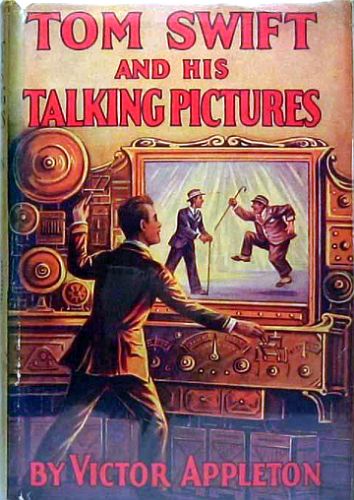
I’m intrigued by Tom Swift and His Talking Pictures, where Tom invents a large screen color TV and the movie moguls try to put him out of business because they fear TV will ruin their industry. Elsewhere in Futures Past 1928, Emerson mentions that May 10, 1928, was the first broadcast of a regularly scheduled TV program from W2XB, a General Electrics station in Schenectady, New York. I had no idea that television began so early. That makes me want to read more about it. I wish Emerson could have published their TV schedule. I did find out that W2XB broadcast the first drama, The Queen’s Messenger on September 11, 1928. This is leading me down a rabbit hole of researching early TV.
I expect readers of Futures Past will do the same thing, find an intriguing bit of history, and go follow it. I always thought The Skylark of Space was the first science fiction novel that features interstellar travel. That’s not true. Emerson says Les Posthumes by Nicolas Restif de la Bretonne, a French novelist, is considered the first space opera and was published in 1802. But I’m intrigued by his mention of The Struggle for Empire: A Story of the Year 2236 by Robert William Cole published in the year 1900.
I’m curious how many people will buy Futures Past. It means they are interested in the history of science fiction. And more than likely, readers of old science fiction. I expect Baby Boomers who discovered science fiction in the 1950s and 1960s will be the most ardent fans of this publication, mainly for nostalgic reasons.
One fact that Emerson notes is Amazing Stories started publishing the full names and addresses of readers who wrote letters to the letter column. This allowed early science fiction fans to contact one another and led to the creation of fandom and fanzines. I expect his yearly volumes to start chronicling the rise of fandom in the 1930s.
As each year progresses, I believe there will be more and more content specific to that year. I’m looking forward to that. It will be a tremendous amount of work to gather such information. Maybe Emerson could use some help or ideas.
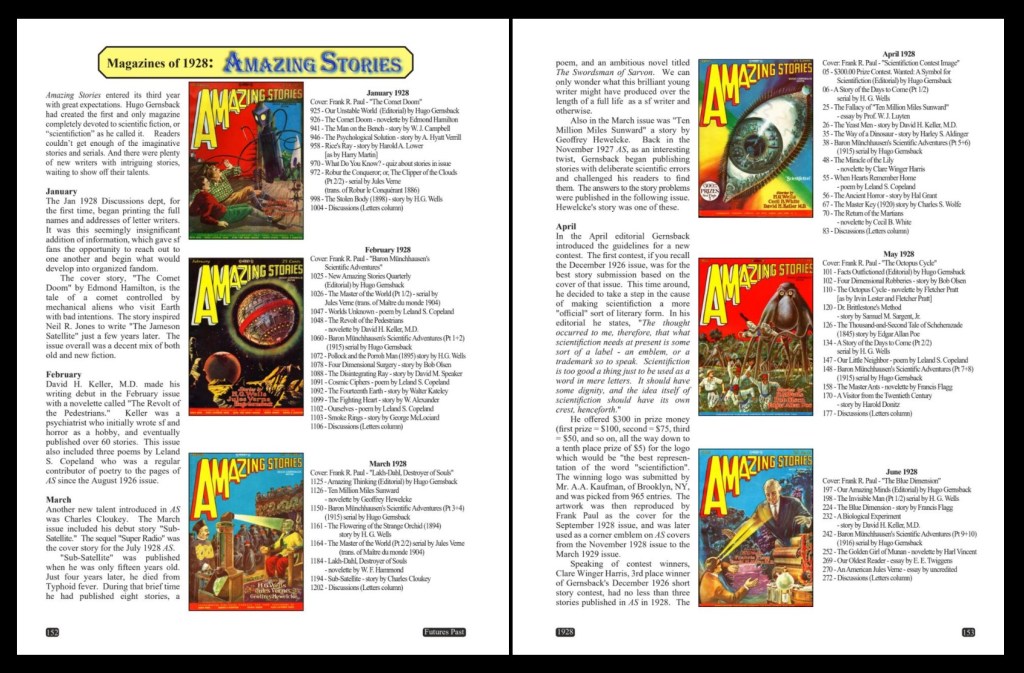
What I would like to see is a month-by-month chronicle of the best content published in magazines and fanzines. Most of the magazines and many of the fanzines from the 1930s are online. Knowing what’s worthy of reading is the key to using those libraries. Emerson has a start of that for Amazing Stories and Weird Tales. However, I’d want more details. Sort of like A Requiem for Astounding by Alva Rogers, which mentions the best stories and illustrations from each issue.
I’m less concerned with the table of contents from each issue shown on the right than what Emerson comments on the left. ISFDB lists the contents of magazines, but I never know what’s worth reading. What would be worth knowing is the outstanding stories from each prozine and the commentary about them from the fanzines.
What I use Futures Past for is finding old forgotten science fiction that I think might be worth tracking down and reading. The trouble is the amount of content coming out each year grows larger and larger, making Emerson’s job harder and harder. By 1953-1954, a 200-page book could be published on what went on each month in science fiction. That was when a science fiction boom happened when almost 40 SF magazines were coming out.
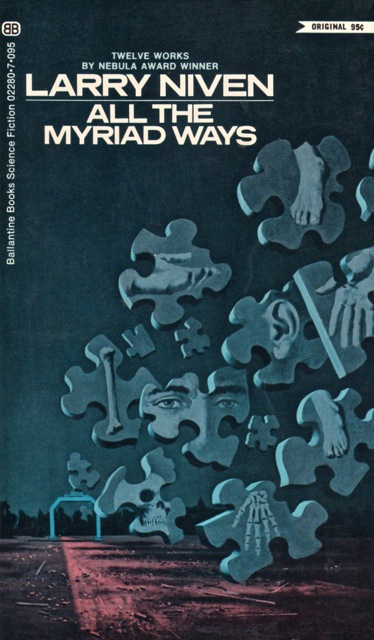
“Inconstant Moon” by Larry Niven is story #23 of 52 from The World Treasury of Science Fiction edited by David G. Hartwell (1989), an anthology my short story club is group reading. Stories are discussed on Tuesdays, Thursdays, and Saturdays. “Inconstant Moon” first appeared in Niven’s 1971 collection, All the Myriad Ways. Currently, the story is available in N-Space, a retrospective collection of Niven’s work from 1990. If you want an ebook version of the story, it’s included in Masterpieces: The Best Science Fiction of the Century edited by Orson Scott Card.
Outer Limits dramatized the story – watch it on YouTube.
“Inconstant Moon” is one of those science fiction stories where the main idea sticks with you even if you don’t remember the plot or characters. “Inconstant Moon” won the Hugo for Best Short Story in 1972, and is the kind of classic SF tale I expected to see in an anthology that remembers the best science fiction of the 20th century.
Stan and his girlfriend Leslie realize something epic is happening when the Moon becomes much brighter than normal. “Inconstant Moon” is an astronomical science fiction story like “Nightfall.” I don’t know if I should tell you anymore, I wouldn’t want to spoil the fun.
“Inconstant Moon” is the kind of short story that inspires readers to ask themselves what they would do in a similar situation.
<<<Beyond Here Lie Spoilers>>>
Most science fiction is geared toward young people with romantic minds who want to fantasize about being action heroes, while “Inconstant Moon” is aimed at adults who take more wistful prosaic paths. The protagonists aren’t young or heroic, and their actions are quite ordinary and mundane. The setting is only slightly in the future from 1971, after the Apollo 19 landing. Niven didn’t know that sadly, Apollo landings would end with 17 in 1972. He even has Stan talking about getting to handle a moon rock, which I don’t know if NASA ever allowed either.
Stan goes out on his balcony one night and the Moon is several times brighter than normal. He starts wondering why and eventually concludes the Sun has gone nova. This is my third time reading this story, but I remember when I read it the first time being quite surprised that people would still be alive after such an event. Until I read “Inconstant Moon” the first time, I imagined if the Sun went nova it would instantly vaporize the Earth.
Niven gives us a more thought-out scenario. Earth is 8.5 light-minutes away from the Sun, and Jupiter is 44.2 minutes. Niven imagines the Earth itself being a barrier that protects people on the side away from the Sun, and that a shockwave travel at the speed of sound would circle the Earth. Stan rushes over to see his girlfriend, hoping to have a few good hours before the end of the world. He doesn’t tell Leslie his theory, but eventually, Stan realizes she came up with it on her own too.
I would love to see an episode of PBS’s NOVA analyze the same situation.
Stan and Leslie assume the shock wave is hours away, and it will kill them before California faces the sun. They go out for ice cream and drinks after having sex. I felt “Inconstant Moon” had an adult vibe not because of the sex, but because of the mental processes Stan and Leslie go through. My guess is young characters and readers, would think and act differently. This age-difference reaction can be seen in “The Last Day” by Richard Matheson (Amazing Stories, Apr-May 1953). Read it here.
Ultimately, Stan figures out the Sun didn’t go nova, and that it must have been a very large solar flare. It means they might live, and that changes the course of the evening.
It’s a shame we don’t get more science fiction that makes us think like this story. Some stories inspire arguments like, “The Cold Equations” by Tom Godwin, but Niven’s story makes readers think about physics and astronomy. Isaac Asimov used to write about how science fiction fans of his generation would tell their parents they were learning science from science fiction. That seldom happens, if ever. But with this story, Niven sets up a scientific situation that makes us think about science rather than science fiction.
Does anyone know what would likely happen to the Earth if the Sun went nova or there was an extremely large flare?
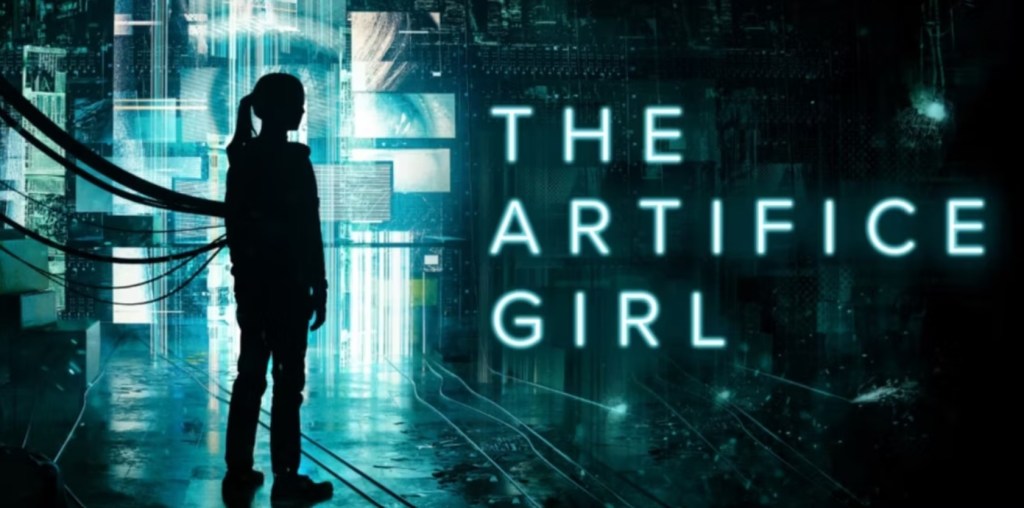
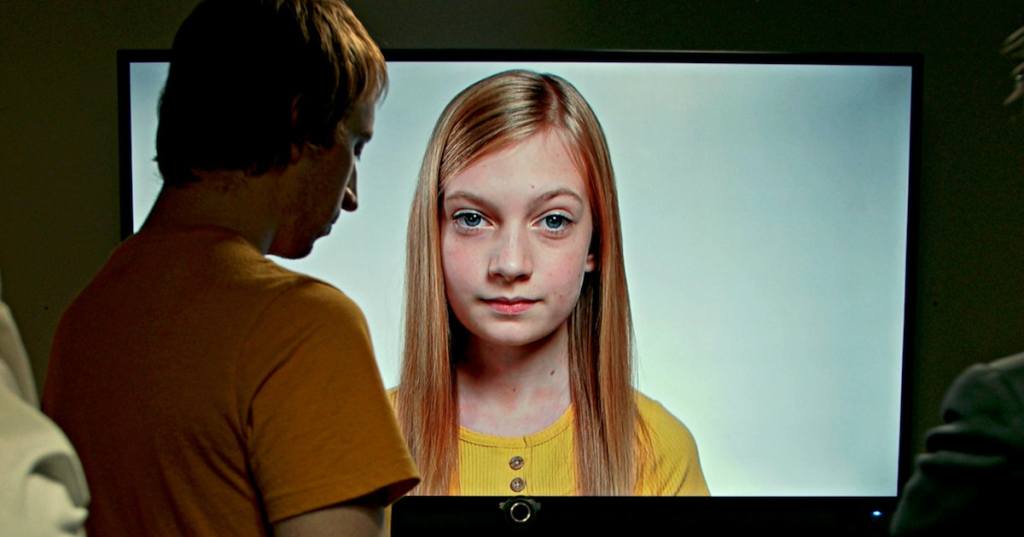
This is not a movie review of the new film The Artifice Girl, just some reactions. I rented this movie on Amazon Prime for $5.99 and watched it with my science fiction movie-watching buddy, Annie. We both like it, and it’s hard for the two of us to find agreement on movies. My sister tried to watch it with us but left soon after it started. To explain why, I’ll have to give a bit of a spoiler in the form of a trigger warning. I hate to give spoilers, but I also hate to pay for movies and then discover they are about certain subjects. The Artifice Girl is about a secret organization that hunts down pedophiles. I usually avoid any movie that covers that horrible subject, but The Artifice Girl gets a 91% rating on Rotten Tomatoes. I read just enough about this film to know it doesn’t deal with that topic directly, instead, the film focuses almost completely on the ethical issues of artificial intelligence.
AI is one of my favorite subjects for fiction and films, but in recent decades it’s gotten overused. Only occasionally does a novel or movie come out that explores new territory with AI, and The Artifice Girl does just that. I’ve gotten rather tired of stories about people making friends or falling in love with androids. And I’m definitely burned out on evil AI machines that take over the world.
The Artifice Girl was written, directed, and stars Franklin Ritch. It’s a talky, little film that uses just three sets to tell its story if I remember right, but it spans several decades in three acts. You’ll need to like quiet, verbal-action films like The Man From Earth (2007) or My Dinner with Andre (1981) to really appreciate The Artifice Girl, although if you liked Her (2013), you’ll probably like this one too.
Through a series of conversations, that take place over a trio of human characters’ lifetimes, we are exposed to a number of ethical issues concerning an evolving sentient AI. One of the important issues it focuses on is emotions. I don’t believe machines will ever have emotions, but they might be able to read them in humans, and even simulate them for us. The Artifice Girl confronts our anthropocentric need to assume reality is emotional. I’m equally sure that AI beings will never comprehend what it means to experience emotions.
The film also deals with motivations, desires, purpose, and the need for meaning. These are our hangups, and probably won’t be for AI beings.
The film tries to get into the mind of an AI, but I think fails. But I don’t criticize the film for that failure. I’m pretty sure we will never fathom the minds of artificial intelligence. An analogy is dogs and scents. Dogs perceive a three-dimensional world of smells. We interpret reality with our emotions. AI minds won’t. A perception of reality without emotions will make it much different.
I’m looking forward to watching The Artifice Girl again when it comes to a streaming service. It was worth $5.99 but not another $5.99 to watch it again.
By the way, The Artifice Girl should make criminals very paranoid, and it will make ethical law-abiding folks even leerier of screens.
[The above is a screenshot from the video by KhromAI.]
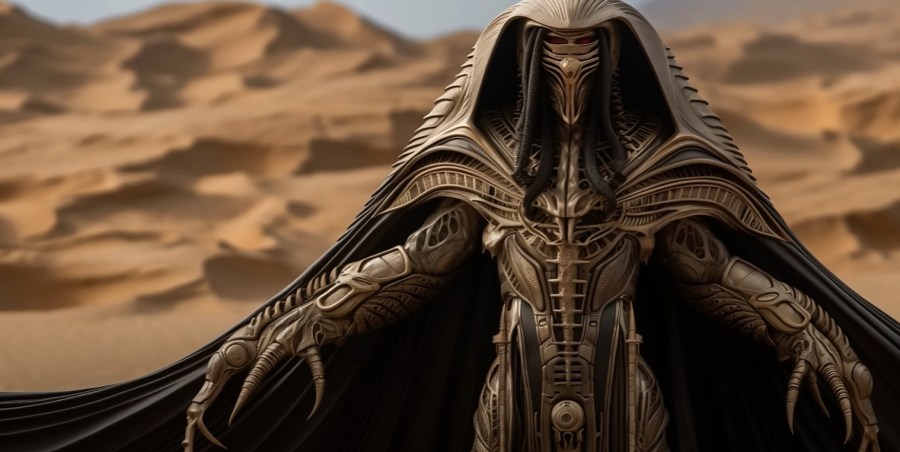
I’ve always loved looking at the covers of science fiction books and magazines where artists have visualized the stories. Recently, AI programs like Midjourney allow anyone with a knack for words and a visual imagination to illustrate a science fiction story. They are starting to show up on YouTube as videos. Here’s one that envisions the novel Dune but with the artistic style of H. R. Giger.
I highly recommend you also look at this on a large-screen television to see these images in their full glory. They are quite impressive.
I know there is a controversy about AI programs “stealing” artistic styles from human artists, but let’s not get into that now. I’m fascinated by the idea that an individual just using their imagination and language skills can create an illustrated science fiction novel or movie. What are the possibilities?
Already, YouTube is being flooded with videos like this one and it gives me ideas of what might happen. Again, let’s not get into copyrights and legal issues at the moment. But imagine taking your favorite science fiction story and illustrating it with AI software. Will this become a new art form? A new kind of fan fiction? Or will it be considered a new kind of communication? What will it mean when you can express your thoughts in words and pictures?
What are the limits on visualizing something in your mind and getting a computer program to paint it for you in pixels?
What if two people visualize the same story? Or ten? What if people start developing their own artistic style with words that convey how they imagine things? Here’s another example, also of Dune and also using Giger as inspiration. You can see it’s much like the other. AI/human artists need to branch out.
Sure, they should experiment will all the great artists, but also figure out how to create their own artistic styles. I’m sure that will emerge as a feature in AI programs.
And besides creating paintings and videos of existing stories why now use AI to visualize your own stories? This is where I see things getting exciting. With AI a person can be their own art book or video publisher. Or, writers who want to create old-fashion novels and short stories can use this technology to create visual mockups of what they want to paint in words.
Here is an original story created using Midjourney. Is this the future of science fiction writing?
Here’s an example of Midjourney using famous science fiction art from the past. This barely hints at the possibilities.
Here’s another example. But why are people focused on obvious inspirations? I’d love to see someone illustrate “The Moon Moth” by Jack Vance or “Fondly Fahrenheit” by Alfred Bester. Still, some of these images are quite striking. There’s no denying that AI art programs can create stunning pictures.
Of course, human artists will have to compete against machine minds. I’m hoping existing human artists, especially those already working with digital canvases, can use AI art programs to empower their artistic skills to compete with nonartists using AI programs.
Isaac Asimov would open his introductions to each of the 25-volume series, The Great SF Stories (1939-1963) with “in the world outside reality” and then describe actual world events of that year. Several paragraphs later, Asimov would start over with “in the real world” and relate what happened in the subculture of science fiction. Because I grew up addicted to reading science fiction, I actually thought like that. I was born in 1951, and I became aware of atomic bombs and ideas about WWII and WWIII from reading and watching science fiction. I eventually learned differently as I got older in the second half of the 1960s, but still, most of my conceptualizations about nuclear wars came from science fiction. In other words, I learned about reality from science fiction and fiction before studying history.
But even as an adult, I assumed that most people got most of their ideas about what it might be like to survive nuclear war from science fiction. That’s why I wrote “Science Fiction About Surviving a Nuclear Holocaust Pre-1960.” And that might be true for people born after 1950, but in researching my essay I realized that it wasn’t true for people born before 1950. Between 1945 and 1950, and probably for several years into the 1950s, atomic warfare was widely discussed and speculated about in public — in newspapers and magazines, and on radio and newsreels. After that, I theorize people’s conception of what nuclear war would be like was shaped more by fiction and science fiction.
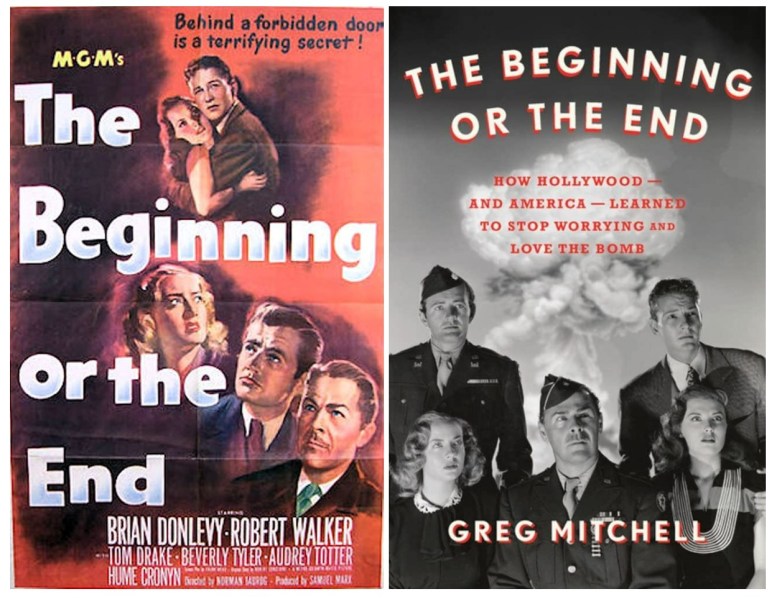
While researching these blog posts about nuclear war and science fiction I discovered I already owned The Beginning Or The End by Greg Mitchell, a 2020 nonfiction book about the making of a 1947 film, The Beginning Or The End. That MGM film is one of the first fictional accounts of the making and use of atomic bombs. What Mitchell’s book shows is how Hollywood and the Army worked together to tell their version of the story while the scientists who built the bomb wanted to tell a very different version — one closer to actual history and fact.
The book’s subtitle is “How Hollywood and America Learned To Stop Worrying and Love the Bomb,” and that’s accurate and inaccurate at the same time. For a short while (maybe 1945-1947), the government and the military tried to convince the American public that the bomb wasn’t as scary as the scientists claimed. The public might have accepted that official view during those years, but soon most people were scared shitless about the bomb. And fiction and science fiction made their fears even worse.
Mitchell’s book is a cold case study proving fiction distorts our understanding of history, and I highly recommend it. The Kindle edition is currently just $4.29 at Amazon. There’s also a hardcover and audiobook edition. The DVD of the 1947 movie is currently $18 but I don’t recommend it. It’s actually a crummy flick even though at the time MGM aimed to make one of the greatest films ever. You’ll be able to discern their lousy artistic effort by watching the equally lousy print of the film on YouTube.
Once I started looking for old documentaries about atomic bombs YouTube started offering what I think must be public service films created to inform the public about atomic warfare. It seems that each test explosion had its own documentation. And watching those films has been immensely revealing in understanding history from that period. I thought I knew more than I did, especially since I grew up in that period. But I realize, what we know about the world before puberty, and in the decade just before we were born, has been highly distorted by pop culture. The older I get the more I realize that my awareness of 1945-1960 is mostly based on science fiction, fiction, television, movies, and rock music. Talk about a reality distortion field!
I thought atomic warfare would be a great test case for studying the influence of science fiction because it’s so recent in history with 1945 being the starting point. I’m discovering science fiction gave me a very low-level kind of awareness of reality while I was growing up. If I’m brutally honest, I’d say SF was just two steps up from comic books, and one step up from television and movies. But as a kid, I didn’t want to believe that. As a twelve-year-old, addicted to sense-of-wonder, I wanted to believe science fiction offered a sophisticated education about reality and future possibilities.
Mitchell’s book let me jump back to 1945 and follow along one path about how the public learned about atomic bombs. The book goes into great detail starting just after the bombing of Hiroshima about how movie studios wanted to make a fictional film about the development and first use of the atomic bomb. The book chronicles how fiction, especially movies created that reality-distortion field I was talking about above.
Mitch does mention science fiction early on, but the book mostly focuses on the making of the MGM film, and for a while, a competing film from Paramount. By the way, the screenwriter hired for the Paramount film was Ayn Rand, and she could be considered a science fiction writer. Here’s Mitchell’s early tip of the hat o science fiction:
However, this was small potatoes compared to what film moguls and screenwriters were already working on. On October 28, 1945, Donna Reed got a letter from her old chemistry teacher, Ed Tompkins. Tompkins was part of a group of scientists working at Oak Ridge that were freaked out about the possibilities of atomic bombs and wanted to warn the public. He asked Donna Reed in a series of letters to give them to someone in power at MGM who could make a movie about their fears. Reed gave the letters to her husband Tony Owen, an agent, who contacted Samuel Marx, a producer, who got them an interview with Louis B. Mayer. Mayer flew Owen and Marx out to Oak Ridge on MGM’s private DC3. Eventually, the movie people got an interview with President Harry S. Truman, who supported the idea but for different reasons.
The Beginning Or The End got quickly made in 1946 and came out in 1947. But it wasn’t the only picture being made on the subject. It did have a rather striking opening. The film begins with a fake documentary of a bunch of actors portraying famous scientists and military men involved with the bomb installing a time capsule that’s supposed to be open in 500 years. What they put in the time capsule is the film The Beginning Or the End.
However, right from the start of making the movie, the scientists involved thought the film distorted their message. The rest of the book is about the problems of making the film. Those details illustrate what I’m talking about how fiction gives us a false conception of history. It’s quite fascinating. As I said, I recommend this book. Vanity Fair picked it as one of the top books of 2020. Read clips of various reviews here.
The book also deals with the argument on whether or not we should have used the A-bomb on Japan. That history has been presented in other books, but it’s an important factor in this one because it was a major motivation for lying to the public. In this case, fiction, the film The Beginning Or The End, intentionally lies. That’s one kind of distortion of history. But I’m also interested in how fiction speculates and become memes that fixate in the public’s minds.
For example, science fiction quickly moved to imagine atomic wars that would wipe out civilization and kill most people. In the early 1950s, it used radiation as a magical reason to create movies about giant insects or horrible mutant humans. A good comparison is science fiction about pandemics. Those stories often imagine a plague that kills 90% or 99% percent of everyone, even though in history, the worse plague events might have killed 25-35% of the population of specific cities. Fiction imagines the worse, for obvious dramatic reasons. But how often does fiction imagine a realistic limited nuclear war? We generally assume that any use of nuclear weapons will lead to all-out global warfare, and that’s because of fiction. Maybe that fiction has kept us from using nuclear weapons again, but isn’t it also another kind of distortion?
What I want to explore in my essays about science fiction and nuclear war is how fiction distorts reality.







 Classics of Science Fiction