I love post-apocalyptic science fiction, especially those stories that follow the collapse of civilization as it happens. My favorite SF novel of this type is Earth Abides by George R. Stewart from 1949 and the television show Survivors from the BBC in 1975. I’ve written about some of my favorite post-apocalyptic short stories here. I’ve also written about the theme many times because it’s one of my favorite science fictional themes in case you want to check out my fanatical interest.
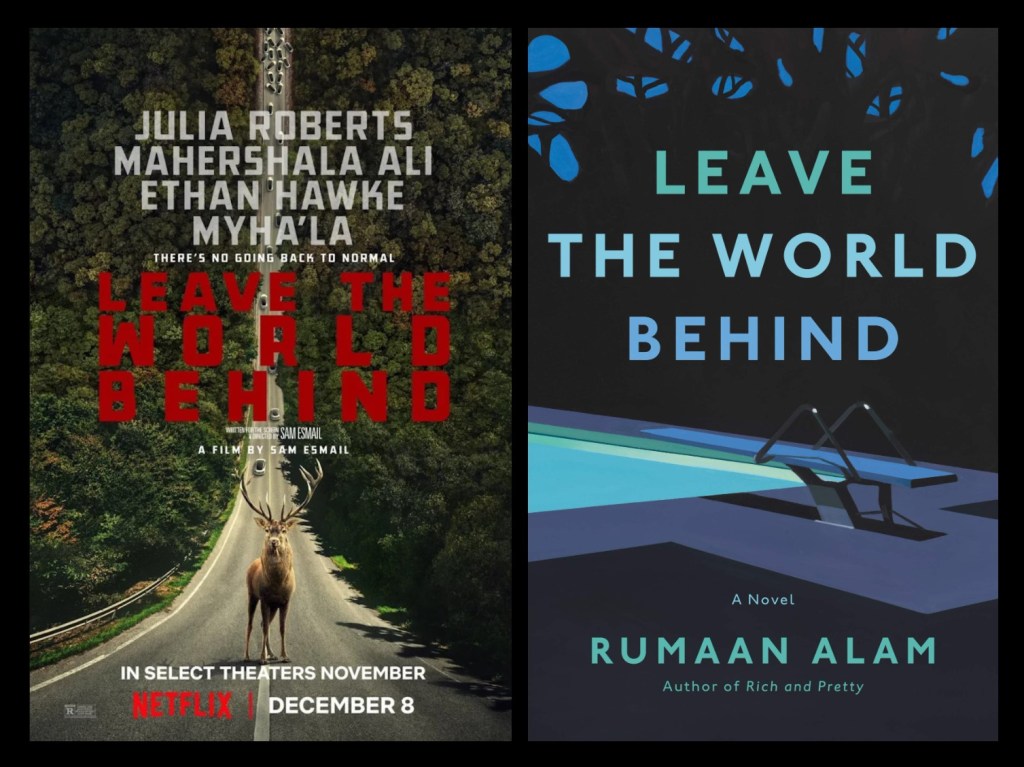
So, when I watched Leave the World Behind on Netflix last night, I got overly excited because it’s a new and interesting take on this old theme. Every generation has their own philosophical thoughts about the possible collapse of civilization. What made Leave the World Behind even more relevant was I had just watched this YouTube video (watch below). I highly recommend you take the time to watch it too — it will add to your paranoid theories about what’s happening in Leave the World Behind.
Joe Scott explains how there’s a philosophical movement that believes we should hurry the collapse of civilization so we can get busy rebuilding everything. I think that’s insane. The philosophy is called accelerationism, and I don’t know if the producers of Leave the World Behind were using accelerationism as a cause or not, but it’s worth thinking about.
Amanda Sandford (Julia Roberts) wakes up and decides her New York City family should rent a house out on the island for the weekend. She doesn’t even ask her husband Clay (Ethan Hawke) but just wakes him up while she’s packing. They get their two kids (Rose and Archie) and drive to the rental house on Long Island. After they settle in, they head to the beach where they experience their first weird event. An oil tanker runs aground right in front of their beach umbrella. It’s quite an impressive special effect. The Sandford family just think it’s an odd, but startling accident.
That night, G. H. Scott (Mahershala Ali) and his daughter Ruth (Myhal’la) knocked on their door claiming to be the owners of the house. They ask if they can stay there that night too because the power has gone off in New York City. The house still has power, but it’s lost cable and the internet, so things are starting to feel weird.
The rest of the movie is about how these six people get along not knowing what’s happening. As the weekend progresses increasingly weird and strange things happen, but because they have no real news, the two families can only speculate. Clay tries to drive into a local town to find out what’s going on but gets lost without a GPS. Amanda, a businesswoman freely admits she hates people, has all kinds of paranoid theories. G. H. knows some extraordinarily rich people connected to the military and offers other theories. Poor Rose only wants to see the last episode of Friends after binge-watching ten years of the series and having just one episode to go. The Scotts are African Americans, and Ruth doesn’t trust the white Sandfords, especially the mother, Amanda.
There are some spectacular special effects scenes with deer and Tesla cars that made me think of other theories about what’s happening. The gathering of deer reminds me of Hitchcock’s The Birds.
One of the obvious points the movie makes is how terribly dependent we are on our smart phones. But if you pay closer attention, it’s interesting to know how different Leave the World Behind is from earlier stories like it. There is little survivalism in this film. Of course, this is just the first weekend of the apocalypse. I’d love to see a sequel about what the six experiences over the next coming months. Amanda assumes that everything will get back to normal soon, but we know that’s insane. Rose Sandford has the most positive approach. She decides she isn’t going to wait for things to get normal again, but goes off on her own to find a copy of Friends to watch.
There are a lot of preppers and survivalists in our society, but the six presented here don’t think that way. I assume the storytellers are saying most of us are going to be damn helpless. None of the six even say, “At least we have plenty of deer to eat.”
I really got into Leave the World Behind, but Susan, my wife, thought it was a big waste of two hours on Christmas Eve. I thought it justified the price of Netflix this month. The film is based on a book by Rumaan Alam. I haven’t read it, but now I’m tempted.
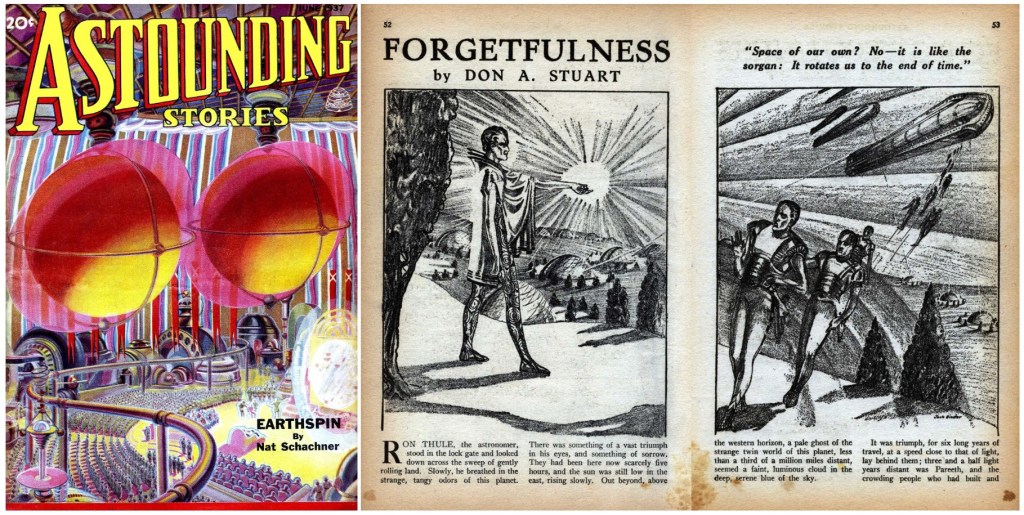
“Forgetfulness” by John W. Campbell, Jr. is story #2 of 52 from the anthology The World Treasury of Science Fiction edited by David G. Hartwell (1989) that my short story club is group reading.
Instead of counting all the titles and authors of science fiction books I’ve read, I’m starting to tally all the far-out concepts science fiction has given me. In “Forgetfulness” John W. Campbell took one of my favorite concepts, walking in ancient dead alien cities, which was probably an old SF concept even in 1937, and gave it a couple twists. It’s going to be impossible to talk about this story without giving spoilers so think of this essay as an analysis of SF concepts and not a review. You can read the story online here, or buy it in a $2.99 Kindle edition of Campbell’s collection Cloak of Aeshir. However, I don’t recommend buying unless you’re a big fan of John W. Campbell.
“Forgetfulness” begins with a spaceship landing on the planet Rhth, one of nine planets in the system. The main point-of-view character is Ron Thule, an astronomer, from the planet Pareeth. They have traveled for six years, in a spaceship 2,500 feet long and 400 feet in diameter, covering 3.5 light-years, traveling at nearly the speed of light. These people from Pareeth are looking for a world to colonize, and are disappointed that Rhth is already inhabited. They hope to settle in the remains of a majestic city that was built by spacing-faring race millions of years ago and discover its secrets.
Try and pronounce Rhth. If nine planets weren’t a giveaway, the name Rhth should be. There they meet Seun, a very tall, graceful human-shaped being, clothed in a golden outfit, with a beautiful colored cape. All the people of Rhth wear gold suits and colored capes and live in opalescent domes twenty to thirty feet in diameter situated under giant green trees near the dead city. The buildings of that titanic city are three thousand feet high, but the winds have filled the streets with five hundred feet of dirt.
Seun has told Ron Thule and the commander of the Pareeth mission, Shor Nun, that the builders of the city had once visited their world. And that their world, Pareeth, once orbited the same sun as Rhth, but had been torn away by a rogue star. This hints that maybe the builders had conducted a kind of panspermia across the galaxy. As the story progresses the achievements of the builders become greater and greater. However, the people of Pareeth eventually discover secrets that can shatter their minds and their hopes.
Most of us find a great sense of wonder reading about the rediscovery of lost cities. So, it’s not a remarkable feat of creativity for a science fiction writer to imagine humans finding long-dead alien cities. Still, it’s one that sets off a powerful sense of wonder and has been used time and again in science fiction.
Campbell puts a twist on this concept, by having aliens discover a city from a long-dead civilization of mankind. John W. Campbell has a reputation that claims he wanted humans to be the galactic crown of creation, and this story supports that. In his earlier story, “Twilight” he had a human time traveler discover a far future deserted human civilization. That gave him a chance to imagine the engineering marvels of what we could achieve someday. In “Forgetfulness” he has aliens discover dead human civilization, but this time, Campbell imagined an even more impressive future for us built by super-science. You should read both stories to see just how hopeful Campbell was for the human race.
Both “Twilight” and “Forgetfulness” could be considered Dying Earth stories, although H. G. Wells in “The Time Machine,” William Hope Hodgson in The Night Land, and Olaf Stapledon in Last and First Men, took that idea, even much further.
Unfortunately, “Forgetfulness” is hard to read. Part of that is due to a dated writing style, but also because Campbell didn’t really have much of a story to tell. They came, they discovered wonders, they were frightened, they were disappointed. There’s no drama or revealed emotions. “Forgetfulness” was reprinted in the classic 1946 anthology Adventures in Time and Space but has been mostly forgotten since. Damon Knight remembered it in his 1966 anthology Cities of Wonder, and Brian Aldiss and Harrison brought it back again in 1973 for The Astounding-Analog Reader. Both are very minor anthologies. The second contained just seven stories from Astounding covering 1937-1941, a rather odd collection.
It’s interesting that a story about remembering has been forgotten. The big concept in “Forgetfulness” is visiting the remains of an astonishing civilization millions of years after its citizens have gone. Campbell puts his own twist on it by having that civilization be a future version of ours. However, there’s another important concept he wanted to get across, and that’s how we forget the past. Shor Nun and Ron Thule can’t understand why Seun doesn’t understand how the city works. But then Campbell reminds us we couldn’t explain the technology of cavemen, or from other periods of human civilization. Remember all the discussions about how did the Egyptians build the pyramids? Well, it turns out Seun has even newer technologies that are even further advanced than the builders and they have merely forgotten earlier primitive technology.
I have to wonder if Arthur C. Clarke’s story “Rescue Party” wasn’t inspired by “Forgetfulness” and “Twilight.” Or that the screenwriters for Forbidden Planet hadn’t read “Forgetfulness” too. Or were their ideas independently invented?
That’s the thing about science fiction. Concepts keep getting reused. Are they forgotten and then reinvented? Or does science fiction evolve over time as concepts merge and mutate? Will some young writer in the 2020s come up with a story about a far-future space race discovering a future Earth and finding the ruins of what our civilization will become? How will this writer imagine the pinnacle of our success? Campbell wanted to believe that humanity will evolve until it has god-like powers. That idea has shown up in science fiction over and over again. But do we still believe that? Right now the peak of our civilization might end this century.
As I’ve mentioned, our short story club is reading Beyond Armageddon edited by Walter M. Miller, Jr. and Martin H. Greenberg. Its specific theme is megawars, which is what Miller calls all-out nuclear conflicts that destroy civilization. Tuesday’s story discussion was on “Tomorrow’s Children” by Poul Anderson which first appeared in the March 1947 issue of Astounding Science Fiction but was probably written in 1946. Coincidentally, today I finished the short novel The Murder of the U.S.A. by Will F. Jenkins (Murray Leinster) which was published in 1946. Both of these stories were written in the year after we bombed Hiroshima and Nagasaki and imagine the United States nearly destroyed by a sneak attack using hundreds of atomic bombs.
For the past few weeks, I’ve been consuming science fiction stories, nonfiction, and documentary films about the development of atomic weapons in the 1940s and 1950s. I want to discover where the common ideas we hold today about surviving an atomic wars come from. Are they from science fiction stories or from general public knowledge? As Civil Defense programs emerged after WWII, Americans were told about what an atomic bomb attack would be like and how to prepare and survive it. It was assumed we’d survive such a war. But as the years went by many people started believing we wouldn’t.
Darker assumptions became the norm. Books, and especially movies and television shows, based on a growing list of memes about atomic wars have shaped what we expected. Over the decades, those fears have taken a back seat to other fears, especially about climate change, and occasionally about plagues, cosmic disasters, and the return of gods. For some reason, we all entertain various scenarios about the end of the world.
For some reason, reading all this old science fiction about nuclear war has shown me we were too worried, and mostly scaring ourselves. Sure, such wars were possible, but not as likely as everyone feared. That makes me wonder if we’re too worried about climatic change, or economic collapse, or pandemics? Of course, all these things can actually kill us, but what are the odds that they will kill as many people as fiction imagines?
In “Tomorrow’s Children” Anderson imagines Americans in small towns rebuilding after the war but still suffering from widespread fallout of radioactive dust and germs from biological weapons. Anderson pictures both human and animal births being overwhelmed with horrible mutations. It’s a grim story, but ultimately positive. His solution is we must give up all prejudices about what people should look like. “Tomorrow’s Children” was well anthologized.
Anderson also pictures many of the tropes we’ll see used in most post-apocalyptic novels that have been published since then. I often wonder if the success of AR-15 sales isn’t due to apocalyptic fears? Are survivalists and preppers living with assumptions that are probably more science fiction than fact?
Anderson wrote three other stories that were “sequels” to this one that was collected in a fix-up novel called Twilight World. Radioactivity that caused mutations was a big theme in science fiction in the late 1940s and 1950s. Remember all the movies about giant invading insects or post-apocalyptic novels where normal people battled tribes of human mutants?
Murray Leinster’s novel, The Murder of the U.S.A. has a rather unique plot. America is destroyed by a sneak attack that leaves all the major cities in ruins. However, we don’t know who attacked us because the rockets came in over the poles. This was well before ICBMs were invented, so impressive speculation by Jenkins. However, in this story, Americans built over a hundred deeply buried silos where the military could survive and launch retaliative attacks. The novel is about the men of Burrow 89 who do detective work to find out who murdered the U.S.A. It’s not a very good novel and has been out of print until recently when Wildside Press reprinted it.
After reading all these stories and watching all those documentaries, I’m not sure an atomic war will be like what science fiction imagined. I believe fiction has assumed we’d go to extremes. As far as I know, radioactive fallout has not caused weird human mutations or giant insects. And we haven’t had any all-out wars that destroyed most of humanity. What I’m afraid of is a limited nuclear war. I’m afraid politicians will discover they can get away with using nukes. I believe all this post-apocalyptic fiction has scared us so much that we fear any use of them will destroy everything. I keep reading about the times our presidents considered using nuclear weapons. And we have to assume leaders and other countries have had similar thoughts. What if we start having limited wars with atomic weapons and they don’t destroy the world? Isn’t that something to fear even more?
Science fiction often imagines the worse possible ways for us to destroy ourselves. What I’m beginning to fear are all the ways we can merely make everyday life worse because of these fears. I have to admit, that science fiction has given me a lot to worry about over my lifetime. Science fiction has always been about our hopes and fears for the future. Reading all these stories about nuclear doom shows how we incorporated that one fear into our consciousness.
Here is Hiroshima in 1945 and 2020. Did we imagine such a recovery in 1945? It’s pretty weird that it’s taken me over fifty years to begin to distrust science fiction.
But there is something else we should consider. Why have these stories been so popular for so long? Sure, the causes of apocalypses keep changing, but we still delight in fiction about surviving something big and awful. Maybe they imply another kind of psychological issue. Instead of worrying about the worse than can happen, maybe we subconsciously want cataclysmic change? That deep down we don’t like how civilization has evolved and want a do-over. That’s not healthy either.
Now I’m starting to wonder if my life-long addiction to science fiction isn’t a psychological symptom suggesting I have a problem with reality. Think about it. Why would anyone really want to live on Mars? Why would anyone picture themselves living in a post-apocalyptic world? Why would anyone imagine time-traveling to the past or future? And really, why are dystopian novels so popular as escapist fiction?
Isaac Asimov would open his introductions to each of the 25-volume series, The Great SF Stories (1939-1963) with “in the world outside reality” and then describe actual world events of that year. Several paragraphs later, Asimov would start over with “in the real world” and relate what happened in the subculture of science fiction. Because I grew up addicted to reading science fiction, I actually thought like that. I was born in 1951, and I became aware of atomic bombs and ideas about WWII and WWIII from reading and watching science fiction. I eventually learned differently as I got older in the second half of the 1960s, but still, most of my conceptualizations about nuclear wars came from science fiction. In other words, I learned about reality from science fiction and fiction before studying history.
But even as an adult, I assumed that most people got most of their ideas about what it might be like to survive nuclear war from science fiction. That’s why I wrote “Science Fiction About Surviving a Nuclear Holocaust Pre-1960.” And that might be true for people born after 1950, but in researching my essay I realized that it wasn’t true for people born before 1950. Between 1945 and 1950, and probably for several years into the 1950s, atomic warfare was widely discussed and speculated about in public — in newspapers and magazines, and on radio and newsreels. After that, I theorize people’s conception of what nuclear war would be like was shaped more by fiction and science fiction.
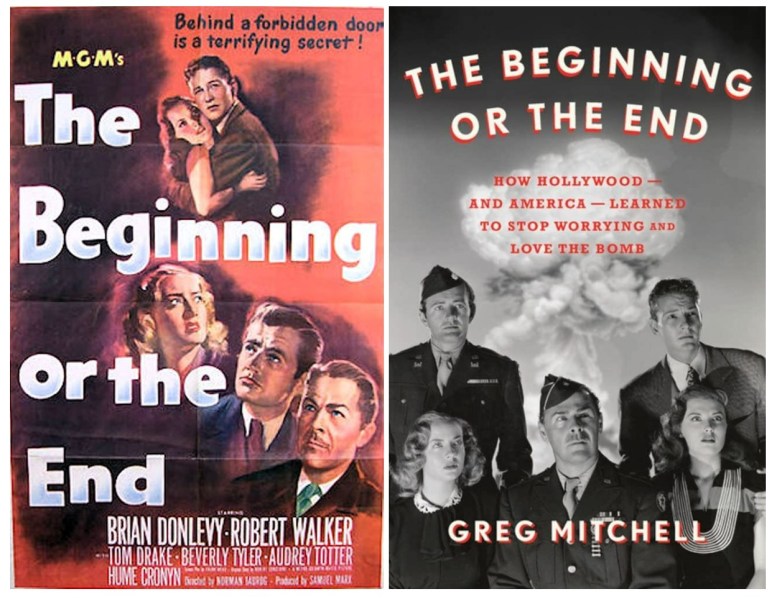
While researching these blog posts about nuclear war and science fiction I discovered I already owned The Beginning Or The End by Greg Mitchell, a 2020 nonfiction book about the making of a 1947 film, The Beginning Or The End. That MGM film is one of the first fictional accounts of the making and use of atomic bombs. What Mitchell’s book shows is how Hollywood and the Army worked together to tell their version of the story while the scientists who built the bomb wanted to tell a very different version — one closer to actual history and fact.
The book’s subtitle is “How Hollywood and America Learned To Stop Worrying and Love the Bomb,” and that’s accurate and inaccurate at the same time. For a short while (maybe 1945-1947), the government and the military tried to convince the American public that the bomb wasn’t as scary as the scientists claimed. The public might have accepted that official view during those years, but soon most people were scared shitless about the bomb. And fiction and science fiction made their fears even worse.
Mitchell’s book is a cold case study proving fiction distorts our understanding of history, and I highly recommend it. The Kindle edition is currently just $4.29 at Amazon. There’s also a hardcover and audiobook edition. The DVD of the 1947 movie is currently $18 but I don’t recommend it. It’s actually a crummy flick even though at the time MGM aimed to make one of the greatest films ever. You’ll be able to discern their lousy artistic effort by watching the equally lousy print of the film on YouTube.
Once I started looking for old documentaries about atomic bombs YouTube started offering what I think must be public service films created to inform the public about atomic warfare. It seems that each test explosion had its own documentation. And watching those films has been immensely revealing in understanding history from that period. I thought I knew more than I did, especially since I grew up in that period. But I realize, what we know about the world before puberty, and in the decade just before we were born, has been highly distorted by pop culture. The older I get the more I realize that my awareness of 1945-1960 is mostly based on science fiction, fiction, television, movies, and rock music. Talk about a reality distortion field!
I thought atomic warfare would be a great test case for studying the influence of science fiction because it’s so recent in history with 1945 being the starting point. I’m discovering science fiction gave me a very low-level kind of awareness of reality while I was growing up. If I’m brutally honest, I’d say SF was just two steps up from comic books, and one step up from television and movies. But as a kid, I didn’t want to believe that. As a twelve-year-old, addicted to sense-of-wonder, I wanted to believe science fiction offered a sophisticated education about reality and future possibilities.
Mitchell’s book let me jump back to 1945 and follow along one path about how the public learned about atomic bombs. The book goes into great detail starting just after the bombing of Hiroshima about how movie studios wanted to make a fictional film about the development and first use of the atomic bomb. The book chronicles how fiction, especially movies created that reality-distortion field I was talking about above.
Mitch does mention science fiction early on, but the book mostly focuses on the making of the MGM film, and for a while, a competing film from Paramount. By the way, the screenwriter hired for the Paramount film was Ayn Rand, and she could be considered a science fiction writer. Here’s Mitchell’s early tip of the hat o science fiction:
However, this was small potatoes compared to what film moguls and screenwriters were already working on. On October 28, 1945, Donna Reed got a letter from her old chemistry teacher, Ed Tompkins. Tompkins was part of a group of scientists working at Oak Ridge that were freaked out about the possibilities of atomic bombs and wanted to warn the public. He asked Donna Reed in a series of letters to give them to someone in power at MGM who could make a movie about their fears. Reed gave the letters to her husband Tony Owen, an agent, who contacted Samuel Marx, a producer, who got them an interview with Louis B. Mayer. Mayer flew Owen and Marx out to Oak Ridge on MGM’s private DC3. Eventually, the movie people got an interview with President Harry S. Truman, who supported the idea but for different reasons.
The Beginning Or The End got quickly made in 1946 and came out in 1947. But it wasn’t the only picture being made on the subject. It did have a rather striking opening. The film begins with a fake documentary of a bunch of actors portraying famous scientists and military men involved with the bomb installing a time capsule that’s supposed to be open in 500 years. What they put in the time capsule is the film The Beginning Or the End.
However, right from the start of making the movie, the scientists involved thought the film distorted their message. The rest of the book is about the problems of making the film. Those details illustrate what I’m talking about how fiction gives us a false conception of history. It’s quite fascinating. As I said, I recommend this book. Vanity Fair picked it as one of the top books of 2020. Read clips of various reviews here.
The book also deals with the argument on whether or not we should have used the A-bomb on Japan. That history has been presented in other books, but it’s an important factor in this one because it was a major motivation for lying to the public. In this case, fiction, the film The Beginning Or The End, intentionally lies. That’s one kind of distortion of history. But I’m also interested in how fiction speculates and become memes that fixate in the public’s minds.
For example, science fiction quickly moved to imagine atomic wars that would wipe out civilization and kill most people. In the early 1950s, it used radiation as a magical reason to create movies about giant insects or horrible mutant humans. A good comparison is science fiction about pandemics. Those stories often imagine a plague that kills 90% or 99% percent of everyone, even though in history, the worse plague events might have killed 25-35% of the population of specific cities. Fiction imagines the worse, for obvious dramatic reasons. But how often does fiction imagine a realistic limited nuclear war? We generally assume that any use of nuclear weapons will lead to all-out global warfare, and that’s because of fiction. Maybe that fiction has kept us from using nuclear weapons again, but isn’t it also another kind of distortion?
What I want to explore in my essays about science fiction and nuclear war is how fiction distorts reality.
Starting March 16th I’m going to lead a book discussion on Beyond Armageddon edited by Walter M. Miller, Jr. and Martin H. Greenberg for our Facebook group, Best Science Fiction, and Fantasy Short Fiction. We had voted on reading a science fiction theme anthology and Miller’s anthology won for the Post-Apocalypse theme. Y’all are welcome to come read along and discuss the stories. Here is a link to the thread on this group read.
I thought the book would be about post-apocalypses in general, but it turns out Miller was riled up about Reagan’s Star Wars and nuclear proliferation back in the 1980s and the anthology focuses mainly on surviving a nuclear holocaust. (Read his intro.) This got me thinking. How many different kinds of post-apocalypses are there? Most of the famous ones deal with nuclear war, an extreme plague, or a catastrophic encounter with an astronomical object.
Since Miller wanted to focus on nuclear war I would too. I’ve always wanted to create a database of science fiction themes. I’ve pondered creating a theme taxonomy or even developing a Dewey Decimal type system for identifying each specific theme. Recently, I played around with ChatGPT to see if it could help with this task. The job would be a big one. So, focusing on one narrow theme would be a great start.
For our discussion of Beyond Armageddon, I decided to study short stories, novels, movies, and TV shows about surviving a nuclear war. I figured I’d bring up these precedents as we discussed the stories. Over the weeks we’ll be discussing the stories I’ll build up a timeline about this theme. I also want to use the same time to learn about Walter M. Miller, Jr., but that’s for another post.
Even with the narrowed focus on nuclear war apocalypses, there are many ways to cover the subject. A crude beginning would be to divide them into Before the Bomb (warnings), Being Bombed (surviving), and After the Bomb (new societies).
Famous movies like Fail-Safe and Dr. Strangelove end with the bombs going off. Their focus was on how to avoid a nuclear war.
Then there are stories that feature characters that live through an atomic war and the immediate aftermath, like the movie Threads. These stories usually begin just before bombs start falling, and usually end after the devastation showing us how bad nuclear war could be.
Finally, there are novels like A Canticle for Leibowitz, The Long Tomorrow, or movies like Mad Max, where the war is in the past and new societies are emerging. Often these kinds of stories use their creativity to imagine how humanity adapts to new situations.
For this essay, I want to be very specific. I’m looking for short stories, novels, television shows, and movies about people surviving worldwide all-out nuclear war. I’m going to exclude fiction about the anxiety of a pending war, such as Dr. Strangelove, and also ignore stories about new societies developing after a nuclear war, such as A Canticle for Leibowitz and The Long Tomorrow. I want to specialize in fiction about people who survive a nuclear war and what they do immediately afterward, maybe including the first generation born after the war. The film Threads is a perfect example.
However, my research is turning into a very large project. For this post, I’m going to focus on the fiction that came out before 1960. Hiroshima and Nagasaki were in August 1945. I’ve yet to discover any science fiction that deals with surviving a nuclear war before then. However, Beyond Armageddon includes “By the Waters of Babylon” by Stephen Vincent Benét, which was originally published in the July 31, 1937 issue of Saturday Evening Post. It describes civilization being destroyed by fire, that poisoned the earth and air. That’s good enough for me. But it’s an afterward story, a long afterward story, where our descendants have forgotten the past and assume the beings who fought this great war were gods. Like many stories of this kind, people live in primitive tribes and talk like cliches of Native Americans.
Even though America had dropped atomic bombs on Japan in 1945 it took a while for science fiction writers to imagine nuclear war, especially one that could destroy human civilization. Russia didn’t explode its first fission bomb (A-bomb) until 1949 and its first thermonuclear bomb (H-bomb) until 1953. That was the same year they began the development of their first ICBM. We started the Atlas missile program in 1954. Russia’s first successful launch was in August 1957, and ours was in late November 1958.
(Revision: Thanks to Joachim Boaz’s comment below I now know about Nuclear Holocausts: Atomic War in Fiction by Paul Brians. It’s online here. Evidently, there have been a number of articles and monographs on this subject. I’ll make further revisions to my list below as I get to read more.)
“By the Waters of Babylon” (1937) might be the first story about a nuclear holocaust, but it’s not for sure, and not the specific kind I’m looking for. Remember, I want stories about people experiencing a nuclear war.
“Thunder and Roses” (1947) by Theodore Sturgeon is a short story with a very unique perspective on atomic war. The link is to a copy of the original magazine publication.
You Can’t Beat the Atomic Bomb (1950) was a public service documentary about atomic bombs. The link is to YouTube in case you want to watch it.
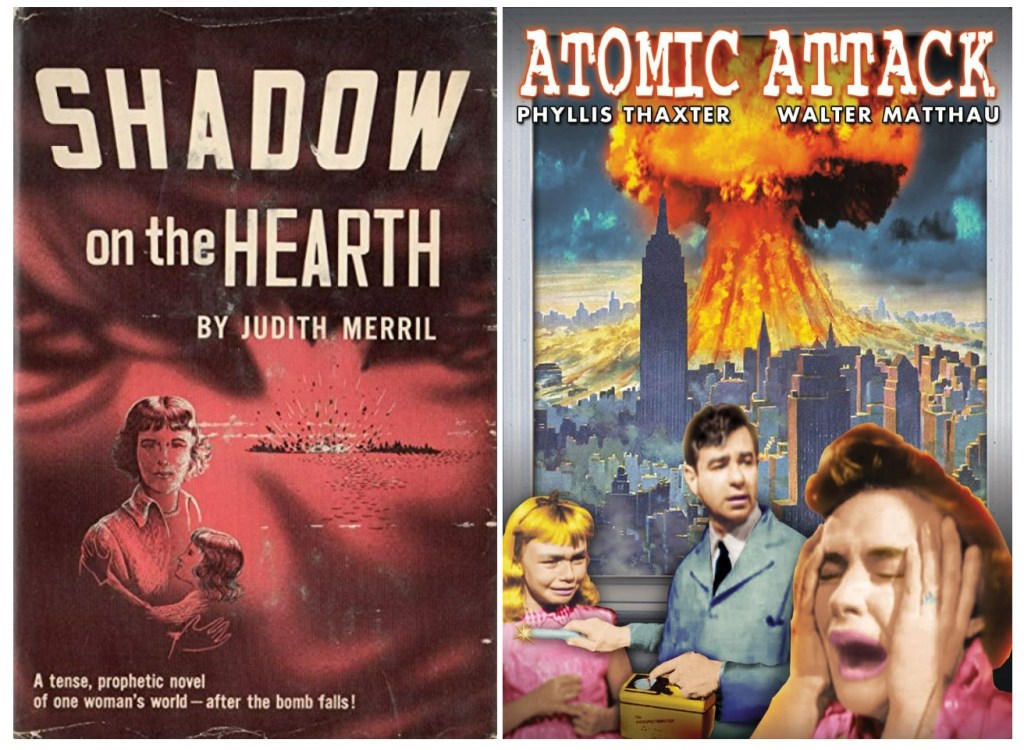
Shadow on the Hearth in 1950 by Judith Merril is the earliest science fiction novel I know about that deals with surviving an atomic war. In 1954 it was televised as “Atomic Attack” on Motorola TV Theater, see below. If you know of others leave a comment below.
It took time for science fiction writers to put two and two together and imagine an atomic war that could create total annihilation of our species. I’m having trouble discovering when the public first encountered ideas about atomic war in the news and popular science and when science fiction writers used the ideas. Were the writers first? Could Nevil Shute have been the first to imagine self-extinction in On the Beach?
Judith Merril might be the earliest science fiction writer who explored a limited atomic war. However, I haven’t read her book yet, but in the TV drama, many of the major American cities are destroyed, and we destroy many of the enemy’s big cities, but people in small towns survive. CONELRAD was established in 1951 and is featured in the TV drama, but I think it was too early for the novel. That means the public was well aware of the atomic war possibility, I’m just not knowledgeable by how much. What did science fiction writers have to work with at this time?
According to Wikipedia, Five (1951) is the first film to portray people surviving an atomic war. I have not seen it yet, and I guess it ignores the television drama “Atomic Attack.” It is available to rent.
“There Will Come Soft Rains” (1950) by Ray Bradbury imagines an automated home in the future continuing to function after humans have died in an atomic war. We don’t know how universal the deaths are in this story.
“Lot” (1953) by Ward Moore is one of my favorite science fiction short stories. It’s “Cold Equations” type brutality hits you hard in the end. I’ve always felt that Panic In Year Zero! a 1962 film with Ray Milland might have been inspired by “Lot.” Moore story had a sequel, “Lot’s Daughter” which is even more Biblical and daring.
“Atomic Attack” (1954) was an episode on Motorola TV Theater based on Judith Merril’s 1950 novel – see above. I’d love to have a DVD of Motorola TV Theater series. This episode is available to watch on Tubi and YouTube and for sale on DVD from Amazon. Even though the production quality is low by today’s standards, I thought the 1954 television tale was an A+ story for what I was looking for. The link is to YouTube, but this version is part of a mix of videos about atomic war. See items on the right side. (I’m curious, is this just a bad film copy, or is it a kinescope?)
Project XX: Three, Two, One, Zero (1954) television documentary on the atomic bomb. Part 1 below. Part 2 is linked at YouTube upper right.
Tomorrow! (1954) by Philip Wylie compares survivors in two smaller towns that weren’t bombed in a nuclear attack, one with prepared civil defense and the other not.
On the Beach (1957) by Nevil Shute was a bestselling novel by a mainstream writer. Shute imagined radioactive clouds circling the globe slowly killing off life. Because the war took place in the northern hemisphere, radioactive clouds took weeks to get to all of the southern hemisphere with Australia, New Zealand, South Africa, and the lowests parts of South America. Everyone dies. Is this the first novel of total nuclear annihilation?
“Doomsday For Dyson” (1958), a televised play by J. B. Priestley. Can’t find much about this but it appears to have been a dream about surviving a nuclear war. Love to see it if anyone knows where I could watch it. J. B. Priestley was a mainstream English novelist, playwright, screenwriter, broadcaster, and social commentator. It seems that so far, mainstream writers were more interested in writing about nuclear war than science fiction writers. However, there might be many SF novels and stories I don’t know about yet.
Red Alert (1958) by Peter George was the basis for Dr. Strangelove.
“Underground” (1958) was a 1958 episode of Armchair Theatre, a British TV show on ITV. I doubt I’ll ever get to see it. I’ve read British TV producers didn’t try and save stuff like American producers. Still, it’s another clue in how much the general public was interested in this subject.
Alas, Babylon (1959) by Pat Frank was another novel about people surviving an atomic war. It’s still very readable today. When I was a teenager in the 1960s prowling used bookstores I constantly saw used copies of On the Beach, Alas, Babylon, and Limbo. I figured they must have been very popular. Limbo wasn’t about nuclear war, but cybernetics.
Level 7 (1959) by Mordecai Roshwald. I just learned about this novel yesterday when I mentioned to my old friend Connell I was writing about books about atomic war. He said our buddy George gave it to him back in the 1960s and he still vividly remembers it. I’m going to get a copy.
On the Beach (1959) was a popular film starring Gregory Peck.
The World, the Flesh and the Devil (1959) was a film starring Harry Belafonte as the sole survivor of a nuclear war using radioactivity dispersed aerially. This film deserves a lot more attention than it gets. However, it’s more about being the last man on Earth, a kind of Robinson Crusoe story.
“Time Enough at Last” (1959) was one of the most popular Twilight Zone episodes that featured Burgess Meredith as Henry Bemis, another sole survivor of an atomic war. The Twilight Zone often dealt with nuclear war, but this entry was an ironic humorous one.
If you know of other works of fiction that cover this topic leave a comment below.
If you are old enough to remember the late 1940s and 1950s and can tell me how you learned about the idea of nuclear war, please leave a comment. Did it come from television, newspapers, word-of-mouth, or science fiction?
Lately, I’ve been reading about the end of the world as we know it. Why is that such a popular fictional theme? Does it reveal a sick side of my personality? Back in 1963, Bob Dylan sang “Talkin’ World War III Blues,” where he dreamed he was the only person left on Earth. A few of the lines that have always stuck with me:
Well, now time passed and now it seems

Everybody’s having them dreams

Everybody sees themselves

Walkin’ around with no one else
No, it wasn’t true everyone was fantasizing about being the last person on Earth, but there sure were a lot of science fiction stories and movies about the end of the world. And I have to admit, I also daydreamed about being the last person on Earth too. I’ve always wondered if many of us, and I include myself, didn’t secretly wish they had the Earth all to themselves. One way of looking at post-apocalyptic novels is to divide them into cozy apocalypses and nightmares. The dividing line is decided by how many people are left. In Mad Max or The Last of Us, there are still too many damn people to make surviving the end world an appealing Walter Mitty escape.
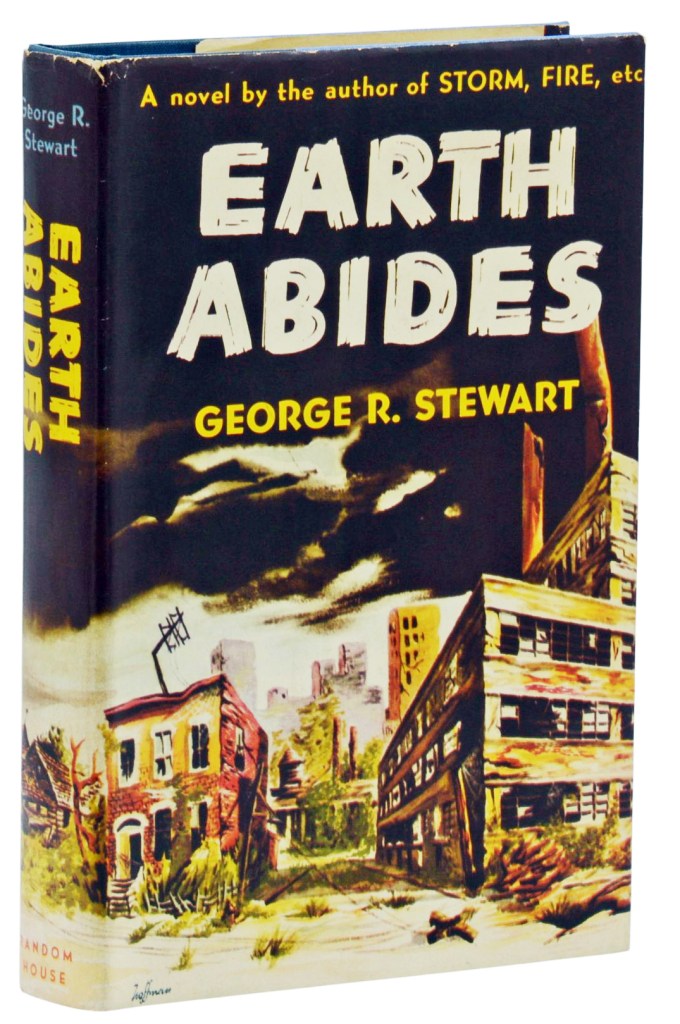
To me, the ideal apocalyptic novel to actually want to experience is Earth Abides by George R. Stewart. The runner-up is Survivors, a BBC television series from 1975. But if I was honest, what I really picture is being Henry Bemis in the famous Twilight Zone episode, “Time Enough At Last,” but not breaking my glasses. Actually, it wouldn’t matter to me because I’m nearsighted and read with books inches from my face. If you haven’t seen that iconic episode, Henry Bemis is the last man on Earth with all the time in the world to read books without being bothered by other people — until he breaks his glasses.
Both Earth Abides and Survivors cover all the philosophical questions about the human race starting over from scratch. It helps to have read or seen Connections by James Burke, a nonfiction book about how hard it would be to rebuild civilization. It’s really a fascinating problem worthy of endless speculation. Earth Abides and Survivors deal with a very similar apocalypse, one where probably less than 1 out of 10,000 people survive, which in a world of 8 billion would mean 800,000 people or in a city of 1 million, 100 people. I believe in the show they suggest only a few thousand survive in all of England. That’s a survival rate of .01 percent.
The bubonic plague at its worse is estimated to kill between 30 and 50 percent. So stories, where very few people survive, probably aren’t realistic. We’re a tough species to wipe out. It is estimated that WWII killed 3% of the population and we bounced back rather quickly and thrived. Of course, in The Bible, Noah and his family were the only survivors of a worldwide flood. Flood stories are much older than The Bible, and are probably the origin of post-apocalyptic fiction. If you go back in time and explore other cultures you can find stories where humans are nearly wiped out, or completely wiped out, or the Earth is completely destroyed. This represents different levels of apocalypses.
In other words, it will take a lot to kill off the human race. Even the asteroid impact that wiped out the dinosaurs didn’t end life on Earth. Some writers have written stories about solar catastrophes that fried our world or wrote about the Moon or a comet slamming into our planet, or even alien invaders blowing us up. Those post-apocalyptic stories deal with starting over on another planet. The first one I read of this kind was When Worlds Collide and its sequel After Worlds Collide by Edwin Balmer and Philip Wylie.
We can call these stories Starting Over Apocalypses or End of the World stories. These are different from Dying Earth stories, which imagine life in the very far future when our planet slowly passes away and the last remains of life cling still. I rather enjoy that theme too. (No, I’m not depressed.)
However, the post-apocalyptic stories I like best are the ones where a few people survive a plague or a war, and they must rebuild society from scratch. My favorites are the books Earth Abides, which I’ve mentioned, and The Hopkins Manuscript by R. C. Sherriff which I reviewed, and the TV series Survivors, which I’ve reviewed before. They have a similar appeal to Robinson Crusoe-type stories (The Swiss Family Robinson by Johann David Wyss or The Mysterious Island by Jules Verne), and they also have the related appeal of first colonizers to other planet stories. Think of Tunnel in the Sky by Robert A. Heinlein or Red Mars by Kim Stanley Robinson.
I believe we can call these post-apocalyptic stories ApocalypseSurvivor Stories or Last People on Earth Stories.
However, most post-apocalyptic stories are about the aftermath of political upheavals, wars, catastrophes, plagues, or alien invasions, where a good portion of the population survives. These stories are about how society changes and people have to live under new norms. Most climate science fiction is of this type. Or living under alien occupation after being conquered. Most of the stories in the post-apocalyptic anthologies I listed the other day are of this type. A good example is The Long Tomorrow by Leigh Brackett where people have become anti-science and anti-technology and revert to Amish-style living after a nuclear war.
Some of these stories could also be called dystopian stories and it’s hard to distinguish between the two. Writers often use some kind of apocalypse to world-build their dystopia. I believe the appeal of reading dystopias is identifying with characters that want to overthrow the dystopia. While the appeal of reading gloomy post-apocalyptic stories is imagining all the horrible things that could happen to society. I’m sure it would be interesting to psychoanalyze readers as to why they consume fiction of either theme. I believe for most YA dystopias it’s the vicarious thrill of being a revolutionary. I call this type of story Blows Against the Empire, which explains the popularity of Star Wars. Young people love to rebel against the status quo.
I call the kind of apocalyptic stories like those that predict life after significant climate change, economic collapse, the AI singularity, etc. If This Goes On Warnings.
As I try to read all those post-apocalyptic anthologies I will probably find other types to classify. Maybe I’ll even keep notes and makes charts and graphs.
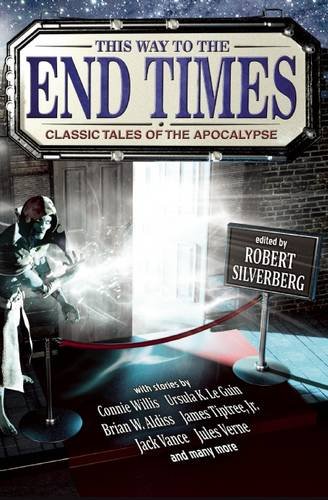
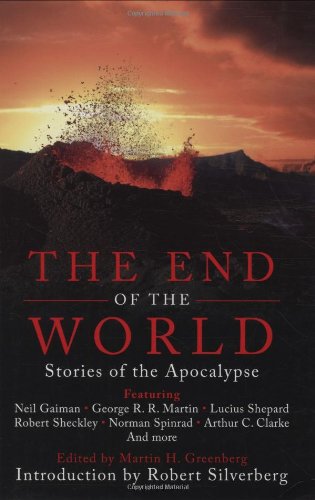
Our reading group on Facebook is considering reading a science fiction theme anthology and I thought I’d look up all the end-of-the-world anthologies devoted the apocalyptic science fiction.
The Year of the Jackpot • (1952) • novelette by Robert A. Heinlein
Last Night of Summer • (1954) • short story by Alfred Coppel
Impostor • (1953) • short story by Philip K. Dick
Rescue Party • (1946) • novelette by Arthur C. Clarke
Omega • (1932) • short story by Amelia Reynolds Long
In the World’s Dusk • (1936) • short story by Edmond Hamilton
This old 1956 paperback is kind of expensive to buy, so not really practical for a group read. We need books that are readily available in libraries or are cheap to buy new or used.
1982: The Last Man on Earth edited by Isaac Asimov, Martin H. Greenberg, and Charles G. Waugh
Introduction (The Last Man on Earth) • (1982) • essay by Isaac Asimov
The Underdweller • (1974) • short story by William F. Nolan (a variant of Small World 1957)
Flight to Forever • (1950) • novella by Poul Anderson
Trouble with Ants • [City] • (1951) • novelette by Clifford D. Simak (a variant of The Simple Way)
The Coming of the Ice • (1926) • short story by G. Peyton Wertenbaker
The Most Sentimental Man • (1957) • short story by Evelyn E. Smith
Eddie for Short • (1953) • short story by Wallace West
Knock • (1948) • short story by Fredric Brown
Original Sin • (1946) • short story by S. Fowler Wright
A Man Spekith • (1969) • novelette by Richard Wilson
In the World’s Dusk • (1936) • short story by Edmond Hamilton
Kindness • (1944) • short story by Lester del Rey
Lucifer • (1964) • short story by Roger Zelazny
Resurrection • (1949) • short story by A. E. van Vogt (variant of The Monster 1948)
The Second-Class Citizen • (1963) • short story by Damon Knight
Day of Judgment • (1946) • short story by Edmond Hamilton
Continuous Performance • (1974) • short story by Gordon Eklund
The New Reality • (1950) • novelette by Charles L. Harness
I’d love it if we voted this one in, but again, it’s out-of-print and too expensive to buy used.
1985: Beyond Armageddon edited by Walter M. Miller Jr. and Martin H. Greenberg
Case 101: Ch’iu-Ch’iu’s Firestorm • poem by uncredited
Alibi • poem by Walter M. Miller, Jr.
Forewarning (an Introduction) • essay by Walter M. Miller, Jr.
Salvador • (1984) • short story by Lucius Shepard
The Store of the Worlds • (1959) • short story by Robert Sheckley
The Big Flash • (1969) • novelette by Norman Spinrad
Lot • [David Jimmon] • (1953) • novelette by Ward Moore
Day at the Beach • (1959) • short story by Carol Emshwiller
The Wheel • (1952) • short story by John Wyndham
Jody After the War • (1972) • short story by Edward Bryant
The Terminal Beach • (1964) • novelette by J. G. Ballard
Tomorrow’s Children • (1947) • novelette by Poul Anderson and F. N. Waldrop
Heirs Apparent • (1954) • novelette by Robert Abernathy
A Master of Babylon • (1966) • novelette by Edgar Pangborn
Game Preserve • (1957) • short story by Rog Phillips
By the Waters of Babylon • (1937) • short story by Stephen Vincent Benét
There Will Come Soft Rains • (1950) • short story by Ray Bradbury
To the Chicago Abyss • (1963) • short story by Ray Bradbury
Lucifer • (1964) • short story by Roger Zelazny
Eastward Ho! • (1958) • short story by William Tenn
The Feast of Saint Janis • (1980) • novelette by Michael Swanwick
“If I Forget Thee, Oh Earth …” • (1951) • short story by Arthur C. Clarke
Case 113: Ch’iu-Ch’iu’s Wow • poem by uncredited
A Boy and His Dog • [Vic and Blood • 2] • (1969) • novella by Harlan Ellison
My Life in the Jungle • (1985) • short story by Jim Aikin
This looks wonderful. Again, out of print. I wonder if I could convince several people to track down a used copy? That’s the weakness of the group. Even though we have hundreds of members, very few members join in the reading and discussion. Participating is depended on the availability of the anthology and I think the age of the stories. I feel most of our members prefer newer stories, while I prefer older ones. There are quite a few copies at ABEbooks for under $10 including shipping.
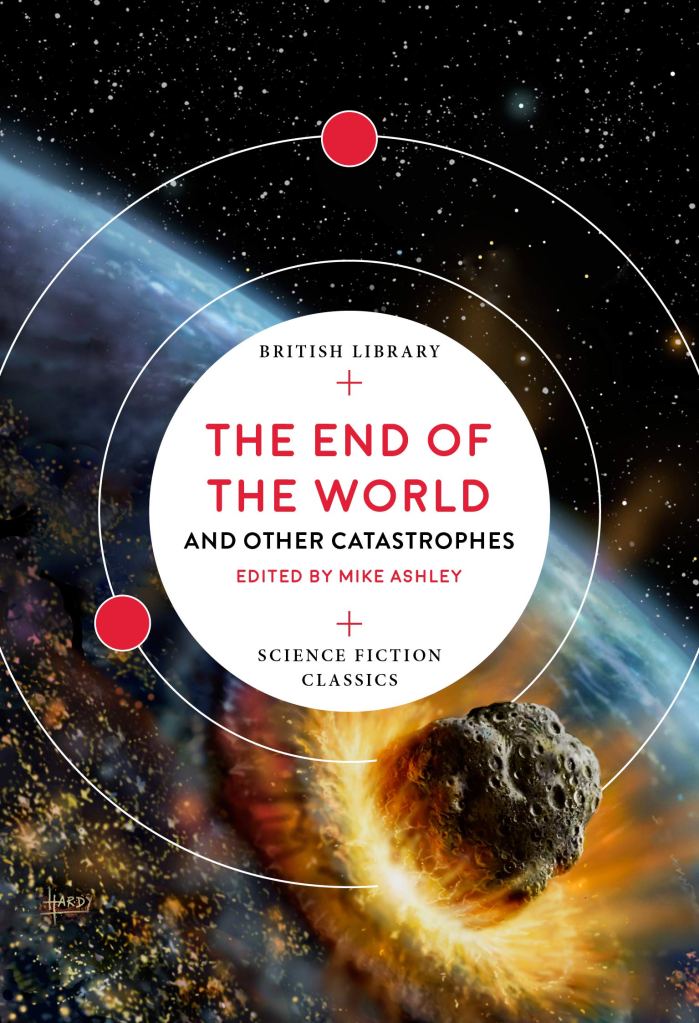
For some reason, ISFDB.org doesn’t have a table of contents for Mike Ashley’s latest end-of-the-world anthology. But you can read about the stories in The BSFA Review. This is another anthology with older stories. That’s great for seeing how the theme evolved.
Timeline of Catastrophe, 2000-2010 • essay by uncredited
Snowmelt • short story by Lane Ashfeldt
Teddy and the Last Girl of Brighton Street • short story by William Wood
The End of the Beginning • poem by George Moore (I)
The Paperless Doctrine of 2152 • short story by Aaron M. Wilson
Origins • short story by Liz R. F. Coley
Ozymandias • (1818) • poem by Percy Bysshe Shelley
Omega Museum • short story by Jaleta Clegg
Turning In • poem by Caitlin Kenzie Scott
Fire and Ice • (1920) • poem by Robert Frost
Under Erasure • short story by Murray Leder
The Star • (1897) • short story by H. G. Wells
Depletion • poem by Mark Brandon Allen
Old Gods at the Armageddon • short story by Jeffery Ryan Long
Helen of Troy • (1911) • poem by Sara Teasdale
Suicide of the World • short fiction by Andre Saglio
Nuclear Winter • poem by Nicolas Samaras
Gip • short story by Mark Taylor (I)
There Will Come Soft Rains • [The Martian Chronicles] • (1950) • short story by Ray Bradbury
The Last Man on Earth • short story by Big Jim Williams
Eclipse • poem by Alicia A. Curtis [as by Alicia Curtis]
The Last Day of Sanity • short story by Darryll B. Snyder
Immutable • poem by Janelle Schwartz
The Last Unicorn • short story by H. L. Liguore
The Last Hours • (1919) • poem by D. H. Lawrence
Cassandra • (1978) • short story by C. J. Cherryh
Cee-Cee was My Dog • poem by John Dudek
水 (mi)? • short story by Jack Frey
My Blue Ribbon Pies • short story by Jacquelyn Fedyk
The Masque of the Red Death • (1845) • short story by Edgar Allan Poe
Finley’s Last Chapter • short fiction by Alexandra Wolfe
Life of a Child • short story by Samantha Boyette
The End of the World • (1911) • essay by Hilaire Belloc
Arturo • short story by M. Sullivan
Going Home • short story by Kodilynn Calhoun
Life Gaped Open • poem by Alan Gann
The Scarlet Plague • (1912) • novella by Jack London
The Last of Everything • poem by Cassandra Consiglio
Corridors • (1982) • short story by Barry N. Malzberg
The Last of the Great Coffee Shop Philosophers • short story by Koos Kombuis
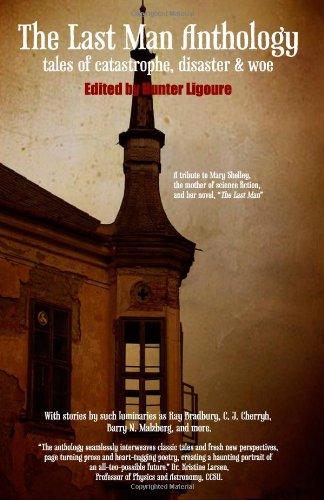
Last Call • short story by Mark Edwards
This anthology seems to be more historical and covers territory outside of the science fiction genre. It’s not something the group would read but I think I’ll track down a copy.
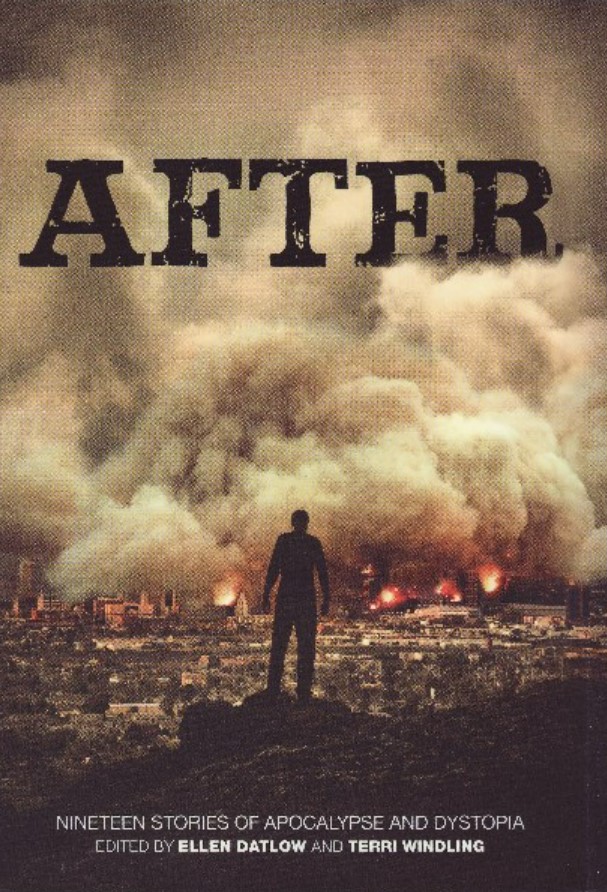
2012: After edited by Ellen Datlow and Terri Windling
The Segment • short story by Genevieve Valentine
After the Cure • novelette by Carrie Ryan
Valedictorian • [The Trojan Girl • 2] • short story by N. K. Jemisin
Visiting Nelson • novelette by Katherine Langrish
All I Know of Freedom • short story by Carol Emshwiller
The Other Elder • juvenile • [Across the Universe] • short story by Beth Revis
The Great Game at the End of the World • novelette by Matthew Kressel
Reunion • short story by Susan Beth Pfeffer
Blood Drive • short story by Jeffrey Ford
Reality Girl • novelette by Richard Bowes
How Th’irth Wint Rong by Hapless Joey @ homeskool.gov • short story by Gregory Maguire
Rust with Wings • [7th Sigma • 0.5] • short story by Steven Gould
Faint Heart • novelette by Sarah Rees Brennan
The Easthound • (2012) • short story by Nalo Hopkinson
Gray • poem by Jane Yolen
Before • short story by Carolyn Dunn
Fake Plastic Trees • novelette by Caitlín R. Kiernan?
You Won’t Feel a Thing • [Shade’s Children milieu] • short story by Garth Nix
The Marker • short story by Cecil Castellucci
This is an original anthology that focuses on the post-apocalypse. I’m not sure if the group has ever read an original anthology.











 Classics of Science Fiction