
I first read Brave New World in high school back in the sixties. Rereading it again in 2020 reveals that it was entirely over my teenage head. I doubt I got even 5-10% of Aldous Huxley’s satire. Although I expect high school and college students of today have both the education and pop-culture savvy to understand it better than I did, it’s really a novel to read after acquiring a lifetime of experience. When I first read Brave New World I was already mass consuming science fiction so it was competing with shiny gosh-wow sense-of-wonder science fiction. I remember liking Brave New World in places, especially the free sex and Soma, but I thought the story somewhat boring and clunky.
This time I discovered why it’s a masterpiece. Listening to Michael York’s wonderful audiobook narration also revealed innovative prose that I would have missed with my tone-deaf inner voice. I can’t recommend the audiobook edition highly enough. York also revealed places where Huxley was experimenting with quick scene cuts, maybe influenced by the recent talkies when he was writing in 1931.
There’s no reason to summarize Brave New World because Wikipedia has done a superb job. What we need to explore is why this literary science fiction story is still worth reading after 88-years, when nearly every other science fiction novel from the 1930s is almost forgotten today. Looking at the Classics of Science Fiction list shows only five books from the 1930s making our list, and all five were from England:
- 1930 – Last and First Men by Olaf Stapledon
- 1932 – Brave New World by Aldous Huxley
- 1935 – Odd John by Olaf Stapledon
- 1937 – Star Maker by Olaf Stapledon
- 1938 – Out of the Silent Planet by C. S. Lewis
Of course, damn few science fiction books had hardback editions in the 1930s. Brave New World had 30 citations we considered assembling the list:
- 1949 – The Seventeen Basic SF Titles – Arkham Sampler
- 1952 – Astounding Magazine, the Twenty-Eight All-Time Best SF Books
- 1956 – Astounding Magazine, The Twenty-Six All-Time Best SF Books
- 1974 – Modern Science Fiction edited by Norman Spinrad
- 1976 – The World of Science Fiction by Lester Del Rey
- 1976 – Anatomy of Wonder, 1st Edition by Neil Barron
- 1977 – “A Basic Science-Fiction Library” from The Road to Science Fiction by James Gunn
- 1984 – The Science Fiction Source Book edited by David Wingrove
- 1987 – Anatomy of Wonder: A Critical Guide to Science Fiction, 3rd Edition by Neil Barron
- 1994 – The Ultimate Guide to Science Fiction by David Pringle
- 1996 – “North American College Courses in Science Fiction, Utopian Literature, and Fantasy” edited by Arthur B. Evans
- 2002 – Strictly Science Fiction: A Guide to Reading Interests by Diana Tixier Herald and Bonnie Kunzel
- 2003 – The Cambridge Companion to Science Fiction edited by Edward James and Farah Mendlesohn
- 2004 – Anatomy of Wonder: A Critical Guide to Science Fiction, 5th Edition by Neil Barron
- 2009 – 1000 novels everyone must read (science fiction section)
- 2011 – NPR Top 100 Science-Fiction, Fantasy Books
- 2011 – Internet Top 100 SF/Fantasy List
- 2012 – Locus Poll Best 20th Century Science Fiction Novels
- 2012 – AbeBooks: 50 Essential Science Fiction Books
- 2016 – Radium Age Sci-Fi: 100 Best Novels of 1904-1933 by Josh Glenn
- 2016 – Goodreads Best Science Fiction 100
- 2016 – Ranker: The Greatest Science Fiction Novels of All Time
- 2016 – Amazon: 100 Sci-Fi & Fantasy Books to Read in a Lifetime
- 2016 – Gunn Center for the Study of Science Fiction: A Basic Science Fiction Library
- 2016 – Goodreads Best Science Fiction & Fantasy 200
- 2016 – Best-Sci-Fi-Books: 31 Best Literary Science Fiction Books
- 2016 – Sci-Fi Lists Top 200 – the novel
- 2019 – Worlds Without End: Most Read Books of All-Time
- 2019 – The Best Sci-Fi Books of All Time – Penguin Random House
- 2019 – 100 Best Sci-Fi Books of All Time – Reedsydiscovery
Brave New World is also considered among the top literary novels of the 20th-century. The Greatest Books site calculates it’s the 67th greatest book of all-time from using these lists:
- 5th on The Modern Library | 100 Best Novels (Modern Library)
- – 15th on Waterstone’s Books of the Century (LibraryThing)
- – 16th on Radcliffe’s 100 Best Novels (Radcliffe Publishing Course)
- – 21st on Le Monde’s 100 Books of the Century (Le Monde)
- – 24th on Koen Book Distributors Top 100 Books of the Past Century (themodernnovel.com)
- – 31st on 50 Books to Read Before You Die (Complex)
- – 32nd on 100 Essential Books (Bravo! Magazine)
- – 44th on 20th Century’s Greatest Hits: 100 English-Language Books of Fiction (Larry McCaffery)
- – 53rd on The 100 Greatest Novels of All Time: The List (The Observer)
- – The 100 Best Books in the World (AbeBooks.de (in German))
- – 100 Best Novels Written in English (The Guardian)
- – 50 Books to Read Before You Die (Barnes and Noble)
- – The College Board: 101 Great Books Recommended for College-Bound Readers (http://www.uhlibrary.net/pdf/college_board_recommended_books.pdf)
- – 1001 Books You Must Read Before You Die (The Book)
- – 100 Novels That Shaped Our World (BBC)
- – The New York Public Library’s Books of the Century (New York Public Library)
- – 110 Best Books: The Perfect Library (The Telegraph)
- – The New Lifetime Reading Plan (The New Lifetime Reading Plan)
- – The Book of Great Books: A Guide to 100 World Classics (Book)
- – From Zero to Well-Read in 100 Books (Jeff O’Neal at Bookriot.com)
- – The Graphic Canon (Book)
- – 50 Books That Changed the World (Open Education Database)
- – The 100 Greatest Books Ever Written (Easton Press)
- – Select 100 (University of Wisconsin-Milwaukee)
Okay, so it’s made it to a lot of best-books lists, why is it great? Brave New World is still very readable, very relevant, and a classic example of a dystopian (anti-utopian) novel. But it’s tricky. Where Nineteen Eighty-Four is about a world where people are cruelly treated by the government, in Huxley’s story the government tries to do everything possible to make people happy.
Brave New World is about three men who aren’t happy, Benard Marx, Helmholtz Watson, and John, also called “the Savage.” They should be happy because what they want is offered, they just won’t accept it. In the World State of 2540AD (632AF – after Ford) everyone is either given what they want or conditioned to want what they have. Huxley takes the free love movement of the early 20th-century and has people conditioned from birth to have lots of sex without feeling guilty or the need to be possessive. Every class is eugenically conditioned to like their job. Any kind of unhappiness, anxiety, or depression is quickly fixed. Regular participation in orgies and encounter groups is expected for normal mental health. And a recreational drug with no side-effects is socially acceptable and encouraged. Each class is rewarded with all kinds of stimulating activities and vacations. Work hours are short but long enough to give people purpose, and free time is generous.
In other words, it’s easy to be deceived while reading this book. It’s like in The Matrix when you have the choice between the blue and red pill. The steak tastes just as juicy and delicious in the delusional reality, so why not take the blue pill?
The ending of the novel is horrifyingly tragic but I’m guessing most readers will think that wouldn’t happen to them. But here’s the kicker, it should. Huxley felt we were all being seduced by the technological world and scientific success. In the late 1950s, he wrote Brave New World Revisited where he said the future he feared was arriving much quicker than he expected. I can only imagine his reaction to 2020.
Aldous Huxley and Brave New World are hard to decode. If Huxley was defending traditional values he certainly didn’t live them. Regarding sex and drugs, he lived like his characters in Brave New World. The World State in this story has solved all the political problems we face today, so it’s weird to read it as a dystopia. And Mustapha Mond sounds like a wise and compassionate leader. We have to worry that Brave New World is a Siren’s call.
I remember thinking when I first read this book as a teenager that it was too clinical and antiseptic. Babies were born in bottles, and everyone wore matching clothes to identify their class. And people learned pop jingles that taught them social values. It was scary to think everyone was brainwashed to be happy. But the actual story is much more subtle and sophisticated.
The $64,000 question is why is this old science fiction novel so successful, respected, and remembered when the 1930s science fiction of Edmond Hamilton, “Doc” Smith, John W. Campbell, Jack Williamson faded away? Their space operas spoke to a very tiny readership. Huxley’s book is about universal human problems, the same problems we face today. When I was young space fantasies were important to me, but they mean little today. Now I worry about climate change and Donald Trump and try to imagine a government that will save us from conservative selfishness. How we live, and how we’re governed will always be a universal interest to readers.
Reading Brave New World, or any of the books considered the Top 100 Books of All Time should be of special interest to would-be writers. What percentage of the population does your story speak to?
James Wallace Harris, 1/10/2020

 Then last year when PBS had it’s

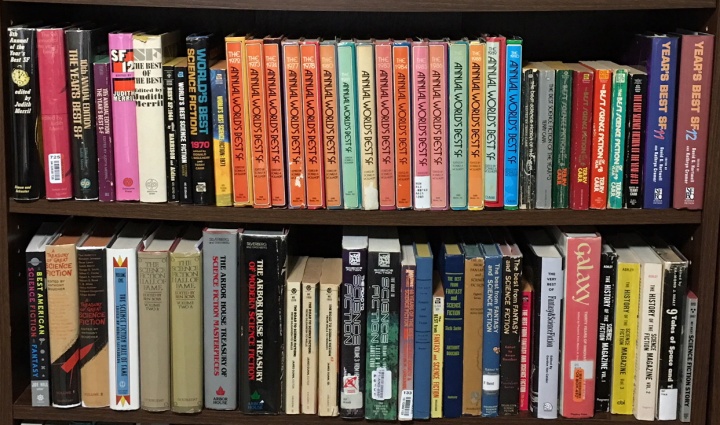

 I assume part of my attraction for Aldiss right now is he’s both serious and British. I’ve gotten into Aldiss so much that I bought and read his memoir about writing, Bury My Heart at W. H. Smith’s. Aldiss does a lot of name dropping in that book, referring to British science fiction and literary writers, and to be honest, I know of only a small percentage of those supposedly famous people. It’s like an alternate universe of science fiction. I’m incredibly thankful for pulp scanners because I can now look up works in New Worlds, Science Fantasy, and Interzone.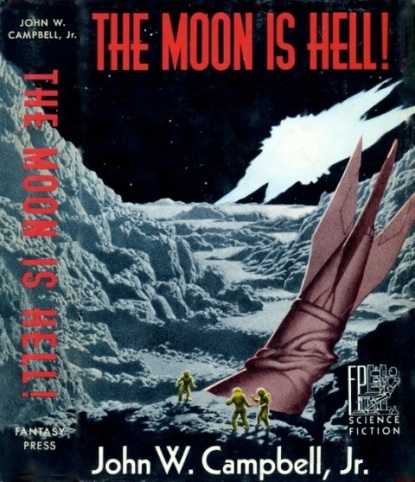
 Classics of Science Fiction