I imprinted on science fiction in the early 1960s. At that time, I considered science fiction to be PR for the space program. I fell in love with science fiction concurrently with Project Mercury and Project Gemini. I mostly read books by Robert A. Heinlein for the first few years, so colonizing the solar system seemed like humanity’s true purpose to me.
In 1968, I discovered Do Androids Dream of Electric Sheep? by Philip K. Dick on the new book shelf at the Coconut Grove Library in Miami, Florida. His science fiction wasn’t about promoting space exploration. By then I had discovered the counter-culture, and PKD made a different kind of sense.
I started college in 1969, but in the fall of 1970, I dropped out because the university I was attending required ROTC, which I was willing to take, but the ROTC insisted I cut my hair, which I wasn’t willing to do. In 1971 I switched to a two-year technical school to study computers.
I was uncertain about my future and the future in general. My indecision led to reading 479 science fiction paperbacks in 1971 and 1972. That was another kind of education. I made friends at the local science fiction club and started publishing fanzines and going to cons. However, by the end of 1975, I was tired of science fiction and gafiated from fandom.
I just finished reading Eye in the Sky, an early novel by Philip K. Dick that was first published in 1957 as a cheap ACE paperback. It was vaguely familiar, and when that happens I assume it’s because it was one of those SF novels I read back in 1971-1972. Back then I consumed SF paperbacks like a stoner eating a bag of chocolate chip cookies. Each book was a momentary distraction from my confused life of not wanting to grow up. Each book provided escapism until I finished it and started the next one.
I spend more time thinking about what I read at seventy-three. Also, my world is very different than it was fifty years ago. In some ways, I’m no different, I’m still trying to figure out what I’m supposed to do with my life, but it is different because the perspective of the future at 23 and 73 is drastically different. I’ve thought a lot more about Eye in the Sky this time.
In the 1970s, I judged science fiction on how well it speculated on the near future, especially regarding space exploration and technology. I thought Philip K. Dick was so poor at this that I didn’t consider him a real science fiction writer. I classified him with Ray Bradbury and Kurt Vonnegut.
In the 2020s, I value Philip K. Dick for insights I never could have imagined back in the 1970s. Eye in the Sky asks us to imagine reality being shaped by subjectivity. In the story, eight people are involved in an accident. When they come to, the world is similar, but religion works instead of science. Eventually, they discover that the world is controlled by the thoughts of one of the eight. When the person controlling reality dies, they find themselves in another world but shaped by the mental perspective of another member of the eight.
This setup gives Dick a chance to explore the idea of subjective reality. What amazed me in this reading, is Dick covers all the themes in this early novel that he would later explore in all his other novels. I’ve always divided PKD’s books into three periods. The 1950s and early 1960s, the 1960s, and the 1970s novels. For example, Dick’s Valis novels of the 1970s explore Gnosticism. Well, Dick might not have known about Gnosticism in 1957, but Eye in the Sky reflects its ideas. Eye in the Sky also anticipates his paranoid reality-bending novels of the 1960s.
On the whole, I enjoyed Eye in the Sky, but it’s not without flaws. The story seems to promise eight stories about eight different realities because of the eight characters involved, but we only get to visit four realities. PKD skipped out on the four perspectives I wanted to see the most. We’re shown the realities of Arthur Sylvester, Joan Reiss, Edith Pritchet, and Charlie McFeyffe.
Our protagonist is Jack Hamilton. We never get his take on reality. But since he’s the main character should we assume the overall story is told from his perspective? It would have been fun to see how his subjective perspective differed from the external reality. I also wanted to see Marsha Hamilton’s reality, Jack’s wife. And most of all, I wanted to see Bill Laws’s reality because he’s African American and a Ph.D. student in physics. Black characters were rare in 1950s science fiction. And it would have been interesting to see David Pritchett’s reality since he was a young teen.
The reason why Eye in the Sky is so much better in my seventies is I see that reality is fought over by many different subjective perspectives in the 2020s. We were just as politically polarized back in the 1970s, but I was young and less aware of how other people thought. Back then I thought everyone was basically the same but with slightly different ideas about reality. Now, I realize that the umwelt of everyone is quite different.
Both then and now, I believe there is an external reality. I’m not one of those woo-woo people who think reality is unreal. I could be wrong, but I’m betting on an external reality and people are crazy. I really don’t want reality to be crazy. I do believe our view of reality is subjective. That we can never perceive the fullness of the external order.
Philip K. Dick in Eye in the Sky imagines reality is mutable, shaped by minds. I hope this doesn’t give anything away, but the eight characters do return to the reality they were in before the accident. Is that PKD affirming my idea that we live in an external reality that is universal? PKD wrote over forty more novels and over a hundred short stories that keep suggesting otherwise. At the end of his life, Dick seemed to believe in a gnostic view of reality, where we lived in a reality created by an evil god, and there’s a higher reality beyond this one, maybe ruled by a kinder diety.
Strangely, in my seventies, I find stories by Philip K. Dick to be comfort reads. His stories are compelling, told with prose that has the right mixture of dialog and detail for a pleasant reading pace. I find it interesting how his characters bash around in reality, struggling to find meaning.
Back in 1970 when I dropped out of the university, my father had died that May, the draft was looming over me, and my mother was nagging me to go to work if I wasn’t going to go to school. I was living in a new city and had no friends. Each science fiction book I read was an escape into a different reality.
Of course, reading science fiction in my seventies might be about trying to escape another reality, of getting old and dying.
Looking back I wonder what life would have been like if I hadn’t gotten addicted to science fiction. I could have cut my hair, finished a four-year degree in physics and astronomy (my childhood fantasy), and joined the Air Force as an officer (my father’s fantasy). Or I could have kept my hair and focused on computers and gotten a job at a Unix site with other long-haired computer geeks. Instead, I read science fiction and fantasized about going to Mars, which was just as crazy as the folks in Eye in the Sky.
Of course, thinking about what could have been, or could be, leads to the madness of PKD.
Science fiction writers can’t predict the future but some aim to speculate on times to come by extrapolating current trends. One of the most famous SF novels to do this was Stand on Zanzibar by John Brunner, his 1968 novel that anticipated the world of 2010. Bruce Sterling’s 1996 novel Holy Fire tries to imagine life in 2096 via speculation and extrapolation. Do I recommend it? That’s hard to say, even at the current Kindle price of $1.99.
How self-aware are you regarding the selection of the science fiction you read? Does your mind crave a tightly plotted story? If so, Holy Fire by Bruce Sterling might not be for you. Or do you love reading novels with characters you care about, even identify with, and want to vicariously live their fictional adventures? Again, Holy Fire might not be your cup of tea. If you are the kind of science fiction reader who resonates with dense science fiction speculation, reading Holy Fire should definitely be for you.
We judge such speculative fiction in two ways. Does it jive with our own efforts to imagine the future, and now that the novel is almost thirty years old, how well has it done so far? Evidently, back in 1996, Sterling saw that medical technology, changing trends in family size, and population demographics would lead to a world where there were far more old people than young people. The exact opposite of the Baby Boom generation I grew up with. All the current 2024 demographics point to such a future.
Sterling solved the overpopulation problem that many science fiction writers before him saw by having a great pandemic in the 2020s. And he imagined that networks, artificial reality, and artificial intelligence would reshape society. Instead of predicting gloom and doom like so many science fiction novels from the late 20th century, Sterling imagines a near-liberal utopia and a post-scarcity society. The problems faced by the characters in this novel divide between the old and young. The old strive to find purpose with an ever-lengthening lifespan, while the young feel crushed under the weight of a gerontocracy that advises the youth to learn from their experience and live longer.
Because humans have been trying out medical life-extension procedures for decades, a growing percentage of the population is old. These elders have the wealth and power and dominate politics with their gerontocracy. Mia Ziemann, Holy Fire’s protagonist, is 94 at the start. Because she has led such a cautious life and is in such good shape, the medical establishment offers her the latest life extension treatment, one that goes way beyond any previous effort. The procedure is so arduous, that it can be fatal. Mia comes through the process and now looks 20, although some of her memories are gone.
Mia’s doctors consider her an expensive experiment and legally bind her to them for years of research. Mia runs away to Europe and hides as an illegal alien, living among a youthful bohemian crowd of revolutionaries. She changes her name to Maya. On nearly every page of Holy Fire, Sterling speculates about the future evolution of society, technology, and politics. Strangely, climate change is never brought up. But then, Holy Fire came out a decade before An Inconvenient Truth.
Sterling doesn’t focus on space flight, but it happened. The focus of the story is finding meaning in everyday living on Earth. Dogs and other animals have been uplifted, and talk with computer-aided voices. Governments take care of the needy. People use public transportation. People engineer their minds with designer hormones and neural transmitters. And the net and virtual reality is everywhere. Holy Fire makes me think that Bruce Sterling had abundant optimism for the future in the 1990s. I used to have such liberal optimism but it was crushed in 2016.
Sterling’s future is not quite a utopia, because segments of the population are discontented, especially the young who are too brilliant for their own good. That’s the crowd Mia/Maya, embraces. They want the freedom to fail.
Sterling calls Mia/Maya and others in this book posthumans, and that’s where this story shines. His posthumans aren’t silly comic-book superheroes like in many 21st-century SF books. Virtual reality is toned down too from 21st-century SF stories of people downloading themselves into virtual realities. Sterling tries to stay reasonably realistic and scientific. Holy Fire reminds me of the dense speculation in John Brunner’s Stand on Zanzibar. Sterling doesn’t take it to narrative gonzo extremes like Brunner.
Holy Fire is a somewhat picaresque novel, with one reviewer comparing it to Candide. Of course, Candide is considered a broad satire, and I’m not sure that’s true of Holy Fire. I didn’t read it that way, but I could see how a filmmaker could present Holy Fire as a satire. The novel attempts to be transcendental, you might have guessed that from the title. The youth rebellion in Sterling’s 2090s is like the 1960s involving art, music, drugs, and mind-expansion — adding networking, AI, and AR.
The problem with picaresque novels is they are episodic. The hero is exposed to a series of people and subcultures, and that’s what happens to Mia/Maya. There are so many different characters it’s hard to keep up with them or even care about them. Most of the story is about how they impact Mia/Maya, whereas I believe a novel about a 94-year-old woman becoming 20 again should be about her inner transformations.
Mia is an uptight old lady who protects herself by hiding from life, and Maya is a free-spirit young woman giving everything a try and throwing all caution to the wind. We are told that Mia lost some of her memories, but would she lose all wisdom from living to 94?
Response to Holy Fire is all over the place. Hundreds at Goodreads gave it five stars, a few more hundred gave it four stars, but plenty of folks just didn’t care for the story.
Reviews were also mixed. Tom Easton in “The Reference Library” for the March 1997 issue of Analog has this to say:
Norman Spinrad’s “On Books” from the August 1997 issue of Asimov’s Science Fiction also compares Holy Fire to William Gibson’s Idoru but comes to a different conclusion. Both novels are later cyberpunk works from the two leading founders of the cyberpunk movement, so it was logical to review them together. Spinrad is the more insightful of the two reviewers.
That Damien Broderick and Paul Di Filippo would recommend Holy Fire as one of the best SF novels from 1985-2010 is high praise. But why don’t I hear more about this novel after all these years? My assumption, is most science fiction readers don’t particularly care for serious speculation about the future and would prefer to read stories that compel you to turn the pages because of tight plots and characters they care about.
This is my second reading of Holy Fire. I first read it when it came out from the Science Fiction Book Club. I bought it then because its plot sounded similar to a 1926 novel I was trying to find, Phoenix by Lady Dorothy Mills. That book was also about an old woman undergoing a rejuvenation process and then running off to Europe to join a bohemian crowd. I finally found Phoenix several years ago and it’s more of a love story than science fiction. I need to reread it and compare the two.
For my second reading, I listened to it on audio. I’ve started rereading it again with my eyes. I never developed an emotional bond with Holy Fire like I have with the novels I consider my favorites. However, I admire it intellectually. It could have had the emotional impact of Flowers for Algernon because Mia/Maya goes through a similar arc of intellectual development. We just don’t see her experiences as tragic.
I think Sterling tried though. Throughout the novel, Mia/Maya experiences epiphanies that should have had a deep emotional impact. To me, they were just intellectually interesting. The ending should have been profoundly spiritual, like something from Hermann Hesse. Instead, it just seemed like a logical way to end the story. The choices Mia/Maya and her former husband, Daniel made in the end are vivid, even dramatic in concept. That just didn’t make an emotional impact on me. I assume Bruce Sterling wanted the ending to be an emotional epiphany. The ending does say a lot about how a posthuman would react to becoming posthuman.
Please leave a comment if you’ve read Holy Fire. I’m curious if you had an emotional response to the story. I found it intellectually exciting. I would recommend it on that level. However, it didn’t touch me, so I’m hesitant to say it’s good. I gave it four stars on Goodreads.
The YouTube channel SciFiScavenger recently conducted a poll of their viewers’ favorite science fiction novels. Viewers were asked to submit their Top 10 SF novels in order. SciFiScavenger received around two hundred submissions. They assigned point values, with ten points for #1, nine points for #2 down to one point for #10 to determine the final ranking of the Top 75 books. Watch the video to see the results and hear comments on each book.
I thought this was a good survey and added it as a citation list to the Classics of Science Fiction database. We like to regularly add new polls, lists, and awards to the database because our two lists are generated on the fly listing the most popular novels and short stories. Keeping up with the times reflects the changes in readers’ tastes. Each list, poll, award, scholarly recommendation, etc. is considered a citation. To get on the Classics of Science Fiction v. 5 requires receiving at least 12 citations. Currently, the book with the most citations is The Left Hand of Darkness by Ursula K. Le Guin with 53 citations. As of today, we have 138 books with 12 or more citations.
SciFiScavenger’s results overlap well with our list. Of the 75 books ranked, 56 were already on our list. One title, Parable of the Sowers was pushed onto the list because of this poll. The novel only had 11 citations before the poll, so with SciFiScavenger’s citation, it now had the minimum 12 to be on v. 5 of the list.
We do have one ongoing problem with our system. Some famous series books get on lists by the name of the series, and sometimes by the name of individual titles. For example, Foundation by Isaac Asimov was voted onto SciFiScavenger’s list. We put the vote with The Foundation Trilogy since most people think of the trilogy as one work, and its sometimes even published in one volume. We put The Shadow of the Torturer with The Book of the New Sun.
By continually adding more citation lists we reveal the most popular books over time. We don’t think of our system as recognizing the absolute best books but recognizing the most remembered books and short stories. You can read about the history of the project here. If v. 5 of the list gets too long, we’ll up the minimum citations. This way books that are being forgotten over time drop off. We like to keep the list in the 100-150 range. For v. 6 we’ll probably make the cutoff 14 citations. If you look at the v. 5 list, you’ll see books with 12 and 13 citations will get knock off unless they get additional citations. If you click on the citation number in the v. 5 list, you will see which citations put it on the list.
Here is a list of all our current book citations. If you scroll down to the bottom, you will see SciFiScavenger’s 2024 Poll. Click here to see it. You will see the 75 books on the survey. Each book in bold is on our v. 5 list. Because there is so much overlap, it suggests that SciFiScavenger’s survey correlates well with the aggragation of all the other citation lists.
You can use our List Builder feature to set your own requirements.
Unless you’ve recently become a fan of Kim Stanley Robinson, it’s unlikely you’ll be thinking about reading The Wild Shore. It was Robinson’s first published book back in 1984. The Wild Shore was impressive enough to be the first volume in Terry Carr’s third series of Ace Science Fiction Specials. But still, why would you choose to read a 1984 paperback original in 2024? I can’t claim it’s become a science fiction classic or it’s a highly distinctive take on its theme, which is post-apocalyptic, but it is a worthy read.
I’m a great admirer of Kim Stanley Robinson’s 21st century work because he explores the forefront of science fiction. However, his books don’t compel me to turn their pages. I seldom care for his characters, and I don’t get caught up in his plots. I like Robinson’s books for his insightful philosophical takes on our evolving genre. That was not the case with The Wild Shore. I did care for Henry and Tom, and I never stopped wanting to know what would happen. This book was different. Was it because it was told in first person? Or was it because it was a somewhat realistic post-apocalyptic novel, a favorite theme of mine?
I’m not sure if any post-apocalyptic novel is ever particularly realistic. I’m only separating the silly ones with zombies, mutants, aliens, and robot overlords with those novels which describe normal human life after things fall apart.
I had not planned to read another science fiction novel so soon after reading A Heritage of Stars. (I’m trying hard to read other kinds of books.) But two events intersected that led me to read The Wild Shore. Just as I finished Clifford Simak’s 1977 novel about a post-apocalyptic America, when I caught a YouTube review of The Wild Shore, a 1984 novel about a post-apocalyptic America. I immediately wanted to compare the post-apocalyptic vision by a writer born in 1904, near the end of his career, with the post-apocalyptic vision of a writer born in 1952 publishing his first novel.
Even though the novels came out just seven years apart, they are significantly different. Simak’s book is a science fantasy, not much more sophisticated than an Oz book. Robinson’s story is a literary coming-of-age in a post-apocalyptic world tale.
I’m becoming a connoisseur of apocalyptic fiction. I’ve read so many that I divide them into works covering different time periods. These are some of my favorites:
Stories that begin before the apocalypse
One in Three Hundred by J. T. McIntosh
The Death of Grass by John Christopher
The Last Man by Mary Shelley
Stories that begin during apocalypse
“Lot” by Ward Moore
Survivors (BBC TV)
Stories that begin days after the apocalypse
The Day of the Triffids by John Wyndham
The Quiet Earth (film)
The World, The Flesh, and The Devil (film)
Stories that begin weeks or months after the apocalypse
Earth Abides by George R. Stewart
Stories that begin years after the apocalypse
Station Eleven by Emily St. John Mandel
The Postman by David Brin
Stories that begin generations after the apocalypse
The Long Tomorrow by Leigh Brackett
The Wild Shore by Kim Stanley Robinson
Stories that begin centuries after the apocalypse
A Canticle for Leibowitz by Walter M. Miller, Jr.
A Heritage of Stars by Clifford D. Simak
After London by Richard Jefferies
Stories that begin in the far future
Hothouse by Brian W. Aldiss
I think we should contemplate why post-apocalyptic stories are so popular. If I listed all the ones I knew about from books, movies, and television shows, it would be a painfully long list. Shouldn’t we psychoanalyze ourselves over this? It’s my theory that we’re attracted to post-apocalyptic settings because we feel like we’re living in pre-apocalyptic age.
There’s a telling point about most post-apocalyptic stories – the cause of the apocalypse usually kills off most of the population. Doesn’t that suggest we want to live in a world with fewer people? I believe we’ve been living through a slow developing apocalypse our whole lives caused by overpopulation. People laugh at The Population Bomb, a 1968 book that predicted famine that didn’t happen. However, back in the 1960s I remember reading about experiments with rats and overpopulation. As rats were forced to live with more of their own kind, they started going crazy, attacking each other, and causing universal stress.
Most of the problems we face today that will shape our future are due to there being too many of us. Of course, economists are freaking out now because of dropping birth rates, but that’s only because capitalism is a Ponzi scheme they desperately need to keep going. But this book review is not the place to go into details about all the detrimental effects of overpopulation. Let’s just say that the emotional appeal of reading stories where there are fewer people resonate at a deep psychological level. Just look at all the people who want to return to the 1950s, when the population was less than half of what it is today. Or they dream of rebooting society without all the people they dislike.
This begs the question: What will society be like if we had to start over? Most post-apocalyptic novels are merely action-oriented stories that let readers vicariously run wild in a lawless society. They don’t address societal collapse seriously. I think novels like Earth Abides by George R. Stewart, Station Eleven by Emily St. John Mandel, and The Wild Shore by Kim Stanley Robinson do – to a small degree.
The Wild Shore describes growing up in a small community of about sixty people in San Onofre, California, about halfway between Los Angeles and San Diego. The story is told from the point of view of a young man, Henry “Hank” Fletcher, and his friends. The setting is a small pastoral valley near the ocean where people live off small-scale fishing and farming. The year in 2047. Back in 1984, the United States was mostly destroyed by thousands of neutron bombs, which produced low radiation but caused lots of destruction. Survivors creates thousands of little communities each finding their own unique way to survive.
Henry and his teenage friends are third generation post-apocalypse, who admire an old man, Tom, who was born before the apocalypse. Tom claims to be over 100. He has become their mentor and teacher. The young men mainly fish, while the young women farm. It’s demanding work during the day, but they study with Tom after work. He has taught them to read and tells them tales about the old days. Henry’s best friend Steve Nicolin is desperate to get away from home and his domineering father. Steve pushes Henry into actions that propel the plot.
Tom is an unreliable mentor, but Henry and friends don’t know that, and neither do we at first. For example, Tom tells Henry and his friends that Shakespeare was an American, and England was part of the United States. Tom knows there were both good and bad things about the pre-apocalyptic world, but he has glorified American life before the bombs. Henry and Steve, want to rebuild that America, but don’t know how. Like most young men they are anxious for adventure, and resent the grueling work required for daily survival.
Then one day a group of men from San Diego, led by Jennings and Lee, show up and invite people from Henry’s small community to visit their large one in San Diego. They tell Henry’s community they came by train. It turns out their train is two handcars, those little cars that are people powered. In San Diego they are shown many marvels of reconstruction.
Henry is impressed with what the San Diegans have created for themselves. San Diego’s success is due to a strong man named Danforth who his followers call the mayor. Danforth even has a political slogan: Make America Great Again. (I kid you not.)
The mayor tells Henry and Tom he wants their small community to join his resistance movement. We learn that America was bombed by several countries, but not Russia, who resented our world dominance. The rest of the world have put the United States into quarantine, working to keep Americans from regrowing their power. Japan guards the west coast, Canada the east coast, and Mexico the Gulf Coast. The Japanese command is stationed on Catalina Island off Los Angeles. The mayor wants to get as many Americans as possible to fight them.
Now, this world building is not the true focus of The Wild Shore. In fact, I considered it unrealistic speculation. However, Robinson needed a reason for Henry and Steve to want to leave their community and join a big cause. The book is about growing up in a post-apocalyptic world, and to a degree it realistically speculates about such a life. For example, Robinson imagines that some people would try to survive off what was left in the cities, and others would fish, farm, herd, or ranch, and there would be a conflict between the scavengers and the back-to-the-land folks. I think that’s realistic. He also imagines that strong men like Danforth would consolidate power. And I think that’s realistic too. But the whole plot conflict with the Japanese is not something I bought.
The real value of this story is how the boys grow up. And it’s especially about how they learn from Tom. Eventually they discover that Tom doesn’t know everything, but that’s part of the story too. I feel the mentoring relationship was realistically developed, and what I admired most in The Wild Shore. However, in the end, the novel never achieved the impact of Earth Abides or Station Eleven. At least not with my first reading. It might be in the same league as The Long Tomorrow by Leigh Brackett, but I haven’t reread that one in decades.
Robinson does a lot of speculation and extrapolation that I need to think over. For example, people return to whaling because they use whale oil for lighting. We find whaling repugnant, but whale oil made a significant impact on 19th century America because it was a superior lighting source over candles. Robinson has his America with no form of mass communication. The San Diegians dream of repairing a radio, but so far can’t. Would such technology disappear in 60 years? In the story, much of what we use disappears. In this story, printing is just starting to make a comeback.
One of the most important insights from Earth Abides is we won’t be able to teach the next generation everything they need to rebuild a technological civilization immediately. Isherwood, a former university professor and the Tom of Earth Abides, realized that teaching literature and mathematics to kids who had to work hard just to eat would be nearly impossible. In the end, he understood that he had to teach the next generation things they could readily assimilate and use. So, he taught them how to make bows and arrows to help them hunt food.
Robinson tries to explore what useful knowledge Tom could convey to Henry and his friends, but that theme gets sidetracked by the boys chasing after the anti-Japanese resistance movement. I felt that plot was unrealistic. Robinson could have just kept the conflict to just between the larger San Diegan community take over Henry’s smaller community, and that would have been realistic enough for me. Or the conflict could have been between those who lived by scavenging and those who farmed and fished. He did need a larger conflict for his plot, but I thought the resistance theme too big.
One of the fascinating things about post-apocalyptic stories, is how people live without news organizations and communication systems. To suggest that most of the world was keeping America at a tribal level to protect themselves is hard to believe. But if global civilization has collapse, it’s easy to believe that we could return to a tribal society. It all depends on how many people die in the apocalypse. Europe recovered from the Black Death, which killed up to half the population in many cities, but it survived and thrived.
Realistically, unless we were hit by an asteroid, or a plague with ten percent survival rate, we’re not going to drastically reduce our populations in single apocalyptic event. We could slowly fall apart until we de-evolved into a tribal state, but that might take centuries. A realistic post-apocalyptic world might be the one that’s emerging now as countries return to authoritarian rule, economies collapse, and weather ravages everything.
The Wild Shore is about how young people adapt to a post-apocalyptic world. The book might offer some insight into how things might be if the apocalypse was overwhelming, killing off 99% of the population. What happens when the apocalypse is slow-acting, and reduces the population slowly, which slowly forgets all the technology? We can see this is many countries around the world right now. So far, they have been smaller countries like Sudan, Colombia, or Afghanistan. But Russia and China don’t look too healthy right now.
If people are reading post-apocalyptic novels because they unconsciously feel we’re approaching apocalyptic times, shouldn’t they consciously start reading realistic apocalyptic novels that might help them anticipate new ways of living? The Wild Shore isn’t that realistic, but it does explore some issues about growing up in a post-apocalyptic world that might make it a worthwhile reading. I do recommend giving it a try.
Some preppers have written post-apocalyptic novels, but they are generally about guns and surviving in the early days after the collapse. I don’t think we should expect a Mad Max society. Iraq, Syria, Haiti, El Salvidor. and Afghanistan are great examples to study if you want to write a truly realistic post-apocalyptic novel, or you want to become a prepper. Being a lone wolf with a AR-15 is as much of a fantasy as a zombie apocalypse.
Novels like The Wild Shore and The Long Tomorrow, or a TV series like the 1975 Survivors have more of a realistic ring to them, but only slightly so. The fall of Rome took centuries. A truly realistic post-apocalyptic novel would deal with a slow declining society and the apocalypse wouldn’t be so dramatic as an atomic war.
“Earth for Inspiration” is a comic science fiction story by Clifford Simak set millions of years into the future about a science fiction writer and his robot visiting a forgotten Earth. The pair go there hoping to find inspiration to write new science fiction stories. You can read it online in the April 1941 issue of Thrilling Wonder Stories.
I read “Earth for Inspiration” by Clifford D. Simak because I read When the Fires Burn High and the Wind is From the North: The Pastoral Science Fiction of Clifford D. Simak by Robert J. Ewald. I bought that book after I read and reviewed A Heritage of Stars by Simak which made me want to know more about Clifford D. Simak. I mentioned my interest in Simak on the Clifford Donald Simak Facebook group and the Ewald book was one of two books about Simak that was recommended. I forgot I already owned the second book, Clifford Donald Simak: An Affectionate Appreciation by Francis Lyall. I haven’t read that one yet because I leant it to my friend Mike who had recently read the twelve volumes of Simak’s short stories. Mike is who got me to read A Heritage of Stars in the first place. I guess that puts me into some kind of inspiration loop.
A Heritage of Stars involved a post-apocalyptic America with few humans and some robots. In that story, most robots had been destroyed except for their brain cases which were saved as trophies after a war with the robots. Unknown to the humans, the robots continued to be conscious inside their brain cases for a thousand years. That idea of a conscious mind without outside sensory data intrigued me. Then I read in the Ewald monograph about “Earth for Inspiration,” involved a dying Earth, robots, and isolated robot brain cases. I had to read it. The story is also included in Simak’s collection Earth for Inspiration and Other Stories: The Complete Short Fiction of Clifford D. Simak Volume Nine. Amazon now sells 14 volumes in the complete stories. Audible.com now offers ten of those volumes in audiobook editions.
Version 1.0.0
Most of the famous science fiction short stories we remember from the 1940s were first published in Astounding Science Fiction. Thrilling Wonder Stories was aimed at younger, less educated science fiction fans, and we seldom see reprints from that pulp magazine. For the most part, its stories are less sophisticated with far more action. And that’s true for “Earth for Inspiration.” I thought it was a funny story, but somewhat simple and hyper paced. It has an old fashion voice because of all old-timey colloquialisms. Simak is known for his pastoral prose and midwest settings.
“Earth for Inspiration” was more fun than I expected to find in Thrilling Wonder. Usually, when we think about robots in science fiction, we think of Isaac Asimov, but I’m seeing how important robots were to Simak stories.
When I read it with my eyes, “Earth is Inspiration” felt like cliched pulp science fiction from the 1930s. However, when I listened to the story after buying the audiobook edition, I thought the writing was much better than my first impression, except for all the saidisms. (I think the worse was — “Look at that, will you!” he jubilated.) The second reading with my ears made me notice how many ideas Simak was using to develop the story. It’s a satire on writing science fiction, maybe even the first example of recursive science fiction.
However, “Earth for Inspirations” gives us a few clues about how Clifford D. Simak thought when comparing them to his other work. The more Simak I read, the more I spot common ideas, characters, and elements that he used and reused.
The Ewald monograph has a few pages of biographical information, almost just a list of dates. Most of the 155 pages describe Simak’s stories and novels. I was hoping to find a biography of Simak, something like William H. Patterson did for Heinlein, but such a book doesn’t exist as a far as I can tell for Simak. Second to that, I was hoping to find an analysis of the impact of Simak’s stories, like what Alexei and Cory Panshin did for Heinlein, Asimov, and van Vogt in The World Beyond the Hill. It’s not that either. When the Fires Burn High and the Wind is From the North, is a standalone journal, volume 73 of The Milford Series: Popular Writers of Today. The content is like Alva Rogers A Requiem for Astounding, which is a description of the stories in all the issues of Astounding Science Fiction in chronological order.
I thought it fascinating that Simak was thinking of robots in the same way in 1941 and 1977. He obviously had a fondness for the idea of robots and had developed an idea of what they would be like early in his career and stuck with it until he died. Robots were faithful servants who were also friends. Simak imagines them with bodies that can break down, but with nearly indestructible brain cases. I assume those brain cases have an internal power supply that could last for millions of years. A couple years ago I read a collection called The Complete Robot by Isaac Asimov. I wonder if Simak has enough robot stories to warrant such a collection?
Reading Simak, we can assume he didn’t like cities or corporations and had a low opinion of mankind’s ability to survive in the long run. Although, “Earth for Inspiration” is set millions of years in the future after humans have colonized the galaxy, but long after we’ve used up Earth’s resources and abandoned it.
The first scene of “Earth for Inspiration” opens with a short tale about a robot named Philbert who became inert after his body rusted up. Eventually, his body rusted away and Philbert lived inside his braincase for millions of years. This reminds me of the Tin Woodsman of Oz.
The second scenes jumps to Jerome Duncan, a once successful science fiction writer who is again getting rejection slips after a successful career. Duncan lives millions of years from now. It’s amusing that Simak thinks science fiction will last that long.
Anyway, Duncan’s robot Jenkins suggests going to Earth to get inspiration for writing a new story. Jenkins is also the name of the robot in City, Simak’s most famous book, a fix-up-novel. Duncan is famous for writing Robots Triumphant. I won’t tell you what it was about because it becomes part of the story.
The next scene has Duncan and Jenkins arriving on Earth with a lot of camping equipment and meeting an old-timer, Hank Wallace, who has been waiting for new tourists for over a thousand years. He manages the Galactic Trainsport station, but no one informed him that the line had been shut down a thousand years earlier. Duncan and Jenkins had hired a private rocket. This points to another idea that Simak loved, that humans would eventually have very long lives. In this story, we last for ten thousand years. And his second most famous novel, Way Station, is about an old-timer who manages a transport station and who doesn’t age. By the way, the old-timer in that novel was named Enoch Wallace.
Should we assume that Simak had been thinking about writing his most famous novels for years?
I don’t think I should tell you any more of “Earth for Inspiration.” It’s a fun enough story so that I shouldn’t spoil it for you. I’ll just hint at a few more scenes. Earth in the far future is dry, and has lost most of its air. There’s a confrontation with humans living in primitive tribes in dry deep sea canyons where the air is thicker. That makes it a dying Earth story. There are slapstick scenes with a crazy robot and another confrontation with horde of runaway robots.
“Earth for Inspiration” has decent humor, although not sophisticated. It would make a great humorous episode for Love Death & Robots. The humor is slapstick Sheckley with a touch of Frederic Brown’s ironic weirdness. I’m not sure if Simak intended it to be entirely comic, although, he probably did, but I bet a lot of young readers in 1941 took it straight realistic action.
My friend Mike and I decided to pursue the same reading goal separately, probably because we each discovered book YouTuber Benjamin McEvoy on our own. We both concluded we wanted to become better readers, diving deeper into the books, to develop a note-taking system, and remember more of what we read. Mike brought it all up with me when he told me about reading A Heritage of Stars by Clifford D. Simak. I told him I would read the same book, develop a note system, and then we could compare notes and methods of taking notes when I finished.
Mike also told me about different videos he was watching about taking notes while reading. One covered writing notes in the book while you read. I could never do that. Another suggested stopping at the end of each page you’ve read and jotting down some notes. That’s too much for me. Another suggested making notes after reading each chapter. That’s the method I’m trying here.
A Heritage of Stars came out in 1977, near the end of Simak’s career, and it’s one of many of his forgotten novels. Simak is most famous for his award-winning books City and Way Station. A Heritage of Stars is currently available on Amazon as a $1.99 ebook, but there’s also an audiobook edition on Audible.com. I don’t recommend you buy either until you’ve read some of my notes. A Heritage of Stars is not a worthy read unless you have the right reading background.
I discovered I already owned the Kindle and Audible edition, but I don’t remember reading either, but my reading log says I’ve listened to it twice, first on 12/1/15 and again on 6/1/16. That’s damn weird that I’ve listened to it twice, just six months apart, and don’t remember it at all.
This makes it a perfect book for this experiment in deep reading. One of my goals for becoming a better reader at age 72 is to at least remember that I read the book, and to remember at least one significant detail about the book. My ambition for developing a note taking system is to write down enough to trigger the memory of reading the book.
Starting this goal at 72 is probably a bad idea since I obviously have a memory problem, but that’s also part of my ambition to improve my memory. I want to read fewer books but get so deeply into them that I remember something about them. I’m tired of remembering reading books in the same way I remember each potato chip I’ve eaten.
What’s even crazier, after doing a web search I discovered I wrote a long review of A Heritage of Stars for the Worlds Without End website. This changes the whole deep reading project. If I can’t remember what I read, then note taking becomes more important. I’ve thought in recent years that maybe I need to make a wiki of my thoughts as an external memory. I’ve started using Obsidian, a note taking program that hyperlinks ideas, but I’ve only piddled with it. Obviously, I need to get serious and use it faithfully. This is not the first time I’ve discovered I read a book and wrote a review and completely forgotten both. It’s not even the second or third time. I’ve lost count.
My plan for this essay is to read A Heritage of Stars and take notes chapter by chapter giving a synopsis, my reaction, and maybe some quotes. I’m going to use screenshots for quotes to say me typing. I wish I could write concise synopses like I see in Wikipedia, but that’s going to take some time to train myself.
A Heritage of Stars
Chapter 1
This sets up the story as a post-apocalyptic novel. It also zeroes in on the theme that our civilization is long gone and we’re mostly forgotten. What people know of us is more like the histories of Herodotus or myth.
The image of pyramids of robot brain cases is quite striking. It suggests the collapse might have been due to a war with robots, making this novel a little more appealing to today, since real robots are just around the corner.
Chapter 2
We’re introduced to Thomas Cushing, who farms potatoes. Times are tough, he must fight potato beetles by hand and worries that roving bandits will steal his crop. Food is limited.
Thomas Cushing is also a writer and scholar, who studies Wilson’s history, which was written in ancient times. Cushing has access to Wilson’s notes and contemplates a myth that Wilson left out of his history, one about “the Place of Going to the Stars.”
Cushing is at a university and has access to the library stacks. It might be the last university left, and it’s protected by fortified walls and geography.
Thomas was sponsored by Monty and Nancy Montrose, becoming their unofficial adopted son. As Cushing became a scholar he became obsessed with Wilson’s history, especially about the Place of Going to the Stars.
This chapter reminds me of A Canticle for Leibowitz. Cushing lives a kind of monastic life, doing subsistence farming while also working as a scholar by candlelight reading ancient books. This is one of my favorite themes in science fiction, where people thousands of years in the future try to figure out what our civilization was like.
Chapter 3
We learn that Wilson’s first name is Hiram, and he started his history on the first day of October in 2952 at the University of Minnesota. That’s a thousand years into our future, but our civilization had collapsed five hundred years earlier. Hiram Wilson writes this in his introduction to his history:
We also learn that nearly all texts concerning technology, and any references to technology in other books were destroyed. Wilson is piecing together from scant sources what our technology must have been like. He says the censorship over technology came from extreme fanaticism and hatred. He figured the collapse was due to the depletion of non-renewable resources, pollution of the environment, and massive unemployment. He also deduces that our civilization got too big to manage, especially the corporations and governments. Evidently automation and robots were involved, and there was a revolt. The rebellion destroyed the robots and technology. This caused the collapse that killed billions, and mankind went back to subsistence farming, simple villages, and nomadic raiders. Isolated communities survive behind walls while chaos ruled beyond the walls. Wilson struggles to survive at the university. Evidently some universities were able to create protected communities so mankind could survive the new Dark Ages. Often the universities were the target of attacks and they were destroyed or reduced to tiny enclaves.
This reminds me of The Stars Are Ours by Andre Norton, which was about a post-apocalyptic religious society that hated all science. It also reminds me of The Long Tomorrow by Leigh Brackett.
Chapter 4
We learn that Monty’s full name is Dwight Cleveland Montrose. That Monty and Nancy’s dead son would have been the same age as Thomas Cushing, but he had died of measles, along with sixteen other people in the enclave.
The three talk about the Place of Going to the Stars. We learn that our civilization had gone to the Moon and Mars, and maybe to the stars. Monty and Nancy let Thomas know they understand why he wants to leave and search for the Place of Going to the Stars.
The old couple say they wanted Thomas to stay with them but could see he was restless to find out about the Place of Going to the Stars and suggests he get it out of his system.
Thomas tells the old couple about how he grew up where the farming, fishing, and hunting was good, and he lived in a small community. It’s very prosaic. It describes a way of life that I imagine Clifford Simak did growing up in Wisconsin where he was born in 1904. But we eventually learn that Tom’s family all died. From stories his grandfather told, Thomas learned of the university enclave. After his grandfather died, Thomas traded the farm and left, taking to the road, and leading a life of “woods runner” at age sixteen. But finally remembered the university and went there. Now, he was ready to go roaming again. I figure Thomas is about 21-23.
Chapter 5
The point of view shifts to two aliens, #1 and #2. They refer to the Ancient and Revered (A and R) who is a robot. #1 insists that humanity has reached a decline that it will not recover from. #2 says there might be more than meets the eye because of their interviews with the robots on Earth. #1 replies the Earth’s robots are not reliable because they are incoherent telling meaningless stories.
Of course this reminds me of Simak’s classic fix-up novel, City, where dogs and robots remain on Earth after humanity has gone off to the stars.
Chapter 6
Thomas Cushing is on the move. He silently travels at night across a river, and up a stream to an abandoned city. There he follows a road until he is almost killed by an arrow shot from a device set off by trip wire. After that Thomas must travel over the rough land of decayed houses, fallen trees, and worry about the pits of old basements.
Thomas hears drumming and sounds of a tribal celebration. He sneaks up on their fires and sees primitive dancing around a pyramid of robot skulls. This scares Thomas and he backs off, sneaking away as fast and far as possible. He takes shelter in a depression hidden by a thicket of trees near an abandoned mansion, one that had obviously been looted many times long ago.
I think it’s significant that the city is collapsed and decayed. Simak often writes science fiction about people who live away from cities. In the first City story, written in the 1940s, Simak predicted that our society would spread out and abandon cities because of the helicopter.
There is a common thread in post-apocalyptic stories, a fantasy to live without people, or at least many people. That for readers who love this sub-genre, they have a secret desire for civilization to go away.
When Thomas leaves the thicket the next afternoon an old woman is waiting for him. She calls herself “Ole Meg, the hilltop witch.” She claims she sensed Thomas sneaking through the woods. She tells him he has the mark of greatness. Meg informs Thomas that she is coming with him, along with her horse Andy, and Thomas adamantly refuses. But as we learn in chapter 7, they all go off together to avoid the approaching horde. Meg knows a lot, and has powers.
Chapter 7
We are now in The Wizard of Oz territory. Thomas Cushing is off to see the Place of Going to the Stars and he’s acquired company for his quest, a witch with magical powers and friendly horse.
Chapter 8
This reminds me of all the young adult science fiction I read as a kid that was first published in the 1950s, the Heinlein juveniles, all the early science fiction of Andre Norton, and the Winston Science Fiction series. Of course, it also recalls The Hero With A Thousand Faces by Joseph Campbell about the hero’s journey in storytelling.
Again, this story reminds me of The Wizard of Oz. Thomas is Dorothy, Meg is the Scarecrow, Andy is nothing yet. Soon we will meet the Tins Woodsman.
Simak would have been around seventy-three when he published A Heritage of Stars, around my age right now. Who was he writing for? Is it an escapist fantasy he thought readers wanted, or was it a daydream that he enjoyed himself?
Chapter 9
Thomas scouts ahead leaving Meg and Andy hidden. There’s a nice scene of Thomas observing nature including a fox, deer, and a badger. He also spots a band of twenty riders heading east. This scene is one of two in the book that I thought was well described. For the most part, Simak doesn’t spend much time describing scenes or developing his characters.
Thomas Cushing knows the raiders are heading towards the town where he saw the dancers, figures they plan to sack them. Returning to Meg and Andy, Thomas hears a voice call him for help. It turns out to be a robot named Rollo trapped under a fallen tree because of a tornado. This really is getting into The Wizard of Oz territory. Rollo even has rust problems and has survived for hundreds of years because he’s learned to make lubricant from bear fat. Simak was known for his robots, and this paragraph recalls old science fiction stories. Is Simak trying to recapture his own past?
Like Baum’s Tin Woodsman, Rollo didn’t want to kill humans or animals. But to survive, he defended himself in a bear attack and broke his programming when he killed the bear.
Chapter 10
This chapter is from the perspective of trees. Simak is mystical here.
We’ve had one chapter with two aliens observing us, and now we have a chapter with trees. Civilization is gone. Technology is gone. Humans are roaming bands of plunderers, tribes of living off the land like Native Americans before Europeans, and monastic enclaves of scholars.
Chapter 11
In this chapter Rollo tells us about his past. He was a yard robot before the fall, but he has lived for centuries by avoiding humans for the most part. Rollo is excessively talkative, from all the loneliness. Rollo confirms the stories Thomas has heard about a Place of Going to the Stars. He’s able to give a few additional details, that it’s out on the Great Plains atop Thunder Butte.
Chapter 12
This chapter is another excerpt of Wilson’s History. It’s about psychic powers. ESP was a cherished topic of 1950s science fiction. It was equated with evolved humans. Wilson suggests that our scientific society suppressed psychic abilities, and now that our technological civilization is gone, they have reemerged.
Chapter 13
Rollo tells us about the collapse, how after the collapse humans started destroying the robots, and eventually how people started collecting robot brain cases. He even carries a brain case he’s found. Here we learn something special.
Where is Simak going with the story? Is it just a book he’s thrown together to make another sale, one which is assembled from standard off the shelf parts? Simak dies in 1988, eleven years after this book was published. He’s essentially living in the last decade of his life. Is Simak making a philosophical statement about science fiction in this novel? Or was he like Robert A. Heinlein, who would also die in 1988, writing personal fantasies for his own pleasure? Heinlein’s last books recycled all his old favorite characters he had created. It seems like here, that Simak is recycling all his favorite science fictional concepts. Or do old writers get to a place where they can’t create anything new?
Cushing, Meg, Rollo, and Andy must hide from marauders, about forty strong. After the horde leaves, Cushing finds a leather pouch left behind. It contains some knives, a children’s book, and four maps. One of them shows where Thunder Butte lies, the place Rollo believes is where the Place of Going to the Stars is located. This is another hard-to-believe coincidence in this story, and they eventually stack up.
Chapter 14
The group is crossing some rough land without water. At one point Cushing offers his buckskin pants to make water bags, but the others say he shouldn’t risk weather exposure on the chance they could carry some water. This chapter is about hardships, dealing with heat, drought, rattlesnakes, lack of food, and so on. The Shivering Snake that follows Rollo stays with them now, and they are trailed by shadowy shapes they start calling the Followers who Meg says will eat their souls and minds. Rollo’s bear grease is running out and he hopes to find a grizzly bear. This chapter is full of woo-woo stuff.
Then they come across an old man and his granddaughter. They find the old man, Ezra, standing in a hole staring at sunflowers. It turns out the old man talks to plants, and his granddaughter, Elayne, is some kind of weird psychic. So the motley crew grows to seven.
I have to wonder if Simak was influenced by the New Age book called The Findhorn Garden that came out in the 1970s. I remember people back then talking about plants having consciousness.
Chapter 15
This is another transitional chapter where we mainly learn more about Ezra and Elayne. We also learn that Rollo only wants grizzly bear fat, and now black bear or deer. Thomas tells him all animal fat is the same, but Rollo seems to prefer grizzly bear because they are fierce fighters, and he feels killing an animal should involve some risk to himself.
The Tin Woodsman in The Wizard of Oz did not eat meat and wouldn’t kill animals, or even insects.
Chapter 16
The group finally reach Thunder Butte by are met by five wardens who guard it. The wardens believe for centuries they are the designated guardians of Thunder Butte where strange beings sleep. The sleepers are destined to take over the world from men, so they don’t want anyone to awaken them. The wardens say Thunder Butte is also guarded by intelligent trees and rocks that can move.
Ezra tells the wardens that he can talk to the trees, and they will let them though. It’s quite a coincidence that Cushing and comrades found a person that spoke tree. I wonder if Simak was into plant consciousness. In the 1970s, there were lots of New Age theories about that.
By luck (or coincidence) a grizzly bear attacks the wardens and their horses, and they run off. Rollo, Cushing, and Andy kill the bear, and head towards the trees guarding the Butte.
Chapter 17
They make it the trees that block their way, and the living rocks circle behind our troop of characters. Ezra can talk the trees into letting them pass, which disturbs the wardens who have regathered back a way to watch. There is a bit of mystical mumbo-jumbo. Makes me wonder if Simak was a New Ager himself, or was he just using these ideas because they were popular with young people and the counter-culture.
Chapter 18
This is another transitional chapter where our characters talk philosophy amongst themselves and ponder what has happened to them so far.
Then they discover cylinders hovering above them. They have lots of eyes, but no mouth, yet they broadcast strange speeches to the group.
This is weird gobbledygook. However, it will make more sense when it’s explained in a later chapter. But what is your guess now? Our heroes suffer from all this machine chatter, and again do a lot of speculation amongst themselves.
Chapter 19
Next, our heroes head up the butte towards the buildings they’ve spotted.
Our group finally meets the aliens #1 and #2 that we encountered in that early chapter. They call the aliens collectively, The Team. The aliens tell our humans how they are explorers studying collapsed technological civilizations. One of them believes such civilizations never recover, and the other wonders if it might be possible. They mention the Ancient and Revered, a robot that’s been teaching them about Earth. Our group asks about meeting the A & R, but the aliens tell them it’s hard to get an audience with him. Do I have to say it again? (The Wizard of Oz.)
Chapter 20
Our group explores the outside of the city trying to find a way in. There is a lot of speculation about the city, and history. Cushing finds an immense door. He goes in a way and finds hundreds of shining snakes. He tries to go further in, but can’t. Elayne comes up behind him and tells Cushing that they are standing on the edge of eternity.
This reminds me of Methuselah’s Children by Robert A. Heinlein. At one point, Lazarus Long and gang meet aliens that are so far ahead of humans that meeting them directly face to face causes humans to go insane. Back in the 1940s and 1930s, some science fiction writers worried about meeting advanced beings. But that stopped for the most part in Astounding in the 1950s. Various writers have said that John W. Campbell, Jr. didn’t like the idea of any aliens being superior to humans. Simak, in 1977 hasn’t given up on that idea.
Then a cylinder appeared and informed the group that A and R would like to meet them.
Chapter 21
Three days later, we still haven’t got to meet the Wizard. The Ancient and Revered. But first the group has another conversation with the aliens, #1 and #2. The aliens want to know how humans could imagine being replaced by a later evolved species. The aliens haven’t found that to be a common realization.
This is one of my favorite science fiction themes, but it’s seldom explored in SF.
This chapter goes on with more effort to explore the city, and more conversations with the aliens. Ezra learns that the guardian trees are from outer space. I had already assumed that. The group ponders that. And the living rocks. A lot of this pondering is things I’ve already assumed. Did Simak think only people who didn’t know much about science fiction would be reading this book?
Chapter 22
This chapter involves a long psychic session by Elayne trying to break into the city. She fails. Then Meg tries. She makes psychic contact that she describes as a million little bugs.
Can you guess what this is? I did. I won’t say yet.
At one point, Rollo gives Meg the robot brain case he owns to act as her crystal ball. The robot inside the case combined with Meg’s psychic ability finally contacts the Ancient and Revered. He invited them in.
Chapter 23
The A and R explains everything. The cylinders are space probes returned from the stars, each reporting what they found. Their findings are stored in a giant database, which is what Meg had contacted. The A and R has no machines left that can retrieve information from the database. However, the group figures with more psychics like Meg and Elayne, each with a robot brain case, they could mine the data and start rebuilding civilization.
We learn about the fall of civilization. Our efforts to explore space. And the state of the world. We learn that the A and R has a library that hasn’t been censored of technical information. The group decides they also need to find people who can read.
Chapter 24
Short chapter where Cushing argues he alone must confront the wardens.
Chapter 25
This is a nice chapter. It’s also the second example of good description that I mentioned earlier. Simak also wrote westerns, and you get a feel for that here as Cushing walks into the camp of the wardens. It’s a shame this story didn’t have more of this kind of writing.
There’s a lot of action in this chapter, but ultimately, they fail to convince the wardens to help.
Chapter 26
Everything wraps up here, and it’s incredibly positive and gung-ho. They return to Cushing’s old university to get people who can read. But they still worry about technology.
Most of Simak’s science fiction had an anti-technology feel to it. The Heritage of Stars is an interesting book to read today since civilization is heading towards a collapse just as we’re about to give birth to AI and intelligent robots. This novel is relevant to today, but I also think it might be too dated. The New Age died back in the 1970s. There are esoteric believers still around, but they aren’t common.
Final Thoughts
This novel touches on many of the themes in science fiction. It’s almost like a New Testament of science fiction because of its faith in science fictional ideas. But it’s also transcendental, suggesting there’s more to outer space than stars and planets. There’s a lot of woo-woo in the book.
I’ve read all the Oz books when I was a kid. Back in the 1950s some libraries started banning Oz books because librarians felt those books gave young people unrealistic expectations about life. I completely agree because I embraced those unrealistic expectations when I read the Oz books. And I believe science fiction also promotes the same unrealistic expectations.
I believe The Heritage of Stars is Clifford Simak’s version of Heinlein’s The Number of the Beast. Both books are flawed. Both books are personal fantasies by fantasy writers that reference their own work and the formative fiction they read as kids growing up.
James Wallace Harris, 9/10/24
p.s.
I reread my original review and its very similar to what I’ve written here. I did make at least one mistake. I thought #1 and #2 were robots. On this reading, I don’t think they are. I also thought I’d remember this book, but I didn’t. I did predict I would return to it someday, so I was right on that account.
I’ve been on a vacation from reading science fiction but yesterday I read two SF stories to see if I wanted to come home. The first was “The Year Without Sunshine” by Naomi Kritzer published online at Uncanny Magazine. The second was “Detonation Boulevard” by Alastair Reynolds published online at Tor.com now called Reactor. The Kritzer story has won both the Hugo and Nebula awards, and the Reynolds story has the pole position in Best of British Science Fiction 2023 edited by Donna Scott.
What struck me about both were the gender generalizations I could make about each. I know it’s sexist to make generalizations about gender but how do you explain the differences I sense in post-apocalyptic books written by women and those by men?
“The Year Without Sunshine” is about a neighborhood that experiences a small, maybe temporary, apocalypse. The story is very readable, uplifting, moving, positive, and suggests people will cooperate to survive. It made me tear up many times. However, it ignores the common tropes of post-apocalyptic fiction that American men use in related stories where civilization collapses. In those stories it’s time to whip out the guns and go full auto on being Darwinian.
I felt “The Year Without Sunshine” leaned towards the feminine side of things because I enjoy the sub-genre of post-apocalyptic fiction, and the examples I can recall written by women are different than the ones I can recall by American men. I also sense a difference between American and British post-apocalyptic novels. Most American post-apocalyptic novels written by guys bring back the Wild West, usually with a Mad Max tone. Whereas many British post-apocalyptic novels could be called cozy catastrophes.
Examples of post-apocalyptic novels written by women that pop into my mind are Station Eleven by Emily St. John Mandel, Memoirs of a Survivor by Doris Lessing, Life as We Knew It by Susan Beth Pfeffer, The Age of Miracles by Karen Thompson Walker. A couple recent British post-apocalyptic novels that come to mind are The Hopkins Manuscript by R. C. Sherriff and Survivors by Terry Nation (the basis of a BBC TV show back in the 1970s).
Naomi Kritzer presents a view in her story that I feel is both feminine and more mature than most typical science fiction. She presents a realistic future with what I consider unrealistic hope. Alaistair Reynolds presents a completely fantasy future that’s squarely aimed at the stereotype story for boys.
While reading “The Year Without Sunshine,” which I loved, Kritzer’s male characters were too nice, even the ones that were supposed to be bad. I can’t but believe that they were how Kritzer hoped guys would act in her fictionalized situation. Unfortunately, tough times are when the true nature of males will come through. I’d say the 2023 film Leave the World Behind is more like how I predict things will happen, especially the scene when the characters played by Mahershala Ali and Ethan Hawke confront the Kevin Bacon character hoping to barter for medicine. That’s how men will be when they are still somewhat civilized and rational, but I also expect the real reality will be like The Road by Cormac McCarthy. In “The Year Without Sunshine” too many people readily want to help Susan, who has COPD, and either give or trade her canisters of propane to keep her oxygen generator going. I don’t think that would happen. But it is the way mature people should wish it will be.
I’m not criticizing Kritzer’s story when I claim some of her males act unrealistic in that situation. I have my fantasies and my speculations, and they are different from the kinds of science fiction I’ve read, and I believe because I’m male. I could be wrong, and people, all people will act more like Kritzer’s characters in such a real-life situation.
“A Year Without Sunshine” is immensely popular and loved. It’s the kind of story that readers of The New Yorker would have enjoyed too because it’s SF that’s relevant to today and to literary readers.
In “Detonation Boulevard” Alastair Reynolds gives us the boys fantasy of space travel. It’s a visually exciting story that would make an eye-popping science fiction film. Just study the above artwork for it from Reactor. Imagine a race under a sky full of Jupiter! When I was twelve, I would have loved this story and considered it thrilling. Cyborgs on Io, a moon of Jupiter, race gigantic moon buggies completely around its circumference. At 72, that seemed silly. Like Kritzer’s hopeful fantasy for how people should act when civilization collapses, Reynolds is a hopeful fantasy for the future when we can have car races all over the solar system. But it is also an unrealistic fantasy that ignores the reality of space exploration and ignores all the scientific extrapolations about the future of Earth. It’s what boys want, of all ages.
Without giving too much of a spoiler, I did like the mature insight of the older cyborg and how it tried to pass it on to the younger one. Reynolds offers us a twist near the end, but I thought it contrived for modern audiences.
I remember back in the 1970s there were several articles in mainstream magazines by major literary writers attacking science fiction for being immature, claiming the genre offered power fantasies for adolescent boys. Readers and writers in the genre were outraged and insulted, but there is a certain amount of truth in those attacks. It’s interesting at the same time those criticisms were being made Ursula K. Le Guin and Joanna Russ were publishing works that began to mutate the genre towards more maturity.
Back in the late 1950s, my sister Becky and I formed two clubs. She called hers the Please and Thank You Club for the girls on our street, and I called my club The Eagles club for us boys. “The Year Without Sunshine” would fit nicely in a Please and Thank You Club, while Detonation Boulevard” would fit in with the Eagles.
I’m currently reading My Brilliant Friend by Elene Ferrante and Rabbit, Run by John Updike while on vacation from science fiction. It’s interesting to compare the gender perspectives of their characters to those in science fiction. Ferrante begins her book with two eight-year-old girls whose perceptions of the world were far more mature than I was at that age. I know it’s sexist to observe differences in males and females, but whenever I read literary work by women writers, I’m described powers of observations regarding other people’s emotions that I’ve never had. I saw that in Kritzer’s story too, but not Reynold’s.
It’s like trying to imagine how dogs perceive the world through smells when their sense of smell is thousands of times more powerful than ours. I can’t help but believe I am blind to things that women can perceive. Sure, it could just be me. And sure, it’s possible that plenty of males have this skill too, or plenty of females don’t. There are people who have theorized that Elena Ferrante could be a male. She has kept her identity secret. However, most of her fans hate that idea because they consider Ferrante such a perfect example of female perception. I guess it’s theoretically possible for a male writer to perfectly imitate the best female writer – but I doubt it. Reynolds tries to portray a female character in his story, but I don’t think he even came close.
I have heard, in person, and online, many males criticize the state of modern science fiction bellyaching that women writers have taken over and changed the genre. The genre is constantly evolving, and improving, and I think it’s possible that some of those improvements are due to female insight. But what has gone missing that the males want back?
Unfortantely, I think it’s what was bad about science fiction, something I once loved, and something that only a few girls admired at the time. Part of it is illustrated by “Detonation Boulevard.” And that is the immature childhood dreams of science fiction. We just don’t want to grow up, and that’s the old style science fiction that guys mostly loved, and some girls did too, both now and then. That quality is irrisistable fun and make believe. It’s why Transformers were so popular. It’s why the comic book culture has gained appeal with all ages and genders. It’s why we don’t want to grow up and adolescence now extends for decades. It’s why people are addicted to video games and crave virtual reality. Science fiction was always the 12-year-old boy’s daydreaming come true. It’s also why young wives want to divorce their immature husbands. However, that immaturity of story action is widely popular, even with girls and women.
But it ain’t helpful for growing up in a the real world. It doesn’t matters in a story like “Detonation Boulevard,” but it does in stories like “A Year Without Sunshine.” That story has no alpha males, no assholes that demand or take what they want. And those kind of guys will show up with things fall apart. It had a couple of teens that lamely tried to take what they wanted, but that made the story somewhat less realistic. There’s also a different between vicarious violence for fun, and fictional violence that portrays the real world.
I guess I’m making a case for more realism in science fiction. I think young people, of either gender, want less realism. But isn’t it the realistic details of “A Year Without Sunshine” that made it worthy of a Hugo and Nebula? To make his story somewhat realistic, Reynolds had to have cyborgs rather than humans. But wouldn’t two AI robots competing on Io been even more realistic, more gritty, hard, and believable, especially if we were shown how their knowledge and ability to perceive reality was hundreds of time more powerful than human beings? Robots are perfect for Io, we’re not. We still want to be the heroes of space exploration, but I don’t think we will.
I’m also listening to the audiobook of A City On Mars by Kelly and Zack Weinersmith. It’s subtitle is: Can We Settle Space, Should We Settle Space, and Have We Really Thought This Through? Kelly Weinersmith is a professor of biosciences and she takes a long hard look at the final frontier dream. Her husband Zack illustrates the book. On the dedication page she writes:
The book brings realism to the dreams of science fiction and space enthusiasts. Even pointing out some harsh truths, I think the Weinersmiths are still overly optimistic. I’ve been reading widely on the possibilities of space exploration and the limitations of what we have to work with leave little room for what science fiction has dreamed. But even if technology could give us the colonization of Mars, only delusional people will want to live there.
I know it’s sexist to say women writers have something to offer that is unique to them, but I think we need their gender’s perspective. But I also think even more, we need more maturity of the kind they have. Maybe I’m too old to be reading a children’s literature. Maybe it’s unfair to be inside stories for children expecting more grownup’s perspectives.
When I read these two stories this weekend I felt I was reading the fantasies from two different genders of young people, stories for girls and boys. Two stories that imagined a positive future, although one was more realistic and mature than the other.
Sure, my sample size is two, but they’re consistent with many other science fiction stories I’ve read. Personally I think the genders are no closer in understanding each other than the Democrats and Republicans, and that all youth, and most adults have a grasp of reality that’s only slightly superior to reality TV. We just aren’t a rational species. Most people accept that fantasy and science fiction are merely ways to pretend, especially for children, but I believe what we pretend, especially as children, says something about how we will think when we grow up.
Both “A Year Without Sunshine” and “Detonation Boulevard” are good stories. I just enjoyed “A Year Without Sunshine” a great deal more. Is it sexist of me to say I like it more because it offers a female perspective I don’t get in post-apocalyptic tales written by males?
If you disagree that there is a difference go read “A Boy and His Dog” by Harlan Ellison, and then read “A Year Without Sunshine.” I can’t find an online copy, but here’s an audio reading at YouTube. It also won a Nebula award, and was nominated for a Hugo. I can’t believe Ellison hasn’t been canceled because of this story. You might have it in one of these anthologies. I can’t believe I once admired this story – it’s truly repellant.
What would it be like to experience living through an emerging apocalyptic crisis? Forget about sinister aliens conquering the Earth, or silly zombie invasions, or even biker gangs running around in their skimpy S&M outfits. No, what would it be like if civilization collapsed, and you had to live in an emerging dark age? Reading The Memoirs of a Survivor by Doris Lessing will make you think about it.
It’s what the English call a cozy catastrophe. An unspecified crisis happens, and England slowly unravels. An unnamed narrator, of unspecified gender writes in their memoir about living through such an event. They eventually take in a twelve-year-old girl named Emily, and her pet named Hugo. Hugo is sometimes described as looking like a cat or dog, and it sometimes purrs and other times whimpers. Lessing likes to explore both gender and species identity.
The memoirs narrate two story threads. The more interesting of the two involves the narrator watching society fall apart while Emily grows up. The second thread is episodes in the narrator’s fantasy life, which might be called exploring inner space. This is a science fiction novel that was published in 1974, when Ursula K. Le Guin was becoming famous as a women science fiction writer. Lessing’s style is much different from other women writing science fiction in the 1970s. Imagine Virginia Woolf writing a post-apocalyptic novel.
Doris Lessing (1919-2013) was a British novelist who won the Nobel Prize for Literature in 2007. She also wrote several science-fiction novels, including the five-volume Canopus in Argos (1979-1983) series as well as The Memoirs of a Survivor. She was most famous for her novel The Golden Notebook (1962), which is considered a story of inner space written at the dawn of exploring outer space. Lessing was born in what’s now called Iran and grew up in what was called Rhodesia. She moved to England as a young woman, becoming a writer, and radical.
Lessing’s birth was one year before Isaac Asimov’s, so if she had been considered a science fiction writer, she would have been among the Heinlein-Clarke-Asimov generation. However, her science fiction reminds me of the Ballard-Brunner-Aldiss generation. The Memoirs of a Survivor came out in the era of the best-selling nonfiction books about threats to civilization: The Limits of Growth, The Population Bomb, Future Shock. Those same books inspired John Brunner’s novels Stand on Zanzibar, The Jagged Orbit, The Sheep Look Up, and The Shockwave Rider. The 1970s felt like a pre-apocalyptic time, like our 2020s.
The Memoirs of a Survivor is a very British post-apocalyptic novel, far cozier than American novels covering the same theme. American male writers like to imagine life after the apocalypse as a new wild west. American female writers picture things a good less violent but acknowledge our violent heritage. British writers of both genders often write about characters getting along after the collapse. Their novels do have violence, but it’s not all kill-or-be-kill. The Memoir of a Survivor has a small amount of violence, even some guns, but it’s very minimal.
The setting is a city where the lights and water still work, but the economy is coming undone, and refugees from other parts of the country that have totally collapsed, are streaming through on their way north. The unnamed narrator, presumably an older woman because of how she characterizes people and things, watches the slow unfolding of the collapse from her window. The story become more interesting when a man abandons Emily and Hugo to her care.
Lessing is rather ambiguous in The Memoirs of a Survivor. The gender of the narrator isn’t clear, but the narrator’s personality feels like an old woman. Emily is quite well-defined by the narrator, who spends most of her time observing her and Hugo. Lessing had taken in a young adolescent girl, Jenny Diski, for a while in her life, and I assume much of the novel comes from that experience. Although, Lessing had three children of her own, so she had plenty of experience observing children growing up.
There are two parallel stories within the novel. The one I liked best was about Emily, her growth, and her fascination with the hordes of young people streaming through the city. In the other thread, the narrator stares at a wall, and fantasizes about exploring other apartments in the city, where she cleans, repairs, and paints. Lessing has said this is an autobiography of dreams. I felt it was a metaphor for repairing society because the narrator is always trying to renovate the rooms. However, these fantasies are important for the ending.
What’s beautiful about The Memoirs of a Survivor is it describes the early days of an apocalypse. Young people are on the move, anxious to build a new society, while older people huddle in their houses and apartments, trying to maintain and remember the old society. Since I feel we’re in the early years of a slow decline, The Memoirs of a Survivor is an interesting read for our times. Sadly, this book isn’t well known. There’s no ebook or audiobook edition, although it’s still available in trade paper. I looked everywhere for an audiobook edition because the writing is lovely and serene. I wanted to hear this story, rather than read it because I prefer listening to literary writing.
The growth and transformation of Emily is described in psychological detail that is realistic for most young girls of any time. When Emily first saw the refugees, she desperately wanted to join them but felt rebuffed. She decided to make her own clothes, which the narrator and I felt was a way of creating her own identity. At first, her outfits sounded like something Stevie Nicks would have designed for the bedroom, witchy lingerie, but Emily never even wore them outside. Next, her designs seemed like Madonna’s outfits from the early 1980s. Finally, Emily designed something close to punk and grunge. Remember, this novel was written in the early seventies.
The story is noticeably quiet, and the details of Emily’s relationship with her pet, Hugo, are heart wrenching. Emily wants to run away with the young people but can’t go because she knows they will eat Hugo. Obviously, Hugo is her emotional anchor after losing her parents, but she’s moving into the boy-crazy years. Emily, and many of the city girls fall in love with the various young men who are the leaders of the various roving bands, and these young men take advantage of their attractive powers to create harems of little adoring girls. I wonder if that’s how things were in our cave dwelling days — all the young women wanting the alpha male.
Like I said, The Memoirs of a Survivor is not a Mad Max post-apocalypse. Lessing tells us some people have guns, but guns aren’t part of the story. When you read this story it’s not hard to think about people living in Haiti or Sudan, or the many other countries in the world with failing economies, decaying infrastructures, gangs, which send out hordes of refugees into countries with more civilization.
This novel will make you think about what you would do if things fell apart. What if the electricity stopped working and water stopped flowing from your taps? What would you do? Would you join a group marching north to better economies? Or would you hunker down, learning to live with less, giving up money to barter, accepting violence and mob rule? Would you learn how to grow food and make things?
The Memoirs of a Survivor is like Earth Abides by George R. Stewart in that it assumes the young will quickly invent new ways out of the old, while the youngest children, who were never educated, will become feral. Gerald, a young leader whom Emily loves, does everything he can to save these feral children. What would you do with them? Ish, in Earth Abides, had a tremendous insight into their future survival, but I think Lessing’s take was more cynical, and maybe realistic.
I doubt current generations of science fiction readers will find this novel very appealing. I think it’s becoming a forgotten novel. And I tend to feel Lessing is becoming a forgotten writer, even though her name continues to show up now and then, such as this recent piece “10 of the best Booker Prize-nominated books with a political slant” that includes Lessing’s novel, The Good Terrorist.
I would have rated The Memoirs of a Survivor 5-stars if it had only been about Emily and the collapse. The inner space sequences dragged the story down. However, if I reread this book in the future I might like those part better. For now, 4-stars.
There are certain science fictional concepts that are worth a lifetime of contemplation. The apocalypse is one of the oldest. It often involves humanity facing a population collapse, usually along with the fall of civilization, and on rare occasions it explores the idea of the extinction of homo sapiens. Thinking about apocalypses is older than history, with God or gods usually being the cause, but since the Enlightenment we’ve speculated more often about nature destroying us and our societies, and in recent times, we’ve imagined self-destruction on a global level.
I’ve been wondering when the idea of humanity dying off and life marching on without us was first imagined. Humans have always been rather egocentric and assumed we were the crown of creation, and the center of the universe. But 20th century science fiction has sometimes pictured Earth without people. Maybe we’re replaced by mutants, post-humans, robots, intelligent animals, or even imagining life on Earth without sentience.
After London by Richard Jefferies was first published in 1885 that comes near to imagining life on Earth without us in its first five chapters. You can read After London online, download an ebook edition, or listen to an audiobook edition. After London is one of the earliest examples of a post-apocalyptic novel. Set in England hundreds of years after the collapse of civilization, it imagines nature and human society transformed.
Over the past few months, I’ve been reading books about the history of reading. I’m currently listening to Pamela by Samuel Richardson which was first published in 1740. It’s considered by some to be the first English novel. It was the first novel published in America, by Ben Franklin no less, in 1745. This study makes me want to study the earliest examples of science fiction and its major concepts.
The novel has evolved over the centuries, but also, what readers want from novels has evolved too. Before fiction was popular, reading religious texts was popular. Then came what might be called speculative moralizing, which blended storytelling with moral instruction. Eventually, writers and readers dropped most of the sermonizing, and went to straight storytelling.
However, there were writers who liked to speculate about society and the future, which often included philosophy and morality. Utopian novels became a vogue, especially in the 19th century. Some of these novels we’d call science fiction today, but that term didn’t exist when they were written. My theory is science fiction evolved out of certain kinds of fictional speculation in the 19th century.
Richard Jefferies (1848-1887) was a nature writer and novelist, who liked to focus on rural life, and had a bit of a mystic streak. He was also fascinated by catastrophes, which inspired After London. And I assume he read Charles Darwin. Jefferies didn’t like what industrialization was doing to nature so it might be obvious that he fantasized about a world without it. Jefferies could have read The Last Man (1826) by Mary Shelley or read earlier poetry on the subject, especially Le Dernier Homme by Jean-Baptiste Cousin de Grainville, or “Darkness” by Lord Byron.
I’d love to see a history of the idea of the last man on Earth. Even more, I’d love to see a history of speculation about life on Earth after humans are gone. If you know of any, leave a comment below.
Part I (chapters 1-5) of After London is called “The Relapse into Barbarism,” and is the most profound part of the novel. In this section Jefferies imagines what will happen to plant and animal life after the collapse of civilization. He comes close to describing a world without people, but ultimately brings in humanity so he can tell a traditional story. Part 1 is quite detailed about how nature will react when people leave.
By the thirtieth year there was not one single open place, the hills only excepted, where a man could walk, unless he followed the tracks of wild creatures or cut himself a path. The ditches, of course, had long since become full of leaves and dead branches, so that the water which should have run off down them stagnated, and presently spread out into the hollow places and by the corner of what had once been fields, forming marshes where the horsetails, flags, and sedges hid the water.
You can listen to more of this elegant description with the audiobook reading on YouTube:
The first part of After London reminded me of The World Without Us by Alan Weisman, a 2007 nonfiction work that imagined what life on Earth would be like if suddenly all humans disappeared. The book inspired three television series: Life After People, Aftermath: Population Zero, and The Future is Wild. All are available to watch on YouTube. Or read more from the book online.
“Part II: Wild England” is twenty-eight chapters that tell a story set in this future world. It’s about a young man named Sir Felix who goes on an adventure, allowing Jefferies to describe an aristocratic feudal society in a post-apocalyptic England. It’s a fun story, but not philosophically great. Felix is a nerdy guy in a macho society. However, chapters 22-24 have Felix exploring the remains of a decayed city from our civilization. Again, this has become a standard feature in modern post-apocalyptic science fiction. I assume this was inspired by 19th century explorations of ancient Egypt.
Descriptions of dead human or alien civilizations are among my favorite themes in science fiction. There’s something about walking through ancient dead cities that creates a profound sense of wonder in me. I believe that’s why “By the Waters of Babylon” (1937) by Stephen Vincent Benet was so evocative and why “There Will Come Soft Rains” by Ray Bradbury is so beautiful. Of course, Bradbury was inspired by Sara Teasdale’s 1918 poem “There Will Come Soft Rain.” It was composed at the end of WWI and the beginning of the Spanish Flu.
“There Will Come Soft Rains”
There will come soft rains and the smell of the ground, And swallows circling with their shimmering sound;
And frogs in the pools singing at night, And wild plum-trees in tremulous white;
Robins will wear their feathery fire Whistling their whims on a low fence-wire;
And not one will know of the war, not one Will care at last when it is done.
Not one would mind, neither bird nor tree If mankind perished utterly;
And Spring herself, when she woke at dawn, Would scarcely know that we were gone.
I find it utterly serene to meditate on images of Earth without us, which is why I liked the beginning of After London so much, and why I love the book The World Without Us and all the documentaries made from it. If we self-destruct it will be our own fault, and I think we are in the process of doing away with ourselves. I doubt we will go extinct anytime soon, but I do think science fiction should imagine what we might become more realistically. We need more post-apocalyptic novels that moralize, philosophize, and instruct rather than use after-the-collapse settings for adventure stories.
When I was younger, I pictured humans spreading out across the galaxy. I realize that’s as naive as imagining we’ll all go to heaven or flying reindeer. We might get as far as Mars, but I doubt we’ll ever go further. I can imagine us creating a new sentient species of intelligent machines that will explore space. Machines are perfect for space, we’re not.
Richard Jefferies just couldn’t imagine Earth without people. He pictures us regressing to a feudal society. We can read After London and use Sir Felix as a stand in for modern man, or even the average science fiction fan trying to live in that new world. Poul Anderson often wrote about how he believes humanity couldn’t handle complex societies, and that feudal societies were about as complex as we could manage. We’re certainly heading there. It’s a shame we couldn’t build a sustainable global humanistic society.
Richard Jefferies pictures us falling back toward medieval England. If you look around the world right now, just examine what’s happening to the poor in failed states. That’s our future. It’s rather scary. You’d think we’d try to do more to avoid such a fate.
Like I said at the beginning of this essay, contemplating apocalypses is a worthwhile pursuit for a whole lifetime. It’s a shame we’ve turned contemplating the apocalypse into silly escapisms, such as imagining civilization being brought down by zombies, vampires, and sightless aliens. Sure, such stories are fun, but we’re all sitting in deck chairs on the Titanic, shouldn’t authors write stories about how to avoid icebergs? We don’t need to think about zombies getting us, but to live with extreme heat, killer storms, and economic collapses. (Just imagine the United States without home insurance.)
Before people started reading fiction, they read religious speculation that advocated moral living. The earliest forms of fiction included lessons in how to live properly. We might need to go back to that. In the early days of novels, some people wanted to ban frivolous storytelling for the same reason people wanted to keep kids from playing on smartphones. But having fun won out, and fiction jettisoned the instructive element. When I was young, I used to think it absurd that fiction could be considered bad for people. But getting old living in a self-destructive society, I’m changing my mind.
If you know of any science fiction stories that imagine life on Earth without humans leave a comment. Olaf Stapledon’s Last and First Men imagined several post human species. Many science fiction writers have imagined robots replacing us. Clifford Simak’s City uses conversations between intelligent dogs and robots to introduce stories about our species who is no longer on Earth.
Also, if you know of any histories of speculation about the end of the world or human extinction, let me know in the comments too.
For me, the most rewarding pages of Dangerous Visions were the introductions by Harlan Ellison and the afterwards by the authors. When I first read this anthology back in the late 1960s, I felt those introductions gave me insight into the family of science fiction writers, one I wanted to join. At the time I was sixteen and I totally bought Ellison’s enthusiasm and promises. Fifty-six years later, I reacted to this anthology and its stories very differently.
Ellison honors del Rey by putting his story in the pole position, and he praises his friend and mentor Lester for being a giant of the genre. Back in 1968, Lester del Rey was not a major figure to me. I had read some of his Winston Science Fiction juveniles, but unknowingly, because they were published under his pen names. However, one had his name on the cover, Marooned on Mars. It wasn’t a standout, and I didn’t remember he wrote it. Lester del Rey was not a giant in the field to me. Later on, I’d discover he wrote “Helen O’Loy” and “Nerves” when I read The Science Fiction Hall of Fame anthologies. I don’t think Lester del Rey was ever a great writer of science fiction, but he became a great editor and publisher.
Ellison hyped Dangerous Visions for publishing stories that editors couldn’t or wouldn’t because they contained ideas that challenged the norms of society, or were too mature for the typical youthful science fiction reader, or were written in creative styles that average science fiction reader would reject.
“Evensong” is about hunting down a fugitive. That fugitive was God. At sixteen that excited my young atheist mind. But at seventy-two, it felt like Mad Magazine’s Alfred E. Neuman saying, “What, me believe?”
Was that really a dangerous vision that no publisher would accept? Then how could Fred Pohl publish del Rey’s “For I Am a Jealous People!” in Star Short Novels in 1954? In that story, mankind is fighting aliens and learns that God has sided with the enemy, so humans declares God is their enemy too. In other words, del Rey gave Ellison a dangerous vision that he’d already used years earlier.
That’s something I keep finding as I reread Dangerous Visions. Ellison was wrong that science fiction publishers wouldn’t take them. It made me wonder if Ellison could have assembled a reprint anthology called Dangerous Visions and collected all the science fiction stories that were published that had been quite startling for the times. Many classics come to mind that I think had more impact than those in Dangerous Visions, such as “Fondly Fahrenheit” by Alfred Bester and “Lot” by Ward Moore. I also think “For I Am a Jealous People!” is a better story than “Evensong.”
Ellison quotes del Rey’s letter to him about the afterward he wrote for the anthology. I thought this part was rather telling:
The afterword isn’t very bright or amusing, I’m afraid. But I’d pretty much wrapped up what I wanted to say in the story itself. So I simply gave the so-called critics a few words to look up in the dictionary and gnaw over learnedly. I felt that they should at least be told that there is such a form as allegory, even though they may not understand the difference between that and simple fantasy.
I was bothered that del Rey didn’t think critics wouldn’t know what an allegory was and couldn’t tell it from fantasy. That suggests del Rey felt a naive self-importance about his writing. But I also felt that Ellison showed a naive sense of self-importance about Dangerous Visions.
Allegory always seemed to me to be lazy way to tell a story in modern times. And I don’t think “Evensong” is total allegory either because we’re told God’s thoughts and perspective. Would John W. Campbell (Analog), Frederik Pohl (Galaxy), or Edward L. Ferman (F&SF) have rejected “Evensong” in 1967 because it was too dangerous? My guess is they would have run it because of del Rey’s name, although they might have rejected it for being too bland and simple in construction. It’s not a very sophisticated story and comes across as something a precocious student would write who was trying to be daring.
In 1967 revolution and rebellion were in the air. The youth of the 1960s were revolting against the status quo. Looking back, I feel Ellison was trying to do the same thing in the science fiction genre. Ellison was loud, outrageous, and pugnacious, so we might consider him the Abbie Hoffman of the science fiction counter-culture.
As I go through the stories in Dangerous Visions I’m expecting to find psychological snapshots of Ellison, the genre, the writers, and the times. The April 8, 1966, cover of Time Magazine asked if God was dead. Had del Rey forgotten his earlier story and “Evensong” was merely a science fiction riff on the Time cover?
Were the writers in Dangerous Visions thinking about old science fiction, or current events? Was Dangerous Visions anticipating the future, or reacting to an already fading pop culture rebellion?
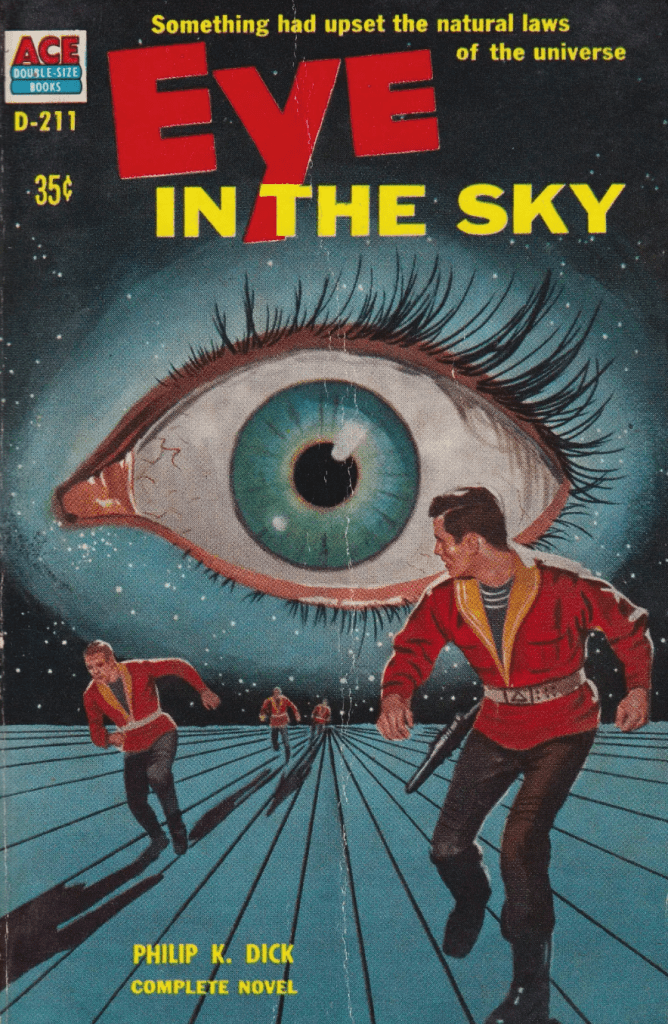
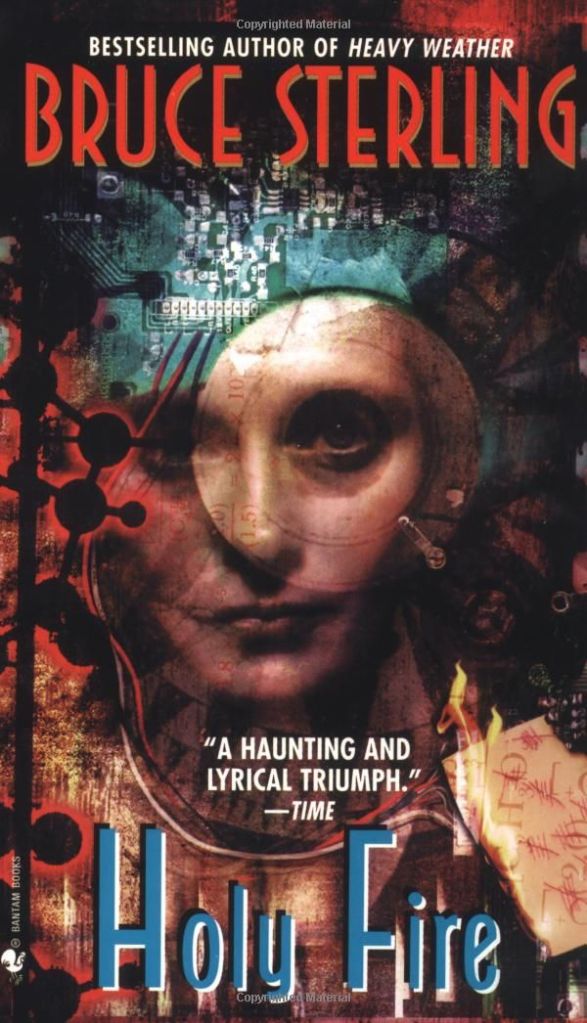

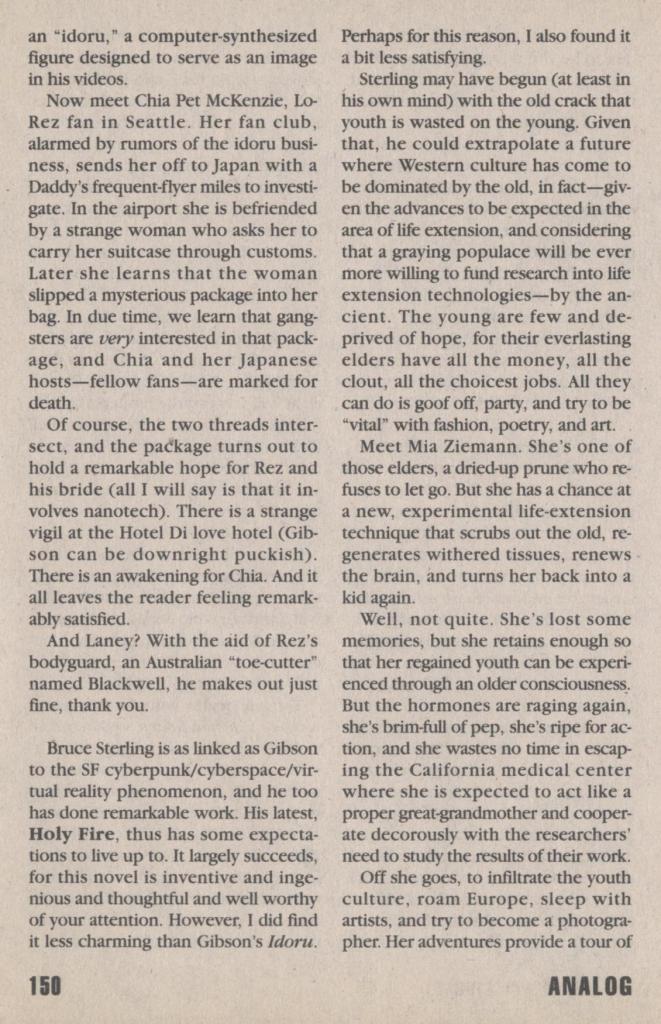
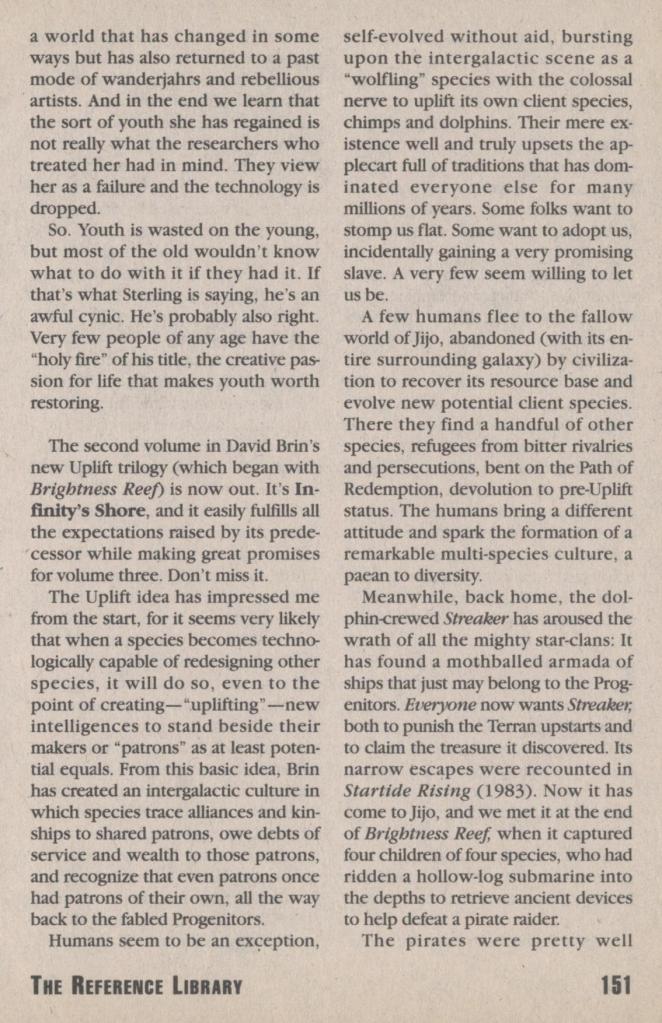
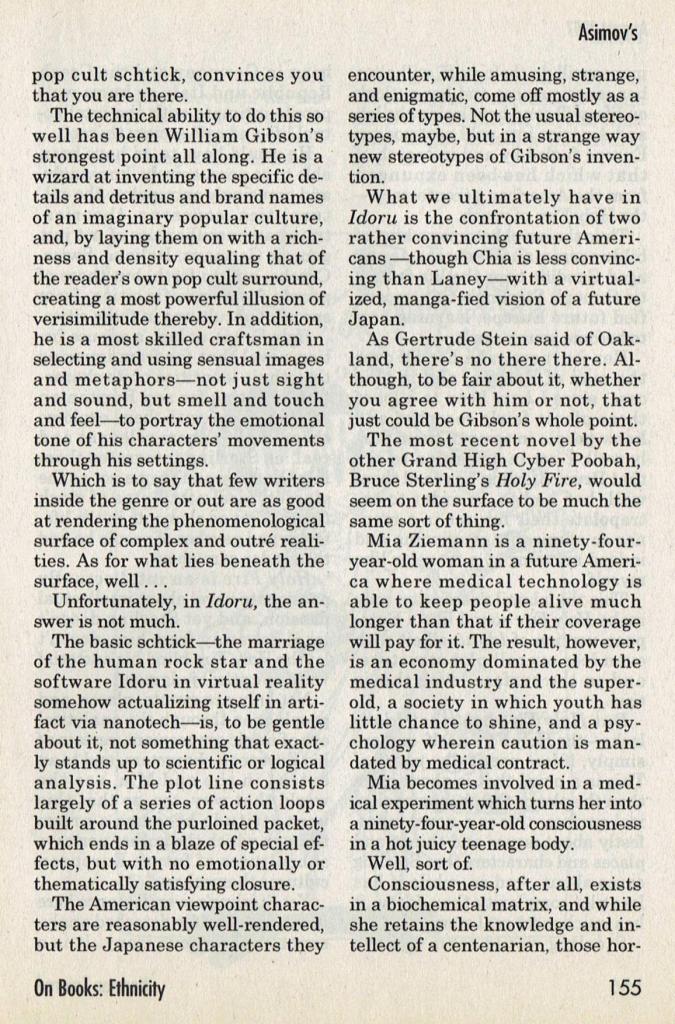
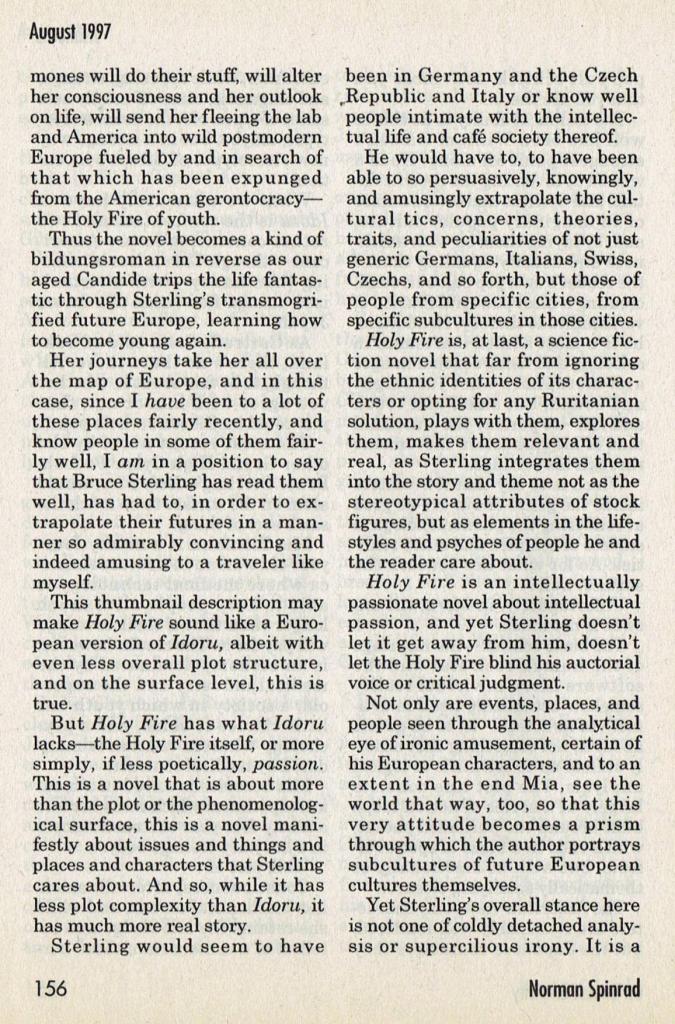
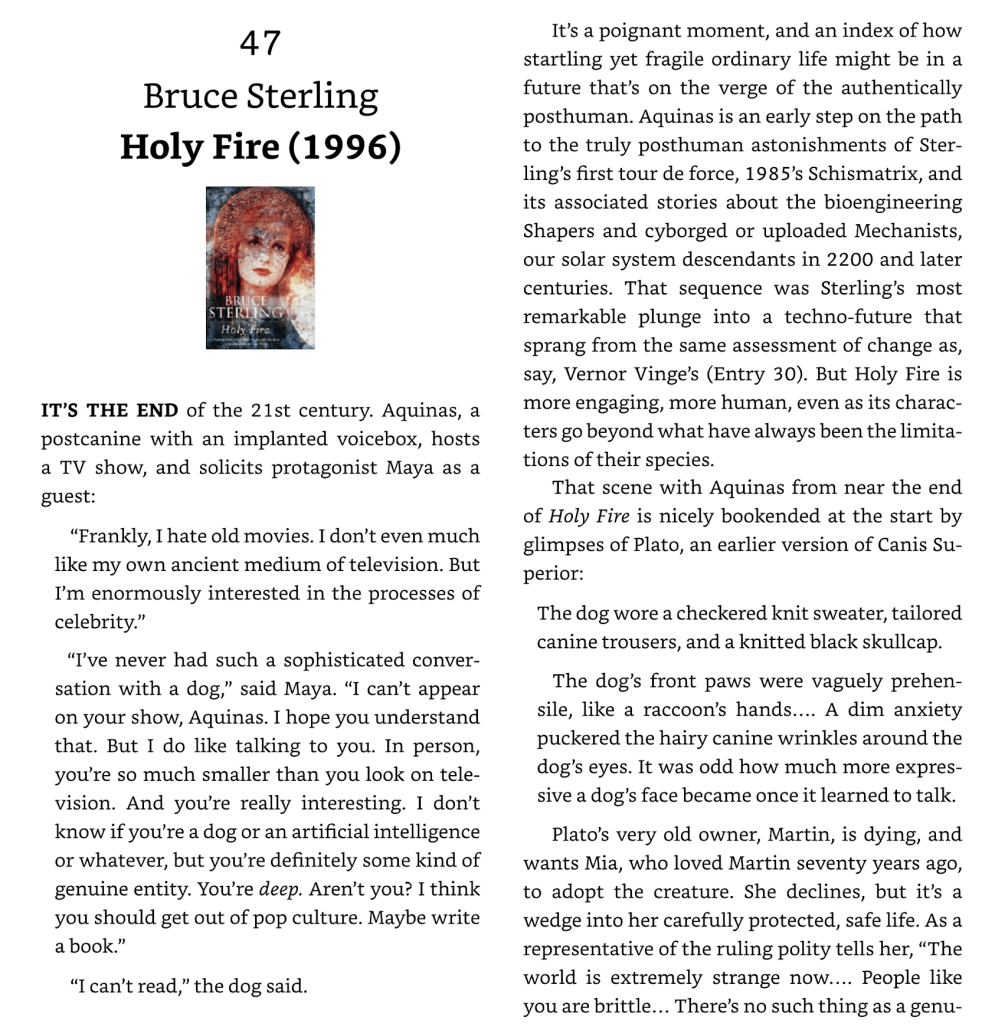
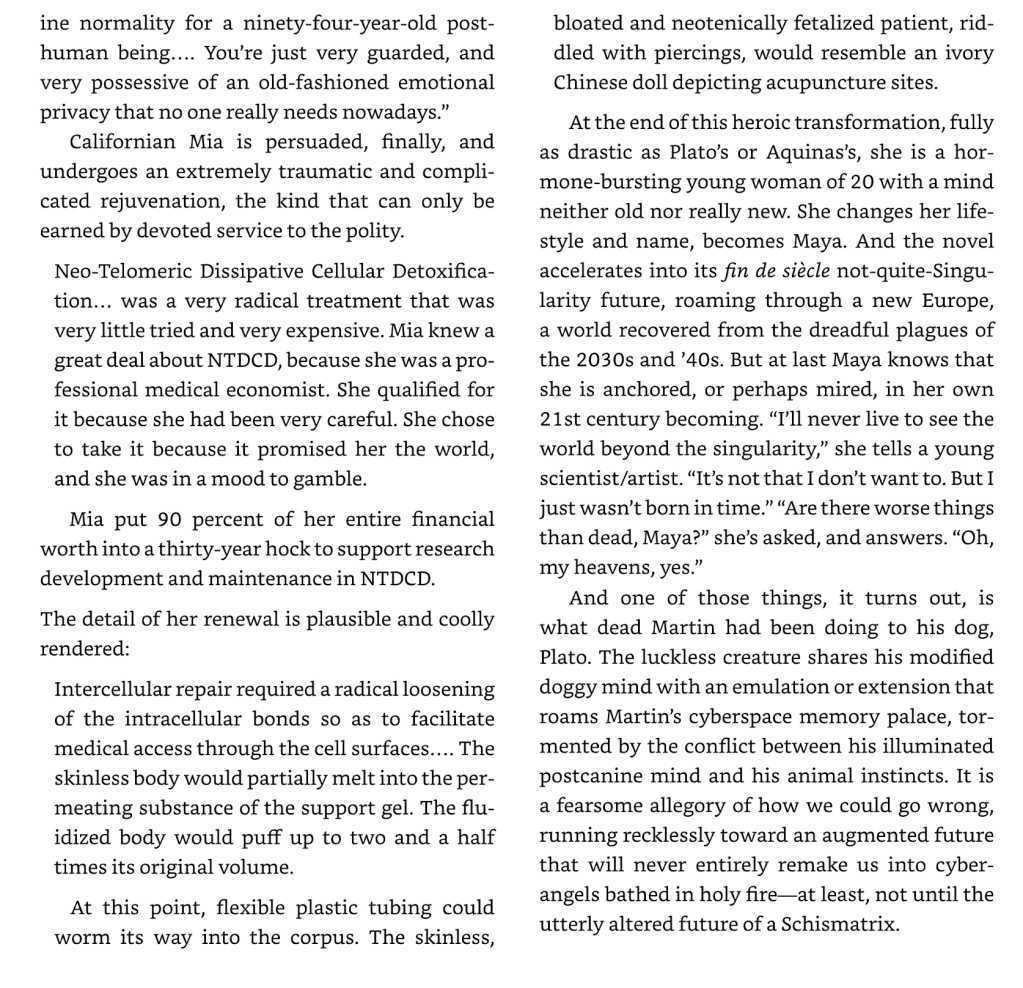
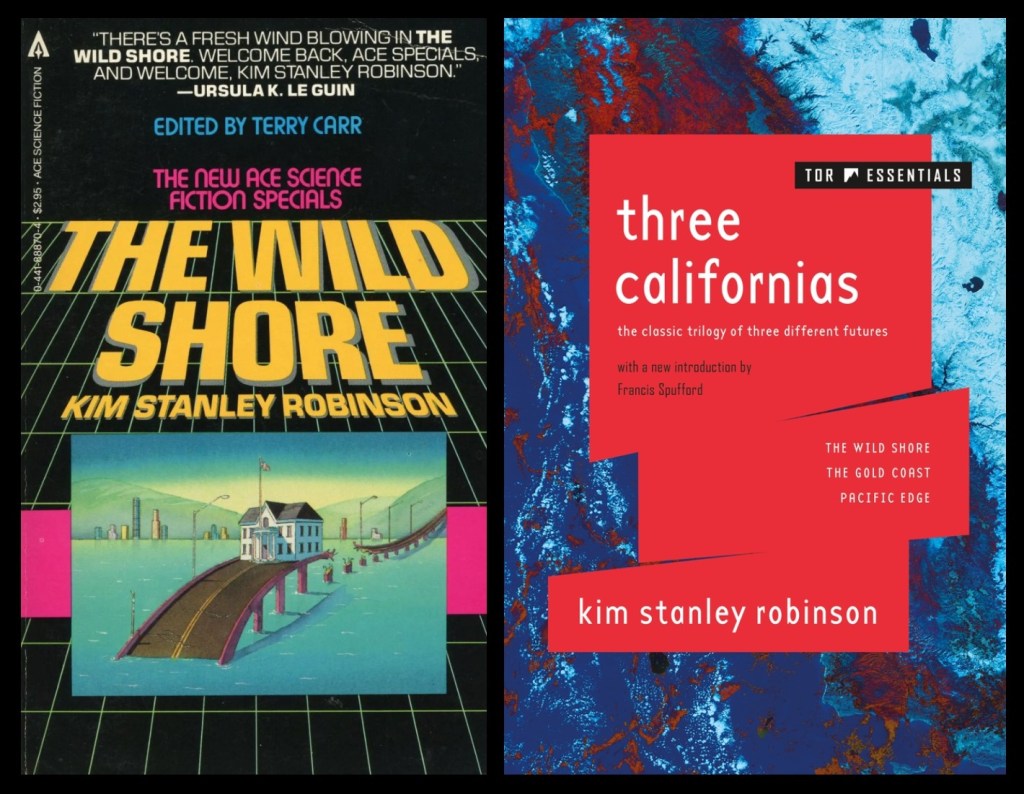


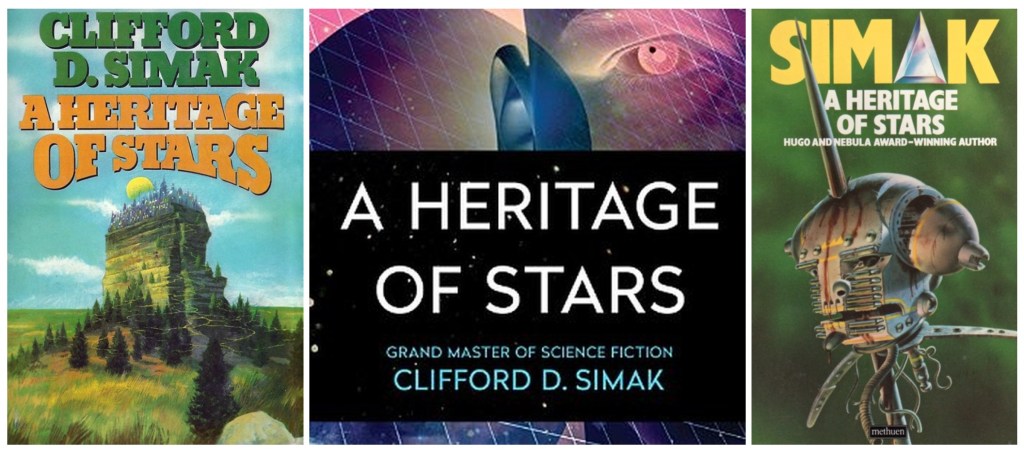


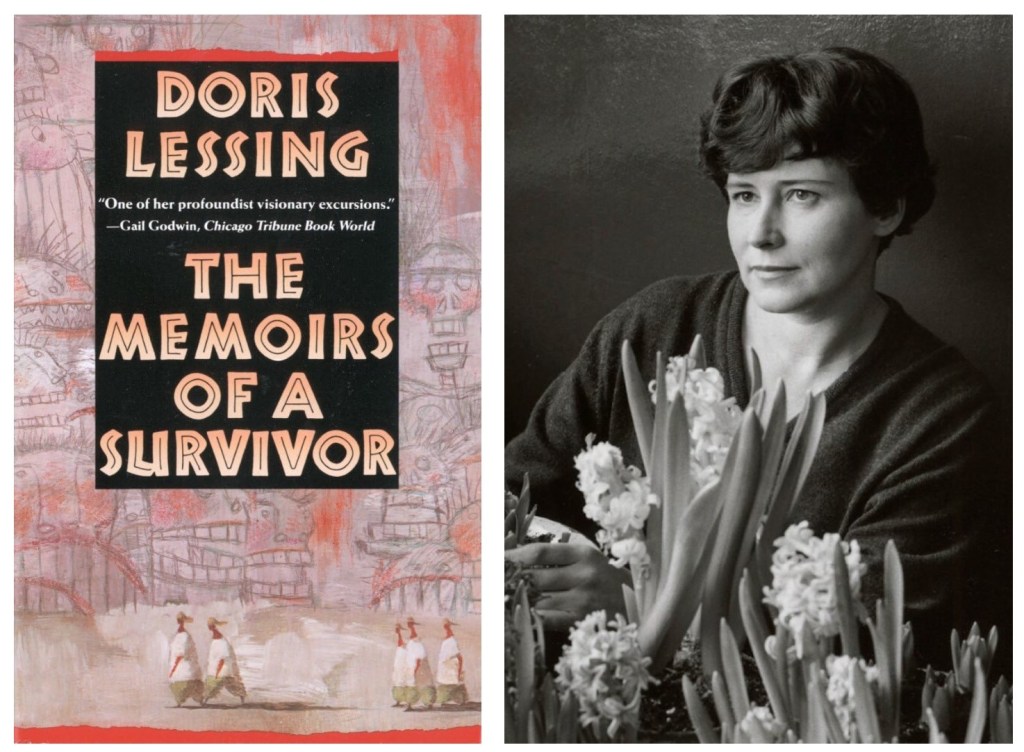


 Classics of Science Fiction