Has Science Fiction Changed?

I often encounter the opinion that science fiction has changed. Is it true? Over my lifetime novels have gotten longer, trilogies and series have become more common, there are more female authors, and the genre has been heavily influenced by fantasy. Before Star Trek in 1966, the world of science fiction seemed tiny, and that TV show brought in millions of new SF fans. Then Star Wars in 1977 brought in tens of millions of new SF fans. (But I’m not sure how much the population of science fiction readers grew.)

But these are all externals. I’m wondering if the essence of science fiction itself has changed. Yes, the writing has gotten better, and the literary world has become more accepting, but do modern readers get something different out of reading science fiction than what I found in the 1960s? Why do I prefer older science fiction? Is it more than just because I imprinted on it when I was young? I’m not the only one who feels this way. Many aging Baby Boomers say they prefer older science fiction too, but so do some young book reviewers.

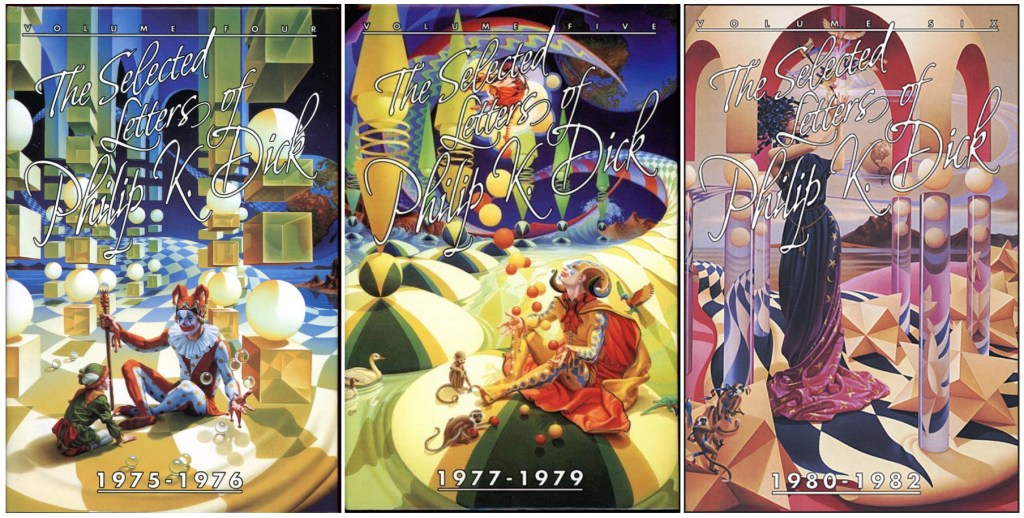
Over the last forty days I’ve read five novels by Philip K. Dick written between 1959-1963, plus Ammonite by Nicola Griffith and The Player of Games by Iain M. Banks. These aren’t new novels, but newer than what I’m talking about, and they feel different. Over the last year I’ve read such new SFF books as Sea of Rust by C. Robert Cargill, Babel by R. F. Kuang, and The Mountain in the Sea by Ray Nayler. I know this is a small sample, but I’ve also read hundreds of science fiction short stories, both old and new, over the last couple of years.

All I can say is science fiction from the first half of my life (1951-1987) feels much different than the second half (1988-2024). The change started around the time of Star Wars in 1977. George Lucas and Steven Spielberg might be the main factors changing the genre. I confess that I’ve long thought that science fiction ran out of original ideas at some point, and the genre has been living on recycling ever since. But women writers, literary standards, and fantasy radically changed the flavor of science fiction since the 1970s too.

But what if the change in science fiction is due to other factors? Yesterday I watched a video by Bookborn, “Do SFF authors think we are stupid now” that offered two innovative ideas. Bookborn suggests that current science fiction lacks subtlety. She also suggests that newer science fiction requires less critical thinking because newer authors tell their readers what to think rather than letting the readers draw their own conclusions. Bookborn also felt authors wrote about topical problems too obviously. Even with books she likes, presenting viewpoints she agrees with, she felt they were too explicit, lacking subtly. She admits this problem is not measurable and highly subjective.

Bookborn then cites an essay, “The Death of the Author” by Roland Barthes. The essay in long, so I suggest reading Wikipedia’s summary instead, but to give you a quick idea, here’s a quote from the first paragraph at Wikipedia:

"The Death of the Author" (French: La mort de l'auteur) is a 1967 essay by the French literary critic and theorist Roland Barthes (1915–1980). Barthes's essay argues against traditional literary criticism's practice of relying on the intentions and biography of an author to definitively explain the "ultimate meaning" of a text. Instead, the essay emphasizes the primacy of each individual reader's interpretation of the work over any "definitive" meaning intended by the author, a process in which subtle or unnoticed characteristics may be drawn out for new insight.

Bookborn is quite articulate at explaining her position, and her position is more complex than what I’m conveying here, so I recommend clicking on the link above to watch her video. Bookborn goes on to say that current authors hide from their readers because of social media. They fear attacks on what they say so they are overly careful about what they put forth. I had an additional insight. Because modern science fiction is often about elaborate world building, modern authors struggle to be precise so readers will see clearly what they have worked so hard to invent.

In Ammonite by Nicola Griffith and The Player of Games by Iain M. Banks, I was disappointed by the blandness of the author’s voice. And I never felt the presence of Griffith or Banks in their stories. Yes, in both cases their world building is beautifully detailed, but both authors left no mysteries about their stories or their personal views for me to ponder. I have theories to explain this too.

Modern writers prefer a close personal third point of view, or first person, to the older omniscient point of view which is better suited for conveying the author’s voice. I also find that the novels I admire most are ones written by authors I love reading about. Maybe what I love about older science fiction is my connection to the author.

Any science fictional world that’s set far from Earth becomes a fantasy world, and thus far less complex than our reality. Such fictional worlds are far from the infinite complexity of contemporary controversies. Writers can avoid personal philosophy by using allegory. Reading such fantasies means passively consuming what the book describes. Such stories don’t lend themselves to ambiguity and complexity, which makes the reader think. Our reality is infinitely full of shades of gray. Made up fictional worlds tend to be consistently designed because authors want them to be understandable to readers unless you’re Gene Wolfe writing The Book of the New Sun.

The five Philip K. Dick novels were far more compelling and thought provoking than the books by Griffith and Banks. I often try newer science fiction, but they usually come across as merely fun stories. Overall, newer science fiction stories are like going to Disneyland. They dazzle but when the ride is over, are quickly forgotten. I’m still thinking about those Philip K. Dick novels. When nothing else thrills, switching to a Philip K. Dick story will get my mind excited. Why is that? I believe it’s because his Dick’s books are closer to real life, and that makes them ambiguous and mysterious. They offer endless room for speculation. I’m reading another biography of Philip K. Dick, my sixth, I think, because Dick’s novels make me crave understanding.

Dick’s novels were compelling, Ammonite and The Player of Games were not. They aren’t bad, in fact, they’re exceptionally good stories, just not compelling. Dick was obsessed with deciphering reality. He doubted that what we perceive is real. He was horrified by other people, often thinking they were machines, disguised supernatural beings, or illusions of the mind. Paranoia fueled his narratives. Our reality was too complex for Philip K. Dick, and it drove him into insane states of mind trying to figure it out. Every Philip K. Dick novel is another exciting speculative assumption about reality.

Interestingly, Dick doesn’t fit the theory about the author being dead. Yes, his stories are wonderful without knowing anything about Philip K. Dick, but their complexity increases the more you do know about him. I want stories where the authors aren’t dead by Barthes criteria.

By coincidence, both The Player of Games and Time Out of Joint are about game playing. However, the first novel feels contrived. It’s hard to believe. But the second, which is far more fantastic, yet feels very real and believable. Why is that?

I believe the reason I love older science fiction is because it speculates about reality. Whereas newer science fiction is focused on telling a delightful story. Lucas and Spielberg overly inspired newer writers to focus on entertaining the masses.

I loved the Heinlein novels of the 1950s because they speculated about future space travel. That was before NASA showed us what real space travel would be like in the 1960s. Heinlein’s stories honestly tried to speculate about traveling to the Moon or Mars. Space travel in Star Trek, Star Wars, or the Culture novels of Iain M. Banks are really fantasies. Space travel in Red Mars by Kim Stanley Robinson is somewhat speculative.
Most science fiction isn’t very speculative, even the old stuff. However, novels like Flowers for Algernon or Earth Abides feel far closer to reality. And I’m sure many people will point out that stories by Philip K. Dick are extremely fantastic, yet their characters feel like ordinary real people, and that grounds them.

For all his insanity, Philip K. Dick struggled to understand reality. And I think the reason I admire many older science fiction writers is because they were commenting on reality. I do love entertaining stories, but pure storytelling seldom offers much to think about.

I’m not sure I understand “The Death of the Author” in the same way as Bookborn. It seems to me that classics were written by authors whose personality dominated their fiction. Think about Jane Austen, Charles Dickens, F. Scott Fitzgerald, Eudora Welty, Ernest Hemingway, Flannery O’Conner, Jack Kerouac, or the science Fiction writers like H. G. Wells, Robert Heinlein, Philip K. Dick, Theodore Sturgeon, Ursula K. Le Guin, Harlan Ellison, Zenna Henderson, Samuel R. Delany, John Brunner, etc. If you want to write a great science fiction novel, I think it must connect with reality. Just think how silly and fantastic Slaughterhouse-Five is, yet Vonnegut points to reality, and that makes it a great novel.

James Wallace Harris, 2/4/24
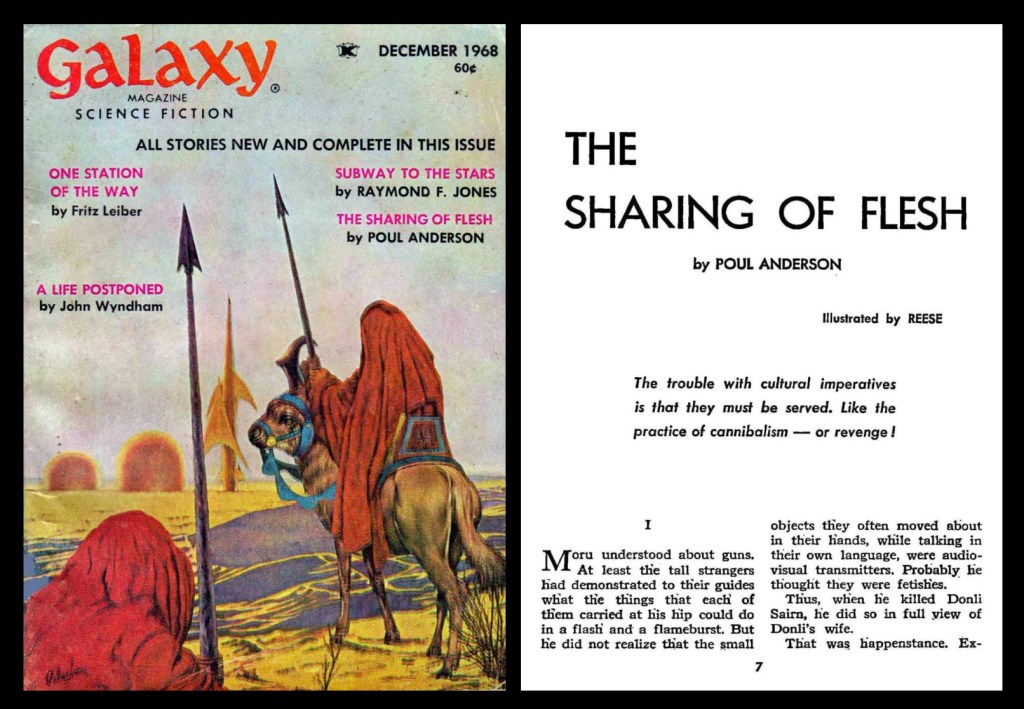
“The Sharing of Flesh” by Poul Anderson

“The Sharing of Flesh” by Poul Anderson first appeared in the December 1968 issue of Galaxy Magazine. It won a Hugo award for best novelette in 1969 and was also nominated for a Nebula award. As soon as I started reading it in The Hugo Winners Volumes I and II edited by Isaac Asimov I knew I had read it before. The trouble is I can’t remember when and how I read it before, and that annoys me. I do remember getting that issue of Galaxy back in 1968, but if I only read it then, it wouldn’t have been so fresh in my memory. With this reading, it felt like I must have read it just weeks ago. Everything portion of the story as I read it came back to me.

“The Sharing of Flesh” is about humans discovering a planet that was previously colonized by humans but forgotten. This is the third story in the past couple of weeks I read using this theme. The other was Anderson’s own “The Longest Voyage” and Nicola Griffith’s Ammonite. “The Sharing of Flesh” is a murder mystery with a sociological/biological twist. It’s the kind of story I don’t want to spoil by summarizing it. I would link to Archive.org so you could read it online, but that issue of Galaxy has the story removed, meaning the Anderson estate requested the cut. It is available in Call Me Joe: Volume One of the Short Fiction of Poul Anderson from NESFA Press. (I did find it online later.)

I checked ISFDB.org to see where “The Sharing of Flesh” has been reprinted, and I don’t own any of those anthologies or collections except The Hugo Winners Volume I and II. I suppose I could have read “The Sharing of Flesh” there, but I don’t think so.

I know you’re probably thinking I’m overly obsessed with memory, but recalling when, where, and how I read a story is important for two reasons. First, I’m getting old, and I’m slowly losing my ability to recall. Working to remember is good exercise for my mind. But second, and more importantly, the memorability of a story is a measure of its quality. If words etch into your mind and they stay there for years, there’s a good reason.

Despite all the millions of short stories published, and the thousands that I have read, the memorable ones only number in the low hundreds, and the ones worth cherishing over a lifetime, add up to just a handful of tens.

“The Sharing of Flesh” is memorable because it’s about something grotesque and horrifying, yet its resolution is about forgiveness. The story is about transcending upbringing and culture. It’s incredibly positive. Yet, I don’t know if I’d put “The Sharing of Flesh” into the all-time classic category. I might need to read it a couple more times before I decide. Still, it makes me think I need to read more Poul Anderson.

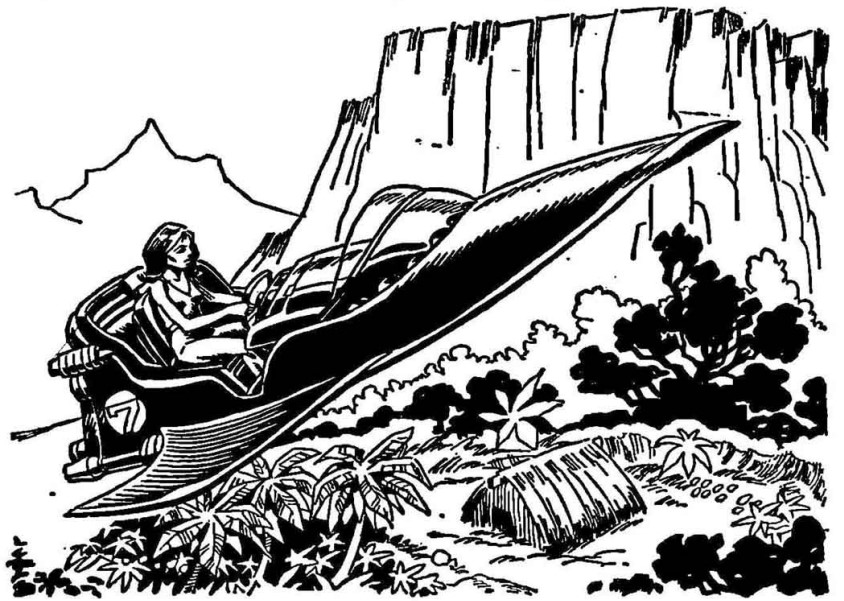
Even the illustrations from Galaxy are so familiar to me. I must wonder if I read it back in 1968. If I did, I don’t think I’m remembering that time. I wish I had kept a journal from the time I first started reading. I probably read “The Sharing of Flesh” recently because some blogger mentioned it, and I went and read it. If you remember, let me know.

That’s another thing I’d like to remember. I’d like to remember other people by the stories they love. I wish I had started worrying about memories when I was a child. Who knew they’d be so important to me now?

I’m beginning to realize that stories I love are like my genes, they define who I am.

James Wallace Harris, 2/1/24

10 Titles Added to the Classics of Science Fiction List

I added several best science fiction book lists to our database of citations. See the List of Lists to see the kind of lists we use. The new lists were from 2022, 2023, and even a few from 2024. Whenever I do this, some titles reach a total of 12 citations. We call all forms of lists citations. 12 citations is the minimum number for getting on the Classics of Science Fiction List v. 5. Before I started there were 127 titles on the list, now there are 137. With version 5 of the list, an online database, I can add new lists anytime and the totals are recalculated. If any book reaches 12 citations, it automatically gets on the list.

This is how newer books eventually get remembered and recognized. We now have two titles from 2014, the most recently published on the list. That suggests it takes about a decade to be remembered well enough to make it to the Classics of Science Fiction List. Here are the new titles with links to Wikipedia in case you want to know more about them:

If you look at the Classics of Science Fiction List, be sure to click on the citation number to show where the citations come from. Or you can click on “Show Citations” at the top of the list to see the citations for all the books. The CSF list has been in production since 1989. See our About page.

It’s interesting that only one old novel finally made it onto the list, Hothouse by Brian W. Aldiss. The YouTube book reviewer Bookpilled put it on his “15 Best Sci-Fi Books I’ve Ever Read” video. That one citation was all Hothouse needed. Bookpilled is my favorite YouTube reviewer. He’s young, but he’s quickly reading all the classics of science fiction and he’s very discerning about what are still credible reads today.

I try to use only lists created by people who are well read in science fiction, or lists made from polls. Younger readers tend to know the most recent books or the most famous science fiction books of all time. So, when I add new lists, the standard classics get more citations, while some newer titles get more recognition. For example, The Left Hand of Darkness now has 52 citations, the most of any title.

Of the ten new titles, I haven’t read Oryx and Crake or Blindsight. That increases my list of books I need to finish reading the entire list. My TBR of CSF now includes the titles below. Their current number of total citations is in brackets.

  1. I Am Legend – Richard Matheson (1954) [15]
  2. Solaris – Stanislaw Lem (1970) [34]
  3. The Gods Themselves – Isaac Asimov (1972) [19]
  4. Roadside Picnic – Arkady & Boris Strugatsky (1972) [16]
  5. The Female Man – Joanna Russ (1975) [28]
  6. Dreamsnake – Vonda N. McIntyre (1978) [12]
  7. Kindred – Octavia Butler (1979) [13]
  8. The Snow Queen – Joan D. Vinge (1980) [15]
  9. The Book of the New Sun – Gene Wolfe (1980-1987) [23]
  10. Downbelow Station – C. J. Cherryh (1981) [16]
  11. Helliconia Spring – Brian W. Aldiss (1982) [12]
  12. Consider Phlebas – Iain M. Banks (1987) [12]
  13. The Player of Games – Iain M. Banks (1988) [15]
  14. Grass – Sheri S. Tepper (1989) (13)
  15. Barrayar – Lois McMaster Bujold (1991) [14]
  16. Synners – Pat Cadigan (1991) [13]
  17. The Diamond Age – Neal Stephenson (1995) [18]
  18. A Deepness in the Sky – Vernor Vinge (1999) [14]
  19. Revelation Space – Alastair Reynolds (2000) [12]
  20. Oryx and Crake – Margaret Atwood (2003) [14]
  21. Blindsight (2006) by Peter Watts [12]
  22. World War Z – Max Brooks (2006) [12]
  23. Anathem – Neal Stephenson (2008) [12]

You can use List Builder to create a custom list. You can control the date ranges, the citation minimum, or even zero in on an individual author.

If you’re curious about titles not listed, here’s the list configured for a minimum of one citation. That lists all the titles in the dataase, 2527 titles.

James Wallace Harris, 1/30/24

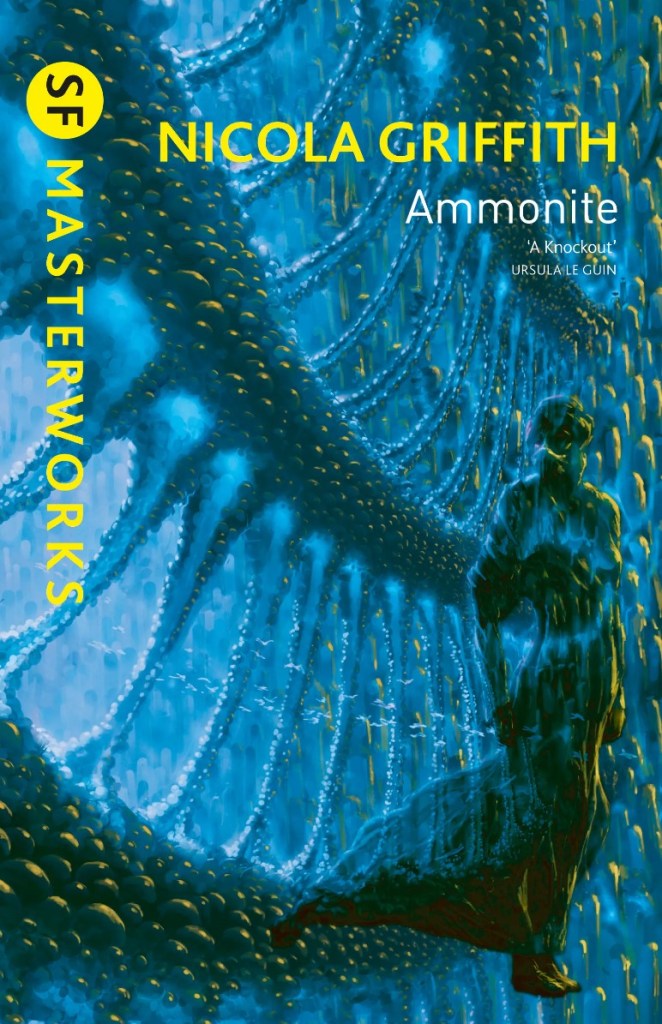
Ammonite by Nicola Griffith

Ammonite by Nicola Griffith is one of the books from the Classics of Science Fiction list I hadn’t read. It’s on that list because of these citations:

Otherwise Award
2001200 Significant Science Fiction Books by Women, 1984-2001 by David G. Hartwell
2003The Cambridge Companion to Science Fiction edited by Edward James and Farah Mendlesohn
2004Feminist Science Fiction and Fantasy by Cynthia Ward
2005ISFDB Top 100 Books (Balanced List)
2012Science Fiction the 101 Best Novels 1985-2010 by Damien Broderick and Paul Di Filippo
2014Mistressworks by Ian Sales
2016SF Masterworks
2016Sci Femme: The Reading List edited by Shannon Turlington
2016Goodreads Science Fiction Books by Female Authors
2016Gunn Center for the Study of Science Fiction: A Basic Science Fiction Library
2019The Best Sci-Fi Books of All Time – Penguin Random House
2019100 Best Sci-Fi Books of All Time – Reedsydiscovery
2021Worlds Without End: Award Winning Books by Women Authors
2022The 50 Best Sci-Fi Books of All Time – Esquire Magazine

Ammonite won the Lambda Literary Award for Lesbian Science Fiction and Fantasy in 1993. Nicola Griffith has won the award three times and been nominated six times. Ammonite also won the Otherwise Award (originally, the James Tiptree Jr. Award) in 1993. It’s a well-respected novel, critically and academically acclaimed.

Interestingly, I didn’t think of Ammonite as a lesbian novel even though all the characters are women, and some of them are in relationships. I listened to the Audible edition, and Griffith makes a statement about the novel in an afterward where she says she didn’t want Ammonite to be a women’s utopia, or an Amazon adventure tale. She wanted her characters to be normal ordinary people, and that’s how it worked out. Sex wasn’t emphasized in the story, and I didn’t really think about gender roles while reading it.

I thought Ammonite was a straight-ahead science fiction problem story. Human explorers discover Grenchstom’s Planet, nicknamed Jeep, where all the males and many of the females die from a virus. They discover that the planet had been previously colonized by humans, with various tribes of women now living on the planet apparently not remembering they how they got there.

Marghe Taishan, an anthropologist volunteers to test a vaccine against the Jeep virus, so she can go down to the planet and visit the various tribes. Each tribe has a different culture depending on the geography and weather of their location. I pictured it pretty much like North America before Columbus, or early civilizations in the Himalayas.

There is a parallel story about a military unit, again all women survivors, which has a base on the planet. They hope to return to Earth if the vaccine proves successful. Marghe has reason to believe that the Durallium Company that commissioned the explorers will destroy all the humans no matter what happens with the vaccine because they fear the Jeep virus will spread across the galaxy. (I thought of the film Aliens, and the phrase, “nuke them from orbit.”)

I had problems with the novel. Problems unique to me. If you read about the novel at Wikipedia, you’ll see it’s highly regarded. I’d compare it to The Left Hand of Darkness and A Woman of the Iron People by Eleanor Arnason. And the science fictional setup reminds me of “The Longest Voyage” by Poul Anderson from 1960 which won a Hugo award in 1961. For most readers, Ammonite should be an excellent tale.

Ammonite has a great setup for a science fiction story. But here’s my problem. That’s about all the science fiction we get. Most of the story is about Marghe struggling to survive among various native societies of the original colonists. It’s fictional Margaret Mead. I’m sure this kind of extended worldbuilding is what modern science fiction readers love, but I’m discovering I prefer shorter novels with a higher concentration of science fiction.

The extra length gives Griffith a chance to describe female only cultures and deal with cultural differences. This didn’t feel like science fiction, but fictionalized substitutes of our own world’s tribal customs.

Griffith doesn’t pontificate like a lot of bad science fiction writers, so we don’t have to wade through long speculating info dumps. Griffith works by throwing Marghe into various situations where she must quickly learn to survive. The story reminds me of the movies Little Big Man or Dances with Wolves. Both of those films were about plains Indians, but on Griffith’s cold world, I pictured cultures like the Innuit in North America, or nomadic people from historical Tibet or Mongolia.

Reading both “The Longest Voyage” by Poul Anderson and Ammonite in the same week is what inspired me to write this review. In both stories, a planet was colonized by humans in the distant past and then forgotten. Then these planets are rediscovered by a new civilization of star-faring humans. They discover the old humans have forgotten they ever traveled in space. In Anderson’s story, the forgotten colonists evolved their civilization to about the time of our 1500s. But in Griffth’s world, the colonists have evolved into tribal societies like we saw in Canada, Siberia, Mongolia, and Tibet before the voyages of Columbus.

Like I said, the story is compelling, but feels long, especially after several years of mostly reading science fiction short stories. When I got into science fiction in the mid-1960s, most science fiction novels were 200-250 pages and often less. Ammonite is 416 pages. By comparison, The Left Hand of Darkness (1969) runs around 280 pages in most editions. Science fiction novels have only gotten longer on average since 1992.

Science fiction used to be fast paced, with lots of far out ideas. The evolution of the science fiction novel has been towards extending its length by evolving the complexity of plot and character. I assume this chunkiness is what younger readers prefer. They love dwelling in elaborate world buildings efforts to older science fiction’s thrill rides. I just don’t enjoy these longer novels, but if you do, this shouldn’t be a problem with Ammonite. But I also wonder if the aim of science fiction has changed, and it’s not really about the number of pages. Have I lived long enough that the appeal of science fiction has mutated?

Griffith increases her action midway through her novel, but then switches back to slow pace with Marghe learning about a second society. It’s at this point that Griffith gets into the psychological development of Marghe’s character. In the four Philip K. Dick novels I read before Ammonite, Dick went through dozens of plot twists and characters in less than half the number of pages for each of those novels. Dick’s approach is to throw out a science fictional idea every few paragraphs, while Griffith gave us all her science fiction at the beginning and then coasts for hundreds of pages with character interactions. And like I said, Griffith’s science fiction framework is an old idea. The story is really about Marghe becoming more evolved spiritually.

About two thirds of the way into Ammonite, the plot quickens again as the military base becomes threatened on two fronts, but again switches back to Marghe’s story which is much slower. However, this is where we learn how the female only society makes babies.

Most of the book is less about science fiction and more about imagined tribal cultures and New Age spiritualism and healing practices. There are a couple of women characters who like killing both people and animals. I wondered if Griffith was saying even women can have male traits, or that male traits aren’t exclusively male. I’ve always thought if there were only women, there would be no war or vicious kinds of hunting.

I’m not picking on Nicola Griffith for writing a longer novel. Most modern science fiction is getting longer and longer. New writers recycle an old science fictional concept, adding long complex plots. They spend their time developing an interesting cast of characters. It’s more about story and storytelling than science fiction. There’s nothing wrong with this. And modern science fiction is often better written than older science fiction. The trouble for me is I got hooked on the amphetamine type of science fiction.

I don’t know if I can fairly review modern science fiction. I wonder if my taste in science fiction suffers from arrested development. I wonder if I’m stuck in 1950-1979 science fiction, music, movies, and other pop culture.

Ammonite was a pleasant read. It was a somewhat compelling story. But it didn’t excite me. And I have no urge to reread it, which is my main indicator of a great novel.

James Wallace Harris, 1/27/24

Heinlein’s Juveniles I Read in the 1960s vs. Philip K. Dick’s 1960s Novels I’m Reading in My 70s

I’ve been gorging on Philip K. Dick books this month. It occurred to me, that I’m consuming vast quantities of PKD in my old age like I did Heinlein books in my youth. Why was Heinlein my #1 science fiction writer in the 1960s when I was a teen? Is it for the same reasons that Philip K. Dick is my #1 sci-fi writer in my seventies in the 2020s?

The short answer is Heinlein’s juveniles were great reads and perfect escapism for a young person growing up in a problem family hoping to find a bright future. While PKD’s books are great escapes for an old guy living through troubled times when the future looks quite bleak. Both offer escapism from troubled times, but their imagined futures were distinctly different. Heinlein’s was best for the young, while Dick might be better for old age.

For some reason I resonate with Heinlein and PKD. I’ve written about that before, read “The Ghosts That Haunt Me.” There are certain writers I can’t stop reading their books, and biographies about them. I’m now curious why Philip K. Dick appeals so much to me late in life.

I discovered Heinlein in the Fall of 1964, just months before the first manned Project Gemini missions in March 1965. This was after Project Mercury was over. I had followed every manned space mission in the 1960s starting with Alan Shepard’s suborbital flight in May of 1961. I grew up as a final frontier true believer, and Heinlein’s twelve juvenile novels shaped my hopes for the future. This was before the psychedelic 1960s hit.

I don’t remember when I changed, but like many teenagers growing up in the 1960s, I radicalized. I tuned in, turned on, and dropped out. I was still living at home, and I was still going to high school, but I wasn’t in either place.

I can’t say I contracted the weirdness of Philip K. Dick back then, but science fiction was getting weird. My favorite writers shifted from Heinlein/Clarke/Asimov to Samuel R. Delany, Jack Kerouac, and Mark Twain as the 1960s ended. My ideas about the final frontier and the future were changing, especially after reading Stand on Zanzibar by John Brunner in 1969.

I didn’t discover Philip K. Dick until 1968 when I checked out Do Androids Dream of Electric Sheep? from the 7-day bookshelf at the Coconut Grove Library in Miami. What a strange ride that was. Before the decade was over, I also read The Three Stigmata of Palmer Eldritch and a couple of others, but I can only dredge up specific memories of those two titles right now. I didn’t seriously get into PKD until after the Paul Williams article ran about Dick in The Rolling Stone magazine in November of 1975, then I started reading PKD for real. Back in the 1980s I told my friend Mike about Philip K. Dick, and we started collecting his books and both of us became big fans. We’ve been discussing PKD ever since. In 1991 I even went to Ft. Morgan to visit Dick’s grave.

This past month, I’ve been binge reading PKD again. I do that from time to time. And something struck me. I discovered Heinlein when I was twelve, just before I turned thirteen at the end of 1964. I read nearly all of Heinlein’s back catalog in the following two years, ending my Heinlein binge by reading The Moon is a Harsh Mistress and The Past Through Tomorrow in 1967 as they came out.

But it was the twelve Heinlein juveniles published from 1947-1958 that made me a science fiction fan. At the end of 1967, with my first paycheck from working at the Kwik Check in Coconut Grove, I ordered all twelve of those books in hardback from Scribners because I loved them so much. I still have them. Those books define my love of science fiction. So, it’s weird that I’m ending up in PKD’s landscape. Heinlein and Dick saw the future vastly different. But then, the future I envisioned for myself in the 1960s is nothing like the future I’m living in the 2020s.

What’s interesting, that I realized this week, is Philip K. Dick’s 1960s science fiction are shaping how I think about science fiction in my old age. And there’s quite a contrast between how Heinlein and Dick wrote science fiction. I just finished five books Dick hammered out in 1963:

Heinlein’s fiction from the 1950s had a consistency to them, with each juvenile novel going step-by-step further from Earth. Heinlein was always adamant that his philosophy was represented in the three novels Starship Troopers (1959), Stranger in a Strange Land (1961) and The Moon is a Harsh Mistress (1966). But those books represent his third philosophical stage. Heinlein’s first stage was his Future History stories of the 1940s, but what I cared about most was his Space Exploration stage of the 1950s. Both Heinlein and Dick wrote many books that shared a common vision of the future. Heinlein’s vision of tomorrow in his 1950s books are quite consistent. But then, so is Dick’s science fiction from the 1960s.

I’m sensing that Philip K. Dick went through different philosophical stages too. In the 1950s he was cranking out science fiction to make a living, but Dick really wanted to become a respected mainstream writer. Then from The Man in the High Castle (1961) through Our Friends from Frolix 8 (1969) he wrote twenty-one very strange science fiction novels that all have consistent themes and elements. In the 1970s, he shifted to more serious writing, some of which was based on firsthand experiences.

Many readers accused Dick of being a 1960s sci-fi writer on drugs, suffering from mental illness, and producing psychedelic science fiction. I don’t think that’s accurate. I think his 1959 novel, Confessions of a Crap Artist (published 1975) is a key to PKD’s 1960s fiction. Dick learned a lot about writing from producing all those unsold mainstream novels in the 1950s. Yes, he grew up reading science fiction and falling in love with the genre, but he was well acquainted with the real world and real literature. He had to accept that he could only make money selling science fiction, but he compromised by putting reasonable realistic characters into bizarre science fictional fantasies.

When I was growing up and embracing the Heinlein juveniles, I didn’t understand how unrealistic they were. I wanted space travel as Heinlein described it to be possible, but it would be decades before I realized how unrealistic those expectations were. Philip K. Dick was 23 years older than I was, and he obviously knew how crazy science fiction was back in the 1950s. I imagine he told himself, if science fiction sells, I’ll write science fiction but with the weirdness knob turned to eleven.

Dick’s science fiction in the 1960s got very psychedelic before the 1960s got psychedelic. He lived in California, and that helped put him at the forefront of the counterculture. As I grew up with the counterculture, but slightly delayed in Miami, I was still rereading the Heinlein juveniles. They were fantasies that kept me sane, but they were delusional. It’s a shame I didn’t discover PKD sooner, or even first. Dick knew science fiction was delusional. At least, I think he did. I believe with his VALIS experience, he started wondering if the universe wasn’t far stranger than what even science fiction writers imagined. I want to believe that Dick knew he was a crap artist for most of his career before he started believing in the crap. Evidently, you can’t toy with crap ideas all your life and not get infected.

What’s weird on another level was Heinlein turned strange in the 1960s too. It’s my theory that he too realized that 1950s science fiction wasn’t going anywhere, and thus he needed to go in another direction to stay at the top. My guess is he read Atlas Shrugged and decided he wanted to be a writer like Ayn Rand. One whose political ideas were taken seriously. In some ways, Stranger in a Strange Land is just as weird as PKD’s work in the 1960s.

Heinlein’s lost his mojo in the 1970s, and I quit reading him. Over the years, I’ve become disenchanted with Heinlein’s work after 1960 too. Philip K. Dick took a new direction in the 1970s and found a higher calling. Science fiction, as a genre, also cchanged in many ways in the 1970s. Since then, science fiction books have gotten better written, and more creative, but have mostly retreated into itself, into fantastic feats of world building. I still love 1950s science fiction. I think that’s when the genre peaked in terms of exploring science fictional ideas. Movies and novels are better constructed now, but most of the ideas are retreads.

I guess I haven’t progressed much in life. I started in the 1960s with 1950s science fiction, and now in the 2020s I’m focused on 1960s science fiction. Maybe before I die, I’ll get around to digesting 1970s science fiction. But before I do that, I need to use up PKD’s books from the 1960s. I need to figure them out.

I only reread Heinlein juveniles now for nostalgic reasons. I think I’m reading Dick’s 1960s novels for a reason, but I’m not sure what it is. PKD seemed to be writing about something, and I’m trying to figure out what that was. But I could be wrong. He could have just been cranking out a bunch of crazy sci-fi books to pay the bills. However, I’m not the only one trying to figure out PKD. Lots of people are writing monographs and dissertations on him.

In the 1950s and 1960s Heinlein was king of the genre hill. At the time, I thought he would be seen by people in the 21st century as the Charles Dickens of science fiction. That hasn’t happened. Philip K. Dick is the top dog when remembering 20th century science fiction. I would not have predicted that back in the 1960s. Nor would I have imagined that as an old man I would be so hung up on Philip K. Dick.

James Wallace Harris, 1/21/23

“Consider Her Ways” by John Wyndham

“Consider Her Ways” was first published in the original anthology, Sometime, Never. It is story #22 of 22 for The Best SF Stories of 1956 group read. Unfortunately, I can’t link to a copy of the story to read online, but you might already own one of the many anthologies where it’s been reprinted. I read “Consider Her Ways” in A Science Fiction Argosy edited by Damon Knight. But I also own it in The Science Fiction Century edited by David G. Hartwell. The story was also included in two of Wyndham’s collections:

I strongly urge you to read the story before reading what I have to say. It’s an exceptional yarn, a classic, and I don’t want to spoil your reading fun. “Consider Her Ways” begins with a woman waking up in a hospital and having no memory of who she is or how she got there. That mystery continues for many pages, and I never guessed the cause.

Let me say, “Consider Her Ways” is a feminist utopian tale that most will consider a dystopia. But what defines a better society? If you’ve read and enjoyed Herland by Charlotte Perkins Gilman, you might want to read “Consider Her Ways.”

“Consider Her Ways” is a very old-fashioned science fiction, reminding me of Looking Backward by Edward Bellamy, When the Sleeper Wakes by H. G. Wells, Brave New World by Aldous Huxley, and Beyond This Horizon by Robert A. Heinlein. John Wyndham uses his story to speculate about a future society while commenting on our present society. Referring to these books should give you enough of a clue to the plot of “Consider Her Ways.”

Especially in the 19th century, and to a degree in the 20th century, writers who wanted to write about traveling to the future but without resorting to a time machine, had their present-day characters going into a deep sleep and waking up in the future. John Wyndam invents a drug, chuinjuntin, from South American jungles, which causes a young 20th century woman to project her soul into the body of a woman in the future. Wyndam, solved the problem of return travel by using the same drug again. Mostly sleepers into the future are stuck there unless the story is only a dream. Heinlein had Dan Davis travel to the future via cold sleep in The Door into Summer, but then used a time machine to get him back to 1970.

I won’t go into the society Wyndham creates, other than to say its without men. Jane Waterleigh, our time traveler, does not like the feminist utopia she’s visited and tries to prevent it when she returns to her own time. I’ll call this future, the pink future, since its decor is often painted pink. The pink future Wyndham imagines for women is obviously horrifying from our perspective, but Laura and the other women of the future were completely satisfied with it, even proud of their society. I wasn’t sure I wanted Jane to destroy it. I think each reader will have a different take on Wyndham’s imagined future. Utopia is so hard to define. I don’t think a perfect utopia is possible, but the pink future in “Consider Her Ways” has no violence, lack, ugliness, or apparent unhappiness. However, it has an ant-like social structure. Jane finds herself in a huge body of a woman, a class called mothers. They produced broods of babies, four at a time, and are treated very well.

Wyndham’s missed one point. Jane claims the pink future has no love and romance, and thus a depressing dystopia. What about lesbian love, romance, and sex? Wyndham assumes without men; women wouldn’t have romantic relationships. Even in 1956, that should have been obviously wrong.

We all read stories differently, using fictional clues to customize our versions of the story, based on different assumptions, reactions, wants, and conclusions. Here’s what my friend Mike wrote to me about “Consider Her Ways.”

Ever since I first read The Day of the Triffids back in the sixties, I've been taken with John Wyndham's work. His beautiful prose describes deeply unsettling situations and events.

In "Consider Her Ways," a woman "...who had no idea who I was, or where I was..." is confronted with this vision: "In front of me stood an outrageous travesty, an elephantine female form, looking more huge for its pink swathings."

Only Wyndham could conjure up this disturbing description:

"And this delicate face, this little Fragonard, was set upon that monstrous body: no less outrageously might a blossom of freesia sprout from a turnip."

What transpires is an elaborate hallucination or the future (or one of a number of alternate futures). Jane is confronted with a civilization devoid of men. Her long conversation with the historian Laura could be considered an info dump, but is fascinating and adds considerable depth and nuance to the story. Even after more than sixty-five years it resonates with the reader.

Wyndham never allows us to feel comfortable. Are we dealing with a woman's bad drug trip? Have we had a glimpse of the future? And what do we think about that future? We're left with a jumble of emotions all wrapped up inside of Wyndham's masterful writing.

Mike is open-minded, leaving several possibilities available. I took a different reading route. I accepted Jane’s tale as an actual time travel story. Mike left open the possibility it was all a hallucination, and Jane murdered innocent Dr. Perrigan in an insane delusional state. But Wyndham makes it more complicated. In the end, Dr. Hellyer, Jane’s colleague who gave her the psychoactive drug to test, and Jane’s lawyer, discuss getting Jane off from the murder charge based on insanity. But they wonder if her story is true. Then the lawyer points out that Dr. Perrigan had a son who was also a Ph.D. researcher in the same area as his father. What if Jane’s story is true, but she killed the wrong person?

The story could be a hallucination. The time travel story could be true, but it can take two forms. One, Jane changes, the future, but two, she doesn’t. All the possibilities make “Consider Her Ways” a compelling story. It allows Wyndham to play with several time travel tropes in one tale. Such bendiness makes for great writing.

James Wallace Harris, 1/16/23

“Anything Box” by Zenna Henderson

“Anything Box” was first published in The Magazine of Fantasy & Science Fiction, October 1956. Sometimes reprinted as “The Anything Box.” You can read it on Archive.org. It is story #21 of 22 for The Best SF Stories of 1956 group read. “Anything Box” was a selection for Judith Merril’s SF:’57: The Year’s Greatest Science Fiction and Fantasy. It’s been reprinted a fair amount, but usually considered fantasy. “Anything Box” has the most citations of Zenna Henderson stories in our citation database, but with just three citations. In other words, she’s not that well remembered.

“Anything Box” is a story about a teacher who has a special student, Sue-lynn, who appears to have an invisible box that lets her see into magical worlds. At first the teacher thought Sue-lynn was just having a bit of normal childhood imaginary fun, but then another teacher suggested that Sue-lynn might be mentally disturbed. Her father was caught robbing a gas station and jailed, so there is reason. Sue-lynn’s teacher, our first-person narrator then begins to wonder if the anything box might be bad for Sue-lynn. Over the course of the story, we go back and forth trying to decide if the anything box is real, imaginary, or dangerous. You should read the story yourself, it’s lovely.

Zenna Henderson is most famous for writing stories about The People, collected in 1995 as Ingathering: The Complete People Stories. They are gentle tales about children and adults who have special powers. Like Superman, they come from another planet. The People look like us, but have extra abilities, like being able to fly. The People stories are light and moving. Over the decades I’ll read a few and think how wonderful Zenna Henderson is as a writer. But I always go on to read somebody else rather quickly. Unfortunately, her stories suffer from a kind of sameness. You need to read them occasionally, at the right moments in your life. Then they can be magical.

“Anything Box” is a story that can mean a lot to a reader. To me, the Anything Box is a stand in for books, and in my case science fiction books. When I was growing up, science fiction let me cope with a bumpy upbringing. Dave Hook, one of our group members said in his comment, “For me, this is SF, not fantasy.” I can see that, but I’m not sure I see it in the same way Dave does. Maybe Dave assumed the story is about a kid with a real alien artifact with special powers.

I don’t think Zenna Henderson’s magic worked with my friend Mike. He wrote this about this story:

"The Anything Box" is a wisp of a fantasy story. Its gossamer framework is too slight to support any metaphorical baggage we might want to heap on it.

A young girl has a mysterious Anything Box (which today would be known as an iPhone). Her teacher gets a chance to peer into the wonderful Anything Box. The girl loses the box and it eventually turns up in the teacher's desk drawer. The teacher gives it back to her.
No epiphanies. No tragic outcome. Calm is quickly restored. We are left wanting something more substantial.

Mike is right, the story is gossamer light, but I can find all kinds of heavy metaphorical meanings in it. When I was ten, I discovered the Oz books by L. Frank Baum at the Homestead Air Force Base Library, a magical place in my memory. Years later, I read an article from the 1950s, about how librarians had started removing Oz books off the shelves because they thought they gave children unrealistic expectations about life. That article could have come out around the time Zenna Henderson wrote “Anything Box,” because the worries of the teachers in the stories are the same kind of worries expressed by the librarians. At the time I read that article, and it was back in the 1980s, I was outraged that librarians would ban books.

But do you want to know what’s hilarious? Those librarians were right. The Oz books gave me tons of unrealistic expectations about life. Whether we need escapist fantasies to cope with living is another issue. Now, in my old age, as much as I embrace Zenna Henerson’s sentiment in “Anything Box,” I know the dangers of an anything box are all too real.

If I had not used my anything box growing up, I might have been more realistic, and successful in life. But might, is the key word. I might not have survived. I know about my life-long addiction to an anything box. I also understand my unrealistic expectations toward reality. But it is, what it is.

James Wallace Harris, 1/13/24

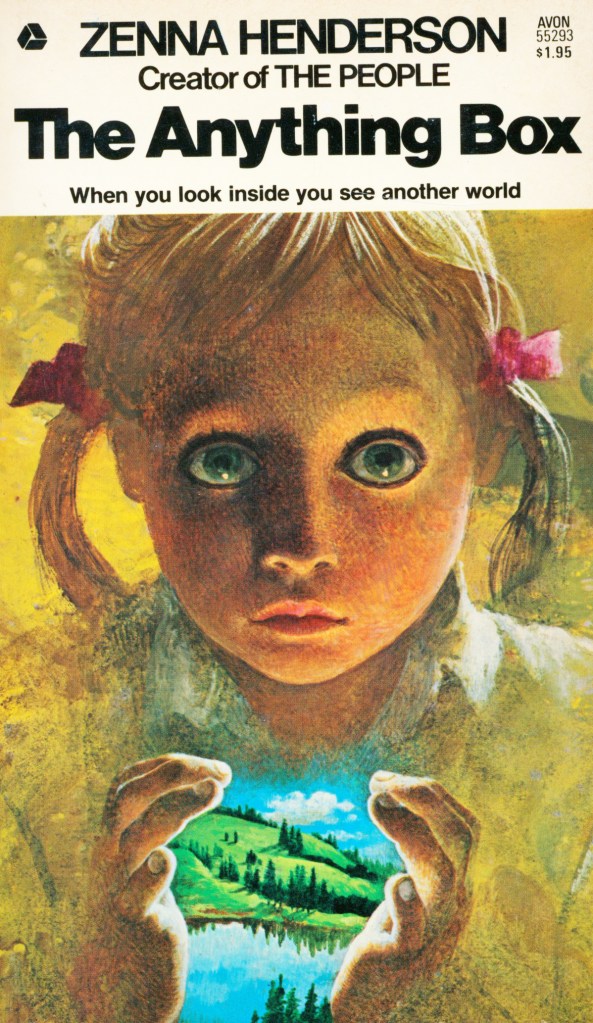
These are the Zenna Henderson paperback books I own. They are how I remember her:

Getting to Know Philip K. Dick, Biographies, Memoirs, Interviews, & Letters

Reprinted and updated from “The Biographies of Philip K. Dick” at SF Signal (April 2016)

Back in 2016 I went on a Philip K. Dick binge, reading several of his novels and a stack of biographies. I wrote an article about the biographies before I burned out of that binge. I’m back to binge-reading on PKD again and I went looking for my article, “The Biographies of Philip K. Dick” at SF Signal, but it’s been taking down. The link above is to the Internet Archive Wayback Machine. I decided to reprint it here and update it with any book that would help me get to know Philip K. Dick, including interviews and letters. I also put links to Amazon (I earn a small fee) to those that are in print. The books that are out of print are getting extremely expensive to buy used.

Philip K. Dick inspired more biographers than any other science fiction writer. Were those biographers drawn to Dick’s strange life, or did they hope to learn more about his books? For anyone wanting to know Philip K. Dick, picking a biography can be hard. A definitive biography has not yet emerged, and each of the existing biographies have their own unique appeal. I’ve been reading books about PKD for almost forty years and find they’re revealing in two ways. First, PKD was an exceedingly complex person. Even if you’ve never read one of his novels, his personal story is as far out as his fiction. Second, if you do have a passion for PKD’s work, you’ll want to read the biographies, because Phil often weaved his own experiences into his plots and characters, making those stories deeper if you learn how and why.

But which biography to pick? The latest? The longest? PKD had five wives, two of which wrote memoirs, as well as one lady friend. I loved In Search of Philip K. Dick by Anne R. Dick (married to PKD 1959-1965) because she influenced The Man in the High Castle. And Tessa B. Dick, (married to PKD 1973-1977) offers insight into Phil’s later mystical writings. I wished Kleo Apostolides (married 1950-1959) and Nancy Hackett (married 1966-1972) had also written biographies, so we’d have complete spousal coverage of Dick’s writing years.

Paul Williams and Greg Rickman’s books are out of print, yet very worthy of tracking down. Divine Invasions is excellent, but older, still a top contender. If you’re attracted to Dick’s weirdness, consider Anthony Peake’s book. However, if you only read one, a good place to start will be I Am Alive and You Are Dead by Emmanuel Carrère, a French writer. Be warned though, reading one biography of PKD can draw you into the black hole of PKDickian addiction.

If you know about others, let me know.

James Wallace Harris, 1/11/23

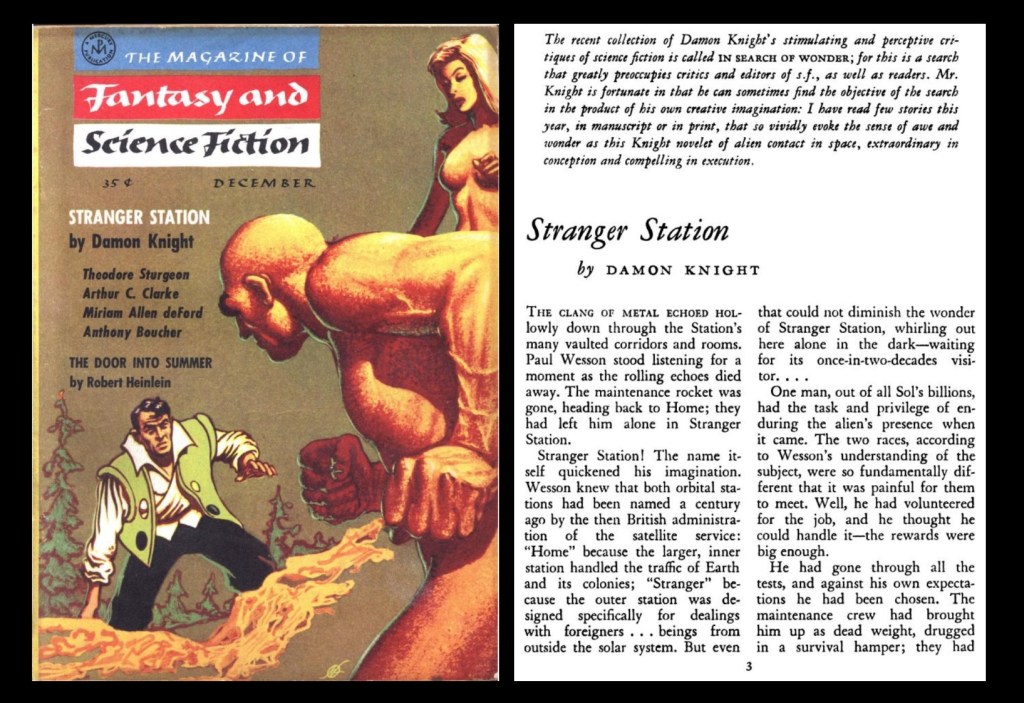
“Stranger Station” by Damon Knight – Fourth Reading

“Stranger Station” was first published in The Magazine of Fantasy & Science Fiction, December 1956. You can read it on Archive.org. It is story #20 of 22 for The Best SF Stories of 1956 group read. “Stranger Station” was a selection for Judith Merril’s SF:’57: The Year’s Greatest Science Fiction and Fantasy and Asimov/Greenberg’s 1988 anthology The Great SF Stories # 18 (1956). It’s often reprinted. This is my fourth reading of the story, and the third for the Facebook SF short story reading group. It was tied for fourth place for the most cited SF short story of 1956 in our citation database.

I’ve reviewed “Stranger Station” before.

I think it’s important to note that Damon Knight published two of the most remembered science fiction short stories of 1956: “The Country of the Kind” and “Stranger Station.” I think it’s also important we should note that both were about hate. We must ask, “Were they positive or negative?”

I’m a big believer in rereading fiction, but can a story be reread too much? With this fourth reading, I got even closer to what Knight was creating. In the first half of the story, I marveled at Knight’s hard science setup. The story was more vivid than my previous readings. I admired everything Knight wrote, and I was quite impressed. The second half of the story, especially the ending, still puzzles me. Had Paul Wesson truly figured out the motives of the aliens from Titan? Was his reaction, right? Was Wesson’s solution supposed to leave us feeling ambiguous about what Wesson figured out?

The basic plot is Paul Wesson, an astronaut working on a space station near Earth volunteers to spend months on a distant space station, called Stranger Station, reserved for meeting an alien from Titan every twenty years. Both aliens and humans have trouble being near each other. Nearness causes a deep sense of psychological dread in each species. However, it also causes the aliens to exude a golden liquid from their bodies that humans have discovered has life extending properties for our species. The aliens agree to meet every two decades at a space station far from earth. Just one human and one alien. The fear of being around humans causes the alien to sweat longevity chemicals which they freely give to the humans. But what do the aliens get in return? That’s a mystery.

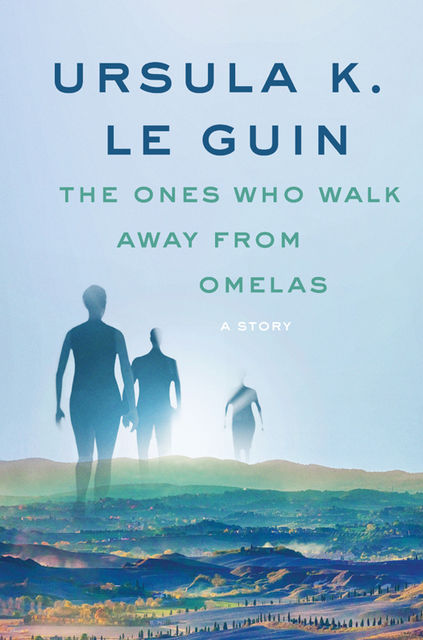
There is a cost to the human who volunteers for this mission. They go crazy, losing the ability to communicate, and change physically in horrible ways. It might be a form of adapting to the aliens. But Wesson doesn’t know that. It’s another mystery. But all of humanity gets to live another twenty years longer. This reminds me of Le Guin’s “The Ones Who Walk Away from Omelas.”

Paul Wesson’s only companion is an AI he calls Aunt Jane. The creation of Aunt Jane was brilliant speculation by Damon Knight in 1956. Paul tries to learn as much as possible about his fate from Aunt Jane, but she is restricted by what she can tell. This relationship slowly reveals the mysteries, and maybe the solutions. However, in the end, we’re not sure what happened to Paul. It appears he’s about to die. And he’s killed the alien. It also implies that humanity’s longevity serum supply will be cancelled. Was Paul Wesson, right? Did he save humans from a fate worse than death, or merely act on his own hatred and xenophobia?

Wesson believes the aliens are fighting us with love because they know we’ll eventually overrun the solar system, go interstellar, and destroy them in the process. Paul believes the aliens give the humans their golden sweat to make us addicted, thus protecting themselves. Wesson then assumes hate is the only way to fight back.

I’m still not sure what philosophical stance Knight makes in this story? Is he saying xenocide is ethical? Or that cooperation or even a symbiotic relationship with aliens is evil? Is he promoting human purity, a kind of interstellar racism? Up until the arrival of the alien at the station, the story is very pro-space, pro-technology, pro-future. Then it gets weird. Is hate the solution, or just Wesson’s solution, or even Knight’s solution?

My friend Mike didn’t have much to say about the story, but he sums it up precisely:

“Stranger Station” has a pervasive underlying element of apprehension and dread. I think Knight is forcing us to confront the stark reality of alien contact. He discards the facile Hollywood model and thrusts us into the bewilderment and dread and menace that will surround an alien contact event. The stakes will be enormous; our survival as a species will be at risk.

Personally, I don’t believe we can have contact with aliens of any kind. I assume that each evolved planetary biological ecosystem will be deadly to all other planetary ecosystems. That was the same conclusion as The World of the Worlds by H. G. Wells and more recently by Kim Stanley Robinson in his novel Aurora. Knight doesn’t seem to be worried about deadly microbes, only of hating each other. Knight is suggesting that there will be psychic barriers that will keep us separate from beings from other worlds. But again, is that Paul Wesson, or Damon Knight?

I tend to think it’s not Knight, but Knight suggesting it’s true about us.

James Wallace Harris, 1/11/23

“And Now the News…” by Theodore Sturgeon

“And Now the News…” was first published in The Magazine of Fantasy & Science Fiction, December 1956. You can read it on Archive.org. It is story #19 of 22 for The Best SF Stories of 1956 group read. “And Now the News…” was a selection in Asimov/Greenberg 1988 anthology devoted to the best SF of 1956. It’s often reprinted. This is my second reading of the story.

This story has quite a punch, so go read it. Be warned. I’m going to give away the ending.

“And Now the News…” isn’t really science fiction, nor fantasy. It’s about a man named MacLyle who was addicted to the news. To break that addiction, his wife sabotaged the radios and televisions, and destroyed his newspaper. MacLyle divorced his wife, moved out into the woods, and forgot how to use language. His wife hired a psychiatrist who tracked him down and “cured” him. On the way home, he went berserk, killed four people before he was killed himself.

For a story that came out in 1956, it feels quite relevant to 2024. I haven’t read much by Sturgeon, a couple of novels, maybe a dozen stories. He wrote much more. I’d love to read a biography about him. Wikipedia says Sturgeon wrote a bit of an autobiography, Argyll: A Memoir, which was an 80-page pamphlet. Abebooks.com and eBay.com list no copies for sale.

Wikipedia said Sturgeon was married three times and had two other long-term relationships and fathered seven children. He worked at many kinds of jobs. And his stories reflect a certain strangeness. Sometimes I wondered if he led a Beat life or was some kind of bohemian. Other times, because psychiatry is so often mentioned in his stories, I wonder if Sturgeon didn’t have mental problems.

If you read “And Now the News…” I think you’ll also wonder about his mental state. The story seems to be an attack on psychiatry, and even mundane life. Go read it, to see what I mean.

My friend Mike had a lot to say about the story. He hoped I had answers. I don’t. Mike summarizes stories much better than I do, so I won’t repeat what Mike gave me. I’m trying to get Mike to become a blogger because he’s good at reviewing fiction.

I might as well come clean and admit that I don't understand "And Now the News..." I can't fit the pieces together.

The story can be divided into three acts.

Act One

In the first act, we are introduced to MacLyle:

"He had habits and he had hobbies, like everybody else and (like everybody else) his were a little different from anybody's. The one that annoyed his wife the most, until she got used to it, was the news habit, or maybe hobby."

It seems that MacLyle is obsessed with the news and justifies his preoccupation by quoting Donne: "...any man's death diminishes me, because I am involved in mankind..."

Sturgeon takes pains to emphasize that "...MacLyle was, outside his peculiarity, a friendly and easygoing character. He liked people and invited them and visited them..." At this point, it feels a little like a Clifford D. Simak story.

Then MacLyle's wife Esther decides to sabotage the radios and tv sets so MacLyle can't access the news. When he asks for the newspaper, Esther confesses that she "...hadn't ordered it and wouldn't again." She reveals what she has done and "...realized too late that the news was so inextricably part of her husband that in casting it out she cast him out too."

So the end of Act One results in MacLyle leaving home and going to an attorney to arrange support for his wife and children. The lawyer "...might have entertained fears for MacLyle except for the fact that he was jovial and loquacious throughout, behaving like a happy man..."

Act Two

MacLyle is now on his own. Suddenly, when he tries to read the morning paper, he realizes that he can no longer read. Soon, he realizes he can't speak and can't understand speech. What are we to make of this? Is this a metaphorical transformation? Is it an actual physical manifestation? Why?

MacLyle retreats to a remote cabin and builds a new life.

Act Three

Esther's psychiatrist tracks down MacLyle. He finds him playing his ophicleide, "...the craziest-looking man he had ever seen." Before long however "...the warm good humor and genuine welcome on MacLyle's sunburned face drove away fright and even caution..." MacLyle shows the psychiatrist his cabin, replete with his paintings and sculptures. It's obvious that MacLyle has worked very hard to build a new life in this remote setting.

"Watching him, the psychiatrist reflected suddenly that this withdrawn and wordless individual was a happy one, in his own matrix..."

The psychiatrist is appalled and realizes that he must "...find a way to communicate with MacLyle, and when he had found it, he must communicate to him the error of his ways." Is the psychiatrist a straw man? Is society the real force that cannot tolerate difference, cannot abide alternatives? Is this a commentary on psychiatry or society?

Eventually, the psychiatrist secretly drugs MacLyle and then injects him with a cornucopia of drugs. In a drugged haze, MacLyle is spirited away by the psychiatrist. MacLyle regains the ability to read and speak.

MacLyle tells that psychiatrist that "Damn foolishness diminishes me because I am involved. People all the time pushing people around diminishes me. Everybody for a fast buck diminishes me...I just had to get uninvolved with mankind before I got diminished altogether, everything mankind did was my fault. So I did and now here I am involved again." Why did MacLyle think that what mankind did was his fault? What led him to that conclusion? Why is he diminished by the actions of others?

Finally, MacLyle reveals "Why, I'm going out there and diminish mankind right back." We learn that "He killed four people before they got him." How do we connect the dots? Throughout the story MacLyle has been described as kind and easygoing and genuine. Now he's suddenly a rampaging murderer? Is Sturgeon trying to make a broader statement about societal forces that warp perceptions? Does MacLyle represent nonconformity, while the psychiatrist represents the hidebound cultural norms that constrict our lives?

Too many questions. Not enough answers. I'm hoping Jim has some answers.

Theodore Sturgeon has something philosophical to say in “And Now the News…” but I’m not sure what it is. At first, we think of the title referring to MacLyle’s early addiction to the news, but what if the story we’re reading is the news Sturgeon is tell us?

What if Theodore Sturgeon felt like I do now when I look out at the world? When I was young, I read several biographies of Samuel Clemens (Mark Twain) and I was troubled by how bitter Clemens became in old age. I told myself back then that I didn’t want to become embittered by life like Clemens. However, now that I’m old I realize my attitude toward humanity is far from positive. I can only assume “And Now the News…” is Sturgeon having a Mark Twain moment, and this story could be included in Sturgeon’s own collection of stories that could also be titled Letters From the Earth. Maybe the John Donne quote was written when Donne was young, and Sturgeon was sneering at it. I don’t know.

I have a tremendous interest in Philip K. Dick because he was a tortured soul. There’s not enough written about Sturgeon to really say, but I get the feeling that Sturgeon and Dick had a lot in common. I’ve lost count of the number of biographies written about PKD. I think if serious biographies were written about Sturgeon, he might be more famous, and his fiction would get more attention.

James Wallace Harris, 1/10/24

p.s. Sorry for slowing down on reviewing these stories. I’m just running out of energy. However, we’re almost done. Just three more to go.