When Science Fiction Goes Too Far

The Facebook group, Best Science Fiction and Fantasy Short Fiction, was discussing “A Walk in the Sun” by Geoffrey A. Landis. The group had read the story before, and my previous comment was: “Good sole survivor story that reminded me of Kip’s journey across the Moon in Have Spacesuit-Will Travel. Unfortunately, it’s way too unrealistic. I did catch the magnificent desolation reference.”

This time, when I read “A Walk in the Sun,” I found it harder to get into the story. Landis asks us to believe that an astronaut stranded on the Moon, waiting 30 days for a rescue mission, could walk entirely around the Moon. It’s certainly a sense-of-wonder idea, but on this reading, I spent too much time thinking about the realistic problems Patricia Jay Mulligan faced. The story is moving because of Patricia’s will to live, and her imagined conversation with her sister, Karen. Patricia only has a spacesuit and enough extra equipment to keep it going for 30 days. Landis tries to address all our objections to realism, but this time the story was just too unbelievable.
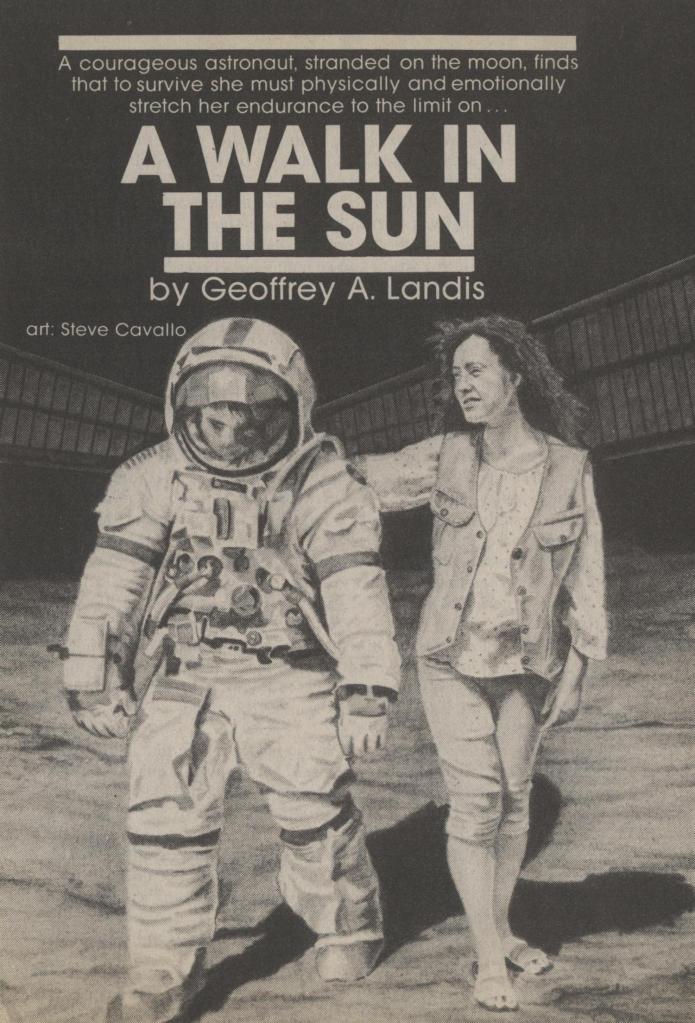
“A Walk in the Sun” is well-liked. The story first appeared in Asimov’s Science Fiction (October, 1991). It won a Hugo and came in first in a Locus annual Readers’ poll. It’s often reprinted. I don’t mean to pick on it, but it does serve as a useful example of when science fiction goes too far.

Now, going too far is relative. Science fiction explores a limited number of themes, and new writers often take an old theme and push it a bit further. While reading “A Walk in the Sun,” I thought of Have Spacesuit-Will Travel, where Kip and Peewee make a dash across the Moon’s surface only in spacesuits. It’s quite dramatic and realistic. At least, it’s always been realistic to me. Heinlein worked with a team designing pressure suits during WWII, and he wrote two books in which spacesuits were a significant part of the story. The other being Starship Troopers.
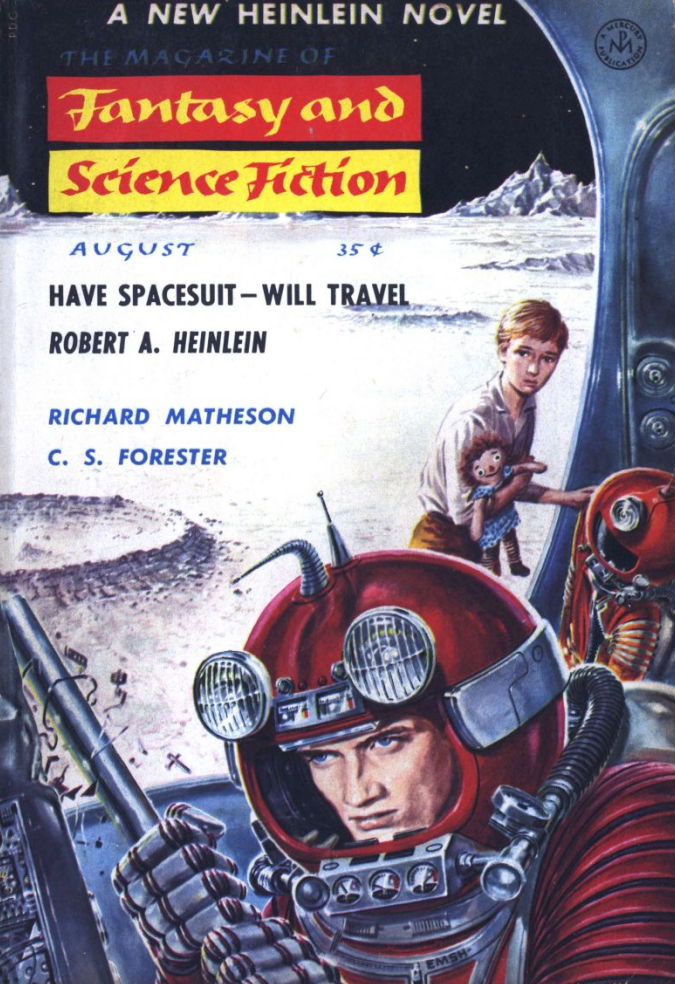
Have Spacesuit-Will Travel was first serialized in the August 1958 issue of The Magazine of Fantasy & Science Fiction. By 1958, real spacesuits were being designed and tested. I feel the science fiction from the 1950s tried much harder to stick to realistic speculation because writers knew manned rocket travel was just a few years off, and travel to the Moon wasn’t much farther.

However, Heinlein took science fiction too far in Have Spacesuit-Will Travel. By the end of the story, Kip and Peewee traveled to the Lesser Magellanic Clouds. Even though I dearly love Have Spacesuit-Will Travel and have reread it more than any other book, I do know that Heinlein was satirizing science fiction in it.

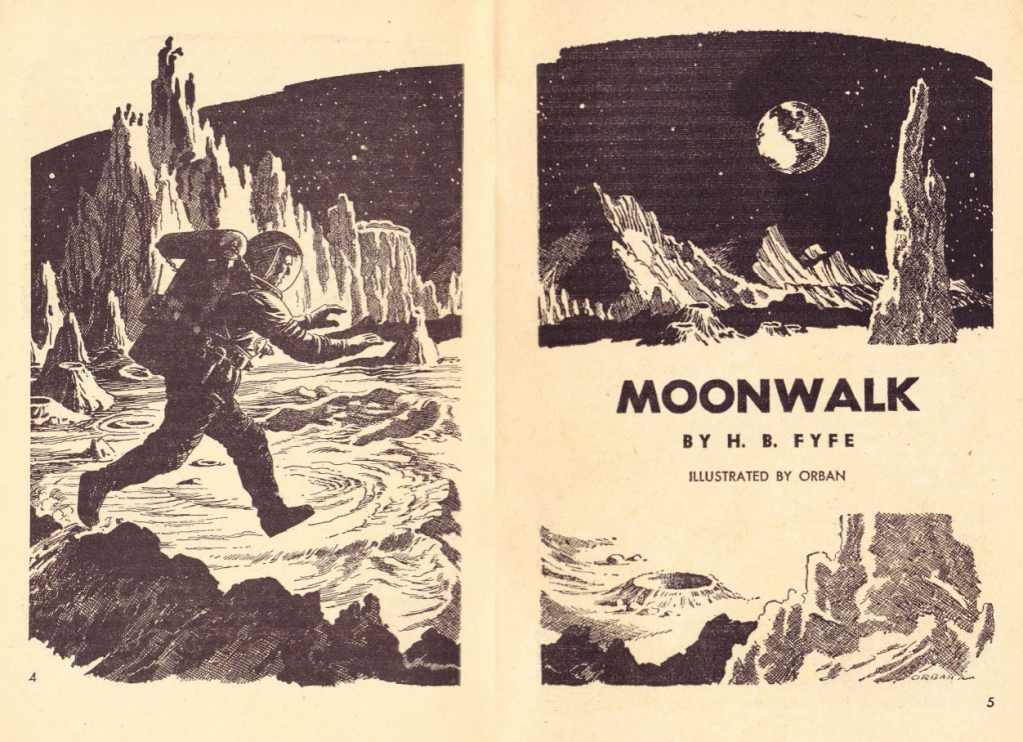
In one of the comments on this discussion of “A Walk in the Sun,” Frank Policastro mentioned H. B. Fyfe’s “Moonwalk” as a more realistic story. (Space Science Fiction, November 1952.)

I loaded that issue on my iPad and read it. “Moonwalk” was indeed a much more realistic story about an astronaut walking across the lunar surface. I wondered if Heinlein had read it. Here was a case of science fiction not going too far. The story is about the first major scientific base on the Moon near the crater Archimedes. The base houses fifty people. It has two tractors that explore the surrounding area. They lose contact with Tractor Two, which was heading towards the crater Plato, and aren’t sure what to do. Radio is limited to line-of-sight. They figured something bad could have happened, or the tractor had gone behind the wall of a crater. They decide to wait.

However, Tractor Two has been destroyed in a landslide, but one astronaut, Hansen, has been thrown free. He has the air tanks of his suit, and one large oxygen tank from the tractor. Hansen decides to start walking back towards base, hundreds of miles away, figuring base will eventually assume something is wrong and send out Tractor One to rescue him.
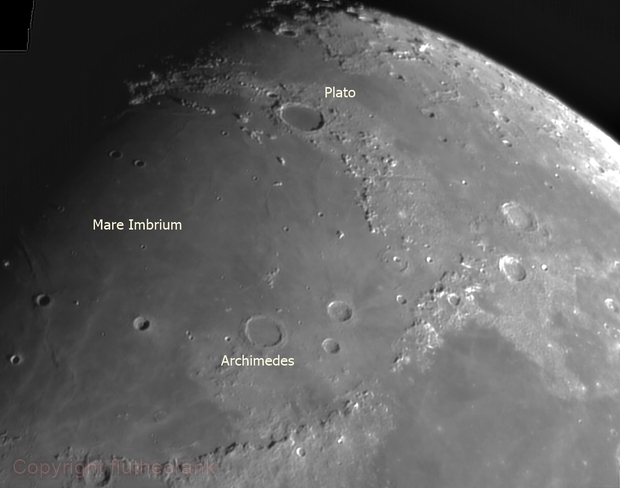
It’s interesting to compare the descriptions of walking across the Moon by Fyfe, Heinlein, and Landis. Two writers were speculating, and one had the accounts of twelve American astronauts who walked on the Moon.

When I was younger, I enjoyed science fiction stories that went too far. In fact, the further out the better. Now that I’m older, I prefer science fiction that stays close to what might be real. This time around, I preferred “Moonwalk.” It was a basic adventure story, but I enjoyed how Fyfe imagined what it would be like working on the Moon. While researching “Moonwalk” on ISFDB.org, I came across an Ace Double.
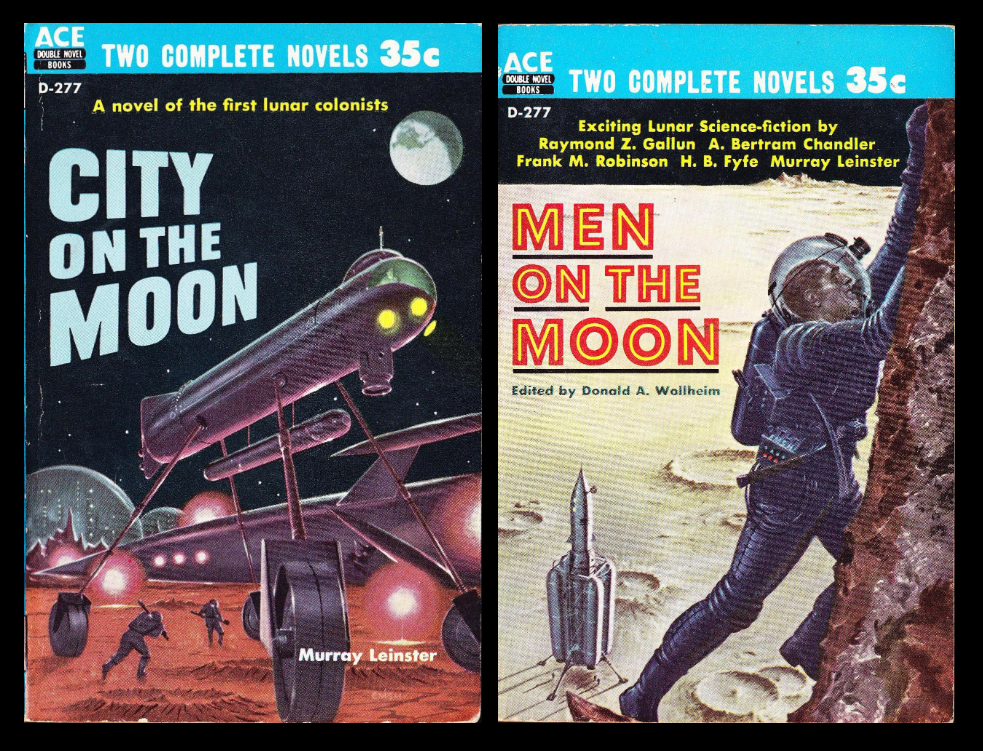
“Moonwalk” was anthologized in Men on the Moon. I’m looking forward to reading it, but I started reading City on the Moon by Murray Leinster first. I haven’t been in the mood to read science fiction for months. I just got burned out. However, I’m enjoying all these 1950s stories about early explorers of the Moon. I’m enjoying them because they don’t go too far.

Except for odd alternative-history stories, we don’t get science fiction about early exploration of the Moon. We get a fair amount of science fiction about established lunar colonies, but for the most part, I think they gone too far. I believe establishing bases on the Moon will be extremely difficult, so there’s plenty of room for speculative fiction. Establishing self-sufficient lunar colonies will be next to impossible. Science fiction has seldom explored that territory. Most science fiction today about the Moon leaps too far ahead. I want to read the nitty-gritty of building the first bases and what it would take to make permanent colonies.

I think I’ll dig into the past and see how science fiction writers handled the subject who stayed close to reality. If you know of any, please let me know.

JWH
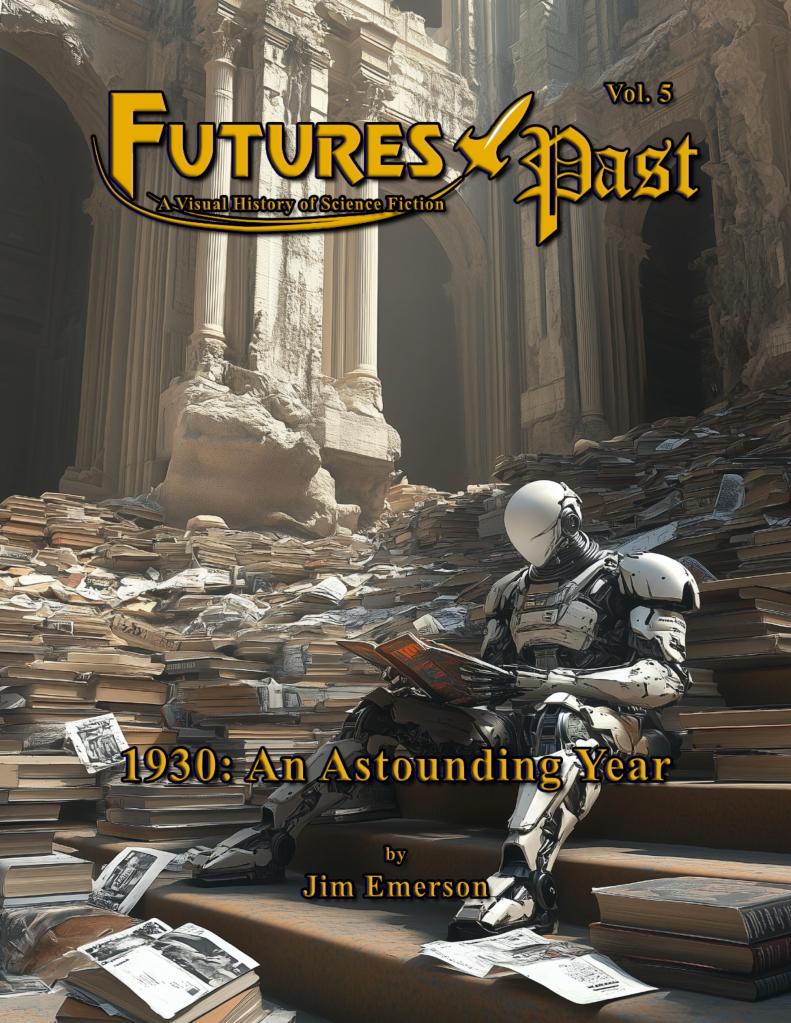
FUTURES PAST 1930 – A Science Fiction Yearbook

Jim Emerson has finally reached the nineteen thirties.

Futures Past 1930 is now available.

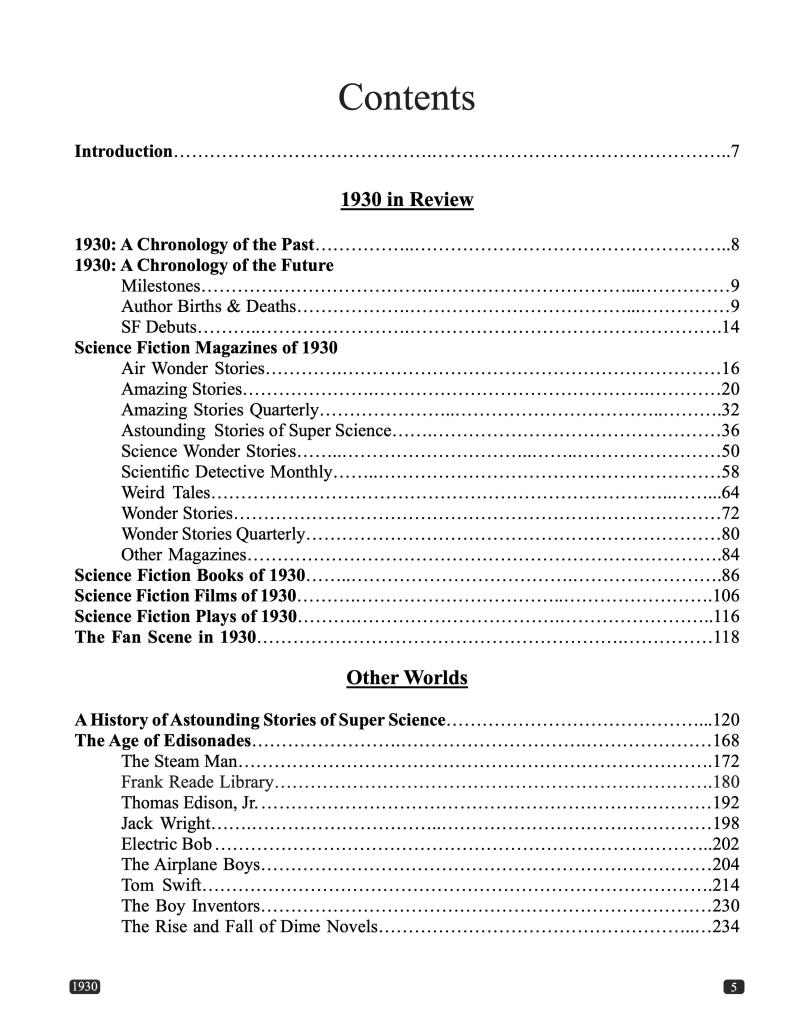
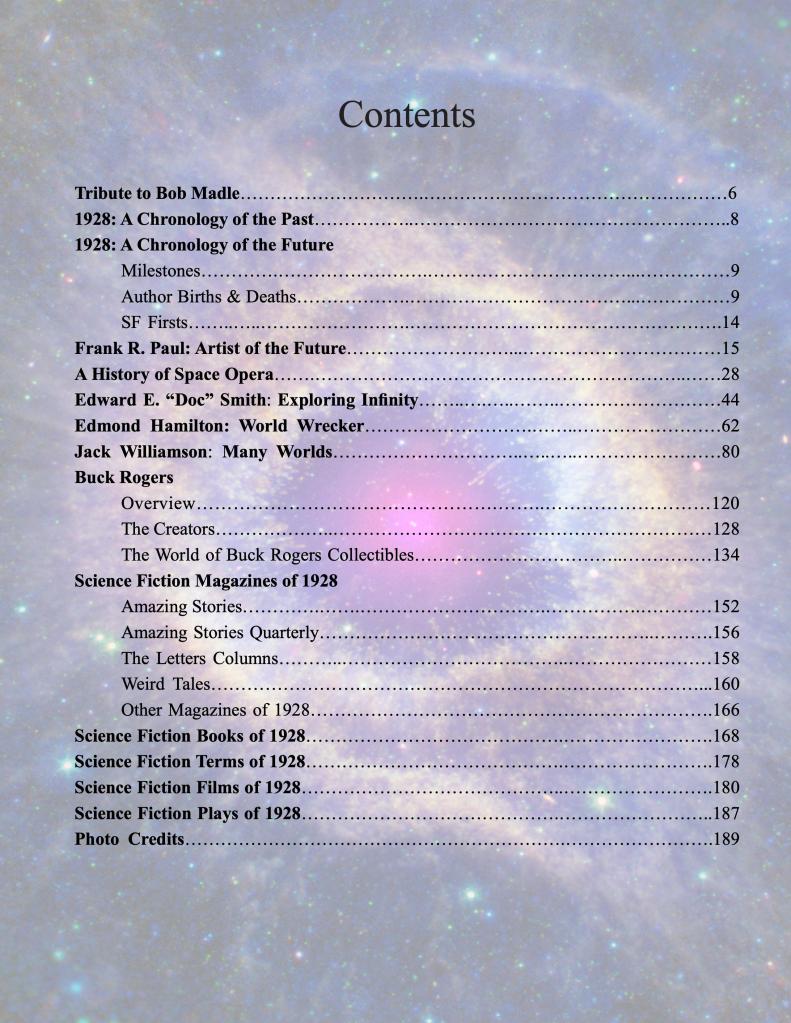
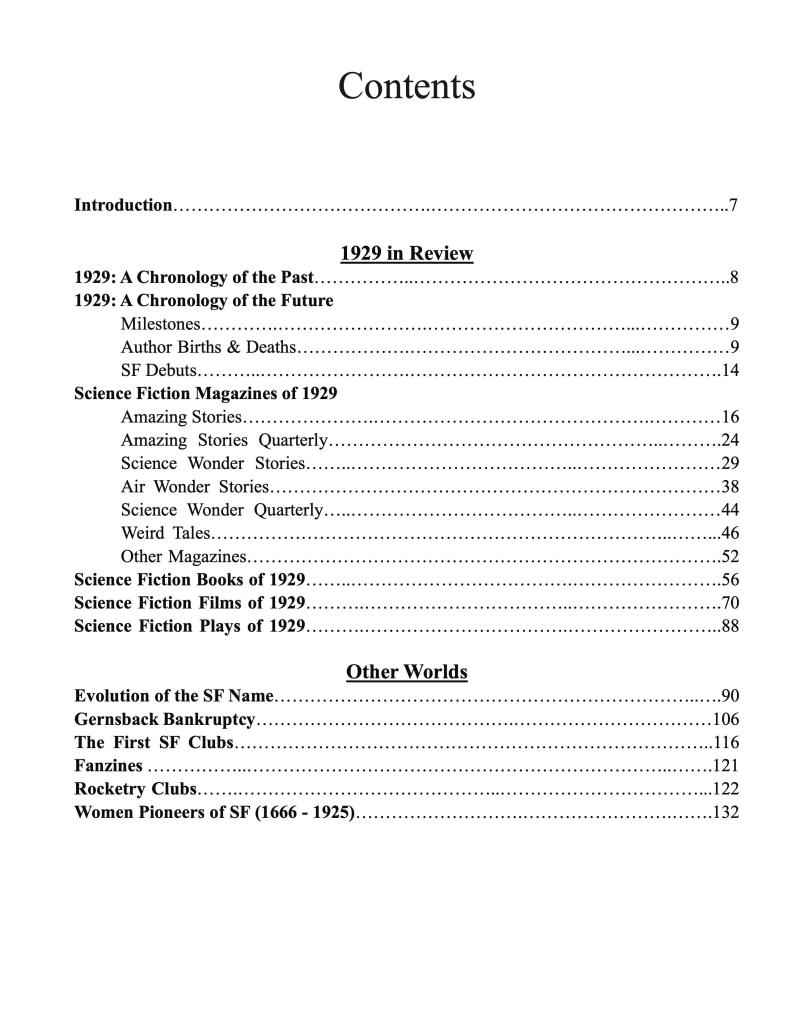
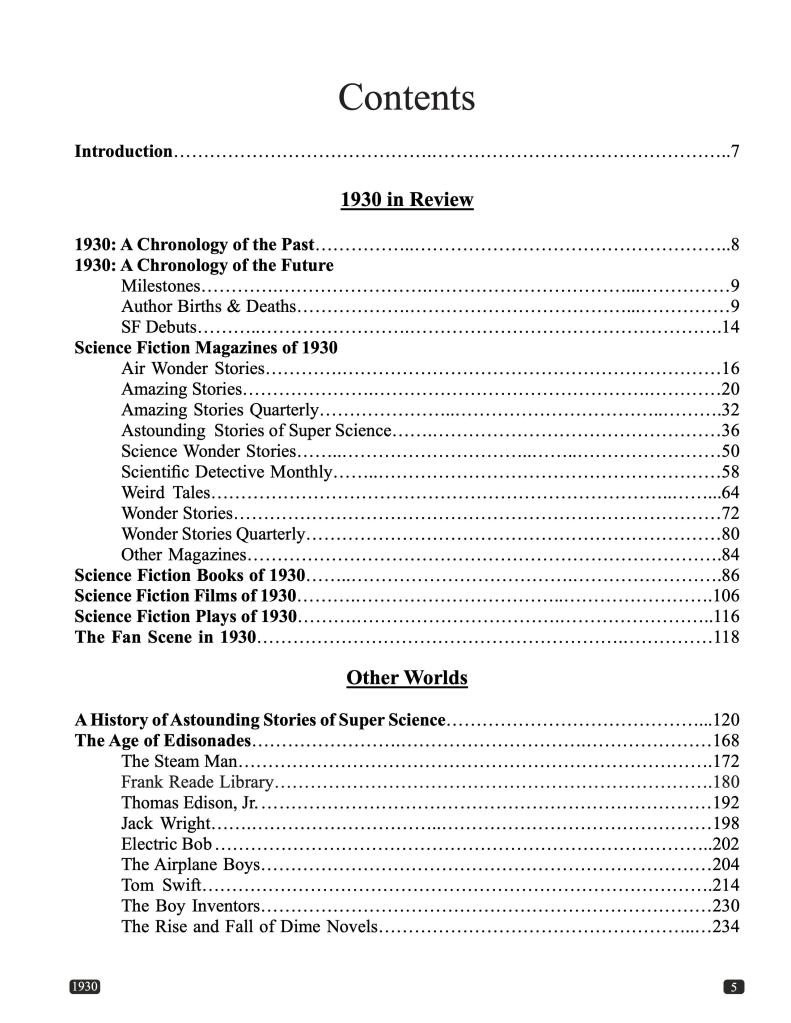
Back in the 1990s, I subscribed to a fanzine called Futures Past, written and published by Jim Emerson. Each issue covered one year of science fiction history, beginning with 1926. Unfortunately, the fanzine died after 1929. Then, a few years ago, as Emerson approached retirement, he decided to resurrect his project. Instead of publishing another issue of the fanzine covering 1930, he went back to 1926 and expanded it into a book (available in softbound, hardbound, and PDF formats). He has since expanded and republished 1927, 1928, and 1929 as books, too. See my reviews of 1926 & 1927, 1928, and 1929. (You can get 1926 as a free PDF as a sample of the series. However, it’s the shortest of the volumes, and doesn’t fully convey the potential of the series that we now see in volume 5, 1930. See the end of this essay for a comparison of all the table of contents.)

In other words, I’ve been waiting three decades for Jim Emerson to get to 1930.

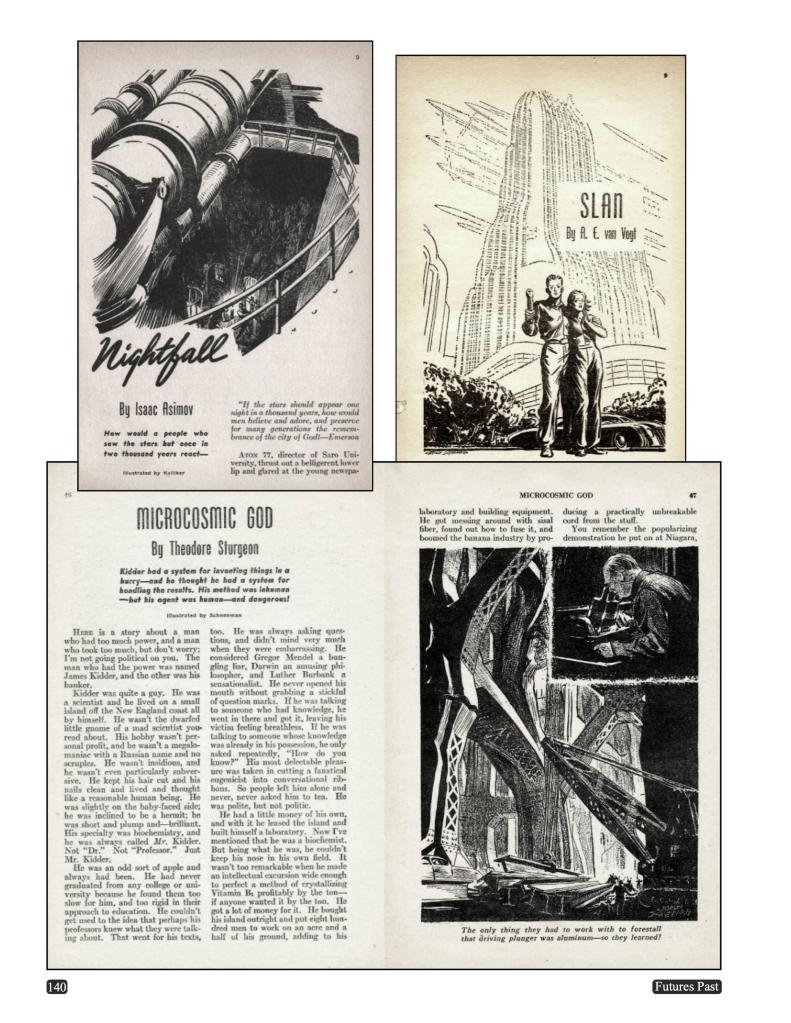
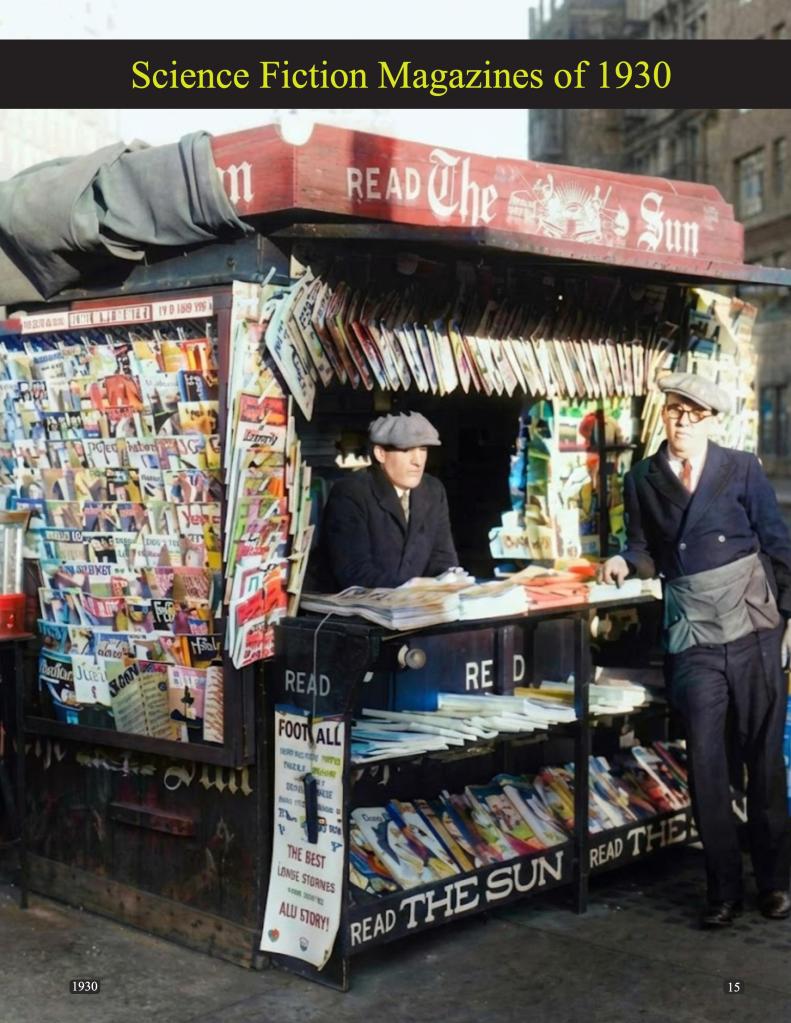
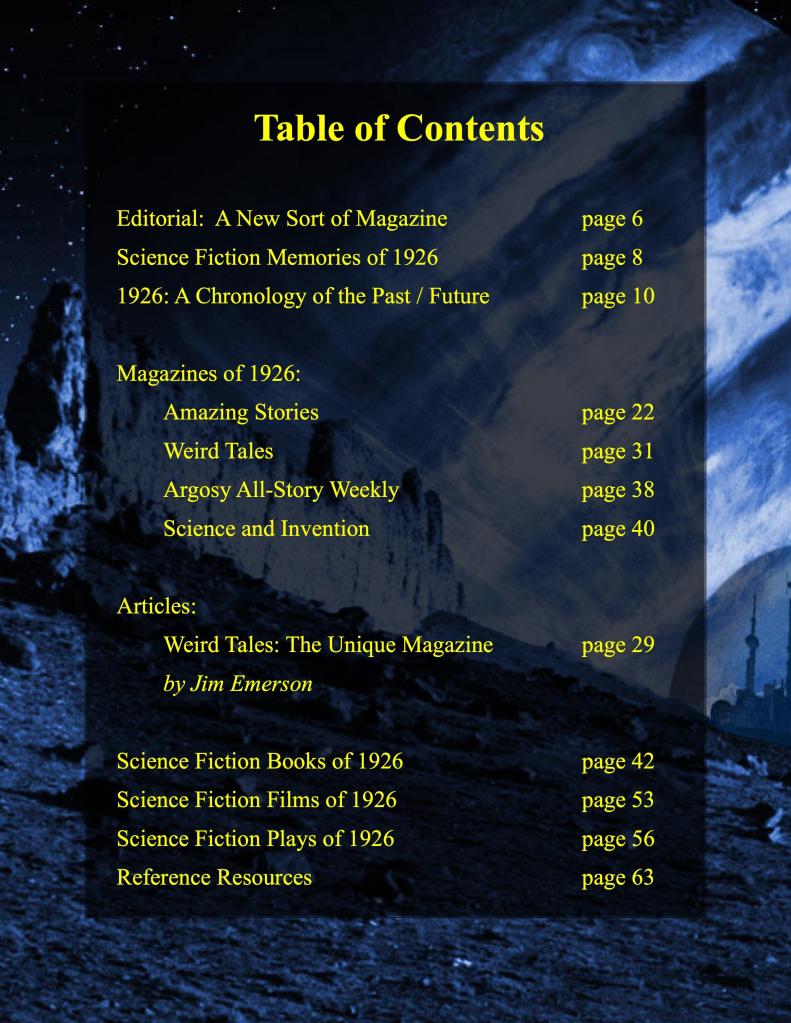
If you study the table of contents above, you’ll see how the first 119 pages are devoted to 1930. For each story published in those magazines listed, Jim gives a brief description of the plot. He does the same for the books published that year. I’ve got to say, I hope in a hundred years, the science fiction of our day won’t sound as ridiculous. Although it’s big fun to laugh at these plot synopses, they also reveal something more serious: the mindset of readers. This is how science fiction people thought in 1930.

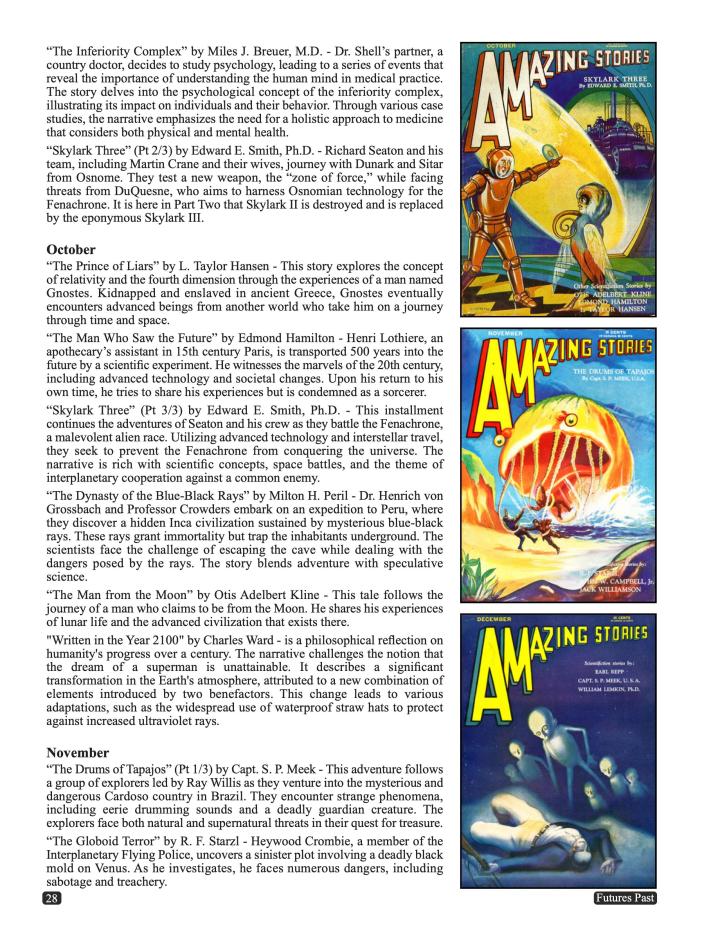
Reading these plot summaries is also a brilliant way to understand the evolution of science fiction. Here’s a sample covering stories from the October and November issues of Amazing Stories.

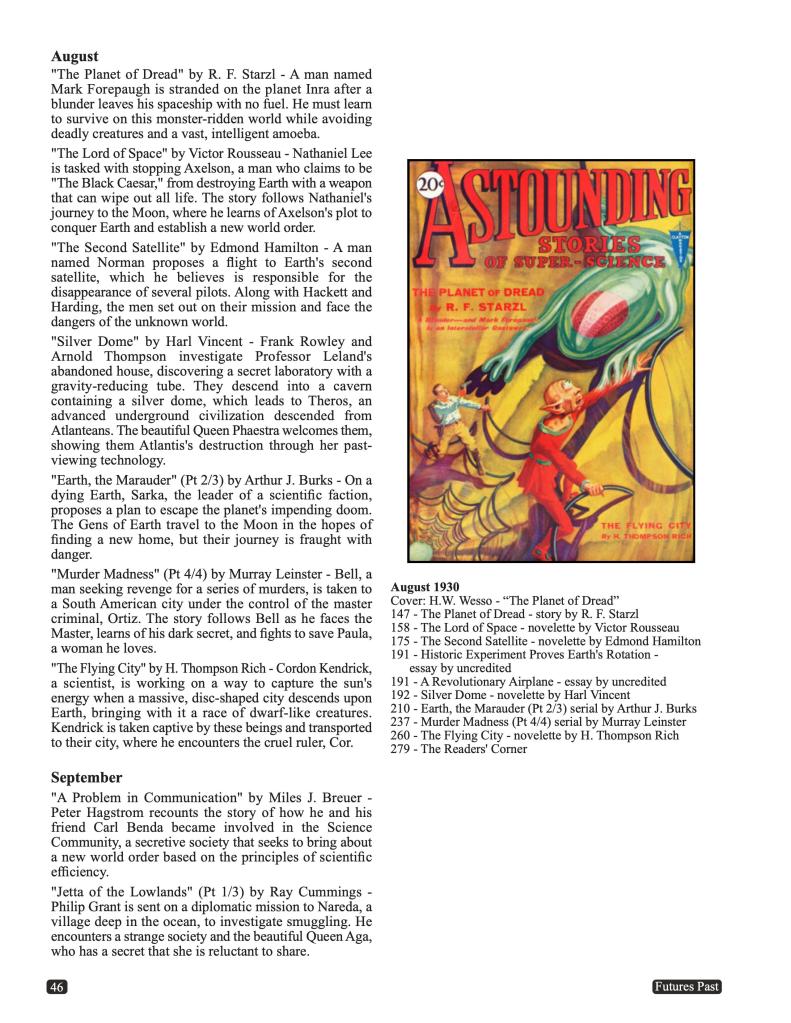
Since Astounding emerged as a competitor to Amazing, I thought I’d let you read a sample of what its stories were about.

1930 is the largest volume of Futures Past yet, at 236 pages. That’s about a hundred pages more than he devoted to 1926. 1930 was a pivotal year in the history of science fiction. Astounding Stories of Super-Science began publication with the January 1930 issue. Jim devotes 47 pages to the legacy of Astounding/Analog.

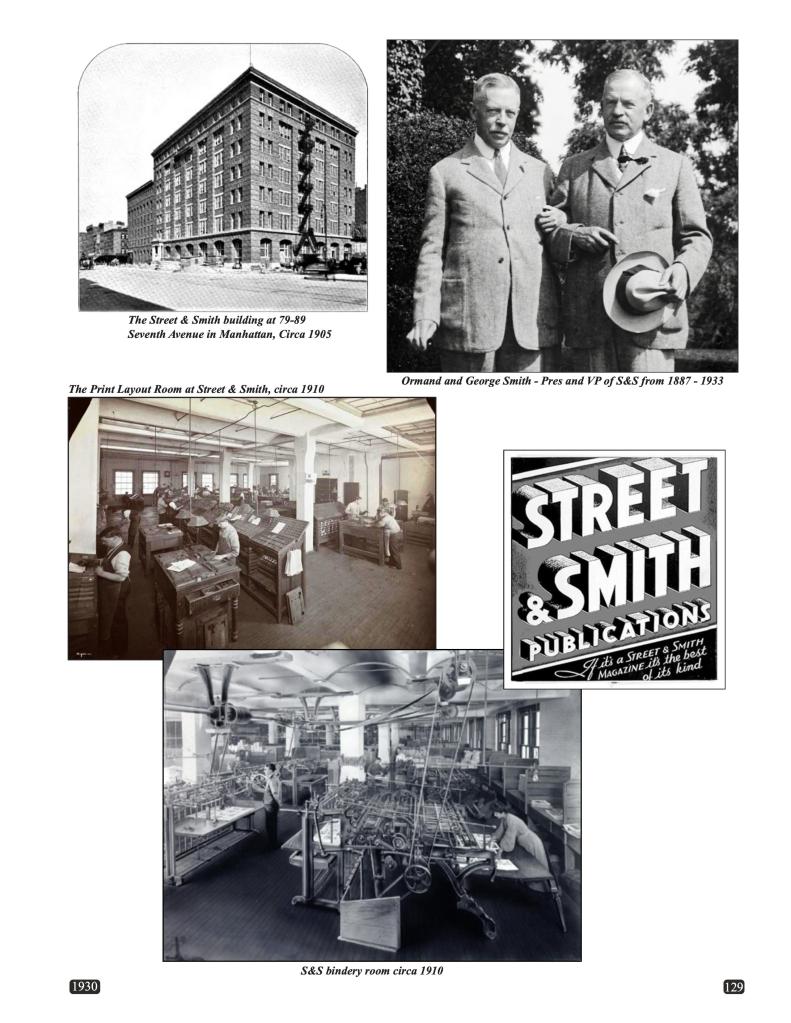
Beginning in the “Other Worlds” section of the book, Emerson strays away from 1930, both before and after. Not only does he chronicle the backstory of pulp publications and publishers that lead up to Astounding, but Emerson tracks the magazine’s history into the Analog days. I assume this means each volume of Futures Past will provide us with the complete history of every new SF magazine as they emerge.

Jim Emerson follows the footsteps of Sam Moskowitz and Mike Ashley, becoming another historian of the genre. I hope he lives long enough to cover the 1940s, 1950s, and 1960s, my favorite decades of the genre. Now that Jim is retired, he has promised to produce new volumes more quickly.

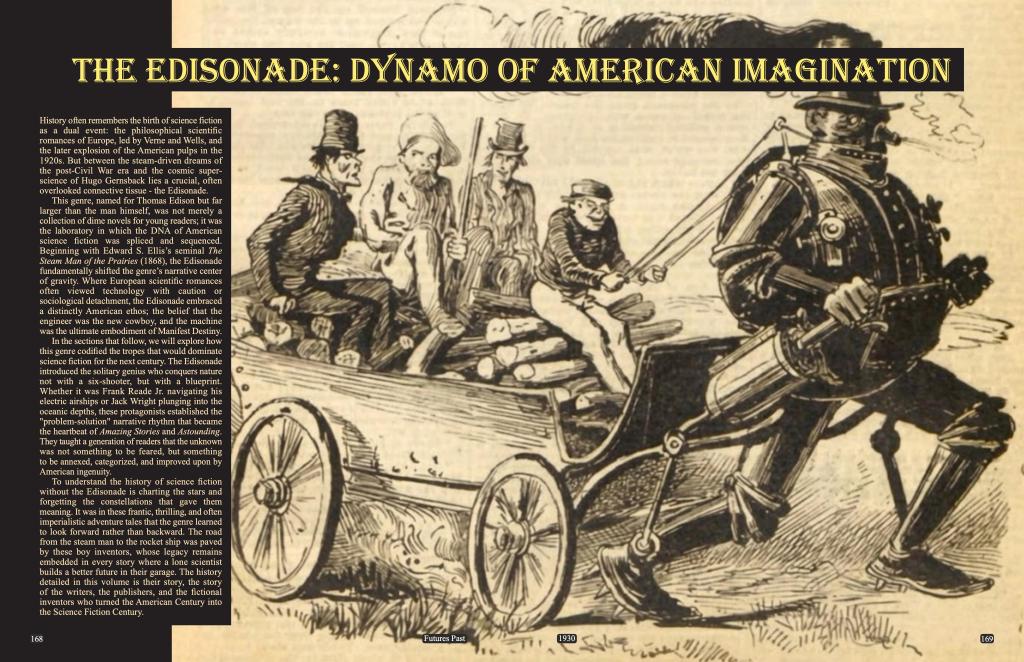
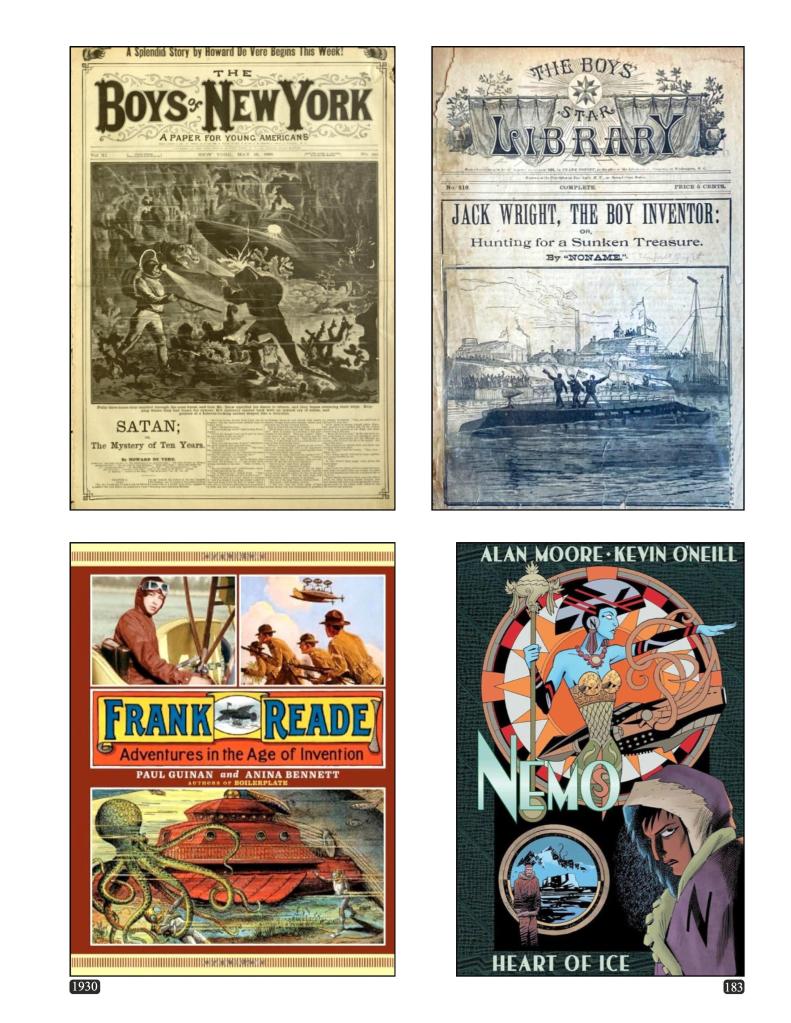
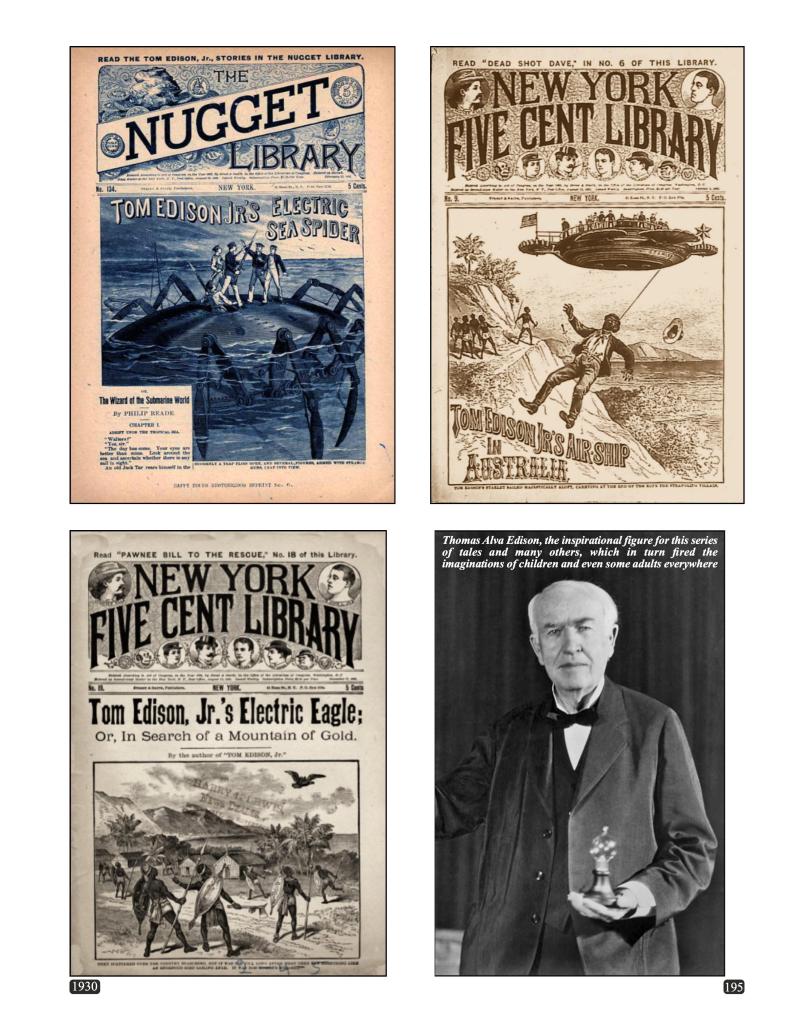
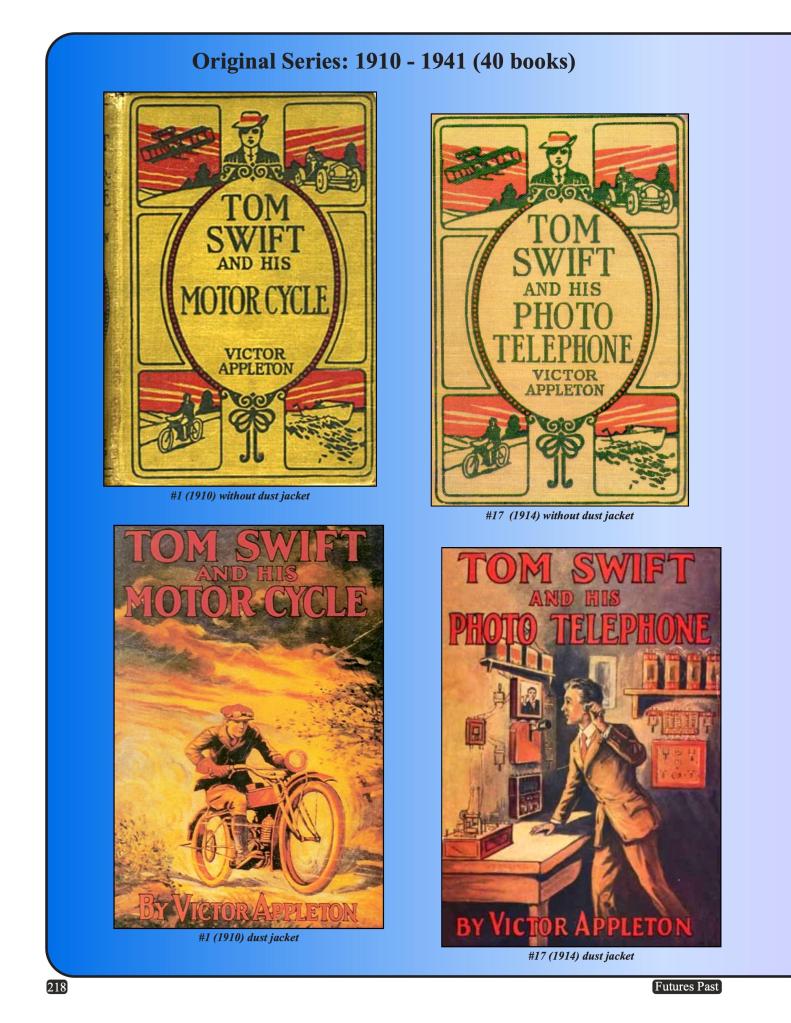
The unexpected bonus of this issue is Emerson’s history of dime novels and boys’ books titled “The Edisonade: Dynamo of American Imagination.” It chronicles how technology inspired proto-science fiction in the 19th century, and follows it into the 20th and 21st centuries, covering the Tom Swift books. I have read brief histories of all the publications that Emerson covers before, but this is the most detailed account I’ve read. This section, at 134 pages, could be a book itself.

I’m sure I’ve seen the term Edisonade before, but I don’t recall it now. I assume it has the same implication as Robinsonade for Robinson Crusoe, but was inspired by Thomas Edison. The Science Fiction Encyclopedia has an extensive entry for Edisonade. Wikipedia has a much shorter entry. Google Scholar offers several tempting citations, but they aren’t available to read. As far as I can tell, Emerson’s essay is the most extensive on the subject.

There’s a tremendous amount of reading in this volume. I can’t imagine how Jim could be so organized to research and write it. I’m sure it wouldn’t be possible without the internet.

I’ve always wanted to know what kids in the 19th and early 20th century thought about reading these books and magazines. Jim does have a section on fanzines, but 1930 was their starting year. Reading this section on Edisonades helps me to imagine what growing up back then might have been like. I wonder if I could find copies of these publications to see if they had letters from readers.

Have you ever read a novel or biography from the 19th century that mentions dime novels or boys’ books?

If you love science fiction, there’s much to contemplate in Futures Past 1930. Nowadays, young science fiction readers find SF from the 1950s as weird and antiquated. When I discovered science fiction in the 1960s, I thought stories from the 1920s and 1930s were painfully dated. These Edisonade stories are decades older. The DNA of SF concepts is a strange genealogy to track. It’s very psychologically revealing to us lovers of the genre.

Jim, I can’t wait for your take on 1931.

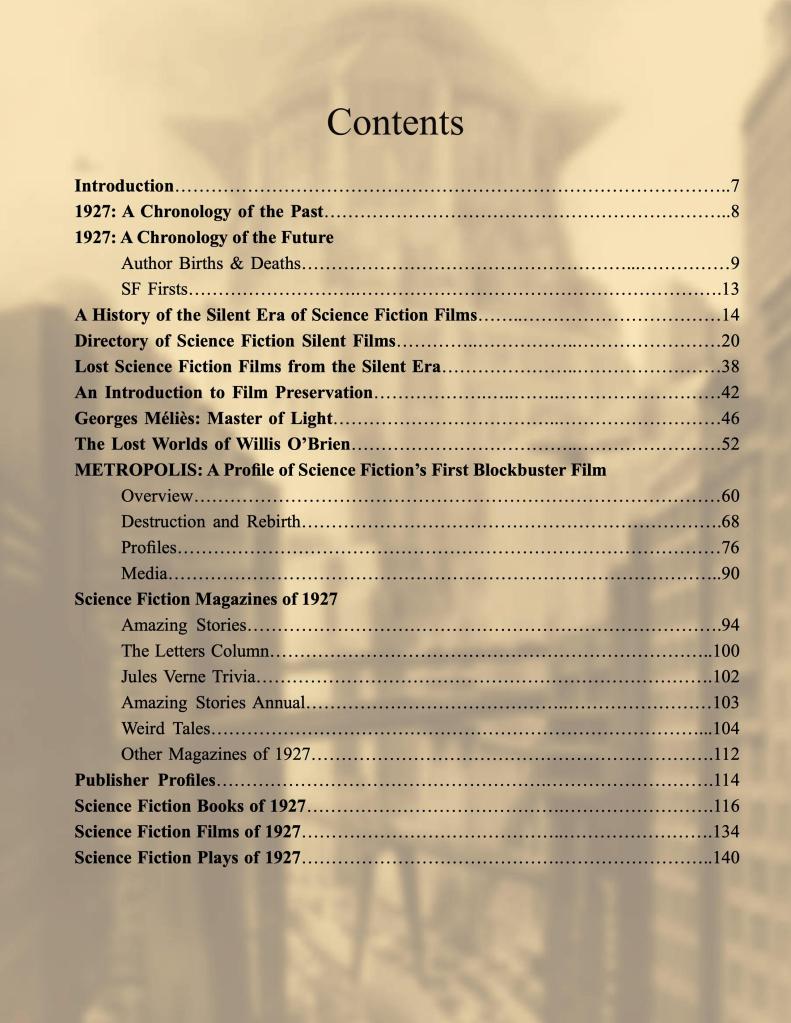
Table of Contents Comparison 1926-1930

James Wallace Harris, 1/17/26

How Much Science Fiction Should I Collect and Read Before I Die?

I accomplished a task last night that I’ve been hoping to finish for months. It made me exceedingly happy. My goal was to create a digital library of all my scanned pulp and digest science fiction magazines so they could be accessed from any of my computer devices. I have three computers (Windows, Mac, Linux), four tablets (two iOS, two Android), and an iPhone.

Last year, I bought a UGreen DXP2800 NAS. NAS stands for network-attached storage. Think of it as a big hard drive that all your computers can access. Over the years, I’ve collected scanned copies of nearly every science fiction magazine published in the 20th century. The Pulp Magazine Archive at the Internet Archive is a great place to search for them, but there are many others on the net. When I was young, I wanted to collect pulp magazines, but it’s not very practical unless you want to fill every room of your house with old magazines. I’ve known people who have. Even collecting digital copies is a pain because collecting them eventually overwhelms the latest big disk you’ve bought.

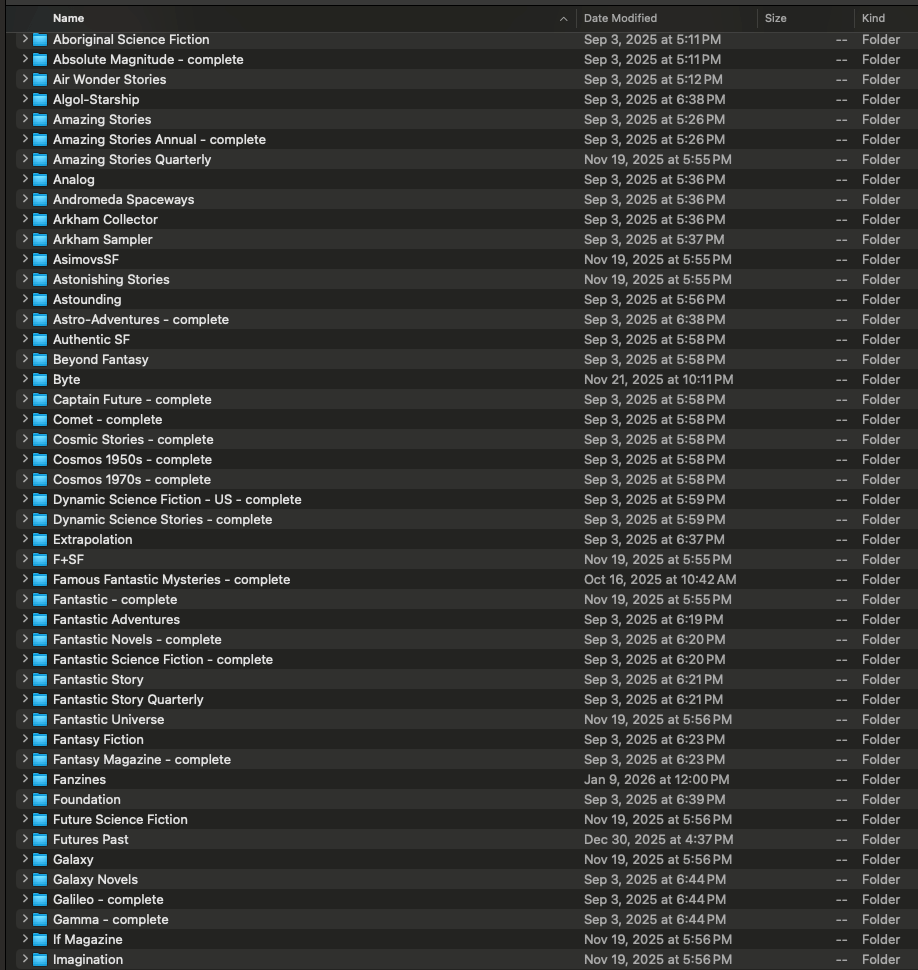
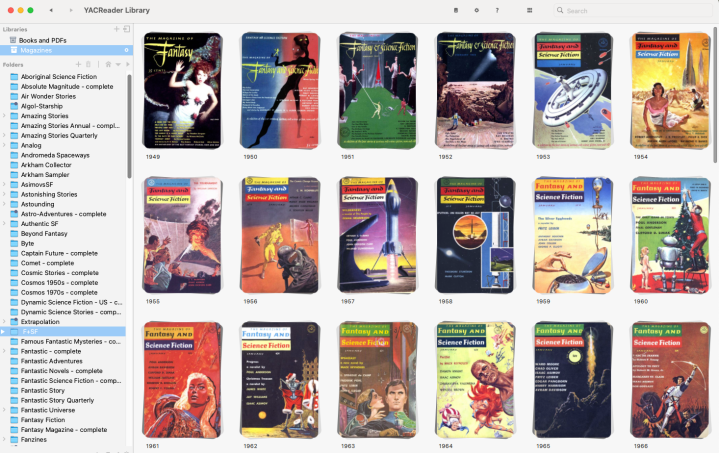
I have a librarian gene. I worked for six years in the periodicals department of a university library in my twenties. Pictured above is just the top portion of my magazine directory on the NAS. Here’s how I see the same directory with the YACReader Library:

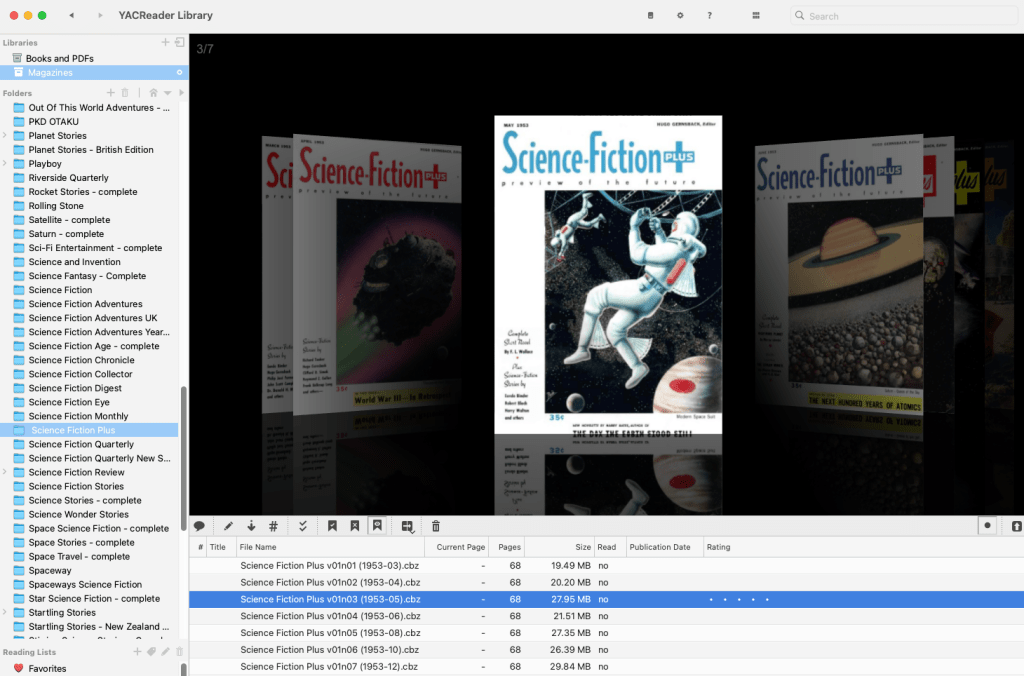
Here’s what it looks like when I select a year.

YACReader is by far the best CBR/CBZ/PDF reader I’ve found. And combining it with the YACReader Library is by far the easiest way to get pulp magazines on my tablets.

I can sit at any of my computers and, within seconds, look up any magazine. My previous ease-of-use success was putting all my magazines on a microSD card and loading it onto my Android tablet.

This new method is great when I’m researching an essay for this blog. I often use ISFDB.org or Wikipedia to look up a detail about an old story, and it will mention a magazine. Or I can be in my La-Z-Boy using a tablet and find a story to read. I can even be on my phone and look up a detail. YACReader runs on all my devices. YACReader users can access files via several networking methods or from several major cloud providers. However, there is also the YACReader Library. On a single-user machine, it’s just a nice graphical interface for looking at magazine covers. However, it offers a port for remote clients.

I wanted to put the YACReaderLibrary Server on my UGreen NAS, but after weeks of agonizing over how to set it up with Docker, I gave up. (I don’t know Docker or Linux well enough.) YACReader and the YACReader Library were a breeze to install on a Mac. Since I leave my Mac on all the time, I decided it was just simpler to install YACReaderLibrary on my Mac. Everything worked perfectly. I quickly went through all my devices, making sure they could access my magazine library — and I could.

You know that old saying, “Be careful what you wish for?” I woke up this morning anxious to play with my new system, and a revelation came to me. I had created the perfect system for reading, researching, and writing about 20th-century science fiction, but at 74, do I still need all that science fiction?

I could just pig out on sci-fi. The best analogy I can think of is to picture yourself in a beautiful bakery, looking at all the cases of cookies, cakes, and pies. You’d want to eat everything. And you might be willing to spend every bill in your wallet. But how many sweets should you actually take home? How many should you eat each day? I know my younger self could have spent 24/7 inside my new library.

This morning, I feel like Henry Bemis, when he was organizing piles of books he planned to read for each month of the rest of his life. I have enough science fiction for every minute I have left to live.

However, if we labeled reading science fiction on a pyramid diagram of healthy reading, where would it sit? Would it be an essential life-affirming activity shown as a large solid base, ot would it be an occasional sweet, illustrated as a tiny tip at the top of the pyramid?

When I watch the news, it makes me feel like withdrawing from the world to read science fiction and watch the old TV shows I’ve collected on my Jellyfin server. I confess, I’ve spent most of my life escaping into fiction — either by reading or watching. That troubles me. In old age, I wish I had been more active in my youth, when I had the energy. I wish I had created things, rather than consuming them. It’s too late to change my spots now.

Science fiction was my artificial reality.

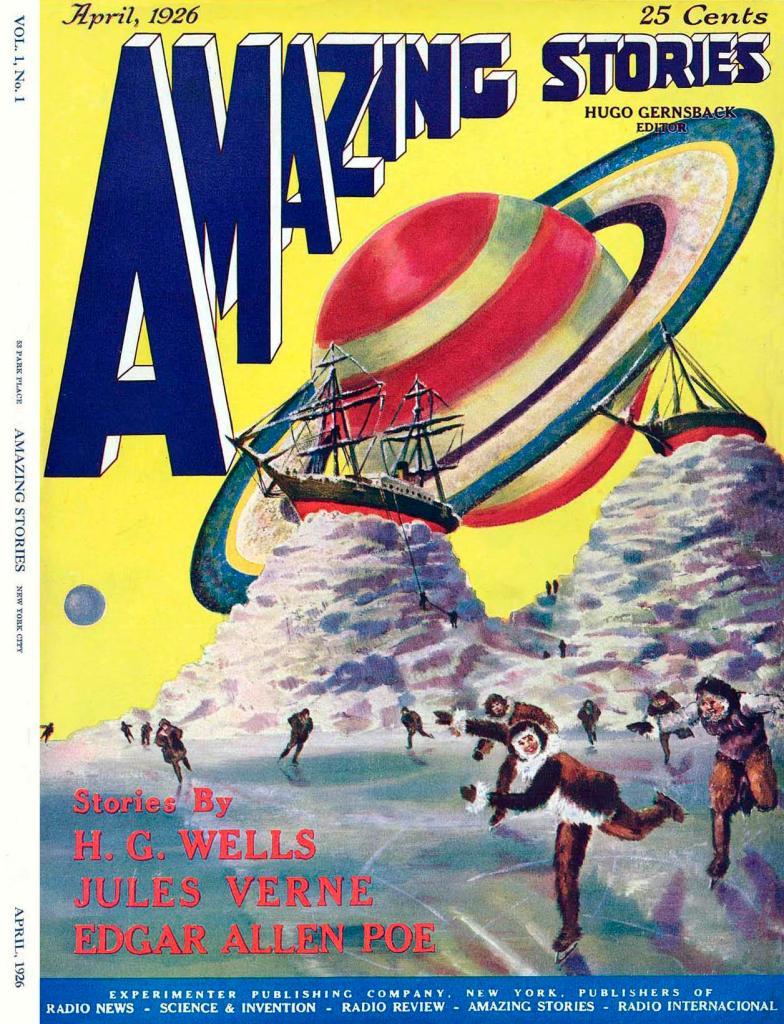
Science fiction, as a genre, began one hundred years ago when Hugo Gernsback published the April 1926 issue of Amazing Stories. There is an alternate reality in these magazines that I prefer over actual reality. I get a big kick out of having this reality at my fingertips. My computers are like a time machine; I can jump to any location in its space and time.

I’ve collected enough. Now that I’m old, and real reality presses in, I mostly read about here and now. My fiction addiction is wearing off. But I can’t give it up completely. It’s strange, but there are moments during the day when I just dip into an old science fiction magazine for a few minutes, and my science fiction craving is satiated.

James Wallace Harris, 1/11/26