How Unique A Reader Are You?

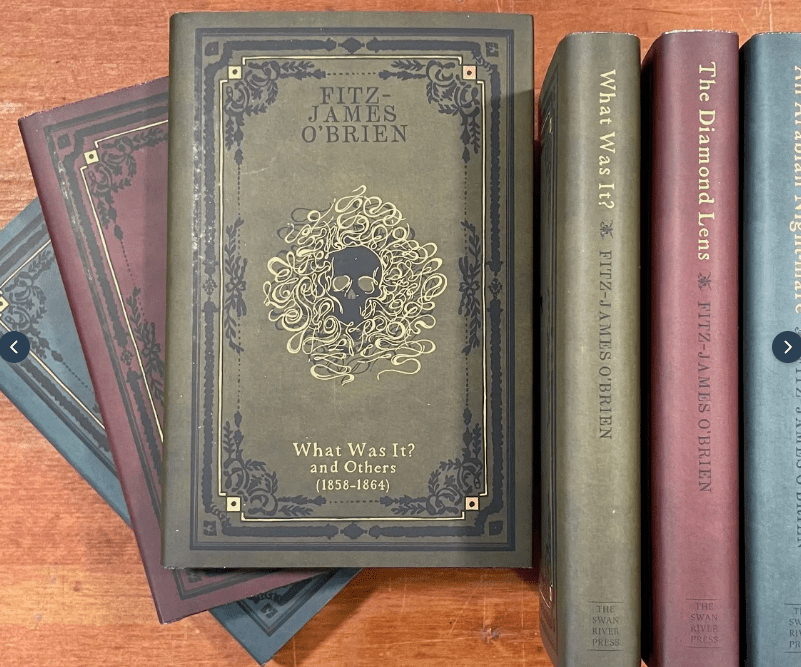
This morning, I read an email from a discussion group that mentioned Fitz-James O’Brien (1826-1862). You can sample his fiction at Project Gutenberg.

One member posted a link to a review of a new three-volume collection of his stories at The New York Review of Books. The review implied that O’Brien is little known, but several folks in the group quickly claimed they knew who he was. But that’s logical, our group is devoted to fiction in old magazines. I’ve even read some of O’Brien’s stories because they show up in science fiction anthologies, and I collect those. (See my post on 19th Century Science Fiction Short Stories.)

But this got me to thinking. How many people would know who Fitz-James O’Brien and read any of his stories? Then I asked myself, how many people read short stories? And of those, how many read old short stories? It’s one thing to read the short story in the latest issue of The New Yorker, and it’s another thing to read short stories originally published in the 19th century. Yes, some people still read Edgar Allan Poe, but how many outside of school?

I’ve always been a fan of science fiction magazines. When I was young, some of the top titles had over 100,000 subscribers. Over my lifetime, I’ve watched their subscriber base dwindle to well below 10,000.
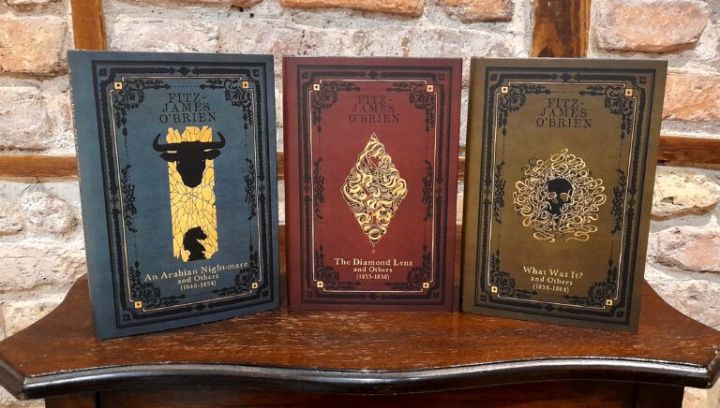
It appears the three-volume Collective Speculative Works by Fitz-James O’Brien will be limited to 300 copies. Does that mean the publisher thinks fewer than 300 people in the world are interested in reading O’Brien’s stories? Or that some kind of marketable ploy? I don’t know. 300 is 0.0000036% of the world’s population. That’s one tiny subculture!

But all of this does make me curious about statistics on reading. I found “US Book Reading Statistics (National Survey 2025)“. It summarized its key findings:

  • Almost half of the respondents haven’t read any books in over a year: 48.5%
  • Print books were the most read books: 35.4%
  • The 65+ age group recorded the highest population of print book readers: 45.1%
  • The 45-54 age group contains the highest population of non-readers: 60.9%
  • Males recorded a slightly higher population of non-readers compared to females: 51.4%

The article reported that the Pew Research Center found that 64% of Americans read at least one book in the previous year. That’s a lot more than I expected, and it disagrees with their own poll.

This suggests there are many kinds of readers, and that made me speculate about possible names to give different types of readers. I’m not very good at creating fun labels, but here’s my lame attempt.

  • Non-readers (0 books per year)
  • Casual readers (1-11 books per year)
  • Steady readers (read a book a month)
  • Bookworms (read a book a week)
  • Super Bookworms (read two or more books a week)

This doesn’t say anything about the kinds of books they read. Someone who reads over a hundred books a year might never encounter the name Fitz-James O’Brien. In one of my older essays, I speculated that the average reader could not list more than one hundred titles from novels from the 19th century. And I listed the hundred I thought would be the most common. I doubt most people would come even close to recalling one hundred titles from the 19th century.

Outside of people I know in my discussion groups that specialize in old fiction, I doubt I have ever met anyone in my life who has read a story by Fitz-James O’Brien.

What possible name could we give to people who do? Bookworm is the tag that most people give to obsessive readers. But for every 1,000 bookworms, is there even one who reads old short stories from the 19th century? I know a fair number of people like me who love science fiction short stories from the 20th century, and I also know a smaller group who love short stories published in pulp magazines (mainly from 1900 to 1950). But how many people are we talking about? I asked CoPilot, and it estimates that the number is below 20,000 for people who read and collect old pulp fiction. That’s .0059% of the current U.S. population.

Would the word aficionado apply here? Here are some other words that CoPilot helped me find. Maybe we could use each for a different type of reader.

  • Aficionado
  • Enthusiast
  • Devotee
  • Connoisseur
  • Curator
  • Archivist
  • Bibliophile
  • Esotericist
  • Antiquarian
  • Obscurist
  • Archaeologist

We could use all these words to describe someone who would buy Collective Speculative Works by Fitz-James O’Brien.

At one time, I would have ordered this set. However, I’ve now reached an age where I’m trying to get rid of books rather than collect. But that set does call to me. Actually, what I would really like is digital scans of the periodicals where his stories were first published. I’ve collected scans of most science fiction magazines from the 20th century, but have next to nothing from the 19th century on my hard drive.

How many people are like me who love reading old magazines?

I’m sure it’s less than .006% of the population. What nickname would you give to such people? My wife would probably say, “A nut.”

James Wallace Harris, 12/31/25
Is the Hugo Award a Good Predictor of Long Term Success for a Science Fiction Novel?

Whitney, over at the YouTube channel Secret Sauce of Storycraft, conducted a poll of her viewers. She asked them to post a list of their Top Ten Hugo award-winning novels. She tallied the totals for all the titles, giving ten points for a #1 placement, nine points for #2, and so on down to one point for tenth place. She announced the results in this video. (The totals were given in a spreadsheet – see below.) This video lists the Top 20 vote getters, and Whitney lists her own Top 20.

Here is the top portion of her pdf results to give you an idea of the most popular Hugo novels with her voters. She had 194 people vote. 45 ranked Dune #1 (45 x 10). Follow the link above to see the entire .pdf.

Throughout 2025, Whitney has been reviewing the novels that won the Hugo. She had a video for each decade. They are worth viewing for a longer review of each book.

As I watched each video, I thought about my memories of these books. Some I first read over sixty years ago. Some I’ve reread since. Some titles burn bright in my memory, but for other books, I only have murky impressions.

Jonathan at Words in Time also did a video retrospective review of all the Hugo award-winning novels. I guess this is an obvious theme for a YouTube video. Jonathan presented his results in a ranking video.

And there are other YouTubers who have also reviewed the novels that won the Hugo awards. Watching all these videos has made me think about how I remember these books. Looking at Wikipedia’s list of winners of the Hugo Award for novel, I got CoPilot to create this list:

01 – (1953) – THE DEMOLISHED MAN by Alfred Bester
02 – (1955) – THEY’D RATHER BE RIGHT by Mark Clifton & Frank Riley*
03 – (1956) – DOUBLE STAR by Robert A. Heinlein
04 – (1958) – THE BIG TIME by Fritz Leiber
05 – (1959) – A CASE OF CONSCIENCE by James Blish
06 – (1960) – STARSHIP TROOPERS by Robert A. Heinlein
07 – (1961) – A CANTICLE FOR LEIBOWITZ by Walter M. Miller, Jr.
08 – (1962) – STRANGER IN A STRANGE LAND by Robert A. Heinlein
09 – (1963) – THE MAN IN THE HIGH CASTLE by Philip K. Dick
10 – (1964) – HERE GATHER THE STARS (WAY STATION) by Clifford D. Simak
11 – (1965) – THE WANDERER by Fritz Leiber
12 – (1966) – DUNE by Frank Herbert
13 – (1966) – …AND CALL ME CONRAD (THIS IMMORTAL) by Roger Zelazny
14 – (1967) – THE MOON IS A HARSH MISTRESS by Robert A. Heinlein
15 – (1968) – LORD OF LIGHT by Roger Zelazny
16 – (1969) – STAND ON ZANZIBAR by John Brunner
17 – (1970) – THE LEFT HAND OF DARKNESS by Ursula K. Le Guin
18 – (1971) – RINGWORLD by Larry Niven
19 – (1972) – TO YOUR SCATTERED BODIES GO by Philip José Farmer
20 – (1973) – THE GODS THEMSELVES by Isaac Asimov*
21 – (1974) – RENDEZVOUS WITH RAMA by Arthur C. Clarke
22 – (1975) – THE DISPOSSESSED by Ursula K. Le Guin
23 – (1976) – THE FOREVER WAR by Joe Haldeman
24 – (1977) – WHERE LATE THE SWEET BIRDS SANG by Kate Wilhelm
25 – (1978) – GATEWAY by Frederik Pohl
26 – (1979) – DREAMSNAKE by Vonda N. McIntyre*
27 – (1980) – THE FOUNTAINS OF PARADISE by Arthur C. Clarke
28 – (1981) – THE SNOW QUEEN by Joan D. Vinge*
29 – (1982) – DOWNBELOW STATION by C. J. Cherryh*
30 – (1983) – FOUNDATION’S EDGE by Isaac Asimov*
31 – (1984) – STARTIDE RISING by David Brin
32 – (1985) – NEUROMANCER by William Gibson
33 – (1986) – ENDER’S GAME by Orson Scott Card
34 – (1987) – SPEAKER FOR THE DEAD by Orson Scott Card
35 – (1988) – THE UPLIFT WAR by David Brin
36 – (1989) – CYTEEN by C. J. Cherryh*
37 – (1990) – HYPERION by Dan Simmons
38 – (1991) – THE VOR GAME by Lois McMaster Bujold*
39 – (1992) – BARRAYAR by Lois McMaster Bujold*
40 – (1993) – A FIRE UPON THE DEEP by Vernor Vinge
41 – (1993) – DOOMSDAY BOOK by Connie Willis
42 – (1994) – GREEN MARS by Kim Stanley Robinson*
43 – (1995) – MIRROR DANCE by Lois McMaster Bujold*
44 – (1996) – THE DIAMOND AGE by Neal Stephenson*
45 – (1997) – BLUE MARS by Kim Stanley Robinson*
46 – (1998) – FOREVER PEACE by Joe Haldeman
47 – (1999) – TO SAY NOTHING OF THE DOG by Connie Willis
48 – (2000) – A DEEPNESS IN THE SKY by Vernor Vinge
49 – (2001) – HARRY POTTER AND THE GOBLET OF FIRE by J. K. Rowling
50 – (2002) – AMERICAN GODS by Neil Gaiman
51 – (2003) – HOMINIDS by Robert J. Sawyer*
52 – (2004) – PALADIN OF SOULS by Lois McMaster Bujold*
53 – (2005) – JONATHAN STRANGE & MR NORRELL by Susanna Clarke
54 – (2006) – SPIN by Robert Charles Wilson
55 – (2007) – RAINBOWS END by Vernor Vinge*
56 – (2008) – THE YIDDISH POLICEMEN’S UNION by Michael Chabon
57 – (2009) – THE GRAVEYARD BOOK by Neil Gaiman*
58 – (2010) – THE WINDUP GIRL by Paolo Bacigalupi
59 – (2010) – THE CITY & THE CITY by China Miéville
60 – (2011) – BLACKOUT/ALL CLEAR by Connie Willis*
61 – (2012) – AMONG OTHERS by Jo Walton
62 – (2013) – REDSHIRTS by John Scalzi
63 – (2014) – ANCILLARY JUSTICE by Ann Leckie
64 – (2015) – THE THREE-BODY PROBLEM by Cixin Liu
65 – (2016) – THE FIFTH SEASON by N. K. Jemisin*
66 – (2017) – THE OBELISK GATE by N. K. Jemisin*
67 – (2018) – THE STONE SKY by N. K. Jemisin*
68 – (2019) – THE CALCULATING STARS by Mary Robinette Kowal
69 – (2020) – A MEMORY CALLED EMPIRE by Arkady Martine*
70 – (2021) – NETWORK EFFECT by Martha Wells*
71 – (2022) – A DESOLATION CALLED PEACE by Arkady Martine*
72 – (2023) – NETTLE & BONE by T. Kingfisher*
73 – (2024) – SOME DESPERATE GLORY by Emily Tesh*
74 – (2025) – THE TAINTED CUP by Robert Jackson Bennett*

I’ve starred (*) the 28 novels I haven’t read. I own many of them, but for some reason, I have never gotten around to reading them.

Now that I’m 74, my feelings about science fiction are different from when I was 13, or 33, or even 63.

Two novels that are at the top of most people’s lists are Dune and Hyperion. I’ve read Dune twice and Hyperion three times. They were dazzling novels each time I read them. However, old me, at 74, does not find them very appealing. I would have been hard-pressed to send Whitney my Top 10 list.

But is it fair to judge a novel by how you feel in old age? It occurs to me I could make a Top 10 list based on the memories of my first reading of each book.

Jim’s Top Ten Hugo Award Winning Books Based On Initial Impact

  1. Stranger in a Strange Land by Robert A. Heinlein
  2. The Moon is a Harsh Mistress by Robert A. Heinlein
  3. Starship Troopers by Robert A. Heinlein
  4. Hyperion by Dan Simmons
  5. Stand on Zanzibar by John Brunner
  6. The Man in the High Castle by Philip K. Dick
  7. Among Others by Jo Walton
  8. The Windup Girl by Paolo Bacigalupi
  9. The Doomsday Book by Connie Willis
  10. Way Station by Clifford D. Simak

Looking at that list, I think about all the reasons why I wouldn’t recommend some of those novels now. I have a love-hate relationship with Stranger in a Strange Land. At age 13, that novel blew me away in 1964. I’ve reread it several times over my lifetime, but with each rereading, I’m horrified by some scenes in it. Heinlein reminds me of Donald Trump in that his protagonists are often unforgiving of people who offend them.

But on the other hand, Stranger is an incredibly ambitious work of science fiction from 1961. In fact, few books on the complete Hugo list even try to be as ambitious. Dune is one. That’s why it continues to stand out. Stand on Zanzibar was probably too ambitious for most readers.

I see a common quality in the books in my first impression list. They were different from anything else at the time. And that’s true for most novels that win a Hugo. Although that quality might not be true in recent decades. People seem to like series, which I find disappointing. Connie Willis has three Hugos for essentially the same idea, although each is told in a different style.

But what books would I put on my Top Ten list today, at age 74? Thinking about that troubles me. My gut instinct would be to pick novels I felt meant something to my whole life, not just the first time I read them. In that regard, science fiction doesn’t hold up.

To complicate this instinct is the feeling that I would need to reread these books to decide if they merit a lifetime award or recognition. It took me a lifetime to read them, so that won’t happen.

I would pick Among Others by Jo Walton because it’s about being a science fiction fan. It’s certainly something that relates to my entire life. I need to reread Way Station, but I have a vague memory that it said something philosophical I would agree with in old age. Finally, I would consider The Man in the High Castle because it could resonate with my current philosophical outlook, but I’d need to give it another reading.

I’m not sure if any of the other 71 titles have true lasting literary value, at least to me. Not in the sense that Nineteen Eighty-Four or Earth Abides does. Or even The Time Machine and The War of the Worlds.

Science fiction dazzles when it’s new, and its readers are young. To be fair, though, it’s true of all forms of fiction.

The sad reality is that most science fiction books can’t go the distance.

If you reread the list above of those 74 novels, consider how many you have read. How many are unknown titles to you? Many of these novels are often discussed by YouTubers. That keeps them alive. YouTube is great for old science fiction books. But if you pay attention, those same YouTubers are shooting down many famous titles.

The act of reviewing Hugo winners promotes some books and causes others to be forgotten. I feel like I’m watching younger generations dismiss books beloved by older generations. It’s not just old guys like me giving up on them.

James Wallace Harris, 12/29/25

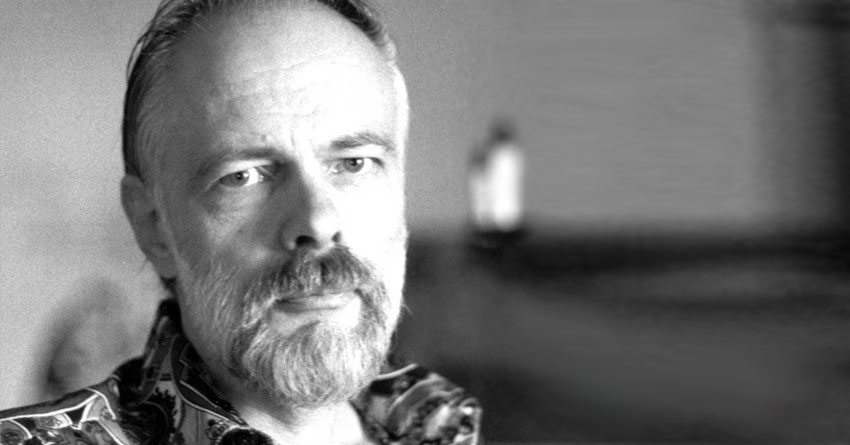
What Would You Talk About With An AI Chatbot Trained on the Works By and About Philip K. Dick?

I’ve had this fantasy for the last few years, since the beginning of the AI boom, of creating a Philip K. Dick chatbot. I envision finding a local LLM with a huge upload capacity. Currently, Claude allows for up to 30 megabytes in a maximum of 20 files. That’s not nearly enough for my fantasy.

According to Wikipedia, Dick wrote 45 novels and 121 short stories. I’d want to include all of those, plus all the letters I could find. I currently have a five-volume set of his letters, but unpublished letters might be available. I’d also include all the biographies on PKD, as well as every interview I could find. Then I would track down every review and critical work. Also, add every photo I could find of him and those of anyone he knew. I’d also want to include books that we know PKD read or studied. And the memoirs of his wives or the people who knew Dick. Finally, I’d include any Wikipedia entry on topics Phil liked to discuss. That could easily end up being over a thousand files, and who knows how much disc space they would take up.

Here’s the thing. I run into a roadblock with my fantasy. When I begin to fantasize about chatting with this artificial Phil, I have doubts about the project. I know AI Phil can not be trusted to say the same things that human Phil would have said. But theoretically, this AI chatbot should be an expert on PKD.

I think I would need to rename this AI. I’d call it Jack Isidore. That’s the protagonist of my favorite PKD novel, Confessions of a Crap Artist. Phil created Jack, so I would use Jack to recreate Phil, to be the ultimate scholar on PKD.

To test Jack’s ability, I would give the AI this prompt:

Write a 200,000-word biography of Philip K. Dick. Tell his story day by day as much as possible working in as much verifiable details as possible. Where you don’t have good validation of source material, but there is good reason to speculate, give us the most reasonable assumption and state why. Describe the writing of each of his work and why he wrote them. Relate any of PKD’s life experiences that inspired his fiction. Do not hallucinate.

I’ve read several biographies on PKD, and a handful of memoirs by wives and friends. I’m curious if I will be able to properly judge Jack’s biography of PKD. Would it be more insightful than any biography written by a human? Would we learn anything about Phil that we didn’t know, but feel might be an undiscovered truth about him?

Mostly, I’ve wanted a PKD chatbot to discuss Phil’s stories. Dick’s books are like comfort food for me. I read them when I’m tired of dealing with reality. They are wildly creative, and I often wonder what PKD is implying in his stories. Was he just making shit up, or were creations commentary on experiences in his life? Was he being silly or serious?

Philip K. Dick was a guy I wish I had known. Talking with him would be fascinating. There’s always a chance that an AI chatbot would be a decent substitute. It would be fun to try.

It would also be fun to say, “Jack, tell me a new PKD story.”

James Wallace Harris, 12/28/25