End-of-the-World Anthologies

Our reading group on Facebook is considering reading a science fiction theme anthology and I thought I’d look up all the end-of-the-world anthologies devoted the apocalyptic science fiction.


1956: The End of the World edited by Donald A. Wollheim

  • The Year of the Jackpot • (1952) • novelette by Robert A. Heinlein
  • Last Night of Summer • (1954) • short story by Alfred Coppel
  • Impostor • (1953) • short story by Philip K. Dick
  • Rescue Party • (1946) • novelette by Arthur C. Clarke
  • Omega • (1932) • short story by Amelia Reynolds Long
  • In the World’s Dusk • (1936) • short story by Edmond Hamilton

This old 1956 paperback is kind of expensive to buy, so not really practical for a group read. We need books that are readily available in libraries or are cheap to buy new or used.


1982: The Last Man on Earth edited by Isaac Asimov, Martin H. Greenberg, and Charles G. Waugh

  • Introduction (The Last Man on Earth) • (1982) • essay by Isaac Asimov
  • The Underdweller • (1974) • short story by William F. Nolan (a variant of Small World 1957)
  • Flight to Forever • (1950) • novella by Poul Anderson
  • Trouble with Ants • [City] • (1951) • novelette by Clifford D. Simak (a variant of The Simple Way)
  • The Coming of the Ice • (1926) • short story by G. Peyton Wertenbaker
  • The Most Sentimental Man • (1957) • short story by Evelyn E. Smith
  • Eddie for Short • (1953) • short story by Wallace West
  • Knock • (1948) • short story by Fredric Brown
  • Original Sin • (1946) • short story by S. Fowler Wright
  • A Man Spekith • (1969) • novelette by Richard Wilson
  • In the World’s Dusk • (1936) • short story by Edmond Hamilton
  • Kindness • (1944) • short story by Lester del Rey
  • Lucifer • (1964) • short story by Roger Zelazny
  • Resurrection • (1949) • short story by A. E. van Vogt (variant of The Monster 1948)
  • The Second-Class Citizen • (1963) • short story by Damon Knight
  • Day of Judgment • (1946) • short story by Edmond Hamilton
  • Continuous Performance • (1974) • short story by Gordon Eklund
  • The New Reality • (1950) • novelette by Charles L. Harness

I’d love it if we voted this one in, but again, it’s out-of-print and too expensive to buy used.


1985: Beyond Armageddon edited by Walter M. Miller Jr. and Martin H. Greenberg

  • Case 101: Ch’iu-Ch’iu’s Firestorm • poem by uncredited
  • Alibi • poem by Walter M. Miller, Jr.
  • Forewarning (an Introduction) • essay by Walter M. Miller, Jr.
  • Salvador • (1984) • short story by Lucius Shepard
  • The Store of the Worlds • (1959) • short story by Robert Sheckley
  • The Big Flash • (1969) • novelette by Norman Spinrad
  • Lot • [David Jimmon] • (1953) • novelette by Ward Moore
  • Day at the Beach • (1959) • short story by Carol Emshwiller
  • The Wheel • (1952) • short story by John Wyndham
  • Jody After the War • (1972) • short story by Edward Bryant
  • The Terminal Beach • (1964) • novelette by J. G. Ballard
  • Tomorrow’s Children • (1947) • novelette by Poul Anderson and F. N. Waldrop
  • Heirs Apparent • (1954) • novelette by Robert Abernathy
  • A Master of Babylon • (1966) • novelette by Edgar Pangborn
  • Game Preserve • (1957) • short story by Rog Phillips
  • By the Waters of Babylon • (1937) • short story by Stephen Vincent Benét
  • There Will Come Soft Rains • (1950) • short story by Ray Bradbury
  • To the Chicago Abyss • (1963) • short story by Ray Bradbury
  • Lucifer • (1964) • short story by Roger Zelazny
  • Eastward Ho! • (1958) • short story by William Tenn
  • The Feast of Saint Janis • (1980) • novelette by Michael Swanwick
  • “If I Forget Thee, Oh Earth …” • (1951) • short story by Arthur C. Clarke
  • Case 113: Ch’iu-Ch’iu’s Wow • poem by uncredited
  • A Boy and His Dog • [Vic and Blood • 2] • (1969) • novella by Harlan Ellison
  • My Life in the Jungle • (1985) • short story by Jim Aikin

This looks wonderful. Again, out of print. I wonder if I could convince several people to track down a used copy? That’s the weakness of the group. Even though we have hundreds of members, very few members join in the reading and discussion. Participating is depended on the availability of the anthology and I think the age of the stories. I feel most of our members prefer newer stories, while I prefer older ones. There are quite a few copies at ABEbooks for under $10 including shipping.


2010: The End of the World edited by Michael Kelahan

  • Introduction • essay by Michael Kelahan
  • Darkness • (2001) • poem by Lord George Gordon Byron [as by Lord Byron]
  • The Last Man • (1826) • short story by Anonymous
  • The Comet • (1839) • short story by S. Austin, Jr.
  • The Conversation of Eiros and Charmion • (1839) • short story by Edgar Allan Poe
  • Earth’s Holocaust • (1844) • short story by Nathaniel Hawthorne
  • Into the Sun • [Into the Sun • 1] • (1882) • short story by Robert Duncan Milne
  • Plucked from the Burning • [Into the Sun • 2] • (1882) • short story by Robert Duncan Milne
  • For the Ahkoond • (1909) • short story by Ambrose Bierce
  • The Crack of Doom • (1895) • novel by Robert Cromie
  • The Star • (1897) • short story by H. G. Wells
  • The Thames Valley Catastrophe • (1897) • short story by Grant Allen
  • A Corner in Lightning • (1898) • short story by George Griffith
  • Within an Ace of the End of the World • (1900) • short story by Robert Barr
  • The Last Days of Earth • (1901) • short story by Geo. C. Wallis
  • The End of the World • (1903) • short story by Simon Newcomb
  • Finis • (1906) • short story by Frank Lillie Pollock
  • The Scarlet Plague • (1912) • novella by Jack London
  • The Last Sunset • (1907) • short story by Edwin A. Start
  • The Machine Stops • (1909) • novelette by E. M. Forster
  • The Poison Belt • [Professor Challenger • 2] • (1913) • novel by Arthur Conan Doyle
  • Nyarlathotep • [Dream Cycle] • (1920) • short fiction by H. P. Lovecraft

If the group was more scholarly I think this would be a good choice because it goes further back in time, which is interesting to me.


2016: This Way to the End Times edited by Robert Silverberg
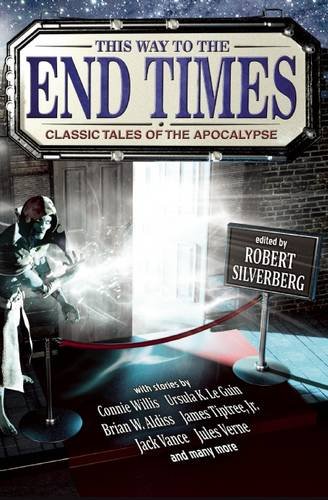
  • Editor’s Introduction (The Eternal Adam) • essay by Robert Silverberg
  • The Eternal Adam • (1957) • novelette by Jules Verne and Michel Verne
  • Editor’s Introduction (The Last Generation) • essay by Robert Silverberg
  • The Last Generation: A Story of the Future • (1908) • novelette by James Elroy Flecker
  • Editor’s Introduction (Finis) • essay by Robert Silverberg
  • Finis • (1906) • short story by Frank Lillie Pollock
  • Editor’s Introduction (The Coming of the Ice) • essay by Robert Silverberg
  • The Coming of the Ice • (1926) • short story by G. Peyton Wertenbaker
  • Editor’s Introduction (N Day) • essay by Robert Silverberg
  • N Day • (1946) • short story by R. S. Richardson [as by Philip Latham]
  • Editor’s Introduction (Guyal of Sfere) • essay by Robert Silverberg
  • Guyal of Sfere • [Dying Earth] • (1950) • novella by Jack Vance
  • Editor’s Introduction (A Pail of Air) • essay by Robert Silverberg
  • A Pail of Air • (1951) • short story by Fritz Leiber
  • Editor’s Introduction (Who Can Replace a Man?) • essay by Robert Silverberg
  • Who Can Replace a Man? • (1958) • short story by Brian W. Aldiss
  • Editor’s Introduction (Heresies of the Huge God) • essay by Robert Silverberg
  • Heresies of the Huge God • (1966) • short story by Brian W. Aldiss
  • Editor’s Introduction (The New Atlantis) • essay by Robert Silverberg
  • The New Atlantis • (1975) • novelette by Ursula K. Le Guin
  • Editor’s Introduction (When We Went to See the End of the World) • essay by Robert Silverberg
  • When We Went to See the End of the World • (1972) • short story by Robert Silverberg
  • Editor’s Introduction (The Wind and the Rain) • essay by Robert Silverberg
  • The Wind and the Rain • (1973) • short story by Robert Silverberg
  • Editor’s Introduction (The Screwfly Solution) • essay by Robert Silverberg
  • The Screwfly Solution • (1977) • novelette by James Tiptree, Jr.
  • Editor’s Introduction (After-Images) • essay by Robert Silverberg
  • After-Images • (1983) • short story by Malcolm Edwards
  • Editor’s Introduction (Daisy, in the Sun) • essay by Robert Silverberg
  • Daisy, in the Sun • (1979) • short story by Connie Willis
  • Editor’s Introduction (Three Days After) • essay by Robert Silverberg
  • Three Days After • (2014) • short story by Karen Haber
  • Editor’s Introduction (The Rain at the End of the World) • essay by Robert Silverberg
  • The Rain at the End of the World • (1999) • short story by Dale Bailey
  • Editor’s Introduction (The End of the World as We Know It) • essay by Robert Silverberg
  • The End of the World as We Know It • (2004) • short story by Dale Bailey
  • Editor’s Introduction (Final Exam) • essay by Robert Silverberg
  • Final Exam • (2012) • short story by Megan Arkenberg
  • Editor’s Introduction (Prayers to the Sun by a Dying Person) • essay by Robert Silverberg
  • Prayers to the Sun by a Dying Person • short story by Alvaro Zinos-Amaro
  • Editor’s Introduction (Last and First Men) • essay by Robert Silverberg
  • Last and First Men (excerpt) • [Last and First Men] • (1966) • short fiction by Olaf Stapledon

This one is in print, $10 for the Kindle edition and $20 for the paperback. Plus it has introductions by Silverberg which are always worth reading.


2010: The End of the World edited by Martin H. Greenberg
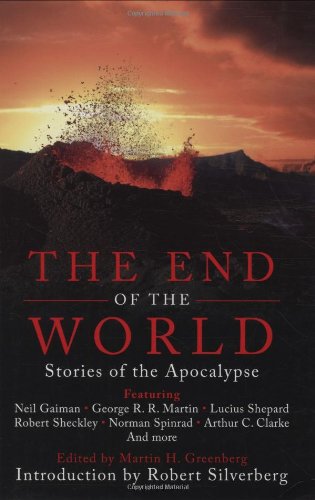
  • Dancing Through the Apocalypse • essay by Robert Silverberg
  • The Hum • (2007) • short story by Rick Hautala
  • Salvador • (1984) • short story by Lucius Shepard
  • We Can Get Them for You Wholesale • (1984) • short story by Neil Gaiman
  • The Big Flash • (1969) • novelette by Norman Spinrad
  • Kindness • (1944) • short story by Lester del Rey
  • The Underdweller • (1974) • short story by William F. Nolan
  • Lucifer • (1964) • short story by Roger Zelazny
  • To the Storming Gulf • (1985) • novella by Gregory Benford
  • The Feast of Saint Janis • (1980) • novelette by Michael Swanwick
  • The Wheel • (1952) • short story by John Wyndham
  • Jody After the War • (1972) • short story by Edward Bryant
  • Salvage • [The Mormon Sea] • (1986) • novelette by Orson Scott Card
  • By Fools Like Me • (2007) • short story by Nancy Kress
  • The Store of the Worlds • (1959) • short story by Robert Sheckley
  • Dark, Dark Were the Tunnels • (1973) • short story by George R. R. Martin
  • If I Forget Thee, Oh Earth … • (1951) • short story by Arthur C. Clarke
  • Afterward • (2006) • short story by John Helfers
  • When We Went to See the End of the World • (1972) • short story by Robert Silverberg
  • Flight to Forever • (1950) • novella by Poul Anderson

Another anthology that’s available to buy. It even has an audiobook edition. That’s a big plus for me.


2010: The Mammoth Book of the End of the World edited by Mike Ashley

  • The End of All Things • (2010) • essay by Mike Ashley
  • When We Went to See the End of the World • (1972) • short story by Robert Silverberg
  • The End of the World • (2002) • short story by Sushma Joshi
  • The Clockwork Atom Bomb • (2005) • short story by Dominic Green
  • Bloodletting • (1994) • short story by Kate Wilhelm
  • When Sysadmins Ruled the Earth • (2006) • novelette by Cory Doctorow
  • The Rain at the End of the World • (1999) • short story by Dale Bailey
  • The Flood • (1998) • short story by Linda Nagata
  • The End of the World Show • (2006) • short story by David Barnett
  • Fermi and Frost • (1985) • short story by Frederik Pohl
  • Sleepover • (2010) • novelette by Alastair Reynolds
  • The Last Sunset • (1996) • short story by Geoffrey A. Landis
  • Moments of Inertia • (2004) • novelette by William Barton
  • The Books • (2010) • short story by Kage Baker
  • Pallbearer • (2010) • novella by Robert Reed
  • And the Deep Blue Sea • (2005) • short story by Elizabeth Bear
  • The Meek • (2004) • short story by Damien Broderick
  • The Man Who Walked Home • (1972) • short story by James Tiptree, Jr.
  • A Pail of Air • (1951) • short story by Fritz Leiber
  • Guardians of the Phoenix • (2010) • novelette by Eric Brown
  • Life in the Anthropocene • (2010) • short story by Paul Di Filippo
  • Terraforming Terra • (1998) • novelette by Jack Williamson
  • World Without End • (2010) • short story by F. Gwynplaine MacIntyre
  • The Children of Time • (2005) • short story by Stephen Baxter
  • The Star Called Wormwood • (2004) • short story by Elizabeth Counihan

Again, out of print, but it is available at ABEbooks.

2019: The End of the World and Other Catastrophes edited by Mike Ashley
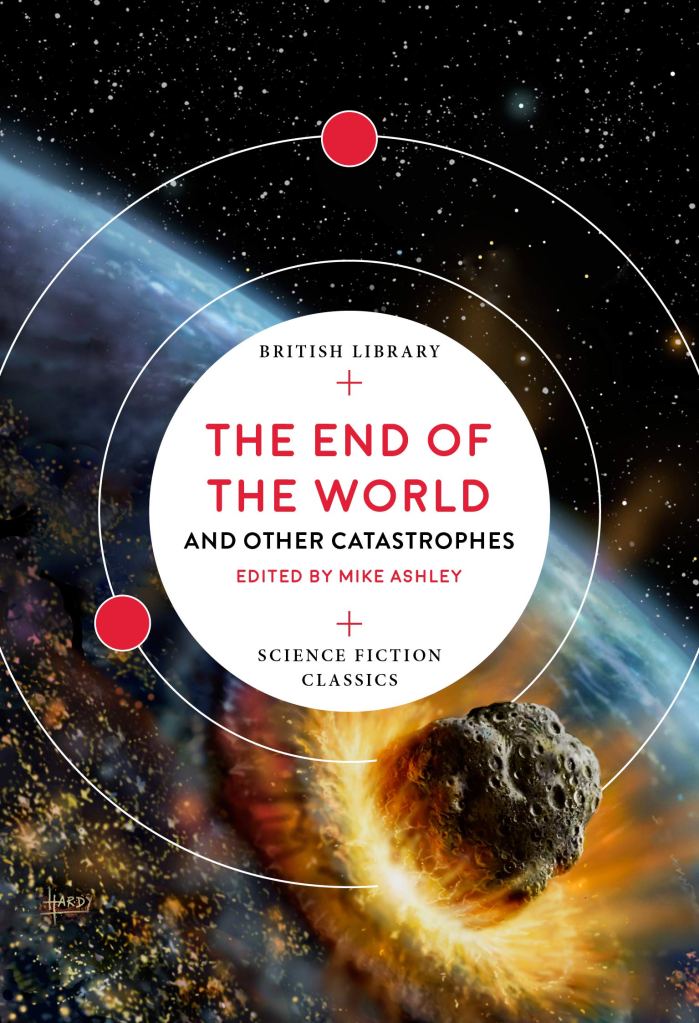
For some reason, ISFDB.org doesn’t have a table of contents for Mike Ashley’s latest end-of-the-world anthology. But you can read about the stories in The BSFA Review. This is another anthology with older stories. That’s great for seeing how the theme evolved.


2010: The Last Man Anthology edited by Hunter Liguore
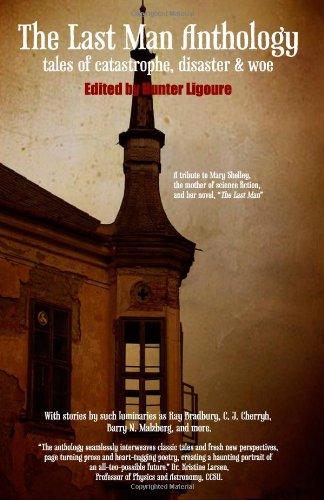
  • Timeline of Catastrophe, 2000-2010 • essay by uncredited
  • Snowmelt • short story by Lane Ashfeldt
  • Teddy and the Last Girl of Brighton Street • short story by William Wood
  • The End of the Beginning • poem by George Moore (I)
  • The Paperless Doctrine of 2152 • short story by Aaron M. Wilson
  • Origins • short story by Liz R. F. Coley
  • Ozymandias • (1818) • poem by Percy Bysshe Shelley
  • Omega Museum • short story by Jaleta Clegg
  • Turning In • poem by Caitlin Kenzie Scott
  • Fire and Ice • (1920) • poem by Robert Frost
  • Under Erasure • short story by Murray Leder
  • The Star • (1897) • short story by H. G. Wells
  • Depletion • poem by Mark Brandon Allen
  • Old Gods at the Armageddon • short story by Jeffery Ryan Long
  • Helen of Troy • (1911) • poem by Sara Teasdale
  • Suicide of the World • short fiction by Andre Saglio
  • Nuclear Winter • poem by Nicolas Samaras
  • Gip • short story by Mark Taylor (I)
  • There Will Come Soft Rains • [The Martian Chronicles] • (1950) • short story by Ray Bradbury
  • The Last Man on Earth • short story by Big Jim Williams
  • Eclipse • poem by Alicia A. Curtis [as by Alicia Curtis]
  • The Last Day of Sanity • short story by Darryll B. Snyder
  • Immutable • poem by Janelle Schwartz
  • The Last Unicorn • short story by H. L. Liguore
  • The Last Hours • (1919) • poem by D. H. Lawrence
  • Cassandra • (1978) • short story by C. J. Cherryh
  • Cee-Cee was My Dog • poem by John Dudek
  • 水 (mi)? • short story by Jack Frey
  • My Blue Ribbon Pies • short story by Jacquelyn Fedyk
  • The Masque of the Red Death • (1845) • short story by Edgar Allan Poe
  • Finley’s Last Chapter • short fiction by Alexandra Wolfe
  • Life of a Child • short story by Samantha Boyette
  • The End of the World • (1911) • essay by Hilaire Belloc
  • Arturo • short story by M. Sullivan
  • Going Home • short story by Kodilynn Calhoun
  • Life Gaped Open • poem by Alan Gann
  • The Scarlet Plague • (1912) • novella by Jack London
  • The Last of Everything • poem by Cassandra Consiglio
  • Corridors • (1982) • short story by Barry N. Malzberg
  • The Last of the Great Coffee Shop Philosophers • short story by Koos Kombuis
  • Last Call • short story by Mark Edwards

This anthology seems to be more historical and covers territory outside of the science fiction genre. It’s not something the group would read but I think I’ll track down a copy.


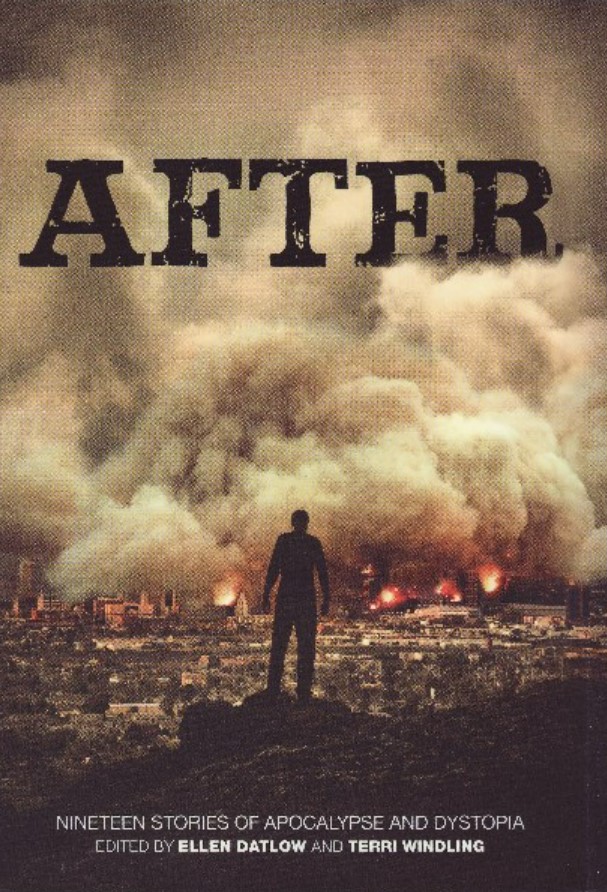
2012: After edited by Ellen Datlow and Terri Windling
  • The Segment • short story by Genevieve Valentine
  • After the Cure • novelette by Carrie Ryan
  • Valedictorian • [The Trojan Girl • 2] • short story by N. K. Jemisin
  • Visiting Nelson • novelette by Katherine Langrish
  • All I Know of Freedom • short story by Carol Emshwiller
  • The Other Elder • juvenile • [Across the Universe] • short story by Beth Revis
  • The Great Game at the End of the World • novelette by Matthew Kressel
  • Reunion • short story by Susan Beth Pfeffer
  • Blood Drive • short story by Jeffrey Ford
  • Reality Girl • novelette by Richard Bowes
  • How Th’irth Wint Rong by Hapless Joey @ homeskool.gov • short story by Gregory Maguire
  • Rust with Wings • [7th Sigma • 0.5] • short story by Steven Gould
  • Faint Heart • novelette by Sarah Rees Brennan
  • The Easthound • (2012) • short story by Nalo Hopkinson
  • Gray • poem by Jane Yolen
  • Before • short story by Carolyn Dunn
  • Fake Plastic Trees • novelette by Caitlín R. Kiernan?
  • You Won’t Feel a Thing • [Shade’s Children milieu] • short story by Garth Nix
  • The Marker • short story by Cecil Castellucci

This is an original anthology that focuses on the post-apocalypse. I’m not sure if the group has ever read an original anthology.


2008: Wastelands: Stories of the Apocalypse edited by John Joseph Adams

  • The End of the Whole Mess • (1986) • novelette by Stephen King
  • Salvage • [The Mormon Sea] • (1986) • novelette by Orson Scott Card
  • The People of Sand and Slag • (2004) • novelette by Paolo Bacigalupi
  • Bread and Bombs • (2003) • short story by M. Rickert
  • How We Got in Town and Out Again • (1996) • novelette by Jonathan Lethem
  • Dark, Dark Were the Tunnels • (1973) • short story by George R. R. Martin
  • Waiting for the Zephyr • (2002) • short story by Tobias S. Buckell
  • Never Despair • (1997) • short story by Jack McDevitt
  • When Sysadmins Ruled the Earth • (2006) • novelette by Cory Doctorow
  • The Last of the O-Forms • (2002) • short story by James Van Pelt
  • Still Life with Apocalypse • (2002) • short story by Richard Kadrey
  • Artie’s Angels • (2001) • short story by Catherine Wells
  • Judgment Passed • novelette by Jerry Oltion
  • Mute • (2002) • short story by Gene Wolfe
  • Inertia • (1990) • novelette by Nancy Kress
  • And the Deep Blue Sea • (2005) • short story by Elizabeth Bear
  • Speech Sounds • (1983) • short story by Octavia E. Butler
  • Killers • (2006) • short story by Carol Emshwiller
  • Ginny Sweethips’ Flying Circus • (1988) • novelette by Neal Barrett, Jr.
  • The End of the World as We Know It • (2004) • short story by Dale Bailey
  • A Song Before Sunset • (1976) • short story by David Grigg
  • Episode Seven: Last Stand Against the Pack in the Kingdom of Purple Flowers • (2007) • novelette by John Langan

Another title that’s in print and available on ebook and audio.


2015: Wastelands 2: More Stories of the Apocalypse edited by John Joseph Adams

  • The Tamarisk Hunter • (2006) • short story by Paolo Bacigalupi
  • Deep Blood Kettle • (2013) • short story by Hugh Howey
  • Animal Husbandry • (2009) • short fiction by Seanan McGuire
  • “… For a Single Yesterday” • (1975) • novelette by George R. R. Martin
  • Chislehurst Messiah • (2011) • short story by Lauren Beukes
  • Colliding Branes • (2009) • short story by Rudy Rucker and Bruce Sterling
  • Ellie • (1995) • novelette by Jack McDevitt
  • Foundation • [Razorland • 0.5] • (2012) • short story by Ann Aguirre
  • Beat Me Daddy (Eight to the Bar) • (2002) • short story by Cory Doctorow
  • A Beginner’s Guide to Survival Before, During, and After the Apocalypse • (2013) • short story by Christopher Barzak
  • Wondrous Days • (2009) • short story by Genevieve Valentine
  • Dreams in Dust • (2012) • short story by D. Thomas Minton
  • By Fools Like Me • (2007) • short story by Nancy Kress
  • Jimmy’s Roadside Cafe • (2008) • short story by Ramsey Shehadeh
  • The Elephants of Poznan • (2000) • novelette by Orson Scott Card
  • The Postman • [The Postman] • (1982) • novella by David Brin
  • When We Went to See the End of the World • (1972) • short story by Robert Silverberg
  • The Revelation of Morgan Stern • (2013) • short story by Christie Yant
  • Final Exam • (2012) • short story by Megan Arkenberg
  • A Flock of Birds • (2002) • short story by James Van Pelt
  • Patient Zero • (2000) • short story by Tananarive Due
  • Soulless in His Sight • (2012) • short fiction by Milo James Fowler
  • Outer Rims • (2011) • short story by Toiya Kristen Finley
  • Advertising at the End of the World • (2009) • short story by Keffy R. M. Kehrli
  • How the World Became Quiet: A Post-Human Creation Myth • (2007) • short story by Rachel Swirsky
  • Tight Little Stitches in a Dead Man’s Back • (1986) • short story by Joe R. Lansdale
  • After the Apocalypse • (2011) • short story by Maureen F. McHugh
  • The Traditional • (2013) • short story by Maria Dahvana Headley
  • Monstro • (2012) • short story by Junot Díaz
  • Biographical Fragments of the Life of Julian Prince • (2013) • short story by Jake Kerr

Also, still in print including ebook and audio.


2019: Wastelands: The New Apocalypse edited by John Joseph Adams

  • Bullet Point • short fiction by Elizabeth Bear
  • The Red Thread • (2016) • short story by Sofia Samatar
  • Expedition 83 • short fiction by Wendy N. Wagner
  • The Last to Matter • (2018) • novelette by Adam-Troy Castro
  • Not This War, Not This World • short story by Jonathan Maberry
  • Where Would You Be Now • [The Bannerless Saga] • novelette by Carrie Vaughn (variant of Where Would You Be Now? 2018)
  • The Elephants’ Crematorium • (2018) • short story by Timothy Mudie
  • Bones of Gossamer • short fiction by Hugh Howey
  • As Good As New • (2014) • short story by Charlie Jane Anders
  • One Day Only • short fiction by Tananarive Due
  • Black, Their Regalia • (2016) • short story by Darcie Little Badger
  • The Plague • (2013) • short story by Ken Liu
  • Four Kittens • short fiction by Jeremiah Tolbert
  • Eyes of the Flood • short fiction by Susan Jane Bigelow
  • The Last Garden • (2017) • novelette by Jack Skillingstead
  • Through Sparks in Morning’s Dawn • short fiction by Tobias S. Buckell
  • Cannibal Acts • (2017) • short story by Maureen F. McHugh
  • Echo • short fiction by Veronica Roth
  • Shooting the Apocalypse • (2014) • novelette by Paolo Bacigalupi
  • The Hungry Earth • (2013) • short story by Carmen Maria Machado
  • Last Chance • (2017) • novelette by Nicole Kornher-Stace
  • A Series of Images from a Ruined City at the End of The World • short fiction by Joseph Allen Hill [as by Violet Allen]
  • Come on Down • short fiction by Meg Elison
  • Don’t Pack Hope • (2018) • short story by Emma Osborne
  • Polly Wanna Cracker? • short fiction by Greg van Eekhout
  • Otherwise • (2012) • novelette by Nisi Shawl
  • And the Rest of Us Wait • (2016) • novelette by Corinne Duyvis
  • The Last Child • short fiction by Scott Sigler
  • So Sharp, So Bright, So Final • short fiction by Seanan McGuire
  • Burn 3 • (2013) • novelette by Kami Garcia
  • Snow • (2015) • short story by Dale Bailey
  • The Air Is Chalk • short fiction by Richard Kadrey
  • The Future Is Blue • [Garbagetown • 1] • (2016) • novelette by Catherynne M. Valente
  • Francisca Montoya’s Almanac of Things That Can Kill You • (2014) • short story by Shaenon K. Garrity

Again, in print, including ebook and audiobook editions.


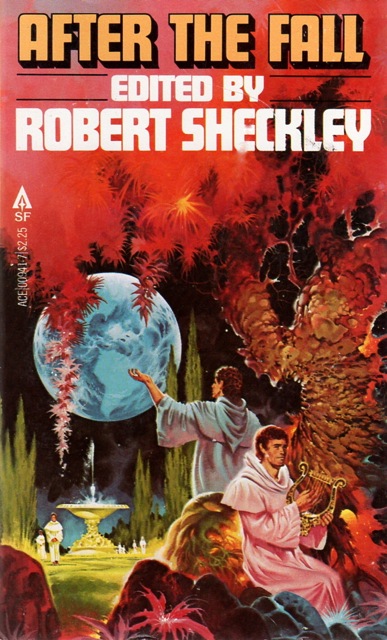
1980: After the Fall edited by Robert Sheckley
  • The Last Days of (Parallel?) Earth • short story by Robert Sheckley
  • The Day After the End of the World • short story by Harry Harrison
  • A Very Good Year … • (1979) • short story by Roger Zelazny
  • Fire and/or Ice • short story by Roger Zelazny
  • Exeunt Omnes • short story by Roger Zelazny
  • Sungrab • [Sam Space] • novelette by William F. Nolan
  • Where Are You Now, Erik Scorbic? • short story by K. Copeland Shea
  • Bud • short story by Ian Watson
  • The Making of Revelation, Part I • novelette by Philip José Farmer?
  • Rebecca Rubinstein’s Seventeenth Birthday • short story by Simon Gandolfi
  • The Revelation • short story by Thomas M. Disch
  • Nirvana Is a Nowhere Place • short story by Joel Schulman
  • Heir • short story by J. A. Lawrence
  • Afterword (Heir) • essay by J. A. Lawrence
  • The Kingdom of O’Ryan • novelette by Bob Shaw
  • Just Another End of the World • short story by Maxim Jakubowski

I imagine this collection by Sheckley is about finding humor at the end of the world. I think I would need it if I read all the other anthologies.


I think my pick would be Beyond Armaggedon edited by Walter M. Miller, Jr. and Martin H. Greenberg.

I can’t believe I’ve found 14 anthologies about the end of the world or the post-apocalypse.

James Wallace Harris, 1/26/23

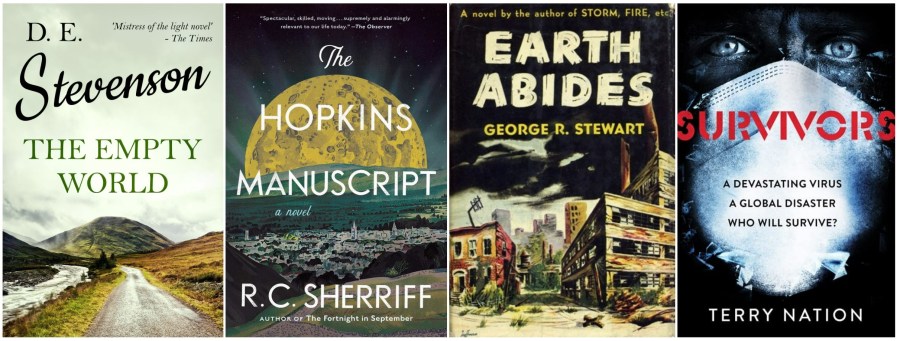
The Empty World by D. E. Stevenson

The Empty World by D. E. Stevenson was first published in 1936 when very few science fiction novels were published in book form. That’s for two reasons. First, not many science fiction novels were being written, and second, the term science fiction was not widely recognized outside the tiny audience who read science fiction magazines. It wasn’t until the late 1940s and early 1950s that science fiction emerged as a publishing category.

D. E. stands for Dorothy Emily. She was a Scottish writer of over forty books, published between 1923 – 1970. Most were light romantic novels, so it is surprising that The Empty World is science fiction. I wasn’t going to review The Empty World because I already mentioned it in my essay on post-apocalyptic novels. Then I got to thinking about how it represents a kind of writing, a proto-genre novel. However, I started listening to a second novel by Stevenson, Miss Buncle’s Book which has a very clever plot, and realized that she is a much better writer than I imagined. And that’s making me rethink the value of The Empty World. Maybe more people should give it a read, and give D. E. Stevenson a try.

Barbara Buncle lives in a quaint little English village during the depression. Her investments are not paying dividends, so she decides to write a novel to make some money. However, she is not very imaginative and writes a book about all the people that live in her village but under the name of John Smith. Barbara is, however, very talented at observing details. The townspeople become outraged at her photographic portrayal of themselves in words. The book within a book is clever and I’m enjoying it quite a lot. I have a feeling I will be reading more D. E. Stevenson books in the future. By the way, many of her books are available on Scribd if you want to give them a try. (I’m partial to forgotten English writers. I maintain a website for Lady Dorothy Mills, who is far more forgotten. She also wrote a couple science fiction books published in the 1920s.)

This is strange, but in the first week of 2023, I discovered two science fiction novels that were first published in the 1930s and are mostly forgotten today. The first was The Hopkins Manuscript by R. C. Sherriff which I’ve already reviewed, and The Empty World by D. E. Stevenson. It is currently available on Amazon for the Kindle for $3.99. I enjoyed it but I would only recommend it to two types of readers. First, to science fiction readers who love to find forgotten science fiction novels from the past, and second to Anglophiles who like cozy books from England in the 1930s. However, I wished other science fiction readers would read them and let me know if they deserve more recognition.

This also makes me wonder just how many more forgotten science fiction novels are waiting to be rediscovered? Right now I’m focused on the 1930s. If you look at which books from the 1930s in our CSFquery.com database you won’t see many. And if you use our Show Citations feature you’ll see that most of them with just one citation come from the Radium Age list of science fiction or the library reference book Anatomy of Wonder. Neither novel is widely known to science fiction readers.

The Hopkins Manuscript nor The Empty World is in our database. That’s telling since our database is built on dozens of recommendation lists. This is disappointing since I believe The Hopkins Manuscript is a minor masterpiece and The Empty World is a rather fun book and surprisingly science fictional for its time. The main difference between the two is The Hopkins Manuscript is literary in writing style, and The Empty World anticipates genre writing.

I say that about D. E. Stevenson because, in The Empty World, the characters are shaped to convey the plot. That’s typical of genre writing. In The Hopkins Manuscript, the characterization of Edgar Hopkins is the best aspect of the story. That’s typical of literary writing.

The main character in The Empty World is Jane Forrest, a writer of popular books of history. We don’t know her exact age, but she’s older but still very attractive. The novel starts with her taking a commercial transatlantic flight from New York to London. This is before the first actual commercial flight on August 11, 1938. The novel is set in 1973. During the flight, the pilot flew at the plane’s upper altitude to avoid a storm, but even then the plane suffered tremendous turbulence. They lose all radio contact. When they land they find no people or animals left on Earth. They remember a scientist had warned the world would be destroyed when the Earth passed through a tail of a comet. This makes me wonder if Stevenson had read London and Verne. Both of these old SF books are based on hogwash science.

Stevenson covers many plot issues that later post-apocalyptic novelists will consider. How to scrounge canned food from stores and homes and figure how long such stores of food can last. How to rebuild. How to assign jobs. How money becomes worthless. How does life after the apocalypse affect class, education, gender, etc? What happens when there are more men than women?

However, Stevenson’s first plot problem is not one I’ve seen before. There are 16 men, and 6 women, but two of the women are elderly. Most of the men are in their twenties. Now, I have seen this problem before in after-the-collapse stories, but Stevenson takes an interesting tack. The higher-class men tell Jane they must get all the women away from the lower-class men. At first, she doesn’t understand, but then five of the men pull guns and tell the group they want to divide up the women. Much of the middle of the book deals with women escaping a fate worse than death.

That’s about as much as I want to tell you about the plot. The last half goes in a totally new very fun direction, but again, the women are at risk from a new threat. And much of the book is about the women finding the husband they want. Stevenson tries to surprise us by having the women pick men we wouldn’t think they’d pick.

The novel does wrap up with a happy ending, but Stevenson disappointed me because she didn’t deal with the details of rebuilding the species and civilization. She assumes just a few couples making babies will be enough to be the new Adams and Eves of the next human civilization. Of course, we know now that it would take many more people to give us the proper genetic diversity to survive. What’s amusing is there is a scientist among the survivors who advocates eugenics and a form of animal husbandry for the survivors.

After thinking about The Empty World for a while I saw how a science fictional idea could be worked out by a writer who probably neither read science fiction nor plan to write it. The collapse of civilization is a rather mundane concept unlike space travel and robots. Hell, it’s really just another version of the Noah and the Ark story (note the book cover above). But if you observe the writing in The Empty World you realize each character is there for the purpose of exploring the plot idea. That’s what science fiction has always done. Ditto for mysteries and thrillers. It’s even true for romances. Science fiction writers come up with an idea, then figure out a plot to present that science fiction idea, and then invent characters to unfold the plot.

Now that I’m reading a second D. E. Stevenson’s novel, Miss Buncle’s Book, I see that happening too but with a twist. The main plot is driven along like a genre novel, but it’s based on the idea that one character wrote a literary novel. I don’t think the concept of genre novels existed much before WWII. If you went to a bookstore in the 1930s novels were all lumped together in the fiction section. I’m guessing there was a division of readers between popular novels and literary novels but not because they were shelved in different locations in the bookstore. Sometimes and I’m assuming after WWII, and maybe not until the 1950s, booksellers started dividing up their shelves by what readers wanted to read. Then publishers followed suit and genres were born.

This is why there are science fiction books published before the war that are often forgotten today. They were never grouped with science fiction books, so they never were embraced by the science fiction genre. There’s no telling how many pre-WWII science fiction novels were written and published. And it might also be a factor that these two post-apocalyptic novels were English rather than American. The Empty World was reprinted in America in 1939 as A World in Spell.

James Wallace Harris

What Would You Do If You Were Among The Last Humans on Earth?

Once again I’m gorging on post-apocalyptic novels where a few people survive a horrific civilization-destroying catastrophe. Usually, they hope to rebuild civilization. But not always. I recently finished The Hopkins Manuscript by R. C. Sherriff first published in 1939 which I’ve already reviewed. And I just finished The Empty World by D. E. Stevenson first published in 1936. This has gotten me to think about all the books, movies, and television shows I read or watched because of this theme. I’ve listed and rated all that I can remember in the table below. But what I want to talk about first is the appeal and common plot elements of this sub-genre of science fiction. I have written about this a number of times before and have linked to those essays at the end — just in case this essay got you interested. I do know that other science fiction fans love this theme too.

[HBO just started a new series based on this theme. It appears people never get tired of it.]

There are many kinds of post-apocalyptic novels. See the long comprehensive overview on Wikipedia on Post-Apocalyptic fiction The ones I like best are those that focus just on a few survivors. You might call this version of the theme the Robinson Crusoe Post-Apocalypse. Some people also call them Cozy Catastrophes — but the exact definition is often argued over. For example, I disagree with many of the choices in “Jane Rogers’s top 10 cozy catastrophes” from The Guardian.

Here are my favorite elements in a cozy catastrophe:

Few Survivors

I like stories that follow just a few characters who survive the end of the world and try to rebuild. I would even enjoy it if it was just one person, which happens in Mary Shelley’s The Last Man, but usually, these stories start with one survivor who eventually finds a few more.

How They Survive

I also love the details of how they survive, whether it’s raiding grocery stores, becoming a hunter, or starting a garden. I love seeing how people start over from scratch and accomplish all the things we depend on civilization to give us now. This appeals to my younger self who wanted to move back to nature and subscribed to Mother Earth News. I loved the idea of being self-sufficient on five acres.

Social Dynamics

I also love reading about how people get along. In American fiction written by men, the stories can get rather violent. American guys believe the collapse of civilization means no laws, grab your guns, and everyone out for themselves. Think Mad Max or The Postman. Female Americans see starting over as a lot less violent. Consider Station Eleven. English writers of either gender, see post-apocalyptic affairs as being much less violent.

I just read The Empty World by D. E. Stevenson, first published in 1936. D. E. is for Dorothy Emily, and her books were light romances aimed at shop girls. The Empty World did have some violence. Right after the catastrophe we are told two-thirds of the surviving group of men are civilized and one-third are not, and the civilized men must get the few surviving women away from the uncivilized. Stevenson seemed to enjoy showing how the brutish lower-class Englishmen would fight and kill to possess a woman. Stevenson’s early cozy catastrophe anticipated many of the common elements that would emerge in this sub-genre, but her focus seemed to be on the women finding the right husband. Her premise for how civilization was wiped out was mumbo-jumbo science but that didn’t seem to hurt the story. Jo Walton gives a short review of the novel in her Tor.com column. I wonder if Stevenson had read London’s The Scarlet Plague?

My all-time favorite novel of this theme, Earth Abides (1949) by George R. Stewart tells about how Ish, the protagonist wants to educate the first generation after the collapse. He was a college professor who wanted to preserve knowledge but realized the vastness of human learning couldn’t be passed on. My favorite TV show that covers this theme, Survivors (1975 BBC) focuses on how a few people can work together to start a farm, and eventually, build coalitions between survivor groups. Survivors the TV show has an excellent novelization by Terry Nation. It’s currently for sale at Amazon for the Kindle for just $1.99. The complete series on DVD is just $22. But a warning, the production was low-budget and modern TV watchers might not like it. Episodes of the show are available in low-resolution on YouTube, but not streaming anywhere else.

How Would You Do It

Probably the most fun aspect of this genre is picturing myself in the same situation as in the story and fantasizing about how I would have dealt with it. I have to admit, those fantasies have changed over the years. When I was younger, I pictured a post-apocalyptic world as more of an adventure. As I got older, it became more about how to farm and take care of myself. Now that I’m old, I realize if I found myself becoming one of the last people on Earth, my solutions for how to live would be much different. I don’t have the strength to farm. I now see myself just hiding out, scrounging for preserved food, and reading books, while contemplating the end of the world.

Hope for the Future

Another thing I love about this theme is seeing how the characters hope to rebuild things. I believe part of the appeal of this genre comes from disliking the way things are now. And readers love to imagine a better society. One thing I was very impressed with in Sherriff’s The Hopkins Manuscript is how he predicted that people don’t change and we’d just quickly go back to our bad ways. That’s depressing but I believe philosophically correct.

Some stories, like On the Beach by Nevil Shute and The Road by Cormac McCarthy imply there is no hope for mankind.

MisanthropicA Subconscious Urge For Fewer People

I also believe these stories appeal to us because deep down we wish there were a lot fewer people on Earth. The question is how fewer? Would you want to be the last person? Just a few friends? A small community? Maybe a world where the total population is just ten million? And do we want to bring back civilization?

Post-Apocalyptic Stories I Remember

Rating Year Title
*** 1826 The Last Man by Mary Shelley
tbr 1885 After London by Richard Jefferies
**** 1901 The Purple Cloud by M. P. Shiel
**** 1912 The Scarlet Plague by Jack London
**** 1913 Goslings by J. D. Beresford
*** 1936 The Empty World by D. E. Stevenson
***** 1939 The Hopkins Manuscript by R. C. Sherriff
***** 1949 Earth Abides by George R. Stewart
***** 1951 The Day of the Triffids by John Wyndham
***** 1955 “A Canticle for Leibowitz” by Walter M. Miller, Jr.
**** 1956 The Death of Grass by John Christopher
***** 1957 On the Beach by Nevil Shute
***** 1959 Alas, Babylon by Pat Frank
***** 1959 On the Beach U.S. film
***** 1959 The World, the Flesh, and the Devil MGM
**** 1962 The Drowned World by J. G. Ballard
***** 1975-1977 Survivors BBC
***** 1976 Survivors by Terry Nation
***** 1985 The Postman by David Brin
**** 1985 The Quiet Earth New Zealand film
**** 2006 Life As We Knew It by Susan Beth Pfeffer
***** 2006 The Road by Cormac McCarthy
**** 2008-2010 Survivors BBC remake
**** 2012 The Age of Miracles by Karen Thompson Walker
** 2012-2014 Revolution NBC
***** 2014 Station Eleven by Emily St. John Mandel
*** 2015-2018 The Last Man On Earth Fox TV
**** 2021 Y: The Last Man FX on Hulu

Essays About Post-Apocalyptic Fiction I’ve Written Before

James Wallace Harris 1/17/23

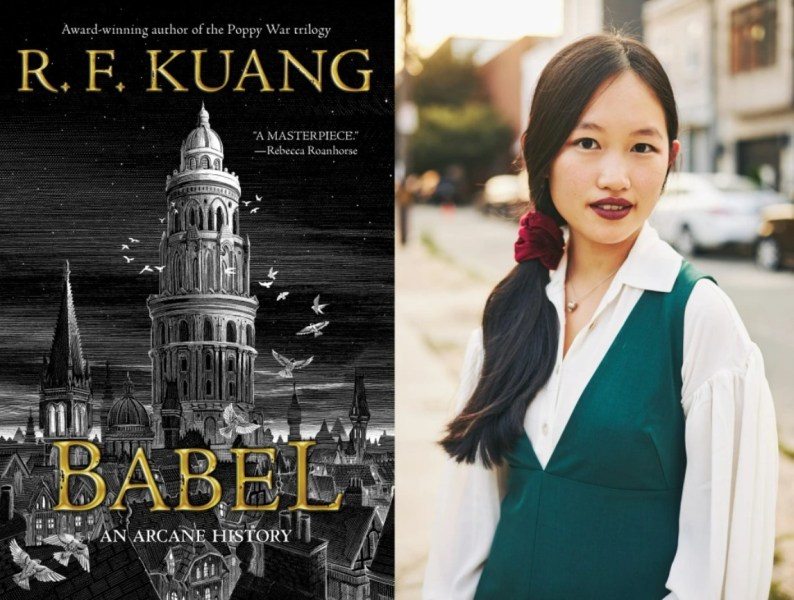
Babel by R. F. Kuang

Normally I avoid reading fantasy books but will make an exception for outstanding works of the genre, such as Babel by R. F. Kuang. I became intrigued by this novel when reviews described it being a fantasy about language translation, set in Oxford at the beginning of Queen Victoria’s reign. I love reading about how books are translated, and I’m fond of poking around in the 19th century. Then I saw that LitHub found Babel on 7 best-books-of-2022 lists. That convinced me to try it.

I find most fantasy novels to be mediocre. This is due to the genre being flooded with works, and because exceptional works of fantasy have set the bar so high that reading anything less is boring. Babel reminded me of Harry Potter books, The Golden Compass trilogy, and Jonathan Strange & Mr. Norrell.

Babel is mostly set in Oxford, England in the 1830s. Follows four students who study at the Royal Institute of Translation – known as Babel. It is the most powerful college at Oxford in Kuang’s fantasy world. Babel is a fantasy novel rather than a historical one because silver can be embued with powerful charms via knowledge in language translation. This magical silver powers the industrial revolution and is a metaphor for capitalism. Actually, for the evils of capitalism.

I would call this a YA novel except that the protagonists are college students. Kuang is impressively creative in her writing and plotting but I was somewhat disappointed with her characterization. I would say they were excellent for genre writing — because genre fans will love them. But I thought her characters lacking compared to literary writing. The main character, Robin Swift, is half Chinese and half English and grew up in Canton, China before being taken to England to study languages. He never felt Chinese. He always felt English. Ramy is a Muslim kid from India, his cultural background doesn’t come through either. People are prejudiced against these two for their physical appearance, but I never felt they were different from the English characters internally. The only character that emotionally acts a bit different is Victoire, a girl originally from Haiti. Letty, the fourth in the cohort, is a privileged English girl and acts exactly that.

Even though this is a fantasy it focused on the historical sins of England in the 19th century. It judges Imperial England harshly, which it deserves. Actual history is like studying the Holocaust — full of horrors. There is an infinite amount of history to hate, but finding any real understanding is rare. I question making an attack on the past for the basis of a fantasy novel, but then I don’t take fantasy novels seriously. I feel they are mostly fun, and mostly for young people.

The story comes across as another YA tale of Blows Against the Empire that’s no more realistic than a Star Wars sequel or The Hunger Games. It’s hard to take its plot seriously since it involves magic. But maybe young readers will be inspired to read nonfiction history about the period, such as Empire of Cotton by Sven Beckert. On the other hand, the plot is compelling from a reading point of view.

And I do believe R. F. Kuang is deadly serious. That makes me worry about her solution supporting violence. Her novel is really a metaphor for our times. It asks: How can we enjoy the fruits of evil when we know the price of them will be so much suffering? But the woken judge the past so severely without realizing the future will judge them just as harshly. We all need to read What We Owe the Future by William MacAskill. I’m afraid the future will look back on the 21st century and judge anyone who flew in an airplane or ate meat like we feel about 19th-century slave owners.

If Babel is just a fun fantasy that mixes in history and uses the English imperialists as its bad guys, how should we judge it? But what if it’s a philosophically deep challenge to history? Then, how should we judge Babel? Does it condemn the past fairly? Or is it more complicated? How many nonfiction books will we have to read to really answer that question?

James Wallace Harris, 1/15/23

The Hopkins Manuscript by R. C. Sherriff

Short Review: If you loved George R. Stewart’s 1949 classic novel Earth Abides then there’s a good chance you’ll love to read R. C. Sherriff’s forgotten 1939 novel The Hopkins Manuscript.

I bought the new Scribner audiobook edition that came out on January 6, 2023, because of Alec Nevala-Lee’s review in The New York Times. Right now, the Scribner edition is only available as an ebook and audiobook edition. An older, 2018, Penguin trade paper edition is still for sale. This apocalyptic novel first appeared in 1939 and has been reprinted a number of times since, yet it’s never achieved much notice.

I listened to The Hopkins Manuscript and thought it a science fiction masterpiece. However, I’m reluctant to recommend you buy it because it does not have even one citation in our Classics of Science Fiction database. If I believe The Hopkins Manuscript is so incredible why wasn’t it cited by any of the dozens of sources we used to build the database, including recommended reading lists from science fiction writers, polls from fans voting for their favorite novels, or lists of books admired by critics and scholars?

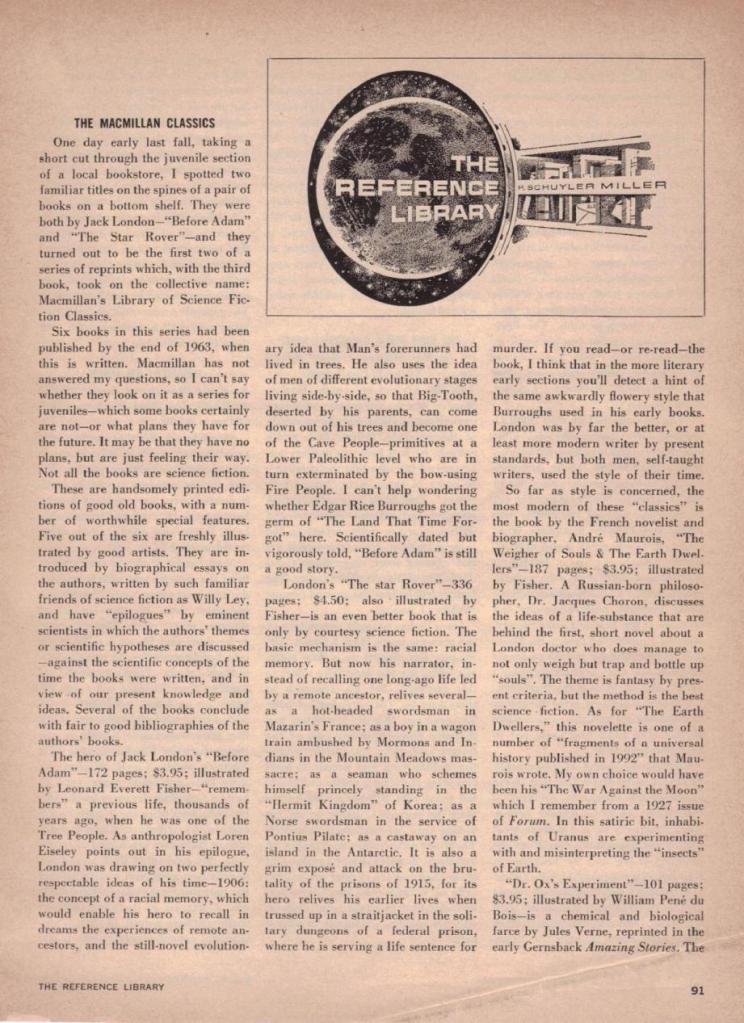
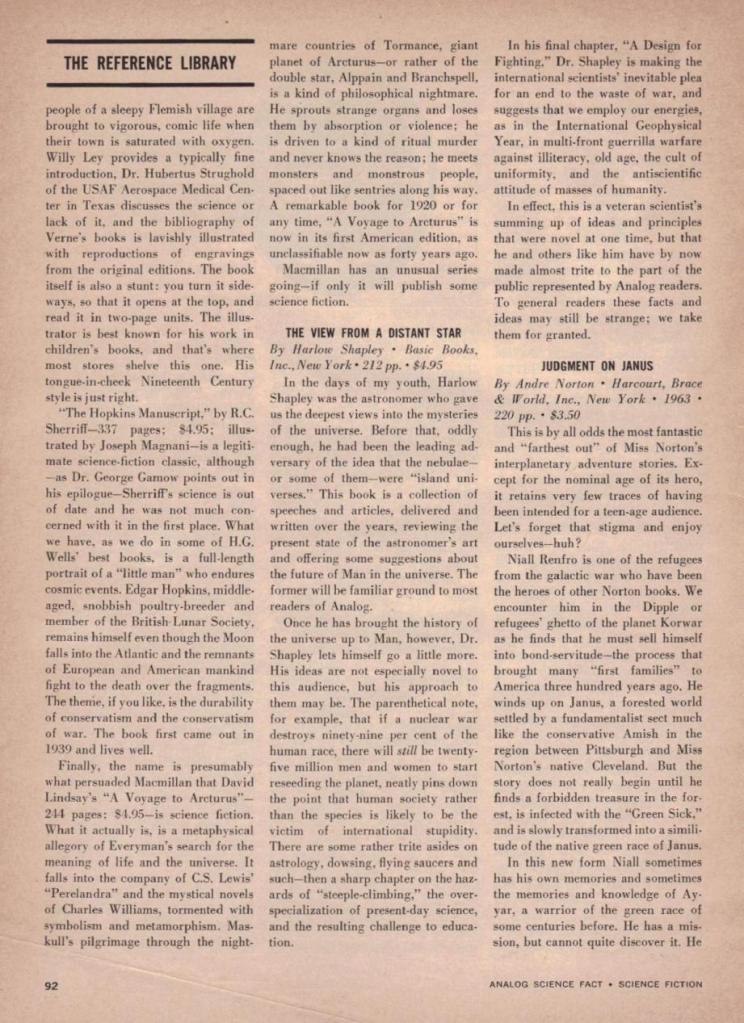
I loved The Hopkins Manuscript and can’t understand why it isn’t a well-known classic of science fiction. See the scans below from various reviewers in the past. I’d love to read what Michael Moorcock said about The Hopkins Manuscript in the September 2005 issue of The New York Review of Books (#205) if anyone has a copy. But in Thrilling Wonder Stories, from January 1940, H. K. recommended readers put it on their “Must” list. But in the April 1940 issue of Astonishing Stories, Donald A. Wollheim concluded the novel conveyed nothing new, nothing hopeful, and nothing very real. I disagree completely. Avram Davidson in the January 1964 issue of F&SF said the novel was first-rate and ended with “Don’t just read it — buy it.” P. Schuyler Miller damns it with faint praise in the April 1964 issue of Analog, concluding “The book first came out in 1939 and lives well.” Finally, Neil Barron did not recommend The Hopkins Manuscript in his library resource book Anatomy of Wonder.

Nevala-Lee spends most of his review talking about cozy catastrophes, giving Sherriff’s biography, and describing the story. I felt he told too much, but then I consider almost everything in a story to be spoilers. Nevala-Lee’s most positive statement is “Reissued this month, this wonderful novel should powerfully resonate with readers whose consciences are troubled by inequality and climate change. As Aldiss wrote, ‘The essence of cozy catastrophe is that the hero should have a pretty good time … while everyone else is dying off.” I disagree with by Nevala-Lee and Aldiss. This novel isn’t just for the woke and poor Edgar Hopkins suffers tremendously.

The Hopkins Manuscript is my kind of science fiction. I deeply resonated with Edgar Hopkins’ story, even though he is stodgy, vain, and frequently seeking to prove his self-importance. His memoir gives us a quiet and personal account of what was almost the end of the world. And I love stories about a few people trying to survive a worldwide catastrophe. If you loved the 1970s British TV shows Survivors, you might to get this book. I recommend the audiobook because the narration is pitch-perfect for the story. If you loved The Day of the Triffids by John Wyndham, also consider reading The Hopkins Manuscript. (Survivors is available on YouTube for free in low resolution. It doesn’t seem to be streaming anywhere. Amazon sells a complete series DVD set for $22. It’s one of my all-time favorite TV shows.)

The Hopkins Manuscript is what some call a cozy catastrophe – a first-person account of the end of the world. The story is set in rural Britain before WWII and imagines the fall of Western civilization due to impending celestial events. Edgar Hopkins, a never-married retired teacher who raises show hens describes a very personal account of the end of the world. What made his story great is he’s a flawed but very realistically drawn character, and Sherriff’s philosophical take on humanity follows my own philosophy – especially that we don’t change. And that’s the tragedy of the novel, we don’t change even when faced with epic incentives.

The novel opens with a Forward from The Imperial Research Press, Addis Ababa telling us how the Hopkins manuscript was discovered two years earlier by the Royal Society of Abyssinia. It is assumed to be over 700 years old. The Forward also tells us how Western Europe is a dead civilization and the Hopkins manuscript is one of the very few artifacts left of the English Empire. The others are an iron tablet that says KEEP OFF THE GRASS, and a stone inscribed with PECKHAM 3 Miles. Except for old Roman roads, the entire history of England is gone. Since I read a three-volume history of the world last year, this felt very real. Civilizations come and go and we can’t expect ours to last forever.

American post-apocalyptic novels tend to involve a lot of violence and guns. British post-apocalyptic novels are genteel and quiet. If you’re looking for Mad Max, read elsewhere. The first half of the novel deals with how the British faced the coming doom. If you like stories about Britain between the wars, that’s another indicator you might want to buy The Hopkins Manuscript. That’s a big interest of mine. I’m not sure you need to be an Anglophile to enjoy this story but it might help. If you read Brian Stableford’s New Atlantis, a four-volume history of scientific romance, he shows how British science fiction evolved differently from American science fiction. I agree with him, and I’m partial to British science fiction. That’s probably another factor in explaining my love of The Hopkins Manuscript. Unfortunately, Stableford doesn’t cover The Hopkins Manuscript. That disappoints me. That’s just more evidence that my love of this novel might be unique to me. I hope not.

Even though The Hopkins Manuscript remains a mostly forgotten work, and has little critical support, I hope people rediscover it with the new Scribner edition. If you read it, please leave a comment below.

James Wallace Harris, 1/9/23