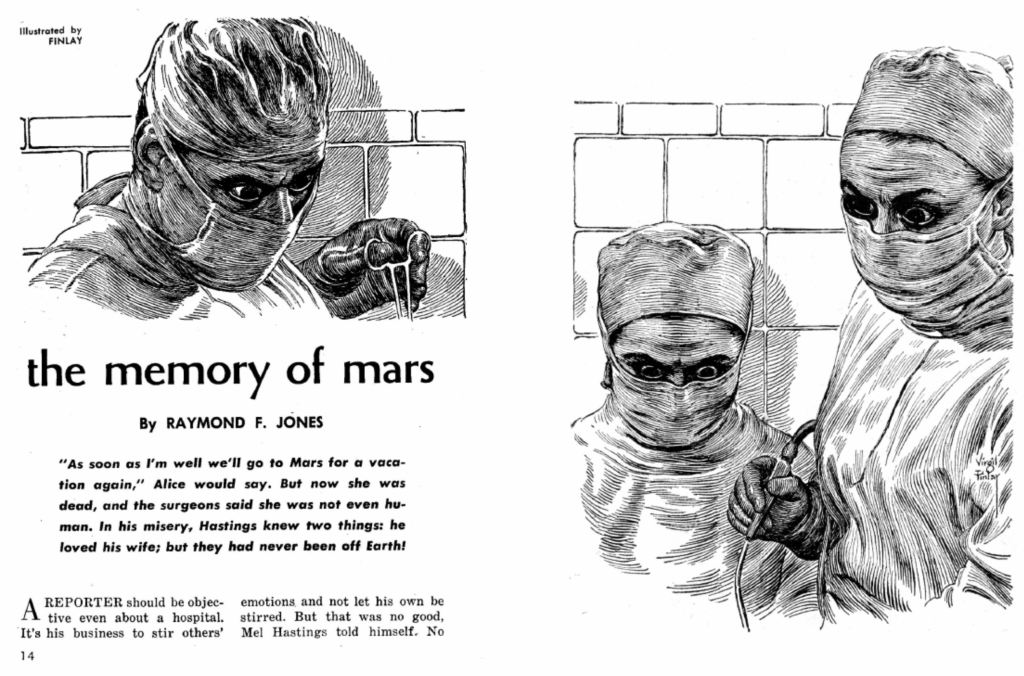
“The Colonists” by Raymond F. Jones

Raymond F. Jones has now hit two homers for me this week, with “The Colonists” flying out of the park. I was quite impressed with “The Memory of Mars” which I wrote about recently but I can’t decide if it’s a 4-star or 5-star story. I’d definitely give “The Colonists” a full 5-stars. The story is sophisticated in plot and science fictional speculation and is quite dramatic. I can’t understand why it isn’t a more famous science fiction story. Why didn’t Bleiler and Dikty or Asimov and Greenberg anthologize these stories in their best of the year annuals? Why haven’t they been anthologized is some of the big retrospective anthologies?

“The Colonists” was first published in the June 1954 issue of If. Follow the link to read it in a scan of the original magazine. Or you can read it various formats from Project Gutenberg. However, I highly recommend the excellent audio narrated version at YouTube.

I don’t want to say much about the story because I don’t want to spoil its surprises. The story examines the psychology of colonists immigrating to another world. Why would anyone give up everything on Earth to go live so far away? For a 1954 science fiction story, it considers the reality of space travel far more realistically than most of its peers.

Maybe this story impressed me because as a teenager I would have given anything to become a colonist on Mars. The idea of building a completely new society on the red planet was the most creative endeavor I could imagine for mankind. However, Jones suggests that most colonists in history were running away from something, and I have to admit that would have been true of my adolescent self.

I was also impressed with the complicated plotting in “The Colonists.” Jones does a great job, and I think this story would make an excellent film. It’s a novelette, and one hour and thirty-five minutes on audio, making it film length.

I wonder why Raymond F. Jones never made it big in the genre, or why he’s a mostly a forgotten SF writer? He gets a small write-up in Wikipedia that shows he was a prolific short story writer, but he did produce at least a dozen novels. I’m now anxious to read more of his work. I bought RAYMOND F. JONES RESURRECTED: SELECTED SCIENCE FICTION STORIES OF RAYMOND F. JONES after reading “The Memory of Mars.” (Kindle for $3.99 or paperback for $15.99)
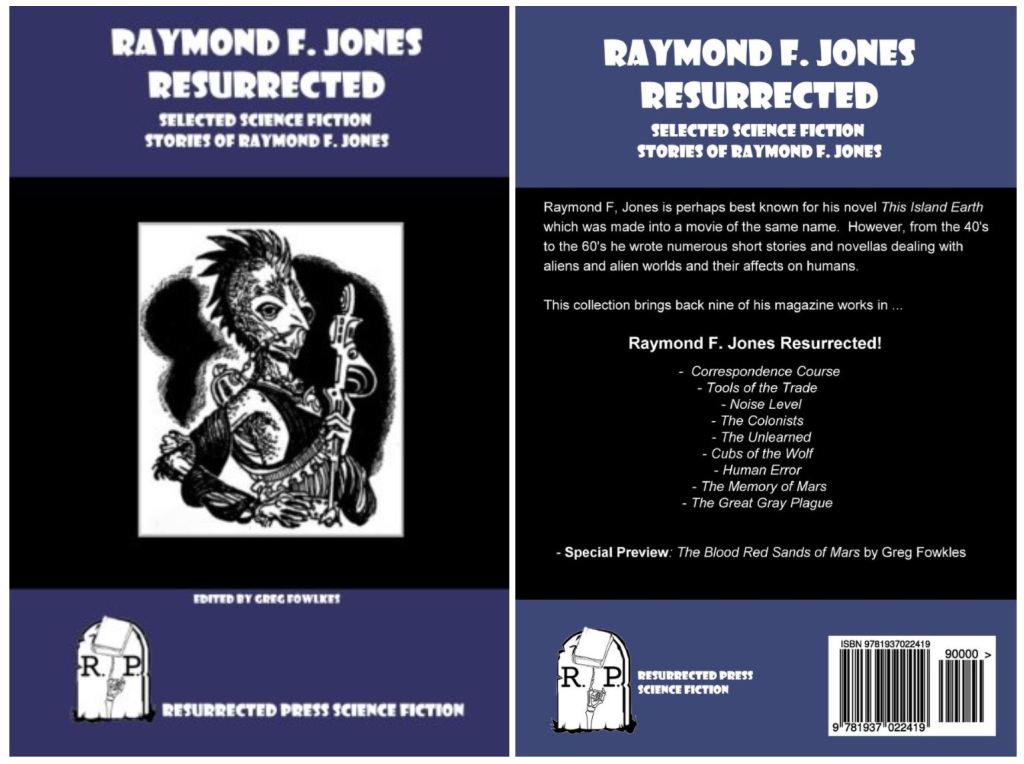
ISFDB reveals I also need to track down two of his out-of-print collections, The Toymaker (1951), that collects stories from the 1940s, and The Non-Statistical Man (1964), that gathers stories from the 1950s. I have no idea if I’ll like those stories as much as the two I read this week.

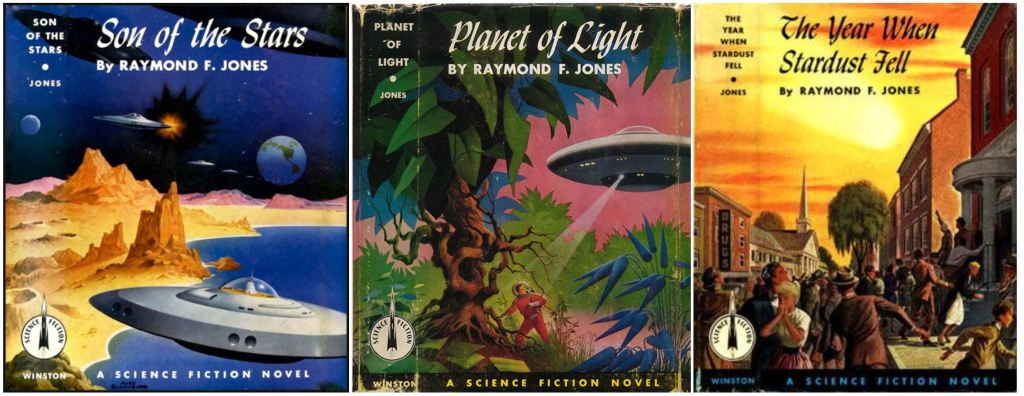
I do remember discovering Raymond F. Jones before, back in the 1960s when I was a young teenager reading all the Heinlein and Winston Science Fiction novels marketed for juveniles. Heinlein was tops, but Jones made a very good impression. I reread Son of the Stars and The Year When Stardust Fell last year. They were both fun, but not great. They didn’t jump out at me like “The Memory of Mars” and “The Colonists” did this week. I have no understanding of my critical judgement. Did I get excited about these stories because they’re actually good, the kind of good that other readers would recognize too, or was I just in the right mood for them at this moment in my life?
James Wallace Harris, 2/6/21
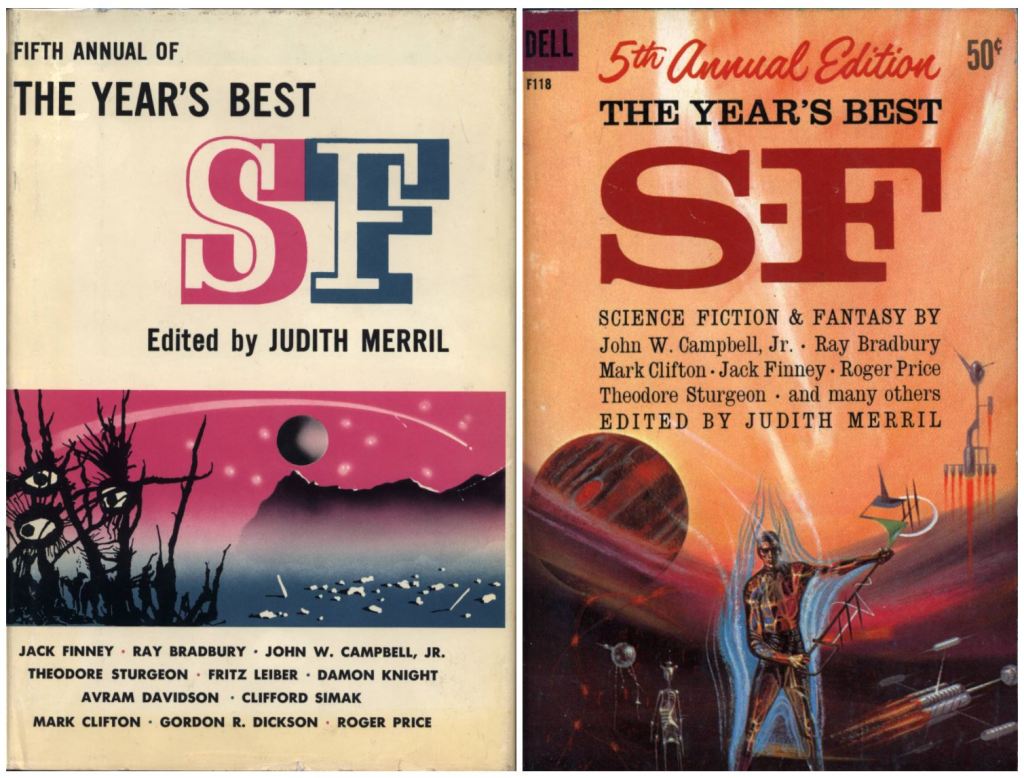
The Year’s Best S-F: 5th Annual Edition edited by Judith Merril

Our Facebook group is scheduled to read The Year’s Best S-F: 5th Annual Edition edited by Judith Merril in February and March. This presents a kind of scavenger hunt to find the stories because most of the members do not have a copy of this 1960 book. Probably out of the 400 members only a handful have a copy. Luckily we have ISFDB.org to tell us where these stories from 1959 and 1960 were originally published and reprinted (click on title).

It annoys me that Merril didn’t stay within the 1959 boundary and included four stories from 1960. That makes it hard to compare this best-of-the-year anthology against others – although in 1959-1960 Merril was the sole contemporary annual anthologist. But in 1990 Isaac Asimov and Martin H. Greenberg revisited 1959 in their anthology The Great SF Stories 21 (1959), which included these stories (I’ve bolded stories that Merril also picked):

I can’t believe Asimov and Greenberg left out “Flowers for Algernon.” In the 1960 volume Asimov and Green also chose Merril’s picks “Mariana” by Fritz Leiber and “The Handler” by Damon Knight. That means nine Merril stories overlap with Asimov/Greenberg out of nineteen in her 5th annual edition.

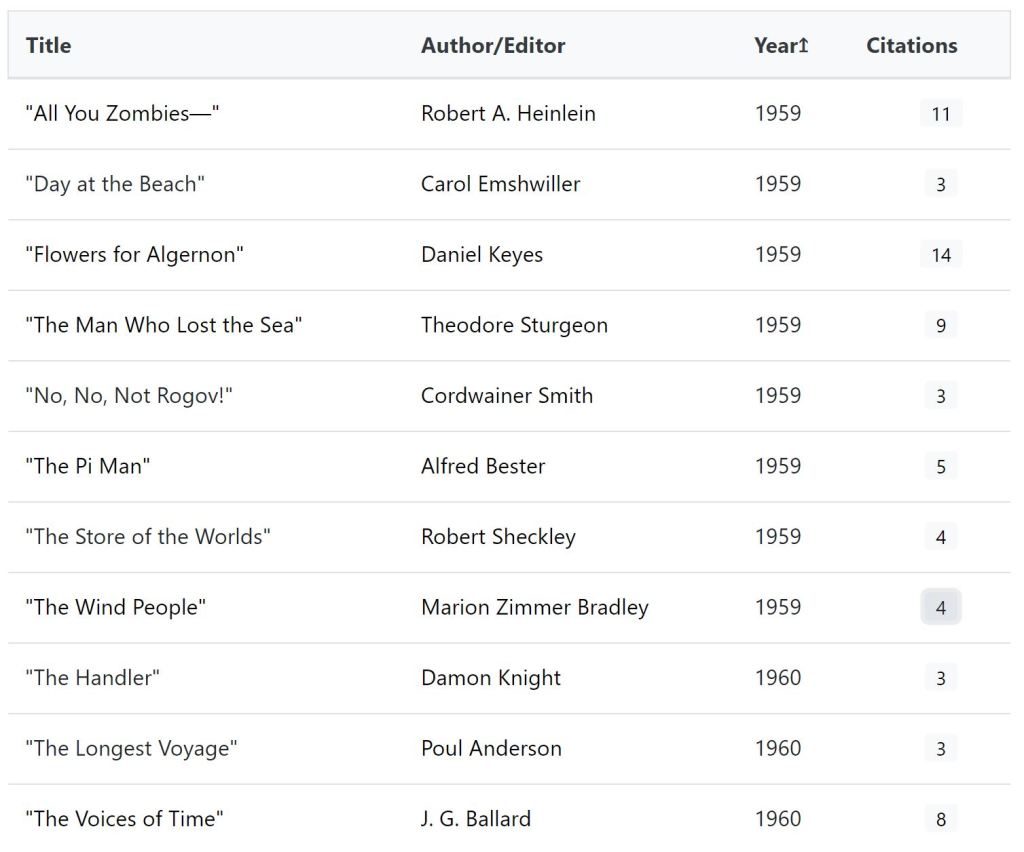
Our Classics of Science Fiction database showed these stories for 1959-1960 with three or more citations:

Both anthologies missed “All You Zombies—” but then Heinlein is notoriously absent in a lot of anthologies. I assume it was too expensive to reprint his stories.

The 1960 Hugo Award nominations for short fiction from 1959 were:

  • “Flowers for Algernon” by Daniel Keyes [F&SF Apr 1959] – winner
  • “The Alley Man” by Philip José Farmer [F&SF Jun 1959]
  • “The Pi Man” by Alfred Bester [F&SF Oct 1959]
  • “The Man Who Lost the Sea” by Theodore Sturgeon [F&SF Oct 1959]
  • “Cat and Mouse” by Ralph Williams [Astounding Jun 1959]

None of Merril’s 1960 stories were nominated for the Hugo, but Poul Anderson’s “The Longest Voyage” from 1960 was the winner in 1961. “Flowers for Algernon,” “All You Zombies—,” “The Man Who Lost the Sea,” and “The Pi Man” were in the The Best from Fantasy and Science Fiction: Ninth Series for 1959 stories, and it should be considered another good source of 1959 SF short stories.

James Wallace Harris, 2/6/21

“The Memory of Mars” by Raymond F. Jones

I love a gripping story that makes me anxious to find out what happens next. As soon as I started listening to “The Memory of Mars” by Raymond F. Jones I knew I was hooked. Mel Hastings, a reporter, is waiting to hear about his wife’s operation. But what was troubling him was what his wife Alice said before going into surgery: “As soon as I’m well again we’ll go to Mars for a vacation again, and then you’ll remember. It’s so beautiful there. We had so much fun—”

Mel Hastings knew they had never been to Mars. Mel’s mystery became my mystery, and I knew this story was going to be a ripping good yarn. But I also thought the story sounded like the beginning of “We Can Remember It For You Wholesale” by Philip K. Dick, a much more famous science fiction story from 1966, and known today by the title of the two movies that were based on it, Total Recall.

Before we go any further you might like to stop and read “The Memory of Mars.” It’s available in a scan of the original issue of Amazing Stories from December 1961. Or you can read it online at Project Gutenberg. But I recommend listening to this excellent audio production at YouTube. Or you can buy Raymond F. Jones Resurrected: Selected Science Fiction Stories of Raymond F. Jones for the Kindle for $3.99 or paperback for $15.99 which I did because I wanted to read more of his stories.

The mystery deepens when the surgeon tells Mel his wife has died and that she wasn’t human. Her internal organs were all different. Because Mel is a reporter he starts investigating his wife and was able to prove she was human until very recently with other medical records. Then he finds photos of Alice on Mars and souvenirs from a Martian vacation. Now, doesn’t that remind you of the PKD story? But it gets even more like “We Can Remember It For You Wholesale.”

Mel decides he must go to Mars to find out what happens but he has a deep phobia against space travel. He then goes to a medical specialist to erase that phobia and they discover Mel had gone on vacation to Mars with Alice. Now this is getting eerily like the PKD story. Could Dick have been inspired by “The Memory of Mars” to write his tale?

Mel Hastings has quite an adventure solving these mysteries with even more similarities to the PKD story. But I hope you’ll read “The Memory of Mars” to find out what happens.

I love finding old SF stories that are forgotten but still deserve to be read. “The Memory of Mars” was never reprinted in an anthology, and in only in one collection of stories by Raymond F. Jones mention above. You can see its reprint history here.

Raymond F. Jones had marginal success as a SF writer back in the 1940s, 1950s, and 1960s. His biggest claim to fame was the film This Island Earth based off his fix-up novel of the same title. I became acquainted with his work as a kid reading his young adult novels for the Winston Science Fiction series (Son of the Stars, Planet of Light, The Year When Stardust Fell). I definitely need to read more of his work.

James Wallace Harris, 2/6/21